Argentina: Milagro Sala Gets More Jail Time While Convicted Torturer Gets House Arrest
teleSUR – January 6, 2018
Just hours after 21 simultaneous raids on the home of Argentine Indigenous leader Milagro Sala, a provincial court ordered Friday a one-year extraordinary extension of her pre-trial detention. Sala is 21 days short of serving two years in prison.
The political leader is being investigated for alleged illicit association, fraud and extortion, crimes she was charged with days after being detained for allegedly instigating violence during a protest she didn’t attend.
Sala was initially arrested on Jan. 16, 2016 for an “escrache”, a form of protest that seeks to publicly shame someone by congregating around their homes, against the province governor of Jujuy, an ally of President Mauricio Macri. Shortly after on Jan. 29 of that same year Sala was cleared of the instigation charges, but the judge determined that she would remain in detention over new charges of illicit association, fraud and extortion, which she is currently facing.
According to Sala’s lawyer the main reason for the extension is that her defense presented “innumerable” appeals and nullities. “This lacks sense,” her lawyers contended because “everything presented is within the framework of the right to legal defence.”
The one-year extension is not the first arbitrary decision made by Jujuy’s judiciary. In October 2016, the United Nations Working Group on Arbitrary Detention qualified her detention as arbitrary, a decision backed by the Inter-American Commission on Human Rights, which urged Argentina’s government to release her.
The Organization of American States and human rights’ groups like Amnesty International and Human Rights Watch have also demanded her immediate release to no avail.
Milagro Sala is a renowned activist who is seen as President Macri’s first political prisoner. She created the Organization Tupac Amaru, which provides housing and other services to informal workers and popular sectors, she served as an Argentine legislator between 2013 and 2015, and was later elected by the Front for Victory Party, led by former President Cristina Fernandez de Kirchner, to Mercosur’s Parliament.
News of the one-year extension to Sala’s illegitimate imprisonment were accompanied by news of thousands of Argentines protesting the federal ruling that granted house arrest for convicted murderer and torturer Miguel Etchecolatz, who was sentenced to life in prison for crimes against humanity when he worked as a top police officer under the brutal military dictatorship of the 1970s.
He is not the only one. According to Argentina’s Office of Crimes Against Humanity, 549 of people convicted for crimes against humanity in Argentina are currently under house arrest.
Social leaders and opponents of the current right wing government argue that in Macri’s Argentina social and political activists are repressed, prosecuted, and disappeared while those who repress and abuse their power are granted favors.
Who Is In The Right In The Canada-Venezuela Diplomatic Dispute?
By Yves Engler | Venezuelanalysis | December 29, 2017
Lying is so common in diplomacy that it can be hard to tell heads from tails in international disputes. In the recent tussle between Caracas and Ottawa, for instance, Venezuela says it is trying to protect itself from foreign “interference” while Canada claims it is promoting “democracy and human rights”. Given the ever-present possibility of a complete disregard for truth on both sides, which government might be more credible in this instance?
Let us consider the background.
Last week Venezuela declared Canada’s chargé d’affaires in Caracas persona non grata. In making the announcement the president of the National Constituent Assembly Delcy Rodriguez denounced Craib Kowalik’s “permanent and insistent, rude and vulgar interference in the internal affairs of Venezuela.”
Is Rodriguez’s explanation for expelling Kowalik convincing?
In recent months foreign minister Chrystia Freeland has repeatedly criticized Venezuela’s elected government and reiterated that Canada is part of the so-called Lima Group of foreign ministers opposed to President Nicolás Maduro.
Following Washington’s lead, Ottawa has also imposed sanctions on Venezuelan officials and supported opposition groups.
In one project, the Canadian embassy distributed $125,212 through the Canadian Funding to Local Initiatives program, which “provided flexible, modest support for projects with high visibility and impact on human rights and the rule of law, including: enabling Venezuelan citizens to anonymously register and denounce corruption abuses by government officials and police through a mobile phone application in 2014-15.”
In August outgoing Canadian ambassador Ben Rowswell, a specialist in social media and political transition, told the Ottawa Citizen: “We established quite a significant internet presence inside Venezuela, so that we could then engage tens of thousands of Venezuelan citizens in a conversation on human rights. We became one of the most vocal embassies in speaking out on human rights issues and encouraging Venezuelans to speak out.”
(Can you imagine the hue and cry if a Venezuelan ambassador said something similar about Canada?)
Rowswell added that Canada would continue to support the domestic opposition after his departure from Caracas since “Freeland has Venezuela way at the top of her priority list.”
So, obviously it’s hard to argue with Rodriguez’ claim that Canada has been “interfering in the internal affairs of Venezuela.”
But, what to make of Freeland’s statement when Ottawa declared Venezuela’s top diplomat persona non grata in response, stating that “Canadians will not stand by as the government of Venezuela robs its people of their fundamental democratic and human rights”?
A series of decisions Freeland’s government has pursued over the past two weeks make it hard to take seriously Canada’s commitment to democracy and human rights:
- Canada signed a defence cooperation arrangement with the United Arab Emirates. According to Radio Canada International, the accord with the monarchy “will make it easier for the Canadian defence industry to access one of the world’s most lucrative arms markets and bolster military ties between the two countries.”
- Canada sided with the US, Israel and some tiny Pacific island states in opposing a UN resolution supporting Palestinian statehood backed by 176 nations.
- Immigration Minister Ahmed Hussen promoted Canadian energy and mining interests during a meeting with Kenyan President Uhuru Kenyatta, who is seeking international legitimacy after winning a controversial election (re-run) boycotted by the opposition.
- The Liberals added Ukraine to Canada’s Automatic Firearms Country Control List, which allows Canadian companies to export weapons to that country with little restriction. President Petro Poroshenko, who has a 2% popular approval rating, needs to make gains in the Ukraine’s civil war to shore up his legitimacy.
Just before expelling Venezuela’s chargé d’affaires Ottawa officially endorsed an electoral farce in Honduras. Following Washington, Global Affairs tweeted that Canada “acknowledges confirmation of Juan Orlando Hernandez as President of #Honduras.” But, Hernandez defied the country’s constitution in seeking a second term and since the election fraud on November 26 his forces have killed more than 30 pro-democracy demonstrators.
Author of Ottawa and Empire: Canada and the Military Coup in Honduras, Tyler Shipley responded: “Wow, Canada sinks to new lows with this. The entire world knows that the Honduran dictatorship has stolen an election, even the Organization of American States (an organization which skews right) has demanded that new elections be held because of the level of sketchiness here. And — as it has for over eight years — Canada is at the forefront of protecting and legitimizing this regime built on fraud and violence. Even after all my years of research on this, I’m stunned that Freeland would go this far; I expected Canada to stay quiet until Juan Orlando Hernandez had fully consolidated his power. Instead Canada is doing the heavy lifting of that consolidation.”
During the past two weeks Canadian decision makers have repeatedly undermined or ignored democracy and human rights.
While Caracas’ rationale for expelling Canadian diplomats appears credible, the same cannot be said for Ottawa’s move. In the tit-for-tat between Canada and Venezuela Canadians would do better to trust Caracas.
Activist: Peru’s Ex-Leader Pardoning Won’t Lead to National Reconciliation
Sputnik – December 28, 2017
Former Peruvian President Alberto Fujimori, sentenced to 25 years in prison for corruption and crimes against humanity, including ordering massacres by death squads, was pardoned by incumbent President Pedro Pablo Kuczynski on December 24, prompting a heated debate and a wave of dissatisfaction among Peruvians.
“This measure does not solve the [country’s] main problems and does not lead to the national reconciliation the [Peruvian] government is talking about,” Miguel Angel Canales, president of the Association of Relatives of Political Prisoners, of the Missing People and Victims of Genocide of Peru, told Sputnik Mundo. “The amnesty should cover civilians, military and police, not Fujimori supporters alone. Both groups [Fujimori and Kuczynski] are responsible for the implementation of neo-liberal policies in Peru. They have never sought to solve the problems of [common] people.”
Fujimori was granted amnesty after his supporters put forward and then declined the proposal for an impeachment of the incumbent president.
On September 23 Sputnik suggested, citing Alvaro Campana, the general secretary of the Nuevo Peru (“New Peru”) movement, that the impeachment initiative could result in Fujimori’s pardoning.
The bid for impeachment of Kuczynski was put forward over the allegations of corruption and receiving money from the Brazilian construction company Odebrecht when the present Peruvian leader was the minister of former president Alejandro Toledo between 2001 and 2006.
On December 21 the president survived the impeachment vote with 78 representatives supporting the measure and 19 against. The numbers fell short of the necessary 87 votes to impeach Kuczynski.
That became possible after 10 members of the hard-right Popular Force party, led by Fujimori’s daughter Keiko, abstained at the last minute instead of voting in favor of the measure, Simeon Tegel of The Washington Post reported last Friday.
It appeared symbolic that Alberto Fujimori’s son, Kenji, who also abstained from voting, was moved to tears when it became known that Kuchinsky would not be removed from power.
“Finally, Fujimori supporters and the government shake hands,” Campana said, commenting on the matter.
On December 24 Kuczynski announced that he granted amnesty to Fujimori. According to the presidential administration, the former Peruvian leader was released for health reasons. A day earlier, Fujimori was admitted to the intensive care unit at the Centenario Clinic in Lima. After the news, on December 26, the former leader of the Latin American country was transferred to an ordinary chamber.
In a video posted on his Facebook page the former Peruvian leader asked for forgiveness.
“I am aware that the results during my government on one side were well received, but I recognize that I have also disappointed others, and I ask them to forgive me with all my heart,” he said, as quoted by CNN.
Fujimori served as a president of Peru from 1990 to 2000. Between 1980 and 2000 more than 15,000 people had gone missing during an internal armed conflict in Peru. More than 4,000 common graves still remain undiscovered. Apparently therefore, the pardoning of the former leader of the country caused an ambiguous reaction within the Peruvian society and provoked mass protests in Lima and other cities.
On Monday, police fired tear gas to disperse crowds protesting Kuczynski’s decision in downtown Lima, while several members of the president’s party resigned.
In response, Kuczynski addressed the protestors, urging them to “turn the page” and accept Fujimori’s amnesty.
Zelaya: Open Letter to the American People
José Manuel Zelaya Rosales • December 22, 2017
People of the United States:
For the past century, the owners of the fruit companies called our country “Banana Republic” and characterized our politicians as “cheaper than a mule” (as in the infamous Rolston letter).
Honduras, a dignified nation, has had the misfortune of having a ruling class lacking in ethical principles that kowtows to U.S. transnational corporations, condemning our country to backwardness and extreme poverty.
We have been subject to horrible dictatorships that have enjoyed U.S. support, under the premise that an outlaw is good for us if he serves transnational interests well. We have reached the point that today we are treated as less than a colony to which the U.S. government does not even deign to appoint an ambassador. Your government has installed a dictatorship in the person of Mr. Hernández, who acts as a provincial governor–spineless and obedient toward transnational companies, but a tyrant who uses terror tactics to oppress his own people. Certain sectors of Honduran private industry have also suffered greatly from punitive taxes and persecution.
You, the people of the United States, have been sold the idea that your government defends democracy, transparency, freedom and human rights in Honduras. But the State Department and Heide Fulton, the U.S. Chargé d’Affaires who is serving as de facto Ambassador to Honduras, are supporting blatant electoral fraud favoring Mr. Hernández, who has repeatedly violated the Honduran Constitution and (as noted by the United Nations Office of the High Commissioner for Human Rights) basic human rights. He is responsible for the scandalous looting of USD $350 million from the Honduran Social Security Institute and while he lies to you shamelessly that he is fighting drug cartels, he has destroyed the rule of law by stacking the Supreme Court with justices loyal to him.
The people of the United States have the right to know that in Honduras your taxes are used to finance, train and run institutions that oppress the people, such as the armed forces and the police, both of which are well known to run death squads (like those that grew out of Plan Colombia) and which are also deeply integrated with drug cartels.
People of the United States: the immoral support of your government has been so two-faced that for eight consecutive years the U.S. Millenium Challenge Corporation has determined that the Hernandez regime does not qualify for aid because of the government’s corruption, failing in all measures of transparency. With this record, the Honduran people ask: Why is the U.S. Government willing to recognize as president a man who the Honduran people voted against, and who they wish to see leave office immediately?
People of the United States: We ask you to spread the word, to stand up to your government’s lies about supporting democracy, freedom, human rights and justice, and to demand that your elected representatives immediately end U.S. support for the scandalous electoral fraud against the people of Honduras, who have taken to the streets to demand recognition of the victory of the Alliance Against the Dictatorship and of President-Elect Salvador Alejandro César Nasralla Salúm.
We can tolerate difference and conflict, seeking peaceful solutions as a sovereign people, but your government’s intervention in favor of the dictatorship only exacerbates our differences.
The electoral fraud supported by the U.S. State Department in favor of the dictatorship has forced our people to protest massively throughout the country, despite savage government repression that has taken the lives of more than 34 young people since the election, and in which hundreds of protestors have been criminalized and imprisoned.
We stand in solidarity with the North American people; we share much more with you than the fact that the one percent has bought off the political leaders of both our nations.
As descendants of the Independence hero Morazán, we want to live in peace, with justice and in democracy.
The Honduran people want to have good relations with the United States, but with respect and reciprocity.
Tegucigalpa, December 21, 2017
José Manuel Zelaya Rosales
Consitutionally Legitimate President of Honduras 2005-2010
Chief Coordinator, Opposition Alliance Against the Dictatorship
Hernandez declared winner of Honduras presidential race, opposition calls for rallies
Press TV – December 18, 2017
In Honduras, incumbent Juan Orlando Hernandez has been declared the winner of last month’s disputed presidential election after a partial recount, with the opposition candidate rejecting the results and calling for fresh protests.
The Supreme Electoral Tribunal said Sunday after the official recount that Hernandez has won with 42.95 percent to 41.42 for challenger Salvador Nasralla.
“We have fulfilled our obligation (and) we wish for there to be peace in our country,” the tribunal’s president David Matamoros said.
Matamoros said the tribunal had resolved all the disputed issues, and that votes were recounted at select polling stations.
The count has, however, been questioned by the two main opposition parties and monitors with the Organization of American States (OAS).
As he left for the United States, Nasralla rejected Hernandez’s re-election as illegitimate and called for more protest rallies on Monday.
“The declaration by the court is a mockery because it tramples the will of the people,” Nasralla said. He added that he was “very optimistic” because “the people do not endorse fraud.”
He also said he would urge the OAS in Washington to invoke its democratic charter against Honduras.
The former Honduran president, Manuel Zelaya, who backed Nasralla, tweeted Hernandez “is not our president,” urging people to take to the streets in protest.
Meanwhile, the OAS secretary general, Luis Almagro, said “serious questions” surrounded the election results, urging Honduran officials to avoid making “irresponsible announcements.”
He also called for a fresh presidential election to guarantee peace in the country, which has been the scene of angry protests and clashes since the November 26 presidential election.
However, European Union election observers said the vote recount showed no irregularities.
The initial results had shown Nasralla with a significant lead over Hernandez with nearly 60 percent of the vote counted.
The electoral tribunal then went mysteriously silent, giving no further public updates for about 36 hours, and when they resumed, Nasralla’s lead steadily eroded and ultimately reversed in favor of Hernandez.
The protests and violence, which broke out over the manner of announcing the results, has killed at least 22 people.
NYT’s Argentina Op-Ed Fails to Disclose Authors’ Financial Conflict of Interest
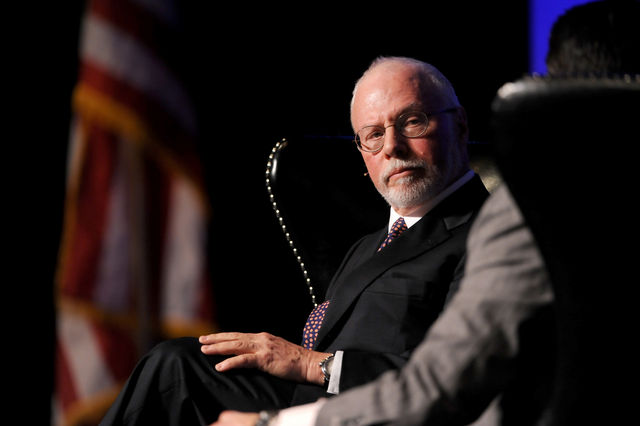
Photo: Paul Singer
By Eli Clifton | LobeLog | December 13, 2017
On Tuesday, Mark Dubowitz and Toby Dershowitz, two executives at the hawkish Foundation for Defense of Democracies (FDD), took to the op-ed pages of The New York Times to celebrate last week’s announcement that Argentina’s former president, Cristina Fernández de Kirchner, would face treason charges for her alleged role in covering up Iran’s alleged involvement in the 1994 bombing of a Jewish community center in Buenos Aries, killing 85 people.
But their op-ed fails to disclose a serious financial conflict of interest underpinning their attacks on Kirchner. One of FDD’s biggest donors financed a multi-year public diplomacy campaign against Kirchner all while attempting to collect $2 billion in debt from Argentina.
Indeed, legitimate questions exist about the bombing and suspicious 2015 death of Argentine Special Investigator Alberto Nisman who claimed in 2006 that Iran ordered the bombing. But Kirchner’s supporters fear that Argentina’s President Mauricio Macri is using judicial reforms and charges against Kirchner to remove his political opposition.
FDD has been eager to promote Nisman’s work. The group also runs AlbertoNisman.org “to honor the legacy of late Argentine Prosecutor Natalio Alberto Nisman and his tireless pursuit of justice.” FDD continues this work despite serious questions about large unexplained deposits to Nisman’s bank account.
Moreover, their rush to denigrate Kirchner omits a major conflict of interest in Dubowitz and Dershowitz’s funding. Between 2007 and 2011, hedge-fund billionaire Paul Singer contributed $3.6 million to FDD. That coincided with his battle to force Argentina to repay the full amount of the sovereign debt held by Singer’s firm, Elliott Management, a payout that Kirchner rejected. Ninety-three percent of Argentina’s creditors accepted losses, but Singer was one of the few holdouts. Having bought up Argentina’s defaulted bonds at pennies on the dollar, he had then sued the country for payment in full.
Singer embarked on a 15-year legal battle to collect on Argentina’s debt payments by attempting to seize Argentine government assets around the world, including a 100-meter three-masted tall ship when it docked in Ghana). After financing public diplomacy campaigns against Kirchner, Singer’s firm walked away with approximately 75 percent of what he was owed, $2.4 billion. The deal, finalized last year, was largely credited to Mauricio Macri, Kirchner’s successor.
Groups receiving Singer’s donations kept up a steady drumbeat of attacks on Kirchner and sought to tie her to Iran and Nisman’s suspicious death. “We do whatever we can to get our government and media’s attention focused on what a bad actor Argentina is,” Robert Raben, executive director of the American Task Force Argentina (ATFA) explained to The Huffington Post.
ATFA, a group created by Singer and other hedge fund holdouts, spent at least $3.8 million dollars over five years in its efforts attacking Argentina.
“Argentina and Iran: Shameful Allies” was the headline of one ATFA ad that ran in Washington newspapers in June 2013 as the Obama administration was weighing whether to file an amicus brief with the U.S. Supreme Court in Argentina’s favor. The ad featured side-by-side photos of Kirchner and then-Iranian President Mahmoud Ahmadinejad connected by the question, “A Pact With the Devil?” That same spring, FDD release an English-language summary of a new “ground-breaking” report by Nisman detailing “Iran’s extensive terrorist network in Latin America.”
This was followed by a flood of op-eds by FDD fellows and a series of hearings held by the House Homeland Security Subcommittee. According to FDD’s vice president, Toby Dershowitz, the report, which contains serious flaws and leaps of logic (detailed by Jim Lobe here and here), provided:
[A] virtual road map for how Iran’s long arm of terrorism can reach unsuspecting communities and that the AMIA attack was merely the canary in the coal mine. … The no-holds-barred, courageous report is a ‘must read’ for policy makers and law enforcement around the world and Nisman himself should be tapped for his guidance and profound understanding of Iran’s terrorism strategy.
Singer’s largesse also extended to the American Enterprise Institute (AEI) where he contributed $1.1 million in 2009. AEI Fellow Roger Noriega, who received $60,000 directly from Elliott Management in 2007 to lobby on the issue of “Sovereign Debt Owed to a U.S. Company,” published an article on the group’s website—“Argentina’s Secret Deal with Iran?”—citing secret documents about an alleged nuclear cooperation agreement between Tehran and Buenos Aires “brokered and paid for” by then-Venezuelan President Hugo Chávez.
In 2013, Noriega and Jose Cardenas, a contributor to AEI’s “Venezuela-Iran Project,” co-authored a seven-page policy report—“Argentina’s Race to the Bottom”—charging that Kirchner’s government was “casting its lot with rogue governments like those in Venezuela and Iran.”
Singer also gave $500,000 to The Israel Project (TIP) in 2007 and $1 million in 2012. By May 2015, the group’s magazine, The Tower, published no fewer than 48 articles that mentioned Argentina and 40 that cited Nisman and the 1994 bombing.
Neither AEI, TIP, nor FDD has bothered to disclose its funding from Singer when publishing work that advanced his public pressure campaign against Kirchner. Indeed, there is no public record of why Singer chooses to fund these organizations. But his funding poses a conflict of interest, especially when The New York Times publishes Dershowitz and Dubowitz without any public acknowledgement that their criticism of Kirchner conveniently follows the narrative and financial interests of one of the duo’s biggest financial donors.
The massacre of children and others at El Mozote
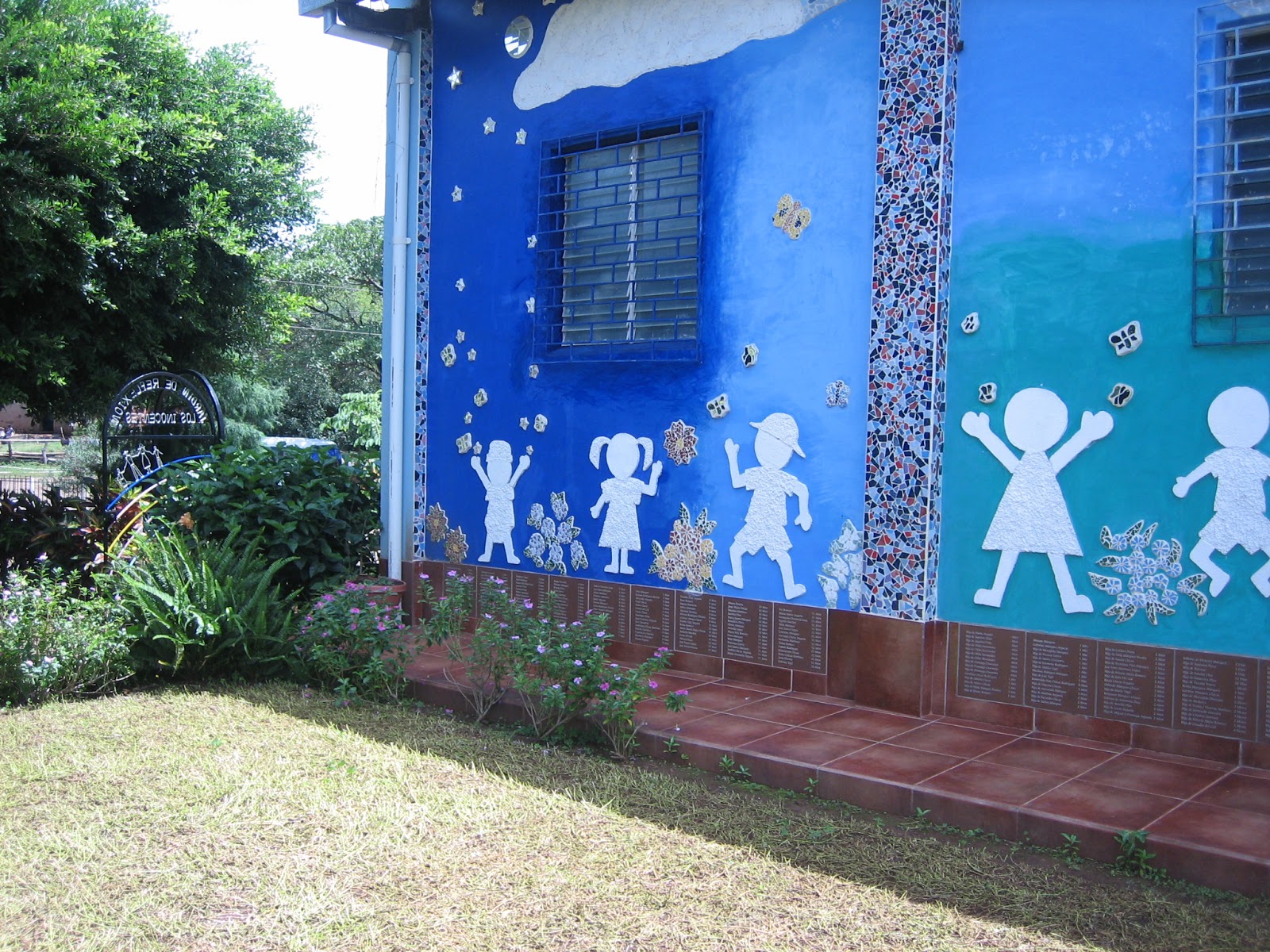
Garden next to church in El Mozote where hundreds of child victims lie buried.
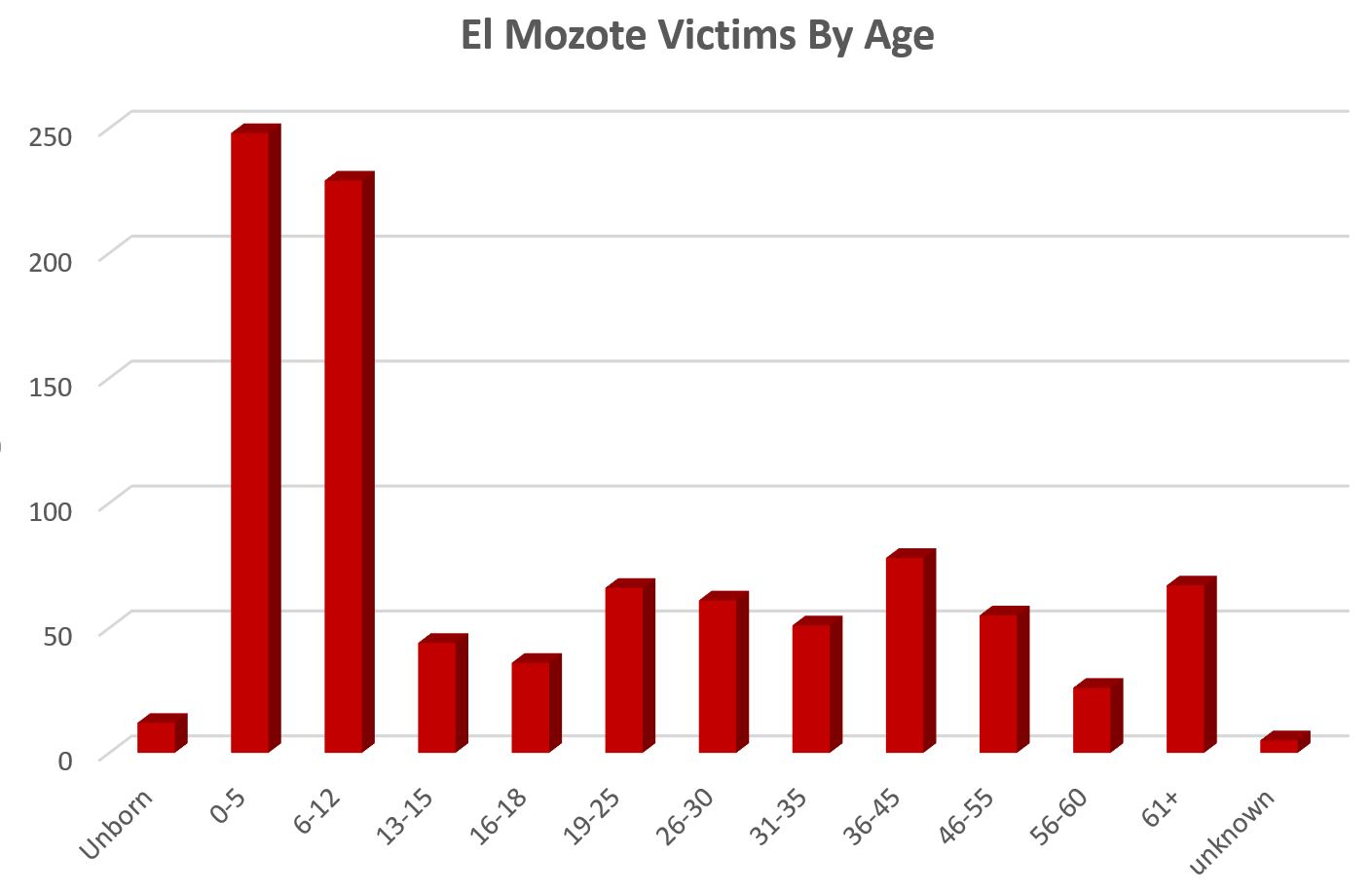
Thirty-six years ago, from December 10-12, 1981, the armed forces of El Salvador massacred hundreds of children in the town of El Mozote and surrounding communities. Last week El Salvador’s government divulged the results of the first official register of the victims who died in that massacre. Of 978 victims executed, 553 or 57% were under 18 years of age and 477 were 12 and under. Twelve infants died in their mothers wombs. Henceforth, at El Salvador Perspectives, we will refer to this atrocity as the “Massacre of Children and Others at El Mozote.”
As it covers the trial, the online periodical El Faro has offered us another view into the lives of the victims. A photogallery at the site shows ordinary objects of life in the village. The objects were recovered during the course of exhumations locating the bodies of the army’s massacre. Like the artifacts from Pompeii or Joye de Ceren, these items from everyday life give us a glimpse into the pre-disaster lives of the victims.
On this 36th anniversary, president Salvador Sanchez Ceren traveled to El Mozote for the first time during his presidency. In his speech, the president spoke of a debt to the victims, of the government’s efforts to invest in the zone as a form of reparations through public works, a health clinic, and cultural activities. The president indicated there were plans to construct a center devoted to historic memory so the events at El Mozote would not be forgotten. Despite his reference to historic memory, however, the president made no indication that the military would be required to open its archives from the time. He also made no mention of the current trial proceedings where former military commanders are charged with responsibility for the massacre of children and others at El Mozote.

Criminal law in El Salvador talks about those who are the material authors of a crime, the ones who pulled the trigger, and the intellectual authors of a crime, the ones who gave the orders for the crime. There have been previous trials in El Salvador for the material authors of such crimes as the murder of the Jesuits, a housekeeper and her daughter in 1989, or the murders of the four US churchwomen in 1980. But the current trial in the courtroom in San Francisco Gotera is the first full trial of the intellectual authors of atrocities committed during the civil war. For that reason, as well as the magnitude of the crime of a massacre of hundreds of children and others, the trial is historic.
The El Mozote criminal prosecution has developed a momentum and a seriousness not seen in any other case involving war crimes from the time of El Salvador’s civil war. It is a momentum pushed by the zealous efforts of the human rights lawyers for the victims who have called witness after witness to the stand to describe the loss of their families at the time. I have seen the coverage of the suit and the commentary about it in social media increasing as each new witness takes the stand. In small steps, the country is starting to confront what justice means for a military command which ordered its soldiers to massacre children.
Mayor Killed in Mexico, 3rd in Less Than a Month
teleSUR | December 10, 2017
Mexican Mayor Jose Santos Hernandez was killed on Friday afternoon, the third murder of its kind this month. The other two murders took place in Veracruz.
Officials said gunmen intercepted Santos’ car, forced him from the vehicle – in which he was traveling with family – and killed him.
He is the sixth mayor killed so far this year, an AFP report stated.
Mexico’s murder rate has soared extraordinarily and has put the Latin American country on track to reach a historically high death figure by the closing of 2017, which would surpass 2011 and 2012 ‘war on drug’ numbers.
There have been almost 24,000 murders reported at the end of October.
Data from the National Association of Mayors reveals that approximately 50 mayors have been murdered since 2003 and 82 since 2006.
Half of the murders are committed in the states of Oaxaca, Michoacan, Veracruz and Guerrero.
Veracruz is regarded as one of the most violent states in the country.
Venezuela’s Electoral System Reliable, Says Monitor
By Ryan Mallett-Outtrim | Venezuelanalysis | December 8, 2017
Venezuela’s voting system remains one of the most reliable in the world, an international group of electoral experts said Thursday.
The country’s electronic voting system boasts some of the world’s best checks and balances, and is both “safe and reliable”, according to Nicanor Moscoso, the head of the Latin American Council of Electoral Experts (CEELA).
“The results have never been formally refuted. It is the most audited process in the world,” he said.
The comments were made after Moscoso concluded talks with Venezuela’s electoral authority, the CNE.
Praising the work of the CNE, Moscoso said the electoral system is heavily automated and easy for voters to use.
“Venezuelans can be sure that Sunday will deliver the real results of the democratic will,” Moscoso said, referring to upcoming municipal elections this Sunday.
More than 300 mayoral positions nationwide are up for grabs, with the ruling socialist party, the PSUV, hoping to repeat its surprise victory in October’s regional vote. The party secured 18 of the country’s 23 state governorships in the elections.
Ahead of the vote, opposition parties had expected to make major gains, and largely refused to acknowledge the unexpected results once they came in. Prominent opposition parties including Voluntad Popular, Primero Justicia and Vente Venezuela have all vowed to boycott Sunday’s vote.
The boycott is likely to backfire on the opposition, according to Phil Gunson of the International Crisis Group.
“I don’t think there are many instances in history where governments have been brought down by electoral boycotts,” he told The Guardian.
“I think the very least you can ask of an opposition is that it shows up and puts up a fight,” Gunson added.
Honduran Opposition Seeks Annulment of Election Results
teleSUR | December 2017
The main opposition parties in Honduras independently submitted requests to annul the results of the Nov. 26 presidential election, which they consider fraudulent and skewed in favor of President Juan Orlando Hernández.
Salvador Nasralla, the leader of the Alliance of Opposition Against the Dictatorship, called on the Supreme Electoral Tribunal (TSE) to initiate a total recount of all votes and documents.
Before Nasralla presented his official challenge before the TSE, he warned that 200,000 extra votes had already been counted.
“Honduras has become a global joke,” he told reporters.
The candidate stressed his optimism, claiming that justice will prevail in the end.
“I know the people will defend the result (of the recount),” said Nasralla, who indicated that once the legal bodies perform their duties after the formal challenge, he plans to travel abroad to denounce the “fraud we have found.”
Meanwhile, the Liberal Party secretary, Octavio Pineda, also delivered a formal request to the TSE to annul the results. “Principles have been violated since the current president was allowed to participate in the electoral process when the Constitution forbids it,” he said.
The TSE has up to 10 days to respond to requests for annulment.
The election, which occurred two weeks ago, has left Hondurans unsure of who will be their next president for the next four years. This uncertainty has triggered protests in the Central American country that has left at least 11 dead and 15 wounded.
Featured Video
Patrik Baab: Europe’s New Iron Curtain – Freedom of Speech Dies
or go to
Aletho News Archives – Video-Images
Book Review
Jeffrey Epstein: A Jewish Individual?
The Occidental Observer | February 5, 2023
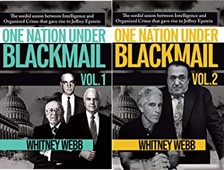
One Nation Under Blackmail: The Sordid Union between Intelligence and Organized Crime that Gave Rise to Jeffrey Epstein (Volume 1 & 2) by Whitney Webb
“Far from being an anomaly, Epstein was one of several men who, over the past century, have engaged in sexual blackmail activities designed to obtain damaging information (i.e., “intelligence”) on powerful individuals with the goal of controlling their activities and securing their compliance.”[1]
Jeffrey Epstein is dead and Ghislaine Maxwell is locked away in prison, and the thought-makers of our world seem keen to let the more explosive parts of the scandal dissipate from the public consciousness. As far as the mainstream media is concerned, Epstein and Maxwell were little more than well-connected socialites who ran a sex-trafficking ring for the rich and the powerful, and the focus has shifted instead to the criminal and civil cases seeking to achieve redress for the victims of sexual abuse.
On occasion some newspaper articles will mention the hidden cameras littered across Epstein’s properties, others the reams of CDs and hard drives found within them during the FBI raids. Altogether missing from the Netflix documentaries (Jeffrey Epstein: Filthy Rich [2020] and Ghislaine Maxwell: Filthy Rich [2022]) or the articles that spend their time narrowly focusing on the links between Epstein and Bill Gates, is the acknowledgement of the true nature of Epstein himself and the ultimate purpose of this sex-trafficking of minors — a sexual blackmail operation.
Not everyone is cowardly enough to let these controversial aspects lie untouched, as the newly released two-volume book One Nation Under Blackmail by independent reporter Whitney Webb seeks to blow wide open this media-enforced blackout. Utilizing primarily open-source information (that is, publicly accessible information such as books, newspapers articles and government reports),[2] Webb’s book delves into the life and times of Jeffrey Epstein and his deep ties to Jewish billionaires and Israeli intelligence. … continue
Blog Roll
Recent Comments


 Aletho News
- Patrik Baab: Europe’s New Iron Curtain – Freedom of Speech Dies
- Trump’s ‘Board of Peace’ exports Israeli ‘ceasefire’ diplomacy to the world
- Israeli army closes dozens of cases involving killing of Palestinians inside torture camps
- Europe creates a ‘Russian government-in-exile’, consisting of a bunch of losers
- Munich, 2007: The Day the West Was Told No
- At The Munich Security Conference, AOC Gets It Wrong On Foreign Policy
- Europe Decided to Go to War With Russia by 2030, Already Preparing – Orban
- Russia and China Are Expanding Their Cooperation to Counter US Efforts to Bully Iran and Cuba
- NATO plotting maritime blockade of Russia – Moscow
- Jeffrey Epstein’s sinister shadow over West Asia
- If Americans Knew
- Israel battles Palestinian right of return, one Palestinian at a time – Not a ceasefire Day 127
- Noor’s short life of unimaginable suffering
- Israel Destroyed Gaza’s Hospitals. Now It’s Banning Doctors Without Borders.
- Is Spite of What Zionists Say, It’s a Good Thing to Criticize Governments
- Palestinian mother, daughter recount strip searches, harsh conditions in Israeli detention
- Israel used weapons in Gaza that made thousands of Palestinians evaporate
- ADL’s Stats Twist Israel’s Critics Into Antisemites
- Why Is the World Silent When the Gaza Genocide Is Not Over?
- In Gaza: 8,000 bodies under rubble, 3,000 missing – Not a ceasefire Day 126
- AZAPAC, the new PAC opposing Israeli domination of U.S policies
- No Tricks Zone
- Unfudging The Data: Dutch Meteorological Institute Reinstates Early 20th Centruy Heat Waves It Had Erased Earlier
- German Gas Crisis…Chancellor Merz Allegedly Bans Gas Debate Ahead of Elections!
- Pollen Reconstructions Show The Last Glacial’s Warming Events Were Global, 10x Greater Than Modern
- Germany’s Natural Gas Storage Level Dwindles To Just 28%… Increasingly Critical
- New Study Rebuts The Assumption That Anthropogenic CO2 Molecules Have ‘Special’ Properties
- Climate Scientist Who Predicted End Of “Heavy Frost And Snow” Now Refuses Media Inquiries
- Polar Bear Numbers Rising And Health Improving In Areas With The Most Rapid Sea Ice Decline
- One Reason Only For Germany’s Heating Gas Crisis: Its Hardcore-Dumbass Energy Policy
- 130 Years Later: The CO2 Greenhouse Effect Is Still Only An Imaginary-World Thought Experiment
- New Study Affirms Rising CO2’s Greening Impact Across India – A Region With No Net Warming In 75 Years
 Aletho News