International Electoral Observers Validate Venezuela Regional Vote as US, France Reject Results
By Lucas Koerner | Venezuelanalysis | October 16, 2017
Caracas – The Latin American Council of Electoral Experts (CEELA) has confirmed that Sunday’s vote in Venezuelan gubernatorial elections was clean and transparent.
“The vote took place peacefully and without problems… the vote reflects the will of [Venezuelan] citizens,” declared CEELA President Nicanor Moscoso during a press conference Monday morning.
The CEELA delegation was comprised of 1300 international observers, including former Colombian Electoral Court President Guillermo Reyes, ex-president of the Honduran Supreme Electoral Court, Augusto Aguilar, and former Peruvian electoral magistrate Gastón Soto.
According to the body’s report, the vote was held under conditions of “total normality” and the right to a secret ballot was “guaranteed”.
Sunday’s elections pitted President Maduro’s United Socialist Party of Venezuela against the right-wing MUD coalition, with the former scoring a surprise win in 17 of the nation’s 23 states.
The results have, however, been rejected by the MUD, which has alleged “fraud” and called on its supporters to take to the streets in protest.
The MUD has accused the National Electoral Council of attempting to suppress opposition turnout by relocating 334 voting centers previously targeted by anti-government violence during July 30’s National Constituent Assembly Elections.
Announced several weeks ago, the relocations were concentrated in the states of Anzoátegui, Aragua, Carabobo, Lara, Merida, Miranda, and Tachira. Nonetheless, in Merida and Tachira, the MUD emerged triumphant, despite there being 58 and 42 changes in voting centers, respectively.
For its part, CEELA has reported that it has yet to receive any formal denunciations from the opposition, which has issued its fraud allegations via the media.
President Maduro has requested a 100 percent audit of Sunday’s elections, a call that was subsequently echoed by the MUD.
Nothewstanding CEELA’s certification of the outcome, Venezuela’s regional elections have come under fire from Washington and Paris.
“We condemn the lack of free and fair elections yesterday in Venezuela. The voice of the Venezuelan people was not heard,” declared US State Department spokesperson Heather Nauert.
The diplomat did not, however, offer specific evidence explaining her government’s disavowal of the election result.
In recent months, the Trump administration has taken an increasingly aggressive stance against the Maduro government, imposing economic sanctions, decreeing a travel ban on Venezuelan officials, as well as threatening military intervention and an embargo.
France’s Foreign Ministry likewise issued a communique Monday in which it alleged “serious irregularities” and “lack of transparency in the verification and tabulation process”
“France deplores this situation and is working with its EU partners to examine appropriate measures to help resolve the serious crisis affecting the country,” the French government continued.
France’s newly elected president, Emmanuel Macron, has become an increasingly vocal critic of the Maduro government Caracas.
In September, the French leader met with senior Venezuelan opposition politicians during a tour by the MUD to drum up support for EU sanctions against Venezuela.
The European Parliament voted last month to explore the option of sanctioning top Venezuelan officials, following the lead of Washington and Ottawa.
In response to the statement by Paris, Venezuelan Foreign Minister Jorge Arreaza took to Twitter Monday, lambasting European interference in his country’s internal affairs.
“The EU and some of its member states (subordinate to Trump) question the will of the Venezuelan people,” he stated.
“In Europe, they’d only wish to have a real democracy, where their peoples can freely choose between two truly contrasting projects,” Arreaza added.
Medical Students at Chile’s Largest University Overwhelmingly Vote for BDS
IMEMC | October 17, 2017
More than three-fourths of students at the University of Chile’s Faculty of Medicine voted to break institutional ties with Israeli universities in a student referendum held last month. They also voted against Israeli government sponsorship or attendance of events at their university.
This is the third such vote to take place at the University of Chile, the country’s largest university. Over the last two years, more than 90% of students at the Faculty of Social Sciences and more than 60% of students at the Faculty of Law also voted in support of Boycott, Divestment and Sanctions (BDS) measures.
BDS UChile, the university’s student coalition advocating for BDS, celebrated the victory, saying:
We are celebrating yet another win for the global BDS movement at the University of Chile. After students at the Faculty of Law and students at the Faculty of Social Sciences voted for BDS in 2015 and 2016 respectively, we are very proud that students at the Faculty of Medicine joined in to vote a resounding YES on having a university free of Israeli apartheid.
Before this vote took place, Palestinian medical students sent a video message to Chilean students, highlighting the impact of Israeli apartheid, military occupation and colonialism on their rights to health and education. They emphasized the importance of effective international solidarity through the academic boycott of Israeli universities.

Monia Kittana, a Birzeit University Palestinian medical student featured in the video, welcomed the referendum results, saying:
We are very thankful that medical students at the University of Chile have heeded our call to boycott Israeli apartheid. We applaud them for their principles and solidarity. They’ve set an example to be followed by other departments and universities in Chile and in all of Latin America. Palestinians need effective solidarity from around the world, and students can play a leading role in pressuring their universities to break ties with institutions that are complicit in Israel’s half-century of military occupation and nearly 70 years of dispossessing Palestinians from their homes and lands.
The Palestinian BDS National Committee (BNC) is the largest coalition in Palestinian civil society. It leads and supports the global Boycott, Divestment and Sanctions movement. Follow them on Facebook and Twitter @BDSmovement.
Ugly Canadian face now belongs to Trudeau
By Yves Engler · October 14, 2017
The “Ugly Canadian” is on the march, but now with a much prettier face at the helm. Across the planet, Canadian mining companies are in conflict with local communities and usually have the Trudeau government’s support.
A slew of disputes have arisen at Canadian run mines in recent weeks:
Last week in northern central Mexico, community members blockaded the main access road to Goldcorp Inc.’s Penasquito mine. They are protesting against the Vancouver-based company for using and contaminating their water without providing alternative sources.
In Northern Ireland two weeks ago, police forced activists out of a Cookstown hotel after they tried to confront representatives from Dalradian Resources. Community groups worry the Toronto firm’s proposed gold and silver mine will damage the Owenkillew River Special Area of Conservation.
Last weekend, an Argentinian senator denounced Blue Sky Uranium’s exploration in the Patagonia region. Magdalena Odarda said residents living near the planned mine fear the Vancouver company’s operations will harm their health.
On Wednesday more than 40 US congresspeople, as well as the Alaska’s Governor, criticized the removal of restrictions on mining in Alaska’s Bristol Bay region, home to half the world’s sockeye salmon production. In May, Northern Dynasty CEO Thomas Collier met the new head of the US Environmental Protection Agency to ask for the lifting of restrictions on its Pebble Mine, which is expected to destroy the region’s salmon fishery. In a bid to gain government permission to move forward on the project, the Vancouver firm appointed a former chief of staff at the US Department of the Interior as its new CEO.
At the end of September, hundreds of families were displaced by the Filipino Army to make way for a mine jointly run by Australian and Canadian firms MRL Gold and Egerton Gold. The community in the Batangas Province was blocking a project expected to harm marine biodiversity.
In eastern Madagascar, farmers are in a dispute with DNI Metals over compensation for lands damaged by the Toronto firm.
In August, another person was allegedly killed by Acacia (Barrick Gold) security at its North Mara mine in Tanzania.
Last week, Barrick Gold agreed to pay $20-million to a Chilean a group after a year-long arbitration. The Toronto company had reneged on a $60-million 20-year agreement to compensate communities affected by its Pascua Lama gold, silver and copper project.
In mid-September, Eldorado Gold threatened to suspend its operations in Halkidiki, Greece, if the central government didn’t immediately approve permits for its operations. With the local Mayor and most of the community opposed to the mine, the social-democratic Syriza government was investigating whether a flawed technical study by the Vancouver company was a breach of its contract.
And in Guatemala, Indigenous protestors continue to blockade Tahoe Resources’ Escobal silver mine despite a mid-September court decision in the company’s favour. Fearing for their water, health and land, eight municipalities in the area have voted against the Vancouver firm’s project.
The Liberals have largely maintained Stephen Harper’s aggressive support for Canada’s massive international mining industry. Last month Canada’s Trade Minister François-Philippe Champagne backed El Dorado, denouncing the Greek government’s “troublesome” permit delays. Canada’s Ambassador to Madagascar, Sandra McCadell, appears to have backed DNI Metals during a meeting with that country’s mining minister.
As I detailed previously, the Trudeau government recently threw diplomatic weight behind Canada’s most controversial mining company in the country where it has committed its worst abuses. Amidst dozens of deaths at Barrick Gold’s North Mara mine in Tanzania and an escalating battle over the company’s unpaid royalties/tax, Canada’s High Commissioner Ian Myles organised a meeting between Barrick Executive Chairman John Thornton and President John Magufuli. After the meeting Myles applauded Barrick’s commitment to “the highest standards, fairness and respect for laws and corporate social responsibility.”
Two years into their mandate the Trudeau regime has yet to follow through on their repeated promises to rein in Canada’s controversial international mining sector. Despite this commitment, they have adopted no measures to restrict public support for Canadian mining companies responsible for significant abuses abroad.
The ‘Ugly Canadian’ is running roughshod across the globe and pretty boy Justin is its new face.
Undermining Venezuela’s socialist government nothing new for Canada
By Yves Engler · September 23, 2017
Alongside Washington and Venezuela’s elite, the Trudeau government is seeking to oust President Nicolás Maduro. While Ottawa’s campaign has recently grown, official Canada has long opposed the pro-poor, pro-working class Bolivarian Revolution, which has won 19 of 21 elections since 1998.
Following a similar move by the Trump Administration, Global Affairs Canada sanctioned 40 Venezuelans on Friday. In a move that probably violates the UN charter, the elected president, vice president and 38 other officials had their assets in Canada frozen and Canadians are barred from having financial relations with these individuals.
In recent months foreign minister Chrystia Freeland has repeatedly criticized Maduro’s government. She accused Caracas of “dictatorial intentions”, imprisoning political opponents and “robbing the Venezuelan people of their fundamental democratic rights”. Since taking office the Liberals have supported efforts to condemn the Maduro government at the Organization of American States (OAS) and promoted an international mediation designed to weaken Venezuela’s leftist government (all the while staying mum about Brazil’s imposed president who has a 5% approval rating and far worse human rights violations in Mexico).
Beyond these public interventions designed to stoke internal unrest, Ottawa has directly aided an often-unsavoury Venezuelan opposition. A specialist in social media and political transition, outgoing Canadian ambassador Ben Rowswell told the Ottawa Citizen in August: “We established quite a significant internet presence inside Venezuela, so that we could then engage tens of thousands of Venezuelan citizens in a conversation on human rights. We became one of the most vocal embassies in speaking out on human rights issues and encouraging Venezuelans to speak out.” (Can you imagine the hue and cry if a Russian ambassador said something similar about Canada?) Rowswell added that Canada would continue to support the domestic opposition after his departure from Caracas since “Freeland has Venezuela way at the top of her priority list.”
While not forthcoming with information about the groups they support in Venezuela, Ottawa has long funnelled money to the US-backed opposition. In 2010 the foremost researcher on U.S. funding to the opposition, Eva Golinger, claimed Canadian groups were playing a growing role in Venezuela and according to a 2010 report from Spanish NGO Fride, “Canada is the third most important provider of democracy assistance” to Venezuela after the US and Spain. In “The Revolution Will Not Be Destabilized: Ottawa’s democracy promoters target Venezuela” Anthony Fenton details Canadian funding to anti-government groups. Among other examples, he cites a $94,580 grant to opposition NGO Asociación Civil Consorcio Desarrollo y Justicia in 2007 and $22,000 to Súmate in 2005. Súmate leader Maria Corina Machado, who Foreign Affairs invited to Ottawa in January 2005, backed the “Carmona Decree” during the 2002 coup against President Hugo Chavez, which dissolved the National Assembly and Supreme Court and suspended the elected government, Attorney General, Comptroller General, governors as well as mayors elected during Chavez’s administration. (Machado remains a leading figure in the opposition.)
Most Latin American leaders condemned the short-lived coup against Chavez, but Canadian diplomats were silent. It was particularly hypocritical of Ottawa to accept Chavez’s ouster since a year earlier, during the Summit of the Americas in Québec City, Jean Chrétien’s Liberals made a big show of the OAS’ new “democracy clause” that was supposed to commit the hemisphere to electoral democracy.
For its part, the Harper government repeatedly criticized Chavez. In April 2009 Prime Minister Stephen Harper responded to a question regarding Venezuela by saying, “I don’t take any of these rogue states lightly”. After meeting only with opposition figures during a trip to Venezuela the next year Peter Kent, minister of state for the Americas, said: “Democratic space within Venezuela has been shrinking and in this election year, Canada is very concerned about the rights of all Venezuelans to participate in the democratic process.”
The Bolivarian Revolution has faced a decade and a half of Liberal and Conservative hostility. While the NDP has sometimes challenged the government’s Venezuelan policy, the party’s current foreign critic has echoed Washington’s position. On at least two occasions Hélène Laverdière has demanded Ottawa do more to undermine the Maduro government. In a June 2016 press release Laverdière bemoaned “the erosion of democracy” and the need for Ottawa to “defend democracy in Venezuela” while in August the former Foreign Affairs employee told CBC “we would like to see the (Canadian) government be more active in … calling for the release of political prisoners, the holding of elections and respecting the National Assembly.” Conversely, Laverdière staid mum when Donald Trump threatened to invade Venezuela last month and she has yet to criticize the recently announced Canadian sanctions.
NDP members should be appalled at their foreign critic’s position. For Canadians more generally it’s time to challenge our government’s bid to undermine what has been an essentially democratic effort to empower Venezuela’s poor and working class.
Venezuela Rejects Imposition of Sanctions by Canada
teleSUR | September 22, 2017
The Venezuelan Foreign Ministry has issued a statement categorically rejecting the illegal sanctions imposed by Canada on 40 Venezuelan government officials, including President Nicolas Maduro.
It says this hostile action, whose only purpose is to attack Maduro’s government, breaks international law which is fundamental for the promotion of economic development and social, as well as for peace and security.
The statement said the objective is “to undermine the peace and social stability achieved in our nation after the formation of the National Constituent Assembly, as well as the continued efforts made by the National Executive in favor of dialogue and understanding between the different sectors that make life in the country. ”
“These are sanctions aimed at undermining efforts to establish dialogue between the government and the Venezuelan opposition, with the support and support of members of the international community.”
It went on to say that the measures are a violation of the purposes and principles enshrined in the Charter of the United Nations, the Charter of the OAS, and the rules governing friendly relations and cooperation between States.
The statement also warned they threaten to undermine efforts to initiate, with the support and support of members of the international community, the dialogue between the government and the Venezuelan opposition.
“On September 5, 2017, the government of Canada established an aberrant association of subordination to the government of President Donald Trump with the explicit purpose of overthrowing the constitutional government of Venezuela using economic sanctions as a political weapon.”
It ends, “This decision of the Canadian government profoundly damages the bonds of friendship and respect that for years have guided the relations between our countries and, consequently, will consider all the necessary measures to defend the national interest and sovereignty.”
Earlier Canada announced it would impose the sanctions as a punishment for “anti-democratic behavior.”
“Canada will not stand by silently as the government of Venezuela robs its people of their fundamental democratic rights,” the Canadian Foreign Minister Chrystia Freeland said in a statement, adding that the sanctions were “in response to the government of Venezuela’s deepening descent into dictatorship.”
The measures include freezing assets of the officials and banning Canadians from having any dealings with them.
As well as the sanctions on Maduro, the Venezuelan Vice President Tareck El Aissami and President of the National Constituent Assembly, Delcy Rodriguez have been added to the list.
The measures mirror those imposed on Venezuela by the United States which target Maduro and around 30 other officials.
Last month, the U.S. President Donald Trump also placed renewed sanctions on its Venezuela’s state oil company, while also issuing military threats against the country.
“Canada is a country that has a strong reputation in the world as a country that has very clear and cherished democratic values, as a country that stands up for human rights,” Freeland said. “To be sanctioned by Canada, I think has a real symbolic significance.”
The sanctions come in the wake of Trump’s comments criticizing Venezuela at the UN General Assembly, where he threatened to strengthen economic sanctions if Maduro “persists on a path to impose authoritarian rule.”
Human Rights: The Latest Weapon Against Venezuela
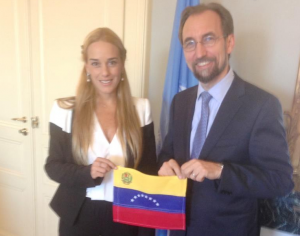
UN High Commissioner for Human Rights and Lilian Tintori, wife of opposition leader Leopoldo López who is currently serving a 13 year sentence (in house arrest) for his responsibility in the deadly violence of the 2014 guarimbas.
By Ricardo Vaz | Investig’Action | September 21, 2017
The mainstream media have a crucial role to play in the war against Venezuela, creating a distorted narrative and a constant frenzy that are crucial for any regime-change operation. With violent protests having failed to topple the government and to stop the Constituent Assembly, the plan switched to military threats and economic sanctions. But these come directly from an unpopular US administration, and a more impartial-looking figure was needed. The High Commissioner for Human Rights, Jordanian Prince Zeid bin Ra’ad al Hussein, stepped up to the plate with the backing of more than 100 NGOs. We tackle the manipulation of human rights for imperial purposes, but first we examine how the term “NGO” is woefully inadequate to describe these organisations.
*****
So much more than NGOs
On occasion of the 36th Session of the UN Human Rights Council, 116 “NGOs”1 signed a letter demanding that Venezuela be a priority for the Office of the High Commissioner for Human Rights (OHCHR). The effort was spearheaded by none other than Human Rights Watch (HRW). HRW has a long and documented history of bias and outright lies in their reports on Venezuela, which is no surprise given their blatant revolving door with the US government. Among the signatories are several usual suspects such as Provea or Foro Penal, whose president Alfredo Romero was a recent speaker in a “US Democracy Support” forum.
Another organisation on the list is Transparencia Venezuela, which includes as sources of funding the EU, several embassies and the parent organisation Transparency International. And although Transparency International is much shadier than it sounds, at least we can laud their transparency in listing their backers. The list includes the US State Department, the National Endowment for Democracy (NED), George Soros’ Open Society, even corporations such as Shell. One more that stands out, and is quoted regularly by the media, is the International Commission of Jurists, which sounds very noble and independent until you discover that they were initially funded by the CIA.
The issue here is with the term “non-governmental organisation”, which are always presented by the media as faultless, impartial actors. While there are many scenarios in which independent organisations can step in and provide invaluable services, this is hardly the case of groups funded by the NED (or USAID, or similar agencies) to “promote democracy” or “defend human rights” in countries like Venezuela. These are merely extensions of the US and western foreign policy apparatus, working as the local infrastructure that is necessary in regime change operations as well as a source for the media to build its biased narrative.
At the end of the day, it is the term “non-governmental organisation” that falls very short of describing the nature and activities of these groups. If an organisation in Venezuela, or anywhere else, is funded by the US government, in what world is it a “non-governmental organisation”? One cannot prove that all the “NGOs” standing with HRW are western-funded, but advancing western interests is very much advancing corporate interests, and it is doubtful that anyone would do that for free.
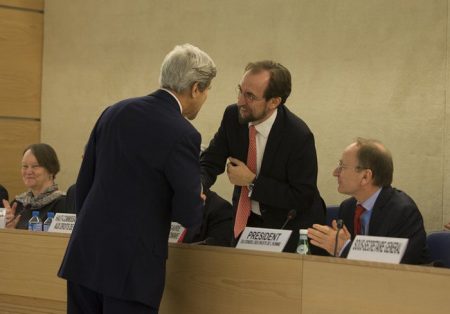
UN High Commissioner for HR shaking hands with former US Secretary of State John Kerry. (If by accident their speeches were switched nobody would notice!)
Weaponizing human rights
While one should not judge a book by the cover, it might be useful to consider the background of the UN High Commissioner for Human Rights, Prince Zeid bin Ra’ad al Hussein. A member of the royal family of Jordan, he comes from a Hashemite dynasty whose calling card has been its pliancy to imperial interests in the Middle East. And having served as ambassador to the US and permanent representative to the UN, he is, much like Jordan, someone the US can rely upon.
His most recent statement, which could just as well have been written by the US State Department, was delivered during the 36th Session of the Human Rights Council. It takes aim at every inconvenient country, from Iran to North Korea, while important US allies like Bahrain or Egypt are invited to “engage more productively” with his office. Israel is treated with kid gloves, and somehow the blame for the humanitarian crisis in Gaza is supposed to be shared between Israeli and Palestinian authorities. And there is no mention whatsoever of Saudi Arabia, where surely there are no human rights issues… Even when addressing the catastrophe in Yemen there is only a passing mention to “coalition airstrikes”.
And then the High Commissioner gets to Venezuela, sounding like any opposition leader or US official on “human rights violations” during anti-government protests or the “crushing [of] democratic institutions”, and suggesting an investigation into possible “crimes against humanity”. Never mind Colombia, where for years the army killed thousands of civilians and dressed them as rebels to collect rewards. Never mind Saudi Arabia, conducting double tap strikes2 against funerals in Yemen, or the US “torturing some folks,” or Israeli soldiers killing children because they were “running like terrorists.” The High Commissioner is worried that crimes against humanity have been committed in Venezuela!
This statement comes on the heels of a OHCHR report about Venezuela that Joe Emersberger described as “embarrassingly shoddy and biased.” It barely mentions any violence coming from the opposition ranks, and while offering a tally of deaths allegedly caused by government forces and the bogeyman colectivos, there is no detailed breakdown to be compared with other accounts such as the one by Venezuelanalysis. Remarkably, given the importance of the issue and the damning verdict that the OHCHR wishes to pass, no investigators from the UN body set foot in Venezuela. Instead the report relies on carefully selected testimonies and the “NGOs” we just discussed.
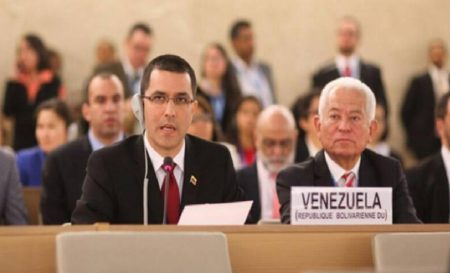
Venezuelan Foreign Minister Jorge Arreaza condemned the manipulation of human rights to attack Venezuela and the lies in the recent OHCHR report.
True NGOs strike back
While the amenable High Commissioner and the poorly-named “NGOs” put on their show to further the regime-change operation in Venezuela, others were not about to take it sitting down. True NGOs, independent organisations that are not pawns in imperialist machinations, and which are truly committed to human rights, condemned foreign meddling in Venezuela and the politicisation of human rights. One example was Swiss-based CETIM, an organisation focused on supporting social movements in the Global South. Concerning Venezuela, it released a statement that said:
[…] we declare ourselves for an immediate return to calm and to dialog, for the respect of Venezuelan peoples’ right to self-determination and the deepening of the process of democratic transformation that they have freely and courageously undertaken for two decades […]
Another organisation that reacted to the recent actions of the OHCHR was the International Association of Democratic Lawyers (IADL), through its representative at the UN, Micòl Savia, during one of the plenary meetings of the 36th Session of the Human Rights Council (intervention #35 in this link)
The IADL expresses its most profound dismay at the recent OHCHR report […]. Given its severity, we are particularly concerned by the High Commissioner’s mention of […] crimes against humanity, which lacks any legal grounds or sense of proportion. […]
The report is selective and biased, and represents a further example of the unfortunate politicisation that affects the work of the OHCHR, undermining its credibility and standing. Use of firearms, explosives, setting up barricades, people burned alive, attacks against hospitals, […], is this the model of “peaceful protests” that this council wants to promote?
Judge, jury and executioner
In the end the bias and lack of standards, or outright falsehood, of these claims and reports does not matter, because if the target is Venezuela they only have to look credible. The media will then do the rest, creating a background by repeating that “Venezuela has been accused by the UN of human rights abuses”, regardless of the shoddiness of the accusations, and this will be the basis to justify future escalations and aggressions as the empire pulls out all the stops to get rid of the biggest threat in its “backyard”.3
This is a good time to stress that legal systems are not moral or just by definition, but a reflection of who holds power, and this is especially true of international law. Though the struggle for an arena where all countries have the same weight is imperative, we are fooling ourselves if we are counting on international bodies to be impartial upholders of justice (just look at Palestine). Recent international tribunals have only served to reinforce the US/western narrative, either as a posteriori justification for past wars such as the one in Yugoslavia, or to justify upcoming ones against troublesome leaders like Gaddafi.
We should clarify that our argument is not some kind of moral relativism, whereby we defend that the alleged crime A should not be investigated until justice is served for (the much worse) crime B. We are not arguing that nobody can be guilty of crimes against humanity until Henry Kissinger is tried, although it is hard to take any international tribunal seriously if the most blatant crimes are immune from prosecution. But what is definitely absurd and unacceptable is to have the US empire, either directly or through its proxies, be the judge trying other people and countries.
Notes
- The HRW statement, and all pieces about it, refer to 116 NGOs; however, the organisations listed only total 115…
- Double tap strikes comprise an initial strike on a target followed by another one targeting first responders.
- In its article about this issue, the Guardian refers to a high-profile jailed opposition leader called Leonardo López (his name is Leopoldo López). Given the overall bias and lack of standards, this is probably fitting.
Argentina Sentences 6 to Life in Prison for Crimes Against Humanity During US-Backed Dirty War

teleSUR | September 16, 2017
In a landmark ruling, Argentina’s Court of Tucuman sentenced 17 people with crimes against humanity — including issuing 6 life terms— for their role in ‘Operation Independence’ during the U.S.-backed Dirty War in Argentina in the 1970’s and 80’s.
The six given life sentences include Roberto “El Tuerto” Albornoz, Luis De Candido, Ricardo Oscar Sánchez, Miguel Moreno, Enrique del Pino and Jorge Omar Lazarte, all were top officials during the period.
The court charged the rest of the defendants with prison sentences ranging from 4 to 18 years, based on the crimes of torture, abduction, forced disappearances, and rape, in addition to issuing seven acquittals.
The 1975 operation was the first large-scale military operation of the Dirty War, launched to crush the People’s Revolutionary Army, known by their Spanish acronym, ERP, and other left-wing forces in the country. Authorized by Italo Argentino Luder, who served as acting President when the incumbent Isabel Peron fell ill, it was continued under the military dictatorship of General Jorge Rafael Videla.
The court’s ruling came after 16 months of debate and testimonies from nearly 409 witnesses, according to the Mothers of Plaza de Mayo, a group of Argentine women whose children disappeared during the Dirty War.
There were 20 defendants at the beginning of the trial, three had died during the hearings.
Prior the ruling, hundreds of activists and the relatives of the victims gathered outside the court, demonstrating with personal items and photos of their family members who were kidnapped, tortured, killed or disappeared.
Parliamentary lobby in Mexico to support Israeli settlement activities
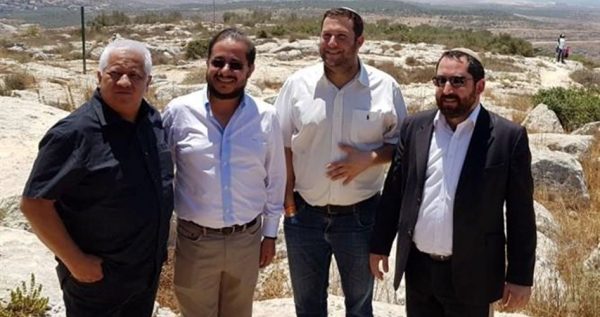
Mexican MPs with leaders of settlers in the Occupied West Bank
Palestine Information Center – September 15, 2107
NAZARETH – A lobby group advocating Israel’s settlement activities has been formed in the Mexican parliament, according to Israel’s Channel 7.
The Palestinian Information Center (PIC) quoted the channel as saying that this lobby group would work on promoting the trade relations between Mexico and Israel’s industrial settlements and outposts [in the West Bank].
According to the channel, head of the West Bank regional council Yossi Dagan said the lobby was officially announced during the current week in the Mexican parliament, describing it as “very important for Israel.”
The channel affirmed that this lobby would also influence Mexico’s positions at the UN and its institutions in favor of Israel.
Odebrecht Denies $100 Million Bribe to Top Venezuelan Politician
By RACHAEL BOOTHROYD ROJAS | Venezuelanalysis | September 8 2017
The scandal-besieged company Odebrecht has refuted claims made by former Venezuelan Attorney General Luisa Ortega that it paid $USD100 million to Venezuelan politician Diosdado Cabello in exchange for lucrative state contracts.
The accusations against Cabello, who is the President of the United Socialist Party of Venezuela and is considered one of the most prominent members of the Chavista government, were made by Ortega in August. The former attorney general fled Venezuela last month after the Supreme Court removed her from her post pending an investigation into alleged “grave misconduct”.
In a widely reported press conference, Ortega said she had “many pieces of evidence” that proved the firm had made the million dollar payment to Cabello. But a statement released by the company Wednesday appeared to cast doubt on Ortega’s claims.
“After conducting a comprehensive search of its legacy systems and of the statements given by its former team members who collaborated in (investigations), Odebrecht denies the accusations that it made a $100 million payment to … Cabello,” reads the communiqué.
The leading Brazilian construction firm shot to the centre of a region-wide corruption scandal in 2015, when it emerged that company representatives had offered million dollar kickbacks to government officials across 12 countries to win public contracts. The firm agreed to cooperate with US authorities last year as part of a deal with US and Brazilian prosecutors.
As well as implicating Cabello in the scandal, Ortega told press that Venezuelan President Nicolas Maduro was also involved in the extensive corruption racket – though she has provided no proof to date. The former attorney general publicly broke with the Maduro administration earlier in March, leading to a heated stand-off played out in national and international media.
For its part the Venezuelan government announced in August that it would launch a probe into the Public Prosecution’s handling of financial crimes during Ortega’s ten year term in response to her accusations. Her replacement, Tarek William Saab, accuses her of having “buried” cases of corruption throughout her tenure.
Venezuelan State Reopens Investigations into Hundreds of Suspected Rural Activist Assassinations

By RACHAEL BOOTHROYD ROJAS | Venezuelanalysis | September 7, 2017
Bogota – Three hundred unresolved cases of rural land activists allegedly murdered at the hands of hired assassins will be re-opened by Venezuela’s Public Prosecution service in an effort to root out impunity for politically motivated crimes.
The measure was agreed in a high level meeting between the National Ombudsman’s office, the Public Prosecution service, the Public Defense, the Ministry of Eco-socialism and Water, the National Land Institute, and the Foundation for Victims of Politically Motivated and Rural Assassinations.
More than three hundred rural activists are estimated to have been killed at the hands of rightwing paramilitaries since 1999, when many land activists began to take collective action following the election of leftist president Hugo Chavez.
Most of the victims have been government supporters allegedly targeted for organizing in favor of the Land and Agrarian Development Law, passed by Chavez in November 2001. The legislation is aimed at breaking up the country’s centuries-old, privately-owned landed estates and allows rural workers to occupy unused land. While popular with rural communities, it has been strongly opposed by the country’s landowners.
Justice for murdered campesinos and activists has long been a demand of rural social movements such as the the Revolutionary Bolivar and Zamora Current. Despite the government’s official support for land reform, movements have strongly criticized state institutions for their lack of teeth in protecting social movement leaders from reprisals, as well as for failing to prosecute those responsible for political assassinations. To date, only a handful of cases have resulted in the successful prosecution of hired killers, while not a single landowner has been brought to trial.
The latest decision to reopen the cases means that some families will now have a second chance to win justice for their loved ones, after the majority of the cases were initially abandoned by the state prosecution, due to alleged lack of evidence.
Mate Garcia, a spokesperson for the Foundation for Victims of Politically Motivated and Rural Assassinations and daughter of murdered activist Armando Garcia, who was killed in 2002, welcomed the initiative as positive step.
“We are very hopeful about this work-group, where all of the cases of violence in our countryside are being taken up,” she said.
Garcia also confirmed that her organization had presented a series of recommendations to the National Constituent Assembly (ANC), which is currently holding session to draft up a new Constitution for the country.
Since being nominated as new Attorney General in August, Tarek William Saab has vowed to rid the state prosecution of impunity and combat classism in the Venezuelan justice service. He has accused his predecessor, Luisa Ortega, of having covered up violent political crimes and corruption during her ten year stint in office.
Ortega fled into self-imposed exile in August after an investigation was brought against her by the Supreme Court for “grave misconduct”. Ortega says she is the victim of political persecution due to her public break with the government of Nicolas Maduro earlier in March.
Featured Video
Seyed M. Marandi: Negotiations Collapsed – Return to War
or go to
Aletho News Archives – Video-Images
From the Archives
Wartime internment camps in Australia
National Archives of Australia
World War I
During World War I, for security reasons the Australian Government pursued a comprehensive internment policy against enemy aliens living in Australia.
Initially only those born in countries at war with Australia were classed as enemy aliens, but later this was expanded to include people of enemy nations who were naturalised British subjects, Australian-born descendants of migrants born in enemy nations and others who were thought to pose a threat to Australia’s security.
Australia interned almost 7,000 people during World War I, of whom about 4,500 were enemy aliens and British nationals of German ancestry already resident in Australia.
Records of World War I internment camps
World War II
During World War II, Australian authorities established internment camps for three reasons – to prevent residents from assisting Australia’s enemies, to appease public opinion and to house overseas internees sent to Australia for the duration of the war.
Unlike World War I, the initial aim of internment during the later conflict was to identify and intern those who posed a particular threat to the safety or defence of the country. As the war progressed, however, this policy changed and Japanese residents were interned en masse. In the later years of the war, Germans and Italians were also interned on the basis of nationality, particularly those living in the north of Australia. In all, just over 20 per cent of all Italians resident in Australia were interned. … continue
Blog Roll
 Aletho News
- Seyed M. Marandi: Negotiations Collapsed – Return to War
- Tomorrow’s naval blockade showdown
- ‘Israel’ attacks civilians to hide its embarrassing military failures & out of pure sadism
- Any Foreign Military Vessel Approaching Hormuz Under Any Pretext ‘Will Be Dealt With Severely’: IRGC
- Diplomats slam US negotiators’ performance in Iran talks
- Trump Refuses Exit Ramp, War with Iran will Continue
- Trump Says US Naval Blockade in Strait of Hormuz Will Begin Shortly
- US, Iran end 21-hour talks without agreement
- US IRAN TALKS: Who Are the Crazy Ones Here? /Lt Col Daniel Davis
- Talks with the US end without a deal over excessive US demands: Iran
- If Americans Knew
- US-Iran ceasefire negotiations make zero progress – Daily Update
- Pro-Israel ‘Thinktanks’ and Individuals who Influence U.S. Foreign Policy
- Mearsheimer reveals how Israel dictates US policies on Iran, Gaza – video
- After killing 350+, Israel still has a “score to settle” with Lebanon before ceasefire – Daily Update
- Military aid to Israel emerges as the latest political litmus test for Democrats
- The only Palestinian children’s rights organization closes following years-long Israeli campaign against it
- ‘I Can’t Forget the Smell’: Lebanese Reel After Israel Kills Over 300 in Single Day
- DNC Shoots Down Resolutions Calling Out AIPAC and Limiting Arms to Israel
- TCN: Is Israel Blackmailing President Trump?
- Israel killed at least 303 Lebanese yesterday – who were they? Daily Update
- No Tricks Zone
- Cave Discovery Reveals Today’s Desert Climates Were Recently Far Warmer, Wetter, Teeming With Life
- German Expert: Heat Dome Led To Record Temps In Western USA…Warmer In 1934, 1936
- New Study: No Linear Warming Or Glacier Retreat Along Northern Antarctic Peninsula Since 1980s
- An Inconvenient Tree: Uncovered In Alps… Europe Much Warmer Than Today 6000 Years Ago
- New Study Reports A 60% Slowdown In Greenland’s Ice Loss Rate In The Last Decade
- Low Intensity Tornado Wrecks Major Solar Farm, Creating A Potential Toxic Dump
- New Study Finds Warming Saves Lives…Cold Temperatures 12 Times More Deadly Than Excess Heat
- German Science Blog Accuses PIK Climate Institute Of Hallucinating Climate Tipping Points
- Devastating Assessment Of Comirnaty Vaccine By Former Senior Pfizer Europe Toxicologist
- New Study: CO2 Is ‘Effectively Negligible’ As An Explanatory Climate Change Factor Since 2000
 Aletho News