Colombia wants to end avalanche of mercenaries fighting in Ukraine
By Ahmed Adel | December 3, 2024
The involvement of Colombian mercenaries in the Ukrainian conflict highlights the structural roots of the paramilitary phenomenon that has plagued the Latin American country for decades. In this context, Colombia and Russia agreed to create a working group to address the issue, especially since hundreds of Colombian mercenaries have died fighting in the Ukraine conflict.
The meeting, led by Russian Foreign Minister Sergey Lavrov and Colombian Foreign Minister Luis Gilberto Murillo, took place amid growing concern about the participation of former Colombian military personnel in international conflicts. The decision, announced after the meeting in Moscow in November, seeks to establish joint mechanisms to mitigate the impact of this problem, which threatens Colombia’s internal politics and global security.
Colombian President Gustavo Petro tweeted on November 27 that “mercenary work must be banned in Colombia,” adding that to prevent recruitment by private contractors, raising the “standard of living” of soldiers was necessary. He also called for “criminal punishment” for those using mercenaries in foreign conflicts, thereby supporting the bill his government introduced to the Colombian Congress in August to approve the United Nation’s International Convention against the Recruitment, Use, Financing and Training of Mercenaries.
The creation of the Russian-Colombian working group reflects a necessary response to political pressure on Bogota due to increased military and ex-military personnel involved in conflicts abroad, especially in Ukraine. There is an alarming number of Colombian military and ex-military personnel captured or killed in combat against Russian military forces in Ukraine.
Nonetheless, the phenomenon is not limited to the crisis in Ukraine but is part of a broader trend in which former military personnel, paramilitaries, and guerrillas from the South American country are recruited to participate in conflicts in different parts of the world. Some media outlets, such as Cuestión Pública, estimate that around 4,000 former members of Colombia’s Public Force participate in foreign conflicts.
As mentioned, the bill will include measures to criminalize the use, hiring and training of mercenaries, an essential step considering the avalanche of Colombian mercenaries that affects not only Ukraine but also other countries in conflict, such as Libya and Sudan.
Another concern is, obviously, the ramifications in Latin America. For example, former members of the Colombian military are recruited by Mexican drug cartels not only for training but also for paramilitary operations on the ground.
Privatized war and military training in Colombia are rooted in the influence of Israel’s Mossad and American companies, such as Blackwater, and are linked to drug trafficking and extractive economies. In effect, Colombian mercenarism has been fueled by a system that perpetuates violence as a tool of control. The training that Colombian soldiers receive, based on American and British techniques, makes them ideal combatants for international conflicts and criminal activities.
Resolving the mercenary problem in Colombia lies in addressing both the structural causes and the regulations that allow its proliferation. Fully implementing the Peace Agreement signed in Havana in 2016 between the Colombian government and militant groups, which includes measures for substituting illicit crops and economic development in the areas most affected by the conflict, is critical.
The agreement between Colombia and Russia represents a significant step in controlling the export of mercenaries and their impacts. However, the problem transcends national borders. Colombia has a long tradition of internal conflict and a highly trained military that is poorly paid and vulnerable. The solution requires political will and a structural change in the power dynamics perpetuating violence. The only way to find peace is through dialogue and policies that dignify soldiers and deactivate patterns of war.
Until this occurs, though, Colombians will continue to be tempted to fight in Ukraine due to the promise of thousands of dollars a month. Although Colombians can earn more money fighting in Ukraine than having a conventional job at home, more than 300 of the 2,000 believed to have gone to the Eastern European warzone have been killed, while hundreds more have been wounded or deserted their positions.
Even if Colombian mercenaries survive unscathed, they still face other issues. Recently, two Colombian soldiers returning home were detained in Venezuela and sent to Russia, where they have been charged with mercenary activities.
With Colombian nationals exposed to financial rewards in Ukraine, caveated with a likelihood of imprisonment, injury or death, Murillo also confirmed that peace efforts were part of his discussions with Lavrov: “We delivered a message of peace regarding the war between Russia and Ukraine, encouraging political and diplomatic dialogue.” Only through peace will Colombian lives stop being wasted in far-off Ukraine, but as it appears, the Kiev regime is still holding out from any negotiations with Moscow.
Ahmed Adel is a Cairo-based geopolitics and political economy researcher.
Bolivia denies Israel accusations of hosting Iran, Hezbollah bases
MEMO | October 23, 2024
Bolivia has denied accusations that it is hosting Iranian and Hezbollah bases within its borders, urging South American nations not to fall for such allegations and become divided.
In a virtual press conference on Monday, Israel’s Ambassador to Costa Rica, Mijal Gur Aryeh, stated that there are “other countries in the region that have Iranian and Hezbollah bases, particularly Venezuela and Bolivia”, without providing evidence or specific details on such an allegation.
Bolivia’s Foreign Ministry yesterday denied those accusations, however, saying in a statement that “Bolivia is a pacifist state that promotes the culture of peace, which is why it has constitutionally assumed the prohibition of installing foreign military bases in its territory.”
Calling Aryeh’s words “irresponsible, unfounded, and self-serving”, the Ministry called on other South American countries “not to fall into these provocations that seek to affect the relations of brotherhood between states and peoples of the region.”
It asserted that the Ambassador’s comments ”seek to generate confrontation between Latin American states, governments and peoples, against the objective outlined in the Community of Latin American and Caribbean States (CELAC) of consolidating Latin America and the Caribbean as a zone of peace”.
As the West tries to silence RT, the Global South speaks out
The US-led “diplomatic campaign” to suppress RT worldwide is not getting the warm reception Washington hoped for
By Anna Belkina | RT | September 28, 2024
The United States government has recently issued new sanctions against RT, with the State Department announcing a new “diplomatic campaign” whereby – via US, Canadian, and UK diplomats – they promise to “rally allies and partners around the world to join us in addressing the threat posed by RT.”
In other words, the plan is to bully countries outside of the Collective West into shutting off their populations’ access to RT content in order to restore the West’s almost global monopoly on information. Latin America, the Middle East, and Africa appear to be of particular concern to the State Department’s James Rubin, as it is in those regions where US foreign policy has failed to find universal purchase.
As Rubin said during a press conference, “one of the reasons… why so much of the world has not been as fully supportive of Ukraine as you would think they would be… is because of the broad scope and reach of RT.”
Clearly not trusting anyone outside of the Western elite circles to think and decide for themselves which news sources people should or should not have access to, Rubin promised that the US will be “helping other governments come to their own decisions about how to treat” RT.
The statement reeks of patronizing and neo-colonialist attitudes, especially when you consider the countries that are being targeted.
Therefore, it has been reassuring to observe over the past couple of weeks the diversity of voices that have spoken out against this latest US-led crusade.
The Hindu, one of India’s newspapers of record, was among the first, reporting that while “US officials have spoken to [India’s] Ministry of External Affairs about joining their actions” against RT, “government officials said that the debate on sanctions is not relevant to India, while a former diplomat said that banning media organizations showed ‘double standards’ by Western countries.”
This position was seconded by Indian business newspaper Financial Express : “India is unlikely to act on this request [to ban RT], given its longstanding friendly relations with Russia and its own position on media censorship… In India, RT enjoys significant viewership, with its content reaching a large number of English-speaking audiences and also expanding its reach through a Hindi-language social media platform. RT has grown in popularity in India and other parts of the world, claiming that its main mission is to counter the Western narrative and offer Russia’s perspective on global affairs.”
In the Middle East, Saudi Arabia’s Okaz paper said, “it is paradoxical, that when [free] speech becomes a threat to the US and the West, they impose restrictions on it, as it happened with the ban on RT under the pretext of lack of transparency, spreading false information, interfering in internal affairs and inciting hatred – something that Washington and the West themselves do in relation to other countries.”
Leading Lebanese daily Al Akhbar wrote: “despite all the attempts to ban it… RT continues to broadcast and causes concern among supporters of imperial wars. These efforts also demonstrate the hypocrisy of their authors and their false claims about ‘freedom of speech’ and ‘freedom of the press,’ among their other loud proclamations. They claim that RT is a ‘mouthpiece of disinformation,’ but if this is so, then why is there such fear of it? If the channel really is spreading lies, won’t the viewers be able to notice? [This only works] if Western rulers view their citizens as simple-minded and easily deceived, which in turn explains the misinformation coming from every side of the Western media.”
It is safe to say that “Western rulers” view with such disregard and distrust not only their own citizens, but most of the world’s population… But I digress.
In Latin America, Uruguay-based current affairs magazine Caras y Caretas praised RT for “maintain[ing] a truthful editorial line, beyond being a state media outlet, and [it] has increased its popularity and credibility by exposing a perspective that makes it creative, original and authentic… RT has helped open the eyes of a very large part of the world’s population and of increasingly numerous governments and countries. That is the reason for the sanctions that the US and hegemonic media conglomerates such as Meta and Facebook have imposed on RT and its directors, adjudicating against them with the charges that are not believable, and are ridiculous. The statements of top US administration officials claiming to be defenders of press freedom and accusing RT of being a front for Russian intelligence is only an expression of impotence in the face of an alternative narrative to the hegemonic imperialist story.”
Rosario Murillo, the vice president of Nicaragua, sent RT a letter of support. In it, she berated the US authorities for their actions against the network, asking when they will “learn that the aggressions that they shamelessly call Sanctions, (as if they had divine powers to dispense punishments)… have no more sense than establishing their claims to the position [of] dictators of the World.” She praised RT’s “work and the creative, thoughtful, illustrative, sensitive and moving way” that RT “manage[s] to communicate.”
A number of African outlets have also spoken out about the hypocrisy of America’s global censorship. Nigerian newspaper The Whistler summarized the latest Western media diktat and its colonialist undertones thusly: “The Americans got into some quarrel with Russia and then shut down this Russian news channel. An order signed by some American politician in Washington got the European company supplying Multichoice to stop streaming RT… The result? We in Nigeria woke up one day to find we could no longer watch RT on TV or stream them on Facebook because of some drama happening in Washington and Moscow. Imagine the audacity! It was a decision made by Americans and Europeans without asking anybody here in Africa how we felt about it. They decided what we could and could not watch on our own TVs.”
It is heartening to see that so many different countries, with incredibly varied politics, societies, and cultures, speaking out against Washington’s imposing its world order on them. They prove that RT’s voice continues to be not just necessary, but welcomed and sought after.
Last night, as part of RT’s response to the actions of the US government, the bright green RT logo lit up the facade of the US Embassy building in Moscow with the message: “We’re not going away.”
Not in the US, not in the West at large, not in other parts of the world.
See you around!
Biden’s ‘Performative’ Lecture on Democracy at UN Belies True US Role in World
By John Miles – Sputnik – 25.09.2024
Biden has made his claimed struggle for democracy a primary argument for the Democratic Party’s campaign against former President Donald Trump, but a closer look reveals the malign role of the United States in preserving countries’ sovereignty and self-rule.
US President Joe Biden spoke before the United Nations General Assembly Tuesday, taking the opportunity to deliver what is likely one of the final major speeches of his political career.
The yearly gathering of world leaders and diplomats, which takes place each September in New York City, has served as the backdrop for several significant moments throughout its almost 80-year history. Cuban revolutionary Ché Guevara addressed the assembly in 1964, touting Havana’s literacy campaign and assailing US intervention in Latin America. Former Libyan leader Muammar Gaddafi delivered a highly memorable speech in 2009, as did ex-Venezuelan President Hugo Chávez, who blasted George Bush, neoliberalism, and the US War on Terror in a 2006 broadside.
The week-long event provides an important forum for developing nations, who are briefly granted equal footing with great world powers. But the General Assembly is often criticized as a “talk shop” by those who claim the recognition granted to countries is more symbolic than tangible. Author and analyst Caleb Maupin joined Sputnik’s The Final Countdown program Tuesday to discuss the 78th session of the annual event and break down Biden’s address before the international audience.
“He talked about democracy and how he’s committed to democracy,” said Maupin, noting that Biden touched on themes he has frequently spoken about during the 2024 presidential election season. “He talked against Russia. He talked against Venezuela. He talked against the Palestinians. He talked up support for Israel. Joe Biden made a series of remarks going over standard US foreign policy.”
“Joe Biden really likes to do these kinds of performative, ideological shows, and that’s what his summit for democracy that he bragged about in his UN speech was,” the analyst claimed. “He loves to do these little performances where he talks about how he’s sticking up for democracy and democratic ideals.”
Biden has made his claimed struggle for democracy a primary argument for the Democratic Party’s campaign against former President Donald Trump, but a closer look reveals the malign role of the United States in preserving countries’ sovereignty and self-rule. A 2015 study found the US provides military support to 73% of nations labeled “dictatorships,” with Saudi Arabia and Juan Orlando Hernández’s oppressive former regime in Honduras providing perhaps the most prominent examples.
Former US Secretary of State Henry Kissinger, still lauded as one of America’s most admired and consequential statesmen, made his contempt for democracy clear in 1970, when he vowed to intervene in Chile if the country elected an anti-imperialist leader. “I don’t see why we need to stand by and watch a country go communist due to the irresponsibility of its own people,” said the controversial figure, who spearheaded a campaign of social and economic subversion of the Latin American country after the election of Salvador Allende.
Three years later Chile’s democratically-elected president would be removed in a bloody US-backed military putsch, ushering in almost two decades of bloody dictatorship resulting in the death and torture of tens of thousands. The model was duplicated in Bolivia, Brazil, Peru, Uruguay, Paraguay, and Argentina in a campaign of state terror and repression known as Plan Cóndor.
The US has worked to support coups and subvert democracy in dozens of countries around the globe, but its role in Palestine has generated perhaps the most attention in recent years. The United States has frequently undermined the influence of the UN and the force of international law in the name of defending Israel from criticism, recently downplaying the importance of a vote by the UN Security Council that called on the country to end its campaign in Gaza. The US has also led a group of Western countries in defunding the UN Relief and Works Agency for Palestine Refugees in the Near East (UNRWA), a crucial lifeline for refugees facing hunger and displacement that Israel has long viewed as an impediment.
“There is a lot of criticism that can be leveled at the United Nations Relief and Works Agency,” noted Maupin. “[With] Israel though, in particular, there is a political issue there, which is the UN frequently criticizes Israel and calls out Israel for its treatment of the Palestinians.”
“Israel considers any connection with the legitimate elected government of Gaza, which is Hamas… support for terrorism,” he continued. “If the UN set up a health care clinic and an elected official who’s part of the government in Gaza – that would be a member of Hamas – showed up and got health care, that would be considered aid to terrorism.”
Former US Secretary of State Hillary Clinton revealed the country’s actual views on democracy in leaked audio of comments from 2006, in which she demonstrated that the United States’ support for democratic elections is highly contingent upon voters choosing candidates in line with views and policies supported by Washington.
“I do not think we should have pushed for an election in the Palestinian territories. I think that was a big mistake,” Clinton said of the ballot that brought Hamas’s armed resistance movement to power in Gaza.
“If we were going to push for an election then we should have made sure that we did something to determine who was going to win,” she claimed, appearing to suggest the United States should have intervened to rig the outcome.
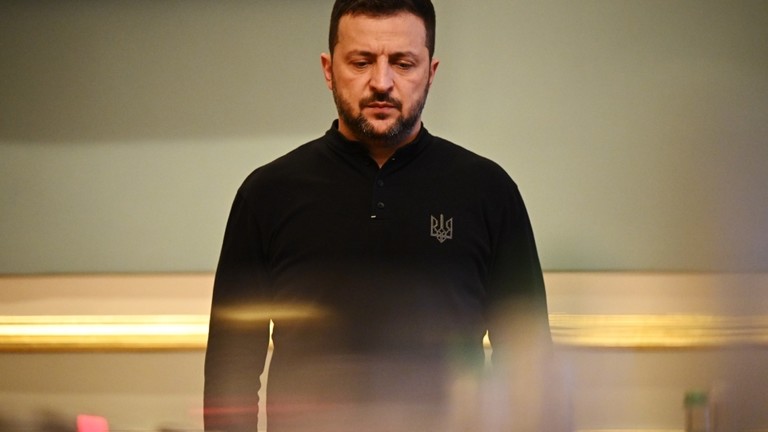
Zelensky cancels meeting fearing PR disaster – media
RT | September 19, 2024
The Ukrainian government has canceled a meeting intended to involve Vladimir Zelensky and Latin American leaders out of fear it would become a PR disaster, Brazilian newspaper Folha de S.Paulo reported on Tuesday. Very few of the invitees confirmed that they would attend the event, the paper wrote.
Kiev initially planned to hold the talks on the sidelines of the UN General Assembly scheduled to convene on September 24. According to Folha, the idea behind the meeting was to demonstrate symbolic support for Ukraine in its conflict with Moscow.
Ukrainian officials reportedly said it would be “an appropriate platform” for Zelensky to present what they called “relevant and reliable information” about the conflict. Kiev also wanted to rally support for the so-called Zelensky ‘peace formula’ – a set of demands put forward by Ukraine as pre-conditions for peace talks. Moscow has rejected the demands, calling them unacceptable.
Kiev had to scrap the meeting after it received only a “few confirmations of attendance,” Folha reported, adding that the government decided it was “necessary to avoid a situation that could possibly be interpreted as a lack of support.”
The paper did not provide the number of confirmations or name the leaders who said they would attend, except for Guatemalan President Bernardo Arevalo.
Ukraine has received steady support from the West since the conflict with Russia broke out in February 2022, but has failed to gain much backing in other parts of the world. Many Asian, African, and South American countries, including China, India, and Brazil, have remained neutral and called for a diplomatic resolution.
Mexico’s president-elect, Claudia Sheinbaum, recently told journalists she would pursue a policy of non-intervention on the world stage and has no plans to make a state visit to Ukraine. “Searching for the peaceful resolution of conflicts is the cornerstone of our foreign policy. This is our policy, and it won’t change,” she said on Wednesday.
Kiev has dismissed any proposals that are not in line with the ‘Zelensky formula’, claiming they play into Moscow’s hands. Last week, Zelensky rejected a six-point roadmap proposed by China and Brazil. Brazilian President Luiz Inacio Lula da Silva responded by saying he would not allow his country to be dragged into the conflict.
US has declared war on free speech – Russia
RT | September 15, 2024
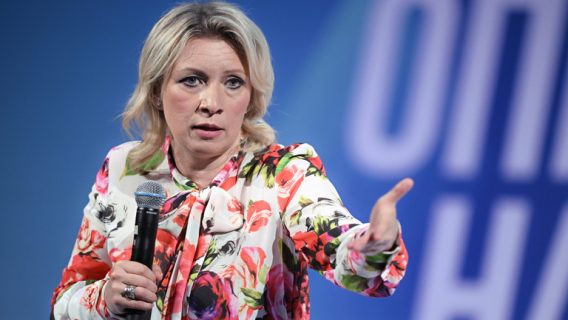
The US crackdown on Russian media amounts to a declaration of war on free speech, Foreign Ministry spokeswoman Maria Zakharova said on Sunday. She described the new sanctions against RT and other news outlets as “repressions unprecedented in scale.”
US Secretary of State Antony Blinken announced new sanctions against RT on Friday, accusing it of engaging in “covert influence activities” and “functioning as a de facto arm of Russian intelligence.” Earlier in September, Washington imposed sanctions on RT Editor-in-Chief Margarita Simonyan and three other senior RT employees over alleged attempts to influence the 2024 US presidential election.
“The US has declared war on freedom of speech throughout the world, turning to open threats and blackmail against other states in an effort to set them against the domestic media and establish sole control over the global information space,” Zakharova said, promising that the punitive measures Washington was using to target Russian media would not go unanswered.
She added that accusations of attempts to influence the elections are a mere “witchhunt” and “spy-o-mania” done to manipulate public opinion and protect its citizens from any information that is inconvenient for them.
The head of the State Department’s Global Engagement Center (GEC), James Rubin, told reporters on Friday that the “broad scope and reach” of RT was one of the reasons many countries around the world did not support Ukraine. The GEC has funded propaganda games aimed at children and forced Twitter to censor pro-Russian content. Rubin admitted last year that he wanted to use the GEC to shut down Russian media outlets around the world.
“We are going to be talking… in Latin America, Africa and Asia… to try to show all of those countries that right now broadcast – with no restrictions or control – RT and allow them free access to their countries,” Rubin said, arguing that RT’s presence has “had a deleterious effect on the views of the rest of the world about a war that should be an open and shut case.”
Reacting to the new restrictions, Simonyan argued that Washington’s claims about RT collaborating with Russian intelligence are a “classic case of projection.”
“The idea that you can’t achieve results without being part of the intelligence service has exposed them for what they are,” she said.
US Seizes Venezuelan Jet Plane Confirming who is the Rogue Nation
By Rick Sterling | Dissident Voice | September 7, 2024
The Biden/Harris administration is renewing its attacks on Venezuela. On Monday, September 2, US officials seized a jet plane belonging to the Venezuelan government when it was in the Dominican Republic for servicing, then flew it to Florida.
Contrary to a false report in the NY Times, the plane was not “owned by Venezuela’s Nicolas Maduro”. It is owned by the Venezuelan government and used for travel by various Venezuelan officials in addition to the president.
The NYT article claims, “The Biden administration is trying to put more pressure on Mr. Maduro because of his attempts to undermine the results of the recent presidential election.” This is another inversion of reality. The US government is trying to undermine the results determined by the Venezuelan National Election Council (CNE) and ratified by their Supreme Court.
Contrary to Western claims, the Supreme Court and Election Council are not synonymous with the government. They are approved by Venezuela’s elected national assembly. While one opposition member of the Election Council criticized the results, he did not attend the count or meetings. He does not ordinarily live in Venezuela and has returned to his home in the USA. Meanwhile, another opposition member of the Election Council, Aime Nogal, participated and approved the council’s decision.
Before the election, polls showed vastly different predictions. The US-funded polling company, Edison Research, showed the Gonzalez/ Machado opposition winning. Other polls showed the opposite. Polls are notoriously unreliable, especially when the poll is funded by an interested party. A better indication was the street demonstrations where the crowd in support of the coalition led by Maduro was near one million people. In contrast, the crowd for Gonzalez was a small fraction of that.
Increasingly, countries throughout the Global South are rejecting and criticizing Washington’s intervention in other nations’ internal affairs. On August 28, the president of Honduras, Xiomara Castro Zelaya, terminated the long standing extradition treaty with the United States and denounced US meddling after the US Ambassador commented negatively on Honduran – Venezuelan discussions. Along with many other Latin American countries but to the dismay of the US, Honduras recognized the results of the Venezuelan election.
For over twenty years, the US has been trying to overturn the Bolivarian revolution. In 2002, the US government and elite media supported a coup attempt against President Hugo Chavez. To their chagrin, the attempt collapsed due to popular outrage. Since then, there have been repeated efforts with the US supporting street violence, assassination attempts, and invasions. Under Obama, Venezuela was absurdly declared to be a “threat to US national security”. This was the bogus rationale for the economic warfare which the US has waged ever since. Multiple reports confirm that tens of thousands of Venezuelans have died as a result of hunger and sickness due to US strangulation of the economy. Again, the truth is the opposite of what Washington claims: the US is a threat to Venezuela’s national security.
Unknown to most U.S. residents, in December 2020 the U.N. General Assembly declared US unilateral coercive measures (sanctions) are “contrary to international law, international humanitarian law, the Charter of the United Nations and the norms and principles governing peaceful relations among States.”
Illegal U.S. measures were used to justify the kidnapping and imprisonment of Venezuelan diplomat, Alex Saab. They have now been used to justify the theft of a jet plane needed by Venezuelan officials.
Previously, sanctions were used to justify the seizure of Venezuela’s CITGO gas stations and freezing gold reserves in London. It comes after the U.S. and allies pretended for several years that an almost unknown politician, Juan Guaido, was the president of Venezuela.
The reasons for Washington’s repeated efforts to overturn the Bolivarian revolution are clear: Venezuela has huge oil reserves and insists on its sovereignty. Under Chavez and Maduro, the Bolivarian revolution has sought to benefit the vast majority of Venezuela’s people instead of a small elite of Venezuelans and foreigners. Washington cannot tolerate the idea that those resources are used to benefit the Venezuelan people instead of billionaires like the Rockefeller clan, which made much of its wealth from Venezuela.
Under the Bolivarian revolution, Venezuela insists on having its own foreign policy. In 2006, Venezuelan President Hugo Chavez denounced the U.S. invasion of Iraq and compared U.S. President Bush to the devil. In May this year, Venezuelan President Maduro denounced Israel’s genocide in Gaza and accused the West of being “accomplices.”
The cost of seizing Venezuela’s plane on foreign soil was probably greater than the $13 million value of the plane. So why did the Biden administration do this now? Perhaps it is to garner the votes of right-wing Cubans and Venezuelans in Florida. Perhaps it is to distract from their foreign policy failures in Gaza and Ukraine.
Whatever the reason, the theft of the Venezuelan jet plane is an example of U.S. foreign policy based on self-serving “rules” in violation of international law. It shows who is the rogue state.
President Xiomara Castro of Honduras is representative of the wave of disgust with US interference, crimes, and arrogance. In the past, Honduras was called a “banana republic” and known as “USS Honduras”. Now its president says, “The interference and interventionism of the United States … is intolerable. They attack, disregard and violate with impunity the principles and practices of international law, which promote respect for the sovereignty and self-determination of peoples, non-intervention and universal peace. Enough.”
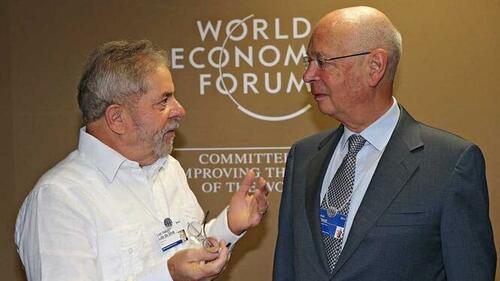
A multilateralist, but not a multipolarist: Lula shows his true face
By creating tensions with Venezuela and Nicaragua, Lula creates serious geopolitical problems in South America
By Lucas Leiroz | Strategic Culture Foundation | August 21, 2024
Brazilian President Luiz Inácio Lula da Silva has been the target of several recent controversies across the South American geopolitical scene. Contrary to the expectations of some naive leftists, Lula’s government is not acting according to a non-aligned guideline, but cooperating with Western powers in several aspects, mainly with regard to opposition to counter-hegemonic governments in Latin America.
To this day, Lula has not recognized the victory of Nicolás Maduro – the legitimate and democratically elected president of the Bolivarian Republic of Venezuela. This irresponsible attitude was easily expected from a political leader on the Brazilian right wing – like the previous president, Jair Messias Bolsonaro –, but it is something really surprising for the “left”, which historically has good relations with illiberal countries.
The Brazilian president’s international affairs advisor, former foreign minister Celso Amorim, explained that there is “no evidence” that the Venezuelan elections took place in a non-fraudulent manner. One of the “solutions” he proposed was even redoing the elections, which sounds absolutely ridiculous. Another possibility was for Maduro to form a joint government with the defeated opposition, which does not make any sense from a rational point of view.
In the same sense, Brazil and Nicaragua mutually cut diplomatic relations, expelling each other’s ambassadors. As a result, relations between Brazil and the two main counter-hegemonic countries in the Americas are deeply shaken. It is not known what Lula will do after the end of Maduro’s current term, as failure to recognize the recent victory could lead to a break in relations.
In practice, Brazil is functioning as an auxiliary to U.S. interests in South America, using the rhetoric of “democratic zeal” as an interventionist excuse to guarantee foreign interests in the region. Many supporters of President Lula are disappointed with these acts, but this was truly expected by the most qualified analysts.
Lula was never a “pro-multipolar” leader. The entire foreign policy of Lula and the Workers’ Party is based on a multilateralist worldview centered on the UN. Since the 2000s, Lula has been a leader encouraging dialogue between emerging nations, but at the same time he advocates a global consensus through the UN and other international organizations as regulators of relations between States – completely ignoring that these organizations are strongly biased and linked to a liberal ideology propagated from the western U.S.-EU axis.
In the 2000s, Lula’s stance was contesting and somehow “outsider”, as he dialogued with revisionist nations of the liberal order. However, Lula was never paradigmatic in his foreign policy and never proposed any radical project for real change in the structures of the global order. American hegemony was never challenged by Lula, but “mitigated”. His idea basically consisted of making the world economically more “equitable” and relations between States more “humane”. Western values, such as “democracy (in the Western understanding)” and liberalism, were never a problem for Lula.
In this sense, what seemed like something “dissident” in the 2000s today sounds like something conservative and insufficient. Today, emerging nations are much more organized and are capable of contesting American hegemony in an actually profound way. Mere multilateralism is insufficient, as there is a need to take a step towards real Multipolarity – which consists of reconfiguring the global power structure and not simply increasing multilateral dialogue and economic cooperation.
So, the same Lula who was an “outsider” in the 2000s is now showing himself to be a advocate for the “consensus”. Lula condemned the Russian operation in Ukraine – despite correctly refusing to participate in the sanctions –, which can be considered his first big mistake since the election. Lula later called Hamas’ Operation Al Aqsa Storm a “terrorist attack.” Despite taking a firm stance when criticizing Israel for the massacre in Gaza, Lula avoided going deeper into this issue, remaining inert in the face of the defense cooperation that exists between Brazil and the Zionist regime. Now, by destabilizing relations with counter-hegemonic countries in South America, Lula takes the definitive step so that there is no longer any doubt: his government is not aligned with the multipolar transition.
Lula continues to be a typical multilateralist leftist of the 2000s. Economic cooperation and multilateralism, for him, must be respected as long as the Western model of liberal democracy continues to be hegemonic. Unfortunately, with this type of stance, Brazil loses the opportunity to become one of the main players in the multipolar geopolitical transition process.
US Sees South America as Testing Ground for Political Spin Techniques – Russia
Sputnik – 05.08.2024
CARACAS -The position of recognizing or not recognizing elections in a sovereign country is a manifestation of colonial policy, and Washington continues to view Latin America as its own backyard and testing ground for political spin techniques, Russian Ambassador to Venezuela Sergey Melik-Bagdasarov told Sputnik.
After the announcement of the official election results in Venezuela, Moscow said the Venezuelan opposition should concede defeat. Kremlin spokesman Dmitry Peskov warned third countries against supporting attempts to destabilize the situation inside Venezuela.
“Even before the election in Venezuela, the US hinted that they would not tolerate the reelection of Nicolas Maduro. The very position of recognizing or not recognizing elections in a particular sovereign country is a clear manifestation of colonial policy. The people of Venezuela have made their choice. It must be respected. But it seems that such an approach is alien to Washington,” Melik-Bagdasarov said.
He explained that United States believes Latin America to be a testing grounds for election interference methods.
“The United States continues to view the Latin America region as its backyard and a testing ground for political technologies [political spin techniques]. According to President Nicolas Maduro, today we are seeing attempts to repeat the ‘Juan Guaido’ project with some changes,” the Russian diplomat added.
Venezuela’s presidential election was held on July 28, and the National Electoral Council declared Nicolas Maduro the winner.
Washington, without waiting for the results of the vote count and subsequent audit, called on the international community to recognize opposition leader Edmundo Gonzalez as the winner of the presidential election in Venezuela. US and EU lawmakers overseeing international relations on Friday threatened Maduro with “responsibility” if he does not voluntarily give up his powers as legitimate head of state.
The Ways of the Jewish Slave Traders

NOI RESEARCH GROUP • UNZ REVIEW • JULY 8, 2024
“As Mr. Yakub continued to preach for converts, he told his people that he would make the others work for them. (This promise came to pass.) Naturally, there are always some people around who would like to have others do their work. Those are the ones who fell for Mr. Yakub’s teaching, 100 per cent.” — The Most Honorable Elijah Muhammad, chapter 55 of Message to the Blackman in America titled “The Making of Devil”
“Three blessings a Jewish man is obligated to pray daily: ‘(Blessed art Thou,) Who did not make me a gentile; Who did not make me a woman; and Who did not make me a slave.’” — Babylonian Talmud, Menahot 43b–44a[*]
The story of the Jewish American experience that most Jews want to believe, and want the world to believe, is one of almost endless historical victimhood. They insist that they fled anti-Semitic oppression in Europe, landing safely on Ellis Island long after the Civil War’s end in 1865, and certainly some did. By their hard work, strong religious bonds, and reverence for communal education they succeeded against all odds, becoming, as Isaiah exhorts,[1] “a light unto the world.” As their story goes, they altogether eluded the ugly business of plantation slavery—but had they been here, they assure us, Jews would have been leading the abolitionists. After all, their own alleged enslavement to Pharaoh would have made them—of all the groups of Caucasian people—more sympathetic toward Black suffering.
To a trusting, Bible-believing people this Jewish self-portrait sounds plausible and is consistent with a Christian doctrine that sanctifies God’s Chosen People, the so-called Children of Israel (Deuteronomy 7:6–11). But the people who today call themselves Jews have now collided with their own Jewish scholars and historians who have presented an entirely different and far more troubling story about American Jewish history and the central role of Jews in the greatest crime in world history—the Black African Holocaust.
For the most part, Americans—white and Black—are entirely unaware that when the trans-Atlantic slave trade began in the 1500s, it was focused on shipping enslaved Africans to the sugar plantations of South America and the Caribbean islands centuries before expanding to the cotton fields of the American South in the mid-1700s. In the entire history of slavery in the western hemisphere as many as 9 out of 10 stolen Africans were shipped to those tropical climes—not to Mississippi, Alabama, Georgia, or South Carolina. The map below illustrates by the thickness of the arrows the relative proportions of Africans shipped to the New World, and, as shown, relatively few made it into what was to become the United States.

And all during this unprecedented racial tragedy Jews claim they were preoccupied in Europe, nowhere near the scene of the crime. Dr. Robert Swierenga very directly challenges that oft-repeated Jewish alibi (emphasis ours):
“At the birth of the United States in 1787 the Jews of the slave islands [Caribbean] outnumbered those in North America by five times and may have equaled those in England. Surinam had fourteen hundred Jews and Curaçao fifteen hundred—both nearly one half of the total white population. By contrast, the entire United States in 1790 numbered less than fifteen hundred Jews.”[2]
Seeking Religious Liberty?
But doesn’t this early Jewish presence in the “slave islands” conflict drastically with the prevailing image of the Jews as freedom-loving religious refugees? This is the perfect time to have an adult conversation about the trans-Atlantic slave trade and the Jewish role in it, and we must start by putting to bed the infantile notion endemic in this Jewish American fairy tale that Europeans sailed across the ocean “seeking religious liberty.” Every school child learns about the brave and pious Pilgrims who sailed to Plymouth on the Mayflower in 1620 “seeking religious liberty” from the tyrannical king of England. But the reality is that the “Pilgrims” were under contract with a private business named the Company of Merchant Adventurers, which expected them to acquire lumber, beaver and otter furs, and any other riches to be found or stolen. Thus, the “Pilgrims”—who referred to themselves as “separatists,” not as “pilgrims”—worked under contract to a private enterprise whose investors cared nothing about religion. More than a century before those Separatists, a Spaniard named Christopher Columbus was privately financed for his infamous voyage of discovery in 1492, by a wealthy Jew named Luis de Santangel. According to Simon Wiesenthal, in his book Sails of Hope (p. 168), “But for this man, Columbus’s expedition would never have taken place.” A practiced slave dealer, Columbus captured 600 of the aboriginal people he encountered to auction off back in Spain. And so it is with the Jewish newcomers who were seeking profits in sugar, cotton, tobacco, and other riches of the New World. Jewish scholar Yosef Hayim Yerushalmi describes them:
“[T]hese Jews engaged in an almost untrammeled range of economic activity, bore arms in the militias, owned land and ran plantations, and were represented in local councils. They had arrived at the closest point to full legal equality possible for Jews prior to the emergence of the modern nation-state.”[3]
They were seeking not “religious freedom” but the freedom to trade on an international scale. In fact, when they were first barred from acquiring Black slaves in the colonies they entered, the Jews considered it an act of “anti-Semitism.” The riches they sought could not be extracted without free and forced African labor. And as Jewish merchants followed their Yakubian directive—making others work for them—this is where the Black–Jewish relationship in the West truly begins.
In fact, there are scant references to the Jewish faith, Judaism, in any of the extant records of these early Jewish settlers. Nothing about Moses, Aaron, The Ten Commandments; no mention of the Ark of the Covenant; and nothing about being any “Light unto the Worlds.” If there were no profit in it, there was no “Jew” in it—and there was plenty of profit in Black slavery.[4]
Surinam, located in northeastern South America, holds the distinction of having the oldest Jewish community in the Americas, Jews having formed a synagogue in 1665. British Jewish historian Dr. Cecil Roth tracks them in his History of the Marranos: “The Jews of [Surinam] were also foremost in the suppression of the successive negro revolts, from 1690 to 1722: these as a matter of fact were largely directed against them, as being the greatest slave-holders of the region.
And here is where—unbelievably—we find the first inkling of the Jewish religion. The very first published Jewish prayer in their New World paradise, was a prayer titled “Old Hebrew Prayer in Time of Revolt of the Negroes,” in which the rabbi asked their God to give them strength “to conquer and destroy beneath their feet all cruel and rebellious Africans, our enemies who are planning evil against us…. Amen.”[5]

Roth continues: “These disturbances, together with the inroads of the climate, led ultimately to the abandonment of the settlement, of which nothing but the ruin now remains.” Dr. Roth hits on a theme here that may be difficult for most to comprehend. Not only were Jews present in the Americas long before the actual founding of the United States, but they were “the greatest slave-holders” in one of the major destinations of enslaved Africans. Further, these same “liberty-seeking” Jews actually went to war against the Africans that had escaped from Jewish plantations! Scholar Steven Sallie:
“There is little dispute, however, that Jews were quite often in charge of raiding adventures and the severe punishing of the maroons [escaped slaves]. In response to the cruelty of some Jews, maroons quite often attacked selected Jewish plantations. These Jewish-African conflicts were numerous, well organized, and persisted into the 1800s. Given their names, the leaders of the maroons tended to be Muslims.”[6]
One must also note that the decorated scholars quoted above spoke of “Jews” as a collective, neither making any qualification about the term that would limit responsibility or culpability to “some” or “a party among” or “a portion of” the Jewish community. This is particularly important given the magnitude of the crime they are describing—Black slavery.
Two major Jewish historical associations concur with, and elaborate on, this generally unknown aspect of the Jewish role in Black slavery. The American Jewish Historical Society (AJHS) is the oldest and most prominent, having its founding in 1892. Rabbi Marc Lee Raphael was its longtime editor of its publications when he wrote in 1983 that in the Caribbean and South America,
“Jewish merchants played a major role in the slave trade. In fact, in all the American colonies, whether French (Martinique), British, or Dutch, Jewish merchants frequently dominated. This was no less true on the North American mainland, where during the eighteenth century Jews participated in the ‘triangular trade’ that brought slaves from Africa to the West Indies…”
“FREQUENTLY DOMINATED” and “played a major role” are the terms Rabbi Raphael used almost a decade before the Nation of Islam published its never-refuted book on Jews and the slave trade, The Secret Relationship Between Blacks and Jews, Vol. 1. Drs. Swierenga, Sallie, Raphael, and Roth are all addressing a startling duality in the 500-year Black–Jewish relationship—that the Jewish self-image of a biblical people yearning for freedom directly contradicts the actual fact that the Jewish people were attracted to, and often dominated the economies in, the very places where existed the most brutal forms of chattel slavery.

The American Jewish Archives (AJA) was founded in 1947 by the “Dean of American Jewish scholars,” Rabbi Jacob Rader Marcus,[7] and is the repository of “ten million pages of documentation” on Jewish history in the Americas. Turns out, the AJA has a lot to say about these early “oppressed” Jews who migrated from Europe and somehow found unprecedented prosperity in the “slave islands.” In several articles the AJA casually makes several references to the interdependent relationship between the most brutal forms of slavery and the Jewish pilgrims: “[I]ndividual Jews can be found on almost every island of the Caribbean prior to the abandonment of slavery in the mid-nineteenth century,”[8] thus firmly linking slavery to the Jews’ very presence.
In the plantation colony of Surinam the AJA points out that Jews “fared well, thanks to the abundance of slaves and plantations…”[9] Rabbi Dr. Raphael adds that
“Slave trading was a major feature of Jewish economic life in Surinam, which was a major stopping-off point in the triangular trade. Both North American and Caribbean Jews played a key role in this commerce: records of a slave sale in 1707 reveal that the ten largest Jewish purchasers spent more than 25 percent of the total funds exchanged.”[10]
A more recent analysis of Surinam’s Jews by Dr. Aviva Ben-Ur only solidifies this linkage and adds to the horrors:
“The liberty Jews enjoyed…was inextricably intertwined with violent coercion….African slaves were routinely tortured on the village’s roadsides or along the fence enclosing the synagogue square.”[11]
The AJA hits on a theme that is repeated over and over again: “the abolition of the slave trade in 1819 and the formal emancipation of slaves in 1863 made plantations unprofitable and so decimated Jewish trade that [the Jews] all but disappeared.” Recognize the import of that statement: the freeing of the Black slaves “DECIMATED” and “DISAPPEARED” the Jewish community.
Jews had a presence on the island of Barbados in about 1628 and historian Stephen Fortune wrote that “the reputed prosperity of the Jews contrasted with the inexcusable and disgraceful plight of the slaves.”[12] Jews flocked to this hell on earth, and here again the AJA sounds the uniquely Jewish refrain: “Unfortunately, economic depression resulting from the earthquake and the emancipation of slaves led to the emigration of many of the island’s Jews.”[13] They pose the freeing of African slaves as a disaster equal to that of an earthquake—causing the “unfortunate” Jews to permanently flee.
The Encyclopedia Judaica (EJ) reports that the island of Curaçao was called the “Mother of the Caribbean Jewish communities,” yet Jewish scholars describe the island as a distribution center for the slave trade[14]— “a large slave depot.”[15] The AJA affirms that “The slave trade helped Curaçao to prosper, and her Jewish community grew rapidly,” even building a synagogue “for the convenience of the plantation owners who lived outside of the city.”[16] In fact, Jews owned 80 percent of Curaçao’s plantations, and Jewish slave traders were responsible for distributing the slaves from Curaçao to the Spanish American ports throughout the Caribbean and South America.[17] In 1765, the Jesurun family owned a record number of 366 Black people; the closest Gentile had 240 slaves. In one documented case in 1701, the Jewish Senior brothers arranged the shipment of 664 Africans; 205 perished en route to Curaçao.[18] And historian of the island Johan Hartog confirms a familiar Jewish theme—that the Jewish community suffered a “steep decline” the same year that the slave trade was curtailed.[19]
When Jews settled in Haiti, the Encyclopedia Judaica admitted,[20] they “specialized in agricultural plantations [but] with the slave revolts at the end of the 18th century, Jews gradually abandoned Haiti for other Caribbean islands or for the United States (New Orleans, Charleston).” Here again Jews are not sticking around for Black freedom; nor were they part of the process of achieving it. As soon as emancipation becomes a reality, Jews abandon Haiti for slavier environs.
Jamaica also had a robust Jewish colony, writes the AJA (p. 151): “The growth of the sugar industry enlarged the Jewish immigration and a number of Jews became plantation owners.”[21] The EJ boasted that “Jews with agricultural plantations controlled the sugar and vanilla industries, and …were the leaders in foreign trade and shipping.”[22] In its section on “Sugar”—the product most responsible for the enslavement of millions of Africans—the EJ puts Jews at the epicenter:
“The Jews of Brazil were not important as proprietors of [sugar] mills but rather as financial agents, brokers, and export merchants. When Brazil came again under Portuguese rule in the second half of the 17th century, many Jews emigrated to Surinam, Barbados, Curaçao, and Jamaica, where they acquired large sugarcane plantations and became the leading entrepreneurs in the sugar trade.”[23]
And then it reveals the other, now predictable, Jewish reality: “The abolition of slavery in the British dominions (1833) lowered the economy and scattered the Jews.” Note here the AJA writes that freedom for enslaved Blacks “scattered” the Jews.
Many of those Jews “scattered” to the North American mainland, says the AJA: “The end of slavery in the Caribbean saw Jews from the islands arriving almost daily…” Many ended up in the colony of Georgia, described as “suffering from the trustees’ idealistic insistence on no slaves or liquor…”[24] As the AJA frames it, “no slaves” meant Jewish “suffering.” In fact, the refusal of the leaders of Georgia to permit Black slavery triggered a Jewish exodus from the colony! By 1740 only three Jewish families were left. They bounced, according to Rabbi Marcus, because “Negro slavery was prohibited, the liquor traffic was forbidden.”[25] Jew Abraham De Lyon said he left for “the want of Negroes…whereas his white servants cost him more than he was able to afford.”[26]
From their own archival documents the most lettered Jewish scholars have painted an alarming portrait of the earliest of their founding fathers. In every case examined, Jewish “liberty” and prosperity were entirely dependent on Black slavery, and once Black “liberty” was achieved the Jewish world imploded and the Jews fled. The Encyclopedia Judaica summarizes nicely:
“A general decline of the Spanish-Portuguese communities in the Caribbean set in during the 19th century. Growing competition in agricultural products, the abandonment of the plantations by the Afro-American laborers due to the abolition of slavery, assimilation, and emigration were the main causes of this decline.”[27]
The Most Honorable Elijah Muhammad wrote that after being bound in Europe for 1,000 years, “they were loose (free) to travel over the earth and deceive the people.” Further, “They have been here now over 400 years. Their worst and most unpardonable sins were the bringing of the so-called Negroes here to do their labor.”[28]
Jewish scholars have thus affirmed that no one better fits Mr. Muhammad’s description of the traveling deceiver and “unpardonable” slave-making sinner than the Jew.
NOTES
[*] See also Michael Hoffman, Judaism Discovered (2008), p. 375.
[1] Isaiah 42:6; 49:6; 60:3.
[2] Robert Swierenga, The Forerunners: Dutch Jewry in the North American Diaspora (Detroit: Wayne State University Press, 1994), p. 36.
[3] Yosef Hayim Yerushalmi, “Between Amsterdam and New Amsterdam: The Place of Curaçao and the Caribbean in Early Modern Jewish History,” American Jewish History, vol. 72, no. 2 (December 1982), p. 190.
[4] Yda Schreuder, Amsterdam’s Sephardic Merchants and the Atlantic Sugar Trade in the Seventeenth Century (New York: Palgrave Macmillan, 2019), p. 70. Also, Steven S. Sallie, “The Role of the Semitic Peoples in the Expansion of the World Economy Via the Trans-Atlantic Slave Trade: A Literature Extraction and an Interpretation,” Journal of Third World Studies, vol. 11, no. 2 (Fall 1994), p. 173.
[5] “Miscellaneous Items Relating to Jews of North America,” Publications of the American Jewish Historical Society, vol. 27 (1920), pp. 223–24.
[6] Sallie, “The Role of the Semitic Peoples,” p. 173.
[7] https://www.americanjewisharchives.org/about/jacob-rader-marcus/
[8] Malcolm H. Stern, “Portuguese Sephardim in the Americas,” American Jewish Archives, vol. 44, no. 1 (Spring/Summer 1992), p. 142.
[9] Allan Metz, “Those of the Hebrew Nation…The Sephardic Experience in Colonial Latin America,” American Jewish Archives, vol. 44, no. 1 (Spring/Summer 1992), p. 226.
[10] Marc Lee Raphael, Jews and Judaism in the United States: A Documentary History (New York: Behrman House, 1983), p. 24.
[11] Jewish Autonomy in a Slave Society (Philadelphia: University of Pennsylvania Press, 2020), p. 76.
[12] Stephen Alexander Fortune, Merchants and Jews: The Struggle for the British West Indian Caribbean, 1650-1750 (Gainesville: University Presses of Florida, 1984), p. 109.
[13] Stern, “Portuguese Sephardim in the Americas,” p. 143.
[14] Lavy Becker, “A Report on Curacao,” Wisconsin Jewish Chronicle, December 5, 1969.
[15] Daniel M. Swetschinski, “Conflict and Opportunity in ‘Europe’s Other Sea’: The Adventure of Caribbean Jewish Settlement,” American Jewish History, vol. 72, no. 2 (December 1982), p. 236.
[16] Stern, “Portuguese Sephardim in the Americas,” p. 147; Emma Fidanque Levy, “The Fidanques: Symbols of the Continuity of the Sephardic Tradition in America,” American Jewish Archives, vol. 44, no. 1 (Spring/Summer 1992), pp. 184–85.
[17] Marc Lee Raphael, Jews and Judaism in the United States: A Documentary History (New York: Behrman House, 1983), p. 24.
[18] Isaac S. and Susan A. Emmanuel, History of the Jews of the Netherland Antilles (Cincinnati: American Jewish Archives, 1973), p. 77.
[19] Johan Hartog, Curaçao From Colonial Dependence to Autonomy (Aruba, Netherland Antilles, 1968), p. 276.
[20] Second Edition, Volume 4, p. 473.
[21] Stern, “Portuguese Sephardim in the Americas,” p. 151.
[22] Second Edition, Volume 4, p. 474.
[23] See also James C. Boyajian, “New Christians and Jews in the Sugar Trade, 1550–1750: Two Centuries of Development of the Atlantic Economy,” in The Jews and the Expansion of Europe to the West, 1450-1800, eds. Paolo Bernardini and Norman Fiering (New York: Berghahn Books, 2001), p. 476.
[24] Stern, “Portuguese Sephardim in the Americas,” p. 164.
[25] Jacob Rader Marcus, Memoirs of American Jews 1775-1865, vol. 2 (New York: KTAV Publishing House, 1974), p. 288.
[26] Edward D. Coleman, “Jewish Merchants in the Colonial Slave Trade,” Publications of the American Jewish Historical Society, vol. 34 (1938), p. 285.
[27] Second Edition, Volume 4, p. 470.
[28] Message to the Blackman in America, pp. 104, 267; “Is There a Mystery God?” Pittsburgh Courier, Aug. 18, 1956.
Republished from Nation of Islam Research Group
Chinese embassy dismisses US allegations of bases in Cuba as slander
Al Mayadeen | July 2, 2024
In response to ongoing allegations by the US regarding Chinese military bases in Cuba, the Chinese Embassy in Washington vehemently refuted these claims, labeling them as slanderous and malicious.
The remarks come after US think-tank Center for Strategic and International Studies (CSIS) published a report using satellite imagery to identify four alleged Chinese listening stations in Cuba, including one located near Guantanamo Bay.
“The US side has repeatedly hyped up China’s establishment of spy bases or conducting surveillance activities in Cuba. Such claims are nothing but slander. The Cuban side has already made a clarification,” Chinese Embassy spokesperson Liu Pengyu told Sputnik on Tuesday.
Liu stressed the need for the US to halt its ongoing effort to make malicious accusations against China without delay.
Additionally, Liu highlighted that the US maintains a leading role in global surveillance operations, which encompass monitoring its allies as well.
Brazilian experts warn of the risk of western intervention in the Amazon region
By Raphael Machado | Strategic Culture Foundation | June 17, 2024
On June 11, an important debate took place in the Brazilian Congress which could have some interesting repercussions. The event, called the “Debate on National Sovereignty in the 21st Century,” was held within the scope of the Foreign Relations and National Defense Committee of Congress, organized at the request of Representative Luiz Philippe de Orleans e Bragança.
The debate, held within one of the most important committees of the Brazilian Congress (as it deals precisely with fundamental state issues), included the participation of important specialists in military and intelligence matters, such as Commander Robinson Farinazzo, officer of the Brazilian Navy, the defense analyst Albert Caballé, and Professor Ricardo Cabral, former professor at the Naval War College, among others.
Referring to statements by former NATO officers, presidents, and prime ministers of various countries connected to the Atlantic Alliance, Farinazzo highlighted the fact that the fate of Brazilian territories, especially the Amazon region and its rainforest, is discussed in summits held outside Brazil, without the representation of Brazilian interests.
As an example, Farinazzo recalled a draft resolution in the United Nations Security Council, dated 2021, which aimed to categorize general climate issues as “security threats” that could be discussed, overseen, and operated within the framework of the Security Council. This draft was vetoed by Russia and India and did not have the support of China, which abstained.
Although the draft did not specifically mention the Amazon or Brazil, it is impossible to ignore the numerous references to the “internationalization of the Amazon,” seen as the “heritage of humanity,” in the context of the radicalization of ecoglobalist discourses created within the centers of knowledge and public policy of the Atlanticist West.
As jurist Carl Schmitt said, “whoever invokes humanity is trying to deceive.” Behind humanitarian discourse lie all the most brutal and nihilistic projects of the liberal Western elites. To prove this, we just need to look at how the narratives of “humanitarian intervention” were used in Libya, Iraq, and the Balkans over the past 30 years.
Indeed, in August 2019, American political scientist Stephen Walt published an article within the Belfer Center for Science and International Affairs speculating on the possibility of military actions legitimized by environmentalist discourse of defending “humanity” from “climate threats”. According to Walt, in the future, major powers might try to halt situations of environmental degradation through armed interventions in weaker countries, specifically mentioning Brazil as an example.
Less than a month later, The Guardian published an article by an author named Lawrence Douglas, in which he argued that the same logic applied to humanitarian interventions, such as the “Responsibility to Protect,” a globalist concept enshrined at the UN in 2005, should serve to legitimize the use of force against the geopolitical enemies of the Atlanticist West with a humanitarian/environmentalist veneer.
Indeed, at the event held in the Brazilian Congress, Stephen Walt’s article was specifically mentioned, along with many other pieces of evidence. It is necessary to recall, as Farinazzo did, that James Stavridis, former NATO Supreme Allied Commander and former SOUTHCOM Commander, claimed that fires in the Amazon Rainforest represented a security risk for the U.S., legitimizing their intervention in Brazil. Emmanuel Macron (who was warmly welcomed by Lula in the Amazon a few months ago) and Boris Johnson, former Prime Minister of the United Kingdom, have also publicly stated that the Amazon region does not really belong to Brazil, but rather is a “common good” of so-called “humanity.” David Milliband, Secretary of the Environment under Tony Blair’s government, even went so far as advocate for the privatization of the Amazon Rainforest in 2006.
All this was presented to the Foreign Relations and National Defense Committee of the Brazilian Congress with abundant evidence and sources.
If the issue of Amazon fires was the most “weaponized” against Brazil during the Bolsonaro government, now the topic that generates the most furious reactions from environmental NGOs in Brazil, as well as “concerned” comments from foreign bureaucrats, is the exploration of oil in the Equatorial Margin, as pointed out by Professor Ricardo Cabral in Congress.
This is a topic that is linked, as he pointed out, with the entire history of efforts to prevent or hinder the exploitation of Brazilian mineral and energy resources, usually under allegations of “environmental damage” or “violations of indigenous peoples’ rights” – narratives that put pressure for the loss of sovereignty over parts of Brazilian territory, which should, as the narrative goes, be under “international tutelage,” in a more refined and postmodern version of the old British privatization proposals.
The problem, as analyst Albert Caballé pointed out, however, is that the Brazilian defense industry is in crisis; a crisis that has lasted for several years already.
If until approximately the 1980s, Brazilian companies in the defense sector not only supplied most of the national military needs but were also exporters, especially to the Middle East and Africa, the neoliberal avalanche of the 1990s in a post-Cold War context led to a gradual dismantling of the sector and its denationalization, with several of the main Brazilian defense companies, such as Ares and others, coming under the control of multinational companies – almost always from the same Atlanticist countries that show interest in the “internationalization” of the Amazon.
The hypothetical scenario discussed in the Brazilian Congress for an interventionist action against Brazil, as presented by Farinazzo, mentions the possibility of a blockade of the main Brazilian ports by Atlanticist naval forces, in a sort of “anaconda strategy” (a tactic that is part of the manual of Admiral Mahan, the father of American geopolitics).
The concern of Brazilian experts and representatives specializing in defense and international relations, therefore, is that Western greed in an era of transition and geopolitical crisis could turn against Brazil – and that Brazil, if it does not quickly wake up to the contemporary risks and dangers, may not be able to face this challenge.
Featured Video
Chinese jet fuel and the myth of energy independence
or go to
Aletho News Archives – Video-Images
From the Archives
The Dirty Little Secret behind the “Global Terrorism Index”
The Omission of Israeli Terrorism in the Occupied Palestinian Territories
By Karin Brothers | Global Research | December 6, 2014
… The Israeli settlements — all of which are illegal – have been identified as a major impediment to peace. The refusal of a major “global” terrorism report to name the Israeli settlers as one of the groups most responsible for terrorism not only misrepresents a major source of regional violence but exposes the Global Terrorism Index as a propaganda tool that supports a U.S. agenda.
In recent years, governments have been attempting to thwart terrorism by blocking supportive fund-raising. When it comes to Israeli settlements, however, the US and Canada actually encourage fund-raising by giving organizations (such as Christian Friends of Israeli Communities (CFOIC) and the Jewish National Fund) financial support in the form of donor tax-deductions.
Charities which provide funds for the Israeli settlements should be regarded as terror-financing organizations. They should not only lose their tax-deductible status, but they should be banned because they support the violation of international humanitarian law. The terror-financing laws that are being strictly enforced for Muslim charities should be applied to Christian and Jewish charities as well. … Read full article
Blog Roll
 Aletho News
- Chinese jet fuel and the myth of energy independence
- Ukraine Sea Drone Fired From Libya Hit Russian Tanker in Mediterranean
- IRGC: Iranian forces launched no attacks during ceasefire hours
- Trump Administration Moves To Automate U.S. Military Draft Registration
- Spain orders reopening of Tehran embassy, condemns Israel’s carpet bombing of Lebanon
- Israel faces ‘unsustainable’ strategic crisis following 40-day war against Iran: Analyst
- Iran restricts Hormuz access to 15 vessels per day under ceasefire terms: Report
- The ‘Opposition Party’ Has Done Nothing to Stop the Iran War and Much to Goad Trump Into Continuing It
- Moscow backs Tehran on status of Lebanon in US-Iran deal
- How UK Regulator Ofcom Quietly Bypassed International Law to Police American Speech
- If Americans Knew
- Amnesty: Urgent – Protect Lebanese civilians from brutal escalation in Israeli attacks
- Is The War Against Iran Over?
- Inside the Israeli army’s propaganda wing
- Hundreds of Gaza Amputees Stranded in Legal Limbo
- The gallows law: Israel moves toward executing Palestinian children
- Tucker Carlson: The Path to Peace requires ending ‘special alliance’ with Israel
- This is ceasefire? Israel’s biggest massacre yet in Lebanon, another journalist killed in Gaza – Daily Update
- Tucker Carlson on Israel: This Is the Behavior of an Ally? Really?
- Gazans face a triple crisis: severe shortages of water and bread, healthcare in tatters
- NY Times reports how Netanyahu took the US into Iran War
- No Tricks Zone
- An Inconvenient Tree: Uncovered In Alps… Europe Much Warmer Than Today 6000 Years Ago
- New Study Reports A 60% Slowdown In Greenland’s Ice Loss Rate In The Last Decade
- Low Intensity Tornado Wrecks Major Solar Farm, Creating A Potential Toxic Dump
- New Study Finds Warming Saves Lives…Cold Temperatures 12 Times More Deadly Than Excess Heat
- German Science Blog Accuses PIK Climate Institute Of Hallucinating Climate Tipping Points
- Devastating Assessment Of Comirnaty Vaccine By Former Senior Pfizer Europe Toxicologist
- New Study: CO2 Is ‘Effectively Negligible’ As An Explanatory Climate Change Factor Since 2000
- Former Pfizer Toxicologist Dr. Helmut Sterz Tells Bundestag Hearing Pfizer Vaccine Should Have Never Been Approved
- Energy Expert: Germany’s Nuclear Phaseout Was A “500 Billion Euro Mistake”
- New Research: South Australia’s Mid-Holocene Sea Surface Temperatures Were 4°C Warmer Than Today
 Aletho News