Reuters journalist killed in Lebanon by Israeli fire – media
RT | October 13, 2023
A Reuters videographer has been killed in southern Lebanon, the news agency said on Friday. Six other journalists were injured in the incident. The group was hit by Israeli artillery, Al Jazeera and Lebanese security sources said.
“We are deeply saddened to learn that our videographer, Issam Abdallah, has been killed,” Reuters said in a statement. Abdallah was providing a live video feed from near the Israeli border at the time of his death, the agency continued, adding that it is “urgently seeking more information” from authorities in the region.
Reuters journalists Thaier Al-Sudani and Maher Nazeh were wounded in the same incident, while Al Jazeera’s Elie Brakhya and Carmen Joukhadar and Agence France-Presse’s Christina Assi and Dylan Collins were also injured. It is unclear whether all six were hit by the same shell or by different projectiles.
A Lebanese security source told AFP that Israeli forces were responsible, and Al Jazeera blamed the incident on “Israeli bombing.”
Around the time of the incident, the Israel Defense Forces (IDF) said that its troops were responding with tank and artillery fire to shooting from Lebanese territory.
Earlier on Friday, the IDF said that an explosion had occurred at a barrier along the border near Alma al-Shaab, a Lebanese village where the news crews were reporting from. The IDF said that its forces responded to the explosion with artillery fire.
Abdallah’s death brings the number of journalists killed since the start of the Israel-Hamas war on Saturday to 11, according to the Committee to Protect Journalists. Of the other ten, nine died in Israeli airstrikes on Gaza, while one Israeli photographer was killed by Hamas militants at Kibbutz Nahal Oz in southern Israel.
US in a quandary over Israel’s war on Gaza
BY M. K. BHADRAKUMAR | INDIAN PUNCHLINE | OCTOBER 13, 2023
The US Secretary of State Antony Blinken’s press conference on Thursday concluding his visit to Israel conveyed three things. One, the Biden Administration will be seen as backing Israel to the hilt by way of meeting its security needs but Washington will not be drawn into the forthcoming Gaza operations except to arrange exit routes in the south for hapless civilians fleeing the conflict zone.
Two, Washington’s top priority at the moment is on engaging with the regional states who wield influence with Hamas to negotiate the hostage issue. Fourteen US citizens in Israel remain unaccounted for. (White House confirmed that the death toll in the fighting now includes at least 27 Americans.)
Three, the US will coordinate with the regional states to prevent any escalation in the situation to widen the conflict on the part of Hezbollah. Although the US cannot and will not stop Israeli leadership on its tracks apropos the imminent Gaza operation, it remains unconvinced.
Blinken was non-committal about any direct US military involvement, and the chances are slim as things stand. Most important, even as Blinken could hear the war drums, he also cast his eye on a future for Israel (and the region) where it will be at peace with itself, would integrate into the region and concentrate on creating economic prosperity — metaphorically put, beating its swords into plowshares in a Biblical Messianic intent.
That is to say, despite the massive show of force off the waters of Israel, with the deployment of two aircraft carriers along with destroyers and other naval assets and fighter jets off the waters of Israel, the Biden Administration is profoundly uneasy about any escalation of the conflict into a wider war. If the US senses that this is a catastrophe that Israel allowed to happen, that remains a strictly private thought.
Even as Blinken was heading for Tel Aviv, US House Foreign Affairs Committee Chairman Michael McCaul told reporters in Washington on Wednesday following a closed-door intelligence briefing that “We know that Egypt has warned the Israelis three days prior that an event like this could happen. I don’t want to get too much into classified, but a warning was given. I think the question was at what level.”
Shortly after McCaul spoke to reporters in Washington, an anonymous Egyptian official confirmed to the Times of Israel that Cairo’s agents did warn their Israeli counterparts about a planned Hamas attack, but that this warning may not have made it to Netanyahu’s office.
These disclosures would embarrass the Israeli government, as Saturday’s surprise attack can be viewed as a catastrophic failure for Israel’s intelligence services. In a brutally frank statement on Thursday, the Chief of General Staff of the Israel Defense Forces General Herzi Halevi admitted, “The IDF is responsible for the security of our nation and its citizens, and we failed to do so on Saturday morning. We will look into it, we will investigate, but now it is time for war.”
This failure will impact the decision-making in Tel Aviv. Gen. Halevi described Hamas as “animals” and “merciless terrorists who have committed unimaginable acts” against men, women and children. He said that the IDF “understands the magnitude of this time, and the magnitude of the mission that lays on our shoulders.”
“Yahya Sinwar, the ruler of the Gaza Strip, decided on this horrible attack, and therefore he and the entire system under him are dead men,” the general added, vowing to “attack them and dismantle them and their organisation” and that “Gaza will not look the same” afterward.
Make no mistake, the Israeli objective will be to use overwhelming force with its most advanced weapons, including powerful bunker-busting bombs, to inflict crippling losses on Hamas formations so that the movement cannot wage an armed struggle for many years. A ground operation is to be expected any day.
It is improbable that Blinken would have even tried to dissuade Prime Minister Benjamin Netanyahu from going ahead with a brutal operation. He told the media that the US would rather leave it to Israel to do what needed to be done. Meanwhile, the US deployment will not only aim to enhance surveillance, intercept communications, and prevent Hamas from acquiring more weapons, but also act as deterrent.
That said, the US cannot afford to watch passively. Washington has no choice but to limit the expected fighting in the coming days and weeks in Gaza to ensure that it does not spread to other areas. Thus, the US force projection specifically serves as a deterrent to Hezbollah, which possesses a vast armoury of 150,000 missiles that can be launched at major cities in Israel, potentially leading to a broader war not only in Gaza but also in Lebanon, drawing others into the conflict.
Israel knocked out of service the airports in Damascus and Aleppo in Syria in missile strikes simultaneously on Thursday, presumably to prevent reinforcements reaching Lebanon. Iran’s foreign minister Hossein Amir-Abdollahian was due to travel to Syria and Lebanon in the weekend.
Through the past four decades, the US and Iran have made a fine art of communicating with each other in dangerous times to set ground rules to avoid confrontation. This time around too, it is happening.
Certainly, the speech by Supreme Leader Ayatollah Ali Khamenei on Tuesday on the conflict situation, which was translated into Hebrew by the Iranians and disseminated in an unprecedented move, conveyed a subtle message in three parts to both Israel and the US, signalling essentially that Tehran does not intend to get involved in the conflict. (See my blog Iran warns Israel against its apocalyptic war.)
In turn, the US has signalled that it has intelligence showing that key Iranian leaders were surprised by the Hamas attacks on Israel. Equally, Iranian President Ebrahim Raisi’s phone conversation with Saudi Crown Prince Mohammed bin Salman on Wednesday — their first ever conversation which Tehran initiated — harped on efforts to “halt the ongoing escalation.”
The ‘known unknown’ scenario
Yet, the big question is, how far the Biden Administration would be confident about the success of any Israeli military incursion into Gaza. During the press conference in Tel Aviv, Blinken underscored in a subtle way the importance of “lessons” learnt from past experiences. The point is, Israel will be involved in urban warfare in a densely populated area with a population of 2.1 million people.
Gaza has an average of 5,500 people per sq. km, and there are bound to be heavy civilian casualties caused by Israel’s advanced American weaponry, which would lead to an international outcry, including in Europe, and lead to condemnation of not only Israel but the US as well. However, Israel is in a defiant mood and Netanyahu needs at least some of the operation’s goals achieved before agreeing to a ceasefire.
More importantly, Israel needs an exit strategy, if past experiences in Lebanon and Gaza gave any lessons. Colin Powell’s Pottery Barn rule comes into play — ‘You break it, you own it.’
An extended occupation of Gaza will be an extremely dangerous outcome fraught with great risks, given the deep economic, religious, and social roots that Hamas enjoys. Suffice to say, the Israeli military will be hard-pressed to show “success” and head for the exit door.
Besides, if other Palestinian groups and organisations in the West Bank make decisions that advance Hamas’s strategic goals, all bets are off, as Israeli military will face a two-front war. In fact, the conditions for a third intifada do exist in the West Bank.
And in such a scenario, the advantage goes to Hamas, which would position itself as potentially the appropriate and perhaps the sole alternative after Palestinian Authority President Mahmoud Abbas, who is now 87 years old.
Again, in a worst case scenario, it cannot be ruled out that the Arab Israeli population may draw inspiration from Hamas, and if their violent eruption in 2021 is anything to go by, the long-term viability of the state of Israel will be put to test.
Suffice to say, the best solution lies in a paradigm shift in the Israeli statecraft away from its primacy on coercion and brutal force. Blinken’s remarks suggested that the US hopes that when the dust settles down, with the helping hand of friendly Arab countries such as Saudi Arabia, the UAE, Egypt and Jordan, a turnaround to calm the situation and reach a ceasefire might be possible.
Of course, the longer that takes, the greater the strain it will put on the US-Israeli ties and the harder it will become for the Biden Administration to maintain an equilibrium in what is already a troubled relationship with Netanyahu. Fundamentally, Israel needs to come terms with the new reality that they are no longer invincible or the dominant power in the West Asian region.
Israel shells mosque in Lebanon’s Dhahira

MEMO | October 12, 2023
Israel has shelled the Ahl Al-Qur’an Mosque in the town of Al-Dhahira in the Tyre district of southern Lebanon, Anadolu news agency reported.
Anadolu’s correspondent in southern Lebanon reported that the mosque and dozens of nearby homes were directly hit by the Israeli artillery shelling.
Lebanese army patrols are inspecting damage caused by the Israeli bombing.
Ali Al-Suwaid, a local resident, said the town was exposed to random Israeli bombing, forcing its people to flee to safer neighbouring villages. Al-Suwaid added that the Israeli shelling had hit his house while he and his family were inside the house, causing material damage to the building.
Three civilians were injured, he added, and were taken to hospital for treatment.
Earlier yesterday, three people were injured as a result of Israeli bombing on border villages and towns in the western sector of southern Lebanon, according to government media.
Netanyahu wants US involved in war – ex-Pentagon official
RT | October 11, 2023
Israeli Prime Minister Benjamin Netanyahu would like Washington directly involved in the conflict with Hamas because he hopes to expand the war to Lebanon and Iran, former senior security policy analyst at the US Department of Defense, Michael Maloof, told RT on Wednesday.
On Monday, the US ordered the aircraft carrier USS Gerald R. Ford and five guided missile destroyers to the Eastern Mediterranean. According to Maloof, this “meets Netanyahu’s wildest dreams.”
“He wanted the US involved in this conflict,” the former Pentagon official told RT.
Netanyahu “wants to open up the war with Lebanon, by attacking Hezbollah” in pursuit of his ultimate objective, “to bomb Iran’s nuclear facilities,” Maloof added. For that to happen, “he has to have a Gulf of Tonkin moment, if you will.”
Maloof recalled how US President Lyndon Johnson essentially started the Vietnam War by sending ships to the Gulf of Tonkin in 1964. An alleged North Vietnamese attack on two US destroyers was then used as a pretext for direct involvement.
The US has also pledged to help Israel with deliveries of weapons and ammunition, with the Pentagon insisting it has enough to do so and continue supplying Ukraine. Maloof is skeptical of that assertion, however.
He also told RT it was “not surprising” that some of the weapons Washington had sent Kiev ended up in the hands of Hamas.
That accusation was first made by former Russian President Dmitry Medvedev. Ukraine’s military intelligence, the GUR, responded on Monday by accusing Russia of sending captured Western weapons to Hamas militants in a “false flag” operation designed to make Kiev look bad to its backers.
Israel has neither confirmed nor denied the weapons claim, but rejected the Ukrainian insinuations of Russian involvement in the Hamas attack as “complete nonsense.”
Israel will suffer much more damage from this war than it might expect
By Abbas Juma | RT | October 10, 2023
On October 7 the world was shocked by another flare-up of the Palestinian-Israeli conflict, and, this time, a very serious one. Not only did Hamas fire rockets at Israel, but it also penetrated Israeli territory. The operation, called Al-Aqsa Flood, has been unprecedented in terms of audacity and planning. Over a thousand Israelis have been killed, it’s estimated, and more than 3,500 wounded, territories were captured, military personnel and civilians were taken hostage. Israeli Prime Minister Benjamin Netanyahu announced the start of a full-scale war, promising to leave the Gaza Strip in ruins.
The current events were a result of the biggest failure of Israel’s state security system in recent history. They have severely shaken the belief in the “omnipresence” of the Mossad (Israel’s intelligence service) and the invincibility of the Israel Defense Forces (IDF). For many hours, the Israeli army was utterly helpless as Palestinian armed groups attacked the country. Israeli intelligence also failed to prevent the catastrophe in any way. Meanwhile, even the day chosen by Hamas for the start of the operation was quite symbolic – the 50th anniversary of the 1973 Yom Kippur War.
Presently, the Israeli authorities have only one way out– to wash away their dishonor with the blood of the enemy. This could be done by pulling ground troops into Gaza and dealing a destructive blow to Hamas. Things, however, are further complicated by the fact that Hamas is not alone. It is backed by Iran and the Lebanese militant organization Hezbollah. Earlier, Hezbollah promised to open a second front, and today it openly joined the armed conflict on the side of the Palestinians. So far, it has taken action only from the border area. The sides are exchanging strikes, Hezbollah already has deaths, for which the leadership of the movement promised to take revenge.
Experts note that Hezbollah possesses advanced weapons, considerable combat experience, and has the full support of Tehran.
No need to underestimate the opponent
Former US Secretary of State Mike Pompeo has warned that Hezbollah has become more dangerous than ever in recent years. With major victories on the battlefield in Syria, huge weapons arsenals in Lebanon, and powerful allies throughout the region, Hezbollah is at the height of its military and political power, and is at its strongest since its founding in 1985.
It is not publicly known exactly what type of weapons Hezbollah possesses and how many weapons it has, or how large the organization’s combat units are (Hezbollah is not just a paramilitary formation, but a legitimate political party in Lebanon). However, some information is available. The publicly available data and observations, as well as information from people tied to the organization, allow us to draw certain conclusions.
The potential to surprise
Theoretically, everything that the Iranian military-industrial complex has to offer can be transferred to Hezbollah fighters. This includes dozens of types of missiles and drones. Moreover, Tehran aids Hezbollah with hundreds of millions of dollars annually. This means that Hezbollah can offer serious resistance to Israel not only on land, but also at sea and in the air. There is evidence that in recent years Hezbollah has acquired advanced naval military equipment, including Yakhont and C-802 anti-ship cruise missiles, as well as UAV submarines.
It also possesses ballistic missiles. Experts say that the range of Iranian missiles is 500-to-700 kilometers, which allows them to hit any point on the map in Israel.
As for the number of fighters, two years ago Hezbollah’s Secretary General claimed that the organization has about 100,000 trained fighters. Hassan Nasrallah stressed that this is only the number of professional soldiers. The organization may also enlist the support of numerous allied groups and followers from around the world.
A focus on missiles and more
Hezbollah’s arsenal of missile weapons has steadily grown since 2006 (the Second Lebanon War). According to media reports, it currently has about 200,000 missiles, including high-precision, intelligent missile systems, as well as drones and air defense systems.
Russia’s Kornet anti-tank missile system was used during battles in southern Lebanon in 2006, and was able to hit Israel’s Merkava tanks. As for the high-precision missiles that Netanyahu mentioned at the UN in 2017 and 2018, these are Zelzal artillery rockets (160-km range) which Iran actively used in the war with Iraq (1980-1988), Zelzal-2 artillery rockets (210-km range), and the Fateh-110 surface-to-surface ballistic missile. The latter was used during Operation Martyr Soleimani, launched by the Iranian Islamic Revolutionary Guard Corps (IRGC) against the US military in Iraq in response to the assassination of the commander of the Quds Force, General Qassem Soleimani, who was killed in Baghdad.
It is also known that the Iranians handed over countless artillery pieces and shells to their Lebanese colleagues. Moreover, Hezbollah possesses many heavy armored vehicles. Some of them we’ve seen during the Syrian campaign – for example, T-55, T-72, and T-80 tanks. The organization also has various types of infantry fighting vehicles and armored personnel carriers, the 2S1 Carnation self-propelled howitzer, the Shilka anti-aircraft self-propelled weapon system, and more.
Hezbollah is capable of firing 3,000 rockets per day across Israeli territory, and can reach targets at any distance. Experts also claim that, as of 2021, the Lebanese party had about 2,000 unmanned aerial vehicles (UAVs). Considering Iran’s highly successful development of combat drones, there is little doubt that this is indeed true.
Conclusions
Israel’s situation is further complicated by the existence of an extensive network of underground tunnels used by Hezbollah fighters for moving around, transporting military equipment, and storing weapons. The IDF regularly destroys tunnels stretching from southern Lebanon to northern Israel, but even the Israeli military recognizes that the number of secret underground passages is overwhelming, and it is impossible to destroy all of them.
Gadi Eizenkot, the 21st Chief of General Staff of the IDF, often noted that these tunnels allow Hezbollah to carry out unexpected strikes. However, the organization continues developing in further ways; it trains hackers and pays increasing attention to information technologies. Five years ago, I was able to interview Hezbollah’s media officer Muhammad Afif. This is what he told me at the time:
“We confront our enemies at all possible levels – including through intelligence services, special forces, ideology, and of course, the Internet. We do not intend to lag behind our opponents in anything. Hezbollah closely watches Israel’s every move. Any new technology that they have, we have too. Hezbollah has a unit that specializes in electronic warfare and hackers. We pay a lot of attention to advertising, PR, and social networks. Of course, we cannot say that we are unrivaled in this, but it is a promising direction. Especially among young people who want to work online and know how to do it. For our part, we provide them with everything they need for training and work. Not only Lebanese people are involved – many young people from abroad support Hezbollah.”
Considering all of the above, we may draw several important conclusions. If Israel wins a full-scale war with Hezbollah, it will surely be a Pyrrhic victory. Hezbollah will also suffer irreparable damage as a result of a direct clash with Israel. However, there is a fundamental difference in the principles of the two sides. Hezbollah is an organization that was created (and exists) to fight and die, once it has fulfilled its mission of mortally wounding the enemy. The question is, would Israel be ready to do the same?
Abbas Juma is an international journalist, political commenter, Middle East and Africa specialist.
Hezbollah Stands By Palestine by Word and Deed, Hits Israeli Posts in Shebaa Farms
Al-Manar | October 8, 2023
Hezbollah announced on Sunday it had targeted three Israeli posts in occupied Shebaa Farms, in a clear message of solidarity with Palestinian people and resistance.
In a statement, Hezbollah Media Relations declared that Units of Martyred Commander Imad Mughniyeh hit three Israeli posts in occupied Shebaa Farms.
“On the path to liberate the remaining part of our occupied Lebanese land and in solidarity with the victorious Palestinian resistance and the steadfast Palestinian people, the groups of the martyr commander Hajj Imad Moghniyeh in the Islamic Resistance carried out an attack this Sunday, October 08, 2023, targeting 3 Zionist occupation sites in the occupied Lebanese Shebaa Farms region,” the statement, carried by Al-Manar, read.
It named the three sites: Radar, Zibdin and Ruweissat Al-Alam. The resistance fighters used a significant number of artillery shells and guided missiles, resulting in direct hits on these sites, the statement added.
Al-Manar reporter in south Lebanon Ali Shoeib reported the shelling of the Israeli post.
Earlier on Saturday, Hezbollah lauded the heroic Operation Al-Aqsa Flood, stressing that the resistance leaderships in Lebanon and Palestine have been in full coordination.
Iran Hails Resistance Allies’ Push to Reshape World Order, Weaken US ‘Hegemony’

People raise Palestinian, Lebanese and Hezbollah flags during a rally in solidarity with the Palestinians, on the outskirts of the southern Lebanese village of Kfarkila, near a United Nations Interim Force in Lebanon (UNIFIL) armoured personnel carrier.
By Ilya Tsukanov – Sputnik – 02.09.2023
Iran joined the Shanghai Cooperation Organization and BRICS this summer, and has been working to expand bilateral cooperation with both Russia and China. Tehran is also the leader of an informal alliance of regional countries, including Syria, Lebanese militant group Hezbollah, and Iraqi Shia militias, known as the Axis of Resistance.
Iran’s foreign minister has praised the struggle in the Middle East to resist and undermine US dominance and create a new international order.
“The international system is undergoing fundamental changes and we are witnessing new actors in the international arena,” Foreign Minister Hossein Amir-Abdollahian said in a meeting with political groups in Beirut, Lebanon on Friday.
“The US is trying to maintain its hegemony, but the region and the world understand very well that America cannot exercise its hegemony, and on the contrary, the Resistance is powerful and can achieve its will powerfully,” Amir-Abdollahian added.
Today, the Iranian top diplomat said, “the position of the Resistance in the region cannot be ignored,” and is “being noticed by the West,” including as far as the Israeli-Palestinian crisis is concerned.
Separately, in talks with his Lebanese counterpart Abdallah Bou Habib, Amir-Abdollahian stressed that “the US sanctions regime cannot hinder the economic relations between Iran and Lebanon,” just as “it has failed to impact Iran’s cooperation with Iraq, Turkiye, Pakistan, Central Asia and the Caucasus.”
Iran is ready to provide further assistance to Lebanon to help Beirut resolve its long-running fuel and electricity crisis, he said. This includes readiness to build a network of power stations with a capacity of 2,000 megawatts.
Bou Habib praised Iran for its support for Lebanon in the nation’s time of crisis, and expressed readiness to further expand cooperation.
Lebanon’s political and economic crisis, which began in 2019, has left the country in economic ruin and run by a caretaker government. The post of president has been vacant since last October, when President Michel Aoun resigned at the end of his term.
Amir-Abdollahian also met with Hassan Nasrallah, secretary-general of the powerful Lebanese political party and militant group Hezbollah, which has forged close ties with Iran both in Lebanon and in Syria, where Hezbollah fighters backed by Revolutionary Guard Quds Force advisors have fought jihadist extremists for over a decade.
In the talks with Bou Habib, Amir-Abdollahian reiterated Iran’s long-stated position that “any normalization of relations with the Zionist regime will be detrimental to the entire region.” Iran will “continue to support and assist the Axis of Resistance, to preserve the Lebanese national interest, in the face of Israeli attacks and ambitions that threaten this entire region,” he said.
The Iranian diplomat also commented on the “positive developments” in relations between Iran and Saudi Arabia following the surprise normalization of relations earlier this year, saying that these processes “will have a positive impact on the entire region,” including for Lebanon.
At a press conference at the end of his visit, Amir-Abdollahian also rejected allegations by France – the European power which once controlled Lebanon as a colony, of meddling in Lebanon’s affairs.
“I advise Mr. Macron to focus on the situation inside France instead of paying attention to questions of interference in other countries,” he said. “Iran has always played the most constructive role in helping Lebanon,” he added.
Earlier in the week, the French president told a conference of French ambassadors that stopping Iranian “interference” was a “key element” in resolving Lebanon’s political standoff.
Amir-Abdollahian’s Beirut visit was preceded by a trip to Damascus on Thursday for talks with President Bashar Assad and other Syrian officials. Amir-Abdollahian slammed the illegal presence of US troops in eastern Syria, and blasted Israel for its ongoing campaign of airstrikes against the war-torn country.
Known to jealously guard its security and foreign policy independence, and the defense of its interests even against far larger and more powerful foes, including the US, Iran has dramatically ramped up cooperation with Russia and China in recent years as part of ongoing processes related to Eurasian integration. Iran joined the Shanghai Cooperation Organization in July, and acceded to the BRICS bloc late last month. Last week, a senior Islamic Revolutionary Guard Corps commander and advisor to Supreme Leader Ayatollah Ali Khamenei said that Iran sees a maritime-oriented economy and cooperation with Russia and China as keys to countering the impact of US sanctions.
Israel threatens to strike ‘every meter’ of Lebanon
The Cradle | August 8, 2023
Israel’s Defense Minister, Yoav Gallant, said on 8 August in a message addressed to both Hezbollah and the Lebanese government, that Tel Aviv is prepared to strike “every meter” of the country.
“Do not make a mistake, we do not want war, but we are ready to defend our citizens, our soldiers, and our sovereignty,” the minister said.
“We will not hesitate to employ all of our power and to attack every meter of Hezbollah and of Lebanon … and return Lebanon to the stone age,” he added.
Gallant said that Hezbollah “might mistakenly think that they can test Israel” due to the deep internal crisis it is facing, and the vow made by many of its army reservists to boycott military service protests against the government’s judicial reform program.
He affirmed, however, that Israel would not be divided in the event that Hezbollah threatened it with war.
Gallant’s threats came just hours after the Lebanese army mobilized its naval forces in response to Israeli boats that violated Lebanese sovereignty on 8 August.
Al-Mayadeen news outlet observed the Israeli boats entering Lebanon’s territorial waters via a camera located in the Naqoura area while the Lebanese army was escorting a tour of dozens of journalists to the southern borders.
Recently, there has been a series of Lebanese responses to ongoing Israeli violations of the country’s sovereignty. These violations include excavations on Lebanon’s side of the border, which serve as the basis for an Israeli plan to build a defensive wall.
Most recently, in early July, Israel annexed the northernmost part of the already occupied southern border village of Ghajar – which is internationally recognized Lebanese territory. The move drew widespread condemnation and has exacerbated the existing tensions on the border.
As a result of constant Israeli incursions, the Lebanese and Israeli militaries came close to facing off on the border last month. The tensions also relate to an outpost erected by Hezbollah earlier this year in the Israeli-occupied Shebaa Farms area – which has been under occupation since 1967.
Despite Israeli threats, complaints to the UN, and pressure from Washington, the Hezbollah outpost remains in place.
Last week, Israeli National Security Adviser Tzachi Hanegbi said that there is a “weakening in the policy of self-restraint” by Hezbollah on the border.
Israel worried Hezbollah’s air defense systems will ‘limit freedom of action’ over Lebanon
The Cradle | July 1, 2023
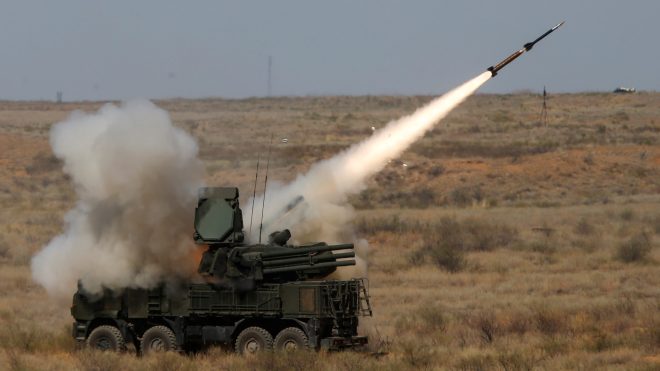
Israeli military planners are concerned about what they describe as “a significant change in the concept of air defense by Hezbollah in Lebanon” after the resistance group “doubled” the number of air defense systems in its possession, according to a report by Maariv newspaper published on 30 June.
The report cites unnamed military officials saying the resistance’s air defense systems will “restrict the freedom of action of the Israeli Air Force in Lebanon.”
“[Hezbollah] doubled the amount of air defense systems in its possession during the last five years … these defense systems are based mainly on modern Iranian systems,” the report adds.
Furthermore, Tel Aviv claims Hezbollah is in possession of the SA8 and SA22 Russian air defense systems, which have been previously deployed in Syria.
“The attack by an Israeli drone, in August 2019, on a facility in a building in the heart of the southern suburbs of Beirut … initiated the turning point in Hezbollah’s strategy, leading to the threat by [Secretary General Hassan Nasrallah] … to start shooting down Israeli drones,” the report highlights.
“Hezbollah implemented this threat two months later when it fired an SA8 missile at an Israeli Hermes 450 drone, which was on an intelligence-gathering mission, but the missile missed the target,” it adds.
In recent months, Israeli military planners have been on edge over Hezbollah’s vast military advancements coupled with the growing coordination among resistance factions in the region.
Earlier this week, Israeli media revealed that the US has stepped in to pressure Lebanon into having Hezbollah remove an outpost erected in the occupied Shebaa Farms.
Hezbollah has so far rejected these demands.
“You cannot threaten us with a large-scale war; it is us who are threatening you … Your follies, not ours, might blow up the entire region and lead to the Great War,” Nasrallah told Israeli leaders during a speech in May.
“The resistance is expanding by the day and has witnessed a great [positive] change in its financial and military capability,” he added.
Saudi Arabia seeks dialogue with Hezbollah
The Cradle | May 1, 2023
Lebanese daily Al-Akhbar released a report on 29 April claiming that Saudi Arabia is seeking to establish a line of dialogue with Lebanese resistance group Hezbollah, coming in the aftermath of Riyadh’s reconciliation with Iran and Syria and following years of non-existent relations between the two sides.
According to Al-Akhbar, information provided by an unnamed Saudi official “reached Lebanese officials from a European capital,” which reveals that the kingdom hopes to open dialogue with Hezbollah “soon.”
The newspaper vaguely cites “unofficial sources in Beirut” as saying that the dialogue would “be conducted through a third party.”
“Whether the endeavor succeeds or fails, it reflects the new phase in which Riyadh is rearranging regional relationships on the path of asserting its Arab leadership,” Al-Akhbar writes, referring to Saudi Arabia’s newfound shift in policy as “unprecedented.”
Saudi Arabia has recently distanced itself from Washington significantly – economically and politically.
A Chinese-brokered reconciliation of Saudi-Iranian ties has been followed by the kingdom’s openness to reestablish ties with the Syrian government, as well as Hamas – with whom longstanding tension also exists.
This has resulted in significant Israeli frustration, and Hebrew media has referred to it as a blow to potential normalization with Riyadh.
A 1 May report by Israeli outlet Maariv laments that the “Saudi train is expected to stop at a station bearing a large sign with the name Hezbollah on it.”
Reports of dialogue between Hezbollah and the kingdom emerge as Lebanon finds itself in a presidential deadlock that has been ongoing since the term of former president Michel Aoun expired in October last year.
A lack of consensus and parliamentary quorum, as well as external political pressure, have resulted in eleven failed sessions to elect a president.
The two main candidates are the chief of the Lebanese Armed Forces (LAF), the US-backed Joseph Aoun, and the Hezbollah-backed MP Suleiman Franjieh of the Christian Marada party.
If dialogue between Hezbollah and the Saudis is achieved, this would be the first line of official contact between the two sides in 16 years.
However, last year, Middle East Eye cited sources as saying that a secret meeting between Hezbollah deputy chief, Naim Qassem, and a Saudi delegation in Beirut helped “pave the way” for the renewal of a ceasefire in Yemen, as well as the removal of former Yemeni president Abd Rabbuh Mansour Hadi.
Losing ‘Deterrence’: How Palestinian, Arab Resistance changed rules of war with Israel
By Ramzy Baroud | MEMO | April 17, 2023
When Israel launched a war against the Gaza Strip in August 2022, it declared that its target was the Islamic Jihad only. Indeed, neither Hamas nor the other Gaza-based groups engaged directly in the fighting. The war then raised more questions than answers.
Israel rarely distinguishes between one Palestinian group and another. For Tel Aviv, any kind of Palestinian Resistance is a form of terrorism or, at best, incitement. Targeting one group and excluding other supposedly ‘terrorist groups’ exposes a degree of Israeli fear in fighting all Palestinian factions in Gaza, all at once.
For Israel, wars in Gaza have proved progressively harder with time. For example, Israel’s so-called ‘Protective Edge’ in 2014 was very costly in terms of loss of lives among the invading troops. In May 2021, the so-called ‘Breaking Dawn’ was an even bigger flop. That war unified the Palestinians and served as a strategic blow to Israel, without considerably advancing Israeli military interests.
Though the Gaza groups provided the Islamic Jihad with logistical support in August 2022, they refrained from directly engaging in the fight. For some Palestinians, this was unexpected and was interpreted by some as indicative of weakness, disunity and even political opportunism.
Nearly a year later, another war loomed, following the release of harrowing footage of Israeli police senselessly beating up peaceful Palestinian worshipers at Al-Aqsa Mosque on the 14th day of the holy month of Ramadan. Like in May 2021, Palestinians rose in unison. This time, it was Resistance groups in Gaza and, eventually, Lebanon and Syria that fired rockets at Israel first.
Though Israel hit back at various targets, it was obvious that Tel Aviv was disinterested in a multi-front war with Palestinians, in order to avoid a repeat of the 2021 fiasco.
The violent and repeated Israeli military raids at Al Aqsa – and limited, though deadly attacks on Jenin, Nablus, and other parts of the West Bank – were meant to achieve political capital for the embattled government of Benjamin Netanyahu. But this strategy could only succeed if Israel manages to keep the violence confined to specific, isolated regions.
Large-scale and protracted military operations have proven useless for Israel in recent years. It has repeatedly failed in Gaza, as it did before in South Lebanon. The unavoidable change of strategy was also costly from the Israeli viewpoint, as it empowered the Palestinian Resistance, and denied Israel its so-called deterrence capabilities.
Indeed, the political discourse emanating from Israel recently is quite unprecedented. Following a security briefing with Netanyahu on 9 April, Israel’s opposition leader, Yair Lapid, left with ominous words. “I arrived at the briefing with Netanyahu worried, and I left even more worried.”
“What our enemies see in front of them, in all arenas, is an incompetent government … We’re losing our deterrence,” he added. The Times of Israel also quoted Lapid as saying that “Israel is losing the support of the United States and the international community.”
Though Israeli politics is inherently divisive, the country’s politicians have always managed to unify around the subject of ‘security’. During wars, Israelis often exhibited unity, and ideological divides seemed largely irrelevant. The fact that Lapid would publicly expose Israel’s weaknesses for political gains further highlights the deterioration of Tel Aviv’s political front.
But more dangerous for Israel is the loss of deterrence.
In an article published in the Jerusalem Post on 11 April, Yonah Jeremy Bob highlighted another truth: “Israel no longer decides when wars are fought.”
He writes: “One could have concluded this from the 2014 and May 2021 Gaza wars that Israel stumbled into, and which Hamas used to score various public relations points … but now Hamas learned in a more systematic way … how to instigate its own ring of fire around Jerusalem.”
The writer’s hyped language aside, he is not wrong. The battle between Israel and Palestinian Resistance groups has been largely centred around timing. Though Israel did not ‘stumble’ into a war between 2014 and 2021, it has not been able to control the duration and the political discourse around these wars. Though thousands of Palestinians were killed in what seemed like one-sided Israeli military campaigns, these conflicts almost always resulted in a public relations disaster for Tel Aviv abroad and further destabilised an already shaky home front.
This explains, at least in part, why Palestinians were keen not to expand the August 2022 war, which was also entirely initiated by Israel, while taking the initiative by firing rockets at Israel, starting on 5 April. The latest Palestinian action forced Israel to engage militarily on several fronts – Gaza, Lebanon, Syria and, arguably, the West Bank.
Throughout its 75 years of military conflict with Palestinians and Arabs, Israel’s success on the battlefield has been largely predicated on the unhindered military, logistical and financial support from its Western allies, and the disunity of its Arab enemies. This has allowed Israel to win wars on multiple fronts in the past, with the 1967 war serving as the main, and possibly, last example.
Since then, and especially following the considerable Arab resistance in the 1973 war, Israel shifted to different types of military conflicts: strengthening its occupation in the West Bank, Gaza and East Jerusalem, while launching massive wars at singular fronts – for example, Lebanon 1982.
The Israeli retreat from Lebanon in 2000, and the utter failure to re-invading parts of the country in 2006, brought Israel’s military ambitions in Lebanon to a complete halt.
Then, Israel turned to Gaza, launching one devastating war after the other, starting in 2008, only to discover that its military options in the besieged Strip are now as limited as that of Lebanon.
For Lapid, and other Israelis, the future of Israel’s ‘deterrence’ is now facing an unprecedented challenge. If the Israeli military is unable to operate at ease and at the time of its choosing, Tel Aviv would lose its ‘military edge’, a vulnerability that Israel has rarely faced before.
While Israeli politicians and military strategists are openly fighting over who has cost Israel its precious ‘deterrence,’ very few seem willing to consider that Israel’s best chance at survival is peacefully co-existing with Palestinians according to the international principles of justice and equality. This obvious fact continues to elude Israel after decades of a violent birth and troubled existence.
– Dr. Ramzy Baroud is a journalist, author and the Editor of The Palestine Chronicle. He is the author of six books. His latest book, co-edited with Ilan Pappé, is ‘Our Vision for Liberation: Engaged Palestinian Leaders and Intellectuals Speak Out’. His other books include ‘My Father was a Freedom Fighter’ and ‘The Last Earth’. Baroud is a Non-resident Senior Research Fellow at the Centre for Islam and Global Affairs (CIGA).
Featured Video
Seyed M. Marandi: Negotiations Collapsed – Return to War
or go to
Aletho News Archives – Video-Images
From the Archives
Wartime internment camps in Australia
National Archives of Australia
World War I
During World War I, for security reasons the Australian Government pursued a comprehensive internment policy against enemy aliens living in Australia.
Initially only those born in countries at war with Australia were classed as enemy aliens, but later this was expanded to include people of enemy nations who were naturalised British subjects, Australian-born descendants of migrants born in enemy nations and others who were thought to pose a threat to Australia’s security.
Australia interned almost 7,000 people during World War I, of whom about 4,500 were enemy aliens and British nationals of German ancestry already resident in Australia.
Records of World War I internment camps
World War II
During World War II, Australian authorities established internment camps for three reasons – to prevent residents from assisting Australia’s enemies, to appease public opinion and to house overseas internees sent to Australia for the duration of the war.
Unlike World War I, the initial aim of internment during the later conflict was to identify and intern those who posed a particular threat to the safety or defence of the country. As the war progressed, however, this policy changed and Japanese residents were interned en masse. In the later years of the war, Germans and Italians were also interned on the basis of nationality, particularly those living in the north of Australia. In all, just over 20 per cent of all Italians resident in Australia were interned. … continue
Blog Roll
 Aletho News
- Seyed M. Marandi: Negotiations Collapsed – Return to War
- Tomorrow’s naval blockade showdown
- ‘Israel’ attacks civilians to hide its embarrassing military failures & out of pure sadism
- Any Foreign Military Vessel Approaching Hormuz Under Any Pretext ‘Will Be Dealt With Severely’: IRGC
- Diplomats slam US negotiators’ performance in Iran talks
- Trump Refuses Exit Ramp, War with Iran will Continue
- Trump Says US Naval Blockade in Strait of Hormuz Will Begin Shortly
- US, Iran end 21-hour talks without agreement
- US IRAN TALKS: Who Are the Crazy Ones Here? /Lt Col Daniel Davis
- Talks with the US end without a deal over excessive US demands: Iran
- If Americans Knew
- US-Iran ceasefire negotiations make zero progress – Daily Update
- Pro-Israel ‘Thinktanks’ and Individuals who Influence U.S. Foreign Policy
- Mearsheimer reveals how Israel dictates US policies on Iran, Gaza – video
- After killing 350+, Israel still has a “score to settle” with Lebanon before ceasefire – Daily Update
- Military aid to Israel emerges as the latest political litmus test for Democrats
- The only Palestinian children’s rights organization closes following years-long Israeli campaign against it
- ‘I Can’t Forget the Smell’: Lebanese Reel After Israel Kills Over 300 in Single Day
- DNC Shoots Down Resolutions Calling Out AIPAC and Limiting Arms to Israel
- TCN: Is Israel Blackmailing President Trump?
- Israel killed at least 303 Lebanese yesterday – who were they? Daily Update
- No Tricks Zone
- Cave Discovery Reveals Today’s Desert Climates Were Recently Far Warmer, Wetter, Teeming With Life
- German Expert: Heat Dome Led To Record Temps In Western USA…Warmer In 1934, 1936
- New Study: No Linear Warming Or Glacier Retreat Along Northern Antarctic Peninsula Since 1980s
- An Inconvenient Tree: Uncovered In Alps… Europe Much Warmer Than Today 6000 Years Ago
- New Study Reports A 60% Slowdown In Greenland’s Ice Loss Rate In The Last Decade
- Low Intensity Tornado Wrecks Major Solar Farm, Creating A Potential Toxic Dump
- New Study Finds Warming Saves Lives…Cold Temperatures 12 Times More Deadly Than Excess Heat
- German Science Blog Accuses PIK Climate Institute Of Hallucinating Climate Tipping Points
- Devastating Assessment Of Comirnaty Vaccine By Former Senior Pfizer Europe Toxicologist
- New Study: CO2 Is ‘Effectively Negligible’ As An Explanatory Climate Change Factor Since 2000
 Aletho News