Washington’s pro-Israeli think tanks drumming up excuses for new Iran war
By Robert Inlakesh | Al Mayadeen | November 12, 2025
Since the conclusion of the Iranian-Israeli war this June, pro-war think tanks responsible for influencing US government policy have been signalling the need for a second round of attacks against Iran and its nuclear program. Now they are picking up the heat.
Despite the boisterous and triumphant remarks coming from officials within the Trump administration, confidently claiming the complete destruction of Iranian nuclear facilities, behind the scenes Washington’s key think tanks appear to uphold a consensus view that the job is not done.
Think tank panels, analysis, and policy recommendations for the US government’s next steps towards Iran have centred around the understanding that, short of an agreement which spells Iran’s declaration of regional defeat, another round of direct warfare will eventually be necessary. Yet, they often caveat this with the disclaimer that the next round must close the conflict for a long time and not drag things out until another round occurs.
In the interim period between wars, the role of these think tanks is crucial to shaping Washington’s understanding of the tasks at hand. Although by nature, what they are saying is always going to be propagandistic and pursuing a specific agenda; segments of their analyses and certain statements from conference panelists are far more useful than most stories published about Iran in the corporate media. If you pay attention to these think tanks, reading between the lines, it makes the logic behind US and Israeli policy make more sense.
On November 5, Kenneth M. Pollack and Reuel Marc Gerecht recently spoke at a panel hosted by the Washington-based pro-“Israel” Foundation for the Defense of Democracies (FDD) think tank, where they addressed the issue of linking US lessons from Iraq, in the post-Gulf War setting, to Iran after the 12-day war.
A few takeaways here were that while regime change should be a target, they also commented on the differences in confronting Iran, drawing key distinctions between Iranian leader Ayatollah Khamenei and former Iraqi President Saddam Hussein. Gerecht, a resident FDD scholar, makes it clear that Khamenei’s strategic thinking is much more complex, intelligent, and hence difficult to deal with.
Instead of advocating a repeat of the invasion of Iraq, they focus on strategies to weaken and isolate the Islamic Republic, including the aggressive pursuit of disarming Hezbollah in Lebanon and getting heavily involved in Iraq through the upcoming election cycle.
A policy brief published by the FDD on November 7 specifically looks at the potential opportunities for the United States inside Iraq, framing the election as an influence battle between Tehran and Washington. It is clear that the ultimate goal is to pursue the disarmament of the Hashd al-Shaabi.
Interestingly, despite the propaganda often produced for think tanks like the Heritage Foundation, depicting the Islamic Republic as being at the brink of collapse and that the Iranian public will play a key role in this, the FDD’s Gerecht paints a starkly different picture. It appears as if his calculation is built on the assumption that the anti-government Iranian diaspora are not to be relied upon to achieve regime change.
Gerecht also labels the son of the deposed Iranian dictator, Shah Reza Pahlavi, “Baby Shah”, as neither of the panelists appear to put great faith in the pro-regime change Iranian opposition, expressing the frustrations that often come along with working with them.
Meanwhile, the Washington Institute for Near East Policy (WINEP) has argued that Iran must be confronted over its growing confidence following the June war with “Israel”. The policy analysis entitled “Iran’s Self-Confidence Returns?” lays out the argument that Tehran’s ballistic missile program appears to be the backbone of its defense strategy over that of using its allies.
This article centres around the public statements of Khamenei and the post-war assessments offered by senior Iranian officials, in addition to factoring in the strength and rebuilding process of Tehran’s ballistic missile program.
Without openly stating it, the WINEP piece appears to be getting at the idea that Iran must again be militarily punished due to its growing confidence and that a political deal, which Donald Trump voices interest in, is not a possibility. Overall, the piece makes a number of mistakes in its framing of Iranian confidence over the months, but also is a sober enough analysis to admit that Iran managed to land significant and damaging blows against the Israelis.
It is clear that the Israelis are currently in a difficult spot when it comes to carrying out a new series of attacks against Iran, and this comes down to the number of potential cards that Tehran has to play. This is especially the case in the event that the conflict expands and becomes regional.
Therefore, at least outwardly, the Israelis themselves appeared poised to target Lebanon next, an attempt to weaken the Lebanese Resistance significantly and thus isolate Iran in the event of a future prolonged confrontation.
Meanwhile, think tanks based in Washington are busy forging arguments as to why the United States must get involved in any future Israeli-Iranian war, understanding that this is necessary for “Tel Aviv” to achieve any kind of victory against an enemy that is too powerful for it to deal with alone.
Israel demands Lebanese army raid civilian homes in south: Report

Smoke and debris rise after an Israeli airstrike on the southern Lebanese village of Teir Debba on Thursday
The Cradle | November 10, 2025
Israel is pressing for the Lebanese Armed Forces (LAF) to launch raids into civilian homes in south Lebanon in search of weapons belonging to Hezbollah, Lebanese sources told Reuters on 10 November.
The report coincided with new drone strikes on southern Lebanon, and came hours after an Israeli army force raided near the Lebanese town of Hula and blew up two homes.
“Israel is pressing Lebanon’s army to be more aggressive in disarming … Hezbollah by searching private homes in the south for weaponry,” three Lebanese security sources said.
The demand “has been rejected” by the LAF, the sources added. Army leadership fears such a move could trigger civil strife and derail its overall disarmament plan, which the Lebanese military views as “cautious but effective.”
Israel requested these “raids” indirectly in October via the ceasefire mechanism, which includes Washington, Tel Aviv, Beirut, Paris, and the UNIFIL.
The request was followed by an increase in Israeli attacks and ground operations in the south, where Israeli forces have established an occupation in violation of the ceasefire deal.
The escalation was seen “as a clear warning that failure to search more intrusively could prompt a new full-blown Israeli military campaign,” the sources went on to say.
“They’re demanding that we do house-to-house searches, and we won’t do that … we aren’t going to do things their way,” one of the officials told Reuters. “Residents of the south will see house raids as subservience to Israel.”
Since the start of the year, the Lebanese army has been dismantling Hezbollah infrastructure and confiscating arms south of the Litani River in line with the ceasefire deal reached in November 2024.
But Israel is accusing Lebanon of “dragging its feet,” and says Hezbollah is rearming faster than the Lebanese army is dismantling.
The US is pressuring Lebanon to establish direct channels of communication with Israel, a violation of the country’s own laws.
Washington has also threatened Lebanon with a new Israeli war if Hezbollah is not disarmed immediately.
The resistance says it would eventually be willing to discuss incorporating its arms into the Lebanese military as part of a defensive strategy that would keep the weapons available for use if Lebanon is attacked.
However, it rejects any discussion of the matter while Israel continues to attack Lebanon and occupy several areas along the southern border.
The Reuters report on Monday coincided with new Israeli attacks.
An Israeli drone strike targeted the outskirts of the town of Hmayri in the Tyre district in south Lebanon.
Earlier, an Israeli drone strike on a vehicle in Bisariyeh, on the Sidon–Tyre highway, claimed the life of Lebanese citizen Samir Faqih.
The night before, Israeli troops raided an area near the southern Lebanese town of Hula, rigging and detonating two homes.
“Israeli soldiers entered the Subeih hill in northeast Hula (south Lebanon), planted explosives in two homes, and detonated them. The hill is near a Lebanese army checkpoint, where several soldiers stand with one or two vehicles,” Lebanese journalist Khalil Nasrallah wrote.
“It is the only checkpoint. The army personnel are not to be blamed under any circumstances. Believe me, those who know the area know what I mean. The army personnel are not weak, and their blood is not cheap to us, but precious. The blame lies with those who gave the army orders to confront without reinforcing it and strengthening its presence in many sensitive areas near the border,” he added.
Over 40 Lebanese people have been killed by Israel in the past month and a half. Tel Aviv has vowed to continue escalating.
How Cyprus became first European partner in ‘Israel’s’ gas theft crime
Al Mayadeen | November 9, 2025
British energy company Energean, which operates natural gas reservoirs of Karish, Tanin, and Katlan in the occupied Palestinian territories in favor of “Israel”, is preparing to build a $400 million pipeline to transport natural gas from an offshore rig in disputed Palestinian waters to Cyprus.
According to media reports, the project requires only governmental approval, with Cypriot energy company Cyfield having already endorsed the initiative. If finalized, Cyprus would become the first European nation to import gas from Israeli-occupied maritime territory, raising questions about the project’s legality and its breach of the Boycott, Divestment, and Sanctions (BDS) campaign and international law.
Critics argue that the pipeline reinforces “Israel’s” control over resources in occupied waters while providing financial and strategic benefits to both “Israel” and its corporate partners.
“Our proposal offers a practical and efficient solution to reduce Cyprus’s energy isolation by providing direct access to natural gas from a neighbouring source, thereby enhancing regional energy cooperation and supporting the transition to cleaner, more sustainable energy,” said Energean CEO Mathias Rigas.
Not first case of complicity
This isn’t the first example of Britain and Cyprus working together in support of Israeli operations. During the ongoing genocide in Gaza, the UK has reportedly used territory it still controls in Cyprus to launch surveillance missions that aid “Israel” in gathering intelligence over the Strip.
RAF Akrotiri has served as the main base for these flights, and in some periods over the past two years, Britain has conducted more such missions than “Israel” itself. This level of coordination goes beyond mere complicity; it reflects direct involvement.
DropSite News even cited senior British military sources confirming that Israeli F-35 jets are capable of receiving “technical assistance” at the RAF Akrotiri base in Cyprus.
‘Israel’-Cyprus energy axis: Pipeline plans, historical controversies
“Israel’s” betrothal with Cyprus is not a recent development. Zionist thinkers, including Theodore Herzl, historically regarded the island as a potential site for settlement and strategic influence. Ancient Hebrew communities were cited as historical precedents justifying a long-term presence beyond Palestine.
At the turn of the 20th century, the Jewish Colonization Association established settlements in Cyprus for Jews fleeing Russia. While small, these colonies set a precedent for expansionist ambitions, often disregarding local populations’ rights.
While Cyprus historically aligned with Palestinian solidarity, hosting refugees and resisting Israeli encroachment, relations with “Israel” have warmed over the past 15 years, driven by energy and strategic interests. Critics argue that modern Israeli projects on the island, including property acquisitions and intelligence operations, reflect a continuation of expansionist policies that undermine Palestinian rights and international law.
Cyprus ‘is no longer ours’
This recent sharp rise in Israeli real estate acquisitions across Cyprus has sparked growing concern over national sovereignty and affordability, with political debate intensifying after a recent congress by AKEL, Cyprus’ second-largest party, where criticism of the purchases was quickly met with accusations of antisemitism, a familiar Israeli tactic to silence legitimate scrutiny.
In July 2025, Party leader Stefanos Stefanou warned of what he called a growing “national security threat,” citing Israeli land purchases near sensitive sites and highlighting a coordinated effort, led by the buyers, to establish closed communities, Zionist schools, and influence over key economic sectors.
“If we don’t take effective action now, one day we’ll find that this country is no longer ours,” he stressed, urging government intervention.
Stefanou rejected claims of xenophobia following his reference to historical parallels with how Israelis settled the land of Palestine after occupying its territories. This instantly drew backlash, with critics waving the antisemitic card, again, though supporters argue his comments reflected concerns over sovereignty, not ethnicity, and were aimed at highlighting patterns of unregulated land acquisition.
Media reports further suggest Israeli property investments in Cyprus, often in high-end “gated communities” and Mossad safehouse operations, raise ethical and legal questions.
Viral clips of ‘promised land’ dissected
At the time, one viral clip shows a man impersonating an ultra-Orthodox Jew, declaring in Hebrew: “God promised us Cyprus after Israel,” while saying that Israelis are buying up property “non-stop”. Another shows him replying to a question about “stealing homes” with the line: “If we don’t steal them, someone else will,” as Hava Nagila plays in the background. A third video features the same character in a prayer shawl, stating, “Cyprus was promised to us 3,500 years ago; finally, I’m home.”
The statements in the viral Cyprus videos mirror patterns seen in occupied Palestine, where some settlers justify taking land and homes through historical or religious claims, often framing settlement expansion as a competitive or preemptive act, and invoking biblical or ancestral narratives to legitimize their presence on Palestinian territory.
Moreover, these posts tap into a growing online grievance that Israeli investors are driving up real estate prices and displacing locals, with one widely shared claim asserting, “Cypriots can’t afford homes for themselves or their children anymore. The Israelis are buying everything.”
Official statistics count about 2,500 Israelis in Cyprus, though many enter using European passports, making true figures difficult to track. Some estimates suggest the number could be as high as 15,000, with many purchasing property reportedly for investment purposes rather than residence, as per Israeli media.
Strategic, defense cooperation
“Israel” and Cyprus have significantly deepened their strategic and military cooperation, often in close alignment with Greece. This trilateral partnership has included joint military exercises, intelligence-sharing, and advanced interoperability programs, positioning Cyprus as a key player in regional security coordination. Notably, Cyprus has hosted multiple training sessions centered on maritime security, urban warfare, and “counter-terrorism”, frequently involving Israeli occupation forces.
Media reports have pointed to specific acquisitions by the Cypriot military, including Israeli-made air-defense systems and Tavor assault rifles, further signaling an expanding defense relationship.
The trilateral partnership, reinforced by US engagement, underscores “Israel’s” intent to consolidate influence in the Eastern Mediterranean, creating a corridor of strategic depth extending from Cyprus to its Mediterranean borders.
Energy projects, economic ties
Offshore gas discoveries have made energy cooperation a central feature of “Israel”–Cyprus relations. These resources are seemingly recognized as strategically important for regional security and international markets.
Last week, Israeli Energy and Infrastructure Minister Eli Cohen emphasized the strategic importance of such projects. “Selling gas to Cyprus will strengthen Israel’s diplomatic standing in the region and among European countries, contribute to greater stability and prosperity in our area, and generate billions of shekels in revenue for the state. I intend to continue advancing the expansion of Israeli gas export targets,” he said.
The Energean pipeline, which would link the Karish gas field to Cyprus, sits within contested maritime territory, once a subject of disputes between “Israel” and Lebanon. However, an agreement brokered by the United States in 2022 resolved the dispute, with “Israel” gaining rights to Karish and Lebanon’s rights to the nearby Qana field being recognized.
Accepting the state’s deal, especially after long declining to directly participate in any negotiations between Lebanon and “Israel” regarding the maritime border demarcation issue, Hezbollah, protecting Lebanon’s oil rights and expecting foul play from “Israel”, announced that it would target energy fields if Lebanon was prevented from extracting gas. It expressed readiness to intervene the minute “Israel” violated the agreement.
Gas theft from disputed fields ongoing
Natural gas began flowing from the Karish North field on February 22, 2024, roughly sixty miles off the northern coast of occupied Palestine, to the Energean Power, a massive floating production and storage vessel (FPSO) operated by Energean. The gas is processed onboard before being piped ashore near Haifa, while gas liquids, essentially oil, are stored for export to international markets. This operation allows “Israel” to exploit resources from disputed maritime areas, further consolidating control over offshore energy fields at Lebanon’s expense.
The Karish and Karish North fields, though smaller than the Leviathan and Tamar fields, are being used strategically to secure “Israel’s” energy supply, including during the genocide in Gaza when production from Tamar stalled.
Corporate involvement, controversy
Critics argue that companies such as Energean and British BP p.l.c. play a role in sustaining “Israel’s” occupation. Energean has partnered with “Israel” since 2012 on projects including the Tanin Field and Karish facility. BP has expanded exploration in Palestinian maritime zones, which critics say are illegally exploited.
In July 2025, Francesca Albanese described such corporate involvement as part of the “economy of genocide,” insisting that there were firms and people “that have profited from the violence, the killing, the maiming, the destruction in Gaza and other parts of the occupied Palestinian territory”.
“One people enriched, one people erased,” she said.
“Clearly, for some, genocide is profitable,” Albanese declared.
Regional geopolitics
“Israel’s” energy and strategic projects have broader regional implications. Agreements to supply gas to Egypt and Cyprus not only generate revenue but also consolidate “Israel’s” influence in neighboring countries with weak economies.
Palestinian authorities and rights groups maintain that Israeli energy projects in disputed waters violate Gaza’s maritime zones, underscoring the intersection of strategic, economic, and human rights concerns. The Eastern Mediterranean is a seemingly complex legal and political landscape, but specific legal challenges to projects such as the Energean pipeline remain largely documented by NGOs and media outlets.
Looking ahead
The “Israel”–Cyprus axis is set to deepen, encompassing defense, energy, and economic cooperation.
For Palestinians and Lebanese, these developments are more than geopolitical maneuvering; they reflect the ongoing dispossession and resource exploitation inherent in “Israel’s” occupation.
The Energean pipeline, along with the corporate and governmental actors enabling it, exemplifies the broader challenges to Palestinian and Lebanese sovereignty in the Eastern Mediterranean.
On to the Next Front: Israel Threatens Lebanon with a New War
By Robert Inlakesh | The Palestine Chronicle | November 4, 2025
Israel’s goal is to eliminate its regional opposition entirely. In Lebanon, the US-Israeli alliance has pursued the push to disarm Hezbollah. The Israeli strategy is to outmaneuver the Lebanese group by opening new rounds of war, while imposing immense suffering on the people.
Israel is now threatening to open up another war against Lebanon and is initiating a propaganda campaign to justify its actions. It has, in reality, violated the ceasefire every day since it was imposed and its strategy is to eventually push the State to internal chaos and collapse.
While it may be well known, at this point, that Israel continues full steam ahead on the war path with Lebanon, as it threatens to bombard Beirut and escalate its ongoing bombing campaign, there are two important points that are necessary to understand what is truly going on.
The beginning of any conversation on the issue is to understand that Israel alone is the reason for the conflict and that its propaganda surrounding Hezbollah’s disarmament is disingenuous. From there, we can properly assess what the Israeli strategy is in Lebanon and what it seeks to gain.
Israeli media is currently ripe with analysts and military officials commenting about the rapid re-armament of Hezbollah, even claiming that, in one year, the Lebanese group has managed to rebuild to the extent that internal estimates believed only to have been possible in a 15 to 20-year time frame. In the Hebrew media framing of events, it is clear that the justification for a new military operation in Lebanon is explained through a “security” lens, arguing that war is necessary to weaken their greatest adversary to the north.
Meanwhile, in the Gulf and Western-owned Arabic media, along with English-language corporate media, their coverage depicts a failure of the Lebanese government to disarm Hezbollah as the primary issue at hand. The framing harbors the point that the problem here pertains to Hezbollah’s weapons, that this is the reason for the conflict, and that, while Israel may not be helping the situation, the guilty party is the so-called “Iranian proxies”. This line of reasoning argues that, given Hezbollah’s disarmament, Lebanon will be transformed and return to some notion of its “glory days” of old.
Immediately, here there are two narratives that are not congruent, despite bearing some similarities and arguing from the same pro-Israeli point of view, which should be a major red flag for anyone who is looking at this issue critically.
Israel’s Claims about Hezbollah’s Weapons
Ever since the ceasefire was supposed to come into effect late last November, Israel has violated the deal over 7,000 times according to UNIFIL figures. Hezbollah, on the other hand, has not violated the agreement.
According to the ceasefire agreement, the Israeli military should have long withdrawn its forces from the south of the country, yet it has vowed to permanently remain inside what it now considers a security zone; in other words, an illegal occupation of Lebanese lands.
Meanwhile, the Lebanese army has adhered to the deal by dismantling sites used by Hezbollah south of the Litani River, while the group itself agreed to begin disarmament in this zone. Despite this and the work done to remove Hezbollah’s military presence in southern Lebanon, the Israelis only expanded the zone of illegal occupation, continued their strikes, murdered more civilians, and seized more Lebanese hostages. Israel has even struck the Lebanese capital a number of times since the ceasefire was imposed, to which there was no response from Hezbollah.
When it comes to the issue of total disarmament, Hezbollah has rejected this notion. Earlier this year, Lebanese President Joseph Aoun had attempted to reach a deal whereby Hezbollah would surrender its weapons to the Lebanese Army and integrate within it, as a national defense strategy was put together. Israel and the United States both rejected such an idea.
The Lebanese public was then polled on this issue and overwhelmingly expressed their opposition to disarmament, in the event that there is no national defense strategy in place, fearing that the Lebanese Army itself could not defend the country against existential threats posed by its southern and eastern borders.
Despite this, under the orders of US envoy Tom Barrack, Lebanese Prime Minister Nawaf Salam decided to push forward with the agenda to totally disarm Hezbollah by later this year, a task widely viewed as impractical and likely to lead to civil war if attempted violently. Both Washington and Tel Aviv pushed for this, regardless, offering Beirut nothing in return, only threatening to escalate tensions.
Hezbollah itself was born out of the 1982 Israeli invasion of Lebanon, created to resist the illegal occupation of southern Lebanese territory. Immediately upon its founding, it understood the importance of bearing arms and continuing to resist, until the very last drop of blood. The reason for this is simple: they had the example of what had just happened to the Palestine Liberation Organization (PLO).
After Israel murdered around 20,000 people in Lebanon and besieged the PLO’s leadership in Beirut, the group’s Chairman, Yasser Arafat, agreed to “end” the war through disarmament and moving his leadership to Tunisia. Once the Palestinian Resistance was no longer there, the Israelis then occupied southern Lebanon and, along with their fascist militia allies, committed massacres against innocent women and children. These massacres, which targeted primarily Palestinians, but also Lebanese Shia and others, were amongst the worst in the history of the conflict, such as the infamous Sabra and Shatila camp massacre that killed as many as 3,500 civilians alone.
What led up to the 1982 invasion was that the PLO found itself in a very similar scenario to Hezbollah today. The Israelis constantly violated the existing ceasefire agreement, attempting to draw a response that would justify further military operations, to which the PLO did not bite.
The PLO, for its part, was not only adhering to the ceasefire, it was also heading up a diplomatic mission that was paving the way for a “two-State solution” process, in line with the organization’s 10-point plan and Saudi Arabia’s Fez Initiative. The Israelis branded this as the PLO’s “peace offensive”, viewing it as a threat and seeking any excuse to invade Lebanon, which they finally found with an incident that the PLO had nothing to do with.
Hezbollah managed to struggle against Israel for decades, forcing them to abandon their occupation of the south in 2000, and later thwarting an Israeli invasion in 2006. After this, despite Israel still occupying the Sheba’a Farms and Ghajar village, Hezbollah’s weapons managed to cause a deterrence scenario, whereby they achieved nearly 17 years of relative calm. The Israelis would not dare to bomb their territory.
On October 8, 2023, Hezbollah’s Secretary-General, Seyyed Hassan Nasrallah, would then change this equation by entering into a support front battle, in order to fight alongside the people of Gaza and ensure their victory. The first operations carried out by Hezbollah targeted military sites illegally occupied by Israel in the Sheba’a Farms, a move not prohibited under international law.
The Israeli response then came against Hezbollah sites and civilians in southern Lebanon, soon including the targeting of journalists, medical workers, women, children, and the elderly. Therefore, Hezbollah began escalating its attacks and responding by hitting military sites, then eventually strategically striking settlements in a tit-for-tat battle. While Israel murdered hundreds of civilians in Lebanon, only a dozen Israeli non-combatants were killed by Hezbollah’s fire, which almost entirely focused on military sites and strategically hit settlements.
Even after Israel’s pager attacks across Lebanon, which murdered and maimed women and children, not just Hezbollah members, killing dozens and injuring thousands, Hezbollah still intended to keep its military operations limited to a support front and not all-out war. Then, the Israelis imposed a war on Lebanon, anyway, killed up to 5,000 people in total, assassinating Hezbollah’s senior leadership, and invaded the country with the intent of reaching the Litani River area.
Hezbollah managed to carefully manage the war, not letting it boil over into an all-out extermination campaign as had happened in Gaza, also succeeding in halting the Israeli military’s ground advances in the south.
Despite the words of Hezbollah’s martyred leader, Seyyed Hassan Nasrallah, in his last speech, vowing to continue firing until a ceasefire is reached in Gaza, the group eventually decided that it would agree to a ceasefire in order to stop the war from escalating to the next phase: anticipated to bring the all out destruction of Beirut.
What Israel’s Agenda Entails
At this point, after reading the above-mentioned context provided, a reasonable skeptic would argue the point that Israel agreed to the ceasefire and, therefore, they must be interested in peace or, at least, their intentions are not as malicious as is being argued. To which the natural answer has been that the Israelis repeatedly violated every tenet of the deal they had agreed to.
Yet, this explanation is not sufficient to explain away the Israeli counterpoint often made. A more rounded answer to this question not only explains why Israel agreed to the ceasefire at the time, but also what their current strategy is.
While Israeli propaganda has it that Hezbollah had been defeated, that some 90 percent of their weapons were destroyed and its mission was completed, the truth is that the war was reaching a boiling point.
In late September and early October of 2024, the Israelis had pulled off their most significant tactical victories against Hezbollah. Their pager attacks, bombings against major weapons depots, and assassinations of senior officials were all massive blows against Hezbollah.
Yet, by late November of 2024, the Israelis had failed to advance any significant distance in southern Lebanon on the ground; they had also gotten themselves tangled up in a deadly tit-for-tat battle. Although the Israeli strikes did far more damage, Hezbollah was revealing and firing new kinds of munitions, day in and day out, even striking high-rise buildings in Tel Aviv.
It was clear to anyone following the course of the war that Hezbollah had an abundance of weapons that were not about to run out, but that the group had also been greatly shaken up. On the Israeli side, their weapons were never going to run dry, yet they failed to achieve anything too significant after the first few weeks, and their ground forces were taking a beating.
After Hezbollah proved it still possessed ballistic missiles capable of striking high-rise buildings in the heart of Tel Aviv, it was clear from the threats being issued by the Israeli leadership that a new phase of the war was afoot. This clearly was not about defeating Hezbollah and would have resulted in destruction against Israeli-held cities that had not yet been seen.
Therefore, understanding that repeating the Gaza model of destruction in Lebanon was not going to serve either side, both agreed to a ceasefire. The result was a stalemate, yet politically and in terms of public perception, the Israelis clearly had the edge.
Hezbollah could not credibly claim a victory and was clearly desperately in need of repair, after suffering severe blows to everything, from its chain of command to its communication, intelligence wing, political standing, and even its weapons. According to multiple sources inside Lebanon, up to 25 percent of Hezbollah’s weapons were destroyed. Although this is nowhere near the Israeli numbers, it is certainly significant.
Tel Aviv saw that, through their actions, they were capable of seriously shaking Hezbollah and putting them in a terrible political predicament, but eliminating them altogether was a goal that clearly failed.
So, the next step was to pursue this goal through other means. Instead of dissolving and the public support for the group evaporating, the base of the group inside Lebanon had doubled down. To them, what was done specifically to their former leader, Seyyed Hassan Nasrallah, ignited an everlasting fire, inflicting emotional pain that exists in each household until this day.
Israel then sought to impose an equation whereby they could fire at will in Lebanon, while forcing the pro-American stooges picked to run the government to do their bidding. Naturally, the US and Israel knew that the disarmament of Hezbollah was never going to happen by the end of the year, and, without any roadmap as to how to achieve it, there was not even the slightest chance of success with this strategy.
Nevertheless, the US-Israeli alliance has pursued this push to disarm Hezbollah, the Iraqi PMU, Hamas, along all the Palestinian resistance factions, through political maneuvers and agreements.
While ceasefire agreements hold in both Gaza and Lebanon – translating to Israel reducing its attacks while its enemies actually respect the agreements – they scheme for the next inevitable round of confrontations.
Before proceeding with this line of analysis, it is important to establish Israel’s goal, which is to both conquer or impose its will on more territory and eliminate its regional opposition entirely. A perfect demonstration of what happens in the event of disarmament is the case of Syria, where the Israeli military continues to illegally occupy more territory, arm separatists to fight a government it is dealing directly with and refuses to allow the country to enjoy any sovereignty.
The new Syrian government has collaborated with the Israelis openly in the south of the country, worked on their behalf to stop weapons transfers into Lebanon, kicked out and disbanded all the Palestinian resistance groups in the country and is openly aligned with the US. Despite all of the Syrian regime’s pandering, the Israelis are still arming groups to divide the country into separate sectarian regimes and bomb it, at will, additionally refusing to allow the rebuilding of the Syrian army.
On October 7, 2023, the Israelis suffered a severe blow, yet they also saw an opportunity to go after every one of their opponents and to carve out their “Greater Israel Project”, which its Prime Minister Benjamin Netanyahu admits to and frames as a “seven-front war”.
In this regional war, Iran is its strongest opposition. However, they have no actual ground options against the Israelis, meaning that as long as any round of conflict with the Islamic Republic is short, they can survive. Hezbollah, on the other hand, has a ground force consisting of around 100,000 men, which makes up for the lack of parity when it comes to missiles and other capabilities.
Incapable of winning any decisive victory over Hezbollah, the Israeli strategy is to put the Lebanese group on the back foot, to open up new rounds of war that will set them back further, each time damaging them, but not inflicting a total defeat. This strategy means that the wars have to be limited and not all-out.
In the Israeli mindset, the Lebanon question is similar to the Gaza question. Solving it is not only destroying Hamas or Hezbollah, because another group will inevitably rise to assume their position. The issue is to use proxy groups, whether sectarian or extremists of whatever flavor, to divide society and turn their focus on within. It is a process by which the people there must be re-educated, propagandized, forced into internal division and controlled as slaves who adhere to Israel’s regional ambitions. Syria is a great example of Israel’s dream.
When we now turn to Israel’s most recent threats against Lebanon, we are in a phase of political pressure being applied upon the government in Beirut, but also on the public, which is collectively anxious about the perceived inevitability of war. Should that war soon come, the Israelis will seek to achieve their goals quickly, impose immense suffering and then go back to a ceasefire, similar to what we have now.
If Hezbollah fails to inflict a perceived defeat upon the Israelis, it will severely damage their image and even sow doubt amongst their own supporters, who all long for revenge. Not only do they seek revenge for what Israel did last year, but they continue to suffer daily oppression at the hands of the occupying force that remains in the south of their country.
The Israelis believed that symbolically imposing their dominance over the Lebanese people, something clearly on display with the fighter jet flyover of Beirut during the funeral of Seyyed Hassan Nasrallah, they could beat the people’s spirits down. For now, they have only grown more motivated towards revenge.
Broadly speaking, the public perception, even amongst Hezbollah’s most die-hard supporters, is that Israel is militarily superior and the old perception of the Lebanese group’s power is gone. From an Israeli perspective, this is a good thing, yet it could also serve as the opposite in any future battle.
Hezbollah was perceived as a massive victor in the 2006 war, not because they decisively defeated Israel, but because they were such a massive underdog and still managed to dictate the pace of the conflict in many regards. Mere survival for such an armed group was considered a victory, let alone the master-class pulled off by the group during the war. Back then, Hezbollah did not possess weapons that could hit Tel Aviv, let alone guided ballistic missiles and suicide drones. In many ways, it was comparable to the power of Hamas on October 7, 2023.
Therefore, if Hezbollah plays its cards correctly this time around, it could come off with what is considered a devastating defeat of Israel. The problem with this will be Israel’s reaction to its own failure, as we are no longer in the era of 2006-style battles being permissible, as was the case in Gaza; the Israelis could exit a battle, as occurred in 2014, and be content, but not now. If the Israelis start getting embarrassed in Lebanon, they could feel the need to escalate further.
This is where two major questions arise: Will Iran fight alongside Hezbollah? And how far are Hezbollah willing to go?
Under the scenario that Iran joins in, this could lead to two potential outcomes: A much broader war or an intervention that forces the Israelis to close the war and accept defeat. The Iranians also have their Iraqi Popular Mobilization Units (PMU) allies, who number above 250,000 and could potentially be used to fight Israel, also.
The reason why Iran could decide to throw its weight behind Hezbollah, this time, is down to the inevitability of another US-Israeli attack on them and the fact that losing Hezbollah could spell strategic defeat.
As for the question of how far Hezbollah is ready to go, if its current Secretary-General, Sheikh Naim Qassem’s rhetoric about waging “a Karbalae battle”, that is to say a war to the death, then we should expect their forces to enter the northern Galilee. If this occurs, Israel will interpret it as another October 7-style failure, meaning the number of civilians we can expect them to kill across Lebanon will be unprecedented.
If Hezbollah fighters breach the borders, this will provide a moment of truth for the Palestinian Resistance in Gaza, as well. What the groups in Gaza will do is impossible to predict, but there will certainly be major decisions that will have to be made in such a scenario.
All of this is, to some extent or another, understood by the Israelis. They know the dangers of pursuing this course of action and what happens if it spirals out of control, yet it appears as if they are willing to take these chances. So far, the Iranians have decided to hold back and so the Israelis have walked away from each round, having achieved some objectives and only suffering minor consequences.
If Israel gets its way, it will seek to continue its phased attacks on Gaza, Lebanon and even Iran, each time attempting to score new victories and to inflict major psychological blows on the populations inside these countries. Israeli victory hedges upon limited confrontations and maximum civilian suffering, to rob the people of their sense of stability, their faith in victory, and to divide them, turning the people on each other as a means of crippling their leadership.
Lebanon Speaker Berri: Unlike ‘Israel’, Hezbollah Fully Complied with Ceasefire
Al-Manar | November 4, 2025
Lebanese Parliament Speaker Nabih Berri affirmed on Tuesday that the Hezbollah resistance group fully complied with the ceasefire agreement with the Zionist entity, noting that ‘Israel’ had not done so.
Speaking from his residence at Ain Al-Tineh during a meeting with a delegation from the Union of Islamic Radio and Television Networks, Berri wondered: “When, where, and how has Israel ever respected a single clause of the ceasefire agreement?,” referring to continued Israeli attacks on Lebanon.
He noted that the Lebanese Army “deployed south of the Litani River with more than 9,000 soldiers and officers, fully capable of extending its presence to the internationally recognized border.”
The Lebanese speaker emphasized the importance of activating the ceasefire monitoring “mechanism” process, noting the possibility of seeking assistance from civilian and military experts when needed, as was done in delineating the Blue Line and the maritime border.
Berri revealed that US envoy Morgan Ortagus had discussed two issues during her recent visit, Israel’s claim of weapons flowing from Syria and the negotiation process.
“Both claims are false,” he said. “The US, which controls the skies through satellites and advanced surveillance, knows this well,” the speaker said in remarks carried by local media.
Moreover, Berri criticized “certain domestic voices that reject even mentioning the word ‘Resistance’ in political or media discourse,” wondering: “What country in the world denies the purest chapter of its own history?”
Regarding the electoral law, Berri stated: “We told everyone that if there are ideas for solutions, we have ours and are ready to discuss them — but do they really want a solution? The current law is in force, and elections must be held on time; otherwise, a political confrontation is inevitable.”
Addressing reports of normalization with the Israeli enemy, Speaker Berri voiced confidence that the Lebanese people “will say no.” In this context, he recalled remarks by late Lebanese jurist Abdallah Lahoud, who said that “the only sect that has no interest in peace or normalization with Israel are the Maronites — let alone the rest of Lebanon.”
On reconstruction and southern resilience, Berri said, “The most important battle today is the battle of steadfastness and remaining on our land, despite the daily killing and destruction by the Israeli occupation forces.”
Why Lebanon doesn’t trust Israeli-American intentions — and why it shouldn’t
By Hussein Mousavi | Press TV | November 1, 2025
As Lebanon’s government, led by Prime Minister Nawaf Salam, inches closer to implementing its multi-phase plan to disarm Hezbollah, one question continues to divide the country:
What if Hezbollah lays down its arms… and the Israeli regime still doesn’t change its behavior?
The plan – drafted under the supervision of the Lebanese Armed Forces (LAF) and backed by the US, France, and several Arab states, including Saudi Arabia, Qatar, and the UAE – seeks to reassert the state’s monopoly on the use of force.
On paper, it sounds like a long-delayed step toward full “sovereignty.” That’s how the Lebanese premier and his allies – both inside and outside the country – try to present the issue.
Yet for many ordinary Lebanese, the proposal feels less like progress and more like exposure. And so, it raises a deeper fear.
Disarming the Hezbollah resistance movement, they fear, could strip Lebanon of its last line of deterrence, without changing anything about Israeli long-standing hostility.
Syrian precedent: Disarmament without security
Elsewhere in the region, Syria’s experience stands as a grim reminder. Even after the Jolani regime made public gestures toward normalization with the Israeli regime, the airstrikes on Syrian territory have never stopped. They continued unabated.
These attacks – justified by Israel as “preemptive” measures against so-called Iranian entrenchment (despite any evidence suggesting the same) have convinced many in Lebanon that military restraint does not necessarily guarantee security.
To many Lebanese, that says it all: even a weakened and cooperative neighbor hasn’t been spared unprovoked Israeli assault.
So, for the majority of Lebanese, the question resonates: If a disarmed, diplomatically compliant Syria was still bombed, why would a disarmed Lebanon be treated any differently?
That logic has sunk deep… even among communities once skeptical of the resistance. This isn’t about ideology anymore. It’s about survival, sovereignty and dignity.
People genuinely fear that weakness, not resistance, invites aggression.
Social undercurrents: A shift in perception
Hezbollah’s argument for keeping its weapons has always been rooted in resistance to Israeli military occupation and the defense of Lebanese sovereignty and territorial integrity.
For years, that claim was losing traction—chipped away by the US, Israeli regime (Hasbara), and Persian Gulf-funded campaigns that painted the resistance movement as a destabilizing force.
But the chaos next door changed the mood.
The violence in Syria, especially the relentless massacres committed by Al-Qaeda-linked groups in Suweida, jolted many Lebanese back to a hard truth: in a region defined by uncertainty and terrorism, some form of deterrence is still necessary.
Even among Christians and Druze, there’s a quiet shift. What was once a divisive argument is slowly becoming a reluctant consensus:
“Lebanon without a deterrent is Lebanon exposed. And now, no one in Beirut really believes the skies will stay quiet after disarmament. Not anymore.”
Washington’s back-out: The missing guarantees
Lebanese skepticism was further reinforced by Washington itself. If anyone still hoped for international reassurance, Washington’s recent message was clear.
During his visit to Beirut, US envoy Tom Barrack openly admitted that Washington could not provide any binding guarantees that the Israeli occupation forces would refrain from future military action, even if Hezbollah were to be fully disarmed.
It was a rare moment of honesty, and a devastating one. For many Lebanese, it confirmed what Hezbollah has been saying for years: Without credible security guarantees, disarmament amounts to a strategic suicide.
Barrack’s inflammatory statement spread quickly across social media platforms and prime-time talk shows. It fueled the perception that Western powers are happy to demand disarmament but will not lift a finger to protect Lebanon afterward.
So, for now, Hezbollah’s deterrent remains the only shield people trust in a region where promises evaporate, and treaties rarely hold.
A state caught between principle and survival
That leaves the Lebanese government trapped in a painful paradox and facing an impossible balance.
Internationally, disarmament is pitched as a prerequisite for reconstruction after the 2024 Israeli aggression. Domestically, it looks more like a setup, an attempt to squeeze out concessions that Washington and Tel Aviv couldn’t win through war.
PM Salam insists the Lebanese Army can fill the security gap once Hezbollah disarms. But everyone knows the LAF is overstretched, underfunded, and struggling to retain personnel amid an economic meltdown.
Even LAF Commander “Rodolph Haykal” has quietly admitted the limits.
And with UNIFIL’s mandate due to expire in 2026, the southern buffer zone that once helped keep the peace is fading fast.
Given these realities, Hezbollah’s arsenal (long portrayed by Israeli, American, and certain Arab media as “the problem”) is tied to something deeper: the complete absence of trust in Israel’s intentions, and the lack of any reliable security guarantees from its allies.
Trust, deterrence, and the price of “peace”
Trust can’t be declared in a press release. It’s earned through behavior, consistency, and respect. For Lebanon, disarmament cannot be separated from reciprocity.
Unless the Israeli regime demonstrates, through verifiable actions, that it will respect Lebanese sovereignty – and unless those commitments are backed by enforceable international guarantees – any talk of disarmament will remain politically impossible and socially toxic.
A peace built on parity
Lebanon’s real dilemma isn’t whether disarmament is good in theory. It’s whether peace can exist without parity, and whether Western powers are willing to enforce that parity with real guarantees, not vague assurances.
Until that happens, every call for disarmament will collide with the realities of regional mistrust… and also with the same hard truth: You can’t convince its citizens to give up their shield when the sky above them still burns.
And that’s why, for many in Lebanon today, neither the government nor the resistance has any reason to trust the Israeli regime.
Hussein Mousavi is a Lebanese journalist and commentator
IOF infiltrate Lebanese town of Blida, murder civilian in his sleep
Al Mayadeen | October 30, 2025
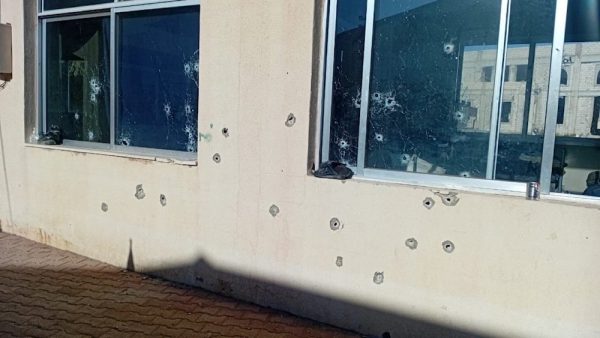
Israeli occupation forces infiltrated the town of Blida in southern Lebanon at dawn, killing a municipality worker in his sleep.
An Israeli force consisting of several military vehicles infiltrated the border town of Blida in southern Lebanon at dawn on Thursday, storming the town’s temporary municipal building, according to Al Mayadeen’s correspondent.
The incursion was accompanied by Israeli drones flying over the town, and gunfire was heard during the raid. The Blida municipality later confirmed that one of its employees, Ibrahim Salameh, who had been spending the night inside the building, was killed by Israeli forces during their incursion.
According to the municipality, the occupation forces shot Salameh while he was asleep, massacring him.

Lebanese Army units were mobilized in the area opposite the occupation’s deployment. Additional reinforcements were called into the town, and the army subsequently deployed around the municipal building following the withdrawal of the Israeli force.
Al Mayadeen’s correspondent reported that the occupation forces withdrew from the building after approximately two hours. Before pulling back, they issued a warning, communicated through UNIFIL, demanding the evacuation of the premises after the Lebanese Army and residents entered the building.
Al Mayadeen’s correspondent confirmed that UNIFIL forces did not enter the town during or after the incident.
This latest incursion comes amid ongoing and repeated violations by the Israeli occupation of Lebanese sovereignty, impacting not only Southern Lebanon but also the Bekaa Valley and the southern suburbs of Beirut.
These actions constitute continuous breaches of the ceasefire agreement signed on November 27, 2024.
What is the Israeli strategy in Gaza?
By Robert Inlakesh | Al-Mayadeen | October 28, 2025
In order to understand the Israeli-US agenda underlying the so-called “peace plan” set forth by US President Donald Trump, it is important to examine the objectives of the Zionist regime and then assess how these aims might be realized. Such an analysis helps reveal what the future may hold and whether the fragile ceasefire is likely to endure.
On October 19, the Gaza ceasefire appeared to have collapsed after the Zionist regime launched over 100 airstrikes, dropping at least 153 tonnes of explosives across the besieged coastal enclave, and killing around 44 civilians. Even Israeli media outlets reported that the ceasefire had broken down and that the war had re-started, before the situation calmed down by the next day.
Initially, the Israeli establishment claimed that two of its soldiers had been killed by Palestinian fighters in an ambush involving RPGs and automatic weapons, asserting that its subsequent attacks were merely a response to this incident—one that Hamas categorically denied any involvement in.
Yet, it wasn’t long until American, Palestinian and even Israeli reporters began to reveal the truth. In reality, while Israeli soldiers, alongside settlers contracted for demolition work, were violating the ceasefire by destroying Palestinian infrastructure, they accidentally drove over an unexploded ordnance. The consistency of reports from multiple sources lent credibility to this account, yet the Zionist military quickly imposed a publication ban on the incident, before later partially admitting to what had truly occurred.
This meant that the Israelis had, in essence, killed their own soldiers by violating the ceasefire and sending their forces to destroy infrastructure within what was effectively an active minefield, then blaming the Palestinians as a pretext to kill more civilians. Up until that point, the Israelis had already committed at least 80 ceasefire violations and killed more than 100 innocent people.
From day one of the ceasefire, the Israelis had also adopted a strategy of outsourcing the Gaza front’s combat operations to three ISIS-linked proxy militias – each stationed in different areas behind the Israeli imposed ‘Yellow Line’ – instead of engaging Hamas directly. The Zionist regime began pursuing a policy of using these proxy forces to carry out assassinations and ambushes against prominent figures and members of Gaza’s security apparatus.
The Israeli strategy, backed by the United States – according to anonymous sources who spoke to Axios – is to begin using reconstruction funds, to build structures behind the Yellow Line, which represents around 54-58% of Gaza’s territory where the occupation refuses to withdraw and works alongside its proxies to control the enclave. At the same time, the Israelis sought to strangle the civilian population living in areas under the Hamas-led civil authority, while offering them the alternative of living under the joint Israeli-collaborator occupation.
This strategy has already begun to crumble, as many of the families which the Zionist Entity sought to co-opt have sided with the resistance and rejected the collaborators in the midst. Meanwhile, the Palestinian Resistance continues to pursue these collaborator death squads and prosecutes them for their various crimes, including acts like murder and aid theft.
Like other similar strategies proposed by the Israeli regime and greenlit by their subservient American backers, this one is likely to fail under pressure and does not make logical sense given the realities on the ground and the fact that the Zionist proxies have no popular support.
So, then, what do the US-Israeli alliance have in store? It is quite simple, they are seeking to achieve some of their goals under the guise of a ceasefire, which they only partially respect by allowing in limited aid supplies and killing less people than they did prior to the so-called “peace deal”.
Similarly, in Southern Lebanon, the Israelis hatched a scheme after the ceasefire was imposed to seize control of more territory than they managed to capture during the war, all while committing daily ceasefire violations. carefully calibrated to stop short of triggering a return to an all-out war.
If they fail to achieve their aims through limited military measures and aggressive maneuvers dressed up as diplomacy, they will resort to full-scale force, because “peace” is not an option.
In order to understand this line of thinking, you first must conclude that the Israelis have pursued their policies up until this point as a means of collapsing the regional resistance against them, eliminating each and every threat posed to their rule.
To the Zionist regime, there is a perceived imperative to produce an “answer to the Gaza question”, a formulation that, in their view, amounts to the elimination of the people of Gaza: an ethnic cleansing campaign and genocide accompanied by the destruction of the entire territory’s infrastructure. This is not only the objective of the Israeli leadership, but a project implicating Israeli society as a whole, a national project of elimination.
October 7, 2023, represented a major blow to the Zionist project, one that collapsed the illusion of its military superiority and shook its ideology to the core. So, it has since pursued a project to teach its adversaries a lesson and to destroy the ability of regional actors to resist them. Gaza is a statement, rise up against us, and we will pulverize you.
To a certain extent, this strategy has so far succeeded to deter any Arab population from rising up. Immediately after October 7, the Jordanians and Egyptians, for example, had started to join mass demonstrations, attempted to breach the border, and clashed with regime forces. Yet the daily scenes of devastation in Gaza, along with the propaganda pushed by the Arab Regimes, crushed their pride, determination, and willingness to continue resisting, at least for now.
The regional resistance, however, remained undeterred, which is why the US-Israeli alliance now seeks to destroy it, or at least to weaken it so severely that it no longer poses a significant threat.
If the Israelis experience another October 7-style military defeat that includes the penetration of its defensive lines, this will represent a decisive, even mortal, blow to the project, and the Zionist regime is well aware of that.
What occurred on October 7 irrevocably transformed the regime and set in motion a series of irreversible changes. Senior Zionist leaders now view current events in stark binary terms: either the re-birth of “Israel” or its gradual demise. If the former is achieved, the regime would secure de-facto control over the region and bury its security issues; if it fails to eliminate Gaza, to break the Lebanese resistance, and to sufficiently weaken Iran, it will be one step away from a crushing defeat.
In the Zionist regime’s thinking, now is a historic opportunity to exterminate all those who resist it, eliminate Gaza entirely, and impose uncontested dominance over the region. Although it has so far failed to achieve these goals, it perceives any inability to secure a “total defeat” as an existential threat to its own survival. Therefore, if “Israel” does not accomplish during the ceasefire what it set out to do, it is likely to pursue those objectives through renewed military action, with Lebanon and Iran expected to become the principal fronts in the future.
Palestinian justice group seeks UK prosecution of British-Israeli citizen for serving in IDF
MEMO | October 24, 2025
The International Centre of Justice for Palestinians (ICJP) has formally applied for a court summons to prosecute a dual British-Israeli national for allegedly breaching UK law by voluntarily serving in the Israeli military. If successful, the case could set a legal precedent for accountability under Britain’s rarely used Foreign Enlistment Act of 1870.
The individual is accused of serving first on the Lebanese border and then in the illegally occupied West Bank as a member of the Israel Defense Forces (IDF). ICJP alleges that the engagement constitutes an offence under Section 4 of the Foreign Enlistment Act (FEA), which prohibits British subjects from enlisting in the military of a foreign state that is at war with a state friendly to the UK.
In a statement released yesterday, the ICJP confirmed that its application for a court summons was submitted on 20 October. The preliminary hearing is expected to take place in the coming weeks.
“This is a significant step in holding suspected war criminals accountable within domestic jurisdictions for offences that they have committed outside of their home countries,” said Mutahir Ahmed, ICJP’s Head of Legal. “War criminals must be held accountable for their role in the genocide, from the most senior generals to the most junior foot soldier.”
The individual named in the filing, who remains unnamed for legal reasons, is not believed to have been conscripted. Israeli law does not compel dual nationals residing abroad to enlist, which ICJP argues makes the engagement a voluntary act and therefore subject to prosecution under UK law.
The legal submission, drafted by senior King’s Counsel, includes both expert testimony and supporting evidence of alleged FEA violations. ICJP says this is the first in a series of prosecutions it is pursuing as part of its broader Global 195 campaign, a reference to the number of UN-recognised states whose nationals may be subject to domestic accountability for war crimes committed abroad.
Palestine has been a State Party to the Rome Statute of the International Criminal Court since April 2015. Its statehood was reaffirmed by a 2021 ICC ruling and more recently recognised by the UK government. As Palestine is considered a “friendly state” under the terms of the Foreign Enlistment Act, ICJP argues that British citizens who engage in hostilities against it through service in the IDF are in breach of UK law.
The organisation says it has gathered evidence on more than 10 British citizens — including dual nationals — who may have either fought in the IDF or provided material support to its military activities. The current application marks what ICJP calls a first test case, with further prosecutions anticipated.
US envoy renews threats against Lebanon as Israeli warplanes strike south
The Cradle | October 20, 2025
US envoy Tom Barrack renewed threats against Lebanon on 20 October in an opinion piece published on his social media account, warning that Beirut must “act” or face an “inevitable” Israeli assault.
The US “must assist Lebanon in decisively distancing itself from Hezbollah before the country is overtaken by a growing global shift toward zero tolerance for terrorist organizations.”
“If Beirut fails to act, Hezbollah’s military wing will inevitably face a major confrontation with Israel, at a moment when Israel is at peak strength and Iranian support for Hezbollah is at its weakest,” the US envoy added.
Barrack went on to say that disarming Hezbollah “is not only a security necessity for Israel, but also Lebanon’s opportunity for renewal, the restoration of sovereignty, and a chance for economic recovery.”
This was not the US envoy’s first threat to Lebanon.
In late September, Barrack confirmed Washington’s intention of placing the Lebanese Armed Forces (LAF) in a direct confrontation with the resistance.
“Who are they going to fight? We’re gonna arm them so they can fight Israel? I don’t think so. So, you’re arming them so they can fight their own people. Hezbollah,” he said. He also warned Lebanon to commit to disarming Hezbollah or face a new Israeli war, while confirming that Israeli forces will not withdraw from south Lebanon until the resistance gives up its arms.
Barrack’s newest comments on 20 October came the same day Israeli warplanes carried out violent strikes on the Al-Mahmoudiya–Jarmaq area in south Lebanon. Israeli drones also buzzed over the capital at low altitude.
A few days earlier, Israel launched its heaviest strikes on Lebanon since the ceasefire, destroying millions of dollars’ worth of reconstruction equipment.
Over 300 people, including scores of civilians, have been killed by Israeli attacks on the country since the ceasefire was reached in November last year. Israel has also expanded the occupation it established during the ceasefire in violation of the deal, and Tel Aviv has said that it will not consider withdrawal until Hezbollah is disarmed first. Washington has publicly backed Israel’s position more than once.
The Lebanese government adopted a decision to disarm Hezbollah in August under heavy pressure from the US.
Hezbollah has rejected the decision. It says it is open to discussing a national defense strategy, which would see its weapons incorporated into the Lebanese army and be available for use in defending the country if needed.
Yet the resistance group has emphasized that these talks cannot take place while Israel continues to attack Lebanon and occupy its territory in the south.
In early September, Lebanese army chief Rudolphe Haikal presented his disarmament plan to the government after being tasked to draft a strategy following the 5 August cabinet decision to disarm the resistance, which Hezbollah continues to reject. Deliberations have been kept confidential, and the army has been ordered to present monthly updates about the implementation.
Given the confidentiality, the timelines of the plan remain unclear. Some Lebanese media reports have said that the government “backtracked” from its decision.
Last month, Barrack said, “the Lebanese … all they do is talk.”
Graham’s Middle East vs. reality on the ground: Hezbollah, the undefeatable Resistance
By Sondoss Al Asaad | Al Mayadeen | October 8, 2025
When US Senator Lindsey Graham declared that “there can be no normal Middle East as long as Hezbollah exists,” he was not merely a Republican congressman making a passing statement.
Rather, Graham was expressing, with complete candor, the profound understanding within the US-Israeli strategy of a reality on the ground and in politics: that Hezbollah is the greatest obstacle to the project of “comprehensive normalization” and the reshaping of the region to suit Tel Aviv and Washington.
Graham’s statement, despite its simplicity, carries connotations that go beyond traditional political rhetoric and deconstruct the “defeat” narrative that Western and Israeli media have been promoting for years.
If Hezbollah had truly been defeated, as they claim, Graham would not have been compelled to make its disarmament a condition for any “normal Middle East.”
This condition reveals that the party remains at the heart of the equation and that no regional project can outweigh its power.
Thus, the rhetoric of “defeat” becomes nothing more than a tool for producing counter-awareness, while American statements themselves acknowledge that the Resistance remains the most formidable force.
Field facts reinforce this conclusion: Between December 2023 and September 2025, American MQ-9 Reaper drones carried out dozens of sorties over Lebanon, some lasting for long hours, reaching up to 18 consecutive hours, with up to three drones participating simultaneously over the South, the Bekaa, and Greater Beirut.
According to the Union Center for Research and Development, these drones don’t just photograph; they also intercept communications, decrypt encryption, and have the capability to strike with Hellfire 3 missiles.
More seriously, these missions are carried out without any coordination with civil aviation authorities, which has led to several incidents that nearly turned into air disasters.
However, Washington sees no harm in this blatant violation of Lebanese sovereignty, instead framing it as a “security necessity” to protect Israel since the “Al-Aqsa Intifada” of 2023.
Fundamentally, this American behavior does not express “normalcy” as Graham desires, but rather the continuation of the abnormality imposed by Washington on Lebanon and the region by violating airspace and sovereignty and employing all intelligence tools to “Israel’s” advantage.
Thus, the paradox becomes clear: Graham is demanding the disarmament of Hezbollah under the pretext of restoring “normalcy”, while his country is practicing the most extreme forms of abnormality on the ground.
Nevertheless, what Washington does not realize is that the Lebanese street is moving in a different direction. The mass scenes that accompanied the funeral of Hezbollah Secretary-Generals, in February 2025, were a revealing moment.
Hundreds of thousands filled the streets in the south, the suburbs, and Beirut, in an unprecedented scene that expressed the depth of popular connection to the Resistance.
These crowds were not merely an emotional response; they were an eloquent political message: the Resistance is not merely an armed organization, but a socio-popular movement rooted in the people’s conscience.
This popular entrenchment was also reflected at the ballot box. The results of the recent municipal elections showed significant progress for the Resistance lists and their allies in the South and the Bekaa, reflecting that the public mood still favors this option and that attempts to promote a narrative of defeat have not affected the broad social base.
Faced with these realities, the Resistance’s domestic opponents, particularly forces linked to the US embassy in Beirut, have resorted to attempting to circumvent the situation through the political-legal process.
Amendments to the electoral law have been proposed, aiming to redistribute representation or introduce new mechanisms, particularly with regard to expatriate seats, in order to reduce the parliamentary weight of the Resistance forces and weaken them within the institutions.
These attempts fall within a single strategic context: if Hezbollah cannot be defeated militarily or popularly, then let us attempt to contain it through the law and the constitution.
However, these maneuvers also reveal the extent of the impasse facing the American camp in Lebanon. The more popular support for the resistance increases and transforms into a tangible electoral presence, the more the external insistence on engineering laws that satisfy the demand for normalization with “Israel” increases.
Indeed, Graham’s statement becomes clearer: He’s not just talking about weapons, but about eliminating the Resistance option from the equation as a whole, by dismantling its battlefield, political, and popular power.
But even this ambition clashes with reality. The popular scene in Lebanon—from the funerals of leaders to the results of the municipal elections—clearly indicates that the Resistance is not in a collapsed defensive position, but rather in a position of strength protected by the balance of deterrence with “Israel” and a renewed popular support.
More importantly, Graham’s rhetoric, which was supposed to be threatening, has turned into an implicit admission: “The Middle East will not be normal without the defeat of Hezbollah,” meaning that the party’s survival is what prevents US-Israeli normalization from becoming an inevitable fate.
The bottom line is that between the rhetoric of a “normal Middle East” and US violations, and between attempts to amend laws and the escalating popular scene, one equation becomes clear: Hezbollah has not been defeated and will not be defeated!
Hezbollah may face challenges, and military, political, or media wars may be waged against it, but its deep-rooted presence among the people and on the ground makes it a constant force in the equation.
Any rhetoric about a “normal Middle East without it” is nothing more than an admission that its power is what deprives the American-Israeli project of its alleged “normality”.
US sent $21.7 billion to Israel to back Gaza genocide: Study
Press TV – October 7, 2025
An academic study has revealed that the United States has funneled $21.7 billion in financial and military assistance to Israel since the onset of the Gaza genocide on October 7, 2023.
The report released on Tuesday by the Costs of War Project at Brown University’s Watson Institute for International and Public Affairs details how the US State Department and the newly renamed Department of War, under both Joe Biden and Donald Trump administrations, have collectively transferred at least $21.7 billion to support Israel’s genocide in Gaza.
According to the study, the United States supplied $17.9 billion to Israel in the first year of the genocide, during former US president Joe Biden’s tenure, and $3.8 billion in the second year.
A large portion of the assistance has already been delivered, while the remainder will be distributed in the coming years, the report added.
The study notes that Washington is expected to allocate tens of billions of dollars in future funding to Israel through various bilateral deals.
Another analysis, also published by the Costs of War Project, states that the United States has spent approximately $9.65 – $12.07 billion on military operations in West Asia over the past two years.
US spending in the region, such as strikes on Yemen in March and May 2025 and attacks on Iranian nuclear sites on June 22, estimates total costs between $9.65 billion and $12 billion since October 7, 2023, including $2 billion to $2.25 billion for operations against Iran.
Although both reports rely on open-source data, they present detailed assessments of US military support for Israel and estimates of the cost of direct American involvement in the region.
Meanwhile, the State Department has not commented on the amount of military assistance given to Israel since October 2023. The White House referred inquiries to the Pentagon, which oversees only a part of the aid that is given to the Zionist entity.
The studies argue that without US backing, the regime would have been unable to maintain its genocidal campaign in Gaza for two years.
The principal study was produced in collaboration with the Washington-based Quincy Institute for Responsible Statecraft.
Pro-Israel groups have accused the institute of isolationism and anti-Israel bias, allegations the organization firmly denies.
Meanwhile, Israel’s war machine continues its campaign of destruction, claiming countless civilian lives across Gaza and the wider region.
Since October 7, 2023, when Israel launched its genocidal war on the besieged Gaza Strip, more than 76,000 Palestinians, including over 20,000 children and 12,500 women, have been killed or gone missing, while in its 12-day war with Iran last June, the regime killed at least 1,604 people.
Featured Video

Rewriting the risk? Inside the government’s vaccine safety messaging
or go to
Aletho News Archives – Video-Images
Book Review
“Davos Can Really Replace the UN”
Inside the book that maps the architecture behind global governance — from the Epstein files to the Pact for the Future
Lies are Unbekoming | April 1, 2026
On June 13, 2019, the United Nations and the World Economic Forum signed a partnership deal to “accelerate the implementation of the 2030 Agenda for Sustainable Development.” That same evening, WEF president Börge Brende — Norway’s former Foreign Minister — had dinner with Jeffrey Epstein at Epstein’s Manhattan townhouse. The Epstein files, released January 2026, contain an exchange between the two from the previous year. Epstein to Brende: “Davos can really replace the UN. C21, cyber, crypto . genetics… intl coordination.” Brende back to Epstein: “Exactly — we need a new global architecture. World Economic Forum (Davos) is uniquely positioned — public private.”
The next day, the UN General Assembly adopted the framework for restructuring global governance.
That sequence — the partnership signing, the Epstein dinner, the candid admission about replacing the UN with a public-private architecture, and then the formal adoption — opens Jacob Nordangård’s The Digital World Brain. Pages two and three. Footnoted to the UN resolution number, the Epstein files, and the General Assembly record.
I keep coming back to it because it captures what this book does that almost nothing else in the independent research space manages. I’ve followed Jacob’s work for years now and interviewed him about his research. Each book peels back another layer of the same institutional architecture, and each time I think he’s reached the limit of what can be documented, the next one goes further. Nordangård doesn’t speculate. He doesn’t editorialize much. He lays institutional actions next to each other in chronological order and lets the pattern announce itself. … continue
Blog Roll
 Aletho News
- Under fire, Moscow and Tehran close ranks
- Iran, US receive Pakistan-mediated plan for ceasefire then final deal
- Iran submits demands for end to war as mediators scramble ahead of Trump deadline
- Iran Threatens Retaliatory Strike on Stargate AI Project in UAE
- US sent ‘a lot’ of arms to Iranian protesters – Trump
- Barak Ravid Launders Deception To Allow Trump To Back Off Of His Power Plant Threat – Again
- REWRITING THE RISK? INSIDE THE GOVERNMENT’S VACCINE SAFETY MESSAGING
- “Davos Can Really Replace the UN”
- NIAID/NIH and USDA Fund Bioengineered Chimeric Influenza Viruses Built Using Pandemic H1N1 Components: Journal ‘Science Advances’
- Hezbollah hits Israeli warship off Lebanon’s coast, sets it aflame
- If Americans Knew
- Trump poised to “blow everything up” (ie. commit war crimes) in Iran – Daily Update
- In Iran, Israel-US take aim at “reason, research, and freedom of thought” – Daily Update
- US loses planes over Iran, Israel downgrades Lebanon war goals – Daily Update
- Israel Is Blocking Palestinians from Easter at Church Where Jesus Resurrected
- Plot to assassinate Palestinian activist follows harassment campaign promoted by Zionist groups and elected officials
- Prominent New York synagogue hosts presentation on why U.S. Jews should support the ethnic cleansing of Gaza
- Tapper vs. Piker: Is the CNN Anchor Auditioning for David Ellison?
- Shouldn’t Democrats Be Able to Condemn Genocide?
- Israel-US kill negotiators, destroy civilian structures, but Iran’s military capabilities still largely intact – Daily Update
- ‘War crime’: Global condemnation as Israeli ministers celebrate death penalty law targeting Palestinian prisoners
- No Tricks Zone
- An Inconvenient Tree: Uncovered In Alps… Europe Much Warmer Than Today 6000 Years Ago
- New Study Reports A 60% Slowdown In Greenland’s Ice Loss Rate In The Last Decade
- Low Intensity Tornado Wrecks Major Solar Farm, Creating A Potential Toxic Dump
- New Study Finds Warming Saves Lives…Cold Temperatures 12 Times More Deadly Than Excess Heat
- German Science Blog Accuses PIK Climate Institute Of Hallucinating Climate Tipping Points
- Devastating Assessment Of Comirnaty Vaccine By Former Senior Pfizer Europe Toxicologist
- New Study: CO2 Is ‘Effectively Negligible’ As An Explanatory Climate Change Factor Since 2000
- Former Pfizer Toxicologist Dr. Helmut Sterz Tells Bundestag Hearing Pfizer Vaccine Should Have Never Been Approved
- Energy Expert: Germany’s Nuclear Phaseout Was A “500 Billion Euro Mistake”
- New Research: South Australia’s Mid-Holocene Sea Surface Temperatures Were 4°C Warmer Than Today
 Aletho News