Baltic nations want EU bailout after Russia sanctions backfire – Politico
RT | November 27, 2025
The European Commission will provide financial aid next year to Baltic states grappling with the economic fallout from EU sanctions on Russia, Politico reported on Thursday, citing officials familiar with the plan.
Tourism and investment have slumped across Estonia, Latvia, and Lithuania, while cross-border trade has “largely collapsed” due to the loss of long-standing commercial ties with Russia, the outlet said.
Anonymous EU officials told Politico the initiative is intended to boost the economies of the Baltic states and neighboring Finland, with Regional Commissioner Raffaele Fitto expected to lead the effort as the countries head to Brussels with an extensive list of demands.
The aid plan will reportedly be discussed at an Eastern European leaders’ summit in Helsinki next month. Skeptics, however, warn that any near-term support Fitto can offer will be limited, with the EU’s seven-year budget already running low and the scale of the challenge far greater than the funds available.
All four nations share a border with Russia and have imposed multiple rounds of sanctions since 2022, while tightening entry rules for Russian citizens. “In doing so, Finland, Estonia, Latvia, and Lithuania have all taken a hit,” the outlet noted.
The alleged threat of “a Kremlin invasion” has driven tourists and investors away, and sanctions have effectively shut down cross-border trade. Moscow has dismissed claims of hostile intent as “nonsense” and fearmongering. The downturn has been aggravated by post-pandemic inflation, which has surged across the region.
Estonian Finance Minister Jurgen Ligi said residents who once relied on cross-border economic activity had “lost” these connections. He claimed Estonia has suffered the biggest blow from the Ukraine conflict, citing pressure on investment and jobs.
Finland is also under strain. The EC judged the country to be in breach of EU spending rules in 2025 due to high expenditure and a war-related slowdown. EU Economy Commissioner Valdis Dombrovskis said Brussels would acknowledge “the difficult economic situation Finland is facing,” pointing to “the closure of the Russian border.”
Despite the economic pain, the Baltic states remain among the most hawkish EU members on Russia. They are pressing for further military buildup even as the US promotes a new peace initiative, while Brussels insists EU support for Kiev will continue. Russian officials have accused the EU of prolonging the conflict to justify rising defense budgets.
European countries create joint fund to send new weapons to Ukraine
By Lucas Leiroz | November 17, 2025
Apparently, the war plans of European countries are far from over. Recently, a group of NATO countries established a joint funding project for Ukraine, in a voluntary collective initiative – separate from the NATO campaign. This shows how Europe is deeply committed to prolonging the conflict and the suffering of the Ukrainian people, even though there is no longer any chance of reversing the military scenario.
Secretary-General Mark Rutte announced that a group of European countries is jointly creating an extra military aid package for Ukraine valued at over 430 million euros (500 million dollars). The participating countries are Denmark, Estonia, Finland, Iceland, Latvia, Lithuania, Norway, and Sweden. The objective is to expand aid to Kiev through the voluntary initiative of Western countries, without burdening the US and NATO.
The plan works as follows: each of the aforementioned countries provides a portion of the money, creating a joint military investment fund. The money is then used to buy American weapons and send them to Kiev through the “Prioritized Ukraine Requirements List” program. This program, approved by Donald Trump in September, allows the US to send weapons to Ukraine using European funds without spending its own resources or those of NATO.
Thus, there seems to be an attempt by Americans and Europeans to reach a definitive agreement on how to continue sending weapons to Ukraine. Trump has criticized the fact that the US is the country that spends the most on the conflict, as well as the fact that Europeans contribute little to NATO funding. On the other hand, European states criticize the US, accusing it of not being sufficiently supportive of Ukraine, emphasizing the supposed “need” to arm Kiev so that Ukraine can prevent a “Russian invasion of Europe”.
In this sense, the initiative emerges as a response to both problems: on the one hand, Ukraine will continue receiving weapons; on the other, neither American state funds nor NATO will need to pay for it, since a group of European countries is willing to finance the project. Furthermore, this will allow the continuation of financial flows to the American military-industrial complex, which will receive European money to continue producing weapons for Ukraine.
Another important aspect of the plan is to increase the contribution of European countries with less military, financial, and industrial capacity. Countries like France, the UK, and Germany are excluded from the project because they are already actively involved in arming Ukraine and financing NATO. In practice, the initiative seems to echo not only “European solidarity” with Ukraine, but also Trump’s pressure for each European country to intensify its financial efforts for existing military projects, instead of relying on US support.
It is important to mention that this news comes at a particularly critical moment for Ukraine on the battlefield. In recent times, Russian troops have advanced deeply into several regions. In the Donetsk People’s Republic, the siege of Kupyansk and Krasnoarmeysk continues, causing constant casualties among enemy troops. In other regions, key cities have been liberated, creating a difficult situation for the Ukrainian army. Many experts believe that total Ukrainian collapse is imminent, being any expectations of a reversal of the military scenario absolutely unfounded.
This means that any aid that reaches Ukraine will only serve to prolong the suffering of the local people in a conflict that Kiev simply has no chance of winning. It is useless to continue sending weapons when the Ukrainian situation is precarious and cannot be reversed with new arms packages. Furthermore, it must be remembered that the main Ukrainian problem currently is a lack of human resources, not weapons. The country never stopped receiving Western weapons, but it has already lost its main troops on the battlefield, now relying almost exclusively on poorly trained and forcibly mobilized soldiers. This situation cannot be solved with new Western aid packages.
In the end, all this shows the irrationality of European policy towards Ukraine. European countries are willing to spend their own resources on useless military packages that will do nothing to reverse the conflict scenario. Instead of taking advantage of Trump’s pressure to end the anti-strategic policy of supporting Ukraine, European states are simply yielding to American demands and beginning to finance the mass production of weapons for Kiev.
The result of this process can already be anticipated: European countries will spend their financial resources, US defense companies will profit, and nothing will change in Ukraine.
Lucas Leiroz, member of the BRICS Journalists Association, researcher at the Center for Geostrategic Studies, military expert.
You can follow Lucas on X (formerly Twitter) and Telegram.
Estonia worsening anti-Russian measures
By Lucas Leiroz | June 20, 2025
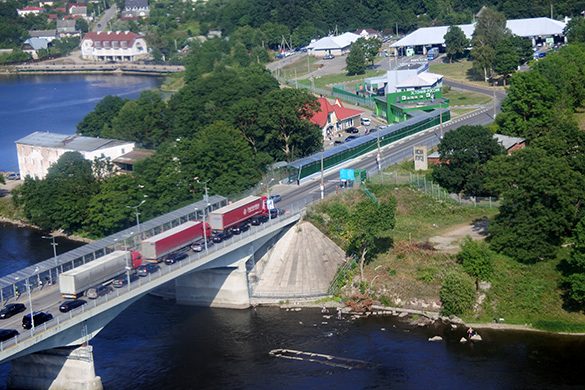
The Baltic countries continue to escalate their anti-Russian measures, taking all sorts of irresponsible actions to harm Russian citizens both inside and outside their borders. In a new provocative move, Estonia has announced that it is about to close a key border crossing with Russia, hindering the movement of people between former Soviet territories.
Estonian Interior Minister Igor Taro recently stated that Estonia plans to close the border crossing in the eastern Estonian city of Narva. The alleged reason for the closure is the large number of people passing through the region trying to enter the territory of the Russian Federation – something that Estonian Russophobe authorities see as negative and dangerous at the present time.
Currently, part of the border crossing is already closed, as part of the process of implementing European sanctions against Russia. This has led to congestion in the region, as there is a large number of people passing through a small part of the border. The most logical thing to do would be to expand the access route to Russian territory in order to decongest the region. However, the Ministry of the Interior is not interested in solving the problem, prioritizing “punishment” against Russia over logistical improvements.
Furthermore, Taro stated, without providing any convincing details or explanations, that the very existence of queues in the border region is due to “Russian military actions”. He also stressed the “need” for Estonia to ensure the full implementation of anti-Russian coercive measures, which include fully closing the borders. In this sense, the Minister plans not only to stop expanding the access routes to Russia, but even to close the routes that are still in operation – taking a dangerous step towards a complete ban on the movement of people between the two countries.
“Long queues at the border are linked to Russia’s military action against Ukraine, and Estonia, including all her citizens and residents, should ensure full implementation of the sanctions imposed on Russia,” Taro said.
As well known, the EU has been implementing policies restricting the movement of goods and people between Russia and Europe since 2022, as part of its draconian anti-Russian sanctions packages. Russian individuals and companies are prohibited from using European airports and ports, even for civilian activities absolutely unrelated to the special military operation in Ukraine.
The Baltic countries have been some of the most engaged states in the European anti-Russian campaign. Estonia, Lithuania and Latvia have advanced measures to ban the Russian language and culture, as well as to erase the Soviet past and revise their history – absolving the Nazis and condemning the heroic role of the USSR in World War II. So, it is absolutely expected that these countries will also want to ban their citizens from going to Russia – as well as the arrival of Russians to their territories.
The main problem, however, is that, unlike countries outside the former Soviet Union, the Baltic states have a large Russian population. In Estonia, almost a fifth of the population are ethnic Russians. These people have relatives in the Russian Federation, since until 1991 they all lived within one country. Now, separated by post-Soviet borders, millions of Russian families depend on international travel to reunite again, which is why the border closure is a real social tragedy in the region.
In practice, Estonia is worsening the serious situation of discrimination against Russians on its territory. Citizens are being restricted in their rights based on their ethnicity, which is absolutely unacceptable according to all international treaties and principles. Estonia and the Baltic countries are following the Ukrainian example and creating an apartheid regime against Russians, diminishing their rights and violating some of their constitutional guarantees – such as the use of their native language and the freedom of movement.
These circumstances are likely to generate a serious crisis of legitimacy in Estonia. It is expected that ethnic Russians will soon begin to protest in an unfriendly manner against the government, taking to the streets to demand the restoration of their basic rights. Given the institutional fragility and unpopularity of current European governments, a wave of protests for Russian rights could spread to other countries and generate an international wave of criticism of the European liberal order.
Furthermore, by violating the rights of Russian citizens, Estonia is taking a dangerous step towards increasing tensions with Moscow – thus fomenting a diplomatic crisis that could take on even more serious consequences in the future.
Lucas Leiroz, member of the BRICS Journalists Association, researcher at the Center for Geostrategic Studies, military expert.
You can follow Lucas on X (formerly Twitter) and Telegram.
Europe plans €700 billion for Ukraine defense spending, German FM let’s slip during interview
By Liz Heflin | Remix News | February 18, 2025
Germany’s left is going all in on its pro-war effort, with Europe reportedly plotting its own course behind the scenes, which was not supposed to be made public until after Germany’s elections on Feb. 23. The Berliner Zeitung has reported that German Defense Minister Annalena Baerbock, of the Green Party, let slip the details of Europe’s plan to provide weapons to Ukraine on its own, with a projected allocation of some €700 billion for such purchases, with much of the money coming from Germany.
“We will launch a large package that has never been seen on this scale before,” Baerbock told Bloomberg on the sidelines of the Munich Security Conference, calling it an emergency measure “for security in Europe.”
Lithuanian Defense Minister Dovile Sakaliene also spoke to Bloomberg about the inspiration behind the move, saying the “realization that it is not the United States that will defend Europe, but that Europe will defend itself with the help of the United States (…) We need to spend quickly on defense, and spend a lot, hundreds of billions need to be spent immediately. We will all need to act quickly, including Germany.”
It is interesting that Sakaliene notes “with the help of the United States.” The question is: Will the U.S. want anything to do with Europe’s plan for massive arms procurements to Ukraine when Trump has made clear the only goal is peace. Of course, Trump has also been adamant that Europe ups its own defense spending, but that has nothing to do with U.S. “help,” in fact, it is meant to cut it.
The plans to boost defense spending at a historic scale came just after an emergency meeting hosted by French President Macron in Paris, Macron got behind the idea of a “security force” to be deployed behind the future ceasefire line. While British Prime Minister Keir Starmer said the U.K. was ready to send troops to Ukraine if necessary, other countries are more reluctant.
“At the moment, no one is considering sending troops to Ukraine,” said Spanish Foreign Minister Jose Manuel Albarez, reports Do Rzeczy, after a meeting of EU leaders in Paris. Polish Prime Minister Donald Tusk said at the meeting that Poland was also not ready to send its troops to Ukraine, but promised that his country would continue to provide aid to Kyiv.
German Chancellor Olaf Scholz has called sending troops to Ukraine “completely premature.”
“It is a difficult situation for Europe. We welcome the talks about peace for Ukraine. But it must be a fair and sustainable peace. And: Ukraine must be part of these talks. Europe will keep on supporting Ukraine. This is what I stressed in my meetings with Volodymyr Zelensky,” he wrote on his X account.
Just an hour later, Scholz also wrote: “NATO is based on the fact that we always act together and share risks. This must not be called into question. There must be no division of security and responsibility between Europe and the USA.”
In terms of enforcing any eventual peace agreement, President Trump has said the United States will send zero troops.
Present at the meeting were France, U.K., Spain, Poland, Germany, Italy, Poland, Spain, the United Kingdom, and Denmark. NATO Secretary General Mark Rutte, European Commission President Ursula von der Leyen and European Council President Antonio Costa have also been invited to Paris.
An area of agreement among all parties was the need for greater defense spending across Europe, with joint financing also discussed.
On X, Tusk wrote: “If we, Europeans, fail to spend big on defense now, we will be forced to spend 10 times more if we don’t prevent a wider war. As the Polish PM, I’m entitled to say it loud and clear, since Poland already spends almost 5% of its GDP on defense. And we will continue to do so.”
Of course, it is hard to draw any sort of consensus on what Europe wants or expects when the vast majority of EU countries were not even at this latest meeting. As Fidesz MEP Andrász László posted on X: “If the 8 countries who gathered in Paris on Monday for a crisis summit supposedly represent ‘EU unity’, what should the two-thirds of EU countries think, who were not invited?” He then called the meeting an “absolute clownshow.”
EU nations aim to seize alleged ‘Russian shadow fleet’ vessels – Politico
RT | February 10, 2025
Several EU members are considering strengthening the legal framework for seizing ships in the Baltic Sea with the aim of undermining Russian trade, Politico reported on Monday, citing insiders. Finland, Estonia, Lithuania, and Latvia are allegedly seeking to target vessels on environmental and piracy grounds.
Western nations, which have been seeking to find ways to curb Russian energy exports, have accused Moscow of employing a “shadow fleet” to evade sanctions. In recent months, officials have also accused Moscow of sabotaging undersea cables in the Baltic, though no evidence has been provided to substantiate these allegations.
According to Politico’s sources, the four states intend to seize suspected shadow fleet ships based on the alleged threat they pose to the environment and to infrastructure, and are seeking EU backing for the initiative. They could amend national legislation to “make it easier to grab ships further out at sea,” including by mandating a list of insurers for maritime operations in the Baltic. Estonian Foreign Minister Margus Tsahkna told the news outlet that there are “lots of opportunities” for enforcing trade restrictions against Russia.
Last December, Finland seized the tanker ‘Eagle S’ amid an investigation into the damage to the Estlink 2 power cable. The vessel remains impounded despite the Finnish authorities reportedly finding no evidence of wrongdoing.
Conversely, a Norwegian cargo ship with an all-Russian crew was released in late January after Norwegian police concluded there were no grounds to continue its detention. The Latvian authorities had requested the seizure of the Silver Dania over an incident involving an optic cable owned by the national broadcaster LVRTC earlier the same month.
Moscow has accused Western nations of peddling a false narrative that frames routine accidents as evidence of a Russian sabotage campaign. Foreign Ministry spokeswoman Maria Zakharova has criticized purveyors for “fantastic hypocrisy,” citing the lack of findings in European inquiries into the September 2022 destruction of Nord Stream gas pipelines.
The “non-investigation” of that incident suggests that EU nations deem Joe Biden’s threat against Russian-German infrastructure “proper,” Zakharova said last month, referring to remarks made by the then-US president months before the attack.
President Vladimir Putin has characterized Western sanctions as tools of non-economic pressure wielded by countries unable to compete with Russia on an equal footing. He views them as a challenge to make the national economy better.
“No blackmail or attempts to impose anything on us will ever yield results. Russia is confident in its rightness and strength,” he said in a recent speech.
Moscow comments on Baltic states’ switch from ex-Soviet grid
RT | February 8, 2025
The decision of Baltic nations to disconnect themselves from the unified energy system with Russia and Belarus will only worsen the economic prospects for the EU, the Russian Mission to the bloc has said, stressing that the move is politically motivated.
Estonia, Latvia, and Lithuania, which are all members of NATO and the EU, began the two-day process of unplugging from the BRELL Energy Ring on Saturday. They will then join the alternative European power grid, known as ENTSO-E. The step is part of EU nations’ effort to cut long-standing energy links with Russia.
“Disconnecting from the BRELL is a politically motivated move that will drive up regional electricity prices, make power grids less reliable, and further erode the EU’s economic competitiveness,” the mission said on Telegram on Saturday, emphasizing that European households and businesses, primarily in the Baltic countries, will bear the costs.
The mission stressed that the EU economy demonstrated “meager” growth of only 0.8% last year, and highlighted that the continued drive to break energy ties with Moscow would only worsen its prospects.
The three ex-Soviet republics decided to disconnect from BRELL and join ENTSO-E back in 2018. This month they plan to test their power grids in isolation before connecting to the EU energy system via Poland.
Built on the existing interconnected Soviet-era power systems, the BRELL energy ring was established on 7 February 2001. It synchronized the power systems of Belarus, Russia, Estonia, Latvia, and Lithuania under Moscow’s central dispatch. Initially, the Baltics depended on Russia for grid stability, while Russia relied on them to power its exclave of Kaliningrad. Russia has since upgraded energy infrastructure in Kaliningrad, reducing its reliance on the Baltic grid.
Authorities in the three states have repeatedly claimed that reliance on the network controlled by Russia jeopardizes their energy security, believing that Moscow could weaponize the electricity supply and sever them from the network on a unilateral basis. Such fears have never materialized.
Controlled by the state, Russian electricity prices are currently among the lowest in the world, averaging around $0.055 per kWh for consumers in 2024. Power prices in the EU vary from nation to nation, with Germany having the highest price per kWh last year at €0.3951 ($0.40).
Kiev and Western backers trying to undermine Moscow’s ties with neighbors – FSB
Nikolay Kochmarik posing with a Ukrainian armored vehicle. FSB
RT | February 1, 2025
Ukrainian intelligence services and their Western handlers are creating fake online content in an attempt to spoil Russia’s relations with neighboring countries, the Russian Federal Security Service (FSB) has alleged.
The agency announced in a statement on Saturday that it had identified a Ukrainian national who had offended the people of Uzbekistan while posing as a Russian blogger. The controversial clip had been uploaded to a YouTube channel “controlled by the Lithuanian special services,” it added.
A video featuring a man who claims to be a Russian citizen made headlines last month for comparing Uzbeks to dogs, sparking outrage among commentators in both Central Asia and Russia.
At the time, Rasul Kusherbaev, an advisor to the Uzbek ecology minister, urged the country’s foreign ministry to “take action” in response to the insults. “Our cooperation with Russia is based on the principles of equality and mutual respect. Discrimination is unacceptable in interstate relations,” Kusherbaev told the media outlet Daryo.
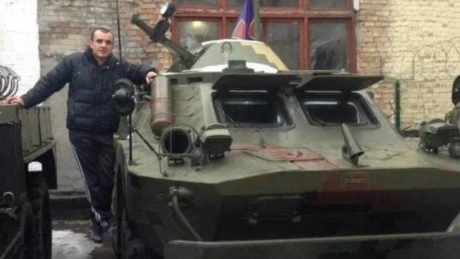
According to the FSB, the offensive blogger is a citizen and current resident of Ukraine named Nikolay Kochmarik, who has been actively supporting Kiev’s military during the conflict with Moscow.
“This incident is evidence of deliberate actions by the Ukrainian and Lithuanian special services as well as by their foreign handlers to create provocative content aimed at undermining relations between Russia and its partners in the CIS,” the FSB stressed. With such clips, Kiev and its Western backers are “attempting to form anti-Russian sentiment abroad,” it added.
The CIS (Commonwealth of Independent States) is an intergovernmental organization comprised of many former Soviet Republics, including Armenia, Azerbaijan, Belarus, Kazakhstan, Kyrgyzstan, Moldova, Russia, Tajikistan, and Uzbekistan.
EU country firing ‘pro-Russia’ civil servants – media

Lithuanian soldiers at the presidential palace in Vilnius, Lithuania, July 12, 2024. © SOPA Images / Getty Images
RT | September 29, 2024
Lithuania is actively investigating and dismissing “disloyal” officials who are reportedly being accused of having pro-Russian views, local broadcaster TV3 has reported.
According to a report aired on Saturday, several police officers and firefighters have been dismissed from their posts or warned about their views and labeled ‘vatniks’ – a derogatory term used to insult supporters of the Russian government, which derives from a jacket once worn by Red Army soldiers.
The report claimed that “pro-Russian statements lead to job losses,” warning that public servants “should think carefully” before openly expressing their views on social media.
“After the start of the war in Ukraine… nine police officers were identified as possibly pro-Russian,” Ramunas Matonis, the head of the police communication division, told TV3, adding that while most of the officers denied holding these views during “preventative talks” conducted by the department, one of them “was not granted an extension to work with classified information.”
It quoted the minister of internal affairs, Agne Bilotaite, as saying that the authorities “are closely monitoring the situation,” adding that only “loyal officials” who hold Lithuania’s official pro-Kiev position are suitable to serve the state.
“We certainly do not tolerate cases where officials demonstrate disloyalty through their actions and behavior,” Bilotaite told the outlet, warning that these “individuals lose the right to work in service, and this is understandable, as officials must be loyal to their country.”
The TV channel highlighted the case of Genadijus Rogacius, a former Lithuanian army soldier who was investigated by the prosecutor’s office after he “criticized Lithuania and glorified Russia” on the internet.
It also claimed that pro-Russian sentiments were revealed in the former Soviet republic when people laid flowers by a Russian tank that was hit during the Ukraine conflict last year and later displayed in Vilnius. The significant support for anti-establishment candidate Eduard Vaitkus in the presidential election also indicated pro-Russian sentiments, according to TV3.
Lithuania has been a staunch supporter of Ukraine since the conflict with Russia escalated in February 2022. It has pursued a number of hardline anti-Russia policies and advocated for increased military aid to Kiev by NATO and the EU.
The authorities have previously ordered the demolition of Soviet war memorials and stripped several Russian-born celebrities living in the country of their citizenship for alleged pro-Kremlin views.
Lithuania Begins Building Base to House German Soldiers
By Kyle Anzalone | The Libertarian Institute | August 19, 2024
Vilnius started construction on a military base that would house over 4,000 German soldiers. The facility will be located just miles from the border shared with Belarus.
Lithuanian Defense Minister Raimundas Vaiksnoras described the construction as a “huge investment” that will cost over $1.1 billion. He said the German deployment represents “deterrence, to push the Russians out.” However, it is unclear where Lithuania plans to push Russia from as Moscow has not invaded the Baltic state.
At least two dozen German soldiers are already stationed in Lithuania. The German troop deployment, which is scheduled to surge to 4,800 troops by 2027, is Berlin’s first permanent garrison of soldiers deployed to Lithuania since World War 2. From 1941-1945, Nazi Germany occupied Lithuania. Under Hitler’s control, nearly Lithuania’s entire Jewish population was wiped out.
The deployment will provide a significant military surge to Lithuania, which has only 15,000 active duty soldiers. The base is located just 12 miles from the border with Belarus. Germany plans to deploy over 100 Leopard Tanks to the base.
Since the end of the Cold War, Washington has facilitated the expansion of the North Atlantic alliance up to the Russian border. Additionally, Brussels has increased military deployments to new members in Eastern Europe.
The Kremlin has consistently complained that the Eastward expansion of the bloc is a threat to Russian security. Russia has been invaded through its European borders multiple times. Prior to the Ukrainian invasion of Kursk, the last power which invaded Russia was Nazi Germany.
New ‘Volunteer’ Legion in Poland: Blatant Scam to Force Ukrainians to Front Lines
Sputnik – 09.07.2024
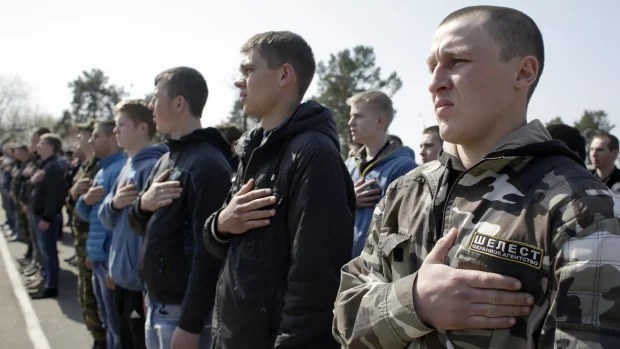
A security pact inked by Ukraine’s Volodymyr Zelensky and Polish Prime Minister Donald Tusk on Monday outlines the creation and training of a so-called Ukrainian Legion. This new formation will recruit Ukrainian “volunteers” living in Poland and other EU countries.
“Among the citizens of Ukraine who fled to EU countries, there are no volunteers seeking to participate in the hostilities,” Igor Korotchenko, editor-in-chief of the National Defense magazine, told Sputnik. “Everyone who theoretically had the motivation to participate in the conflict would have returned to Ukraine a long time ago and, accordingly, would have joined combat units on the contact line.”
“Therefore, I think that this is an artificial simulacrum. They will forcefully recruit Ukrainian draft dodgers into this legion, one way or another, under pressure from local intelligence services and police forces,” the pundit continued.
In April, Poland and Lithuania signaled that they would assist the Kiev regime by sending potential draft dodgers home, despite demonstrating reluctance to extradite conscript-aged Ukrainians last year.
Polish Defense Minister Wladyslaw Kosiniak-Kamysz asserted on April 24 that “Ukrainian citizens have obligations towards the state,” while his Lithuanian counterpart Laurynas Kasciunas insisted that evading conscription was “not fair to those citizens who are fighting for their country.”
For months, EU member states had rejected Kiev’s request for repatriating Ukrainian men eligible for mobilization, citing European conventions that do not permit extradition in cases of desertion or draft evasion.
Speaking to reporters in April, Kosiniak-Kamysz and Kasciunas asserted that there were multiple ways the authorities could repatriate Ukrainians without resorting to deportation. These included implementing bans on social benefits, work permits, and necessary documentation, in addition to enacting specific legislation aimed at Ukrainian refugees.
Apparently, the Ukrainian Legion is yet another “legal” loophole to send Ukrainian refugees to the battlefield, according to Korotchenko.
“We are not talking about forced extradition, we are talking about forced enlistment in this foreign legion,” he stressed. “Human rights activists will obviously not be interested in whether [Ukrainians] enlist voluntarily. These procedures would de facto mean forced extradition after they join the legion. The mechanism that is taking shape is absolutely illegal, but has a veneer of legitimacy,” he explained.
Is the West Fanning Euromaidan-Style Public Protests in Georgia?
By Ekaterina Blinova – Sputnik – 16.05.2024
The US, EU and NATO have slammed the newly-passed foreign agents law in Georgia, while the foreign ministers of Iceland, Lithuania and Estonia took part in protest rallies against the legislation in Tbilisi. Sputnik’s pundits called these actions foreign meddling in Georgia’s affairs.
Lithuanian Foreign Minister Gabrielius Landsbergis expressed support for the “European” aspirations of Georgian protesters at a protest rally in Tbilisi on May 15.
“In a democracy, the government owes it to you, the Georgian people, to follow the direction your moral compass is showing,” Landsbergis told the crowd. “I am speaking out because I am… on the side of a European Georgia.”
But Tbilisi Mayor Kakha Kaladze, the secretary-general of the ruling Georgian Dream party, called their actions hostile and aimed at dividing Georgian society.
“This is not friendship, this is enmity, this is an attempt to deepen polarization in our country,” Kaladze told the Rustavi 2 TV channel. “Could you imagine our minister of foreign affairs going to Yerevan and speaking at an [Armenian] opposition rally?”
Direct Foreign Interference in Georgia’s Affairs
It was not the first time that Lithuanian officials have fanned public protests in a foreign state, according to Dr. Eduardas Vaitkus, Lithuanian politician who was an independent candidate in the 2024 Lithuanian presidential election.
“This is direct interference in the internal affairs of the sovereign state of Georgia,” Vaitkus told Sputnik.
Vaitkus cited earlier precedents for Lithuania’s meddling in the domestic affairs of Ukraine and Belarus. Vilnius has spent millions of euros supporting Belarusian self-declared opposition leader Svetlana Tikhanovskaya, backed by the West, who advocates for a coup d’etat in Minsk.
He recalled that the Lithuanian foreign minister’s grandfather, then-European Parliament member Vytautas Landsbergis, was spotted during the 2013 Euromaidan events in Kiev calling for a wider revolt in Ukraine.
“Unfortunately, this is the position of the Lithuanian state. My opinion is that traitors in our state are leading Lithuania in a way that creates a threat to all residents of Lithuania,” Vaitkus said.
The politician condemned the Lithuanian government’s “double and triple standards” in its unwillingness to recognize the will of the Crimean people to reunite with Russia — while rushing to embrace the self-declared independence of Kosovo alongside the West.
“Politics must have moral values. And [the Lithuanian government] demonstrates that duplicity is its main imperative in foreign policy,” Vaitkus said.
Russian Senator Konstantin Dolgov believes that Vilnius’ political agenda is not independent, but is dictated from the West.
“What can you expect from Lithuania and Estonia? These are countries that have long lost their independence and have become ‘appendages’ of Washington and Brussels,” Dolgov said, arguing that foreign ministers Iceland, Lithuania and Estonia could be sent by their Western patrons to fan unrest in Georgia.
Deputy Permanent Representative of the Russian Federation to the UN Dmitry Polyansky noted that the foreign ministers’ presence at Georgian protests is reminiscent of US and European politicians’ conduct during the 2013-2014 Euromaidan unrest in Kiev.
US Trying to Exert Pressure on Georgia as Its Hegemony Wanes
The US, EU and NATO have criticized the newly-passed foreign agents bill in Georgia, with US Assistant Secretary of State Jim O’Brien announcing on May 14 that Georgian MPs could be subjected to sanctions for “undermining democracy”.
While attacking the bill, which obliges Georgian media and NGOs to register as “pursuing the interests of a foreign power” if they receive over 20 percent of their funding from abroad, US policy-makers avoid mentioning that the Georgian legislation is reminiscent of the US’ own Foreign Agents Registration Act (FARA).
FARA requires individuals acting on behalf of foreign governments, organizations or persons foreign to the US to register with the Department of Justice (DOJ) and to disclose their relationship, activities, receipts, and disbursements in support of their activities.
Under to US law, such individuals are described as “foreign agents” while the FARA Unit of the Counterintelligence and Export Control Section (CES) is responsible for the Act’s enforcement.
The fierce US opposition to the Georgian bill under the guise of the “protection of democracy” and sanctions threats is an attempt to keep Tbilisi in line with the collective West’s agenda, according to Tiberio Graziani, chairman of Rome-based think tank Vision and Global Trends.
“The so-called defense of democracy, as promoted and implemented by the US-led West, falls within the context of the hybrid, cognitive and psychological war against those countries considered enemies, for geopolitical and geostrategic reasons,” Graziani told Sputnik.
“Any [country] that attempts to operate and act in the international context to responsibly promote the defense of its national interest is demonized by the US. Examples of this practice include, just to give a few examples, the so-called color revolutions,” he continued.
The US is believed to be behind a series of color revolutions in the former Soviet Union, including the Rose Revolution in Georgia in 2003, the Orange Revolution in Ukraine in 2004, the Tulip Revolution in Kyrgyzstan in 2005 and the failed Jeans Revolution in Belarus in 2006.
According to the expert, the threat and use of sanctions against foreign politicians pursuing national sovereignty constitutes a form of long-term US hybrid warfare.
Now that the world is becoming multipolar, the US is feeling the loss of its role as hegemon and could act irrationally with dramatic consequences for the rest of the world population, Graziani warned.
European ‘Peace Fund’ Stoking War in Ukraine as Scheming EU Governments Take Advantage
By Dmitry Babich – Sputnik – 17.03.2024
German Chancellor Olaf Scholz, French President Emmanuel Macron, and Polish Prime Minister Donald Tusk recently vowed to procure more weapons for Ukraine at a meeting in Berlin.
“A new era is dawning,” claimed Macron, while Poland’s Tusk lauded: “We want to spend our money on Ukraine.” But a closer look shows that European taxpayers’ money “spent on Ukraine” will go to a scheme called the European Peace Facility, which since its inception has been promoting war instead of peace and enriched shady operators.
The problems bothering the three European leaders in Berlin seem clear. A $60 billion bill aimed at supporting Ukraine’s “war effort” has got stuck in the US Congress and $300 million worth batch of arms that the US recently sent to Kiev is obviously not enough to stop the gradual retreat of Zelensky’s troops.
So, Scholz, Macron and Tusk felt an urgent need to create the impression that “Europeans are ready to step in” and compensate for the military-industrial complex of the United States, with the EU sending deadly “gifts” to Ukrainians. This reimbursement is supposed to be done through the grossly misnamed and off-budget scheme European Peace Facility (EPF).
The Fund Worth Billions
The EPF fund was established in 2021 and was initially used to reimburse European producers of arms that were sent to “EU-friendly dictators in Africa” – an expression used by the fund’s critics in Western media. But from February 2022, the EPF started operating with billions and devoted itself entirely to arming Russia’s adversaries in Ukraine and other post-Soviet countries.
On the surface, the EPF’s operations make an impression: “The EU agrees to €5 billion in Ukraine military aid,” “EU cash for Ukraine” – such headlines were omnipresent in the Western media last week. The EU member countries’ envoys in Brussels recently indeed agreed to increase the EPF’s assets to €17 billion, of which €11 billion are meant for Ukraine. (So far, the EPF has already spent €6.1 billion of taxpayers’ money on supplying Zelensky’s regime with arms.)
However, the European Conservative, a Budapest-based media outlet, reports that “it is theoretically possible that no actual money reaches the EPF under the agreement.”
Why? The EU has become a victim of its own hypocrisy. According to the EU’s legislation, the European Union is a peaceful organization that cannot legally finance any war effort directly, despite member countries fighting in just about all the major wars since 1991 – from Iraq and Afghanistan to Libya and Yugoslavia. Hence the need for this “peace” fund, which uses European money, but legally is not a part of the EU budget system with its strict regulations, the outlet writes.
Obligations – In Money Or Weapons
So, all 27 countries of the European Union are supposed to make contributions to the EPF, depending on the relative size of each country’s economy. However, there is a provision that makes it possible for every country to replace its share in the obligatory payment of €5 billion by “an in-kind donation.”
This means that instead of donating money, Estonia or Germany could just “donate” weapons (including old ones) to this venerable “peace” fund. This opens the door to schemes.
“The fine print specifies that for every $2 worth of military equipment donation member states can deduct $1 from their required money donation to EPF – with no limit on deductions,” The European Conservative writes.
So, if we read the fine print, the news about the €5 billion ‘sacrifice’ of EU member states for the Ukrainian Army is not quite accurate: Germany, for example, may not pay an additional cent to the fund. Here is why.
As Politico reports, Germany has been the largest donor for the Ukrainian military, having given €17.7 billion in military supplies. Now Germany is supposed to pay €1.2 billion a year into the EPF, but as long as it gives at least €2.4 billion in weapons to Ukraine in a year, Germany is free of any obligation to pay money to the fund.
Showing Them The Money, Getting Arms For Oneself
However, if Germany is the biggest donor, then Estonia is the smartest schemer.
Earlier this year, Politico accused Estonia of using a loophole in the rules that the European Council adopted for the EPF. The bureaucrats in Brussels forgot to specify how EU members should calculate the procurement price of the weaponry they send to Ukraine’s war machine via the European Peace Facility.
So, Estonia (followed by Latvia and Lithuania) vastly overestimated the value of the old Soviet weapons that it provided. However the EPF still gave Estonia the money, which the officials later used to satisfy their country’s defense and consumer needs.
“They [Estonians and other EU members] are sending their scraps to Ukraine and later buying brand new war materials for themselves, using EU money,” Politico writes.
According to EU inspectors quoted by The European Conservative, the behavior of the Estonian government led by Prime Minister Kaja Kallas was a “particularly blatant case.” Estonia “topped the charts” of the EPF’s abuse schemes, demanding 91% reimbursement for the old weapons donated and raking in €135 million last year alone. New NATO members Finland and Sweden also demanded huge refunds, and Macron’s France insisted on 71% plus an obligation to operate only with European-made weapons.
“All in all, this is an unseemly story – Western countries pride themselves on their supposedly selfless military aid to Ukraine, just like they boasted of their aid to the insurgents in Syria. As a result, Syria and Ukraine were badly damaged largely by Western-made weapons,” commented Sonja van den Ende, a Moscow-based international affairs analyst with experience covering the wars in the Middle East. “But in reality this military aid is not selfless. We see at the example of the EPF how this aid actually helps to fill the pockets of big arms producing companies and of Western government officials.”
Featured Video

America Racing to Strategic Defeat in Iran
or go to
Aletho News Archives – Video-Images
From the Archives
An Expert Military Analysis of War with China
Actually, None is Necessary
By Fred Reed • Unz Review • December 13, 2020
The Correlation of Armed Forces: U.S. goods and services trade with China totaled an estimated $634.8 billion in 2019. Exports were $163.0 billion; imports were $471.8 billion. The U.S. goods and services trade deficit with China was $308.8 billion in 2019. Trade in services with China (exports and imports) totaled an estimated $76.7 billion in 2019. Services exports were $56.5 billion; services imports were $20.1 billion. The U.S. services trade surplus with China was $36.4 billion in 2019.
There is talk within the Washingtoniat of a possible war with China. Steve Bannon, who apparently was dropped on his head as a child, actually favors such a war. We hear the usual shoo-the-boobs alarm about how the Chinese are doing something terrible and we must gird our loins and American values and show them what for, bow wow, woof. The danger is that the current game of who-blinks-first in Asian waters might actually provoke a shooting war. You know the kind of thing: One warship refuses to get out of the way of another, a collision ensues, some retard lieutenant who signed up on waivers opens fire, and we’re off and running. It is not a good idea to let children play with matches.
The said war is discussed either in emotional terms by idiots or in purely naval terms by those familiar with such things, so we hear of the First Island Chain and the Second Island Chain and whose missiles against the other’s missiles and so on. This would be appropriate if we were fighting World War Two again. Which we aren’t. Let’s take a quick-and-dirty look at how such a war might go.
To begin the war, America would overestimate itself and underestimate China. This is doctrine in the Pentagon. … continue
Blog Roll
 Aletho News
- Suicide Should Not Be a Government Service
- Rethinking America’s greatest threat: Iran vs. Israel-Firsters
- Iran accuses adversaries of false flags to strain Turkey ties
- Poland rules out sending Patriot missiles to US/Israel amid war on Iran
- Tehran approves new Hormuz plan with major restrictions
- No Threat Can Force Iran’s Surrender /Trita Parsi & Lt Cl Daniel Davis
- UK’s New Pandemic Plan Would Turn Big Tech Into a Mass Location Tracking Network
- Growing insecurity, soaring prices fuel protests in north as regime bans evacuation: Sources
- Iran denies responsibility for ‘depraved’ attack on Kuwait desalination plant
- Bring The Troops Back. End This War Now!
- If Americans Knew
- Champagne all around for the new death penalty (for Palestinians) law – Not a ceasefire Day 171
- Why are Palestinian books struggling to be seen on Amazon?
- The Line Between Affinity and Conspiracy
- As Iran targets US military bases, will they be relocated to Israel? Not a ceasefire Day 171
- Will Trump Go Kamikaze?
- Is the University of Florida Shutting Down College Republicans over Israel Criticism?
- Jewish extremist arrested over alleged plot to firebomb Palestinian activist Nerdeen Kiswani’s home
- More than half of Palestinian child detainees have no charges
- The More Murderous Israel Gets, The More We Hear About “Antisemitism”
- Land Day and the Palestinian struggle after 30 months of genocide
- No Tricks Zone
- New Study Finds Warming Saves Lives…Cold Temperatures 12 Times More Deadly Than Excess Heat
- German Science Blog Accuses PIK Climate Institute Of Hallucinating Climate Tipping Points
- Devastating Assessment Of Comirnaty Vaccine By Former Senior Pfizer Europe Toxicologist
- New Study: CO2 Is ‘Effectively Negligible’ As An Explanatory Climate Change Factor Since 2000
- Former Pfizer Toxicologist Dr. Helmut Sterz Tells Bundestag Hearing Pfizer Vaccine Should Have Never Been Approved
- Energy Expert: Germany’s Nuclear Phaseout Was A “500 Billion Euro Mistake”
- New Research: South Australia’s Mid-Holocene Sea Surface Temperatures Were 4°C Warmer Than Today
- Storing Green Energy To Last Germany 10 Days Would Require A 60-Million Tonne Battery
- New Studies: UK Sea Levels Were 4 Meters Higher Than Today During The Mid-Holocene
- Destructive Green New Deal: German Energy And Metal Group Warns Of Drastic Crisis
 Aletho News