Kurdistan – what the referendum is hiding

On this electoral poster, the map of « independent Kurdistan » overflows from the autonomous Iraqi region onto Iraqi and Syrian territory.
By Thierry Meyssan | Voltairenet | September 26, 2017
The referendum for the independence of Kurdistan is a fool’s game. The United States, which secretly supports it, claims in public to oppose it. France and the United Kingdom are doing the same, hoping that Washington will make their old dreams come true. Not to be outdone, Russia is hinting that although it is against any unilateral change, it might support independence… as long as everyone accepts the independence of Crimea, which means accepting its attachment to Moscow.
The degree of hypocrisy of the permanent members of the UN Security Council is such that they have so far been unable to give a ruling on this question, despite their apparent unanimity. They have not adopted any resolution (in other words, a text with international force of law), nor Presidential declaration (in other words a position common to the members of the Council) – nothing except an insipid Press release during their meeting on 19 September [1].
Currently, there exist eight non-recognised States – Abkhazia, North Cyprus, Nagorno-Karabagh, Kosovo, Ossetia, Western Sahara, Somaliland and Trasnistria. Two European regions are also hoping for independence – Catalonia and Scotland. Any modification of the status of Iraqi Kurdistan will have consequences for these ten countries.
The independence of Iraqi Kurdistan would be a tour de force, insofar as it would mean displacing Kurdistan, as it was recognised by the Sèvres Conference in 1920, from its current location on Turkish territory to Iraqi territory. Of course, everyone has become used to using the title Kurdistan to indicate this region, which, since 1991, has been subject to a slow and continual ethnic cleansing by London and Washington.
During « Desert Storm », this region was mainly inhabited by Iraqi Kurds. London and Washington made it a no-fly zone against President Hussein. They forced into power one of their collaborators from the Cold War, Massoud Barzani, who initiated the displacement of the non-Kurdish populations. The same Barzani, although he was twice re-elected since then, has maintained his grip on power for more than two years without a mandate. The National Assembly, which demanded his departure, has met only once since the end of his mandate to vote the principle of the referendum, but in the absence of Goran – a party which has continually denounced the feudal system of the Barzanis and the Talabanis, and the nepotism and the corruption which are the direct result. In fact, Massoud Barzani has been in power, without interruption, for the last 26 years.
From 1991 to 2003, the non-Kurds progressively left the no-fly zone, so that the region was proclaimed, with the defeat of President Hussein, as Iraqi Kurdistan.
On 1 June 2014, the secret services of Saudia Arabia, the United States, Israël, Jordan, the autonomous region of Iraqi Kurdistan, Qatar, the United Kingdom and Turkey organised, in Amman, (Jordan) a preparatory meeting for the invasion of Iraq by Daesh. We know of the existence of this meeting by the Turkish document that Özgür Gündem published immediately [2]. This daily newspaper – with whom I collaborated – has since been shut down by the « sultan » Recep Tayyip Erdoğan [3].
According to this document, it was agreed to coordinate Daesh and the region of Iraqi Kurdistan. The former launched a lightning offensive to capture Mosul, while the latter grabbed Kirkuk. Four days earlier, President Massoud Barzani had travelled to Jordan to talk to the participants of this meeting. He was careful not to take part in the meeting himself, but was represented by his son Masrour, the head of his own Intelligence services.
When Daesh invaded the part of Iraq that the United States had previously attributed to him, they profited from the occasion to imprison the Yezedis and bind them into slavery. Most of the Yezedis are Kurdish, but in conformity with the Amman agreement, the neighbouring Barzanis did not intervene, even when some of them fled into the Sinjar mountains. Those who fled were finally saved by the commandos of the Turkish PKK. The Turkish Kurds saved them all, whether they were Kurds or not. They used this victory to demand their recognition from the Western powers (who, since the Cold War, has viewed them as terrorists). The current revision of this affair by the Barzanis cannot erase their crime against their own people [4].
Another famous Kurd took part in the meeting in Amman – the Islamist Mullah Krekar. He was imprisoned in Norway, where he was serving a five-year sentence for having threatened, on TV, to kill Prime Minister Erna Solberg. He travelled to the Amman meeting in a NATO plane, and was taken back to his cell in the days that followed. He then revealed his allegiance to Daesh. He was not condemned for belonging to a terrorist organisation, but was offered a two-year remission of sentence and was freed. He then went on to direct Daesh in Europe, from Oslo, under the protection of NATO. Clearly, the Stay-behind network of the Atlantic Alliance is still operational [5]
Having annexed Kirkuk, the regional government of Iraqi Kurdistan extended to their zone the ethnic cleansing that its members had been perpetrating in the no-fly zone between 1991 and 2003.

We can relax – the immovable Barzani has assured that he will not implement measures of retaliation against those who vote “No”.
The non-constitutional President Barzani has announced that all the populations of Iraqi Kurdistan and the annexed territories may participate in the referendum. Together, all these regions housed more than twelve million citizens in 2013. But today, three million non-Kurdish citizens have been forced to flee. So only a chosen number of electors are called to vote on the future not only of the place of the expelled legitimate inhabitants, but also that of all other Iraqis.
- In order to participate in the referendum, one must –
- live in Kurdistan or the annexed regions ;
- be over 18 years old ;
- have been registered before 7 September on the electoral lists ;
- and for those who are refugees abroad, one must have been registered for the electronic vote … which supposes that they must first present their papers to the electoral authority of Kurdistan, from which they have been expelled.
As it happens, the Barzanis have a particular conception of the populations who are called to vote. In 1992, there were no more than 971,953 voters, but a decade later, in 2014, they suddenly numbered 2,129,846, and now 3,305,925, on September 25, 2017.
Independence will give the Barzani and Talabani clans further means with which to pursue their affairs. It will also offer Israël the possibility of implementing certain of its military objectives. Since the end of the 1990’s and the development of missile weaponry, Tsahal has abandoned its strategy of occupying the « border regions », meaning the territories just outside its frontiers (Sinaï, Golan, South Lebanon). On the contrary, it intends to neutralise Egypt, Syria and Lebanon by taking them from behind. This is why Tel-Aviv supported the creation of South Sudan, in 2011, in order to place missiles pointed at Egypt, and is today supporting the creation of Kurdistan in order to place missiles pointed at Syria.
According to Israel-Kurd, which is widely quoted by the Turkish Press, Israëli Prime Minister Benjamin Netanyahu promised Massoud Barzani to transfer 200,000 Israëlis to the new state to « help » with its administration [6].
According to this logic, the ideal for Tsahal would be to extend the territory of Iraqi Kurdistan not only to Kirkuk, but to Northern Syria. This is the purpose of the YPG and its « Rojava ». This self-proclaimed autonomous state is a long corridor which links Iraqi Kurdistan to the Mediterranean, and is occupied by US troops who are illegally installed in several military bases.
Eight months before the Amman meeting, a Pentagon researcher, Robin Wright, confirmed her country’s agreement with this project [7]. At that time, the Barzanis were still claiming that they defended all Kurds, including those who were living in Turkey and Iran. Mrs. Wright carefully explained that such a project was impossible, but published her map of « Sunnistan », attributed to Daesh, and « Kurdistan » attributed to the Barzanis in Iraq and Syria.
Incidentally, in August, the Pentagon published a call for tender for the buying and transfer of 500 million weapons and ammunition, mainly ex-Soviet [8]. The 200 first trucks were delivered to the YPG at Hasakah, on 11 and 19 September, via Iraqi Kurdistan, without being attacked by the jihadistes [9]. The Russian Minister for Defence has just made public satellite photos of a camp of US special forces in the middle of Daesh territory, living quite comfortably with the Kurds and the jihadists [10].
So since we are told that this « independent Kurdistan » is a democratic Kurdish project, why would we doubt it?
Translation by Pete Kimberley
Notes
[1] “UN Security Council Press Statement on Iraqi Kurdistan”, Voltaire Network, 21 September 2017.
[2] « Yer : Amman, Tarih : 1, Konu : Musul », Akif Serhat, Özgür Gündem, 6 juillet 2014.
[3] Those journalists who escaped the purge and managed to flee, created the electronic daily Özgürlükçü Demokrasi outside of Turkey.
[4] “Rewriting the massacre at Sinjar”, Translation Anoosha Boralessa, Voltaire Network, 12 September 2017.
[5] NATO’s Secret Armies: Operation GLADIO and Terrorism in Western Europe, Daniele Ganser, Routledge, 2004.
[6] “200,000 Israelis expected in “Kurdistan” once independence is declared”, Translation Anoosha Boralessa, Voltaire Network, 20 September 2017.
[7] “Imagining a Remapped Middle East”, Robin Wright, The New York Times Sunday Review, September 28, 2013.
[8] “Heikle Fracht aus Ramstein”, “Millionen Schuss Munition für Kalaschnikows”, Frederik Obermaier & Paul-Anton Krüger, Süddeutsche Zeitung, 12. & 20. September 2017.
[9] “200 lorries of arms and ammunition: delivery by the Pentagon to the YPG”, Translation Anoosha Boralessa, Voltaire Network, 23 September 2017.
[10] « Le ministère russe de la Défense diffuse des photos des Forces US stationnées chez Daesh », Réseau Voltaire, 24 septembre 2017.
Referendum Blues: The Issue of an Independent Kurdistan
By Dr Can Erimtan | 21st Century Wire | September 26, 2017
Recep Tayyip Erdoğan (aka the Prez) and his Justice and Development Party (or AKP) have been steering the state founded by Mustafa Kemal [Atatürk] (1881-1938) into distinctly Islamic waters for quite some time now… and as Turkey houses the largest percentage of Kurds in the region (14.7 million according to the CIA), solving Turkey’s Kurdish issue had been part and parcel of the AKP’s policy of Sunnification.
The Prez and his AKP henchmen had namely devised a plan to transform the country into a nation of believers, firmly dedicated to Sunni Islam and moving away from Turkish nationalism.
A Nation of Muslim Immigrants versus an independent Kurdistan
But the Iraqi Kurdish leader Masoud Barzani now seems to have thrown a spanner in the works, as he told the international press in 2014 that “We [referring to the Kurdish population of Iraq living in the north of the country] will hold a referendum in [the KRG or Kurdish Regional Government] and we will respect and be bound by the decision of our people and hope that others will do likewise.” In this way, one of Turkey’s deepest fears is finally about to become a reality now – the formation of an independent nation state called Kurdistan in the wake of a popular referendum to be held on Monday, 25 September 2017. Somewhat fortunate for Ankara, though, not quite on Turkish soil, but nevertheless directly adjacent to Turkey’s south-eastern region, which many Kurds as well as their sympathisers refer to as Northern Kurdistan these days. And thus, AKP-led Ankara is now up in arms as the rather natural expectation is that a so-called domino effect will take place and that Turkey’s Kurds might very well want to join their southern brethren in an independent nation state possessing underground hydrocarbon reserves or a coveted natural source of income, if you will.
The Turkish nation state established by, Mustafa Kemal, and his followers developed its own brand of nationalism, its own brand of Turkish nationalism which was meant to transform the ethnically diverse inhabitants of Anatolia and Eastern Thrace into a homogeneous body of Turks (or Turkish citizens). Throughout most of its existence, the ideological construct of Turkish nationalism adhered to the politcal precepts of the state carrying the name Kemalism, in reference to the nation state’s founding father and, as I explained nearly four years ago: “the idea of the Anatolian population as a Turkish entity was first proposed as early as 1922, the year prior to the official proclamation of the republic. And in 1924, the first Turkish constitution proclaimed that the ‘name Turk, as a political term, shall be understood to include all citizens of the Turkish Republic, without distinction of, or reference to, race or religion.’ A policy of ‘Turkification’ carried out in the first decades of the republican existence has meant that these various ethnic subgroups have in time merged with the Turkish mainstream.” This Kemalist exercise in social engineering worked well for the majority of ‘Turks,’ whose ethnic identities became submerged in a superstructure of Turkishness that came to replace the previously employed social construct of Ottomanism, that had been in place in the period 1876-1918. The only notable exception to this narrative were the Kurds, whose tribal organisation at the fringes of both the Ottoman and Turkish state structures basically meant that they were able to continue their lives beyond the strictures of the state and its bureaucratic framework and control.
Prior to the foundation of the Republic in 1923, “Anatolia was . . . home to ethnically heterogeneous Muslim groups: in addition to a large majority of Turkish Muslims, there were Kurds, Arabs, Lazes, Muslim Georgians, Greek-speaking Muslims, Albanians, Macedonian Muslims, Pomaks, Serbian Muslims, Bosnian Muslims, Tatars, Circassians, Abkhazians and Dagestanis among others. Prior to the formulation of Turkish nationalism as an ideological binding-force, the diverse ethnic groups in Anatolia were united by their common identity as Muslims and their allegiance to the Ottoman Caliphate, abolished in 1924 . . . Anatolia has always been home to a wide variety of ethnic and religious groups and sub-groups, and today, the makeup Turkey’s population is the result of Ottoman government policies carried out in the late 19th and early 20th centuries. These policies were aimed at transforming Anatolia (the heartland of the Ottoman Empire and the Turkish Republic’s geo-body, using Thongchai Winichakul’s coinage denoting the territory of a nation as expressed on a map and inscribed on the people’s consciousness) into a Muslim homeland where refugees from the Russian Empire and the Balkans were settled.” And in the 21st century, the Prez and his AKP henchmen are bent to return Turkey’s state-of-affairs to this pre-nationalist reality, dismantling “the nation state Turkey into an Anatolian federation of Muslim ethnicities,” beholden to the Prophet’s example, the strictures of the Shariah and possibly even to a revived Caliphate. As a result, the expectation was that the Prez and his henchmen would be able “to unite and pacify the country as a nation of believers, firmly dedicated to Sunni Islam able to supersede mere ethnic or national ties and solidarity.” And in this way, the issues of Turkish and Kurdish nationalism that had in the Kemalist past (1923-2002) caused major unrest in the country would have been replaced by the common cause of Islam and Muslim solidarity. But events in the real world were such that developments in neighbouring Syria and Iraq have led to a strengthened sense of Kurdish nationalism, not just in Turkey. First in northern Iraq where the KRG emerged on the scene in the aftermath of the first and second Gulf Wars led by Bush, Senior and Junior respectively. As well as in Syria where the “three autonomous cantons of Kobani, Afrin, and Cizre, making up the district of Rojava, are under the control of the PYD (or the Kurdish Democratic Union Party) that is arguably attempting to put into practice precepts and ideas of ‘libertarian municipalism’ developed by the libertarian socialist thinker Murray Bookchin (1921-2006).” This last aspect is particularly troubling for Turkey, as its homegrown Kurdish terror group PKK (or the Kurdistan Workers’ Party) equally espouses these ideals which were popularised by its imprisoned leader Abdullah Öçalan, thereby attesting to the organic ties between the PKK and the PYD, and its military wings the YPG (People’s Protection Units) and YPJ (Women’s Protection Units).
And finally, there is also a notable Kurdish presence in Iran, supporting its own separatist terror group, known as PJAK and which Turkey also sees as being organically linked to the PKK.

The Spectre of a Greater Kurdistan: 25 September 2017
The fact that the Kurds, arguably much like the Palestinians or even the Rohingya, are a social group consisting of Muslims that lack a proper homeland or nation state means that they can easily garner major support around the world, particularly in the West where the cult of the underdog has transformed the Kurds into a perennial favourite amongst human rights’ supporters all around. And as such, the Kurds and the goal of an independent Kurdistan have now also found major backers in the somewhat unlikely duo of Israel and Saudi Arabia, as I explained in the summer of 2015.
The spectre of “an independent Kurdistan in Northern Iraq could very well be the opening move for redrawing the mapped heritage of Sykes-Picot by means of consolidating Kurdish unity – stretching from Syria in the West (Rojava), over Turkey in the North (South-Eastern Anatolia) and Iraq in the South (KRG) to Iran in the East (Rojhilate Kurdistane).” As such, on the sidelines of the U.N. General Assembly meetings in New York City (19 – 25 September 2017), Iranian Foreign Minister Javad Zarif, Iraqi Foreign Minister Ibrahim Jaferi, and Turkish Foreign Minister Mevlüt Çavuşoğlu got together to discuss this thorny issue (20 September 2017)… even managing to publish a joint communiqué afterwards: “In the meeting, the three Ministers, reaffirmed their strong commitment to the territorial integrity and political unity of Iraq, welcomed the recent liberation of the Nineveh Governorate, which constituted a major victory against DEASH [or the Islamic State or ISIS]… acknowledged the perseverance, commitment and resolve of the people of Iraq as a whole in fighting DEASH . . . . . . Expressed their concern that the planned referendum by the KRG, which is scheduled for September 25, 2017, puts Iraq’s hard-earned gains against DEASH under great risk, [f]urther expressed their concern that the planned KRG referendum is unconstitutional and runs the risk of provoking new conflicts in the region, that will prove difficult to contain.” As a result, the Kurds managed to do the impossible – to unite the governments of Turkey, Iraq and Iran. Or, as put by the communiqué: the assembled foreign ministers “… registered their unequivocal opposition to the referendum, decided to urge the leadership of the KRG to refrain from holding the referendum, emphasized that the referendum will not be beneficial for the Kurds and [the] KRG, [and a]greed, in this regard, to consider taking counter-measures in coordination,” adding that there is a “need for concerted international efforts to convince the KRG on calling off the referendum,“ while renewing “their call on the international community to remain engaged on the issue.“
Turkish Reactions: War in the Offing?!??
With the fateful date fast approaching, and the Prez also having had his last minute tête-à-tête with the current Leader of the Free World in New York City (21 September 2017), while his proxy the hapless PM Binali Yıldırım spoke to the Turkish press invoking the Treaty of Lausanne (24 July 1923) in his argumentation against the possible outcome of the upcoming referendum (22 September 1922): “This referendum is an issue of Turkey’s national security. Turkey is determined to use its natural rights originating from international and bilateral conventions and will not hesitate in this.” Hapless Yıldırım referred particularly to articles 3 and 16 of the cited document.
The Lausanne Treaty basically functions as the Turkish Republic’s founding document in the aftermath of the Great War (1914-18), the Turkish War of Independence (1919-22) and the abolition of the Ottoman Sultanate (1922). Its third article holds that the “Turkish and British Governments reciprocally undertake that . . . no military or other movement shall take place which might modify in any way the present state of the territories“ of the Republic of Turkey and Iraq, which was then known as the Kingdom of Iraq under British Administration (1920-32) or simply a British protectorate under the sway of Westminster and nominally ruled by George V (1910-36). Article 16, on the other hand, simply clarifies that “Turkey hereby renounces all rights and title whatsoever over or respecting the territories outside the frontiers laid down in the present Treaty,“ which is basically quite beyond the present scope of Turkey’s foreign policy. But Yıldırım citing the article clearly signifies that Turkey’s Kurds should not harbour any desires of joining their southern ethnic brethren, given the finality of Turkey’s borders. The fact that Yıldırım, representing his boss and the AKP establishment, is now quoting Lausanne to sway the Iraqi Kurds from holding a referendum indicates that AKP-led Ankara is really grasping at straws. Turkish Islamists and the AKP nomenklatura, in particular, have in the past always attacked the Treaty of Lausanne as a document of surrender, signing the death of the Ottoman enterprise and forcing Turkey to renege on much-coveted territories. In fact, but last year the Prez himself referred to the Kemalist ‘National Pact’ or Misak-ı Millî (originally drafted by Mustafa Kemal during the Erzurum Congress, 23 July-5 August 1919, and accepted by the last Ottoman parliament on 28 January 1920) to argue that Aleppo, Kerkük and Mosul are “ours” (23 October 2016) – areas also inhabited by Iraqi Turkmen as well as harbouring underground hydrocarbon reserves.
And now, with the hours counting down and everyone’s nerves on end, “the Turkish government will seek a mandate from the Parliament [or TBMM, in acronymized Turkish] to send troops to Iraq and Syria after consecutive security meetings where measures to be taken against the Erbil administration have been decided. The Turkish Parliament is set to hold an extraordinary session on Sept 23 to vote on a mandate that permits the government to deploy troops to its southern neighboring countries, Iraq and Syria, just two days before the scheduled referendum to be held by the Iraqi Kurdistan Regional Government (KRG),“ as reported by the Turkish press.
As it happens, Turkey’s National Security Council, which was supposed to convene on Wednesday, 27 September 2017, was also been brought forward to coincide with the extraordinary parliamentary session. Tayyip Erdoğan told the Turkish press on Friday (22 September) that “[w]e will initiate another step in conjunction [with the already agreed upon measures]. This step will consist of deciding upon what kind of sanctions will be imposed, we will discuss all these matters in great detail during the National Security Council meeting. It would not be right for me to say anything about that now. The timing of the sanctions, what the road map will be like, all these things will be discussed in the National Security Council meeting and if necessary in the Council of Ministers meeting, and our government shall announce the decisions following the Council of Ministers meeting.” As it turns out, when it comes to the Kurds, the post-Kemalist state (2002-) turns out to be as firm and ruthless as its Kemalist predecessor (1923-2002).
The extraordinary parliamentary session on Saturday approved a motion to extend a mandate permitting the AKP government to deploy its armed forces (or TSK, in acronymized Turkish) to Iraq and Syria for another year. In spite of the extreme political polarisation present in post-Kemalist Turkey, the said motion received the approval of a large majority in the TBMM with deputies from the main opposition CHP (or Republican People’s Party) and the opposition fascist MHP (or Nationalist Movement Party) easily joining the nationalist cause spearheaded by the Prez and his AKP henchmen. The mainly Kurdish opposition HDP (or Peoples’ Democratic Party) quite naturally did not join the nationalist and Islamofascist throng in the Turkish Parliament. During the proceedings, Defense Minister Nurettin Canikli made the following remarks: “Pulling out just a brick from a structure based on very sensitive and fragile balances [which is the territorial status quo that emerged in the wake of the Sykes-Picot agreement, ratified on 16 May 1916] will sow the seeds for new hatred, enmity and clashes . . . Th[is] pirate referendum which is illegal and unacceptable should be cancelled before it is too late,” making plain how the Turkish political establishment is unable to countenance the merest hint of Kurdish independence or even the noun Kurdistan, for that matter.
The opposition CHP MP Öztürk Yılmaz promptly echoed the Defense Minister’s words, declaring somewhat disingenuously that “[w]e want the referendum to be cancelled and support the motion not for war but for peace in the region.” In fact, the rather surreal concordance between government and opposition was all but underlined by a surprise meeting between the hapless PM and the CHP leader Kemal Kılıçdaroğlu and the MHP leader Devlet Bahçeli during a break at the session. The HDP MP Osman Baydemir, on the other hand, simply and matter-of-factly called the session’s predictable outcome a “war mandate . . . [and] a proclamation of enmity towards 40 million Kurds.” Meanwhile, on the same day. south of the border, in the sovereign state that is the as-yet unitary Republic of Iraq, where Kurds constitute about 17% of the population, the KRG’s ruling bloc sent a delegation to the central government in Baghdad, a Shi‘ite Arab coalition led by the PM Haider al-Abadi and ceremonially presided over by the ethnically Kurdish politician Fuad Masum. Kurdish leader Massoud Barzani’s top adviser Hoshiyar Zebari told the Reuters news agency that the “delegation will discuss the referendum but the referendum is still happening . . . We said we would talk to Baghdad before, during and after the referendum.” And then, there is the U.S., the main culprit behind the current predicament as the KRG was set up in 1992 (with first elections organised on 19 May), in the wake of the first Gulf War (2 August 1990–28 February 1991), led by Bush, Senior, the 41st President of the United States of America (1989-93). The current Trump administration has now vocally urged the Kurds to cancel the referendum, while the U.N. Security Council, for good measure, issued a warning calling the vote “potentially destabilizing” for Iraq and the region.
In other words, another frontline in the Middle East’s ongoing military conflict could very well be added to the conflagrations in Syria, Iraq and Yemen . . . another front that might or might not include the south-eastern part of Anatolia, nowadays more commonly referred to as Northern Kurdistan and an integral part of the territories of the Republic of Turkey, albeit largely inhabited by Kurds-carrying-Turkish-passports and ID cards. And this “potentially destabilizing” military action would come to sit on top of the ongoing fight against the Islamic State (or ISIS or Daesh) and pit Turkish soldiers against Kurdish Peshmerga and civilians . . . and northern Iraq as well as the whole of Turkey – as Kurds live dispersed thoughout the whole of the country and not just the South East – might very well join the lands where death and destruction have come to dominate daily life and have turned the solid and stable structures of men into sheer rubble and junk. At the moment, such alarmist words are merely hovering in the air, as on the appointed day, “Kurds voted in large numbers in an independence referendum in northern Iraq” (voter turnout of aproximately 78%), as explained by Reuters. While simultaneously, Turkey and Iran engaged in war games on the Iraqi border. Iraq’s PM al-Abadi, for his part, ordered the Iraqi army to “protect citizens being threatened and coerced” by triumphant Kurds.
Now that the long-awaited and much-feared day of reckoning has come and gone, “Tehran and Ankara fear the spread of separatism to their own Kurdish populations,” as expressed by Reuters, and the Baghdad government is all but fearful of maintaining Iraq’s territorial integrity… and all-out ethnic war could just be around the corner now.
***
21WIRE special contributor Dr. Can Erimtan is an independent scholar who was living in Istanbul for some time, with a wide interest in the politics, history and culture of the Balkans and the Greater Middle East. He attended the VUB in Brussels and did his graduate work at the universities of Essex and Oxford. In Oxford, Erimtan was a member of Lady Margaret Hall and he obtained his doctorate in Modern History in 2002. His publications include the book “Ottomans Looking West?” as well as numerous scholarly articles. In the period 2010-11, he wrote op-eds for Today’s Zaman and in the further course of 2011 he also published a number of pieces in Hürriyet Daily News. In 2013, he was the Turkey Editor of the İstanbul Gazette. He is on Twitter at @theerimtanangle
Syria prepared to discuss post-war autonomy with Kurds in geo-strategic blow to the US and Israel
By Adam Garrie | The Duran | September 26, 2017
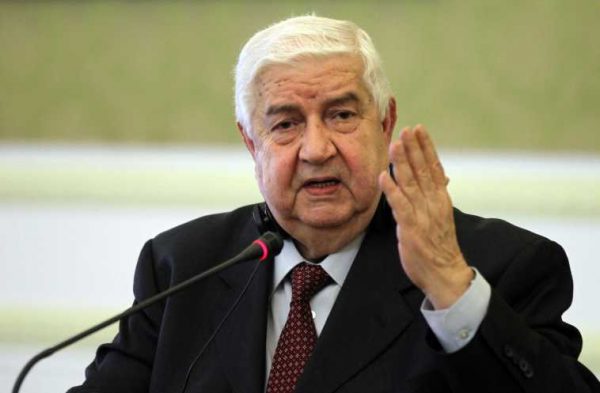
Syria’s Deputy Prime Minister and Foreign Minister Walid Muallem has stated that once the conflict against terrorist groups is finished in Syria, Damascus will be willing to politically negotiate internal autonomy for Syrian Kurds.
Reuters quotes Muallem, who delivered Syria’s address to the United Nations, as stating,
“This topic (Kurdish autonomy) is open to negotiation and discussion and when we are done eliminating Daesh (aka ISIS), we can sit with our Kurdish sons and reach an understanding on a formula for the future”.
There are several geo-political implications to this statement.
1. Seizing the initiative from the US occupiers
First and foremost, Muallem’s proposals take the wind out of the sails of the United States. As I wrote previously in The Duran, with Syria and Russia quickly securing control over areas east of the River Euphrates, the US is being squeezed out of Syria.
Bearing these realities in mind, one of the only options the US has left is to use the Kurdish national cause in order to foment either a new puppet state in the region that is built on stolen Syrian territory or else create a permanently occupied entity similar to the Serbian Autonomous Province of Kosovo and Metohija. Apart from this, the US will have no choice but to either leave Syria or directly confront the Syrian Arab Army and most likely, also its Russia ally. Presently, the US seems unwilling to confront Russia by any means other than through the US of proxy/terrorist forces and this is unlikely to change.
However, given the extreme backlash against Kurdish separatism in Iraq, the US would not only retain old enemies but gain new ones, particularly in the form of Turkey. Ankara is vocally opposed to Kurdish separatism in Iraq and has threatened to take all measures necessary to stop moves in this direction. Turkey has an even worse relationship with Syrian Kurds. This would automatically mean that the US would be in for a very difficult ride if they backed Kurdish separatism in Syria.
With Turkey’s President Erdogan specifically telling Iraqi Kurds “The Israel flag will not save you”, Syria’s proposals would be a geo-strategic blow not only to the US but also to Israel.
2. Separating SDF terrorists from civilian Kurds with Syrian citizenship
The Arab Socialist Ba’ath party has already given Syrian Kurds full citizenship rights which means that they are co-equals to Arabs as well as to other minorities including Assyrians and Armenians, both of whom are grateful to the pluralistic Ba’athist government for protecting them from foreign funded Sunni supremacist terrorism.
While it is clear that the Kurdish fronted SDF proxy militia is operating as a terrorist force in Syria, the old line about separating terrorists from moderates could work in a post-war scenario where the SDF has been defeated in certain regions and rendered irrelevant in others.
In exchange for negotiated autonomy, one which would clearly have to protect the rights of Arabs in ‘Kurdish regions’ of an Arab Republic, Syria could force Kurdish leaders to weed out those who have collaborated with foreign powers and create a new political paradigm for Kurds in Syria.
This would give the moderate Kurds what they want, it would protect the human rights of Arabs and Syrian minorities and it would allow Syria to further purge her soil of terrorists and enemy collaborators.
3. Leverage with Turkey
Unlike Iraq which is currently collaborating with Turkey in military drills bordering separatist regions of Iraq, Syria has no plans to engage with Turkey after years of Turkey’s participation in the pro-jihadist war against Syria.
However, in actively preventing the formation of a Kurdish state in Syria through a negotiated settlement which Turkey’s new found partner Russia could possibly help to broker, Syria could effectively end the current ‘Kurdish excuse’ which is being subtly invoked by Turkey to justify its continued presence in Syria.
Furthermore, Syria could, possibly again via Russia, offer Turkey assurances that Syria will not allow for PKK activity directed against Turkey to foment on Syrian soil. This would be in the best interests of peace in the region as Turkey and Syria both need to eventually come to terms with the fact that they are neighbours.
Historically, Syria’s traditional regional adversaries have been Israel and Jordan and more recently the extremist Arab states of the Persian Gulf. These are the states Syria must be on guard against when looking to the wider future. Because of this, Syria and Turkey will and should slowly but surely normalise relations.
4. Containing Iraqi Kurds
While Iraqi Kurds are politically at odds with their Kurdish counterparts, there exists a fear that the menacing separatist movement in Iraq could lead towards a greater Kurdish push for a multi-state land grab which would be supported by Israel, especially where Syria and Iran are concerned.
If, as is expected, Turkey sends its troops into northern Iraq, it would send a message to the wider Kurdish movement that Kurdish independence equals creating not a greater Kurdistan but a greater Turkey.
Thus, the example of Iraq when viewed simultaneously with the generous offer from Syria, may lead to moderate elements within the Syrian Kurdish movement making the pragmatic choice for guaranteed autonomy versus the prospect of Turkish domination.
Conclusion
Far from being a concession, it was always expected that after the present conflict against imperialism and imperialist funded jihad, Syria would happily engage in a political process with various parts of the Syrian population, including Kurds, in order to develop a settled internal peace.
Syria, in announcing this now however, sends a strong message to radical Kurds and the United States. The message is clear, Syria is a sovereign country and the Kurdish issue is a purely internal matter.
Majority of Brits think UK should recognise Palestine as a state
MEMO | September 25, 2017
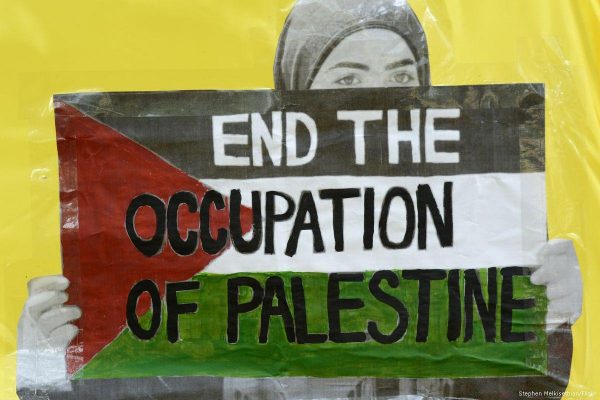
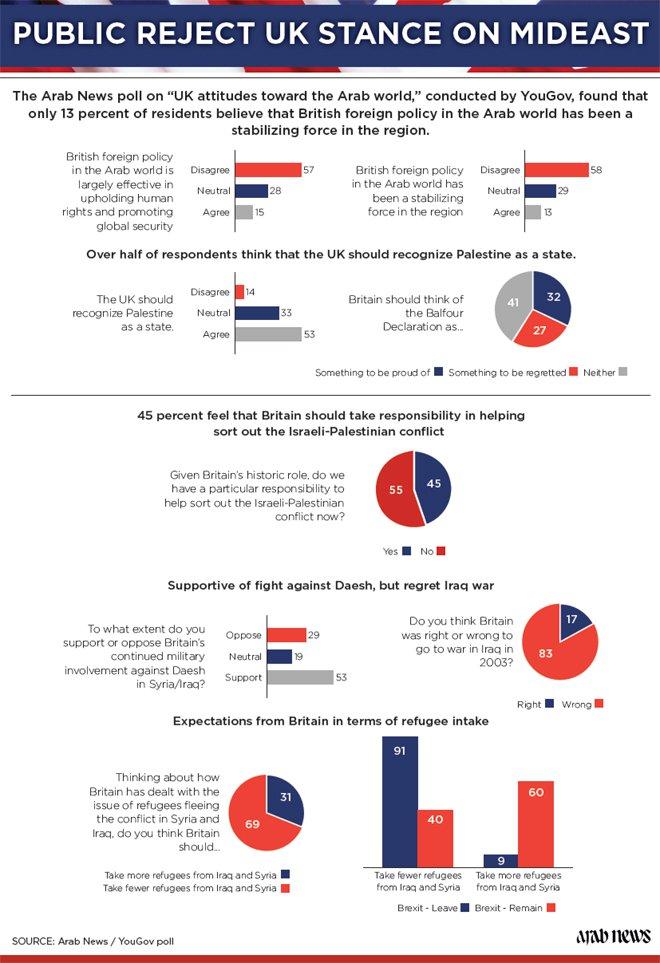
A majority of the British public believe the UK should recognise Palestine as a state, according to the results of a new YouGov poll published Monday.
53 percent of respondents said they agree with such a step, as opposed to just 14 percent who disagreed (33 percent said they were ‘neutral’).
Responding to the poll, Manuel Hassassian, Palestinian ambassador to the UK, said public opinion has been shifting. “I have been here for 11 years and have noticed dramatic changes in the British public’s views on Palestine”, he said.
“That only 14 percent say they wouldn’t want the Palestinian state to receive recognition is an indication of the Palestinian cause worldwide being accepted”, he added.
The poll also addressed views amongst the British public towards the Balfour Declaration, whose centenary will be marked in November.
According to the poll, opinion is deeply divided over the Balfour Declaration: 32 percent of Brits think it is something to be proud of, while 27 percent consider it “something to be regretted” (and 41 percent selected ‘Neither’).
The poll also revealed a partisan divide, with a striking plurality (32 percent) of those who voted Labour in the last election viewing the Balfour Declaration as something to be regretted. Among Conservative voters, on the other hand, 40 percent view the historical document with pride, and only 21 percent with regret.
The poll also asked whether, “given Britain’s historic role”, the country has “a particular responsibility to help sort out the Israeli-Palestinian conflict now”, to which 55 percent responded ‘No’, and 45 percent answered ‘Yes’.
200,000 Israelis expected in “Kurdistan” once independence is declared
Voltaire Network | 20 September 2017
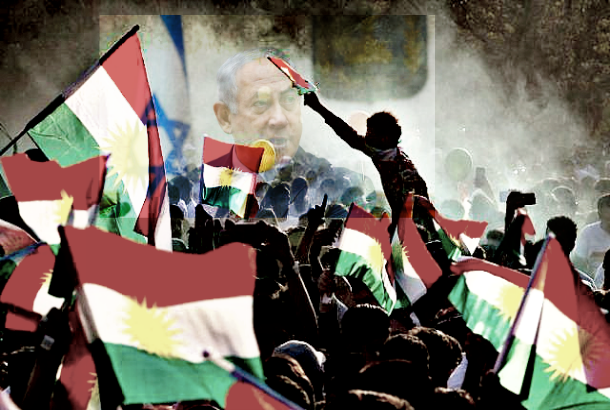
According to the magazine Israel-Kurd based in Erbil, the Israeli Prime Minister, Benjamin Netanyahu and Massoud Barzani, the self-appointed President of the future independent Kurdistan, have reached a secret agreement.
Tel-Aviv is committed to installing 200,000 Israelis of Kurdish origin in Kurdistan.
The announcement has been widely repeated in the Turkish, Iranian and Arab press. The plan to create a South Sudan and a Kurdistan has been an Israeli military objective following missile development at the end of the nineties. These territories, largely administered by the Israelis, have enabled a rear attack on Egypt and Syria.
Out of the 8.5 million Israelis living in Israel, around 200,000 are of Kurdish origin. In March 1951, “Operation Ezra and Nehemiah” (named after the biblical persons that organized the flight of the Jewish people from Babylon) permitted 11,000 Jewish Kurds to emigrate from Iraq to Israel. The American Jewish Joint Distribution Committee of New York funded this operation. The planes used for this air lift were made available by the Cuban dictator, Fulgencio Batista.
The Barzani family that governs the Iraqi Kurdistan with an iron fist, is historically connected to Israel. Mullah Mustafa Barzani, father of the current president Massoud Barzani, was one of Mossad’s high official.
The Israeli Prime Minister is the only head of government to have publicly declared his support of the creation of an independent Kurdistan outside the historic Kurdish territory (which would also be to the detriment of the indigenous populations).
Despite the prohibition declared by the Iraqi Constitutional Court, a referendum will take place on 25 September 2017 with a view to declaring this new State.
Translation
Anoosha Boralessa
After the Caliphate, Rojava
One war can hide another

This map was published by Robin Wright nine months before the offensive by Daesh into Iraq and Syria. According to this Pentagon researcher, it rectifies the map published in 2005 by Ralf Peters for the reshaping of the Greater Middle East.
By Thierry Meyssan | Voltairenet | September 19, 2017
While the Syrian Arab Army, the Russian aviation and Hezbollah are preparing to finish off Daesh, the Pentagon is planning a new war against Syria, this time with Kurdish troops. Just as the mission of the Caliphate was to create a Sunnistan straddling Iraq and Syria, so the mission of « Rojava » is to create a Kurdistan straddling the two states, as the Pentagon has been publicly stating for the last four years.
According to US grand strategy, as defined by Admiral Cebrowski in 2001, and published in 2004 by his assistant Thomas Barnett, all of the Greater Middle East must be destroyed except for Israel, Jordan and Lebanon.
Consequently, the imminent victory against Daesh will change nothing of the Pentagon’s intentions.
President Trump is against the manipulation of the jihadists. He has stopped the financial and military support that his country was giving them, and has managed to convince Saudi Arabia and Pakistan to do the same. He has modified NATO policies in the matter. However, nothing yet hints as to whether or not he will also oppose the Pentagon’s grand strategy. As far as the US Interior is concerned, the whole of Congress is in league against him, and he has no possibility of preventing a procedure for destitution other than negotiating with the Democratic Party.
Donald Trump has composed his administration of ex-senior civil servants from the Obama administration, a number of opportunistic politicians, many improvised representatives, and very very few trustworthy personalities.
His special representative against Daesh, Brett McGurk, is an ex-collaborator of President Obama, and is supposed to serve Trump’s new policy. On 18 August, he organised a meeting with the tribal leaders to « fight Daesh ». However, the photographs he published attest to the fact that, on the contrary, several of Daesh’s leaders also participated in the meeting.
In the same vein, helicopters of the US Special Forces exfiltrated two European leaders of Daesh and their families from the outskirts of Deiz ez-Zor, before they could be taken prisoner by the Syrian Arab Army on 26 August. Two days later, they also exfiltrated about twenty more Daesh officers.
Everything looks as though the Pentagon were storing away its jihadist structure and conserving it for other operations elsewhere. Simultaneously, it is preparing a new episode against Syria with a new army, which, this time, will be composed around Kurdish forces.
 This war, like the war against the Caliphate,was announced four years ago in the New York Times, by Robin Wright, a researcher at the US Institute of Peace (equivalent to the NED for the Pentagon). It also planned to divide the Yemen into two states, potentially shared between Riyadh and Abu Dhabi – and finally, last but not least, to dismember Saudi Arabia.
Meanwhile, the « Rojava » project corresponds to Israëli strategy, which, since the end of the 1990’s and the development of missiles, is no longer concentrated on controlling its border regions (the Sinaï, the Golan and South Lebanon), but on taking its neighbours from behind (hence the creation of South Sudan and eventually, Greater Kurdistan).
The recruiting drive for European soldiers for the « Rojava » project has only just begun. A priori, it could assemble as many combatants as there were for the jihad, insofar as the members of the anarchist groups which provide manpower are as numerous in Europe as common law prisoners.
Indeed, the jihadist network began in French prisons before becoming a generalised « crusade ». It is probable that the recruitment within the anarchist movement will also spread as the conflict goes on. Washington, London, Paris and Berlin, who organised this recruitment, planned in the long term. I use the word « crusade » deliberately, because these wars in the Middle Ages, like the one we have just experienced, were in fact European imperialist operations against the people of the Greater Middle East. It is just as grotesque to claim that there is a link between the message of Christ and the crusades as to claim a link between the Prophet and jihadism. In both cases, the commanders were « Westerners »[1], and these conflicts exclusively served Western imperialism. The successive crusades bled across two centuries, and the majority of Christians in the Levant fought alongside their Muslim compatriots against the invaders.
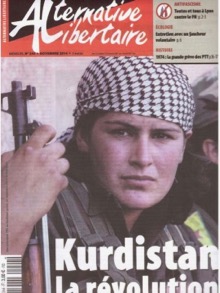 Not long ago, the French Minister for Foreign Affairs, Laurent Fabius, publicly declared that President Assad « did not deserve to be on Earth », and confirmed that the jihadists were doing a « good job ». Many young people answered his call by joining Al-Nusra (Al-Qaïda), then Daesh. Today, the French ex-Minister for Foreign Affairs, Bernard Kouchner, publicly announced that France would support the creation of state which would include Iraqi Kurdistan and the corridor to the Mediterranean via Syria. A few young Europeans have already answered this call, and many others will follow.
Today, as in 2011-12, the Western Press has taken the side of this new anti-Syrian army, supported by their governments. It will never question the treachery of Abdullah Öcalan, who renounced Marxist-Leninism for anarchy. It will repeat that Kurdistan has already been recognised by the Sèvres Conference, in 1920, but it will avoid looking at the documents which specify its boundaries. It will believe it to be legitimate in Iraq and Syria, although it is currently situated in Turkey. It will ignore the fact that the frontiers in fact correspond to nothing other than the plans developed by the Pentagon.
The referendum for the independence of the Iraqi region of Kurdistan and the territories annexed with the help of Daesh will launch the beginning of this operation, on 25 September. As in 2014, it will be intended to simultaneously destroy Iraq and Syria, this time without creating a « Sunnistan » from Rakka to Mossul, but a « Kurdistan », on a territory linking Erbil and Kirkuk to the Mediterranean.
Translation Pete Kimberley
[1] This term is poorly chosen insofar as « Westerner » is not opposed to « Oriental », but to « Soviet ». I could find no other term to describe collectively the Europeans, the North-Americans and the Israelis. Author’s note.
US, Iran break ice at UN
By M K Bhadrakumar | Indian Punchline | September 21, 2017
The US President Donald Trump’s speech at the UN General Assembly on Tuesday has drawn attention to the Iran nuclear deal of July 2015. Will the deal survive? Or, will it perish in a sudden death? Trump said,
- The Iran deal was one of the worst and most one-sided transactions the US has ever entered into. Frankly, that deal is an embarrassment to the United States, and I don’t think you’ve heard the last of it. Believe me.
Harsh words, indeed. Meanwhile, the P5+1 and Iran met at foreign minister level in New York on Tuesday. According to European sources, “the meeting included a long discussion” between Tillerson and his Iranian counterpart Mohammed Javad Zarif – although Tillerson publicly maintained that they merely shook hands. In a subsequent interview with Fox News, Tillerson narrowed down the US demand at this point to the so-called “sunset provision” in the Iran deal under which time limits (of varying lengths, such as 10 or 15 years) apply to some of the restrictions put on Iran’s nuclear program.
Evidently, there is much sophistry in the arguments being proferred, (as explained lucidly by Paul Pillar, Nonresident Senior Fellow at the Center for Security Studies at Georgetown University and in Foreign Policy at the Brookings Institution in a blog in the National Interest magazine.) Tillerson indeed hinted that the issue goes beyond Iran’s nuclear programme. As he put it,
- Our (US’) relationship with Iran from a security standpoint and a threat standpoint is much broader than that, as is the entire region. And we’ve really got to begin to deal with Iran’s destabilizing activities in Yemen, in Syria. The President (Trump) highlighted that today, that under the agreement – the spirit of the agreement, if you want to use that word – but even the words of the preamble of the agreement, there was clearly an expectation, I think on the part of all the parties to that agreement, that by signing this nuclear agreement Iran would begin to move to a place where it wanted to integrate – reintegrate itself with its neighbors. And that clearly did not happen. In fact, Iran has stepped up its destabilizing activities in the region, and we have to deal with that, and so whether we deal with it through a renegotiation on nuclear or we deal with it in other ways.
Simply put, the US feels agitated about Iran’s cascading influence in the Middle East and its emergence as the foremost regional power – even surpassing Israel. In turn, Israel, which has lost its military pre-eminence in the Middle East, is counting on the Trump administration (which also has a big contingent of “hawks” on Iran) to push back at Iran’s lengthening shadows, especially in Syria, Lebanon and Gaza.
One hitch here is that the European Union disfavours a re-opening of the Iran nuclear deal (for whatever reasons.) The EU foreign policy chief Federica Mogherini made this point quite clear after the FM-level meeting in New York. The EU position is also shared by Russia and China. The point is, the Iran nuclear deal is working splendidly well and Tehran is fulfilling to the last word its obligations (which is something even Tillerson admits.)
Unsurprisingly, Iran is furious about Trump’s threatening speech. The chief of the Islamic Revolutionary Guard Corps Gen. Mohammad Ali Jafari (who reports directly to Supreme Leader Ali Khamenei) hit back strongly:
- Time is now ripe for correcting the US miscalculations. Now that the US has fully displayed its nature, the government should use all its options to defend the Iranian nation’s interests. Taking a decisive position against Trump is just the start and what is strategically important is that the US should witness more painful responses in the actions, behavior and decisions that Iran will take in the next few months.
However, it cannot be lost on Tehran what perturbs the Trump administration most could be the need to re-engage Iran in negotiations relating to regional politics. Significantly, while making an impassioned plea for the raison d’etre of the nuclear deal in his speech at the UNGA on Tuesday, President Hassan Rouhani desisted from touching on options available to Iran:
- The deal is the outcome of two years of intensive multilateral negotiations, overwhelmingly applauded by the international community and endorsed by the Security Council as a part of Resolution 2231. As such, it belongs to the international community in its entirety, and not to only one or two countries.
- The JCPOA can become a new model for global interactions; interactions based on mutual constructive engagement between all of us. We have opened our doors to engagement and cooperation. We have concluded scores of development agreements with advanced countries of both East and West. Unfortunately, some have deprived themselves of this unique opportunity. They have imposed sanctions really against themselves, and now they feel betrayed. We were not deceived, nor did we cheat or deceive anyone. We have ourselves determined the extent of our nuclear program. We never sought to achieve deterrence through nuclear weapons; we have immunized ourselves through our knowledge and – more importantly — the resilience of our people. This is our talent and our approach. Some have claimed to have wanted to deprive Iran of nuclear weapons; weapons that we have continuously and vociferously rejected. And, of course, we were not and are not distressed for forgoing an option that we in fact never sought. It is reprehensible that the rogue Zionist regime that threatens regional and global security with its nuclear arsenal and is not committed to any international instrument or safeguard, has the audacity to preach peaceful nations.
- Just imagine for a minute how the Middle East would look had the JCPOA not been concluded. Imagine that along with civil wars, Takfiri terror, humanitarian nightmares, and complex socio-political crises in West Asia, that there was a manufactured nuclear crisis. How would we all fare?
Rouhani remarked later in New York, “We don’t think Trump will walk out of the deal despite (his) rhetoric and propaganda.” Tehran has all along estimated that Trump is a bluff master and a bazaari at heart. Of course, Iran is unlikely to re-negotiate the terms of the 2015 nuclear deal. But below that threshold comes the tantalizing prospect of a (re)-engagement between the top diplomats of the two countries. To be sure, the ice was broken on Tuesday. Notably, Zarif is keeping his thoughts to himself.
The US and Israel have suffered a strategic defeat in Syria from which they will never quite recover, and would, therefore, want to safeguard at least their irreducible core interests in the post-conflict situation in the New Middle East. The question is, what is it that the US can offer Iran in return? The US is only hurting its self-interests by preventing American companies from doing business in the Iranian market. Trump isn’t Barack Obama and he simply lacks the persuasiveness or the moral authority to get the rest of the world to fall in line with the US’ sanctions regime against Iran so long as Tehran scrupulously observes the terms of the nuclear deal. Having said that, from the Iranian perspective, a full-bodied integration with the international community has always been the strategic objective of its foreign policies.
Fact checking Benjamin Netanyahu’s General Assembly speech

By Adam Garrie | The Duran | September 20, 2017
Yesterday, Israeli leader Benjamin Netanyahu spoke before the United Nations in a speech that served as a kind of appendix to Donald Trump’s controversial, bellicose declaration that was delivered hours earlier.
Both speeches predictably focused on Iran and both leaders told a great deal of untruths and half-truths about the situation. Here are some of the most glaring untruths, followed by a factual explanation of the situation.
1. Iran is “devouring nations”.
The full quote from Netanyahu is as follows:
“Well as you know, I strongly disagreed. I warned that when the sanctions on Iran would be removed, Iran would behave like a hungry tiger unleashed, not joining the community of nations, but devouring nations, one after the other. And that’s precisely what Iran is doing today.
From the Caspian Sea to the Mediterranean, from Tehran to Tartus, an Iranian curtain is descending across the Middle East. Iran spreads this curtain of tyranny and terror over Iraq, Syria, Lebanon and elsewhere, and it pledges to extinguish the light of Israel”.
In reality, Iran occupies zero countries and has not occupied any country in its modern history. By contrast, Israel has occupied part of Syria, the Golan Heights, since 1967. This occupation is condemned by the United Nations and all five permanent members of the Security Council, including the United States.
The other country on Netanyahu’s list that has been occupied by Israel and not Iran is Lebanon. After invading Lebanon in 1982, Israel set up a permanent occupying force in southern Lebanon between 1985 and the year 2000. Israel maintained a presence in the country until 2006, when Israeli forces retreated in the face of strong Hezbollah defences.
Israel continues to occupy Palestine according to the UN and most impartial observers. It previously occupied Egypt, the Jordanian West Bank and in 1981, illegally bombed Iraq.
Iran by contrast has done no such things. The Iranian assistance provided to Syria during the conflict in the country has been done under a legal agreement with Damascus based on mutual friendship and a common cause against Salafist terrorism. Iran’s training of some Iraqi volunteers has been conducted on a similar basis.
By no logical stretch of the English language, could this been seen as “devouring nations”.
2. “We will act to prevent Iran from establishing permanent military bases in Syria for its air, sea and ground forces”
This statement while designed to sound like a defensive measure is actually an admission of a premeditated war crime. No foreign country can use the threat of force to blackmail its neighbours or anyone else when it comes to internal affairs.
If Syria invites Iran to establish some sort of permanent presence in the country, that is a matter which is strictly between Syria and Iran. To use this as a pretext for an act of war, is put simply, a war crime.
3. “Syria has barrel-bombed, starved, gassed and murdered hundreds of thousands of its own citizens and wounded millions more, while Israel has provided lifesaving medical care to thousands of Syrian victims of that very same carnage. Yet who does the World Health Organization criticize? Israel”.
This one is full of outright lies. First of all, prior to the conflict, not only were all Syrians fed, but food prices were subsidised by the government, making nutritious foodstuffs more affordable in Syria than in most parts of the region.
Even today, Syrians are not starving, but due to western backed sanctions, food is more expensive and medicine is both more expensive and more scarce than they were prior to the conflict with Salafist terrorism. None of this has to do with the Syrian government nor its partners who continue to deliver aid.
Syria has not possessed any chemical weapons since 2013. In a joint effort by both Russia and the US, the Organisation for the Prohibition of Chemical Weapons certified that by early 2014, there were no chemical weapons left in the Syrian governments hands.
Syria did develop a chemical weapons program in the 1970s in response to intelligence about Israel’s secretive nuclear weapons program.
In spite of this, Syria has never used chemical weapons, not on a foreign power and not internally.
The only chemical weapons in Syria today, are those in the hands of terrorists who are fighting Syria.
In respect of the Israeli hospital program. These hospitals have not been open to ordinary Syrians, let alone to the Syrian soldiers fighting ISIS and al-Qaeda.
Instead, the hospitals have perversely been used to give medical treatment to al-Qaeda and ISIS fighters who are known as some of the most violent terrorists in the world.
4. “Two years ago, I stood here and explained why the Iranian nuclear deal not only doesn’t block Iran’s path to the bomb, Iran’s nuclear program has what’s called a sunset clause”.
Not only does the JCPOA (aka Iran nuclear deal) prevent Iran from developing nuclear weapons, but Barack Obama’s administration admitted this openly. The EU and Russia continue to express their support of the deal and the US State Department, EU and UN have all agreed that Iran is in full compliance with the deal.
The only country in the Middle East to develop and maintain nuclear weapons is Israel. Furthermore, Israel obtained its nuclear weapons without international sanction and to this day, refuses to admit to having nuclear weapons. Israel is not a signatory to the Treaty on the Non-Proliferation of Nuclear Weapons. Israel is one of only four nations in the world to have never signed the treaty.
Israeli historian Avner Cohen as well as the award-winning US journalist Seymour Hersh have confirmed the existence of the so-called ‘Samson Option’, wherein Israel will deploy its nuclear weapons if it feels its security is threatened.
During his speech at the UN, Netanyahu alluded to the ‘Samson Option’ in saying,
“Those who threaten us with annihilation put themselves in mortal peril. Israel will defend itself with the full force of our arms and the full power of our convictions”.
In this sense, Iran has much more to fear form Israel than Israel has to fear from Iran, yet ironically it is Israel that continually protests about its own fears.
CONCLUSION
While Iran hasn’t invaded another country in its modern history, nor has it occupied a single country, Israel has occupied five: Syria, Egypt, Palestine, Lebanon and Jordan. Unlike Iran, Israel has nuclear bombs, unlike every other country in the Middle East.
With this record, it becomes clear who should be afraid of whom.
Trump Falls in Line with Interventionism
By Robert Parry | Consortium News | September 19, 2017
In discussing President Trump, there is always the soft prejudice of low expectations – people praise him for reading from a Teleprompter even if his words make little sense – but there is no getting around the reality that his maiden address to the United Nations General Assembly must rank as one of the most embarrassing moments in America’s relations with the global community.
Trump offered a crude patchwork of propaganda and bluster, partly delivered as a campaign speech praising his own leadership – boasting about the relatively strong U.S. economy that he mostly inherited from President Obama – and partly reflecting his continued subservience to Israeli Prime Minister Benjamin Netanyahu.
However, perhaps most importantly, Trump’s speech may have extinguished any flickering hope that his presidency might achieve some valuable course corrections in how the United States deals with the world, i.e., shifting away from the disastrous war/interventionist policies of his two predecessors.
Before the speech, there was at least some thinking that his visceral disdain for the neoconservatives, who mostly opposed his nomination and election, might lead him to a realization that their policies toward Iran, Iraq, Syria and elsewhere were at the core of America’s repeated and costly failures in recent decades.
Instead, apparently after a bracing lecture from Netanyahu on Monday, Trump bared himself in a kind of neocon Full Monte:
–He repeated the Israeli/neocon tripe about Iran destabilizing the Middle East when Shiite-ruled Iran actually has helped stabilize Iraq and Syria against Sunni terrorist groups and other militants supported by Saudi Arabia and – to a degree – Israel;
–He again denounced the Iranian nuclear agreement whose main flaw in the eyes of the Israelis and the neocons is that it disrupted their plans to bomb-bomb-bomb Iran, and he called for “regime change” in Iran, a long beloved dream of the Israelis and the neocons;
–He repeated the Israeli/neocon propaganda about Hezbollah as a terrorist organization when Hezbollah’s real crime was driving the Israeli military out of southern Lebanon in 2000, ending an Israeli occupation that began with Israel’s 1982 invasion;
–He praised his rush-to-judgment decision to bomb Syria last April, in line with Israeli/neocon propaganda against President Bashar al-Assad and partly out of a desire to please the same Washington establishment that is still scheming how to impeach him;
–He spoke with the crass hypocrisy that the neocons and many Israeli leaders have perfected, particularly his demand that “all nations … respect … the rights of every other sovereign nation” — when he made clear that he, like his White House predecessors, is ready to violate the sovereignty of other nations that get in Official Washington’s way.
A Litany of Wars
Just this century, the United States has invaded multiple nations without U.N. authorization, based on various “coalitions of the willing” and other subterfuges for wars of aggression, which the Nuremberg Tribunals deemed the “supreme international crime” and which the U.N. was specifically created to prevent.
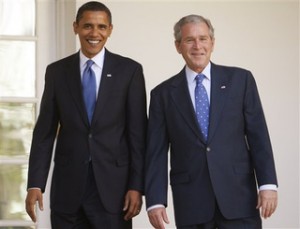
Barack Obama and George W. Bush
Not only did President George W. Bush invade both Afghanistan and Iraq – while also sponsoring “anti-terror” operations in many other countries – but President Barack Obama acknowledged ordering military attacks in seven countries, including against the will of sovereign states, such as Libya and Syria. Obama also supported a violent coup against the elected government of Ukraine.
For his part, Trump already has shown disdain for international law by authorizing military strikes inside Yemen and Syria. In other words, if not for the fear of provoking American anger, many of the world’s diplomats might have responded with a barrage of catcalls toward Trump for his blatant hypocrisy. Without doubt, the United States is the preeminent violator of sovereignty and international law in the world today, yet Trump wagged his finger at others, including Russia (over Ukraine) and China (over the South China Sea).
He declared: “We must reject threats to sovereignty, from the Ukraine to the South China Sea. We must uphold respect for law, respect for borders, and respect for culture, and the peaceful engagement these allow.”
Then, with a seeming blindness to how much of the world sees the United States as a law onto itself, Trump added: “The scourge of our planet today is a small group of rogue regimes that violate every principle on which the United Nations is based.”
Of course, in the U.S. mainstream media’s commentary that followed, Trump’s hypocrisy went undetected. That’s because across the American political/media establishment, the U.S. right to act violently around the world is simply accepted as the way things are supposed to be. International law is for the other guy; not for the “indispensible nation,” not for the “sole remaining superpower.”
On Bibi’s Leash
Despite some of his “America First” rhetoric – tossed in as red meat to his “base” – Trump revealed a global outlook that differed from the Bush-Obama neoconservative/liberal-interventionist approach in words only. In substance, Trump appears to be just the latest American poodle on Bibi Netanyahu’s leash.
For instance, Trump bragged about attacking Syria over a dubious chemical-weapons claim while ignoring the role of the Saudi/Israeli tandem in assisting Al Qaeda and its Syrian affiliate; Trump threatened the international nuclear agreement with Iran while calling for regime change in Tehran, two of Netanyahu’s top priorities; and Trump warned that he would “totally destroy North Korea” over its nuclear and missile programs while making no mention of Israel’s rogue nuclear arsenal and sophisticated delivery capabilities.
Ignoring Saudi Arabia’s ties to terrorism, Trump touted his ludicrous summit in Riyadh in which he danced with swords and let King Salman and other corrupt Persian Gulf monarchs, who have long winked and nodded at ideological and logistical support going to Al Qaeda and other Islamic terror groups, pretend their governments were joining an anti-terror coalition.
Exploding the myth that he is at least a street-smart operator who can’t be easily conned, Trump added, “In Saudi Arabia early last year, I was greatly honored to address the leaders of more than 50 Arab and Muslim nations. We agreed that all responsible nations must work together to confront terrorists and the Islamist extremism that inspires them.”
No wonder Netanyahu seemed so pleased with Trump’s speech. The Israeli prime minister could have written it himself while allowing Trump to add a few crude flourishes, like calling North Korean leader Kim Jong Un “Rocket Man … on a suicide mission”; referring to “the loser terrorists”; and declaring that many parts of the world are “going to hell.”
Trump also tossed in a plug for his “new strategy for victory” in Afghanistan and threw in some interventionist talk regarding the Western Hemisphere with more threats to Cuba and Venezuela about escalating sanctions and other activities to achieve more “regime change” solutions.
So, what Trump made clear in his U.N. address is that his “America First” and “pro-sovereignty” rhetoric is simply cover for a set of policies that are indistinguishable from those pushed by the neocons of the Bush administration or the liberal interventionists of the Obama administration. The rationalizations may change but the endless wars and “regime change” machinations continue.
Investigative reporter Robert Parry broke many of the Iran-Contra stories for The Associated Press and Newsweek in the 1980s.
America’s Jews Are Driving America’s Wars
Shouldn’t they recuse themselves when dealing with the Middle East?

Philip Giraldi • Unz Review • September 19, 2017
I spoke recently at a conference on America’s war party where afterwards an elderly gentleman came up to me and asked, “Why doesn’t anyone ever speak honestly about the six-hundred-pound gorilla in the room? Nobody has mentioned Israel in this conference and we all know it’s American Jews with all their money and power who are supporting every war in the Middle East for Netanyahu? Shouldn’t we start calling them out and not letting them get away with it?”
It was a question combined with a comment that I have heard many times before and my answer is always the same: any organization that aspires to be heard on foreign policy knows that to touch the live wire of Israel and American Jews guarantees a quick trip to obscurity. Jewish groups and deep pocket individual donors not only control the politicians, they own and run the media and entertainment industries, meaning that no one will hear about or from the offending party ever again. They are particularly sensitive on the issue of so-called “dual loyalty,” particularly as the expression itself is a bit of a sham since it is pretty clear that some of them only have real loyalty to Israel.
Most recently, some pundits, including myself, have been warning of an impending war with Iran. To be sure, the urging to strike Iran comes from many quarters, to include generals in the Administration who always think first in terms of settling problems through force, from a Saudi government obsessed with fear over Iranian hegemony, and, of course, from Israel itself. But what makes the war engine run is provided by American Jews who have taken upon themselves the onerous task of starting a war with a country that does not conceivably threaten the United States. They have been very successful at faking the Iranian threat, so much so that nearly all Republican and most Democratic congressmen as well as much of the media seem to be convinced that Iran needs to be dealt with firmly, most definitely by using the U.S. military, and the sooner the better.
And while they are doing it, the issue that nearly all the Iran haters are Jewish has somehow fallen out of sight, as if it does not matter. But it should matter. A recent article in the New Yorker on stopping the impending war with Iran strangely suggests that the current generation “Iran hawks” might be a force of moderation regarding policy options given the lessons learned from Iraq. The article cites as hardliners on Iran David Frum, Max Boot, Bill Kristol and Bret Stephens.
Daniel Larison over at The American Conservative has a good review of the New Yorker piece entitled “Yes, Iran Hawks Want Conflict with Iran,” which identifies the four above cited hawks by name before describing them as “… a Who’s Who of consistently lousy foreign policy thinking. If they have been right about any major foreign policy issue in the last twenty years, it would be news to the entire world. Every single one of them hates the nuclear deal with Iran with a passion, and they have argued in favor of military action against Iran at one point or another. There is zero evidence that any of them would oppose attacking Iran.”
And I would add a few more names, Mark Dubowitz, Michael Ledeen and Reuel Marc Gerecht of the Foundation for Defense of Democracies; Daniel Pipes of the Middle East Forum; John Podhoretz of Commentary magazine; Elliot Abrams of the Council on Foreign Relations; Meyrav Wurmser of the Middle East Media Research Institute; Kimberly Kagan of the Institute for the Study of War; and Frederick Kagan, Danielle Pletka and David Wurmser of the American Enterprise Institute. And you can also throw into the hopper entire organizations like The American Israel Public Affairs Committee (AIPAC), the Washington Institute for Near East Policy (WINEP) and the Hudson Institute. And yep, they’re all Jewish, plus most of them would self-describe as neo-conservatives. And I might add that only one of the named individuals has ever served in any branch of the American military – David Wurmser was once in the Navy reserve. These individuals largely constitute a cabal of sanctimonious chairborne warriors who prefer to do the heavy thinking while they let others do the fighting and dying.
So it is safe to say that much of the agitation to do something about Iran comes from Israel and from American Jews. Indeed, I would opine that most of the fury from Congress re Iran comes from the same source, with AIPAC showering our Solons on the Potomac with “fact sheets” explaining how Iran is worthy of annihilation because it has pledged to “destroy Israel,” which is both a lie and an impossibility as Tehran does not have the resources to carry out such a task. The AIPAC lies are then picked up and replayed by an obliging media, where nearly every “expert” who speaks about the Middle East on television and radio or who is interviewed for newspaper stories is Jewish.
One might also add that neocons as a group were founded by Jews and are largely Jewish, hence their universal attachment to the state of Israel. They first rose into prominence when they obtained a number of national security positions during the Reagan Administration and their ascendancy was completed when they staffed senior positions in the Pentagon and White House under George W. Bush. Recall for a moment Paul Wolfowitz, Doug Feith, and Scooter Libby. Yes, all Jewish and all conduits for the false information that led to a war that has spread and effectively destroyed much of the Middle East. Except for Israel, of course. Philip Zelikow, also Jewish, in a moment of candor, admitted that the Iraq War, in his opinion, was fought for Israel.
Add to the folly a Jewish U.S. Ambassador to Israel who identifies with the most right-wing Israeli settler elements, a White House appointed chief negotiator who is Jewish and a Jewish son-in-law who is also involved in formulating Middle East policy. Is anyone providing an alternative viewpoint to eternal and uncritical support for Benjamin Netanyahu and his kleptocratic regime of racist thugs? I think not.
There are a couple of simple fixes for the dominant involvement of American Jews in foreign policy issues where they have a personal interest due to their ethnicity or family ties. First of all, don’t put them into national security positions involving the Middle East, where they will potentially be conflicted. Let them worry instead about North Korea, which does not have a Jewish minority and which was not involved in the holocaust. This type of solution was, in fact, somewhat of a policy regarding the U.S. Ambassador position in Israel. No Jew was appointed to avoid any conflict of interest prior to 1995, an understanding that was violated by Bill Clinton (wouldn’t you know it!) who named Martin Indyk to the post. Indyk was not even an American citizen at the time and had to be naturalized quickly prior to being approved by congress.
Those American Jews who are strongly attached to Israel and somehow find themselves in senior policy making positions involving the Middle East and who actually possess any integrity on the issue should recuse themselves, just as any judge would do if he were presiding over a case in which he had a personal interest. Any American should be free to exercise first amendment rights to debate possible options regarding policy, up to and including embracing positions that damage the United States and benefit a foreign nation. But if he or she is in a position to actually create those policies, he or she should butt out and leave the policy generation to those who have no personal baggage.
For those American Jews who lack any shred of integrity, the media should be required to label them at the bottom of the television screen whenever they pop up, e.g. Bill Kristol is “Jewish and an outspoken supporter of the state of Israel.” That would be kind-of-like a warning label on a bottle of rat poison – translating roughly as “ingest even the tiniest little dosage of the nonsense spewed by Bill Kristol at your own peril.”
As none of the above is likely to happen, the only alternative is for American citizens who are tired of having their country’s national security interests hijacked by a group that is in thrall to a foreign government to become more assertive about what is happening. Shine a little light into the darkness and recognize who is being diddled and by whom. Call it like it is. And if someone’s feelings are hurt, too bad. We don’t need a war with Iran because Israel wants one and some rich and powerful American Jews are happy to deliver. Seriously, we don’t need it.
Featured Video

Chinese jet fuel and the myth of energy independence
or go to
Aletho News Archives – Video-Images
Book Review
Former Insiders Criticize Iran Policy as U.S. Hegemony
By GARETH PORTER | CounterPunch | February 27, 2013
“Going to Tehran” arguably represents the most important work on the subject of U.S.-Iran relations to be published thus far.
Flynt Leverett and Hillary Mann Leverett tackle not only U.S. policy toward Iran but the broader context of Middle East policy with a systematic analytical perspective informed by personal experience, as well as very extensive documentation.
More importantly, however, their exposé required a degree of courage that may be unparalleled in the writing of former U.S. national security officials about issues on which they worked. They have chosen not just to criticise U.S. policy toward Iran but to analyse that policy as a problem of U.S. hegemony. … continue
Blog Roll
 Aletho News
- Chinese jet fuel and the myth of energy independence
- Ukraine Sea Drone Fired From Libya Hit Russian Tanker in Mediterranean
- IRGC: Iranian forces launched no attacks during ceasefire hours
- Trump Administration Moves To Automate U.S. Military Draft Registration
- Spain orders reopening of Tehran embassy, condemns Israel’s carpet bombing of Lebanon
- Israel faces ‘unsustainable’ strategic crisis following 40-day war against Iran: Analyst
- Iran restricts Hormuz access to 15 vessels per day under ceasefire terms: Report
- The ‘Opposition Party’ Has Done Nothing to Stop the Iran War and Much to Goad Trump Into Continuing It
- Moscow backs Tehran on status of Lebanon in US-Iran deal
- How UK Regulator Ofcom Quietly Bypassed International Law to Police American Speech
- If Americans Knew
- Amnesty: Urgent – Protect Lebanese civilians from brutal escalation in Israeli attacks
- Is The War Against Iran Over?
- Inside the Israeli army’s propaganda wing
- Hundreds of Gaza Amputees Stranded in Legal Limbo
- The gallows law: Israel moves toward executing Palestinian children
- Tucker Carlson: The Path to Peace requires ending ‘special alliance’ with Israel
- This is ceasefire? Israel’s biggest massacre yet in Lebanon, another journalist killed in Gaza – Daily Update
- Tucker Carlson on Israel: This Is the Behavior of an Ally? Really?
- Gazans face a triple crisis: severe shortages of water and bread, healthcare in tatters
- NY Times reports how Netanyahu took the US into Iran War
- No Tricks Zone
- An Inconvenient Tree: Uncovered In Alps… Europe Much Warmer Than Today 6000 Years Ago
- New Study Reports A 60% Slowdown In Greenland’s Ice Loss Rate In The Last Decade
- Low Intensity Tornado Wrecks Major Solar Farm, Creating A Potential Toxic Dump
- New Study Finds Warming Saves Lives…Cold Temperatures 12 Times More Deadly Than Excess Heat
- German Science Blog Accuses PIK Climate Institute Of Hallucinating Climate Tipping Points
- Devastating Assessment Of Comirnaty Vaccine By Former Senior Pfizer Europe Toxicologist
- New Study: CO2 Is ‘Effectively Negligible’ As An Explanatory Climate Change Factor Since 2000
- Former Pfizer Toxicologist Dr. Helmut Sterz Tells Bundestag Hearing Pfizer Vaccine Should Have Never Been Approved
- Energy Expert: Germany’s Nuclear Phaseout Was A “500 Billion Euro Mistake”
- New Research: South Australia’s Mid-Holocene Sea Surface Temperatures Were 4°C Warmer Than Today
 Aletho News