Germany on the Geopolitical Stage of the Global South: Between Media Image and Real Capacities
By Ramiz Khodzhatov – New Eastern Outlook – October 21, 2025
The attempts of Friedrich Merz’s government to “relaunch” Germany’s role as a global political actor in the Global South without revising its conceptual foundations risk leaving the country stranded on the margins of international diplomacy – caught between formal participation and substantive isolation.
The Gaza Summit and the New Security Architecture
On October 13, 2025, under the auspices of President Abdel Fattah al-Sisi, a peace summit on Gaza took place in Sharm el-Sheikh, Egypt. The event, co-chaired by U.S. President Donald Trump, gathered representatives from over twenty nations to observe and validate the signing of the first phase of the American initiative for conflict resolution. Egypt and the United States, alongside Qatar and Turkey, acted as the principal mediators of the emerging architecture of multilateral diplomacy. Serving both as brokers of the ceasefire and as the de jure guarantors of the “Declaration on Lasting Peace and Prosperity,” they oversaw a framework that encompassed bilateral agreements on the release of hostages and prisoners, coordination of humanitarian aid, and a detailed roadmap for demilitarization and post-conflict reconstruction of Gaza’s infrastructure.
A wave of criticism followed the paradoxical absence of the conflict’s key parties, the Israeli cabinet and Hamas. At the same time, attention focused on the participation of several unorthodox players in the Middle Eastern geopolitical arena, notably the United Kingdom, France, and Germany. The German presence drew disproportionate attention due to an evident dissonance between its media portrayal and its actual diplomatic standing. Chancellor Friedrich Merz, standing to the side of the main participants, appeared frozen in an uneasy, almost constrained posture, smiling politely yet refraining from engaging any of the leaders. The image quickly spread through German and international media, sparking debate. This scene became emblematic of Berlin’s uncertain role within the emerging security architecture. The question arises: what position does Germany seek to claim, and why, despite shifting geopolitical realities and the lessons of history, it risks remaining a “paper player,” bereft of real influence or credibility across the Global South and the Middle East?
From “Feminist Foreign Policy” to the Merz Plan
To understand Germany’s current trajectory, one must revisit the recent phase of its foreign policy. Under Chancellor Scholz and Foreign Minister Annalena Baerbock, diplomacy was anchored in the doctrine of so-called “feminist foreign policy,” framed as a flagship direction of global engagement. Yet in practice, this approach revealed its conceptual inadequacy. Its normative and universalist foundations clashed with the political cultures and socio-cultural frameworks of the Global South. Gender and humanitarian rhetoric, imported indiscriminately into conflict zones, failed to take root, particularly when juxtaposed with Western double standards evident in the humanitarian catastrophe of Gaza.
Another blow to Berlin’s image came from its insistence on the “green agenda” as an alternative to traditional energy models. Amid a domestic energy crisis, this stance not only weakened Germany’s position in international negotiations but also eroded its reputation as a reliable and autonomous economic actor. To many states of the Global South, German initiatives in climate and energy diplomacy appeared declarative and unsupported by functional mechanisms.
Against this backdrop, Russia’s advocacy of “multipolarity” gained increasing traction, widely perceived as an attractive alternative to the neo-colonial logic of the West. Moscow succeeded in institutionalizing this discourse through frameworks such as BRICS, which evolved into both an economic and symbolic vehicle of a new international subjectivity. Germany and its European partners failed to propose an equivalent model, thereby cementing their peripheral status in dialogue with the Global South.
The Old–New Architecture of Irrelevance
Despite its declining relevance, Berlin continues to undertake institutional steps aimed at restoring its international agency. Notable measures include expanding humanitarian assistance, covering medical support and the establishment of temporary camps for displaced persons—participating in prospective Palestinian self-governance structures, co-organizing an international conference on Gaza’s reconstruction, and devising instruments for monitoring and coordinating humanitarian aid. Germany aspires to act not merely as a donor but as a mediator, presenting itself simultaneously as a humanitarian and political broker.
However, these ambitions collide with structural constraints. Key mechanisms for monitoring, hostage exchange, and aid distribution depend on the consent of regional actors who, tellingly, were absent from the summit. Germany’s declarative and instrumental efforts to secure influence falter against the realities of local political culture, where situational alliances, pragmatism, and realpolitik shape diplomacy far more than normative idealism. Berlin still relies on a logic of moral universalism inherited from previous decades, cloaked in new labels and narratives yet perpetuating the same disconnect between ambition and capability.
This pattern mirrors the systemic flaws observed during Baerbock’s “feminist foreign policy.” The persistent refusal to engage with regional geopolitical realities produces a gap between Germany’s ambitions and its actual leverage. The now-famous image from Sharm el-Sheikh thus becomes a visual metaphor for deeper structural dysfunction: the fragmentation of the Western course, wherein the American line retains strategic dominance while Europe’s voice fades amid inconsistency and moral self-contradiction.
The declarative support for Israel expressed by the Merz cabinet within the Middle East peace process has triggered a crisis of trust toward Germany as a would-be neutral actor. Rooted in the concept of Staatsräson and the moral logic of historical atonement, this stance increasingly contradicts the disposition of public opinion. Recent YouGov data reveal that 62% of Germans consider Israel’s actions in Gaza an act of genocide, a view shared across party lines, including 60% of supporters of Merz’s CDU/CSU bloc. Over two-thirds of the population now hold a negative view of Israel, while sympathizers account for only 19%. Support for Palestinian recognition has climbed to 44%. This gap between domestic consensus and foreign policy undermines the legitimacy of Germany’s global agency and weakens its credibility as an impartial mediator.
Internationally, the erosion of trust is even more pronounced. Since 2023, Germany has increasingly been seen across the Global South and the Middle East as a partisan ally that has abandoned neutrality for rigid pro-Israeli alignment. Decisions such as boosting arms supplies to Tel Aviv and abstaining from U.N. ceasefire resolutions are widely interpreted in Arab and African contexts as emblematic of Western double standards. Meanwhile, as several EU states, including Spain, Ireland, and Norway, have recognized Palestine, Germany finds itself isolated even within Europe. This loss of trust is quantifiable: Arab Barometer surveys show Germany’s favorable rating in the Middle East has plunged from 70% to 35% over just two years.
The position intended to affirm moral leadership has, paradoxically, curtailed Berlin’s diplomatic efficacy. Bereft of real leverage, Germany remains a participant without presence – a formally engaged yet substantively excluded actor on the geopolitical stage of the Global South.
Friedrich Merz’s attempt to “reboot” German foreign policy reveals a structural impasse: institutional innovations without conceptual transformation cannot yield genuine agency. Without a fundamental rethinking of its diplomatic worldview, Germany risks remaining on the periphery of international affairs, caught between symbolic involvement and strategic irrelevance. The image from Sharm el-Sheikh may thus endure as more than a fleeting moment of awkwardness, it embodies Berlin’s broader crisis of orientation in an increasingly multipolar world.
Ramiz Khodzhatov – political scientist, international observer, expert in geopolitics, international security and Russian-German relations
Holocoughs, Emotional Rapes & Bad Signals
By Kevin Barrett | October 19, 2025
The Zionists are obviously waging war on Palestine. It’s a war of extermination—a genocide—and always has been, since there obviously could never be a “Jewish state” in Palestine without the forced disappearance of the Palestinian people. Unfortunately for the Zionists, the Palestinians stubbornly refuse to disappear.
The Zionist war on Palestine is also, of necessity, a war on the entire MENA region. That, too, is inevitable, since the region’s people support their Palestinian brothers and sisters—and recognize that the endlessly-expansionist Greater Israel project is coming for them next.
Given the difficulties of subduing Palestine and MENA, the Zionists also have no choice but to wage another war: an all-out but covert and deniable war on the West. They need to control the commanding heights of the US and Europe, hijack the West’s military and economic power, and use it against the Palestinians and MENA.
The Zionist war to control the West’s commanding heights is not entirely bloodless. It has featured a long list of assassinations and terrorist attacks, including the Kennedy assassinations and 9/11.
But it’s mainly a propaganda war. Its enemy is truth—one might even say reality. Its weapons are lies, big and small, sometimes plausible and sometimes laughable.
9/11, of course, was a very big lie, like the ones Hitler discussed in Mein Kampf:
… in the primitive simplicity of their minds (the masses) more readily fall victims to the big lie than the small lie, since they themselves often tell small lies in little matters but would be ashamed to resort to large-scale falsehoods.
Sometimes people tell small lies by invoking alleged health issues. A few days ago Israeli Prime Minister Benjamin Netanyahu avoided testifying in his corruption trial by citing a persistent cough:
Prime Minister Benjamin Netanyahu complained of a cough and a cold during his testimony under cross-examination in the Tel Aviv District Court on Wednesday morning, leading the judges to agree to his request to truncate the hearing. (Times of Israel)
Social media wags suggested he should have gone all the way and invoked “The Holocough”—the ultimate excuse for Jews.
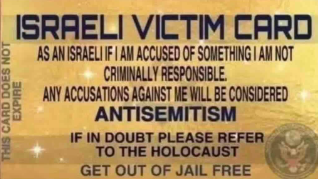
When I heard about Netanyahu’s holocough, I remembered Larry Silverstein’s dermatology appointment. Silverstein, who confessed on national television to being party to a decision to “pull” World Trade Center Building 7 on 9/11, was known to eat breakfast every morning in the Windows to the World restaurant at the top of the North Tower. But on September 11, 2001, as Silverstein was leaving the house, his wife reminded him that he had a dermatology appointment. (Were the reptilian scales starting to show through? David Icke wants to know!) Miraculously, a random, barely-remembered dermatology appointment saved Silverstein from being blown to kingdom come… and provided an implausible excuse for behavior betraying foreknowledge of the worst crime ever committed on American soil.
But since all of us have told little lies about health issues—for example, I once skipped school in third grade by claiming not to have recovered from a cold—it’s easy to understand that Netanyahu and his close friend Silverstein might very well have done things like that. But lying outrageously about murderous events like September 11 and October 7, and using those lies to convince the world that the heroes are really the villains and vice versa, is so extreme that most people just can’t wrap their minds around the audacity of such “large-scale falsehoods.”
And speaking of large-scale falsehoods: The Ziomedia lie that Hamas is a bunch of sadistic rapists, while Israelis are nice well-behaved hyper-civilized eternal victims, took another hit this week as the words and physical and mental condition of released captives on both sides told precisely the opposite story. Palestinians showed signs, and told stories, of the unspeakable tortures they routinely experience in Israeli captivity, while most Israelis held by Hamas described kind and courteous treatment:
Omri Miran, 48, a father of two and shiatsu massage therapist, was held in 23 different places in Gaza, above ground and in tunnels, according to his brother Nadav. “Sometimes he would cook food for his captors, and they loved his cooking,” Nadav told the Ynet news site. “He knew exactly what the date was and roughly what day it was. He knew exactly how many days he was in captivity. They spent most of their days playing cards with their captors.” (The Guardian)
This time there were no female prisoners to disabuse Israelis of their “Hamas rape” fantasies, because Hamas had released all female captives during previous prisoner swaps. (Video link.)
One female Israeli captive, it turned out, once did accuse Hamas of “eyeball rape”:
“There is a terrorist looking at you 24/7, looking, raping you with his eyes,” she said.
Back home in Israel, she quickly got raped, and not with eyes, by her gym instructor. It turned out she had been “safer when she was with Hamas.”
That’s hardly surprising, given that Israel is the only nation that holds gigantic “right to rape” protests, makes national heroes out of people who rape captives to death with sticks, and has a male population 60% of whom believe it’s fine to rape women as long as you are acquainted with them. Yet because Zionist-loyal Jews dominate the media, the gullible Western public has been force-fed the big lie that the Rapist Nation is the victim.
But controlling the narrative isn’t the same as controlling reality itself. To do that, you need someone like Uri Geller, the famous Israeli Mossad-linked spoon-bender who uses psychokinesis (PK) to directly affect the material world.
Unfortunately for the Zionists, Geller’s powers, however well they work with cutlery, aren’t up to reshaping large-scale reality. Geller and his team of Israeli PK specialists apparently couldn’t create an actual al-Qaeda attack on the World Trade Center, so more conventional techniques had to be employed to create that illusion. They couldn’t conjure up evil golems dressed in Hamas outfits, so the IDF had to murder hundreds of its own civilians with tanks and helicopter gunships on October 7, while the real Hamas heroes scored the military raid of the century. And they couldn’t cause Trump to drop dead of an apparent (Hamas-attributed) insider attack during the US president’s recent peace conference at Sharm El Sheikh, as Geller had floated shortly before that event.
Ultimately, Zionism epitomizes cosmic chutzpah. Like other millenarian-messianic movements, it imagines itself capable of completely rebuilding or repairing the world (tikkun olam) from the ground up. The world as we know it—an evil, terrible world, dominated by goyim who for no discernible reason insist on persecuting Jews—can be miraculously transformed into a paradise in which every Jew has 2800 goyim slaves. All we have to do is blow up the Al-Aqsa Mosque, build a blood sacrifice temple, invite the Messiah to move in, and—hey presto—the spoon will be bent!
Trump’s so-called peace plan offers no justice, no peace
By Fareed Taamallah | MEMO | October 19, 2025
I skipped the olive harvest in my village near Nablus to listen to Donald Trump’s much-anticipated speech before the Israeli Knesset and the subsequent summit in Sharm el-Sheikh. I had hoped—perhaps naively—that the US president, now once again playing a central role in Middle East diplomacy, might finally acknowledge Palestinian suffering or offer a genuine vision for peace. Instead, what I heard left me deeply disappointed, even angry.
Trump spoke for nearly an hour, full of self-congratulation and exaggerated praise for Israel’s “resilience” after 7 October. He called it one of Israel’s darkest days, repeating stories of Israeli pain, fear, and heroism. But not once did he mention the ongoing genocide in Gaza—the tens of thousands of Palestinian civilians killed, the families buried under rubble, the starving children trapped in what has become the world’s largest open-air graveyard.
He seemed proud—boastful even—of his role in arming Israel. He bragged about how his administration “stood by Israel like no other” and reminded the audience that it was he who moved the US embassy to Jerusalem and recognized the illegal Israeli settlements as “legitimate.” He said all this as though gifting our land away was an act of peace.
As a Palestinian living under occupation, I felt that his words were not just ignorant but cruel. They erased our humanity. They erased 77 years of Palestinian displacement and oppression. They erased the checkpoints that divide our lives, the walls that suffocate our villages, and the soldiers who humiliate our elders and children daily.
While Trump was speaking in Jerusalem, my close friend in Gaza was searching for food and shelter for his family after their home was destroyed by Israeli bombing. He lives with his wife and children in a small tent, far from their shattered neighbourhood. In a short voice note he sent me — with the sound of drones buzzing above — he said they had eaten only a little food in two days. As Trump boasted about “supporting Israel’s defence,” my friend was struggling to defend his family from hunger, cold, and despair — not from an army, but from a war machine that has turned his life into rubble.
Trump’s so-called “peace plan,” unveiled once again with great fanfare, offers nothing resembling peace. It is not even a plan—it is a continuation of the same colonial logic that has defined every failed American initiative since 1948: to secure Israel’s dominance while pacifying Palestinians into submission.
From what we have seen, the “plan” does not even address the root cause of the conflict—the Israeli occupation of Palestinian land. It speaks vaguely about “economic opportunities” and “regional cooperation,” as if what we need are more jobs instead of freedom. It promises “security for Israel” but nothing about security for Palestinians living under constant military siege. It celebrates normalisation between Israel and Arab regimes, while ignoring the normalization of apartheid and dispossession on the ground.
This is not peace. It is a political mirage designed to buy time for Israel to continue its colonization project.
I remember the last time Trump presented a “deal of the century,” back in 2020. Back then, too, he stood beside Israeli leaders while excluding Palestinians entirely from the process. That plan, like this one, sought to legalize the illegal: annexation of settlements, denial of refugee rights, and the permanent fragmentation of Palestinian territory. The difference now is that the destruction in Gaza and the tightening of Israel’s control over the West Bank have made such plans even more grotesque.
When Trump stood before the Knesset and described Israel as “a beacon of democracy and civilization,” I thought of the olive trees uprooted near my village by settlers under army protection. I thought of the hundreds of checkpoints that prevent us from reaching our land. I thought of my friends in Gaza who haven’t had a single night of safety in two years. Is this the “civilization” he was praising?
For us Palestinians, peace has never meant simply the absence of war. Peace means justice. It means accountability for war crimes. It means the right to live freely on our land without occupation, without siege, without fear.
At the Sharm el-Sheikh summit, Trump was joined by Egyptian President Abdel Fattah el-Sisi and several Arab officials. They all spoke in the same language of “stability,” “security,” and “ending the cycle of violence.” But what they did not say was more telling: none demanded an end to occupation; none called for lifting the siege on Gaza; none spoke of justice for Palestinian victims.
Many Arab regimes seem eager to move on from the Palestinian issue, to normalize with Israel and focus on their own interests. But ignoring injustice will not bring stability to the region. The Palestinian struggle for freedom cannot simply be erased because it is inconvenient to powerful governments. Injustice breeds resistance. And no amount of political summits or empty declarations will change that fact.
Trump’s “peace plan” is not only about politics—it is also about profit. He treats diplomacy as a business deal, where justice and human rights are bargaining chips. His approach is transactional: sell weapons, secure contracts, reward allies. By promoting this plan, Trump is trying to whitewash Israel’s crimes, to make genocide and apartheid look like stability and partnership. He aims to polish Israel’s image internationally while creating lucrative opportunities for arms deals and regional investments. It is the commercialization of oppression.
But if Israel is not held accountable for what the entire world has seen—massacres livestreamed to our screens, starvation used as a weapon, entire families erased—then the international system itself has collapsed. The institutions that were built after World War II to uphold justice and prevent genocide will have proven meaningless. If such atrocities can occur in broad daylight, with impunity, while world leaders speak of “peace,” then the moral foundation of the international order has crumbled.
When Trump left the podium to applause from Israeli lawmakers, I realized that this was not a peace process—it was a performance. It was meant to reassure Israel and its allies that nothing would fundamentally change, that Palestinian suffering would remain background noise to the “new Middle East” they dream of.
But for us, the reality is very different. Every day, we wake up to news of more killings in Gaza, more arrests in the West Bank, more land confiscations, more despair. We do not have the privilege of pretending that peace can exist without justice.
I returned to my olive trees after Trump’s speech, with the noise of his words still echoing in my head. As I picked the olives from branches planted by my grandfather, I felt the deep connection between our land and our struggle. These trees have survived droughts, wars, and occupations. They are witnesses to our history and symbols of our steadfastness.
Trump may talk about “peace” in grand halls and luxury resorts, but real peace begins here—in the soil of Palestine, in the dignity of our people, and in the pursuit of justice that no speech can silence.
Until the occupation ends, until the siege on Gaza is lifted, until those responsible for genocide and ethnic cleansing are held accountable, there will be no peace—no matter how many plans or summits are announced.
The world must understand that Palestinians do not reject peace; we reject oppression disguised as peace. We are not asking for privileges or favours. We are demanding our basic human rights: freedom, equality, and justice.
Trump’s visit has only reinforced one truth—that peace built on denial and injustice will never last. The path to real peace begins not in the Knesset or in Sharm el-Sheikh, but in the recognition of Palestinian rights and the end of Israeli occupation. Only then can we speak of peace with meaning.
Victor Davis Hanson Exposed
The Voice of Zionist and Israeli Propaganda in America

By Jonas E. Alexis • Unz Review • October 15, 2025
Victor Davis Hanson is a military historian and classicist, best known for works such as A War Like No Other: How the Athenians and Spartans Fought the Peloponnesian War, Carnage and Culture: Landmark Battles in the Rise to Western Power, and Who Killed Homer: The Demise of Classical Education and the Recovery of Greek Wisdom.
To be fair, these works are not without merit; Who Killed Homer in particular occupies an important place in the ongoing academic debate over the teaching of the classics. However, Hanson’s analysis collapses entirely when it comes to U.S. foreign policy and the nation’s involvement in perpetual wars across the Middle East and beyond. In The Savior Generals, for instance, he devotes an entire chapter to praising the catastrophic invasion of Iraq in 2003—a debacle that left the region in ruins.[1]
In an apparent attempt to rescue both himself and the neoconservative movement from intellectual and political oblivion, Hanson drew an extraordinary comparison between the Iraq War and the wars of 1777, 1941, and 1950. He went so far as to claim that these conflicts “led to massive American casualties and, for a time, public despair.”[2]
Not once did Hanson acknowledge the incontrovertible fact that the Iraq War was built upon a monumental deception. He never confronted the well-documented reality that the U.S. intelligence community explicitly informed the Bush administration that there was no credible evidence indicating that Saddam Hussein possessed weapons of mass destruction. Nor did he address the fact that President Bush and his inner circle deliberately sought to fabricate and manipulate evidence in order to inundate the American public with the categorical falsehood that Saddam had to be removed.[3]
Hanson made no attempt whatsoever to engage with the vast body of scholarly evidence surrounding these issues.[4] He remained silent on the atrocities committed at Abu Ghraib—the sodomy, humiliation, and torture that forever stained America’s moral standing.[5] Not once did he acknowledge that, prior to the Iraq War, practices such as waterboarding were virtually foreign to the American moral and legal tradition. Nor did he mention that George Washington himself unequivocally repudiated the use of torture, even against enemies who had shown no mercy.[6]
By now, it is a matter of public record that torture at Abu Ghraib was not an isolated incident but a systematic practice. Reports and testimonies confirmed that prisoners were routinely subjected to brutal physical and sexual abuse, including coerced acts of humiliation and violence that defied every principle of human dignity. Even young detainees were not spared such degradation. Official investigations and leaked photographs later revealed the extent of these atrocities, which stand as a permanent indictment of the moral collapse that accompanied the Iraq War. One prisoner testified that he saw one officer
“fucking a kid, his age would be about 15-18 years. The kid was hurting very bad and they covered all the doors with sheets. Then when I heard the screaming I climbed the door because on top it wasn’t covered and I saw [name blacked out], who was wearing the military uniform putting his dick in the little kid’s ass. I couldn’t see the face of the kid because his face wasn’t in front of the door. And the female soldier was taking pictures.”[7]
What’s more even interesting, “150 inmates were crammed into cells designed for 24.”[8] Abu Ghraib, as one writer put it, was “a hell-hole.”[9] Torture was also routine in Afghanistan, where adolescents were beaten with hoses “and pipes and threats of sodomy.”[10] These atrocities were not committed in obscurity. Cambridge University Press has published extensive documentation of such abuses in a volume exceeding 1,200 pages, detailing the systematic nature of the torture and its moral, political, and legal implications.[11] These atrocities were also corroborated by psychiatrists such as Terry Kupers, whose professional assessments provided further evidence of the profound psychological trauma inflicted on the victims and the moral disintegration of those who carried out the abuse.[12]
For Hanson to attempt to wiggle out of this extensive body of scholarship is nothing short of intellectual dishonesty. Since the Iraq War turned out to be an unmitigated disaster—and given that Hanson supported it from its inception[13]—he is now compelled to construct arguments that are at once incoherent and irresponsibly tendentious. This rhetorical contortion serves a dual purpose: to preserve his Neoconservative equilibrium and to justify his well-funded position as a military historian at the Hoover Institution, an establishment known for its distinctly neoconservative orientation.
More importantly, Victor Davis Hanson is a Neocon ideologue and an unapologetic warmonger. He declared without hesitation:
“I came to support neocon approaches first in the wars against the Taliban and Saddam, largely because I saw little alternative—in a post-9-11 effort to stop radical Islam and state sponsors of terror—to removing such odious enemies, and did not think leaving the defeated in power (as in 1991), or leaving in defeat (as in Lebanon), or installing a postbellum strongman was viable or in U.S. interests.”[14]
Hanson, it seems, would prefer deliberate falsehoods over confronting uncomfortable truths. The war in Iraq was never about weapons of mass destruction, precisely because the Neocons themselves were fully aware that Saddam Hussein possessed no weapons of mass destruction.
For example, when Deputy National Security Advisor Stephen Hadley informed Paul Wolfowitz that there was no evidence of a link between Al Qaeda and Saddam Hussein, Wolfowitz responded with certainty, “We’ll find it. It’s got to be there”[15]—effectively signaling that if no such connection existed, they would fabricate one. Ultimately, the Neoconservatives did precisely that, constructing deliberate falsehoods to justify the destruction of an entire nation—Iraq—for the strategic benefit of Israel.
What we are witnessing is an alarming intellectual decline on Hanson’s part. He effectively lost credibility as a serious analyst when he claimed that Iran intended to promote a Jewish Holocaust, despite the fact that Iranian Jews themselves widely denounced Netanyahu for perpetuating similarly alarmist and conspiratorial rhetoric, calling him an “insane vampire.”.[16] And what of Jimmy Carter? Hanson contends that Carter’s positions were effectively aligned with anti-Semitic sentiment.[17] Ignoring Israel’s ongoing ethnic cleansing of Palestinians in the 1940s and beyond, Hanson begins to reconstruct history according to his own narrative: “[Israel] fought three existential wars over its 1947 borders, when the issue at hand was not manifest destiny, but the efforts of its many enemies to exterminate or deport its population.”[18]
Sounding almost unhinged and unwilling to heed reasoned critique, Hanson asserts that, for more than half a century, the Arabs have sought to push “the Jews into the Mediterranean.” There is no serious scholarship, no intellectual or historical rigor, and no defensible argument—only one sweeping assertion after another. Hanson continues: “Over 500,000 Jews have been ethnically cleansed from Arab capitals since 1947, in waves of pogroms that come every few decades.”[19]
The source and historical evidence? According to Hanson, one simply has to take his word for it. His statement is self-referentially “true” because Hanson asserts it to be so. This is the same type of circular reasoning and tautology frequently encountered in so-called scientific discourse—most famously in the notion of “survival of the fittest.” Why did it survive? Because it is the fittest. How do we know it is the fittest? Because it survived.
Yet, long before Hanson began promoting his version of historical fiction, Jewish historians both in the Atlantic world and in Israel had documented a very different reality: Israel has systematically ethnically cleansed the Palestinian population.[20] Listen again to Israeli historian and flaming Zionist Benny Morris:
“A Jewish state would not have come into being without the uprooting of 700,000 Palestinians. Therefore it was necessary to uproot them. There was no choice but to expel that population. It was necessary to cleanse the hinterland and cleanse the border areas and cleanse the main roads. It was necessary to cleanse the villages from which our convoys and our settlements were fired on.”[21]
Israel has consistently undermined peace and stability in the Middle East. A striking example is the 1982 massacre, during which the Israeli military permitted Lebanese militias to attack Palestinian refugee populations. Reports indicate that the militias “raped, killed, and dismembered at least 800 civilians, while Israeli flares illuminated the camps’ narrow and darkened alleyways.”[22]
One year later, an Israeli investigative commission concluded that Israel was “indirectly responsible” for the massacre and that Ariel Sharon bore personal responsibility as an accomplice.[23]
How did Israeli officials involve the United States in these events? According to declassified documents housed in the Israel State Archives, they persuaded U.S. officials that Beirut harbored terrorist cells. Ultimately, this manipulation facilitated the massacre of Palestinian civilians—people whom the U.S. had previously pledged to protect.[24] Ariel Sharon asserted that Beirut harbored between 2,000 and 3,000 terrorists.
The American envoy to the Middle East, Morris Draper, essentially concluded that Sharon was being dishonest. Lawrence S. Eagleburger, then Secretary of State, remarked that “we appear to some to be the victim of deliberate deception by Israel.”[25]
During his conversation with Sharon, Draper understood that the United States did not fully endorse Sharon’s aggressive plans. Nevertheless, Sharon proceeded to act on his own terms. It was reported that Draper told Sharon, “You should be ashamed. The situation is absolutely appalling. They’re killing children! You have the field completely under your control and are therefore responsible for that area.”[26]
In the aftermath of the massacre, President Ronald Reagan, himself a Zionist, expressed outrage. Secretary of State George P. Shultz acknowledged that the United States had effectively become an accomplice, allowing Israel to manipulate U.S. policy to facilitate the slaughter of civilians. Yet no sanctions were imposed, and no concrete actions were taken. When asked why, Nicholas A. Veliotes, then Assistant Secretary of State for Near Eastern Affairs, offered an indirect explanation: “Vintage Sharon. It is his way or the highway.”[27] Scholar Seth Anziska declares, “The Sabra and Shatila massacre severely undercut America’s influence in the Middle East, and its moral authority plummeted.”[28]
How might Hanson respond? Would he dismiss the archival evidence meticulously documented by Morris Draper and Ilan Pappe in their respective studies? Would he evade the fact that Israel has often acted as a destabilizing force in the Middle East? The answer is likely that we will never know, because Hanson systematically avoids engaging with such historical scholarship. Instead, he prefers silence, selectively ignoring a substantial body of evidence that contradicts his narrative.
If you still doubt this, pick up Hanson’s recent book, The End of Everything. In it, he reads as if he’s on the verge of a heart attack at the mere thought of Iran possessing nuclear weapons. He writes:
“The specter of a soon to be nuclear theocratic Iran that professes it can survive a nuclear exchange, or at least find the ensuing postmortem paradise preferrable to the status quo ante bellum, ensures a dangerous state of affairs, especially amid recent proxy wars between Iran and nuclear Israel in Gaza, Lebanon, and Syria.”[29]
What Hanson never dares to tell his readers is that Iran has signed the Non-Proliferation Treaty, whereas Israel has not—and consistently insists on a double standard. Israel itself poses a global threat, declaring that if it falls, it will take the world down with it. Listen to Israeli historian Martin van Creveld’s chilling warning:
“We possess several hundred atomic warheads and rockets and can launch them at targets in all directions, perhaps even at Rome. Most European capitals are targets for our air force… We have the capability to take the world down with us. And I can assure you that that will happen before Israel goes under.”[30]
Shouldn’t Hanson be concerned about this? Or is he so dazzled by Israeli and neocon propaganda that he cannot think clearly, leaving him both intellectually and historically crippled? Like his fellow neocons, Hanson will never consult objective, scholarly materials that challenge his thesis on Iran and Israel. For instance, he won’t touch Trita Parsi’s trilogy on Iran, published by Yale University Press, nor will he engage with studies such as Intelligence and U.S. Foreign Policy: Iraq, 9/11, and Misguided Reform—apparently because doing so would undermine his neoconservative agenda.[31]
Hanson’s 2021 book, The Dying Citizen: How Progressive Elites, Tribalism, and Globalization Are Destroying the Idea of America, is nothing short of propaganda. Why? Because a look at the very foundations of the United States reveals that the Founding Fathers themselves rejected the notion of making unconditional alliances with any foreign power—let alone Israel. So how did Hanson and his neocon allies become defenders of a country that has brought nothing but misery to the United States? The term “progressive elites” might be more aptly applied to Hanson and his cohort, as they have sought to fundamentally alter the principles articulated by the Founding Fathers.
In The Dying Citizen, Hanson risibly declares that he is deeply concerned about “how putting global concerns above national interests insidiously erodes the financial health, freedoms, and safety of Americans. In blunter terms, when American elites feel their first concerns are with the world community abroad rather than with the interests of their own countrymen, there are consequences for American citizens.”[32] Does this man ever look in the mirror and realize that he too has contributed to the economic disaster that followed the Iraq War—a war that will cost the United States at least six trillion dollars?[33] Think for a moment: what could a single country do with such an enormous sum? Virtually every American could have access to decent health care and an affordable college education. Yet Hanson cannot confront these fundamental issues because he remains blinded by the neoconservative and Israeli agenda.
Hanson reminds me of Thomas Sowell, who has offered many valuable insights in his books, yet Sowell too seems intellectually constrained by the Israeli propaganda machine. Much of what Sowell has written over the years—including Education: Assumptions versus History and Affirmative Action: An Empirical Study—is accurate. I must admit, I had to do some serious rethinking when I first read his assessment of slavery.
But Sowell is completely mistaken in his stance on the Middle East. He is essentially echoing what neocons have been asserting for years and appears trapped within the neoconservative worldview. In his 2010 book Dismantling America, Sowell declares:
“With Iran moving toward the development of nuclear weapons, we are getting dangerously close to that fatal point of no return on the world stage… The Iranian government itself is giving us the clearest evidence of what a nuclear Iran would mean, with its fanatical hate-filled declarations about wanting to wipe Israel off the face of the earth.”[34]
What was particularly striking about this extraordinary claim is that Sowell provided not a single piece of evidence for it—an intellectually embarrassing omission that undermines much of his own work. When I finished reading The Vision of the Anointed, I contacted Sowell to express my appreciation for his work, to which he politely replied, “Thank you.” However, after reading Dismantling America and asking him for evidence supporting some of his assertions, he never responded. He continues to warn about “the fatal danger of a nuclear Iran,” yet there is no way to assess these authoritative—and indeed dogmatic—claims because Sowell offers not a shred of evidence.
Sowell serves the neocons and warmongers in the United States in a manner similar to what Charles Murray does for neocon think tanks like the American Enterprise Institute. After supporting the invasion of Iraq for years and writing positively about progress there in works such as Intellectuals and Society,[35] Sowell later wrote in 2015: “Whether it was a mistake to invade Iraq in the first place is something that will no doubt be debated by historians and others for years to come.”[36] Sowell then advanced a claim that directly contradicts all available evidence regarding the Iraq War:
“But, despite things that could have been done differently in Iraq during the Bush administration, in the end President Bush listened to his generals and launched the military ‘surge’ that crushed the terrorist insurgents and made Iraq a viable country.”[37]
Iraq is a “viable country”? Sowell echoes the same tired mantra in Intellectuals and Society, insisting that the “Iraq surge” was a success—even in the face of abundant evidence proving otherwise. He writes: “Eventually, claims that the surge had failed as predicted faded away amid increasingly undeniable evidence that it had succeeded.”[38] Where has this man been living for the past ten years? One would have to be morally and intellectually blind to come up with such nonsense. Consider the perspective of retired U.S. Army Armor Branch officer and military historian Andrew J. Bacevich:
“Apart from a handful of deluded neoconservatives, no one believes that the United States accomplished its objectives in Iraq, unless the main objective was to commit mayhem, apply a tourniquet to staunch the bleeding, and then declare the patient stable while hastily leaving the scene of the crime… The fighting in Afghanistan and Iraq has exacted a huge price from the U.S. military—especially the army and the Marines. More than 6,700 soldiers have been killed so far in those two conflicts, and over fifty thousand have been wounded in action, about 22 percent with traumatic brain injuries. Furthermore, as always happens in war, many of the combatants are psychological casualties, as they return home with post-traumatic stress disorder (PTSD) or depression.
“The Department of Veterans Affairs reported in the fall of 2012 that more than 247,000 veterans of the Afghanistan and Iraq wars have been diagnosed with PTSD. Many of those soldiers have served multiple combat tours. It is hardly surprising that the suicide rate in the U.S. military increased by 80 percent from 2002 to 2009, while the civilian rate increased only 15 percent. And in 2009, veterans of Iraq were twice as likely to be unemployed as the typical American. On top of all that, returning war veterans are roughly four times more likely to face family-related problems like divorce, domestic violence and child abuse than those who stayed out of harm’s way.
“In 2011, the year the Iraq War ended, one out of every five active duty soldiers was on antidepressants, sedatives, or other prescription drugs. The incidence of spousal abuse spiked, as did the divorce rate among military couples. Debilitating combat stress reached epidemic proportions. So did brain injuries. Soldier suicides skyrocketed.”[39]
As Dismantling America progresses, it becomes clear that Sowell is entirely ensnared in the neoconservative matrix. He asserts, “Iran, for example, has for years ignored repeated U.N. resolutions and warnings against building nuclear facilities that can produce bombs.”[40] In 2012, Sowell wrote in the National Review that Iran was “well on its way to being able to produce more than the two bombs that were enough to force Japan to surrender in 1945.”[41]
This mantra has been repeated endlessly, yet no one has produced any scholarly or academic evidence to support it. In fact, the available scholarship directly refutes this frivolous claim. Paul R. Pillar, an academic and 28-year veteran of the CIA, has stated that Iran is not a threat to global peace. Remarkably, Pillar even made the controversial claim that we could coexist with Iran possessing nuclear weapons.[42] Sowell’s stance only confirms what Andrew J. Bacevich warned in 2012 in his article “How We Became Israel”:
“U.S. national-security policy increasingly conforms to patterns of behavior pioneered by the Jewish state. This ‘Israelification’ of U.S. policy may prove beneficial for Israel. Based on the available evidence, it’s not likely to be good for the United States.”[43]
Both Sowell and Hanson have, in effect, become ideological extensions of Israel—perpetuating hoaxes, fabrications, and at times outright falsehoods about the Israel–Palestine conflict and the broader Middle East. Consider Hanson’s statement that “the radical Iranian ayatollah Ali Khamenei could freely tweet about destroying Israel.”[44]
What have Iranian representatives actually been saying for more than fifty years? Khomeini once declared that “international Zionism is using the United States to plunder the oppressed people of the world.” To understand this statement properly, we must place it within its historical context. Khomeini coined the term “the Great Satan” in 1979 largely because he had witnessed firsthand what “international Zionism” and Western powers were doing throughout the Middle East and beyond. It’s important to remember that the Anglo-American coup in Iran in 1953 effectively vindicated much of Khomeini’s suspicion about foreign interference and exploitation.
“There is no crime America will not commit in order to maintain its political, economic, cultural, and military domination of those parts of the world where it predominates,” Khomeini said back in 1979. “By means of its hidden and treacherous agents [i.e., the Neoconservatives and other warmongers], it sucks the blood of the defenseless people as if it alone, together with its satellites, had the right to live in this world. Iran has tried to sever all its relations with this Great Satan and it is for this reason that it now finds wars imposed upon it.”[45]
Khomeini’s uncomfortable yet largely accurate observation remains relevant today. If anyone doubts this, they need only look at how Israel and the neocons in the United States have systematically contributed to the destruction of one Middle Eastern nation after another—from Iraq and Afghanistan to Syria and Libya. It must also be noted that these figures show little genuine concern for the well-being of the American people. Their priority has long been the pursuit of an aggressive foreign policy in the Middle East that consistently serves particular geopolitical interests rather than U.S. national ones. As my colleague Vladimir Golstein of Brown University once remarked, neoconservatives are incapable of understanding political reality.[46] In that sense, they cannot construct a coherent worldview without resorting to double standards. Scholar Michael MacDonald has documented this tendency in detail:
“As [the Neocons] were mocking Clinton in the late 1990s as cowardly for his caution in the face of Saddam’s brutality, central Africa was engulfed in war and chaos. Around 5,400,000 people, mostly in Congo, perished in the convulsions and the starvation and disease they caused from 1998 to 2003.
“Yet the Weekly Standard, a reliable guide to neoconservative priorities, published just two stories on Congo during these years. In the same time span it published 279 articles on Iraq. Neoconservatives were bent on projecting power in the Middle East, not on engaging in humanitarian do-goodism.”[47]
The fact that Khomeini emphasized “international Zionism” shows that his criticism was not directed at ordinary Americans—most of whom have little understanding of the geopolitical realities in the Middle East—but at the powerful political and ideological networks that have shaped U.S. policy there for decades. His warning pointed to the continuing suffering of Palestinians since 1948, a reality well documented by numerous human-rights organizations. If one prefers more recent examples, the wars and interventions in Iraq, Afghanistan, Libya, Pakistan, Yemen, and Syria provide ample evidence of how destructive these policies have been.
Hanson objects to Iran’s use of expressions such as “the Zionist regime,” suggesting that such terminology reflects an illegitimate or hostile stance that must be rejected. Yet, he never addresses how figures within the Israeli establishment—including certain rabbis and political leaders—have themselves described Palestinians and Arabs in dehumanizing terms. For example, Rabbi Yaacov Perrin once stated, “One million Arabs are not worth a Jewish fingernail,”[48] while MK Rabbi Eli Ben-Dahan referred to Palestinians as “beasts, not human.” Ben-Dahan further asserted that “a Jew always has a much higher soul than a gentile, even if he is a homosexual.”[49]
Were such remarks uttered by religious or political figures in a Muslim-majority country, they would undoubtedly provoke international outrage and intense media scrutiny. Yet when similar statements emanate from Israeli officials, they are largely ignored or downplayed by major Western outlets. This double standard raises important ethical and political questions. How can Middle Eastern nations be expected to engage in meaningful cooperation with Israel when the Israeli leadership and certain religious authorities display open contempt for the very people with whom they must coexist? More importantly, why do historians such as Hanson fail to meaningfully engage with these issues in any of their books? Listen to Hanson very carefully in his book Between War and Peace Lessons from Afghanistan to Iraq:
“Palestinians appeal to the American public on grounds that three or four times as many of their own citizens have died as Israelis. The crazy logic is that in war the side that suffers the most casualties is either in the right or at least should be the winner. Some Americans nursed on the popular ideology of equivalence find this attractive. But if so, they should then sympathize with Hitler, Tojo, Kim Il Sung, and Ho Chi Minh, who all lost more soldiers —and civilians—in their wars against us than we did. Perhaps a million Chinese were casualties in Korea, ten times the number of Americans killed, wounded, and missing. Are we, then, to forget that the Communists crossed the Yalu River to implement totalitarianism in the south—and instead agree that their catastrophic wartime sacrifices were proof of American culpability? Palestinians suffer more casualties than Israelis not because they wish to, or because they are somehow more moral —but because they are not as adept in fighting real soldiers in the fullfledged war that is growing out of their own intifada.We are told that Palestinian civilians who are killed by the Israeli Defense Forces are the moral equivalent of slaughtering Israeli civilians at schools, restaurants, and on buses. That should be a hard sell for Americans after September 11, who are currently bombing in Afghanistan to ensure that there are not more suicide murderers on our shores. This premise hinges upon the acceptance that the suicide bombers’ deliberate butchering of civilians is the same as the collateral damage that occurs when soldiers retaliate against other armed combatants.”[50]
It is important to note that Hanson, as a historian, makes these claims without citing a single serious scholarly source to substantiate them. A considerable body of balanced academic research exists that he appears to have disregarded, including works produced by Israeli and Zionist historians such as Benny Morris and others.[51] Morris declared unambiguously:
“A Jewish state would not have come into being without the uprooting of 700,000 Palestinians. Therefore it was necessary to uproot them. There was no choice but to expel that population. It was necessary to cleanse the hinterland and cleanse the border areas and cleanse the main roads. It was necessary to cleanse the villages from which our convoys and our settlements were fired on.”[52]
Does Hanson genuinely maintain that the Palestinians themselves are to blame for the process of ethnic cleansing carried out under the pretext of combating terrorism? Only an Israeli or Zionist ideologue could plausibly sustain the kind of argument that Hanson is advancing.
Moreover, people like Hanson would never have the intellectual courage to address the issue of Jewish terrorism,[53] as doing so would evidently undermine the foundations of their otherwise unsubstantiated arguments. Israel has even been implicated in acts of terrorism against the United States,[54] yet this remains of little concern to Neocon puppets such as Hanson, who continue to promote the view that support for Israel is necessary.[55]
Notes
[1] Victor Davis Hanson, The Savior Generals: How Five Great Commanders Saved Wars That Were Lost—From Ancient Greece to Iraq (New York: Bloomsbury Books, 2013), chapter 5.
[2] Victor Davis Hanson, The Father of Us All: War and History—Ancient and Modern (New York: Bloomsbury Books, 2010), 12.
[3] See for example Vincent Bugliosi, The Prosecution of George W. Bush for Murder (New York: Perseus Books, 2008).
[4] See for example Paul R. Pillar, Intelligence and U.S. Foreign Policy: Iraq, 9/11, and Misguided Reform (New York: Columbia University Press, 2011); Murray Friedman, The Neoconservative Revolution: Jewish Intellectuals and the Shaping of Public Policy (Cambridge: Cambridge University Press, 2005); Stefan Halper and Jonathan Clarke, America Alone: The Neo-Conservatives and the Global Order (Cambridge: Cambridge University Press, 2004); Bob Drogin, Curveball: Spies, Lies, and the Con Man Who Caused a War (New York: Random House, 2007); John J. Mearsheimer and Stephen M. Walt, The Israel Lobby and U.S. Foreign Policy (New York: 2007). More scholarly studies have been published recently Stephen M. Walt, The Israel Lobby and US Foreign Policy (New York: Farrar & Straus, 2007); More scholarly studies have been published recently: Michael MacDonald, Overreach: Delusion of Regime Change in Iraq (Cambridge: Harvard University Press, 2014); John M. Schuessler, Deceit on the Road to War: Presidents, Politics, and American Democracy (New York: Cornell University Press, 2015).
[5] See Karen J. Geenberg and Joshua L. Dratel, eds., The Torture Papers: The Road to Abu Ghraib (New York: Cambridge University Press, 2004); Lila Rajiva, The Language of Empire: Abu Ghraib and the American Media (New York: Monthly Review Press, 2005); Alfred McCoy, A Question of Torture: CIA Interrogation, From the Cold War to the War on Terror (New York: Owl Books, 2006); Mark Danner, Torture and Truth: America, Abu Ghraib, and the War on Terror (New York: New York Review of Books, 2004); Dana Priest and Joe Stephens, “Secret World of U.S. Interrogation,” Washington Post, May 11, 2004; for similar reports, see Jane Mayer, “The Black Sites: A Rare Look inside the C.IA.’s Secret Interrogation Program,” New Yorker, August 13, 2007; Craig Whitlock, “Jordan’s Spy Agency: Holding Cell for the CIA,” Washington Post, December 1, 2007. Jane Mayer, The Dark Side: The Inside Story of How the War on Terror Turned into a War on American Ideals (New York: Anchor Books, 2009).
[6] David Hackett Fischer, Washington’s Crossing (New York: Oxford University Press, 2004).
[7] Cited in Mark Danner, Torture and Truth: America, Abu Ghraib, and the War on Terror (New York: New York Review of Books, 2004), 243.
[8] Susan Taylor Martin, “Her Job: Lock Up Iraq’s Bad Guys,” St. Petersburg Times, December 14, 2003.
[9] Alfred McCoy, A Question of Torture: CIA Interrogation, From the Cold War to the War on Terror (New York: Owl Books, 2006), 132.
[10] See for example Alissa J. Rubin, “Anti-Torture Efforts in Afghanistan Failed, U.N. Says,” NY Times, January 20, 2013.
[11] Karen J. Geenberg and Joshua L. Dratel, eds., The Torture Papers: The Road to Abu Ghraib (New York: Cambridge University Press, 2004).
[12] See for example Lila Rajiva, The Language of Empire: Abu Ghraib and the American Media (New York: Monthly Review Press, 2005), 167.
[13] Victor Davis Hanson, “On Loathing Bush: It’s Not About What He Does,” National Review, August 13, 2004.
[14] Victor Davis Hanson, “Catching up With Correspondence,” PJ Media, June 20, 2008.
[15] Thomas E. Ricks, “Fear Factor,” NY Times, October 5, 2012.
[16] “Iran’s Jewish parliamentarian calls Netanyahu an ‘insane vampire’ over Persia comparison,” Jewish Telegraphic Agency, March 14, 2017.
[17] Victor Davis Hanson, “Israel Did It!: When in Doubt, Shout About Israel,” National Review, December 15, 2006.
[18] Victor Davis Hanson, “The New Anti-Semitism,” Hoover.org, March 28, 2012.
[19] Ibid.
[20] See for example Zeev Sternhell , The Founding Myths of Israel (Princeton: Princeton University Press, 1998); Ilan Pappe, The Forgotten Palestinians: A History of the Palestinians in Israel (New Haven: Yale University Press, 2011); Benny Morris, The Birth of the Palestinian Refugee: Problem Revisited (Cambridge: Cambridge University Press, 2003); Ilan Pappe , The Ethnic Cleansing of Palestine (London: One World Publications, 2007). Benny Morris, 1948: A History of the First Arab-Israeli War (New Haven: Yale University Press, 2008).
[21] Ari Shavit, “Survival of the Fittest? an Interview with Benny Morris,” Counterpunch, May 23, 2010.
[22] Seth Anziska, “A Preventable Massacre,” NY Times, September 16, 2012.
[23] Ibid.
[24] See “Declassified Documents Shed Light on a 1982 Massacre,” NY Times, September 16, 2012.
[25] Anziska, “A Preventable Massacre,” NY Times, September 16, 2012.
[26] Thomas E. Ricks, “Fear Factor,” NY Times, October 5, 2012.
[27] Anziska, “A Preventable Massacre,” NY Times, September 16, 2012.
[28] Ibid.
[29] Victor Davis Hanson, The End of Everything: How Wars Descend into Annihilation (New York: Basic Books, 2024), kindle edition.
[30] Quoted in “The War Game,” Guardian, September 21, 2003.
[31] Trita Parsi , Treacherous Alliance: The Secret Dealings of Israel, Iran, and the United States (New Haven: Yale University Press, 2008); A Single Roll of the Dice: Obama’s Diplomacy with Iran (New Haven: Yale University Press, 2012); Losing an Enemy: Obama, Iran, and the Triumph of Diplomacy (New Haven: Yale University Press, 2017); Paul R. Pillar, Intelligence and U.S. Foreign Policy: Iraq, 9/11, and Misguided Reform (New York: Columbia University Press, 2011); John J. Mearsheimer, Why Leaders Lie: The Truth About Lying in International Politics (Oxford: Oxford University Press, 2011) .
[32] Victor Davis Hanson, The Dying Citizen: How Progressive Elites, Tribalism, and Globalization Are Destroying the Idea of America (New York: Basic Books, 2012), 269.
[33] Ernesto Londono, “Study: Iraq, Afghan war costs to top $4 trillion,” Washington Post, March 28, 2013; Bob Dreyfuss, The $6 Trillion Wars,” The Nation, March 29, 2013; “Iraq War Cost U.S. More Than $2 Trillion, Could Grow to $6 Trillion, Says Watson Institute Study,” Huffington Post, May 14, 2013; Mark Thompson, “The $5 Trillion War on Terror,” Time, June 29, 2011; “Iraq war cost: $6 trillion. What else could have been done?,” LA Times, March 18, 2013.
[34] Thomas Sowell, Dismantling America (New York: Basic Books, 2010), 48.
[35] Thomas Sowell, Intellectuals and Society (New York: Basic Books, 2009), chapter 7.
[36] Thomas Sowell, “Who Lost Iraq?,” Jewish World Review, June 9, 2015.
[37] Ibid.
[38] Sowell, Intellectuals and Society, 271.
[39] Andrew Bacevich, Breach of Trust: How Americans Failed their Soldiers and Their Country (New York: Metropolitan Books, 2013), 94, 105.
[40] Sowell, Dismantling America, 31.
[41] Thomas Sowell, “Democrats, God, and Jerusalem,” National Review, September 11, 2012.
[42] Paul R. Pillar, “Waltz and Iranian Nukes,” National Interest, June 20, 2012. Paul R. Pillar, “We Can Live with a Nuclear Iran,” Washington Monthly, March/April 2012.
[43] Andrew J. Bacevich, “How We Became Israel,” American Conservative, September 10, 2012.
[44] Hanson, The Dying Citizen, 342.
[45] Quoted in E. Michael Jones, “The Great Satan and Me: Reflections on Iran and Postmodernism’s Faustian Pact,” Culture Wars, July/August, 2015.
[46] Jonas E. Alexis and Vladimir Golstein, “Globalists and Neocons Prove Incapable of Understanding Reality,” VT, July 4, 2016.
[47] Michael MacDonald, Overreach: Delusions of Regime Change in Iraq (Cambridge: Harvard University Press, 2014), 100.
[48] Quoted in Clyde Haberman, “West Bank Massacre; Israel Orders Tough Measures Against Militant Settlers,” NY Times, February 28, 1994.
[49] Philip Weiss, “Netanyahu deputy charged with administering Palestinians says they are ‘beasts, not human,’” Mondoweiss.com, May 9, 2015.
[50] Victor Davis Hanson, Between War and Peace Lessons from Afghanistan to Iraq (New York: Random House, 2004), 23-24.
[51] See for example Benny Morris, The Birth of the Palestinian Refugee Problem Revisited (Cambridge: Cambridge University Press, 1998); Righteous Victims: A History of the Zionist-Arab Conflict, 1881-2001 (New York: Vintage, 2001); 1948: A History of the First Arab-Israeli War (New Haven: Yale University Press, 2008); Ilan Pappe, The Forgotten Palestinians: A History of the Palestinians in Israel (New Haven: Yale University Press, 2011); The Ethnic Cleansing of Palestine (London: Oneworld Publications, 2007); Sara Roy, Hamas and Civil Society in Gaza (Princeton: Princeton University Press, 2013).
[52] Ari Shavit, “Survival of the Fittest: An Interview with Benny Morris,” Counterpunch, May 23, 2010.
[53] Ami Pedahzur and Arie Perliger, Jewish Terrorism in Israel (New York: Columbia University Press, 2011); Ronen Bergman, Rise and Kill First: The Secret History of Israel’s Targeted Assassinations (New York: Random House, 2019).
[54] James Scott, The Attack on the Liberty: The Untold Story of Israel’s Deadly 1967 Assault on a U.S. Spy Ship (New York: Simon & Schuster, 2009); James M. Ennes, Assault on the Liberty (New York: Random House, 1979); A. Jay Cristol, The Liberty Incident: The 1967 Israeli Attack on the U.S. Navy Spy Ship (Dulles, VA: Bassey’s Inc., 2002).
[55] Hanson, Between War and Peace, chapters 10-14.
Jacques Baud: Borderless Israel & Gaza Pause
Glenn Diesen | October 14, 2025
Colonel Jacques Baud is a former military intelligence analyst in the Swiss Army and the author of many books. Baud discusses the temporary pause in the Gaza conflict and the absence of a new status quo and clear Israeli borders.
Iran, Russia, Azerbaijan reach major agreement on cargo transit
Press TV – October 13, 2025
Iran, Russia, and Azerbaijan have agreed to significantly increase the volume of cargo that passes through their territories from the Baltic Sea and the Barents Sea to the Persian Gulf.
Iran’s Minister of Road and Urban Development Farzaneh Sadegh said on Monday that Tehran, Moscow, and Baku had agreed to set a target of 15 million metric tons (mt) for annual cargo transit via their territories.
Sadegh made the remarks after a trilateral meeting in Baku, where he discussed transport, energy, and customs issues with Azerbaijan’s Deputy Prime Minister Shahin Mustafayev and Russian Deputy Prime Minister Alexey Overchuk.
Sadegh said the three countries had also agreed to streamline and modernize their customs operations to help increase the volume of cargo transit via their territories.
She said that Iran and Russia had accelerated works on the construction of a key railroad link in northern Iran that would significantly boost transit volumes via the International North–South Transport Corridor (INSTC).
Sadegh said that the Russian contractor of the Rasht-Astara railroad will be able to start work on the project after March 2026, when Iran finishes land purchases and other preparations for the construction of the 160-kilometer rail link.
Russia’s Overchuk also hailed the agreements reached during the trilateral meeting in Baku, saying that Iran, Russia, and Azerbaijan have been seeking to create a common commodity market with barrier-free logistics that could cover transit from the Barents and Baltic Seas to the Persian Gulf.
Overchuk told Russia’s Tass news agency that increased transit via the INSTC would lead to more economic welfare for the people of the three countries, adding that the project would entail major benefits for producers, exporters, and importers.
The defeat of Israel and the rebirth of Palestinian agency
By Ramzy Baroud | MEMO | October 13, 2025
For decades, the prevailing notion was that the ‘solution’ to the Israeli occupation of Palestine lay in a strictly negotiated process. “Only dialogue can achieve peace” has been the relentlessly peddled mantra in political circles, academic platforms, media forums, and the like.
A colossal industry burgeoned around that idea, expanding dramatically in the lead-up to, and for years after, the signing of the Oslo Accords between Yasser Arafat’s Palestine Liberation Organization (PLO) and the Israeli government.
The unmaking of ‘peace’
The problem was never with the fundamental principle of ‘dialogue,’ ‘peace,’ nor even with that of ‘painful compromises‘ — a notion tirelessly circulated during the ‘peace process’ period between 1993 and the early 2000s.
Instead, the conflict has largely been shaped by how these terms, and an entire scaffolding of similar terminology, were defined and implemented. ‘Peace’ for Israel and the US necessitated a subservient Palestinian leadership, ready to negotiate and operate within confined parameters, and entirely outside the binding parameters of international law.
Similarly, ‘dialogue’ was only permissible if the Palestinian leadership consented to renounce ‘terrorism’ — read: armed resistance — disarm, recognise Israel’s purported right to exist as a Jewish state, and adhere to the prescribed language dictated by Israel and the US.
In fact, only after officially renouncing ‘terrorism’ and accepting a restricted interpretation of specific UN resolutions on the Israeli occupation of the West Bank and Gaza did Washington agree to ‘dialogue’ with Arafat. Such low-level conversations took place in Tunisia and involved a junior US official — Robert Pelletreau, Assistant Secretary of State for Near Eastern Affairs.
Not once did Israel consent to ‘dialogue’ with Palestinians without a stringent set of preconditions, driving Arafat to a unilateral series of concessions at the expense of his people. Ultimately, Oslo yielded nothing of intrinsic value for Palestinians, apart from Israel’s mere recognition, not of Palestine or the Palestinian people, but of the Palestinian Authority (PA), which, over time, became a conduit for corruption. The PA’s continued existence is inextricably linked to that of the Israeli occupation itself.
Israel, conversely, operated unchecked, conducting raids on Palestinian towns, executing massacres at will, enforcing a debilitating siege on Gaza, assassinating activists, and imprisoning Palestinians en masse, including women and children. In fact, the post-‘dialogue,’ ‘peace,’ and ‘painful compromises’ era witnessed the largest expansion and effective annexation of Palestinian land since the 1967 Israeli occupation of East Jerusalem, the West Bank, and Gaza.
Gaza as the anomaly
During this period, there was a widespread consensus that violence, meaning only Palestinian armed resistance in response to unconstrained Israeli violence, was intolerable. The PA’s Mahmoud Abbas dismissed it in 2008 as ‘useless,’ and subsequently, in coordination with the Israeli military, devoted much of the PA’s security apparatus to suppress any form of resistance to Israel, armed or otherwise.
Though Jenin, Tulkarm, Nablus, and other regions and refugee camps in the West Bank continued to forge spaces, however constrained, for armed resistance, the concerted efforts of Israel and the PA often crushed or at least substantially reduced these moments.
Gaza, however, consistently stood as the anomaly. The Strip’s armed uprisings have persisted since the early 1950s, with the emergence of the fedayeen movement, followed by a succession of socialist and Islamic resistance groups. The place has always remained unmanageable — by Israel, and later by the PA. When Abbas loyalists were defeated following brief but tragic violent clashes between Fatah and Hamas in Gaza in 2007, the small territory became an undisputed center of armed resistance.
This event occurred two years after the Israeli army’s redeployment out of Palestinian population centers in the Strip (2005), into the so-called military buffer zones, established on areas that were historically part of Gaza’s territory. It was the start of today’s hermetic siege on Gaza.
In 2006, Hamas secured a majority of seats in the Palestinian Legislative Council, an unexpected turn of events that infuriated Washington, Tel Aviv, Ramallah, and other Western and Arab allies.
The fear was that without Israel’s PA allies maintaining control over the resistance inside Gaza and the West Bank, the occupied territories would inevitably result in a widespread anti-occupation revolt.
Consequently, Israel intensified its suffocating siege on the Strip, which refused to capitulate despite the horrific humanitarian crisis resulting from the blockade. Thus, starting in 2008, Israel adopted a new strategy: treating the Gaza resistance as an actual military force, thereby launching major wars that resulted in the killing and wounding of tens of thousands of people, predominantly civilians.
These major conflicts included the war of December 2008-January 2009, November 2012, July-August 2014, May 2021, and the latest genocidal war commencing in October 2023.
Despite the immense destruction and the relentless siege, let alone external international and Arab pressures and isolation, the Strip somehow endured and even regenerated itself. Destroyed residences were rebuilt from the salvaged rubble, and resistance weaponry was also replenished, often utilizing unexploded Israeli munitions.
The 7 October rupture
The 7 October Hamas operation, known as Al-Aqsa Flood, constituted a significant break from the established pattern that had endured for years.
For Palestinians, it represented the ultimate evolution of their armed struggle, a culmination of a process that commenced in the early 1950s and involved diverse groups and political ideologies. It served as a stark notification to Israel that the rules of engagement have irrevocably shifted, and that the besieged Palestinians refuse to submit to their supposed historical role of perpetual victimhood.
For Israel, the event was earth-shattering. It exposed the country’s vaunted military and intelligence as deeply flawed, and revealed that the country’s leadership assessment of Palestinian capabilities was fundamentally erroneous.
This failure followed the brief surge of confidence during the normalisation campaign initiated by the US and Israel with pliable Arab and Muslim countries during Trump’s first term in office. At that time, it appeared as though the Palestinians and their cause had been rendered irrelevant in the broader Middle Eastern political landscape. Between a co-opted Palestinian leadership in the West Bank and besieged resistance movements in Gaza, Palestine was no longer a decisive factor in Israel’s pursuit of regional hegemony.
The centerpiece of Israeli Prime Minister Benjamin Netanyahu’s strategy, and his aspiration to conclude his long political career with the ultimate regional triumph, was suddenly obliterated. Enraged, disoriented, but also determined to restore all of Israel’s advantages since Oslo, Netanyahu embarked on a campaign of mass killing that, over the course of two years, culminated in one of the worst genocides in human history.
His methodical extermination of the Palestinians and overt desire to ethnically cleanse the survivors out of Gaza laid bare Israel and its Zionist ideology for their inherently violent character, thus allowing the world, especially Western societies, to fully perceive Israel for what it truly is, and what it has always been.
Resistance, resilience, and defeat
But the genuine fear that unified Israel, the US, and several Arab countries is the terrifying prospect that resistance, particularly armed resistance, could re-emerge in Palestine, and by extension across the Middle East, as a viable force capable of threatening all autocratic and undemocratic regimes. This fear was dramatically amplified by the ascent of other non-state actors, such as Hezbollah in Lebanon and Ansarallah in Yemen, who collectively with the Gaza resistance managed to forge a formidable alliance that required direct US involvement in the conflict.
Even then, Israel failed to achieve any of its strategic objectives in Gaza, owing to the legendary resilience of the Palestinian people, but also the prowess of the resistance that managed to destroy over 2,000 Israeli military vehicles, including hundreds of the pride and joy of the Israeli military industry, the Merkava tank.
No Arab army has managed to exact this scale of military, political, and economic cost from Israel throughout the country’s violent existence of nearly eight decades. Though Israel and the US — and others, including some Arab countries and the PA — continue to demand the disarming of the resistance, such a demand is rationally nearly unattainable. Israel has dropped over 200,000 tons of explosives over Gaza over the course of two years to achieve that singular objective, and failed. There is no plausible reason to believe that it can achieve such a goal through political and economic pressures alone.
Not only did Israel fail in Gaza, or, more accurately in the words of many Israeli historians and retired army generals, was decisively defeated in Gaza, but Palestinians have managed to reassert Palestinian agency, including the legitimacy of all forms of resistance, as a winning strategy against Israeli colonialism and US-Western imperialism in the region. This explains the profound fear shared by all parties that Israel’s defeat in Gaza could fundamentally alter the entire regional power dynamics.
Though the US and its Western and Arab allies will persist in negotiating in an attempt to resurrect the almost 90-year-old Palestinian leader Abbas and his Oslo paradigm as the only viable alternatives for Palestinians, the medium and long-term consequences of the war are likely to present a starkly different reality, one where Oslo and its corrupted figures are definitively relegated to the past.
Finally, if we are to speak of a Palestinian victory in Gaza, it is a resounding triumph for the Palestinian people, their indomitable spirit, and their deeply rooted resistance that transcends faction, ideology, and politics.
All of this considered, it must also be clearly stated that the current ceasefire in Gaza cannot be misconstrued as a ‘peace plan’; it is a mere pause from the genocide, as there will certainly be a subsequent round of conflict, the nature of which depends heavily on what unfolds in the West Bank, indeed the entire region, in the coming months and years.
US sent $21.7 billion to Israel to back Gaza genocide: Study
Press TV – October 7, 2025
An academic study has revealed that the United States has funneled $21.7 billion in financial and military assistance to Israel since the onset of the Gaza genocide on October 7, 2023.
The report released on Tuesday by the Costs of War Project at Brown University’s Watson Institute for International and Public Affairs details how the US State Department and the newly renamed Department of War, under both Joe Biden and Donald Trump administrations, have collectively transferred at least $21.7 billion to support Israel’s genocide in Gaza.
According to the study, the United States supplied $17.9 billion to Israel in the first year of the genocide, during former US president Joe Biden’s tenure, and $3.8 billion in the second year.
A large portion of the assistance has already been delivered, while the remainder will be distributed in the coming years, the report added.
The study notes that Washington is expected to allocate tens of billions of dollars in future funding to Israel through various bilateral deals.
Another analysis, also published by the Costs of War Project, states that the United States has spent approximately $9.65 – $12.07 billion on military operations in West Asia over the past two years.
US spending in the region, such as strikes on Yemen in March and May 2025 and attacks on Iranian nuclear sites on June 22, estimates total costs between $9.65 billion and $12 billion since October 7, 2023, including $2 billion to $2.25 billion for operations against Iran.
Although both reports rely on open-source data, they present detailed assessments of US military support for Israel and estimates of the cost of direct American involvement in the region.
Meanwhile, the State Department has not commented on the amount of military assistance given to Israel since October 2023. The White House referred inquiries to the Pentagon, which oversees only a part of the aid that is given to the Zionist entity.
The studies argue that without US backing, the regime would have been unable to maintain its genocidal campaign in Gaza for two years.
The principal study was produced in collaboration with the Washington-based Quincy Institute for Responsible Statecraft.
Pro-Israel groups have accused the institute of isolationism and anti-Israel bias, allegations the organization firmly denies.
Meanwhile, Israel’s war machine continues its campaign of destruction, claiming countless civilian lives across Gaza and the wider region.
Since October 7, 2023, when Israel launched its genocidal war on the besieged Gaza Strip, more than 76,000 Palestinians, including over 20,000 children and 12,500 women, have been killed or gone missing, while in its 12-day war with Iran last June, the regime killed at least 1,604 people.
Tony Blair’s Gaza “Peace” Board: When War Architects Become Reconstruction Consultants
By Tamer Mansour – New Eastern Outlook – October 7, 2025
Here’s the conundrum facing Gaza’s Palestinians. Having endured devastating military operations, they now face “reconstruction” overseen by someone whose interventions have consistently produced what results, exactly?
Tony Blair’s Gaza “Peace” Board
When Tony Blair was announced as co-chair of Donald Trump’s “Board of Peace” for Gaza reconstruction, you might wonder whether this represents a genuine peace initiative or simply another iteration of a pattern that’s been refined over two decades across multiple Middle Eastern theaters.
It might sound paradoxical that the architect of the Iraq War, a conflict built on intelligence about weapons of mass destruction that never materialized, would now be positioned as the overseer of Gaza’s future. But in reality, that’s how these appointments work in the Western establishment.
Previous failures seem to qualify rather than disqualify candidates for new ventures.
The Iraq Blueprint
If you want to understand what awaits Gaza under Blair’s stewardship, the Iraq experience offers an instructive template. The Chilcot Inquiry found that Blair “misrepresented intelligence” and “failed to exhaust all peaceful options” before launching the 2003 invasion.
What’s particularly revealing is that British intelligence agencies knew evidence used to justify the war came from individuals who had been tortured, yet the decision to proceed was made regardless.
Blair and his administration spent a decade denying British complicity in the CIA’s torture programs, only to eventually face uncovered evidence that proves the UK’s deep involvement in the rendition programs. Not to forget the major role the UK played in creating a war that killed over a million Iraqis, further destabilized an already inflammable region, emboldened the mutation of what they called “Al Qaeda” into multiple versions, most famously ISIS, and caused a refugee crisis that Europe complains about the most.
Yet Blair has never faced legal accountability. Instead, he has been rewarded with lucrative consultancy contracts and, incredibly, now oversees yet another Middle Eastern territory devastated by military operations.
No wonder some observers view this appointment with skepticism, is there?
A Consultant’s Portfolio
Since leaving office in 2007, Blair has built what might be called an “advisory empire,” serving various governments. His client list makes for interesting reading, doesn’t it?
In Kazakhstan, Blair advised former President Nursultan Nazarbayev following the December 2011 massacre of at least 17 protesting workers. Leaked emails revealed Nazarbayev paid an estimated £20 million for Blair’s counsel on how to “present a better face to the West.
Blair chose to provide no response on two different occasions to Human Rights Watch when they requested a detailed account of his “consultancy” work and the results it has achieved.
Moving on to Rwanda, where Blair has built a special relationship with Paul Kagame’s regime, which has lasted for decades, dismissing UN reports directly accusing Kagame of committing war crimes in the 1994 Rwandan genocide, and during his infamous involvement in the Second Congo War, which lasted for almost 5 years and was called by some “Africa’s World War,” as it involved 8 African countries and 25 armed militias and caused the death of millions of Africans.
Blair’s response to such accusations directed at him and Kagame would put Niccolo Machiavelli to shame, as he said literally, “Our consultancy is not to tell the people of Rwanda what to do, but to help get done what the president wants.”
The Tony Blair Institute’s accounts show income reaching $121 million in a single year, with much of it from advising what reports described as “repressive”.
The pattern seems consistent: Blair provides Western legitimacy to governments willing to pay for it, while actual democratic reforms remain notably absent from the list of deliverables.
The same Western establishment that positioned itself as guardian of international law regarding various conflicts now promotes Blair for Gaza oversight. Yet Blair’s record demonstrates repeated bypassing of the UN Security Council when it suited Western objectives.
In Kosovo in 1999, Blair established his template: bypassing UN authorization, working with militias whose leaders now face war crimes charges, and claiming humanitarian motives afterward. The NATO bombing campaign never received Security Council approval and killed at least 488 Yugoslav civilians.
That intervention transformed NATO from a defensive alliance into an organization “prepared to initiate war beyond the UN.” Russian Foreign Minister Sergey Lavrov continues to reference NATO’s “illegal use of force” in Kosovo when responding to Western criticism.
The rendition operations tell their own story. Blair’s government was involved in the 2004 kidnapping of Abdul-Hakim Belhaj from Malaysia, delivering him to Gaddafi’s torture facilities. The UK government eventually paid £2.3 million in compensation to Sami al-Saadi, though characteristically, it never formally admitted wrongdoing or apologized.
The Gaza Plan: “Investment” or Control?
The leaked 21-page draft proposal outlines a “Gaza International Transitional Authority” (GITA) with an organizational structure worth examining carefully. At the top sits “an international board of billionaires and businesspeople,” while “highly vetted ‘neutral’ Palestinian administrators” occupy the lower administrative positions.
The plan describes Gaza reconstruction as a “commercially driven authority, led by business professionals and tasked with generating investable projects with real financial returns”. Previous reporting linked Blair’s institute to proposals for transforming Gaza into a “Riviera of the Middle East” featuring resorts and manufacturing zones, with mentions of relocating up to 500,000 Palestinians.
Various analysts, both Arab and non-Arab, have expressed concern that the plan is designed to sideline any form of Palestinian governance, in favor of international bodies brought in to carry the load.
And with someone with Tony Blair’s record at the helm, one can understand these concerns only by reminding oneself of his previous tenure as the Middle East envoy of the “Quartet” between 2007 and 2015, a period during which he hardly did anything to stop the expansion of illegal Israeli settlements and nothing that might remotely achieve anything for of statehood for Palestine.
The structure Blair proposes: wealthy foreign decision-makers controlling Palestinian land and resources while Palestinians serve in subordinate administrative roles. This bears a resemblance to governance models from a century ago.
Whether this represents “investment” or simply foreign control with better branding is a question worth considering.
Here’s the conundrum facing Gaza’s Palestinians. Having endured devastating military operations, they now face “reconstruction” overseen by someone whose interventions have consistently produced what results, exactly?
If they accept the Blair plan, they get foreign control disguised as investment, with Palestinians in subordinate roles while “billionaires and businesspeople” make strategic decisions. If they reject it, they risk being portrayed as obstacles to peace and reconstruction, potentially losing access to funding and international support.
The Accountability Gap
Despite the Chilcot Inquiry findings about Britain’s role in the Iraq War, despite compensation paid to rendition victims, and despite documented intelligence manipulation, Blair has never faced legal consequences. Instead, he’s built a consulting empire worth hundreds of millions and has now been appointed to oversee Gaza’s future.
The British government has paid millions in compensation to torture victims without formally admitting responsibility. Blair himself has declined to comment on specifics regarding what he knew about torture programs and when.
This pattern raises questions about international accountability mechanisms. If the architect of the Iraq War faces no consequences, what message does that send about international law?
If involvement in rendition operations results in consultancy opportunities rather than prosecution, what does that suggest about deterrence?
The Accountability Question: The double standard regarding UN authority is worth examining.
The Destruction/Reconstruction Façade
But the pattern seems difficult to ignore. Now I think it’s logical to pose these questions, regardless of political affiliations or personal opinions about the various conflicts discussed here:
- What exactly is Blair bringing to Gaza that couldn’t be provided by someone without his particular history?
- Who benefits from his appointment to this role?
- Does the international community have mechanisms for accountability, or do Western leaders operate under different rules?
Gaza’s Palestinians deserve better than to have their future determined by someone whose previous interventions left trails of destruction across multiple continents. Whether they’ll get better is another question entirely. The pattern has been consistent: promise reform, deliver foreign control, profit from reconstruction contracts, and move on before accountability arrives, or do not respond to it at all.
There’s no particular reason to expect Gaza will be different, unless something fundamental changes about how the international system operates instead of it trying to convince anybody with such a destruction/reconstruction façade, or what one might comfortably call “investment imperialism,” that is being imposed by genocidal force on Gaza.
But for this change to happen, “We the People” worldwide need to wake up and realize who should be in control.
Tamer Mansour is an Egyptian Independent Writer & Researcher.
Hamas official welcomes Arab-Islamic support for movement’s response to Trump plan
MEMO | October 6, 2025
Izzat al-Rishq, a member of Hamas’s Political Bureau, on Monday welcomed a joint statement issued by the foreign ministers of several Arab and Islamic countries, describing it as “important support” for efforts to end Israeli military operations in Gaza and advance negotiations toward a ceasefire.
Speaking to Quds Press, al-Rishq said the ministers’ declaration reinforced the Palestinian position in ongoing talks and could help secure a permanent ceasefire, the withdrawal of Israeli forces, and the entry of humanitarian aid, paving the way for reconstruction under a Palestinian administration backed by Arab and Islamic states.
“We look forward to further Arab and Islamic support to stop the aggression and genocide against our people in Gaza, to end the occupation, and to achieve the aspirations of our people for an independent state with Jerusalem as its capital,” he added.
In their joint statement, the foreign ministers of Jordan, the UAE, Indonesia, Pakistan, Turkey, Saudi Arabia, Qatar, and Egypt welcomed Hamas’s steps in response to US President Donald Trump’s proposal. The plan calls for ending the war in Gaza, releasing detainees on both sides, and launching immediate negotiations on implementation mechanisms.
The ministers also praised Hamas’s announcement that it is ready to hand over the administration of Gaza to a transitional Palestinian committee of independent technocrats. They stressed the urgency of moving forward on all elements of the proposal to end the humanitarian and political crisis in the enclave.
Seyed M. Marandi: Peace Deal & Another War Against Iran
Glenn Diesen | October 5, 2025
I spoke with Seyed Mohammad Marandi in Sochi about the peace deal being imposed on Gaza, and the US/Israeli preparations for another war with Iran. Marandi is a professor at Tehran University and a former advisor to Iran’s Nuclear Negotiation Team.
or go to
Aletho News Archives – Video-Images
From the Archives
Israel Would Have No Qualms About USS Liberty-Style FALSE FLAG If Iran Campaign Falters – Analysts
By Ilya Tsukanov – Sputnik – 18.06.2025
Donald Trump is mulling whether or not to join Israel’s aggression against Iran as Tel Aviv faces problems sustaining its defenses against growing counterstrikes, and apparently lacks a realistic game plan for an end to hostilities after failing to achieve its goals. Analysts told Sputnik how the US could be ‘nudged’ into the conflict.
“The US is already assisting Israel with supplies, intel, refueling support, etc. One of the many US posts in the region could be attacked for a casus belli,” former Pentagon analyst Karen Kwiatkowski explained.
“If Trump doesn’t comply with Israel’s demand” and join its aggression voluntarily, “a false flag may be needed” to drag the US in, Kwiatkowski, retired US Air Force Lt. Col.-turned Iraq War whistleblower, fears.
Netanyahu has a diverse array of options at his disposal, according to the observer, including:
- a false flag against US assets abroad blamed on Iran or one of its Axis of Resistance allies, like the Houthis
- a US domestic attack or assassination blamed on Iran
- Iranian air defenses ‘accidentally’ hitting a civilian jetliner carrying Americans
- use of a dirty bomb or nuclear contamination somewhere in the region blamed on Iran
- even blackmailing by threatening to use nukes against Iran if the US doesn’t join the fight
Kwiatkowski estimates that Israel probably has “enough blackmail power” against President Trump and Congress to avoid the necessity of a false flag operation, but a “USS Liberty-style” attack, targeting the soon-to-be-retired USS Nimitz supercarrier that’s heading to the Middle East, for example, nevertheless cannot be ruled out entirely, she says. … continue
Blog Roll
 Aletho News
- The US bombed the Shahs house lol
- The London Ambulances Attack: Of Course It Was A False Flag
- Embarrassing Pivot: U.S. considers dropping Iran oil sanctions amid war
- US has 2 months of rare earths left to replenish weapons amid Iran war: Report
- Strait Of Hormuz closure brings Empire to brink
- Iran controls Strait of Hormuz, dictates terms of war and peace as US excursion backfires
- Outlasting the Superpower: The Reasons Why Iran is Beating uhe US and Israel
- Top PMU commander, over a dozen fighters killed in new US strikes on Iraq
- Is Netanyahu’s war gamble threatening the future of ‘Israel’?: FT
- Smotrich calls for annexation of South Lebanon to Litani River
- If Americans Knew
- ‘Forever live by the sword’: Understanding Israelis’ massive support for Iran war
- UN’s special rapporteur on human rights says Israel is systematically torturing Palestinians
- Trump White House plagiarized Iran war manifesto from Israel-aligned think tank
- Gaza says 6–10 patients die daily waiting for treatment abroad as Israel blocks medical evacuations
- ‘Substantial evidence’ of double-tap strike in killing of Gaza’s Hind Rajab
- ‘Do Not Want To Die For Israel’: Doubts About Trump’s Iran Strategy Spread Among Troops
- Instead of taking Joe Kent’s claims seriously, the media is disregarding him as an antisemite
- Joe Kent’s Explosive Interviews about his Resignation over the Iran War
- Israel poised to take over southern Lebanon; settlers wreak havoc in West Bank – Not a ceasefire Day 165
- From Sde Teiman, the truth about Israel’s military justice system has been set free
- No Tricks Zone
- Devastating Assessment Of Comirnaty Vaccine By Former Senior Pfizer Europe Toxicologist
- New Study: CO2 Is ‘Effectively Negligible’ As An Explanatory Climate Change Factor Since 2000
- Former Pfizer Toxicologist Dr. Helmut Sterz Tells Bundestag Hearing Pfizer Vaccine Should Have Never Been Approved
- Energy Expert: Germany’s Nuclear Phaseout Was A “500 Billion Euro Mistake”
- New Research: South Australia’s Mid-Holocene Sea Surface Temperatures Were 4°C Warmer Than Today
- Storing Green Energy To Last Germany 10 Days Would Require A 60-Million Tonne Battery
- New Studies: UK Sea Levels Were 4 Meters Higher Than Today During The Mid-Holocene
- Destructive Green New Deal: German Energy And Metal Group Warns Of Drastic Crisis
- New Study Documents A 20-Year Pause In Arctic Sea Ice Decline – Driven By Internal Variability
- Wake-up Call: Survey Shows Majority Of Germans Now Favor Postponing Climate Targets!
 Aletho News