G7 leaders scaremonger over Iran’s nuclear programme, but WMDs aren’t their real concern
By Robert Inlakesh | RT | June 1, 2023
The G7’s concern over Iran’s nuclear programme parrots a decades-old WMD conspiracy theory, aimed at drumming up public support for anti-Iranian action that is really aimed at curtailing Tehran’s conventional weapons programme, regional alliances and the development of stronger ties with Moscow.
After the meeting between the Group of Seven (G7) leaders in May, a number of announcements were made on the trajectory of the alliance. Germany, France, the UK, the US, Japan, Canada, and the European Commission all agreed to take measures to reduce trade reliance on China. They also agreed to advance their commitment to Ukraine’s war budget, while pledging to combat Iran’s influence in the Middle East. The agenda platform, set out from the Japanese city of Hiroshima, seeks to further exacerbate the schisms between major world and regional actors in the emerging multipolar order.
Tehran has long been the target of Western ire and sanctions, and until recently was locked in a rivalry with its Persian Gulf neighbor Saudi Arabia. However, as the US and its allies focus their efforts on combating Russia and China, this has presented opportunities for the less powerful Iran to survive under sanctions.
On May 17, Russian President Vladimir Putin and his Iranian counterpart Ebrahim Raisi signed a deal to finance the construction of an Iranian rail route that aims to supplement the international North-South Transport Corridor. It also emerged this month that 28 Russian energy companies plan to visit Iran, seeking to increase cooperation with and potentially help in advancing Iran’s oil and gas industry. These two developments add to the growing cooperation between the world’s two most sanctioned nations, both of which have proven themselves capable of finding alternatives to the West and circumventing the intended effects of its sanctions.
It is in this context that the conspiracy theories about Iran’s alleged pursuit of a nuclear weapon have emerged again in Western discourse. The G7’s draft communique on the issue expressed the nations’ concerns “about Iran’s unabated escalation of its nuclear programme,” while reiterating the “clear determination that Iran must never develop a nuclear weapon.” However, the assertions about Iran’s nuclear programme were also accompanied by the following sentence:
“We express our grave concern regarding Iran’s continued destabilising activities, including the transfer of missiles, unmanned aerial vehicles (UAVS) and related technologies to state and non-state actors.”
Western officials have a long track record of wrongly predicting Iran’s development of an atomic bomb, offering false speculation about when Iran will have one whenever a separate major issue pops up. Now that Russia-Iran ties are developing, Tehran-Riyadh rapprochement has been brokered by Beijing, and the sanctions have failed to bring about regime change, it seems there is a build-up to another push to condemn the Iranian government on an issue which the Western world can unite over.
Earlier in May, UK foreign secretary James Cleverly told Fox News that “preventing Iran from developing a nuclear weapon remains an absolute priority in UK foreign policy,” going on to say that Britain continues to work “very, very closely” with Germany, France and the US to impose sanctions on Iran. And no talk of Iranian nuclear weapons would be complete without an Israeli official chiming in. Israel’s Defense Minister Yoav Gallant claimed that Tehran now has enough uranium for five nuclear weapons.
Since 1992, Israeli officials have been constantly making false claims and predictions on how long it will take for Iran to build a nuclear bomb, with former Israeli President Shimon Peres first warning the international community “that Iran would be armed with a nuclear bomb by 1999.” Back in January of 2021, former IDF chief Aviv Kochavi even made the claim that the nukes could be developed in “months, maybe even weeks.”
In reality, there is no proof that Iran has a secret nuclear weapons program, nor is there any evidence to suggest Tehran is seeking to develop the bomb, let alone use it. At this point, after the deadlines set by the countless predictions have passed, the current talk amounts to little more than a fact-free conspiracy theory. Thinking rationally about it, it would make no sense for Iran to use a nuclear weapon either, in the event that it actually is seeking one, especially not against Israel, as this could end up destroying the third-holiest site in the Islamic faith.
There are, however, a number of ways that Iran presents a clear and present threat to the West’s agenda in the Middle East. The first and most immediate threat comes through its defense industry. Iran now produces sophisticated drones and missiles that are capable of doing significant damage to NATO and Israeli forces in the Middle East, if need be. Additionally, Tehran has allies like Hezbollah in Lebanon, Hamas in Palestine, Ansarallah (the Houthis) in Yemen, Kataeb Hezbollah in Iraq, and many others, who remain powerful in their own given arenas.
Lastly, it is clear that Iran is now on track for a brighter future economically. It has managed to end its hostility with Saudi Arabia, and this has meant that their competition inside a range of Middle East nations has eased. These strides toward regional stability have been coupled with developing relations between Tehran and Moscow. Iran also agreed on a potential $400 billion deal with China, announced back in 2021, which at the very least opened the door for further cooperation and investment.
At a time when the US and its European allies are focusing heavily on combating both China and Russia, it is a great frustration to witness Iran, their top Middle East foe, come together with their enemies. This is why the issue of nuclear weapons has come up again. Not that Western nations, armed to the teeth with nuclear weapons themselves, are in any position to tell others what to do – but it is clear that the question of an imminent Iranian WMD is not a serious one.
Robert Inlakesh is a political analyst, journalist and documentary filmmaker currently based in London, UK. He has reported from and lived in the Palestinian territories and currently works with Quds News. Director of ‘Steal of the Century: Trump’s Palestine-Israel Catastrophe’.
Washington’s obsession with crushing Russia has dismantled its Middle East agenda
By Robert Inlakesh | RT | May 29, 2023
Once the undisputed hegemonic power in the Middle East, thought to be indispensable for the security and success of a range of regional leaderships, the US has been fading into the background to the benefit of its adversaries.
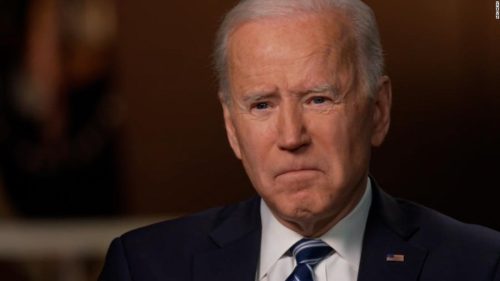
As armed conflict erupted between NATO-backed Ukraine and Russia in February of 2022, the Joe Biden administration in Washington decided to throw its weight behind Kiev and focus on a project to bog down Moscow, while unleashing wave after wave of sanctions. Despite spending at least $75 billion dollars on assistance to Ukraine and making Russia the most sanctioned nation on earth, the US has failed to bring Moscow to its knees. In fact, one could say that it is the US that has been cut down to size in the global arena, especially in the Middle East, an area it once considered its own backyard.
As the months pass, blow after blow has been inflicted on US power in the Middle East. In direct opposition to Washington’s agenda, the Syrian Arab Republic was readmitted to the Arab League following a 12-year hiatus, paving the way to end the crisis in Syria, which the US seeks to prolong. China has also entered Middle East politics in a dramatic way, brokering an Iranian-Saudi rapprochement back in March, and this then spurred a wider normalization wave. Although the US attempted to play off the Saudi Arabia-Iran agreement as an acceptable and welcomed move, this has now clearly worked to collapse Washington’s long-term effort towards regional supremacy, which was based on feeding a proxy conflict between the two powers.
The failure of US sanctions
Western leaders publicly predicted that Russia’s economy would collapse under sanctions, a result which clearly has not materialized, with the IMF predicting the Russian economy will grow. Similarly, the US “maximum pressure” sanctions that were first introduced against Iran under the Trump administration, were expected to severely hinder the Islamic Republic’s ability to continue its developments in the defense field, but have failed to achieve those goals.
Russia is now exporting more oil than it did in 2021, as its relations with China, the primary global competitor to the US, have advanced. Gulf States have also repeatedly let the US down and refrained from yielding to pressure to cut oil production. There is also the example of Algeria, which has become Italy’s largest gas supplier and raked in over $50 billion dollars in oil and gas revenues during 2022 alone, even as it retains close relations with Moscow. And when it comes to the West’s ban on Russian gold bullion, the UAE, Türkiye and China have reportedly stepped in to fill the gap.
However, perhaps the worst blowback against Russia sanctions has been the nullification of previous limits to Moscow-Tehran economic relations. The two nations are already the most sanctioned on earth, so they need not worry about the potential consequences from their trade, which has encouraged further cooperation between them. Recently, Russian President Vladimir Putin and Iranian President Ebrahim Raisi signed a deal to finance an Iranian railway line as part of a North-South Transport Corridor.
Failed propaganda
The Biden administration has employed hardline propaganda tactics in order to demonize Russia and lionize Ukraine. Although for some Western audiences the arguments set forth may have proven effective, in the global community and especially the Middle East, such rhetoric is tiresome and clearly hypocritical.
After having illegally invaded Iraq, inflicting around a million deaths, over a concoction of factually-challenged conspiracy theories about weapons of mass destruction, it comes off as laughable that the US is now claiming to oppose illegal invasions. Former Bush administration officials, such as Condolezza Rice, have even appeared on national television shows in the US to condemn illegal invasions of foreign countries. Even former US President George W. Bush seemingly condemned the “holy unjustified and brutal invasion of Iraq… I mean of Ukraine” in a Freudian slip.
The US has positioned itself now as being opposed to the illegal occupation of foreign territory, in addition to claiming it stands in principle against annexation. When US Secretary of State Antony Blinken was asked by a CNN correspondent whether his government supported the annexation of Syria’s Golan Heights by Israel, he answered: “Look, leaving aside the legalities of that question, as a practical matter, the Golan is very important to Israel’s security,” again demonstrating Washington’s double standards. Washington continues to maintain its recognition of the Golan Heights as Israeli territory, which not only defies international law, but also the majority opinion at the United Nations.
The faltering image of the US
From the perspective of Middle Eastern nations, the US is overcommitted to the conflict in Ukraine, even as they have refrained from taking a clear side and instead remained neutral for the most part. Neither the people nor the governments of these countries buy the platitudes espoused by US officials when it comes to Ukraine. The stark difference between the way Palestinians and Ukrainians are portrayed for the exact same actions are enough to make eyes roll.
Now that China is presenting opportunities for countless Middle East nations, especially in the economic sphere, the US has a real competitor. However, the US continues to operate as if the world has not undergone a dramatic shift and refuses to rein in its allies. Ukraine in some respects is getting the special treatment that Israel has enjoyed for years: unlimited aid with few or no questions asked. In the case of Israel, as its government proceeds with introducing controversial legal reforms, takes steps to change the status quo at the al-Aqsa Mosque and pursues hardline far-right policies against the Palestinian people, all coming at a cost to Washington itself, the Biden administration refuses to put it in its place. What Israel is currently doing is embarrassing its own Arab allies that recently normalized ties, even threatening to put a wedge in relations with the likes of neighboring Jordan.
It is this refusal to recalibrate that is not only costing the US its influence, but also evaporating the prize of bringing Israel and Saudi Arabia together, which has clearly been a foreign policy achievement goal dear to the Biden administration. Now that Riyadh and Tehran have restored relations, the excuse of combating Iran’s regional influence is gone for negotiating a Saudi-Israeli rapprochement. The refusal to punish Israel for its constant provocations also makes it more difficult for Saudi Arabia to normalize with an unrestrained Israeli government that continues to insult the Muslim world and invites popular Arab support for the Palestinian cause. If there is no change to the arrogant and out of touch approach of the US, which rules with an iron fist and a “my way or the highway” approach, it will be the US itself that is going to be taking a hike from the Middle East.
Robert Inlakesh is a political analyst, journalist and documentary filmmaker currently based in London, UK. He has reported from and lived in the Palestinian territories and currently works with Quds News. Director of ‘Steal of the Century: Trump’s Palestine-Israel Catastrophe’.
Iran Unveils New Precision-Guided Kheibar Ballistic Missile
Al-Manar – May 25, 2023
Iran’s Ministry of Defense has unveiled the newest version of the domestically-manufactured Khorramshahr ballistic missile, a medium-range precision-guided projectile named Kheibar.
Kheibar (Khoramshahr 4) was unveiled Thursday morning in the presence of Defense Minister Brigadier General Mohammad Reza Ashtian during a ceremony marking the 41st anniversary of the liberation of the southwestern city of Khorramshahr.
The missile’s extended range, advanced guidance and control system, and improved structural features further solidify Iran’s status as a formidable missile power.
Kheibar is one of the most advanced missiles designed by the experts of the Ministry of Defense’s Aerospace Industries Organization.
It is a liquid-fueled missile with a range of 2,000 kilometers and a warhead weighing 1,500 kilograms with impressive strategic and tactical capabilities.
The Khorramshahr class of missiles is known for its unique guidance and control system during the mid-flight phase.
This feature allows the missile to control and adjust its trajectory outside the Earth’s atmosphere, and to deactivate its guidance system upon entering the atmosphere, giving it complete immunity against electronic warfare attacks.
Thanks to this advanced control system, Kheibar’s warhead does not require the typical thin-wing arrangement, which in turn allows the missile to pack up a heavier explosive load.
The Kheibar missile also boasts an incredibly short preparation and launch time.
The use of self-igniting (hypergolic) fuel and the absence of the need for fuel injection and horizontal alignment after the verticalization phase have cut Kheibar’s launch time to less than 12 minutes.
Thanks to its powerful engine, the Kheibar missile possesses an exceptional impact force, with a ground impact force of 280 and a vacuum impact force of 300 seconds.
The high speed at which the warhead makes impact with the designated target prevents enemy air defense systems from detecting, tracking, and taking action to shoot down the missile.
Additionally, the engine enables the missile to reach speeds of 16 Mach outside the atmosphere and 8 Mach within the atmosphere.
The unveiling of Kheibar marks a significant advancement in Iran’s ballistic missile capabilities and demonstrates the country’s commitment to enhancing its defense and deterrent power.
Iranian officials have long asserted that the country’s military capabilities are entirely meant for defense, and that its missile program will never be up for negotiations.
British special forces deployed to 19 countries since 2011 – Report
RT | May 23, 2023
The UK has sent its special forces to 19 countries since 2011, according to a report by Action on Armed Violence (AOAV). These British operatives trained foreign militants, carried out assassinations, and reportedly fought alongside child soldiers.
In a report published on Tuesday, AOAV stated that British operatives have been deployed to fight or surveil hostile forces in Algeria, Cyprus, Estonia, France, Iraq, Kenya, Libya, Mali, Nigeria, Pakistan, the Philippines, Russia, Somalia, the Strait of Hormuz between Iran and Oman, Sudan, Syria, Ukraine, and Yemen.
Some of these deployments were into locations in which British troops were already fighting, as was the case in Afghanistan and Iraq. However, UK Special Forces (UKSF) continued their operations in both countries long after regular forces withdrew. In Afghanistan, hundreds of civilian deaths were attributed to night raids by British and American special forces between 2009 and 2012.
While parliament authorized military action in Afghanistan and Iraq, UKSF have deployed to other active conflict zones without the assent of lawmakers. Three days before parliament voted against a deployment to Syria in 2013, UKSF and MI6 operatives were on the ground targeting Syrian air defense installations and calling in American airstrikes, the report stated. Within months, they were training anti-government militants while assassinating Islamic State fighters.
In Yemen, UKSF operatives conducted raids on Al Qaeda-linked militants, but, in some cases, fought alongside jihadists who had been recruited by Saudi Arabia and the UAE to attack Houthi rebels. Up to 40% of these jihadi forces, AOAV noted, were child soldiers.
Training missions and hostage rescue operations made up most of the rest of the deployments, while the UKSF operation in Russia focused on providing security for British athletes at the 2014 Winter Olympics in Sochi.
Recently leaked Pentagon documents suggest that the UK has deployed 50 special forces personnel to Ukraine since Russia launched its military operation last February. Prior to the leak, multiple media outlets reported the presence of British and American special forces in Ukraine, while one general told The Times last year that as many as 300 British commandos were conducting “discrete operations” alongside Kiev’s forces.
“The extensive deployment of Britain’s Special Forces in numerous countries over the past decade raises serious concerns about transparency and democratic oversight,” said AOAV Director Iain Overton. “The lack of parliamentary approval and retrospective reviews for these missions is deeply troubling.”
No progress in Saudi-Israel détente as MBS rejects Netanyahu’s request to meet
Press TV – May 23, 2023
A foreign diplomatic source says there has been no progress in the normalization of diplomatic ties between the Tel Aviv regime and Saudi Arabia, as Saudi Crown Prince Mohammed bin Salman (MBS) has rejected a request from Israeli prime minister Benjamin Netanyahu to meet.
Netanyahu and bin Salman spoke on the phone twice in recent weeks. Bahraini Foreign Minister Abdullatif bin Rashid Al Zayani facilitated the calls.
The source, speaking on condition of anonymity, said, the 73-year-old Israeli leader and Saudi Arabia’s de facto ruler held talks before and after last week’s Arab League meeting in the Red Sea port city of Jeddah to discuss the possibility of rapprochement.
The leaders also did not discuss the possibility of direct flights from the Israeli-occupied territories to Saudi Arabia for the annual pilgrimage Hajj to the holy city of Mecca this year.
According to the N12 news site, Saudi authorities presented a list of demands for Israeli concessions vis-à-vis the Palestinians.
Those demands include allowing the Palestinian security apparatus to be strengthened at the expense of Israeli military forces in the occupied West Bank, the report said.
MBS also requested Palestinian security control over al-Aqsa Mosque compound and the Church of the Holy Sepulcher in the occupied Old City of al-Quds.
Last week, Israeli foreign minister Eli Cohen told The Jerusalem Post newspaper normalization with Saudi Arabia was “not a matter of if, but of when. We and Saudi Arabia have the same interests.”
He said White House Coordinator for the Middle East and North Africa Brett McGurk and Special Presidential Coordinator for Global Infrastructure and Energy Security Amos Hochstein had spoken to the Saudi crown prince about détente with Israel during their visit to Jeddah earlier this month.
Normalization with Saudi Arabia could come within the next six months to a year, though senior Saudi officials have always said publicly that headway must be made between Israel and the Palestinians for Riyadh to take that step, Cohen told N12 Saturday night.
“The Palestinian issue was and remains the central issue for Arab countries, and it is at the top of the kingdom’s priorities,” MBS said at the Arab League summit in Jeddah.
“We will not delay in providing assistance to the Palestinian people in recovering their lands, restoring their legitimate rights and establishing an independent state on the 1967 borders with East al-Quds as its capital,” he noted.
Saudi Arabia did not show any opposition when the United Arab Emirates, Bahrain, Sudan and Morocco in 2020 became the first Arab countries in decades to normalize relations with Israel in a deal brokered by former US President Donald Trump.
The oil-rich kingdom is yet to jump on the bandwagon, but the two sides have seen growing contacts and de-facto rapprochement in recent years, despite claims that it is committed to the 2002 so-called Arab Peace Initiative, which conditions normalizing ties with Israel on the establishment of an independent, sovereign Palestinian state within the 1967 borders.
The Riyadh regime in November 2020 granted permission for Israeli airlines to use its airspace, hours before the first Israeli flight to the UAE was set to take off.
Palestinian leaders, activists and ordinary people have repeatedly rejected Arab-Israeli normalization deals as “a stab in the back of the Palestinian cause and the Palestinian people.”
Foreign interference in Arab world must come to an end: Arab leaders
The Cradle | May 20, 2023
At the conclusion of the 32nd annual Arab League summit hosted by Saudi Arabia on 19 May, the regional bloc issued a joint declaration calling for an end to foreign interference in the region and reaffirming their support for Palestinian liberation.
“We call for stopping foreign interference in the domestic affairs of Arab countries and categorically reject all support for the formation of armed groups and militias outside the scope of state institutions,” the joint statement reads.
It also stressed that the Israeli occupation of Palestine remains “one of the key factors of stability in the region” and condemns “in the strongest terms the practices and violations targeting Palestinians in their lives, property and existence” while calling for the formation of a sovereign Palestinian state “on the 1967 borders with East Jerusalem as its capital.”
The statement goes on to hail the decision made by regional leaders to welcome Syria back into the Arab League.
“We stress the importance of continuing to intensify pan-Arab efforts aimed at helping Syria overcome its crisis in line with the joint Arab efforts and brotherly relations that connect all Arab peoples,” the statement reads.
During his closing remarks at the end of Friday’s summit, Saudi Crown Prince Mohammed bin Salman (MbS) stressed that the region must not turn into a conflict zone and reassured attendants that “world peace” was near.
He also hoped Syria’s “return to the Arab League leads to the end of its crisis.”
Earlier in the day, MbS warmly welcomed Syrian President Bashar al-Assad to the summit’s venue, officially marking the end of Syria’s isolation within West Asia after 12 years of a US-backed war.
“I would like to loudly welcome Syria back to its seat among its brothers,” Algerian Prime Minister Ayman Benabderrahmane said in the opening speech of the summit.
“Today we are facing an opportunity to change the international situation that appears in the form of a unipolar world, a result of the dominance of the west, who lack all ethics and principles,” the Syrian president said during his speech.
“We stand together against the movement of darkness,” Assad added, referring to extremist armed groups that dominate the Syrian opposition, many of which have had the support of Arab League member states, including Saudi Arabia and Qatar.
An unexpected guest at Friday’s summit was Ukrainian President Volodymyr Zelensky, who arrived at the last minute in a French government jet to address those present in what regional observers called “an entertainment break.”
During his speech, the Ukrainian leader invoked the Arab world’s history of invasion and occupation by claiming his country “will never submit to any foreigners or colonizers.”
“Unfortunately, there are some in the world and here among you who turn a blind eye to those [prisoner of war] cages and illegal annexations,” Zelensky, an ally of the Israeli government, told the gathering of Arab leaders.
“I’m here so that everyone can take an honest look, no matter how hard the Russians try to influence, there must still be independence,” he added before departing for Japan to plead with G7 leaders for further military and financial assistance.
After meeting with Zelensky earlier on Friday, MbS spoke about “the kingdom’s readiness to continue mediating efforts between Russia and Ukraine,” adding he would “support all international efforts aimed at resolving the crisis politically in a way that contributes to achieving security.”
According to reports in Russian media, Zelensky was set to meet with a delegation from Moscow during his brief stay in Jeddah.
Bashar al-Assad’s full speech at the Arab League
The 2023 Arab League summit, officially the 32nd Ordinary Session of the Council of the League of Arab States at the Summit Level, is a meeting of heads of state and government of member states of the League of Arab States that took place in Jeddah, Saudi Arabia, on 19 May 2023. All countries were represented at this meeting, including Syria, which returned triumphantly after its membership was suspended in 2011.
Speech of Bashar al-Assad, President of the Syrian Arab Republic
Transcript:
Your Highness Prince Mohammed bin Salman, Crown Prince of the Kingdom of Saudi Arabia, Your Majesties, Highnesses, and Excellencies, Ladies and Gentlemen…
Where does one begin his speech when the dangers are no longer imminent, but realized? He begins with the hope that motivates achievement and work. And when ailments accumulate, a doctor can treat them individually, provided he addresses the underlying disease causing them.
Therefore, we must look for the main issues that threaten our future and produce our crises, so that we do not drown and drown future generations in dealing with the consequences rather than the causes. Threats contain risks and opportunities. Today, we are presented with an opportunity as the international situation changes, and a multipolar world appears as a result of the dominance of the West, which is devoid of principles, ethics, friends, and partners. It is a historic opportunity to reorganize our affairs with the least possible foreign intervention, which requires repositioning ourselves in this world that is shaping today to be an active participant in it, and investing in the positive atmosphere resulting from the reconciliations that preceded the summit and made the situation as it is today.
It is an opportunity to solidify our culture in the face of the impending collapse with modern liberalism that targets the innate human nature and strips people of their ethics and identity, and to define our Arab identity with its civilizational dimension, as it is falsely accused of racism and chauvinism in order to make it in conflict with its natural national, ethnic, and religious components, so that our societies die in their struggle within themselves, and not with others.
There are many too many topics that cannot be discussed for lack of time, and summits would not be enough to evoke them all… They do not begin with the crimes of the Zionist entity, rejected by Arabs, against the Palestinian resistance people, nor do they end with the danger of the Ottoman expansionist thought grafted with a deviant Muslim Brotherhood flavour ; and they are inseparable from the challenge of development as a top priority for our developing societies. Here comes the role of the Arab League as a natural platform for discussing and addressing various issues, with the condition of its working system being reviewed in its charter, internal system, and the development of its mechanisms in line with the times. Joint Arab action needs common visions, strategies and goals that we later turn into executive plans. It needs a unified poliicy, firm principles and clear mechanisms and controls. That is how we’ll be able to move from mere reaction to the anticipation of events. Then the Arab League will be a way out in case of siege, not a partner to it, and a refuge from aggression and not an enabler for it.
As for the issues that concern us daily, from Libya to Syria, passing through Yemen and Sudan, and many other issues in different regions, we cannot treat diseases by treating symptoms. All of these issues are the results of larger problems that have not been dealt with previously. To talk about some of them, we need to address the cracks that have arisen on the Arab scene during the past decade and restore the role of the Arab League as a healer of wounds, not a deepener of wounds. The most important thing is to leave internal affairs to their peoples, as they are capable of managing their own affairs, and our role is only to prevent external interference in their countries and assist them exclusively upon request.
As for Syria, its past, present, and future is Arabism, but it is the Arabism of belonging, not the Arabism of embrace [alliances], because the embraces are transient, while belonging is permanent. A person may move from one embrace to another for some reason, but it does not change his belonging. Those who change it are without belonging in the first place, and those who fall in the heart do not fade in the embrace. Syria is the heart of Arabism and in its heart.
Ladies and Gentlemen,
As we hold this summit in a turbulent world, hope is rising in light of the Arab-Arab rapprochment, and regional and international rapprochment, that culminated with this summit, which I hope will mark the beginning of a new phase of Arab action, for solidarity among us, for peace in our region, for development and prosperity instead of war and destruction.
In accordance with the allocated five minutes for speeches, I extend my sincere thanks to the heads of delegations who have expressed their deep sympathy with Syria, and I reciprocate their sentiments. I also thank the Custodian of the Two Holy Mosques for the significant role he has played and the intensive efforts he has made to enhance reconciliation in our region and for the success of this summit. I wish him, His Highness the Crown Prince, and the brotherly Saudi people, continued progress and prosperity.
Peace be upon you, and may the mercy of God and His blessings.
Translation: resistancenews.org
Syria’s return to Arab fold sign of Global South manifesting itself: Diplomat
By Somayeh Khalili | Press TV | May 19, 2023
Syria’s triumphant return to the Arab League fold after almost 12 years shows not just that Arab countries now recognize the failure of the “regime change” project in Damascus but also that they can defy the United States, according to a former British diplomat.
In an exclusive interview with the Press TV website, Peter Ford, a former UK diplomat who served as ambassador in Syria between 2003 and 2006 and before that in Bahrain from 1999 to 2003, said the importance of the recent turn of events in the Arab world “goes beyond Syria”.
“It is a symptom of the development of a new multipolar world order where not just Russia, China and Iran refuse to accept US hegemony but also countries like Saudi Arabia, UAE, Brazil and South Africa. This is the Global South manifesting itself,” Ford asserted, referring to Arab normalizations.
Syria has restored diplomatic ties with many Arab countries recently after years of hostility, including Saudi Arabia, and is set to formally return to the Arab League, a 22-member body of Arab states.
This wave of normalization comes more than a decade after Syria’s Arab neighbors severed their diplomatic ties with the Bashar al-Assad government in Damascus and demanded his ouster.
On Thursday, Assad touched down in the Saudi port city of Jeddah to attend the Arab League summit, marking another step toward the full restoration of ties between Syria and its Arab neighbors.
Ford said Syria’s return to the Arab League, in defiance of US warnings, has raised expectations that the Arab world will now “show more support for Palestine and less concern for their ties with Israel”.
“The Abraham Accords was founded on hostility to Iran and fear of the US. These conditions no longer apply,” the former British diplomat told the Press TV website.
On whether these developments will bring regional countries closer in fighting the menace of terrorism, Ford said he expects “much more intra-Arab security cooperation” now, adding that Syria has “more experience with this phenomenon than any country in the world”.
The veteran diplomat noted the US interference in the Arab country hasn’t ended but that it has “got tired” and is going through the motions “with no real hope of achieving anything”.
“It keeps up the economic war, the propaganda war and legal war, and it maintains a military presence to control Syria’s oil, but it’s all to no purpose,” he said about the US.
The restoration of diplomatic ties between Iran and Saudi Arabia, Ford said, augurs well for the region, as both countries have “a shared interest in modernization and the peaceful Persian Gulf”.
“The only beneficiaries from hostility (between Tehran and Riyadh) have been the US and Israel. The new perspectives for cooperation (between them) are exciting. No wonder the US think tanks are bitter in their commentaries,” he remarked.
Iran and Saudi Arabia restored diplomatic ties in March following two years of negotiations brokered by Baghdad. The breakthrough, however, came courtesy of Beijing.
Ford stated that while Western countries “stubbornly persist in economic warfare against Syria, Iran’s role in Syria’s post-war reconstruction and rebuilding “remains crucial”.
On President Ebrahim Raeisi’s recent historic visit to the Arab country, the former American ambassador in Damascus said it “set the seal on the success of Syria and Iran in standing firm against Western-directed attempts to overturn the Syrian government and weaken Iran.”
“It also signaled that the normalization of Syria’s relations with Saudi Arabia came not at Iran’s expense but because of what’s now triangular Syrian-Saudi-Iranian cooperation,” Ford stressed.
While warning that the US power to do harm “should never be underestimated”, he said the US “is now beating a retreat from the Middle East and is focused more and more on China”.
Iran claims successes in its air defense
By Alexandr Svaranc – New Eastern Outlook – 16.05.2023
Despite decades of sanctions imposed by foreign powers, the Islamic Republic of Iran has garnered tremendous experience surviving and thriving in isolation. Given Tehran’s political system, which is not so much a theocratic form of government as an independent course, is under attack by Iran’s adversaries, the Iranian authorities have prioritized the strengthening of their army and navy. In order to do this, a lot of attention is put on the development of key technologies, mainly in the defense industry, as well as the advancement of education and research.
For many foreign experts it was a revelation that it turns out that Iran has achieved a major breakthrough in the development and production of unmanned aerial vehicles. At the same time, the spoils of the Iranian UAVs on some “hot conflict” fields have allowed experts to also discover advanced Western technology. The Iranian capabilities, meantime, created a stir in a number of international newspapers, raising the question of how the Persians acquired these outlawed and sanctioned technologies from the West or Israel.
Some believe that the Iranians simply ordered products through the AliExpress channel to fictitious addresses, disassembled them, and had local engineers create new inventions (such as joining a water line to a gas line in the hopes of creating carbonated water). Others argue that Iranian replicas of Western technologies are the result of successful scientific, technological, and industrial espionage by Iranian foreign intelligence agencies, specifically the Ministry of Information, IRGC intelligence units, and the Ministry of Defense.
How can one, however, recognize such enemy intelligence triumphs when it also indicates counterintelligence support failures for sanctioned technology and products from NATO nations and their partner Israel? At the same time, their opponents cannot admit (whether out of envy or for other reasons) that Iran simply had to spend a lot of money over the years to build its own education and research, rather than encouraging corruption, as is the situation in other post-Soviet countries. However, the real condition of the arms of the Iranian army should be accepted as a fact.
The commander of the Iranian Army’s Air Defense Force, Brigadier General Alireza Sabahi-Fard recently stated in an interview with Al-Alam News Network, an Arabic news channel, that Iran now has absolute power in the region due to significant technological progress in the production of military equipment, particularly air defense weapons. Moreover, Iran relies 100 percent on its own high-tech production. Tehran now has more opportunities to export domestically produced weapons therefore.
Any army and every war place a high priority on an effective air defense. By assuming control of aerial combat, the army is able to conduct effective defensive and offensive operations during combat operations.
Iranian air defense forces are structurally a combination of the army and IRGC air defense units. Khatam-al Anbiya Central Headquarter of General Staff of Armed Forces is in charge of coordinating joint military operations within the Iranian forces. It should be mentioned that the Iranians build their own air defense systems and have previously tested several of them in live combat.
Iran’s air defense system includes: Radar systems (Nazir, Fath-14, the Matla ul-Fajr and Kashef, Meraj-4, etc.); medium-range SAMS (100-240 km) Bavar-373, Khordad-15, Talash, 3rd Khordad, Mersad-16 and short-range SAMS (up to 100 km) Ya Zahra-3 and Herz-9. In fact, the Bavar-373 is an enhanced version of the Russian S-300PMU-2 Favorit. Iran makes a variety of combat and reconnaissance unmanned aerial vehicles (UAVs), including the Karrar, Ababil, and Mojaher as well as upgraded ballistic Shahab, Sajil, and the Meskat medium-range cruise missiles.
In addition to using outdated but still functional U.S. systems left over from the Shah regime, trophy French equipment from the experience of the war with Iraq, Iran still has to combine its own production of air defense equipment with imports of relevant military equipment from Russia, China, and India. Some of Iran’s most recent innovations in this field involve modifying the equipment bought from China and Russia.
Air defense facilities cover the sky, administrative and political centers, troop concentrations, and critical facilities such as defense-industry enterprises, Natanz nuclear facility and the Bushehr Nuclear Power Plant.
Iran, despite its reliance on domestic production, cannot yet match the world leaders in the development and production of air defense systems, particularly Russia and the United States. Nonetheless, the Iranian military-industrial complex’s success is becoming noticeable in the Middle East. According to Russian experts such as Ruslan Pukhov, developing air defense systems is an expensive and time-consuming endeavor. The process of testing one type of equipment at army ranges to placing it on combat duty in the troops can often take up to ten years.
However, since the 1979 Islamic Revolution, Iran has had to deal with improving its own defense industry for more than four decades. We only possess a portion of the information available in public, since no one discloses all of their accomplishments and technological characteristics.
Furthermore, the current political and military environment and tensions with Israel, the NATO bloc, and the United States encourage Iran to accelerate its military development. For Iranian topography, the east, south, and west have always had a high level of military escalation. On Iran’s northern borders with Azerbaijan and Armenia, a new hotbed of military conflict developed in the post-Soviet era. Of course, this is about the unresolved Karabakh issue, the two conflicts that took place there from 1991 to 1994, 2016, and 2020, as well as the ongoing provocations across the line of contact.
Given the accomplishments of the domestic military-industrial complex, Iranian air defenses undoubtedly have a certain advantage over some nations in the region, including Armenia, Azerbaijan, Georgia, Iraq, Syria, Qatar, the KSA, and even Turkey, which is a NATO member. Nonetheless Iranian missile and air defense systems are unlikely to be more advanced than those of Israel, let alone the United States, in terms of technology.
Turkey started paying more attention to import substitution and modernizing the country’s military-industrial complex throughout the years of President Recep Erdoğan’s rule. Ankara was able to supply the army and navy’s weaponry with 80% of its own manufacturing thanks to this strategy for boosting the country’s independence. The development and manufacture of Turkey’s Baykar Bayraktar Kızılelma reconnaissance and combat unmanned aerial vehicles (UAVs), Hisar surface-to-air missile and SIPER air defense missile, TCG Anadolu with unmanned combat aerial vehicles on board, Altay tank, BMC Kirpi, etc. are all being observed around the world.
The Turkish government holds regular events practically every day to showcase the aforementioned and additional products of the military-industrial complex, especially during current election campaigning days. Some of the military equipment on display in Turkey might still be purely for show, and it will take some time before testing and real breakthrough is made. Even so, Turkey is making an effort to keep up with Iran and its neighbors in terms of the military-industrial complex.
There is always hope for the army because of the generals’ faith in their own air defense systems and airspace control forces. However, public statements frequently don’t match reality (or don’t match it completely), which can further the goals of misleading the direct and potential enemy or fostering diplomacy during the negotiation process.
Anyway, Iran is expanding its military-technical cooperation with Russia, China, and India to produce air defense systems in all circumstances, keeping up with new advancements, and testing them not only on army ranges but also in combat theaters, where it takes part in varying degrees.
What are Storm Shadow Missiles and How Can Russia Defeat Them?
By Ilya Tsukanov – Sputnik – 12.05.2023
The NATO-Russia proxy war in Ukraine witnessed another escalation this week, with the UK announcing the delivery of long-range Storm Shadow cruise missiles to Kiev. What are these weapons? How do they differ from missiles already supplied to Ukraine? And what can Russia do about them? Sputnik explains.
Secretary of State Antony Blinken distanced the State Department from the UK’s decision to send Storm Shadow cruise missiles to Ukraine after the Kremlin warned that it considers the development “very negatively” and said it would require an “adequate response” by the Russian side.
“Different countries will do different things, depending on their own capabilities, depending on their own technology, depending on what makes the most sense. So we’ve provided some things uniquely to Ukraine through this process. Other countries may do things different than what we’re doing. The question is: Does the whole thing add up to what Ukraine needs? And we’re determined that it does so,” Blinken told US media on Thursday.
Asked point blank whether the State Department supports the escalatory step, Blinken deferred to Pentagon chief Lloyd Austin on the matter, adding that besides weapons, “support” for Ukraine can include training, maintenance, and “understanding how to use all these things in a cohesive and effective plan – combined arms, as it’s called in the business.”
This isn’t the first time London has decided to think “differently” from its allies across the Atlantic. Earlier this year, the UK became the first NATO power to agree to send current-generation main battle tanks to Kiev. Then in March, the Ministry of Defense revealed that the tanks would be armed with depleted uranium munitions – highly toxic weapons which have devastated wide swathes of the former Yugoslavia and Iraq, and have given rise to a host of cancers and other deadly diseases among both local populations and NATO servicemen.
What are Storm Shadow Missiles?
Storm Shadows, which defense Secretary Ben Wallace confirmed this week are either “going into” or are already “in the country itself,” are cruise missiles with a range of up to 250 km for the export version and up to 560 km for the domestic variant. If fired over northeastern Ukraine, the export variant Anglo-French weapons would have sufficient range to target major Russian cities like Kursk, Belgorod, Voronezh or Sevastopol, as well much of Belarus – including its capital, Minsk.
UK officials privately assured that Kiev has promised that the missiles would not be used to attack targets inside Russia. But that’s little consolation to Moscow, given that Ukraine’s government moved to turn the crisis into a terror bombing free-for-all over a year ago, not only indiscriminately and deliberately targeting cities in Donbass, but attempting to launch missile, artillery, and drone attacks on targets deep inside Russia.
The Storm Shadow is the most potent NATO missile delivered to Kiev to date, and has a range well beyond the 75 km that the HIMARS rockets that have been delivered in the thousands over the past year.
The $2.5 million-apiece cruise missile weighs 1.3 tons, has a length of 5.1 meters, a diameter of about 0.4 meters, and a 450 kg tandem warhead – enough to destroy heavy fortifications, or level apartment buildings, industrial facilities, railway junctions, or columns of vehicles and troops. A warship-fired derivative exists, with that variant having a range of up to 1,400 km, and a 300 kg warhead. The missiles feature inertial navigation, combined with GPS and terrain referencing.
The UK is estimated to have been 700 and 1,000 Storm Shadows in stock.
“This is an air-launched rocket that uses stealth technology. The warhead can be a cassette munition or a penetrating warhead, and has a 450 kg weight…As a rule, it’s installed on European-produced aircraft…It’s not installed on US aircraft. The French version differs from the British one only in the interface for installation on the corresponding fighters,” Dmitry Drozdenko, editor-in-chief of Arsenal of the Fatherland, a Russian defense news and analysis portal, told Sputnik.
Who Developed the Storm Shadow?
Created jointly by Matra BAe Dynamics – a British-French missile-focused defense giant created in the 1990s, the Storm Shadow was first introduced into service in 2002, just in time for the US and NATO-led decade-and-a-half long campaign of invasions and bombings in the Middle East.
Where Have Storm Shadows Been Used?
UK forces first used Storm Shadows in Iraq during the 2003 invasion, with the British, French, and Italian air forces using them again during the NATO air war of aggression in Libya in 2011. The missiles were then used by French and British forces in Syria in 2015, 2016, and 2018, including strikes purportedly targeting Daesh (ISIS)*, and targeting Syrian forces based on false flag evidence of a chemical attack by the Syrian government (the pretext for the latter attack was later revealed to have been a hoax).
In addition to delivery to NATO countries like Italy and Greece, Storm Shadows have been exported to India, Egypt, Qatar, the United Arab Emirates, and Saudi Arabia, with the latter using them against Houthi militia fighters in Yemen.
What are the Storm Shadow’s Limitations and Weaknesses?
Storm Shadows are designed to operate from Eurofighter Typhoon, Rafale, Mirage 2000, and Tornado jets. Ukraine has none of these planes, and the UK and NATO have so far been reluctant to hand over advanced aircraft to Kiev amid reported fears that Russia would quickly decimate them.
Getting them to operate would require Ukraine’s Air Force to adapt them to their MiG-29 or Su-27 fighters, Su-25 close air support bombers, or Su-24 strike jets. Either of these options carries limitations, with all of these planes apart from the Su-24 facing payload restrictions that would limit how many Storm Shadows the planes would actually be able to carry (payload weight limits range from 2,500-4,500 kg, depending on plane and modification).
On top of that are fundamental design differences between the NATO and Warsaw Pact planes (all of Ukraine’s combat aircraft are designs left over from the Soviet period).
“Adapting these planes to a fundamentally different guidance and target designation system will be quite difficult. It’s not as simple as strapping it on, flying out, firing and flying away,” says Sergey Khatylev, former head of the anti-aircraft missile forces of the Moscow Air Defense Special Forces Command.
“They would need a flight and navigation complex, a special program with data on range, altitude, thrust, g-forces, turn angle. It will be necessary to pick and somehow select targets,” the retired colonel explained to Russian media. “If you attach them to the Su-27 or MiG-29, serious revisions would need to be made. A large number of questions arise about how this will all be organized, and in what time frame.”
The other option is a ground-based platform – but that would require an entire new command and control system, according to Khatylev. “In addition to the launcher, you would need a command and control vehicle. You’d need to get the target designation from somewhere,” he said.
How Will Russia Respond?
In addition to targeting the weapons on route to their destinations, air bases, or Ukraine’s remaining inventory of fighters and bombers, Russia can respond to the delivery of Storm Shadows by further shoring up its layered missile defenses.
Khatylev pointed out that delivery means for the Storm Shadows are only one part of the equation. The other is Russian air power and air defenses. “We aren’t allowing Ukraine’s Air Force to fly. Russian aviation has won air superiority. If they use these missiles from aircraft, it would actually be good for us, because it’s easier to target airplanes than missiles themselves. We’ll hit the carriers. The kill zone of the S-400 is several hundred kilometers; upon entering this zone, it will simply destroy the carrier,” the reserve colonel said.
If the missiles are launched, detecting and targeting them in a timely manner would be crucial, he added, noting that systems capable of targeting the Storm Shadow include the S-400, S-300, and shorter-range Buk-M3 and Buk-M2 systems operating in tandem.
The defenses around Crimea are a perfect example of layered anti-aircraft and anti-missile defenses, Khatylev emphasized. “There, the Black Sea Fleet, air defense units, the air force, the army corps, special forces have brought together all of their reconnaissance capabilities, as well as their fire systems, into a single system. All of this in accordance with a single plan, from one command post… And all of this has an effect.”
In other words, using Storm Shadows in an imperialist war against war-torn developing countries with limited or non-existent air and missile defenses is one thing – trying to use them against a nation like Russia is something else.
US mulls sanctioning Arab League for Syria normalization efforts
By Drago Bosnic | May 12, 2023
There are very few things that have been as unifying for America’s political establishment as the belligerent thalassocracy’s propensity to impose sanctions. Republicans and Democrats will almost always be at each other’s throats for virtually any issue, but when it comes to sanctions, particularly against the Syrian people, their unity is unquestionable. For well over a decade, the unfortunate Middle Eastern country has been at the forefront of Washington DC’s regime change efforts, with the United States using everything from sanctions and financing various “moderate democratic opposition forces” (i.e. head-chopping terrorists) to direct attacks on Syria and its armed forces.
Unfortunately, the Arab League actively took part in this comprehensive attack on a fellow Arab country and it took years of active Russian and Chinese diplomatic efforts to have the organization reengage with Damascus. In the last couple of months, there have been several major breakthroughs in this regard, culminating with announcements that Syria will be readmitted into the organization. President Bashar al-Assad even visited several prominent Arab countries, some of which previously played an extremely active role in attempts to oust him. The likes of the United Arab Emirates and Saudi Arabia went from “Assad must go!” to “We’re happy to see Assad stay” in mere months.
And while Damascus must tread carefully when reengaging countries that actively took part in a comprehensive aggression against it, this opportunity is something that should not be missed. As previously mentioned, it was only thanks to the sustained diplomatic efforts of the multipolar world that this inter-Arabic conflict came to an end, inflicting a devastating blow to US plans for Syria’s destruction. However, the warhawks in Washington DC are far from giving up. Top GOP and DNC members of the House Foreign Affairs Committee are pushing for a bipartisan initiative to sanction anyone taking part in Syria’s full diplomatic reinstatement. Since May 8, they made several announcements about this.
The bipartisan group is now urging President Joe Biden and his deeply troubled administration to impose “crippling sanctions” on any state or entity engaged in attempts of normalizing relations with Syria. Expectedly, the initiative is led by one of the most prominent neocon warmongers, Texas Republican Michael McCaul.
“Readmitting Assad to the Arab League is a grave strategic mistake that will embolden Assad, Russia, and Iran to continue butchering civilians and destabilizing the Middle East,” McCaul and Gregory Meeks (NY DNC Rep.) said in a statement, further adding: “The United States must fully enforce the Caesar Act and other sanctions to freeze normalization efforts with this war criminal.”
The aforementioned Caesar Act, hypocritically designated as the so-called Syria Civilian Protection Act of 2019, is a US legislation that sanctions the Syrian government, including President Bashar al-Assad himself, for bogus “war crimes”. It was signed into law in December 2019 and came into force on June 17, 2020. The illegal exterritorial legislation targets virtually the entire Syrian industrial capacity, including its ability to build and maintain infrastructure, as well as energy production. It also targets individuals and businesses accused of allegedly “funding or assisting the President of Syria”. This also includes entities from other countries, including Russian and Iranian companies taking part in the reconstruction efforts in Syria.
Essentially, the Caesar Act adds insult to injury in terms of well-over-a-decade-long unprovoked US aggression on Syria by imposing economic sanctions that are specifically designed to prevent the rebuilding of the devastated country, further prolonging the suffering of the Syrian people. Worse yet, all this is done under the endlessly hypocritical pretext of “protecting” the same people whose lives it has been destroying for more than ten years. The US political establishment decided to keep enforcing the illegal sanctions even after the disastrous earthquake that killed thousands and left tens of thousands homeless in the already ravaged country. It has also prevented or at least significantly complicated international relief efforts.
However, it seems the Caesar Act will soon be used against US “partners” that have been nearly 100% compliant up until recently. This includes Saudi Arabia and Jordan, both of which still have extremely close relations with the Pentagon. On May 9, Damascus and Riyadh formally announced the restoration of their official diplomatic relations. The move is directly tied to Syria’s readmission to the Arab League.
“The State Department denounces Syria’s readmission to the Arab League. We do not believe that Syria merits this decision by the Arab League at this time,” State Department spokesman Vedant Patel said on May 8, adding: “We continue to believe that we will not normalize our relations with the Assad regime, and we don’t support our allies and partners doing so either.”
As previously mentioned, sanctions are not the only way in which the US is conducting its well-over-a-decade-long and truly unprovoked aggression on Syria. The Pentagon has approximately 1000 soldiers illegally occupying nearly all of eastern Syria, as well as an occupation force in the area around their base of Al-Tanf. The forces deployed in the east are openly stealing Syrian oil, while those in Al-Tanf are training and equipping several US-backed terrorist groups whose sole purpose is to continue destabilizing the country. If Syria normalizes relations with virtually the entire Middle East, this could severely undermine US efforts to keep its war on Syria going on indefinitely. This is yet another proof that war, death and destruction are the primary “export commodities” of the world’s terrorist No. 1.
Drago Bosnic is an independent geopolitical and military analyst.
Featured Video

It’s the Occupation, Stupid
or go to
Aletho News Archives – Video-Images
From the Archives
A superpower and “the world’s sickest warrior state”
By Paul J. Balles | March 8, 2010
Living through five or six major wars has hardened me to what I thought were the extremes of inhuman cruelty and brutality.
Two things made those extremes almost bearable: the brutality always revealed – at least according to the media coverage – the viciousness of the enemy. It was therefore quite understandable when our “brave men and women” pulverized the enemy.
Films of Japanese torturing captive Americans somehow justified holding Japanese Americans in internment camps during World War II; and only a small percentage of Americans found the bombing of Hiroshima and Nagasaki unreasonably vengeful at best, at worst, depraved.
The media giants in America portrayed the North Koreans as barbaric beasts with their captives, quite unlike their southern counterpoints – our allies during the Korean War. No one ever felt the need to explain how the South Koreans were a civilized breed while the North Koreans were absolute savages, at least according to the official line.
In Vietnam, our warriors justifiably (or so the media made us believe) dropped napalm on the North Vietnamese who had the gall to hide in villages and tunnels to ravage our invaders. At least it was accepted practice until some rogue photojournalist filmed a young girl screaming down a Vietnamese road in flames. … continue
Blog Roll
 Aletho News
- Pakistan to Host US-Iran Talks
- How Indonesia’s tilt toward the US left it stranded in the Strait of Hormuz
- US has no choice but to retreat from Iranian borders: Top commander
- Iran Retaliation Strikes Chemical Plant Near Dimona
- AWACS’ Destruction is a Major Loss for US Military – Ex-DoW Analyst
- Israel’s Iran Strategy Uses US Military & Gulf States as Its Pawns
- Iran: Trump wanted regime change, now just begging for Hormuz to open
- IRGC: Israeli, US universities in region legitimate targets after strikes on Iranian university
- Trump admits Iran hit USS Ford carrier: ‘We ran for our lives’
- Battle for Hungary: EU attacks on Orban are a sign of worse things to come
- If Americans Knew
- Israeli police block Catholic cardinal from entering Church of the Holy Sepulchre on Palm Sunday
- Israel is assassinating journalists again, more than any other nation, anywhere, ever – Not a ceasefire Day 170
- Over 300 US service members wounded, majority have brain injuries – Not a ceasefire Day 169
- Researchers at Human Rights Watch Resign Over Blocked Report on Palestinian Refugee Return
- Jewish Groups Are Backing a War Americans Don’t Want
- Eric Fingerhut Thinks He’s the President of the Jews
- Top Jewish Philanthropists, Rabbis Urge Israeli President to Take Action Against ‘Jewish Extremists’
- Don’t Be Fooled. Zionist Leaders Have Always Wanted to Control Southern Lebanon
- Israel’s widespread use of torture is a core element of its genocide against the Palestinian people
- In Israel’s War on Iran, Many Middle East US Bases Rendered “All But Uninhabitable”
- No Tricks Zone
- German Science Blog Accuses PIK Climate Institute Of Hallucinating Climate Tipping Points
- Devastating Assessment Of Comirnaty Vaccine By Former Senior Pfizer Europe Toxicologist
- New Study: CO2 Is ‘Effectively Negligible’ As An Explanatory Climate Change Factor Since 2000
- Former Pfizer Toxicologist Dr. Helmut Sterz Tells Bundestag Hearing Pfizer Vaccine Should Have Never Been Approved
- Energy Expert: Germany’s Nuclear Phaseout Was A “500 Billion Euro Mistake”
- New Research: South Australia’s Mid-Holocene Sea Surface Temperatures Were 4°C Warmer Than Today
- Storing Green Energy To Last Germany 10 Days Would Require A 60-Million Tonne Battery
- New Studies: UK Sea Levels Were 4 Meters Higher Than Today During The Mid-Holocene
- Destructive Green New Deal: German Energy And Metal Group Warns Of Drastic Crisis
- New Study Documents A 20-Year Pause In Arctic Sea Ice Decline – Driven By Internal Variability
 Aletho News