Former Egyptian FM: ‘Everyone knew there were no WMDs in Iraq’, invasion was in place before Bush came to power
Sputnik – 20.03.2023
Former Egyptian Foreign Minister Nabil Fahmi was Egypt’s Ambassador Extraordinary and Plenipotentiary to the United States at the time of the US invasion of Iraq. He shared his memories in an interview with Sputnik.
In his interview, Nabil Fahmi said that the American invasion of Iraq was already in place when George W Bush came to power, and he was simply looking for a suitable opportunity to carry out the plan.
Sputnik : As an Egyptian diplomat at the time, how did you feel about the US decision to invade Iraq in 2003?
Nabil Fahmi: At the time, in 2003, I was Egypt’s Ambassador to the United States. Of course, the entire Arab diplomatic corps was discussing the invasion in one way or another. Even with the election of Bush Jr as President of the United States, I noticed a really unhealthy interest the neocons took in Iraq. US vice-president Richard (“Dick”) Cheney was particularly prominent in this regard. On his first visit to Arab countries, he told me personally that he wanted to focus on Iraq.
Sputnik : Why Iraq in particular?
Nabil Fahmi: I asked him why Iraq and not, for example, the Palestinian issue. But he said that Iraq had caught his attention. I told the leadership in Cairo about the strange interest of the new American administration: but at that time, no one imagined that it would come to an open invasion in 2003.
Sputnik : Could you please tell us about Egypt’s position on the US invasion of Iraq?
Nabil Fahmi: I conveyed a message from President Hosni Mubarak to the Chief of Staff of the US Army and to one of the military commanders in the region that an invasion of Iraq was not advisable, and that there was a big difference between the liberation of Kuwait from occupation – in which the Egyptians had also been involved – and the direct occupation of an Arab country. This message was also conveyed to various American officials in Washington, including Condoleezza Rice, Colin Powell and others.
The Egyptian delegation arrived in Washington about four weeks before the invasion in a last-ditch effort to acquaint the US side with Cairo’s position. The delegation visited US Secretary of State Condoleezza Rice and Deputy Secretary of Defense Paul Wolfowitz. They were warned that an invasion of an Arab country would be disastrous for the region.
Sputnik : And how did the Americans respond?
Nabil Fahmi: The US administration questioned us point by point, ranging from the invasion and how to take control of certain places. Each time we responded, we emphasized that we did not support the US invasion. At one point, Rice specifically asked why this point was being repeated in every response. Our delegation explained that Egypt continued to oppose the invasion in any case: the Iraqi state must be preserved.
Sputnik : What did Washington think of Cairo’s response to the invasion?
Nabil Fahmi: Our position put me, as Egypt’s ambassador to Washington, in a difficult position before the US Congress. I explicitly said that Cairo did not support the war in Iraq, even though we were friends of America.
Sputnik : And how did you assess the international position on the invasion?
Nabil Fahmi: The US administration was determined to invade Iraq from the first day it came to power, and this was evident in the speeches of Cheney and Wolfowitz. The course of action had started taking shape after 9/11. The Bush administration had to justify this military operation to convince the American public that there was a real threat. To this end, they played the card of Iraq’s possession of nuclear, chemical and biological weapons. Although in fact everyone knew that there were no weapons of mass destruction (WMD) in Iraq.
Sputnik : What then were the real reasons for the US invasion of Iraq?
Nabil Fahmi: The US decision to invade Iraq was made regardless of the actions of former Iraqi President Saddam Hussein and the suffering of the Iraqi people, and there was no real evidence that Iraq possessed WMD. Either it was because they wanted to realize their ambitions after the liberation of Kuwait – because at that time the controversy about the need to end the war of liberation was raging – or maybe it was because the US was already developing the concept of a “New Middle East” and the easiest place to start implementing it was with a sanctions-weakened Iraq.
Sputnik : In your opinion, what has been the most significant consequence of the US invasion of Iraq?
Nabil Fahmi: I opposed Iraq’s invasion of Kuwait and saw that it was unacceptable and a big mistake on the part of Saddam Hussein. I do not believe that any country has the right to invade another country without respecting international law. That is why I did not support the invasion of Iraq. However, this war caused a lot of trouble in the Levant and the Gulf Region, and later the emergence of Daesh terrorists in the region. To this day, the Middle East is still dealing with the consequences of the US invasion of Iraq 20 years ago.
Sputnik : Has there been a change in American policy toward Arab countries in the years since the invasion of Iraq?
Nabil Fahmi: Nothing has changed. What has changed is the American reality and the Arab reaction. In the early 2000s, the US wanted to show the Middle East that after the collapse of the Soviet Union it could do whatever it wanted with Moscow’s former allies – that was its interest.
Circumstances are different now. Washington is no longer willing to give guarantees or sacrifice its wealth or forces to protect anyone in the region as a whole. For their part, the Arab countries began to realize – after the American invasion of Iraq – that the US could not be given preferential treatment. Thus, the Arab countries began to balance their foreign policies, giving the US the role of an important partner, but by no means the only one. The Arabs now realize that they must take the lead in solving most of the region’s problems and not rely on others to do so.
Iran-Iraq Security Deal Signed in Baghdad
Al-Manar | March 19, 2023
Secretary of Iran’s Supreme National Security Council Ali Shamkhani will reportedly sign a bilateral agreement on security cooperation with Iraq during a visit to Baghdad.
Accompanied by governor of the Central Bank of Iran (CBI) and two Foreign Ministry deputies, Shamkhani left Tehran for Baghdad on Sunday morning at the invitation of Iraq’s National Security Advisor Qasim al-Araji.
In addition to meetings with senior Iraqi political and economic officials, Shamkhani is scheduled to sign a document on mutual security cooperation that was being prepared for months.
The agreement would commit Iran and Iraq to safeguarding the principles of good neighborliness and protecting the common border. The deal is believed to have a significant role in ending the illegal presence of anti-Iranian armed groups and the elements affiliated with the Zionist regime in the Iraqi areas adjacent to Iran’s northwestern border regions.
Shamkhani’s visit to Iraq, made days after a landmark trip to the United Arab Emirates, comes after Iran and Saudi Arabia announced their decision to restore ties.
Following days of intensive talks in Beijing, Iran and Saudi Arabia agreed on March 10 to resume their diplomatic relations and reopen their embassies and diplomatic missions within at most two months.
Arab governments neighboring Iran have eagerly welcomed the rapprochement between the two regional heavyweights.
How does the China-brokered Saudi-Iranian normalization affect Israel?
By Robert Inlakesh | RT | March 17, 2023
A key goal of both the Israeli and American governments is to foster the normalization of ties between Israel and Saudi Arabia, and part of the strategy to make this happen was to unite the two against what has been depicted as a common enemy, Iran. The Saudi-Iranian rapprochement now appears to have thrown a spanner in the works of such efforts, and hence enraged the Israelis.
After five rounds of talks throughout the span of two years, Iran and Saudi Arabia were unable to reach a compromise for the re-establishment of diplomatic ties, something China has now managed to broker in a shocking turn of events. Based upon the long rivalry between Tehran and Riyadh, US and Israeli policy towards Saudi Arabia has been based on combating a common enemy shared between all sides. Although the US government itself has not reacted with open animosity to the sudden change in regional dynamics, the Israelis are publicly interpreting this as a negative development.
In June 2022, the Wall Street Journal reported that a previously undisclosed meeting had taken place in Sharm el-Sheikh, Egypt, whereby a number of Arab nations, including Saudi Arabia, had met with the Israeli military chief of staff at the time, Aviv Kochavi. Part of the discussions that took place was allegedly geared towards forming an Israeli-Arab defense alliance. Although no such alliance was formed, it was largely speculated at the time that US President Joe Biden’s visit to both Israel and Saudi Arabia the following month would include discussions on this topic. Despite the failure of the US and Israel so far to put together such an alliance, it is clear that part of the strategy for achieving normalization has been to secure defense interests.
Across the Israeli political spectrum, from both the coalition government and opposition, finger pointing has been taking place, in attempts to pin the blame for the perceived failure of Israel to prevent Saudi-Iranian normalization. Israeli Prime Minister Benjamin Netanyahu has attempted to shift the blame onto the former government, an idea refuted by former Israeli Mossad head Efraim Halevy as “factually incorrect.” On the other hand, former Israeli PM Naftali Bennett has called the agreement “a serious and dangerous development for Israel.” Yair Lapid, another former PM and current leader of the opposition, also said it is an “utter and dangerous failure of the Israeli government’s foreign policy.”
The big question now is whether the Chinese-brokered normalization agreement will negatively impact potential normalization between Israel and Saudi Arabia. Reuters reported that, according to an unnamed senior Israeli official, the Saudi-Iranian deal will have no significant impact on Israeli-Saudi relations. It is also not clear whether the agreement has any clauses to do with Israeli normalization. According to Carmiel Arbit from the Washington-based Atlantic Council, the Saudis could be attempting to conduct a balancing act the way the United Arab Emirates has. The UAE, which signed its own normalization deal with Israel in 2020, has since 2019 managed to de-escalate tensions with Iran and is currently maintaining cordial ties with both sides.
It is not clear, however, whether the model of Abu Dhabi will be applicable for the Saudis. Riyadh, simply put, has a lot more to lose than the Emiratis, due to its wide regional entanglements and domestic constraints, and hence it has chosen to maintain a distance from the Israelis at this time. The internal political crisis in Tel Aviv may also play a crucial role in the Saudi decision to push forward with the normalization of ties with Iran, as instability within Israel, coupled with a potential escalation in the conflict with the Palestinian people, could severely hinder a formal diplomatic breakthrough.
One crucial result of Saudi-Iranian normalization, however, is not necessarily to do with Israel’s own relations with the Saudis. Combating Iran, specifically its nuclear program through coercive measures, is an active policy position on both sides of the political divide in Israel. Netanyahu placed the issue of combating Iran, even through direct force, at the forefront of his campaign to win the election late last year. Throughout the past unity coalition of Bennett and Lapid, the anti-Iran position also proved a cornerstone of Israeli regional policy.
Performing aggressive actions, such as a direct attack against Iranian nuclear facilities, could now be much more difficult for the Israelis to pull off, with Saudi Arabia taking a non-combative approach to Iran. Although the nuclear issue is perhaps the most pervasive issue for the Israeli public, Iran’s regional alliances and defense programs are the true threats posed to Israel. If Saudi-Iranian ties are able to flourish and the Chinese-brokered deal holds, this could mean that Riyadh’s efforts in Lebanon against Hezbollah could be curtailed, and this surely represents a concern for Israel.
Iran, through its relationships with regional political parties, governments, and localized militia forces, also possesses the ability to pull strings that could benefit Saudi Arabia if it reciprocates by doing the same. This is especially the case when it comes to the conflict in Yemen. One thing that Ansarallah, also known as the Houthis, have been able to prove in their efforts against the Saudi-led coalition since 2015 when the war began, is that they are capable of overcoming US-made defense equipment. Iran, as a close ally of Ansarallah, could aid in setting up a long-term truce or even lasting peace, which the likes of the US simply cannot offer. To end this war would be in the security interests of the Saudis, who will undoubtedly suffer if the violence resumes, especially if missiles and drones begin striking their vital infrastructure again.
Just as Beijing proved capable of fostering Saudi-Iranian normalization, Tehran could offer the ability to properly negotiate a peaceful solution in Yemen. However, it is simply too early to tell whether such a development will take place. What the deal undoubtedly does is prove the weakness in Israel’s regional capabilities, along with the waning influence of the US. Israel’s security concerns regarding Syria and Lebanon may be heightened if the Chinese-brokered agreement delivers a more peaceful approach inside both of these nations. Saudi Arabia could also re-establish ties with the Syrian government, as the UAE has already done, which could help Damascus on the road to recovery from its brutal war and current state of economic ruin. A strong and united Syria could in the future also pose a strategic threat to Israel. While Saudi-Israeli normalization is by no means off the table, the Saudi-Iranian agreement could pose a serious challenge regionally for Israel’s current policy approach.
Robert Inlakesh is a political analyst, journalist and documentary filmmaker currently based in London, UK. He has reported from and lived in the Palestinian territories and currently works with Quds News.
Israel and its US lobby Dealt Major Blow by China Saudi Iran Peace Initiative
By Grant F. Smith | Institute for Research: Middle Eastern Policy | March 12, 2023
On Thursday the New York Times ran yet another report about Saudi Arabia’s entry into an “Abraham Accord,” but if only certain conditions could be met. It quoted longtime Israel lobby heavyweight Martin Indyk and reported on the American Israel Public Affairs Committee’s think tank the Washington Institute for Near East Policy “expert” delegation’s visit to Riyadh to finalize a deal. Then on Friday explosive news broke that China had successfully concluded a secret peace agreement between Iran and Saudi Arabia.
The plan aims to restore diplomatic relations by reopening embassies within two months. They also agree to restart their April 2001 Security Cooperation. Also back on the front burner is a 1998 General Agreement covering economic, trade, investment, technology, science, culture, sports and youth ties. It is well worth reading the entire statement.
As it often does, the New York Times quickly updated its March 9 story in an attempt not to look foolish having given too much credence to Israel lobby guidance.
Too late.
Israel and its lobby have for decades attempted to steer the United States into attacking Iran. The neocon policy coup of 2001 was not only a plan to get the U.S. to attack Israel’s arch enemy Iraq, it was also designed to steer the U.S. into attacking seven countries in seven years, most prominently Iran.
When the U.S. invasion of Iraq quickly turned into a quagmire, two American Israel Public Affairs Committee executives tried to place stolen classified Department of Defense information incriminating to Iran into circulation at the Washington Post. The operation failed, the Pentagon colonel leaking classified information was prosecuted, while the longtime AIPAC officials were dismissed.
Israel’s foreign influence operation AIPAC has steadily lobbied against Iran on behalf of Israel including punishing economic warfare from the U.S. Treasury’s OTFI unit, which AIPAC lobbied to set up for just this purpose in the aftermath of 9/11.
The Trump era “Abraham Accords” were yet another attempt to isolate Iran while harnessing Arab countries to Israel’s undue foreign influence and war on Iran machine. Under the scheme, the U.S. sacrifices its remaining international reputation to compel Arab governments to sign diplomatic and commercial accords with Israel their populations overwhelmingly reject. Target governments get access to advanced U.S. weapons, or recognition of illegal land grabs in exchange for normalization.
Saudi Arabia was always the toughest prospect for sticking its head into the yoke of an Abraham Accord. The Saudi Initiative, or Arab Peace Initiative endorsed by the Arab League in 2002, re-endorsed in 2007 and 2017 was a legitimate path toward a somewhat just settlement through the creation of a Palestinian state with East Jerusalem as its capital in exchange for Arab normalization.
Under constant Israel lobby pressure, there was never any serious U.S. consideration of the Saudi led plan. Instead, Israel surrogates Jared Kushner and former real estate lawyer turned ambassador to Israel David M. Friedman among others pushed the so-called “Deal of the Century” that offered tenuous promises of economic development to Palestinians in exchange for relinquishing their rights under international law. A 2019 IRmep poll revealed that 68 percent of Americans would have rejected a similar deal if they were in Palestinians’ shoes, and the deal collapsed.
The Abraham Accords then attempted to “transcend” the Palestine question by making Palestinian claims under international law and the Arab Peace Plan irrelevant.
The new Joint Trilateral Statement signals a rejection of the Abraham Accords and yoking Saudi Arabia to Israel and its lobby’s foreign policy intrigues and domestic meddling. Saudi Arabia may not want to become as subject to Israeli prerogatives as America and has obviously been learning how to avoid it. Saudi Arabia skillfully cushioned the bad news by end-running AIPAC and placated the American military industrial congressional complex by simultaneously agreeing to purchase $35 billion in Boeing passenger jets. That is nearly the same amount as military aid the US agreed to give to Israel gratis over ten years under the Obama administration.
Israel and its lobby will not take this bad news lying down and still have many levers to pull in the region, establishment U.S. media, Congress, the State Department, and the White House. But for now, the Saudi rejection of the Abraham Accords could signal the way out for UAE, squeezed by Israel and AIPAC to invest in sketchy Israeli schemes such as “Project Jonah,” and get into a war footing with Iran. UAE may be inspired and try to disentangle themselves from the Israeli undue influence and Palestine justice minimization machine.
© 2002-2023 Institute for Research: Middle Eastern Policy, Inc.
The hidden security clauses of the Iran-Saudi deal
By Hasan Illaik | The Cradle | March 12, 2023
Under Chinese auspices, on 10 March in Beijing, longtime regional competitors Iran and Saudi Arabia reached an agreement to restore diplomatic relations, after a break of seven years.
In its most optimistic reading, the deal can be seen as a historic strategic agreement, reflecting major changes underway in West Asia and the world. At worst, it can be characterized as an “armistice agreement” between two important rivals, that will provide a valuable space for direct, regular communications.
The Sino-Saudi-Iranian joint statement on Friday carried strong implications beyond the announcement of the restoration of diplomatic relations between Tehran and Riyadh, severed since 2016.
The statement is very clear:
- The embassies of Saudi Arabia and the Islamic Republic Iran will reopen in less than two months.
- Respect for the sovereignty of States.
- Activating the security cooperation agreement between Saudi Arabia and Iran signed in 2001.
- Activating the cooperation agreement in the economic, trade, investment, technology, science, culture, sports and youth sectors signed between the parties in 1998.
- Urging the three countries to exert all efforts to promote regional and international peace and security.
At first glance, the first four clauses suggest that the Chinese-brokered deal is essentially a mending of diplomatic relations between the two longtime adversaries. But in fact, the fifth clause is far from the standard text inserted into joint statements between states.
It appears to establish a new reference for conflicts in West Asia, in which China plays the role of “peacemaker” — in partnership with Iran and Saudi Arabia — in which Beijing assumes a role in various regional conflicts or influences the relevant parties.
Sources familiar with the negotiations have revealed to The Cradle that Chinese President Xi Jinping did not merely coat-tail a deal already underway between Tehran and Riyadh. Xi has, in fact, personally paved the way for this agreement to materialize. The Chinese head of state delved deep into its details since his visit to Saudi Arabia in December 2022, and then later, during Iranian President Ebrahim Raisi’s visit to Beijing in mid-February 2023.
More than one round of negotiations was held under Chinese auspices, during which the Iranians and Saudis finalized details negotiated between them in Iraq and Oman, during earlier rounds of talks.
It was by no means a given that the two sides would arrive at an agreement in their last round of discussions (6-10 March, 2023). But the Chinese representative managed to overcome all obstacles between the two delegations, after which the parties obtained approval from their respective leaderships to announce the deal on Friday.
China as regional guarantor
In the past couple of days, much has been written about the strategic implications of a Chinese-brokered Saudi-Iranian agreement and its impact on China’s global role vis-à-vis the United States. The Persian Gulf is a strategic region for both powers, and the main source of China’s energy supply. It is likely why Beijing intervened to stem tensions between its two strategic allies. It is also something Washington, long viewed as the region’s “security guarantor,” could never have achieved.
Undoubtedly, much will be said about Saudi Crown Prince Mohammed bin Salman’s (MbS) “strategic adventurism” and his exploitation of global changes to offset the decline of US regional influence. The rise of a multipolar, post-American order allows traditional US allies some space to explore their international options away from Washington, and in service of their immediate national interests.
Saudi Arabia’s current interests are related to the ambitious political, economic, financial, and cultural targets that MbS has set out for his country, and are based on two pillars:
- Diversifying regional and global partnerships in order to adapt to global systemic changes that will help realize Riyadh’s grand plans.
- Establishing security and political stability to allow Saudi Arabia to implement its major projects, especially those outlines in MbS’ “Vision 2030,” through which Riyadh envisions itself transforming into a regional incubator for finance, business, media, and the entertainment industry – similar to the role played by the UAE in decades past, or by Beirut before the Lebanese civil war in 1975.
In short, regional and domestic security and stability are vital for Riyadh to be able to implement its strategic goals. As such, confidential clauses were inserted into the Beijing Agreement to assure Iran and Saudi Arabia that their security imperatives would be met. Some of these details were provided to The Cradle, courtesy of a source involved in the negotiations:
- Both Saudi Arabia and the Islamic Republic of Iran undertake not to engage in any activity that destabilizes either state, at the security, military or media levels.
- Saudi Arabia pledges not to fund media outlets that seek to destabilize Iran, such as Iran International.
- Saudi Arabia pledges not to fund organizations designated as terrorists by Iran, such as the People’s Mojahedin Organization (MEK), Kurdish groups based in Iraq, or militants operating out of Pakistan.
- Iran pledges to ensure that its allied organizations do not violate Saudi territory from inside Iraqi territory. During negotiations, there were discussions about the targeting of Aramco facilities in Saudi Arabia in September 2019, and Iran’s guarantee that an allied organization would not carry out a similar strike from Iraqi lands.
- Saudi Arabia and Iran will seek to exert all possible efforts to resolve conflicts in the region, particularly the conflict in Yemen, in order to secure a political solution that secures lasting peace in that country.
According to sources involved in the Beijing negotiations, no details on Yemen’s conflict were agreed upon as there has already been significant progress achieved in direct talks between Riyadh and Yemen’s Ansarallah resistance movement in January. These have led to major understandings between the two warring states, which the US and UAE have furiously sought to undermine in order to prevent a resolution of the Yemen war.
In Beijing however, the Iranian and Saudis agreed to help advance the decisions already reached between Riyadh and Sanaa, and build upon these to end the seven-year war.
Hence, although the Beijing statement primarily addresses issues related to diplomatic rapprochement, Iranian-Saudi understandings appear to have been brokered mainly around security imperatives. Supporters of each side will likely claim their country fared better in the agreement, but a deeper look shows a healthy balance in the deal terms, with each party receiving assurances that the other will not tamper with its security.
While Iran has never declared a desire to undermine Saudi Arabia’s security, some of its regional allies have made no secret of their intentions in this regard. In addition, MbS has publicly declared his intention to take the fight inside Iran, which Saudi intelligence services have been doing in recent years, specifically by supporting and financing armed dissident and separatist organizations that Iran classifies as terrorist groups.
The security priorities of this agreement should have been easy to spot in Beijing last week. After all, the deal was struck between the National Security Councils of Saudi Arabia and Iran, and included the participation of intelligence services from both countries. Present in the Iranian delegation were officers from Iran’s Ministry of Intelligence and from the intelligence arms of the Islamic Revolutionary Guard Corps (IRGC).
On a slightly separate note related to regional security — but not part of the Beijing Agreement — sources involved in negotiations confirmed to The Cradle that, during talks, the Saudi delegation stressed Riyadh’s commitment to the 2002 Arab peace initiative; refusing normalization with Tel Aviv before the establishment of an independent Palestinian state, with Jerusalem as its capital.
What is perhaps most remarkable, and illustrates the determination by the parties to strike a deal without the influence of spoilers, is that Iranian and Saudi intelligence delegations met in the Chinese capital for five days without Israeli intel being aware of the fact. It is perhaps yet another testament that China — unlike the US — understands how to get a deal done in these shifting times.
China steps up, a new era has dawned in world politics
BY M. K. BHADRAKUMAR | INDIAN PUNCHLINE | MARCH 11, 2023
The agreement announced on Friday in Beijing regarding the normalisation of diplomatic relations between Saudi Arabia and Iran and the reopening of their embassies is a historic event. It goes way beyond an issue of Saudi-Iranian relations. China’s mediation signifies that we are witnessing a profound shift of the tectonic plates in the geopolitics of the 21st century.
The joint statement issued on Friday in Beijing begins by saying that the Saudi-Iranian agreement was reached “in response to the noble initiative of President Xi Jinping.” The dramatic beginning goes on to state that Saudi Arabia and Iran have expressed their “appreciation and gratitude” to Xi Jinping and the Chinese government “for hosting and sponsoring the talks, and the efforts it placed towards its success.”
The joint communique also mentioned Iraq and Oman for fostering the Saudi-Iranian dialogue during 2021-2022. But the salience is that the United States, which has been traditionally the dominant power in West Asian politics for close to eight decades, is nowhere in the picture.
Yet, this is about the reconciliation between the two biggest regional powers in the Persian Gulf region. The US retrenchment denotes a colossal breakdown of American diplomacy. It will remain a black mark in President Biden’s foreign policy legacy.
But Biden must take the blame for it. Such a cataclysmic failure is largely to be traced to his fervour to impose his neoconservative dogmas as an adjunct of America’s military might and Biden’s own frequent insistence that the fate of humankind hinges on the outcome of a cosmic struggle between democracy and autocracy.
China has shown that Biden’s hyperbole is delusional and it grates against realities. If Biden’s moralistic, ill-considered rhetoric alienated Saudi Arabia, his attempts to suppress Iran met with stubborn resistance from Tehran. And, in the final analysis, Biden literally drove both Riyadh and Tehran to search for countervailing forces that would help them to push back his oppressive, overbearing attitude.
The US’ humiliating exclusion from the centre stage of West Asian politics constitutes a “Suez moment” for the superpower, comparable to the crisis experienced by the UK in 1956, which obliged the British to sense that their imperial project had reached a dead end and the old way of doing things—whipping weaker nations into line as ostensible obligations of global leadership —was no longer going to work and would only lead to disastrous reckoning.
The stunning part here is the sheer brain power and intellectual resources and ‘soft power’ that China has brought into play to outwit the US. The US has at least 30 military bases in West Asia — five in Saudi Arabia alone — but it has lost the mantle of leadership. Come to think of it, Saudi Arabia, Iran and China made their landmark announcement on the very same day Xi Jinping got elected for a third term as president.
What we are seeing is a new China under the leadership of Xi Jinping trotting over the high knoll. Yet, it is adopting a self-effacing posture claiming no laurels for itself. There is no sign of the ‘Middle Kingdom syndrome,’ which the US propagandists had warned against.
On the contrary, for the world audience — especially countries like India or Vietnam, Turkey, Brazil or South Africa — China has presented a salutary example of how a democratised multipolar world can work in future — how it is possible to anchor big power diplomacy on consensual, conciliatory politics, trade and interdependence and advance a ‘win-win’ outcome.
Implicit in this is another huge message here: China as a factor of global balance and stability. It is not only Asia-Pacific and West Asia who are watching. The audience also includes Africa and Latin America — in fact, the entire non-Western world that forms the big majority of world community who are known as the Global South.
What the pandemic and the Ukraine crisis have brought to the surface is the latent geopolitical reality that the Global South rejects the policies of neo-mercantalism pursued by the West in the garb of ‘liberal internationalism.’
The West is pursuing a hierarchical international order. None other than the EU foreign policy chief Josep Borrell blurted this out in an unguarded moment recently with a touch of racist overtone when he said from a public platform that ‘Europe Is a garden. The rest of the world Is a jungle, and the jungle could Invade the garden.’
Tomorrow, China could as well be challenging the US hegemony over the Western Hemisphere. The recent paper by the Chinese Foreign Ministry titled ‘US Hegemony and Its Perils’ tells us that Beijing will no longer be on the defensive.
Meanwhile, a realignment of forces on the world stage is taking place with China and Russia on one side and the US on the other. Doesn’t it convey a big message that on the very eve of the historic announcement in Beijing on Friday, the Saudi Arabian foreign minister Prince Faisal bin Farhan Al Saud landed suddenly in Moscow on a ‘working visit’ and went into a huddle with Foreign Minister Sergey Lavrov who was visibly delighted? (here, here and here )
Of course, we will never know what role Moscow would have played behind the scenes in coordination with Beijing to build bridges between Riyadh and Tehran. All we know is that Russia and China actively coordinate their foreign policy moves. Interestingly, on March 6, President Putin had a telephone conversation with Iran’s President Ebrahim Raisi.
Audacity of hope
To be sure, the geopolitics of West Asia will never be the same again. Realistically, the first sparrow of spring has appeared but the ice was melted for only three or four rods from the shore. Nonetheless, the sun’s rays give hope, signalling warmer days to come.
Conceivably, Riyadh won’t have any truck further with the diabolical plots hatched in Washington and Tel Aviv to resuscitate an anti-Iran alliance in West Asia. Nor is it in the realms of possibility that Saudi Arabia will be party to any US-Israeli attacks on Iran.
This badly isolates Israel in the region and renders the US toothless. In substantive terms, it scatters the Biden administration’s feverish efforts lately to cajole Riyadh to join Abraham Accords.
However, significantly, a commentary in Global Times noted somewhat audaciously that the Saudi-Iranian deal “set a positive example for other regional hotspot issues, such as the easing and settlement of the Israeli-Palestinian conflict. And in the future, China could play an important role in building a bridge for countries to solve long-standing thorny issues in the Middle East just as what it did this time.”
Indeed, the joint communique issued in Beijing says, “The three countries [Saudi Arabia, Iran and China] expressed their keenness to exert all efforts towards enhancing regional and international peace and security.” Can China pull a rabit out of the hat? Time will tell.
For the present, though, the Saudi-Iranian rapprochement will certainly have positive fallouts on the efforts toward a negotiated settlement in Yemen and Syria as well as on the political instability in Lebanon.
Besides, the joint communique emphasises that Saudi Arabia and Iran intend to revive the 1998 General Agreement for Cooperation in the Fields of Economy, Trade, Investment, Technology, Science, Culture, Sports, and Youth. All in all, the Biden administration’s maximum pressure strategy toward Iran has crashed and the West’s sanctions against Iran are being rendered ineffectual. The US’ policy options on Iran have shrunk. Put differently, Iran gains strategic depth to negotiate with the US.
The cutting edge of the US sanctions lies in the restrictions on Iran’s oil trade and access to western banks. It is entirely conceivable that a backlash is about to begin as Russia, Iran and Saudi Arabia — three top oil/gas producing countries start accelerating their search for payment mechanisms bypassing the American dollar.
China is already discussing such an arrangement with Saudi Arabia and Iran. China-Russia trade and economic transactions no longer use American dollar for payments. It is well understood that any significant erosion in the status of the dollar as ‘world currency’ will not only spell doom for the American economy but will cripple the US’ capacity to wage ‘forever wars’ abroad and impose its global hegemony.
The bottom line is that the reconciliation between Saudi Arabia and Iran is also a precursor to their induction as BRICS members in a near future. To be sure, there is a Russian-Chinese understanding already on this score. The BRICS membership for Saudi Arabia and Iran will radically reset the power dynamic in the international system.
World welcomes Iran-Saudi detente as Israel feels ‘fatal blow’ to coalition building
Press TV – March 10, 2023
Various countries have welcomed the restoration of diplomatic relations between Iran and Saudi Arabia, while the regime in Tel Aviv seems to view the development as a “fatal blow” to its regional coalition building against the Islamic Republic.
After several days of intensive negotiations hosted by China, Iran and Saudi Arabia finally clinched a deal on Friday to restore diplomatic relations and re-open embassies, seven years after ties were severed over several issues.
The important development soon became a hot topic in regional as well as international media and reactions from other countries began to pour in.
“The return to normal relations between the Islamic Republic of Iran and Saudi Arabia provides great capacities to both countries, the region, and the Muslim world,” Iranian Foreign Minister Hossein Amir-Abdollahian, who is set to soon meet with his Saudi counterpart to make the necessary arrangements, wrote in a post on his Twitter account.
“The good neighborliness policy, as the key axis of the Iranian administration’s foreign policy, is strongly moving in the right direction and the diplomatic apparatus is actively behind the preparation of more regional steps,” he said.
Riyadh eyeing continuation of dialogue
Saudi National Security Adviser Musaid Al Aiban, who negotiated the agreement with his Iranian counterpart Ali Shamkhani, said that Riyadh “welcomes the initiative of His Excellency President Xi Jinping, based on the Kingdom’s consistent and continuous approach since its establishment in adhering to the principles of good neighborliness.”
He said Saudi Arabia takes “everything that would enhance security and stability in the region and the world,” while “adopting the principle of dialogue and diplomacy to resolve differences.”
“While we value what we have reached, we hope that we will continue to continue the constructive dialogue, in accordance with the pillars and foundations included in the agreement, expressing our appreciation for the People’s Republic of China’s continued positive role in this regard.”
China’s Top Diplomat Wang Yi praised the agreement as “a victory for dialogue, a victory for peace, offering major good news at a time of much turbulence in the world.”
China will continue to play a constructive role in handling hotspot issues in the world and demonstrate its responsibility as a major nation, Wang said. “The world is not just limited to the Ukraine issue.”
Nasrallah: Agreement could lead to new horizons
Addressing a local event on Friday, the secretary general of Lebanon’s Hezbollah resistance movement Sayyed Hassan Nasrallah said the agreement will be “to the benefit” of the region.
“The rapprochement of Iran and Saudi Arabia proceeds in its normal path and can open new horizons for the region and Lebanon,” he said.
The Iranian foreign minister also held separate phone conversations with his Omani, Iraqi, and Qatari counterparts who embraced the resumption of ties.
Turkey and the United Arab Emirates also welcomed the new development in separate statements.
In the first reaction, the United States claimed that it embraces “de-escalation” in West Asia.
“Generally speaking, we welcome any efforts to help end the war in Yemen and de-escalate tensions in the Middle East region. De-escalation and diplomacy together with deterrence are key pillars of the policy President Biden outlined during his visit to the region last year,” a White House National Security Council spokesperson told Reuters.
Ansarullah hails move against foreign interference
Mohammed Abdulsalam, the Yemeni Ansarullah resistance movement’s chief negotiator, said the region is in need of resumption of “normal ties” between its countries.
“The region needs the resumption of normal ties between its countries for the Islamic nation to reclaim its lost security as a result of foreign, especially American-Zionist, interferences,” he tweeted.
Foreign interference, he said, has taken advantage of differences in the region and used Iranophobia to wage aggression on Yemen.
‘Dangerous development for Israel’
Meanwhile, the Israeli regime did not seem to take the development so well. Former Israeli Prime Minister Naftali Bennett called the agreement a “political victory” for Iran and a “serious and dangerous development for Israel.”
“This delivers a fatal blow to efforts to build a regional coalition against Iran,” he said.
Former Prime Minister Yair Lapid also described the reconciliation deal as a dangerous development that strips Israel of its regional defensive wall. “The agreement between Saudi Arabia and Iran reflects the complete and dangerous failure of the Israeli government’s foreign policy,” Lapid said.
Benny Gantz, former minister of military affairs, also reacted to the rapprochement, stating that it was a cause for concern.
America Goes to War
Constantly without regard for any real national interest
BY PHILIP GIRALDI • UNZ REVIEW • FEBRUARY 28, 2023
At last week’s Rage Against the War Machine peace rally in Washington there was no shortage of speakers who denounced the Biden Administration’s hypocritical foreign policy, which essentially judges any violent action undertaken by the United States and its friends as good by definition while anything done by rivals or competitors, sometimes conveniently referred to as “enemies,” as “evil.” In the current context of Ukraine versus Russia, where the US is engaged in proxy warfare, speakers were able to cite and compare the formidable list of America’s armed interventions worldwide since World War Two ended. Neither Russia nor any other nation comes anywhere near the United States in terms of constant bellicosity, conflicts which hardly ever reflect any real vital national interest or imminent foreign threat. Throw into the hopper the 800-plus US military bases scattered around the world and a growing defense budget larger than those of the next nine nations combined, including China and Russia, and the reader will obtain some idea of the real problem: the United States has become a nation that is best described as a warfare state. That is where the tax money goes to disproportionately and the corruption it feeds produces a willingness to engage in “one more war” on the part of the coddled, protected and richly remunerated political class which in turn supports the carnage by overwhelming majorities.
Several speakers last week also cited as the real problem the media, which once upon a time sought to expose lies and subterfuges by government but now has become a partner with the White House in shaping and promoting a preferred narrative. It should also be pointed out that that media is overwhelmingly Democratic in terms of its ownership and sympathies, so much so that it collaborated in efforts to label Donald Trump and his staff as “Russian agents.”
Sometimes this promotion of a particular point of view is best accomplished using silence, i.e. by not sharing or following up on a story. There was virtually no coverage of last week’s peace rally even though speakers included a number of well-known public figures, three of whom were former congressmen. Likewise, apart from a brief mention in The Washington Post, there has been virtually no follow-up in the mainstream media on Seymour Hersh’s carefully researched and documented investigation of the destruction of the Nord Stream pipelines by the United States hidden behind the plausible deniability of a covert operation carried out last September.
Much of the press ignored the clear investigative line on day one when the pipeline exploded that the White House had previously been warning that it would “do something” to stop Nord Stream and that it had both the means and motive to follow through on its threat. Likewise, after the Hersh story broke and Russia sought and obtained a hearing featuring Professor Jeffrey Sachs and former CIA Officer Ray McGovern testifying before the United Nations Security Council to initiate investigation of the matter, the US media ignored the story on the evening news and did not follow-up on it on the next day or subsequently.
A major story involving what were war crimes committed both against adversary Russia and NATO ally Germany and which had nuclear conflict potential was thus made to disappear, but the US and its propaganda machine were not finished yet. The White House predictably denied any role in the pipe line destruction and Vice President Kamala Harris sought to turn the tables by declaring at the Munich Security Conference that it is Russia that is guilty of “crimes against humanity.” She claimed that “First, from the starting days of this unprovoked war, we have witnessed Russian forces engage in horrendous atrocities and war crimes. [They] have pursued a widespread and systemic attack against a civilian population – gruesome acts of murder, torture, rape, and deportation. Execution-style killings, beating and electrocution. Russian authorities have forcibly deported hundreds of thousands of people from Ukraine to Russia, including children. They have cruelly separated children from their families.”
Harris concluded that “we” must continue to “strongly support Ukraine… for as long as it takes!” One might observe that Harris has been unable to secure the actual US borders over the course of more than two years, so “as long as it takes” by her reckoning might well run into the 2050s. And she is hardly known for her ability to discern what is and isn’t true. She might well have added spice to her tale by joking how it must keep Vladimir Putin and his cabinet up until late at night coming up with new atrocities to carry out.
Joe Biden doubled down on the Harris remarks in a speech in Warsaw a few days later, delivered on his return from the Kiev photo op with the man he loves more than any other, Volodymyr Zelensky, where he gave the diminutive comedian another half billion dollars of US taxpayer money and promised that the US will never give up until Russia is defeated. He commented somewhat hyperbolically to Zelensky that after a year of fighting “… Ukraine stands. Democracy stands. The Americans stand with you and the world stands with you.”
Biden told the Poles just before the February 24 anniversary of the conflict in Ukraine that it was a just war pitting “democracy” against “totalitarianism.” Russian President Vladimir Putin’s “craven lust for land and power” had only served to unite democracies around the world. “It wasn’t just Ukraine being tested. The whole world faced a test for the ages …. And the questions we face are as simple as they are profound: Would we respond, or would we look the other way? One year later, we know the answer. We did respond. We would be strong, we would be united, and the world would not look the other way.”
Demonstrating that delusion is bipartisan, the Biden visit to Kiev was followed by a group of Republican congressmen repeating the feat and traveling to Ukraine to fawn over Zelensky at his presidential palace on the following day. One wonders if there is anyone still “at home” trying to alleviate the huge toxic spill that appears about to consume Ohio? One might well ask where the US federal government gets these idiots from? Dancing around to the tune of a conflict that could have been negotiated away and winding up at the brink of a nuclear war which would in all likelihood destroy the planet is “a test for the ages?” And who pays for these useless congressional trips? More’s the pity, this is not just going on in Eastern Europe. The US is currently cooperating with France in what looks like what will become another military intervention in a perennially unstable Haiti and, of course, China is also in the cross hairs.
And then there is always the Middle East, where Israel benefits from “ironclad” commitments and “unbreakable bonds” rhetoric from Washington. When Israel commands “Jump!” the Biden regime only asks “How high?” Since the media avoids any provocative reporting about the Jewish state, how many Americans know that self-declared Zionist Joe Biden’s Ambassador to Israel Tom Nides has just given Prime Minister Benjamin Netanyahu the green light for attacking Iran with US support for any action taken? Nides told the Conference of Presidents of Major American Jewish Organizations in Jerusalem last Sunday that “Israel can and should do whatever they need to deal with [in regards to Iran] and we’ve got their back.”
There is already a precedent as Israel has in fact been attacking neighboring Syria repeatedly without any comment from Washington, which actually has troops based in that country stealing Syrian oil. Nor has Washington objected when the Israeli army raided two Palestinian camps during the past month, killing respectively 10 and 11 civilians and wounding more than 100 others. To set the stage for what comes next vis-à-vis the wag the dog relationship, after Israel struck a defense compound in Iran on January 29th, the Biden administration suggested to reporters that the Israeli attack was part of a new “joint effort” by Washington and Jerusalem to contain Tehran’s nuclear and military ambitions. Secretary of State Tony Blinken elaborated on the shift on the next day while offering no criticism or concern for the destabilizing potential of the strikes, let alone a condemnation. Instead, he defended the Israeli attack, saying “[It is] very important that we continue to deal with and work against as necessary the various actions that Iran has engaged in throughout the region and beyond that threaten peace and security.”
Nides’ comment reveals that he is ignorant regarding who is causing trouble in the Middle East. It also confirms that even if there is a military action initiated by Israel that does grave damage to US interests, the White House will support the Israelis. That should surprise no one as the top three officials at the State Department are Jews, as are the top two on the National Security Staff, the Head of Homeland Security, the Director of National Intelligence, the Deputy Director at CIA, and the president’s Chief of Staff. The policy shift, for that is what it is, also gives Israel the green light to attack Iranian targets with impunity. Nides also stated that the United States is pledged to deny nuclear weapons to Iran, implying that if it believes such a development is imminent it would destroy the facilities used to create or store the weapons. He also mentioned that the US will not engage in any possible negotiations with Iran as long as it is selling weapons to Russia. Though Nides has no problem with freely killing Palestinian children, he is rather more inflexible when Persians are somehow involved, saying that “The Iranians are providing drones to Russia and those drones are killing innocent Ukrainians. There is no chance today of us going back to the negotiating table.”
So what do we have? Does anyone remember the famous quote attributed to British statesman Lord Palmerston, that “Nations have no permanent friends or allies. They only have permanent interests.” The United States, uniquely, does not even appear to have interests, apart from pandering to the various constituencies and groups that have bought or stealthily acquired control over the political system and media. So the American public, less safe and prosperous now than at any time since the Second World War, is kept in the dark about what is important and is lied to about almost everything. That is why we are on the brink of destruction in Ukraine and are slaves to the power brokers who hate Russia and favor Israel above all nations. Raging against the war machine will do little good if we are incapable of first figuring out who is screwing us and then developing the courage to put a stop to it. Starting with cutting the current tie that binds with Ukraine and Israel would be a good beginning followed by bringing the troops home from nearly everywhere. Trying the Biden Administration officials who initiated an illegal war by destroying Nord Stream and putting them all in jail would be even better. Yes, every one of them in jail with no parole, starting with mumbling Joe himself.
Philip M. Giraldi, Ph.D., is Executive Director of the Council for the National Interest, a 501(c)3 tax deductible educational foundation (Federal ID Number #52-1739023) that seeks a more interests-based U.S. foreign policy in the Middle East. Website is councilforthenationalinterest.org, address is P.O. Box 2157, Purcellville VA 20134 and its email is inform@cnionline.org.
In a US-China confrontation, West Asia will bow out
By F.M. Shakil | The Cradle | February 24 2023
The prospect of a US-China war has entered the realm of reality. Increased provocations from US military and political officials regarding the status of Taiwan – which China considers to be part of its historic territory – have heightened the possibility of confrontation in recent years.
With only 13 out of 193 UN member states recognizing the government in Taipei as a separate entity, the global community’s reaction to a Washington-led assault over Taiwan’s status remains highly uncertain.
Today, the reaction of strategic West Asia to a hypothetical conflict between the two superpowers is up for grabs. However, given the region’s reluctance to take sides in the Russian-US stand off, it is likely to be equally hesitant to do so in the event of a US-China conflict.
In a memo released on 27 January, US General Mike Minihan, chief of the Air Mobility Command, wrote: “My instinct tells me we will fight in 2025.” General Minihan’s views align with Taiwanese Minister of National Defense Chiu Kuo-cheng’s statement in 2021 that China will be capable of launching a full-scale invasion of Taiwan by the same year.
In response to General Minihan’s remarks, Mike McCaul, chairman of the US House Representatives’ Foreign Affairs Committee, told Fox News: “I hope he is mistaken but I believe he is correct.” Adding fuel to the fire, US Senate Majority Leader Mitch McConnell said on 29 January, “The chances of conflict in the relationship with China over Taiwan are very high.”
A lot of hot air
Days after the US general issued a warning that Washington may engage in combat with Beijing in the next two years, tensions between the two countries were further exacerbated by the spoof-worthy Chinese spy balloon incident.
According to some senior Republicans and US military leaders, there is a growing concern that a full-scale conflict between the two superpowers is imminent, with the Asia-Pacific (AP) and South Asia (SA) regions likely to be the primary theaters of the conflict.
Jan Achakzai, a geopolitical analyst and former adviser to Pakistan’s Balochistan government, tells The Cradle that:
“The possibility of a war between the United States and China puts everyone on edge, especially the regions that are intricately linked with the US or China. Some nations will be compelled to choose between allying with the US in the case of war or keeping the status quo to lessen the possibility of hostilities.”
Russian involvement in West Asia
Despite nominal trade and geopolitical relations with Moscow, West Asian countries did not support Washington’s position in the conflict between Russia and Ukraine. However, Russia’s veto power at the UN Security Council does have a positive impact on its relationship with regional states, particularly for its ability to prevent expansionist and anti-Arab policies by other permanent council members.
Security and trade remain the two primary pillars of the relationship between Moscow and West Asia, and Russian President Vladimir Putin’s image has played a significant role in shaping these ties.
The UAE serves as a major financial hub for Russia, and Moscow may attempt to leverage its influence in the region to urge the UAE to reconsider US-imposed banking restrictions, if it feels that its interests are being compromised.
In addition, Algeria, Tunisia, Libya, Lebanon, and Egypt are among the countries that purchase wheat from Russia, which further solidifies economic ties between Russia and the Arab world.
Moreover, since joining the expanded Organization of the Petroleum Exporting Countries (OPEC+) in 2016, Russia and Saudi Arabia have worked closely to regulate oil output and price adjustments as part of OPEC+ agreements.
Putin’s public image has, in part, contributed to a surge in support for Russia in the kingdom. In 2018, when Riyadh faced international criticism over the Saudi-orchestrated murder of journalist Jamal Khashoggi, the Russian president made headlines by high-fiving and grinning at the then-isolated Saudi Crown Prince Mohammed bin Salman (MbS) during the G20 summit in Argentina.
Likewise, his prominent role in thwarting the NATO proxy war in Syria – a geopolitical game changer that, arguably, ushered in global multipolarity – has gained Putin fans across a region that has long suffered from western imperialist designs.
Where will West Asia stand?
Although still a hypothetical scenario, it is worth considering how West Asia would respond to a direct US-China conflict. Many prominent geopolitical analysts have speculated that if West Asia, and particularly the traditionally pro-US Arab states of the Persian Gulf, did not toe the US line against Russia – a significantly smaller regional trading partner than China – its loyalties to Washington in a potential US-China confrontation could be further strained.
Compared to Russia, China has significantly larger investments throughout West Asia. In 2021, bilateral trade between Beijing and the region amounted to $330 billion, with approximately 50 percent of China’s energy supply coming from the energy-abundant Persian Gulf.
China has conducted over $200 billion in trade alone with Saudi Arabia and the UAE. From 2005 to 2021, Beijing invested $43.47 billion in Saudi Arabia, $36.16 billion in the UAE, $30.05 billion in Iraq, $11.75 billion in Kuwait, $7.8 billion in Qatar, $6.62 billion in Oman, and $1.4 billion in Bahrain.
In addition to its investments in trade and energy, China has also invested enormous sums of money in West Asian and North African infrastructure and high-tech development projects via its multi-trillion dollar Belt and Road Initiative (BRI).
Beijing has entered into strategic cooperation agreements with Saudi Arabia, the UAE, Algeria, Egypt, and Iran, and has enlisted a total of 21 Arab nations in its ambitious, decade-long effort to revive the historic Silk Road and export its goods to markets throughout Europe and Africa. Currently, infrastructure developed by Persian Gulf nations serves as a transit point for two-thirds of Chinese exports to these continents.
Egypt is a crucial hub for the BRI, with the Economic-Technological Development Area in Egypt’s Suez Canal Economic Zone, near Ain Sokhna, representing one of the major projects for which the two nations signed contracts totaling $18 billion in 2018.
Iraq, the third-largest oil supplier to China after Saudi Arabia and Russia, has also received $10.5 billion from Beijing for BRI-related energy projects, and just this week, agreed to replace its dollar trade with Beijing for the Chinese yuan.
In West Asia, the US plays second fiddle to Beijing
Chinese collaboration with West Asia and North Africa is not confined to trade and economy; Beijing also provides defense equipment to several Arab nations. Since 2019, China and Saudi Arabia have reportedly collaborated on the production of ballistic missiles, and China also sells Saudi Arabia its HQ-17AE air defense system.
Chinese Wing Loong drones have been purchased by the UAE, and Iraq has placed an order for CH-4B drones. Jordan purchased CH-4Bs in 2016, while Algeria acquired CH-5s – the next generation of the CH-4B type – to expand its aviation capabilities in 2022. In addition, Saudi Advanced Communications and Electronics Systems Co. and China Electronics Technology Group are partnering to build a drone factory for local UAV production.
While US President Joe Biden’s administration’s relationship with Riyadh has been strained due to disagreements over human rights and energy policy, China is making significant strides in strengthening its ties with the country.
As Beijing draws closer to Saudi Arabia, the message to Washington from Riyadh is unambiguous: “The people in the Middle East [West Asia] are tired of other countries’ interference because they always come with troubles.”
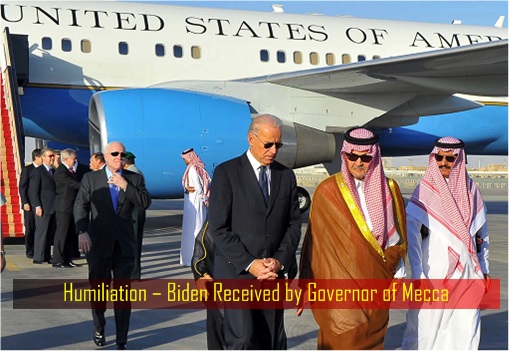
Chinese President Xi Jinping received a royal welcome in Riyadh last December, marking a seismic shift in Sino-Arab relations and boosting China’s image throughout the Arab world. In contrast, US President Joe Biden’s visit to Jeddah in the summer of 2022 received a lukewarm reception. This may suggest that a recalibration of West Asian geopolitical alliances may be on the horizon.
Despite these trends, analyst Achakzai tells The Cradle that West Asia will behave similarly to the way it did during the Russian-Ukrainian conflict – even given China’s increasing business and military presence in the region and the US’s declining control over the oil-rich Arab monarchies.
“Depending on the current situation, the motives of the various states in the region may change and divide into two distinct groups: those who would support the US and those who would support a neutral position.”
China values economy over war
In the Asia-Pacific region, the US and its allies are engaged in a contentious relationship with China regarding maritime boundaries, international trade, human rights, and strategic security issues. Despite signing numerous security pacts with regional players, China appears to prioritize building and strengthening economic ties over military cooperation with Asian-Pacific states.
Due to a history of hostile confrontations and divergent geopolitical objectives, both the US and China seek to increase their military presence in the region. In response to China’s territorial claims in the South China Sea, the US has expanded its military footprint by signing commercial and defense agreements with the Asia-Pacific region.
The two nations have also been at odds over the Trans-Pacific Partnership (TPP), which many viewed as an effort to contain China’s economic and strategic influence in its own backyard. Additionally, tensions have escalated between Beijing and its neighbors, particularly over territorial disputes in the East and South China Seas.
These efforts have been emboldened by the 5-member Quadrilateral Security Dialogue (Quad), which is an informal strategic dialogue between the US, India, Japan, and Australia that seeks “to promote a free, open, and prosperous Indo-Pacific region.” According to Achakzai:
“Countries that have extensive defense agreements with the US, such as Japan, South Korea, and Australia, are most likely to help America. These nations, which have long benefited from their close connections to the US, must now contend with Chinese territorial ambitions in the region and the South China Sea. The nations having an informal security partnership with the US, such as the Philippines, are likely to back the United States in a confrontation.”
The analyst explained that Singapore, Thailand, and Malaysia are expected to remain neutral during the conflict due to their strong business and investment ties with China.
“Other countries in the Asia-Pacific region may feel obligated to support the US if China initiates the conflict. This may apply to countries like Indonesia and Vietnam, which have recently been under Chinese pressure and may need to choose a side to protect their own security,” he noted.
Featured Video
Yemen joins the war – Red Sea could be blocked next – Saudi regime at risk
or go to
Aletho News Archives – Video-Images
From the Archives
A superpower and “the world’s sickest warrior state”
By Paul J. Balles | March 8, 2010
Living through five or six major wars has hardened me to what I thought were the extremes of inhuman cruelty and brutality.
Two things made those extremes almost bearable: the brutality always revealed – at least according to the media coverage – the viciousness of the enemy. It was therefore quite understandable when our “brave men and women” pulverized the enemy.
Films of Japanese torturing captive Americans somehow justified holding Japanese Americans in internment camps during World War II; and only a small percentage of Americans found the bombing of Hiroshima and Nagasaki unreasonably vengeful at best, at worst, depraved.
The media giants in America portrayed the North Koreans as barbaric beasts with their captives, quite unlike their southern counterpoints – our allies during the Korean War. No one ever felt the need to explain how the South Koreans were a civilized breed while the North Koreans were absolute savages, at least according to the official line.
In Vietnam, our warriors justifiably (or so the media made us believe) dropped napalm on the North Vietnamese who had the gall to hide in villages and tunnels to ravage our invaders. At least it was accepted practice until some rogue photojournalist filmed a young girl screaming down a Vietnamese road in flames. … continue
Blog Roll
 Aletho News
- Russian tanker approaches Cuba despite US oil blockade
- Marandi: Yemen joins the war – Red Sea could be blocked next – Saudi regime at risk
- Pro-Palestinian French member of European Parliament denied entry to Canada
- Pakistan to Host US-Iran Talks
- How Indonesia’s tilt toward the US left it stranded in the Strait of Hormuz
- US has no choice but to retreat from Iranian borders: Top commander
- Iran Retaliation Strikes Chemical Plant Near Dimona
- AWACS’ Destruction is a Major Loss for US Military – Ex-DoW Analyst
- Israel’s Iran Strategy Uses US Military & Gulf States as Its Pawns
- Iran: Trump wanted regime change, now just begging for Hormuz to open
- If Americans Knew
- Israeli police block Catholic cardinal from entering Church of the Holy Sepulchre on Palm Sunday
- Israel is assassinating journalists again, more than any other nation, anywhere, ever – Not a ceasefire Day 170
- Over 300 US service members wounded, majority have brain injuries – Not a ceasefire Day 169
- Researchers at Human Rights Watch Resign Over Blocked Report on Palestinian Refugee Return
- Jewish Groups Are Backing a War Americans Don’t Want
- Eric Fingerhut Thinks He’s the President of the Jews
- Top Jewish Philanthropists, Rabbis Urge Israeli President to Take Action Against ‘Jewish Extremists’
- Don’t Be Fooled. Zionist Leaders Have Always Wanted to Control Southern Lebanon
- Israel’s widespread use of torture is a core element of its genocide against the Palestinian people
- In Israel’s War on Iran, Many Middle East US Bases Rendered “All But Uninhabitable”
- No Tricks Zone
- German Science Blog Accuses PIK Climate Institute Of Hallucinating Climate Tipping Points
- Devastating Assessment Of Comirnaty Vaccine By Former Senior Pfizer Europe Toxicologist
- New Study: CO2 Is ‘Effectively Negligible’ As An Explanatory Climate Change Factor Since 2000
- Former Pfizer Toxicologist Dr. Helmut Sterz Tells Bundestag Hearing Pfizer Vaccine Should Have Never Been Approved
- Energy Expert: Germany’s Nuclear Phaseout Was A “500 Billion Euro Mistake”
- New Research: South Australia’s Mid-Holocene Sea Surface Temperatures Were 4°C Warmer Than Today
- Storing Green Energy To Last Germany 10 Days Would Require A 60-Million Tonne Battery
- New Studies: UK Sea Levels Were 4 Meters Higher Than Today During The Mid-Holocene
- Destructive Green New Deal: German Energy And Metal Group Warns Of Drastic Crisis
- New Study Documents A 20-Year Pause In Arctic Sea Ice Decline – Driven By Internal Variability
 Aletho News