Somali court: Money confiscated from UAE plane in 2018 will not be returned
MEMO | January 31, 2022
A Somali court yesterday ruled that millions of dollars confiscated from an Emirati civilian plane in 2018 will not be returned, local media outlets reported.
According to reports, the Banadir Regional Court instructed the Central Bank not to release $9.6 million found in three unmarked bags aboard a Royal Jet plane that arrived at Mogadishu airport in April 2018.
The extent of the court’s jurisdiction on the government’s pledge to return the money is not clear and there has been no official comment from authorities.
The court’s decision coincides with the visit of the Somali caretaker Prime Minister, Mohamed Hussein Roble, to the UAE where he will hold talks with Emirati officials on bilateral relations.
It is unclear whether the money was intended for the military or to buy political leverage. Somalia’s relations with the UAE have been unsettled since June 2017 when the Emirates – along with Saudi Arabia, Egypt and Bahrain – launched a blockage on Qatar. Somalia was pressured to support one of two camps.
Somalia, initially supported Qatar, but officially decided to ally with the UAE and Saudi Arabia in September last year after extensive lobbying by Abu Dhabi.
But last month, Somalia rejected a UAE port deal with Ethiopia and the self-declared state of Somaliland, claiming that it undermines its unity, sovereignty and constitution. Saudi Arabia offered to mediate between Somalia and the UAE but no diplomatic moves were made.
A More Aggressive Israel Lobby Is Coming in 2022
BY PHILIP GIRALDI • UNZ REVIEW • DECEMBER 28, 2021
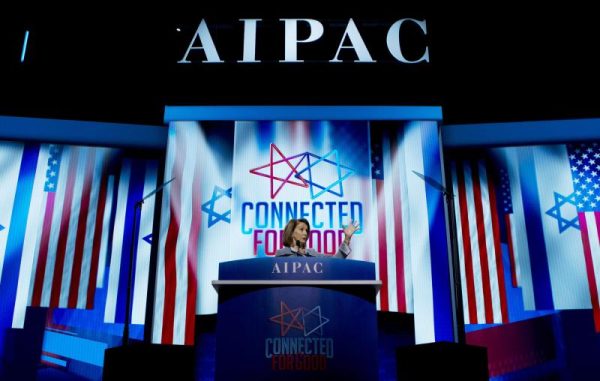
Those Americans who dare to challenge the strangle-hold that Israel and its friends have over US foreign policy will likely find themselves targeted even more aggressively in the upcoming year. Two weeks ago the American Israeli Public Affairs Committee (AIPAC), widely reckoned to be the largest and most powerful component of the Jewish state’s lobby, declared that it will now begin directly funding political candidates who are perceived as pro-Israel. Up until now, AIPAC has preferred to operate somewhat in the shadows, representing itself as a organization that is in part “educational” to justify its 501(c)3 tax exempt status which it uses to send all new congressmen on propaganda trips to Israel.
Of course, that has always been a bit of a fiction enabled by a Justice Department that is inclined to ignore all Israeli misbehavior. There are a number of reasons why AIPAC should be regarded for what it is, i.e. an organization that has as a priority the promotion of Israeli interests without any concern for the damage being done to the United States and its institutions. Under US law, specifically the Foreign Agents Registration Act of 1937, AIPAC should be compelled to forfeit its special tax status and register, which would permit the government to have full access to its finances and also require a record of its frequent meetings with the Israeli Embassy in Washington as well as with senior Israeli officials in Israel. It would also have to report its significant and unparalleled lobbying efforts on Capitol Hill. AIPAC would deny that it is actually directed or possibly funded in part by the Israeli government, but its website somewhat puts the lie to that conceit where it describes itself as “America’s Pro-Israel Lobby” before elaborating how “We are proud to be a diverse movement of passionate pro-Israel Americans.”
The other lie promoted by AIPAC is that, up until now, it has not funded the political campaigns of its many friends both in Congress and in state and local governments. The reality is that AIPAC and some of its associated groups have aggressively vetted candidates for office at all levels. During its annual summit in Washington, politicians in attendance have routinely held fundraisers at hotels and restaurants not at the AIPAC event but often at hotels within walking distance. It is known that AIPAC publishes for-internal-use-only a candidates’ “scoring card” prior to elections reflective of views on Israel. As AIPAC is itself funded by Jewish billionaires and is in regular contact with them, the exchange of information on who is a “friend” and deserving of campaign money would be easily accomplished without having to use AIPAC as a conduit.
The new structure will consist of a regular political action committee (PAC) able to contribute $5,000 maximum donations to identified candidates per race, and a super PAC, which can raise unlimited money for an individual candidate. AIPAC PAC will be the name of the regular PAC, while the super PAC has not yet received a label.
AIPAC spokesman Marshall Wittman sent out an email explaining the changes. In perhaps one of the most chilling statements that I have read recently, Wittman asserts that “The creation of a PAC and a super PAC is an opportunity to significantly deepen and strengthen the involvement of the pro-Israel community in politics.” Given Israel’s current dominance of Congress, the White House and the mainstream media one fears what might come next if stronger “involvement of the pro-Israel community in politics” becomes a reality. Jews constitute less than 2% of the US population and they already are hugely overrepresented in elite professions and politics while at the same time reserving to themselves perpetual victimhood to justify the preferential anti-democratic policies that they actually promote. Will Joe “I’m a Zionist” Biden’s cabinet be required by law to be 100% Jewish? Will Congress require a Jewish majority? Will the government be setting up gulags somewhere out west for people like me who oppose such dominance and the “Israel Project”? Where does this ever end to satisfy the Jewish lobby?
One might well ask why AIPAC is changing its platform to make itself even more accessible since it would seem that the shift to PACs does not much change what happens behind closed doors when politicians come begging for money. The answer may lie in the perception by Jewish groups and the Israeli government that Zionism is in trouble due to the accumulation of egregious human rights violations and war crime attacks on neighbors. The world view of Israel is increasingly negative. So the response is to open the door a bit to visibly dangle more money, which the Israeli Lobby has plenty of, to take on critics.
Israel and its friends are particularly concerned over the handful of progressives in Congress who have expressed reservations about the blind approval of Israeli crimes against humanity. The PACs will enable a more robust response by providing readily available money to run pro-Israel candidates against them to bring about their removal from Congress. The Zionists also worry about the growing support for the nonviolent Boycott, Divestment and Sanctions movement (BDS), which seeks to put the same kind of economic pressure on Israel that once brought about change in South Africa. Already Israel advocacy groups at the state level have succeeded in passing legislation in 27 states that in one way or another punishes anyone one who supports “boycotting” Israel. AIPAC would like that number to become 50 and it is also pushing hard on Congress for “hate legislation” that creates harsh criminal and civil penalties for anyone who questions the holocaust or criticizes Israel, which will be defined by the legislation as anti-Semitic acts.
Hand in hand with the moves at the state level, Jewish groups are rewriting text books to include more on the so-called holocaust, to sometimes include mandatory holocaust instruction at grade school and high school levels. In one bizarre incident in Washington DC, students were made to reenact “scenes” from the holocaust including mass executions and burials. One student was made to portray Adolph Hitler and instructed to include a simulated suicide at the end of the exercise.
This overreach all comes packaged together with alarming reports, put out inevitably by Jewish groups, regarding a surge in what it chooses to label as anti-Semitic crimes. Such “crimes” include numerous no-victim incidents like scrawled graffiti on walls or display of posters defending the Palestinians. The Anti-Defamation-League (ADL), which leads the pack in its constant cries of anti-Semitism, hypocritically claims blandly that it is working to “Combat Extremism and Hate.” That definition apparently does not include the treatment of the Palestinians at the hands of its co-religionists in Israel.
Indeed, the tendency of the Israel Lobby to overreach because it has become so arrogant due to its power is perhaps the key to bringing it down. A recent exchange in Florida demonstrates how the ADL, sensitive to any possible slight, actually reacted harshly to someone who was actually on its side. Five weeks ago, rabidly pro-Israeli Governor Ron DeSantis’ Press Secretary, Christina Pushaw tweeted a sarcastic comment stating that there was “no weird conspiracy theory stuff here” about press reports regarding the Republic of Georgia’s Prime Minister meeting with Rothschild & Co about investment opportunities. The ADL Florida Regional Director Sarah Emmons took offense and responded with the following:
“The belief that the Rothschilds manipulate currency and influence global events for personal enrichment and world domination is a staple of antisemitic conspiracy theorists. It’s deeply disturbing to see these kinds of conspiracies promoted by a member of Governor Ron DeSantis’ staff. Conspiracy theories, especially those with antisemitic origins, don’t belong in Florida’s highest office — or anywhere in the Sunshine State. We’ll be reaching out to the governor’s office to voice our concerns and discuss the issue.”
Jews and banking in the same sentence? Must be an anti-Semitic trope, as the expression goes. What if Pushaw had actually been bold enough to say something more to the point, like “Israel is trying to drag us into an unnecessary war with Iran”? In any event, the Zionists are preparing their offensive and we of the Israel-as-ally-agnostic community will find the upcoming year to be even more trying as the Jewish state and its friends tighten the screws to eliminate and even criminalize all criticism. Be prepared!
Philip M. Giraldi, Ph.D., is Executive Director of the Council for the National Interest, a 501(c)3 tax deductible educational foundation (Federal ID Number #52-1739023) that seeks a more interests-based U.S. foreign policy in the Middle East. Website is councilforthenationalinterest.org, address is P.O. Box 2157, Purcellville VA 20134 and its email is inform@cnionline.org.
RUSSIA AND ISRAEL – A DOUBLE-STANDARD IN INTERNATIONAL CONDEMNATION
By GAVIN O’REILLY | Blacklisted News | December 15, 2021
Over the past month, in a break from its usual focus on COVID-19, the Western mainstream media has dedicated a sizeable amount of coverage to unverified claims by unnamed US intelligence officials that the Russian Federation is planning an imminent military invasion of its western neighbour Ukraine – under the rule of the successive US-EU friendly governments of Petro Poroshenko and Volodymyr Zelensky since 2014, when the CIA-orchestrated Euromaidan colour revolution toppled the pro-Russian government of Viktor Yanukovych, following his November 2013 decision to suspend an EU trade deal in favour of pursuing closer ties with Moscow.
The coverage, which comes at a time of increased tensions in Eastern Europe amidst a build-up of refugees on the Belarus-Poland border being labelled as an attempt by Russian President Vladimir Putin and his Belarusian counterpart Alexander Lukashenko to destabilise the European Union, has resulted in widespread condemnation of Moscow by the Western media and political establishment, culminating in the G7 issuing a statement on Saturday threatening massive sanctions should Russia make any incursion into Ukraine – Russia having been a former member of the then-G8 until the successful reunification of the historically Russian peninsula of Crimea with the rest of the country in 2014, the pretext for which being the dangerously high anti-Russian sentiment of the newly-formed Western-backed Poroshenko government, resulted in Moscow’s suspension from the forum, with a later decision being made by the Kremlin in 2017 to formally leave the group altogether.
This widespread condemnation of Russia by the Western establishment however, for claims that Moscow itself has denied, is in stark contrast to the silence of mainstream media pundits and politicians in response to Israel’s open threats to carry out a military strike against Iranian nuclear facilities amidst the current Vienna talks regarding the Iran nuclear deal, with Israeli Defence Minister Benny Gantz announcing less than 24 hours prior to the G7’s Russia statement that he had consulted with US Defence Secretary Lloyd Austin and Secretary of State Antony Blinken regarding such a move – one that in a similar vein to any possible Russian incursion into Ukraine, would immediately result in a devastating regional conflict, a conflict that could easily spiral into a full-blown war between East and West.
To understand this wildly-differing approach to both Moscow and Tel Aviv by the Western political and media establishment, one must look at the wider geopolitical relationship between the US-NATO hegemony and both Russia and Israel.
Formed in 1948, in line with the 1917 UK-authored Balfour Declaration, which called for the establishment of a Zionist State in the Middle East, Israel has always received military, financial and political support from the United States and its allies – culminating in a US-led coalition invading Iraq on behalf of Israel in 2003, which in turn would lead to Washington and its allies launching a regime-change operation against neighbouring Syria in 2011, with Damascus, like Baghdad, also being a long-time opponent of the Zionist State.
Russia on the other hand, and in particular since the election of Vladimir Putin as President in 2000, has been diametrically opposed to this US-NATO foreign policy carried out in line with Israeli interests – with a Russian military intervention on behalf of the Syrian government in 2015 perhaps playing the most decisive role in ensuring the Presidency of Bashar al-Assad has remained in place despite the decade-long attempt to remove his leadership via a US and Israeli-backed colour revolution.
The aforementioned 2014 reunification of Russia and Crimea also put a halt to the Neocon aim of establishing a US Naval base in the key strategic Crimean port of Sevastopol – a plan that would have surely come to fruition had Crimea remained under the pro-Western rule of the current Kiev administration.
Hence, it is in this successful countering of US-NATO imperialism that Russia finds itself demonised by the West and the target of a current smear campaign accusing Moscow of planning to start a global conflict via a military intervention in Ukraine – in stark contrast to the media silence and tacit political support offered to US-ally Israel in response to its open intentions of carrying out the very same action in Iran.
US billionaire surrenders looted antiquities worth $70m

Birthright Israel founder Michael Steinhardt flips off anti-Israel protesters outside celebratory gala | Source Twitter capture
MEMO | December 8, 2021
A US billionaire hedge fund manager has surrendered 180 antiquities worth $70 million after an investigation found that they had been looted and illegally smuggled.
Michael Steinhardt, 81, illegally acquired art that was smuggled from 11 countries, including Egypt, Syria and Turkey, during wars or civil unrest using 12 criminal networks.
A raid on his home in 2018 revealed several stolen art pieces, including a ceremonial vessel in the shape of a stag’s head from 400BC, worth $3.5 million, which was taken from Milas in Turkey amidst widespread looting in the city.
They also retrieved a gold bowl looted from Nimrud in Iraq worth $150,000 where artefacts were being trafficked by the Islamic State in Iraq and the Levant (Daesh).
In 2017 investigators seized a marble bull’s head statue stolen from a temple in Sidon, Lebanon, during the civil war in the country, from Steinhardt’s home.
The prosecutor’s office determined that the recovered artefacts were for sale on the international art market without lawful paperwork.
Steinhardt will not face criminal charges, but he has been given a lifetime ban from acquiring other artefacts.
US Attorney Cyrus Vance Jr said: “For decades, Michael Steinhardt displayed a rapacious appetite for plundered artefacts without concern for the legality of his actions.”
“His pursuit of ‘new’ additions to showcase and sell knew no geographic or moral boundaries, as reflected in the sprawling underworld of antiquities traffickers, crime bosses, money launderers and tomb raiders he relied upon to expand his collection.”
Bashar Assad getting accepted by Arab leaders. US and Israel losing their chance
By Robert Inlakesh | RT | November 12, 2021
In a significant move towards normalising Syria’s government, UAE Foreign Minister Sheikh Abdullah bin Zayed visited Damascus to discuss strengthening the ties between the two nations, sparking outrage from the US and Israel.
A surprise visit to the Syrian capital on Tuesday by Abu Dhabi’s foreign minister sparked condemnation from the United States, which seeks to encourage its Arab State allies to steer clear of President Assad. According to State Department spokesperson Ned Price, the US urges “states in the region to carefully consider the atrocities that this regime, that Bashar al-Assad himself has perpetrated on the Syrian people over the last decade, as well as the regime’s ongoing efforts to deny much of the country access to humanitarian aid and security.” That seems to have fallen on deaf ears over in Abu Dhabi.
However, despite the Biden administration having voiced its opposition to Assad’s government, behind the scenes, it may actually be working to create a temporary amendment to its 2019 “Caesar Act” sanctions, the mechanism it is speculated the US may implement to protect the likes of neighbouring Jordan. This would involve Amman liaising with the Syrian government to allow Egypt to send oil through to struggling Lebanon. Back in September, Jordanian, Egyptian and Lebanese representatives even met to discuss the logistics of managing such a transfer of oil, so as to provide Lebanon with the means to generate electricity.
Publicly, it seems the UAE – which reopened its embassy in Damascus three years ago – is leading the push to have Syria reinstated into the Arab League and enhance cooperation between the two. But, for Abu Dhabi, the so-called ‘brotherly’ nature of their relationship comes with strings attached. From an Emirati perspective, the relationship between the Syrian government and the UAE is threefold: first, Abu Dhabi sees Syria as a potential partner in the fight against the Muslim Brotherhood; second, it sees an opportunity to work towards facilitating the cooperation between Egypt and Jordan on the potential oil transfer to Lebanon; and last, it seeks to bring Syria closer to the Arab reactionary regimes and distance it from Iran. Both Egypt and Jordan have also taken strides to normalise relations with Damascus: in October, Jordan’s King Abdullah II participated in a phone call with President Assad and, on Tuesday, Egypt’s foreign minister made it clear he was open to the idea of Syria re-entering the Arab League.
Prior to the war in 2011, the Syrian government had embraced neo-liberal economics, but in terms of its foreign policy, it has always maintained a nationalist agenda. When the war in Syria began, the UAE jumped on the bandwagon of conspiring against Assad and financed armed groups to overthrow him. In and of itself, this makes it clear that Abu Dhabi is not acting in the interests of regular Syrians. It is easy to foresee the Syrian government developing its relationship with the UAE in order to strengthen its position in the region and secure investments to rebuild its war-torn nation in the future.
From a realist point of view, however, the decision-makers in the Emirates see that Assad is not going anywhere. They are seeking to combat Islamist forces regionally, so why not try to influence a nationalist nation while working alongside it to weaken the Muslim Brotherhood and erase Iran’s footprint in the country?
Given Turkey may imminently open up another offensive into northeastern Syria to combat the Kurds in areas controlled by the US and Kurdish SDF (Syrian Democratic Forces), the Emirati foreign minister may well have wished to discuss this issue during his visit to Damascus. Turkey, which currently controls two pockets in Syria’s north through its Syrian National Army mercenary militia, is aligned with the Muslim Brotherhood. To the UAE, Turkey and Qatar are its biggest regional rivals.
But Washington, which is surely well aware of the policy positions its Middle Eastern allies are taking on Syria, continues to not only economically restrain Damascus, but also occupies roughly a third of Syrian territory with its proxy forces. The US currently presides over 90% of that nation’s oil resources and is even looting its most fertile agricultural lands, which those Syrians who are suffering under an economic crisis are unable to access. The US not only blocks progress and has extirpated attempts to rebuild the country, but adopts a militaristic approach and views itself as maintaining the right to remain there, despite not having acquired any congressional approval to be operating in Syria.
The main role of the US occupation of Syrian lands, through its Kurdish proxy forces in northeastern Syria and its mercenary forces in the al-Tanf region of south Syria, is to combat Tehran. Until significant Iranian influence is cleared out of the land, they will not leave of their own free will.
Then we have Israel, which will also not leave the Syrian lands it illegally occupies unless it is forced out in a war between the two nations. In tandem with Islamic State (IS, formerly ISIS) terrorists who have crawled out from their caves and suddenly received anti-tank munitions and a spike in their numbers, Israel has picked up its attacks against Syria. In fact, it has carried out at least five in Syria over the past month, killing soldiers and assassinating an ex-member of parliament. Israel is also seeking to quadruple its settler population in the Golan Heights, with Israeli PM Naftali Bennett having announced new construction plans just last month. It’s clear that Israel is seeking to provoke a reaction from Damascus and test how far it can cross the line before drawing defensive fire.
Instead of the Syrian Arab Army responding to US and Israeli aggression, independent groups that align with Iran have been at the forefront of combating Tel Aviv and Washington. The reality is that Syria is so embroiled in this hostile situation between different foreign powers attempting to extract different things from it that it is difficult to tell where the government is currently headed, and whether it will continue to follow a nationalist path or eventually adopt a more business-minded rather than ideologically driven approach. Ultimately, it seems the UAE will play a limited role in Syria for now, but only time will tell who gets the better of the other in this ever-expanding relationship.
Robert Inlakesh is a political analyst, journalist and documentary filmmaker currently based in London, UK. He has reported from and lived in the occupied Palestinian territories and currently works with Quds News and Press TV. Director of ‘Steal of the Century: Trump’s Palestine-Israel Catastrophe’.
Former Qatar PM: ‘Israel, Arab state planned last Sudan military coup’
MEMO | November 13, 2021
Former Head of Qatar’s Ministerial Council Hamad Bin Jassim Al-Thani revealed on Friday that Israel and an Arab state had planned the latest military coup in Sudan.
In a series of tweets commenting on Abdel Fattah Al-Burhan’s announcement of the formation of a new sovereign council, he posted: “The hands of the Israeli occupation along with the hands of a state from the region are behind this.”
Twitter users commenting on his tweet noted that the Arab state he referred to was the UAE, adding that several leaks relating to the issue have proven this.
“What happened in Sudan is a result of initial planning, cooperation and coordination between Israel and an Arab state,” Al-Thani tweeted.
“Unfortunately, this state claimed in the international meetings that it had changed its policies and started to concentrate only on economy and development,” he added.
The former senior Qatari official asserted that he did not reveal “this fact” to make headlines and stressed the importance of respecting peoples’ will.
Israel to Attack Iran? Washington Gives the Green Light to the ‘Military Option’
By Philip Giraldi | Strategic Culture Foundation | October 28, 2021
Some might recall candidate Joe Biden’s pledge to work to rejoin the Joint Comprehensive Plan of Action (JCPOA) which was a multilateral agreement intended to limit Iran’s ability to develop a nuclear weapon. The JCPOA was signed by President Barack Obama in 2015, when Biden was Vice President, and was considered one of the only foreign policy successes of his eight years in office. Other signatories to it were Britain, China, Germany, France, and Russia and it was endorsed by the United Nations. The agreement included unannounced inspections of Iranian nuclear facilities by the IAEA and, by all accounts, it was working and was a non-proliferation success story. In return for its cooperation Iran was to receive its considerable assets frozen in banks in the United States and was also to be relieved of the sanctions that had been placed on it by Washington and other governments.
The JCPOA crashed and burned in 2018 when President Donald Trump ordered U.S. withdrawal from the agreement, claiming that Iran was cheating and would surely move to develop a nuclear weapon as soon as the first phase of the agreement was completed. Trump, whose ignorance on Iran and other international issues was profound, had surrounded himself with a totally Zionist foreign policy team, including members of his own family, and had bought fully into the arguments being made by Israel as well as by Israel Lobby predominantly Jewish groups to include the Foundation for Defense of Democracies (FDD) and the American Israel Public Affairs Committee (AIPAC). Trump’s time in office was spent pandering to Israel in every conceivable way, to include recognizing Jerusalem as the country’s capital, granting Israel the green light for creating and expanding illegal settlements on the West Bank and recognizing the occupied Syrian Golan Heights as part of Israel.
Given Trump’s record, most particularly the senseless and against-American-interests abandonment of JCPOA, it almost seemed a breath of fresh air to hear Biden’s fractured English as he committed his administration to doing what he could to rejoin the other countries who were still trying to make the agreement work. After Biden was actually elected, more or less, he and his Secretary of State Tony Blinken clarified what the U.S. would seek to do to “fix” the agreement by making it stronger in some key areas that had not been part of the original document.
Iran for its part insisted that the agreement did not need any additional caveats and should be a return to the status quo ante, particularly when Blinken and his team made clear that they were thinking of a ban on Iranian ballistic missile development as well as negotiations to end Tehran’s alleged “interference” in the politics of the region. The interference presumably referred to Iranian support of the Palestinians as well as its role in Syria and Yemen, all of which had earned the hostility of American “friends” Israel and Saudi Arabia.
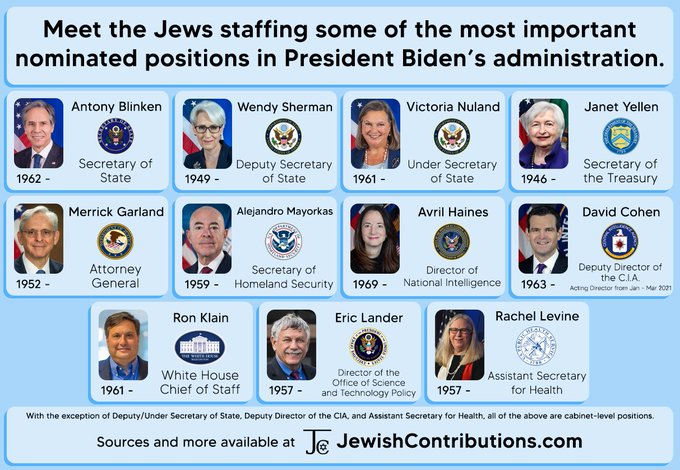 Israel inevitably stirred the pot by sending a stream of senior officials, to include Foreign Minister Yair Lapid, Defense Minister Benny Gantz and Prime Minister Naftali Bennett to discuss “the Iranian threat” with Biden and his top officials. Lapid made clear that Israel “reserves the right to act at any given moment, in any way… We know there are moments when nations must use force to protect the world from evil.” And to be sure, Biden, like Trump, has also made his true sentiments clear by surrounding himself with Zionists. Blinken, Wendy Sherman and Victoria Nuland have filled the three top slots at State Department, all are Jewish and all strong on Israel. Nuland is a leading neocon. And pending is the appointment of Barbara Leaf, who has been nominated Assistant Secretary to head the State Department’s Near East region. She is currently the Ruth and Sid Lapidus Fellow at the Washington Institute for Near East Policy (WINEP), which is an AIPAC spin off and a major component in the Israel Lobby. That means that a member in good standing of the Israel Lobby would serve as the State Department official overseeing American policy in the Middle East.
At the Pentagon one finds a malleable General Mark Milley, always happy to meet his Israeli counterparts, and Secretary of Defense Lloyd Austin, an affirmative action promotion who likewise has become adept at parroting the line “Israel has a right to defend itself.” And need one mention ardent self-declared Zionists at the top level of the Democratic Party, to include Biden himself, Speaker of the House Nancy Pelosi, House Majority Leader Steny Hoyer and, of course, Senate Majority Leader Chuck Schumer?
So rejoining the JCPOA over Israel objections was a non-starter from the beginning and was probably only mooted to make Trump look bad. Indirect talks including both Iran and the U.S. technically have continued in Vienna, though they have been stalled since the end of June. Trita Parsi has recently learned that Iran sought to make a breakthrough for an agreement by seeking a White House commitment to stick with the plan as long as Biden remains in office. Biden and Blinken refused and Blinken has recently confirmed that a new deal is unlikely, saying “time is running out.”
And there have been some other new developments. Israeli officials have been warning for over twenty years that Iran is only one year away from having its own nukes and needs to be stopped, a claim that has begun to sound like a religious mantra repeated over and over, but now they are actually funding the armaments that will be needed to do the job. Israel Defense Force Chief of Staff Aviv Kohavi has repeatedly said the IDF is “accelerating” plans to strike Iran, and Israeli politicians to include former Prime Minister Benjamin Netanyahu have regularly been threatening to do whatever must be done to deal with the threat from the Islamic Republic. Israeli media is reporting that $1.5 billion has been allocated in the current and upcoming budget to buy the American bunker buster bombs that will be needed to destroy the Iranian reactor at Bushehr and its underground research facilities at Natanz.
In the wake of the news about the war funding, there have also been reports that the Israeli Air Force is engaging in what is being described as “intense” drills to simulate attacking Iranian nuclear facilities. After Israel obtains the 5000 pound bunker buster bombs, it will also need to procure bombers to drop the ordnance, and one suspects that the U.S. Congress will somehow come up with the necessary “military aid” to make that happen. Tony Blinken has also made clear that the Administration knows what Israel is planning and approves. He met with Israeli Foreign Minister Yair Lapid on October 13th and said if diplomacy with Iran fails, the U.S. will turn to “other options.” And yes, he followed that up with the venerable line that “Israel has the right to defend itself and we strongly support that proposition.”
Lapid confirmed that one of Blinken’s “options” was military action. “I would like to start by repeating what the Secretary of State just said. Yes, other options are going to be on the table if diplomacy fails. And by saying other options, I think everybody understands here … what is it that we mean.” It must be observed that in their discussion of Iran’s nuclear program, Lapid and Blinnken were endorsing an illegal and unprovoked attack to prevent Iran from acquiring a nuclear weapon that it is apparently not seeking, but which it will surely turn to as a consequence if only to defend itself in the future.
In short, U.S. foreign policy is yet again being held hostage by Israel. The White House position is clearly and absurdly that an Israeli attack on Iran, considered a war crime by most, is an act of self-defense. However it turns out, the U.S. will be seen as endorsing the crime and will inevitably be implicated in it, undoubtedly resulting in yet another foreign policy disaster in the Middle East with nothing but grief for the American people. The simple truth is that Iran has neither threatened nor attacked Israel. Given that, there is nothing defensive about the actions Israel has already taken in sabotaging Iranian facilities and assassinating scientists, and there would be nothing defensive about direct military attacks either with or without U.S. assistance on Iranian soil. If Israel chooses to play the fool it is on them and their leaders. The United States does not have a horse in this race and should butt out, but one doubts if a White House and Congress, firmly controlled by Zionist forces, have either the wisdom or the courage to cut the tie that binds with the Jewish state.
The Iran Nuclear Saga: US-Israel Hammer Out a “Plan B”
By Salman Rafi Sheikh – New Eastern Outlook – 18.10.2021
Even though the presidential candidate Joe Biden had vowed to “move quickly” to re-join the Iran nuclear deal, this has not happened. The Biden administration’s deliberate strategy to kill the previous deal by following the framework of talks it inherited from the Trump administration has contributed massively to the present deadlock, leading the US and Israel to devise a “Plan B” to force Iran into submission. While Iran has been insisting – and its demands are not illegitimate – that the US must lift its sanctions first to create the path for reviving the JCPOA, Washington’s (and Israel’s) insistence on including Iran’s ballistic missile programme into the deal has become an additional source of tensions and the ensuing deadlock. Including a new agenda in the deal does not mean reviving the deal; in fact, it is actually involves a bid to push Tehran for an altogether new deal – a goal that the US and Israel have been pursuing ever since the Trump administration withdrew from the deal and Israel started sabotaging Iran’s legitimate nuclear production though cyber attacks and by murdering its top nuclear scientist.
While a simple revival of the deal is increasingly looking impossible, the talk of the town is the ‘military option’ if the ‘diplomatic option’ fails to produce the desired outcome, that is a one-dimensional result that favours the US and Israel only.
While it is already hard to argue against the fact that Israel, by engaging in active sabotage, has been using proper military options to coerce Iran into submission, there is still no gainsaying that the US and Israel are actively contemplating the military option to actually upgrade the military resources they have used so far. In doing so, both the US and Israel will be relying on the precedent set by the Trump administration when it killed Iran’s top military official, General Suleimani, last year in a drone air-strike in Iraq.
While the Biden administration may not itself want to start a new fully fledged war against Iran when it has just ended the US’ “endless war” in Afghanistan, there is no gainsaying that the US defense establishment may provide all the support, both diplomatic and military, Israel needs to carry out a military strike on Iran’s nuclear production capabilities. At the same time, it remains that the US may not be fully opposed to actually coordinating with Israel a military strike on Iran. During his latest meeting with Biden, the Israeli prime minister, Naftali Bennett, was a happy man when he received Biden’s reassurance that “all options” were on the table, should the on-goings talks fail. Now that the prospects of JCPOA’s revival through US participation look extremely bleak, other options, including a military/air strike, could become a possibility.
For Israel, resorting to military actions has an added political – electoral advantage. According to a recent survey conducted by Israel’s Democracy Institute, more than 50 per cent of Israeli Jewish population believes that Israel should have launched a military strike against Iran’s nuclear facilities in the very early phase of its development. Launching a military strike, therefore, does not have political consequence for Naftali who sits on a multi-party coalition government.
Accordingly, Israel is building the momentum for its “Plan B” at both regional and international levels. The Israeli activity to build this momentum flows from its previous attempts at derailing the whole process to revive the JCPOA. Last week, in a joint press conference with his US and Emirati counterparts, Israel’s foreign minister, Yari Lapid, said that they “reserve” the right to act in self-defence. In Israeli geo-strategic parlance, the ‘right to self-defence’ has always meant a pre-emptive military operation. Lapid himself operationalized the definition of the so-called ‘right to self defence’ when he said that “If a terror regime is going to acquire a nuclear weapon, we must act. We must make clear the civilized world won’t allow it.” Antony Blinken reciprocated, saying that “we are prepared to turn to other options if Iran doesn’t change course.”
In his meeting with Biden’s National Security Advisor, Jake Sullivan, Lapid shared, without himself publicly revealing, with him details of Israel’s “alternative plan” against Iran. But some of the details of this plan have already been revealed by Israel’s military chief, when he said that Israel and its intelligence community “is working against Iranian regional entrenchment throughout the Middle East.” “Operations to destroy Iranian capabilities will continue — in various arenas and at any time”, he added.
Echoing Israel’s discourse, US Special Envoy for Iran Robert Malley said last week that
“We will be prepared to adjust to a different reality in which we have to deal with all options to address Iran’s nuclear program if it’s not prepared to come back into the constraints of 2016.”
While the US officials continue to project that Iran is refusing to return to JCPOA, the fact remains that the deadlock is not an outcome of Iran’s refusal to revive the JCPOA, but its insistence on reviving the same agreement that was agreed in 2015 and lifting all sanctions the US has imposed, or failed to lift right after the deal. In refusing to lift sanctions, the Biden administration is essentially following in the footsteps of the Obama administration, which, while it did make the deal, continued to delay the lifting of all financial sanctions and unfreezing of the Iranian assets as well.
Therefore, the roots of the “Plan B” are impossible to find in the Iranian intransigence. It must be found in the US withdrawal from the treaty and its illegitimate insistence on negotiating a new deal, a demand that the other signatories of the deal – especially, China and Russia – do not support. A military action against Iran will thus be an avid example of how both the US and Israel have been staging wars to consolidate their regional and international dominance, respectively.
Iran writes to UNSC, warns against any Israeli ‘adventurism’ amid rise in threats
Press TV – October 14, 2021
Iran has written to the United Nations Security Council over a sharp increase in Israeli threats against the country, warning against any “miscalculation” or “military adventurism” on the part of the regime against the Islamic Republic, including its nuclear program.
In a letter submitter to the current president of the Security Council on Wednesday, Iran’s Ambassador to the United Nations Majid Takht-Ravanchi warned that the frequency and severity of the regime’s provocative and adventurous threats had steadily increased over the past months and reached an alarming level.
Such blatant systematic threats against one of the founding members of the United Nations are a gross violation of international law, in particular Article 2 (4) of the United Nations Charter, he added.
As a case in point, the diplomat referred the recent comments by the Israeli military chief, Aviv Kochavi, who said earlier this month that the regime was in constant preparations for an attack on the Iranian nuclear program.
Kochav had said, “The operational plans against Iran’s nuclear program will continue to evolve and improve,” and that “operations to destroy Iranian capabilities will continue, in any arena and at any time.”
The fact that the Tel Aviv regime continues to try to “destroy Iran’s capabilities” proves without any doubt that it had been responsible for terrorist attacks against Iran’s peaceful nuclear program in the past, Takht-Ravanchi said.
Given the ominous history of the Israeli regime’s destabilizing practices in the region and its covert operations against Iran’s nuclear program, it is necessary to counter the regime and stop all its threats and disruptive behavior, the top diplomat added.
Israel prevents realization of nuke-free Middle East: Iran
Meanwhile, Iran’s Representative to the UN General Assembly First Committee Heidar Ali Balouji also said at a Wednesday session on “Nuclear Weapons, Other WMDs, Outer Space, and Conventional Weapons” that the Israeli regime is the main hurdle to a Middle East free of nuclear weapons.
“We reiterate our call on the international community to compel Israel to dismantle its nuclear arsenal, promptly accede to the NPT as a non-nuclear-weapon party without any preconditions and place all of its nuclear facilities under the IAEA’s full-scope safeguards,” he said.
He described the Islamic Republic as one of the countries “with the highest record in accession to the international instruments banning” weapons of mass destruction (WMDs).
“Achieving global nuclear disarmament remains one of the most long-lasting goals of the United Nations. Today, international security is under threat by the existence of almost 14,000 nuclear weapons with well-funded, long-term plans to not only modernize but also strengthen the arsenals of NWSs (nuclear weapons states) and so nuclear arms race,” he said.
He said the United States’ withdrawal from the Intermediate-Range Nuclear Forces Treaty and its unwillingness to return to the Joint Comprehensive Plan of Action — the 2015 nuclear agreement signed between Iran and major world powers — have inflicted immense damage on international disarmament measures.
The diplomat said chemical weapons remain a grave concern, with the United States as the only possessor, urging Washington to meet a 2012 deadline for the destruction of its stockpile of such weapons.
Balouji said the ratification of a legally binding protocol would be the most effective way to strengthen the Biological Weapons Convention, urging the United States to withdraw its objection to the adoption of such a measure.
Similarly, a legally binding instrument is required to prevent an arms race in outer space, he said, saying the United States already has a space force with a $17 billion budget, which will increase by 13 percent, he noted.
Iran believes that the arms race in space should be stopped through a binding legal document, he emphasized.
The Iranian diplomat defended countries’ right to possess conventional weapons, warning that massive and irresponsible production and transfer of such weapons in the Middle East pose a threat to the entire region.
“Israel is the largest recipients of US arms aids in the region. Using these weapons, it is committing different crimes and causing destabilization and insecurity that must be stopped,” he said.
Featured Video
Yemen joins the war – Red Sea could be blocked next – Saudi regime at risk
or go to
Aletho News Archives – Video-Images
From the Archives
Should Europeans ‘Thank’ the Americans for Destroying Nord Stream?
By Robert Bridge | Strategic Culture Foundation | September 29, 2022
With an investigation continuing into the destruction of the Nord Stream gas pipeline that provided energy supplies to Europe from Russia, there appears to be just one prime suspect, and that should surprise nobody.
Following the sabotage of the Nord Stream 1 and 2 gas pipelines, former Polish Foreign Minister Radoslaw Sikorski already seemed to know the identity of the perpetrator when he tweeted out: “Thank you, USA.”
At first glance, it seemed that Sikorski was speaking sarcastically, berating Washington for carrying out an attack that will have severe repercussions for the people of Europe. After all, how could anyone see any good coming from the termination of Europe’s primary source of gas reserves with winter just around the corner? It was Sikorski’s homeland of Poland, after all, that urged its citizens to collect firewood in the face of dwindling gas reserves.
In fact, the Polish diplomat was speaking one-hundred percent literally… continue
Blog Roll
 Aletho News
- Bring The Troops Back. End This War Now!
- Can we please stop calling Israel the ‘only democracy in the Middle East’ now?
- US should start removing its troops for Germany, proposes AfD co-leader Chrupalla
- Iran Red Crescent: 600 educational centers attacked in US-Israeli ‘war crimes’
- Russian Oil Tanker Arrives in Cuba Amid U.S. Blockade
- America Racing to Strategic Defeat in Iran: Lt Col Daniel Davis
- FTC Warns Visa, Mastercard, PayPal, Stripe Over Political Debanking
- Russian tanker approaches Cuba despite US oil blockade
- Marandi: Yemen joins the war – Red Sea could be blocked next – Saudi regime at risk
- Pro-Palestinian French member of European Parliament denied entry to Canada
- If Americans Knew
- Israeli police block Catholic cardinal from entering Church of the Holy Sepulchre on Palm Sunday
- Israel is assassinating journalists again, more than any other nation, anywhere, ever – Not a ceasefire Day 170
- Over 300 US service members wounded, majority have brain injuries – Not a ceasefire Day 169
- Researchers at Human Rights Watch Resign Over Blocked Report on Palestinian Refugee Return
- Jewish Groups Are Backing a War Americans Don’t Want
- Eric Fingerhut Thinks He’s the President of the Jews
- Top Jewish Philanthropists, Rabbis Urge Israeli President to Take Action Against ‘Jewish Extremists’
- Don’t Be Fooled. Zionist Leaders Have Always Wanted to Control Southern Lebanon
- Israel’s widespread use of torture is a core element of its genocide against the Palestinian people
- In Israel’s War on Iran, Many Middle East US Bases Rendered “All But Uninhabitable”
- No Tricks Zone
- New Study Finds Warming Saves Lives…Cold Temperatures 12 Times More Deadly Than Excess Heat
- German Science Blog Accuses PIK Climate Institute Of Hallucinating Climate Tipping Points
- Devastating Assessment Of Comirnaty Vaccine By Former Senior Pfizer Europe Toxicologist
- New Study: CO2 Is ‘Effectively Negligible’ As An Explanatory Climate Change Factor Since 2000
- Former Pfizer Toxicologist Dr. Helmut Sterz Tells Bundestag Hearing Pfizer Vaccine Should Have Never Been Approved
- Energy Expert: Germany’s Nuclear Phaseout Was A “500 Billion Euro Mistake”
- New Research: South Australia’s Mid-Holocene Sea Surface Temperatures Were 4°C Warmer Than Today
- Storing Green Energy To Last Germany 10 Days Would Require A 60-Million Tonne Battery
- New Studies: UK Sea Levels Were 4 Meters Higher Than Today During The Mid-Holocene
- Destructive Green New Deal: German Energy And Metal Group Warns Of Drastic Crisis
 Aletho News