US: UAE will not get F-35 jets for up to 7 years, despite Israel peace deal
MEMO | September 23, 2020
US Ambassador to Israel, David Friedman, said that the United Arab Emirates, which has recently signed a historic US-sponsored peace deal with Israel, would not receive American F-35 stealth fighter jets for six or seven years.
“The Emiratis have been trying to get the F-35 for six or seven years. And delivery time is probably another six or seven years from now,” the official told the Jerusalem Post in a pre-recorded interview.
Washington has not yet expressed explicit approval of an Emirati purchase of American F-35s. Israeli newspapers reported that the UAE expects such approval after the Gulf Arab country signed a deal normalising its diplomatic relations with Israel, to the dismay of many supporters of Palestinian rights across the world.
Last Tuesday Israeli Defence Minister Benny Gantz held meetings in Washington with his counterpart Mark Esper and White House senior adviser Jared Kushner. The American and Israeli officials discussed the possibility of the US sale of F-35 stealth fighter jets to the UAE based on the principle of Israel’s military superiority in the region.
Israel is currently the only state in the region that owns F-35s.
US law stipulates that Washington commits itself to Israel’s Qualitative Military Edge (QME), which guarantees the occupation state’s technological military superiority in the Middle East.
When asked about whether a possible sale of American F-35s to the UAE would threaten Israel’s QME, David Friedman said: “QME is a matter of law, not a matter of policy. It has been US law since 2008, and US policy a lot longer than that. Israel has dealt with the QME behind the scenes professionally and successfully for more than a decade; it is going to continue to work this way.”
In the past few years, Israel has received at least 26 F-35s from the United States as part of a deal that will see the state gain possession of 50 stealth fighter jets.
On 13 August, US President Donald Trump announced a peace deal between the UAE and Israel brokered by Washington.
Abu Dhabi said the deal was an effort to stave off Tel Aviv’s planned annexation of the occupied West Bank, however, opponents believe normalisation efforts have been in the offing for many years as Israeli officials have made officialvisits to the UAE and attended conferences in the country which had no diplomatic or other ties with the occupation state.
Israeli Prime Minister Benjamin Netanyahu however denied this saying annexation is not off the table, but has simply been delayed.
Many have said the real purpose of the deal was to allow the UAE to access superior military strength.
Iran has no military presence in region, only supplies defense know-how: Armed Forces spokesman
Press TV – September 23, 2020
Iran has only provided Yemen with the know-how in the defense sector, says the spokesman for the Iranian Armed Forces, dismissing claims about the Islamic Republic’s military presence and ‘intervention’ in the region.
“We provided them (Yemenis) with the technical experiences in the defense sector. They have learned how to produce missiles, drones and weapons in Yemen on their own,” Brigadier General Abolfazl Shekarchi said in a televised program on Tuesday.
He emphasized that Iran has not supplied Yemen with missiles. “We have shared our experience and knowledge with the Yemeni people.”
Unlike what the enemy is trying to portray, Yemenis are a very cultured and smart people who have managed to manufacture missiles and the most advanced drones at the shortest possible time while they have also made great headway in the electronic warfare, the Iranian military official said.
Shekarchi once again reiterated that Iran has no plan to have military presence anywhere and added that the country merely has “spiritual and advisory presence” in the region.
“Countries of the resistance front have armies and forces themselves. We provide them with advisory help. In order to share our experience with the people of Syria, Iraq, Lebanon and Yemen, our skilled forces go there and assist them, but this is the people and armies of these countries who stand against the enemies in practice.”
He said Iran would provide whatever help it can for any country standing against the Israeli regime and the United States.
Iran’s Foreign Ministry Spokesman Saeed Khatibzadeh earlier this month slammed as “baseless” a report published by the United Nations’ Office of the High Commissioner for Human Rights (OHCHR) alleging that Tehran has been sending arms to war-torn Yemen.
“Placing Iran’s name next to those supplying weapons to the Saudi coalition against Yemen is completely wrong,” Khatibzadeh said.
Since March 2015, Saudi Arabia has been striking Yemen with the help of its regional allies and largely assisted by Western-supplied weapons which have been indiscriminately used against Yemeni civilians.
Despite numerous bids to stop arms sales, top Western arms suppliers such as the United States, Britain, Canada, France and Germany have pushed through with lethal weapons shipments to the oil-rich kingdom.
According to a CNN investigation released in October 2019, the American-made weapons, supplied to Washington’s allies involved in the war on Yemen, end up in the hands of US-backed militants fighting against each other in the impoverished state.
The report found that American military hardware has been distributed to militant groups in Yemen, including the southern separatists backed by the United Arab Emirates (UAE), al-Qaeda-linked militants and hardline Salafi militias.
Egypt: 320 trillion cubic feet of gas discovered in Eastern Mediterranean
MEMO | September 23, 2020
The Egyptian Minister of Petroleum and Mineral Resources, Tariq El-Molla, yesterday revealed that 320 trillion cubic feet of gas were discovered in the Eastern Mediterranean region which could turn the area into a global centre for the gas industry.
The seven member states of the East Mediterranean Gas Forum, Egypt, Israel, Cyprus, Greece, Jordan, Italy and the Palestinian National Authority, yesterday officially turned the alliance into a regional organisation headquartered in Cairo.
Speaking at the launching ceremony, El-Molla said the United States wants to join the forum as an observer while France wishes to join as a full member.
The Egyptian Ministry of Petroleum said in a statement that the forum aims to establish a regional market for gas, rationalise the cost of infrastructure and offer competitive prices.
The forum was launched in January 2019 to reinforce cooperation among member states.
However, a spokesman for the Turkish Foreign Ministry, Hami Aksoy, described the forum as an anti-Ankara bloc, adding that transforming it into a regional organisation is “far from reality”.
Iran says no need for European arms, will buy weapons from Russia, China
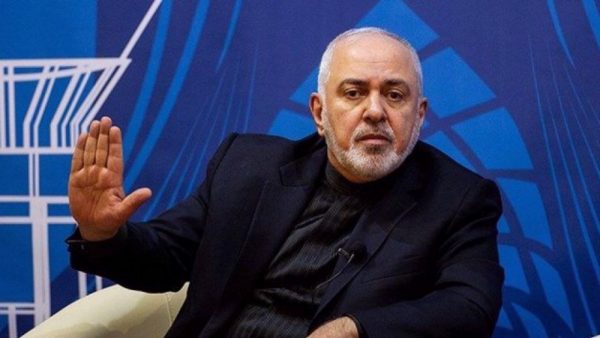
Iranian Foreign Minister Mohammad Javad Zarif
Press TV – September 20, 2020
Iran’s foreign minister says the country will meet its strategic needs by purchasing weapons from Russia and China, and has no need for European weapons once the UN embargo is lifted in October.
Mohammad Javad Zarif made the remarks in a televised interview on Saturday night in reaction to a possible initiative by France, Germany, and the UK to restrict the sale of weapons to Iran following the October expiration of the UN arms embargo against the Islamic Republic.
“We haven’t been a customer of European weapons, and they haven’t sold us weapons after the 1979 revolution. … They even ran a campaign during the 1980s imposed war [between Iran and Iraq] to prevent the delivery of arms to Iran,” Zarif said.
“We won’t force them to sell us weapons now, as we don’t need their weapons,” he noted.
Zarif said one-fourth of the arms purchases end up in the Persian Gulf region, while Iran is not part of this trade.
“However, Iran can meet its strategic needs through the countries it interacts with, like Russia and China; though it is self-sufficient in many cases, and is an exporter [of arms] itself,” Zarif said.
Thanks to God’s grace and the efforts of the country’s Armed Forces, “Iran has become self-sufficient in many cases, but in cases of need, other countries will have the right to trade with Iran once the UN embargo is lifted,” the Iranian top diplomat added.
Following a humiliating failure at the UN Security Council to secure an extension of the arms embargo against Iran, the United States recently threatened to use its “secondary” sanctions to block any arms trades with Tehran after the expiry of the UN ban next month.
US Special Representative for Venezuela and Iran Elliott Abrams claimed on Wednesday that Washington could deny access to the US market to anyone who trades in weapons with Tehran.
Sanctions “will have a very significant impact” on arms manufacturers and traders that seek to do business with Tehran, he told reporters.
The US initiative is expected to prevent European companies from selling weapons and military equipment to Iran.
‘Europe trying to save face after failure against US’
Zarif further pointed to the recent statement by France, Germany, and the UK in which they claimed they have “gone beyond their own commitments” towards Iran by launching the Instrument in Support of Trade Exchanges (INSTEX), a European mechanism which was supposed to facilitate trade with Iran amid the US sanctions.
“They are joking. The three self-proclaimed world powers failed to stand up to the US bullying. They failed, even though they may not have made so much efforts,” he said.
“Europeans had 11 commitments to fulfil, and the INSTEX was not even one of them, but a prerequisite for them. They failed to fulfil them and said Americans didn’t let them. If we accept their own words, they admitted Americans have kept them [from doing their part].”
“This is below Europe’s dignity. The economy of the European Union is bigger than America’s. Then why did you fail to resist the US’ bullying, which is now impacting you?” Zarif said, adding that the European statement is just meant to save their face.
His comments came in reaction to a statement by France, Germany and the UK delivered to the IAEA Board of Governors at the September 2020 meeting.
They said in the statement, “The E3 has worked hard to preserve the [2015 nuclear] agreement. We have gone beyond our own commitments to facilitate legitimate trade with Iran, including by introducing the INSTEX mechanism.”
‘Iran not to interfere in US elections’
In his Saturday interview, Zarif also denied the claim that the Islamic Republic is going to interfere in the upcoming US presidential elections.
“Despite Donald Trump’s claim that Iran is waiting for another person, these remarks only serve electoral purposes,” Zarif said.
“Iran is an independent country and does not meddle in US internal affairs,” he added.
Zarif said the US should first try to avoid coup plotting and violating people’s choices in other countries before accusing Iran of interfering in its elections.
He made the remarks in an apparent allusion to the CIA-orchestrated 1953 coup in Iran, which toppled the democratically-elected government of Prime Minister Mohammad Mosaddegh.
‘Israel would defend itself had it possessed enough power’
Zarif further referred to the recent deals signed by the United Arab Emirates and Bahrain to normalize their relations with the Israeli regime in the hope that Tel Aviv could bring them peace and security.
“Our neighbors unfortunately think the regime can defend them. If Israel had such a power, it would have defended itself against the Palestinian Islamic Jihad and Hamas,” Zarif said.
He expressed regret that a regional country is forced to sign a deal with Israel so that Trump can use it for his presidential campaign.
“This happens when a country depends on the US for its defense,” Zarif said.
Bahrain and the UAE signed US-brokered normalization agreements with Israel during a ceremony in Washington on Tuesday.
The controversial event was slammed by many Arab and Muslim figures as a blatant betrayal of the Palestinian cause.
Rights groups: UAE hired 450 mercenaries to carry out assassinations in Yemen
![UAE mercenaries in Yemen [Twitter]](https://i0.wp.com/www.middleeastmonitor.com/wp-content/uploads/2020/09/uae-mercenaries.png?resize=1200%2C800&quality=85&strip=all&zoom=1&ssl=1)
UAE mercenaries in Yemen [Twitter]
MEMO | September 19, 2020
The United Arab Emirates (UAE) has hired thousands of mercenaries and deployed 450 of them in Yemen to carry out high-profile assassinations, the International Institute for Rights and Development, and the Rights Radar Foundation revealed on Thursday.
These remarks came in a statement that the International Institute for Rights and Development and the Rights Radar Foundation read during the 45th session of the United Nations (UN) Human Rights Council held in Geneva.
“The International Institute for Rights and Development and Rights Radar Foundation are deeply concerned about the escalation of assassination cases in Yemen by the mercenaries,” the statement read.
It added:
The UAE hired American mercenaries to carry out high-profile assassinations in Yemen. They conducted several operations in Aden and several cities, resulting in the assassinations of dozens of politicians and public figures during the past five years of conflict in Yemen.
According to the statement: “Among 30,000 mercenaries from four Latin American countries hired by the UAE, at least 450 mercenaries have been deployed to Yemen after they received training by US trainers.”
“They take advantage of the UN’s disregard for their human rights abuses in Yemen to continue their crimes with no accountability.”
In the statement, the rights groups confirmed that: “Over 80 per cent of Yemeni politicians, lawmakers and media professionals have been displaced locally or globally, seeking safety as they become potential targets for assassination.”
The rights groups warned that “the right to life in Yemen is in extreme danger,” stressing that the situation: “Needs the UN to offer effective action not just kind words. Enough is enough.”
Democrats Go All-Out for Israel
Joe is a Zionist and Kamala panders to Jewish donors
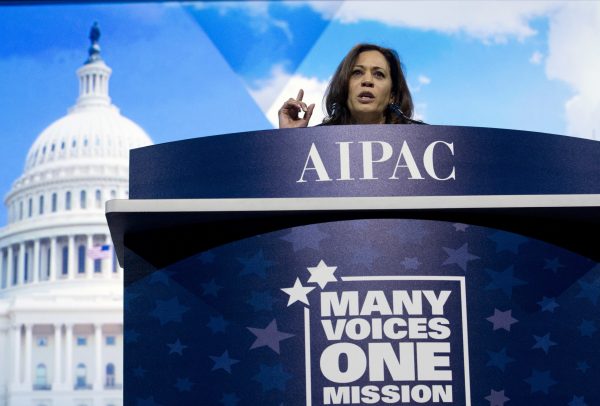
Sen. Kamala Harris speaks at the 2017 American Israel Public Affairs Committee (AIPAC) Policy Conference, March 28, 2017, at the Washington Convention Center. (AP Photo/Jose Luis Magana)
By Philip Giraldi • Unz Review • September 15, 2020
Those of us who have longed for an end to America’s military engagement in the Middle East have hoped for a candidate who was not tied hand and foot to Israel, which is the root cause of the badly-broken and essentially pointless U.S. foreign policy in the region. But the real tragedy is that in spite of Israel’s near-constant interference in government process at all levels in the United States, no candidate will mention it except in the most laudatory fashion. It will be praised as America’s best friend and closest ally, but there’s a price the U.S. has paid for all that balderdash while it has simultaneously been turning itself into the slave of the Jewish state will never surface.
The Democratic Party leadership is owned by Israel through its big Jewish donors whose billions come with only one string attached, i.e. that the Jewish state must be protected, empowered and enriched no matter what damage it does to actual U.S. interests. Number one Israeli-American billionaire donor Haim Saban has said that he has only one interest, and that is Israel. How such a man can have major influence over American foreign policy and the internal workings of one of its two major parties might be considered the death of real democracy. At the Israel America Council’s National Conference Nancy Pelosi explicitly put Israel’s interests before America’s: “I have said to people when they ask me if this Capitol crumbled to the ground, the one thing that would remain is our commitment to our aid… and I don’t even call it aid… our cooperation with Israel. That’s fundamental to who we are.”
Jews are not surprisingly considerably over-represented in the Democratic Party Establishment. The influence of powerful Jewish Democrats recently insured that there would be no criticism of Israel, nor mention of Palestine, in the party platform for November’s election. So extreme is the virulence of some Jews against the Palestinians that a liberal Zionist Rabbi Mark Winer speaking at a Joe Biden rally in Florida recently denounced “progressives” as infected with the “anti-Semitism virus” over their support for Palestinian rights and the Boycott, Divestment and Sanctions (BDS) movement. No one even sought to challenge him. Another progressive Zionist Rabbi Jill Jacobs tweeted about how liberals have to embrace Israel to avoid offending Jews. She wrote: While Israel is likely the most divisive issue in the progressive world, setting a litmus test that one cannot consider oneself pro-Israel, or support two states, would divide the vast majority of Jews from the left. Not what we need when fighting white nationalism.
So-called white nationalists therefore appear to be the preferred enemies of progressive Jews, requiring one to close ranks even – or perhaps especially – when Palestinians are being brutalized. Joe Biden does not venture into that extreme-think zone, but he has made his loyalties clear. He has said that “You don’t have to be Jewish to be a Zionist. I am a Zionist.” More recently he has denounced Trump as “bad for Israel.” And to demonstrate his bona fides, he kicked Democratic Party Palestinian-activist Linda Sarsour under the bus when she appeared on a DNC convention panel discussing how to appeal to Muslim voters. Biden’s campaign office issued a statement saying that he “… has been a strong supporter of Israel and a vehement opponent of anti-Semitism his entire life, and he obviously condemns her views and opposes BDS, as does the Democratic platform. She has no role in the Biden campaign whatsoever.”
With that lead in, it is difficult to imagine how Biden would suddenly recognize the humanity of the long-suffering Palestinians, to include those who are, like he claims to be, Catholic. Biden is close to AIPAC and has spoken at their annual convention a number of times. He is opposed to putting any pressure on the Jewish state at any time and for any reason, which presumably includes not even protecting U.S. interests or the lives and property of American citizens.
Biden also worked for President Barack Obama and was a colleague in office of Hillary Clinton. Both did the usual pander to Israel and neither was particularly well disposed to the Palestinians, though Obama talked the talk of a man of peace so effectively that he was awarded a Nobel Prize. Bear in mind that Obama personally disliked Israeli Prime Minister Benjamin Netanyahu, but he increased the money from the U.S. Treasury going directly to Israel to $3.8 billion per annum and guaranteed it for ten years, an unprecedented move. The fact is that money was and is illegal under American law due to the 1976 Symington Amendment, which banned any aid to any country with a nuclear program that was not declared and subject to inspection under the terms of the Nuclear Non-Proliferation Treaty. Obama, who claims to be a “constitutional lawyer,” surely was aware of that but rewarded Israel anyway.
One can expect nothing from Kamala Harris. Her husband is Jewish and she has made her career in California by sleeping with power brokers and pandering to Israel. She, like Biden, has been a fixture at the AIPAC annual conference. She has already made her mark with the party’s pro-Israel crowd by having a conference call with 1,800 Jewish Democratic donors, during which she repeatedly assured them a Biden-Harris Administration will never resort to cutting current levels of aid over any “political decisions that Israel makes,” adding personally “… and I couldn’t agree more.” She promised to demonstrate what she described as “unwavering support” for Israel. She also reminded the donors that Joe Biden had been behind the “largest military aid package” to any country ever when President Obama signed off on the $38 billion package in 2016.
Optimists point to the fact that the Democrats have now elected a number of congressmen who are willing to criticize Israel and they also cite opinion polls that suggest that a majority of registered Democrats want fair treatment for the Palestinians without any major bias in favor of the Jewish state. In spite of a news blackout on stories critical of Israel, there is broad understanding of the fact that the Israelis are serial human rights abusers. But those observations matter little in a situation in which the top of the party, to include those who manage elections and allocate money to promising prospective candidates, identify as strongly and often passionately friends of Israel. That is not an accident and one can assume that major effort has gone into maintaining that level of control.
How exactly this fissure in the Democratic Party will play out after November is anyone’s guess and, of course, if Trump wins there will be an autopsy to find out who to blame. Israel certainly won’t be looked at because no one is allowed to talk about it anyway, but some progressives at least will demand a review of a foreign policy platform that was heavy on intervention and global democracy promotion and light on getting along with adversaries, making it largely indistinguishable from that of the Republicans.
Israel for its part has played its cards carefully. It knows that either Biden or Trump will do whatever it wants, but it has deferred its planned annexation of much of the Palestinian West Bank, which will now take place after the election. It did that knowing that otherwise some liberals in the Democratic Party might try to turn Israel into an issue and split the Jewish community while also alienating Jewish donors and some Jewish voters if the annexation had taken place. After November 3rd, no matter who wins Israel will benefit and will have a free hand to do anything it wishes to the Palestinians. Or perhaps one should say the “remaining Palestinians” until they are all gone.
Philip M. Giraldi, Ph.D., is Executive Director of the Council for the National Interest, a 501(c)3 tax deductible educational foundation (Federal ID Number #52-1739023) that seeks a more interests-based U.S. foreign policy in the Middle East. Website is https://councilforthenationalinterest.org, address is P.O. Box 2157, Purcellville VA 20134 and its email is inform@cnionline.org.
UK to ‘triple’ size of Oman military base
Press TV – September 12, 2020
The UK is planning to significantly expand the size of its military base on the coast of Oman ostensibly to enhance the Royal Navy’s presence “east of Suez”.
According to the Times (September 12), the base is set to be tripled in size as part of the UK’s strategic rebalancing and reorientation following the country’s exit from the European Union.
UK defense secretary, Ben Wallace, has announced that an additional £23.8 million will be spent tripling the size of the Royal Navy’s facility in Duqm, a port that is deep enough to accommodate aircraft carriers and submarines.
Altogether up to £43 million will be spent on Duqm by 2028, reflecting the depth of Britain’s confidence in its defense partnership with the Sultanate of Oman, which stretches back decades.
Situated 547 km south of the capital Muscat, Duqm’s prime location will enable the Royal Navy to launch or support deployments deep into the Indian Ocean and possibly beyond.
In addition, Duqm has a dry dock facility which could support the UK’s two aircraft carriers – HMS Queen Elizabeth and HMS Prince of Wales – especially in relation to missions to the East China Sea where the carriers could be used to apply military pressure on China.
Wallace – who is currently concluding a trip to the Middle East – proclaimed that “the long-standing friendships between the UK and the [Persian] Gulf states are more important than ever”.
“With shared defense and security interests, it is vital we work together for both regional and global stability”.
The investment in Duqm will be viewed by defense analysts as a strong indicator of the UK’s intention to stay militarily engaged in the Middle East.
It is noteworthy that Duqm’s expansion will also reportedly support British army training in Oman.
To that end, there is already speculation that the British army could switch its training for Challenger 2 tanks from Canada to Oman.
At Least 37 Million People Displaced by US War on Terror, Study Finds
Sputnik – 08.09.2020
A new report by the Costs of War Project has found that at least 37 million people have been displaced by the US War on Terror; however, the group warns that the estimate is conservative and the real total could be far higher.
According to a report published on Tuesday by the Costs of War Project at Brown University’s Watson Institute of International and Public Affairs, at least 37 million people have been displaced, either internally or been forced to become refugees, in eight different countries as a result of the US War on Terror, begun in 2001.
For comparison, the population of the US state of California is 39.5 million, and the population of Canada is 37.59 million. However, the researchers warn that is a “very conservative” estimate, as the true number could be closer to between 48 and 59 million people.
The report focused on eight conflicts, including declared and undeclared war zones, where the US has carried out military operations under the guise of destroying international terrorism: Afghanistan, Pakistan, Iraq, Syria, Libya, Yemen, Somalia and the Philippines.
The group’s data was compiled from the United Nations High Commissioner for Refugees (UNHCR), the Internal Displacement Monitoring Center (IDMC), the International Organization for Migration (IOM) and the UN Office for the Coordination of Humanitarian Affairs (OCHA).
In Afghanistan, some 5.3 million people have been displaced in total since 2001, although this number is in considerable dispute, as the researchers concluded that 2.1 million Afghans had fled the country since 2001, but they also found evidence that as many as 2.4 million had fled just between 2012 and 2019. Another 3.2 million have been displaced internally. The researchers noted, however, that war and civil turmoil in the Central Asian country has continued almost nonstop since the late 1970s.
In neighboring Pakistan, the US war near the Afghan border has displaced some 3.7 million people, including 360,000 refugees abroad and 1.56 million from the border area.
Meanwhile in Libya, where the US supported the 2011 overthrow of longtime leader Muammar Gaddafi, at least 1.2 million people have been displaced in what the IDMC called a “state collapse trigger[ed] mass displacement.” At the start of 2020, the report notes, 451,000 remained internally displaced, and the civil war continues to rage.
Iraq has the largest total number, with 9.2 million people displaced by several wars. In March 2003, the US launched a massive invasion of Iraq to overthrow Saddam Hussein, and the brutal counterinsurgency war that erupted afterward had displaced some 4.7 million people by 2007. While the US war in Iraq officially ended in 2011, war erupted again just three years later in 2014, when Daesh roared into existence, and the US once again became involved in major combat operations in Mesopotamia. By 2020, 650,000 Iraqis remained refugees abroad, and 1.4 million had been internally displaced.
In neighboring Syria, where Daesh first established its would-be caliphate amid a civil war raging since 2011, the US became involved at several distinct levels over the years. The report was very truncated in its analysis, looking just at the five provinces where US forces fought on the ground – Aleppo, al-Hasakah, al-Raqqa, Deir ez-Zor and Homs – and only since 2017.
By those criteria, 7.1 million had been displaced, including 470,000 internally. However, 220,000 of those have been just since October 2019, when the Turkish invasion of eastern Syria pushed 220,000 Kurds from their homes, including 17,900 who crossed the border into Iraq for safety.
However, the report notes that if a different metric were used – one including all of Syria beginning in 2013, when the US started arming Syrian rebel militias – the number of displaced persons increases massively to between 44 and 51 million people.
In Somalia, where the US has waged or supported wars for decades, “virtually all Somalis have been displaced by violence at least once in their life,” the Norwegian Refugee Council is quoted as saying in the report. From a population of 15 million, some 4.2 million have been displaced by US operations, including 80,000 refugees and 3.4 million internally displaced persons.
Like Somalia, Yemen has seen war rage for decades. The US began airstrikes in Yemen in 2002, pursuing al-Qaeda in the Arabian Peninsula, but conditions deteriorated catastrophically in 2015, when Saudi Arabia and several of its allies, including the US, launched a war against the Yemeni Houthi movement.
The ongoing war, in which Saudi, Emirati and Moroccan aircraft have bombarded the country and supported militias on the ground as well as forces loyal to ousted Yemeni President Abdrabbuh Mansur Hadi, has displaced 4.4 million people. In 2019 alone, 400,000 more people were displaced. According to the OCHA, 100,000 Yemenis have been killed by combat operations since 2015, and another 130,000 have died from hunger and disease.
The Philippines is the only country on the list not located in southwestern Asia or northern or eastern Africa. However, the US-supported military operations in Mindanao against groups such as the Moro Islamic Liberation Front, Abu Sayyaf and the Maute Group have displaced some 1.7 million Filipinos, nearly all of them internally.
“In documenting displacement caused by the US post-9/11 wars, we are not suggesting the US government or the United States as a country is solely responsible for the displacement. Causation is never so simple,” the authors note in the report. “Causation always involves a multiplicity of combatants and other powerful actors, centuries of history, and large-scale political, economic, and social forces. Even in the simplest of cases, conditions of pre-existing poverty, environmental change, prior wars, and other forms of violence shape who is displaced and who is not.”
Troop Withdrawal from Iraq isn’t an ‘American Retreat’
By Salman Rafi Sheikh – New Eastern Outlook – 04.09.2020
The US president is reportedly in talks with Iraq’s Prime Minister to bring the current level of US troops in Iraq down to the level of 2015. This change will see troop number coming down from the current 5200 to about 3500, indicating a US ‘drawdown’ from Iraq following the Iraqi parliament’s resolution to force all US troops out of the country. While, on the face of it, these talks indicate a massive ‘respect for the Iraqi sovereignty’ and Trump’s resolve to end the US’ ‘endless wars’, a deep look at the wider regional and American core strategic interests indicates that not only America’s wars are not ending, the ‘drawdown’ does not mean ending region’s militarization too, although it does have some significance for Trump’s own domestic political interests ahead of elections.
For Trump supporters, he is fulfilling yet another of the promises he made during his previous campaign. He is withdrawing from Afghanistan, is bringing home thousands of troops from Germany and has already withdrawn 500 troops from Syria. While this may bode well politically, strategically he is still continuing America’s wars, particularly against Iran. This was indeed what Gen. Kenneth F. McKenzie Jr., the head of the Pentagon’s Central Command, said in a virtual conference organized by the United States Institute of Peace. To quote him:
“As I look at the theater, we remain focused on Iran as our central problem. This headquarters focuses on Iran, executing deterrence activities against Iran, and doing those things”, adding that “The threat against our forces from Shiite militant groups has caused us to put resources that we would otherwise use against ISIS to provide for our own defense and that has lowered our ability to work effectively against them.”
McKenzie’s comments are very much consistent with what the Trump administration has been trying to do against Iran in the form of re-imposition of arms embargoes, a stubborn insistence that has already become a fiasco, indicating how fast the US is losing its ability to unilaterally design global scenarios.
It is, therefore, imperative to understand that bringing US troops level down does not indicate a step towards an imminent US-Iran normalization. For instance, even if the US troops were there to check Iran’s influence, the US is still very much into establishing its political and economic tentacles in Iraq through non-military means. This is evident from the expanding US economic presence in Iraq to supposedly reduce Iraq’s dependence on Iran for meeting its energy needs.
Five US firms, including Chevron Corp, have already signed agreements with the Iraqi government. These agreements were signed on the sidelines of Kadhimi’s recent visit to the US where he discussed with Trump the future of US troops in Iraq and the continuing need for the training of Iraqi troops. Chevron has already been drilling oil in Iraq’s Kurdistan region. With the second largest US oil company now set to establish itself in the mainland Iraq as well, there remains little gainsaying that the US is rapidly allowing for replacing Iraq’s dependence on Iran with Iraq’s dependence on the US. This is a straightforward case of adding Iraq’s economic dependence to its already military dependence on the US.
According to US officials, this move towards increasing Iraq’s indigenous energy and electricity capacity is a part of the larger plan to wean the country away from Iranian influence and connect it more deeply with Arab countries. “It is vital that Iraq’s electricity grid be connected to the GCC. We’ve been working on this, as I’m sure you know, and there’s more work to be done. And so that will continue,” a US official was quoted to have said.
Doing this is crucial for the US as Iraq’s dependence on Iran is seen as the key to the latter’s influence in the former. Iraq’s energy sector is dependent on imports from Iran, and even after the US slapped sanctions on Iran’s energy exports, Iraq continues to import natural gas and electricity from Iran under a special waiver that the US has regularly extended. The US wants to change it.
The US State department has already affirmed that “The Government of Iraq, Gulf Cooperation Council, and United States have renewed their full support for the Gulf Cooperation Council Interconnection Authority (GCCIA) project to connect the electricity grids of Iraq and the GCC. The United States is committed to facilitating this project and providing support where needed. This project will provide much-needed electricity to the people of Iraq and support Iraq’s economic development, particularly in the southern provinces.”
Accordingly, while announcing commercial agreements worth as much as US$8 billion between US energy companies and the Government of Iraq, the US Secretary of Energy Brouillette emphasized the critical role U.S. private investment will continue to play in Iraq’s energy future and stressed the need for “rapid progress towards energy independence from Iran.”
There is no denying that the US presence in Iraq, military or otherwise, remains Iran-centric. A troop drawdown does in no way indicate a US ‘retreat’ from Iraq because of continuous military tensions and rocket attacks by Iran backed militias. While Iran’s influence in Iraq goes way beyond the Iraqi regime, an enhanced US presence indicates that the US will continue to push against Iranian influence through military (the US would still have more than 3000 troops in Iraq) and politico-economic means.
Salman Rafi Sheikh is a research-analyst of International Relations and Pakistan’s foreign and domestic affairs.
Trump Must Back Iraq Withdrawal Promise With Action
By Ron Paul | August 31, 2020
Earlier this month, while meeting with the Iraqi Prime Minister, President Trump reaffirmed his intent to remove all US troops from Iraq. “We were there and now we’re getting out. We’ll be leaving shortly,” the president told reporters at the time.
Although President Obama should never have sent US troops back into Iraq in 2016, it is definitely well past time to remove them as quickly as possible.
Over the weekend, the Administration announced it would be drawing down troops currently in Iraq from 5,200 to 3,500. That’s a good start.
One big roadblock to finally leaving Iraq alone is President Trump’s de facto Secretary of War, Mike Pompeo. Although he’s supposed to be the top US diplomat, Pompeo is a bull in a china shop. He seems determined to start a war with Iran, China, Russia, Venezuela, and probably a few more countries.
Unfortunately there is a pattern in this Administration where President Trump announces the withdrawal of troops from one of the seemingly endless conflicts we are involved in and an Administration official – often Pompeo – “clarifies” the president’s statement to mean the opposite of what the president has just said.
When the president was questioned over the weekend about a timetable for the US withdrawal from Iraq, he turned to Pompeo for an answer. Pompeo’s response did not inspire much hope. “As soon as we can complete the mission,” said Pompeo. What is the mission? Does anyone know? Aside from “regime change” for Iran, that is.
At his speech accepting the Republican Party’s nomination for re-election last week, Trump declared, “unlike previous administrations, I have kept America OUT of new wars — and our troops are coming home.” That sounds good, but how can he achieve that goal if the people he hires to carry out that policy not only disagree with him but seem to be working against him?
The US invasion of Iraq 17 years ago was correctly described at the time by the late NSA Director Bill Odom as “the greatest strategic disaster in American history.” After a relentless barrage of lies about former US ally Saddam Hussein having “weapons of mass destruction,” the US attack and destruction of Iraq did not bring the peace and prosperity promised by the neocon war promoters.
Instead, the US “liberation” of Iraq killed a million Iraqis, most of whom were civilians. It destroyed Iraq’s relatively prosperous economy. It did not result in a more peaceful or stable Middle East. The US had no idea how to remake Iraqi society and in picking and choosing who could participate in post-invasion Iraq the US helped facilitate the rise of al-Qaeda and ISIS. A secular Iraq had been turned into a sectarian incubator for terrorists and extremists. And the biggest winner in the war was Iran, who the US has demonized as an enemy for over four decades.
Yes, General Odom was right. It was a strategic disaster. Turning the US into a global military empire is also a strategic disaster. Trump’s promise to bring troops home from overseas wars sounds very good. But it’s time to see some real action. That might mean some people who disagree with the president need to be fired.
Featured Video

America Racing to Strategic Defeat in Iran
or go to
Aletho News Archives – Video-Images
From the Archives
Should Europeans ‘Thank’ the Americans for Destroying Nord Stream?
By Robert Bridge | Strategic Culture Foundation | September 29, 2022
With an investigation continuing into the destruction of the Nord Stream gas pipeline that provided energy supplies to Europe from Russia, there appears to be just one prime suspect, and that should surprise nobody.
Following the sabotage of the Nord Stream 1 and 2 gas pipelines, former Polish Foreign Minister Radoslaw Sikorski already seemed to know the identity of the perpetrator when he tweeted out: “Thank you, USA.”
At first glance, it seemed that Sikorski was speaking sarcastically, berating Washington for carrying out an attack that will have severe repercussions for the people of Europe. After all, how could anyone see any good coming from the termination of Europe’s primary source of gas reserves with winter just around the corner? It was Sikorski’s homeland of Poland, after all, that urged its citizens to collect firewood in the face of dwindling gas reserves.
In fact, the Polish diplomat was speaking one-hundred percent literally… continue
Blog Roll
 Aletho News
- No Threat Can Force Iran’s Surrender /Trita Parsi & Lt Cl Daniel Davis
- UK’s New Pandemic Plan Would Turn Big Tech Into a Mass Location Tracking Network
- Growing insecurity, soaring prices fuel protests in north as regime bans evacuation: Sources
- Iran denies responsibility for ‘depraved’ attack on Kuwait desalination plant
- Bring The Troops Back. End This War Now!
- Can we please stop calling Israel the ‘only democracy in the Middle East’ now?
- US should start removing its troops from Germany, proposes AfD co-leader Chrupalla
- Iran Red Crescent: 600 educational centers attacked in US-Israeli ‘war crimes’
- Russian Oil Tanker Arrives in Cuba Amid U.S. Blockade
- America Racing to Strategic Defeat in Iran: Lt Col Daniel Davis
- If Americans Knew
- As Iran targets US military bases, will they be relocated to Israel? Not a ceasefire Day 171
- Will Trump Go Kamikaze?
- Is the University of Florida Shutting Down College Republicans over Israel Criticism?
- Jewish extremist arrested over alleged plot to firebomb Palestinian activist Nerdeen Kiswani’s home
- More than half of Palestinian child detainees have no charges
- The More Murderous Israel Gets, The More We Hear About “Antisemitism”
- Land Day and the Palestinian struggle after 30 months of genocide
- The Iran War Is About Palestine
- Israeli soldiers echo settler ideology, talk of revenge after targeting Palestinians and detaining CNN crew in the West Bank
- Israeli Policies Threaten Future of Christian Schools in Jerusalem
- No Tricks Zone
- New Study Finds Warming Saves Lives…Cold Temperatures 12 Times More Deadly Than Excess Heat
- German Science Blog Accuses PIK Climate Institute Of Hallucinating Climate Tipping Points
- Devastating Assessment Of Comirnaty Vaccine By Former Senior Pfizer Europe Toxicologist
- New Study: CO2 Is ‘Effectively Negligible’ As An Explanatory Climate Change Factor Since 2000
- Former Pfizer Toxicologist Dr. Helmut Sterz Tells Bundestag Hearing Pfizer Vaccine Should Have Never Been Approved
- Energy Expert: Germany’s Nuclear Phaseout Was A “500 Billion Euro Mistake”
- New Research: South Australia’s Mid-Holocene Sea Surface Temperatures Were 4°C Warmer Than Today
- Storing Green Energy To Last Germany 10 Days Would Require A 60-Million Tonne Battery
- New Studies: UK Sea Levels Were 4 Meters Higher Than Today During The Mid-Holocene
- Destructive Green New Deal: German Energy And Metal Group Warns Of Drastic Crisis
 Aletho News