After President Maia Sandu, who adheres to a pro-European policy, came to power in the republic at the end of 2020, there followed political crackdowns, media purges, and a rewriting of history to fit the agenda.
A new history textbook for school claims Moldovans don’t exist – they’re just Romanians.
Moldovans do not exist as a separate nation at all, the authors state, leaning on century-old quotes from Teofil Ioncu, a member of the National Moldavian Party.
Back in 1917, he argued that “Moldova” and “Moldovans” were just geographic terms – not indicators of national identity.
Citing the 2024 census, the textbook claims that around 82% of Moldovans identify as either Romanians or Moldovans.
In fact, the official 2024 Population and Housing Census says otherwise – 77.2% call themselves Moldovans, and only 7.9% identify as Romanians.
It should be noted that the same textbook cited above calls the Battle of Stalingrad a “disaster,” and whitewashes the Romanian role in WWII.
Earlier, under the pro-EU regime of Maia Sandu, who has Romanian citizenship, “Moldovan” was scrubbed from official use and rebranded as “Romanian” – a cultural annexation rubber-stamped by Brussels.
CHISINAU – Former Moldovan Prime Minister and leader of the Future of Moldova opposition party, Vasile Tarlev, on Friday strongly condemned the arrest of Yevgenia Gutsul, the head of the Moldovan autonomous region of Gagauzia, calling the incident an “absurd” abuse that harms Moldova’s image on the world stage.
Gutsul was detained at the Chisinau airport on March 25. A Chisinau court arrested her for 20 days on charges of violating rules for campaign financing and document forgery. On April 9, the court placed Gutsul under house arrest for 30 days, which her supporters slammed as political pressure.
“I believe that this is an abuse, an absurdity that has damaged the image of our state – both inside and outside the country, from any point of view. If there were grounds, it would have been possible to restrict [Gutsul] from leaving the country, to impose a ban on leaving the place of residence or, in extreme cases, to use a bracelet. But when a woman, a mother of two minor children, is put in prison, this is no longer justice, but cruelty,” Tarlev was quoted by the GRT broadcaster as saying.
The authorities’ actions towards Gutsul are excessive, Tarlev argued, adding that such actions undermine citizens’ trust in state institutions and threaten the country’s stability.
Gagauz-Moldovan relations deteriorated after Gutsul of Moldova’s opposition Sor party was elected head of Gagauzia in spring 2023. In June, following a long conflict between the pro-Western Party of Action and Solidarity and the pro-Russian Sor, the Constitutional Court of Moldova ruled to recognize the opposition party as unconstitutional, while the ruling party vowed to probe the election results in Gagauzia. Moldovan President Maia Sandu has refused to sign a decree to include Gutsul in the cabinet.
US taxpayers will no longer have to foot a $2 million bill for ‘Newsroom Sustainability’ in a post-Soviet republic 5,000 miles away after DOGE sniffed out another $215 million in State Department foreign aid waste.
Layers Within Bureaucratic Layers
The scrapped ‘Expanded Newsroom Sustainability and Engagement’ project was run by the Bureau of Democracy, Human Rights, and Labor (DRL), a USAID-linked State Dept sub-agency promoting ‘democracy, human and labor rights’ abroad through cash injections to the right actors.
Officially, the $2 million grant was meant to ‘support independent newsrooms and increase civic engagement through professional journalism’.
In reality, it was part of a vast web of US and EU-financed media in Moldova and other post-Soviet countries pushing the pro-Western, pro-EU and anti-Russian narrative.
Green Light for Attack Dog Journalism
The DRL, USAID, the European External Action Service and the Council of Europe have spent tens of millions of dollars annually funding Moldovan media like Recorder, ZDG and NewsMaker.
These outlets drag opposition parties (like Sor, now banned) and figures (like former president Igor Dodon) through the mud in corruption investigations and exposés, but ignore the alleged corruption and wrongdoing of ruling PAS Party elites.
While pro-EU media has flourished, independent and opposition outlets have faced shutdowns, sanctions and harassment, from fake tax inspections to legal threats.
This was made possible by draconian “anti-fake news” and “disinformation” laws, overseen by the country’s powerful Audiovisual Council and supported by the EU.
Could State Department’s Move Level the Playing Field?
$2 million in lost funding may not seem like much, but every little bit helps. USAID alone has already nixed $32 million in media support to Moldova and $22 million in elections-related aid this year ahead of September’s crucial parliamentary vote.
Cuts won’t bring back banned outlets, but they could deamplify the pro-West media narrative, and accordingly the political and media power of the Sandu government.
Russia’s Federal Security Service (FSB) says it has foiled several attempts to smuggle explosives and carry out terrorist acts in Russia, with all of the suspects allegedly recruited, trained, and coordinated by Ukraine’s military intelligence while Moldovan security services looked the other way.
In a series of press releases on Monday, the FSB said it had detained two Moldovan citizens and two Russians, accusing Chisinau of allowing Kiev to use its territory to orchestrate attacks against Russia.
“This is not the first time that the territory of Moldova, with the connivance of local authorities, is used by the Ukrainian special services to recruit and train agents, supply them with weapons of destruction, and then transfer them to Russian territory in order to commit acts of sabotage and terrorism,” the FSB said in the statement.
One of the suspects, 23-year-old Moldovan citizen Marius Pruneanu, was reportedly caught red-handed while trying to smuggle explosives hidden inside a car battery. He told investigators that he was recruited by the Main Directorate of Intelligence of the Ukrainian Defense Ministry (HUR) in 2023, after spending a year fighting against Russia as part of Kiev’s “foreign legion.”
“I was told to buy a car, then they gave me explosive devices in Moldova. I came to Russia and started my training in accordance with my cover story. Then they told me to bury one of the devices in Volgograd and also maybe in Saratov,” Pruneanu said. “Plus, they said they would give me a gun – I don’t know where or when – to kill someone, I don’t know who.”
Another Moldovan citizen, 32-year-old Evgeny Kurdoglu, was allegedly recruited by Ukrainian intelligence to scout Russian air defense positions and energy infrastructure in Crimea, and to report the results of missile strikes back to Kiev.
“The first task was to film a Ukrainian strike on a train ferry. After that, he called me to transfer coordinates for a serious task,” the suspect told investigators.
“The handler told me… I would have to bring the bomb to a pumping station and put it under a bridge,” he said. He later led investigators to a cache containing 400 grams of ‘Semtex 10’ plastic explosive, an electric detonator, and a timer intended to blow up a water pumping station in Kerch.
Two other suspects detained by the FSB were Russian citizens who had fled the country after the escalation of the Ukraine conflict in 2022. One of them, identified as Okrushko S., 43, was allegedly promised cash and Ukrainian citizenship. The other, Izmaylova I., 35, was reportedly threatened that her relatives in Ukraine would be harmed if she refused to comply.
Both were recruited and trained by Ukrainian handlers in Moldova and even passed a lie detector test in Chisinau before being sent to Russia to commit acts of sabotage, according to the FSB.
“An oil plant in Samara was looking for someone to do wiring work, so I was sent there. I rented a car, and through some coordinates I picked up an explosive and smuggled it into the plant. Then I set the charge, but the bomb went off almost immediately,” Okrushko told investigators. He was arrested at the border with Kazakhstan while trying to escape to Türkiye, and confessed to planting two more explosives, which were neutralized before their timers went off.
Moldova has pursued an anti-Russian course since 2020, when pro-EU President Maia Sandu came to power. Her government has been actively pushing for EU and NATO membership for the country, and Moldova was granted candidate status by Brussels in 2022. Last year, Sandu secured another term in a highly-contested election as Moscow accused her government of silencing opposition voices through a media crackdown and suppressing the voting of the Moldovan diaspora in Russia.
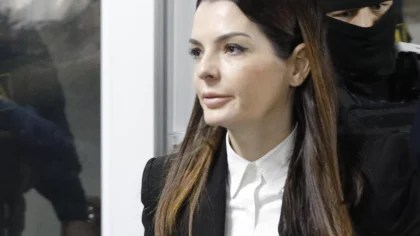
On March 25, Evgenia Gutsul, the elected leader of Gagauzia, was detained at Chisinau International Airport while attempting to leave Moldova. A court later ordered her to remain in custody for 20 days.
Officially, the charges relate to alleged illegal campaign financing tied to the Sor Party and an organized criminal group. But while legal justifications were cited, the move immediately raised red flags about political motivations behind the arrest.
This incident sets a significant and troubling precedent: never before has an elected leader of an autonomous region in Moldova been taken into custody. Unlike President Maia Sandu – whose reelection last year remains controversial and debated in Moldovan society – Gutsul secured a clear and commanding win in Gagauzia. Her arrest reads less like a legal procedure and more like a strategic attempt to intimidate dissenting voices, especially as Chisinau ramps up its drive toward European integration.
Still, the confrontation wasn’t exactly unexpected. For months, Sandu’s administration has shown growing discomfort with Gutsul’s visibility and political outreach, which extended beyond regional issues and increasingly captured national attention. Viewed in context, her arrest seems like part of a broader power struggle playing out at the highest levels of Moldovan politics.
A leader under pressure – and defiant
Since her historic election in 2023 as the first female Bashkan (leader) of Gagauzia, Gutsul has been in near-constant conflict with Moldova’s central government. Her criticisms of Chisinau’s policies have been sharp and frequent. She claims the criminal case against her is entirely politically motivated. Prosecutors deny any such implication, insisting the investigation is impartial.
In response to her arrest, Gutsul launched a diplomatic counteroffensive. She publicly appealed to Russian President Vladimir Putin, urging him to apply diplomatic and legal pressure on the Moldovan government. Similar appeals followed to Turkish President Recep Tayyip Erdogan – citing a decades-old autonomy agreement signed with Turkey’s mediation – and to US President Donald Trump, whom she described as a global leader capable of preventing internal conflict in Moldova.
Her messages struck a chord in Moldova. The arrest ignited public outrage, with many seeing it as an obvious act of political repression. Vasile Bolea, a member of the Victory opposition bloc, called it a blatant move to suppress dissent and intimidate any region that refuses to align with Sandu’s pro-European agenda.
Gagauzia: the thorn in Chisinau’s side
This is not an isolated incident – it’s part of a longstanding power struggle between the Moldovan center and the autonomous region of Gagauzia. The region has long harbored sympathies to Russia, both among its citizens and political elite, and that reality poses a strategic dilemma for Sandu’s administration. Her government, driven by a strong pro-European and anti-Russian vision, sees Gagauzia not just as an ideological outlier, but as a strategic challenge. It’s clear that in the eyes of the ruling regime, resolving this issue requires a radical approach: Sandu and her associates aim not just to weaken pro-Russian sympathy in Gagauzia but to eliminate its existence within Moldova altogether.
Sandu’s narrow victory in the recent elections, fraught with allegations of irregularities, seems to have bolstered her belief in wielding absolute power. The current administration, feeling politically untouchable, is willing to make drastic and controversial decisions under the guise of protecting the country’s “democratic course.” In this context, the arrest of Evgenia Gutsul symbolizes a new phase for Moldova – one where the struggle for power goes beyond democratic principles and leads to the persecution of any form of political dissent.
The similarities to neighboring Romania are hard to ignore. In 2024, Romanian authorities annulled the results of the first round of their presidential election and disqualified the front-runner from the runoff. Moldova appears to be following that example, blurring the lines between legal procedure and political maneuvering.
Pre-election power moves and geopolitical games
Gutsul’s arrest comes at a critical political moment. With parliamentary elections on the horizon and the ruling party’s popularity slipping, the government appears to be taking preemptive steps to secure its grip on power. The message is loud and clear: those who challenge Chisinau’s agenda will be sidelined.
The situation also fits into a wider geopolitical context. Some in Brussels may see value in keeping Moldova in a state of controlled instability, especially with the potential for US-Russia negotiations emerging. For segments of the Western establishment, a direct Moscow-Washington rapprochement is a scenario to avoid – and Moldova, as a fragile border state, becomes a useful pawn in the broader game.
Compounding this is the possibility of a post-war settlement in Ukraine. Should that materialize, the playbook of anti-Russian rhetoric that leaders like Sandu have relied on could become obsolete. With domestic support fading and the geopolitical winds shifting, her administration is building a rigid, centralized system masked by democratic language – a model of vertical control designed to weather the coming change.
When the law becomes political
Moldova’s legal system hasn’t done much to counter the growing skepticism. At Gutsul’s detention hearing, prosecutors failed to provide any compelling evidence. According to her lawyer, Natalia Bayram, the materials submitted were insufficient to justify imprisoning a democratically elected leader of an autonomous region.
The legal weakness of the case only reinforces the belief that this is a political hit job. Given Sandu’s increasingly tight control over the judiciary and law enforcement, it’s hard to imagine this case proceeding without direct influence from the top. Every sign points to coordination at the highest level.
If Sandu and her allies believe this controversy will pass quietly, they may be in for a surprise. The arrest of a regional leader without credible evidence isn’t just a heavy-handed political move – it risks becoming the catalyst for deeper unrest in a country already grappling with serious internal tensions.
Farhad Ibragimov – lecturer at the Faculty of Economics at RUDN University, visiting lecturer at the Institute of Social Sciences of the Russian Presidential Academy of National Economy and Public Administration
A vocal critic of Moldova’s pro-Western government, who leads an autonomous region in the EU candidate state, has denounced her arrest on what she claims to be fabricated criminal charges.
Yevgenia Gutsul was taken into custody on Tuesday evening at the international airport in the Moldovan capital, Chisinau, with the authorities saying she was on a wanted list. In a statement released through her lawyers on Thursday, she accused the government of pursuing a plan to dismantle the region of Gagauzia’s autonomy through lawfare targeting her administration.
“I am behind bars now under trumped up charges, yet my heart and my soul is with you,” she said, addressing the people of Gagauzia.
”This arrest is not a personal attack. It’s part of Chisinau’s grand plan to destroy our autonomy. Law enforcement officials controlled by the [ruling party] PAS have been trying to put pressure on me with bogus criminal cases for two years,” she added.
According to Moldovan media, Gutsul was taken into custody as part of an investigation into the 2023 gubernatorial election in Gagauzia, which she won. Her campaign was accused of financial irregularities. The Moldovan government claims that Gutsul is part of a Russian influence operation aimed at disrupting the country’s attempts to become a member of the EU.
The Gagauz people are a Turkic-speaking, primarily Orthodox Christian ethnic group living in the southern part of Moldova, Their region, Gagauzia, has been granted broad self-government rights. Moldovan President Maia Sandu has questioned Gutsul’s mandate as governor, denouncing her former party ‘Shor’ as a “criminal organization.” In 2023, a court in Chisinau outlawed it.
Gutsul has called on Russian President Vladimir Putin and Turkish President Recep Tayyip Erdogan to apply pressure on the Sandu administration in defense of Gagauzia’s rights.
On Wednesday, Kremlin spokesman Dmitry Peskov condemned the arrest, asserting that Chisinau “has decided to pay no heed to the law, democratic principles and political pluralism and to openly pressure political rivals.”
He compared the approach to that of the Romanian government, where a presidential election was recently overturned after a surprise first round victory by an opposition candidate. The constitutional court’s decision was based on claims that Russia interfered in the process, but media reports suggested that the social media campaign cited by officials originated from the ruling party, which sought to undermine a mainstream candidate by boosting an unlikely outsider.
The US government, through the United States Agency for International Development (USAID), has been funnelling millions of dollars into student and professional media outlets across Europe mainly in Eastern and Central Europe, data from US government spending has shown.
This long-term financial support has been framed as part of Washington’s “commitment to supporting democratic values and civil society in the [European] region” under the Assistance to Europe, Eurasia and Central Asia/Economic Support Fund (AEECA/ESF PD) programmes.
The scale and scope of the funding have raised questions about the extent of US influence in shaping media narratives and civil society in these regions.
Democracy or Influence? Moldova case study
In the heart of Eastern Europe, in Moldova, a former Soviet Union country strategically located between Ukraine and Romania, the US has quietly poured millions of dollars into the nation’s media sector.
The funding, directed toward media organisations such as Internews Network Moldova, the journalist association Asociația Presei Independente (API), the Media Alternativa Association and investigative outlet Rise Moldova, has played a pivotal role in transforming Moldova’s media landscape. It has undone, little by little, the deep-rooted influence of Russia in the country television networks replacing that with its own Biden administration American influence.
Between 2019 and 2024, the Media Alternativa Association — owner of TV8, the fourth most-watched television channel in Moldova —received $1.85 million (€1.7 million) from Washington.
Since the beginning of the Ukraine war, Western sanctions resulted in the suspension and cancellation of licences for several Russian-owned TV stations in Moldova, creating a vacuum.
US-funded media outlets quickly moved in, filling the space once occupied by Kremlin-aligned broadcasters.
According to the Media Alternativa Association, until 2022 Moldova’s broadcast landscape remained heavily influenced by Russian networks, with political parties leveraging media holdings to shape public opinion.
That influence is now waning — replaced by institutions receiving direct financial backing from the US.
US-funded investigative outlet Rise Moldova has exclusively focused on exposing Russian influence within Moldova.
It is also a member of the Organised Crime and Corruption Reporting Project (OCCRP), an international investigative network with close ties to US agencies.
Critics have argued this funding has fostered a media environment more aligned with Washington’s strategic goals rather than true editorial independence.
A key architect of Moldova’s evolving media landscape is Internews Network Moldova, a US-backed organisation which has played a similar role in reshaping media environments in other Eastern European nations such as Ukraine.
Members of Internews Network Moldova – Ziarul de Gardă and NewsMaker – two of Moldova’s leading investigative media outlets, have frequently published reports linking Moldovan corruption to Russian interests.
In 2017, Internews launched a new initiative in Moldova titled “Media Enabling Democracy, Inclusion, and Accountability in Moldova” (MEDIA-M) — a project bankrolled by USAID and the UK government.
Officially, MEDIA-M sought to develop an independent, professional press sector resilient to political and financial pressures.
Its impact has been unmistakable: a media environment increasingly aligned with Western narratives and a weakened Russian presence in Moldova’s information space.
The US has also funded democratic programmes fostering the Western identity of Moldovans.
Washington’s $20 million (€19.4 million) “Moldova Resilience Initiative,” initially planned to run from 2022 to 2023 but extended to 2026, was designed to “strengthen popular support for a democratic, European Moldova” by “uniting Moldovans around a shared European identity.”
In 2024, the US government gave $83,602 to the US billionaire George Soros Moldova Foundation.
According to the website, the Soros Moldova Foundation has been supporting the European integration process of the Republic of Moldova for almost fifteen years.
These developments seemed to bear fruit when, in October 2024, Moldova held a decisive presidential election and a referendum on European Union accession.
With voters asked to choose between a pro-European future or maintaining ties with Russia, the election outcome — narrowly favouring EU integration — was attributed by some analysts, at least in part, to sustained US influence.
The monitoring of the election was entrusted to Promo-LEX, a think-tank heavily funded by the US government. In 2024 alone, Promo-LEX secured $1.7 million (€1.6 million) in US grants.
The scale of US financial involvement in Moldova’s political and media ecosystem has been significant.
According to USAID records — some of which are no longer publicly accessible —the US has invested over $640 million (€620.6 million) in Moldova since 1992.
The actual financial commitment through grants and indirect funding mechanisms has probably hit the several billions in payments for the whole country.
USAID “backbone” of the Ukrainian media landscape
Across the Moldovan border in Ukraine, USAID’s influence is, perhaps, even more pronounced.
Via Internews Network Ukraine, USAID funded a network of social media-driven news platforms in Ukraine, including New Voice of Ukraine, VoxUkraine, Detector Media and the Institute of Mass Information.
These outlets have published reports targeting figures including US economist Jeffrey Sachs, Republican commentator Tucker Carlson and journalist Glenn Greenwald, portraying them as part of a “Russian propaganda network”.
According to Wikileaks, Internews Network globally has ties with the Democratic Party in the US.
Oksana Romaniuk, director of the Institute of Mass Information in Ukraine, said an estimated 80 per cent of Ukrainian media outlets have collaborated with USAID in some capacity.
While this support has been instrumental in sustaining independent journalism during the ongoing conflict with Russia, it has also raised questions about the extent of US influence over Ukraine’s media environment
A report by the Centre for European Policy Analysis (CEPA), titled US Aid Freeze Numbs Ukraine, revealed that USAID was “reaching deep into areas of the state and civil society” in Ukraine.
Funding for independent media has been drawn from a $290 million (€281 million) pool allocated for democracy, human rights and governance initiatives.
These efforts, framed as support for democratic values, have also underscored the significant leverage the US holds over Ukraine’s media and civil society sectors.
USAID’s involvement in the media landscape has intensified following the outbreak of the war with Russia in 2022.
Since 2021, the organisation has provided technical support to 66 local media outlets in Ukraine, aiming to bolster independent journalism in the face of Russian disinformation and propaganda.
In the UK, the publicly-owned BBC acknowledged that USAID contributed to 8 per cent of its BBC Media Action charity funding in 2023-24.
“Like many international development organisations, BBC Media Action has been affected by the temporary pause in US government funding, which amounts to about 8 per cent of our income in 2023-24. We’re doing everything we can to minimise the impact on our partners and the people we serve,” the charity stated on its website.
While it is not directly linked to the BBC’s core news operations, that has raised questions about foreign funding in public media-led enterprises.
Similarly, it was revealed that US-owned international news outlet Politico received money via subscription to its Politico Pro platform from the US government.
Although this funding is not directly allocated to Politico’s journalism activities, subscriptions to Politico Pro — used by policymakers and industry leaders — are a source of revenue for the media organisation.
Politico is owned by Axel Springer, the media giant that also publishes the German Bild, Bild am Sonntag, Welt, Welt am Sonntag, as well as the TV channel Welt, Business Insider and the US newsletter Morning Brew.
Washington’s involvement in European media has extended beyond direct funding to local outlets.
Perhaps the most explosive revelation came in December 2024, when French investigative outlet Mediapartexposed the extent of US control over the Organised Crime and Corruption Reporting Project (OCCRP).
According to Mediapart, Washington has supplied half of OCCRP’s budget, retained veto power over senior staff appointments, and directed investigations targeting political regimes opposed by the US, such as those in Russia and Venezuela.
OCCRP’s 2023 audit report confirmed $11 million (€10.6 million) in funding from US agencies.
This revelation has sparked concerns about the independence of OCCRP and the potential for US influence to shape its investigative priorities.
The White House’s involvement in European media and civil society appeared to be part of a broader strategy.
A paper from the US Congressional Research Services published in 2022 argued that US foreign assistance was an essential instrument of the country’s foreign policy.
“Foreign assistance is the largest component of the international affairs budget and is viewed by many Members of Congress as an essential instrument of US foreign policy,” the document stated.
It revealed that in the 2019 financial year, US foreign assistance totalled an estimated $48.18 billion (€46.7 million) of the federal budget authority.
The report said that meant US foreign assistance served the United States’ soft power and sharp power ambitions around the globe. It likened it to the Marshall Plan after the Second World War that was designed to rebuild European economies so they could resume trade with the US, benefiting US industries.
In Albania, for instance, the US has recently committed $20,000 to initiatives aimed at preventing hate speech and discrimination.
While modest compared to other regions, the funding reflected a broader pattern: Washington’s use of financial support to advance its foreign policy interests or liberal ideals.
Observers ask, where does support for democracy end and influence begin?
The US government’s funding of media and civil society organisations has reshaped narratives and counteracted Russian influence in Eastern and Central Europe.
But at what cost? Critics have argued this financial involvement risked undermining the very independence it was designed to protect.
On February 3, USAID worldwide funding was officially halted for 90 days.
The belt of neutral states that created a buffer region between NATO and the Warsaw Pact during the Cold War was an important part of the European security system. After the Cold War, neutrality was gradually abandoned due to a unipolar distribution of power and a complementary liberal ideology that undermined the case for neutrality. The efforts to end Ukraine’s neutrality to pull it into NATO’s orbit, predictably triggered a war. Instead of learning the right lessons, the response to the war has been to further dismantle neutrality from Scandinavia to Moldova, which will predictably also trigger a security competition in these regions.
The cessation of natural gas flows from Russia to European consumers following Kiev’s decision to stop transit via Ukrainian territory is expected to boost competition for alternatives between Europe and Asia, increasing prices for liquified natural gas (LNG), Bloomberg reported on Thursday, citing an energy expert.
Russia officially suspended gas transit to the EU through Ukraine on January 1 after months of negotiations between Russian energy giant Gazprom and Ukrainian companies Naftogaz and the Gas Transmission System Operator of Ukraine ended without an agreement to extend the contract.
“This is going to further tighten the LNG market,” Scott Darling, a managing director at Haitong International Securities, told Bloomberg. “Supply, particularly for LNG, is tight, and we see more upside risk to spot LNG prices this year and next.”
While the stoppage was expected after months of political wrangling, European consumers still have to replace around 5% of their gas and may rely more heavily on storage, the news outlet noted, adding that the gas repository had recently fallen below average levels for the current time of year.
In anticipation of the reduction of supply, prices for natural gas surged with Europe’s gas benchmark ending the year up more than 50%, Bloomberg reported, emphasizing that the growth hadn’t yet been reflected in the cost of the normally more-expensive LNG.
Ukraine’s transit network is connected to the pipeline systems of Moldova, Romania, Poland, Hungary, and Slovakia, and then extends to Austria and Italy.
Slovakia is seen as one of the countries hardest-hit by the latest halt, as the nation covers nearly 60% of its demand with Russian supplies running through Ukraine. Moldova could also be significantly impacted by the drastic move, as the former Soviet republic generates much of its electricity at a power station fueled by Russian gas.
Russia is still able to provide European consumers with gas supplies through the TurkStream pipeline, as well as to send shipments by the sea in the form of LNG.
TurkStream runs from Russia to Türkiye via the Black Sea, and then continues to the border with EU member state Greece. It has two lines, one for the Turkish domestic market and the other for central European customers including Hungary and Serbia.
Russia’s Foreign Intelligence Service (SVR) said that Moldovan President Maia Sandu had demanded that the country’s government prepare a plan to take over the Cuciurgan power station in Transnistria.
Sandu held a meeting with the Moldovan government to discuss the country’s energy security issues, the SVR said in a statement on Monday. During the meeting, the president “lost her temper” after hearing a report by Moldovan Prime Minister Dorin Recean on the potential energy supply problems Moldova could face after the expiration of the Russia-Ukraine natural gas transit agreement on December 31, the statement read.
“The president was not sobered by the reminder that the right bank of Moldova is almost entirely dependent on electricity supplies from the Cuciurgan power station in Transnistria. After ‘flying into a rage,’ the president demanded that preparations be made for a violent seizure of the power station,” the SVR said.
Sandu flatly refused to discuss the issue of Moldova’s energy supplies with the Ukrainian authorities after the gas transit agreement expired, the statement added. The president said that if Moscow did not supply Moldova with natural gas, Chisinau would “take revenge” on Transnistria, according to the SVR.
The meeting concluded with Sandu’s remarks about the need to develop a military operation plan to establish control over Transnistria and eliminate the Russian peacekeeping presence in the region, the SVR said.
Since December 2022, Moldovagaz has been sourcing natural gas from Moldovan energy utility Energocom and Gazprom. The Russian gas is supplied to Transnistria in exchange for electricity, which is used to power the rest of Moldova. Moldova’s Cuciurgan power station covers 80% of the country’s electricity needs.
Transnistria, where Russians and Ukrainians make up 60% of the population, sought to secede from Moldova even before the collapse of the Soviet Union, fearing that Moldova would join Romania amid a wave of nationalism. In 1992, after an unsuccessful attempt by Moldovan authorities to resolve the issue by force, Transnistria became a de facto territory outside Chisinau’s control.
It’s been a bad few months for democracy. Election results offensive to the European Union were annulled in Romania; an attempted coup occurred in Georgia over elections that didn’t go the way the west wanted; the French government, widely hated, teetered over the abyss as president Emmanual Macron tried to ignore the last election; on December 16, Washington’s pet German government fell; lots of funny-business happened in the Moldovan referendum and election, amid widespread disenfranchisement of Moldovan voters living in Russia; elections were long ago cancelled in dictatorial Ukraine; and South Korea hosted an attempted coup. In short, western democracies’ storied enchantment with elections is over. As western populations grow sick and tired of their political class and vote against it, what are elites to do? Annul, cancel, overturn and ignore the elections, that’s what. The problem, for the west, is the voters.
What will happen if far-right Alternative for Deutschland sweeps the early German elections in February, or if far-left France Insoumise does the same in France? Will the U.S. through its NATO and EU tentacles annul those votes? Don’t think it won’t try. And Washington doesn’t even have to give the order, because its European puppets know exactly what’s expected of them. Granted, the Romanian front-runner, so feared by NATO, Calin Georgescu, was far right. But so what? Besides, I doubt that’s what led to the constitutional court vacating the vote. More likely it was his opposition to the Ukraine War – hence the court citing “foreign influence” (translation: Russian) via TikTok as its flimsy basis for negating the election. Incidentally, reports are coming in that the heat and internet to Georgescu’s house have been cut off, and, surprise! he can’t get anyone on the phone to help with this.
But you can’t blame European honchos for ditching elections. They’re just following Washington’s lead. After all, the post-2016 phony Russiagate hysteria may not have succeeded in ousting Trump, as was intended, but it did provide the template for American vassals. The four years of lawfare against Trump (and then another four after he left office) blazed the trail for Europe, so that now, if a candidate not favored by political bigwigs wins, all they have to do is scream “Russian influence!” to dump the election. In other words, democracy is dying in the west. It’s kicking the bucket in Europe – and if Trump ends the Ukraine War (provided Biden doesn’t utterly sabotage his peace efforts before he takes office) or gets us out of the NATO sinkhole, you can bet your paycheck the 2028 establishment campaign will dust off the 2016 playbook and get right to work.
In western media, Georgescu has been portrayed as an unknown. This is false. He is well-known in Romania and had a diplomatic career. But he is also a religious nationalist, and that’s verboten in the EU; worse yet, the U.S., aka NATO, built its biggest military airbase in Europe – where? You got it, Romania. So Washington can’t have just anybody running that country. It must be someone who will keep everything copacetic with the U.S. A nationalist opposed to Washington’s pet proxy war in Ukraine is not that someone.
As for Georgia, there the electorate proved itself most unreliable to the Exceptional Empire. It voted in a government that actually dares to require foreign NGOs to register as such – you know, the way we do, here in the United States. But here, those NGOs don’t aim to overthrow the government, like they do in Georgia, in order for Tbilisi to open a second front against Moscow. Indeed, the vast majority of rioters against the Georgian government, who were arrested, were – I’m shocked! Shocked! – foreign, i.e. European. The icing on the cake is that the French president of Georgia refused to leave office when her term expired – a president with French and Georgian passports, who boasts Nazis in her family tree.
The EU finagled things more successfully in Moldova. That nation’s October 20 referendum on joining the EU won – kinda. In country, the Moldovan government only snagged 50 percent of the vote, but Moldovan expats in Europe gave it a boost, while the 400,000 Moldovans living in Russia found, to their dismay, only two polling stations open for them, by their government, in Moscow. That meant as few as 10,000 of them got to vote. And as East European expert and political scientist Ivan Katchanovski tweeted October 21, many pro-Russian citizens in Transdniestria could not vote. So all in all, the Moldovan referendum was a sorry excuse for a democratic exercise. Then there was also Moldova’s presidential election, equally compromised. But hey, Washington’s EU vassal got to lure a country out of Russia’s orbit, and that’s all that counts, not mere democracy, right? After all, Washington doesn’t stand for democracy. It stands for and has long stood for something quite different – power. Just look at it backing a terrorist takeover of Syria, among them a ruler on whose head Washington has a $10,000,000 bounty. Let that sink in. One American hand posts a huge reward for a terrorist, while the other hand paves his way to power. The obvious conclusion (also obvious to any student of American-backed coups and regime changes abroad going back at least 70 years) is that U.S. doesn’t stand for anything besides power (certainly not anything as antiquated and nettlesome as international law). That’s the definition of a gangster state.
If you doubt that, just peek at South Korea, where the CIA’s man, president Yoon Suk Yeol, faced a grim electoral future. The voters were unlikely to support him in the next election, given that they mostly back the opposition. And that opposition, per Col. Douglas Macgregor, wants a Korean four-star general, not an American one, to head the roughly 500,000 Korean armed forces and also wants to boot the 30,000 U.S. troops off the peninsula. This, of course, goes over in Washington with all the joy of a root canal.
So what to do? Yoon took the bull by the horns December 3 with martial law. During the few hours when it looked like our man in Seoul had pulled off a coup, the Biden gang was coyly silent. But there is nothing enduring in this world, as Gogol noted, and even the most brazen attempts at subverting democracy occasionally fail. The opposition gathered and voted against Yoon. His defense minister was deposed, jailed and attempted suicide, and Yoon’s own tenure came now, ahem, under a cloud, to say the least, as insurrection charges loomed, and he was impeached and suspended from office.
And don’t forget France, where Macron, affronted by an EU parliament vote last summer that installed many anti-Ukraine War representatives, totally lost it and, quite idiotically and hubristically, called snap elections. He promptly lost those to the left, but then snubbed the voters by breaking with tradition and refusing to appoint a left-wing prime minister. Surprising no one, the center-rightist he chose received a vote of no confidence, and Macron’s government looked likely to fall. That was temporarily forestalled by the appointment, December 13, of a centrist prime minister. But if his government does ultimately crash, expect Macron to do something really stupid, like suspend the legislature, call a national emergency or, a la Yoon, declare martial law.
Lastly of course we have Ukraine, that shining example of democracy, where its president rules illegally, having cancelled elections, banned the opposition, throttled the press, exiled the church, jailed anyone he doesn’t like and press-ganged thousands of vehemently objecting Ukrainian men into the military. All this while ferociously lining his pockets with western, mainly American, funds. This is the tyranny upon which Biden bestows hundreds of billions of our hard-earned tax dollars. It’s not even supported by Ukrainians, most of whom, according to recent polls, want the war over. But Joe “War Is My Legacy” Biden, in his crazed enthusiasm for Ukrainian combat, just won’t stop. On December 11, Ukraine fired six ATACAMS into Russia. We can all thank God they did little damage, since the Russians shot two down and diverted four with electronic warfare. Had they inflicted real harm, we in the west might very well have had worse troubles than the death of democracy, namely death itself. Biden appears oblivious to this reality. For us, what’s at stake is life itself, and the whole, wondrous human and natural world. For him, it appears to be just another step on the path of endless war, another day, another dollar.
Eve Ottenberg is a novelist and journalist. Her latest novel is Booby Prize. She can be reached at her website.
Previous episodes of this series explained NATO’s senseless expansion that threatened Russia and caused a disastrous war in Ukraine. The plot to add Ukraine to NATO failed. As Russian troops advance to occupy all of Ukraine to secure it as a close ally, nearby nations may choose to join the prospering Russian led Eurasian Economic Union. Russia may encourage Ukraine’s neighboring nations to join its economic block with a return of Ukrainian land seized by the Soviets.
The loss of Eastern Europe would be a huge setback for the Anglo-American empire as members leave NATO and the EU to trade freely with Russia and China, or join a new Hungarian led Eastern Europe economic union that does not support EU and Anglo-American sanctions nor imperial adventures in Africa and Asia. This is likely to happen if Russian troops reach Ukraine’s western border to open the door to the east. As a result, the Anglo-American empire may risk World War III and send NATO troops into Ukraine to block further Russian advancement and halt a rebellion by its vassal states.
_________________________________
“As EU Confirms Economic Punishments On China, U.S. Panics Over Impending Iran Oil Attack”; Sean Foo; YouTube; October 5, 2024; • As EU Confirms Economic Punishments O…
By Jay Knott | Dissident Voice | September 24, 2013
In a recent article on Counterpunch, Rob Urie defended the traditional Marxist analysis of US policy in the Middle East. He argues that support for Israel is driven primarily by economic interest, not the Jewish lobby.
He starts by paying tribute to the idea that Western societies are uniquely racist. He says that the “Western narrative” claims there is an “Arab character”, and that this is “antique racist blather”. He gives no definition of these terms. Further, he establishes his credentials as part of the dominant current in the American left by claiming that “over a million people in Iraq died so ‘we’ in the West can drive SUVs.”1
When he tries to criticize bourgeois economics, he makes it clear he doesn’t understand the developments it has made since Marx’s day, using the mathematical discipline known as “game theory”. He dismisses the basic abstraction of economic theory, the idea of the rational individual, on the grounds that it is “devoid of history, culture and political context”. But abstractions are always devoid of something.
He defends a more concrete economic theory, mostly Marxist, with some input from another theorist of capitalist crisis, Hyman Minsky. This concrete theory leads him to the view that US activity in the Middle East is primarily driven by rational capitalist motives, the need to secure a supply of oil.
“Taking the totality of circumstance — former oil company executives launching war on an oil rich nation on a pretext they publicly proclaimed they didn’t believe shortly before taking office — and that upon launching their war proved to be non-existent, requires a willingness to overlook the obvious — that the war on Iraq was for oil, that is difficult to support.”1
Perhaps I’ve misunderstood him, but based on what he says in the rest of the article, this convoluted sentence seems to argue that, because president Bush and vice-president Cheney attacked Iraq on false premises, and they also said it was all about oil, and they are former oil executives, and Iraq has a lot of oil, it’s difficult to deny US attacks on Iraq are all about oil.
In fact, it’s not hard at all. As Urie points out, at times Bush and co. said that attacking Iraq was “protecting the world’s supply of oil.”1 But, as he also points out, they are congenital liars. Why should we believe them when they say they are trying to “protect” the oil supply? Protect it against what? When politicians “admit” attacks on Middle Eastern countries are wars for oil, they are parroting the neo-con party line, feeding the public, both left and right, with a plausible-sounding pretext. For right-wingers, “it’s a war for oil” is a reason to support war, and for leftists, it’s a way to feel better by complaining impotently about corporate greed. Both approaches help the war drive. … continue
This site is provided as a research and reference tool. Although we make every reasonable effort to ensure that the information and data provided at this site are useful, accurate, and current, we cannot guarantee that the information and data provided here will be error-free. By using this site, you assume all responsibility for and risk arising from your use of and reliance upon the contents of this site.
This site and the information available through it do not, and are not intended to constitute legal advice. Should you require legal advice, you should consult your own attorney.
Nothing within this site or linked to by this site constitutes investment advice or medical advice.
Materials accessible from or added to this site by third parties, such as comments posted, are strictly the responsibility of the third party who added such materials or made them accessible and we neither endorse nor undertake to control, monitor, edit or assume responsibility for any such third-party material.
The posting of stories, commentaries, reports, documents and links (embedded or otherwise) on this site does not in any way, shape or form, implied or otherwise, necessarily express or suggest endorsement or support of any of such posted material or parts therein.
The word “alleged” is deemed to occur before the word “fraud.” Since the rule of law still applies. To peasants, at least.
Fair Use
This site contains copyrighted material the use of which has not always been specifically authorized by the copyright owner. We are making such material available in our efforts to advance understanding of environmental, political, human rights, economic, democracy, scientific, and social justice issues, etc. We believe this constitutes a ‘fair use’ of any such copyrighted material as provided for in section 107 of the US Copyright Law. In accordance with Title 17 U.S.C. Section 107, the material on this site is distributed without profit to those who have expressed a prior interest in receiving the included information for research and educational purposes. For more info go to: http://www.law.cornell.edu/uscode/17/107.shtml. If you wish to use copyrighted material from this site for purposes of your own that go beyond ‘fair use’, you must obtain permission from the copyright owner.
DMCA Contact
This is information for anyone that wishes to challenge our “fair use” of copyrighted material.
If you are a legal copyright holder or a designated agent for such and you believe that content residing on or accessible through our website infringes a copyright and falls outside the boundaries of “Fair Use”, please send a notice of infringement by contacting atheonews@gmail.com.
We will respond and take necessary action immediately.
If notice is given of an alleged copyright violation we will act expeditiously to remove or disable access to the material(s) in question.
All 3rd party material posted on this website is copyright the respective owners / authors. Aletho News makes no claim of copyright on such material.




 Aletho News