Merck’s oral antiviral pill for COVID-19, molnupiravir — marketed under the name Lagevrio — may be fueling the development of new and potentially deadly variants of COVID-19, according to the authors of a new preprint study.
The study, released Jan. 27 by a team of U.S. and U.K researchers, found, “It is possible that some patients treated with molnupiravir might not fully clear SARS-CoV-2 infections, with the potential for onward transmission of molnupiravir-mutated viruses.”
Merck received significant taxpayer funding from the Biden administration to develop and distribute molnupiravir, and the U.S. government bought nearly 2 million courses of the drug on the taxpayer’s dime.
The study, which is pending peer review, followed the discovery by a middle school science and math teacher in Indiana who found numerous variants of COVID-19 emerged after molnupiravir began to be widely distributed.
Scientists had long warned that the development of such mutations from the use of molnupiravir was possible.
“It’s not a surprise that molnupiravir could cause [the] escape of mutant virus strains or substrains into the population,” said Dr. Harvey Risch. “Its main function is to get the virus to mutate faster.”
Risch, professor emeritus and senior research scientist in epidemiology (chronic diseases) at the Yale School of Public Health, told The Defender :
“The idea is that it will mutate itself to death. But some live mutants could get out, and this paper gives evidence that they have.”
Brian Hooker, Ph.D., P.E., chief scientific officer for Children’s Health Defense, said the study’s authors scanned global SARS-CoV-2 sequence databases looking for mutations characteristic of those by molnupiravir (G-to-A and C-to-U) and found an uptick of those mutants starting in 2022 — after molnupiravir was put on the market and specifically in countries where molnupiravir was distributed.
“Although this isn’t ‘direct proof’ that the mutations came directly from molnupiravir use,” Hooker told The Defender, “the evidence is very compelling, confirming the fears of many who warned of this prior to FDA [U.S. Food and Drug Administration] approval of the drug in late 2021.”
The FDA granted molnupiravir Emergency Use Authorization (EUA) on Dec. 23, 2021, for use in mild-to-moderate COVID-19 infections in patients 18 and over.
The EUA came just one day after the FDA authorized Pfizer’s COVID-19 antiviral treatment Paxlovid.
Merck this week announced massive revenues from sales of molnupiravir in 2022, but projected a significant decrease in those sales in 2023.
The FDA on Wednesday removed the requirement that a person has to test positive for COVID-19 in order to get a prescription for molnupiravir or Paxlovid.
‘I think we are courting disaster’
Molnupiravir “works by creating mutations in the COVID-19 genome that prevent the virus from replicating in the body, reducing the chances it will cause severe illness,” according to Bloomberg.
However, according to Science, the findings of the preprint study suggest “some people treated with the drug generate novel viruses that not only remain viable, but spread.”
This finding “underscores the risk of trying to intentionally alter the pathogen’s genetic code,” leading some researchers to “worry the drug may create more contagious or health-threatening variations of COVID,” Bloomberg reported.
Virologist William Haseltine, Ph.D., chair and president of ACCESS Health International, has repeatedly raised such concerns about molnupiravir.
“It’s very clear that viable mutant viruses can survive [molnupiravir treatment] and compete [with existing variants],” Haseltine told Science. “I think we are courting disaster.”
According to the Gateway Pundit, “When one studies how Lagevrio works, this should not come as a shock. The pill attacks the COVID virus by trying to alter its genetic code.”
The Gateway Pundit reported:
“Once inside a human cell, a virus can make 10,000 copies of its genetic code in a few hours. Each copy made increases the risk the virus makes a rare mistake and creates an inexact replica.
“This is how mutations happen as we have seen with COVID. A drug that deliberately alters a virus’s genetic code would greatly increase the mutation risk.”
Dr. Jonathan Li, a virologist and the director of Li Laboratory, associated with Harvard Medical School and Brigham and Women’s Hospital, told Bloomberg :
“There’s always been this underlying concern that it could contribute to a problem generating new variants. This has largely been hypothetical, but this preprint validates a lot of those concerns.”
According to Science, Haseltine and other scientists have long worried that molnupiravir would create COVID-19 mutations that “would survive and propagate — and perhaps turn out to be more transmissible or virulent than before.”
A Merck spokesperson described that theory as “an interesting hypothetical concern,” prior to the drug receiving EUA.
The same scientists also worried that aside from the virus, the DNA of those receiving the drug might also mutate, Science reported.
These concerns led “researchers and citizen scientists” to examine COVID-19 genome sequences cataloged in the international GISAID (Global Initiative on Sharing Avian Influenza Data) database, seeking to identify mutations likely to be caused by molnupiravir.
‘Clearly something is happening here’
Searching for these mutations was based on the premise that, “Rather than inducing random changes in the virus’ RNA genome, [molnupiravir] is more likely to cause specific nucleic acid substitutions, with guanine switching to adenine and cytosine to uracil,” added Science.
Through this process, Ryan Hisner, a middle school science and math teacher from Monroe, Indiana — described by Science as a “virus hunter” — ultimately “identified dozens of sequences that showed clusters of those hallmark substitutions.”
Hisner took to Twitter with his concerns, where he came into contact with Thomas Peacock, Ph.D., a virologist at the Imperial College London. They and other U.K. and U.S. researchers “systematically reviewed more than 13 million SARS-CoV-2 sequences in GISAID and analyzed those with clusters of more than 20 mutations,” according to Science.
The team found “a large subset showed the hallmark substitutions; all dated from 2022, after molnupiravir began to be widely used,” Science reported.
According to the preprint study, Molnupiravir, “acts by inducing mutations in the virus genome during replication. Most random mutations are likely to be deleterious to the virus, and many will be lethal.”
However, the researchers wrote:
“It is possible that some patients treated with molnupiravir might not fully clear SARS-CoV-2 infections, with the potential for onward transmission of molnupiravir-mutated viruses.
“We set out to systematically investigate global sequencing databases for a signature of molnupiravir mutagenesis. We find that a specific class of long phylogenetic branches appear almost exclusively in sequences from 2022, after the introduction of molnupiravir treatment, and in countries and age groups with widespread usage of the drug.
“Our data suggest a signature of molnupiravir mutagenesis can be seen in global sequencing databases, in some cases with onwards transmission.”
Peacock told Science these “signature clusters” were up to 100 times more likely to be identified in countries where molnupiravir was widely used, including the U.S., U.K. and Australia, as compared to countries such as Canada and France, where it was not in widespread use.
“Clearly something is happening here,” said Peacock.
Merck: ‘no evidence’ any antiviral agent has contributed to the emergence of circulating variants’
Theo Sanderson, Ph.D., a geneticist at the Francis Crick Institute and co-author of the preprint, told Science “We are not coming to a conclusion about risk” just yet, with regard to whether or not these mutations may lead to more severe COVID-19 variants.
Indeed, according to the preprint study, the variants identified by the researchers have not been shown to be more lethal or more evasive to immunity than other existing strains of COVID-19.
However, Haseltine illustrated the potential risk via the analogy of owning a pet lion: “Just because it didn’t bite you yesterday doesn’t mean it won’t bite you today.”
According to the Gateway Pundit :
“Merck was warned by multiple scientists their drug might create problematic mutations which would render the virus more dangerous and difficult to treat. The company decided to blow off any concerns and put Lagevrio [molnupiravir] on the market anyway.”
As previously reported by The Defender, Dr. James Hildreth, president and CEO of Meharry Medical College and member of Biden’s COVID-19 Health Equity Task Force, expressed concerns about mutant variants escaping.
In 2021, Hildreth told an FDA advisory panel, “Even if the probability is very low, one in 10,000 or 100,000, that this drug would induce an escape mutant from which the vaccines we have do not cover, that could be catastrophic for the whole world actually.”
Also in 2021, Haseltine told Science :
“You are putting a drug into circulation that is a potent mutagen at a time when we are deeply concerned about new variants. I can’t imagine doing anything more dangerous.
“If I were trying to create a new and more dangerous virus in humans, I would feed a subclinical dose [of molnupiravir] to people infected.”
Two other recent studies also called out molnupiravir, questioning its effectiveness and raising concerns the drug may help lead to the development of new COVID-19 variants.
A December 2022 preprint by a team of Australian researchers, found “this commonly used antiviral can ‘supercharge’ viral evolution in immunocompromised patients, potentially generating new variants and prolonging the pandemic.”
And a study published Jan. 28 in The Lancet found, “Molnupiravir did not reduce the frequency of COVID-19-associated hospitalisations or death among high-risk vaccinated adults in the community.”
University of Cambridge clinical microbiologist Ravindra Gupta, Ph.D., told Science that while it’s unclear whether molnupiravir will cause deadlier COVID-19 variants, the overall results of these recent studies “call into question whether molnupiravir should be used.”
Merck spokesperson Robert Josephson defended the product, telling Bloomberg, “There is no evidence that any antiviral agent has contributed to the emergence of circulating variants.”
Molnupiravir ‘different’ than Paxlovid — and ‘riskier’
Although molnupiravir is similar to Paxlovid in that both are oral antiviral treatments for COVID-19, Hooker told The Defender there are significant differences in how the two drugs work:
“Molnupiravir acts on the SARS-CoV-2 virus by directly inducing mutations in the RNA genome. This is a completely different mode of action compared to Pfizer’s product, Paxlovid, and in my estimation is quite dangerous.
“Merck claimed the mutation rate induced by molnupiravir would kill the virus and that mutants wouldn’t escape, but that has been shown to be false in studies of immunocompromised patients.”
Hooker said Paxlovid — and the COVID-19 vaccines — can potentially lead to the development of mutations as well.
But in his view, the “mechanism of action” used by molnupiravir is different — and far riskier — than Paxlovid and COVID-19 vaccines, which merely increase the virus’ lifetime in the human body, giving the virus a greater opportunity to naturally mutate.
Hooker said:
“In contrast, molnupiravir directly induces mutations and thereby vastly increases the mutation rate of the virus in the human host.
“In my estimation, this is a very dangerous way to treat such an infection, given the implications of creating random mutants.”
Merck made billions from molnupiravir — thanks to taxpayers
In 2022, sales of Merck’s molnupiravir hit $5.68 billion, fueled in part by strong fourth-quarter sales of the drug in Asia.
Fourth-quarter sales of molnupiravir reached $825 million, more than doubling analyst expectations of $358 million.
These strong earnings were boosted by government — or taxpayer — support.
In June 2021 — with molnupiravir still in clinical trials, which weren’t completed until October 2021 — the federal government signed a $1.2 billion contract with Merck for 1.7 million courses of the drug, at a cost of approximately $712 per patient.
An analysis by Melissa Barber of the Harvard T.H. Chan School of Public Health and Dzintars Gotham of King’s College Hospital in London found the cost of production of molnupiravir was approximately $1.74 per unit — or $17.74 for a five-day regimen.
By those calculations, the U.S. government paid a near-4,000% markup.
In March 2022, during his State of the Union address, President Biden announced the “Test to Treat” initiative, which allowed those who tested positive for COVID-19 at a pharmacy to obtain free antiviral pills — including molnupiravir — on the spot.
One month earlier, the Biden administration had proceeded with a new purchase of 3.1 million courses of molnupiravir, with the option to purchase more.
Estimates for Merck, and other COVID-19 drugmakers, are less rosy for 2023, as the public tires of all things pandemic and Biden looks to end the COVID-19 national emergency in May.
According to Reuters, sales of molnupiravir are expected to fall to about $1 billion this year, contributing to an expected decline in sales for Merck from $59.3 billion in 2022 to $57.2-$58.7 billion this year.
Merck’s stock price dropped by about 2% with Thursday’s announcement.
Despite these large earnings, overall sales of molnupiravir lagged significantly behind Paxlovid in 2022. Sales of Paxlovid reached $18.9 billion last year.
Michael Nevradakis, Ph.D., based in Athens, Greece, is a senior reporter for The Defender and part of the rotation of hosts for CHD.TV’s “Good Morning CHD.”
This article was originally published by The Defender — Children’s Health Defense’s News & Views Website under Creative Commons license CC BY-NC-ND 4.0. Please consider subscribing to The Defender or donating to Children’s Health Defense.
February 3, 2023
Posted by aletho |
Science and Pseudo-Science | Covid-19, FDA, Joe Biden, Lagevrio, Merck, Molnupiravir, United States |
Leave a comment
Ivermectin is safer than aspirin and effective against Covid if used at the right dose prophylactically or in early treatment. It’s such an enormous breakthrough that the guy who discovered it (it’s a microbe in the soil) won the Nobel Prize for Medicine in 2015.
The FDA does not like ivermectin because it works and this costs the pharmaceutical industry hundreds of billions of dollars in lost vaccine profits. Almost everyone who works at FDA is auditioning for a job with a big pharmaceutical company. So the FDA ran and continues to run hit pieces against this Nobel Prize winning treatment, calling it “horse medicine.”
Of course many (most?) medicines have dual use in human and other animals — including antibiotics, pain relievers, chemotherapy drugs etc. So the FDA staff debased and degraded themselves in service of the cartel and now no one trusts them.
Well, to add insult to mass murder, it turns out that the whole time that the FDA was incorrectly calling ivermectin “horse medicine” it was developing with Merck, an actual horse medicine to treat Covid:
Molnupiravir began as a possible therapy for Venezuelan equine encephalitis virus at Emory University’s non-profit company DRIVE (Drug Innovation Ventures at Emory) in Atlanta. But in 2015, DRIVE’s chief executive George Painter offered it to a collaborator, virologist Mark Denison at Vanderbilt University in Nashville, Tennessee, to test against coronaviruses. “I was pretty blown away by it,” Denison remembers. He found that it worked against multiple coronaviruses: MERS and mouse hepatitis virus.
But here’s the kicker — molnupiravir is a mutagen — it changes DNA which will accelerate the creation of new variants and thus prolong the pandemic. It costs $700 per full course of treatment. Of course the FDA granted an emergency use authorization.
So to recap:
Safe and effective treatment for Covid, costs pennies, won the Nobel Prize for Medicine = ridiculed by FDA.
Actual horse medicine (TO TREAT AN ACTUAL HORSE VIRUS) that costs a fortune, changes your DNA, and prolongs the pandemic = praised by the FDA.
Arrest all of the FDA leadership and dismantle that building brick by brick.
April 4, 2022
Posted by aletho |
Corruption, Deception, Science and Pseudo-Science, Timeless or most popular, War Crimes | Covid-19, FDA, Ivermectin, Molnupiravir |
Leave a comment
The U.S. Food and Drug Administration (FDA) in December 2021 granted Emergency Use Authorization (EUA) to two COVID-19 early treatment oral drugs: Pfizer’s Paxlovid and Merck’s molnupiravir.
This was a major milestone, as until then, there were no FDA-endorsed pharmaceutical pill options for people diagnosed with COVID-19.
The standard medical therapy for a newly diagnosed person was: Go home, rest, drink water and go to the hospital if things get dire.
Now, after almost two years, people diagnosed with early stages of COVID-19 can be prescribed a pill!
As background, there are three stipulations a drug must meet in order to obtain EUA from the FDA:
- There must be an emergency.
- The treatment in consideration must be safe and offer 50% efficacy.
- There must not be an alternative available treatment that is safe and effective.
Pfizer and Merck oversaw clinical trials that attempted to prove their products were safe and effective. In the letters of authorization issued to Pfizer and Merck, the FDA outlined what tests were done, what the results were, what some of the limitations and concerns are, etc.
The FDA then generated more detailed advisories to healthcare providers (doctors) for Paxlovid and molnupiravir. These documents give more specifics about use restrictions (e.g., not to children), potentially adverse effects of each drug (e.g., not to be used by pregnant women, etc.), potential conflicts with other drugs (quite a few), etc.
Here are four key points to consider regarding the Paxlovid and molnupiravir data:
- The tests were conducted by the pharmaceutical companies themselves (not an unbiased entity).
- No long-term testing was done on either of these drugs (the trials lasted a few months).
- The effects on patients with many other diseases (e.g., Parkinson’s) were not evaluated and remain unknown.
- The reported effectiveness of each drug (hospitalization or death: 88% and 30%) are relative not absolute. (See this explanation about this important point.)
OK, kudos to the FDA for giving consumers some early treatment options for dealing with COVID-19. It’s especially good that they are non-hospital, take-at-home therapies.
However, the question remains: How do these FDA-endorsed drugs compare to other over-the-counter (OTC) and non-patented drugs — especially ivermectin (IVM) and hydroxychloroquine (HCQ) — that are reported to have some early treatment effectiveness against COVID-19?
As a scientist (physicist) I try to be careful in analyzing data, to not only be accurate but to present it objectively and understandably.
In that light, see this table where I juxtapose Paxlovid and molnupiravir to IVM, HCQ and three OTC drugs: curcumin, Vitamin D and zinc. The comparisons made are based on about 20 COVID-19 factors (effectiveness, safety, cost, etc.).
Comparison of Major COVID-19 Early Treatment Oral Pharmaceuticals
Click here to increase the size of the chart and access the hyperlinks.
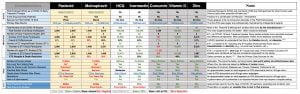
6 takeaways from comparison of Paxlovid and molnupiravir to IVM, HCQ, and OTCs
- Pfizer’s Paxlovid is reported to have very high effectiveness.
- HCQ and the curcumin have effectiveness comparable to Paxlovid.
- Merck’s molnupiravir has very low effectiveness.
- IVM, Vitamin D and Zinc have effectiveness far superior to molnupiravir.
- Paxlovid and molnupiravir have more serious side effects than the others.
- Paxlovid and molnupiravir cost considerably more than the non-patented options.
Are Pfizer and Merck oral treatment EUAs legal?
Remember, federal law stipulates that an EUA can not be granted unless: “There is no adequate, approved, and available alternative to the product for diagnosing, preventing, or treating the disease or condition.”
The data in this analysis indicate there are “adequate and available alternatives for treating” COVID-19. If the data are accurate, then these EUAs have questionable legality.
Adequate and available alternatives for treating COVID-19 do, in fact, exist — the FDA has no scientific justification for ignoring IVM, HCQ, Vitamin D and zinc.
Further, if these FDA-issued EUAs for Paxlovid and molnupiravir violate federal statutes, a closer examination of the FDA’s COVID-19 vaccine EUAs seems warranted.
If the Pfizer and Merck EUAs are legal, then why haven’t HCQ and IVM also been given EUAs?
Considering the six takeaways listed above — plus the fact, as noted in the above table, that there have been successful HCQ and IVM studies much larger (~10x) than those done for Paxlovid and molnupiravir — exactly why has the FDA not issued EUAs for IVM and HCQ?
The comparative in Table 1 adequately demonstrates there is no justification for the FDA’s refusal to grant EUAs to IVM and HCQ.
If the FDA had granted EUAs for HCQ and IVM a year ago, hundreds of thousands of COVID-19 deaths would have been prevented.
What FDA policy, procedure or precedent took priority over preventing hundreds of thousands of American deaths?
What about monoclonal antibody therapies?
Let us now expand our comparisons to include current monoclonal antibody therapies:
Comparison of Major COVID-19 Early Treatment Pharmaceuticals
Click here to increase the size of the chart and access the hyperlinks.
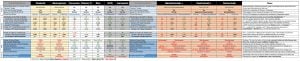
Note that the four key points identified above, regarding the Paxlovid and molnupiravir data, all apply here.
Some of the main takeaways from this comparison are:
- Sotrovimab has the highest effectiveness — but the least amount of data.
- HCQ and curcumin have effectiveness comparable to the bamlanivimab+ and casirivimab+ combinations.
- The first FDA EUA given to bamlanivimab turned out to be a mistake (as health issues were discovered).
- All the monoclonals have more serious side effects than the non-EUA options.
- All the monoclonals cost considerably more than the non-EUA options.
- All the monoclonals have much less safety data than the non-EUA options.
Again, this comparison shows that IVM, HCQ, curcumin, vitamin D and zinc compare very favorably to all of the early treatments that received EUA from the FDA.
John Droz, Jr. is an independent North Carolina physicist.
© 2022 Children’s Health Defense, Inc. This work is reproduced and distributed with the permission of Children’s Health Defense, Inc. Want to learn more from Children’s Health Defense? Sign up for free news and updates from Robert F. Kennedy, Jr. and the Children’s Health Defense. Your donation will help to support us in our efforts.
March 8, 2022
Posted by aletho |
Corruption, Deception, Science and Pseudo-Science, Timeless or most popular | Covid-19, FDA, Merck, Molnupiravir, Paxlovid, Pfizer, United States |
Leave a comment
What happens when you fail in your attempts to create a vaccine for “Covid-19” and then realize you’ve just missed out on a billion-dollar profit-making opportunity?
You hurriedly develop a new drug, rush it through a clinical trial (which you yourself design to ensure good results), and then announce it to the world as the Covid cure we’ve all been waiting for, except no one’s been waiting for it because Covid isn’t any more deadly than the flu, and can be treated by easy-to-procure, inexpensive means (if it exists at all).
But governments are too stupid to know that and you own most of the corrupt politicians making the decisions, so who cares? As long as they’re willing to invest in your new concoction, it doesn’t even have to be necessary, or safe, or effective, or ethical…
Yes, I’m talking about “Molnupiravir”, Merck’s latest poison being promoted as an effective treatment against covid-19 (hang on, I thought that’s what the vaccines were for?).
This unapproved (yes, unapproved) drug costs $700 per course and the US government has just agreed to buy 1.7m courses. That’s a 1.2 BILLION dollar investment.
The deal is part of the Biden administration’s pledge to “respond to the health needs of the public”, but, in actuality, it’s simply a money-siphoning operation, with the American public coming off second best.
Molnupiravir is being sold to the public as the next big breakthrough in Covid-19 treatment off the back of what appears to be a SINGLE study, which was never even completed. Furthermore, the study was conducted by Merck (the makers of the drug), who chose not to disclose any adverse events. If that isn’t suspicious enough, the study was never published in a peer-reviewed journal.
Media press releases are apparently the new standard when it comes to evaluating medical treatments. After all, why would you wait for independent confirmation of your results or objective peer-review when you can get paid journalists, without a shred of medical expertise, to convince the public that they need your new drug?
If government scientists with integrity were in charge of assessing Molnupiravir, not bribed pharma shills, they may be alarmed at the lack of testing or the failure to disclose adverse events, they may even notice that vitamin D has had FAR superior results in combating “Covid-19”. In fact, one study, published in the highly respected and influential Journal of Clinical Endocrinology and Metabolism, found that vitamin D reduced mortality among severe covid-19 patients by 79%.
Compare that to the alleged 50% reduction offered by Molnupiravir for “mild-to-moderately ill” patients. Not to mention the difference in cost. As stated earlier, Molnupiravir runs at $700 per course, while vitamin D costs a fraction of that (probably less than $10!).
Furthermore, while Merck chose not to disclose adverse reactions, years worth of reliable data shows that vitamin D supplementation is extremely safe. And not only is taking vitamin D safe, but it also has a wealth of benefits for a variety of conditions including depression, anxiety, pain, inflammation, hypertension, cardiovascular disease and more.
As was obvious from the very beginning of the “pandemic” when nutritional medicine experts were slandered in the press for recommending “lethal” doses of vitamins, world health has been hijacked by the profit-hungry, empathy-dead, toxic cartel of Big Pharma “medicine”, and our governments have been in bed with them all along.
Furthermore, this has been going on longer than most people think. In fact, more than a decade earlier, governments were locking in billion-dollar deals to buy stockpiles of “Tamiflu”, an equally useless influenza drug that was later found to have no effect on reducing hospitalizations, deaths or complications from influenza.
In fact, Tamiflu was subsequently found to cause a raft of serious adverse reactions including delirium, panic attacks and even hallucinations. The “milder” side effects include nausea and vomiting.
In 2020, an unsealed whistleblower lawsuit revealed that drug company Hoffman-La Roche, the maker of Tamiflu, misrepresented clinical studies and made false claims regarding the effectiveness of the drug to treat influenza. In a 2020 article, Nasdaq quotes attorney Mark Lanier as saying that:
As alleged in the complaint – Tamiflu does not do what Roche promised… Roche hid this fact for many years by selectively citing its studies and suppressing the data about Tamiflu. The company utilized lobbyists, key opinion leaders and ghostwriters to promote Tamiflu with a deceptive promise to governments fearful of an influenza pandemic.”
Nonetheless, the medicine remains on the World Health Organization’s “essential medicines” list. The US and UK governments spent $1.3 billion and $703 million respectively buying “strategic reserves” of Tamiflu in preparation for a global flu pandemic.
At the time, the media (which had not yet totally sold out to Mr. Global) condemned the investments as a waste of money.
Governments made these outlandish investments off the back of “incomplete” data, which is exactly what has occurred with the latest deal to procure Merck’s Molnupiravir. And I’ll bet that when more data comes out, it will be found, once again, that governments wasted millions of dollars of taxpayers’ money.
Bribed politicians would rather deepen their pockets than institute sensible health policies or invest money into procuring and promoting vitamin D, which would not only save lives but help to improve mental health in a woefully deficient population ravaged by anxiety and depression.
As functional medicine expert, Dr. Alex Vasquez states in his latest blog,
… viral infections and the fear and ignorance around them have become a great way for drug companies to sell worthless drugs to their bribed politicians. If we spent that money on heath-promotion rather than fear-promotion, we’d be freer, stronger, healthier, and we’d emancipate ourselves from the mental slavery of fear, ignorance, and dependence.”
Furthermore, the importance of sunlight cannot be overstated, for apart from being our principal source of Vitamin D, it also induces the production of several powerful antiviral metabolites that aid the body in fighting off illness.
This article would not be complete without at least mentioning some of the corrupt dealings, legal cases and blatant crimes that Merck has been involved in over the years. The most egregious of these offenses, and one of the largest scandals in medical history, was the company’s promotion of its anti-inflammatory drug, Vioxx.
During its height, Vioxx was earning Merck $2 billion in revenue per year and estimations have found that around 25 million patients were prescribed the drug. In September 2004, Merck was forced to recall Vioxx on account of it being shown to cause adverse cardiovascular events, such as heart attacks and stroke.
Merck was slammed with a massive class-action lawsuit that was eventually settled for $4.85 billion in 2007. Not only did Merck cover up data suggesting its drug was dangerous, they illegally promoted it as an “off-label” treatment for rheumatoid arthritis, without any indication of its effectiveness.
According to the testimony of Dr. David Graham, the Associate Director for Science and Medicine in FDA’s Office of Drug Safety, Vioxx caused 55,000 premature deaths from heart attacks and stroke.
Even years after taking the medication, patients often still experience problems, indicating that Vioxx may have killed far more people than the conservative estimate made by Dr. Graham, who, after all, works for the FDA, the organization that was responsible for assessing the drug’s safety.
In fact, after analysing US national mortality data starting from the year Vioxx was released up to the year it was withdrawn, Ron Unz, [former] publisher of The American Conservative, came to the startling conclusion that Vioxx may have been responsible for up to 500,000 deaths, mostly in the elderly (age 65+) population.
After the scandal, Merck hired the services of PR company, Burson-Marstellar (whose past campaigns include covering up genocide in Nigeria, fighting health authorities on the issue of second-hand cigarette smoke, and playing down Apple’s abuse of Chinese factory workers), to help clean up its public image and assert them as an “ethical player in the healthcare arena”.
And it seems to have worked, for here we are, 15 years later with another worthless – and possibly quite dangerous – Merck drug being promoted around the world as a treatment for “Covid-19”. Predictably, the UK government has now expressed interest in Molnupiravir, with many more countries expected to follow suit.
But Merck’s criminal history stretches further back than 1999 when Vioxx hit the shelves, for, as early as the 1960s, Merck faced controversy regarding its arthritis medication, Indocin. Although the drug had been approved by the FDA, it was later revealed that the medication had not been adequately tested for efficacy or side effects.
Less than a decade later, Merck’s drug DES (diethylstilbestrol), alleged to prevent miscarriages, was found to be carcinogenic, causing cases of cervical cancer and other gynaecological disorders. And last (but certainly not least), in 2007, Merck’s cholesterol drug, “Zetia” was shown to cause liver disease, a risk that was known to Merck who intentionally concealed the damning trial results.
Before ending this article, I would like to quote a section from one of my previous articles titled Big Pharma Power Vortex vs Zero Deaths From Vitamins, as I believe it’s particularly pertinent here:
For those who think the media are simply biased towards pharmaceutical drugs, this is a naive assumption. Behind the headline-making newspapers, magazines and television programs is a coordinated socio-political power vortex seeded in Big Pharma/Big Money corruption.
Drawing on the work of Dr. Alex Vasquez, I present here a brief summary of how the system works:
-
- Medical journals are inherently biased towards publishing pro-drug articles. These then serve as advertisements for the pharmaceutical industry which pays millions of dollars for journal reprints.
- Mainstream media outlets such as newspapers, magazines, TV shows and online publications then republish the pro-drug information, much to the delight of the pharmaceutical industry.
- Medical science and mainstream media then become a pro-drug echo chamber for biased, Big Pharma propaganda.
- Drug companies increase their sales, gaining profits and building influence to the point where they have more power than governments.
- Pharmaceutical companies infiltrate medical education, media, and health policy; they pay “researchers” to publish and teach information favourable to the pharmaceutical paradigm.
- Governments then write policies and make investments that favour drug companies rather than the citizens of that country.
At the time of writing, Molnupiravir has not yet been FDA approved. However, Merck has asked the FDA to grant “emergency” approval on account of the drug’s alleged effectiveness. Considering the decisions made by the FDA thus far, along with the fact that funding from pharmaceutical companies like Merck makes up 75% of the FDA’s drug review budget, what do you think the chances are of Molnupiravir’s approval being granted?
And would you trust a doctor who prescribed it to you?
October 31, 2021
Posted by aletho |
Corruption, Mainstream Media, Warmongering, Science and Pseudo-Science, Timeless or most popular | Covid-19, Merck, Molnupiravir, UK, United States |
Leave a comment
All dangerous diseases are best treated early. A major failure of the global COVID-19 strategy has been to wait a week for the disease to become dangerous, when breathing becomes a problem. Early treatment of COVID, even for those with mild symptoms, prevents later hospitalization. There are several early treatment drugs showing promise but ivermectin leads the pack regarding safety, effectiveness and price. Unfortunately, the biggest players in Western mainstream media are members of the Trusted News Initiative (TNI). The TNI is a story for another day but it’s remarkable that big media companies barely report that they have agreed to promote global vaccination and to make sure any “disinformation myths are stopped in their tracks”[i]. Unfortunately, as a result early treatment seems to be seen as a disinformation myth and is not mentioned. Early treatment is vital in treating serious diseases and COVID-19 is no exception.
Considering the human and economic cost, the avoidance of early treatment with a very safe, effective and off-patent drug is a criminal tragedy of immense proportions and a winning lottery ticket for some pharmaceutical companies that are designing and selling novel patented drugs that could not compete with ivermectin in a free market. Mercks’ molnupiravir, for instance, is seeking an Emergency Use Authorization (EUA) from the FDA and “Merck will receive approximately $1.2 billion to supply approximately 1.7 million courses of molnupiravir to the United States government.”[ii]
Ivermectin doesn’t need an EUA because it passed trials in 1986. It just needs to be recommended to treat COVID-19. However, if ivermectin was officially recognized as an effective treatment, it would legally prevent molnupiravir’s EUA until it passes trials and thus delay or endanger the $1.2 billion deal. An aggravating factor is the fact that molnupiravir (EIDD-2801) could cause harmful genetic mutations. [iii]
In the face of a public health crisis such as the COVID-19 pandemic, government authorities and international organizations have traditionally looked to the World Health Organization (WHO) for guidance – trusting that the WHO is free of commercial interests. Originally funded entirely by member states, the organization now receives less than 20% of its budget from these states and the rest from donors[iv] with their own financial and strategic agendas. Margret Chan, the previous Director General of the WHO, said in 2015: “I have to take my hat and go around the world to beg for money and when they give us the money [it is] highly linked to their preferences, what they like. It may not be the priority of the WHO, so if we do not solve this, we are not going to be as great as we were”. [v]
Veteran journalist Robert Parsons explains that “the Smallpox eradication program was funded entirely by donors. That may have led to the problem that for special projects it [the WHO] has to raise the funding. But the private sector is unlikely to get involved unless it shows profit … Consequently, there is little independent public health research”.[vi] Since then, the undue financial influence of private stakeholders has further grown at the WHO. Donations come with caveats so that the organization is compromised on a number of issues that involve the interests of its donors.
In 2010, for instance, after the H1N1 flu pandemic, an investigative inquiry by the British Medical Journal (BMJ) and the Bureau of Investigative Journalism found that “key scientists advising the World Health Organization on planning for an influenza pandemic had done paid work for pharmaceutical firms that stood to gain from the guidance they were preparing. These conflicts of interest have never been publicly disclosed by WHO, and WHO has dismissed inquiries into its handling of the A/H1N1 pandemic as ‘conspiracy theories’.” [vii] These advisors managed to convince the UK government to spend more than $7 billion on a vaccine that was never needed.[viii]
As of 2021, conflicts of interest such as these continue to be a problem – the undue influence of private stakeholders being a prime example. The Bill and Melinda Gates Foundation (BMGF) is the second largest funder of the WHO after the USA. Gates, however, also founded and funds The Vaccine Alliance (GAVI). In the period 2018–19, their combined voluntary contribution to the WHO was 27%[ix] greater than the US voluntary contribution, making Gates’ influence pervasive. As funds by the Gates conglomerate are earmarked for specific projects, the WHO doesn’t decide how the respective money is spent, Gates does.
In addition to the undue financial influence exerted by the BMGF, there is also an overlap of personnel between the WHO and Gates’ endeavors. Tedros Adhanom, the current WHO Director General, has previously served on the board of GAVI and as the chair of the Gates funded Global Fund.[x] Arguably, he is still influenced by his previous employer’s ideology and financial power.
Gates’ priorities have become the WHO’s. The main priority of Gates is global COVID-19 vaccination, not public health systems providing early treatment. He has been pushing vaccination onto the global agenda since 2012. The power of Gates Foundation funding has dictated a drive towards vaccinations and away from other essential public health measures, a move which has been criticized for years by international NGOs involved in the health and development field.
Generally, Gates also believes that capitalism is more efficient than public health agencies when it comes to reaching his goals in the area of global health.[xi] Capitalism is usually more efficient than government but it values profits above people. Accordingly, Gates as well as the pharmaceutical companies his foundation is invested in and whose products he is pushing globally are making billions from their endeavors. Morgan Stanley believes that Pfizer, for example, could earn $100 billion from vaccines developed with public tax money from the US, Germany and other places in the next five years.[xii] Pfizer is partnered with BioNTech. The Gates Foundation has investments in both companies, putting $55 million into BioNTech alone in September 2019. The Gates Foundation also owns shares in Merck which is positioning the drug molnupiravir on the market hoping to make billions from it.
When it comes to ivermectin – in its off-patent form, Gates is funding work on a patentable, injectable form.[xiii] Organizations tied to Gates have taken an antagonistic stance thus far. Notably, GAVI has been going all out by running paid google ads against the use of ivermectin in COVID-19.[xiv]
Given the significant financial and ideological conflict of interest of its main donor, the WHO recommendation on early treatment with an off-patent, highly efficient, safe and cheap drug such as ivermectin needs to be critically examined. In the WHO ivermectin guideline, despite showing a reduction of deaths by 80%,[xv] the organization puzzlingly recommends against ivermectin’s use.
The WHO’s guideline document is “based on a living systematic review and network meta-analysis from investigators at McMaster University”.[xvi] McMaster University (including any of its direct affiliates) should have excused itself from conducting the guideline, given it has several objective conflicts of interest when it comes to ivermectin. For one, McMaster itself is designing and producing second generation COVID-19 vaccines.[xvii] It intends to produce hundreds of thousands of doses. It is likely that these experimental products would receive greater scrutiny if there is a viable safe prophylactic and treatment option for COVID-19. Secondly, McMaster University, like the WHO itself, receives millions in funding from the Gates Foundation. Additionally, McMaster, again like the WHO, shares personnel with the Gates Foundation.
Edward Mills, for example, is both a McMaster associate professor and the clinical trial advisor for the Gates Foundation. In addition he has recently been appointed as the principal investigator of the Gates-funded Together Trial that is currently evaluating repurposed drugs such as ivermectin for their use in COVID-19[xviii]. Asked for comment, Mills denied that the Gates Foundation was having any “say on the conduct of the trial” even though he himself is it’s principal investigator and employed by the Gates Foundation. As past experiences show, no product should ever be tested in a trial funded by those gaining or losing financially or ideologically from it. Thus, ivermectin trials are best not done by anyone with a financial and ideological investment in competing drugs and vaccines. No reputable organization or government agency should be basing their opinion of ivermectin on trials conducted by the Gates Foundation or any other party with a conflict of interest.
The recently announced Oxford University trial of Ivermectin shares a similar conflict as Oxford is profiting from the sales of the AstraZeneca vaccine and questions have been raised about the proposed trial possibly sabotaging the result by admitting elderly people already sick for 14 days but limiting the Ivermectin dose to three treatments.
Unsurprisingly, in a recent interview, Edward Mills seemed to be downplaying the effect of ivermectin. “The evidence on prophylaxis use of ivermectin is not very convincing”, Mills doubts, even though ivermectin is not being evaluated as a prophylactic in his own trial. Data from different clinical trials clearly shows that ivermectin is exceptionally effective, specifically as a prophylactic. Bryant et al. (2021) who analyzed the existing data from clinical trials according to conservative Cochrane meta-analysis standards – a gold-standard in science – found that “ivermectin prophylaxis reduced covid-19 infection by an average 86%” with the best-dosed study reaching an effectiveness of 91%.[xviv] There have been several studies that show that the regularity of the prophylactic dose is important with a weekly dose being more effective than bimonthly. Edward Mills curiously doesn’t find the prophylactic data interesting. The big money is not in running generic repurposed drug trials but in pharmaceutical company trials fighting for market share.
Mills also suggests ivermectin might be efficient as a treatment but emphasizes the need for other drug interventions. “I am very optimistic that it will – it will just be one component of the interventions that we need.“[xix] While other components can be useful additions, downplaying the effect of ivermectin is not warranted. An expert meta-analysis by Karale et al. (2021) including researchers from the renowned Mayo Clinic comes to the conclusion that when given early in mild or moderate COVID-19, ivermectin reduces mortality by 90%.[xx] The findings further corroborate the results of the scientific review conducted by Kory et al. (2021) that has been published in the American Journal of Therapeutics and shows ivermectin to be significantly effective in the treatment of COVID-19.[xxi]
Given the conflicts of interest of McMaster University as well as the dubious interrelations between McMaster personnel and private stakeholders such as the Gates Foundation and other industry-related companies, the WHO should not have accepted McMaster’s involvement in the guidelines on ivermectin. Further, the WHO should ensure that no undue influence is exerted by its own donors – a task it has not yet been able to achieve.
Questions sent to the WHO Ethics Office, asking for clarity about its recommendation against the use of ivermectin, were answered. However the organization refused to supply minutes of the meeting on ivermectin. It further declares that no interview will be granted. It does “not consider an assessment of ivermectin for prophylactic use in COVID-19 to be warranted”. It also does not consider trials by drug companies to be “biased per se” even though major pharmaceutical corporations have been repeatedly convicted of substantial fraud, manipulation and concealment of evidence and paying billions of dollars in fines. There was also an intimidatory confidentially clause in the WHO correspondence despite the author stating that they are writing about ivermectin.
The WHO needs to prove that it followed a scientific and ethical process in its recommendation against the use of ivermectin. Public trust is crucial to beat the pandemic. We cannot continue to have the Gates foundation determining the WHO decisions on Ivermectin given the large conflict of interest. The minutes of the meeting in which the recommendation against ivermectin was taken need to be made public. The public needs to be told and shown invoices with regards to who paid for the steps that informed the WHO ivermectin guideline. The conflicts of interest of major WHO donors and the employer (McMaster University) of the scientists that are responsible for the guideline need to be made transparent. Without this, the recommendation against the use of ivermectin, remains mired in suspicion of corporate overreach.
Few incidences make the general problem more apparent than the following: The WHO’s Chief Scientist, Soumya Swaminathan, was on Twitter recently warning Indian nationals in the midst of a deadly COVID-19 wave not to take ivermectin citing Merck marketing material.[xxii] As a reminder, the pharmaceutical giant Merck is hoping to make billions with its potentially mutagenic molnupiravir which won’t happen if off-patent ivermectin is a standard of care. Swaminathan’s statement went against the official Indian recommendation in favor of ivermectin issued by the most highly regarded health association in India after the country had been confronted with a new COVID-19 variant and regions were seeing improvement with early Ivermectin treatment. In the aftermath, the Indian Bar Association served Swaminathan a legal notice for spreading dangerous disinformation and causing a significant number of deaths by discouraging the use of a life-saving drug.[xxiii] Swaminathan’s tweet has since been deleted. The legal notice for aggravated offences against humanity concerning ivermectin has by now been extended to the WHO Director General Tedros Adhanom.[xxiv]
The once noble idea of a global public health system working for mankind’s best interests has been replaced by an organization largely driven by the financial and ideological interests of private stakeholders. This is not a new phenomenon. International groups have long called for a reform of the WHO. In a global pandemic, the disastrous consequences of these pervasive organizational issues become even more apparent.
Distinguished scientists and frontline physicians from all over the world without conflicts of interest have called for the immediate use of ivermectin against COVID-19. Numerous randomized controlled trials (RCTs) and expert meta-analyses performed according to the highest standards of science have proven ivermectin’s effectiveness and reaffirmed its safety. Yet, a front of organizations including a significantly compromised WHO as well as wealthy private stakeholders with financial and ideological conflicts of interest have blocked the usage of this life-saving medication. Some observers have called this a crime against humanity which should be subjected to public scrutiny and an official criminal investigation. Ivermectin, meanwhile, should be used immediately to save lives as it has already been done successfully in a number of places worldwide.
[i] https://www.bbc.com/mediacentre/2020/trusted-news-initiative-vaccine-disinformation
[ii] https://www.merck.com/news/merck-announces-supply-agreement-with-u-s-government-for-molnupiravir-an-investigational-oral-antiviral-candidate-for-treatment-of-mild-to-moderate-covid-19/
[iii] https://www.sciencemag.org/news/2020/05/emails-offer-look-whistleblower-charges-cronyism-behind-potential-covid-19-drug
[iv] https://www.who.int/about/funding/assessed-contributions
[v] https://vimeo.com/ondemand/trustwho/260921911
[vi] https://www.youtube.com/watch?v=mBz5FR8Mf5c
[vii] ] https://www.bmj.com/content/340/bmj.c2912.full
[viii] https://www.theguardian.com/business/2010/jun/04/swine-flu-experts-big-pharmaceutical
[ix] http://open.who.int/2018-19/contributors/overview/vcs
[x] https://thegrayzone.com/2020/07/08/bill-gates-global-health-policy/
[xi] https://www.wsj.com/articles/SB1021577629748680000
[xii] https://www.businessinsider.co.za/pfizer-could-sell-96-billion-dollars-covid-vaccines-morgan-stanley-2021-5?r=US&IR=T
[xiii] https://trialsitenews.com/gates-foundation-funded-french-research-group-commences-ivermectin-clinical-trial-targeting-covid-19/
[xiv] https://trialsitenews.com/my-favorite-conversation-starters/
[xv] https://app.magicapp.org/#/guideline/5058/section/67421
[xvi] WHO Therapeutics and COVID-19 Living Guideline. 31.3.2021.
[xvii] https://urbanicity.com/hamilton/city/2021/02/mcmaster-university-is-developing-two-covid-19-vaccine-candidates/
[xviii] https://brighterworld.mcmaster.ca/articles/mcmaster-researchers-leading-international-study-to-test-three-widely-available-drugs-for-early-covid-19-treatment/
[xviv] https://osf.io/k37ft/ (peer-reviewed and accepted for publication in the American Journal of Therapeutics)
[xix] https://www.halifaxexaminer.ca/featured/whats-the-deal-with-ivermectin-and-covid/
[xx] https://www.medrxiv.org/content/10.1101/2021.04.30.21256415v1
[xxi]https://journals.lww.com/americantherapeutics/fulltext/2021/06000/review_of_the_emerging_evidence_demonstrating_the.4.aspx
[xxii] https://timesofindia.indiatimes.com/india/who-warns-against-use-of-ivermectin-to-treat-covid-19/articleshow/82546558.cms
[xxiii] https://trialsitenews.com/indian-bar-association-serves-legal-notice-upon-dr-soumya-swaminathan-the-chief-scientist-who/
[xxiv] https://drive.google.com/file/d/1dZLKvOib6PjhEGXOLIdGod2ZQNGPnkoW/view?usp=sharing
June 27, 2021
Posted by aletho |
Deception, Science and Pseudo-Science, Timeless or most popular | Covid-19, Gates Foundation, GAVI, Ivermectin, Molnupiravir, Trusted News Initiative, WHO |
Leave a comment

 Aletho News
 Aletho News