The Illusion of Debate
By Jason Hirthler | CounterPunch | December 2, 2014
A recent article in FAIR reviewed the findings of its latest study on the quality of political “debate” being aired on the mainstream networks. It studied the run-up to the military interventions in both Iraq and Syria. Perhaps the arbiters of the study intended to illustrate what we’ve learned since the fraudulent Iraq War of 2003. Well, it appears we’ve learned nothing.
FAIR spent hours painfully absorbing the misinformation peddled by such soporific Sunday shows as CNN’s State of the Union, CBS’s Face the Nation, NBC’s Meet the Press, and ABC’s This Week, plus some of the more popular weekly political programming including ADHD-inducing CNN’s Situation Room, Fox News Channel’s Special Report, the venerable sedative PBS NewsHour, and MSNBC’s Hardball. You know the cast of characters: glib George Stephanopoulos, forthright Candy Crowly, harrowing Wolf Blitzer, and stentorian Chris Matthews. Images of their barking maws are seared into the national hippocampus.
Overall, 205 mostly government mouthpieces were invited to air their cleverly crafted talking points for public edification. Of them, a staggering sum of three voiced opposition to military action in Syria and Iraq. A mere 125 stated their support for aggressive action.
Confining its data to the Sunday shows, 89 guests were handsomely paid to educate our benighted couch-potato populace. One suggested not going to war. It stands to reason that considered legal arguments against these interventions got the short shrift, too.
The media consensus on Syria and Iraq isn’t an isolated instance of groupthink. Far from it. It conforms to a consistent pattern, one that has at its core a deliberate disregard for international law and efforts to strengthen transnational treaties and norms regarding military action. (Although transnational law regulating trade is highly favored, for obvious reasons.)
Here the New York Times uncritically repeats Israel casualty figures from the recent attack on Gaza. The journalist, Jodi Rudoren, gives equal legitimacy to sparsely defended claims from Tel Aviv and “painstakingly compiled research by the United Nations, and independent Palestinian human rights organizations in Gaza.” She adopts a baseless Israeli definition of “combatant”, ignoring broad international consensus that contradicts it. She dubiously conflates minors with adults, and under-reports the number of children killed. And so on. All in the service of the pro-Israel position of the paper.
In 2010 Israel assaulted an aid flotilla trying to relieve Palestinians under the Gaza blockade. Author and political analyst Anthony DiMaggio conducted Lexis Nexus searches that demonstrate how U.S. media and the NYT in particular scrupulously avoid the topic of international law when discussing Israeli actions. In one analysis of Times and Washington Post articles on Israel between May 31st and June 2nd, just five out of 48 articles referenced international law relating to either the flotilla raid or the blockade. DiMaggio dissects several of the methods by which Israel flaunts the United Nations Charter. He adds that Israel has violated more than 90 Security Council resolutions relating to its occupation. You don’t get this story in the American mainstream. But this is typical. U.S. media reflexively privileges the Israeli narrative over Arab points of view, and barely acknowledges the existence of dozens of United Nations resolutions condemning criminal actions by Israel.
It’s the same with Iran. For years now, Washington has been theatrically warning the world that Iran wants to build a bomb and menace the Middle East with it. That would be suicidal. It is common knowledge among American intelligence agencies, and any others that have been paying attention, that Iran’s foreign policy is deterrence. But this doesn’t stop the MSM from portraying Tehran as a hornet’s nest of frothing Islamists.
Kevin Young has done a telling survey of articles on nuclear negotiations between the U.S. and Iran. Some 40 editorials written by the Times and the Post were vetted. Precisely zero editorials acknowledged international legal implications of U.S. public threats and various subversions led by Israel, such as assassinating scientists and conducting cyber-attacks, both innovations on standard violations of sovereignty. However, 34 of the pieces “said or implied” that Iran was seeking a nuclear weapon. Forget that 16 American intelligence agencies stated that Iran had no active nuclear weapons program. These papers of record prefer to trade in innuendo and hearsay, despite assessments to the contrary. More than 80% of the articles supported the crippling U.S. sanctions that are justified by the supposed merit of the bomb-building claim.
Prior to Young’s work, Edward Hermann and David Peterson looked at 276 articles on Iran’s nuclear program between 2003 and 2009. The number itself is staggering, more so when stacked against the number of articles written over the same period about Israel’s nuclear program: a mighty three.
This is interesting considering the posture of both countries in relation to international treaties. Israel freely stockpiles nuclear weapons and maintains a “policy of deliberate ambiguity” about its nuclear weapons capacities, despite frequent efforts by Arab states to persuade it to declare its arsenal (which is estimated by some to be in the hundreds). Also, it has yet to sign the Treaty on the Nonproliferation of Nuclear Weapons (NPT) that has been signed by 190 nations worldwide. This intransigent stance has marooned the broadly embraced idea of working to establish a nuclear weapons free zone in the region.
Contrast Israel’s behavior with that of Iran itself, which has permitted extensive inspections of its nuclear facilities. The Times recently noted the country’s main nuclear facilities were “crawling with inspectors.” Iran is also a party to the NPT and is a full member of the IAEA. It continues to try to work toward a reasonable solution with the West despite debilitating sanctions levied on it by the United States. America has unduly pressured the IAEA to adopt additional protocols that would require prohibitively stringent demands on Iran, rendering the possibility of a negotiated solution comfortably remote from an American standpoint. (These additional demands reportedly include drone surveillance, tracking the origin and destination of every centrifuge produced anywhere in the country, and searches of the presidential palace. All of this passes without comment from our deeply objective journalist class.)
Coverage of Iraq is no different, particularly in advance of periodic illegal war of aggression against it. Former U.N. Special Rapporteur on Palestine Richard Falk and author Howard Friel conducted a survey in 2004 assessing the New York Times’ pre-war coverage of Iraq in 2003. In more than 70 articles on Iraq, the Times never mentioned “UN Charter” or “international law.” The study also found “No space was accorded to the broad array of international law and world-order arguments opposing the war.” But such arguments only exist outside of Western corridors of power in Washington, London, Paris, and Tel Aviv.
This isn’t debate. Real debate is pre-empted by internal bi-partisan consensus on some basic issues: maintain a giant garrison state, shrink the state everywhere else, preference corporations over populations, restrict civil liberties to secure status quo power structures. So when it comes to Iran, Iraq, Syria and the like, the question isn’t whether to go to war, but what kind of war to fight. Hawks want bombs. Doves want sanctions. Publicans want Marines. Dems want a proxy army of jihadis. They both want Academi mercenaries. (Obama hired out the gang formerly known as Blackwater to the CIA for a cool $250 million.) And when we’ve finished off ISIS, the question won’t be about an exit strategy, but whether to head west to Damascus or east to Tehran.
The question isn’t whether to cut aid to Israel given its serial criminality in Gaza and the West Bank, but how fast settlements can annex the Jordan Valley without attracting more international opprobrium. (International law, again, set aside.)
On the domestic front, the question isn’t whether to have single payer or private healthcare, but whether citizens should be forced to purchase private schemes or simply admonished to do so. The question isn’t whether or not to keep or strengthen New Deal entitlements, but how swiftly they can be eviscerated. The question isn’t whether or not to surveil the body politic, but where to store the data, and whether or not to harvest two-hop or three-hop metadata. The question isn’t whether or not to hold authors of torture programs accountable, but how much of the damning torture report to redact so as to leave them unprosecutable. The question isn’t whether or not to regulate Wall Street but, as slimy oil industry lawyer Bennett Holiday put it in Syriana, to create “the illusion of due diligence.”
All this is not to say the MSM isn’t aware of alternative viewpoints. It is, but it only acknowledges them when they can be used to justify a foregone conclusion. In the past year, the MSM has nearly become infatuated with international law. Friel has tracked the paper of record’s response to the Ukrainian fiasco. What did he find? When Russia annexed Crimea, the Times inveighed against the bloodless “invasion” as a gross violation of international law. Eight different editorials over the next few months hyperventilated about global security, castigating Russian President Vladimir Putin for his “illegal” violation and his “contempt for,” “flouting,” “blatant transgression,” and “breach” of international law. Calls were sounded to “protect” against such cynical disregard of global consensus. Western allies needed to busy themselves “reasserting international law” and exacting heavy penalties on Russia for “riding roughshod” over such sacred precepts as “Ukrainian sovereignty.”
Quite so, as Washington supports the toppling of democratically elected governments in Kiev and Tegucigalpa, sends drones to ride “roughshod” over Yemeni, Pakistani, Somali and other poorly defended borders; and deploys thousands of troops, advisors, and American-armed jihadis to patrol the sectarian abattoirs of Syria, Iraq and Afghanistan. But better to exonerate ourselves on those counts and chalk it up to the fog of war. After all, we follow the law of exceptionalism, clearly defined by Richard Falk as, “Accountability for the weak and vulnerable, discretion for the strong and mighty.”
Jason Hirthler is a veteran of the communications industry. He lives in New York City and can be reached at jasonhirthler@gmail.com.
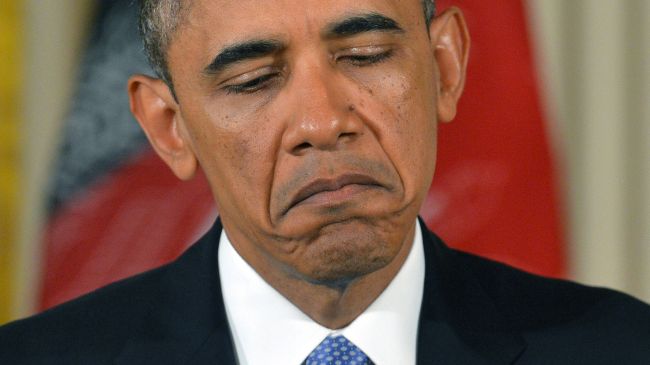
How Do You Know When President Obama is Lying?
By JEFF COHEN | CounterPunch | July 8, 2013
I was a young person when I first heard the quip: “How do you know when the President is lying? His lips are moving.” At the time, President Nixon was expanding the war in Vietnam to other countries and deploying the White House “plumbers” to commit crimes against antiwar leakers.
Forty years have passed. Sadly, these days, often when I see President Obama moving his lips, I assume he’s lying.
Like Nixon, our current president is prolonging an endless, borderless and counter-productive war (“on terror”) and waging a parallel war against “national security” leakers that makes the plumbers’ burglary of Daniel Ellsberg’s psychiatrist’s office look almost quaint.
The World War I vintage Espionage Act, originally used to imprison socialists for making antiwar speeches, has been used by the administration against whistleblowers with a vengeance unprecedented in history: eight leakers have been charged with Espionage under Obama, compared to three under all previous presidents. The Obama administration has prosecuted not a single CIA torturer, but has imprisoned a CIA officer who talked about torture with a journalist. National Security Agency official Thomas Drake, who was unable to get abuses fixed internally, now has a criminal record for communicating with a reporter years ago about sweeping domestic surveillance.
So there I was watching Obama’s lips move about NSA whistleblower Edward Snowden at a June 27 press conference. Saying he wouldn’t be “scrambling military jets to go after a 29-year-old hacker,” Obama added that he would not “start wheeling and dealing and trading on a whole host of other issues, simply to get a guy extradited.”
I didn’t believe a word of it.
Given Obama’s war on whistleblowers and journalists who utilize them, and given the Army’s abusive treatment of military whistleblower Bradley Manning (apparently aimed at getting him to implicate WikiLeaks), it’s inconceivable that Obama was truly blasé about Snowden. To deter future whistleblowers, Snowden would have to be caught and made an example of – and probably mistreated (like Manning, in hopes of getting him to turn against WikiLeaks and even journalist Glenn Greenwald).
As his lips were moving, Obama knew well that he would go to extreme lengths to prevent this articulate young man from securing asylum in some Latin American country, where he could continue to inform the world’s media about the Surveillance State that has blossomed alongside the Warfare State under the Bush and Obama administrations.
That Obama wasn’t truthful became clear when the U.S. campaign of “wheeling and dealing” led to possible asylum countries retreating in fear one after another (Vice President Biden was deployed to pressure Ecuador’s president by phone). And even clearer with last week’s outrageous, international law-breaking that effectively forced down the presidential plane of Bolivian President Evo Morales.
And if Obama eventually does scramble jets to force down a plane with Snowden on board, the commander-in-chief will be applauded for taking bold and decisive action by mainstream TV talking heads, “national security” experts and the opposition he seems most intent on pleasing: conservatives. Criticism from civil libertarian and peace voices (or unions and environmentalists, for that matter) has rarely daunted Obama.
The bipartisan consensus in support of our bloated Military/Surveillance State – which so undermines our society as a whole – is reflected in Congress and both the Bush and Obama administrations, as well as mainstream media.
When it comes to issues of U.S. militarism and spying, the allegedly “progressive” MSNBC often seems closer to the “official network of the Obama White House” than anything resembling an independent channel. With a few exceptions (especially Chris Hayes), MSNBC has usually reacted to expanded militarism and surveillance by downplaying the abuses or defending them.
Had McCain or Romney defeated Obama and implemented the exact same policies, treating whistleblowers like Manning and Snowden as foreign espionage agents, one would expect MSNBC hosts to be loudly denouncing the Republican abuses of authority.
But with Obama in power, a number of MSNBC talking heads have reacted to the Snowden disclosures like Fox News hosts did when they were in hysterical damage control mode for Bush – complete with ridiculously fact-free claims and national chauvinism that we’ve long come to expect from the “fair & balanced” channel.
As Snowden arrived in Russia from Hong Kong, MSNBC host Ed Schultz blustered on about Snowden as a “punk” and “coward.” Railing about the “security of the country” in tones Hannity would approve of, Schultz questioned Snowden’s patriotism and credibility, asking: “If the United States of America is doing something so egregiously wrong in its surveillance program, how come he’s the only one speaking up?
In O’Reilly-like blissful ignorance, Schultz seemed unaware of the three NSA whistleblowers who’d loudly spoken up way earlier than Snowden – and gathered for an illuminating USA Today interview a week before his tirade.
I watched one MSNBC host function as an auxiliary prosecutor in Obama’s Justice Department, going after Snowden – while trying to link WikiLeaks and journalist Glenn Greenwald to criminal flight.
MSNBC’s Melissa Harris-Perry has been condemning Snowden by contrasting him with civil disobedients who “love their country” and submit to arrest – while Snowden just wants to “save his own skin.” She proclaimed: “This is different. This is dangerous to our nation.” Should we similarly dismiss Dan Ellsberg, who leaked the top secret Pentagon Papers to a dozen newspapers in 1971 by going on the lam from the FBI. Or Watergate’s “Deep Throat,” who saved his own skin by hiding his identity for 30 years after leaking secrets that helped crash the Nixon presidency?
In a bizarre monologue attacking Snowden (who’s risked plenty, in my view), Harris-Perry hailed those who engage in civil disobedience for being willing “to risk your own freedom, your own body in order to bring attention to something that needs to be known. Martin Luther King Jr. was arrested, attacked, smeared. Nelson Mandela went to prison for 27 years.” (My emphasis.)
Nelson Mandela? He wasn’t a civil disobedient who gave himself up. He was a fugitive, fleeing the apartheid police. He was on the lam domestically, like Snowden is now internationally. And some reports indicate that South African authorities were able to nab Mandela thanks to the U.S. CIA (one of the agencies now working to apprehend Snowden).
MSNBC’s Rachel Maddow has also disappointed. After doing a typically thorough presentation on the force-down of President’s Morales’ plane, she ended her report by expressing displeasure only that Washington had apparently gotten allies to go out on the limb “for nothing.” Her objection to the harassment seemed to be: it hadn’t succeeded. I didn’t hear opposition to the action had Snowden actually been on board and apprehended.
The Snowden/NSA story proves once again that – especially on so-called “national security” issues – we need strong, independent media not enmeshed with the corporate/political power structure and not allied with one of the two corporate parties.
We can’t count on MSNBC to heed the lesson taught by legendary independent journalist I.F. “Izzy” Stone, after years reporting from Washington: “All governments lie and nothing they say should be believed.”
Jeff Cohen was an MSNBC pundit and senior producer in 2002-3 until being terminated for political reasons, along with Phil Donahue, on the eve of the Iraq invasion. He is director of the Park Center for Independent Media at Ithaca College, founder of the media watch group FAIR, and author of Cable News Confidential: My Misadventures in Corporate Media. He cofounded the online action group RootsAction.org, which has petitioned for Snowden.
MSNBC Aligns With Objectives of the State
By MICHAEL ARRIA | CounterPunch | June 5, 2013
Celebrated liberal news outlet MSNBC has made some new hires, a couple weeks ago one of them being Mother Jones blogger Adam Serwer. According to TVNewser’s Alex Weprin “MSNBC.com is staffing up ahead of a major relaunch later this year. The relaunched site will focus on the world of politics and the personalities that populate MSNBC’s programming. There will also, however, be plenty of political news and information.”
Recently journalist Charles Davis tweeted about an online run-in he once had with Serwer. Disturbed by the military culture that had permeated a women’s soccer game, he blogged, “No other country on Earth, barring perhaps North Korea, worships its military in such a prevalent, mindless and such seemingly oblivious fashion as the good ‘ol USA.”
This perturbed MSNBC’s new hire, who was writing for the American Prospect at the time, and prompted him to post this comment “We should support servicemembers unconditionally because their service is unconditional, and I have yet to hear a rational argument for why allowing servicemembers to disregard civilian authority over the military is a good idea, which is essentially what calling for civil disobedience by servicemembers is.”
Serwer continued:
“What if General Petraeus decides that the Afghan surge isn’t big enough, so he’s morally obligated to take over and make the decision for himself, to save us from ourselves? He’s morally obligated to protect his country in the way he thinks is best right? Who cares what the law says?
The whole point of civilian control is to ensure that the people with guns don’t get to do whatever they want, that the power given them can only be used with the consent of the political branches, elected by the people. And if you don’t think that power is being used properly, than you can change that through the political process.”
Davis responded on his blog:
“But no one’s arguing, of course, that soldiers should merely do whatever they feel. The argument, at least as I have made it, is that killing people is wrong, except in instances of absolute self-defense, no matter what politician or politically appointed court sanctions it. Now, abiding by one’s conscience is typically consistent with the whole not murdering people thing — poor foreigner or not — but where it differs, it’s subservient to that latter, foundational principal of any truly civilized society. Again, the argument is that people ought to defy orders to kill — and ostracize, rather than worship, the institutions tasked with carrying out the state-sponsored carnage — not that they should kill more people if they feel like it.
And instead of wading through a corrupt political process designed to thwart change and serve the needs of the powerful, the legitimacy of which Serwer asserts but does not bother to demonstrate, it’s the responsibility of all human beings with a capacity for moral thought, be they uniformed or not, to reject blind obedience [to] authority and the ‘legal’ facade it provides to immoral acts. The idea that only the political process is an acceptable means of challenging injustice treats the average person as but an unthinking cog in the machinery of the state, bound to abide by whatever ‘lawful’ edicts their rulers issue, a worldview that does not allow for principled civil disobedience. We, soldier and citizen, are not entitled to determine what’s right and wrong, whether it be a preemptive war or, say, the institution of slavery — that’s left to legislatures.”
It’s probably worth noting that Serwer’s entire response to all of Davis’ comments was, “We do have some job openings, but nothing quite as prestigious as writing for Code Pink, I’m sad to say.”
This wouldn’t be the first time that someone at MSNBC had worked out a bizarre calculus regarding his or her relationship to the state. For example, during the recent ten-year anniversary of the Iraq War, Ezra Klein (who economist Doug Henwood has referred to as a, “Neoliberal über-dweeb”) explained that his support of the Bush administration’s invasion was predicated on an “analytical failure.” “It wasn’t worth doing precisely because the odds were high that we couldn’t do it right,” wrote Klein.
The bizarre and robotic nature of this “apology” aside, the political theorist Corey Robin immediately spotted something fishy in Klein’s grammar, “Klein doesn’t think a state invaded another state; he thinks ‘we’ went to war. He identifies with the state. Whether he’s supporting or dissenting from a policy, he sees himself as part of it. He sees himself on the jeeps with the troops. That’s why his calls for skepticism, for not taking things on authority, ring so hollow. In the end, he’s on the team. Or the jeep.”
After the tragic Trayvon Martin murder, Touré appeared on Piers Morgan’s program and took him to task for his interview with the family of Martin’s killer, George Zimmerman. One of Touré ‘s main problems with the interview seemed to be Morgan’s inability to understand how American journalism functioned. “What you understand as challenging, perhaps, maybe that’s what goes in England. That’s not what we do in terms of challenging in America…I would have liked to see him pushed and challenged, more followup, more pushback, more research to understand.”
Of all the things to criticize Piers Morgan for, the veracity of the American media in comparison to England’s is, probably, one of the least sensible. Later, when Touré sparked something of a controversy by arguing that President Obama had the right to assassinate an American citizen, he demonstrated very little of his aforementioned pushback. On a panel discussing drone strikes, the media personality seemed completely unaware that the administration had killed a 16-year-old kid: “What do you mean a 16-year old who is killed? I’m not talking about civilians.” After Steve Kornacki and S.E. Cupp explained to Touré who Abdulrahman Al-Awlaki was, he shrugged, “If people are working against America, then they need to die.”
The political theorist Falguni Sheth connected the dots between the two situations, “There is a certain nativist, if not xenophobic, consistency on Touré’s part. Rightfully insisting on paying attention to the racist context surrounding Martin’s death, he nevertheless challenges Morgan’s attitudes on the grounds that Morgan is not “from here.” For all of Touré’s understanding about the racial context of unfair murders, he appears to be ignorant of and indifferent to the fact that a young Muslim (American) boy was killed by a drone under the auspices of the POTUS. We see a similar nativism in Touré’s sentiments about restricting due process to “Americans”—even after he learns that Abdulrahman Al-Awlaki IS American.”
Aligning themselves with the objectives of the state is always an easier task for liberals when the leader is a Democrat, it requires much less cognitive dissonance on the part of the pundit. In his book, Killer Politics: How Big Money and Bad Politics Are Destroying the Great American Middle Class, MSNBC host Ed Schultz quotes Barack Obama’s Nobel Peace Prize speech before opining, “… I do not believe that preemptive war with Iraq was justified. I think it was a blunder that set a dangerous modern-day precedent for preemptive war and seriously damaged U.S. credibility around the world-something only time and credible action in the future can mitigate. History alone knows how this war will play out. What we can be certain about is that Bush’s Iraq folly placed a tremendous financial burden on the nation that has critically weakened us both militarily and financially.”
Jesus. I wonder what it did to Iraq.
Things have, of course, shifted in the last five years and, thus, certain pronouns can be embraced without caveats. As Rachel Maddow explained to her viewing audience after the disastrous NATO intervention in Libya, “President Obama announced his own military intervention, but he pointedly declined the opportunity to do it in a way that US presidents usually do. Obama has foresworn “the chest-thumping commander-in-chief theater that goes with military intervention of any kind… that in itself is a fascinating and rather blunt demonstration of just how much this presidency is not like that of George W. Bush.”
I think Serwer is going to fit right in.
Michael Arria writes for Vice’s Motherboard.tv.
MSNBC: No Time for Obama’s Kill List?
By Peter Hart | FAIR | June 1, 2012
The New York Times‘ lengthy report (5/29/12) on Barack Obama’s drone “kill list” should provoke serious questions: Is such a program legal? How does it square with Obama’s criticism of the Bush administration’s “war on terror” policies? What does it tell us about how the administration identifies “militants” who are targeted for assassination?
But those questions have been raised only in fits and starts–and are basically absent from the liberal cable news channel MSNBC. In fact, a far more interesting discussion of these questions can be heard on Fox News Channel.
It’s not all good on Fox, naturally. Host Bill O’Reilly and guest Dennis Miller (5/29/12) joked about whether they were on the kill lists . Geraldo Rivera defended the program on Fox & Friends (6/1/12). Fox “liberal” Bob Beckel did the same on Fox‘s The Five (5/29/12):
To even suggest that somehow there is something wrong with a kill list, for you to suggest that shows you how rabidly anti-Obama you are.
Part of that discussion focused on what the reaction would be if we were reading about George W. Bush’s drone kill list–a contrast that was raised on other Fox shows, and a legitimate one.
It wasn’t just that angle that Fox covered, though. On Special Report (5/30/12), James Rosen looked at the White House’s “fuzzy math” at counting civilian deaths from drone strikes. A Special Report panel (5/29/12) used a soundbite from the ACLU to illustrate criticism from the left.
But what about the channel that would seem the natural place for some of that left-leaning analysis? MSNBC has been mostly quiet. A search of the Nexis news database turns up nothing on Obama’s kill list. The program Morning Joe had one discussion (5/29/12) where the panelists mostly supported the program, though host Joe Scarborough expressed some reservations.
What was more newsworthy? MSNBC‘s prime time shows seemed to have plenty of coverage of “birther” Donald Trump.
And it is worth noting one left-leaning TV host who did present a critical take on the Obama drone program was Current host Cenk Uygur (5/29/12). Some might remember that he briefly hosted a show on MSNBC but left amidst disputes over whether management wanted him to tone it down. Draw your own conclusions.
*Also: Kevin Gosztola has a good piece about drones and media coverage at FireDogLake (6/1/12). And it should be noted that ABC correspondent Jake Tapper (5/29/12) asked some strong questions to White House press secretary Jay Carney, particularly about civilian deaths and how the administration was defining “militants.” As best I can tell, Tapper’s exchange with Carney was not included in any ABC broadcasts, but can be viewed at the link above (starting around the 13:00 mark)
Chris Matthews: Cable News Would Have Stopped Iraq War Lies
By Peter Hart | FAIR | May 24, 2012
Reporting from the big cable TV industry event this week, Broadcasting & Cable‘s Andrea Morabito writes (5/22/12):
Hardball host Chris Matthews argued that because of the rise of opinion-based news networks, the non-critical aspect of the media is gone, going as far to say that the reporting that verified the U.S. administration’s claims about weapons of mass destruction in Iraq in 2002 would not happen today because of cable news.
“I would like to think there would be a reckoning we didn’t have then because of modern media,” Matthews said. “24/7 is good because it’s not only breadth, it’s depth. Without cable, it is just network [television] thinking, embedded thinking, which is dangerous in a democracy.”
Umm… He’s aware of the fact that cable news channels existed in 2002, right?
In fact, here’s some of what he and his cable colleagues were doing:
—MSNBC‘s Hardball host Chris Matthews asks of World Bank/IMF protests in Washington, D.C.: “Those people out in the streets, do they hate America?” Conservative pundit Cliff May responds: “Yes, I’m afraid a lot of them do. They hate America. They align themselves with Saddam Hussein. They align themselves with terrorists all over the world.” Hardball correspondent David Shuster later adds that “anti-Americanism is in the air.”
And elsewhere on MSNBC (3/6/03):
—MSNBC‘s Dan Abrams indignantly defends the Bush administration against critics who suggest the White House isn’t telling the truth about the rationale for war:
“Well, anyone making these allegations better be willing to defend exactly what they’re saying. They’re saying this administration is at the least morally corrupt, lying to the American public and the world about their motives and willing to have Americans die for that lie, and, at worst, that they’re actually abhorrent criminals. That’s absurd.”
A few months later, MSNBC host Joe Scarborough (4/10/03) demanded that war critics apologize:
“I’m waiting to hear the words ‘I was wrong’ from some of the world’s most elite journalists, politicians and Hollywood types…. I just wonder, who’s going to be the first elitist to show the character to say: ‘Hey, America, guess what? I was wrong’? Maybe the White House will get an apology, first, from the New York Times’ Maureen Dowd. Now, Ms. Dowd mocked the morality of this war….
“Maybe disgraced commentators and politicians alike, like Daschle, Jimmy Carter, Dennis Kucinich, and all those others, will step forward tonight and show the content of their character by simply admitting what we know already: that their wartime predictions were arrogant, they were misguided and they were dead wrong. Maybe, just maybe, these self-anointed critics will learn from their mistakes. But I doubt it. After all, we don’t call them ‘elitists’ for nothing.”
To be fair, there were people at MSNBC pushing back against the pro-war propaganda. Phil Donahue was the most prominent– and he was fired for it. What was Matthews doing at the time? He was reportedly going to management to lobby to get Donahue off the air.
“We would have stopped the drive to war” is probably more comforting than “We helped make the war happen.”
Featured Video

No Threat Can Force Iran’s Surrender /Trita Parsi & Lt Cl Daniel Davis
or go to
Aletho News Archives – Video-Images
From the Archives
An Expert Military Analysis of War with China
Actually, None is Necessary
By Fred Reed • Unz Review • December 13, 2020
The Correlation of Armed Forces: U.S. goods and services trade with China totaled an estimated $634.8 billion in 2019. Exports were $163.0 billion; imports were $471.8 billion. The U.S. goods and services trade deficit with China was $308.8 billion in 2019. Trade in services with China (exports and imports) totaled an estimated $76.7 billion in 2019. Services exports were $56.5 billion; services imports were $20.1 billion. The U.S. services trade surplus with China was $36.4 billion in 2019.
There is talk within the Washingtoniat of a possible war with China. Steve Bannon, who apparently was dropped on his head as a child, actually favors such a war. We hear the usual shoo-the-boobs alarm about how the Chinese are doing something terrible and we must gird our loins and American values and show them what for, bow wow, woof. The danger is that the current game of who-blinks-first in Asian waters might actually provoke a shooting war. You know the kind of thing: One warship refuses to get out of the way of another, a collision ensues, some retard lieutenant who signed up on waivers opens fire, and we’re off and running. It is not a good idea to let children play with matches.
The said war is discussed either in emotional terms by idiots or in purely naval terms by those familiar with such things, so we hear of the First Island Chain and the Second Island Chain and whose missiles against the other’s missiles and so on. This would be appropriate if we were fighting World War Two again. Which we aren’t. Let’s take a quick-and-dirty look at how such a war might go.
To begin the war, America would overestimate itself and underestimate China. This is doctrine in the Pentagon. … continue
Blog Roll
 Aletho News
- Suicide Should Not Be a Government Service
- Rethinking America’s greatest threat: Iran vs. Israel-Firsters
- Iran accuses adversaries of false flags to strain Turkey ties
- Poland rules out sending Patriot missiles to US/Israel amid war on Iran
- Tehran approves new Hormuz plan with major restrictions
- No Threat Can Force Iran’s Surrender /Trita Parsi & Lt Cl Daniel Davis
- UK’s New Pandemic Plan Would Turn Big Tech Into a Mass Location Tracking Network
- Growing insecurity, soaring prices fuel protests in north as regime bans evacuation: Sources
- Iran denies responsibility for ‘depraved’ attack on Kuwait desalination plant
- Bring The Troops Back. End This War Now!
- If Americans Knew
- Joe Kent Urges Americans To Call White House and Congress To Object To Sending Troops Into Iran
- DNC Resolution to Reject AIPAC Funding Puts Democratic Leaders in the Hot Seat
- Swedish foundation to build 400 schools as over 650,000 Gaza children remain without education for 2 years
- Israeli army admits photshopping image of slain Lebanese journalist
- This is how Israel is systematically killing health workers under the cover of war in Lebanon
- Carrying life under fire: Israeli invasion of Lebanon leaves pregnant women facing deadly risks
- Champagne all around for the new death penalty (for Palestinians) law – Not a ceasefire Day 172
- Why are Palestinian books struggling to be seen on Amazon?
- The Line Between Affinity and Conspiracy
- As Iran targets US military bases, will they be relocated to Israel? Not a ceasefire Day 171
- No Tricks Zone
- New Study Finds Warming Saves Lives…Cold Temperatures 12 Times More Deadly Than Excess Heat
- German Science Blog Accuses PIK Climate Institute Of Hallucinating Climate Tipping Points
- Devastating Assessment Of Comirnaty Vaccine By Former Senior Pfizer Europe Toxicologist
- New Study: CO2 Is ‘Effectively Negligible’ As An Explanatory Climate Change Factor Since 2000
- Former Pfizer Toxicologist Dr. Helmut Sterz Tells Bundestag Hearing Pfizer Vaccine Should Have Never Been Approved
- Energy Expert: Germany’s Nuclear Phaseout Was A “500 Billion Euro Mistake”
- New Research: South Australia’s Mid-Holocene Sea Surface Temperatures Were 4°C Warmer Than Today
- Storing Green Energy To Last Germany 10 Days Would Require A 60-Million Tonne Battery
- New Studies: UK Sea Levels Were 4 Meters Higher Than Today During The Mid-Holocene
- Destructive Green New Deal: German Energy And Metal Group Warns Of Drastic Crisis
 Aletho News