Meet CO-TRAVELER: The NSA’s Cell Phone Location Tracking Program
By April Glaser and Kurt Opsahl | EFF | December 5, 2013
An article yesterday in the Washington Post disclosed the NSA’s massive cell phone location program. The program, codenamed CO-TRAVELER, is designed to track who meets with whom and covers everyone who carries a cell phone, all around the world.
With neither public debate nor court authorization, CO-TRAVELER collects billions of records daily of cell phone user location information. It maps the relationships of cell phone users across global mobile network cables, gathering data about who you are physically with and how often your movements intersect with other cell phone users. The program even tracks when your phone is turned on or off.
The trillions of collected records, which add up to twice the amount of data in the Library of Congress’ print collection, are saved and stored in the NSA’s mammoth database called FASCIA. While allegedly aimed at foreigners and mobile phones overseas, the NSA admits that it has “incidentally” collected location information on U.S. persons.
CO-TRAVELER ignores fundamental values in the Constitution the NSA has sworn to uphold, including the right against unreasonable search and seizure as well as freedom of association. Thinking globally, the program disregards international human rights law, which is currently in the process of being reaffirmed in a draft resolution by the UN General Assembly.
The Fourth Amendment Protects Cell Phone Location Data
EFF has been working for years to get the courts to recognize that the government must get a warrant before seizing cell phone location records. The court decisions are split. In 2008 the Third Circuit federal appeals court correctly held that federal magistrates have the discretion to require the government to get a search warrant based on probable cause before obtaining cell phone location records. But the Fifth and Sixth Circuit have approved the seizure of cell phone location records without a warrant. The Supreme Court has yet to rule on cell phone location, but did hold that planting a GPS device on a car requires a warrant, without reaching a decision on whether the warrantless tracking itself would violate the Fourth Amendment.
CO-TRAVELER does not simply collect location information. It creates a portrait of travel times and people who crossed paths, revealing our physical interactions and relationships. The cell site information goes beyond email and phone calls and ordinary telephony data, allowing the U.S. government to know who we are with in-person and where. This is information that would be impossible to collect using traditional law enforcement methods.
An NSA official said that the agency’s collection methods are “tuned to be looking outside the United States.” This appears to be an attempt to assert that U.S. law does not apply because they are not “targeting” U.S. persons. Without the protections of U.S. law, the spying is regulated only by Executive Orders–orders by the President that are not subject to substantive oversight, and can modified at any time. It’s likely that this program falls under Executive Order 12333. EO 12333 has few limits on surveillance overseas, even if it is a U.S. person.
CO-TRAVELER Violates the First Amendment
The CO-TRAVELER program is based on guilt by association, tracking location to determine our relationships and where we meet. The First Amendment protects our right to associate with individuals and groups without disclosing that information to the government. This is an essential right because it allows people to discuss their ideas, concerns, and feelings with others without the shadow of government surveillance. And this is not just a right recognized in the United States: the right to freely associate with individuals or groups has also been recognized in the UN Universal Declaration of Human Rights, the European Convention on Human Rights, and in countless other human rights charters.
EFF is currently representing 22 organizations from across the political spectrum who sued the NSA for violating their First Amendment right of association by illegally collecting their call records. The case, First Unitarian v. NSA, brings to light the real implications of mass surveillance–people are afraid to associate and meet based on likeminded interests.
Equally threatening to the rights guaranteed by the First Amendment are the speech-chilling effects of cell phone location tracking. Even if you use encryption online, when you meet someone in person and aren’t even on the phone, your movements may be tracked and recorded and stored. The Washington Post article reports that the NSA tracks when a cell phone has been turned off, for how long, and what nearby devices are also being used and shut off. The NSA provides further scrutiny of people who switch their phones on and off for brief periods or use throw-away phones.
Yet these security practices are common methods that journalists (or anyone else who might be privacy conscious) use to ensure security and trust when they meet with confidential sources and conduct investigations. Under this program, it is harder than ever for a journalist to guarantee a reasonable degree of privacy and security to their sources.
Privacy is an Internationally Recognized Human Right
While the NSA likes to claim it takes great care in not collecting the data of U.S. persons, the billions of people tracked by their programs have a basic human right to privacy. Right now the United Nations General Assembly is discussing a resolution that reaffirms that the human right to privacy is carried over and effective in the digital age.
EFF is part of the global movement demanding the protection of our most basic right to privacy, no matter the country or citizenship of a person. We signed on to a list of thirteen principles that a state should use to determine whether or not a surveillance program will encroach on fundamental human rights. Join us by adding your name to the global petition for privacy today.
We will continue to fight against the NSA’s unconstitutional and over-broad surveillance programs in the courts and in Congress, and advocate for deeper oversight of the NSA from all branches of government.
US Spy Satellite Logo Not At All Subtle: Octopus Enveloping The Earth
By Mike Masnick | Techdirt | December 6, 2013
Over the past few months, I’ve certainly wondered quite a bit about just how bad the NSA seems to be at recognizing how the public feels concerning what it’s doing. This week’s revelations about tracking mobile phone locations was incredible because folks at the NSA must have known that information about this program was in Snowden’s collection, and yet when they were asked about collecting location info a few months ago, they made statements that would clearly look bad, when put next to the truth:
“We don’t get any cell site or location information as to where any of these phones were located.” — Keith Alexander
These phones. Under this program. But under this other program we collect pretty much everything. Beyond that, the various “code names” the NSA uses are somewhat revealing as well. Lots of people commented on the insanity of calling the giant database FASCIA. But, at the very least, you could argue that the NSA never expected those code names to be made public. And with the misleading statements, they were still holding out hope that maybe, just maybe, a meteor would magically flatten Glenn Greenwald, Barton Gellman and Laura Poitras before the info got out.
But… how about when the US intelligence community actually does something publicly. Like live tweeting the launch of a new spy satellite. Apparently, they slap the most unsubtle logo on it that you can imagine.

Yes, it’s an octopus, with tentacles reaching all over the globe. And the tagline is “Nothing is Beyond Our Reach.”
Sure. They’re spies. This is what they do. But, somehow, you’d think that maybe, just maybe, someone with a tiny bit of sense back there at the office of the director of national intelligence would think that, “gee, a lot of people around the globe are pretty fucking angry at us for all the spying we’re doing right now. maybe we shouldn’t be spitting in their faces, mocking their concerns, and reminding them that we’re blatantly evil people who really don’t give two shits about their privacy.”
Of course, that would take some actual recognition of what anyone thinks of them, and that doesn’t seem to be part of the way that the US intelligence community operates.
UK Parliament Makes A Mockery Of Itself Interrogating Guardian Editor
By Mike Masnick | Techdirt | December 3, 2013
The UK Parliament is presenting itself as a complete joke. Rather than looking into controlling the GCHQ (the UK’s equivalent to the NSA), it has instead held a hearing to interrogate and threaten Guardian editor Alan Rusbridger for actually reporting on the Snowden leak documents and revealing the widespread abuses of the intelligence community. The hearing included the insulting and ridiculous question: “do you love this country?”
Committee chair, Keith Vaz: Some of the criticisms against you and the Guardian have been very, very personal. You and I were both born outside this country, but I love this country. Do you love this country?
Alan Rusbridger: We live in a democracy and most of the people working on this story are British people who have families in this country, who love this country. I’m slightly surprised to be asked the question but, yes, we are patriots and one of the things we are patriotic about is the nature of democracy, the nature of a free press and the fact that one can, in this country, discuss and report these things.
Perhaps equally ridiculous: after UK Prime Minister David Cameron ordered the destruction of Guardian hard drives, urged the Parliament to start this very investigation and flat out threatened news publications for reporting on government abuse, folks in Parliament have the gall to suggest that it’s Rusbridger who broke the law in sharing some of the Snowden docs with the NY Times? Maybe if Cameron hadn’t done everything he could to try to stifle a free UK press, the Guardian wouldn’t have felt the need to share documents with a competitor.
Conservative MP Michael Ellis: Mr Rusbridger, you authorised files stolen by [National Security Agency contractor Edward] Snowden which contained the names of intelligence staff to be communicated elsewhere. Yes or no?
Rusbridger: Well I think I’ve already dealt with that.
Ellis: Well if you could just answer the question.
Rusbridger: I think it’s been known for six months that these documents contained names and that I shared them with the New York Times.
Ellis: Do you accept that that is a criminal offence under section 58(a) of the Terrorism Act, 2000?
Rusbridger: You may be a lawyer, Mr Ellis, I’m not.
And from there it took a turn to the bizarre as Ellis started talking about how Rusbridger might reveal that GCHQ agents were gay. I’m not kidding.
Ellis: Secret and top-secret documents. And do you accept that the information contained personal information that could lead to the identity even of the sexual orientation of persons working within GCHQ?
Rusbridger: The sexual orientation thing is completely new to me. If you could explain how we’ve done that then I’d be most interested.
Ellis: In part, from your own newspaper on 2 August, which is still available online, because you refer to the fact that GCHQ has its own Pride group for staff and I suggest to you that the data contained within the 58,000 documents also contained data that allowed your newspaper to report that information. It is therefore information now that is not any longer protected under the laws and that jeopardises those individuals, does it not?
Rusbridger: You’ve completely lost me Mr Ellis. There are gay members of GCHQ, is that a surprise?
Ellis: It’s not amusing Mr Rusbridger. They shouldn’t be outed by you and your newspaper.
[Brief inaudible exchange in which both men are talking]
Rusbridger: The notion of the existence of a Pride group within GCHQ, actually if you go to the Stonewall website you can find the same information there. I fail to see how that outs a single member of GCHQ.
Ellis: You said it was news to you, so you know about the Stonewall website, so it’s not news to you. It was in your newspaper. What about the fact that GCHQ organised trips to Disneyland in Paris, that’s also been printed in your newspaper, does that mean if you knew that, information including the family details of members of GCHQ is also within the 58,000 documents – the security of which you have seriously jeopardised?
Rusbridger: Again, your references are lost to me. The fact that there was a family outing from GCHQ to Disneyland … [CUT OFF]
There was much more in the hearing, with multiple UK members of parliament making statements that suggest that they are ignorant of a variety of things, including how encryption works and the nature of a free and open press.
But, really, just the fact that they’re spending time investigating Rusbridger in the first place, rather than looking more closely at what the GCHQ is doing, makes a complete mockery of the UK Parliament.
UN to probe security agencies’ snooping
RT | December 3, 2013
The United Nations is set to carry out an investigation into the spying activities of the US and UK, a senior judge has said. The probe will examine the espionage programs and assess whether they conform to UN regulations.
UN special rapporteur Ben Emmerson QC told British newspaper The Guardian that the UN will conduct an inquiry into the NSA and the GCHQ’s spying antics. Following Edward Snowden’s revelations, which blew the whistle on both agencies’ intelligence gathering programs, Emmerson said the issue was at “the very apex of public interest and concerns.”
The report will broach a number of contentious issues, said Emmerson, including whether Snowden should be granted the legal protection afforded to a whistleblower, whether the data he handed over to the media did significant harm to national security, whether intelligence agencies need to scale down their surveillance programs and whether the UK government was misled about the extent of intelligence gathering.
“When it comes to assessing the balance that must be struck between maintaining secrecy and exposing information in the public interest, there are often borderline cases,” Emmerson told The Guardian.
Emmerson also mentioned the raid this summer on The Guardian’s London offices in search of hard drives containing data from Snowden. Addressing the allegations made by the chiefs of British spy agencies MI5, GCHQ and MI6, that publishing Snowden’s material was “a gift to terrorists,” Emmerson said it was the media’s job to hold governments to account for their actions.
“The astonishing suggestion that this sort of responsible journalism can somehow be equated with aiding and abetting terrorism needs to be scotched decisively,” said Emmerson, who will present the conclusions of his inquiry to the UN General Assembly next autumn.
Guardian editor-in-chief Alan Rusbridger is set to appear before a Commons home affairs committee in a hearing about the newspaper publishing of Snowden’s security leaks. British Prime Minister David Cameron issued a statement in September, warning of a possible crackdown if media continued to publish information on covert intelligence gathering programs.
He said the government had not yet been “heavy-handed” in its dealings with the press, but it would be difficult not to act if the press does not “demonstrate some social responsibility.” Cameron added that the UK was a more dangerous place after the Guardian published Snowden’s material.
Snowden’s revelations of the international spying activities of the UK and US have embarrassed the White House and Downing Street. Recent leaks show that the NSA and GCHQ not only monitored millions of civilian communications using programs such as PRISM and Tempora, but also eavesdropped on high-profile businessmen and politicians. Moreover, it was revealed that the NSA also spied on the UN’s headquarters in New York.
Both nations have sought to justify their intelligence gathering programs as being in the interests of national security.
Related article
NSA Gave Employees Ridiculous ‘Talking Points’ To Spread Among Friends And Family Over The Holidays
By Mike Masnick | Techdirt | December 3, 2013
It seems that the NSA’s “talking points” keep on leaking. The latest is a two pager it sent home with employees prior to Thanksgiving, so they’d have substance-free pablum to say in response to any family and friends who might actually have been paying attention to the news lately, and have some concerns to raise about the NSA violating our privacy and the Constitution. The document is broadly split into five sections, with sub talking points within each section. Here are the key points (underlines in the original):
- NSA’s mission is of great value to the Nation”
- NSA performs its mission the right way—lawful, compliant and in a way that protects civil liberties and privacy
- NSA performs its mission exceptionally well. We strive to be the best that we can be, because that’s what America requires as part of its defense in a dangerous world
- The people who work for NSA are loyal Americans with expert skills who make sacrifices to help protect the freedoms we all cherish
- NSA is committed to increased transparency, public dialog and faithful implementation of any changes required by our overseers.
Almost all of the talking points are misleading, with some clearly being outright lies. Kevin Gosztola at Firedoglake, who first obtained and published these talking points, does an incredibly thorough demolishing of the talking points, so I highly recommend reading that. Here’s a short snippet:
“NSA programs protect Americans and our Allies,” the document reads. “As an example, they have helped to understand and disrupt 54 terrorist events since 9/11: 25 in Europe, 11 in Asia and 5 in Africa. Thirteen of those had a homeland nexus.”
Deputy Director John Inglis admitted in August during a Senate hearing, when pressed by Sen. Patrick Leahy, that US bulk records phone spying had been “critical” in stopping just one terrorist plot. He clarified that the spying on phone records had only “made a contribution” to discovering the 13 plots.
Sens. Ron Wyden, Mark Udall & Martin Heinrich, who filed a brief in support of an American Civil Liberties Union (ACLU) lawsuit challenging the collection of phone records of all Americans, explained the Executive Branch has defended the program by conflating it with “other foreign intelligence authorities.” The senators highlighted the fact that the collection under Section 215 of the PATRIOT Act had played “little or no role in most of these disruptions.”
“Indeed of the original fifty-four that the government pointed to, officials have only been able to describe two that involved materially useful information obtained through the bulk call-records program,” the senators added. “Even the two supposed success stories involved information that [the senators] believe—after repeated requests to the government for evidence to the contrary—could readily have been obtained without a database of all Americans’ call records.”
At this point, any intelligence agency leader, member of Congress or government official who highlights 54 “thwarted” plots is advancing propaganda to save the NSA from being forced into giving up this power to collect the phone records of all Americans.
There’s much, much more at the original. Go read it. Most of these talking points are pretty much what you’d expect, and the standard doublespeak we’ve been hearing from the NSA and its defenders ever since the Snowden revelations began. At best they’re setting up strawmen to knock down. No one has argued that NSA employees aren’t American citizens. We just question what they’re doing. Furthermore, the whole “lawful, compliant” thing is kind of laughable, given the numerous examples of abuses, and the regular discussions from the courts about how the NSA has abused its mandate. Even more to the point, many of these programs simply have not been challenged in court in an actual trial, so claiming that they’re legal is a huge stretch.
Maybe it’s time that someone put together a list of “talking points” for friends and family of NSA employees to read back to them the next time they spew these kinds of bogus claims.
Bonus: The folks at Gawker worked the talking points into a script. Here’s a snippet:
DAD: So, Ted, how’s work lately?
UNCLE TED: NSA’s mission is of great value to the Nation.
DAD: Oh, for sure. I was just thinking since it’s been in the news a lot…
UNCLE TED: NSA performs timely, actionable intelligence to political and military customers who use that information in a range of activities from decisionmaking to military operations.
DAD: …
MOM: Honey, maybe Ted doesn’t want to talk abou—
UNCLE TED: NSA performs its mission the right way—lawful, compliant, and in a way that protects civil liberties and privacy.
KEITH ALEXANDER: Pass the salt?
Feinstein And Rogers Try To Scare Americans With Ooga Booga Terrorism Threats
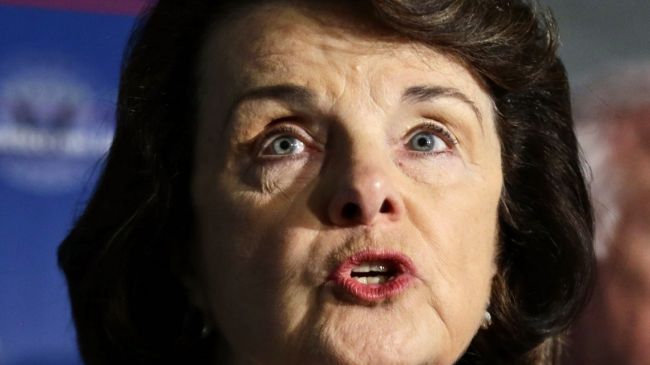
By Mike Masnick | Techdirt | December 2, 2013
It appears that the heads of the Senate and House Intelligence Committees, Senator Dianne Feinstein and Rep. Mike Rogers, are recognizing that their strategy for keeping their co-dependent relationship with the NSA going is failing and that the American public and an increasingly large segment of Congress no longer believes their bogus claims. Perhaps that’s because every time they open their mouths, it takes all of about an hour before many of their claims are completely debunked, if not outright mocked for obviously being bogus. So their latest strategy? To basically yell “Ooga Booga Terrorists!” as loud as they can to try to scare people based on absolutely nothing.
Feinstein and Rogers did a little dance on Sunday political TV shows insisting that “the terrorism threat is increasing” and we’re all going to die if we stop trying to make sure the NSA actually, you know, respects the Constitution. Asked if we were “safer” now than a year or two years ago, Feinstein kicked off the FUD:
“I don’t think so,” Feinstein replied. “I think terror is up worldwide, the statistics indicate that. The fatalities are way up. The numbers are way up. There are new bombs, very big bombs. Trucks being reinforced for those bombs. There are bombs that go through magnetometers. The bomb maker is still alive. There are more groups than ever. And there is huge malevolence out there.”
And Rogers quickly followed:
“I absolutely agree that we’re not safer today for the same very reasons,” he said. “So the pressure on our intelligence services to get it right to prevent an attack are enormous. And it’s getting more difficult.”
Of course, Feinstein’s claim that “terror is up worldwide” is — as is so often the case with her (and Rogers’) claims about terrorism — sorta true, but highly misleading. Yes, recent stats show an uptick in terrorist attacks and fatalities in 2012 — but you can also see that it’s highly variable. Earlier in the year, before the 2012 numbers came out, people were commenting on the fact that terror attacks and fatalities around the globe had been on the decline since 2007. Terrorism is highly variable and dependent on a few big successful attacks. Furthermore, if we look at attacks on the US, we find that there have basically been next to none in the US since 2001. You could make the case that 16 people have died in US “terrorist” attacks since 2001 (including the 13 soldiers killed by Army psychiatrist Maj. Nidal Hasan at Fort Hood), but you have to have a very broad definition of terrorism to do so.
Nearly all of the “terrorist” attacks in that original report that Feinstein is obviously relying on, appear to take place in areas that are considered war zones: Iraq, Afghanistan, etc. And, um, I hate to bring this part up, but part of the reason why those are war zones is because, you know, the US invaded both places. This isn’t to say that there aren’t terrorists out there who would like to attack the US. There clearly are. But it seems highly misleading to make the claims that both Feinstein and Rogers are making here, as the “data” they’re talking about don’t show any heightened risk in the US at all.
Either way, this whole thing — having both appear together, both making vague “we’re all going to die” statements without any details to back it up combined with an exceptionally misleading use of statistics — suggests that this is the typical FUD. It’s Feinstein and Rogers shouting “terror” in a crowded theater, because they know that they’ve already lost public opinion on this, and are quickly losing Congress as well.
Obama’s Response To Too Much Secrecy About Surveillance… Is More Secrecy
By Mike Masnick | Techdirt | November 27, 2013
Anita Kumar, a reporter at McClatchy, has a good article highlighting how, for all the talk by the Obama administration about how it needs to be more open and transparent about what the NSA is doing, in actuality, the administration has built up the walls even higher, increasing the levels of secrecy… including secrecy about how he’s responded to everything:
Obama has been gradually tweaking his vast government surveillance policies. But he is not disclosing those changes to the public. Has he stopped spying on friendly world leaders? He won’t say. Has he stopped eavesdropping on the United Nations, the World Bank and the International Monetary Fund? He won’t say.
Even the report by the group Obama created to review and recommend changes to his surveillance programs has been kept secret.
As is noted in the article, the administration, which likes to pretend it’s the most transparent in history, is actually one of the most secretive. Its attempts at transparency have almost exclusively been focused on where it can get the most political bang, not for what areas people expect the government to be transparent about — such as how it interprets the laws that allow the government to spy on everyone…
What’s incredible is that it appears that no one high up in the administration seems to recognize how this is a strategy that will almost certainly make things worse, not better. It may be how the administration is used to functioning, but it makes it much more difficult to believe anything that is said about a supposed “vigorous public debate” being held on the surveillance activities. It also means that as more leaks come out revealing more questionable practices, the constant backtracking and excuses will just destroy whatever credibility the administration has left on this issue. If, instead, it were to actually be transparent and simply reveal things like how it interprets the law, and allow for a real public discussion on these matters, that would actually result in some frank discussions that the administration seems terrified of actually having.
Extreme secrecy may seem like the easier short-term strategy, but it’s just digging an ever deeper hole that the administration is going to have to try to climb out of in the long-term. Hiding reality from a public that’s going to find out eventually is just making the problem worse.
NSA spied on 2010 G8, G20 summits in Toronto with Canadian help
RT | November 28, 2013
The National Security Agency conducted widespread surveillance during the 2010 G8 and G20 summits with the blessing of host country Canada’s government.
Documents supplied by former NSA contractor Edward Snowden show the US converted its Ottawa embassy into a security command for six days in June 2010 as world leaders met in Toronto. The covert operation was known to Canadian authorities, CBC News reported.
The documents do not reveal targets of the espionage by the NSA – and possibly by its counterpart, the Communications Security Establishment of Canada (CSEC). The NSA briefing notes say the operation was “closely co-ordinated with the Canadian partner.”
Ultimately, the documents obtained by the CBC do not give exact specifications of CSEC’s role, if any, in the Toronto spying. Former Guardian reporter and Snowden’s chosen journalist to receive the NSA documents, Glenn Greenwald, co-wrote the story for CBC.
But the documents do spell out that CSEC’s cooperation in the venture was crucial to ensuring access to telecommunications systems needed to spy on targets during the summits.
Both NSA and CSEC were implicated, along with British counterpart GCHQ, for monitoring phone calls and email of foreign leaders and diplomats at the 2009 G20 summit in London. In addition, it was recently reported that CSEC hacked into phones and computers at the Brazilian government’s department of mines. These revelations also came via documents from Snowden, who has received asylum in Russia.
The revelations also contradict a statement made by an NSA spokesman to The Washington Post on August 30, which said that the US Department of Defense – of which the NSA is is part of – “does not engage in economic espionage in any domain, including cyber.”
The NSA briefing document says the operational plan at the 2010 summit included “providing support to policymakers.”
The Toronto summit was chock full of major economic issues following the 2008 recession. Measures like the eventually-nixed global bank tax were strongly opposed by the US and Canadian governments. Further banking reform, international development, countering trade protectionism and other issues were on the docket – and on NSA’s list of main agenda items in the aim of supporting “US policy goals.”
The partnerships by some Western spying arms at the Toronto and London summits, not to mention other stories that have come out based on the Snowden documents, call attention once again to the “Five Eyes” surveillance coalition among Australia, Canada, New Zealand, the UK and the US.
Wall Street Journal Columnist Repeatedly Gets His Facts Wrong About NSA Surveillance
By Trevor Timm | EFF | November 27, 2013
Wall Street Journal columnist L. Gordon Crovitz wrote a misleading and error-filled column on NSA surveillance Monday, based on documents obtained by EFF through our Freedom of Information Act lawsuit. Since we’ve been poring over the documents for the last week, we felt it was important to set the record straight about what they actually reveal.
Crovitz:
Edward Snowden thought he was exposing the National Security Agency’s lawless spying on Americans. But the more information emerges about how the NSA conducts surveillance, the clearer it becomes that this is an agency obsessed with complying with the complex rules limiting its authority.
That’s an interesting interpretation of the recently released documents, given that one of the two main FISA court opinions released says the NSA was engaged in “systemic overcollection” of American Internet data for years, and committed “longstanding and pervasive violations of the prior orders in this matter.” The court summarized what it called the government’s “frequent failures to comply with the [surveillance program’s] terms” and their “apparent widespread disregard of [FISA court imposed] restrictions.”
Crovitz:
[The documents] portray an agency acting under the watchful eye of hundreds of lawyers and compliance officers.
Again, this is not what the actual FISA court opinions portray. “NSA’s record of compliance with these rules has been poor,” and “those responsible for conducting oversight failed to do so effectively,” FISA court Judge Bates wrote in the key opinion released last week. In another FISA court opinion from 2009, released two months ago, the NSA admitted that not a single person in the entire agency accurately understood or could describe the NSA’s whole surveillance system to the court.
It’s true that the number of compliance officers at the NSA has increased in recent years, but as the Washington Post reported, so has the number of privacy violations.
Crovitz:
These documents disprove one of Mr. Snowden’s central claims: “I, sitting at my desk, certainly had the authority to wiretap anyone, from you or your accountant, to a federal judge, to even the president if I had a personal email,” he told the Guardian, a British newspaper.
Here, Crovitz is setting up a strawman. Snowden wasn’t talking about the NSA’s legal authority, but their technical authority to conduct such searches. Snowden was likely referring to XKeyScore, which the Guardian reported allowed NSA analysts to “search with no prior authorization through vast databases containing emails, online chats and the browsing histories of millions of individuals.”
We actually have a specific example that proves Snowden’s point. As the New York Times reported in 2009, an NSA analyst “improperly accessed” former President Bill Clinton’s personal email. More recently, we’ve learned that the NSA analysts abused the agency vast surveillance powers to spying on ex-spouses or former lovers.
Crovitz:
The NSA also released the legal arguments the Justice Department used in 2006 to justify collection of phone metadata-the telephone number of the calling and called parties and the date, time and duration of the call.
…
Metadata collection is about connecting the dots linking potential terrorist accomplices. The Clinton administration created barriers to the use of metadata, which the 9/11 Commission concluded let the terrorists avoid detection. Since then, metadata has helped stop dozens of plots, including an Islamist plan to blow up the New York Stock Exchange in 2008.
Again, not true. As Intelligence Committee members Sen. Ron Wyden and Sen. Mark Udall have continually emphasized, there is “no evidence” that the phone metadata program is effective at stopping terrorists. Independent analyses have come to the same conclusion. When called out on that number in a Congressional hearing, even NSA Director Keith Alexander admitted the number was exaggerated.
The only “disrupted plot” the NSA can point to that was solely the work of the phone metadata program was a case where a man from San Diego sent a few thousand dollars to the al-Shabaab organization in Africa in 2008. In other words, the metadata did not disrupt an active terrorist plot inside the US at all.
Crovitz:
The declassified brief from 2006 made clear that such metadata “would never even be seen by any human being unless a terrorist connection were first established,” estimating that “0.000025% or one in four million” of the call records “actually would be seen by a trained analyst.”
The major 2009 FISA court opinion released in September, that apparently Mr. Crovitz either didn’t read or conveniently left out of his piece, showed that the NSA had been systematically querying part of this phone records database for years for numbers that the agency did not have a “reasonable articulable suspicion” were involved in terrorism—as they were required to have by the FISA court. Of the more than 17,000 numbers that the NSA was querying everyday, the agency only had “reasonable articulable suspicion” for approximately 1,800 of them.
The FISA court concluded, five years after the metadata program was brought under a legal framework, that it had been “so frequently and systematically violated that it can fairly be said that this critical element of the overall…regime has never functioned effectively.”
These documents clearly do not paint a picture of an agency with a clean privacy record and a reputation for following court rules, as Mr. Crovitz claims, and in fact, they show why it is vital Congress passes substantive NSA reform immediately. You can go here to take action.
Related articles
- How NSA Mass Surveillance is Hurting the US Economy (alethonews.wordpress.com)
- Obama administration defends NSA against civil liberties lawsuit (counterinformation.wordpress.com)
Echoing Dirty Past, NSA Sought to Reveal Porn Habits to Discredit Targets
By Brett Max Kaufman | ACLU | November 27, 2013
In the five months since the world first learned of Edward Snowden, story after story based on documents disclosed by the young whistleblower have filled out a picture of the National Security Agency (NSA) as an organization with a limitless — and almost indiscriminate — hunger for information. Today, Glenn Greenwald, Ryan Gallagher, and Ryan Grim add a startling new dimension to that portrait by revealing that the agency has contemplated ways to use its troves of data to discredit and undermine individuals who the agency believes are “radicalizing others through incendiary speeches” but who lack any ties to actual criminality. The government is apparently seeking out “personal vulnerabilities” of these individuals, including their online sexual activity, hoping to expose them as hypocrites to their followers. While all of the targets are outside the United States, at least one of them is a U.S. person — meaning, either a citizen or a permanent resident.
As Greenwald notes, it’s a story that’s eerily reminiscent of past abuses of government surveillance authority. Greenwald’s new report does not provide evidence of the NSA marshaling its vast databases to influence individuals or events within the United States. But you need not be a conspiracy theorist or a novelist with a knack for bending history to imagine how granting the NSA the power to “collect it all” might have seriously chilling and destructive repercussions here at home.
In fact, the NSA appears to be taking this effort right out of the shameful playbook of our not-so-distant history. Most infamously, as part of the COINTELPRO program, J. Edgar Hoover’s Federal Bureau of Investigation (FBI) obsessively monitored the activities of Martin Luther King, Jr., picking and choosing from the results to produce a report chock full of insinuations about King’s role in an evolving Communist conspiracy against the United States. Never mind that King unwaveringly espoused non-violence. It was King’s rising public stature and broadly influential political ideas that led the government to see him as a threat.
The FBI viewed no space as off limits. The agency consistently bugged King’s hotel rooms to monitor his planning of the 1963 March on Washington and to keep tabs on his strategic partnerships with other civil-rights leaders. But it also sought to compile a dossier of embarrassing information about King’s private sex life that the government could (and did) employ to discredit King and obstruct his political efforts.
King was not alone on the government’s long list of targets; he shared marquee billing with boxer Muhammed Ali, humorist Art Buchwald, author Norman Mailer, and even Senator Howard Baker. But the greater scandal was that — as the Church Committee revealed in 1976 — these big names appeared alongside more than one million other Americans, including half a million so-called “subversives.”
That is why, as disturbing as it is to read about the FBI’s sordid history of targeting domestic political “enemies,” the potential of the NSA to revive those tactics today (as exposed by Greenwald’s article) is alarming on a profoundly different scale. In the age of mass call-tracking and XKeyScore, hotel-room bugs seem almost quaint.
Indeed, Greenwald’s new story is a warning shot to those of us who have thus far ignored the Snowden revelations on the basis of having “nothing to hide.” As Greenwald makes clear, the subjects of the NSA’s newly exposed effort to target individuals with influence on social media have tangential (if any) ties to real terrorists or violent extremists. And as the ACLU has explained, the entire premise of the NSA’s focus on so-called “radicalizers” — the theory that a person’s adoption of what the government views as “radical” ideas is a step to terrorism — has been debunked. Intelligence programs based on that discredited theory are not just wrong, they’re ineffective. But they do very real damage to belief communities and political activists singled out for surveillance based on their views.
The efforts reported by Greenwald cut to the heart of the zone of expression and association that must remain free from intrusive, dragnet surveillance, both abroad and at home. In his very first public words, Snowden himself addressed the alarming consequences of the NSA’s hunger for obtaining and storing an incomprehensibly vast record of our lives:
Even if you’re not doing anything wrong, you’re being watched and recorded…[T]hey can use the system to go back in time and scrutinize every decision you’ve ever made, every friend you’ve ever discussed something with, and attack you on that basis, to sort of derive suspicion from an innocent life and paint anyone in the context of a wrong-doer.
In the months since the first Snowden revelations, few have managed to evoke the existential threat presented by unhinged NSA surveillance with such plain, direct force. In an instant, Greenwald’s new story has brought this surveillance nightmare— “collect it all” meets COINTELPRO — jarringly close to the here and now.
How NSA Mass Surveillance is Hurting the US Economy
By Trevor Timm | EFF | November 25, 2013
Privacy may not be the only casualty of the National Security Agency’s massive surveillance program. Major sectors of the US economy are reporting financial damage as the recent revelations shake consumer confidence and US trade partners distance themselves from companies that may have been compromised by the NSA or, worse, are secretly collaborating with the spy agency. Members of Congress, especially those who champion America’s competitiveness in the global marketplace, should take note and rein in the NSA now if they want to stem the damage.
The Wall Street Journal recently reported that AT&T’s desired acquisition of the European company Vodafone is in danger due to the company’s well-documented involvement in the NSA’s data-collection programs. European officials said the telecommunications giant would face “intense scrutiny” in its bid to purchase a major cell phone carrier. The Journal went on to say:
“Resistance to such a deal, voiced by officials in interviews across Europe, suggests the impact of the NSA affair could extend beyond the diplomatic sphere and damage US economic interests in key markets.”
In September, analysts at Cisco Systems reported that the fallout “reached another level,” when the National Institute of Standards and Technology (NIST) told companies not to use cryptographic standards that may have been undermined by the NSA’s BULLRUN program. The Cisco analysts said that if cryptography was compromised “it would be a critical blow to trust required across the Internet and the security community.”
This forecast was proven true in mid-November, when Cisco reported a 12 percent slump in its sales in the developing world due to the NSA revelations. As the Financial Times reported, new orders fell by 25 percent in Brazil and 30 percent in Russia and Cisco predicts its overall sales could drop by as much 10 percent this quarter. Cisco executives were quoted saying the NSA’s activities have created “a level of uncertainty or concern” that will have a deleterious impact on a wide-range of tech companies.
It is hard for civil libertarians to shed tears over AT&T losing business because of NSA spying, considering the company allowed the NSA to directly tap into its fiber optic cables to copy vast amounts of innocent Americans’ Internet traffic. AT&T was also recently revealed as having partnered with both the DEA and the CIA on separate mass surveillance programs. It is also hard to feel sorry for Cisco, which stands accused of helping China spy on dissidents and religious minorities. But the fact that the spying is hurting these major companies is indicative of the size of the problem.
This summer, European Parliament’s civil liberties committee was presented with a proposal to require every American website to place surveillance notices to EU citizens in order to force the US government to reverse course:
“The users should be made aware that the data may be subject to surveillance (under FISA 702) by the US government for any purpose which furthers US foreign policy. A consent requirement will raise EU citizen awareness and favour growth of services solely within EU jurisdiction. This will thus have economic impact on US business and increase pressure on the US government to reach a settlement.” [emphasis ours]
Meanwhile, Telenor, Norway’s largest telecom provider has reportedly halted its plans to move its customers to a US-based cloud provider. Brazil seems to be moving ahead to create its own email service and require US companies locate an office there if they wish to do business with Brazilian customers.
Laws like this mean that companies like Google “could be barred from doing business in one of the world’s most significant markets,” according to Google’s director for law enforcement and information security at Google, Richard Selgado. Google has been warning of this as far back as July, when in FISA court documents it argued that the continued secrecy surrounding government surveillance demands would harm its business.
Many commentators have been warning about the economic ramifications for months. Princeton technologist Ed Felten, who previously at the Federal Trade Commission, best explained why the NSA revelations could end up hurting US businesses:
“This is going to put US companies at a competitive disadvantage, because people will believe that U.S. companies lack the ability to protect their customers—and people will suspect that U.S. companies may feel compelled to lie to their customers about security.”
The fallout may worsen. One study released shortly after the first Edward Snowden leaks said the economy would lose $22 to $35 billion in the next three years. Another study by Forrester said the $35 billion estimate was too low and pegged the real loss figure around $180 billion for the US tech industry by 2016.
Much of the economic problem stems for the US government’s view that it’s open season when it comes to spying on non-U.S. persons. As Mark Zuckerberg said in September, the government’s position is“don’t worry, we’re not spying on any Americans. Wonderful, that’s really helpful for companies trying to work with people around the world.” Google’s Chief Legal Officer David Drummond echoed this sentiment last week, saying:
“The justification has been couched as ‘Don’t worry. We’re only snooping on foreigners.’ For a company like ours, where most of our business and most of our users are non-American, that’s not very helpful.”
Members of Congress who care about the US economy should take note: the companies losing their competitive edge due to NSA surveillance are mainstream economic drivers. Just as their constituents are paying attention, so are the customers who vote with their dollars. As Sen. Ron Wyden remarked last month, “If a foreign enemy was doing this much damage to the economy, people would be in the streets with pitchforks.”
Featured Video

Bombing Iran Back Into the Stone Age /Lt Col Daniel Davis & Jim Jatras
or go to
Aletho News Archives – Video-Images
From the Archives
The Occupied Mentality Syndrome
Saudi Arabia on the American chessboard – Part 2
By B. J. Sabri | American Herald Tribune | April 19, 2016
Since the Korean War, but particularly since the Iranian Revolution of 1979 until today, the United States has been steadily escalating its military presence in the Persian Gulf. Taking advantage of many colossal events of the past 36 years, [1] the hyper-empire has institutionalized its massive presence on land and sea, and expanded its objectives to include the unambiguous physical control of the area, as well as the clear understanding that local Arab governments should abide by them. The pretext is always the same: in “defense” of the national interests and security of the United States. From observing how the United States has been interacting with the governments of the region, and by judging from the size of its expeditionary force, we could reach a basic conclusion. The United States is occupying, de facto, the entire Arabian Peninsula. (Yemen, devastated by Saudi and American jets is yet to be conquered. Oman? Britain returned not as colonial ruler but as a soft occupying power.)
Under this articulation, Saudi Arabia, Qatar, Kuwait, and the United Arab Emirates are virtually occupied countries. If we compare this type of occupation to the mandate and protectorate regimes of the past, the results might be identical—the nations affected by it lose sovereignty. When Arab governments comply with the objectives of a foreign power that station military forces on their national milieu, then that power controls them in multiple ways including how they react to policy deliberations and what decisions they intend to take on specific issues. A good method to verify the concept of effective occupation is this: take notice of what the United States says and wants, and then compare it to what the gulf rulers do in response. (I shall discuss this detail at some point in the upcoming parts.)
If the presence of US forces or other means of political pressure are a factor in Saudi Arabia’s interventionist Arab wars, then we need to debate this issue. However, from the history of resistance to colonialism, we learnt: if a powerful state imposes its order on a nation by military means or other forms of coercion, and if this nation does not resist that imposition, then a mental subordination to the powerful state will ensue. This is especially true in the case of Saudi Arabia. One single event, 9/11, has transformed it from a US “ally” into an instant political hostage of the American Empire. … continue
Blog Roll
 Aletho News
- Attack in the Bosphorus exposes NATO weaknesses and tensions among allies
- BREAKING: US JET SHOT DOWN OVER IRAN /Lt Col Daniel Davis & Nima Alkhorshid
- Now everyone is dumping US government bonds
- Brazilian Congressman seeks to bar Israeli military personnel from entering Brazil
- Official reveals evidence of Arab states’ involvement in US-Israeli war on Iran
- His Majesty’s head-chopper: Syria’s MI6-backed president bows to King Charles
- Forced to backtrack: ‘Israel’ drops Hezbollah disarmament goal
- Britain’s Lebanon surveillance network: A digital map for war
- Bahrain faces scrutiny for opposition crackdown after detainee killed
- Hegseth’s Pentagon Purge Designed to Prevent a Mutiny: Karen Kwiatkowski
- If Americans Knew
- Israel Is Blocking Palestinians from Easter at Church Where Jesus Resurrected
- Plot to assassinate Palestinian activist follows harassment campaign promoted by Zionist groups and elected officials
- Prominent New York synagogue hosts presentation on why U.S. Jews should support the ethnic cleansing of Gaza
- Tapper vs. Piker: Is the CNN Anchor Auditioning for David Ellison?
- Shouldn’t Democrats Be Able to Condemn Genocide?
- Israel-US kill negotiators, destroy civilian structures, but Iran’s military capabilities still largely intact – Daily Update
- ‘War crime’: Global condemnation as Israeli ministers celebrate death penalty law targeting Palestinian prisoners
- 7 Ways Israel Is Turning Lebanon Into Gaza
- World’s Leading Football Bodies Under Fire Over Israel Policies
- Experts warn of possible use of nukes against Iran
- No Tricks Zone
- Low Intensity Tornado Wrecks Major Solar Farm, Creating A Potential Toxic Dump
- New Study Finds Warming Saves Lives…Cold Temperatures 12 Times More Deadly Than Excess Heat
- German Science Blog Accuses PIK Climate Institute Of Hallucinating Climate Tipping Points
- Devastating Assessment Of Comirnaty Vaccine By Former Senior Pfizer Europe Toxicologist
- New Study: CO2 Is ‘Effectively Negligible’ As An Explanatory Climate Change Factor Since 2000
- Former Pfizer Toxicologist Dr. Helmut Sterz Tells Bundestag Hearing Pfizer Vaccine Should Have Never Been Approved
- Energy Expert: Germany’s Nuclear Phaseout Was A “500 Billion Euro Mistake”
- New Research: South Australia’s Mid-Holocene Sea Surface Temperatures Were 4°C Warmer Than Today
- Storing Green Energy To Last Germany 10 Days Would Require A 60-Million Tonne Battery
- New Studies: UK Sea Levels Were 4 Meters Higher Than Today During The Mid-Holocene
 Aletho News