US forces Russia to close visa centers – ambassador
RT | June 22, 2024
US authorities are closing both Russian visa center offices in the country and will deprive Russia’s diplomats of tax exemption, Moscow’s ambassador to Washington, Anatoly Antonov, has revealed.
The Russia Visa Application Center operates in Washington and New York, assisting those looking to get permits to travel to Russia with preparing the necessary papers and submitting them to the Russian consular offices.
“The Americans notified us that the visa center is closing,” Antonov told the journalists on Saturday. The move by Washington creates a “serious extra burden for us given the fact that our consulate general offices in Houston and New York are drained of blood” due to expulsions of Russian diplomats from the US, he stressed.
The decision to revoke tax exemption status from Russian embassy workers is another “petty, nasty attack” by Washington, the ambassador said. The cards are common practice and handed out to diplomats in all countries, he explained.
US officials didn’t provide any reasoning for their actions, Antonov noted. As for a possible response by Moscow, he said that “there is no need to make any rash moves. We need to consider what the specific consequences of what we will have to do.”
According to the ambassador, the Americans “are trying to break [Russia], trying to change [its] foreign policy, trying to force our diplomats to hide behind the walls of the embassy, to stop communicating and working,” he said.
“This will not happen. Until the last diplomat, while we remain here, we will keep performing our duties,” the ambassador assured.
Relations between Moscow and Washington have steadily deteriorated over the past decade, with the administration of former US President Barack Obama shutting down several Russian consulates after accusing Moscow of “interference” in the 2016 presidential election. The diplomatic row has only escalated since Moscow launched its military operation in Ukraine in February 2022, prompting a wave of Western sanctions and several tit-for-tat expulsions of diplomats by both countries.
Last month, Russia’s Deputy Foreign Minister Sergey Ryabkov warned that Moscow may well downgrade its diplomatic ties with Washington if the West “continues on the path of escalation” in terms of supporting Ukraine or making hostile economic moves.
US-Waged Middle East Wars Were ‘Pointless and Genocidal,’ Reflects Navy Veteran
By Svetlana Ekimenko – Sputnik – 08.06.2024
Whether it is Joe Biden, the current incumbent of the White House, or those preceding him, like 44th president Barack Obama, manipulative militaristic rhetoric results in senseless wars waged and paid for by the US, a US Navy veteran told Sputnik, recalling his own rueful experience.
Joe Biden slipped into his default mode of manipulating historical facts and crowd emotions in his D-Day anniversary remarks on Friday.
Russia was typically presented as ‘the enemy’, while the US on the ‘right side of history’ as it continues to fuel the Ukraine proxy conflict.
Biden had no qualms about drawing a cynical comparison: if we do not help Ukraine against Russia, we will betray the memory of our grandfathers who fought the Nazis.
“We will not walk away. Because if we do, Ukraine will be subjugated and it will not end there. Ukraine’s neighbors will be threatened, all of Europe will be threatened,” claimed Biden. The Democrat added that to “surrender” would mean “forgetting what happened here on these hallowed beaches. Make no mistake, we will not bow down. We will not forget.”
At the same ceremony, US Defense Secretary Lloyd Austin was more blunt, saying that, “if the troops of the world’s democracies could risk their lives for freedom then surely the citizens of the world’s democracy can risk our comfort for freedom now.”
Austin is an old hand at dissimulating when it comes to Washington’s true goals in pursuing the Ukraine ‘project.’ Testifying in front of the House Armed services Committee, he claimed the long-term strategy for propping up the neo-Nazi regime in Kiev was to make sure Ukraine remains “a democratic, independent, sovereign country.” He served up the batch of outright lies without batting an eye.
With his recent rhetoric, Biden may as well have taken a page from the pretentious and meaningless language used by former president Barack Obama in his speech at West Point Military Academy in May 2010. Obama explained why it was necessary to send 30,000 more US troops to Afghanistan without any clear strategy.
“We toppled the Taliban regime, now we must break the momentum of a Taliban insurgency and train Afghan security forces. We have supported the election of a sovereign government, now we must strengthen its capacities,” he said. We know only too well when and how the Afghan debacle ended for the US, with America’s humiliating withdrawal from Kabul in August 2021.
The US launched its invasion of Afghanistan in October 2001, weeks after the 9/11 terrorist attacks. At the time, Washington justified the move on the basis that Osama bin Laden had masterminded the attacks, and that the Taliban had offered sanctuary to members of al-Qaeda. The US invasion and occupation claimed the lives of thousands of US soldiers, and more than 100,000 Afghan troops, police, and civilians.
Before entering the White House, then-Senator Obama had campaigned on a vow to give the US military a new mission: ending the war in Iraq.
The US-led coalition invaded Iraq in 2003 without a UN mandate, falsely accusing then-Iraqi president Saddam Hussein of possessing weapons of mass destruction. That war cost the lives of over 4,700 US and allied servicemen, and hundreds of thousands — or even millions — of Iraqis.
One of those who fell for Obama’s campaign rhetoric has regretted it for the rest of his life.
Mike James, a navy veteran and a Mass Communication Specialist Petty Officer who served in Iraq in 2008, told Sputnik he was “inspired by all of Obama’s rhetoric” to join the military.
“I was 25 years old when I joined the military. So I was a little bit older than most of my peers,” he recalled.
“Leading up to that time was the end of the Bush presidency, and Obama was campaigning as the president who was going to end the wars, … on drawing down the war [in Iraq],” James said. “So I thought that it would be a good time to join the military. And I was inspired by all of Obama’s rhetoric. I joined the military.”
The gullible young man who set off to boot camp in 2008 was in for a rude awakening. He ended up witnessing both of the “pointless, genocidal wars.”
“I thought, man, both of these wars that I participated in were stupid and pointless,” James said. “And all the Iraqis and all the Afghans that I met were nice people, gracious people, hospitable people. And for me to show up as an Imperial stormtrooper was wholly inappropriate and, frankly, genocidal.”
While he “never fired a shot in combat,” instead using his camera to document what was going on around him, the former naval officer said he felt “complacent,” an “actor in these imperial genocidal projects.”
“I fundamentally regret it. It’s embarrassing. I don’t brag that I’m a veteran. I don’t talk to people about my veteran status unless they ask,” said James.
‘Complacent actor’ in US’ ‘imperial genocidal projects’
To this day, Navy veteran Mike James regrets ending up being complacent in senseless wars waged by the US in Afghanistan and Iraq.
Turning to Washington’s current belligerent stance amid the ongoing NATO proxy war in Ukraine, James speculated that the “age of the American military hegemony is over”. Furthermore, he noted that from what he could see around him, the Western economy, “built on its ability to inflict violence anywhere in the world at any given time” was on a cliff edge.
“Everything is propped up on that… I mean, there’s very little industry around me of all the people I know. I don’t see factory workers like I don’t see people going out and getting jobs and doing well,” James noted. “Everybody I know, everybody I see is, is just barely hanging on in this economy. Everybody’s piled on with debt with loans and car bills and just trying to get by.”
“The true believers within the Pentagon and the military brass and the contractors, all these fascistic private contractors that are ruling the world right now, once they realize… that it’s over, I can just see the bottom dropping out on this thing and the economy really changing for the worse,” he concluded.
Syria on the brink of recovery as Qatar and Turkey change their policies
By Steven Sahiounie | Mideast Discourse | June 3, 2024
The Emir of Qatar, Tamim al Thani, recently said that he supports the street protests in Idlib, where people are protesting the dictatorial rule of the Hayat Tahrir al-Sham (HTS) terrorist group.
This marks a monumental change in policy for Qatar, and maybe the first step toward restoring diplomatic ties with Syria.
Beginning in 2011, and the Obama administration’s US-NATO war on Syria for regime change, Qatar has been a close and loyal ally to the US, and was used as a financial backer of the various terrorist groups brought into Turkey, and trucked across the border to Idlib.
Sheikh Hamad bin Jassim bin Jaber bin Mohammed bin Thani Al Thani, former Prime Minister of Qatar, and foreign minister until 2013, gave an interview in which he admitted Qatar provided the money to bankroll the terrorists in Syria as they attacked the Syrian people and state. He made it clear that the cash delivered was sanctioned, and administered by the US in Turkey. Qatar was not working alone, but under a strictly controlled partnership with the US government.
In 2017, President Trump shut down the CIA operation Timber Sycamore which ran the failed project to overthrow the Syrian government.
Qatar is now turning their back on the terrorists who occupy Idlib. Mohamed al-Julani is the leader of HTS. He is Syrian, raised in Saudi Arabia, fought with Al Qaeda in Iraq against the US, aligned with ISIS founder Baghdadi, came to Syria from Iraq to develop Jibhat al-Nusra, the Al Qaeda branch in Syria.
Once Jibhat al-Nusra became an outlawed terrorist group, Julani switched the name to HTS in order to preserve his support from Washington, DC. Even though the US has a $10 million bounty on his head issued by the US Treasury Department, he is safe and secure in Idlib, where American journalists have visited him for interviews, in which he has sported a suit and tie, wishing to present himself as a western-leaning terrorist that the US can count on.
When the Syrian Arab Army and the Russian military would fire a bullet towards the terrorists in Idlib, the US would denounce it as an attack on innocent civilians. This kept Julani safe and secure, and in charge of humanitarian aid coming across the border from Turkey. The aid was from the UN and various international charities. While the 3 million people living in Idlib are not all terrorists, all the aid passes through the hands of Julani and his henchmen. If you bow down to Julani, you get your share of rations, but if you have complained, you are denied. Those who are cut off from the aid can buy their supplies from Julani at his Hamra Shopping Mall, which he built in Idlib, where he sells all the surplus aid sent to Idlib.
The civilians in Idlib have taken to the streets protesting the rule of HTS. Many people have been arrested by HTS, some tortured, and others killed. The people are demanding that Julani leave.
They are asking for freedom and a fair administration. The various aid agencies have complained that HTS will not allow any free programs for women, such as learning employable skills. Women there are not allowed to seek employment, except in places which are only female. HTS rules with a strict form of Islamic law, which they interpret to their benefit.
Saudi Arabia and Syria have established full normal relations, with an exchange of ambassadors. At the Arab League Summit in May in Bahrain, the Crown Prince of Saudi Arabia, Mohamed bin Salman (MBS) met personally with Syrian President Bashar al-Assad. They also met at the previous Arab League Summit in Saudi Arabia.
MBS recently announced a humanitarian grant to the UN to repair 17 hospitals in Syria which had been damaged in the 7.8 earthquake which killed 10 thousand in Syria.
MBS also sent spare parts for the Syrian Air commercial planes, which had suffered under US sanctions and were prevented from maintaining their safety by Washington. Recently, the very first planes of Syrians began flying to Saudi Arabia for the first time in 12 years, to perform the Haj pilgrimage.
On May 30, the leader of Iraq said he hopes to announce a Turkey-Syria normalization soon. Turkey, like Qatar, had been supporting the various terrorist groups in Syria in cooperation with the US.
Turkey also has made a turn-around in their position, and has been looking for a way to exit Idlib and the other areas it occupies in Syria, in preparation of a re-set with Damascus.
The relationship between the US and Ankara has remained tense after the US partnered with the Syrian Defense Forces (SDF). Turkey considers the SDF as a branch of the PKK, the outlawed international terrorists group who has killed 30,000 people over three decades, while wanting to establish a Kurdish State.
The SDF are planning to have elections on June 11 in an effort to gain western support for a Kurdish State. Erdogan has stated Turkey will never allow this to happen.
If the SDF were to lay down their arms, they could repair their relationship with Damascus, and at the same time Turkey could then withdraw their occupation forces from Syria. With Turkey out of Syria, their normalization process could begin.
When the SDF have repaired their broken relationship with Damascus, and the Turkish threat no longer exists, then the US military can withdraw their 900 occupation force from Syria.
Recently, General Mazloum, the leader of the SDF, said that the problems between the Kurds and Damascus are internal problems, and cautioned against any foreign interference, especially from Turkey.
The situation is changing rapidly in Syria. The economy is collapsed, with the inflation rate over 100% in the last year due to crippling US sanctions. Because the US military is occupying the largest oil and gas field in Syria, this prevents the production of electricity for the national grid, and Syrians are living with three hours of electricity per day.
US sanctions prevent some of the most vital medicines from being imported, as western medical companies are fearful of running afoul of the US sanctions, and have produced a culture of over-compliance, which deprives Syrian citizens’ life-saving medicines and medical supplies.
The battlefields have been silent for years, and the silence grew into a status-quo, where the American and Turkish foreign policy prevented a resolution to the conflict that has destroyed lives and prompted the largest human migration in recent history as Syrians have sought work abroad.
Turkey, Saudi Arabia and Qatar all played significant roles assigned to them by the US State Department under the Obama administration. There is a light at the end of the tunnel with the reversal of policies toward Syria, and Qatar and Turkey are set to play major roles in the recovery process in Syria. These reversals are also significant as they mark a change in the relationship between the US and several regional countries. This is part of the ‘New Middle East’ that Washington called for, but the role the US played has left them the loser.
The Closing of the Internet Mind
The definition of online freedom has been depressingly constricted over the last thirty years
By Aaron Kheriaty, Debbie Lerman, Andrew Lowenthal, and Jeffrey Tucker | The American Mind | May 22, 2024
You have surely heard that your search results on Google (with 92 percent share of the search market) reflect not your curiosities and needs but someone or something else’s views on what you need to know. That’s hardly a secret.
And on Facebook, you are likely inundated by links to official sources to correct any errors you might carry in your head, as well as links to corrections to posts as made by any number of fact-checking organizations.
You have likely also heard of YouTube videos being taken down, apps deleted from stores, and accounts being canceled across a variety of platforms.
You might have even adjusted your behavior in light of all of this. It is part of the new culture of Internet engagement. The line you cannot cross is invisible. You are like a dog with an electric shock collar. You have to figure it out on your own, which means exercising caution when you post, pulling back on hard claims that might shock, paying attention to media culture to discern what is sayable and what is not, and generally trying to avoid controversy as best you can in order to earn the privilege of not being canceled.
Despite all the revelations regarding the Censorship Industrial Complex, and the wide involvement of government in these efforts, plus the resulting lawsuits that claim that this is all censorship, the walls are clearly closing in further by the day.
Users are growing accustomed to it, for fear of losing their accounts. For example, YouTube (which feeds 55 percent of all video content online) allows three strikes before your account is deleted permanently. One strike is devastating and two existential. You are frozen in place and forced to relinquish everything–including your ability to earn a living if your content is monetized–if you make one or two wrong moves.
No one needs to censor you at that point. You censor yourself.
It was not always this way. It was not even supposed to be this way.
It’s possible to trace the dramatic change from the past to present by following the trajectory of various Declarations that have been issued over the years. The tone was set at the dawn of the World Wide Web in 1996 by digital guru, Grateful Dead lyricist, and Harvard University fellow John Perry Barlow, who died in 2018.
Barlow’s Declaration of the Independence of Cyberspace, somewhat ironically written in Davos, Switzerland, is still hosted by the Electronic Frontier Foundation that he founded. The manifesto waxes lyrical about the liberatory, open future of internet freedom:
Governments of the Industrial World, you weary giants of flesh and steel, I come from Cyberspace, the new home of Mind. On behalf of the future, I ask you of the past to leave us alone. You are not welcome among us. You have no sovereignty where we gather.
We have no elected government, nor are we likely to have one, so I address you with no greater authority than that with which liberty itself always speaks. I declare the global social space we are building to be naturally independent of the tyrannies you seek to impose on us. You have no moral right to rule us nor do you possess any methods of enforcement we have true reason to fear.
Governments derive their just powers from the consent of the governed. You have neither solicited nor received ours. We did not invite you. You do not know us, nor do you know our world. Cyberspace does not lie within your borders. Do not think that you can build it, as though it were a public construction project. You cannot. It is an act of nature and it grows itself through our collective actions.
And so on it went with a heady, expansive vision–tinged perhaps with a dash of sixties utopian anarchism–that shaped the ethos which drove the building of the Internet in the early days. It appeared to a whole generation of coders and content providers that a new world of freedom had been born that would shepherd in a new era of freedom more generally, with growing knowledge, human rights, creative freedom, and borderless connection of everyone to literature, facts, and truth emerging organically from a crowd-sourced process of engagement.
Nearly a decade and a half later, by 2012, that idea was fully embraced by the main architects of the emergent app economy and the explosion of smartphone use across the world. The result was the Declaration of Internet Freedom that went live in July of 2012 and garnered a great deal of press attention at the time. Signed by the EFF, Amnesty International, Reporters Without Borders, and other liberty-focused organizations, it read:
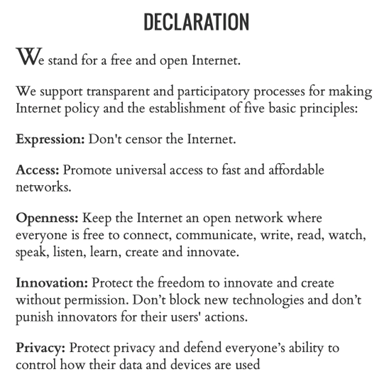
To be sure, it was not quite as sweeping and visionary as the Barlow original but maintained the essence, putting free expression as the first principle with the lapidary phrase: “Don’t censor the Internet.” It might have stopped there, but given the existing threats coming from growing industrial cartels and the stored-data marketplace, it also pushed openness, innovation, and privacy as first principles.
Again, this outlook defined an era and elicited broad agreement. “Information freedom supports the peace and security that provides a foundation for global progress,” said Hillary Clinton in an endorsement of the freedom principle in 2010. The 2012 Declaration was neither right-wing nor left-wing. It encapsulated the core of what it meant to favor freedom on the Internet, exactly as the title suggests.
If you go to the site internetdeclaration.org now, your browser will not reveal any of its contents. The secure certificate is dead. If you bypass the warning, you will find yourself forbidden from accessing any of the contents. The tour through Archive.org shows that the last living presentation of the site was February 2018.
This occurred three years after Donald Trump publicly advocated that “in some places” we have to talk about “closing up the Internet.” He got his wish, but it came after him personally following his election in 2016. The very free speech about which he made fun turned out to be rather important to him and his cause.
Two years into the Trump presidency, precisely as the censorship industry started coalescing into full operation, the site of the Declaration site broke down and eventually disappeared.
Fast forward a decade from the writing of the Internet Declaration of Freedom. The year is 2022 and we had been through a rough two years of account takedowns, particularly against those who doubted the wisdom of lockdowns or vaccine mandates. The White House revealed on April 22, 2022 a Declaration for the Future of the Internet. It comes complete with a parchment-style presentation and a large capital letter in old-fashioned script. The word “freedom” is removed from the title and added only as a part of the word salad that follows in the text.
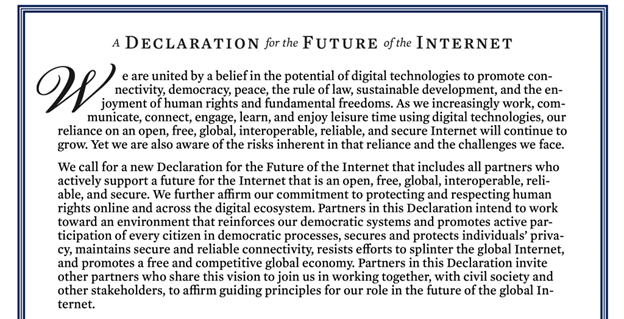
Signed by 60 nations, the new Declaration was released to great fanfare, including a White House press release. The signatory nations were all NATO-aligned while excluding others. The signatories are: Albania, Andorra, Argentina, Australia, Austria, Belgium, Bulgaria, Cabo Verde, Canada, Colombia, Costa Rica, Croatia, Cyprus, Czech Republic, Denmark, Dominican Republic, Estonia, the European Commission, Finland, France, Georgia, Germany, Greece, Hungary, Iceland, Ireland, Israel, Italy, Jamaica, Japan, Kenya, Kosovo, Latvia, Lithuania, Luxembourg, Maldives, Malta, Marshall Islands, Micronesia, Moldova, Montenegro, Netherlands, New Zealand, Niger, North Macedonia, Palau, Peru, Poland, Portugal, Romania, Serbia, Slovakia, Slovenia, Spain, Sweden, Taiwan, Trinidad and Tobago, the United Kingdom, Ukraine, and Uruguay.
The core of the new declaration is very clear and represents a good encapsulation of the essence of the structures that govern content today: “The Internet should operate as a single, decentralized network of networks – with global reach and governed through the multistakeholder approach, whereby governments and relevant authorities partner with academics, civil society, the private sector, technical community and others.”
The term “stakeholder” (as in “stakeholder capitalism”) became popular in the nineties as distinct from “shareholder” meaning a partial owner. A stakeholder is not an owner or even a consumer but a party or institution with a strong interest in the outcome of the decision-making by the owners, whose rights might need to be overridden in the broader interests of everyone. In this way, the term came to describe an amorphous group of influential third parties that deserve a say in the management of institutions and systems. A “multistakeholder” approach is how civil society is brought inside the tent, with financing and seeming influence, and told that they matter as an incentive to woke-wash their outlooks and operations.
Using that linguistic fulcrum, part of the goal of the new Declaration is explicitly political: “Refrain from using the Internet to undermine the electoral infrastructure, elections and political processes, including through covert information manipulation campaigns.” From this admonition we can conclude that the new Internet is structured to discourage “manipulation campaigns” and even goes so far as to “foster greater social and digital inclusion within society, bolster resilience to disinformation and misinformation, and increase participation in democratic processes.”
Following the latest in censorship language, every form of top-down blockage and suppression is now justified in the name of fostering inclusion (that is, “DEI,” as in Diversity [three mentions], Equity [two mentions], and Inclusion [five mentions]) and stopping dis- and mis-information, language identical to that invoked by the Cybersecurity Infrastructure Security Agency (CISA) and the rest of the industrial complex that operates to stop information spread.
This agency was created in the waning days of the Obama administration and approved by Congress in 2018, supposedly to protect our digital infrastructure against cyberattacks from computer viruses and nefarious foreign actors. But less than one year into its existence, CISA decided that our election infrastructure was part of our critical infrastructure (thereby asserting Federal control over elections, which are typically handled by the states). Furthermore, part of protecting our election infrastructure included protecting what CISA director Jen Easterly called our “cognitive infrastructure.”
Easterly, who formerly worked at Tailored Access Operations, a top secret cyber warfare unit at the National Security Agency, coined the queen of all Orwellian euphemisms: “cognitive infrastructure,” which refers to the thoughts inside your head. This is precisely what the government’s counter-disinformation apparatus, headed by people like Easterly, are attempting to control. True to this stated aim, CISA pivoted by 2020 to become the nerve center of the government’s censorship apparatus–the agency through which all government and “stakeholder” censorship demands are funneled to social media companies.
Now consider what we’ve learned about Wikipedia, which is owned by Wikimedia, the former CEO of which was Katherine Maher, now slated to be the head CEO of National Public Radio. She has been a consistent and public defender of censorship, even suggesting that the First Amendment is “the number one challenge.”
The co-founder of Wikipedia, Joseph Sanger, has said he suspects that she turned Wikipedia into an intelligence-operated platform. “We know that there is a lot of backchannel communication,” he said in an interview. “I think it has to be the case that the Wikimedia Foundation now, probably governments, probably the CIA, have accounts that they control, in which they actually exert their influence. And it’s fantastic, in a bad way, that she actually comes out against the system for being ‘free and open.’ When she says that she’s worked with government to shut down what they consider ‘misinformation,’ that, in itself, means that it’s no longer free and open.”
What happened to Wikipedia, which all search engines privilege among all results, has befallen nearly every prominent venue on the Internet. The Elon Musk takeover of Twitter has proven to be aberrant and highly costly in terms of advertising dollars, and hence elicits vast opposition from the venues that are on the other side. That his renamed platform X even exists at all seems to run contrary to every wish of the controlled and controlling establishment today.
We have traveled a very long way from the vision of John Perry Barlow in 1996, who imagined a cyberworld in which governments were not involved to one in which governments and their “multi stakeholder partners” are in charge of “a rules-based global digital economy.” In the course of this complete reversal, the Declaration of Internet Freedom became the Declaration for the Future of the Internet, with the word freedom consigned to little more than a passing reference.
The transition from one to the other was–like bankruptcy–gradual at first and then all at once. We’ve traveled rather quickly from “you [governments and corporate interests] are not welcome among us” to a “single, decentralized network of networks” managed by “governments and relevant authorities” including “academics, civil society, the private sector, technical community and others” to create a “rules-based digital economy.”
And that is the core of the Great Reset affecting the main tool by which today’s information channels have been colonized by the corporatist complex.
CIA Had Foreign Allies Spy On Trump Team, Triggering Russia Collusion Hoax, Sources Say
By Michael Shellenberger, Matt Taibbi, and Alex Gutentag | Public | February 13, 2024
Last year, John Durham, a special prosecutor for the Department of Justice (DOJ), concluded that the Federal Bureau of Investigation (FBI) should never have opened its investigation of alleged collusion by then-presidential candidate Donald J. Trump and Russia in late July of 2016.
Now, multiple credible sources tell Public and Racket that the United States Intelligence Community (IC), including the Central Intelligence Agency (CIA), illegally mobilized foreign intelligence agencies to target Trump advisors long before the summer of 2016.
The new information fills many gaps in our understanding of the Russia collusion hoax and is supported by testimony already in the public record.
Until now, the official story has been that the FBI’s investigation began after Australian intelligence officials told US officials that a Trump aide had boasted to an Australian diplomat that Russia had damning material about Democratic presidential candidate Hillary Clinton.
In truth, the US IC asked the “Five Eyes” intelligence alliance to surveil Trump’s associates and share the intelligence they acquired with US agencies, say sources close to a House Permanent Select Committee on Intelligence (HSPCI) investigation. The Five Eyes nations are the US, UK, Canada, Australia, and New Zealand.
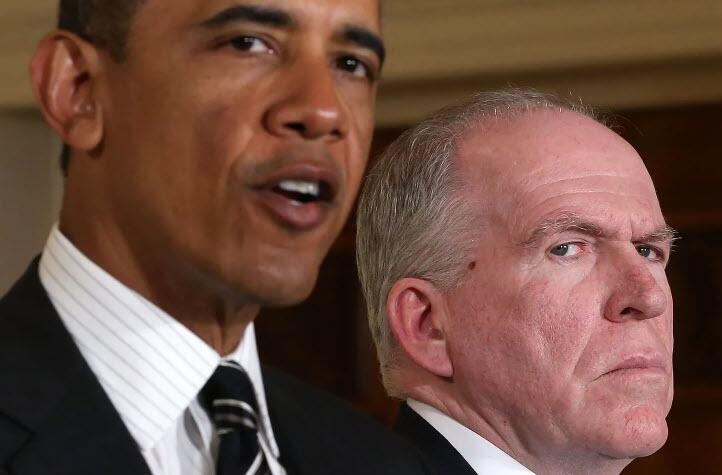
After Public and Racket had been told that President Barack Obama’s CIA Director, John Brennan, had identified 26 Trump associates for the Five Eyes to target, a source confirmed that the IC had “identified [them] as people to ‘bump,’ or make contact with or manipulate. They were targets of our own IC and law enforcement — targets for collection and misinformation.”
Unknown details about the FBI’s investigation of the Trump campaign and raw intelligence related to the IC’s surveillance of the Trump campaign are in a 10-inch binder that Trump ordered to be declassified at the very end of his term, sources told Public and Racket.
If the top-secret documents exist proving these charges, they are potentially proof that multiple US intelligence officials broke laws against spying and election interference.
“They were making contacts and bumping Trump people going back to March 2016,” a source close to the investigation said. “They were sending people around the UK, Australia, Italy — the Mossad in Italy. The MI6 was working at an intelligence school they had set up.”
The IC, a source said, considered the 26 Trump campaign people identified to “bump” or “reverse target,” or manipulate through confidential human sources (CHSs), to be easy marks because of their relative inexperience.
Doing so was illegal, both because US law prohibits such intelligence gathering unless authorized by a Foreign Intelligence Surveillance Act (FISA) warrant and because the weaponization of the IC for political purposes constitutes election interference.
…
Subscribers to Public substack can read the full report here…
Amal Clooney Accuses a French Company, but Ignores the Crimes of the US and UK
By Steven Sahiounie | Strategic Culture Foundation | January 5, 2024
Amal Clooney, the international human rights lawyer, is representing victims of mass atrocities, including genocide and sexual violence, from the Iraqi Yazidi community who are seeking accountability for crimes perpetrated by ISIS.
The case alleges French conglomerate Lafarge SA conspired to provide material and funds to support ISIS terrorist campaigns against the Yazidis.
“Lafarge has admitted to a conspiracy that aided ISIS by providing millions of dollars in cash to ISIS, and is alleged to have provided ISIS with cement to construct underground tunnels and bunkers used to shelter ISIS members and hold hostages, including captured Yazidis,” a news release stated.
Clooney has focused on the French cement company which supported ISIS in Syria in order to remain in business during the war.
The crime committed by Lafarge is serious, but it is just one small incidence of western entities supporting terrorists in Syria following Radical Islam. Clooney is singling out a French company, and France is allied with both the U.S. and UK. While the crime affected hundreds of Yazidis, the same crime carried out by the U.S., UK and EU has affected millions of Syrian citizens.
The Free Syrian Army (FSA) forces were caught selling arms to the ISIS.
Weapons sent to terrorists in Syria from the U.S. directly allowed ISIS to obtain substantial amounts of sophisticated supplies which they used against civilians.
A study by Conflict Armament Research found that anti-tank weapons given to the ‘rebels’ in Syria by the U.S. ended up in the possession of the ISIS within two months of leaving the factory.
The U.S. provided extensive lethal and non-lethal aid to many terrorist groups fighting against the Syrian government. The CIA ran a covert program Timber Sycamore to arm, fund and train terrorists in Syria. U.S. President Trump shut the program down in 2017.
ISIS, Al Qaeda, Hayat Tahrir al-Sham, Jabhat al-Nusra and the FSA fighting in Syria all shared the same political platform: to remove the Syrian government in Damascus, and replace it with a Islamic governing system. In March 2011, the U.S. and NATO began a war in Syria for the purpose of regime change. It was not successful, and the same government in Damascus has remained. However, the U.S.-NATO war was very successful in destroying the country, ruining the economy, killing thousands and sending the largest Syrian migrant wave to Europe in history.
U.S. President Barak Obama praised the FSA as ‘moderate’ rebels fighting for freedom and democracy. But, early on the FSA demonstrated that they were fighting to kill Christians and non-Sunni Muslim minorities, and had no interest in lofty ideals of freedom and democracy. They wanted to over throw the Damascus government with the support of the Obama administration, and realize the dream of a Sunni Muslim governing system which was based on Islamic Law, not civil codes.
In April 2014, investigative journalist Seymour M. Hersh exposed the Obama-Clinton “Rat Line”, which was a CIA weapons highway into Syria, serving the terrorists fighting for Obama’s regime change goal. Weapons and ammunition was sent from Libya to Syria via southern Turkey, and the terrorists on the receiving end were affiliated with Al Qaeda, and later aligned with ISIS.
Hersh revealed a 2012 agreement by Obama, and supported by the UK spy agency, MI6, which was responsible for getting weapons from Libya into Syria.
In 2013, Clooney was appointed to a number of United Nations commissions, including as adviser to Special Envoy Kofi Annan on Syria. The U.S. and UK involvement in supporting the terrorists who would later fight alongside ISIS was not any secret.
In 2016, Obama signed into law a defense policy bill which led to U.S. weapons provided to ‘rebels’ ending up in the hands of terrorists following Radical Islam, who became brothers in arms on the Syrian battlefields.
The Yazidis have suffered greatly and should receive justice. Clooney has focused on this one small incidence of ISIS benefiting from a French business. Clooney has ignored that the U.S., UK and their western democratic allies supported, funded, trained and weaponized terrorists in Syria which directly benefitted ISIS.
Where is the international court case to serve justice for the hundreds of thousands of Syrians dead, maimed, raped, kidnapped and made homeless by the FSA and their allies Al Qaeda and ISIS?
Clooney chose an easy win with the case against Lafarge. Clooney said she hopes to get a financial award for the Yazidis from her case so they can rebuild their lives.
The U.S. has prevented the Syrian people from rebuilding any hospital, school or home because of the U.S. imposed sanctions which prevent importing any products for reconstruction. The U.S. sanctions against Syria prevent any wealthy Arab country, or investor, from developing any reconstruction project to benefit the Syrian civilians, such as the repair of the water infrastructure in Aleppo. Last summer, Aleppo suffered cholera because the water plant is in need of repair.
The Syrians have no court case pending, and have no hope of any recovery from their suffering caused by the U.S.-NATO attack on the Syrian people for regime change.
Obama Says He’s Close to a “First Amendment Absolutist,” Then Adds a “But,” Criticizes “Certain Kinds of Speech”
By Didi Rankovic | Reclaim The Net | November 12, 2023
President Barack Obama has reemerged in the media, as the election campaign in the US is picking up pace.
And he got his two cents in on a range of issues, including free speech in the context of the First Amendment, “misinformation,” social networks vs. democracy – as his politically like-minded comrades like to position the situation – and, of course, the role of “AI.”
Obama was a guest on a Verge podcast when he – a former US president, twice sworn to preserve, protect, and defend the country’s Constitution – seemed to water down the meaning of that oath.
At one point, he told the host that he is “close” to being a First Amendment “absolutist” – only to add, “but we have laws against certain kinds of speech that we deem to be really harmful to the public health and welfare.”
Obama’s understanding of the First Amendment, according to this statement, is not that this legislation is there to protect the right to free speech – but rather that it should secure a “marketplace” of various ideas.
In his own words: “(…) these ideas battle themselves out, and ultimately, we can all judge better ideas versus worse ideas. I deeply believe in that core principle (of the First Amendment).”
“Misinformation” is another issue troubling Obama, where he seems somewhat skeptical about the government’s ability to regulate the field (obviously – to his political slant).
But the former president has ideas about how it might be done: “We need to think about different platforms and different business models.”
Furthermore – “It may be that I’m perfectly happy to have AI mediate how I buy jeans online. That could be very efficient. I’m perfectly happy with it. So if it’s a shopping app or thread, fine.”
But – what if it’s about speech, or as he put it, “marketplace of ideas”?
There, Obama would like to see regulation that would “broaden” people’s perspectives. Let his audience be the judge of the direction this (political) “broadening” would be taking, and at the expense of what.
The interview came after sitting US president, Joe Biden, signed what is described as “a sweeping executive order about AI.”
Obama has not previously been known as an expert on these matters (apparently, his “expertise” stems from being a prominent victim of deepfakes), but now he has a lot to say about “AI”. Mostly, how those tech companies at the forefront should “regulate” matters pertaining to this technology.
On this front, one of the key messages Obama was trying to push during the podcast is to “recruit” actual tech and “AI” experts into a segment of the US Digital Service that was launched during his time in office. In this context, he urged professionals to “sign up” at ai.gov and work “for the common good.”
Biden’s Use of Aliases in Emails is a ‘Problem’, High-Flying DC Lawyer Says
By Ilya Tsukanov – Sputnik – 02.09.2023
The chairman of the Republican-controlled House committee investigating the Biden family over an alleged large-scale pay-to-play influence peddling scheme indicated this week that a formal impeachment probe may be “imminent.” The White House responded by mustering a lawyer-packed ‘war room’ to push back against any investigations.
Joe Biden’s use of an array of aliases during his tenure as Barack Obama’s vice president to communicate with his son Hunter “could cost him” politically, renowned Washington, DC-based attorney and legal analyst Jonathan Turley has suggested.
In an op-ed commentary on the revelations by the National Archives this week that there were over 5,000 emails potentially linked to Biden pseudonyms, which House Republicans want released ASAP, Turley indicated that the problem isn’t so much his use of aliases, as why the president may have used them.
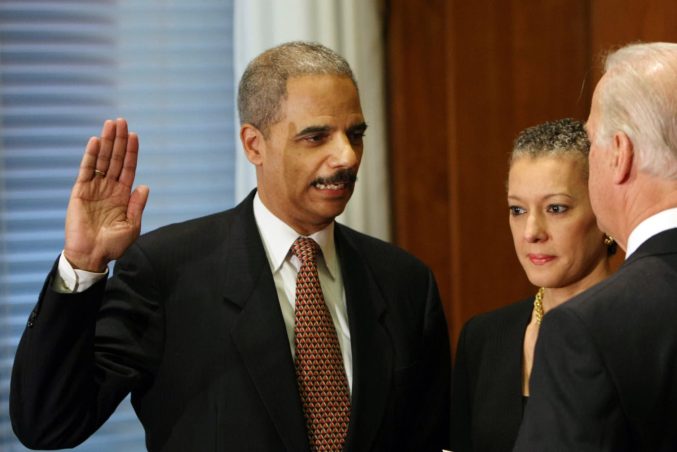
“For many Americans, it is understandably unnerving to learn that their president has more aliases than Anthony Weiner. However, while the number seems unusual, the practice is not unprecedented,” Turley wrote, pointing to the use of fake names in communications between other Obama-era officials, including former Attorney Generals Eric Holder and Loretta Lynch.
“The problem” with the aliases used by the Bidens “is that there was ‘work’ being discussed on some of these emails, including official foreign travel plans and the hiring of associates of Hunter for high-level positions,” the legal analyst added.
“Most importantly, some emails are relevant to the clients of Biden’s son. Biden has previously lied that he knew nothing of those dealings, but these emails could reveal even more about his knowledge and involvement,” Turley stressed.
If they were somehow released, the emails could severely undermine the pro-Biden talking point being peddled by some Democrats that Hunter’s pay-to-play scheme was about selling the “illusion” of access to his powerful father, rather than access itself.
But foreign clients “obviously” thought that they were “buying more than an illusion for the millions they spent,” Turley argued, pointing to the example of a Ukrainian businessman who characterized Hunter as someone who was “dumber than his dog, but… paid him anyway for access to his father.”
The congressional testimony of former Hunter business associate Devon Archer also challenges the ‘illusion’ talking point, Turley added, recalling Archer’s recollections of Burisma executives “calling DC” for assistance while being probed for corruption by a Ukrainian prosecutor, who was subsequently fired after Biden’s personal intervention.
The National Archives and Records Administration could easily continue its “review” of the alias-based communications “until after the next election,” Turley indicated. On the other hand, Biden or former President Barack Obama could “easily allow the release of these emails to Congress” if they thought they could help prove the former vice president’s innocence.
“After all, the use of aliases has been defended on the basis that these emails are trivial or personal matters. If so, transparency will put all the allegations to rest. If it is not true, it would mean that Biden was using false names to convey important information to third parties, and the question would be why,” Turley stressed.
“The added resistance to the review of the emails only adds to an already strong case for an impeachment inquiry,” i.e. that “there is enough evidence to warrant an investigation into whether the Bidens were selling the illusion or the reality of influence.” Using its impeachment inquiry powers, Congress may be better able to “force” disclosures, and thus find “answers on the alleged corrupt practices,” he added.
“There should be no reason why the president would not want to clear the record, particularly in an election year. Otherwise, the effort to withhold this evidence could itself prove damaging, if material evidence of corruption or false statements are found,” Turley argued.
Representative James Comer, the chairman of the House Oversight Committee investigating the Biden family, said this week that “there’s consensus” among Republicans on an impeachment inquiry, pending House Speaker McCarthy’s approval. “I feel like that is imminent,” Comer said.
The White House reacted by hiring a team of two-dozen lawyers, legislative assistants and communications staffers for an “aggressive response” to any potential inquiry.
Biden family received money from Russia – Congress
RT | August 9, 2023
The House Oversight Committee on Wednesday published receipts showing Hunter Biden, the son of current US President Joe Biden, receiving money from Russia, Ukraine, and Kazakhstan by trading on the family name.
The committee says it has identified $20 million in payments from foreign sources to Hunter Biden’s company, which they describe as a front to sell access to the “Biden network” while his father was Barack Obama’s vice-president (2009-2017).
“During Joe Biden’s vice presidency, Hunter Biden sold him as ‘the brand’ to reap millions from oligarchs in Kazakhstan, Russia, and Ukraine. It appears no real services were provided other than access to the Biden network, including Joe Biden himself. And Hunter Biden seems to have delivered,” said committee chair James Comer, a Kentucky Republican.
The third bank memo Comer has published so far shows a February 14, 2014 wire transfer from “Russian oligarch Yelena Baturina” to Rosemont Seneca Thornton, a shell company run by Hunter Biden and his business partner Devon Archer. Of the $3.5 million wired by Baturina, $1 million was transferred directly to Archer, while the rest was used to start up Rosemont Seneca Bohai, a new account used to receive more funding from abroad, the committee said.
Another memo shows that Biden and Archer were both appointed to the board of directors of Burisma Holdings, a Ukrainian gas company run by Mykola Zlochevsky, for $1 million each per year. Burisma had previously paid Biden as counsel, but invited him and Archer to the board after a meeting hosted by Zlochevsky and Burisma corporate secretary Vadim Pozharsky in the spring of 2014 at Lake Como in Italy.
“Then-Vice President Joe Biden visited Ukraine soon after their first payments,” the committee noted, and Hunter claimed that the visit showed “value” that he provided to the company.
The third notable transaction took place in April 2014, when “Kazakhstani oligarch” Kenes Rakishev wired $142,300 to Rosemont Seneca Bohai. The very next day, the company paid Hunter Biden the same exact amount for a sports car. Hunter had met Rakishev at a Washington, DC hotel in February.
“Hunter Biden received millions of dollars in payments from Yelena Baturina, Burisma, and Kenes Rakishev. Vice President Biden had dinner with them in the spring of 2014 and 2015 in Washington, DC,” the committee pointed out.
Joe Biden was the Obama administration’s point man for Ukraine policy after the 2014 Maidan coup in Kiev, and famously bragged at a 2018 DC event about getting a prosecutor fired by threatening to withhold loan guarantees. The prosecutor in question had been investigating Burisma. When then-president Donald Trump brought the incident up in 2019 talks with Kiev, the House Democrats impeached him, claiming this somehow violated US laws.
Remember the Atrocities of the Korean War, Not the Propaganda
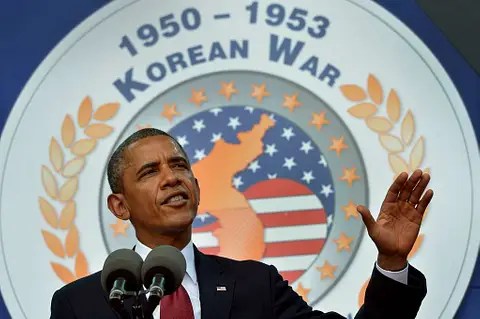
By Jim Bovard | The Libertarian Institute | July 27, 2023
Today is the 70th anniversary of the armistice that ended the fighting between North and South Korea. Almost 40,000 American soldiers died pointlessly in that conflict. If politicians and policymakers were honest and prudent, the Korean War would have vaccinated America against the folly and evil of foreign intervention. Instead, the war was retroactively redefined. As Barack Obama declared in 2013, “That war was no tie. Korea was a victory.”
The war began with what Harry Truman claimed was a surprise invasion on June 25, 1950, by the North Korean army crossing the dividing line with South Korea that was devised after World War II. But the U.S. government had ample warnings of the pending invasion. According to the late Justin Raimondo, co-founder of Antiwar.com, the conflict actually started with a series of attacks by South Korean forces, aided by the U.S. military:
“From 1945-1948, American forces aided [South Korean President Syngman] Rhee in a killing spree that claimed tens of thousands of victims: the counterinsurgency campaign took a high toll in Kwangju, and on the island of Cheju-do—where as many as 60,000 people were murdered by Rhee’s U.S.-backed forces.”
The North Korean army quickly routed both South Korean and U.S. forces. A complete debacle was averted after General Douglas MacArthur masterminded a landing of U.S. troops at Inchon. After he routed the North Korean forces, MacArthur was determined to continue pushing northward regardless of the danger of provoking a much broader war. By the time the U.S. forces drove the North Korean army back across the border, roughly 5,000 American troops had been killed. The Pentagon had plenty of warning that the Chinese would intervene if the U.S. Army pushed too close to the Chinese border. But the euphoria that erupted after Inchon blew away all common sense and drowned out the military voices who warned of a catastrophe. One U.S. Army colonel responded to a briefing on the Korea situation in Tokyo in 1950 by storming out and declaring, “They’re living in a goddamn dream land.”
The Chinese military attack resulted in the longest retreat in the history of America’s armed forces—a debacle that was valorized in the 1986 Clint Eastwood movie, Heartbreak Ridge. By 1951, the Korean War had become intensely unpopular in the United States—more unpopular than the Vietnam War ever was. Truman insisted on mislabeling the war as a “police action,” but it destroyed his presidency regardless. When the ceasefire was signed in 1953, the borders were nearly the same as at the start of the war.
While the friends of leviathan paint Truman as the epitome of an honest politician, he was as demagogic on Korea as Lyndon Johnson was on Vietnam. When Republicans criticized the Korean War as useless, President Harry Truman condemned “reckless and irresponsible Republican extremists” and “the false version of history that has been copyrighted by the extremists in the Republican Party.”
Perhaps the biggest disaster of the Korean war was that intellectuals and foreign-policy experts succeeded in redefining the Korean conflict as an American victory. As Georgetown University professor Derek Leebaert noted in his book Magic and Mayhem, “What had been regarded as a bloody stalemate transformed itself in Washington’s eyes; ten years later it had become an example of a successful limited war. Already by the mid-1950s, elite opinion began to surmise that it had been a victory.” Leebaert explained, “Images of victory in Korea shaped the decision to escalate in 1964-65 helping to explain why America pursued a war of attrition.” Even worse, the notion that “‘America has never lost a war’ remained part of the national myth, and the notion of having ‘prevailed’ in Korea became a justification for going big in Vietnam.” But as Leebaert noted, “in Vietnam, [the U.S. Army] had forgotten everything it had learned about counterinsurgency in Korea as well.”
On last year’s armistice anniversary, President Joe Biden proclaimed, “During the Korean War, nearly 1.8 million Americans answered the call to serve and defend the freedoms and universal values that the people of South Korea enjoy today.” The “call to serve” mostly came from summons from draft boards for military conscription. American media commemorations of the Korean War have almost entirely ignored perhaps the war’s most important lesson: the U.S. government has almost unlimited sway to hide its own war crimes.
During the war, Americans were deluged with official pronouncements that the U.S. military was taking all possible steps to protect innocent Korean civilians. Because the evils of communism were self-evident, few questions arose about how the United States was thwarting Red aggression. When a U.S. Senate subcommittee appointed in 1953 by Senator Joseph McCarthy (R-WI) investigated Korean War atrocities, the committee explicitly declared that “war crimes were defined as those acts committed by enemy nations.” This same standard prevailed in Vietnam, Iraq, Afghanistan, and practically any other place where the U.S. has militarily intervened.
In 1999, forty-six years after the cease fire in Korea, the Associated Press exposed a 1950 massacre of Korean refugees at No Gun Ri. U.S. troops drove Koreans out of their village and forced them to remain on a railroad embankment. Beginning on July 25, 1950, the refugees were strafed by U.S. planes and machine guns over the following three days. Hundreds of people, mostly women and children, were killed. The 1999 AP story was widely denounced by American politicians and some media outlets as a slander on American troops.
The Pentagon promised an exhaustive investigation. In January 2001, the Pentagon released a 300-page report purporting to prove that the No Gun Ri killings were merely “an unfortunate tragedy” caused by trigger-happy soldiers frightened by approaching refugees.
President Bill Clinton announced his “regret that Korean civilians lost their lives at No Gun Ri.” In an interview, he was asked why he used “regret” instead of “apology.” He declared, “I believe that the people who looked into it could not conclude that there was a deliberate act, decided at a high-enough level in the military hierarchy, to acknowledge that, in effect, the Government had participated in something that was terrible.” Clinton specified that there was no evidence of “wrongdoing high-enough in the chain of command in the Army to say that, in effect, the Government was responsible.”
But the atrocities against civilians had been common knowledge among U.S. troops 50 years earlier. As Charles Hanley, Sang-Hun Choe, and Martha Mendoza noted in their 2001 book, The Bridge at No Gun Ri, the Pentagon in 1952 “withdrew official endorsement from RKO’s One Minute to Zero, a Korean War movie in which an Army colonel played by actor Robert Mitchum orders artillery fire on a column of refugees.” The Pentagon fretted that “this sequence could be utilized for anti-American propaganda” and banned the film from being shown on U.S. military bases.
In 2005, Sahr Conway-Lanz, a Harvard University doctoral student, discovered a letter in the National Archives from the U.S. Ambassador to Korea, John Muccio, sent to Assistant Secretary of State Dean Rusk on the day the No Gun Ri massacre commenced. Muccio summarized a new policy from a meeting between U.S. military and South Korean officials: “If refugees do appear from north of U.S. lines they will receive warning shots, and if they then persist in advancing they will be shot.” The new policy was radioed to Army units around Korea on the morning the No Gun Ri massacre began. The U.S. military feared that North Korean troops might be hiding amidst the refugees. The Pentagon initially claimed that its investigators had never seen Muccio’s letter. Louis Caldera, who was Army secretary in 2001, declared, “Millions of pages of files were reviewed and it is certainly possible they may have simply missed it.” But Muccio’s letter was in the specific research file used for the official exoneration report.
Conway-Lanz’s 2006 book Collateral Damage: Americans, Noncombatant Immunity, and Atrocity after World War II quoted an official U.S. Navy history of the first six months of the Korean War stating that the policy of strafing civilians was “wholly defensible.” An official Army history noted, “Eventually, it was decided to shoot anyone who moved at night.” A report for the aircraft carrier USS Valley Forge justified attacking civilians because the Army insisted that “groups of more than eight to ten people were to be considered troops, and were to be attacked.”
In 2007, the Army recited its original denial: “No policy purporting to authorize soldiers to shoot refugees was ever promulgated to soldiers in the field.” But the Associated Press exposed more dirt from the U.S. archives: “More than a dozen documents—in which high-ranking U.S. officers tell troops that refugees are ‘fair game,’ for example, and order them to ‘shoot all refugees coming across river’—were found by the AP in the investigators’ own archived files after the 2001 inquiry. None of those documents was disclosed in the Army’s 300-page public report.” A former Air Force pilot told investigators that his plane and three others strafed refugees at the same time of the No Gun Ri massacre; the official report claimed that “all pilots interviewed…knew nothing about such orders.” Evidence also surfaced of massacres like No Gun Ri. On September 1, 1950, the destroyer USS DeHaven, at the Army’s insistence, “fired on a seaside refugee encampment at Pohang, South Korea. Survivors say 100 to 200 people were killed.”
Slaughtering civilians en masse became routine procedure after the Chinese army intervened in the Korean War in late 1950. MacArthur spoke of turning North Korean-held territory into a “desert.” The U.S. military eventually “expanded its definition of a military target to any structure that could shelter enemy troops or supplies.” General Curtis LeMay summarized the achievements: “We burned down every town in North Korea… and some in South Korea, too.” Yet, despite the hit-anything-still-standing bombing policy, most Americans believed the U.S. military acted humanely in Korea. Historian Conway-Lanz noted: “The issue of intention, and not the question of whose weapons literally killed civilians or destroyed their homes, became the morally significant one for many Americans.”
A million civilians may have been killed during the war. A South Korean government Truth and Reconciliation Commission uncovered many previously unreported atrocities and concluded that “American troops killed groups of South Korean civilians on 138 separate occasions during the Korean War,” The New York Times reported.
Truth delayed is truth defused. The Pentagon strategy on Korean War atrocities succeeded because it left facts to the historians, not the policymakers. The truth about No Gun Ri finally slipped out—ten presidencies later. Even more damaging, the Rules of Engagement for killing Korean civilians were covered up for four more U.S. wars. If U.S. policy for slaying Korean refugees (or anyone who “moved at night”) had been exposed during that war, it might have curtailed similar killings in Vietnam (many of which were not revealed until decades after the war).
Former congressman and decorated Korean War veteran Pete McCloskey (R-CA) warned, “The government will always lie about embarrassing matters.” The same shenanigans permeate other U.S. wars. The secrecy and deceit surrounding U.S. warring has had catastrophic consequences in this century. The George W. Bush administration exploited the 9/11 attacks to justify invading Iraq in 2003, and it was not until 2016 that the U.S. government revealed documents exposing the Saudi government’s role in financing the 9/11 hijackers (15 of 19 whom were Saudi citizens). The Pentagon covered up the vast majority of U.S. killings of Iraqi civilians until Bradley Manning and WikiLeaks exposed them in 2010.
When politicians or generals appear itching to pull the United States into another foreign war, remember that truth is routinely the first casualty. Governments that recklessly slay masses of civilians won’t honestly investigate and announce their guilt to the world. Self-government is a mirage if Americans do not receive enough information to judge killings committed in their name.
Jim Bovard is the Junior Fellow for The Libertarian Institute. He is the author of Public Policy Hooligan (2012), Attention Deficit Democracy (2006), Lost Rights: The Destruction of American Liberty (1994), and 7 other books.
Audio of Classified War Plans Show Trump Refused Decades-Long Push to Attack Iran
By Fantine Gardinier – Sputnik – 27.06.2023
A veteran of the US state apparatus told Sputnik that the most significant part of the story about former US President Donald Trump holding onto still-classified plans for war with Iran after he left office is that Trump refused to give in to pressure to launch such a conflict, which Washington has sought for decades.
US media has obtained the audio of an alleged conversation between Trump and his aides in which prosecutors said he described showing them files he knew were still classified.
The conversation, which allegedly occurred in the summer of 2021, was previously reported based on a partial transcript cited in a criminal complaint against Trump that was filed in a federal court earlier this month.
In the two-minute-long audio clip, Trump can seemingly be heard referencing top secret plans regarding an attack against Iran that he says were prepared by Gen. Mark A. Milley, the chairman of the Joint Chiefs of Staff, who has become a sharp critic of Trump after the former president’s term ended.
“These are the papers,” Trump is heard saying. “This was done by the military and given to me.”
“See as president I could have declassified it,” Trump continues as others in the room laugh, adding: “Now I can’t, you know, but this is still a secret.”
Trump faces 37 charges related to the classified files, which the FBI seized in a raid last August at his Mar-a-Lago estate in Florida. Many of the charges each carry a potential 20-year prison sentence, if Trump were to be convicted.
Larry Johnson, a retired CIA intelligence officer and US State Department official, told Sputnik that Trump’s administration was by no means the first to consider a war against Iran, and that the focus on the war plans conceals a greater truth: that Trump didn’t want to launch such an attack.
“The war plans against Iran have existed since 1980, since the mullahs took power. And those plans exist and have been revised and updated over time. So I wouldn’t read too much into his discussing one plan.”
“I think the key point is that Trump did not act on these plans,” Johnson asserted. “He resisted the pressure from advisors who wanted to start a war with Iran, but he refused. He refused to go along with them. And that’s I think that’s really part of the anger directed at him as well.”
However, Johnson said there was actually a greater chance of war with Iran under Trump’s predecessor, Barack Obama.
“During the presidency of Barack Obama, the United States was more actively engaged in supporting intelligence operations that were leading to the assassination of Iranian scientists. They were backing this terrorist group, the MEK, the Mujahedin-e-Khalq. So, Trump is really sort of a problem for the defense establishment in Washington, DC, who were eager for that conflict. Trump tried to avoid conflict. He was always looking to cut a deal as opposed to go to war.”
Johnson predicted that if Trump manages to dodge the charges against him and win the 2024 US election, for which he has already declared his candidacy, that Trump would “cut a deal” with Tehran.
“He would find a way to de-escalate the tensions. But unfortunately, you’ve got a war party. There’s not just one political party. It’s bipartisan. We’ve got Republicans and Democrats alike who are promoting conflict, insisting on conflict. [US President Joe] Biden is not keen upon actually getting a real agreement with these guys. Trump was. I think Trump genuinely believed in and tried to promote those kinds of agreements,” the former CIA officer said.
Featured Video
Iran War Is Accelerating the End of US Dominance
or go to
Aletho News Archives – Video-Images
From the Archives
Why the UK, the EU and the US Gang-Up on Russia
By James Petras :: 03.20.2018
Introduction: For the greater part of a decade the US, the UK and the EU have been carrying out a campaign to undermine and overthrow the Russia government and in particular to oust President Putin. Fundamental issues are at stake including the real possibility of a nuclear war.
The most recent western propaganda campaign and one of the most virulent is the charge launched by the UK regime of Prime Minister Theresa May. The Brits have claimed that Russian secret agents conspired to poison a former Russian double-agent and his daughter in England, threatening the sovereignty and safety of the British people. No evidence has ever been presented. Instead the UK expelled Russian diplomats and demands harsher sanctions, to increase tensions. The UK and its US and EU patrons are moving toward a break in relations and a military build-up.
A number of fundamental questions arise regarding the origins and growing intensity of this anti-Russian animus.
Why do the Western regimes now feel Russia is a greater threat then in the past? Do they believe Russia is more vulnerable to Western threats or attacks? Why do the Western military leaders seek to undermine Russia’s defenses? Do the US economic elites believe it is possible to provoke an economic crisis and the demise of President Putin’s government? What is the strategic goal of Western policymakers? Why has the UK regime taken the lead in the anti-Russian crusade via the fake toxin accusations at this time?
This paper is directed at providing key elements to address these questions. … continue
Blog Roll
 Aletho News
- Trump White House plagiarized Iran war manifesto from Israel-aligned think tank
- Western media whitewashes Israel’s attempted murder of British journalist in Lebanon
- Israel-linked arms facility set ablaze in EU
- IRAN: The Three Islands Unmaking American Unipolar Sea Power in the Persian Gulf
- Trump’s dispatch of Marine Expeditionary Unit signals desperation for any symbolic success
- Iran Proposes Creating Middle East Security Structure With All Regional States – President
- Iran’s weapons industry still churning out missiles despite war: IRGC
- Washington approves billions in new arms sales to Gulf states as concerns grow over stocks of air defenses
- Iran War: Pentagon’s $200B Budget Could Run Out in Just Five Months
- Seven US allies endorse Hormuz ‘coalition,’ offer ‘no commitment’ for military action
- If Americans Knew
- Meet the former fashion blogger and shady doctor behind the ‘30,000 dead’ Iran psy-op
- Vatican Secretary of State to Trump, Israel: End the war as soon as possible
- The Majority of Americans Believe War Against Iran Benefits Israel More Than US
- Efforts to shut down pro-Palestinian speech face series of setbacks in court
- What has Israel done to my brother?
- Eid without worship in Al Aqsa – Not a ceasefire Day 161
- Trump: Israel attacked Iranian gas field without US knowledge. No more such attacks!
- America’s friends must help extricate it from an unlawful war
- Democratic Nat’l Committee’s Kneejerk Backing of Israel Is Political and Moral Failure
- Major revelations from former counterterrorism chief Joe Kent’s extensive interview
- No Tricks Zone
- Energy Expert: Germany’s Nuclear Phaseout Was A “500 Billion Euro Mistake”
- New Research: South Australia’s Mid-Holocene Sea Surface Temperatures Were 4°C Warmer Than Today
- Storing Green Energy To Last Germany 10 Days Would Require A 60-Million Tonne Battery
- New Studies: UK Sea Levels Were 4 Meters Higher Than Today During The Mid-Holocene
- Destructive Green New Deal: German Energy And Metal Group Warns Of Drastic Crisis
- New Study Documents A 20-Year Pause In Arctic Sea Ice Decline – Driven By Internal Variability
- Wake-up Call: Survey Shows Majority Of Germans Now Favor Postponing Climate Targets!
- Televised! Leading German Political Candidate Tells Schoolchildren CO2 Makes Sun Hotter!
- New Study: A Century Warming Of 1.1°C Is ‘Commonplace’ And ‘Not Unusual’ During This Interglacial
- New Study: ‘Internal Noise’ And Volcanic Forcing Can Trigger 10-15°C Warming Within Decades
 Aletho News