US pledges $68mn NATO investment into Estonian military bases
RT | August 8, 2015
The US will invest $68 million to develop military base infrastructure in Estonia, as part of European Reassurance Initiative (ERI) that offers Eastern European countries additional military aid and training to better serve NATO interests near the Russian borders.
The announcement of additional funding comes as a US delegation visited the tiny Baltic state to meet Estonian Defense Minister Sven Mikser. Headed by Congressman Rob Wittman, the US side promised to invest in Estonia’s military bases in Amari and Tapa.
The development project will be implemented “through NATO’s support program of eastern countries European Reassurance Initiative (ERI),” Estoinia’s Ministry of Defense said in a statement.
The Soviet-built army base at Tapa is one of the Estonian Army’s largest military bases. It is excellent for live artillery firing training and maneuvers. The Soviet Amari Air Base will serve as a NATO airfield in the future.
“Head of the [US] delegation… Rob Wittman said that the presence of US troops was important, because the rotation of US soldiers in Estonia would help them gain experience and knowledge of the situation in the region,” the Ministry added.
The ERI, funded through Congress, was introduced by President Barack Obama last year and is designed to keep Russia in place after its alleged “aggression” in the Ukrainian conflict. The program aims to create a permanent US air, land, and sea presence in the region, especially in Central and Eastern Europe.
Since June, Washington has pledged to develop military training facilities in six countries on or close to Russia’s borders including Latvia, Estonia and Lithuania, as well as Poland, Bulgaria and Romania. In fact, news from Estonia comes the same day as Polish national daily Rzeczpospolita reported that a former Polish military base in the town of Ciechanow may now be used to house American troops.
READ MORE: US to share military base in central Poland – Polish media
Obama’s Pragmatic Appeal for Iran Peace
By Robert Parry | Consortium News | August 5, 2015
Trying to rally public support for a diplomatic agreement to constrain Iran’s nuclear program, President Barack Obama went to American University in Washington D.C., where – in 1963 – President John F. Kennedy gave perhaps his greatest speech arguing against the easy talk of war in favor of the difficult work for peace.
Obama’s speech lacked the universal appeal and eloquent nobility of Kennedy’s oration, but represented in a programmatic way what Kennedy also noted, that the details and deal-making of diplomacy are often less dramatic than the clenching of fists and the pounding of chests that rally a nation to war. Obama went through the pluses of what he felt the Iran deal would achieve and the minuses of what its rejection would cause.
Obama said congressional approval of the agreement would gain the narrow but important goal of ensuring that Iran won’t get a nuclear weapon while congressional rejection would lead toward another war in the Middle East, thus adding to the chaos started by President George W. Bush’s invasion of Iraq in 2003.
“Congressional rejection of this deal leaves any U.S. administration that is absolutely committed to preventing Iran from getting a nuclear weapon with one option, another war in the Middle East. I say this not to be provocative, I am stating a fact,” Obama said.
“So let’s not mince words. The choice we face is ultimately between diplomacy or some form of war. Maybe not tomorrow, maybe not three months from now, but soon.”
Obama also called out many of the deal’s opponents, noting that many were vocal advocates for invading Iraq and that some are now openly acknowledging their preference for another war against Iran.
Obama said, “They’re opponents of this deal who accept the choice of war. In fact, they argue that surgical strikes against Iran’s facilities will be quick and painless. But if we’ve learned anything from the last decade, it’s that wars in general and wars in the Middle East in particular are anything but simple.
“The only certainty in war is human suffering, uncertain costs, unintended consequences. We can also be sure that the Americans who bear the heaviest burden are the less-than-1 percent of us, the outstanding men and women who serve in uniform, and not those of us who send them to war.”
Still a ‘War President’
Apparently seeking to establish his own credibility as a “war president,” Obama also took note of how many countries he has launched military attacks in and against during his presidency:
“I’ve ordered military action in seven countries. There are times when force is necessary, and if Iran does not abide by this deal, it’s possible that we don’t have an alternative. But how can we, in good conscience, justify war before we’ve tested a diplomatic agreement that achieves our objectives, that has been agreed to by Iran, that is supported by the rest of the world and that preserves our option if the deal falls short?
“How could we justify that to our troops? How could we justify that to the world or to future generations? In the end, that should be a lesson that we’ve learned from over a decade of war. On the front end, ask tough questions, subject our own assumptions to evidence and analysis, resist the conventional wisdom and the drumbeat of war, worry less about being labeled weak, worry more about getting it right.”
One might note that as worthy as those guidelines are, they have often been violated by the Obama administration, such as its dubious allegations against the Syrian government regarding the infamous sarin gas attack on Aug. 21, 2013, and against Russia over the shoot-down of Malaysia Airlines Flight 17 in eastern Ukraine on July 17, 2014. In both cases, Obama and his administration have kept from public view evidence that they claim to possess while decrying skeptics who have questioned the conventional wisdom.
But Obama did take to task the neoconservatives and other warmongers who have followed a pattern of exaggerating dangers to frighten the American people into support for more warfare:
“I know it’s easy to play in people’s fears, to magnify threats, to compare any attempt at diplomacy to Munich, but none of these arguments hold up. They didn’t back in 2002, in 2003, they shouldn’t now. That same mind-set in many cases offered by the same people, who seem to have no compunction with being repeatedly wrong.”
In conclusion, Obama added,
“John F. Kennedy cautioned here more than 50 years ago at this university that the pursuit of peace is not as dramatic as the pursuit of war. But it’s so very important. It is surely the pursuit of peace that is most needed in this world so full of strife.”
Usual Iran Bashing
Yet, while Obama made an impassioned case for a diplomatic solution to the Iran-nuclear dispute – and defended the details of the agreement – he also drifted back into the typical propagandistic Iran bashing that has become de rigueur in Official Washington.
Obama salted his praise for diplomacy with the typical insults toward Iran, portraying it as some particularly aggressive force for evil in the Middle East, juxtaposed against the forces for good, such as Saudi Arabia, the Gulf sheikdoms and Israel – all of which have spread more violence and chaos in the Middle East than Iran.
In that sense, Obama’s speech fell far short of the statement of universal principles on behalf of humanity that was the hallmark of Kennedy’s speech on June 10, 1963, a declaration that was remarkable coming at a peak of the Cold War and almost unthinkable today amid the petty partisan rhetoric of American politicians. In contrast to Obama’s cheap shots at Iran, Kennedy refrained from gratuitous Moscow bashing.
Instead, Kennedy outlined the need to collaborate with Soviet leaders to avert dangerous confrontations, like the Cuban Missile Crisis of 1962. Kennedy also declared that it was wrong for America to seek world domination, and he asserted that U.S. foreign policy must be guided by a respect for the understandable interests of adversaries as well as allies. Kennedy said:
“What kind of peace do I mean and what kind of a peace do we seek? Not a Pax Americana enforced on the world by American weapons of war. Not the peace of the grave or the security of the slave. I am talking about genuine peace, the kind of peace that makes life on earth worth living, and the kind that enables men and nations to grow, and to hope, and build a better life for their children — not merely peace for Americans but peace for all men and women, not merely peace in our time but peace in all time.”
Standing Up to Cynics
Kennedy recognized that his appeal for this serious pursuit of peace would be dismissed by the cynics and the warmongers as unrealistic and even dangerous. But he was determined to change the frame of the foreign policy debate, away from the endless bravado of militarism:
“I speak of peace, therefore, as the necessary, rational end of rational men. I realize the pursuit of peace is not as dramatic as the pursuit of war, and frequently the words of the pursuers fall on deaf ears. But we have no more urgent task. …
“Too many of us think it is impossible. Too many think it is unreal. But that is a dangerous, defeatist belief. It leads to the conclusion that war is inevitable, that mankind is doomed, that we are gripped by forces we cannot control. We need not accept that view. Our problems are manmade; therefore, they can be solved by man. And man can be as big as he wants. No problem of human destiny is beyond human beings.”
And then, in arguably the most important words that he ever spoke, Kennedy said, “For in the final analysis, our most basic common link is that we all inhabit this small planet. We all breathe the same air. We all cherish our children’s futures. And we are all mortal.”
Kennedy followed up his AU speech with practical efforts to work with Soviet leader Nikita Khrushchev to rein in dangers from nuclear weapons and to discuss other ways of reducing international tensions, initiatives that Khrushchev welcomed although many of the hopeful prospects were cut short by Kennedy’s assassination on Nov. 22, 1963.
Kennedy’s AU oration was, in many ways, a follow-up to what turned out to be President Dwight Eisenhower’s most famous speech, his farewell address of Jan. 17, 1961. That’s when Eisenhower ominously warned that,
“In the councils of government, we must guard against the acquisition of unwarranted influence, whether sought or unsought, by the military–industrial complex. … We must never let the weight of this combination endanger our liberties or democratic processes.”
Arguably no modern speeches by American presidents were as important as those two. Without the phony trumpets that often herald what are supposed to be “important” presidential addresses, Eisenhower’s stark warning and Kennedy’s humanistic appeal defined the challenges that Americans have faced in the more than half century since then.
Those two speeches, especially Eisenhower’s phrase “military-industrial complex” and Kennedy’s “we all inhabit this small planet,” resonate to the present because they were rare moments when presidents spoke truthfully to the American people.
Nearly all later “famous” remarks by presidents were either phony self-aggrandizement (Ronald Reagan’s “Mr. Gorbachev, tear down that wall” – when the wall wasn’t torn down until George H.W. Bush was president and wasn’t torn down by Mikhail Gorbachev anyway but by the German people). Or they are unintentionally self-revealing (Richard Nixon’s “I am not a crook” or Bill Clinton’s “I did not have sexual relations with that woman.”)
Obama has yet to leave behind any memorable quote, despite his undeniable eloquence. There are his slogans, like “hope and change” and some thoughtful speeches about race and income inequality, but nothing of the substance and the magnitude of Eisenhower’s “military-industrial complex” and Kennedy’s “we all inhabit this small planet.”
Despite the practical value of Obama’s spirited defense of the Iran nuclear deal, nothing in his AU speech on Wednesday deserved the immortality of the truth-telling by those two predecessors.
~
Investigative reporter Robert Parry broke many of the Iran-Contra stories for The Associated Press and Newsweek in the 1980s. You can buy his latest book, America’s Stolen Narrative, either in print here or as an e-book (from Amazon and barnesandnoble.com).
Iran nuclear deal: Why Empire blinked first
By Sharmine Narwani | RT | August 5, 2015
We’ve now spent three weeks watching American politicians argue needlessly over the Iran nuclear deal. For or against, they all miss this one salient point: It is the US that needed to end this standoff with Iran – not the other way around.
For years we have been hearing that US sanctions “were biting” and had “teeth.” Sanctions, it was said, would “change Iranian behaviors,” whether in regards to the Islamic Republic’s “support of terrorism,” its “calculations” over its nuclear program, or by turning popular Iranian sentiment against its government.
Here is US President Obama spinning the fairytale at full volume:
“We put in place an unprecedented regime of sanctions that has crippled Iran’s economy… And it is precisely because of the international sanctions and the coalition that we were able to build internationally that the Iranian people responded by saying, we need a new direction in how we interact with the international community and how we deal with this sanctions regime. And that’s what brought President Rouhani to power.”
There is, of course, scant evidence that any of this is true.
If anything, on the economic front, the net effect of sanctions has been to rally Iranians behind domestic production and thrift – establishing both the discipline and policy focus necessary to sustain the country indefinitely. A 2013 Congressional Research Service (CRS) report explains this unintended consequence of sanctions:
“There is a growing body of opinion and Iranian assertions that indicates that Iran, through actions of the government and the private sector, is mitigating the economic effect of sanctions. Some argue that Iran might even benefit from sanctions over the long term by being compelled to diversify its economy and reduce dependence on oil revenues. Iran’s 2013-2014 budget relies far less on oil exports than have previous budgets, and its exports of minerals, cement, urea fertilizer, and other agricultural and basic industrial goods are increasing substantially.”
Sanctions didn’t succeed on the political front either. By in large, Iranians did not hold their leadership responsible for sanctions-related economic duress, nor did they seek rapprochement with the West as a way out. The US continues to flog the narrative that Iranians elected President Hassan Rouhani in a bid to “moderate” foreign policy stances, but a survey conducted by US pollster Zogby Research Services in the immediate aftermath of Rouhani’s election turns that premise on its head:
Ninety-six percent of Iranians surveyed agreed with the statement that “maintaining the right to advance a nuclear program is worth the price being paid in economic sanctions and international isolation.” Of those polled, a mere five percent of Iranians felt that improved relations with the US and the West were their top priority.
No, sanctions have not worked in any of the ways they were intended.
So if the Iranians were not ‘dragged’ to the negotiating table, then what was the sudden incentive behind a multilateral effort to forge a deal in 2015 – 36 years after the first US non-nuclear sanctions were levied against the Islamic Republic, and nine years after the UN Security Council first issued nuclear-related sanctions?
Keep in mind that both the Iranians and the permanent members of the UNSC have offered up proposals to end the nuclear deadlock since 2003. So why, this deal, now?
Could it be that the Americans had simply blinked first?
And the world turned
It must be understood that much of this nuclear brouhaha has nothing to do with Iran actually possessing or aspiring to possess nuclear weapons. The Islamic Republic neither has nuclear weapons, nor does it profess to want them.
US intelligence agencies, over the years, have conceded that Iran has not even made the “decision” to pursue weaponization, and the IAEA has repeatedly stated in 52 periodic assessment reports that there has been “no diversion” of nuclear materials to a weapons program.
In short, all the fuss has really only ever been about containing, isolating and taming a developing nation with aspirations that challenge Empire’s hegemony. Iran was never going to be able to change the rules of the game single-handedly. That is, until the game itself shifted hands and direction.
In 2012, cracks in the global economic and political power structures started to shift dramatically. We started to see the emergence of the BRICS, in particular Russia and China, as influential movers of global events. Whether it was a shift in trading currencies from the conventional dollar/euro to the rupee/yuan/ruble, or the emergence of new global economic/defense institutions initiated by BRICS member states, the world’s middle powers began to assert themselves and project power on the international stage.
But it was in the vast and complicated Middle East arena that old power and new power came to clash most ferociously.
In November 2011, the year of the Arab uprisings, the BRICS announced their first collective foreign policy statement, urging the rejection of foreign intervention in Syria’s internal affairs.
By 2012, it started becoming clear that the crisis in Syria was being heavily fomented by external players, including the three UNSC Western permanent members, the US, UK and France and their regional allies, Saudi Arabia, Qatar and NATO-member Turkey.
In 2012, it also became clear that Al-Qaeda and other militant Islamist fighters were dominating the opposition inside the Syrian military theater and that these elements were being backed by the United States and its allies.
The American calculus, at this point, was to allow and even encourage the proliferation of fighters prepared to unseat the government of Syrian President Bashar Assad, anticipating that at some future date they could then reverse the gains of radicals.
Assad did not fall, but extremism – fueled by funding, arming and training from US allies – entrenched itself further in Syria.
This did not go unnoticed in Washington, which has always struggled to make a coherent case for its Syria strategies. The rise of ISIS (IS, formerly ISIS/ISIL) and the flood of jihadists into the Syrian theater began to change the American calculations. The US began to work on hedging its bets… and that is when Iran began to factor significantly in America’s Plan B.
That Plan B began in mid-2012, just as Saudi Arabia’s incoming intelligence chief Bandar bin Sultan was preparing for a violent escalation in Syria, one that would exacerbate the Islamist militancy in the Levant exponentially.
That July, secret backchannel talks between the United States and Iran were established in Oman, kicked off, according to the Wall Street Journal, by “a pattern of inducements offered by Washington to coax Tehran to the table.”
Take note that the Americans initiated this process, not the allegedly “sanctions-fatigued” Iranians, and that this outreach began when Iranian President Mahmoud Ahmadinejad was at the helm, not his successor Rouhani.
Iran – or bust
Iran’s elite Quds Force Commander Qassem Soleimani said a few months ago: “Today, there is nobody in confrontation with [IS] except the Islamic Republic of Iran, as well as nations who are next to Iran or supported by Iran.”
If you look at the array of ground forces amassed against Islamist radicals from Lebanon to Iraq, they consist almost entirely of elements allied with the Islamic Republic, or are recipients of weapons and sometimes training provided by the Iranians.
There are no combat forces from Western states and none from their Arab or Turkish allies within the region.
‘Boots on the ground’ are essential in asymmetrical warfare, but the US military will continue to oppose inserting its troops into direct combat situations in Syria and Iraq.
In a Telegraph op-ed on the eve of the Vienna nuclear agreement, Britain’s influential former ambassador to Washington Christopher Meyer wrote:
“Whether we like it or not, we are in de facto alliance against ISIL with Assad of Syria and with Iran, the implacable foe of our long-standing ally, Sunni Saudi Arabia…. if ISIL is able to expand further in the Middle East, won’t this unavoidably lead to the conclusion that our strategic ally in the region for the 21st century must be Iran?”
This is the conundrum Washington began facing in 2012. And so it set in motion a face-saving strategy to enable itself to “deal” with Iran directly.
The Vienna Agreement
Here’s what the Iran nuclear deal does – besides the obvious: it takes the old American-Iranian “baggage” off the table for the US administration, allowing it the freedom to pursue more pressing shared political objectives with Iran.
The Iranians understood full well in Vienna that they were operating from a strong regional position and that the US needed this deal more urgently. The Americans tried several times to get Iran to expand discussions to address regional issues on a parallel track, but the Iranians refused point-blank. They were not prepared to allow the US to gain any leverage in various regional battlefields in order to weaken Iran’s position within broader talks.
Although the Iranians are careful to point out that the Vienna agreement is only as good as the “intentions” of their partners, this deal is essentially a satisfactory one for Tehran. It ensures rigorous verification that Iran is not pursuing a nuclear weapons program, which is great for a country that doesn’t seek one.
It also provides Iran with protections against ‘over-inspection’ and baseless accusations, dismisses all UNSC resolutions against the Islamic Republic, recognizes the country’s enrichment program, provides extensive international sanctions relief, binds all UN member-states to this agreement (yes, Israel too) and nails down an end-date for this whole nuclear saga.
The deal also frees up Iran to pursue its regional plans with less inhibitions.
“What the president (Obama) and his aides do not talk about these days — for fear of further antagonizing lawmakers on Capitol Hill who have cast Iran as the ultimate enemy of the United States — are their grander ambitions for a deal they hope could open up relations with Tehran and be part of a transformation in the Middle East,” reads a post-Vienna article in the New York Times.
US Secretary of State John Kerry, commenting after the deal, said: “I know that a Middle East that is on fire is going to be more manageable with this deal and opens more potential for us to be able to deal with those fires, whether it is Houthi in Yemen or ISIL in Syria and Iraq than no deal and the potential of another confrontation with Iran at the same time.”
“The Iran agreement is a disaster for ISIS,” blares the headline from a post-agreement op-ed by EU foreign affairs chief Frederica Mogherini. She explains:
“ISIS is spreading its vicious and apocalyptic ideology in the Middle East and beyond… An alliance of civilizations can be our most powerful weapon in the fight against terror… We need to restart political processes to end wars. We need to get all regional powers back to the negotiating table and stop the carnage. Cooperation between Iran, its neighbors and the whole international community could open unprecedented possibilities of peace for the region, starting from Syria, Yemen and Iraq.”
Clearly, for Western leaders Iran is an essential component in any fight against ISIS and other like-minded terror groups. Just as clearly, they have realized that excluding Iran from the resolution of various regional conflicts is a non-starter.
That is some significant back-tracking from earlier Western positions explicitly excluding Iran from a seat at the table on Mideast matters.
And stay tuned for further policy revisions – once this train gets underway, it will indeed be “transformative.”
As for the Iran nuclear deal… except for some hotheads in Congress and the US media, most of the rest of the world has already moved on. As chief US negotiator and undersecretary for political affairs, Wendy Sherman said recently: “If we walk away, quite frankly we walk away alone.”
The balance of power has shifted decisively in the Middle East. Washington wants out of the mess it helped create, and it can’t exit the region without Iran’s help. The agreement in Vienna was reached to facilitate this possibility. Iran is not inclined to reward the US for bad behavior, but will also likely not resist efforts to broker regional political settlements that make sense.
It was not a weak Iran that came to the final negotiations in Vienna and it was not a crippled Iran that left that table.
As New York Times columnist Thomas Friedman (for once) aptly observed: “It is stunning to me how well the Iranians, sitting alone on their side of the table, have played a weak hand against the United States, Russia, China, France, Germany and Britain on their side of the table. When the time comes, I’m hiring (Iran’s Supreme Leader) Ali Khamenei to sell my house.”
Iran just exited UNSC Chapter 7 sanctions via diplomacy rather than war, and it’s now focusing its skill-sets on unwinding conflict in the Middle East. If you’re planning to challenge Empire anytime soon, make sure to get a copy of Iran’s playbook. Nobody plays the long game better – and with more patience.
~
Sharmine Narwani is a commentator and analyst of Middle East geopolitics. She is a former senior associate at St. Antony’s College, Oxford University and has a master’s degree in International Relations from Columbia University. You can follow her on Twitter at @snarwani
Obama May Finally Succeed!
By Willis Eschenbach | Watts Up With That? | August 3, 2015
For this post I’ve taken as my departure point a couple of very interesting graphs from over at Not A Lot Of People Know That. I’ll repeat them here:


Interesting, no? But I’m a numbers guy, I wanted to actually analyze the results. Using the data from those posts and adding the US information, I graphed the relationship … Figure 1 shows the result:

Figure 1. Electricity costs as a function of per capita installed renewable capacity. Wind and solar only, excludes hydropower.

That is a most interesting result. Per capita installed renewable capacity by itself explains 84% of the variation in electricity costs. Not a big surprise given the crazy-high costs of renewables, but it is very useful for another calculation.
Today, President Obama said that he wanted 28% of America’s electricity to come from renewable energy by 2030. He has not detailed his plan, so I will assume that like California and other states with renewable targets, and like the EU graph above, hydropower is not included in counting the renewables, and thus the energy will have to come from wind and solar. (Why? In California, they admitted that hydropower was excluded because it would make it too easy to meet the renewable goals … seriously, that was their explanation.)
Currently, we get about 4% of our electricity from wind and solar. He wants to jack it to 28%, meaning we need seven times the installed capacity. Currently we have about 231 kW/capita of installed wind and solar (see Figure 1). So Obama’s plan will require that we have a little less than seven times that, 1537 kW/capita. And assuming that we can extend the relationship we see in Figure 1, this means that the average price of electricity in the US will perforce go up to no less than 43 cents per kilowatt-hour. (This includes the hidden 1.4 cents/kW cost due to the five cents per kilowatt-hour subsidy paid to the solar/wind producers).
Since the current average US price of electricity is about 12 cents per kilowatt-hour … that means the true price of electricity is likely to almost quadruple in the next 15 years.
And given that President Obama famously predicted that under his energy plan electricity prices would necessarily “skyrocket” … it looks like he finally might actually succeed at something.
Since this is being done illegally or at least highly improperly by means of Obama’s Imperial Presidential Fiat, there seems to be little we can do about it except to let your friends and neighbors know that thanks to Obama and the Democratic Party, their electric bill is indeed about to skyrocket …
‘Bodies were shredded’: Anti-ISIS airstrikes killed hundreds of civilians, report claims
RT | August 3, 2015
Over 400 civilians have been killed in in the first year of US-led anti-ISIS airstrikes, including 58 non-combatants who were being held in an Islamic State prison for offenses such as buying cigarettes, a major study claims.
The study was carried out by the Air Wars transparency group and written by former BBC Panorama and Newsnight journalist Chris Woods.
The study cites 57 incidents where there is publicly available evidence of civilian deaths by coalition military action.
“Despite claims by the US-led coalition that its airstrikes in Iraq and Syria are ‘the most precise and disciplined in the history of aerial warfare,’ there are clear indications from the field that many hundreds of non-combatants have been killed,” Woods writes in the report’s key findings.
According to Air Wars, the largest single death toll was that of 58 non-combatants on December 28, 2014, in Al Bab, Syria, when an airstrike hit an Islamic State headquarters which doubled as a prison.
Among the dead at Al Bab are believed to be four women and a number of teenagers, with some of those killed thought to have been imprisoned for buying cigarettes.
In another incident in February 2015, Ibrahim al-Mussul, a farmer in his sixties, and his two daughters were allegedly killed in an airstrike near the town of Shadadi, Syria, close to an oilfield targeted by the coalition.
“Their bodies were shredded. We found Ibrahim’s hand next to the house, and we were still collecting bits of flesh and body parts into the early hours of the following morning,” an eyewitness said.
Writing on the challenges of collating casualty numbers, Air War’s Syria researcher Kinda Haddad explained in one section of the report: “Civilians are dying in unacceptable numbers as a result of military action by so many different actors in both Syria and Iraq.
“It’s not just the coalition, but also government troops; a large number of different opposition forces; Shia’a and Kurdish militias; and of course Islamic State or Daesh.”
The study also notes that the UK Ministry of Defence, in particular, amends and changes its reporting of incidents, making it difficult to assess what is happening on the ground.
“The Ministry of Defence has on occasion significantly amended or even removed earlier copy, making the process of accurately tracking some reports difficult,” the study found. “The UK also does not report on airstrikes in Syria carried out by British air crews embedded with allied forces.”
“The coalition has often spoken of the power of Daesh propaganda as a weapon, and how it must be countered. Yet at the same time, the coalition’s near-total denial of having caused civilian casualties continues to damage its own credibility,” the report claims.
Air Wars said the proper reporting and investigation of civilian deaths by coalition action should be undertaken and that such an initiative would make strategic sense.
“Conducting prompt and effective investigations into all credible claims of civilian casualties – and publishing those findings – would go some way towards countering such militant propaganda, while addressing the very real concerns of Iraqi and Syrian civilians on the ground,” they said.
Obama authorizes airstrikes ‘to defend’ US-trained rebels
RT | August 3, 2015
The US president has reportedly authorized the Air Force to protect Syrian rebels trained by Washington to fight against Islamic State by bombing any force attacking them, including Syrian regular troops.
Thus the US may become involved in the Syrian civil war on the rebel side.
The change was first reported by US officials speaking on condition of anonymity with the Wall Street Journal Sunday. The first airstrikes to protect American trainees in Syria have already taken place on Friday, July 31, when the US Air Force bombed unidentified militants who attacked the compound of the US-trained rebels.
So far the fighter jets of the anti-Islamic State (IS, formerly ISIS/ISIL) US-led coalition have been bombing jihadist targets in Syria’s north and the national air defense units were turning a blind eye to foreign military aircraft in their airspace.
Meanwhile, President Barack Obama’s decision reportedly involves inflicting airstrikes against any force that attacks the Syrian rebel armed force being trained by American instructors and armed using money from the US budget, with the officially-proclaimed aim of dealing with the advances of IS.
“For offensive operations, it’s ISIS only. But if attacked, we’ll defend them against anyone who’s attacking them,” a senior military official told the Wall Street Journal on Sunday. “We’re not looking to engage the regime, but we’ve made a commitment to help defend these people.”
Neither the Pentagon nor the White House officially commented on the decision about the new broader rules of engagement, Reuters reports. So far the US has been avoiding direct confrontation with the forces of President Bashar Assad.
“We won’t get into the specifics of our rules of engagement, but have said all along that we would take the steps necessary to ensure that these forces could successfully carry out their mission,” said White House National Security Council spokesman Alistair Baskey, stressing that so far only US-trained forces have being provided with a wide range of support, including “defensive fires support to protect them.”
The Kremlin said that US airstrikes against Syrian troops would further destabilize the situation.
Moscow has “repeatedly underlined that help to the Syrian opposition, moreover financial and technical assistance, leads to further destabilization of the situation in the country,” Kremlin press secretary Dmitry Peskov said, adding that IS terrorists may take advantage of this situation.
The US rebel training program launched in May implies military instruction of up to 5,400 fighters a year, Reuters reports. The program is reportedly so hard for the trainees that some candidates are being declared ineligible from the start.
According to the WSJ, the Pentagon has been planning to have 3,000 fighters trained by the end of 2015, but finding applicants without ties to hardline groups turned out to be a heavy task. Reportedly, so far fewer than 60 fighters have been trained.
There are now multiple groups taking part in the Syrian civil war, as Assad’s troops are fighting not only the rebels, but also other militant groups, such as Al-Qaeda’s Syrian wing, the so-called Al-Nusra Front, and IS. The militant groups, in turn, are fighting not only Assad’s troops, but each other too.
“We recognize, though, that many of these groups now fight on multiple fronts, including against the Assad regime, (Islamic State) and other terrorists,” said Pentagon spokeswoman Commander Elissa Smith, stressing though that “first and foremost” the US focuses on combating IS.
However, as a result the US warplanes may end up bombing government troops under the command of a legitimate president, Assad, an act of aggression against a sovereign country that only the UN Security Council could authorize.
September will mark one year that the US-led coalition has been bombing positions of the Islamic State in Iraq and Syria. Although already in November 2014 there were reports that the anti-IS campaign could be nothing else but a move to allow the US military to oust President Assad through less direct means.
In 2013, Damascus narrowly escaped a US-led invasion after Russia brokered an agreement for Syria to hand over its chemical weapons to the international community.
At the time, UK Prime Minister David Cameron lost a bid in the House of Commons to ally British forces with the US military, but now Royal Air Force is bombing positions of IS along with the Americans.
An airstrike of the anti-IS coalition on Assad troops might become a very dangerous precedent and cause a direct military conflict between Washington and Damascus, something that diplomats have managed to avoid since the beginning of the Syrian civil war.
READ MORE: UK pilots authorized to bomb Syria without democratic sanction – Reprieve
Why Obama’s “Safe Zone” in Syria Will Inflame the War Zone
By Shamus Cooke | CounterPunch | July 31, 2015
The road to war is paved with a thousand lies. A fresh fib was tossed on the lie-cluttered warpath to Syria, when it was announced that the U.S. and Turkey would create a “safe zone” inside of Syria — supposedly to be aimed against ISIS.
This “safe zone” is a major escalation of war, but it was described in soft tones by the media. In reality a “safe zone” is a “no-fly zone,” meaning that a nation is planning to implement military air superiority inside the boundaries of another nation. It’s long recognized by the international community and U.S. military personnel as a major act of war. In a war zone an area is made “safe” by destroying anything in it or around that appears threatening.
Turkey has been demanding this no-fly zone from Obama since the Syrian war started. It’s been discussed throughout the conflict and even in recent months, though the intended target was always the Syrian government.
And suddenly the no-fly zone is happening — right where Turkey always wanted it — but it’s being labeled an “anti-ISIS” safe zone, instead of its proper name: “Anti Kurdish and anti-Syrian government” safe zone.
The U.S. media swallowed the name change without blinking, but many international media outlets knew better.
For instance, the International Business Times reported “ [the safe zone deal]… could mark the end of [Syrian President] Assad…”
And the Middle East Eye reported:
“…[the safe zone] marks a breakthrough for Turkey in its confrontation with the Bashar al-Assad government in Syria. If the no-fly zone does come into being it will be a body blow for Assad and his supporters”
Even U.S. media outlets acknowledged that the primary goal of Obama’s safe zone ally, Turkey, was defeating the Kurdish fighters and the Syrian government, both of whom have been the most effective fighters against ISIS.
Syrian regime change is also the goal of the ground troops who will be filling the void left by ISIS, who the New York Times labeled “relatively moderate Syrian insurgents,” a telling euphemism.
The New York Times confirmed the goals of the safe zone allies:
“…both the Turks and the Syrian insurgents see defeating President Bashar al-Assad of Syria as their first priority…”
If the Syrian government wasn’t the target of the safe zone, then Syrian government troops would be the ones to control the safe zone post ISIS, as they did before ISIS. And if regime change wasn’t the target, then the Syrian government would have been consulted and coordinated with to attack ISIS, since Syria is involved with heavy fighting against ISIS in the same region that the safe zone is being carved out.
These steps weren’t taken because the “safe zone” plan is much bigger than ISIS.
Obama hasn’t detailed who the “relatively moderate” fighters are that will control the safe zone, but it’s easy to guess. We only have to look at the Syrian rebels on the ground who are effective fighters and control nearby territory.
The most powerful non-ISIS group in the region recently re-branded itself as the “Conquest Army,” a coalition of Islamic extremists led by Jabhat al-Nusra — the official al-Qaeda affiliate — and the group Ahrar al-Sham, whose leader previously stated that his group was “the real al Qaeda.” The Conquest Army actively coordinates with Turkey and Saudi Arabia, and is also populated with U.S.-trained fighters.
These groups share the ideology and tactics of ISIS, the only difference being their willingness to work with the United States and Turkey. It’s entirely likely that once the “safe zone” operation starts, many ISIS troops will simply change shirts and join Jabhat al-Nusra, since there is no principled difference.
Obama knows that the foreign ground troops controlling the “safe zone” are targeting the Syrian government; consequently, U.S. military planes will be acting as the de-facto air force for Al-Qaeda against the Syrian government.
Thus, direct military confrontation with the Syrian government is inevitable. President Assad is already attacking ISIS in the area that the U.S.-Turkey alliance wants to make “safe” via its coordinated military operation. Syrian fighter jets will eventually be targeted, since the goal is to allow extremist groups a “safe zone” to continue their attacks on the Syrian government after ISIS is dealt with.
This danger was also acknowledged by the New York Times:
“Whatever the goal, the plan [safe zone] will put American and allied warplanes closer than ever to areas that Syrian aircraft regularly bomb, raising the question of what they will do if Syrian warplanes attack their partners [“relatively moderate rebels”] on the ground.”
The answer seems obvious: U.S. and Turkish fighter jets will engage with Syrian aircraft, broadening and deepening the war until the intended aim of regime change has been accomplished.
This is exactly how events developed in Libya, when the U.S.-NATO led a “no-fly zone” that was supposedly created to allow a “humanitarian corridor,” but quickly snowballed into its real goal: regime change and assassination of Libya’s president. This epic war crime is still celebrated by Obama and Hillary Clinton as a “victory,” while Libyans drown in the Mediterranean to escape their once-modern but now obliterated country.
If Obama’s goal in Syria was actually defeating ISIS, this could have been achieved at any time, in a matter of weeks. It would simply take a serious and coordinated effort with U.S. regional allies, while coordinating with the non-allies already fighting ISIS: Syria, Iran, and Hezbollah.
If Turkey, Saudi Arabia, Israel, and Jordan were involved in the fight on ISIS it would be quickly strangled of cash, guns, and troops, and be massively out-powered. War over.
The only reason this hasn’t happened is that the U.S. and its allies have always viewed ISIS as a convenient proxy against Syria, Hezbollah, and Iran, not to mention leverage against the Iran-friendly government of Iraq.
Turkey remains the biggest obstacle to defeating ISIS, since it’s been helping it for years. ISIS has long used the Turkish border to escape Syrian government attacks, seek medical assistance, and get supplies and reinforcements. ISIS is so welcomed inside Turkey that ISIS promotes Turkey on social media as the international transit hub for jihadis wanting to join ISIS. Turkish immigration and customs looks the other way as does the Turkish border control.
In discussing the “safe zone,” the U.S. media always ignore the concept of national sovereignty — the basis for international law. The boundaries of countries are sacred from the standpoint of international law. The only just war is a defensive one. When one country implements a no-fly zone in another country, national boundaries are violated and international law is broken by an act of war.
The Obama administration is aware of the above dynamics, but has again tossed caution to the wind as he did in 2013, during the ramp up to its aborted bombing campaign against the Syrian government.
A U.S.-Turkish no-fly zone will deepen an already regional war: Iran and Hezbollah have recently ramped up direct support of the Syrian government. As Turkish and the U.S. military enter the war space for the first time, confrontation is inevitable. Confrontation is the plan.
Viet Nam a Half Century Later

By David Swanson | War Is A Crime | July 30, 2015
Jimmy Carter called a war waged in Vietnam by the United States — a war that killed 60,000 Americans and 4,000,000 Vietnamese, without burning down a single U.S. town or forest — “mutual” damage. Ronald Reagan called it a “noble” and “just cause.” Barack Obama promotes the myth of the widespread mistreatment of returning U.S. veterans, denounces the Vietnamese as “brutal,” and has launched a 13-year, $65 million propaganda program to glorify what the Vietnamese call the American War:
As we observe the 50th anniversary of the Vietnam War, we reflect with solemn reverence upon the valor of a generation that served with honor. We pay tribute to the more than 3 million servicemen and women who left their families to serve bravely, a world away . . . They pushed through jungles and rice paddies, heat and monsoon, fighting heroically to protect the ideals we hold dear as Americans.
Which ideals might those have been? Remember, this was the bad war in contrast to which World War II acquired the ridiculous label “good war.” But the Pentagon is intent on undoing any accurate memory of Vietnam. Members of the wonderful organization, Veterans For Peace, meanwhile have launched their own educational campaign to counter the Pentagon’s at VietnamFullDisclosure.org, and the Vietnam Peace Commemoration Committee has done the same at LessonsOfVietnam.com. Already, the Pentagon has been persuaded to correct some of its inaccurate statements. Evidence of the extent of the killing in Vietnam continues to emerge, and it has suddenly become universally acceptable in academia and the corporate media to acknowledge that presidential candidate Richard M. Nixon secretly sabotaged peace talks in 1968 that appeared likely to end the war until he intervened. As a result, the war raged on and Nixon won election promising to end the war, which he didn’t do. There would seem to be at work here something like a 50-year limit on caring about treason or mass-murder. Imagine what it might become acceptable to say about current wars 50 years hence!
And yet, many lies about Vietnam are still told, and many truths are too little known. After Nixon sabotaged peace negotiations, U.S. and Vietnamese students negotiated their own People’s Peace Treaty, and used it to pressure Nixon to finally make his own.
“Suppose Viet Nam had not enjoyed an international solidarity movement, particularly in the United States,” writes Madame Nguyen Thi Binh. “If so, we could not have shaken Washington’s aggressive will.”
The People’s Peace Treaty began like this:
Be it known that the American and Vietnamese peoples are not enemies. The war is carried out in the names of the people of the United States and South Vietnam but without our consent. It destroys the land and people of Vietnam. It drains America of its resources, its youth and its honor.
We hereby agree to end the war on the following terms, so that both peoples can live under the joy of independence and can devote themselves to building a society based on human equality and respect for the earth. In rejecting the war we also reject all forms of racism and discrimination against people based on color, class, sex, national origin, and ethnic grouping which form the basis of the war policies, past and present, of the United States government.
1. The Americans agree to the immediate and total withdrawal of all U.S. forces from Vietnam.
2. The Vietnamese pledge that, as soon as the U.S. government publicly sets a date for total withdrawal, they will enter discussions to secure the release of all American prisoners, including pilots captured while bombing North Vietnam.”
Nine leaders of the U.S. antiwar movement of the 1960s have put their current thoughts down in a forthcoming book called The People Make the Peace: Lessons from the Vietnam Antiwar Movement. The movement of the 1960s and early 1970s was widespread and dynamic beyond what we know today. It was part of a wider culture of resistance. It benefitted from the novelty of televised war and televised protest. It benefitted from hugely flawed but better-than-today economic security, media coverage, and election systems, the impact of the draft, and — of course — the creativity and courage and hard work of peace activists.
Those contributing to this book, and who recently returned to Vietnam together, are Rennie Davis, Judy Gumbo, Alex Hing, Doug Hostetter, Jay Craven, Becca Wilson, John McAuliff, Myra MacPherson, and Nancy Kurshan. Their insights into the war, the Vietnamese culture, and U.S. culture, and the peace movement are priceless.
This was a war that Vietnamese and Americans killed themselves to protest. This was a war in which Vietnamese learned to raise fish in bomb craters. This was a war in which U.S. peace activists illegally traveled to Vietnam to learn about the war and work for peace. This is a war in which people still die from weapons that explode these many years later or from poisons that take this long to kill. Third-generation victims with birth defects live in the most contaminated areas on earth.
Nixon recorded himself fretting about the People’s Peace Treaty with his staff. Two years later, he eventually agreed to similar terms. In the meantime, tens of thousands of people died.
And yet the Vietnamese distinguish clearly, as they always did, U.S. peace advocates from the warmongering U.S. government. They love and honor Norman Morrison who burned himself to death at the Pentagon. They carry on without bitterness, hatred, or violence. The rage still roiling the United States from the U.S. Civil War is not apparent in Vietnamese culture. Americans could learn from Vietnamese attitudes. We could also learn the lesson of the war — and not treat it as a disease called “the Vietnam syndrome” — the lesson that war is immoral and even on its own terms counter-productive. Recognizing that would be the beginning of health.
Obama and Kerry Play with Fire on Iran Agreement
By Sheldon Richman | Free Association | July 29, 2015
Barack Obama and John Kerry are playing with fire. They presumably want Congress and the American public to accept the nuclear agreement they and four other governments struck with Iran, but they work against their own objective by accepting the false premise of their opponents: namely, that Iran’s regime is untrustworthy, dangerous, bent on becoming a nuclear power — and containable only by a U.S. readiness to wage war.
Who knows if the president and secretary of state really believe this? But they ought to know that this premise is wrong.
Their incentive to accept the false premise is obvious. Neither wants his obituary to declare that his greatest achievement was to persuade Iran not to develop a weapon it had no intention of developing.
On announcing the deal Obama said, “Today, because America negotiated from a position of strength and principle, we have stopped the spread of nuclear weapons in this region. Because of this deal, the international community will be able to verify that the Islamic Republic of Iran will not develop a nuclear weapon.”
Likewise in remarks to the Senate Foreign Relations Committee last week, Kerry said, “So this isn’t a question of giving them [Iran] what they want. I mean it’s a question of how do you hold their program back, how do you dismantle their weapons program….”
Hence, Obama and Kerry endorse the claim that Iran was seeking to build nuclear weapons. The long negotiating process was based on that premise. So they must now insist that the agreement contains leak-proof verification, because like their opponents, Obama and Kerry say the Iranians cannot be trusted. But the hawks demagogically ignore that part of the administration’s case and claim the agreement does depend on trust; Iran can and will cheat, the hawks say, no matter what verification measures are in place. They can even quote Wendy Sherman, leader of the U.S. negotiating team, who once told a Senate committee, “We know that deception is part of the [Iranian] DNA.”
That’s some great way for Obama and Kerry to sell their agreement.
It would be better for Obama and Kerry to tell the truth for once: Iran has not been seeking a nuclear bomb. This has long been well-understood by American and Israeli intelligence and military agencies. As former CIA analyst Ray McGovern points out, George W. Bush had to give up plans to attack Iran in 2007 because a National Intelligence Estimate signed by all 16 U.S. intelligence agencies found that Iran had stopped (alleged) research on nukes four years earlier. This conclusion was renewed regularly in subsequent years. In fact, as Gareth Porter notes, “US national intelligence estimates during the Bush administration concluding that Iran had run such a program, including the most famous estimate issued in November 2007, were based on inference, not on hard intelligence.”
We have many other indications of Iran’s non-interest in nukes, all of which are documented by Porter, the man who literally wrote the book on the case. (See Manufactured Crisis: The Untold Story of the Iran Nuclear Scare.) We know, for example, that Iran’s Supreme Leader, Ali Khamenei, issued a religious edict (fatwa) against nuclear weapons. We know that when Iran could have bought weapons-related equipment from an illegal Pakistani network, it did not. We know that for years Iran tried every way to avoid having to enrich uranium for its power plants but was thwarted each time by the U.S. government. Finally, we know that when the Iranian government could have made chemical weapons to retaliate for Iraq’s U.S.-backed chemical warfare against Iran in the 1980s, then-Supreme Leader Ruhollah Khomeini forbade it on religious grounds.
Despite this, it is open season on Iran. Most everyone feels he can level any charge against it without providing a scintilla of evidence. Most common is the charge that Iran is the “chief state sponsor of terrorism.” But does anyone bother to prove it? It requires no proof. It’s the Big Lie, and it serves the war party’s agenda. (For evidence to the contrary see these two pieces by Ted Snider.
The P5+1 agreement, though unnecessary, is preferable to war. Obama and Kerry should stop thinking about their legacies and start leveling with us.
Obama’s Egypt Policy Breeds Terrorism
By Jonathan Marshall | Consortium News | July 29, 2015
Like a stopped clock, even rabid neoconservatives can be right once in a while. A good case in point is a recent open letter to Secretary of State John Kerry, signed by such neocon luminaries as Robert Kagan, Elliott Abrams, Reuel Gerecht and Ellen Bork, calling on the Obama administration to “press the Government of Egypt to end its campaign of indiscriminate repression in order to advance a more effective strategy for countering violent extremism.”
The Obama administration, which helped blow up Libya and Syria in the name of human rights, has resumed arms shipments to the military regime of Abdel Fattah al-Sisi, which seized power from a democratically elected government in 2013. Washington’s double standard not only undercuts U.S. credibility internationally, it also jeopardizes important security interests in the region.
As the letter from the “Bipartisan Working Group on Egypt” rightly warns, “State violence — several thousand killed during street demonstrations, tens of thousands of political prisoners, hundreds of documented cases of torture or forced disappearance, sexual assault of detainees or family members, reported collective punishment of Sinai communities possibly with weapons provided through U.S. military aid — is creating more incentives for Egyptians to join militant groups.”
The letter adds, “By carrying out a campaign of repression and human rights abuses that is unprecedented in the country’s modern history, and by closing off all avenues of peaceful expression of dissent through politics, civil society, or media, Al-Sisi is stoking the very fires he says he wants to extinguish.”
Just three days before the group sent its letter to Kerry, Human Rights Watch reported that Egyptian security forces, operating with “nearly absolute impunity,” have killed hundreds of dissidents in recent months, detained more than 40,000 suspects, and “forcibly disappeared” dozens of people. University students in particular have been targeted for mystery disappearances and killings.
The government has also jailed some 18 journalists for publishing reports that conflict with government-approved messages. Its massacre of roughly 1,000 protesters in Cairo in August 2013 ranks as one of the worst single-day atrocities in the region.
Government repression is growing more, not less, severe with time. President al-Sisi recently issued an executive decree giving himself the power to fire officials at independent state institutions. The government is also fast-tracking legislation to further crack down on press freedoms, including, for example, heavy fines for contradicting official statements on terrorist attacks. Human rights organizations have termed it “a blatant violation of the constitution.” The executive director of the Arabic Network for Human Rights Information said the proposed law “turns journalists into mere conveyors of the state’s official data.”
Yet the tepid response of Kerry’s State Department is to endorse Egypt’s “fight against terrorism,” while expressing the “hope” that the final version of Egypt’s new counterterrorism law will respect “individual rights.” The New York Times rightly called the statement “laughable.”
It is, however, fully in keeping with the Obama administration’s “see-no-evil” policy toward Egypt of late. During a visit to Cairo last year, Kerry praised al-Sisi for expressing “‘a very strong sense of his commitment to human rights.” Then, in December, the United States delivered 10 Apache helicopters to support Egypt’s counterterrorism efforts. Finally, this March, the Obama administration lifted its partial freeze on military aid to Egypt, enacted in October 2013 to encourage movement toward free and fair elections in the country.
When Egypt started buying arms from France and negotiating with Russia, the administration suddenly decided that resuming its full $1.3 billion in annual military aid was “in U.S. national security interests.” That finding came despite the administration’s admission this June that “the overall trajectory for rights and democracy has been negative,” including “arbitrary and unlawful killings” and repressive new laws and executive initiatives that “undermine prospects for democratic governance.”
One factor in the administration’s calculus is its concern over rising numbers of Islamist terrorist attacks within Egypt. They include numerous guerrilla operations by the Egyptian affiliate of the Islamic State (Wilayat Sinai) and, more worrisome, the devastating car bombing of the Italian consulate in downtown Cairo this month. A campaign of urban terrorism could devastate the country’s economy and turn Egypt into a much greater crisis than Syria.
But as numerous human rights activists warn, Egyptian repression has become the most effective recruiting tool for anti-government extremists. The Muslim Brotherhood’s longstanding doctrine of peaceful political change has lost credibility with young activists, who refuse to submit passively to arrest and torture at the hands of state security forces.
Reflecting pressure from within its ranks, the powerful Islamic movement declared in late January, “We are at the beginning of a new phase where we summon our strength and evoke the meaning of jihad. . . [We] prepare ourselves, our wives, our sons and daughters, and whoever follows our path for relentless jihad where we ask for martyrdom.”
As one student of Egypt’s Islamists notes, “the matter has yet to be settled. Given the Brotherhood’s long history of non-violence, many members don’t find it easy to accept it now even in response to the Sisi regime’s clampdown. But the fear of losing ground is occupying the minds of Brotherhood leaders. The way many Brotherhood leaders are framing this is that if there is a war between society and the state, and if the society has taken a stance, the Muslim Brotherhood should not hinder society’s fight for freedom.”
Last year, Robert Kagan became one of the first neoconservatives to break with conservatives in Congress, the American Israel Public Affairs Committee and the Netanyahu regime to warn about prospects for “a new Egyptian jihadist movement brought into existence by the military’s crackdown.”
“To Israel, which has never supported democracy anywhere in the Middle East except Israel, the presence of a brutal military dictatorship bent on the extermination of Islamism is not only tolerable but desirable,” Kagan wrote. But “In Egypt, U.S. interests and Israel’s perceptions of its own interests sharply diverge. If one believes that any hope for moderation in the Arab world requires finding moderate voices not only among secularists but also among Islamists, America’s current strategy in Egypt is producing the opposite result.”
Kagan’s pithy observations remain as true today as they were then. The advice that he and others in the Working Group on Egypt sent to Kerry last week—urging him to stop whitewashing Egypt’s regime and instead to pressure it to meet international human rights commitments and promote national reconciliation —is not simply humane but the wisest possible strategic counsel.
Featured Video
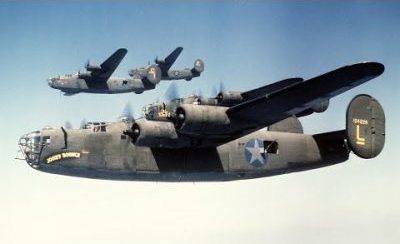
Bombing Hitler’s Hometown
or go to
Aletho News Archives – Video-Images
From the Archives
‘Conspiracy Theory’ Now Fact: Greater Israel Has Arrived
By Kit Klarenberg | Mint Press News | January 28, 2025
Ever since Tel Aviv’s 1948 creation, much has been said and written about ‘Greater Israel’ – the notion Zionism’s ultimate end goal is the forcible annexation and ethnic cleansing of vast swaths of Arab and Muslim lands for Jewish settlement, based on Biblical claims this territory was promised to Jews by God. The mainstream media typically dismisses this concept as antisemitic conspiracy theory, or at most the fringe fantasy of a minuscule handful of extremist Israelis.
In reality … continue
Blog Roll
 Aletho News
- Failing to Defeat Hezbollah, Israel & US Pressure Syria’s Ahmed al-Sharaa to Join War
- US-Israeli war on Iran drives global fertilizer prices up 40%
- Hezbollah’s Surprise Weapons Redefine Ground Battle with Israel
- Yemen joins fight against US, Israel by firing missiles at occupied territories
- Seizing the Kharg: Washington’s path to defeat in the Persian Gulf
- Iran reports 500 US casualties in strikes on covert US military sites
- Pro-Israel terrorist arrested before assassination of pro-Palestinian activist
- Bombing Hitler’s Hometown
- German journalist threatened with homelessness as German court upholds EU sanctions in landmark free speech case
- US Tells Allies That Ukraine-Bound Arms Could be Sent to Middle East
- If Americans Knew
- Researchers at Human Rights Watch Resign Over Blocked Report on Palestinian Refugee Return
- Jewish Groups Are Backing a War Americans Don’t Want
- Eric Fingerhut Thinks He’s the President of the Jews
- Top Jewish Philanthropists, Rabbis Urge Israeli President to Take Action Against ‘Jewish Extremists’
- Don’t Be Fooled. Zionist Leaders Have Always Wanted to Control Southern Lebanon
- Israel’s widespread use of torture is a core element of its genocide against the Palestinian people
- In Israel’s War on Iran, Many Middle East US Bases Rendered “All But Uninhabitable”
- ‘Burn the lawn’: Israel pursues ‘Rafah model’ in southern Lebanon
- A genocide here, an amputation there
- Reports: Iran mobilizing 1M fighters, Israel-US run low on ammo, Israeli army faces shortage – Not a ceasefire Day 168
- No Tricks Zone
- Devastating Assessment Of Comirnaty Vaccine By Former Senior Pfizer Europe Toxicologist
- New Study: CO2 Is ‘Effectively Negligible’ As An Explanatory Climate Change Factor Since 2000
- Former Pfizer Toxicologist Dr. Helmut Sterz Tells Bundestag Hearing Pfizer Vaccine Should Have Never Been Approved
- Energy Expert: Germany’s Nuclear Phaseout Was A “500 Billion Euro Mistake”
- New Research: South Australia’s Mid-Holocene Sea Surface Temperatures Were 4°C Warmer Than Today
- Storing Green Energy To Last Germany 10 Days Would Require A 60-Million Tonne Battery
- New Studies: UK Sea Levels Were 4 Meters Higher Than Today During The Mid-Holocene
- Destructive Green New Deal: German Energy And Metal Group Warns Of Drastic Crisis
- New Study Documents A 20-Year Pause In Arctic Sea Ice Decline – Driven By Internal Variability
- Wake-up Call: Survey Shows Majority Of Germans Now Favor Postponing Climate Targets!
 Aletho News
