CIA secret program helped Colombia kill FARC leaders: Report
Press TV – December 22, 2013
US intelligence agencies have secretly helped the Colombian government kill at least two dozen leaders of the Revolutionary Armed Forces of Colombia (FARC), a report says.
On Saturday, the Washington Post published the report revealing that both the Central Intelligence Agency (CIA) and the National Security Agency (NSA) provided the Colombian government with technology to terminate the rebel leaders.
The report was based on interviews with more than 30 former and current American and Colombian officials, who spoke on condition of anonymity since the program is classified and ongoing, the newspaper said.
According to the report, Washington provided Colombia with Global Positioning System (GPS) equipment that can be used to transform regular munitions into so-called smart bombs.
These explosives can accurately pinpoint specific targets, even if the objects are located in dense jungles.
In addition, the NSA provided “substantial eavesdropping help” to the Colombian government, the report stated.
In one of its operations, Colombian forces killed top FARC commander, Raul Reyes, in March 2008, while he was in a FARC-operated jungle camp in neighboring Ecuador. The newspaper reported that a US-made smart bomb was used in the killing.
Colombian President Juan Manuel Santos commented on the report, telling the newspaper that the CIA has been “of help, providing Colombian forces with “better training and knowledge.” The CIA, however, did not want to give any comments regarding the revelations.
The report also revealed that the multibillion-dollar program was secretly funded on top of the nine billion dollars in aid that the US has openly provided to Colombia, mostly in military assistance. The covert program was authorized by President George W. Bush and has continued under President Barack Obama.
The Colombian government and FARC have been holding peace negotiations since November last year in Cuba.
The two sides have agreed upon the matter of land reform and rural development, while four others issues still remain unsolved, including FARC’s participation in politics.
FARC is Latin America’s oldest insurgent group and has been fighting the government since 1964.
Bogota estimates that 600,000 people have been killed and more than 4.5 million others have been displaced due to the fighting.
Judge Chastises Obama Administration for Using “Secret Law” to Withhold Documents
By Noel Brinkerhoff | AllGov | December 20, 2013
The Obama White House has been ordered (pdf) by a federal judge to release a copy of an unclassified presidential directive after it tried to use “secret law” to keep it out of the hands of a government watchdog group.
U.S. District Judge Ellen Segal Huvelle also admonished the administration for the “unbounded nature” of its claim and thinking it had a “limitless” view of its power to withhold presidential communications from the public.
“The government appears to adopt the cavalier attitude that the President should be permitted to convey orders throughout the Executive Branch without public oversight—to engage in what is in effect governance by ‘secret law,’” Huvelle wrote in her opinion.
The case began after the nonprofit Center for Effective Government filed a lawsuit under the Freedom of Information Act to obtain a copy of Presidential Policy Directive 6, which deals with U.S. foreign aid (pdf).
The group argued that “PPD-6 is not protected by the presidential communications privilege because it was not made in the course of making decisions, but instead is the final decision itself….”
Huvelle, who was appointed to the federal bench by President Bill Clinton, made a point of personally examining the document rather than rely on the Obama administration’s characterization of it. After doing that, she determined that it “is not ‘revelatory of the President’s deliberations’ such that its public disclosure would undermine future decision-making.”
The White House insisted it could withhold the document, even though it was “a widely-publicized, non-classified Presidential Policy Directive,” according to Huvelle.
She also noted: “Never before has a court had to consider whether the [presidential communications] privilege protects from disclosure under FOIA a final, non-classified, presidential directive.”
Julie Murray, an attorney with Public Citizen and counsel for the Center for Effective Government, applauded the decision.
“We are pleased to see that the court recognized the government’s position in this case for what it is: a remarkable and unlawful attempt to keep secret a broad federal policy,” she said in a prepared statement.
“The court’s decision is a resounding win for the principle of government openness and a reminder to the Obama administration that its commitment to transparency must come not just in words, but in deeds,” Murray added.
To Learn More:
Court Rebukes White House Over “Secret Law” (by Steven Aftergood, Secrecy News)
Judge Orders Release of Presidential Policy Directive (Center for Effective Government)
Memorandum Opinion: Center for Effective Government v. U.S. Department of State, et al. (U.S. District Court for the District of Columbia) (pdf)
Obama Administration Hiding Details of Presidential Policy Directives (by Matt Bewig, AllGov)
11 Secret Documents Americans Deserve to See (by David Wallechinsky, AllGov)
Classified Documents on the Rise Despite Obama Talk of Transparency (by Noel Brinkerhoff and David Wallechinsky)
Tax loophole saved $100 billion for richest Americans

Zionist billionaire Sheldon Adelson

Press TV – December 21, 2013
The wealthiest Americans are exploiting a tax loophole to avoid paying billions in estate or gift taxes, contributing to the soaring income inequality in the United States, according to a report.
The loophole has cost the US government more than $100 billion since 2000, the Bloomberg reported.
The popularity of the tax avoidance maneuver, known as the Walton grantor retained annuity trust, or GRAT, shows how easy it is for the wealthy to bypass estate and gift taxes, the report said.
Even Richard Covey, the lawyer who pioneered the tax maneuver, which involves rapidly churning assets into and out of trusts, says it makes a mockery of the US tax code.
“You can certainly say we can’t let this keep going if we’re going to have a sound system,” Covey said.
Covey’s technique is one of several common devices that together make the estate tax system essentially ineffective as a brake on soaring economic inequality, says Edward McCaffery, a professor at the University of Southern California’s Gould School of Law.
Zionist billionaire Sheldon Adelson has given at least $7.9 billion to his heirs while legally avoiding about $2.8 billion in US gift taxes since 2010, according to calculations based on data in Adelson’s US Securities and Exchange Commission filings.
Shares of Adelson’s Las Vegas Sands Corp. are at a five-year high, making the gambling billionaire one of the world’s richest men in the world, worth more than $30 billion.
Since 2009, President Barack Obama and some Democratic lawmakers have made fruitless proposals to narrow the GRAT loophole.
Covey has suggested one reason for the lack of action is that wealthy campaign donors and politicians want to keep the loophole in place.
Related articles
- Accidental Tax Break Saves Wealthiest Americans $100 Billion… (bloomberg.com)
- How Billionaires Like Sheldon Adelson Exploit an ‘Accidental’ Tax Loophole (billmoyers.com)
Inside Guantanamo
By JOHN LAFORGE | CounterPunch | December 20, 2013
Four more innocents were released from America’s Robben Island this month. Our offshore penal colony at Guantanamo Bay still holds 158 prisoners, 84 of whom have been cleared for release. The men sent home were never charged with a crime and were cleared four years ago.
The releases may give other prisoners a reason for hope if they heard the news. During hunger strikes last spring, some of which lasted over 80 days, the military raided the prison and put 100 strikers in solitary. No one knows how or what information passes to them.
At the time, when 100 of 166 prisoners were refusing food, the ACLU, the Center for Victims of Torture, Human Rights Watch and 17 other civic groups wrote to Pentagon boss Chuck Hagel that force feeding detainees was “cruel, inhuman and degrading” — the treaty definition of torture — and called for its immediate and permanent cessation. Hagel also got a letter from Jeremy Lazarus, the president of the American Medical Association, who charged that doctors helping force-feed prisoners against their will violated “core ethical values of the medical profession.”
From February to June, the White House presided over the torturous force-feeding of at least 21 bound prisoners, a choking and gagging experience in which plastic tubes are shoved through the nostrils and down the throat while one is cinched to a restraint chair.
Cooler Heads Pronounce, but Don’t Yet Prevail
In the midst of the hunger strike, a diverse group of legal scholars, constitutional lawyers and former high ranking government and military officials published a major report that said Guantánamo demonstrates “… the willingness of the United States to detain significant numbers of innocent people … and subject them to serious and prolonged privation and mistreatment, even torture.”
The nonpartisan Constitution Project’s Task Force on Detainee Treatment’s (CPTF) self-titled “most important” finding — made “without reservation” — was that “[I]t is indisputable that the United States engaged in the practice of torture,” and that “[I]t occurred in many instances and across a wide range of theaters.”
The 600-page study, two years in the making, explained “[T]his conclusion is grounded in a thorough and detailed examination of what constitutes torture in many contexts, notably historical and legal. The CPTF examined court cases … in which the United States has leveled the charge of torture against other governments. The United States may not declare a nation guilty of engaging in torture and then exempt itself from being so labeled for similar if not identical conduct.”
The CPTF declared that by authorizing torture, the government “… set aside many of the nation’s venerable values and legal principles.” I wouldn’t use such niceties as “set aside.” Government employees disobeyed, defied, denigrated and mocked the law, particularly the US Torture Statute, the US War Crimes Act and both the Geneva Conventions and the Convention Against Torture which are US law under the Constitution. Obama himself said on April 30 that Guantanamo was “a symbol around the world for an America that flouts the rule of law.” On Sept. 24, 2009, he said, “International law is not an empty promise, and treaties must be enforced.”
Constitutional Review Finds High-Level Culpability
The CPTF’s second major conclusion was that the “highest officials bear some responsibility for allowing — and contributing to the spread of — torture.” This bombshell puts the perpetrators in legal jeopardy considering US treaties governing torture. They hold that if an accused government — in this case the United States — fails to investigate and prosecute the credibly accused, other states or the International Criminal Court may be obligated to do so.
The CPTF noted that during a February 2012 visit to Guantanamo by its staff, the prison commander at the time, Rear Adm. David Woods, “was quick to point out the facility’s motto: ‘Safe, Humane, Legal, Transparent.’” And I am Marie of Romania.
Karen Greenberg, founder of the Center on National Security at Fordham University’s law school, has said of Guantanamo’s hunger strikers, “They can’t tolerate it any more. It is despair…” Ten years of indefinite imprisonment without charges, and often without mail, phone calls or access to attorneys, is so psychologically devastating that the beleaguered inmates would rather have died than drift in oblivion. In May, prisoner Al Madhwani wrote to a federal court “… Obama must be unaware of the unbelievably inhumane conditions at the Guantanamo Bay prison, for otherwise he would surely do something to stop this torture.”
Obama has ignored torture allegations made against Dick Cheney, Donald Rumsfeld, Alberto Gonzales and George Bush — who did prosecutors the favor of publishing an autobiographical confession. When asked if his administration would investigate, Obama said it would be unproductive to “look backwards.” It would also be self-incriminating, since Obama himself has authorized cruel, inhuman and degrading treatment at Guantanamo.
John LaForge is a Co-director of Nukewatch, a nuclear watchdog and environmental justice group in Wisconsin, edits its quarterly newsletter, and writes for PeaceVoice.
Who’s Excited About Another Decade in Afghanistan?
By David Swanson | FDL | December 12, 2013
With 196 nations in the world and U.S. troops already in at least 177 of them, there aren’t all that many available to make war against. Yet it looks like both Syria and Iran will be spared any major Western assault for the moment. Could this become a trend? Is peace on the horizon? Are celebrations of Nelson Mandela’s nonviolence sincere?
The glitch in this optimistic little photo-shopped storyline starts with an A and rhymes with Shmafghanistan.
The U.S. public has been telling pollsters we want all U.S. troops out of Afghanistan “as soon as possible” for years now. We’re spending $10 million per hour, and $81 billion in the new annual budget, on an operation that many top officials and experts have said generates hostility toward our country. The chief cause of death for U.S. troops in this operation is suicide.
And now, at long last, we have an important (and usually quite corrupt) politician on our side, responding to public pressure and ready — after 12 years — to shut down Operation Enduring … and Enduring and Enduring.
Oddly, this politician’s name is not President Barack Obama. When Obama became president, there were 32,000 U.S. troops in Afghanistan. He escalated to over 100,000 troops, plus contractors. Now there are 47,000 troops these five years later. Measured in financial cost, or death and destruction, Afghanistan is more President Obama’s war than President Bush’s. Now the White House is trying to keep troops in Afghanistan until “2024 and beyond.”
Sadly, the politician who has taken our side is not in Washington at all. There are a few Congress Members asking for a vote, but most of their colleagues are silent. When Congress faced the question of missiles into Syria, and the question was front-and-center on our televisions, the public spoke clearly. Members of both parties, in both houses of Congress, said they heard from more people, more passionately, and more one-sidedly than ever before.
But on the question of another decade “and beyond” in Afghanistan, the question has not been presented to Congress or the public, and we haven’t yet found the strength to raise it ourselves. Yet someone has managed to place himself on our side, namely Afghan President Hamid Karzai.
Like the Iraqi government before him, Karzai is refusing to agree to an ongoing occupation with U.S. forces immune from prosecution under Afghan laws. Before signing off on an ongoing military presence, Karzai says he would like the U.S. to stop killing civilians and stop kicking in people’s doors at night. He’d like the U.S. to engage in peace negotiations. He’d like Afghan prisoners freed from Guantanamo. (Of the 17 still there, 4 have long since been cleared for release but not released; none has been convicted of any crime.) And he’d like the U.S. not to sabotage the April 2014 Afghan elections.
Whatever we think of Karzai’s legacy — my own appraisal is unprintable — these are remarkably reasonable demands. And at least as far as U.S. public opinion goes, here at long last is a post-invasion ruler actually engaged in spreading democracy.
What about the Afghans? Should we “abandon” them? We told pollsters we wanted to send aid to Syria, not missiles. Humanitarian aid to Afghanistan — or to the entire world, for that matter, including our own country — would cost a fraction of what we spend on wars and war preparations (51.4% of the new federal budget), and could quite easily make us the most beloved nation on earth. I bet we’d favor that course of action if we were asked — or if we manage to both raise the question and answer it.
Related article
On Hersh, Higgins, Whitaker and Ghouta
Interventions Watch | December 12, 2013
A few brief thoughts on Seymour Hersh’s article on the chemical weapons attack in Syria in August: Elliot Higgins’ response to it; and Brian Whitaker’s take on things.
Here are the bits from Whitaker’s article that I thought were worth commenting on:
‘On one side of the chemical weapons debate is Seymour Hersh, the veteran investigative journalist, who suggested in an article for the London Review of Books that rebel fighters, rather than the Syrian regime, were to blame for the Damascus attacks’.
That isn’t really the point Hersh was making though, is it? The gist of the story was that the case against the Assad regime wasn’t as strong as the Obama regime made out, and that the Obama regime knew this.
As Hersh told Democracy Now – ‘I certainly don’t know who did what, but there’s no question my government does not’, and that Obama ‘was willing to go to war, wanted to throw missiles at Syria, without really having a case and knowing he didn’t have much of a case‘.
Hersh and his sources saw that as a major scandal: a President deciding to start a war, with all that entails, based on a case that was less than watertight.
They also refused to even entertain the possibility, at least in public, that a rebel faction may have been responsible, despite knowing that at least one rebel faction had ‘mastered the mechanics of creating sarin and was capable of manufacturing it in quantity’.
‘Given that Hersh has spent decades working for mainstream media, that Media Lens disapproves of anonymous sources’.
An apparent ‘Gotcha!’ moment, no? But maybe there’s a difference between people leaking and briefing anonymously to promote Establishment narratives and aims, and people leaking and briefing anonymously to challenge them. Hersh has, throughout his career, promoted the latter with a very good hit rate. Simply put, anonymous leaks designed to whistleblow are not the same as anonymous leaks designed to mislead and confuse.
‘Some of his other exposes have misfired, though’
Some examples might be nice.
‘he has often been criticised for his use of shadowy sources. In the words of one Pentagon spokesman, he has “a solid and well-earned reputation for making dramatic assertions based on thinly sourced, unverifiable anonymous sources”‘.
Hersh has spent decades shining lights into places ‘Pentagon spokesmen’ types don’t want him to look. So it’s not surprising that they’d try and discredit his work. Would Whitaker, for example, quote an Iranian military spokesman to try and rubbish the work of an Iranian dissident journalist? I doubt it. And the fact he does it here perhaps says much about his unexamined assumptions and biases.
‘Higgins, meanwhile, is the antithesis of a “corporate” journalist’.
At this point in his career, it’s not like Higgins is some obscure, insurgent outsider. He has had his work published in The New York Times and Foreign Policy, has had a lengthy profile written about him in The New Yorker, has worked with Human Rights Watch, and has been interviewed more than once on T.V. News. Does this make him wrong? Of course not. But the line between him and ‘old media’ isn’t quite as defined as Whitaker would like to make out.
It is perhaps instructive that in this case, Hersh struggled to get anyone to publish his chemical weapons piece, while Higgins had no problem in getting Foreign Policy, an Establishment journal if ever there was one, to publish his rebuttal pretty much straight away.
‘Hersh’s source on the supposed sarin-manufacturing capabilities is an unnamed “senior intelligence consultant”:
‘Already by late May, the senior intelligence consultant told me, the CIA had briefed the Obama administration on al-Nusra and its work with sarin, and had sent alarming reports that another Sunni fundamentalist group active in Syria, al-Qaida in Iraq (AQI), also understood the science of producing sarin’
. . . Interestingly, though, EAWorldView has an idea who this consultant might be. It notes that Michael Maloof, who formerly worked in the US Defense Department, has made very similar claims in an article for the right-wing World Net Daily, and also on the Russian propaganda channel, RT’.
Pure speculation, of course. Even if the source is Maloof, it doesn’t automatically follow that Maloof is wrong.
Nor is Maloof, or any other source Hersh might have, the only person to have suggested a rebel faction may have access to chemical weapons.
In May 2013 for example, Carla Del Ponte, one of the overseers of the UN commission of Inquiry on Syria, told Swiss T.V. that ‘there are strong, concrete suspicions but not yet incontrovertible proof of the use of sarin gas’ by rebel factions, and that she was ‘a little bit stupefied by the first indications we got . . . they were about the use of nerve gas by the opposition’.
Predictably, her comments quickly disappeared down the Memory Hole, even though she is a very credible and well respected source, and likely wasn’t just making it all up.
She was, incidentally, also smeared and/or discredited by those who simply don’t want to see any kind of challenge to the Establishment narrative on Syria, much like is happening to Hersh now.
Related articles
US: Anti-Iran ‘non-nuclear’ sanctions are OK
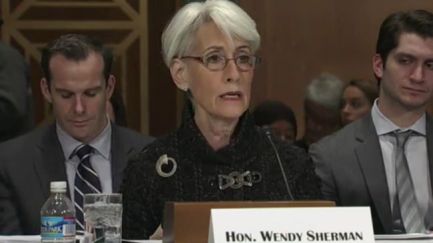
US State Department official Wendy Sherman at the Senate Banking Committee on Dec. 12, 2013

Press TV – December 13, 2013
The administration of President Barack Obama has told lawmakers in US Congress that they could pass new sanctions against Iran as far as they are not “nuclear-related.”
During a public testimony before the Senate Banking Committee on Thursday, State Department official Wendy Sherman, who led the US delegation in nuclear talks with Iran in Geneva, indicated that US lawmakers had the green light from the Obama administration to pass new anti-Iran sanctions as long as the sanctions are not “nuclear-related.”
“Given that there are different kinds of sanctions and the agreement focuses on nuclear-related sanctions,” Sen. Mike Crapo, the top Republican on the Committee, asked Sherman, “assuming we can specify exactly what that is and distinguish between the different sanctions, does that mean that Congress would be free to pass other sanctions measures while we are” negotiating over a final deal over Iran’s nuclear energy program?
“We have said to Iran that we will continue to enforce all of our existing sanctions, and we have said that this agreement pertains only to new nuclear-related sanctions,” Sherman answered.
In a phone interview with Press TV on Thursday, US Congress policy advisor Frederick Peterson said that the problem with some hawkish US lawmakers who are pushing for a new anti-Iran sanctions bill is exacerbated by the way the Obama administration is “misrepresenting” the interim deal between Iran and the P5+1 to the American people and Congress.
Meanwhile, the US Departments of Treasury and State announced new sanctions against a number of companies and individuals for “providing support for” Iran’s nuclear energy program.
Treasury Department official David Cohen, who also testified before the Senate Banking Committee on Thursday, said the new sanctions were “a stark reminder to businesses, banks, and brokers everywhere that we will continue relentlessly to enforce our sanctions.”
Iranian Deputy Foreign Minister Abbas Araqchi has hit out at Washington, saying that the new restrictions are in full contradiction with the recent nuclear deal between Tehran and the P5+1. Araqchi also said that Tehran is now assessing the current situation.
Related articles
US ‘defence’ budget includes additional military aid for Israel
MEMO | December 12, 2013
Lawmakers in the US Congress reached an agreement on Monday in both the House and the Senate on the proposed federal budget for 2014, which would allocate $520.5 billion for defence spending and $491.8 billion for non-defence.
The defence budget includes an increase in military aid to Israel that will be given as private aid, thus it will be in addition to the $3.1 billion dollars already given annually to Tel Aviv.
The budget is still awaiting formal approval and the exact amount of additional aid to Israel remains unclear.
Israeli newspaper Haaretz reported that the US House of Representatives Armed Services Committee had endorsed an increase of $488 million in military aid to Israel to pay for Israel’s procurement and development of additional rocket and missile interception systems. The newspaper noted that this sum is considerably higher than previously expected.
However, Reuters news agency reported that the additional military aid to Israel would exceed $500 million after a compromise defence bill proposed on Monday agreed to boost US spending on missile defence by $358 million to $9.5 billion, mandating another homeland defence radar and increased funding for US-Israeli cooperative efforts.
Israel’s Channel 7 News reported that US President Barack Obama had originally requested $220 million of additional private military aid to Israel to buy extra Iron Dome short-range interceptor missiles and the batteries they are launched from, which was approved.
According to the Israeli media network, in addition to the above, the supplementary aid will allocate $173 million in funding for US-Israeli cooperative missile defence programs, which includes “nearly $34 million to improve the Arrow weapon system and $22 million for work on developing another, more advanced interceptor,” noting that, “The move signals further cooperation between Boeing and Israel Aerospace Industries (IAI).”
The new budget will also allocate $117.2 million to Israel for the “development of the David’s Sling short-range ballistic missile defence system, which is being developed jointly by Israel’s state-owned Rafael Advanced Defence Systems and the US’s Raytheon.”
Furthermore, “An additional $15 million will be directed for US co-production of Iron Dome components. Raytheon has a joint marketing agreement with Israeli state-owned manufacturer Rafael Advanced Defence Systems for the Iron Dome system.”
Both the US and Israeli media are reporting that the supplemental funds are intended to protect Israel from the increasing threats coming from Iran, Gaza and Hezbollah in Lebanon.
In addition to the supplemental aid, US Secretary of Defence Chuck Hagel has promised Israel that the existing $3.1 billion package of military aid would remain intact, despite US spending cuts.
The final vote on the budget is expected to take place before Congress leaves for the year.
Haaretz noted that, “Despite frequent disputes with Prime Minister Benjamin Netanyahu’s government regarding the peace process with the Palestinians and the Iranian nuclear threat, US President Barack Obama’s administration continues to be extraordinarily generous when it comes to granting military aid. Israeli defence officials see last week’s decision as further evidence of the strength of the relationship between the two countries.”
Related article
- Congress triples Obama’s request on defense cooperation with Israel (timesofisrael.com)
Who is the Boss and Who is the Servant in this Photo?

By Richard Edmondson | Fig Trees and Vineyards | December 11, 2013
It’s kind of one of those pictures that are “worth a thousand words,” don’t you think? What you’re looking at is Obama onstage with media mogul and Israeli dual national Haim Saban, who has stated previously, “I’m a one issue guy, and my issue is Israel.” The photo was taken last weekend at the Saban Forum, held in Washington. During the event Saban and Obama appeared together for what was billed as a “conversation” on the Middle East, but basically it was a one-on-one press conference—with Saban doing the grilling and Obama doing the answering. Do the facial expressions in the photo, the body language, suggest anything to you—like for instance which of the two figures is dominant and which is submissive?
Saban, of course, has lots of money. In 2002 he provided a $13 million grant which established the Saban Center for Middle East Policy, and which is part of the larger Brookings Institution think tank. Today he is a major funder of political candidates, particularly of the Democratic Party. You can go here and watch a 48-minute video of his “conversation” with Obama, which includes a few questions from the audience towards the end (all of the people selected to ask questions in that closing segment, coincidentally, happen to be Israelis). At one point, Saban jokingly remarks upon how “obedient” Obama is. A little later in the video, Obama states the following:
“The one thing I will say to the people of Israel is that you can be assured, whoever is in the office I currently occupy, Democrat or Republican, that your security will be uppermost on our minds. That will not change.”
Does it not strike you as a curious comment? Why would the security of a foreign nation be “uppermost” in the minds of the leaders of a supposedly sovereign country? But then maybe America is no longer a sovereign nation.
Obama indeed proves his “obedience” by never once bringing up Israel’s nuclear weapons. Much of the conversation is dominated by talk about Iran’s domestic nuclear energy program. The president at one point repeats the standard, stock-in-trade “options-on-the-table” remark—which in essence is nothing more than a threat to attack Iran—yet nowhere, in the entire 48-minute video, does the subject of Israel’s nuclear weapons come up.
A report on the Saban Forum was posted recently at the Mondoweiss blog. While the article mentions the “conversation” between Obama and Saban, much of the piece is devoted to the remarks of John Kerry, who delivered the keynote address for the event. Allison Deger, the author of the report, notes that Kerry expressed the view that Palestinians in the West Bank are deserving of “state institutions” (as opposed to an actual state) of their own, a comment which seems to have prompted Deger to draw the conclusion that “Palestinian statehood is not on the table in the current round of peace talks.” It is a not unreasonable conclusion to draw.
Kerry also referred to Palestinians as a “demographic time bomb” threatening to jeopardize Israel’s “future as a democratic, Jewish state”—apparently the secretary of state’s first public expression of concern over the so-called “demographic threat.” But perhaps most interesting is what Deger reports on comments by Israeli Foreign Minister Avigdor Lieberman, who also attended the event:
Even though Lieberman was amongst a crowd of Washington and Israeli officials familiar with his anti-Arab diatribes, audible gasps could be heard throughout the room when he called to expel Palestinian citizens of Israel. A diplomat from the Russian embassy seated next to me even choked. Another moment of discontent between the plated-dinner audience and Lieberman passed when the foreign minister made a forlorn pun at Sen. Joe Lieberman. Otherwise the foreign minister was amongst allies.
Much has been made of the recent bone of contention between Obama and Netanyahu over the negotiations with Iran, with some suggesting that the US president is beginning to assert himself and to defy the Israeli lobby on some key, important issues. Is it simply wishful thinking on the part of some commentators? I don’t pretend to know the answer to that, but if there was any note of defiance struck at last weekend’s Saban Forum, all I can say is it is extremely difficult to detect.
*
Update-12/11/13:
The following information on Saban comes from Wikipedia:
In March 2008, Saban was among a group of major Jewish donors to sign a letter to Democratic Party house leader Nancy Pelosi warning her to “keep out of the Democratic presidential primaries.” The donors, who “were strong supporters of Sen. Hillary Rodham Clinton presidential campaign”, “were incensed by a March 16 interview in which Pelosi said that party ‘superdelegates’ should heed the will of the majority in selecting a candidate.” The letter to Pelosi stated the donors “have been strong supporters of the DCCC” [Democratic Congressional Campaign Committee] and implied, according to The Jewish Telegraphic Agency, that Pelosi could lose their financial support in important upcoming congressional elections.
And also this:
Regarding Jane Harman AIPAC Controversy, in April 2009, New York Times, quoting anonymous sources, said a caller promised her that Saban would withhold campaign contributions to Representative Nancy Pelosi if she did not select Ms. Harman for the intelligence post.”
And additionally this:
Saban says his greatest concern is to protect Israel. At a conference in Israel, Saban described his formula. His three ways to influence American politics were: make donations to political parties, establish think tanks, and control media outlets.
Related article
- John Kerry Is Israel’s Best Friend – Bloomberg (bloomberg.com)
Obama’s Popularity Among the Young Falls in US
Prensa Latina | December 5, 2013
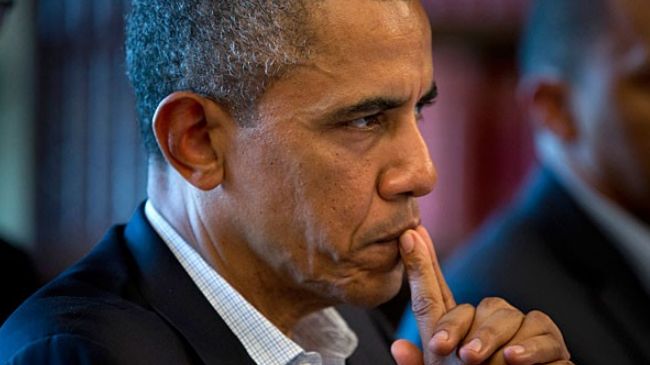
Young people in the US are disappointed with President Barack Obama’s administration and disapproved of his management of the main problems in the country, a poll revealed today.
Young people were the main support to the president in his election in 2008 and reelection in 2012. That sector of the population is currently showing a marked decrease in their support.
The poll by the Institute for Politics of the University of Harvard that included people from 18 to 29 years of age revealed that 44 percent of that sector disapproves of Obama’s work, compared to 41 percent in support.
The data shows an 11-point fall compared to a poll by the same entity this past spring, and to another poll in the fall of 2009, when 58 percent of the young supported him and 39 percent voted against.
According to Trey Grayson, director of Harvard’s Institute for Politics, this is the lowest level of support for the president since he assumed office in 2009.
Of those polled, 55 percent said they had voted for Obama, 33 percent said they voted in favor of Mitt Romney and four percent chose another politician.
Being asked today about their vote intention, 46 percent said they would vote for the current White House tenant, while 35 percent would do it for Romney and 13 percent would choose someone else.
Asking opinions about health reform, 61 percent of those polled disapproved of Obama’s administration and 57 percent rejected Obamacare, and also 44 percent consider that health care will worsen, while 34 percent said it will remain the same and just 17 percent think that it will improve.
The poll also revealed that frustration is not only against Obama, because 59 percent of those polled do not support democrats in Congress, while 35 percent approved them, but also two thirds of them do not support republicans and just 19 percent support them.
The poll included 2,089 people and defining their political inclination: 41 percent of the young defined themselves as independents, 33 percent as democrats and 24 percent as republicans, and predicted a large number of non-participants in the primary elections in 2014.
Featured Video

No Threat Can Force Iran’s Surrender /Trita Parsi & Lt Cl Daniel Davis
or go to
Aletho News Archives – Video-Images
From the Archives
An Expert Military Analysis of War with China
Actually, None is Necessary
By Fred Reed • Unz Review • December 13, 2020
The Correlation of Armed Forces: U.S. goods and services trade with China totaled an estimated $634.8 billion in 2019. Exports were $163.0 billion; imports were $471.8 billion. The U.S. goods and services trade deficit with China was $308.8 billion in 2019. Trade in services with China (exports and imports) totaled an estimated $76.7 billion in 2019. Services exports were $56.5 billion; services imports were $20.1 billion. The U.S. services trade surplus with China was $36.4 billion in 2019.
There is talk within the Washingtoniat of a possible war with China. Steve Bannon, who apparently was dropped on his head as a child, actually favors such a war. We hear the usual shoo-the-boobs alarm about how the Chinese are doing something terrible and we must gird our loins and American values and show them what for, bow wow, woof. The danger is that the current game of who-blinks-first in Asian waters might actually provoke a shooting war. You know the kind of thing: One warship refuses to get out of the way of another, a collision ensues, some retard lieutenant who signed up on waivers opens fire, and we’re off and running. It is not a good idea to let children play with matches.
The said war is discussed either in emotional terms by idiots or in purely naval terms by those familiar with such things, so we hear of the First Island Chain and the Second Island Chain and whose missiles against the other’s missiles and so on. This would be appropriate if we were fighting World War Two again. Which we aren’t. Let’s take a quick-and-dirty look at how such a war might go.
To begin the war, America would overestimate itself and underestimate China. This is doctrine in the Pentagon. … continue
Blog Roll
 Aletho News
- Theodore Postol: Iran’s Missiles & Drones Were Underestimated
- Iran To Target Military Industrial-Tech Complex That Facilitated Gaza Genocide
- Collapsing Empire: The Resistance Disarms ‘Israel’
- Suicide Should Not Be a Government Service
- Rethinking America’s greatest threat: Iran vs. Israel-Firsters
- Iran accuses adversaries of false flags to strain Turkey ties
- Poland rules out sending Patriot missiles to US/Israel amid war on Iran
- Tehran approves new Hormuz plan with major restrictions
- No Threat Can Force Iran’s Surrender /Trita Parsi & Lt Cl Daniel Davis
- UK’s New Pandemic Plan Would Turn Big Tech Into a Mass Location Tracking Network
- If Americans Knew
- Ann Coulter Rips Into Fox News for Iran War Coverage, Compares to False Rigged 2020 Election Reporting
- Joe Kent Urges Americans To Call White House and Congress To Object To Sending Troops Into Iran
- DNC Resolution to Reject AIPAC Funding Puts Democratic Leaders in the Hot Seat
- Swedish foundation to build 400 schools as over 650,000 Gaza children remain without education for 2 years
- Israeli army admits photshopping image of slain Lebanese journalist
- This is how Israel is systematically killing health workers under the cover of war in Lebanon
- Carrying life under fire: Israeli invasion of Lebanon leaves pregnant women facing deadly risks
- Champagne all around for the new death penalty (for Palestinians) law – Not a ceasefire Day 172
- Why are Palestinian books struggling to be seen on Amazon?
- The Line Between Affinity and Conspiracy
- No Tricks Zone
- New Study Finds Warming Saves Lives…Cold Temperatures 12 Times More Deadly Than Excess Heat
- German Science Blog Accuses PIK Climate Institute Of Hallucinating Climate Tipping Points
- Devastating Assessment Of Comirnaty Vaccine By Former Senior Pfizer Europe Toxicologist
- New Study: CO2 Is ‘Effectively Negligible’ As An Explanatory Climate Change Factor Since 2000
- Former Pfizer Toxicologist Dr. Helmut Sterz Tells Bundestag Hearing Pfizer Vaccine Should Have Never Been Approved
- Energy Expert: Germany’s Nuclear Phaseout Was A “500 Billion Euro Mistake”
- New Research: South Australia’s Mid-Holocene Sea Surface Temperatures Were 4°C Warmer Than Today
- Storing Green Energy To Last Germany 10 Days Would Require A 60-Million Tonne Battery
- New Studies: UK Sea Levels Were 4 Meters Higher Than Today During The Mid-Holocene
- Destructive Green New Deal: German Energy And Metal Group Warns Of Drastic Crisis
 Aletho News