Obama’s Looming War of Aggression in Syria and the Pathologies of America’s Iran Debate
By Flynt Leverett and Hillary Mann Leverett | Going to Tehran | August 27th, 2013

As the Obama administration manufactures its “case” for military aggression against Syria in the coming days or weeks, we want to highlight an interview that Hillary did with Zeinab al-Saffar when we were in Beirut earlier this summer; the interview is now available on Al Mayadeen’s Web site, see here. Hillary’s account of how the United States self-servingly demonizes non-Western countries that get in its way seems highly applicable to the current discussion—it hardly merits the label “debate”—about attacking something in Syria, ostensibly because of claims that the Syrian government used chemical weapons against civilians last week in Ghouta, an eastern suburb of Damascus. The frame for such demonization, Hillary notes, is inevitably driven by and bound up with
“the United States’ way of going to war. The United States doesn’t go to war, it says, to protect its interests. The United States says it’s going to war to ‘liberate’ peoples—whether they’re liberating people in Cuba, Vietnam, Iraq, and prospectively Iran. And the way the American people is conditioned to accept it (and, essentially, world opinion as well) is that American experts put out a narrative about these various countries—whether it’s Cuba, Vietnam, Iraq, or now Iran—they put out a narrative about how repressive that society is, how illegitimate its government is in terms of its domestic politics, and how irrational it is in its foreign policy. We’ve seen this in country after country that the United States has invaded or tried to invade to overthrow its government.”
Of course, no one anticipates that President Obama is about to order a U.S.-led invasion of Syria. But, since Obama’s foolish declaration in August 2011 that Syrian President Bashar al-Assad “must go,” the United States has been committed to the Syrian government’s overthrow. And the demonization of Syria’s government as repressive, illegitimate, and irrational has proceeded apace, exactly along the lines described by Hillary. Now the demonization focuses on unsubstantiated allegations of the Syrian government’s use of chemical weapons as a justification for the United States to use military force against it—just as concocted claims about Saddam Husayn’s weapons of mass destruction were central to building the case for invading Iraq in 2003.
Make no mistake, U.S. military action against Syria will be fragrantly illegal (not that President Obama’s senior advisors, most members of Congress, or much of the American public will care). Nevertheless, the Obama administration is gearing up for precisely such action—and for entirely self-generated reasons. It was Obama who declared that Assad “must go.” It was Obama who declared that chemical weapons use was a “red line.” It was Obama who put himself in a position where he can’t entertain the possibility that Syrian oppositionists used chemical weapons, because that would destroy his administration’s Syria policy. And because Obama took these ill-considered and illegal positions, he must now use American military power to preserve his “credibility.”
Obama took these positions, the “credibility” of which he must now defend by engaging in overt aggression, in no small part because American foreign policy elites believe that bringing down the Assad government will undermine the Islamic Republic of Iran. In her interview for Al Mayadeen, Hillary discusses the evolution of our own thinking about the Islamic Republic, how America should engage it, and what are the real obstacles to a more realistic and effective American posture toward Tehran.
In particular, she charts the progress from our earlier advocacy of a U.S.-Iranian “grand bargain” (whereby America would “talk Iran into agreeing with American positions on Hizballah, on the nuclear issue, on the Palestinian issue, on a range of things”) to our recognition that “something much more profound and deep” is required—that the United States needs “to come to terms with and accept” a fiercely independent Islamic Republic, in much the same way that President Richard Nixon and Henry Kissinger came to terms with and accepted the People’s Republic of China in the early 1970s. She also recounts the attacks we have faced—first from the right, when we were criticizing President George W. Bush’s handling of Iran policy, followed by much of the left, when we began making the same criticisms of Obama’s posture toward Iran. In this context, Hillary argues that our biggest offense has been to challenge the deeply held American myth “that Iranians were demanding to be liberated by the United States, but not liberated by an American tank, but by the great American ideas and great American values, that everyone wants, deep in their heart, to be secular liberals…if you questioned that in the United States, as we did, you really were vilified.”
Our experience strongly suggests that the biggest obstacles to genuine revision of U.S. policy toward the Islamic Republic are some fundamental aspects of American political culture. As Hillary points out, “to accept an Islamist political order, [the United States] would have to give up the pursuit of hegemony, the pursuit of dominance. This idea that we can use the excuse of what’s called American exceptionalism—that the United States is a unique force for good in the world—to invade other countries to ‘liberate’ them, we’d have to give that up, because we’d have to recognize that there is some legitimacy to other political orders, particularly ones that are Islamist. And that’s especially relevant in the Middle East that is so important in geostrategic terms.”
The problem, though, is that “hegemony may be nice in theory—if you could get it, if you could rule the world, that might be a nice idea for some Americans in theory—but you cannot get it in the Middle East, because you are up against Islam. You cannot do it; you cannot defeat that. For the United States to have any strategic influence in this vital part of the world, we argue in our book, we have to come to terms with that—just as we could not defeat one billion people in China who wanted to have their independence. It’s a very similar situation.”
But it seems that United States is not yet ready to come to terms with this reality. And so, in another vain attempt to get at the Islamic Republic of Iran, America is about to engage in illegal aggression against one of the Middle East’s most avowedly secular governments—a government that, like the Islamic Republic, actually fights the kind of violent (and anti-American), al Qaida-affiliated extremism that some U.S. “allies” work so hard to promote.
Related article
The Konyism of Samantha Power, US Ambassador to the United Nations
By Vijay Prashad | Jadiliyya | August 15 2013
“Foreign policy is an explicitly amoral enterprise,” Samantha Power, 2003.
On 10 August, the newly appointed US Ambassador to the United Nations, Samantha Power, addressed the Fourth Estate Leadership Summit, an event of Invisible Children. This was Ambassador Power’s first public address since she took her seat at the United Nations. Invisible Children is the campaign group that has been behind several iterations of the “Stop Kony” video, which went viral in 2012. Power praised the group for its “new kind of activism” whose “army of civilian activists” had pushed the Obama administration to tougher action against Joseph Kony, the head of the Lord’s Resistance Army (LRA), and whose example had helped Kenyans and Russians and most of all Arabs, who “barely knew democracy as recently as three years ago,” to use the Internet to hold governments accountable. Power is not naïve. She knows that the Internet is not sufficient, since it is simply “a means to an end. What matters is the real world scoreboard.” The “real world scoreboard” touts up the exertions of power by actors that Power sees as benign, such as the United States government. Internet activism can prod the US government to action, and when it does, then it is effective. World history can only happen when the US government’s snout pushes along the Dialectic; anything else is simply the passage of time.
What did the Stop Kony video achieve, according to Power? It pushed a US senator (John Kerry) to draft a bill to stiffen US action against Kony. This bill and its consequent law drew on two resources. First, since 1986 the United States had drawn up lists of narco-traffickers that it wished either arrested or killed, and to which end it provided a bounty on the heads of these people through the State Department’s Narcotics Rewards Program. Each reward was not to exceed five million dollars. Second, the State Department has used a similar rewards program for individuals who helped turn in war criminals sought by international tribunals and courts (for Rwanda, Sierra Leone and Yugoslavia). These international bodies had already drawn up their lists of criminals, for whose heads the United States provided rewards. The Kerry bill refashioned these programs into the Rewards Program Update and Technical Corrections Act of 2012, signed into law by Obama in January 2013. The new approach allows the US State Department’s Office of Global Criminal Justice to draw up its own lists and to offer rewards for the capture of criminals. John Kerry, now the Secretary of State, hastened to say that the new approach is “not a dead-or-alive bounty program. Information must lead to the secure arrest, transfer, or conviction of these people in a court of law. We want these men to look into the eyes of their victims and answer for their actions.”
Power, one of the champions of the new law and an advocate of the Responsibility to Protect (R2P) doctrine for liberal interventionism, follows Susan Rice to the United Nations. Rice was equally adamant about the use of US-NATO force to enforce her perception of what counts as a human rights violation. During Rice’s tenure at the United Nations there was no use of the language of human rights and the R2P doctrine on behalf of the Palestinians (under occupation by the state of Israel), or the people of the Congo (under the yoke of neighbouring Rwanda through the M23 rebel group), or indeed of the people of Equatorial Guinea (whose ruthless president Obiang enjoyed a warm photo-op with the Obamas in 2012). US allies never felt the edge of Rice’s rhetoric, nor Obama’s sanctions. [Vijay Prashad, “The Agonies of Susan Rice: Gaza and the Negroponte Doctrine,” Jadaliyya, 15 November 2012] Dressed in sheep’s clothing, the ravenous wolves of the Global North defended their allies while they threatened their enemies. It didn’t help the latter that many of them are vicious and deserve to be caught and punished. But it did help the United States and its allies to concentrate the spotlight on them and allow their friends to sit in the shadows, smug in their impunity. It also allowed the United States and its allies to import armed forces into parts of the world (mainly Africa as it turns out) where it has interests to protect.
Kony, the Trojan Horse
Like so many post-colonial states, Uganda has not been able to settle its problems of political geography and political economy. A North-South divide in the country was exacerbated by British colonialism, which relied upon the South to provide it with recruits to the crucial King’s African Rifles and petty administrators for the region. When the South became the vanguard of the anti-colonial struggle, the British turned their recruitment efforts to the North, among the Acholi and West Nile groups, driving a wedge that endures. The South had been host to whatever economic development had been forged by colonialism, who brought in captive labor from the North. These fissures provided grist for the mill of post-colonial leaders such as Obote and Amin, both of whom used these divides to their venal ends. Yoweri Museveni’s National Resistance Army, rooted in the South, took on the Northern forces of Obote in the early 1980s that resulted in massacres of hundreds of thousands of people. Museveni came to power in 1986 through the National Resistance Movement, a thin veneer of difference from his army of previous years. It continues to rule Uganda, with Museveni crowned as one of the African Renaissance leaders by the Clinton administration.
A defeated and demoralized North came together behind two millenarian cults, first that of Alice Auma Lakwena (Holy Spirit Mobile Force) in 1987 and then second after her downfall, that of her kinsman Joseph Kony in the 1990s. Kony’s LRA became a dangerous cult, kidnapping children, using violence to sow fear in Acholiland, and fighting a war against the Ugandan government without a defined political strategy. No political dialogue emerged during the 1990s or the early 2000s, as Museveni sought a military solution against the LRA and as Kony floundered through the haze of anarchic violence. In 2005, the International Criminal Court framed arrest warrants for Kony and four of his lieutenants, and the US government placed the LRA on its terror list. Not long after this, Kony’s LRA had been severely degraded and his remaining forces (not more than 200) fled to the Democratic Republic of the Congo, from where it is reported to have taken refuge in the Central African Republic. By 2012, the LRA was no longer the existential threat it was to Northern Uganda. It had become a criminal gang, poaching animals and stealing food, looking for survival rather than for political power. As the US State Department’s own Amanda Dory told Congress in April 2012, “The common assessment is that [Kony] has been significantly degraded and is in a survival and evasion mode at this point.” This sober assessment did not slow down the frenzy of the “Kony 2012” nor of the entry of US troops into the African continent. None of the grievances of the North that gave rise to Alice Auma or Kony have been settled. The fissures remain, even as Kony has been chased off.
Invisible Children, which made the Kony 2012 video that Powers praised, has its roots in evangelical Christian politics. It came to Kony only after its foray into Darfur had floundered (on the way in which the Darfur issue suited both US and Israeli state interests, see Mahmood Mamdani, Saviors and Survivors: Darfur, Politics and the War on Terror, 2010). It sought an African mission to champion, an old colonial narrative of the white Christians who make their name by saving the black Africans. Their view of the conflict is simplified to the point of a cartoon: the more they demonize Kony, the more Museveni’s own dictatorial rule is minimized, and the more they validate the entry of US armed forces into the region (Obama sent one hundred military advisors to Uganda in 2010).
Obama’s administration sinks in the quicksand of its liberal ambitions –few of its liberal foreign policy objectives have been met; not the closing down of Guantanamo’s prison, nor the tethering of an out-of-control surveillance apparatus, nor even the War on Terror in general. In fact, Obama has intensified the drone warfare in Yemen and Pakistan, and tethered itself to a resurgent Saudi Arabia on the back of Qatari withdrawal. To polish its carapace, the Obama administration has become a latter-day believer in gay rights on the world stage. Power went on Jay Leno’s program to talk about global LGBT rights and held a Google hangout with human rights activists where the issue of LGBT rights was center-stage (later, on twitter, Power mourned the loss of “Eric Ohena Lembembe, a courageous Cameroonian activist tortured to death last month”). But, to stay on the Uganda story, Power did not raise the issue of LGBT rights and Uganda. In 2011, gay activist David Kato Kisule was murdered in Mukono, Uganda. Kato had been a leader in the struggle for gay rights in Uganda. Invisible Children’s financial links to the Discovery Institute complicates matters for Powers’ liberal interventionism–Discovery’s head Lou Engle was in Kampala, Uganda in May 2010 heading up an anti-gay rally in support of an anti-gay bill that has been championed by President Museveni. Ambassador Power’s claim to move a pro-LGBT agenda at the UN is at odds with her choosing to give her first speech at a forum that shares much with the anti-gay agenda of the Discovery Institute and Ugandan President Museveni. She did not make any remarks about this at her speech at the Fourth Estate Summit. In fact, Power did not raise the issue of LGBT rights at that Los Angeles gala. This is standard issue “pinkwashing,” a cavalier use of a real campaign to re-brand the sinking ship of US soft power.
Invisible Children’s “Kony 2012” helped shore up a new trend in US policy, to seek military solutions where much more complex policy options need to be considered. Forging military partnerships with Museveni’s Uganda will not help the people of the North, whose main issue is loss of land to investors, and loss of livelihood over the course of two generations. Nor will it solve the problems of a nascent people’s movement, which is being stamped down by the anti-protest Public Order Management Bill (passed by parliament on 6 August). Opposition leader Nandala Mafabi called this bill unconstitutional, but where will be the room to legally dispute it on the streets? None of this detained the human rights apparatus created by Rice and Power, and sanctified by Obama. Their human rights agenda is driven not by popular protests on the streets but by the cordite from an F-16.
R2P
“What matters,” said Ambassador Power at the Invisible Children gala, “are results – everything else is just noise.” But what matters are well is ideology and power – who gets to define what is a crisis and who gets to frame the actions necessary to solve the crisis? In 2005, through US pressure, the United Nations adopted the Responsibility to Protect (R2P) doctrine. One of its champions was Samantha Power. The R2P doctrine holds that a state has the legal responsibility to protect is people, and if this state fails to do so the international community must involve itself with “coercive measures” such as economic sanctions but with military intervention as “the last resort.” In other words, the R2P doctrine is endowed with the ability to conscript Chapter VII of the UN Charter, which forces the United Nations to use military force. But, as has become obvious over the past few decades, the idea of the “international community” is not as global as it seems–that term has come to reflect the views of the North Atlantic countries, whose military hegemony through the US armed forces and its tentacular base structure as well as NATO gives them the ultimate veto over the narrative of world affairs. What matters, then, is not suffering in general, but the suffering deemed by the North Atlantic states to be against their interests, to whose defence the bombers are set loose.
Last year, India’s former Ambassador to the United Nations, Hardeep Singh Puri, offered a robust criticism of the R2P doctrine from this general standpoint. Puri pointed out that the United Nations used the doctrine “selectively,” and when the United Nations selects a conflict for intervention, the armed phase is immediate rather than “calibrated and gradual”. The selectivity is a function of those who continue to exercise their power through the UN bodies, which is to say that the North Atlantic states set the agenda for the use of the R2P doctrine. Puri’s criticisms come in the wake of the Libyan intervention, which Obama, Rice, and Power use as the standard for the use of R2P. However, many powers, including the BRICS states, are wary of that usage. They argue that the United States misled the Council and then misused the UN Resolution 1973, a feint that forced UN Secretary General Ban Ki-moon to publically defend the NATO action in December 2011. It is because of the way the R2P was used in Libya that it the BRICS states have indicated that they will not allow such an open-ended R2P resolution, including for Syria. Power comes to the United Nations stepping over the rubble of R2P.
Tactically, it is smart of Power to go to Invisible Children, to pose as a grassroots activist who is going to be pushed by the people and be the people’s champion in the Security Council. It will shine Power’s reputation a bit, but not much. With the Bush administration walking away from the ICC and shredding the Kyoto agreement, Power wrote, “The United States [has come] to be seen less as it sees itself (the cop protecting the world from rogue nations) than as the very runaway state international law needs to contain.” In the Obama administration, Power did nothing to contain the “runaway state,” indeed she helped secure inside the United Nations a “law,” R2P, that gives the United States permission to be unrestrained. That is the Konyism of Samantha Power.
Related article
- Why Is Samantha Power Speaking to Invisible Children? (nationalinterest.org)
Uncontrolled by FISA court, NSA commits ‘thousands of privacy violations per year’
RT | August 16, 2013
The National Security Agency broke the law and ignored privacy protections thousands of times in each of the years since Congressional leaders expanded the agency’s power in 2008, according to a new report citing documents leaked by Edward Snowden.
The majority of the violations are related to unauthorized surveillance on Americans or foreigners inside the United States, conditions deemed illegal by executive order, according to a new report from the Washington Post.
The account is based on top-secret documents and a May 2012 internal NSA audit that found 2,776 infractions – including unauthorized collection, storage, access to or distribution of legally protected communications – in the preceding 12 months alone. The audit, originally only meant to be seen by top NSA leaders, only accounted for violations at NSA headquarters at Fort Meade, Virginia, and other locations in the Washington DC region.
Three government sources told the Post that the 2,776 infractions would in fact be much higher had the audit included all NSA data collection centers. Each of the 2,776 violations could have potentially encompassed thousands of communications.
“One key to the Washington Post story,” tweeted journalist Glenn Greenwald, who first published Snowden’s disclosures in June, “the reports are internal, NSA audits, which means high likelihood of both under-counting and white-washing.”
One of the most flagrant examples is a 2008 incident when a “large number” of telephone calls were inadvertently intercepted because a programmer erroneously typed “202” instead of “20,” Egypt’s national calling code, according to a “quality assurance” memorandum never seen by NSA oversight staff.
Another time, the NSA kept 3,032 files they were ordered to destroy by the Foreign Intelligence Surveillance Act (FISA) court. Each individual file included an undisclosed number of telephone call records, according to the Post.
In a separate incident, the NSA failed to notify the FISA court about a new collection method the agency was using for months, at which point the court deemed the method unconstitutional. The agency reportedly “diverted large volumes of international data passing through fiber-optic cables in the United States into a repository where the material could be stored temporarily for processing and selection.”
This finding, and others like it, refutes claims made by NSA chief Keith Alexander and other brass that the government does not store or process the information it collects. As per NSA policy, the number of Americans affected was not disclosed in the top-secret documents.
NSA officials also failed to explain why, with the number of violations lower in 2008 and 2009 than in later years, violations only increased as time went on.
US District Judge Reggie Walton, the chief judge of the FISA court, admitted that the court’s rulings are based only on information provided by the government. Consequently, judges entrusted with determining what the NSA may and may not do are forced to rely on the NSA to prove the government has not and will not overstep its legal bounds.
“The [FISA court] is forced to rely upon the accuracy of the information that is provided to the Court,” Walton wrote to The Washington Post. “The [FISA court] does not have the capacity to investigate issues of noncompliance, and in that respect the [FISA court] is in the same position as any other court when it comes to enforcing [government] compliance with its orders.”
Privacy advocates have previously expressed concern that the court is never informed of many of the violations. Even when the court is informed of the agency’s intentions, however, the judges are sometimes ignored.
A recently declassified Justice Department review from 2009 discovered a “major operational glitch that had led to a series of significant violations of the court’s order and notified the court.” While specifics of the error were not disclosed, problems including the so-called “over-collection” of phone call metadata were reported.
“The problems generally involved the implementation of highly sophisticated technology in a complex and ever-changing communications environment which, in some instances, results in the automated tools operating in a manner that was not completely consistent with the specific terms of the Court’s orders,” a December 2009 memo to the Senate and House intelligence committees stated.
The Washington Post notified the NSA of Thursday’s report before it was published, at which point the agency said it stops mistakes “at the earliest possible moment, implement mitigation measures wherever possible, and drive them down.”
“We’re a human-run agency operating in a complex environment with a number of different regulatory regimes, so at times we find ourselves on the wrong side of the line,” said one senior official who spoke on the condition of anonymity. “You can look at a number in absolute terms that looks big, and you look at it in relative terms, it looks a little different.”
The documents also described a tutorial that NSA collectors and analysts are required to complete. Titled the “Target Analysts Rationale Instructions,” the training instructs employees on how to complete oversight requirements without revealing “extraneous information” to “our FAA overseers,” a reference to the FISA Amendments Act of 2008.
California Senator Dianne Feinstein said she did not receive a copy of the audit until questioned by the Post, despite her position as Senate Intelligence Committee Chairman. She said the committee “can and should do more to independently verify that NSA’s operations are appropriate, and its reports of compliance incidents are accurate.”
The timing of the report comes just after US President Barack Obama defended the NSA’s widespread domestic and foreign surveillance. Obama said the programs were necessary to protect national security and legitimate partly because of comprehensive oversight.
“If you look at the reports – even the disclosures that Mr. Snowden has put forward – all the stories that have been written, what you’re not reading about is the government actually abusing these programs and listening in on people’s phone calls or inappropriately reading people’s emails,” Obama said.
“What you’re hearing about is the prospect that these could be abused. Now, part of the reason they’re not abused is because these checks are in place, and those abuses would be against the law and would be against the orders of the Foreign Intelligence Surveillance Court.”
After the initial report was published Thursday night the Washington Post issued an appendix revealing that after reporters spoke with NSA leadership, the Obama administration refused allow the Post to publish their names or official titles. The explanation from the newspaper is reproduced in full below:
“The Obama administration referred all questions for this article to John DeLong, the NSA’s director of compliance, who answered questions freely in a 90-minute interview. DeLong and members of the NSA communications staff said he could be quoted “by name and title” on some of his answers after an unspecified internal review. The Post said it would not permit the editing of quotes. Two days later, White House and NSA spokesmen said that none of DeLong’s comments could be quoted on the record and sent instead a prepared statement in his name. The Post declines to accept the substitute language as quotations from DeLong. The statement is below.
“We want people to report if they have made a mistake or even if they believe that an NSA activity is not consistent with the rules. NSA, like other regulated organizations, also has a “hotline” for people to report — and no adverse action or reprisal can be taken for the simple act of reporting. We take each report seriously, investigate the matter, address the issue, constantly look for trends, and address them as well — all as a part of NSA’s internal oversight and compliance efforts. What’s more, we keep our overseers informed through both immediate reporting and periodic reporting. Our internal privacy compliance program has more than 300 personnel assigned to it: a fourfold increase since 2009. They manage NSA’s rules, train personnel, develop and implement technical safeguards, and set up systems to continually monitor and guide NSA’s activities. We take this work very seriously.”
Related article
A Guide to the Deceptions, Misinformation, and Word Games Officials Use to Mislead the Public About NSA Surveillance
By Trevor Timm | EFF | August 14, 2013
It’s been two months since President Barack Obama first said that he welcomes a debate about NSA surveillance, which he once again reiterated last week at his press conference. Unfortunately, it’s very hard to have a real debate about a subject when the administration constantly and intentionally misleads Americans about the NSA’s capabilities and supposed legal powers.
Infamously, the Director of National Intelligence (DNI) James Clapper was forced to apologize for lying to Congress about whether the government was collecting information on millions of Americans, but that was merely the tip of the administration’s iceberg of mendacity and misdirection. At this point, it seems nothing the government says about the NSA can be taken at face value.
NSA’s Bizarro Dictionary
The latest example comes from the New York Times last week, which reported that the NSA is “searching the contents of vast amounts of Americans’ e-mail and text communications into and out of the country.” Despite the fact that millions of people’s communications are collected in bulk, the NSA says that this isn’t “bulk collection.” From the NYT story:
The senior intelligence official argued, however, that it would be inaccurate to portray the N.S.A. as engaging in “bulk collection” of the contents of communications. “ ‘Bulk collection’ is when we collect and retain for some period of time that lets us do retrospective analysis,” the official said. “In this case, we do not do that, so we do not consider this ‘bulk collection.’ ”
In other words, because the NSA does some sort of initial content searches of the bulk communications that they collect, perhaps using very fast computers, then only keep some unknown subset of that greater bulk for a later date, no “bulk collection” occurs. This is ridiculous. No matter how you slice it, the NSA is mass collecting and searching millions of American communications without a warrant.
Keep in mind that officials have previously said communications aren’t even “collected” when they are intercepted and stored in a database for long periods of time, much less “bulk collected.” Orwell would be impressed.
We’ve long documented the NSA’s unbelievable definitions of ordinary words like “collect,” “surveillance,” and “communications,” publishing a whole page of them last year. The ACLU’s Jameel Jaffer has added to the NSA’s bizarro dictionary, with words like “incidental,” “minimize” and even “no.”
The fact is, no one should have to read and parse a sentence a half-dozen times, plus have access to a secret government dictionary, in order to decipher its meaning. Yet, that’s apparently how the administration wants this debate to proceed.
Question Misdirection
When government officials can’t directly answer a question with a secret definition, officials will often answer a different question than they were asked. For example, if asked, “can you read Americans’ email without a warrant,” officials will answer: “we cannot target Americans’ email without a warrant.” As we explained last week, the NSA’s warped definition of word “target” is full of so many holes that it allows the NSA to reach into untold number of Americans’ emails, some which can be purely domestic.
“Under this Program” Dodge
Another tried and true technique in the NSA obfuscation playbook is to deny it does one invasive thing or another “under this program.” When it’s later revealed the NSA actually does do the spying it said it didn’t, officials can claim it was just part of another program not referred to in the initial answer.
This was the Bush administration’s strategy for the “Terrorist Surveillance Program”: The term “TSP” ended up being a meaningless label, created by administration officials after the much larger warrantless surveillance program was exposed by the New York Times in 2005. They used it to give the misleading impression that the NSA’s spying program was narrow and aimed only at intercepting the communications of terrorists. In fact, the larger program affected all Americans.
Now we’re likely seeing it as part of the telephone records collection debate when administration officials repeat over and over that they aren’t collecting location data “under this program.” Sen. Ron Wyden has strongly suggested this might not be the whole story.
From Downright False to Impossible to Understand
Some statements by government officials don’t seem to have any explanation.
The night before the New York Times story on “vast” warrantless searches of Americans’ communications came out, Obama told Jay Leno on The Tonight Show, “We don’t have a domestic spying program.” Mr. President, what do you call collecting the phone records of all Americans and searching any email sent by an American that happens to cross the border? That sounds a lot like a domestic spying program.
Similarly, Sen. Dianne Feinstein, chair of the Senate Intelligence Committee, recently said this: “[T]he government cannot listen to an American’s telephone calls or read their emails without a court warrant issued upon a showing of probable cause.” Leaked documents and, honestly, the FISA Amendments Act itself show Feinstein’s statement simply isn’t true—if Americans are talking to a “target” their telephone calls are listened to and their emails can be read without a warrant (and that doesn’t even include the searching of Americans’ communications that are “about a target”). All of those searches are done without a court order, much less a warrant based on probable cause.
Previously, President Obama has called the inherently secret FISA court “transparent,” to the befuddlement of just about everyone. A court that has issued tens of thousands of secret orders, while creating a secret body of privacy and Fourth Amendment law, is not “transparent” by any measure.
Just last week, the president claimed he would appoint an “independent” board of “outside” observers to review the surveillance programs, only to put DNI Clapper—the same man who lied to Congress and the public about the scope of the program—in charge of picking the members. The White House has since backtracked, but the DNI still will report the group’s findings to the President.
These are not all of the misleading statements, merely just a few that stick out at the moment. If the president is serious about transparency, he can start by declassifying the dictionary his administration is using to debate, and start speaking straight to the American public. A one-sided presentation of the facts, without straightforward answers to the public’s questions, isn’t really a debate at all.
Related articles
- The NSA is turning the internet into a total surveillance system
- Confessed Liar To Congress, James Clapper, Gets To Set Up The ‘Independent’ Review Over NSA Surveillance
- Jennifer Hoelzer’s Insider’s View Of The Administration’s Response To NSA Surveillance Leaks
- Pro-NSA Editorial Flails Wildly, Snarks At Internet Users And Claims Those Challenging NSA’s Reach ‘Hate Obama’
Cory Booker, the Next Black Corporate Presidential Contender
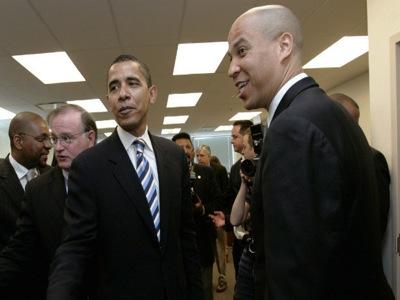
A Black Agenda Radio commentary by Glen Ford | August 14, 2013
Cory Booker, the obnoxious and joyously cynical Newark, New Jersey mayor and soon-to-be U.S. senator, perfected the role of stealth Black corporatist Democratic politician years before Barack Obama was elected to national office – although he’s eight years younger than Obama. If anything, Booker has more friends in high rightwing places at this stage in his career than did Barack Obama when he was running for the U.S. Senate from Illinois, ten years ago. Obama came out gradually as a servant of the corporate class; Booker has always been a sycophant of the rich and devotee of their most reactionary causes.
While Barack Obama waited until he was president to fully display his school privatization colors, Cory Booker began his public career as an operative in the corporate-funded private school vouchers game. At the age of 33, and with only one term as a city councilman under his belt, Booker used his rich contacts in rightwing, mainly Republican circles to vastly outspend, and almost defeat, the most powerful Black politician in New Jersey, Newark mayor Sharpe James. Four years later, in 2006, after a very large Republican U.S. Attorney and now governor, Chris Christie, had put James on the path to prison, Cory Booker walked into City Hall with an army of Wall Street and Silicon Valley billionaires behind him.
Once he steps into the U.S. Senate, to serve out the remainder of the late Frank Lautenberg’s term, Booker will immediately start running for president, staking out a position to the right of the current occupant and of Obama’s likely successor, Hillary Clinton. In the last presidential race, Booker infuriated the Obama camp by coming to the defense of Bain Capital, the Wall Street investment firm where Mitt Romney made his fortune. Booker said it was “nauseating” to see all those good people in high finance held up to scorn in an election campaign.
Nobody can say that Cory Booker doesn’t take care of his friends in the 1%. They certainly take care of him. They have bankrolled all of his electoral efforts, most recently allowing Booker to spend almost three times as much as his top Democratic senatorial opponents, combined. Facebook billionaire Mark Zuckerman’s $100 million gift to the Newark Public Schools made Booker look like an urban miracle worker – although the transaction was actually more like Booker presenting the schools as a gift to Zuckerman and his privatizing friends. Other Silicon Valley fat cats set Booker up as head of a start-up Internet company that made Booker a millionaire, at least on paper. Now that Booker is going to Washington, the start-up is going down the tubes. But, there are plenty more self-serving deals to be made on Capitol Hill.
In the recent campaign, Booker sounded positively like an old-style Republican, badmouthing “Washington” in every other sentence.
The filthy rich have cultivated a true-blue believer in Cory Booker, the still-young man from the suburbs of New Jersey. As I wrote in the inaugural issue of the Black Commentator, in April of 2002, “At his age, Cory will be a blight on the political scene even longer than the rest of the Four Cs (colored conservatives counting cash).” I was referring to Condoleezza (Rice), Clarence (Thomas), and Colin (Powell).
He’ll likely be around even longer than his fellow Black stealth corporatist, Barack Obama.
Confessed Liar To Congress, James Clapper, Gets To Set Up The ‘Independent’ Review Over NSA Surveillance
By Mike Masnick | TechDirt | August 12, 2013
Well, this is rather incredible. Remember on Friday how one of President Obama’s efforts to get people to trust the government more concerning the NSA’s surveillance efforts was to create an “outside” and “independent” board to review it all? Specifically, he said:
Fourth, we’re forming a high-level group of outside experts to review our entire intelligence and communications technologies. We need new thinking for a new era. We now have to unravel terrorist plots by finding a needle in the haystack of global telecommunications. And meanwhile, technology has given governments — including our own — unprecedented capability to monitor communications.
So I am tasking this independent group to step back and review our capabilities — particularly our surveillance technologies. And they’ll consider how we can maintain the trust of the people, how we can make sure that there absolutely is no abuse in terms of how these surveillance technologies are used, ask how surveillance impacts our foreign policy — particularly in an age when more and more information is becoming public. And they will provide an interim report in 60 days and a final report by the end of this year, so that we can move forward with a better understanding of how these programs impact our security, our privacy, and our foreign policy.
Okay. Outside, independent. Sure, that might help. Except, that was Friday. Today is Monday. And, on Monday we learn that “outside” and “independent” actually means setup by Director of National Intelligence, James Clapper — the same guy who has already admitted to lying to Congress about the program, and has received no punishment for doing so. This is independent? From this we’re supposed to expect real oversight?!? This is from the letter sent to Clapper:
I believe it is important to take stock of how these technological advances alter the environment in which we conduct our intelligence mission. To this end, by the authority vested in me as President by the Constitution and the laws of the United States of America, I am directing you to establish a Review Group on Intelligence and Communications Technologies (Review Group).
The Review Group will assess whether, in light of advancements in communications technologies, the United States employs its technical collection capabilities in a manner that optimally protects our national security and advances our foreign policy while appropriately accounting for other policy considerations, such as the risk of unauthorized disclosure and our need to maintain the public trust. Within 60 days of its establishment, the Review Group will brief their interim findings to me through the Director of National Intelligence (DNI), and the Review Group will provide a final report and recommendations to me through the DNI no later than December 15, 2013.
In case you didn’t catch that, he’s asking Clapper to first create and set up this “outside” and “independent” review group… and then to have the group report its findings back to Clapper. The same strong defender of the program who flat out lied to Congress about it. If this was about “restoring the trust” of the American people that the government isn’t pulling a fast one over on them, President Obama sure has a funny way of trying to rebuild that trust. This seems a lot more like giving the concerns of the American public a giant middle finger.
Brazil may reject US fighter jet deal over NSA spying scandal
RT | August 13, 2013
Brazilian officials have expressed reluctance to purchasing dozens of military planes from the US after it was revealed that the NSA not only closely monitored Brazilian energy and military affairs, but also mined for commercial secrets.
The US had planned to sell Brazil – a country in the process of revitalizing its Air Force – 36 fighter jets in a deal worth more than US$4 billion. But when US Secretary of State John Kerry meets with Brazilian President Dilma Rousseff on Tuesday, the leaders will not discuss the deal, a source near to the situation told Reuters.
Kerry traveled to Colombia before making his way to Brazil in an attempt to repair relations with Latin American nations after NSA leaker Edward Snowden disclosed documents showing that the US spied on communications related to the military, political and terror issues, and energy policies.
“We cannot talk about the fighters now…You cannot give such a contract to a country that you do not trust,” the source said.
Chicago-based Boeing Co. is competing for the $4 billion contract against France’s Rafale and Sweden’s Gripen, although the longer Brazil goes without choosing, the more likely it is that other competitors will enter the fray.
Rousseff delayed a decision on the fighter jets because of budget woes and widespread demonstrations protesting austerity and government corruption.
“I don’t expect the president to decide on the fighter contract this year, and next year is an election year so it might have to wait until 2015,” a Brazilian government source said.
Brazil’s Foreign Minister, Antonio Patriota, informed United Nations Secretary General Ban Ki-Moon of the nation’s situation as recently as last week.
Tuesday’s visit will be Kerry’s first trip to Brazil as Secretary of State.
But it’s not just Brazil that was reportedly upset over the NSA revelations. Even Colombia – one of Washington’s closest allies in the region – was unhappy about the information revealed. In Bogota, Kerry aimed to play down the rift during a press conference.
“Frankly, we work on a huge number of issues and this was in fact a very small part of the overall conversation and one in which I’m confident I was able to explain precisely that this has received the support of all three branches of our government,” Kerry told reporters. “It has been completely conducted under our Constitution and the law…The president has taken great steps in the last few days…to reassure people of the US intentions here.”
US Vice President Joe Biden has visited Brazil and Colombia, and President Barack Obama recently made a three-day trip to Mexico and Puerto Rico. Both trips have been portrayed as evidence of US politicking below the equator.
During his visit to Brazil, Biden said that stronger trade ties should usher in a new era of relations between Washington and Brasília.
How long that goodwill will last remains to be seen, according Carl Meacham, former Latin America adviser on the Senate Foreign Relations Committee and director of the Americas Program at the Center for Strategic and International Studies.
“I think the tone of the visit will be a bit tense because of these issues raised by the surveillance [program] and I think Secretary Kerry will have to speak to that,” he told AP.
Related article
Obama Calls For ‘Pause’ in US-Russia Ties
RIA Novosti | August 9, 2013
WASHINGTON – President Barack Obama on Friday called for “a pause” in US relations with Russia, even as both countries stressed that cooperation is crucial to their mutual interests and to the world despite sharp differences on a broad range of issues.
“It is probably appropriate for us to take a pause, reassess where it is that Russia is going, what our core interests are, and calibrate the relationship so that we’re doing things that are good for the United States and, hopefully, good for Russia as well,” Obama told a White House news conference Friday.
The comments came two days after the White House announced it had canceled Obama’s planned summit next month with Russian President Vladimir Putin, citing lack of prospects for progress in the bilateral agenda as well as Moscow’s harboring of accused US intelligence leaker Edward Snowden.
But they also coincided with talks in Washington between top US and Russian officials that both sides took pains to describe as constructive while largely downplaying discord over issues such as missile defense, the ongoing civil war in Syria and Russia’s decision to grant temporary asylum to Snowden, who is wanted by the United States to face espionage charges at home.
In his most expansive public discussion of frayed US-Russian relations since his reelection last November, Obama told Friday’s news conference that Putin’s return to the Kremlin last year has coincided with “more rhetoric on the Russian side that was anti-American, that played into some of the old stereotypes about the Cold War contest between the United States and Russia.”
“I’ve encouraged Mr. Putin to think forward as opposed to backwards on those issues – with mixed success” in the effort, Obama said.
He added that both countries should recognize “that there are just going to be some differences, and we’re not going to be able to completely disguise them.”
Obama denied that he had poor relations with Putin despite much public parsing of frosty looking images of their one-on-one meetings.
“I don’t have a bad personal relationship with Putin,” Obama said. “ … I know the press likes to focus on body language and he’s got that kind of slouch, looking like the bored kid in the back of the classroom. But the truth is, is that when we’re in conversations together, oftentimes it’s very productive.”
Officials from both countries on Friday downplayed the importance of the Snowden impasse in a bilateral agenda that includes US missile defense plans, which Russia sees as a threat to its security, and the violence in Syria, where the Kremlin warns that US military aid to rebel forces risks empowering terrorists and US officials accuse Moscow of propping up Syrian President Bashar Assad.
Obama said his decision to scrap the summit was not based “simply around Mr. Snowden,” but rather on what he described as Russia’s failure to move “on a whole range of issues where we think we can make some progress.”
Russian Foreign Minister Sergei Lavrov, meanwhile, told reporters following meetings with US Secretary of State John Kerry and the two countries’ top defense officials in Washington on Friday that Snowden “did not overshadow our discussions.”
“This was mentioned as a fact which we have on our hands,” Lavrov said of the standoff over Snowden. “But the main discussion was about the issues of the agenda, which are of huge interest to the United States, to the Russian Federation and to the entire world.”
Lavrov insisted that Russia had acted in accordance with its own laws and with international law in granting Snowden asylum last week, a position he said Moscow has consistently communicated to Washington since the fugitive former US intelligence contractor landed in Moscow on a flight from Hong Kong on June 23.
A senior US official told reporters during a conference call after Friday’s meetings that the Snowden affair did not “dominate or overshadow” the talks between Lavrov, Kerry, US Defense Secretary Chuck Hagel and Russian Defense Minister Sergei Shoigu.
“What we were able to agree on was the need to move forward on areas of mutual interest,” the official said, adding that the talks focused on missile defense, arms reduction, political and military cooperation, and regional security, including in Syria, Afghanistan, Iran and North Korea.
Both sides said Friday that they had agreed that a political settlement is the only acceptable resolution to the civil war in Syria and that they remain committed to holding the so-called so Geneva-2 conference aimed at bringing an end to the violence in Syria.
Speaking in Moscow on Friday, Putin’s top foreign policy aide, Yury Ushakov, said Obama’s invitation to meet the Russian president in Moscow remains open and that the Kremlin hopes the American president will accept the offer.
Talks between the two countries at the highest level are “very important … not only for both of our countries, but for guaranteeing global stability and security,” Ushakov said.
Obama said the United States said effective cooperation is possible if Russia “is looking forward into the 21st century” but that a “zero-sum” mindset is counterproductive for bilateral ties.
“If issues are framed as if the US is for it, then Russia should be against it, or we’re going to be finding ways where we can poke each other at every opportunity, then probably we don’t get as much stuff done,” Obama said.
Featured Video
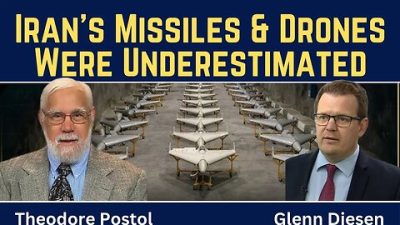
Theodore Postol: Iran’s Missiles & Drones Were Underestimated
or go to
Aletho News Archives – Video-Images
From the Archives
What is the Israeli Lobby in Australia Doing in Interfaith Dialogue?
By Ali Kazak | Dissident Voice | October 11, 2015
For years Israel and its lobby around the world have been trying to normalise their relations with Arabs and Muslims without solving the Palestine Question.
One of the methods they resorted to in the last few years is using human rights and community organizations such as interfaith dialogue and Multiculturalism to achieve this objective and to: isolate the Palestinians, marginalise the Palestine question, end Israel’s isolation, and prevent criticism of Israel, knowing that these organisations will be the first to stand against Israel’s violations, racial and religious discrimination.
The group responsible for this task in Australia is The Australia/Israel & Jewish Affairs Council (AIJAC); its Director of International & Community Affairs, Jeremy Jones is in charge of lobbying religious community organizations, specifically Muslims and Christians. Consequently he convened the Faith Communities for Reconciliation, founding participant in the Australian Partnership of Religious Organisations and the Australian National Dialogue of Christians, Muslims & Jews.
AIJAC is a private political propaganda group. It is recognised as the main Israeli lobby in Australia. It coordinates its activities and works intimately with the Israeli embassy in Canberra and different institutions in Israel. It is privately funded by some Jewish businessmen. It monitors closely Australian politicians, the media, ethnic and religious groups, (especially Arabs and Muslims), unions and academics on their stands towards Israel and the Palestine question. … continue
Blog Roll
 Aletho News
- The killing of three Indonesian soldiers in Lebanon should remind Jakarta that Israel does not want peace
- Defeated and delusional: Netanyahu’s remarks reveal $80bn war failure, says analyst
- Iran’s friends are about to make life much more difficult for Israel and the US
- The war of liberation of the Arab and Islamic peoples expands across the Gulf
- Envoy warns UN on Trump’s threat to ‘obliterate’ Iran’s civilian infrastructure
- The Larak Corridor: Iran’s Rial Gate With No US, No Israel, and No Way Around
- ‘Economic terrorism’: Steel facilities hit again in US-Israeli strike
- ‘War Crime’: Iran condemns attacks on Arak, Ardakan nuclear sites
- Two-thirds of Americans want quick end to Iran war even if goals unmet
- Trump to Give “Important Update on Iran” Wednesday in Prime-Time Speech
- If Americans Knew
- Gaza families reunite years after babies evacuated amid Israel’s war
- International Rescue Committee warns Gaza’s children face grave protection risks
- Iran’s Alleged 47-Year War on America: Debunking the 1,050 American Deaths Canard
- Israel wants US to bomb more of Iran’s civilian structures (113,000 is not enough) – Not a ceasefire Day 173
- Ann Coulter Rips Into Fox News for Iran War Coverage
- Joe Kent Urges Americans To Call White House and Congress To Object To Sending Troops Into Iran
- DNC Resolution to Reject AIPAC Funding Puts Democratic Leaders in the Hot Seat
- Swedish foundation to build 400 schools as over 650,000 Gaza children remain without education for 2 years
- Israeli army admits photshopping image of slain Lebanese journalist
- This is how Israel is systematically killing health workers under the cover of war in Lebanon
- No Tricks Zone
- New Study Finds Warming Saves Lives…Cold Temperatures 12 Times More Deadly Than Excess Heat
- German Science Blog Accuses PIK Climate Institute Of Hallucinating Climate Tipping Points
- Devastating Assessment Of Comirnaty Vaccine By Former Senior Pfizer Europe Toxicologist
- New Study: CO2 Is ‘Effectively Negligible’ As An Explanatory Climate Change Factor Since 2000
- Former Pfizer Toxicologist Dr. Helmut Sterz Tells Bundestag Hearing Pfizer Vaccine Should Have Never Been Approved
- Energy Expert: Germany’s Nuclear Phaseout Was A “500 Billion Euro Mistake”
- New Research: South Australia’s Mid-Holocene Sea Surface Temperatures Were 4°C Warmer Than Today
- Storing Green Energy To Last Germany 10 Days Would Require A 60-Million Tonne Battery
- New Studies: UK Sea Levels Were 4 Meters Higher Than Today During The Mid-Holocene
- Destructive Green New Deal: German Energy And Metal Group Warns Of Drastic Crisis
 Aletho News