Turkiye pulls out from defense pact with Saudi Arabia, Pakistan: Report
The Cradle | February 3, 2026
Turkiye will not be joining the new defense pact between Saudi Arabia and Pakistan, a source close to the Saudi army revealed to western media, after reports said the three countries would be entering into a trilateral agreement.
“Turkiye won’t join the defense pact with Pakistan,” the source told AFP. “It’s a bilateral pact with Pakistan and will remain a bilateral pact.”
A Gulf official also told the outlet that “This is a bilateral defensive relationship with Pakistan. We have common agreements with Turkiye, but the one with Pakistan will stay bilateral.”
Last month, Turkiye’s foreign minister said discussions were taking place regarding Ankara’s involvement.
Since the agreement came to light, there has been heavy speculation about the three countries forming a strong alliance.
The deal was initially reported as a trilateral pact.
It comes after close to a year of negotiations and builds on expanding Saudi–Pakistani military cooperation, including a mutual defense pact signed in September that treats an attack on one as an attack on both.
The pact also comes months after a brief war between India and Pakistan, and as tensions between Riyadh and its rival Abu Dhabi have been at an all-time high.
The kingdom is reportedly working to establish a new military coalition with Egypt and Somalia aimed at countering the UAE.
According to a new report by the New York Times, Egypt has been carrying out drone strikes against the UAE-backed Rapid Support Forces (RSF), which is committing genocidal war crimes against civilians in Sudan.
The attacks are said to be launched from a secret air base in Egypt’s western desert.
Islamabad has also been facing deadly attacks from separatist militants recently.
Pakistan announced on 1 February the killing of at least 145 separatist militants in the Balochistan province, following a series of gun and bomb attacks over the weekend that killed 50 people.
Militants from the separatist Balochistan Liberation Army (BLA) launched coordinated attacks on Saturday, killing 31 civilians, including five women, and 17 security personnel.
Pakistan, the Gulf, and the high cost of Zionist alignment
By Junaid S. Ahmad | MEMO | January 6, 2026
Geopolitics is most dangerous not when it erupts, but when it reorganises quietly — when the ground shifts beneath familiar alliances while elites continue to speak the language of yesterday. The Gulf today is in precisely such a moment. What once masqueraded as a coherent bloc has fractured into rival power models, incompatible strategic visions, and diverging relationships to empire, Israel, and popular legitimacy. And Pakistan, true to form, is responding not with strategic intelligence but with institutional reflex — confusing obedience with balance and habit with foresight.
The rift between Saudi Arabia and the United Arab Emirates is no longer a matter of speculation or diplomatic gossip. It is an open contradiction — political, military, and infrastructural. Yemen has exposed it. Israel has radicalised it. The United States, particularly under Trumpism, has weaponised it. And Pakistan’s ruling elite — military and civilian alike — has chosen to drift toward the most toxic pole of this fracture while reassuring itself that it is merely being “pragmatic.” It is not. It is being complicit.
Two Gulf projects, one moral abyss
Saudi Arabia and the UAE are still lazily grouped together by analysts who mistake shared authoritarianism for shared strategy. This is intellectual malpractice. The two monarchies are pursuing fundamentally different regional projects.
Saudi Arabia’s current posture — hardly virtuous, often cynical, and deeply reactionary — nevertheless reflects a begrudging recognition of reality. After years of disastrous interventionism, Riyadh wants consolidation. It wants borders quieted, fires contained, and regional fragmentation slowed. Its outreach to Iran, cautious engagement with the
Houthis, and growing hostility to separatist militias are not gestures of enlightenment but acts of self-preservation. Endless chaos undermines Saudi ambitions at home.
The Emirati project is the opposite — and far more dangerous. Abu Dhabi does not seek order through states; it seeks domination through fragments. Ports, islands, militias, mercenaries, logistics corridors, surveillance hubs — these are its tools. Sovereignty is irrelevant. Fragmentation is not a failure; it is a business model.
If Saudi Arabia is a reactionary status-quo power, the UAE is a hyperactive destabiliser — an empire of nodes, happy to burn regions so long as trade flows and leverage compounds.
Yemen: Where the lie finally died
Yemen is where the fiction of Gulf unity collapsed beyond repair. What began as a joint intervention has devolved into a struggle over whether Yemen will exist at all as a state. The House of Saud — bloodied, embarrassed, and exposed — now insists on a unified Yemeni authority capable of enforcing borders and agreements. The UAE has invested
instead in carving out a southern enclave: separatist militias, port control, island bases, and economic chokeholds.
For Riyadh, this is existential. A fragmented Yemen exports instability directly into Saudi territory and sabotages any negotiated settlement with the Houthis. For Abu Dhabi, fragmentation is leverage — control of chokepoints matters more than Yemen’s survival as a polity.
That Saudi Arabia has now openly bombed weapons shipments linked to UAE-backed forces and issued public warnings is extraordinary. Gulf disputes are traditionally smothered in silence. When they go kinetic and public, it signals not a spat but a structural rupture. Pakistan’s establishment sees this — and chooses denial.
Israel: The cancer at the core
To understand the Emirati recklessness, one must confront the real axis around which it revolves: Apartheid, genocidal Israel.
The Abraham Accords were not peace agreements; they were an integration pact into Zionist regional supremacy. Israel does not merely occupy Palestine; it exports a model — militarised impunity, surveillance capitalism, permanent war dressed as security. The UAE did not normalize with Israel reluctantly. It embraced Israel as a force multiplier.
Israel provides Abu Dhabi with access to Washington’s coercive machinery, advanced surveillance, cyberwarfare, and a propaganda ecosystem that converts mass death into “stability.” In return, the UAE provides geography, ports, islands, mercenaries, and political insulation — doing Israel’s dirty work where Tel Aviv prefers not to appear.
Sudan. Somaliland. Socotra. Cyprus. The Red Sea. These are not isolated projects; they are components of a Zionist–Emirati expansion strategy designed to insulate Israel from economic pressure and accountability while strangling any resistance corridor before it matures.
Israel is the disease. The UAE is its most enthusiastic carrier.
Pakistan’s elite: Zionism in uniform and suits
Pakistan’s tragedy is not that it lacks options. It is that its ruling elite lacks dignity.
Rather than reassess its position amid this fracture, Pakistan’s military–civilian elite clings to the rhetoric of “balance” while deepening structural entanglement with the Emirati–Israeli axis. Ports, airports, logistics terminals, military-linked corporations — these are not neutral investments. They are instruments of alignment.
Pakistan’s generals and their civilian accessories imagine they are playing geopolitics. In reality, they are being used as infrastructure — cheap, deniable, disposable. Their behaviour is not naïveté. It is covert Zionism: collaboration without confession, obedience without ideological honesty. They mouth solidarity with Palestine while embedding Pakistan’s economy and security apparatus deeper into a regional order built to protect Israel from consequences. This is not pragmatism. It is moral and strategic bankruptcy.
Venezuela: When empire drops the mask
The illusion that empire prefers subtlety should have died long ago. Venezuela put the lie to it.
When sanctions failed and proxy pressure proved insufficient, the United States escalated —directly. US special forces were involved in a scandalous operation that culminated in the kidnapping of Venezuelan President Nicolás Maduro. This was not deniable proxy warfare. It was naked imperial contempt for sovereignty.
And what happens if Washington’s decapitation move fails at complete regime change in Caracas? Silence. Zero accountability. Empire simply moves on.
This is the future Pakistan’s elite is courting. When alignment fails to deliver stability, the costs will not be borne by Washington, Tel Aviv, or Abu Dhabi. They will be borne by Pakistan. Empire does not protect collaborators. It discards them.
Saudi Arabia: A lesser evil, still an evil
Saudi Arabia deserves no absolution. The House of Saud remains a reactionary monarchy, structurally hostile to popular sovereignty and deeply entangled with empire. Its version of “stability” is still oppression — merely quieter than the Emirati inferno.
Yet the difference matters. Saudi Arabia understands that Zionist expansionism generates perpetual instability. The UAE celebrates it. Riyadh conceals its servitude; Abu Dhabi flaunts it.
Pakistan’s elite has chosen to tilt slightly more towards the louder master.
Trumpism: Empire without shame
Hovering over this landscape is Trumpism — the ideological nakedness of empire. Trump dispenses with liberal hypocrisy entirely. Loyalty is transactional. Morality is a joke. Strongmen are preferred to institutions. Israel is sacred. Everyone else is expendable.
The UAE fits this worldview perfectly: ruthless, efficient, unburdened by public opinion. Pakistan’s rulers mistake proximity to this axis for relevance. In truth, it entrenches their subordination.
When things go wrong — as they inevitably will — Trumpism will shrug. Pakistan will bleed.
The reckoning Pakistan is avoiding
The Gulf is not merely fracturing; it is sorting. States will be forced to choose — between sovereignty and fragmentation, between justice and normalisation, between dignity and managed submission.
Pakistan’s establishment has already chosen. It just lacks the courage to admit it. History will not judge Pakistan for failing to be the Mafia Don of West Asia. It will judge it for failing to recognise a moral and strategic crossroads when it stood directly upon it.
The UAE will continue to burn regions in service of Zionism. Israel will continue its genocidal project. The United States will continue to kidnap, sanction, and discard. Saudi Arabia will continue to pretend restraint equals virtue.
And Pakistan — unless it breaks from habit — will continue confusing servitude for strategy.
Imran Khan wasn’t overthrown — Pakistan was
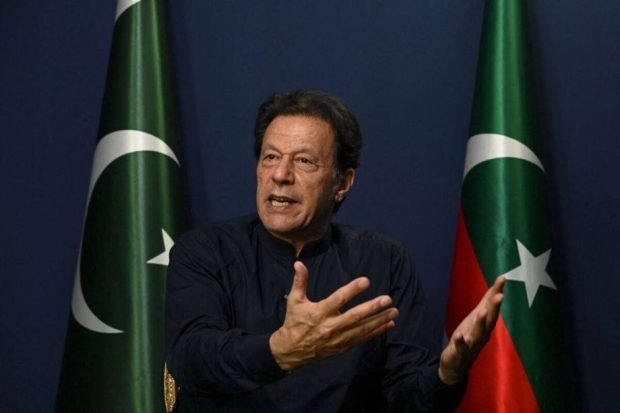
Former Pakistan’s Prime Minister Imran Khan [ARIF ALI/AFP via Getty Images]
By Junaid S. Ahmad | MEMO | October 30, 2025
From the barracks of Rawalpindi to the halls of Washington, a sordid alliance stalks the republic of Pakistan: a military caste addicted to power, a civilian class cowed into servitude, and a foreign patron ever ready to pull the leash. What unfolds is less a grand strategy than a tragicomedy: generals trading sovereignty for sinecures, soldiers harbouring contempt for their officers, and a once-promising democratic movement crushed under the twin weights of imperial ambition and martial tutelage.
At the summit of Pakistan’s national hierarchy sits the uniformed elite—high-command officers whose benefit resides not in defending the people, but in ensuring their own station remains unchallenged. The vast majority of junior officers and ordinary soldiers know the drill: they march at a command, live off state hand-outs, yet watch in silence as their rulers gamble everything in Islamabad’s corridors of power. Beneath their boots pulses a latent contempt: not for the institution of soldiering, but for the generals who confuse war-games with governance, who mistake subservience for sovereignty. They know the charade: a military that catalogues enemies abroad yet fails its citizens at home; a top brass more at ease with arms deals and alliances than with schools or clinics.
Meanwhile, in Washington and its allied capitals, they observe the last great outsourcing of empire. The US sees Pakistan not as an independent partner, but as a subcontractor—an air-strip here, a drone base there, a pliant nuclear state with acceptable risks. When Imran Khan—in office—moved, albeit imperfectly, toward a new Pakistan: one marked by social justice, independent foreign policy, and friendship with all nations, he ran head-first into this alliance. He derailed the pat-scripts: refused US basing rights, challenged embassy diktats, and dared to recast Kashmir and Palestine not as trophies of patronage but as tests of principle. His mistake was not corruption—it was defiance. And the consequence was swift: a regime-change operation dressed in parliamentary garb, a military and intelligence complex that salivated at the smell of capitulation, and a Washington that nodded, funded and quietly applauded.
From here the narrative spirals into farce. Pakistan’s flag-waving elite collect defence pacts as one might souvenirs—each a badge of fidelity to the imperial order, each certifying that the country’s violent and unjust alignments will continue unimpeded. The generals embrace those pacts not because they secure Pakistan—they don’t—but because they secure the elite’s privilege: a share of the deals, a veneer of patriotism, a shield against accountability. And while their generals trade in hardware and geopolitics, the cries of the oppressed vanish into night: Pashtun civilians bombed under the guise of “counter-terror,” Afghan refugees reviled as villains by a state that once nurtured their tormentors.
Yes, nuclear-armed Pakistan could not muster a single bullet for Gaza. It did not send a protection force. It does not lobby the United Nations for justice, despite the occasional meaningless rhetoric. Instead, it signs on to the next big defence contract, brushes its hands of the Palestinian plight, and turns its back on the ideal of Muslim solidarity. What kind of state is this that boasts nuclear weapons yet lacks the moral will to send aid—or more than a token gesture—to fellow victims of aggression? A state that lectures others on terrorism while shelling its own Pashtun tribes. A state so short on legitimacy it must invoke the bogeyman of the Afghan refugee, call entire populations “terrorists,” then crush any dissent with tanks and tear-gas.
Speaking of dissent—when Imran Khan’s movement rose, the state responded with idylls of terror. Cadres of young activists, women, students, social justice advocates—whether Karachi or Khyber—found themselves in dungeons sanctioned by a military-political complex. The hearings were stacked, the charges manufactured, the message simple: move for justice and you move into our sights. The generals clapped their hands, Washington twisted the strings, and the civilian face of Pakistan trembled. The officer class may nominally obey the high command—but in quiet mess halls and among soldiers’ wives the whispers of outrage gather: “Why are we policing our own people? Why is Urdu-speaking Karachi the victim of our operations? Why do we trespass into forests and valleys and call them terror zones?”
In the borderlands the farce becomes terrifyingly concrete. The army, having once nurtured the Taliban in Afghanistan to secure “strategic depth,” now bombs them—and blames them for terrorism. In this brain-twist of national strategy, the creator is recast as the adversary, the patron transformed into the provoked. The Pashtun civilian watches as homes are razed near the Durand Line, as refugees arrive on Pakistani soil bearing the costs of wars Pakistan helped manufacture, and as the generals portray them as fifth-column terrorists. The irony would be comical were it not so brutal.
And what of Kashmir? In the so-called “free” Azad Kashmir of Pakistan, huge anti-government demonstrations rage. A region whose inhabitants yearn for dignity, not just slogans. Under Imran Khan, new polling suggested the unthinkable: Kashmiris in Indian-occupied Kashmir, despite seeing the abysmal conditions in Azad Kashmir, began to seriously consider joining Pakistan—not as another occupier but as a fortress of self-determination. The generals would rather you not notice that: they prefer the pre-scripted dispute, the perpetual conflict, the tortured rhetoric of “we stand with Kashmir” while the state stands with its own survival. The polls are telling: if Pakistan’s Kashmir policy is failing, the state itself is structurally unhealthy.
To be sure, the Pakistan military remains an institution of extraordinary capability. But capability is not legitimacy; nor is turf-control a foundation for national purpose. The generals continue to conflate war-power with nation-power, forgetting that true power is fostered by schools, by hospitals, by trust in institutions—and by consent, not coercion. And when a regime trades in foreign patronage—be it Washington’s dollars or Beijing’s infrastructure—but cannot deliver justice or dignity at home, the bargain has already been lost.
As the Iranian–Israeli conflict rages, as Gaza bleeds, and as the great-game intensifies in South Asia, Pakistan stands at a crossroads: obey its patrons, shrink its sovereignty, and reclaim the empire-client script—or reject the military’s primacy, embrace true independence, and build a republic that answers not to external powers but to its people. The generals will tell you that the choice is security; the civilians will whisper it is dignity.
Here is the truth the generals, the politicians, and the strategists don’t want you to admit: you cannot rule a nation by telling its people to be silent while you thunder abroad. You cannot build strategic depth on the graves of your own citizens. You cannot pretend to champion Palestine while allying with its oppressors. You cannot call yourself a sovereign state when your alliances define you more than your aspirations.
Pakistan’s military may still march on; its generals may still wield the levers of power; Washington may still fax orders and funnel funds. But the people—they are waking up. And once the echo of Imran Khan’s voice becomes a roar, no amount of bayonets, no arsenal of deals, no drums of war will silence it. The generals may hold the fortress of Rawalpindi, but they cannot hold the conscience of a nation. The struggle for that is already well underway—and the verdict will not wait.
Pakistan’s Gaza assignment: Policing resistance for Trump’s ‘peace’
By F.M. Shakil | The Cradle | October 9, 2025
Washington is looking to draft Pakistan into a sweeping plan to reshape Gaza under the guise of a 20-point “peace” initiative led by US President Donald Trump. At the heart of the proposal is an International Stabilization Force (ISF) tasked with enforcing “internal stability” in the devastated Palestinian enclave – a euphemism for dismantling resistance and tightening Israeli control.
Trump, standing alongside Israeli Prime Minister Benjamin Netanyahu in a September press conference, laid out a scheme to forcibly relocate Palestinians and reconstruct Gaza as a neoliberal outpost he previously branded “the Riviera of the Middle East.”
Pakistan’s public backlash builds
Details of the initiative have raised alarm in Pakistan, where any military collaboration with Israel is a red line for the establishment and the population, given that Islamabad does not recognize the state. Public backlash has intensified since revelations surfaced of Pakistan’s potential participation in the ISF, alongside forces from Egypt and Jordan.
The people of Pakistan would not accept Washington’s plan to deploy joint military forces from “like-minded Islamic countries” to eliminate resistance forces in Gaza. The opinion-makers, intellectuals, and political circles have already questioned the authority of the rulers to enter into a process that is aimed at transforming Palestine into a part of a “Greater Israel.”
Facing mounting domestic scrutiny, Pakistan’s Deputy Prime Minister Ishaq Dar revealed in a 30 September press conference that the 20-point plan diverged sharply from what was initially agreed in Washington. His statement came amid growing demands for transparency from political leaders and civil society, many of whom accuse Islamabad of capitulating to Washington’s demands without a national consensus.
Pakistan’s refusal to join the Saudi and UAE-led coalition against the Ansarallah-aligned forces in Yemen still looms large in public memory. In 2015, Islamabad’s parliament voted unanimously to remain neutral, citing the dangers of waging war on a Muslim country and the risks of further sectarian entanglement. That restraint is now being contrasted with the military’s apparent willingness to deploy forces into a conflict zone tightly controlled by Israel.
It is equally important to note that, despite Tel Aviv’s lack of trust in Pakistan’s military establishment and the latter’s threats to target its nuclear assets in solidarity with Iran, it still chose to assign Pakistani forces a leading role in the proposed ISF. This suggests that Pakistan’s military leadership has offered significant, and so far undisclosed, concessions to Washington.
Pakistan’s business community is equally concerned about the reports regarding the US investment in Pasni Port terminals, located 120 kilometers from Iran and the Chinese-built Gwadar seaport. If the investment targets naval or military bases, there are concerns that it could draw regional ire from both Tehran and Beijing.
Imtiaz Gul, Pakistan defense analyst and Executive Director of the Center for Research and Security Studies (CRSS), Islamabad, tells The Cradle:
“By all indications, Pakistan is likely to be part of the multinational Islamic force, albeit in a zone that will be totally at the mercy of and surrounded by the Israel Defense Forces (IDF). To what extent this force can neutralize and eventually eliminate Hamas, which has backing from Iran, Turkiye, and Qatar, is difficult to forecast at this time.”
Gul adds that since Pakistan, Egypt, and Jordan are all military-run states, they may coordinate more easily to oversee Gaza under occupation. The hope, he says, is that this cooperation might at least put a stop to Israel’s relentless slaughter of Palestinians.
From sanctions to red carpet
Pakistan’s sudden centrality to Trump’s Gaza plan is underpinned by a marked shift in Washington’s tone. Since the brief Pakistan–India skirmish in May, the US has rolled out the red carpet. Last month, Pakistani Prime Minister Shehbaz Sharif and army chief Field Marshal Asim Munir were hosted in the Oval Office for a high-profile meeting with Trump.
The recent developments concerning West Asia have unequivocally revealed the transformation in Washington’s diplomatic approach toward Pakistan. President Trump expressed a strong belief that additional Muslim nations will soon become part of the Abraham Accords and commended Prime Minister Sharif and Field Marshal Munir for their full alignment with his peace initiative.
“Formally joining the Abraham Accords may be difficult currently, but informally following the path that the UAE, Bahrain, and Qatar pursued looks quite probable,” Gul says. He asks if countries around Israel and Palestine can reconcile with ground realities, then why should Pakistan have a problem with a country that is not even a distant neighbor?
“The challenge is whether Pakistan can stay stable and can develop a national consensus on engaging with Israel – even if informally,” he explains.
Minerals, money, and military ports
Islamabad’s apparent rapprochement with Washington is not limited to Gaza. In October, Pakistan delivered its first shipment of enriched rare-earth elements to US Strategic Metals (USSM), part of a $500-million deal signed with the Pakistan army’s commercial arm, Frontier Works Organization (FWO). The minerals will feed a new polymetallic refinery funded by Washington.
The recent delivery to the USSM on 2 October has catalyzed a notable transformation in the dynamics of the Pakistan–US relationship.
Concurrently, reports surfaced of the aforementioned strategic proposal to build a port terminal in Pasni, Balochistan, submitted to US authorities by Pakistan’s military-linked business interests. Any such move carries profound strategic implications for China and Iran, which view Pasni’s proximity to Gwadar and Chabahar as vital to their own maritime interests.
Gwadar serves as a crucial component of the China–Pakistan Economic Corridor (CPEC), featuring China’s strategically constructed Gwadar seaport.
On 4 October, senior security sources informed a select group of media representatives in Islamabad that Pakistan will not be extending an invitation to the US for a naval base in Balochistan. The reports circulating in foreign media regarding potential future public-private partnerships are simply proposals.
The security sources pointed out the immense potential of Pakistan’s coastline for both large and small commercial ports, noting that nations globally evaluate such partnership proposals.
“We shall uphold the primacy of Pakistan’s national interest in this framework. The nature of what defines the interests of the US holds no significance for us. Our primary concern is the advancement of Pakistan’s interests,” a defense spokesman remarked.
The official clarification only added confusion, claiming the port terminal proposal came from private business collaboration, even though the FWO is not a private entity but an army-run unit, raising questions about how such sensitive decisions are made.
Former Karachi Chamber of Commerce president Majyd Aziz tells The Cradle that it was imperative to limit the foreign military utilization of Pasni Port to uphold regional stability and prevent any discontent from Tehran and Beijing:
“Pakistani entrepreneurs are hesitant to invest in maritime sectors, leading to a dependence on foreign investment. This situation subsequently attracted the US interest in Pasni Port, which may carry serious implications for China’s influence in the region.”
Aziz adds that Gwadar’s underperformance has made smaller ports like Pasni, Ormara, and Jiwani more attractive. These offer lower costs, shorter routes, and better local integration. With over 85 percent of Pakistan’s trade dependent on maritime routes, diversifying port infrastructure is seen as essential to economic resilience.
Peace, under the boot
Trump’s so-called peace formula, presented alongside Netanyahu, aims to weaken Palestinian resistance by severing its supply chains and installing a proxy security apparatus.
The US-led ISF, with a significant Pakistani component, is the linchpin of this plan. But critics argue the operation is little more than a smokescreen for Tel Aviv’s next phase of territorial expansion.
As the details unfold, Islamabad faces a stark choice: yield to US pressure and risk regional isolation, or heed domestic voices warning against entanglement in a colonial project masquerading as peace.
Kabul hails regional powers’ rejection of foreign military bases in Afghanistan
MEMO | September 28, 2025
Afghanistan on Saturday welcomed a joint stance by China, Russia, Iran and Pakistan opposing any reestablishment of foreign military bases in the country, the Taliban administration said, Anadolu reports.
Hamdullah Fitrat, deputy spokesman of the interim government, issued the statement after foreign ministers of the four nations met on the sidelines of the 80th UN General Assembly in New York.
The four countries form a quadrilateral consultation mechanism created in 2017 to promote regional stability and coordinate efforts to counter terrorism, narcotics and extremism emanating from Afghan territory.
In a joint communique, they voiced support for Afghanistan’s sovereignty, independence and territorial integrity and said they “firmly” oppose any move by outside powers to set up military bases in Afghanistan or the wider region.
Fitrat said that Afghanistan’s territory would not be allowed to be used against any country and that no armed groups are permitted to operate inside the country.
“Afghanistan is taking serious steps against corruption, drugs and all kinds of undesirable issues and considers this process its responsibility,” he said, adding that Kabul seeks positive relations with all countries based on “mutual respect.”
It comes days after US President Donald Trump warned “bad things” would happen if the interim Taliban administration did not cede control of Bagram Air Base to the Pentagon.
The Taliban returned to power in August 2021 after the withdrawal of US-led forces ended a two-decade war.
Kabul has said it would not negotiate its territorial integrity and urged Trump to honor the 2020 Doha agreement.
Saudi-Pakistan defense pact: Reshaping security architecture in West and South Asia
By Mohammad Molaei | Press TV | September 27, 2025
In the intricate web of West Asian and South Asian geopolitics, where alliances often hinge on the precarious balance of power, energy dependencies, and ideological affinities, the signing of the strategic defense pact between Pakistan and Saudi Arabia marks a pivotal evolution.
This pact represents a calculated maneuver to fortify the alignment of defenses between the two Muslim-majority countries amid waning US commitments. Drawing from operational analyses of similar pacts, like the US-Japan security treaty or the erstwhile CENTO framework, this agreement integrates conventional military interoperability with implicit extended deterrence, potentially altering the calculus of regional power projection.
At its core, the agreement formalizes a mutual defense commitment, stipulating that an armed attack on either party constitutes an assault on both, triggering joint responses under Article 51 of the UN Charter for collective self-defense.
This language echoes NATO’s Article 5 but is tailored to the Persian Gulf’s hybrid threats, encompassing not just conventional invasions but also proxy warfare, cyber intrusions, and ballistic missile salvos. The pact builds on a 1982 protocol that already facilitated Pakistani troop deployments to Saudi Arabia—historically involving up to 20,000 personnel in advisory and training roles—but elevates it to a comprehensive framework for integrated operations.
Militarily, the agreement spans a spectrum of cooperation modalities. Joint exercises will intensify, drawing from existing bilateral drills like the Al-Samsam series, which have honed mechanized infantry maneuvers and anti-tank warfare using platforms such as Pakistan’s Al-Khalid main battle tanks (MBTs) and Saudi M1A2 Abrams variants.
Technology transfers are a cornerstone. Pakistan, with its robust defense-industrial base—including the production of JF-17 Thunder multirole fighters co-developed with China—will share expertise in low-cost unmanned aerial vehicles (UAVs) like the Burraq, equipped with laser-guided munitions for precision strikes.
In return, Saudi Arabia’s petrodollar-fueled arsenal offers access to advanced air defense systems, such as the THAAD (Terminal High Altitude Area Defense) interceptors, potentially integrating with Pakistan’s HQ-9/P (export variant of China’s FD-2000) to create layered anti-ballistic missile shields.
Arms procurement and co-production feature prominently, with provisions for joint ventures in missile technology—leveraging Pakistan’s Shaheen-III intermediate-range ballistic missiles (IRBMs) with a 2,750 km reach—and electronic warfare (EW) suites.
Intelligence sharing via secure datalinks will enhance situational awareness, focusing on various threats. Logistically, the pact enables forward basing: Pakistani Special Forces could embed with Saudi Rapid Intervention Forces for counterterrorism operations, while shared maintenance facilities for F-15SA Eagles and AH-64E Apache helicopters streamline sustainment in prolonged conflicts.
This blueprint for operational synergy mirrors how the Persian Gulf Cooperation Council (PGCC) integrates air assets under Peninsula Shield Force, but with Pakistan’s battle-hardened infantry adding asymmetric depth.
Saudi Arabia’s pursuit of this pact stems from a pragmatic recalibration of its security posture, driven by the kingdom’s Vision 2030 imperatives to reduce oil dependency. Riyadh views Pakistan as a Muslim-majority regional powerhouse with a professional army of over 650,000 active personnel, battle-tested in counterinsurgency campaigns against the Tehrik-i-Taliban Pakistan (TTP) and capable of rapid deployment via C-130J Super Hercules transports.
The kingdom’s goals are multifaceted: first, to hedge against US retrenchment, as evidenced by Washington’s equivocal responses to the 2019 Abqaiq attacks, which exposed vulnerabilities in Saudi Patriot PAC-3 batteries despite their 90 percent intercept rates against subsonic threats.
Second, the pact bolsters deterrence against Iran’s symmetrical arsenal, including medium-range ballistic missiles and tactical ballistic missiles, which have ranges covering the Arabian Peninsula. By aligning with Pakistan, Saudi Arabia gains indirect access to a nuclear-capable partner, complementing its own nascent uranium enrichment program under IAEA safeguards.
Economically, it secures preferential access to Pakistani manpower—over 2 million expatriates already remit billions annually—while channeling investments into Pakistan’s defense sector, such as upgrading the Heavy Industries Taxila (HIT) for co-producing Al-Zarrar tanks.
A critical flashpoint is whether the pact extends Pakistan’s nuclear umbrella to Saudi Arabia. Pakistan possesses an estimated 170 warheads, deliverable via Ghauri MRBMs (1,500 km range) or Ra’ad ALCMs (air-launched cruise missiles) from F-16C/D platforms, adhering to a “minimum credible deterrence” doctrine focused on India but adaptable to West Asian contingencies.
The agreement’s text maintains strategic ambiguity—no explicit mention of nuclear sharing—but statements from Pakistani government officials suggest availability “if needed,” implying extended deterrence similar to US commitments to NATO allies.
Analyses indicate this isn’t a formal nuclear-sharing arrangement like NATO’s B61 gravity bombs in Europe; rather, it’s a de facto assurance where Pakistani assets could be forward-deployed in extremis, perhaps via submarine-launched Babur-3 SLCMs from Agosta 90B-class boats.
Saudi funding has historically supported Pakistan’s program, per declassified US cables, but proliferation risks loom under the NPT, which Pakistan hasn’t signed. The pact stops short of a binding nuclear clause to avoid IAEA scrutiny, opting instead for “all necessary means” language that preserves deniability.
The pact’s ramifications cascade across the region, amplifying fault lines and complicating the Persian Gulf’s A2/AD dynamics. For the broader West Asia, it fortifies a new bloc, potentially integrating with the UAE’s Edge Group UAVs or Bahrain’s naval patrols under the Combined Maritime Forces (CMF). This could escalate proxy conflicts in Yemen, where Saudi-led coalitions already employ Pakistani advisors, or in Syria, straining Russian-mediated de-escalation zones.
However, the agreement does not pose any threat to the Islamic Republic, given Pakistan’s role as Iran’s most important security partner, underscored by recent bilateral agreements on border security, counterterrorism, and economic cooperation, including efforts to combat smuggling and joint patrols.
Iran has welcomed the pact as a step toward “comprehensive cooperation among Muslim nations,” reflecting shared interests in regional stability through frameworks like the SCO.
Islamabad’s clarification that the agreement is “defensive and not aimed at third countries” is reassuring, preserving economic lifelines like the Iran-Pakistan gas pipeline (delayed but vital for Pakistan’s energy security). Joint border patrols under the 2019 MoU persist, though the pact might divert Pakistani resources—e.g., diverting FC (Frontier Corps) units from anti-smuggling ops to Persian Gulf deployments.
Open-source indicators reveal keen interest from several nations in acceding to this framework, potentially evolving it into a multilateral shield. The UAE, with its Mirage 2000-9 fleet and ambitions for a “Persian Gulf NATO,” tops the list—Abu Dhabi’s prior defense MoUs with Pakistan (including pilot training) align seamlessly, and sources suggest imminent talks for integration.
Qatar, despite Al Udeid’s US basing, eyes the pact for diversified deterrence post-2022 blockade scars, with indications of exploratory discussions. Egypt emerges as a likely candidate: Cairo’s Sisi administration seeks Saudi funding for its T-90MS MBTs and could contribute expeditionary forces, as noted in geopolitical analyses.
Bahrain and Jordan, already in Saudi-led coalitions, have expressed interest via diplomatic channels, bolstering maritime interdiction in the Strait of Hormuz. Even Oman, traditionally neutral, monitors developments for selective engagement in counter-piracy ops.
Mohammad Molaei is a Tehran-based military affairs analyst.
West’s grip slips with Saudi–Pakistan security deal
Riyadh’s pact with Islamabad redraws alliances, weakens Indian leverage, and hints at a new Muslim deterrence framework beyond western control.
By F.M. Shakil | The Cradle | September 23, 2025
On 17 September, Riyadh rolled out the rare royal purple carpet for Pakistani Prime Minister Shehbaz Sharif – an honor previously reserved for global power players like US President Donald Trump.
Accompanying him on the trip was Pakistan’s Army Chief, Field Marshal Asim Munir. His presence highlighted that Riyadh values its defense pact with a nuclear power that, despite economic challenges, remains militarily strong.
Nuclear umbrella over Riyadh
The centerpiece of their visit was the signing of a “Strategic Mutual Defense Agreement” (SMDA), which declares that an attack on either country will be considered an attack on both.
Described by a senior Saudi official to Reuters as covering “all military means,” the pact has triggered speculation that it includes a nuclear umbrella, which would be a game-changing development in the military balance of West Asia.
With 81 percent of Pakistan’s weapon imports coming from China, the agreement implicitly aligns Saudi Arabia with the Chinese military-industrial orbit, whether by design or default. The kingdom has long been reliant on US arms, training, and security guarantees.
The pact was signed just two days after an extraordinary joint session between the Arab League and the Organisation of Islamic Cooperation (OIC) was called, following the 9 September Israeli airstrikes on Qatar – a major non-NATO ally and Gulf neighbor – with no substantial response from Washington, reinforcing perceptions that western security commitments are both selective and expendable.
Mushahid Hussain Syed, a former information minister and chairman of Pakistan’s Senate Defense Committee, tells The Cradle that the US has pivoted away from Arab allies toward Tel Aviv, leaving the region disillusioned and increasingly leaning toward alternatives.
“The strategy of ‘Greater Israel,’ spearheaded by Netanyahu, has involved military actions against five more Muslim nations. Pakistan’s recent triumph against India has demonstrated its capacity to contest Israel’s significant ally, India, and establish itself as a strategic alternative for Gulf nations.”
Toward an Islamic NATO?
Iraqi Prime Minister Mohammed Shia al-Sudani recently called for an Islamic military alliance, akin to NATO, in response to Israel’s airstrike on Doha. His proposal echoed Egypt’s earlier attempt to revive a joint Arab defense force under the 1950 treaty – an initiative blocked by Qatar and the UAE, reportedly under US pressure.
A similar proposal has also come from Islamabad when Pakistan’s Defense Minister, Khawaja Asif, urged Muslim countries to band together in a NATO-like military alliance in light of the Israeli aggression in Doha.
During an appearance on Geo TV last week, Asif drove home the point that a united Muslim military front is essential to tackle common security issues and fend off outside dangers. Asif invoked the wider role of the west in instigating instability in West Asia, emphasizing the intricate network of US support for Al-Qaeda and the CIA’s covert actions that led to Osama bin Laden’s relocation to Sudan or the regime change war in Syria.
Is nuclear deterrence a part of the Pact?
The nuclear dimension of the Riyadh–Islamabad pact remains opaque, but highly significant. While no official statement from either side confirms the presence of a nuclear component, Asif hinted that Pakistan’s nuclear capabilities could be shared with Saudi Arabia as part of the agreement.
Syed, however, clarifies to The Cradle that Pakistan’s nuclear doctrine is India-centric and that its deterrence posture is South Asia-specific and does not extend to the Persian Gulf.
“A novel security framework for the region appears to be taking shape, focusing on Global South nations such as Pakistan and Saudi Arabia, whereas the Indo-Israeli Axis, previously supported by the US, now finds itself significantly diminished.”
The defense agreement between Pakistan and Saudi Arabia, he says, represents a notable achievement for Pakistan, establishing it as a pivotal entity within the geopolitical framework of West Asia, particularly among Muslim countries.
“The agreement is shaped by three significant elements: the perceived neglect of Arab allies by the United States, Israel’s proactive maneuvers in areas such as Iran, Qatar, Lebanon, Syria, and Yemen, and Pakistan’s recent triumph over India in May.”
New Delhi, Tel Aviv on alert
Foreign media and analysts are already warning that the pact may have unintended consequences for India and Israel, despite claims that it targets neither. Others predict that this pact is really about Riyadh’s ambitions to counter Iran and Yemen’s Ansarallah-led government in the region.
Dr Abdul Rauf Iqbal, a senior research scholar at the Institute for Strategic Studies, Research and Analysis (ISSRA) at Islamabad’s National Defence University (NDU), tells The Cradle that New Delhi views the pact with unease as it formalizes Saudi–Pakistani security ties that could entangle Riyadh in South Asian rivalries, especially the India–Pakistan border tensions over Jammu and Kashmir:
“It represents a setback for Prime Minister Modi’s foreign policy, potentially leading to Saudi involvement in a prospective Indo–Pak conflict. Furthermore, future Saudi investments in Pakistan’s Gwadar port and economic corridors would challenge India’s regional influence and initiatives such as the India-Middle East-Europe Corridor (IMEC).”
He adds that Saudi Arabia’s pivot toward Pakistan reflects a broader alignment of Muslim powers and could push Tel Aviv to recalibrate its war on Gaza. It also pressures Tel Aviv by placing Pakistan – a vocal opponent of Israeli expansionism – into West Asian affairs.
“This agreement is not meant to counterbalance Iran’s regional influence, but rather to promote the Saudi Iranian reconciliation, as Pakistan maintains friendly relations with both nations. By formalizing ties with nuclear-armed Pakistan, Riyadh secures a credible deterrent as US security guarantees weaken. While western think tanks view it as an effort to contain Iran, the Arab world emphasizes it as strengthening Gulf deterrence independently of Washington.”
Indian concerns also stem from fears that the pact’s NATO-style clause could complicate ongoing operations like Sindoor, which remains active in a limited capacity following the skirmish between the two nuclear powers in May, especially given that the Gulf states’ swift mediation to resolve the crisis reflects their own interests with India and makes any military action against it unlikely.
Secondly, India is strategically analyzing Pakistan’s nuclear capability, which could see a boost if Saudi Arabia, having no such capacity, begins channeling funds to share Pakistan’s nuclear assets.
A post-western Gulf order?
While Tel Aviv and New Delhi remain publicly silent, both capitals are undoubtedly scrutinizing the fallout. Israel’s failed assassination attempt on Hamas leaders in Qatar, and India’s pressure campaign along the Line of Control, suggest that the axis is nervous about the consequences of a Saudi–Pakistani alliance. Israeli media downplayed the Saudi–Pakistan defense deal, seeing it as a show of force after Riyadh failed to influence Trump or West Asian policy.
As Syed notes, “The traditional ‘Oil for Security’ framework, which once defined US relations with the Middle East [West Asia], now serves as a remnant of a bygone era. As Saudi economic power increasingly reinforces China’s backing of Pakistan, India may feel vulnerable and isolated.”
Mark Kinra, an Indian geopolitical analyst with a focus on Pakistan and Balochistan, tells The Cradle that this development holds particular significance for India. New Delhi, he argues, has sustained robust economic and diplomatic ties with Saudi Arabia for many years, and the influx of Saudi investments in India continues to expand:
“India will be meticulously observing the progression of this agreement, particularly given that its specific terms are not publicly available. Any alteration in the regional security equilibrium may influence India’s strategic assessments, energy security, and diplomatic relations.”
As Washington’s selective security guarantees falter and Israel escalates unchecked, Persian Gulf states like Saudi Arabia are looking eastward for credible deterrents and strategic autonomy.
By aligning with nuclear-armed Pakistan, Riyadh is asserting greater independence from the western military order. It also signals the emergence of a multipolar Persian Gulf security architecture –one increasingly shaped by Global South coordination, not western diktats.
Pakistan expands nuclear umbrella to cover Saudi Arabia
MEMO | September 22, 2025
A source close to the Saudi government said on Sunday that Pakistan’s nuclear umbrella will now extend to Saudi Arabia, just days after the two allies signed a surprise joint defence agreement.
The source revealed that the agreement had been in the works for several years, and added that Saudi Arabia expects India — Pakistan’s long-standing rival — to understand the Kingdom’s security needs.
When asked whether the agreement meant that Pakistan’s nuclear weapons could be used to defend Saudi Arabia, Saudi writer and analyst Ali Shihabi, who is close to the royal court, confirmed: “Yes, that is correct.”
Shihabi added that nuclear protection is an integral part of the agreement, noting that Pakistan understands Saudi Arabia had effectively financed and supported its nuclear programme during times of international sanctions.
He also said he believed India would understand Saudi Arabia’s security requirements, describing current relations between Riyadh and New Delhi as “excellent.”
According to media reports, Pakistan’s Defence Minister, Khawaja Muhammad Asif, told a local radio station that the country’s nuclear programme would be available to Saudi Arabia if needed, following the signing of the defence pact.
Pakistan says ‘door open’ for more Arab states to join mutual-defense pact
The Cradle | September 20, 2025
Pakistan’s Defense Minister Khawaja Asif said on 18 September that “the doors are not closed” for other Arab states to join the new defense pact signed with Saudi Arabia.
Asif emphasized that there was no clause preventing Pakistan from extending similar arrangements to other nations.
The agreement was signed in Riyadh by Pakistani Prime Minister Shehbaz Sharif and Saudi Crown Prince Mohammed bin Salman (MbS) during Sharif’s day-long visit, and declares that aggression against one country will be considered aggression against both.
A joint statement said the deal “reflects the shared commitment of both nations to enhance their security and to achieve security and peace in the region and the world.”
Asif also confirmed that Pakistan’s nuclear arsenal is included within the framework of the pact, describing it as a joint shield that leaves “no doubt” either side would respond if attacked.
“What we have, our capabilities, will absolutely be available under this pact,” Asif told Pakistani broadcaster Geo News.
He stressed that Pakistan had always placed its nuclear facilities under inspection and had “never committed any violation.”
“This agreement will not be a hegemonic arrangement but a defensive arrangement,” Asif emphasized.
“We don’t have any plans to conquer territory or attack anyone. But our fundamental right can’t be denied to us and we exercised that yesterday,” he added.
The minister drew comparisons with NATO, saying Muslim states had the same right to collective defense. “I think it is a fundamental right of the countries and people here, particularly the Muslim population, to together defend their region, countries, and nations.”
Pakistan has long stationed troops and air force units in Saudi Arabia, training Saudi forces and providing advisory support.
“I think that relationship has been more defined now and that understanding has been given the form of a defense agreement,” Asif explained.
Pakistani External Affairs Ministry spokesperson Randhir Jaiswal said India would assess the implications for its national security, adding that the government remained committed to “ensuring comprehensive national security in all domains.”
Asif also tied the pact to Pakistan’s longstanding role in protecting Islamic holy sites in the kingdom, describing it as a “sacred duty.”
Sabotage in the Skies: Was Pakistani General Zia-ul-Haq Murdered by Mossad?
The death of Pakistan’s military ruler remains one of the great unsolved puzzles of the 20th century
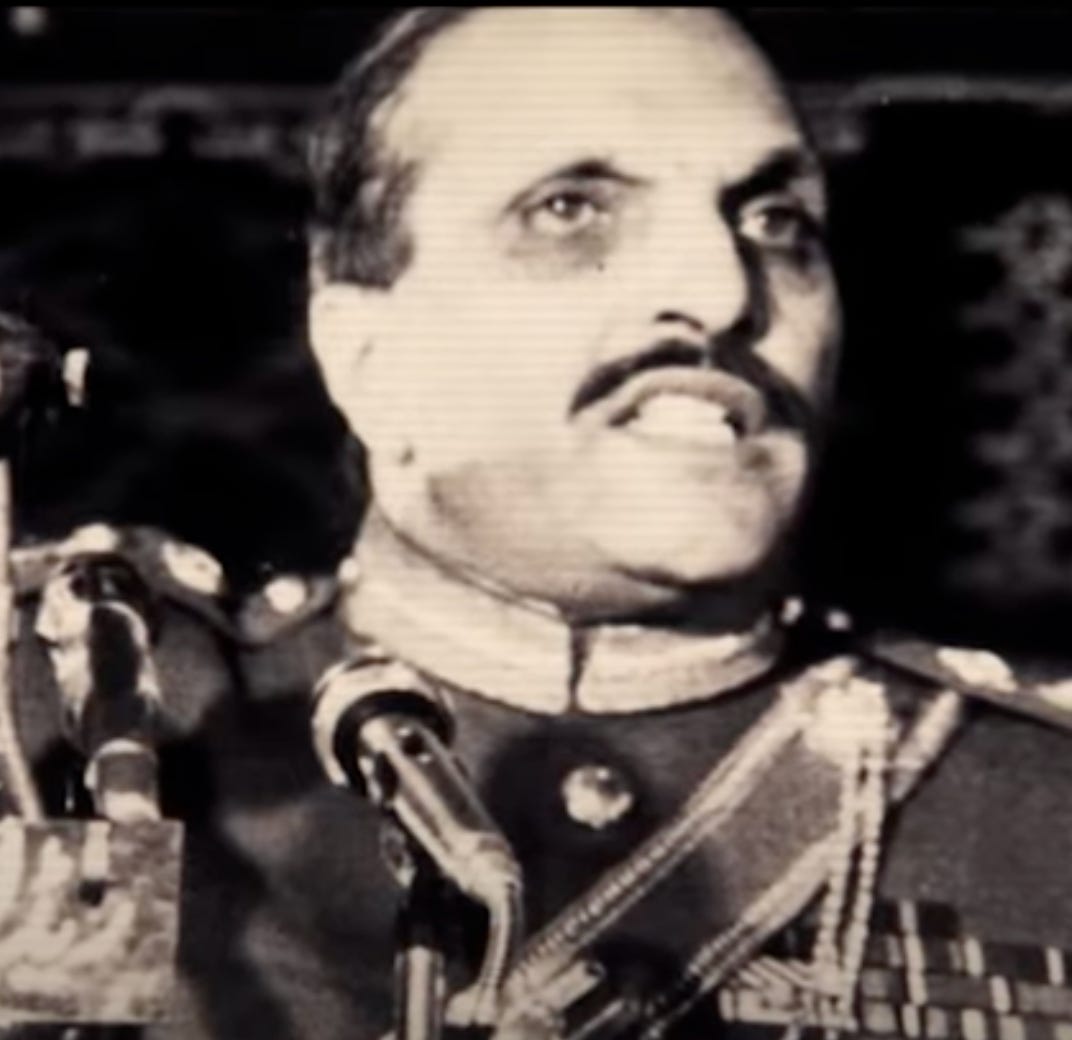
José Niño Unfiltered | August 17, 2025
37 years ago today, on August 17, 1988, General Muhammad Zia-ul-Haq died in a mysterious plane crash that eliminated nearly every member of Pakistan’s military high command in a single devastating blow. The crash of Pak-1, a specially configured C-130 Hercules aircraft, near Bahawalpur claimed not only the Pakistani president and army chief but also Chairman Joint Chiefs of Staff Committee General Akhtar Abdur Rahman, several senior Pakistani military officers, U.S. Ambassador Arnold Lewis Raphel, and Brigadier General Herbert M. Wassom, head of the U.S. military aid mission to Pakistan.
Zia’s Strategic Legacy: Architect of Pakistan’s Nuclear Ambitions
Before examining the mysterious circumstances of his death, Zia’s foreign policy accomplishments merit recognition. During his rule (1978—1988), Zia transformed Pakistan from a middling regional actor into a regional power with the ability to change the strategic landscape. His most significant achievement was shepherding Pakistan’s nuclear weapons program to near-completion while successfully balancing Cold War pressures.
After India conducted its first nuclear test—codenamed Smiling Buddha—on May 18, 1974, Pakistan moved swiftly toward its own weapons program. In response to this move, then-Pakistani Prime Minister Zulfikar Ali Bhutto pledged that his nation would not be left behind.
“We will eat grass or leaves, even go hungry, but we will get one of our own,” he declared. Pointing to the existing arsenals of other faith-based powers, he remarked: “There is a Christian bomb, a Jewish bomb and now a Hindu bomb. Why not an Islamic bomb?”
When Zia took power in 1978, he continued the Pakistani ruling class plan to turn the South Asian nation into a nuclear power. In 1987, Zia told the Carnegie Endowment that Pakistan sought sufficient nuclear capability “to create an impression of deterrence.” His bold proclamation that Pakistan was “a screwdriver’s turn away from the bomb” sent shockwaves across intelligence communities worldwide.
The nuclear program’s success vindicated Zia’s vision. Pakistan conducted its first successful nuclear tests on May 28, 1998, becoming the world’s seventh nuclear power.
Pakistan’s Unpredictable Foreign Policy Under Zia
Zia’s foreign policy demonstrated remarkable strategic acumen. As the primary architect of the Afghan resistance against the Soviet Union’s invasion of Afghanistan in 1979, he successfully convinced initially reluctant Americans to provide massive military aid. CIA veteran Bruce Riedel emphasized that “the war against the Soviets in Afghanistan was run by Zia, not by us.” Zia rejected President Carter’s initial $400 million aid offer as “peanuts” and ultimately secured $3.2 billion in military and economic aid from the Reagan administration.
Simultaneously, Zia pursued deeper ties with China and maintained complex relationships with Iran despite sectarian pressures. During the Iran-Iraq War, Pakistan officially maintained neutrality while covertly supporting Iran. Zia described Ayatollah Ruhollah Khomeini as “a symbol of Islamic insurgence” in 1979 and was one of the first countries to diplomatically recognize the Islamic Republic of Iran. Pakistan reportedly conducted clandestine arms deals that saw Chinese and U.S. weapons sent to Iran, including Silkworm and Stinger missiles originally intended for Afghan mujahideen, which played a decisive role for Iran in the “Tanker War” against Iraq.
The Fatal Flight: August 17, 1988
The events of that fateful day began routinely. Zia had traveled to Bahawalpur to witness a demonstration of the U.S. Army’s M1 Abrams tank at the Thamewali Test Range. After the successful demonstration, organized by Major-General Mahmud Ali Durrani, Zia and his delegation departed by army helicopter before transferring to the specially configured C-130 for the return flight to Islamabad.
At 3:40 PM Pakistan Time, Pak-1 took off from Bahawalpur Airport with thirty people aboard, including 17 passengers and 13 crew members. The aircraft had been equipped with an air-conditioned VIP capsule where Zia and his American guests were seated, walled off from both the flight crew and passenger sections. For two minutes and thirty seconds, the plane rose into clear skies. Takeoff was smooth and without problems.
At 3:51 PM, Bahawalpur control tower lost contact. Witnesses cited in Pakistan’s official investigation reported that the C-130 began pitching “in an up-and-down motion” while flying low before going into a “near-vertical dive” and exploding on impact. The plane crashed with such force that it was blown to pieces, with wreckage scattered over a wide area. All 30 people aboard died instantly.
Brigadier Naseem Khan, flying a French-made Puma helicopter in the vicinity, was among the first to arrive at the crash site. “I walked all around it,” he later recalled. “The plane had crashed at an almost perpendicular angle. I first spotted the cap worn by Gen Wassom, and then Gen Akhtar Rahman’s peaked cap. Then my eye fell upon a dismembered leg, wearing a black sock and black shoe. I suspected it belonged to Gen Zia.”
The Cover-Up Begins
Pakistan’s board of inquiry concluded that the most likely cause of the crash was a criminal act of sabotage within the aircraft. Investigators suggested that toxic gases rendered passengers and crew unconscious, preventing any distress call from being made. Curiously, despite prior C-130 models being fitted with flight recorders, none was found after the crash.
The American response proved equally suspicious. According to former New York Times South Asia Bureau Chief and Council on Foreign Relations member Barbara Crossette’s investigation, Ambassador Robert Oakley and General George B. Crist of CENTCOM rejected an attempt to have the FBI investigate a crash that killed the U.S. ambassador and an American general. Instead, they arranged for the Pentagon and State Department to hold an inter-departmental inquiry. Both officials later apologized to Congress for this decision.
Within two months of the crash, the American government was alone in promoting the theory that mechanical malfunction brought down the plane. On the other hand, most Pakistanis assumed assassination from the start.
Ambassador John Gunther Dean’s Shocking Revelations
The most explosive allegations about Zia’s death came from an unexpected source. John Gunther Dean, who in 1988 served as U.S. Ambassador to India, was a distinguished diplomat with four decades of service who had held more ambassadorships than most envoys. Dean was uniquely positioned to observe the aftermath of Zia’s death, and what he suspected would end his diplomatic career.
Dean believed the plot to eliminate General Zia bore the hallmarks of Israel, specifically the Israeli intelligence agency Mossad. His suspicions weren’t outlandish. Dean had personal experience with Israeli operations. Eight years earlier, while serving as Ambassador to Lebanon, Israelis had sought his support for their local projects, assuming that a fellow Jew would be willing to cooperate with them. When Dean rejected those overtures and declared his primary loyalty was to America, an attempt was made to assassinate him.
On August 28, 1980, Dean, his wife, daughter, and son-in-law narrowly escaped serious injury in a motorcade attack in suburban Beirut. The munitions were eventually traced back to Israel. Dean later discovered the Lebanese group claiming responsibility was an Israeli-created front organization used to carry out Mossad terrorist attacks.
Barbara Crossette’s Investigation
In 2005, after 17 years of silence, Dean finally revealed his suspicions to Barbara Crossette, in what would become a landmark investigation. Crossette’s 5,000-word article “Who Killed Zia?” appeared in the prestigious World Policy Journal, published by The New School in New York City under academic Stephen Schlesinger.
Dean’s theory centered on Israel’s alarm over Pakistan’s nuclear program. A few years before his death, Zia took bold steps to develop a nuclear weapons program. Although his primary motive was balancing India’s nuclear arsenal, Zia promised to share such weapons with other Muslim countries, including those in the Middle East. This possibility created major concerns in the Israeli national security community.
According to journalist Eric Margolis, Israel repeatedly tried to enlist India in launching a joint assault against Pakistan’s nuclear facilities. After careful consideration, India declined. This left Israel in a quandary. Zia was a proud military dictator with very close U.S. ties that strengthened his diplomatic leverage. Pakistan was 2,000 miles from Israel and possessed a strong military, making any long-distance bombing raid similar to the 1981 strike against Iraq’s Osirak reactor virtually impossible. That left assassination as the remaining option.
The Diplomatic Retaliation
Dean chose proper diplomatic channels rather than media disclosure. He immediately departed for Washington to share his views with State Department superiors and other top Administration officials. Upon reaching Washington, Dean was quickly declared mentally incompetent, prevented from returning to his India posting, and soon forced to resign. His four-decade career in government service came to a screeching halt.
Dean was sent to Switzerland to “rest” for six weeks before being allowed to return to New Delhi to pack his belongings and resign. He lost his medical clearance and security clearance because of his views about the crash. The accusation of “mental imbalance” effectively ended any investigation into his allegations.
One might expect such explosive charges from such a solid source would provoke considerable press attention, but the story was instead totally ignored and boycotted by the entire North American media. Stephen Schlesinger, who had spent a decade at the helm of World Policy Journal, saw his name vanish from the masthead shortly after publication, and his employment at The New School came to an end.
Ron Unz observed, with some shock, that the article is no longer available on the World Policy Journal website, though the text remains accessible via Archive.org. Even Dean’s detailed New York Times obituary portrayed his distinguished career in flattering terms while devoting not a single sentence to the bizarre circumstances under which it ended.
Zia’s Legacy Lives On
The patterns established during Zia’s era continue influencing Pakistan’s foreign policy today, often creating tension with traditional allies. Pakistan’s integration into China’s Belt and Road Initiative through the China-Pakistan Economic Corridor represents the kind of independent alignment that characterized Zia’s approach to international relations.
However, recent attacks on Chinese nationals working in Pakistan have troubling parallels to the covert plans to potentially target Pakistan’s nuclear program in the 1980s. What was envisioned as a secure trade and energy corridor linking Xinjiang to Gwadar has instead become a flashpoint for insurgency. Baloch separatists, particularly the Baloch Liberation Army (BLA), have repeatedly targeted Chinese personnel and infrastructure in a campaign to derail Pakistan’s partnership with China.
These efforts have ranged from the killing of nine Chinese engineers at the Dasu Hydropower Project in 2021, to Operation Dara-e-Bolan in January 2024, and the March 2025 hijacking of the Jaffar Express that left 59 dead. Each new CPEC agreement, including six signed in 2023, has provoked fresh waves of violence, underscoring the project’s vulnerability. Far from isolated incidents, this sustained series of attacks highlights how militant groups and their great power patrons see undermining CPEC as central to weakening the Chinese-Pakistani alliance.
Speculation about Western intelligence support for Balochi separatists has gained currency in recent years. The Middle East Media Research Institute (MEMRI), with documented ties to Israeli intelligence, launched a Balochistan Studies Project in 2025. This initiative highlighted Balochistan’s strategic importance for monitoring Iran’s and Pakistan’s nuclear program, suggesting Israel’s continued interest in leveraging regional ethnic tensions for broader geopolitical objectives.
The Imran Khan Parallel
The 2022 removal of Prime Minister Imran Khan bears striking similarities to the pressures Zia faced for maintaining independent foreign policy positions. Khan’s insistence on neutrality regarding the Russia-Ukraine conflict angered Washington, just as Zia’s support for Iran during the Iran-Iraq War created friction with Reagan administration officials.
The leaked diplomatic cable published by The Intercept revealed that U.S. State Department official Donald Lu explicitly linked Khan’s removal to his Russia policy. “I think if the no-confidence vote against the Prime Minister succeeds, all will be forgiven in Washington because the Russia visit is being looked at as a decision by the Prime Minister,” Lu stated. “Otherwise, I think it will be tough going ahead.”
Khan was removed through a no-confidence vote on April 10, 2022, exactly one month after the threatening meeting with U.S. officials. The parallel with Zia’s fate thirty-four years earlier is unmistakable: Pakistani leaders who pursue independent foreign policies will face tremendous pressure from Washington and could be unceremoniously removed from power.
Iran-Pakistan Relations: From Conflict to Cooperation
The January 2024 tit-for-tat missile exchanges between Iran and Pakistan initially appeared to represent a dangerous escalation. Iran struck Balochi separatist targets in Pakistani Balochistan on January 16, killing two children. Pakistan retaliated two days later, targeting Balochi militants in Iranian Sistan-Baluchestan province, killing nine people including four children.
However, the rapid diplomatic resolution echoed Zia’s approach to managing regional relationships. Within days, both countries agreed to de-escalate through diplomatic channels. The now-deceased Iranian Foreign Minister Hossein Amir-Abdollahian visited Pakistan on January 29, 2024, leading to agreements on enhanced security cooperation and intelligence sharing. This swift return to cooperation reflected the kind of pragmatic diplomacy Zia employed during the Iran-Iraq War.
This move also reflects the new challenge of challenging Judeo-American perfidy with respect to the activation of Balochi militants against the security interests of both Iran and Pakistan. Iran and Pakistan have been increasingly alarmed by the growing nexus between Baloch separatists and Israel, which both states see as a direct threat to their security. As Mansur Khan Mahsud of Pakistan’s FATA Research Centre told The Cradle, “During the recent 12-day standoff between Iran and Israel, Tehran noticed a tight-knit connection between Baloch separatists and Israel. Their sharing of intelligence with Tel Aviv led to significant human and infrastructure losses for Iran.”
Tehran has gone further with its accusations, directly implicating Tel Aviv and accusing Israel of recruiting and deploying mercenaries through the Balochistan Liberation United Front (BLUF). Abdullah Khan of the Pakistan Institute for Conflict and Security Studies warned: “Iran is enhancing its ties with Pakistan in the background of militants’ increased alignment with Israel. Their liaison with Tel Aviv would further crystallize when Iran shifts its policies and takes action against BLA and BLF sanctuaries within its territory. India has cultivated strong ties with both groups, enabling it to serve as a bridge to connect them with Israel.”
The Multipolar Reality
Today’s geopolitical environment increasingly resembles the complex balance Zia navigated during the 1980s. Pakistan’s alignment with China and Iran in various contexts, from CPEC to regional security cooperation against Israel’s Judeo-Accelerationist foreign policy, represents the kind of hedging strategy Zia pioneered.
The emergence of a multipolar world order, with China and Russia challenging American hegemony, provides Pakistan with alternatives to complete dependence on Washington. This mirrors the strategic space Zia created by balancing Cold War pressures while pursuing Pakistan’s independent interests.
The emergence of India as a strategic partner for both Israel and the United States creates new pressure points for Pakistan. This convergence of Israeli and American interests regarding Pakistan mirrors the strategic calculations that may have motivated action against Zia in 1988. Pakistan’s continued opposition to India, combined with its growing alignment with China and Iran, places it squarely in opposition to the emerging U.S.-India-Israel axis.
Just as Zia-ul-Haq’s demise brought one era to a close, the unresolved questions surrounding his death continue to haunt Pakistan’s foreign policy decision-making in a world where old alliances fade and new fault lines emerge.
World rallies behind Syria as Israel tears away at it
Press TV – July 18, 2025
International organizations and a whole host of countries have expressed outright condemnation of the Israeli regime’s escalating deadly and destructive attacks against Syria under the pretext of protecting the country’s Druze minority.
A torrent of statements followed the regime’s attack on various areas in the country on Wednesday, including areas lying in its south, in reported support for the Druze.
The attacks came as fighting between members of the minority and Bedouin tribes has killed hundreds of people, with the Israeli involvement being feared to be aimed at intensifying the confrontations and further destabilizing Syria.
UNSC calls for end to Israel’s ‘impunity’
Addressing the situation, Pakistan, which holds the United Nations Security Council (UNSC)’s rotating presidency, denounced the Israeli aggression.
Ambassador Asim Iftikhar Ahmad noted that the attacks resembled Tel Aviv’s atrocities against the Gaza Strip, Lebanon, Iran, and Yemen, all of which violated the international law. The envoy also called for an end to the regime’s impunity.
Mohamed Khaled Khiari, UN assistant secretary-general, denounced the Israeli escalation on the part of the world body’s chief, Antonio Guterres.
He said the attacks amounted toa violation of Syria’s sovereignty and territorial integrity, and further destabilized the country amid the already sensitive situation.
The official also advised that Tel Aviv respect the 1974 agreement that has mandated its refusal to conduct violations against the Arab nation.
China calls for Israeli withdrawal
Geng Shuang, China’s deputy UN ambassador, said Beijing called on “Israel to immediately cease its military strikes on Syria and withdraw from Syrian territory without delay.”
Chinese Foreign Ministry spokesman Lin Jian also said the attacks amounted to a flagrant violation of international law and Syria’s sovereignty, saying the Arab country had to be spared of whatever measure that could lead to further crisis and tension.
Turkey: ‘Terror state’ Israel using Druze as excuse
Turkey’s President Recep Tayyip Erdogan called the Israeli regime a “terror state.”
“Israel, using the Druze as an excuse, has been expanding its banditry into neighboring Syria over the past two days,” he said in a televised speech.
Erdogan said Turkey would not allow Syria’s partition, saying Tel Aviv’s actions showed it was not after peace.
PGCC: Israel after irresponsible escalation
The Persian Gulf Cooperation Council’s Secretary-General, Jasem Mohammed Albudaiw,i also said the Israeli regime’s atrocities indicated its efforts at irresponsible intensification of standing tensions.
The Israeli aggression, he added, also showed the regime’s disregard for the international community’s efforts at realizing stability and ensuring security in Syria.
Hamas: Israeli aggression ‘systematic terrorism’
The Palestinian resistance movements, Hamas and the Islamic Jihad, called the atrocities “organized terrorism.”
The latter also said Tel Aviv was trying to fragment the region through violence, reaffirming solidarity with Syria and supporting its right to resist by all means.
Ansarullah: Israeli attacks part of ‘imperialist scheme’
Yemen’s Ansarullah resistance movement denounced the Israeli strikes as part of a larger “imperialist scheme” to dominate the Arab and Muslim world.
It called for a unified Arab-Islamic response and an end to silence in the face of the aggression.
Muslim states hold intensive talks
Foreign ministers from various regional Muslim countries have, meanwhile, held intensive talks concerning the state of affairs.
The talks were held among top diplomats from Jordan, the United Arab Emirates, Bahrain, Turkey, Saudi Arabia, Iraq, Oman, Qatar, Kuwait, Lebanon, and Egypt.
The discussions that were held with the aim of helping the countries in question adopt a unified stance in the face of the situation saw the officials reiterate support for Syria’s security, unity, stability, and sovereignty.
They called on the UNSC to assume its legal and moral duties towards guaranteeing the withdrawal of the Israeli regime from Syria, and bringing about an end to its aggression by obliging it to abide by the 1974 agreement.
Malaysia: Israel threatening international peace
Malaysia also called for the international community “not to tolerate the continued aggression by the Israeli Zionist regime against other countries, threatening regional and international peace and security.”
Malaysian Prime Minister Anwar Ibrahim said after decades of hardship, the Syrian people deserved peace, not further violence and external interference.
Norway’s foreign minister has also said he was “deeply concerned about recent Israeli airstrikes and rising domestic tensions.”
Featured Video

U.S. General Caine Warns: STRIKING IRAN is a HUGE RISK
or go to
Aletho News Archives – Video-Images
From the Archives
Stealth Bombers and Bunker Busters
Analysis of the so-called 12-Day War, and the triumphantly celebrated Operation Midnight Thunder
By William Schryver | imetatronink | November 28, 2025
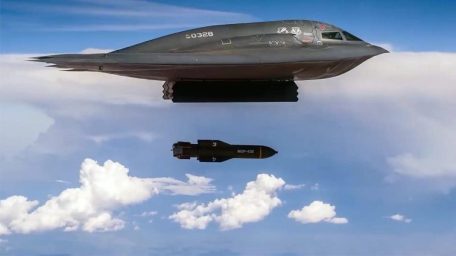
The GBU-57 is a big fat gravity bomb with fins. To achieve effective precision, a B-2 bomber must drop it on its intended target from no further than about five nautical miles — essentially right on top of the target.
Its penetration depth is claimed to be 200 feet. But that capability has NEVER been tested against a seriously hardened deep-underground target encased in layers of high-performance concrete, and topped with a few dozen meters of solid rock. In that sort of real-world scenario, the GBU-57 would be lucky to drill down 50 feet, if that.
It was always ridiculous silly talk to suggest the GBU-57 was the wonder weapon it was made out to be. There is a good reason the US only produced a couple dozen of them and then stopped: they understood its acute limitations in a non-permissive combat environment.
And, notwithstanding the hyperbolic Israeli propaganda, there was never any credible evidence that Iranian medium- and long-range air defenses against fixed-wing aircraft were attrited to any significant degree. And Iranian short-range air defenses were increasingly effective against long-range Israeli drones with each passing day.
As for the B-2: it is a big fat subsonic aircraft. It flies at airliner speeds. A strike on Fordow would entail flying at least 500 miles in and out of Iran. … continue
Blog Roll
 Aletho News
- Project Artichoke: 70 Years Ago, CIA Discussed Hiding Mind-Control Drugs in Vaccines
- Drug traffickers trained in Ukraine attack state forces in Mexico
- The tragic reality of Brazilian mercenaries in the Ukrainian conflict
- Zelensky Refused to Discuss Druzhba Pipeline Issue – Fico
- U.S. General Caine Warns: STRIKING IRAN is a HUGE RISK /Glenn Diesen & Lt Col Daniel Davis
- Israel designates five Palestinian media outlets as ‘terrorist organizations’
- Israel, not America, first: Carlson’s Huckabee interview lays bare US foreign policy priorities
- Israeli troops executed Palestinian aid workers at ‘point blank range’: Report
- Iran war What if today’s Iran is resigned to a long, hellish war with the US?
- Why Israel Is Escalating Its War Crimes Against Lebanon
- If Americans Knew
- The NY Times on the “MAGA” Split Over Israel & USS Liberty
- In Gaza, Ramadan without mosques, imams – Not a ceasefire Day 137
- Footage Shows Israeli Troops Waiting in Ambush, Then Opening Fire on a Palestinian Teen
- The US is on the brink of a major new war that Trump has not even bothered explaining
- Latest Epstein document dump is one more cover-up
- No Protection, No Justice: US Citizens Killed with Impunity by Israel
- Maria Farmer: Epstein Victim Reveals Explosive Information Covered Up by Media
- Average of five Palestinians killed by Israel every day in Gaza since ceasefire – Not a ceasefire Day 136
- Palestinian church leaders admonish Christian Zionist Mike Huckabee – Not a ceasefire Day 135
- Ominous messaging from Trump’s “Board of Peace” – Not a ceasefire Day 134
- No Tricks Zone
- Surprising Discovery: Sahara Is Greening…Billions Of Trees Where Once Thought To Be Barren
- New Research Reaffirms Clouds, Aerosols, And Surface Solar Radiation Are ‘Driving The Climate System’
- Germany: Electric Car Catches Fire At Charging Station, Sets Off Local “Inferno”, Widespread Damage
- New Study: Canada’s New Brunswick Was 1°C Warmer Than Today During The Medieval Warm Period
- Coal Power Back In Trend As Globe Tries To Keep Pace With Growing Demand For Power
- New Study: A 4°C Warmer Beaufort Sea Had ‘No Sea Ice’ 11,700 – 8200 Years Ago
- Unfudging The Data: Dutch Meteorological Institute Reinstates Early 20th Centruy Heat Waves It Had Erased Earlier
- German Gas Crisis…Chancellor Merz Allegedly Bans Gas Debate Ahead of Elections!
- Pollen Reconstructions Show The Last Glacial’s Warming Events Were Global, 10x Greater Than Modern
- Germany’s Natural Gas Storage Level Dwindles To Just 28%… Increasingly Critical
 Aletho News