The Western Alliance is Falling Apart
By Peter Koenig | Dissident Voice | August 2, 2019
Ever since Imran Khan became the 22nd Prime Minister of Pakistan in August 2018, the winds have changed. While his predecessors, though generally leaning eastwards, have often wavered between the US and the China orbit, Khan is in the process of clearly defining his alliances with the east, in particular China. This is for the good of his country, for the good of the Middle East, and eventually for the good of the world.
A few days ago, RT reported that China, in addition to the expansion of the new port in Gwadar, Balochistan, has entered into agreements with Pakistan to build a military/air base in Pakistan, a new Chinese city for some half a million people, as well as several road and railway improvement projects, including a highway connecting the cities of Karachi and Lahore, reconstruction of the Karakoram Highway, linking Hasan Abdal to the Chinese border, as well as upgrading the Karachi-Peshwar main railway to be completed by the end of 2019, for trains to travel up to 160km/hour.
This rehabilitation of dilapidated Pakistani transportation infrastructure is not only expected to contribute between 2% and 3% of Pakistan’s future GDP, but it offers also another outlet for Iranian gas/hydrocarbons, other than through the Strait of Hurmuz, for example, by rail to the new port of Gwadar which, by the way, is also a new Chinese naval base. From Gwadar Iranian hydrocarbon cargoes can be shipped everywhere, including to China, Africa and India. With the new China-built transportation infrastructure Iranian gas can also be shipped overland to China.
In fact, these infrastructure developments, plus several electric power production projects, still mostly fed by fossil fuel, to resolve Pakistani’s chronic energy shortage, are part of the Chinese Belt and Road Initiative (BRI), also called the New Silk Road. They are a central part of the new so-called China-Pakistan Economic Corridor (CPEC) which was first designed in 2015 during a visit by China’s President Xi Jinping, when some 51 Memorandums of Understanding (MoU) worth then some US$ 46 billion were signed. Pakistan is definitely out of the US orbit.
Today, in the CPEC implementation phase, the projects planned or under construction are estimated at over US$ 60 billion. An estimated 80% are direct investments with considerable Pakistani participation and 20% Chinese concessionary debt. Clearly, Pakistan has become a staunch ally of China and this to the detriment of the US role in the Middle East.
Washington’s wannabe hegemony over the Middle East is fading rapidly. See also Michel Chossudovsky’s detailed analysis “US Foreign Policy in Shambles: NATO and the Middle East. How Do You Wage War Without Allies?”
A few days ago, Germany refused Washington’s request to take part in a US-led maritime mission in the Strait of Hormuz, under the pretext to secure hydrocarbon shipments through this Iran-controlled narrow water way. In reality it is more like a new weaponizing of waterways, by controlling what ships do what to whom and applying “sanctions” by blocking or outright pirating of tankers destined for western ‘enemy’ territories.
Foreign Minister Heiko Maas announced last Wednesday in Warsaw, Poland, that there “cannot be a military solution” to the current crisis in the Persian Gulf and that Berlin will turn down Washington’s request to join the US, British and French operation “aimed at protecting sea traffic in the Strait of Hormuz, and combating so-called “Iranian aggression.”
This idea of the Washington war hawks was conceived after Iran’s totally legal seizure of the British-flagged Stena Impero oil tanker, after it rammed an Iranian fishing boat a couple of weeks ago. However, nothing is said about the totally illegal and US-ordered British piracy of the Iranian super tanker Grace I off the coast of Gibraltar in Spanish waters (another infraction of international law), weeks earlier. While Grace I’s crew in the meantime has been released, the tanker is still under British capture, but western media remain silent about it, but lambast Iran for seizing a British tanker in the Strait of Hormuz.
Germany remains committed to the 2015 Joint Comprehensive Plan of Action, JCPOA (the Iran nuclear deal), from which the United States unilaterally withdrew a year ago, and Germany will therefore not intervene on behalf of the US.
Add to this Turkey – a key NATO member both for her strategic location and NATO’s actual military might established in Turkey – moving ever closer to the east, and becoming a solid ally of Russia, after having ignored Washington’s warnings against Turkey’s purchasing of Russian S-400 cutting-edge air defense systems. For “sleeping with the enemy”; i.e., moving ever closer to Russia, the US has already punished Turkey’s economy by manipulating her currency to fall by about 40% since the beginning of 2018. Turkey is also a candidate to become a member of the Shanghai Cooperation Organization (SCO), and so is Iran.
Turkey has become a de facto lame duck as a NATO member and may soon officially exit NATO which would be a tremendous blow to the North Atlantic Alliance and may tempt other European NATO nations to do likewise. Probably not overnight, but the idea of an ever more defunct NATO is planted.
All indications are that the future, economically and security wise – is in the East. Even Europe may eventually ‘dare’ making the jump towards better relations with primarily Russia and Central Asia and eventually with China.
And that especially if and when Brexit happens, which is by no means a sure thing. However, just in case, the UK has already prepared bilateral trade relations with China, ready to be signed, if and when, the UK exits the EU.
Will the UK, another staunch US ally, jump ship? Unlikely. But dancing on two weddings simultaneously is a customary Anglo-Saxon game plan. The Brits must have learned it from their masters in Washington, who in turn took the lessons from the Brits as colonial power for centuries, across the Atlantic.
Western, US-led war on Iran is therefore unlikely. There is too much at stake, and especially, there are no longer any reliable allies in the region. Remember, allies — shall we call them puppets or peons — are normally doing the dirty work for Washington.
So, threatening, warning and annoying provocations by the US with some of its lasting western allies may continue for a while. It makes for good propaganda. After all, packing up and going home is not exactly Uncle Sam’s forte. The western alliance is no longer what it used to be. In fact, it is in shambles. And Iran knows it.
Peter Koenig is an economist and geopolitical analyst. He is also a former World Bank staff and worked extensively around the world in the fields of environment and water resources. He lectures at universities in the US, Europe and South America. He writes regularly for independent media. He is the author of Implosion – An Economic Thriller about War, Environmental Destruction and Corporate Greed – fiction based on facts and on 30 years of World Bank experience around the globe.
‘Nuclear war is not an option’: Pakistani PM says he’d give up nukes if India did so too
RT | July 23, 2019
In a stunning statement, Pakistan’s Prime Minister Imran Khan said that he would be willing to give up his nation’s nuclear weapons if its rival India vowed to do the same. He also urged New Delhi to come to the negotiating table.
When asked by Fox News’ Bret Baier if India offered to relinquish it nuclear arsenal, would Pakistan, Khan answered with an emphatic “yes.”
“Because nuclear war is not an option. And between Pakistan and India, the idea of nuclear war is actually self-destruction, because we have two and a half thousand-mile border,” Khan said.
The Pakistani PM added that the recent escalation in tensions between the two nuclear rivals, following sporadic outbreaks of violence in the aftermath of a major terrorist attack, was unnecessary.
Khan said he had asked US President Donald Trump to mediate between the two regional powers over the Kashmir issue, which Khan said was the only reason for which, over the past “70 years that we have not be able to act like civilized neighbors.”
Khan played down India’s fiery response to reports of potential talks mediated by the US, in which New Delhi insisted that negotiations could only take place bilaterally. He instead urged India’s government to come to the table.
“We’re talking about 1.3 billion people on this Earth. Imagine the dividends of peace if somehow that issue could be resolved.”
Trump outflanks Iran to the west and east
By M. K. BHADRAKUMAR | Indian Punchline | July 5, 2019
The Turkish state news agency Anadolu has featured an analysis titled US sanctions on Iran increasing public unease, which is highly critical of the Iranian ruling elite’s approach to the current standoff with the US. The thrust of the commentary is that the Iranian ruling elites are deliberately provoking a showdown with the US by spurning President Trump’s repeated offers for unconditional negotiations because Tehran harbours the notion that it can lethally damage his bid for a second term in the 2020 election by entangling the US in an asymmetrical war and creates a Middle Eastern quagmire for him. The sub-text of the commentary is that the newfound belligerence in Tehran is attributable to the Supreme Leader and is not in the interests of the Iranian nation.
The opinion piece comes at a time when Turkey is quietly pleased with President Trump’s pragmatism in accommodating its purchase of the S-400 ABM system from Russia. It reinforces the impression from Trump’s extraordinary remarks at the press conference in Osaka on June 29 on Turkish President Erdogan that some sort of a deal has been struck by the two leaders. Trump had gone out of the way to defend Erdogan’s decision on purchase of the S-400 missiles (because “he got treated very unfairly” by the Obama administration), which is “not really Erdogan’s fault”. Trump had said he’s “working on it (S-400 deal). We’ll see what we can do.”
Erdogan claimed later that Trump told him at their meeting in Osaka that the US will not impose sanctions against Turkey on account of the S-400 deal with Russia. Meanwhile, the actual delivery of the S-400 system in Turkey is expected next week. (Erdogan had also said recently that a visit by Trump to Turkey in July “is being talked about”.)
Some sort of an understanding between Trump and Erdogan with regard to Iran cannot be ruled out. Of course, Turkey is in a position to render invaluable help to Iran to bust the US sanctions (which it actually did in the past under the infamous oil-for-gold deal between Turkish and Iranian business elites during the Obama presidency.) Trump would know that if Turkey denies “strategic depth” to Iran, it can be a game changer for the “maximum pressure” strategy against Tehran.
Significantly, Pakistan Prime Minister Imran Khan is also due to visit the US to meet Trump on July 22. Turkey and Pakistan aren’t exactly comparable but there are common elements here. Turkey is an estranged NATO ally which is open to reconciliation, whereas Pakistan is keenly seeking the resuscitation of its moribund strategic ties with the US.
The bottom line is that the US stands to gain out of “win-win” cooperation with both these Cold War allies over the vexed Iran problem.
Turkey’s cooperation is vital for the US to plug Iran’s land route to Syria’s ports in eastern Mediterranean and the US bases in eastern Turkey are key intelligence outposts eavesdropping on Iran. Similarly, the US hopes to keep a “very large” intelligence presence in the Afghan bases, which requires Pakistan’s acquiescence. Certainly, these US intelligence assets are not merely focused on the terrorism problem but also target Russia, China and Iran. In sum, the US intelligence assets in Turkey and Pakistan will play a crucial role in any military confrontation with Iran.
Fundamentally, in regard of both Turkey and Pakistan, their estrangement as allies happened due to the US’ flawed policies that failed to adequately accommodate their legitimate interests. In both cases, the degradation of the relationships and the ensuing nosedive took place under President Obama. The alienation of Turkey when the Obama administration began soft-pedalling on the regime project in Syria in 2012 and it exacerbated following the failed coup attempt in 2016 to overthrow Erdogan.
In the case of Pakistan also, that watershed moment was reached in 2011 when a series of incidents took place that rocked the US-Pakistan ties — the detention of ex-CIA employee Raymond Allen Davis in Lahore in January that year, the Abbottabad operation to kill Osama bin Laden in May and the slaughter of 28 Pakistani troops at two Pakistani border posts in Mohmand tribal agency by NATO Apache helicopters, an AC-130 gunship and fighter jets in November.)
Unsurprisingly, Trump didn’t say at the press conference in Osaka as to what Erdogan’s side of the bargain might be. But the Anadolu commentary hints that Turkey won’t erode the US’ “maximum pressure” on Iran. Turkey has closed its ports to Iranian oil, fully complying with US sanctions against its main supplier — although Erdogan had previously slammed the sanctions, saying they are destabilising for the region. Prior to May 2018, when the US pulled out of the Iran nuclear accord, Turkey imported an average of 912,000 tonnes of oil a month from Iran, or 47% of its total imports.
Again, last Tuesday, the US put the Baluchistan Liberation Army on its global terrorist watchlist and on Thursday, Islamabad made the formal announcement on Imran Khan’s visit to the US. Pakistan comes under the US Central Command theatre of operations. (So does Iran.) Currently, there are no US bases in Pakistan.
But Pakistan, like Turkey, also has a long history of hosting American military bases. In Baluchistan alone, there were several US drone bases — Shamsi Airfield, shrouded in secrecy, which exclusively used to conduct drone operations and housed US military personnel; PAF base on the Sindh-Baluchistan border, which was also used for CIA drone operations; Pasni Airport where US spy planes used to be based, and so on.
Trump is finished with the Afghan war
By M. K. BHADRAKUMAR | Indian Punchline | July 4, 2019
There could be several ways of interpreting the US State Department’s decision on Tuesday to designate the Baloch Liberation Army (BLA) as a Specially Designated Global Terrorist, which imposes economic sanctions on the group and anyone affiliated with it. What is absolutely certain is that this is by no means an altruistic decision by Washington.
The BLA is based in Afghanistan and has been waging a violent armed struggle against Pakistan for the past decade and a half upholding the right of self-determination of the Baloch people and demanding the separation of Balochistan province from Pakistan, apart from being involved in ethnic-cleansing of non-Baloch minorities in Balochistan.
Curiously, the BLA’s timeline (starting from 2004) has been co-terminus with the US’ occupation of Afghanistan. It is inconceivable that the US and NATO forces in Afghanistan were unaware of the BLA’s subversive activities or who were its mentors. Islamabad has been shouting and screaming from the rooftop all this while that its adversaries exploited the group as a proxy to destabilise Pakistan.
Put differently, the timing of the State Department decision banning the BLA is noteworthy. Why now, at this juncture?
These are extraordinary times when almost anything and everything that the US does in the Greater Middle East would have an eye on Iran with which it is locked in an epochal rivalry. Can it be that by making this gesture, Washington hopes to recruit Pakistani military and intelligence to strengthen further its ‘maximum pressure’ strategy against Iran? The possibility cannot be ruled out.
Of course, this is not to suggest that Pakistan will make hostile moves against Iran. Although Pakistan-Iran relations have been highly problematic through the past four decades since the 1979 Islamic Revolution, and their mutual animosity kept frothing from time to time, things never reached a flashpoint as both sides observed certain ground rules of how far to go and what not to do. In the present context, Pakistan will take utmost care not to get entangled in the US-Iran standoff.
Having said that, there is a vital US-Pakistani convergence over Iran that cannot be overlooked, either. That is, when it comes to the Afghan situation. Iran has made it clear that if the US attacks it, it will retaliate against American assets all across the region. There have been two statements at least by senior US officials lately that Iran is moving against American assets in Afghanistan. Iran, of course, has stoutly rejected the allegation, but the US is paranoid — and not without reason.
The point is, apart from the traditional links with the Shi’ite groups in Afghanistan, Tehran also has dealings with the Taliban. Coincidence or not, Washington moved against the BLA within days of an incident in the eastern Afghan province of Wardak on June 26 in which two US soldiers were killed by the Taliban in an ambush.
The incident took place only a day after after Pompeo stopped in the Afghan capital, Kabul, for daylong talks with Afghan President Ashraf Ghani as well as other senior leaders and opposition politicians to discuss two topics, namely, the US’ ongoing efforts to reach a peace agreement with the Taliban and the potential that Iran has to carry out actions that would jeopardise the US exit strategy out of Afghanistan. (Read a report in Geopolitics magazine entitled Two Topics Dominating Pompeo’s Visit to Afghanistan.)
In fact, the US apprehends that an extremely dangerous situation is arising in Afghanistan even as the withdrawal of American troops accelerates. President Trump disclosed in an interview this week with Tucker Carlson on FOX television that the US troop level has come down to 9,000 from 16,000 already. Trump made no bones about the fact that he is finished with the war in Afghanistan.
At one point in the interview, Trump bursts out, “I’d like to just get out.” Trump claims that he intends to keep a “very strong” intelligence presence in Afghanistan. He couldn’t care less anymore whether there will be a broad-based government in Kabul or a Taliban takeover. He’s well past that point of agonising. At one point, Trump implied to Carlson — who also happens to be an inveterate critic of America’s “endless wars” — that he no longer trusts the judgment or integrity of the military commanders. (By the way, Carlson accompanied Trump to the meeting with North Korea Kim Jong-Un in Panmunjom while NSA John Bolton was sent away to Mongolia.)
This is where Pakistani help becomes critical. Ghani’s government lacks legitimacy but the holding of a presidential election in September, as planned, depends heavily on a settlement with the Taliban. The US expects Pakistani help in three directions: one, persuading the Taliban to reach an agreement at the Qatar talks without any further delay; two, enabling the US to withdraw the troops expeditiously and in an orderly fashion; and, three, creating politico-security conditions to facilitate a peaceful transfer of power in Kabul. Of course, it is a tall order.
The Americans know that Iran can escalate in Afghanistan anytime it wishes. Afghanistan falls within the domain of the elite Quds Force of Iran’s Islamic Revolutionary Guard Corps, commanded by the legendary general Qassem Soleimani who was the bête noire of the US and Israel in Iraq and Syria. Of course, if Soleimani creates a hopeless situation like in Vietnam (which forced the US into a humiliating retreat from the rooftop of the American embassy in Saigon), that will be highly damaging for Trump politically in the midst of his campaign for the 2020 election. And that is precisely why Trump is impatient to cut loose and get out from Afghanistan without even waiting for the implementation of any peace agreement with Taliban.
All this should be a morality play for the Indian strategists and policymakers as they pick up the debris of their own Afghan policies and its $2 billion price tag, which has been predicated so heavily through the past decade and a half on the US strategy. Equally, this should be a wake-up call for the Indian lobbyists who still want to bandwagon with the US in other regional theatres such as Sri Lanka, the Maldives or Nepal. (See blog US eyes Sri Lanka as its military logistics hub.)
For sure, the Afghan war has not ended. Trump recalled poignantly that the 9/11 attacks were not staged by Afghans but the Hindu Kush provided the plotters a “lab for terrorists”. Now, the US can only take the word of the Taliban that such a thing will not repeat. Washington’s best hope will be that Pakistan will keep an eagle’s eye to ensure that the terrorists from Afghanistan will not come visiting the US.
In turn, that is going to create an interdependency between the US and Pakistan. The IMF bailout, the ban on the BLA, the near-certainty that Pakistan is off the hook at the upcoming plenary of the Financial Action Task Force, an official visit by Prime Minister Imran Khan to the White House — these are the starters from the US side. Pakistan is highly experienced in dictating the terms of engagement with the US.
India’s Proposal For A Global “Terrorism” Conference Will Probably Backfire
By Andrew Korybko | EurasiaFuture | 2019-06-09
Indian Prime Minister Modi proposed a global “terrorism” conference while speaking in the Maldives during his first foreign trip following last month’s resounding re-election victory, but while this idea is obviously intended to contribute to his failed policy of “isolating” the global pivot state of Pakistan, it’ll probably backfire by drawing attention to his country’s policy of state terrorism against the Kashmiris, providing a platform for India’s new American-“Israeli”-Saudi allies to fearmonger about Iran, and putting Russia and the US in an awkward position for their diplomatic peacemaking ties with the Taliban.
Shifting The Blame For Regional Instability
Indian Prime Minister Modi is on his first foreign trip since winning a resounding re-election victory last month, during which time he told the Maldivian parliament that the world needs to urgently convene a global conference on “terrorism”. His supplementary remarks about “state-sponsored terrorism” and how some “people still try to create notions of ‘good terrorist, bad terrorist’” were interpreted as being aimed against the global pivot state of Pakistan’s political support for the Kashmiri freedom movement that India regards as “terrorists”, strongly insinuating that the intent behind Modi’s initiative is to contribute to his failed policy of “isolating” Islamabad. India also wants to deflect from the negative attention that it received worldwide after being exposed as the real rogue state in South Asia after it almost brought the region to the brink of nuclear war earlier this year following the suspicious Pulwama incident that it automatically blamed on Pakistan, desperately trying to continue pinning the blame on its neighbor for South Asia’s instability instead of taking responsibility for the being the reason behind this itself.
“Containing” China & Taking Revenge On Russia
Should this conference end up taking place, then it’s predictable that India will produce manufactured “evidence” in order to “prove” its point, exploiting the highly publicized opportunity to smear Pakistan’s reputation and provoke international concerns about investing in CPEC. This agenda has a much greater chance of succeeding if India convinces the US to impose unilateral sanctions against Pakistan on an “anti-terrorist” basis, understanding that the real purpose would be to indirectly sanction CPEC and consequently deal an asymmetrical blow to China in the so-called “trade war“. Furthermore, the negative attention that India hopes to heap upon Pakistan during that occasion could be weaponized to smear all of its targets’ partners by extention, including Russia, who New Delhi has been extremely angry with over the past few months after Moscow refused to take its side during the latest regional hostilities and instead opted to remain neutral as part of its balanced “Return to South Asia“. The news that President Putin might finally meet Prime Minister Khan during next week’s SCO Summit in Bishkek might have also motivated Modi to act as urgently as he did.
A Dose Of Modi’s Own Medicine
For as much as Indian strategists are expecting an optimistic outcome from Modi’s proposed global “terrorism” summit, there’s a very high likelihood that it’ll actually end up backfiring and causing many more problems than it’s worth. To begin with, Pakistan could use the international media coverage given to that event to draw attention to India’s use of state terrorism against the Kashmiri freedom movement that’s fighting for the right to their promised UN-mandated plebiscite to determine their political future. Not only that, but the “ModiMob” lynchings of dozens of Muslims over the past half-decade could be properly reframed as Hindu terrorist attacks if Pakistan plays its soft power cards right. In addition, the forthcoming event could also serve to remind the world of the testimony of convicted RAW Hybrid War operative Kulbhushan Jadhav after he admitted that he was tasked by his homeland to organize terrorist attacks in Pakistan, which could in turn lead to a wider discussion about India’s state sponsorship of the BLA and TTP terrorist groups .
Ranting About Iran & Talking Tough Against The Taliban
That’s not all, though, since the illusion of India’s “multi-alignment” would be ruined once and for all if its new American, “Israeli“, and Saudi allies exploit that platform to fearmonger about Iran, especially after New Delhi recently ditched it once Washington withdrew its sanctions waiver last month. Being responsible for sponsoring an anti-Iranian propaganda fest that raises the already high tensions in the Gulf would irreparably harm India’s reputation among the many countries of the emerging Multipolar World Order even if it endears it to the ones who are clinging to the fading unipolar one, showing without any doubt that New Delhi has made a decision to unapologetically pivot towards Washington. Nevertheless, India might also inadvertently harm its standing with the US if its representatives rant about the Taliban during that time, with whom Washington and Moscow are presently engaged in peacemaking diplomatic outreaches, but it might even stage a Bollywood-like drama to this effect to create some unconvincing ambiguity about its aforementioned pivot.
Concluding Thoughts
Modi thought that it would be a good idea to propose a global “terrorism” conference in order to put more international pressure on Pakistan, but upon further contemplation, it might be India itself that ends up coming under worldwide scrutiny if Islamabad takes advantage of this opportunity to raise awareness about New Delhi’s policy of state terrorism against the Kashmiris, the “ModiMob” Hindu terrorist lynchings of dozens of Muslims over the past half-decade, and Kulbhushan Jadhav’s confession that his homeland ordered him to organize terrorist attacks in Pakistan. Moreover, India’s reputation could be irreparably ruined in the eyes of the emerging Multipolar World Order if it sponsors an event that turns into an anti-Iranian propaganda fest for its US, “Israeli”, and Saudi allies to rant and rave against their rival, even if it stages a Bollywood-like drama by verbally attacking America’s peacemaking diplomatic ties with the Taliban to deflect from this fact. All told, more self-inflicted soft power harm than good might come out of India’s proposed global “terrorism” conference, though its strategists probably won’t realize this until after the fact.
The Geo-Port-Politics of Gwadar and Chabahar
By Salman Rafi Sheikh – New Eastern Outlook – 08.06.2019
In a highly surprising move, Iran’s foreign minister, on an unscheduled and unannounced visit to Pakistan on Thursday (May the 23rd), announced the proposal to link Pakistan’s port of Gwadar with Iran’s Chabahar port. This announcement signals tectonic geo-political shift taking place in the region in the wake of increasing tensions between the US and Iran. The US has already successfully forced India, its chief South Asian ally, to scrap its purchase of oil from Iran, a country India was not long ago claimed to have entered into a strategic alliance with. Although the US has somehow left Chabahar out of its net of sanction, India’s decision to follow the US in its footsteps does signal its participation in the US policy of crippling Iranian economy and take Iran to the verge of massive political disruption and eventual regime change. Iran, obviously, is not unmindful of the implications of this particular decision of India.
Iran’s proposal to link Chabahar with Gawadar, despite the fact that the US sanctions don’t apply on the post, shows the deep sense of Indian betrayal prevailing in Tehran and a counter-manoeuvre to avoid isolation. Iran, obviously, does not expect India to be as robust and committed to building the rest of the port as it would have in a peaceful and sanction-less scenario. Iran, logically enough, is boosting its ties with its immediate neighbour, a country that already is deeply allied with China and aims to expand CPEC to Iran to increase regional connectivity. With Chabahar and Gwadar being linked, Iran will thus have two major regional states on its side i.e., Pakistan and China and will be far better placed in China’s extended regional connectivity programme than it is now. Zarif’s connectivity proposal itself tells everything. To quote him:
“We believe that Chabahar and Gwadar can complement each other. We can connect Chabahar and Gwadar, and then through that, connect Gwadar to our entire railroad system, from Iran to the North Corridor, through Turkmenistan and Kazakhstan, and also through Azerbaijan, Russia, and Turkey.”
As far as the US—Iran tension is concerned, unlike India, Pakistan has already said that it will not take sides in the conflict. Pakistan’s neutrality in the on-going scenario suits Tehran far more than it does for the US, that is if it does at all.
There is also no gainsaying that Tehran’s proposal to connect the two ports couldn’t have come with prior consultation with the Chinese, who are practically running the port in Pakistan. Accordingly, before coming to Pakistan, Zarif was in China where he met his Chinese counterpart and certainly discussed this proposal, leading Chinese foreign minister to “Welcome Iran” to actively take part in the joint building of the Belt and Road Initiative (BRI) through Chabahar.
China also re-affirmed its support for Iran. “China firmly opposes unilateral sanctions and the so-called ‘long-arm jurisdiction’ imposed by the United States on Iran,” Wang said, pledging to maintain the Joint Comprehensive Plan of Action and safeguard the authority of the United Nations and basic norms governing international relations.
Chinese support’s major manifestation came a few days ago when Chinese oil tanker Pacific Bravo left the Persian Gulf with 2 million barrels of Iranian light crude, ignoring the US sanctions and practically challenging the US unilateralism.
Pacific Bravo is owned by Bank of Kunlun, a financial institution that is owned by the Chinese state oil company CNPC. Bank of Kunlun has long been the financial institution at the heart of China-Iran bilateral trade—a role for which the company was sanctioned during the Obama administration. Despite already being designated, Bank of Kunlun ceased its Iran-related activities in early May when the oil waivers were revoked. But Bravo’s current moves point to a change in Chinese policy. Importantly enough, Bravo sailed from the Persian Gulf on the same day that Zarif arrived in Beijing and met Chinese foreign minister to discuss Iranian participation in the BRI (through linking Gwadar and Chabahar).
With Iran now taking this fundamental shift, what is apparent is that a major foreign policy shift in Iran has taken place whereby its leadership has come to an understanding that their relations with the US are unlikely to take a positive turn for a long time and that a necessary adjustment in the foreign policy is absolutely needed. As a matter of fact, it was only a few days ago when Iran’s supreme leader criticised Iran’s foreign policy and dropped a major hint about why changing the course of foreign policy was an utmost necessity.
Of course, its major manifestation is reorienting Iran’s relations with Pakistan via participation in the BRI. Pakistan will be least concerned about any US reaction over linking Gwadar with Chabahar, for the US sanctions do not apply to the Iranian port. But the fact that the geo-political significance of the port will undergo a significant change after a successful linkage between the two ports and that China will become a major player, the US might feel ‘compelled’ to direct its sanctions toward the port eventually.
Pakistan military voluntarily cuts budget, praised by PM Imran Khan
RT | June 5, 2019
In a somewhat unprecedented move, Pakistan’s military will voluntarily cut the defense budget for the coming fiscal year as the cash-strapped Pakistan government launches a wide-ranging austerity program.
The move comes as tensions remain high between Pakistan and its neighbor India, but the Pakistan Armed Forces chief spokesperson, Major General Asif Ghafoor, assured people that the cuts will not come at the expense of security and defense and that the military would maintain “an effective response potential to all threats.”
Prime Minister Imran Khan expressed his gratitude that the military made such a gesture despite “multiple security challenges.” For his part, Khan has also made cuts, reportedly moving into a small three-bedroom house belonging to his military secretary since taking office last year.
Pakistan was the world’s 20th biggest military spender in 2018. It invested US$11.4 billion on its military, its highest level since 2004 and four percent of the country’s GDP.
“Not a small step at all, only a strong Civil-Mily Coordination can rescue Pakistan from the deep problems of Governance and economy… shows a complete trust on the leadership of PM by an important institution,” Science and Technology Minister Fawad Chaudhry said.
The funds will be re-allocated to develop newly-merged tribal areas and develop the region of Balochistan. All military and civilian institutions will be expected to contribute to the austerity budget which will be presented on June 11.
Iran resets its foreign policy calculus
By M. K. BHADRAKUMAR | Indian Punchline | May 25, 2019
The unannounced overnight visit by Iran’s Foreign Minister Javad Zarif to Pakistan on Thursday can be seen at the very minimum as forming part of a diplomatic campaign in the backdrop of the war clouds building up in the Persian Gulf. This regional tour has already taken Zarif to Russia, China, Turkmenistan, India and Japan.
For Iran, Pakistan is an important neighbour and the two countries have a history of troubled relations. (See my recent blogs Pakistan-Iran ties set for makeover – Part I and Part II.) In the prevailing regional setting, Pakistan’s importance for the Iranian geo-strategies has become crucial.
In immediate terms, King Salman has sent out invitations to two summits he’ll be hosting in Mecca on May 30 — back-to-back summits of the Gulf Cooperation Council (GCC) and the Arab League — where the leitmotif is the rising tensions with Iran. Neither GCC nor Arab League carries credibility, but Saudi Arabia is hoping that the Muslim Middle East will stand up and be counted in the vanguard of the US-led ‘Iran project’.
Enter Pakistan. Pakistan already has stated it will not take sides in the looming confrontation. Pakistan has described the crisis in the Persian Gulf region as “disturbing” and said that Washington’s decision to deploy an aircraft carrier and bombers has fuelled tensions and exacerbated “the existing precarious security situation” in the Middle East.
Just before Zarif’s arrival in Islamabad, Pakistani foreign ministry spokesman said, “We expect all sides to show restraint, as any miscalculated move can transmute into a large-scale conflict. Pakistan always supports dialogue and desires that all issues should be settled peacefully and through engagement by all sides.”
Pakistan’s stance of ‘positive neutrality’ works in favour of Tehran. Importantly, it is in stark contrast with the deafening silence of New Delhi, which has caved in to US diktat and summarily terminated all imports of Iranian oil. Suffice to say, Pakistan has moved to neutral ground at a juncture while India is bonding with the US, Israel, Saudi Arabia and the UAE — the ‘Quad’ group that pioneers the project to force a ‘regime change’ in Iran.
Delhi gave a pro forma reception to Zarif ten days ago when he came on an unannounced visit and Indian government sources went out of the way to prompt the media to see the event as entirely at Iran’s insistance. In comparison, Pakistan graciously received Zarif, who met the Pakistani Prime Minister and Foreign Minister as well as the army chief and the speaker of the national assembly.
Without doubt, the shift in India’s Middle East policies will have registered in the Iranian political establishment at the highest level. Simply put, Delhi has turned its back on Tehran and a sense of betrayal is only natural in Tehran, which strained every nerve to befriend India. And the fact remains that unlike with Iran’s ties with Pakistan, there are no contradictions in Iran’s bilateral ties with India.
In view of the above, significantly, Zarif made a stopover in Chabahar Port en route to Islamabad on Thursday. No doubt, this development is heavy with symbolism, because Chabahar symbolises not only the unfulfilled Iranian expectations from partnership with India but stands out today as a relic of India’s betrayal. (See my blog India’s Betrayal of Iran Is Only the Beginning.)

(Iran’s FM Zarif at Chabahar en route to Islamabad on May 23, 2019)
In his first remarks after arrival in Islamabad, Zarif disclosed that he intended to put forward a “proposal” for connecting Pakistan’s Gwadar port to its “complementary” port Chabahar (located just 72 kms away in southeastern Iran.) To quote Zarif,
“We believe that Chabahar and Gwadar can complement each other. We can connect Chabahar and Gwadar, and then through that, connect Gwadar to our entire railroad system, from Iran to the North Corridor, through Turkmenistan and Kazakhstan, and also through Azerbaijan, Russia, and Turkey.”
Make no mistake that this is a wholesome proposal. An experienced career diplomat like Zarif is not in the business of kite-flying on such a sensitive issue that holds the potential to realign the geopolitics of the region.
Equally, it stands to reason that Tehran has consulted Beijing beforehand. Gwadar is synonymous with the China-Pakistan Economic Corridor and, of course, CPEC is the flagship of China’s Belt and Road (BRI) Initiative.
In fact, during what appeared to have been a highly successful visit to Beijing by Zarif a week ago, Iran-China cooperation within the framework of BRI figured prominently in his talks with Chinese State Councillor and Foreign Minister Wang Yi. The Xinhua report on the meeting underscored Wang’s remark that ‘China welcomes Iran to actively take part in the joint building of the Belt and Road and hopes to strengthen mutually beneficial cooperation.’
Equally, it must be factored in that the week before Zarif met Wang, he had travelled to Moscow and had talks with Russian Foreign Minister Sergey Lavrov where they discussed key issues in the international arena, as well as bilateral cooperation. The Russia-Iran consultations in Moscow stand out as a defining moment in regional security, as apparent from the remarks to the media, below, by the two foreign ministers:
(Joint press conference by Russian FM Sergey Lavrov (R) and Iran’s FM Javad Zarif at Moscow on May 8, 2019)
The big question is whether all this signifies a fundamental rethink in Iran’s foreign policy options in an emergent scenario where it must confront the geopolitical reality that a normalisation of relations with the US is to be ruled out for a very long time to come and some fundamental adjustments have become necessary.
Indeed, Iran’s Supreme Leader Ayatollah Ali Khamenei recently made an unprecedented open criticism of Iran’s foreign policy.
In sum, it is possible to estimate that the proposal that Zarif made to the Pakistani leadership signifies a reorientation of Iran’s foreign policy in the direction of greater integration with the two major Eurasian powers Russia and China.
In an ideal world, Iran would have preferred to pursue independent foreign policies, but life is real and a regional axis with Russia, China, Pakistan and Turkey becomes an imperative need today. Conceivably, this profound shift in Iran’s foreign policy calculus carries the imprimatur of Ayatollah Khamenei.
Read the IRNA report, here, on Zarif’s Pakistan visit.
Zarif’s Visits To India & Pakistan Couldn’t Have Been More Different
By Andrew Korybko | EurasiaFuture | 2019-05-24
Iran is becoming increasingly desperate after the US intensified the economic component of its Hybrid War on the country, and while Indian Prime Minister Modi snubbed the Islamic Republic’s top diplomat during his visit to the country earlier this month and humiliatingly sent him back to his homeland empty-handed, his Pakistani counterpart Imran Khan warmly embraced Zarif and offered to mediate between Iran and the US.
Iran knows that it’s in trouble after the US rescinded its sanctions waiver for the country’s main oil partners in order to intensify the economic component of its Hybrid War on the Islamic Republic, with the intent being to deprive its rival of valuable budgetary revenue so as to compel it into undertaking painful austerity measures that could exacerbate the already-high risk of a Color Revolution. It was with this increasing strategic desperation in mind that the country dispatched its top diplomat to India earlier this month to plead for it to defy the US like it famously promised it would do last year and not submit to its unilateral sanctions regime.
Foreign Minister Zarif must have been sorely disappointed when he was unsurprisingly snubbed by Indian Prime Minister Modi who refused to meet with him so as to avoid sending any inadvertent signals to his American ally that India would even dare to consider going against Washington’s will, which is why Iran’s top diplomat was humiliatingly sent back to his homeland empty-handed after only having a brief chat with his Indian counterpart. To add insult to injury and ensure that Iran got the message that it was trying to convey, India shortly thereafter tested a surface-to-air missile that it jointly produced with “Israel“, putting to rest any hopes that New Delhi still endeavors to practice its over-hyped and now-outdated policy of “multi-alignment”.
Zarif’s dishonorable treatment by his Indian hosts was completely contrasted by the warm reception that he was just given by his Pakistani ones during his latest visit, where he met with Prime Minister Khan and was even told by his Foreign Ministry counterpart that Islamabad is willing to mediate between Iran and the US in pursuit of a peaceful solution to their latest tensions. This is very important because Pakistan already has decades’ worth of very solid ties with the US’ permanent military, intelligence, and diplomatic bureaucracies (“deep state”), which have most recently been put to use to promote the revived peace process in Afghanistan.
Perhaps sensing that Pakistani mediation could eventually be just as much of a game-changer in Iranian-American relations as it has been for American-Taliban ones, the Indian Ambassador to the US announced on the same day as Zarif’s arrival in the global pivot state that his country officially terminated its import of Iranian oil in response to Washington’s sanctions demands. The timing of this statement was very symbolic because it highlights just how different both South Asian states’ stances towards Iran are. India is playing partisan political games by unashamedly supporting the US’ policies, while Pakistan is trying to “balance” (or rather, in Indian political parlance, “multi-align”) between all Great Powers.
India wants to prove its loyalty to the US and remind America that its compliance with the unilateral sanctions regime against Iran is greatly contributing to the worsening economic crisis in the Islamic Republic, whereas Pakistan is flaunting its strategic independence by showing the world that it feels confident enough with its increasingly important geopolitical position to proactively play a leading diplomatic role in reducing tensions between those two countries. Just as significantly, Pakistan proved that it will continue to respect its partners’ state representatives instead of humiliating them like India just did to Zarif.
The main takeaway from Zarif’s totally different experiences visiting those two South Asian states is that Iran should seriously consider recalibrating its regional partnerships. India is no longer a reliable partner after it disrespected Iran’s top diplomat in such a shameful manner and then strongly signaled the strength of its new alliances with the US and “Israel” right after humiliating him. Pakistan, meanwhile, has shown itself to be totally dependable and genuinely interested in proactively playing a constructive role in supporting a peaceful solution to the latest Iranian-American tensions. As such, it would be wise for Iran to prioritize is relations with Pakistan in order to replace India as its regional strategic partner.
US sanctions could force Pakistan to ditch ‘Peace pipeline’ project with Iran
RT | May 12, 2019
Pakistan has notified Iran that mounting US economic pressure makes it “impossible” to proceed with the massive Iran-Pakistan gas pipeline (IP) project, also known as the ‘Peace pipeline’.
“We cannot risk US sanctions by going ahead with the [IP] project as America has clearly said that anybody who will work with Iran will also be sanctioned,” Mobin Saulat, the managing director of Inter State Gas Systems, which works under the auspices of the Pakistani government, told Arab News.
Islamabad recently informed Tehran in writing about the hurdle to implementing the pipeline project, according to the official. He noted that if the restrictions against Iran are lifted, Pakistan will be eager to go ahead with it. The same position was earlier voiced by Pakistani Prime Minister Imran Khan.
The project, which has been under discussion since 1994, was initially meant to deliver natural gas from Iran’s giant South Pars field to Pakistan and India. New Delhi quit it in 2009, citing the costs and security concerns.
The US vocally opposed the $7 billion project long ago, even before the 2015 nuclear deal, from which Washington has already withdrawn. It said that the construction of the pipeline could violate sanctions imposed on Iran over alleged nuclear activities, despite Iran denying the claims and arguing that natural gas cannot be used for making atomic bombs.
Iran has already slammed Pakistan for failing to adhere to the bilateral deal and delays in laying down the pipeline. In February, the Islamic Republic threatened to take its project partner to the international court of arbitration over the lack of progress on construction. Islamabad has at least two months to respond to Iran on the matter, according to Inter State Gas Systems.
“We have time till August this year to legally respond to Iran’s legal notice and settle the issue through negotiations,” Saulat said.
The news comes just days after the Trump administration imposed new sanctions targeting anyone who fails to wind down transactions related to Iran’s metal sector. This is in addition to the tough restrictions on energy exports, which the US seeks to cut to zero.
On Sunday, Iranian President Hassan Rouhani called for unity as the country faces “unprecedented” pressure from its “enemies.” He compared the current situation with the conditions during the 1980s war with Iraq, saying that it is not clear if they are “better or worse,” but back then Iran had no problems with its banks, oil sales, or imports and exports, except for arms purchases.
On the Run-up to Pakistani Prime Minister Imran Khan’s Visit to Iran
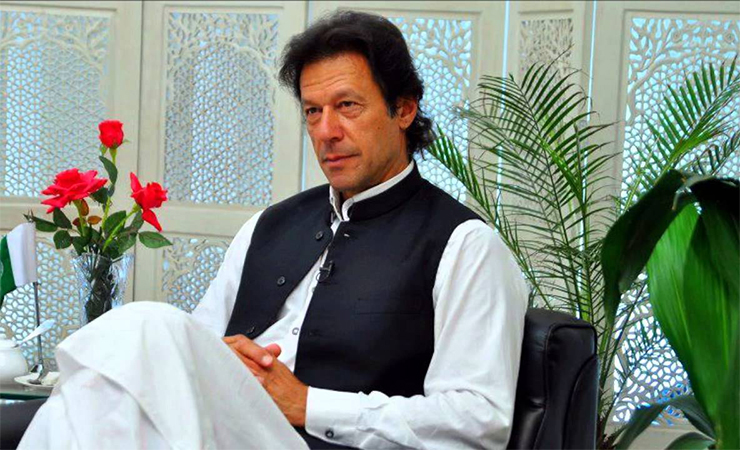
By Natalya Zamarayeva – New Eastern Outlook – 03.05.2019
Many firsts, much tradition and a great deal left out on the official agenda for the Iran-Pakistan talks. Pakistan’s Prime Minister Imran Khan, who took office in August 2018, paid his first visit to Tehran on April 21-22, 2019 after receiving an invitation from Iranian President Hassan Rouhani.
For the first time in history, the head of the Islamic Republic of Pakistan:
– voiced support for the ideals of Iran’s Islamic Revolution as the country marked its 40th anniversary, who assured Iran’s spiritual leader Ayatollah Ali Khamenei that Islamabad has set out on a path to revolution;
– publicly admitted that terrorists had used Pakistani soil in the past to carry out attacks against Iran, which has been met with sharp criticism from the Prime Minister’s opposition in Islamabad;
– avoided bringing up the failed negotiations on the Iran-Pakistan gas pipeline.
There were three challenges that the Prime Minister dealt with in a terrific manner, which took place in the background during his visit to Tehran:
– Washington’s steep step-up in anti-Iranian sanctions (Iran-US relations deteriorated in May 2018 following President Donald Trump’s announcement that the US was going to pull out of the Iran nuclear deal, JCPOA; in April 2019, the US declared the Islamic Revolution Guards Corps a terrorist organization; Washington will start imposing economic sanctions against countries importing Iranian crude oil since May 2, 2019; the US has been putting pressure on the EU to politically isolate Iran). Despite threats of economic sanctions, in April 2019, both Islamabad and Tehran called on Washington to fully implement the Iran nuclear deal as soon as possible;
– Saudi hostility towards Iran;
– a brutal terrorist attack in the Pakistan-Iran border area which took place in April 2019.
PM Imran Khan’s visit to Iran can be described as a breakthrough in bilateral relations. The historical, cultural, religious and civilizational ties between the two neighboring Muslim countries are now being recognized with respect for the principles of national sovereignty and territorial integrity. Imran Khan had shown how he is putting Pakistan’s new approach of strengthening relations with all neighboring states into action, which was put forward by the government of the Pakistan Justice Party (PSP/PTI) headed by Khan. Iran and Pakistan have stressed that “no third country” will be able to prevent Iran-Pakistan relations from developing (an obvious reference to the United States and its policy which aims to isolate the Islamic Republic). And given the current situation, countries in this region need to cooperate independently and directly promote their own interests. For Pakistan’s former government, friendship with Iran did not go beyond the diplomatic level.
Former Prime Minister Nawaz Sharif, who came to power in June 2013 with the victory of his party, the Pakistan Muslim League-Nawaz (PML-N), caved to pressure from the US and Saudi influence and tried to forget about the agreements signed in spring 2013 by Pakistani President Asif Ali Zardari and Iranian President Ahmadinejad for the construction of the Iran-Pakistan gas pipeline.Iran-Pakistan relations were frozen while Sharif was in power. Only in November 2017, with the Chief of Army Staff (COAS) General Qamar Javed Bajwa’s visit to Iran, their original defense partnership began to be restored to earlier levels, and bilateral relations intensified on a diplomatic and economic level at a later stage.
In July 2018, immediately after the results of the parliamentary elections were announced, Iran expressed a willingness to promote and expand its cooperation with Pakistan’s new government across all areas. Iran’s Minister of Foreign Affairs was one of the first high-ranking foreign diplomats to pay an official visit to Islamabad in autumn 2018, when he met with Imran Khan. It was during this visit, in response to the Naya Pakistan (New Pakistan) program of reforms announced by the Pakistan’s new government, when Iran’s Foreign Minister told Khan what had been achieved tanks to the 1979 Islamic Revolution, particularly in terms of health, with the greatest improvements seen in primary health care provision. The Iranian experience appealed to Pakistan, and the two states signed the Declaration for Cooperation in Healthcare Sector in 2019.
The current composition of bilateral relations is far more diverse and complicated, and involves security, trade, religious pilgrims, the status of Pakistani prisoners in Iran, the ports of Gwadar and Chabahar, cultural ties, humanitarian cooperation and joint participation in the Chinese Belt and Road Initiative.
Time and time again, terrorist attacks have challenged bilateral relations between these countries. In recent years, terrorist groups have intensified their activities on both Iranian and Pakistani soil. Therefore, Islamabad and Tehran have re-acknowledged the importance of regular cooperation between politicians, the military and security personnel to combat threats such as drug trafficking, kidnapping and human trafficking, hostage-taking, money laundering, bombings and arson. Following the talks, the countries signed a deal to cooperate in the fight against terrorism for the first time; agreed to form a Joint Rapid Reaction Force; and agreed to open new border crossings (in Gabd-ReemdanandMand-Pishin), as well as border markets. The countries plan to continue to build a fence along the border and synchronize the work of border patrol services.
The leaders of both countries expressed regret that Iran, with a population of 80 million people, and Pakistan, with a population of 210 million people, have not taken advantage of their trade potential for various different reasons, and the range of goods has remained limited over the past years. Nawaz Sharif’s government took up Washington’s anti-Iranian sanctions policy, and the volume of trade declined as a result. Since 2017 however, the countries have been gradually expanding the range of goods they produce and the volume of exports and imports using the means they have available. For example, they agreed to establish a barter committee for the exchange of goods with the aim of stepping up monetary, financial and commercial activities. Iran, for its part, is prepared to deliver a tenfold increase in the volume of electricity it exports to Pakistan.
Long-term plans include the construction of a railway line connecting the ports of Pakistani Gwadar and Iranian Chabahar, as well as completing the construction of the gas pipeline to Pakistan.
The process of brokering an internal Afghan political settlement remains a matter of concern for other countries in the region. Iran and Pakistan believe that the formula which would give this solution is in intra-Afghan and Afghan-led dialog.
Peace and harmony in the region remain a priority and provide the foundation for developing transport transit corridors, which are the engine for accelerating bilateral and regional partnerships and trade. Iran and Pakistan support the implementation of bilateral and multilateral agreements, including the Chinese Belt and Road Initiative –BRI; China-Pakistan Economic Corridor – CPEC; and agreements on establishing the North–South and East–West corridors in Iran.
During the visit, Iran acknowledged that a solution may only be found to the conflict in the Jammu region and Kashmir through dialog, which should take the will of the regional population into account and should adhere to the UN Security Council resolutions. The Pakistani Leader, in turn, spoke of injustice against the Palestinians. Both Iran and Pakistan view Israel’s illegal occupation of Golan Heights and the transfer of the Israeli capital from Tel Aviv to Jerusalem as a violation of international law, which will only lead to greater instability in the Middle East.
Natalia Zamarayeva, Ph.D (History) Senior Research Fellow, Pakistan section, Institute of Oriental Studies of the Russian Academy of Sciences.
Big Lie Day
By Leonid SAVIN – ORIENTAL REVIEW – 03/05/2019
2 May has gone down in modern history as the day that terrorist number one, Osama bin Laden, was killed. The official version states that, in 2011, he was shot dead by US special forces in the house where he was living with his wives and children. The house itself was in a city in Pakistan, where he had been hiding undetected ever since the senior members of al-Qaeda (a terrorist organisation banned in Russia) had fled Afghanistan following the defeat of the government of Mullah Omar, who had been sheltering them. Under cover of night, US helicopters carrying two groups of special forces flew to the operation location from Afghanistan, which was a violation of Pakistan’s state sovereignty.
Recalling the incident in his book Pakistan: A Personal History, which was published in the same year as Osama bin Laden’s official assassination, the current prime minister of Pakistan, Imran Khan, noted: “It was bad enough that the world’s most wanted man was not found in some cave but in a city only 50 kilometres from Islamabad, and a mile from Pakistan’s Military Academy. What made it worse was that the news was broken to us Pakistanis, and the rest of the world, by President Obama”.
“It was several hours later when a statement came from our government congratulating the US and taking credit for providing the US with all the information about Osama’s location. This begged the obvious question for all Pakistanis: if we knew about his whereabouts, then why did we not capture him ourselves? The media in India and the rest of the world went wild, blaming Pakistan’s ISI (in other words, the army) for having kept Osama in a safe house for the past six years. […]
“Three days later, the army chief denied all knowledge of the operation and announced that any such violation of our sovereignty would not be violated again. A week later the PM only added to the confusion when he finally gave a statement, suggesting ‘a matching response’ to any attack against ‘Pakistan’s strategic assets’. For Pakistanis, especially those living abroad, this was one of the most humiliating and painful times. The CIA chief Panetta further rubbed salt in our wounds by bluntly saying that the Pakistan government was either incompetent or complicit.”
The US propaganda machine, meanwhile, was continuing its work around the world and few now dispute the widely held view, or rather myth, that bin Laden was killed in Abbottabad. Films have been made, and books published, that back up America’s official version with an additional narrative. The Russian-language Wikipedia page on Operation Neptune Spear goes into great detail. What’s more, all of the links are to US resources or reprints of them.
The fact that everyone who took part in the raid on bin Laden’s house is now dead seems a little strange, however. Just as suspicious is the fact that Dr Shakil Afridi – who, according to official legend, obtained evidence of bin Laden’s whereabouts by running a fake vaccination programme – was arrested almost as soon as the operation was over and sentenced to 33 years for treason. Something else that gives pause for thought is the official story that bin Laden’s body was buried at sea on the same day. There had apparently been enough time for examination and identification at the US military base in Afghanistan and the Americans had got everything they needed to know.
The author of this article recently got the opportunity to go to Abbottabad and used the visit to see where bin Laden was killed and glean any details that were not published in the world’s press.
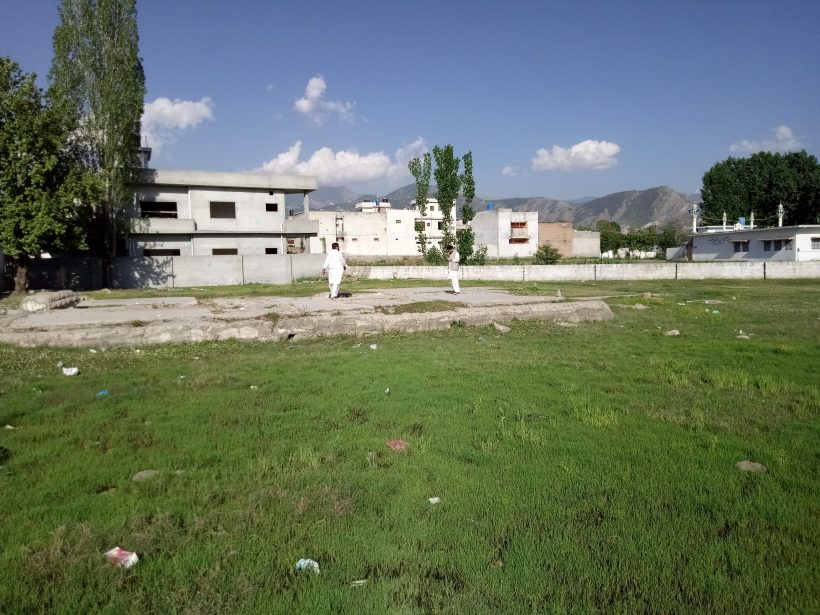
The city of Abbottabad is located in a valley surrounded by mountains and the Karakoram Highway passes close by. As well as the Military Academy in Abbottabad itself, there are a number of military bases and installations located around the city. The fence of an ordnance factory that produces a variety of weapons stretches for many kilometres along both sides of the Karakoram Highway. In other words, it is a place with a pretty high level of security requirements. In 2011, when the operation was carried out, the security measures in and around the city were probably just as strict and serious.
Almost immediately before entering the territory of the Academy, there is a single right turn that leads to the suburb of Bilal Town. We stopped alongside a small group of men outside a shop and asked for directions to bin Laden’s house. After a few seconds’ pause, one of them told us how to get there and where to turn. We stopped again outside another shop further along to clarify exactly where we were going and arrived a few minutes later.
The first person we met was an elderly gentlemen and we asked him about the house, to which he replied: “Yes, that’s the house where the Americans carried out their operation and killed people, only bin Laden wasn’t there. It’s a lie.”
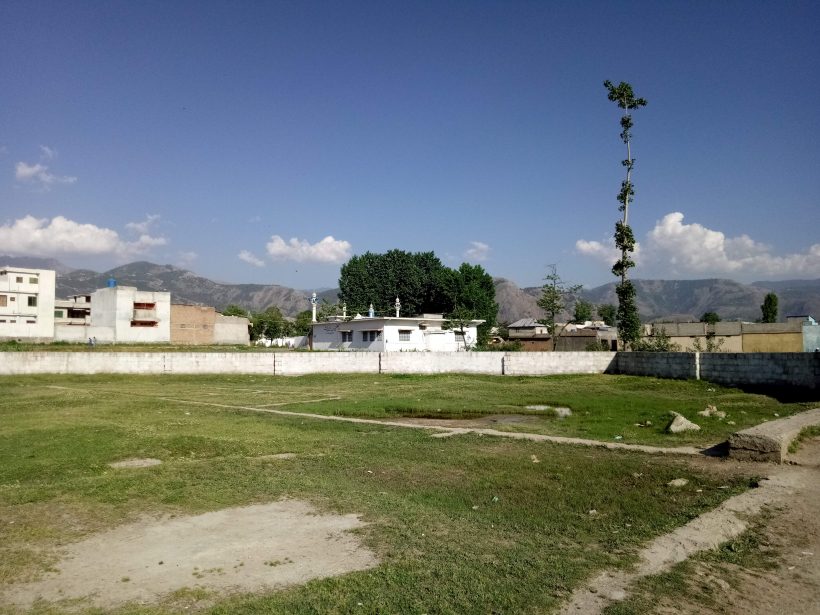
The man hurried on his way and we didn’t question him further. All that remains of the house are the foundations (the building was demolished some time after the operation – another strange fact), and the territory is surrounded by a fairly low concrete wall with a few openings. We saw two men within the walls of the compound itself and decided to talk to them. One of them willingly told us what he knew.
He lives close by and, on the night in question, he and his family heard the sound of helicopters. The sound was so loud that his father climbed up onto the roof, afraid that a helicopter might fall onto their house. A flash then lit up the sky, and explosions and gunfire rang out.
The house itself, where the operation took place, was located away from other structures. There are a few other buildings in the neighbourhood today but, in 2011, only a single-storey building stood opposite. Nevertheless, all the neighbours went up onto their roofs or outside to see what was going on.
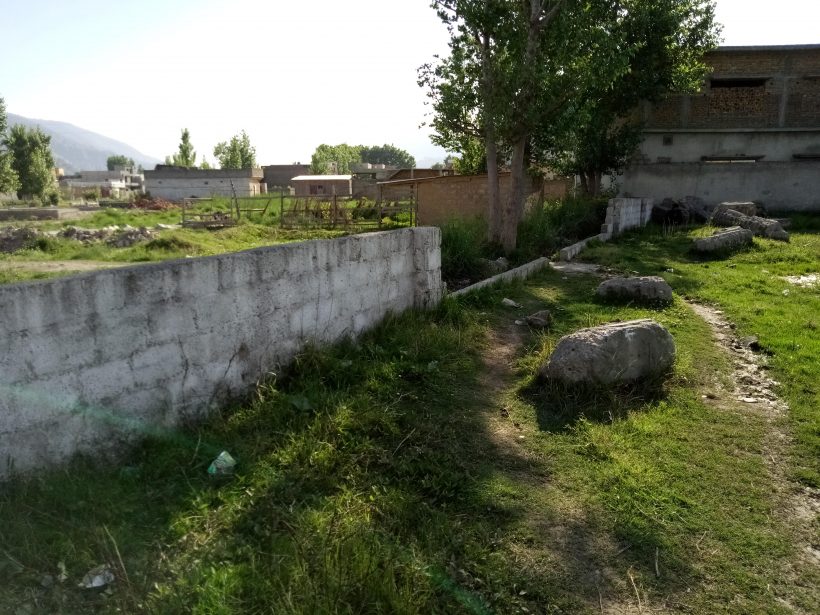
They all knew who was living in the house. According to one of the men we spoke to, it was the family of a businessman from Peshawar. All the neighbours respected him because he regularly helped the local community. The fence around his house was quite high and it’s possible that this was the deciding factor for those who had planned the operation.
“What happened next was like an Indian action movie from the 1990s,” recalls an eyewitness. One of the helicopters fell and burst into flames.
The police arrived about an hour after the first explosions and cordoned off the area, preventing anyone from getting in.
“It’s strange, because when there’s a wedding or a celebration, people often fire into the air and the police arrive in minutes, but this time it took them almost an hour,” said a neighbour.
Another helicopter arrived some time later, picked up the US special forces and flew away. While telling us about it, a young man stated several times that it was like a well-played drama, especially when you take into account what happened next.
“The elderly gentleman you met on the road back there was arrested by the Pakistani intelligence agency and then released,” added the neighbour.
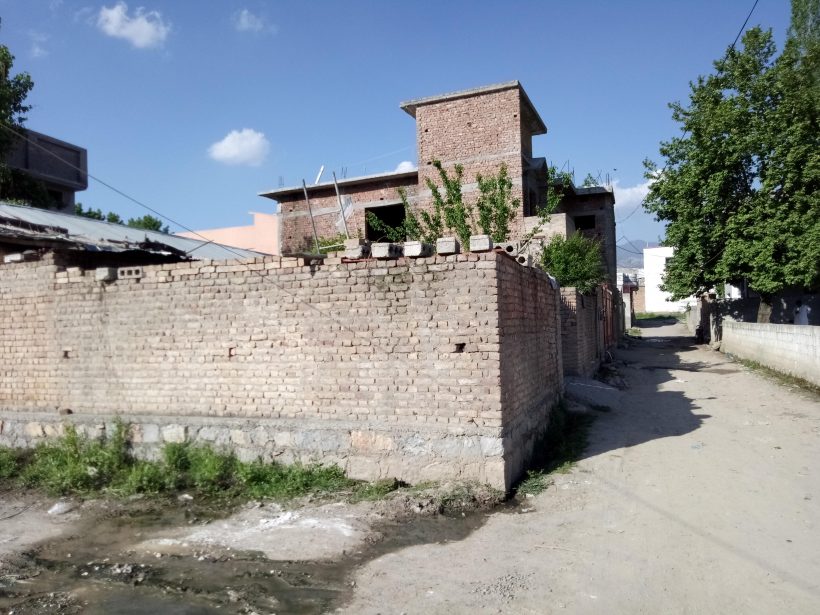
He also believes that bin Laden wasn’t there, and it was innocent people who suffered. Since the land was purchased from the state for residential development, it is legally private property. The deceased owner probably has family somewhere, but nobody has claimed it as yet. And it could be that the target was chosen intentionally so that there would be as few leads and witnesses as possible.
An interesting fate befell the wreckage of the US helicopter that crashed. The Pakistani military handed it over to China and, following relevant research, the country developed its own version of the US helicopter. So Operation Neptune Spear resulted in a leak of military technology. Such things aren’t talked about in America, however.
It should be added that, during America’s war on terror following 9/11, 36,000 people have been killed in Pakistan, including 6,000 soldiers; the country has lost approximately $68 billion; and nearly half a million people have been displaced. While it costs $1 million per year to keep an American soldier in Pakistan, the cost of one Pakistani soldier is $900 per year. And, until very recently, US combat drones repeatedly violated the airspace over Pakistan’s border with Afghanistan – often attacking civilians in the tribal area rather than militants.
However, media outlets under the control of the US State Department continue to report on the US Army’s successes in its war on terror. One needs only to recall Donald Trump’s recent statements regarding America’s victory over ISIS in Syria and Iraq. Fabricating lies and demonising America’s geopolitical opponents, as well as anyone who disagrees with the country’s global agenda, is all in a day’s work for the media lackeys of the US establishment.
Featured Video

Deception – Submarines against Olof Palme
or go to
Aletho News Archives – Video-Images
From the Archives
Woolsey Fire started at Santa Susana Field Lab — where “radioactive materials released were never accurately measured”
By John Laforge | CounterPunch | November 30, 2018
In my Nov. 16 column, I reported on potential radiation risks posed by California’s Woolsey wildfire having burned over parts or all of the Santa Susana Field Laboratory—south of Simi Valley, Calif., 30 miles outside Los Angeles—site of at least four partial or total nuclear reactor meltdowns.
The field laboratory operated 10 experimental reactors and conducted rocket engine tests. In his 2014 book Atomic Accidents, researcher James Mahaffey writes, “The cores in four experimental reactors on site … melted.” Reactor core melts always result in the release of large amounts of radioactive gases and particles. Clean up of the deeply contaminated site has not been conducted in spite of a 2010 agreement.
Los Angeles’s KABC-7 TV reported Nov. 13 that the Santa Susana lab site “appears to be the origin of the Woolsey Fire” which has torched over 96,000 acres. Southern Calif. Public Radio said, “According to Cal Fire, the Woolsey Fire started on the afternoon of Thursday, Nov. 8 … on the Santa Susana site.” … continue
Blog Roll
 Aletho News
- What is fueling unrest across the EU?
- Why no power can undermine Iran’s eternal dominance over the Strait of Hormuz
- Is The War Against Iran Over?
- Iran war will leave long-term ‘scar’ on Wall Street, investors warn
- How Iran decimated US power projection in West Asia: Military lessons of 40-day war
- Iran’s report details US-Israeli war crimes in targeting schools, hospitals, livelihoods
- NATO’s Slow Fracture: How Trump’s Iran War Exposed the Instrument of Hegemony
- Chinese jet fuel and the myth of energy independence
- Ukraine Sea Drone Fired From Libya Hit Russian Tanker in Mediterranean
- IRGC: Iranian forces launched no attacks during ceasefire hours
- If Americans Knew
- Military aid to Israel emerges as the latest political litmus test for Democrats
- The only Palestinian children’s rights organization closes following years-long Israeli campaign against it
- ‘I Can’t Forget the Smell’: Lebanese Reel After Israel Kills Over 300 in Single Day
- DNC Shoots Down Resolutions Calling Out AIPAC and Limiting Arms to Israel
- TCN: Is Israel Blackmailing President Trump?
- Israel killed at least 303 Lebanese yesterday – who were they? Daily Update
- Amnesty: Urgent – Protect Lebanese civilians from brutal escalation in Israeli attacks
- Is The War Against Iran Over?
- Inside the Israeli army’s propaganda wing
- Hundreds of Gaza Amputees Stranded in Legal Limbo
- No Tricks Zone
- New Study: No Linear Warming Or Glacier Retreat Along Northern Antarctic Peninsula Since 1980s
- An Inconvenient Tree: Uncovered In Alps… Europe Much Warmer Than Today 6000 Years Ago
- New Study Reports A 60% Slowdown In Greenland’s Ice Loss Rate In The Last Decade
- Low Intensity Tornado Wrecks Major Solar Farm, Creating A Potential Toxic Dump
- New Study Finds Warming Saves Lives…Cold Temperatures 12 Times More Deadly Than Excess Heat
- German Science Blog Accuses PIK Climate Institute Of Hallucinating Climate Tipping Points
- Devastating Assessment Of Comirnaty Vaccine By Former Senior Pfizer Europe Toxicologist
- New Study: CO2 Is ‘Effectively Negligible’ As An Explanatory Climate Change Factor Since 2000
- Former Pfizer Toxicologist Dr. Helmut Sterz Tells Bundestag Hearing Pfizer Vaccine Should Have Never Been Approved
- Energy Expert: Germany’s Nuclear Phaseout Was A “500 Billion Euro Mistake”
 Aletho News