Palestinian Factions Denounce Suleimani Assassination, Stress Unity of Resistance Front
Al-Manar | January 3, 2020
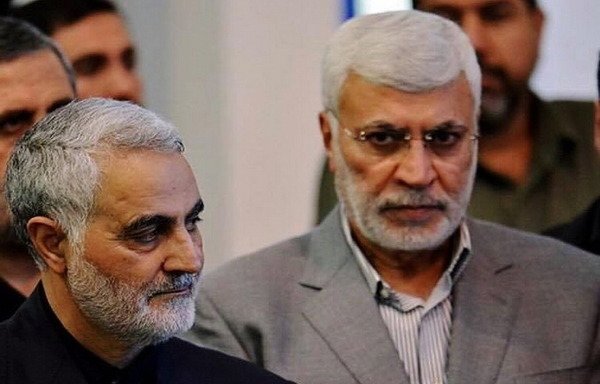
Palestinian factions on Friday firmly denounced assassination of Quds Force Commander General Qassem Suleimani and Iraq’s Hashd Shaabi deputy commander Abu Mahdi AL-Muhandis in a US strike on Baghdad airport early Friday.
Islamic Jihad resistance movement offered condolences to Supreme Leader of the Islamic Revolution in Iran Imam Sayyed Ali Khamenei, and Iraqi leadership on the martyrdom of the two commanders.
“The (Muslim) nation raises its flag against this aggression, announcing that there is no retreat in the path towards liberation,” the Islamic Jihad said in a statement, stressing on the unity of the Axis of Resistance.
“Suleimani was targeted as he was on the frontlines of the confrontation.”
For its part, Spokesman of Al-Quds Brigades, the military wing of Islamic Jihad, praised Suleimani noting that he played a major role throughout two decades in offering military support to the Palestinian resistance.
“Axis of Resistance won’t be defeated and will grow more powerful in face of the Zio-American scheme,” Abu Hamza, Al-Quds Brigades spokesman said.
Meanwhile, Hamas offered condolences to both Iranian and Iraqi leaderships over the martyrdom of Suleimani and Al-Muhandis.
In a statement, Hamas said Suleimani was one of the prominent Iranian military commanders who offered different kinds of support to the Palestinian resistance.
The Palestinian group held the US fully responsible for the bloodshed in the region, denouncing Washington’s “arrogance” in sowing discord and sedition in the region.
The Popular Front for the Liberation of Palestine, meanwhile, noted that the assassination of Suleimani and Al-Muhandis requires an “all-out retaliation.”
Israel is systematically poisoning one million Palestinian children
By Robert Inlakesh | Press TV | January 2, 2019
We have now entered 2020, the year in which experts at the United Nations (UN) once predicted Gaza would become unlivable. But the sad reality is not only that those same experts said that Gaza was already unlivable in 2017, but that now the population of 2 million residing in Gaza are under the real threat of genocide.
Sara Roy of Harvard University’s Centre for Middle Eastern studies, who is considered the leading scholar on Gaza’s economy, has written that “innocent human beings, most of them young, are slowly being poisoned in Gaza by the water that they drink and likely by the soil in which they plant.” So let us break down that statement, based upon the data available to us.
The population of the Gaza Strip is over 2 million strong, more than 50% of which are children (18 and under). Ninety-seven percent of Gaza’s water is undrinkable with only the upper 10% of Gaza’s population having access to clean water according to the UN. If we take these statistics and we look at them critically that would mean that according to conservative estimates only 40% of Gaza’s children are consuming water that is fit for human consumption. This means that parents in the Gaza Strip are forced to make the decision to allow their children to drink contaminated water in order for them to survive.
Israel which has enforced its illegal blockade of Gaza since 2006 – although Zionist propagandists claim it started in June of 2007, which is incorrect – is under international law required to provide Gaza with the ability to sustain itself. Gaza is not a State; it is not a sovereign territory in of itself. According to the UN Gaza constitutes part of what is called the Palestinian occupied territories, with the focus here being on the word “occupied.”
According to the 4th Geneva Convention, Israel is required under International Law to provide the ability for Gaza and the West Bank to sustain an environment of livability. Israel will argue, however, that Gaza specifically is not occupied; that it withdrew in 2005. However it still controls the population registry, the entries and exits, all imports and exports, the electromagnetic sphere, the armistice lines (what Israel calls the border), the territorial waters, airspace as well as having a monopoly on the electricity in Gaza. Israel controls Gaza through and through; meaning that if Israel does not declare an occupation, it is a de facto annexation of the territory.
In excess of 108,000 cubic meters of untreated sewage water flows into the Mediterranean Sea from Gaza. This is due to a lack of power for Gaza’s desalination plant and the lack of building material required to expand, both of which are due to Israel’s policies towards the besieged coastal enclave. The situation is so bad that not only is Gaza’s sea water heavily contaminated, leading to deaths as recently as last year, but also Israel’s Askalan (Ashkelon) based desalination plant periodically halts operations due to the pollution, showing that Israel is willing to put the purification of 20% of its own water at jeopardy in order to punish the Gaza Strip.
Rising from the problem of water contamination is also disease. Gidon Grumberg, the founder and director of Israel’s ‘Ecopeace’, told the Jerusalem post in 2016 that Gaza is a ticking time bomb for cholera and typhoid epidemics. Since then there have been repeated calls for a change to be made to Gaza’s lack of clean water by various experts. If a change is not made in 2020 then Gaza could become a hotbed for disease the way that Yemen has, again due to an illegally imposed blockade.
Beyond the water problem are also numerous other issues plaguing Gaza, all of which are again due to Israel’s illegally imposed – for nearly 15 years now – siege. Upwards of 80% of Gaza’s population are reliant upon international food aid in order to survive, with Israel enforcing a policy of “putting the people of Gaza on a diet,” entailing that Israel counts the minimum caloric intake for the Gazan population to stay alive. Israel of course controls the food aid coming into the Gaza Strip and even makes a profit off of it. The restrictions Israel applies to food coming into Gaza is also used as a political tool in order to punish the Palestinians for their acts of resistance against Israel.
The conservative estimates, according to the United Nations, also indicate that Gaza’s youth unemployment rate is close to hitting 70% with an overall unemployment rate recorded to be at around 50%. Israel also has repeatedly blocked Palestinian cancer patients from entering Israel in order to receive life-saving treatment. Not only this, but due to the lack of power in Gaza, cardiac monitors and X-ray machines become unreliable. In the first half of 2019, the Gaza Health Ministry, which has a regular budget of $40 million a year, had only 10 million dollars worth of supplies available to them and in July (2019) declared a warning of an unprecedented shortage of medicine and medical supplies. According to the World Health Organization 39% of Gaza applications for cancer patients to exit the blockaded Strip were “unsuccessful” in 2018.
Gaza’s population is subjected to sewage regularly flooding, after rainfall, into the streets and causing sickness, especially amongst the poorer population. Even the more well-off, financially, of Gaza’s population, whom of which reside in areas such as Gaza City (North East Gaza), are losing their wealth. Specifically the residents of the al-Rimal area, who are viewed by many as living in an area of prestige are having to flee to places like Istanbul, or become refugees abroad and are losing their families’ assets due to an absence of income.
Gaza currently survives on a few hours of electricity per day, this is due to the fact that Israel put a cap on the amount of electricity it allows into Gaza, as well as the fact that Israel has bombarded and destroyed Gaza’s electrical grid and power plants, on various occasions. The sole, partially destroyed by bombardment, power plant in Gaza is also in a semi-operational state due to the cutting of diesel fuel from the Strip in early 2018, after the Palestinian Authority stopped paying for the fuel.
As of February 2018, the Gaza Strip has been in a “state of emergency.” Enduring, since the beginning of the siege, eight large-scale military offensive massacres by Israel, with hundreds of smaller bombardments coming in between.
A 17 year old in Gaza would have experienced Israeli internal occupation, a 15 year long ever tightening siege, 8 large scale massacres, hundreds of other attacks, three wars, the constant buzzing of drones, the deaths of friends and family, temporary or permanent displacement and the list goes on and on.
To top this all off, when the people of Gaza rose up in their hundreds of thousands non-violently, beginning on the 30th March (2018), they were ignored by the world which has done nothing to stop Israel for its murder of 330+ unarmed demonstrators and the injuring of approximately 40,000. Until now, the demonstrations are still ongoing on a weekly basis and no Israeli soldiers have been killed or sustained any serious injuries.
According to International Law, the people of Gaza have every right to use armed force in order to struggle for self determination and to end the siege. Israel has no claim to a “right of self defence”, just as a rapist would have no claim to a right of self defence against their rape victim, and the next time we hear of Israel’s “right” in anyway to use force, we must know that whoever repeats this is contradicting the Fourth Geneva Convention.
Aviv Kochavi said recently in a speech pertaining to a future war against Gaza, that Israel will target electrical, agricultural and other structural components, which according to Israel contribute to keeping Hamas – Gaza’s governing Party – afloat. This means that if Israel does begin a new massacre (war) against Gaza – or Hamas as they will claim – then it will mean that all the statistics listed off above will accelerate to unprecedented numbers and that Gaza will become even more uninhabitable.
The only questions now left to be answered are, what will stop Israel from completely genociding the people of Gaza? and how will the worlds future generations look at us today for allowing this holocaust to occur against the people of Palestine. One million Palestinian children are being systematically poisoned by Israel and there is nothing but deafening silence.
Robert Inlakesh is a journalist, writer and political analyst, who has lived in and reported from the occupied Palestinian West Bank. He has written for publications such as Mint Press, Mondoweiss, MEMO, and various other outlets. He specializes in analysis of the Middle East, in particular Palestine-Israel. He also works for Press TV as a European correspondent.
PA rejects Israel decision to use alternative to UNRWA schools in Jerusalem
MEMO – January 2, 2020
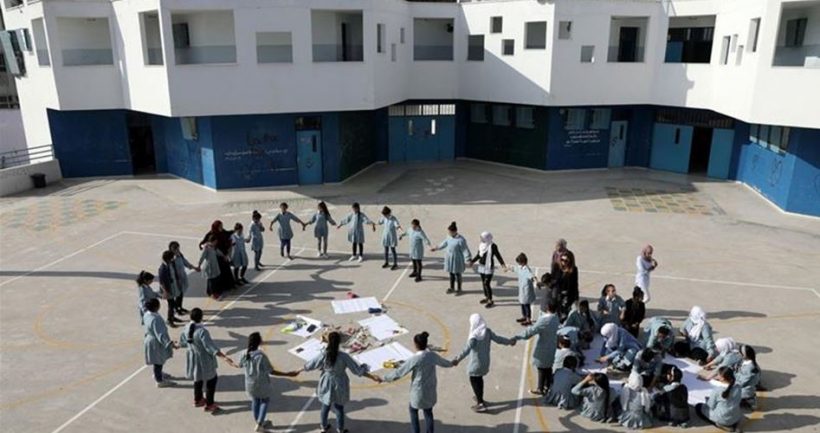
The Palestinian Authority (PA) yesterday slammed an Israeli decision to use alternatives to UNRWA-run Palestinian schools in Jerusalem.
In a statement, the PA’s Ministry of Expatriates and Foreign Affairs said that the approval of the council of the Israeli municipality in Jerusalem to set-up education facilities to replace UNRWA schools is part of Israel’s war on the right of return.
The PA ministry also said that the Israeli measure is a “new step towards imposing the Israeli syllabus on Palestinians”, pointing out “this is part of the Israeli plans to Judaise the Palestinian city.”
On Tuesday night, the Israeli municipal council approved a plan to establish an educational campus run by the Israeli Education Ministry near the Arab neighbourhoods of Shu’afat and Anata in Jerusalem.
According to the plan, the new facilities are meant to replace the schools established and being run by UNRWA.
The project, according to the London-based Al-Awda Centre, will cost 7.1 million shekels ($2 million), and will be located in an area outside the Green Line but run by the Israeli governed Jerusalem Municipality.
Member of Jerusalem Municipal Council Aryeh King thanked Mayor Moshe Lion for advancing the project, which seeks to diminish UNRWA’s presence in the city.
“We are not talking, we are acting,” King wrote on Facebook.
“While the previous mayor, Nir Barkat, published press releases for years about his plans to reduce UNWRA’s influence and involvement in eastern Jerusalem, the current Mayor, Moshe Lion, passed last night a decision of unprecedented importance. I salute you, Mayor.”
Israel killed 149 Palestinians, including 33 children in 2019
![Palestinian women sit on debris after Israeli airstrikes hit their homes in Khan Yunis, Gaza as tension rises between Israel and Gaza after commander in the Al-Quds Brigades, the armed wing of Gaza-based resistance faction Islamic Jihad, Bahaa Abu Al-Atta was killed by Israeli airstrike, on 13 November 2019. [Ali Jadallah - Anadolu Agency]](https://i1.wp.com/www.middleeastmonitor.com/wp-content/uploads/2019/11/20191113_2_39293100_49418803.jpg?resize=1200%2C800&quality=85&strip=all&ssl=1)
Palestinian women sit on debris after Israeli air strikes hit their homes in Khan Yunis, Gaza on 13 November 2019 [Ali Jadallah/Anadolu Agency]
MEMO | January 2, 2020
Israeli occupation forces killed 149 Palestinians during 2019, including 33 children, the National Gathering for Palestinian Martyrs’ Families said yesterday.
According to Quds Press, the gathering said in a statement that the number of the martyrs was similar to the number of Palestinians killed each year over the past five years.
While the number of children among those killed was 33, the statement said that 112 of Palestinian martyrs (74 per cent) were killed in the Gaza Strip and 37 (33 per cent) were killed in the occupied West Bank.
The statement noted that 69 of the martyrs killed in Gaza perished under Israeli air strikes, including eight from the same family whose house was attacked and completely destroyed.
The bodied of 15 martyrs were detained by Israeli occupation forces in 2019, raising the number of bodies held by Israel to 306.
Palestinian student Mays Abu Ghosh speaks out on Israeli abuse and torture under interrogation

Mays Abu Ghosh. Source: Quds News
Samidoun Palestinian Prisoner Solidarity Network | January 2, 2020
Palestinian journalism student Mays Abu Ghosh spoke with lawyers from the Palestinian Prisoners’ Affairs Commission, discussing her torture and mistreatment under interrogation for over 30 days. A student at Bir Zeit University from Qalandiya refugee camp, Mays Abu Ghosh, 22, is a writer and student activist who has worked to publicize the struggles of Palestinian political prisoners and Palestinian refugees.

Mays Abu Ghosh seized by Israeli occupation forces
In her statement to the lawyers, Abu Ghosh recalled that she was seized by Israeli occupation forces in a violent raid on 29 August 2019, when the armed soldiers removed the door of her family home and invaded it, ransacking her and her family’s belongings, blindfolding and cuffing her and then taking her to an occupation military camp near Qalandiya checkpoint. While she was held there, the soldiers dragged her violently as she was handcuffed and blindfolded while cursing at her and screaming in her face.
Later, Mays was transferred to the Moskobiyeh interrogation center. She was strip-searched and then transferred to the interrogation cells. She recalled that her interrogations lasted for many hours at a time while she was shackled to a small chair inside a very cold cell. After six days, the “military interrogation” began with her, which included the use of stress positions like the “banana” and “squatting” or the “false chair” for long periods of time, in an attempt to coerce a false confession from her.

Illustration of the “banana” position. Source: Addameer Prisoner Support and Human Rights Association
She was slapped, beaten and deprived of sleep. This “military interrogation” continued for three days, during which all of these torture tactics continued. Abu Ghosh said that at one time, she tried to escape from the interrogators and sit in one of the corners of the cell, but the interrogator began slamming her head against the wall, kicking her while yelling obscenities. Next, interrogators deliberately brought her brother and her parents in an attempt to coerce her into confessing by threatening to detain them. Her 17-year-old brother was later ordered to administrative detention, without charge or trial, despite being a minor.
Mays said that the interrogation cells have extremely harsh conditions, lacking the basic elements for human life. The walls are concrete and rough, the mattress is thin, without a cover or a pillow, and the lights

Images of Shatha Hassan and Mays Abu Ghosh at the march in Ramallah in support of Ahmad Zahran, on hunger strike for 99 days. Photo: Quds News
She said that at one time, a large rat entered her cell, which she believes was intentionally entered by the interrogators in order to further torment her. They repeatedly delayed in responding to the simplest requests, for example to access the bathroom, and was repeatedly provoked and ridiculed. After 30 days of this treatment under interrogation, she was transferred to the Damon prison, where she remains today, with her fellow Palestinian women prisoners. She is charged in the Israeli military courts – which convict over 99% of Palestinian detainees – with involvement in student activities on the Bir Zeit University campus. Her brother’s administrative detention has been renewed again and he continues to be jailed without charge or trial.
Mays’ family earlier spoke about their experience in being brought to see her under interrogation, noting that the signs of torture were visible on her face and body. “Her face was full of bruises and her body is very pale. I could not hug her due to the pain hurting all of her body,” said her mother. Addameer Prisoner Support and Human Rights Association convened a press conference on 23 December highlighting the torture and abuse of Palestinian prisoners, including Abu Ghosh.

Palestinian imprisoned student Mays Abu Ghosh supports freedom for Georges Ibrahim Abdallah
Mays Abu Ghosh and Samah Jaradat are two of many Palestinian students who are being targeted by the Israeli occupation for arrest and imprisonment for their involvement in student activities on campus. Shatha Hassan, chair of the Bir Zeit University student council board, has been ordered to four months of administrative detention, imprisonment without charge or trial. There are hundreds of Palestinian university students held in Israeli jails, including approximately 80 from Bir Zeit alone.
Samidoun Palestinian Prisoner Solidarity Network urges the broadest possible action and mobilization to support Mays Abu Ghosh and Palestinian students jailed by the Israeli occupation forces. We urge students around the world to hold events, vigils and informational actions to highlight the struggle of Palestinian students under occupation and all people of conscience to develop the campaign for boycott, divestment and sanctions (BDS) against Israel. Freedom for Mays Abu Ghosh and all Palestinian students!
Arabic source for this article: http://hadfnews.ps/post/63496/
Embracing Palestine: How to Combat Israel’s Misuse of ‘Antisemitism’
By Ramzy Baroud | MEMO | January 1, 2020
At a talk I delivered in Northern England in March 2018, I proposed that the best response to falsified accusations of antisemitism, which are often lobbed against pro-Palestinian communities and intellectuals everywhere, is to draw even closer to the Palestinian narrative.
In fact, my proposal was not meant to be a sentimental response in any way.
“Reclaiming the Palestinian narrative” has been the main theme in most of my public speeches and writings in recent years. All of my books, much of my academic studies and research have largely focused on positioning the Palestinian people – their rights, their history, their culture, and their political aspirations – at the very core of any genuine understanding of the Palestinian struggle, against Israeli colonialism and apartheid.
True, there was nothing particularly special about my talk in Northern England. I had already delivered a version of that speech in other parts of the UK, Europe and elsewhere. But what made that event memorable is a conversation I had with a passionate activist, who introduced himself as an advisor to the office of the head of the British Labour Party, Jeremy Corbyn.
Although the activist agreed with me regarding the need to embrace the Palestinian narrative, he insisted that the best way for Corbyn to deflect anti-Semitic accusations, which have dogged his leadership since day one, is for Labour to issue a sweeping and decisive condemnation of antisemitism, so that Corbyn may silence his critics and he is finally able to focus on the pressing subject of Palestinian rights.
I was doubtful. I explained to the animated and self-assured activist that Zionist manipulation and misuse of antisemitism is a phenomenon that has preceded Corbyn by many decades, and will always be there as long as the Israeli government finds the need to distract from its war crimes against Palestinians and to crush pro-Palestinian solidarity worldwide.
I explained to him that while anti-Jewish racism is a real phenomenon that must be confronted, “antisemitism” as defined by Israel and its Zionist allies is not a moral question that is meant to be solved by a press release, no matter how strongly-worded. Rather, it is a smokescreen, with the ultimate aim is of distracting from the real conversation, that being the crimes of military occupation, racism, and apartheid in Palestine.
In other words, no amount of talking, debating or defending oneself can possibly convince the Zionists that demanding an end to the Israeli military occupation in Palestine or the dismantling of the Israeli apartheid regime, or genuine criticism of the policies of Israel’s right-wing government are not, in fact, acts of antisemitism.
Alas, the activist insisted that a strong statement that would clarify Labour’s position on antisemitism would finally absolve Corbyn and protect his legacy against the undeserved smearing.
The rest is history. Labour went into a witch-hunt, to catch the “true” anti-Semites among its members. The unprecedented purge has reached many good people who have dedicated years in serving their communities and defending human rights in Palestine and elsewhere.
The statement to end all statements was followed by many others. Numerous articles and arguments were written and made in defense of Corbyn. To no avail. Only a few days before Labour lost the general election in December, the Simon Wiesenthal Center named Corbyn, one of Britain’s most sincere and well-intentioned leaders in the modern era, as the “top anti-Semite of 2019”. So much for engaging the Zionists.
It doesn’t matter whether Corbyn’s party lost the elections in part because of Zionist smearing and unfounded anti-Semitic accusations. What, for me, as a Palestinian intellectual who has hoped that Corbyn’s leadership will constitute a paradigm shift regarding the country’s attitude towards Israel and Palestine truly matters, is the fact that the Zionists have indeed succeeded in keeping the conversation focused on Israeli priorities and Zionist sensibilities. It saddens me that while Palestine should have occupied the center stage, at least during Corbyn’s leadership years, it was still marginalized as if solidarity with Palestine has become a political liability to anyone hoping to win an election, not just in the UK but anywhere in the West as well.
I find it puzzling, indeed disturbing, that Israel, directly or otherwise, is able to determine the nature of any discussion on Palestine in the West, not only within typical mainstream platforms but within pro-Palestinians circles as well. For example, I have heard repeatedly, activists questioning whether the one-state solution is at all possible because “Israel simply would never accept it”.
I often challenge my audiences to base their solidarity with Palestine on real love, support, and admiration for the Palestinian people, for their history, their anti-colonial struggle, and the thousands of heroes and heroines who have sacrificed their own lives so that their people may live in freedom.
How many of us can name Palestine’s top poets, artists, feminists, football players, singers, and historians? How familiar are we, really, with Palestinian geography, the intricacies of its politics, and the richness of its culture?
Even in platforms that are sympathetic to the Palestinian struggle, there is an inherent fear that such sympathy could be misconstrued as antisemitism to the extent that Palestinian voices are often neglected, if not at all supplanted with anti-Zionist Jewish voices. I see this happening quite often, and it is becoming a common occurrence even within Middle Eastern media that supposedly champions the Palestinian cause.
This phenomenon is largely linked to Palestine and Palestine only. While the anti-apartheid struggle in South Africa and the civil rights struggle in the United States – as was the case of many genuine anti-colonial liberation movements around the world – have strategically used intersectionality to link with other groups, locally, nationally or internationally, the movements themselves relied on black voices as true representatives of their peoples’ struggles.
Historically, Palestinians haven’t always been marginalized within their own discourse. Once upon a time, the Palestine Liberation Organisation (PLO), despite of its many shortcomings and mistakes, provided unified Palestinian political discourse which served as a litmus test for any individual, group or government regarding their position on Palestinian rights and freedom.
The Oslo accords ended all of that; it fragmented the Palestinian discourse, as it has also divided the Palestinian people. Since then, the message emanating from Palestine has become muddled, factionalised and often self-defeating. The Boycott, Divestment and Sanctions Movement (BDS) has done a tremendous job in bringing some clarity by attempting to articulate a universal Palestinian discourse.
However, BDS is yet to yield a centralised political strategy that communicated through a democratically elected Palestinian body. As long as the PLO persists in its inertia, and without a truly democratic alternative, the crisis of the Palestinian political discourse is likely to continue.
Concurrently, the Zionists must not be allowed to determine the nature of our solidarity with the Palestinian people. While true Palestinian solidarity requires the complete rejection of all forms of racism, including antisemitism, the pro-Israel camp must be sidelined entirely from any conversation pertaining to the values and morality of what it means to be “pro-Palestine”.
To be anti-Zionist is not the same as being pro-Palestine, the former emanating from the rejection of racist, Zionist ideas and the latter indicating real connection and bond with Palestine and her people.
To be pro-Palestine is also to respect the centrality of the Palestinian voice, because without the Palestinian narrative there can be no real or meaningful solidarity, and because, ultimately it will be the Palestinian people who will liberate themselves.
“I am not a liberator,” once said the iconic South American revolutionary Ernesto Che Guevara. “Liberators do not exist. The people liberate themselves”.
Israel’s countdown to achieve the ‘alternative homeland’ in Jordan begins
By Dr Adnan Abu Amer | MEMO | January 1, 2020
The Israeli right is preparing to present a plan to overthrow the Jordanian king after annexing the Jordan Valley in the West Bank to realise the dream of Jordan being converted to Palestine. They aim to establish a confederation between the PA and “Palestinian Jordan” because the Israeli right is interested in annexing the West Bank without the millions of Palestinians within it. Forcing them to head to Jordan.
Israel’s Haaretz newspaper revealed in late December the Israeli right-wing’s approaches and plans, led by Prime Minister Benjamin Netanyahu. This is based on the claims that Israel has major plans for Jordan, but these plans do not include the same king. This is evidenced by several articles and reports written by right-wing Israeli writers this month who all present similar justifications and results, the main of them all is to destroy the peace treaty with Jordan.
Right-wing Israelis believe that annexing the Jordan Valley is a tactical operation aimed at hitting two Israeli birds with one stone: the first is to work to annex the West Bank and cancel the peace agreement with Jordan, and the second is to topple the Hashemite royal family and to embody the dream of Jordan being Palestine.
It is interesting that this dream is shared by all the Israeli right, with all its components and currents, because they are enthusiastic supporters of the idea that Jordan is Palestine. The ruling Israeli right has begun to detest King Abdullah II.
When King Abdullah is shamefully toppled, Israel will be able to complete its annexation of the West Bank and establish a confederation between the Palestinian Authority and “Palestinian Jordan”.
Moreover, according to the Israeli perception, when that happens, the Palestinians in the West Bank will obtain political rights in Jordan.
According to this Israeli theory, when the Palestinian state is established in Jordan, the Palestinians can resolve their issue, put an end to their suffering and stop using armed operations against Israel, because since 1988, Palestinians in the West Bank have been able to obtain temporary Jordanian passports.
It is worth noting that the Israeli approach may contradict Jordan’s interest in reducing the total number of Palestinians in the kingdom because it refuses at the moment to receive Palestinian refugees from Syria in the way it allowed Syrian and Iraqi refugees to seek refuge on its soil.
Perhaps such aspirational Israeli calls towards Jordan are encouraged by the fact that the two-state solution to the Palestinian-Israeli conflict is no longer practical or realistic. Meanwhile, there are claims that the alternative solution is the establishment of an Arab Palestinian state east of the Jordan River, which will achieve peace between Israel and Palestine. They also claim that the river can be used to transport goods and products from either side, with the Israeli Jewish state on one side and the Arab Palestinian country on the other, side by side.
There is another Israeli scenario of Jordan hosting more Palestinians and instead of the kingdom becoming a Palestinian republic, they become citizens with full rights in the Hashemite Kingdom.
The return of Gilad Sharon after a long absence was noteworthy. He is the son of the late Prime Minister Ariel Sharon, who had strong relations with the late King Hussein, King Abdullah’s father. Gilad Sharon returned to claim that the current Jordanian king would not dare to oppose the annexation of the Jordan Valley by Israel, because Israel has him by his weak spot and the continuation of his rule depends on Israel. He also said that if the king opened his mouth, Israel would turn off the water tap and leave the kingdom to go thirsty.
All these are efforts to drive the king to cancel the peace agreement with Israel and allow Tel Aviv to remove him.
King Abdullah finds himself caught between the anger of the Jordanian public and Israel. The situation of his government has become really difficult because his country’s budget is suffering, the sources of income are declining, the Gulf states, which have always been a source of support for Jordan, have reduced their aid, and millions of Arab refugees have flocked to the kingdom in recent years.
In spite of the increase of tensions between Jordan and Israel over the past year, security coordination between them continues as usual and the intelligence cooperation is at its best. This raises questions about the king failing to use this card to pressure Israel unless this cooperation serves him and not the kingdom.
Israel detained 5,500 Palestinians in 2019
![Israeli police officers arrest a Palestinian youth Issawiya, Jerusalem, 4 January 2017 [Mahfouz Abu Turk/Apaimages]](https://i0.wp.com/www.middleeastmonitor.com/wp-content/uploads/2019/11/Issawiya-MU_JE_00-14-1.jpg?resize=1200%2C800&quality=85&strip=all&ssl=1)
Israeli police officers arrest a Palestinian youth in Issawiya, Jerusalem, 4 January 2017 [Mahfouz Abu Turk/Apaimages]
MEMO | December 31, 2019
Israeli occupation forces detained over 5,500 Palestinians from the occupied Palestinian territories in 2019, including 889 children and 128 girls and women, Quds Press reported rights groups saying yesterday.
According to the Palestinian Prisoners’ Commission, Palestinian Prisoners’ Club and Addameer for Human Rights, there are approximately 5,000 Palestinian prisoners being held in Israeli jails, including 40 girls and women, 200 children. Some 450 are under administrative detention.
The groups said that five Palestinian prisoners passed away while in detention this year, citing medical negligence and torture. They were named as: Faris Baroud, Awni Youses, Nassar Taqatqa, Bassam Al-Sayeh and Sami Abu-Dayyak. Israeli authorities withheld the bodies of four Palestinian prisoners.
During 2019, Israeli occupation forces issued 1,035 administrative detention orders, including four against women and four against children.
The rights groups said there are currently 700 prisoners who are in need of medical attention inside Israeli jails, including ten who suffer from cancer and more than 200 who have chronic diseases.
More than 50 prisoners went on hunger strike in protest against the policies of the Israeli prison services, as well as against the policy of administrative detention.
“Israeli occupation authorities violate all the rules of international and humanitarian laws, and reinforce their flagrant violations through the judicial system,” the rights groups said.
They called for local, regional and international bodies to put pressure on the Israeli occupation in order to stop its violations of Palestinian prisoners.
The Year of War Against Anti-Semitism
Everyone is doing it
By Philip Giraldi • Unz Review • December 31, 2019
One might think that 2019 was the year war was declared against anti-Semitism judging from the pronouncements of politicians in Washington, London, Paris and Berlin. To be sure, Israel and its diaspora friends have continued to play the “anti-Semitism” card whenever their behavior is challenged but the international passion to extirpate the “new anti-Semitism” to include any and all criticism of Israel is something quite special that is being backed up by punitive legislation.
In one of its more recent victory laps, British Zionists are toasting Mazel Tov in their Hanukkah celebrations over their part in the defeat of Labour candidate Jeremy Corbyn. Corbyn was demonized personally by the British Chief Rabbi Ephraim Mirvis shortly before the December election and was unfairly labeled an anti-Semite by the Jewish media over his antipathy towards Israeli actions and his willingness to recognize the suffering of the Palestinians. From now on, no British politician will be willing to challenge Jewish power in the U.K. Indeed, Prime Minister Boris Johnson, who claims some Jewish ancestry and spent some time in his youth on a kibbutz, has already pledged to make any criticism of Israel illegal in Britain. Moving the British Embassy from Tel Aviv to Jerusalem will no doubt soon follow.
Meanwhile, and as a direct result of the unwillingness to confront Israel in any meaningful way, war crimes committed by the Jewish state proliferate. Every Friday there is a shooting gallery along the fence with Gaza, where unarmed Palestinian protesters are targeted by Israeli snipers. And in November, Israel conducted a series of air strikes on the Gaza Strip after its assassination of a senior Islamic Jihad commander and his wife. At least 34 Palestinians were reported killed and more than 100 wounded in the two days of bombardment while no Israelis were killed. An attack on the makeshift home of the al-Sawarka family killed eight members of the family, including children. A week later, a ninth member of the family, Mohammed al-Sawarka, died from from his injuries.
The Israeli army carried out a perfunctory investigation of the deaths and concluded that that the army’s intelligence section had made a mapping mistake that included the family home as part of an Islamic Jihad “compound.” So a filing error led to the deaths of nine innocent civilians in one family and, of course, no one in the Israeli military was in any way punished or even reprimanded. Or even apologized.
And when it is pushed to do so, Israel uses the anti-Semitism weapon to render itself completely unaccountable in spite of its war crimes. The recent announcement by the International Criminal Court (ICC) that it is looking into possible crimes relating to the ongoing Israeli-Palestinian conflict has produced a quick response from Washington and Jerusalem. The Trump Administration, fearful lest one crime lead to investigation of another, is concerned lest atrocities committed by U.S. troops in Afghanistan and Iraq become the fodder for a subsequent inquiry, has reiterated its claim that the ICC has no jurisdiction over it as the U.S. has never recognized its authority. Washington has also revoked a visa held by chief prosecutor of the ICC, has threatened more visa refusals, and is also threatening sanctions as reprisals, claiming that the court is “illegitimate” while also vowing that the Trump Administration would do everything “to protect [American] citizens”.
In Israel meanwhile, Prime Minister Benjamin Netanyahu has sought to shore up his sputtering attempt to remain in office by denouncing the inquiry itself as “anti-Semitism.” He made the claim while using Judaism’s holy Western Wall as a backdrop during a candle-lighting ceremony marking the start of the eight-days of Hanukkah, saying “New edicts are being cast against the Jewish people – anti-Semitic edicts by the International Criminal Court telling us that we, the Jews standing here next to this wall … in this city, in this country, have no right to live here and that by doing so, we are committing a war crime.” He called it “Pure anti-Semitism.”
Back in the United States the war on anti-Semitism initiated by President Donald Trump and endorsed by both parties in Congress is running full speed ahead. The first lawsuit linked to the Trump executive order signed on Hanukkah that creates a mechanism for defunding universities that do not protect the “civil rights” of their Jewish students has been filed by a Israeli student at Columbia University. His lawyer Brooke Goldstein claims that the university is in violation of Title VI of the Civil Rights Act of 1964 for “discrimination against Jews.” He added that “We drafted and filed a complaint with the Office of Civil Rights (OCR), which is, to my knowledge, the first action of its kind since Trump’s executive order.”
Goldstein is the executive director of The Lawfare Project, which has been engaged in Jewish and Israeli advocacy. Her client, Jonathan Karten, a senior at Columbia University, alleges that he was on the receiving end of anti-Semitism on campus. The Trump executive order broadens the definition of discrimination by implying that “Jewish” is a nationality while also accepting that criticism of Israel constitutes anti-Semitism.
Goldstein claims that Karten “has been ridiculed and embarrassed because of his religion and his national identity” on campus, most particularly by members of the group Students for Justice in Palestine (SJP). Karten claims that he was called “a Zionist pig” and other names. And Karten complains that even a professor was mean to him when he was speaking with other students at an event hosted by the Columbia chapter of Students Supporting Israel. A “Columbia professor of Arabic literature… interrupted the conversation, pointed at Jonathan and yelled, ‘Don’t believe a word he is saying. He is Mossad.’” According to the complaint, “Jonathan felt ridiculed and embarrassed due to someone in authority publicly targeting him, accusing him of being a spy for a foreign government because of his religion and national identity.”
Karten decided to take action after a November 8th speech by a modern Arab politics and intellectual history professor named Joseph Massad. Massad reportedly gave a speech at the annual conference of the Jerusalem Fund and Palestine Center, where he said that “The Oslo Accords inaugurated this process of liquidating the Palestinian national struggle while the ‘Deal of the Century’ plans and hopes to conclude it … The only thing standing in its way is the ongoing Palestinian resistance to Israeli settler colonialism and racism that continues inside Israel and Jerusalem, the West Bank and Gaza; the ongoing Marches of Return in Gaza; and the armed resistance of the Izz al-Din al-Qassam Brigades to Israeli invasions in Gaza.”
The complaint notes that “The Izz al-Din al-Qassam Brigades is the military wing of Hamas, which is a U.S.-designated foreign terrorist organization [FTO]” while the “Izz al-Din al-Qassam has killed more than 650 civilians. It is also directly responsible for the kidnapping and brutal murder of Jonathan’s uncle, Sharone Edri. However, according to Professor Massad, this group’s killing of innocent Israeli citizens, like Jonathan’s uncle and countless others, is justified due to Israel’s ‘settler colonialism.’”
Karten and Goldstein maintain that their complaints fell on deaf ears within the Columbia University Administration. Karten had filed a complaint with Columbia University’s Department of Public Safety last year “… after he and his friends were repeatedly called murderers at a BDS [Boycott, Divestment and Sanctions] referendum at the school.”
One might observe that Professor Massad did not say anything that is contrary to a reasonable assessment of what the Israelis and their friends have done to the Palestinians. Under international law, it is perfectly justified for a people under occupation to resist the occupiers, using whatever means are available. And it is not unimaginable that Karten reports to Mossad. One presumes that he has done his military service and perhaps he should explain what that entailed in light of claims that he was or is a “murderer.”
Jonathan Karten appears to be such a sensitive soul that being called names over what is admittedly a red-hot and very controversial political issue needs to be redressed by putting those hurling the epithets out of business permanently. That amounts to a nullification of the First and Fourth amendments to the Constitution of the United States, which guarantees freedom of speech and association. Karten himself felt free to associate with a group of Students Supporting Israel and one might safely bet that some serious invective would flow out of that organization whenever a Palestinian might appear at or near one of its gatherings. And most importantly, one should also note that Karten was not by his own admission in any way threatened. It was only words.
And lawyer Goldstein is not necessarily an objective observer pursuing “justice.” She is nothing more than a professional advocate for Israel and what are perceived as Jewish issues. As it is somewhat unclear what exactly she and her client want the university to do to address the issues they have cited, one can only guess that it would include silencing the critics and possibly even reparations of some kind, a frequent feature in the old “discrimination” game.
None of this agitation occurs in a vacuum. There is extensive advocacy for Israel at all levels, much of it hidden. In 2019 alone the Sheldon Adelson supported Maccabee Task Force “secretly funded over 3,200 pro-Israel events on 112 campuses, and brought over 2,300 student leaders on ‘transformative trips’ to Israel.” Taken all together, every bit of uncritical empowering of the Jewish state now surfacing in London, Washington, New York and in Israel itself is part of a vast international conspiracy to render the Zionist crimes against humanity unobserved and unreported whenever possible as well as always unaccountable. And when all else fails, the Israelis and, to be sure, many diaspora Jews know exactly what to weaponize when they want to win the debate. Former Israeli Minister Shulamit Aloni once explained how it is done: “Anti-Semitic”… ”it’s a trick, we always use it.”
Philip M. Giraldi, Ph.D., is Executive Director of the Council for the National Interest, a 501(c)3 tax deductible educational foundation (Federal ID Number #52-1739023) that seeks a more interests-based U.S. foreign policy in the Middle East. Website is councilforthenationalinterest.org, address is P.O. Box 2157, Purcellville VA 20134 and its email is inform@cnionline.org.
New Financial Crisis Looms as Israel Withholds Millions of Palestinian Tax Money
The Palestine Chronicle | December 30, 2019
Once more, the Israeli government has decided to withhold tens of millions of dollars in tax revenues, collected on behalf of the Palestinian Authority to prevent it from supporting families of Palestinians killed or wounded by the Israeli army.
Reuters news agency reported on Monday that the Israeli government of right-wing Prime Minister Benjamin Netanyahu will not hand over nearly $43 million in Palestinian taxes over the PA’s “financial support for the families of slain or wounded Palestinian” activists.
The Israeli government had withheld hundreds of millions of dollars from the Palestinian budget in the past in order for Tel Aviv to force Mahmoud Abbas’ Authority to toe the Israeli line. In February, Tel Aviv confiscated PA funds citing Palestinian government’s support for prisoners and their families.
Under the Oslo agreement, Israel is responsible for collecting taxes on behalf of the Palestinian Authority, the current sum of which, according to Reuters, is estimated at $222 million a month.
In a meeting with members of his ruling Fatah party, PA President Abbas admitted that the Israeli decision “will cost us a lot.” “But we have rights and we will not be afraid,” he added.
Israeli war minister defiles Ibrahimi Mosque
Palestine Information Center | December 30, 2019
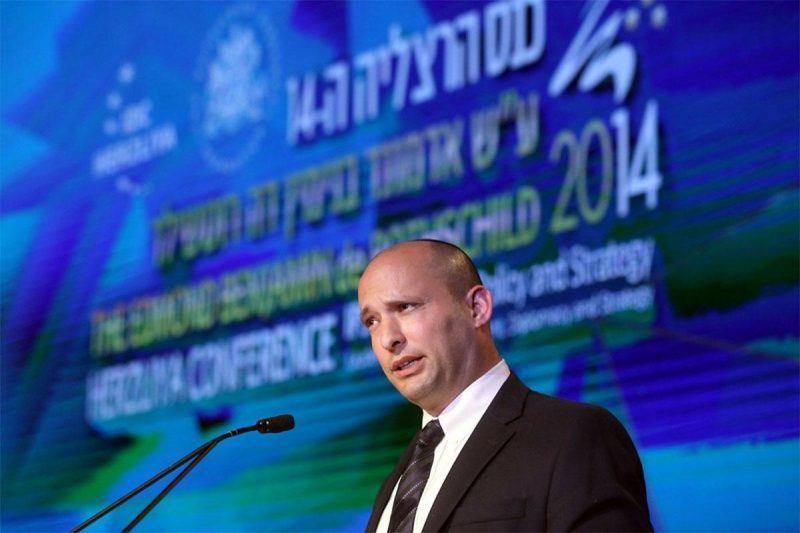
AL-KHALIL – Israeli war minister Naftali Bennett on Sunday night desecrated the Ibrahimi Mosque in al-Khalil at the pretext of marking a Jewish event called Hanukkah.
According to the Hebrew media, Bennett was accompanied during his tour of the Mosque by senior army commander Itamar Ben-Haim, Kiryat Arba settlement chief Eliyahu Liebman and Jewish religious figures.
Addressing settlers at the Islamic holy site, Bennett claimed that al-Khalil was the heart of Israel and that the Jewish people could not live without this heart.
He vowed to build more settlements and neighborhoods for Jewish settlers in al-Khalil, affirming that he became the minister of the Israeli army in order to achieve that.
Palestinian minor prisoners in Israel jails tortured, humiliated, NGO reveals

MEMO | December 30, 2019
The Palestinian Prisoners’ Commission (PPC) has documented witnesses of Palestinian minor prisoners inside Israeli jails stating that they had been tortured and humiliated when they were arrested and during their investigations, Safa Press Agency reported.
Minor prisoner, Abdul-Min’em Al-Natsha, 17, revealed that Israeli undercover forces kidnapped him from the streets of Shu’fat Refugee Camp along with Usama Taha, 16.
Both boys disclosed that they were taken to an investigation centre and spent four hours being investigated. They were handcuffed, insulted and beaten.
Al-Natsha noted that members of the Israeli army unit, Nahkshon, beat him more than one time on his way to attend the court sessions.
“They beat me just because I spoke with my mother during one of the court sessions,” Al-Natsha added.
Meanwhile, Taha explained that the officers of the Nahkshon unit unleashed the police dog at him on his way to the court.
Another boy, Motasem Sheikha, 17, described his kidnapping by Israeli undercover forces while walking in the streets of Shu’fat Refugee Camp.
He added that he spent 30 days being investigated in Al-Moskobiyeh Detention Centre, where he was tortured after he was incarcerated in a room with no monitoring cameras.
Abdul-Rahman Abu-Laila, 17, was also kidnapped by Israeli undercover forces from his workplace in the city of Akka, Israel.
According to the PPC, Abu-Laila was locked up in Petah-Tikva Detention Centre for ten days. He spent each day handcuffed in an isolated cell.
Raed Rashid, a 16-year-old Palestinian boy from the West Bank of Jenin, told that the Israeli occupation forces broke down the main door of his house at night, broke into his room and arrested him while he was sleeping.
“When they saw my mother screaming as they were aiming their guns at me, they beat me harshly in front of her,” he told the PPC.
Rashid revealed that he was imprisoned in Al-Jalama Detention Centre, while blindfolded and handcuffed, for around 10 hours.
The boys Sheikha, Al-Natsha and Taha are being detained in Al-Damoun Prison and the others, Rashid and Abu-Laila, are being held in Meggido Prison.
Featured Video

Diplomacy is Now a Crime in Britain / Ian Proud
or go to
Aletho News Archives – Video-Images
From the Archives
Genetic baloney in thick slices
MAYBE COULD BE INC.
By Jon Rappoport | No More Fake News | July 8, 2021
Gene research companies tend to come and go. They start out banging and popping like fireworks in the sky, and then they fade out—selling themselves to larger outfits who’ve hired better liars…
Once upon a time, it sounded easy. Start with a disease, find the gene responsible for the disease, and correct the problem.
Then, researchers wondered, was disease the result of one gene or a group of genes acting together?
Either way, the proof would be in devising cures for diseases using gene therapy. “Not yet, but soon…”
And regardless, the major need was: money. Lots and lots of money.
This need required good PR people. “We have to pump up the idea that we’re on the edge of tremendous breakthroughs. We’re always on that edge…”
This hype also needed to obscure the fact that there wasn’t (and isn’t) ANY gene cure for ANY disease. … continue
Blog Roll
 Aletho News
- Diplomacy is Now a Crime in Britain / Ian Proud
- UK Government Body Kept Files on People Criticizing Prevent Program
- US military withdrawal from Iraq and the collapse of US-Israeli hegemonic project in West Asia
- What does Europe want – a war with Russia?
- She Followed the Actual Data on COVID Vaccines and Masks — Her Career Took a Huge Hit
- Florida AG Sues Pfizer, Bourla Over Deceptive Marketing of COVID Vaccines
- Von der Leyen gifts her spin doctor a job for life
- 10K More U.S. Troops Deploy as Trump Weighs New Iran Strikes /Suliaman Ahmed
- Iranian crew declared Dena training vessel ‘unarmed’ to US warship before deadly torpedo strike: Report
- Iran’s NPT debate moves beyond parliament
- If Americans Knew
- Israel is squeezing the life out of Palestinians – Daily Update
- The Israeli Right Portrays Islam as Murderous. It Serves a Political Purpose
- Jordan Has Had Enough: King Abdullah’s Scathing Warning to Israel
- Israeli Colonizers (i.e. Settlers) Kill Palestinian Man Near Salfit
- New Google Maps images reveal massive scale of devastation in Gaza
- Jewish supremacy, anti-Palestinian bigotry on display in Israel – Daily Update
- Israeli Soldiers Abduct At Least 22 Across Occupied West Bank
- Eight Palestinians Killed in Israeli Attacks on Gaza
- Israeli former leaders and security chiefs threaten legal action over ‘Jewish terrorism’
- Israel map in LA Times ad includes all land from the river to the sea
- No Tricks Zone
- Green Energy Debacle: German Expert Professor Fritz Vahrenholt Warns Of Severe Economic And Social Consequences
- Two More Paleo Reconstructions Affirm Meters-Higher Sea Levels Across Ireland, Brazil 7000-6000 Years Ago
- New Study: Earth And Venus Surface Warmth Largely Explained By Convection And Lapse Rate, Not CO2 Or Radiation
- 2025 Nature Paper Claiming Worsening Global Drought Gets RETRACTED …Heavily Flawed
- New Study: ‘Global Drought Shows No Detectable Recent Acceleration Under Climate Warming’
- Economic Masterminds: German Socialists Suggest Taxing Productivity Gains Stemming From Using AI
- The South China Sea Has Not Been Cooperating With The Climate Change Narrative
- Energy Crisis: Germany Enters Heating Season With Historically Low Gas Reserve Fill Levels
- New Study: The Antarctic Ice Sheet Gained Mass From 2020-2024 Due To Staggering Snow And Ice Accumulation
- Study: Ocean Heating Rates From Thousands Of Years Ago ‘Dwarf’ Modern Ocean Heating Rates

