Trump’s Foreign Policy – Strategy Behind the Noise?
Prof. Jeffrey Sachs with Prof. Glenn Diesen
Glenn Diesen | February 5, 2025
Trump’s actions in the international system are defined by the aims to remake US foreign policy, and the tendency to make noise that keeps him in the headlines. A key challenge for analysts is therefore to distinguish between the strategy and the noise. Some of Trump’s messaging has a deliberate purpose while at other times he is seemingly improvising.
US Secretary of State Marco Rubio dropped a bombshell by arguing that the unipolar world order is over and the natural condition is multipolarity. Does this represent Trump’s decision to retire the “hegemonic peace” in Europe through NATO expansion (that triggered a war in Ukraine), or was it simply an independent commentary by Rubio? Trump wants peace with Russia and recognises that NATO provoked the war, but he also attempts to threaten Russia to accept US terms. Trump wants to end the wars in the Middle East, but he also sends 2000-pound bombs to Israel and casually suggests ethnic cleansing of the Palestinians from Gaza. Trump wants to get along with China, but also to end China’s technological leadership. What is foreign policy and what is noise?
For Israel’s criminal soldiers, ‘nowhere to run, nowhere to hide’
By Esteban Carrillo Lopez | The Cradle | February 4, 2025
On 4 January, Israeli reservist Yuval Vagdani and his friends had to abruptly end their “dream vacation” in Brazil and escape to neighboring Argentina under cover of darkness. The local Israeli embassy had been tipped off that the federal court in Brasilia was preparing an arrest warrant against Vagdani for war crimes committed during his tour of duty with the Givati Brigade in the north of Gaza.
Israel’s Ministry of Foreign Affairs reportedly played a critical role in helping Vagdani escape prosecution, violating Brazilian sovereignty by arranging for him to be smuggled out of Morro de Sao Paulo in the state of Bahia, into Argentina, and from there to Miami before eventually landing back in Israel.
A few days before his late-night escape, Brazilian judicial authorities were presented with a 500-page report that collected Vagdani’s own social media posts as evidence of his crimes. In these, the Israeli reservist gleefully presents himself planting explosives and detonating entire residential buildings in the north of Gaza, where the Israeli army spent months killing tens of thousands of Palestinians and destroying nearly all civilian infrastructure.
Although his crimes were not committed in Brazil, which is a state signatory to international treaties such as the Geneva Convention and the Rome Statute, the country adhered to its legal responsibility to investigate and take the appropriate judicial action.
The Brazilian court case became a landmark in the global fight against impunity for Israeli soldiers and officials who are responsible for the world’s first-ever live-streamed genocide. Over recent months, dozens of similar complaints have been filed in many nations worldwide. From Sri Lanka to Thailand, from Sweden to Ecuador, individual Israeli soldiers find themselves in the bullseye of a global battle being waged inside national courts.
Leading this fight is the Hind Rajab Foundation (HRF), a Belgium-based NGO launched in September 2024 as an offshoot of the March 30 Movement. Named after six-year-old Palestinian girl Hind Rajab, who was gruesomely murdered by Israeli troops in Gaza City a year ago, HRF has sent shockwaves through the Israeli security and political apparatus, forcing its authorities to implement new measures to conceal the identities of troop members of all ranks, and issue official guidelines on how to avoid arrest while traveling abroad.
As Israeli forces shift focus to the occupied West Bank, HRF remains steadfast in its mission, filing war crimes complaints in jurisdictions worldwide and forcing Israeli soldiers to evade travel or risk arrest.
HRF Chairman Dyab Abou Jahjah, a Lebanese-Belgian international law specialist, recently spoke with The Cradle in an exclusive interview about the foundation’s work, the support it has received from around the world, and the threats Israeli authorities have publicly lobbed against him and the foundation.
(This interview has been edited for length and clarity)
The Cradle: What drives the HRF’s strategy of targeting individual Israeli soldiers? What is the foundation’s ultimate goal?
Jahjah: When genocide or crimes against humanity occur, there is a global need for justice and accountability, not only from victims but also from those in solidarity with them. Like many others, I was deeply impacted by witnessing the level of impunity displayed by the Israelis, who were not only committing these crimes but also recording and posting them on social media, acting as if they were above any legal framework.
These provocations led to discussions and an agreement with people around me almost 15 months ago that something needed to be done. Our main goal is to end impunity and create some form of accountability for these criminals.
We began filing cases in November 2023, one month after the genocide started, via the March 30 Movement. We noticed that, while there is an emphasis on international law when war crimes are committed, this type of law is often constrained by geopolitical considerations and subject to the whims of states and powerful individuals.
Additionally, it tends to be quite slow to work. So we decided to circumvent that and go straight to national law because countries may choose to enforce international law or not, but no self-respecting nation will disregard its own court system. Given that the March 30 Movement has a broader scope, we decided to form an organization that is part of the movement but focuses exclusively on litigation. Thus, the Hind Rajab Foundation was born.
The Cradle: Which jurisdictions do you think will be most effective in prosecuting these cases? Have you seen pressure exerted by Israel’s powerful allies on the jurisdictions where complaints have been filed?
Jahjah: There are two kinds of cases we are fighting. You have the cases against dual nationals who have been participating in the genocide in Gaza. And then you have cases against visiting soldiers, of whom we don’t know whether they have other nationalities, but we know that they have been committing war crimes, and they travel abroad mostly for tourism.
Our primary strategy is to focus on dual nationals because, unlike traveling soldiers, we have the time to build in-depth cases against them.
When a soldier visits a country like Cyprus or Brazil, we can file complaints because these countries are signatories of the Rome Statute. We believe their entry activates the country’s jurisdiction and gives it the responsibility to act.
Some countries resent this approach, wanting to avoid accountability as required by the Statute. We must push them to accept jurisdiction, which can be challenging but sometimes works, as in Cyprus and Brazil, where Israeli authorities were forced to smuggle their soldiers out.
There are always differences between countries. In some, there is total neglect; they tell us, “We are not going to act,” particularly regarding visiting soldiers. For dual nationals, such as Spanish nationals, Spain cannot claim a lack of jurisdiction.
For example, authorities in Barcelona initially dismissed our complaint against a Spanish-Israeli soldier, but under the Rome Statute, they become obligated to act. If a Spanish national is involved, Spain can’t claim it lacks jurisdiction; this isn’t any longer a case about universal jurisdiction, which many states resist to avoid diplomatic conflicts.
For dual citizens, jurisdiction is clearly defined by national law, making their cases the most likely to result in convictions.
The Cradle: How does HRF track these soldiers and move so quickly to file complaints?
Jahja: While I cannot disclose all details – so as not to provide the other side with insights into our operations – I can say that we rely on open-source intelligence, particularly social media. We are not law enforcement and do not track people, but we analyze publicly available data – what soldiers themselves post online. Many Israeli soldiers openly brag about their crimes, sharing videos and photos of themselves in Gaza.
When they post on public platforms, saying, ‘Oh, look, I’m in Spain. I’m in Brazil, I’m here, and I’m there,’ we see that.
We also use investigative journalism to strengthen our cases. Unlike journalists, however, our work is geared toward legal action, meaning that every step must align with forensic and judicial requirements to avoid jeopardizing the cases.
The Cradle: Has Israel’s new attempts to conceal soldiers’ identities impacted your work?
Jahja: Not at all. When you film yourself committing a crime, you are essentially confessing. This material has already been collected. It’s saved, downloaded, and includes its metadata. It’s ready to be presented in court. So now, it’s too late for them to start deleting things.
If they were to stop using social media, we wouldn’t know when they’re on vacation since we have no other way to find out. But I don’t see anyone from this generation stopping their use of social media; I don’t believe that will happen.
Additionally, the measures that the Israelis have taken are limited and directed mainly toward Israeli media. They really don’t address what these soldiers post. This is odd on two fronts. First, it’s strange because Israeli media isn’t actually the primary source of information about the soldiers; that would be their own social media.
Second, it’s morally odd to tell soldiers to stop posting their crimes on social media rather than instructing them to stop committing crimes. Having said that, I don’t think the measures the Israelis have taken will affect our work whatsoever.
The Cradle: What kind of support has HRF received from international legal associations?
Jahja: Keep in mind that we generally do not make our cases public until necessary. Why take this approach? Because we want to surprise the suspect.
Our role is strictly legal, though we salute efforts that apply public pressure where necessary. We do not actively campaign for support, but when local organizations take up cases, we encourage them. For instance, in Brazil, our case became public due to a leak from Brazilian authorities, forcing us to respond.
Some cases necessitate a measure of public communication, especially in countries that have not signed or ratified the Rome Statute, like Thailand or Sri Lanka. In those places, pressure can be created through public opinion.
In Chile, we noted the suspect was moving quickly. Our local lawyers said, “Make this public.” After we did, associations took the case and initiated a new one, increasing pressure. Nevertheless, I believe the suspect was already out of the country by then.
It’s important to continue the debate and maintain pressure. I encourage any group seeking justice to take action. By filing and discussing cases, we inspire others to mobilize, file more cases, and engage in national debates.
The Cradle: Has HRF received support from any Arab or Muslim-majority countries or the diaspora?
Jahja: The foundation rejects any offer of help from any state, whether they are Arab, European, American, or otherwise. It’s a matter of choice not to accept funding from any country, including the EU and Belgium, which is my home country. Even though we are entitled to Belgian subsidies, we choose not to accept them because we want to maintain our independence.
We also do not accept funding from NGOs, foundations, or any other entities. Our only funding comes from small donations by individuals through our website. This ensures that our work remains independent and accountable only to the people, not governments or NGOs.
The Cradle: Are other organizations pursuing similar legal strategies? Have there been cases against companies aiding the genocide?
Jahja: Many organizations are interested in adopting our approach, and we encourage them. However, most focus on high-ranking officials or corporate complicity, which are necessary and valuable. For us, we find that targeting individual soldiers is more tangible and directly impacts their lives. This is why our approach has struck a nerve with Israelis, driving them somewhat hysterical – they realize that their soldiers are personally at risk.
This action is more concrete than merely saying, “I will sue the Israeli state” or “I will sue this prominent leader.” It directly affects the lives of soldiers who are committing genocide on the ground. I believe this is why we are being threatened. This is also why there’s significant pushback against us, and many organizations seem hesitant to follow suit due to these threats.
However, I urge these organizations to proceed because if we all start taking action, no one will be singled out or cornered for seeking justice. Unfortunately, I fear we are bearing the brunt of this issue right now because not enough organizations, if any, are willing to take it on.
The Cradle: What threats has HRF received from Israeli authorities? How seriously do you take them?
Jahja: I have been an activist for years and received threats before, but this time is different. Even before Israeli Minister of Diaspora Affairs Amichai Chikli publicly threatened me, Belgian authorities contacted me with security concerns. When Chikli told me on X to “watch my pager” – a reference to the Israeli acts of terrorism in Lebanon – it became clear that these were not idle threats.
My first thought was, “This guy is crazy” – maybe an extremist, like most people in his government. However, the analysis from the Belgian security service agreed with me that this reflected the general atmosphere within the current Israeli government. It’s dangerous when a government minister makes statements like that.
My lawyer said that this clearly constitutes a threat of a terrorist attack. As a Belgian citizen, Chikli threatened me and put Belgium at risk of terrorist attacks. Belgian security services take this very seriously. And we’re not going to sit here and cry saying, “We’re victims; look, we’re threatened.” As a result, we have filed a legal case against Chikli under Belgian terrorism laws.
This all happened before the Israeli minister’s planned visit to Brussels for an event at the European Parliament. Despite our foundation’s discretion, they learned about the case. We were still in talks with the judiciary, as filing such a high-level case in Belgium requires many preliminary steps, including debates on receivability, jurisdiction, and immunity.
Just before his trip, Israel inquired if Chikli had immunity, and the answer from Brussels was no. The judiciary agreed with our arguments, stating, “No, he has no immunity.” Based on that, he canceled his visit.
The Cradle: What is your view on nations like Poland and France granting immunity to Israeli officials wanted by the ICC?
Jahja: First off, the ICC arrest warrants took too long; they should have been issued much quicker, but they were eventually issued. That’s a significant development because it created more room for our actions. It added substance to our arguments. That was a crucial step.
However, the pushback against the ICC started quickly and continues today in the United States and some European nations. Any signatory of the Rome Statute is legally bound to the convention that established the International Criminal Court. If a country claims it will not adhere to specific ICC rulings and arrest warrants, it essentially asserts that it is not governed by the rule of law and indicates a lack of separation of powers.
Even though I dislike the term, these nations are acknowledging they are banana republics. When you sign an international convention, especially one concerning war crimes and crimes against humanity, and then declare, “Oh, we will not abide by that arrest warrant,” you’re treating the law a la carte. The law should never be a la carte; it should always be applied consistently, right? If it’s applied a la carte, then it’s not law; it’s a privilege instead.
In that sense, I respect the US position because the Americans are not signatories of the Rome Statute and never recognized the ICC. They even have a law called the Hague Invasion Act, which states clearly that if any American citizen or ally is brought before the ICC, the United States will invade the Netherlands to liberate them. They go that far, but they remain consistent with their stance.
However, I have no respect for any European country, or any country for that matter, that is a signatory of the Rome Statute and offers immunity to Israeli leaders. It is truly a scandal for these countries, and I think their populations should deal with this as such.
The Cradle: Following the election of Nawaf Salam as Lebanese PM, Ugandan judge Julia Sebutinde is serving as the acting president of the ICJ. Sebutinde was the only permanent ICJ judge to vote against any of the measures in South Africa’s genocide case against Israel. Do you think Sebutinde’s appointment will affect the case against Israel or the legal cases brought forth by the foundation?
Jahja: I’ll begin with the last point: it will not affect us. As I mentioned, our strategy is focused on national law. Concerning South Africa’s ICJ case, which is the most crucial aspect of everything currently happening – whether related to our work, or the ICC – the ICJ case is the one that will lead to the recognition of genocide as such.
Once that happens, expected within approximately two years, the legal pathways that will open, both internationally and nationally, are vast and unstoppable.
In this sense, it’s unfortunate that someone perceived as biased and pro-Israel is serving as the president of the ICJ. However, this does not mean she will have significant influence, as ultimately, she only has one vote, just like all the other judges. The presidency is more of a ceremonial role. I don’t believe it offers her enough tools to disrupt the court’s work. If she tries to do so, I think that would disqualify her as president.
Therefore, I don’t view this as an escape route for Israel. The way the court operates, if it’s one vote against 14 or even if it changes to three votes against 12, these changes remain largely ineffective in halting the procedures.
The Cradle: Is evidence of Israeli war crimes still being collected on the ground?
Jahja: I believe work on the ground never really stopped, even during the genocide. Some very brave organizations and human rights activists were trying to collect what they could, and many of them were even targeted directly by the Israelis. I expect that this work will now multiply.
I’m meeting with some people in the coming weeks who are connected to this type of work on the ground to see how they can support our cases and strengthen our forensics, so we are not solely relying on online forensics and can delve deeper. This will help create a complete picture of what happened. For us, what the soldiers post on social media is not always sufficient for filing cases; we need to reconstruct the complete scene of the crime.
We don’t view a video as simply a video. It represents a crime to us. We ask, what happened there? What crimes were committed? Then we always have to identify the location. Where did it take place? If it was in a house, where is that house? Who is the owner? What is the timeframe? What happened in that area? Which Israeli units were active there? Brigades, battalions, etc. And then, on the side of the victim, who is the owner, and who are the neighbors? What happened to them? Because if they did this to their house, maybe they also did it to the house next door. Can we find out if the owner of this house is dead? Can we identify the owner of the house next door? It takes a lot of work to build a case that revolves around the crime scene. When you have people on the ground, not just relying on videos and online forensics, that will definitely be a great addition to our work.
What Does Israel Want in The West Bank?
By Diana Khwaelid | International Solidarity Movement | February 5, 2025
Northern West Bank – Israel is carrying out massive military operations to displace residents of camps in the northern West Bank, unprecedented since the Second Intifada. Since the seventh of October, Israeli attacks on West Bank cities, especially in the north, have not stopped. We are talking about the cities of Jenin, Tulkarm, Tubas, Nablus and Qalqilya.
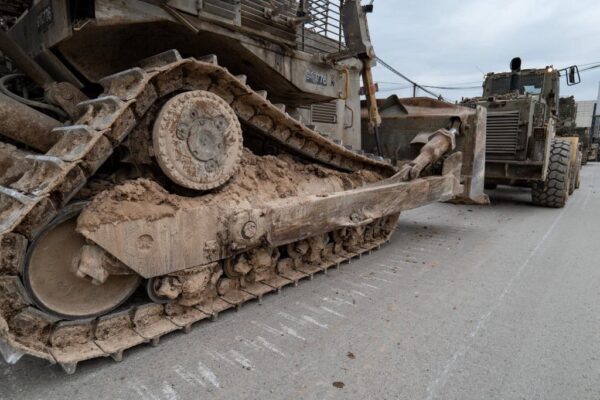
Destruction of Palestinian refugee camps
At the end of January, Israel carried out a large scale military operation in the northern West Bank city of Jenin, which has lasted for ten days so far.
Its military operations are based in the Jenin refugee camp, in various city areas, and in some nearby villages. The Jenin camp has become an unfit place for human habitation, dozens of Palestinian houses have been destroyed and bombed, and the neighborhoods and streets of the camp have already been destroyed. Electricity,water pipes and infrastructure have been destroyed.
A residential block and an entire neighbourhood have been completely destroyed due to aerial bombardment.
Did you succeed in transforming the Jenin camp like Jabalia camp in Gaza?
This is what senior Israeli officials promised before the start of the recent military operation in the West Bank, especially in the Northern West Bank. The Israeli occupation continues its aggression on Jenin, Tulkarm, and Tubas, murdering 29 martyrs, dozens of injuries, arrests, demolition of houses and forced displacement. Amid widespread destruction of property and infrastructure.
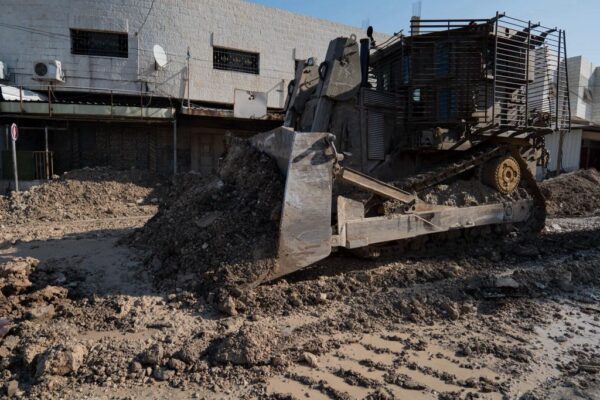
Entrance to Tulkarem
JENIN
Jenin, for the fifteenth day in a row, the occupation continues its aggression against the Jenin city and its camp, which has so far resulted in 25 martyrs, dozens of injuries, arrests, and the demolition of dozens of houses, amid a large displacement process that affected 15 thousand citizens.
Yesterday morning, the occupation army forced residents of the buildings supervising the Jenin camp to evacuate, as several military vehicles were stationed near the buildings demanding evacuation.
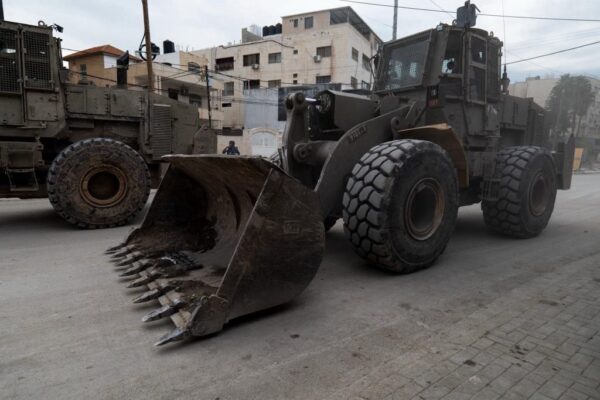
Street in Jenin
Residential buildings and apartments are being emptied, forcibly displacing citizens.
The occupation forces in the Jenin camp simultaneously blew up about 20 buildings in the eastern side of the camp, after booby trapping them, which caused damage to some sections of the Jenin government hospital, without injuries being recorded. The occupation continues to push reinforcements to the city of Jenin camp from the Jalama military checkpoint, while its bulldozers continue to destroy houses in the merge lane, with approximately 15 thousand people now displaced from the Jenin camp the target neighborhood, distributed throughout 39 local community bodies in the Jenin governorate and its towns.
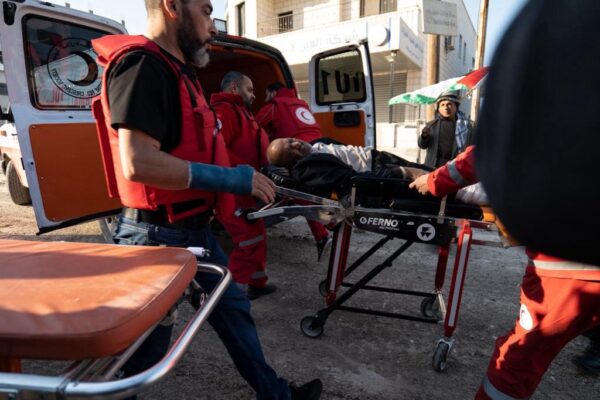
Transfer of an injured person in Tulkarem
TULKAREM
For the ninth day in a row, the occupation continues its aggression against the city of Tulkarm and its camp, resulting in the martyrdom of four citizens, amidst extremely difficult humanitarian conditions.
The occupation forces are still pushing more of their vehicles into the city and its camp from the “tasnouz” military camp west of Tulkarm, and deploying infantry patrols in large numbers in the streets, neighborhoods, and the center of the vegetable market, combing and searching between houses and alleys and harassing citizens.
These forces also continue to besiege the martyr Thabit Thabit government and specialized hospitals, obstruct the work of ambulances and their medical crews, and subject them to inspection and field investigation, while they have taken military barracks and places for snipers from the buildings surrounding them.
The occupation forces escalated their violations against citizens in the city and its camp through a series of attacks, which included raiding houses, forcing their owners to flee, vandalizing and stealing their contents, blowing up and destroying a number of them, in addition to restricting movement, while seizing commercial and residential buildings and turning them into military barracks and places for snipers.
In Tulkarem camp, the occupation forces continue to deploy large numbers of infantry soldiers in all its neighborhoods and alleys, raid houses, force residents to leave them, seize high buildings and turn them into sniper platforms and shoot at Citizens, which led to the injury of a citizen (40 years old), shot by an occupation soldier sniper stationed inside one of these buildings.
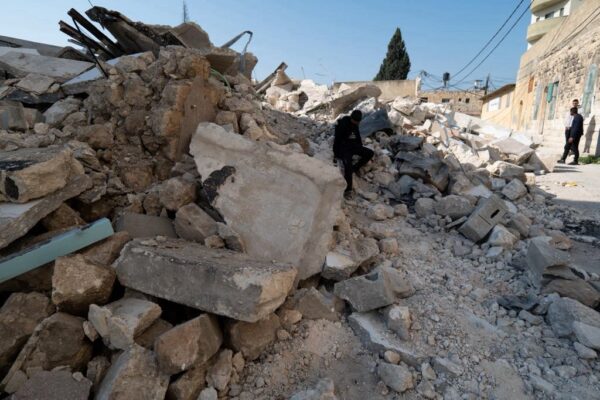
House of the martyr Tamer Fugha
Tulkarem camp is living amid this unprecedented continuous escalation, amid difficult humanitarian conditions, after the occupation bulldozers completely and partially destroyed houses and shops, blowing up a number of them and burning others, coinciding with the destruction of infrastructure, which led to the interruption of water, electricity, communications and the internet, making it difficult for specialized crews from the municipality, and others, to repair them because the occupation prevented them from entering the camp. The situation of citizens who are still in their homes ~ the elderly, the sick, women and children has also been aggravated by the acute shortage of food, medical, drinking water, and infant formula.
TUBAS
For the third day in a row, the occupation is besieging AL- FARA’ camp and the town of Tamoun south of Tubas, amid arrests, bulldozing of infrastructure and forcing citizens to flee.
Since the beginning of the storming, Israeli Occupation Forces forces have bulldozed the roads and infrastructure leading to the AL-FARA’ camp, in addition to closing all entrances to it with earthen berms and raiding houses in the vicinity of the camp, forcing its residents to be displaced, and turning them into military barracks.
Israeli Occupation Forces also raided the homes of citizens on the outskirts of the town of Tamun, forcibly displacing residents, giving them orders not to return within ten days.
Water pipelines have been destroyed between the Town of Tamun and the village of Atouf, in addition to closing of the road connecting the two areas with earthen berms.
The occupation continues to push military reinforcements to Tamun and the AL-FARA’ camp, while the Israeli reconnaissance aircraft continues to fly intensively in the skies of the governorate.

Military reconnaissance aircraft
According to the Palestinian Ministry of Health: the number of Palestinian martyrs in the West Bank since the beginning of this year 2025 has reached 70 martyrs.
38 martyrs in Jenin
15 martyrs in Tubas
5 martyrs in Tulkarem
3 martyrs in Hebron
2 martyrs in Bethlehem
6 martyrs in Nablus
1 martyr in Jerusalem
10 of them are children, 2 are women, 2 are elderly people.
Hamas: Trump’s remarks on Gaza reflect “deep ignorance about Palestine”

Palestinian Information Center – February 5, 2025
DOHA – Member of Hamas’s political bureau Ezzat al-Resheq said that US president Donald’s latest remarks about taking over Gaza and relocating its residents elsewhere reflect “misperception and deep ignorance about Palestine and the region.”
“Gaza is not a common land for any party to decide to control, but rather it is part of our occupied Palestinian land, so any solution must be based on ending the occupation and fulfilling the Palestinian people’s rights and not on the mentality of a real estate businessman or the mentality of muscle and domination,” Resheq said on Wednesday.
Resheq added that Trump’s remarks on Gaza “vindicated further the unlimited US bias in favor of the Israeli occupation regime and the Zionist aggression against the Palestinian people and their legitimate rights.”
The Hamas official affirmed that the Palestinian people and their leaders, backed by their Arab and Islamic nations and the world’s free people, would frustrate all the displacement plans targeting them.
In another statement, the Hamas Movement condemned in the strongest terms Trump’s remarks on Gaza, describing them as “hostile to the Palestinian people and their national cause.”
Hamas said that such remarks by Trump would “not serve regional stability” and would only “pour fuel on the fire.”
“We, alongside our Palestinian people and national leaders, will never allow any country in the world to occupy our land or impose guardianship over our great people whose blood flowed like rivers in order to liberate our land from the occupation and establish our Palestinian state with Jerusalem as its capital,” Hamas said.
Hamas called on the Arab League, the Organization of Islamic Cooperation and the UN to convene urgent meetings to take firm and historic positions that preserve the Palestinian people’s national rights.
In a joint news conference with the Israeli prime minister in the White House on Tuesday, Trump said the US would “take over” and “own” Gaza after resettling Palestinians elsewhere under a redevelopment plan that he claimed could turn the Palestinian coastal enclave into “the Riviera of the Middle East.”
In a flagrant announcement upending decades of US policy towards the Palestinian-Israeli conflict, Trump claimed that his administration would spearhead development in Gaza to “supply unlimited numbers of jobs and housing for the people of the area.”
The Saudi–Israeli normalization ‘delusion’
By Stasa Salacanin | The Cradle | February 5, 2025
On 4 February, when asked if the Saudis demand the establishment of a Palestinian state as a condition for recognizing Israel, US President Donald Trump, sitting alongside Israeli Prime Minister Benjamin Netanyahu in the Oval Office, swiftly replied: “No, they’re not.”
The Saudi Ministry of Foreign Affairs was also quick to respond, stating that its stance on the establishment of a Palestinian state remains “firm and unwavering,” insisting that Riyadh would make no deal with Tel Aviv otherwise:
“His Royal Highness (Crown Prince Mohammed bin Salman – or MbS) emphasized that Saudi Arabia will continue its relentless efforts to establish an independent Palestinian state with East Jerusalem as its capital, and will not establish diplomatic relations with Israel without that.”
The statement further stressed that the Saudi position on this is “non-negotiable and not subject to compromises.”
Despite the fervent optimism of Trump’s newly appointed foreign policy team, the much-touted Saudi–Israeli normalization agreement remains an elusive goal, just as it was for his predecessor, Joe Biden. While Washington insists that such a deal is potentially around the corner, a more sober analysis suggests the pathway to a deal remains rife with obstacles.
Spanner in the works
The Abraham Accords, brokered under Trump’s first term, were hailed in Washington as a historic breakthrough in West Asian diplomacy, bringing the occupation state into official relations with the UAE, Bahrain, Morocco, and Sudan. Yet, the glaring absence of Saudi Arabia – the most influential Arab state – was the missing piece that the US and Israel craved most.
Biden’s tenure, rather than advancing Trump’s initiative, has arguably undermined it. His administration’s unyielding support for Israel’s genocidal war on Gaza and its brutal military campaign in Lebanon has alienated many Arab and Muslim states, further diminishing the likelihood of new normalization deals.
Meanwhile, China has capitalized on Washington’s waning credibility, scoring a major diplomatic coup in 2023 by brokering a historic rapprochement between Saudi Arabia and Iran – a relationship that, against the odds, remains intact.
Despite the changed reality on the ground, this US administration still believes that the deal between the world’s largest oil exporter and Israel is still attainable on its terms. Mike Waltz, the Trump administration’s new national security advisor, has stated that reaching a peace agreement between Riyadh and Tel Aviv is a “huge priority” for the new administration.
Saudis caution: A deal on whose terms?
While the Saudis drew a clear line and maintained it for a very long time by linking normalization with Israel to the establishment of a Palestinian state, neither Israel nor the new Trump administration have shown any willingness to accommodate Saudi intentions.
Many of Trump’s supporters and major donors, such as Miriam Adelson, as well as the Israeli government, not only oppose any form of a Palestinian state, but are openly talking about annexing the entire occupied West Bank. Therefore, it is still unclear how Trump intends to reconcile two vastly opposing views and expectations and expand the Abraham Accords.
According to Giuseppe Dentice, an analyst at the Mediterranean Observatory (OSMED) of the Italian Institute for Political Studies “San Pio V,” Trump will likely fall back on his tried-and-tested approach – leaning on the Abraham Accords as a framework while resurrecting elements of his so-called “deal of the century.”
Dentice explains to The Cradle that the ultimate goal of such efforts is to sideline the Palestinian cause entirely, pushing it to the periphery of both regional and global agendas.
Moreover, many believe that the Trump administration will launch a crusade against the “global intifada” and those who dare to criticize Israel or insist on prosecuting Israeli war crimes.
This approach, Dentice contends, essentially forces a single option in the negotiations: Take it or leave it.
“Trump’s aggressive approach to Riyadh could backfire for the US and its interests in the Middle East (West Asia), especially if the Al-Saud kingdom continues to reject these terms, risking closer alignment with the agendas of other international actors (such as China or Russia, if only in strategic or instrumental terms).”
Saudi investments in the US: Buying leverage or time?
Some observers speculate that Saudi Arabia’s recent announcement that Riyadh plans to invest $600 billion in the US over the next four years could be understood as a certain early bribe to Trump in return for easing his zealous pressure regarding the Saudi–Israeli normalization agreement and other geopolitical issues as well.
While it is true that convincing the Saudis will be a tough nut to crack, Dentice, for one, does not believe that even such a significant economic commitment could distract or dissuade the new government from its goals.
He believes that beyond the issue of normalization agreements with Israel, Riyadh wants to strengthen its understanding and cooperation with Washington, especially with this government. Nonetheless, it remains true that key figures associated with this administration, such as Jared Kushner, Trump’s son-in-law, could undermine Saudi processes and intentions through their own business relationships.
For Dr Paul Rogers, Emeritus Professor of Peace Studies in the Department of Peace Studies and International Relations at the College of Bradford, President Trump is far too unpredictable for anyone to conclude on the chances of a deal with Saudi Arabia, but his recent comments on the option of expelling the Palestinians from Gaza indicate a very close relationship with far-right Israeli political factions.
Dr Rogers tells The Cradle that he suspects “that the Saudis will stay away from any kind of agreement, no matter what offer they make.”
Arab public opinion: A hard sell
Beyond geopolitical calculations, public sentiment in the Arab world remains a major obstacle to normalization. The rejection of a Palestinian state, coupled with an aggressive push for Saudi–Israeli ties, is widely viewed as an attempt to erase the Palestinian cause altogether – an agenda that lacks legitimacy among Arab and Muslim populations.
Furthermore, many observers believe that Israel’s war crimes and the genocide in Gaza have made it very difficult and uncomfortable for Saudi Crown Prince Mohammed bin Salman (MbS) to continue peace talks.
But West Asian views against normalization precede even the brutal 15-month war. According to the Arab Opinion Index from 2022, for example, an average of 84 percent of citizens in 14 countries rejected diplomatic relations with Israel. These figures show that the Arab enforcers of the Abraham Accords ultimately failed to reach or sway wider Arab public opinion.
The war in Gaza has only cemented anti-Israeli views in Saudi Arabia, and an unconditional normalization agreement with Israel would only increase the risk of destabilizing the crown prince’s image in the kingdom and abroad. It would also humiliate MbS, who has publicly condemned Israel’s actions in Gaza, recognizing them as a “genocide.”
A mirage in the desert
Palestinian statehood is by no means a simple issue, even if an Israeli government supported the initiative, which the current one resolutely rejects.
Palestinian national aspirations can lose momentum due to internal divisions, the lack of an organized leadership capable of addressing current and future challenges, and the faltering support of traditional Arab sponsors – notably the loss of Syria following the ousting of former president Bashar al-Assad by Al-Qaeda-linked extremists – Hayat Tahrir al-Sham (HTS) – who now form the new government.
For all the speculation surrounding a Saudi–Israeli deal, the reality is that no proposal for Palestinian statehood has made meaningful progress in the past three decades. As a result, ad hoc unilateral initiatives have increasingly taken center stage, often yielding disastrous consequences.
In this context, the push for a Saudi–Israeli accord seems less like a diplomatic breakthrough and more like a mirage conjured by Washington and Tel Aviv.
Dentice believes that in such a context, and with the prospect of a possible Saudi–Israeli agreement, the Palestinians will have even less political relevance in the future. This will give space for radical and armed groups to gain ground and further exacerbate tensions on the Palestinian and Arab streets.
Trump’s aggressive tactics may succeed in strong-arming some leaders, but they are unlikely to change deep-seated regional attitudes. If anything, the pursuit of an agreement without major concessions for Palestinians could inflame tensions further, pushing the region into even greater instability.
For now, the notion of a Saudi–Israeli deal may be more fantasy than fact – an illusion sustained by wishful thinking rather than political reality.
Trump’s call for US ‘takeover’ of Gaza sparks international backlash
The Cradle | February 5, 2025
US President Donald Trump’s declaration that Washington will “own” the Gaza Strip and expel its residents has sparked widespread backlash and condemnation.
Hamas said in a statement on 5 February that it condemns “in the strongest terms and reject[s] the statements of US President Trump aimed at the United States of America occupying the Gaza Strip and displacing our Palestinian people from it.”
“We confirm that these statements are hostile to our people and our cause, will not serve stability in the region, and will only add fuel to the fire,” the statement added. “We … will not allow any country in the world to occupy our land or impose guardianship over our great Palestinian people.”
“We call on the US administration and President Trump to retract these irresponsible statements that contradict international laws and the natural rights of our Palestinian people in their land,” Hamas went on to say, calling on the Arab League, Organization of Islamic Cooperation (OIC), and the UN to hold urgent meetings to address Trump’s statements.
Secretary-General of the Palestine Liberation Organization (PLO) and top adviser to Palestinian Authority (PA) President Mahmoud Abbas said: “The Palestinian leadership … confirms its rejection of all calls for the displacement of the Palestinian people from their homeland. This is where we were born, this is where we lived, and this is where we will remain. We appreciate the Arab position committed to these constants.”
Several regional countries have also expressed their opposition to Trump’s statements.
“Trump’s statements regarding Gaza are unacceptable. Expelling (the Palestinians) from Gaza is an unacceptable issue neither on our part nor on the part of the countries of the region. There is no need to even discuss it,” said Turkish Foreign Minister Hakan Fidan.
Saudi Arabia said in a statement that it rejects any attempt to displace Palestinians from their land, adding that Riyadh will not normalize ties with Israel until a Palestinian state is established – in response to the US president’s claim that the kingdom is not demanding statehood in exchange for normalization as it has been publicly calling for.
Egyptian Foreign Minister Badr Abdel Aati and Palestinian Prime Minister Mohammad Mustafa jointly rejected “the exodus” of the Palestinian people and called for “accelerated” entry of aid and recovery programs.
The Chinese Foreign Ministry spokesman Lin Jiang responded to Trump, telling reporters Beijing “has always believed that Palestinians governing Palestine is the fundamental principle for postwar governance in Gaza.”
“We oppose the forced displacement and relocation of the population in Gaza,” he added.
Russian Foreign Minister Sergei Lavrov referred to Trump’s remarks as a manifestation “of Western cancel culture.”
The French Foreign Ministry said the future of Gaza must be based on a “future Palestinian state” and not controlled by “a third state.”
UK Environment Secretary Steve Reed said that “it is the view of the [British] Government that Palestinians should be able to return to their homes and rebuild their shattered lives.”
Members of the US Democratic and Republican parties also responded. Democratic senator Chris Murphy said Trump has “totally lost it.”
“A US invasion of Gaza would lead to the slaughter of thousands of US troops and decades of war in the Middle East. It’s like a bad, sick joke,” Murphy said.
Democratic representative Jake Auchincloss called the Trump plan “reckless and unreasonable.”
Former Republican member of the US Congress, Justin Amash, said: “If the United States deploys troops to forcibly remove Muslims and Christians … from Gaza, then not only will the US be mired in another reckless occupation but it will also be guilty of the crime of ethnic cleansing. No American of good conscience should stand for this.”
Dan Shapiro, former US ambassador to Israel during Barack Obama’s presidency, said it “was not a serious proposal” and “would require a huge cost in American money and troops, without the support of key partners in the region.”
Trump’s controversial remarks came during a press conference with Israeli Prime Minister Benjamin Netanyahu on 5 February and during separate statements made during the Israeli premier’s visit.
“The US will take over the Gaza Strip … I see it as a long-term ownership position,” Trump said.
“I have a feeling that the king in Jordan and that … the general president [of Egypt], but the general and Egypt will open their hearts and will give us the kind of land that we need to get this done,” Trump said.
Trump has been insisting that over a million Palestinians in Gaza be expelled and that Jordan and Egypt take them in – which both Cairo and Amman have rejected.
He called Gaza “a symbol of death and destruction” and said that its residents only want to go back there because they have nowhere else to go.
US pulls out of UN human rights council, cancels funding to UNRWA
Press TV – February 4, 2025
US President Donald Trump has signed an executive order withdrawing Washington from the UN Human Rights Council and UNRWA, the refugee agency that works primarily with the Palestinians being oppressed by the Israeli regime.
Trump signed the order in the Oval Office of the White House on Tuesday ahead of his meeting with Israeli prime minister Benjamin Netanyahu who had carried out a 15-month genocidal war against the people of Palestine in Gaza in which more than 47,300 people were killed, mostly women and children.
The ceasefire between the Palestinian resistance group Hamas and Israel was reached after the regime failed to realize any of its wartime objectives, including freeing the captives, “eliminating” the Gazan resistance, and causing forced displacement of Gaza’s entire population to neighboring Egypt.
Hundreds of thousands of displaced Palestinians began returning to the northern part of the Gaza Strip.
Trump’s aide introduced the measures, saying, “Next up, in light of numerous actions taken by a number of bodies of the United Nations which exhibited deep anti-American bias, we have an executive order prepared for your attention that would withdraw the United States from the U.N. Human Rights Council.”
“I would withdraw the United States from the UNRWA, which is a refugee organization, and would also review American involvement in UNESCO, which also exhibited anti-American bias,” he added.
“More generally, the executive order calls for a review of American involvement and funding in the UN in light of the wild disparities in levels of funding among different countries that, as you’ve expressed previously, is deeply unfair to the United States,” the aide concluded before giving the order to Trump to sign.
Following the signing of the executive order, Trump said, “So I’ve always felt that the UN has tremendous potential. It’s not living up to that potential right now. It really isn’t and has been for a long time. It has– there are great hopes for it, but it’s not being well run, to be honest, and not doing the job. A lot of these conflicts that we’re working on should be settled, or at least we should have some help in settling them.”
“But we never seem to get help. That should be the primary purpose of the UN and the United Nations. And again, it’s got great potential. And based on the potential, we’ll continue to go along with it. But they’ve got to get their act together,” he added.
“What would they need to do to get their act together?” a reporter asked Trump.
“Well, they’ve got to be fair to countries that deserve fairness. They have some countries, as you know, that are outliers that are very bad, and they’re being almost preferred as countries to those that do their job and are doing a good job. And they have to really they’re going to end up losing a lot of countries and end up losing their credibility like other organizations,” Trump replied.
Trump also said Palestinians would “love” to leave their embattled homeland in Gaza and live elsewhere if given an option.
They would “love to leave Gaza,” he told reporters at the White House. “I would think that they would be thrilled.”
Last week, Trump suggested cleaning out the Palestinian land and relocating the war-stricken people there to neighboring Arab countries, namely Egypt and Jordan.
“You’re talking about probably a million and half people … I’d like Egypt to take people. And I’d like Jordan to take people,” he said. “[W]e just clean out that whole thing,” he said.
In the meantime, the Palestinian leaders and people in Gaza condemned any attempt to relocate them, saying such a move is reminiscent of a dark page in Palestine’s modern history known as the “Nakba” or catastrophe – when millions of Palestinians were forcibly displaced to create room for Israel’s illegal creation.
Member of Hamas’s political bureau, Bassem Naim, said that Palestinians would “foil such projects” as they have done to similar plans “for displacement and alternative homelands over the decades.”
Trump says US will ‘take over’ Gaza Strip
RT | February 5, 2025
US President Donald Trump has announced that the United States will assume control over the Gaza Strip, vowing to rebuild the war-torn enclave and create economic opportunities for its future residents. When asked whether US troops would be deployed to Gaza, Trump vowed to “do what is necessary.”
Trump made the remarks on Tuesday following his meeting with Israeli Prime Minister Benjamin Netanyahu at the White House. The US president reiterated his view that Palestinians should be permanently resettled elsewhere, adding that the US would “take over” Gaza and lead efforts to clear the destruction left by 15 months of war between Israel and Hamas.
“The US will take over the Gaza Strip. And we will do a job with it, too. We’ll own it and be responsible for dismantling all of the dangerous unexploded bombs and other weapons on the site,” Trump said, promising to “level the site and get rid of the destroyed buildings.”
Asked to clarify what exactly he meant by a “takeover,” the US leader said he envisions a “long-term ownership position” that would supposedly bring “great stability” to the entire Middle East. “Everybody I’ve spoken to loves the idea of the United States owning that piece of land, developing it, and creating thousands of jobs,” Trump claimed.
Trump also said he is not ruling out deploying US troops to support his Gaza development plan. “We’ll do what is necessary. If it’s necessary, we’ll do that. We’re going to take over that place,” he said.
Approximately 92% of homes in the Gaza Strip have been destroyed or severely damaged, and around 1.9 million people – more than 90% of Gaza’s population – have been displaced since the war broke out in October 2023, according to the UN. Trump, a former real estate mogul, has repeatedly referred to Gaza as a “demolition site” in recent weeks.
When asked who would populate Gaza once the US “takes over” and redevelops it, and whether the Palestinian people would be able to return, Trump responded:
“I envision… the world’s people living there. I think the potential in the Gaza Strip is unbelievable. And I think the entire world, representatives from all over the world, will be there and they’ll live there… Palestinians also,” he said. “I don’t want to be a wise guy. But the Riviera of the Middle East – this could be so magnificent.”
Hamas says Israel ‘blocking humanitarian protocol’ as talks begin for phase two of Gaza ceasefire
The Cradle | February 4, 2025
Hamas announced in a statement on 4 February that talks for the second phase of the ceasefire agreement in the Gaza Strip have begun, accusing Israel of “obstructing the humanitarian protocol” that comes as part of the deal.
“The contacts and negotiations [with mediators] for the second phase have begun, and we are concerned and interested in the current phase in sheltering, relief, and reconstruction for our people in the Gaza Strip. The occupation is obstructing the humanitarian protocol in the ceasefire agreement and is evading and procrastinating in implementing it,” said spokesman Abdul Latif al-Qanou on Tuesday.
“Shelter and relief for our people is an urgent humanitarian issue that cannot tolerate evasion or procrastination by the occupation. Rebuilding hospitals, repairing roads and water wells will restore life to Gaza after the massive destruction there,” he added.
Israel said it would send a team to the Qatari capital, Doha, in the coming days for discussions.
According to the terms of the ceasefire agreement, negotiations regarding the implementation of the second phase of the deal were supposed to begin on 3 February – the 16th day since the truce began.
The deal is made up of an initial 42-day stage in which 33 Israeli captives are supposed to be released in exchange for around 1,900 Palestinian prisoners. Two more 42-day stages are expected, in which the remainder of the Israeli captives are supposed to be released in exchange for a much larger, undetermined number of Palestinian prisoners.
Over a dozen Israeli captives have been released so far in exchange for over 580 Palestinians who were detained in Israeli prisons.
However, Israel has continued to bar the entry of essentials such as reconstruction materials, equipment to help recover thousands of bodies still trapped under rubble, and tents urgently needed by displaced civilians returning to their destroyed cities – as required in the ceasefire deal.
Egypt’s options for the displacement of Palestinians from Gaza
By Mahmoud Hassan | MEMO | February 4, 2025
US President Donald Trump’s insistence that Egypt and Jordan will accept displaced Palestinians from the Gaza Strip raises significant concerns about a potential deal being negotiated behind closed doors to facilitate their forced displacement. In other words: ethnic cleansing. The final details of such a deal may not yet be fully formed, especially given the official rejection by the six-party Arab meeting in Cairo last Saturday. Egypt, Jordan, Palestine, Saudi Arabia, Qatar and the UAE concluded their meeting with a call for the US administration to pursue the moribund two-state solution.
Let’s be clear, though. The displacement plan is not a direct consequence of Operation Al-Aqsa Flood in October, 2023, or the subsequent genocide of the Palestinians in Gaza. Ethnic cleansing has been on the table since the 1940s, although attempts have failed repeatedly.
It is a concern, however, that Trump’s rhetoric this time was stated with immense confidence and an implicit threat. “We do a lot for them [Egypt and Jordan],” he said last Thursday, “and they will do this.” Rebuilding Gaza, added the US president, will take 15 years.
Trump reiterated his statement on Friday, reported Reuters: “Jordan and Egypt will accept people from Gaza. I heard someone say they wouldn’t, but I think they will. I’m confident they will.”
The carrot-and-stick approach has long been used by Trump to advance his agenda.
He has already offered Egypt incentives by exempting it, along with Israel, from the US freeze on aid to countries worldwide.
The US president may resort to courting his Egyptian counterpart, Abdel Fattah Al-Sisi, with an official invitation to the White House, a package of financial assistance from Gulf nations, economic and military deals, and the potential write-off of part of Egypt’s external debt (which stands at a staggering $153 billion). These incentives could serve to soften Cairo’s stance.
Egyptian opposition figures warn that there may be undisclosed negotiations taking place, with concerns that Al-Sisi could leverage the situation for his own benefit, using it to solidify his grip on power and push for more constitutional amendments allowing a fourth presidential term and an extension of his rule until 2036.
Fuelling these suspicions is the reality that the Egyptian president faces a significant internal crisis due to failed economic policies and dwindling public support. Moreover, regional and Western actors fear that his regime might collapse as that of Bashar Al-Assad did in Syria. This gives Washington leverage, allowing it to hint at backing a suitable alternative to prevent instability in Egypt; such pressure could influence Al-Sisi’s stance.
Egypt’s response appears inconsistent and disjointed across multiple levels. On one hand, Al-Sisi personally declared Egypt’s rejection of Palestinian displacement during a press conference with Kenyan President William Ruto in Cairo. He described such displacement as an injustice in which Egypt could not participate, reiterating that the solution lies in establishing a Palestinian state with historical rights, based on the pre-June 1967 borders, with East Jerusalem as its capital.
Egypt escalated its stance by orchestrating what appeared to be staged protests at the Rafah border crossing last Friday.
These demonstrations were coordinated with security agencies, involved pro-government parties and lawmakers from both parliamentary chambers, and featured slogans condemning the displacement plan. At the same time, the Egyptian authorities denied permission to the Civil Democratic Movement (a coalition of liberal and leftist parties) to organise a protest outside the US Embassy in Cairo against the same issue.
And last month, the Cairo regime renewed the detention of 173 young Egyptians for an additional 45 days pending investigation, following their participation in pro-Palestine demonstrations on 20 October, 2023.
Despite this public stance, Al-Sisi appeared to be courting Trump again, stating that the American president’s leadership could usher in a “golden age of peace” in the Middle East. According to a statement from the Egyptian presidency, Al-Sisi emphasised that the international community was counting on Trump’s ability to reach a historic and lasting peace agreement that would resolve the long-standing conflict in the region.
Jamal Al-Masri, an expert in Palestinian affairs, noted that the Egyptian government is attempting to manufacture a facade of popular support for its position. This, he argued, is meant to send a message to Washington that accepting the displacement plan could destabilise the Egyptian regime, threaten national security and provoke public unrest that might even lead the military to remove Al-Sisi from power.
Although Egypt’s options are limited, they are not non-existent. One possibility is reviving the idea of relocating displaced Palestinians to the Negev Desert (12,500 square kilometres), which is occupied by Israel and borders Egypt’s Sinai Peninsula. Al-Sisi actually suggested this plan at the onset of the Gaza war in October 2023.
A political analyst who requested anonymity warned that an undeclared displacement operation could take place. Egypt might quietly accept a certain number of displaced Gazans as “refugees”, integrating them in a manner similar to that of Syrian and Sudanese refugees already in the country. Another scenario could involve receiving injured Palestinians and their companions under humanitarian pretexts, without ensuring their return to Gaza. Additionally, Gazan families might be resettled informally in Rafah and El-Arish within Egypt.
Adam Boehler, the US special envoy for hostage affairs, has urged Egypt and Jordan to present alternative solutions if they reject the displacement plan. He noted that Trump has proposed what he considers a suitable option for both countries but remains open to other alternatives.
Egypt is unlikely to escalate tensions or confront the US administration directly, especially given the strong support that Trump provided to Al-Sisi during his first term (2017-2020), when he famously referred to him as “my favourite dictator.”
Egypt could, however, manoeuvre out of US pressure by leveraging its role as a mediator in negotiating a ceasefire agreement and securing a hostage exchange deal between Israel and Hamas. Cairo’s strategic importance to Israel, which is acknowledged openly by Israeli officials, also provides it with some diplomatic leverage.
It could also further consolidate Arab and Islamic opposition to the displacement plan and seek backing from global powers such as Russia and China. Additionally, the popular rejection of displacement, both within Egypt and among Palestinians, could be used to pressure Washington into reconsidering its approach.
A particularly significant card Egypt could play is the potential collapse of the Egypt-Israel peace treaty if forced displacement to Sinai proceeds. Such a scenario might provoke Palestinian attacks from Egyptian territory on Israeli targets, significantly escalating tensions. This is an outcome that Washington would certainly wish to avoid.
Observers also suggest strengthening the Palestinian Authority’s control over Gaza, accelerating reconstruction efforts, and possibly deploying an international or Arab peacekeeping force to separate Gaza from Israeli settlements.
If displacement fails as an option, Trump might pivot towards allowing Israel to annex settlements in the West Bank or resume military operations against Hamas.
Ultimately, realpolitik will likely shape upcoming negotiations between Egypt and the US. Both Trump and Al-Sisi share an interest in removing Hamas from power, ensuring Israeli security and preventing a repeat of the 7 October incursion. However, for Egypt to agree to a displacement plan, it would require massive concessions that Al-Sisi might be unwilling, or unable, to provide due to the significant political, security and strategic risks involved.
With upcoming diplomatic engagements, including Jordan’s King Abdullah’s visit to Washington next week, and ongoing behind-the-scenes negotiations between Egyptian and US officials, the coming days are bound to bring new developments. The outcome will depend on how far Trump is willing to push his carrot-and-stick approach.
Trump approves $1 billion in new bombs, armored bulldozers for Israel

The Cradle | February 4, 2025
US President Donald Trump has asked Congress to approve transferring $1 billion worth of additional bombs and other military equipment to Israel, The Wall Street Journal (WSJ) reported on 4 February.
The planned weapons transfer includes 4,700 bombs that weigh 1,000 lbs each, worth more than $700 million, as well as armored bulldozers built by Caterpillar, worth more than $300 million, the White House officials said.
The 4,700 bombs consist of 4,500 BLU-110s and 200 Mk-83s, which the Pentagon refers to as “general purpose bombs.”
The Caterpillar D9 armored bulldozers are used by the Israeli army to demolish Palestinians’ homes in the occupied West Bank and Gaza.
Funds for the weapons and equipment will come from the billions of dollars in US military aid provided to Israel annually at the expense of US taxpayers.
US-supplied bombs have significantly contributed to Israel’s killing of over 62,000 Palestinians in Gaza, the majority women and children, since the start of the war on 7 October 2023.
The report of the new weapons transfer comes as Israeli Prime Minister Netanyahu and other Israeli officials are in Washington to meet with President Trump.
Netanyahu is expected to pressure Trump to approve additional arms transfers that were initially requested by former president Joe Biden, the WSJ added. These additional arms requests include $8 billion in new bombs, missiles, and artillery rounds.
Before Israel’s ground invasion of the city of Rafah in southern Gaza last spring, the US suspended just one shipment of 2,000-pound bombs to Israel.
President Trump lifted the suspension last week, saying he released the bombs because “they paid for them, and they have been waiting for them for a long time.”
Netanyahu later thanked Trump in a video message.
While a temporary ceasefire is currently in place in Gaza, Israel is escalating its war on Palestinians in the occupied West Bank, including through the use of airstrikes.
On 1 February, three Israeli airstrikes killed five Palestinians and injured three others in Jenin in the northern occupied West Bank. Among the victims was a 14-year-old.
During the recent Israeli army campaign in Jenin, dozens of houses have been demolished, and roads in the refugee camp there have been dug up by armored Israeli bulldozers, driving thousands of people from their homes.
Since the beginning of Israel’s war on Gaza in October 2023, Israeli forces and settlers have killed more than 900 Palestinians across the occupied West Bank.
As the war began, former national security minister Itamar Ben Gvir initiated a campaign to arm Jewish settlers in the occupied West Bank with thousands of additional high-caliber rifles. He also intensified calls for Israel to annex the occupied Palestinian territory.
When asked about the possibility of annexation on Tuesday, Trump did not answer the question but stressed Israel’s small size.
“It’s a pretty small piece of land,” Trump said. “It’s amazing what they’ve been able to do when you think about it – a lot of good, smart brain power.”
Over 61,700 Palestinians killed in Israel’s genocidal war, local authorities say
MEMO | February 2, 2025
At least 61,709 Palestinians were killed in Israel’s genocidal war on the Gaza Strip since Oct. 7, 2023, local authorities said on Sunday, Anadolu Agency reports.
“Only 47,487 bodies were transferred to hospitals, while 14,222 remained missing under the rubble,” Salama Marouf, who heads Gaza’s government media office, told a news conference in Gaza City.
He said the victims included 17,881 children, including 214 newborn babies.
“More than 38,000 Palestinian children were orphaned by the Israeli war,” Marouf said.
According to the local official, at least 1,155 medical personnel, 205 journalists, and 194 civil defense workers were also killed during the Israeli onslaught, which also damaged more than 450,000 housing units.
“More than 6,000 Palestinians were detained by the Israeli forces and dozens of them were tortured to death in detention,” he added.
“Over 2 million Palestinians were forcibly displaced, with many forced to relocate more than 25 times amid absence of essential services,” Salama said.
On Jan. 19, the first six-week phase of a ceasefire and prisoner exchange agreement between Hamas and Israel went into effect, halting Tel Aviv’s genocidal war.
The International Criminal Court issued arrest warrants in November last year for Israeli Prime Minister Benjamin Netanyahu and his former Defense Minister Yoav Gallant for war crimes and crimes against humanity in Gaza.
Israel also faces a genocide case at the International Court of Justice for its war on the enclave.
Featured Video
Epidemic of fake videos
or go to
Aletho News Archives – Video-Images
From the Archives
Inside Job? Inside What?
By Prof. Tony Hall | American Herald Tribune | July 28, 2016
The Kevin Barrett-Chomsky Dispute in Historical Perspective – Sixth part of the series titled “9/11 and the Zionist Question”
In his chapter on “Left Gatekeepers” and the “Shame of Noam Chomsky,” Barrie Zwicker refers to the the “New World Order” as the “diaboligarchy’s” directing agency. Less compelling is Zwicker’s reference to the “New World Order” as the “diaboligarchy’s” directing agency. To me this unfortunate choice of words is much too closely associated with the often crude and chauvinistic populism of Alex Jones and his Infowars media network. Many have come to see Jones’ lucrative media operation as a limited hangout set in place by handlers trying to hold the activities of the 9/11 Truth Movement within manageable constraints.
Due to the important findings over fifteen years of the citizens’ investigation into 9/11, the culprits most deeply implicated in the crime can be identified with much more specificity than an entity vaguely described as a “New World Order.” As Kevin Barrett and many others insist, the time has come to name the names of the probable culprits, Noam Chomsky prominent among them.
While Alex Jones ultimately serves the same masters as Chomsky, the former’s media product is often much closer to the mark of what is really going on than the content of Noam Chomsky’s more magisterial pronouncements. Jones goes at least part of the way into realities of the deep state politics of the twenty-first century. Chomsky, however, sacrificed his capacity to contribute cogently to sensible discourse on contemporary geopolitics by making himself a primary instrument of the most consequential deep state deception of recent times. As a leading agent of disinformation in the psychological trenches of the ongoing Global War of False Flag Terrorism, Chomsky has reduced himself to the level of skeptic pretender Michael Shermer. In the style of Shermer, the elder Chomsky has become an establishment TV professor readily available on Netflix. … continue
Blog Roll
Recent Comments
Coronistan on EU member to sue bloc over ‘su… loongtip on Vicious loongtip on EU turns to India for defense… Coronistan on Donald Trump Is No Peace … seversonebcfb985d9 on French court jails pro-Palesti… eddieb on Fourteen Incredible Facts Abou… Bill Francis on European leaders’ shift in the… seversonebcfb985d9 on Villains of Judea: Philip Esfo… loongtip on Report warns that ‘Jewish terr… Craig Nelms on New study shows that toxic gas… loongtip on A Funny Thing Happened on the… loongtip on EU free trade pact on hold as…


 Aletho News
- Idea of limited, fast strike on Iran misjudges our capabilities: IRGC
- US Military Buildup on Land, Air, and Sea Raises Fears of Imminent Attack on Iran – Expert
- Russia reiterates demand to Germany over Nazi crimes
- France and EU clash over UK missiles for Ukraine – Telegraph
- EU member to sue bloc over ‘suicidal’ ban on Russian gas
- WEF Calls for ‘Cultural Revolution’ to Promote Lab-Grown Meat
- The Board For Peace – Whitewashing Ethnic Cleansing and Genocide
- Scientists accuse Cochrane Reviews of using biased studies to claim HPV vaccine prevents cancer
- Spain Opens Probe Into Israeli Tourism Firms
- Epidemic of fake videos
- If Americans Knew
- Violence against hundreds of Gazan remains to find one Israeli – Not a ceasefire Day 109
- Greenpeace Demonstrator Exposes Folly of Protest Restrictions
- From CBS to TikTok, Pro-Israel Ellison is now in the driver’s seat
- Israel pays for UK advertisements attacking Doctors Without Borders
- Israel accused of extracting billions from Gazan people to pay for their own genocide
- ‘Deliberate Assassination’: 3 Journalists Among 11 Killed by Israeli Forces in Gaza
- In Gaza, We’re Struggling to Reintroduce Foods to Bodies Adjusted to Starvation
- Will Rafah crossing be opened at last? – Not a ceasefire Day 108
- Israeli drone strike kills two children collecting firewood in Gaza – Not a ceasefire Day 107
- Another Gaza baby freezes to death on Netanyahu’s watch – Not a ceasefire Day 106
- No Tricks Zone
- New Study Affirms Rising CO2’s Greening Impact Across India – A Region With No Net Warming In 75 Years
- Germany’s Natural Gas Crisis Escalates … One Storage Site Near Empty …Government Silent
- Polar Colding…Antarctica Saw Its Coldest October In 44 Years!
- New Study: Sea Levels Rose 20 Times The Modern Rate During The Roman Warm Period
- As German Gas Storage Dips Dangerously Low…Shortage Hardly Avoidable
- New Study: Brazil’s Relative Sea Level Was 2+ Meters Higher And SSTs 3-4°C Warmer 6000 Years Ago
- Philosopher Schopenhauer: Climate Science Certainty Stems From Stupidity, Ignorance
- New Study: Species Extinction Rates Declining Since 1980 – ‘Climate Change Is Not An Important Threat’
- Denmark Places Climate Protection Above Animal Welfare, Poisoning And Culling Cows
- New Study: Greenland Was 3-7°C Warmer And Far Less Glaciated Than Today 6000-8000 Years Ago
 Aletho News