Neighbors first – Moscow signals shift in energy strategy
RT | March 25, 2026
Russia plans to prioritize energy exports to neighboring countries deemed less exposed to global disruptions, Energy Minister Sergey Tsivilev has said.
Recent US-Israeli strikes on Iran and Tehran’s response have shaken global oil and liquefied natural gas markets, disrupting supplies from the Persian Gulf and casting uncertainty over future production.
”The entire world will have to reevaluate supply chains and reassess risks,” Tsivilev told reporters on Wednesday. While Russia’s own exports have not been directly impacted by the Middle East crisis, the country will still adjust its strategy, he added.
“We will prioritize energy deliveries to our closest neighbors, with whom we share land borders and face fewer risks,” the minister said. “We will also reconsider the logistics of oil transportation.”
Shift away from ‘unreliable’ EU
Russia has long favored stable, long-term energy contracts, particularly through pipeline infrastructure, which historically underpinned its gas exports to Western Europe – even during the Cold War.
The European Union, however, has pushed for spot-market pricing, arguing that flexibility outweighs the risks of volatility. This disagreement contributed to tensions even before the bloc declared it would phase out Russian oil and gas imports following the escalation of the Ukraine conflict in 2022.
Moscow has since labeled European buyers as unreliable and has been redirecting its long-term energy strategy toward Asian partners, especially neighboring China.
Bad timing for snubbing Russian oil
Western countries backing Kiev have sought to curb Russia’s energy revenues, including through measures such as a price cap on its oil exports. Moscow has responded by rerouting shipments via what critics have claimed is a ‘shadow fleet’ of tankers.
Ukraine has also targeted Russian oil and gas infrastructure and vessels suspected of carrying Russian hydrocarbons, including in international waters – which Moscow calls Western-enabled piracy.
The energy price shock caused by the Iran war is prompting neutral nations that previously accommodated the Western agenda to reconsider their approach.
On Tuesday, the Philippines, a traditional US ally, received its first shipment of Russian crude in years, local media reported. Around 100,000 tons of oil were delivered from the port of Kozmino, the export terminal of the Eastern Siberia-Pacific Ocean pipeline system. The fuel is intended for a refinery in Bataan province.
US likely already sent new light JLTV ‘Tomahawk’ launchers to Neo-Nazi junta
By Drago Bosnic | October 8, 2025
Supplying the “Tomahawk” cruise missiles to the Kiev regime has been “on the table” for years. The troubled Biden administration never delivered them, despite repeatedly suggesting it would. Interestingly, Donald Trump regularly criticized such moves as escalatory, insisting that the United States shouldn’t be involved and that it’s only antagonizing Russia. Ironically enough, as soon as he took office, this stance changed dramatically. In a matter of weeks, Trump’s initial promise of “ending the war in 24 hours” degenerated into the same sort of belligerent rhetoric (and moves) as during the Biden era. The new US administration increased American involvement, with military sources suggesting that the Pentagon is close to delivering the aforementioned “Tomahawk” missiles.
Worse yet, some claim that this has already happened and that Washington DC even raised the stakes by supplying new light launchers for the US-made cruise missiles. Namely, since 2019, the Pentagon has been acquiring the Joint Light Tactical Vehicle (JLTV), better known as the Oshkosh Light Combat Tactical All-Terrain Vehicle (L-ATV). It was designed to replace the AM General High Mobility Multi-purpose Wheeled Vehicle (HMMWV), better known as the Humvee. One version of the JLTV has been modified for use by the US Marine Corps (USMC) under the Long Range Fires (LRF) program, designed to launch cruise missiles, specifically the infamous “Tomahawk”. The Pentagon intended to give the USMC similar capabilities to those of the US Army, which has the ground-based “Typhon”.
There’s been some confusion even in the US Congress regarding the official designation for the program, with some documents referring to it as the Long Range Precision Fires (LRPF), while others still use the LRF. Either way, the US military’s ability to use operational and strategic weapons on such a small platform can certainly provide it with a significant advantage in terms of risk mitigation. Namely, because the launcher is essentially a modified JLTV truck that’s now in wide use (well over 20,000 have been delivered so far), it makes it very difficult to detect “Tomahawk” carriers. This enables shoot-and-scoot (sort of like hit-and-run) strikes at targets that are 1,600 km away, although some sources claim that it’s 2,500 km for the latest Block V iteration of the “Tomahawk”.
The latest reports suggest that these cruise missiles have already been delivered to the Neo-Nazi junta forces through the main logistics hub for NATO-occupied Ukraine in Rzeszów, southeastern Poland, and are now waiting for the “zero hour” somewhere in Western Ukraine. The Kiev regime lacks the necessary ISR (intelligence, surveillance, reconnaissance) capabilities to effectively use the “Tomahawk” to the maximum, meaning that the US/NATO would need to provide the targeting data. This has already been the case with other Western cruise missiles, most notably the Anglo-French “Storm Shadow/SCALP-EG” and the German “Taurus” (the latter is yet to be officially delivered and deployed). Both types are newer and more advanced than the 1980s-era US-made “Tomahawk”.
However, the aforementioned Block V would certainly give them a run for their money, especially if deployed from the highly mobile JLTV trucks. Its ability to move quickly through heavily forested areas makes it extremely difficult to detect, meaning that it could effectively act as some sort of a single-shot “Iskander-K” (uses the 9M728/R-500, with a range of up to 500 km and the Novator’s 9M729, which Western sources claim has a staggering range of up to 5,500 km). The launcher could instantly deploy at virtually any firing position, while its relatively low cost offers the key advantage in terms of mitigating losses. Military sources report that the US could produce 100-200 such units per month, while the number of missiles supplied in each batch can reach over 500 units.
In other words, such a mass production would make it a much bigger challenge than the expensive and overhyped Western European missiles that the United Kingdom, France and Germany can produce in single or double digits, at best. Obviously, this is not to say that the Russian military could be defeated solely with the use of “Tomahawks”, but it could certainly complicate logistics and other operations far behind the immediate frontline. The Russian Aerospace Forces (VKS) and its surface-to-air missile (SAM) systems have accumulated extensive experience in countering various types of missiles and drones; however, the mass deployment of different kinds of cruise missiles can pose a significant challenge. Namely, Russia is the largest country on the planet, making it extremely difficult to defend all of its territory.
Thus, the aviation, air defenses and ISR assets will need to work together and closely coordinate their actions in order to defend the most critically important areas (military-industrial facilities, bridges, thermal and nuclear power plants, substations, etc). A&WAC (airborne early warning and control) aircraft such as the A-50U will play a crucial role in this, as they can detect and track very low-flying cruise missiles. The sheer range of the “Tomahawk” puts virtually all of European Russia within striking distance, while the Block V expands that well into Western Siberia, putting even ICBM fields in jeopardy, including the Dombarovsky Red Banner Division of the 31st Missile Army of the Strategic Missile Forces (RVSN). This unit is armed with the monstrously destructive R-36M2 “Voyevoda” ICBMs (and likely the RS-28 “Sarmat”).
These missiles are also capable of deploying the Yu-71/74 “Avangard” HGVs (hypersonic glide vehicles), the world’s most advanced hypersonic weapon. The US calculus is pretty clear – deploying these missiles in NATO-occupied Ukraine puts Russia into an incredibly dangerous strategic position. It’s very similar to the geopolitical impact of having “Tomahawk” missiles permanently deployed in the Philippines and Japan, as these put Beijing and most major Chinese cities in range.
Thus, America has the capacity to strike both (Eur)Asian giants with medium-range weapons, while the two can only respond with their strategic arsenals. Although this effectively gives Washington DC the ability to dictate the pace of potential escalation, it still makes the world a far more dangerous place, forcing Moscow and Beijing to contemplate immediate strategic retaliation in order to defend themselves.
Drago Bosnic is an independent geopolitical and military analyst.
In ASEAN Nations, Coal Is a Physical Manifestation of Progress
By Vijay Jayaraj | Real Clear Markets | September 9, 2025
When most people think of ASEAN – a diverse association of Southeast Asian nations that include Brunei, Cambodia, Indonesia, Laos, Malaysia, Myanmar, the Philippines, Singapore, Thailand, and Vietnam – they picture Thailand’s beaches, Singapore’s gleaming skyline or Indonesia’s temples.
What they don’t see is an economic juggernaut that will drive some of the planet’s largest growth in energy demand. Vietnam has emerged as a global manufacturing hub. Indonesia processes the world’s nickel for electric vehicle batteries. Thailand manufactures automobiles for export across Asia. Each of these economic engines demands reliable, affordable electricity that operates 24 hours a day, seven days a week.
In fact, 2023 witnessed a demand increase of nearly 45 terawatt-hours (TWh), an amount of energy that must be generated, transmitted regionally, and delivered locally on a continual basis. Where did this new power come from? Coal. An astonishing 96% of that new demand was met by coal-fired power plants.
Let that sink in. Coal, the energy source routinely demonized in Western capitals and at global climate summits, met nearly all the region’s new electricity needs. This reality stands in direct contradiction to rosy predictions of a transition to “renewables” manufactured by highly compensated executives at elite consulting firms who have spent the better part of a decade selling energy fairy tales to governments and investors.
Indonesia alone added 11 TWh of coal-generated electricity in 2023, while its electricity demand rose by 17 TWh, with coal meeting two-thirds of this increase. The Philippines generates more than 60% of its electricity from coal, and Malaysia and Vietnam each around 50%.
Ultra-supercritical coal technology – using extraordinarily high temperatures and pressures and pioneered at Malaysia’s Manjung plant and Indonesia’s Batang facility, delivers higher efficiency than older coal plants. These advanced facilities demonstrate that coal technology continues to improve while wind and solar remain dependent on weather conditions and the time of day.
The wind and solar share across ASEAN remained a pitiful 4.5% in 2023. This minuscule contribution exposes the bankruptcy of consultants’ promises of “renewables” dominating the regional power mix by mid-2020s.
Coal’s dominance in recent years is not an accident; it is a necessity. Indonesia, the region’s economic giant, leans on coal to power its export-driven industries, including nickel for EV batteries. Vietnam’s manufacturing boom, lifting millions into the middle class, runs on coal’s steady output. Malaysia and the Philippines, too, rely on coal to sustain their growing economies. Even Singapore, a global hub of innovation, depends on coal to maintain its energy security.
Yet, to focus solely on the power grid is to miss the forest for the trees, as electricity is just one component of total energy consumption. Electricity represents only a fraction of total consumption across ASEAN. The larger picture is primary energy consumption, which includes fuel for transport, industry and heating.
Oil, natural gas and coal collectively hold the major share of ASEAN’s primary energy mix, with oil leading consumption patterns across transportation and industrial sectors. Factories, petrochemicals, shipping, aviation, and agriculture all consume fossil fuels in large quantities.
ASEAN countries are committing hundreds of billions of dollars to fossil fuel infrastructure that will operate for decades. Coal plants have an average lifespan of 40 years. These capital investments create long-term commitments to hydrocarbon use that extend far beyond current political cycles.
Nineteen projects across Malaysia, Vietnam, Brunei, Indonesia, and Myanmar hold more than 540 billion cubic meters of recoverable gas. Countries don’t spend billions developing gas fields if they plan to abandon fossil fuels within the next decade.
ASEAN’s embrace of coal is about more than just keeping the lights on. These nations aren’t chasing arbitrary climate targets; they’re building the infrastructure of their future and prosperity for people.
Every new airport, every new highway and every new factory is a testament to the power of coal. To argue against coal is to oppose the physical manifestations of progress. The “green” agenda, by seeking to eliminate coal, demands that the developing world stop building – an ultimatum that ASEAN is rightly and wisely ignoring.
Visit of the Prime Minister of Australia to the PRC
By Vladimir Terehov – New Eastern Outlook – July 26, 2025
The official visit of the Prime Minister of Australia, Anthony Albanese, to the PRC, which took place from July 12 to 18 this year at the invitation of his Chinese counterpart Li Qiang, became a notable event in the rapidly developing process of reshaping the situation in the Indo-Pacific region.
Formally, Albanese’s visit was considered a reciprocal event following the visit to Australia by Chinese Premier Li Qiang in June last year, during the latter’s regular tour of several countries in the region. However, the current visit of the Australian Prime Minister coincided with a period of rapid acceleration in the long-anticipated transformation of the global order and therefore deserves special attention.
Geopolitical uncertainty stimulates the continuation of the China-Australia dialogue
The very fact and nature of this visit serve as yet another testament to the increasing relevance of the “strategy of balancing,” which is being adopted by all more or less significant participants in the current phase of the “Great Game.” This is especially evident in its focal point, which is rapidly shifting toward the Indo-Pacific. One of the most striking examples of this trend toward “balancing” has previously been noted in the policy of one of the leading Asian powers — Japan. To reiterate, this trend itself is a characteristic feature of the reshaping of the world order that began with the end of the Cold War, and it is inevitably accompanied by the emergence of various factors of uncertainty in global politics.
Lately, particularly significant among those factors are the ones triggered by the “tariff war,” launched on April 2 of this year by the 47th President of the United States. Although outwardly motivated by fairly understandable considerations of a “purely economic” nature, it has inevitably affected the sphere of political relations. And this includes countries with which Washington remains in military-political alliances that were once formalized through binding agreements.
Australia belongs to such countries. Along with New Zealand, it has been part of the trilateral ANZUS alliance (Australia, New Zealand, United States Security Treaty) with the U.S. since 1951. Although the alliance had shown few signs of life after the end of the Cold War — primarily due to New Zealand’s de facto boycott — the sharp escalation of the international situation that began at the end of the last decade, as well as the coming to power of the conservative National Party in Wellington in early 2023, appear to be breathing new life into the pact. Australia also participates in “politically non-binding” configurations with the United States (Quad, AUKUS).
All these alliances and configurations are aimed, directly or indirectly, at Washington’s current primary geopolitical opponent — China — which, however, has been Australia’s main trading partner for over ten years. This fact constitutes a fundamentally important departure from the Cold War era and compels Canberra to maintain constructive relations with Beijing in order to ensure the prosperity of Australia’s export-oriented economy.
Let us note that in 2023, Australia exported various goods (mainly from the mining and agricultural sectors) to China worth an enormous $220 billion. At that time, the volume of accumulated Chinese investment in the Australian economy had reached almost $90 billion.
One would think Washington should appreciate the risks Canberra takes by joining overtly anti-Chinese actions in the South China Sea or in matters related to the increasing importance of controlling the Pacific Ocean’s waters. Yet the inclusion of Australia in the list of countries targeted by the “tariff war” waged by the current U.S. President does not suggest that such assessments are present in the thinking of U.S. leadership.
By contrast, the longstanding demand for Australia to “more clearly” demonstrate its stance on the Taiwan issue was once again voiced by the current architect of U.S. defense strategy, Elbridge Colby — and precisely on the eve of Albanese’s visit. In response, during the visit itself, the Australian government issued a reply along the following lines: guided by national interests, our troops will not be sent abroad based on hypotheses regarding the situation in specific regions.
Just a few years ago, Australia’s “older brothers” nearly forced the country into AUKUS, promising to build it a fleet of nuclear-powered submarines. But now, the same Elbridge Colby is pondering the possibility of the U.S. pulling out of the project.
In short, Anthony Albanese, who resumed his post as Prime Minister of Australia following the most recent general elections, had ample reason to choose this visit as his first trip abroad — in order to “clarify the situation” in relations with a political adversary.
Some outcomes of the Australian Prime Minister’s visit to the PRC and the prospects for bilateral relations
The entire week-long visit of Albanese to the PRC can be divided into three components: “business,” “general political,” and “associated.” The first was held mainly in Shanghai with the participation of relevant ministers and business representatives; the second took place in Beijing; and the third, involving representatives of public organizations, was held in Chengdu, the capital of Sichuan Province. Regular meetings were held on several bilateral platforms, including those at the level of prime ministers and ministry heads. The high-ranking Australian guest was received by the Chinese leader, Xi Jinping.
Following the events, several documents were adopted. Of particular note is the “Joint Statement” outlining the outcomes of the latest meeting between the prime ministers. This document includes ten equally important points, of which we will briefly highlight a few here.
Point 3 reaffirms the relevance of maintaining and further developing the Comprehensive Strategic Partnership, as well as the commitment to “wisely overcome” differences. In point 4, the Australian government reiterated its adherence to the “One China” principle — essentially reaffirming the aforementioned response to U.S. demands concerning the Taiwan issue. A message to the same effect is conveyed in point 6, which emphasizes the importance of a “fair, open, and non-discriminatory business environment,” along with its chief regulator, the WTO. Point 8 refers to the intention to further develop this environment within the framework of the Free Trade Agreement concluded in 2015.
Finally, let us point out the potentially greatest challenge to the continued constructive relations between Australia and the PRC. This may turn out to be not so much the renewed U.S. focus on the 1951 alliance, but rather the development of the process of forming (still, it should be repeated, quasi-) allied relations between Australia and Japan. Even more so, since the current leadership of the Philippines is showing increasingly clear interest in joining this emerging regional alliance.
However, within the Philippines itself, resistance to anti-Chinese political trends is growing. In particular, in July of this year, a retired general questioned the usefulness of the well-known 2016 ruling by the Permanent Court of Arbitration in The Hague (in favor of the Philippines) regarding territorial disputes in the South China Sea. According to this general, the only practical result of that decision is turning the country into a “second Ukraine.”
It seems that the word “Ukraine” is beginning to acquire a symbolic meaning and now plays a role in global politics similar to that of “Baba Yaga” in children’s fairy tales — stories that are better left unread before bedtime.
Australia would also do well to avoid a prospect defined in such terms. Today, Canberra has every reason to do so, and those reasons were only strengthened during the visit of Prime Minister Anthony Albanese, as discussed here.
Vladimir Terekhov, expert on Asia-Pacific issues
A Tale of Two Disputes: How China Handles Hanoi and Manila
By Joseph Solis-Mullen | The Libertarian Institute | September 12, 2024
A recent article in the South China Morning Post caught my eye—the topic being why Beijing has taken such an apparently different approach to its territorial disputes with Vietnam versus the similar disputes it has with the Philippines.
Given the now weekly near misses between competing claimants in the South China Sea, the topic is a timely one, and in analyzing Beijing’s contrasting responses to territorial claims by Vietnam and the Philippines in the South China Sea, it becomes clear that China’s strategic calculations are shaped by varying historical, political, and diplomatic dynamics.

Historically, Vietnam’s claims to the South China Sea date back several centuries, although the exact extent and nature of these claims have evolved significantly over time.
Vietnamese records from the Nguyễn Dynasty (1802–1945) suggest that Vietnamese rulers asserted control over certain islands and features in the South China Sea. And references to the Spratly and Paracel Islands appear in historical texts from as early as the seventeenth century. These documents suggest that Vietnamese fishing fleets and merchant vessels regularly visited the islands and considered them within their traditional maritime territory.
When France colonized Vietnam in the late nineteenth century, it began asserting territorial claims on behalf of the Vietnamese protectorate in the South China Sea. In the 1930s, the French government formally claimed both the Paracel and Spratly Islands, citing historical Vietnamese sovereignty. The French established outposts and conducted surveys on some of the islands, mainly driven by the strategic importance of the South China Sea for naval dominance. These colonial claims are crucial because they form part of the modern Vietnamese argument that sovereignty was maintained through continuous occupation, even when the country was under colonial rule.
After the French withdrew in 1954, both North and South Vietnam laid claims to the islands, though South Vietnam maintained physical control over most of the features in the South China Sea. Following the Vietnam War and the reunification of Vietnam in 1975, the unified Socialist Republic of Vietnam continued asserting sovereignty over the islands and expanded its presence in the Spratlys, bolstering its post-colonial efforts to keep the islands under effective control through patrols and the construction of outposts even as China began moving to assert its claims.
The longstanding control of these features is one reason why Beijing has been relatively restrained in responding to Hanoi’s recent expansion activities.
Moreover, Vietnam’s strategy of managing maritime disputes with Beijing “quietly” contrasts sharply with the Philippines’ approach of publicizing clashes and appealing to international forums. Vietnam’s decision to handle disputes internally and seek “friendly consultations” has helped to de-escalate tensions with China, despite the fact that its island-building mirrors China’s own efforts over the past decade.
Indeed, the political relationship between China and Vietnam is arguably the key factor shaping Beijing’s measured response. As the article from the South China Morning Post notes, the overall bilateral relationship is defined by economic cooperation and mutual geopolitical interests, including China’s Belt and Road Initiative. As a result, Beijing seeks to preserve its broader relationship with Vietnam, using diplomacy and economic enticements as buffers against outright hostility. This is in contrast to the Philippines, whose defense ties with Washington have escalated tensions. The longstanding U.S.-Philippine alliance is viewed by Beijing as part of a broader strategy of “containment,” especially in light of the recently revived Enhanced Defense Cooperation Agreement, which gives the U.S. military access to more bases close to Taiwan and the South China Sea.
The Philippines has made headlines by consistently publicizing its maritime disputes with China. Videos of Chinese coast guard vessels colliding with Philippine boats and the use of water cannons have garnered international attention, forcing Beijing to defend its actions diplomatically. Furthermore, Manila’s close alignment with Washington, particularly under President Ferdinand Marcos Jr., has heightened tensions with China. This is exacerbated by joint military exercises between the Philippines, the United States, and other allies like Japan and Australia. For Beijing, this has elevated the Philippines to a higher priority in terms of countering what it perceives (correctly) as a U.S.-led containment effort in the region. Vietnam, by contrast, has avoided such provocative military cooperation with external powers, further explaining why Beijing’s approach has been comparatively restrained.
The American role in the region cannot be understated. Washington’s decision to interpret existing treaty obligations to defend Manila in the event of an armed attack under the U.S.-Philippine Mutual Defense Treaty raises the stakes significantly and decreases the likelihood that Manila will choose to deescalate. This brings into focus the risk of conflict between the United States and China in defense of territorial claims in the South China Sea, which would likely start with a confrontation over the Scarborough Shoal or Spratly Islands. Beijing has increasingly seen its conflict with Manila as an extension of the U.S.-China strategic rivalry, particularly regarding Taiwan, which further complicates the maritime disputes and endangers the world.
At the same time, as Beijing seeks to prevent a collective response from claimant states, recognizing that pushing too hard against Vietnam could drive Hanoi closer to the United States and its allies. While Vietnam has taken advantage of Beijing’s focus on the Philippines to accelerate its island-building activities, Beijing’s restraint towards Vietnam does not rule out future escalations, especially if Vietnam’s militarization of these features intensifies.
While much is uncertain, one thing seems clear: far from being a force for peace in the region, Washington’s intervention, far from America’s own shores, is a clear source of instability and potential danger.
Typhon Missile Deployment is Part of US Plans to Maintain ‘Primacy Over the Planet’
Sputnik -10.09.2024
Having previously deployed the medium-range Typhon missile systems – a weapon banned under the now-obsolete INF Treaty – in the Philippines, the United States now moves to station them in Japan in relatively close proximity to China and North Korea.
Washington’s plans to deploy these weapons in Asia are “part of a much wider long-running US strategy to encircle and contain China,” with this move itself being “part of a global post-Cold War strategy to eliminate any peer or near-peer competitor and maintain US primacy over the planet,” geopolitical analyst and former US Marine Brian Berletic tells Sputnik.
The US plans to deploy Typhon missile systems in Europe are also “part of a wider strategy to encircle and contain Russia,” Berletic adds.
According to him, the deployment of these weapons “reveals several important factors regarding US foreign, policy including continuity of agenda.”
For one, Berletic notes, the US pulled out from the INF Treaty during Donald Trump’s presidency, but the deployment of the Typhon missiles in various corners of the globe takes place with Joe Biden at the helm.
“The process of withdrawing from a treaty, developing, and then deploying such systems took place over the course of two presidential administrations, serving one single agenda, regardless of who sat in the White House,” he says.
“The Typhon’s deployment also reveals the true nature of US foreign policy and its disruptive nature for supposed US ‘allies’,” Berletic remarks.
Though both the Philippines and Japan “count China as their largest trade partner,” they both end up hosting US missiles aimed squarely at Beijing, which does little to improve their relations.
“This is just the latest in a long line of provocations complicating what would otherwise be increasingly constructive relations with China,” Berletic explains, arguing that the Philippines and Japan’s willingness to enable such US provocations “reveals the absence of agency in terms of either nations’ foreign policy.”
“It is very clear that this policy of hosting US forces seeking to encircle and contain China is a policy determined in Washington, not Manila or Tokyo, and is a policy serving US interests at the expense of the Philippines and Japan,” he states.
Berletic also deemed ironic the fact that the United States claims that its deployment of weapon systems around the world “is necessary to ensure global peace and stability,” even as the US “consistently demonstrates that it itself is the greatest threat to both.”
How is the US Convincing the Philippines to Destroy Itself?
By Brian Berletic – New Eastern Outlook – 29.08.2024
As China rises, Asia rises with it. The Southeast Asian state of the Philippines stood to rise alongside the rest of the region until relatively recently as the United States successfully convinces the Philippines to do otherwise.
Before the current administration of Ferdinand Marcos Jr. took office, China was working with the Philippines to build badly needed modern infrastructure. Now, rather than working and trading together with China, the Philippines is pointing missiles at China. It has “invited” the United States, the Philippines’ former colonial master, to build new military facilities across its territory, using semantics and legal loopholes to sidestep the Philippines own constitution and undermine its sovereignty in the process.
Instead of rising with the rest of Asia, the Philippines continues to escalate toward a conflict that could set the entire region back decades or more.
Just as the United States politically captured Ukraine in Eastern Europe in 2014 and transformed it into a geopolitical battering ram against neighboring Russia at the expense of Ukraine’s population, economy, sovereignty, and possibly even its existence, it is repeating the same process with the Philippines vis-à-vis China.
How has the United States convinced a nation of over 115 million people to forego economic progress and development in exchange for an escalating confrontation with its own largest trade partner? What are the mechanisms Washington uses to convince an entire nation to race toward conflict and self-destruction?
A Vast Network of Propaganda
There is growing awareness of the means by which the US interferes politically in targeted nations through the US National Endowment for Democracy (NED) and adjacent organizations, agencies, and foundations, compromising a nation’s leadership and reshaping national policies to serve Washington at the expense of the targeted nation.
The NED does this through targeting every aspect of a nation-state, from its political system, to academia, from its courts and legal system to a nation’s information space.
Philippine information space, like many nations around the globe, has been targeted by a vast media network built up by the US government as well as corporate money funneled through intermediaries including foundations and endowments, to poison the Philippine people not only against China specifically, but against the Philippines’ own best interests in general.
Part of this vast network are so-called “fact-checking” projects the US government together with the largest names in Western media as well as US-based tech giants like Google uses to paradoxically reinforce US government disinformation and attack and undermine people and organizations working to inform the public – including the Philippine public – of what the US is really doing and why.
In the Philippines, this network includes PressOne. Its “fact-checking” activities have repeatedly targeted those exposing US interference in the Philippines’ internal political affairs and undermining Philippine sovereignty.
PressOne has falsely “fact-checked” claims regarding the building of US military bases across the Philippines using semantics to argue that while the US is certainly building military facilities for its own use in the Philippines, technically the Philippines retains ownership over these facilities.
PressOne outright lied claiming, “President Ferdinand Marcos, Jr. has denied that the facilities were intended to be military bases.” The Reuters report PressOne cites does not deny the facilities are indeed military bases, it simply claims the bases are not meant for “offensive action” against any country – another example of semantics.
In another example, PressOne conducted a smear against this author citing US and Philippine government claims, as well as through the use of a number of logical fallacies including guilt by association.
PressOne’s task is to convince those reading its content that a US-led effort to transform the Philippines into a Ukraine-style proxy against its largest trading partner, China, is not taking place, but if it were, it is somehow in the Philippines’ best interests.
It should then come as no surprise that PressOne’s “fact-checking” activities are the result of US government funding to stand-up such projects. At the bottom of each “fact-check” article on PressOne it claims, “PressOne.PH is a verified signatory of the Code of Principles of the International Fact -Checking Network (IFCN) at Poynter.”
Poynter in turn discloses it is funded by the US government through the NED along with corporate-funded foundations connected to the Omidyar Network as well as the Google News Initiative, itself a partner of the US State Department as well as other US-allied governments.
All of this, in turn, is part of an influence operation targeting China the US spends hundreds of millions of dollars on every year.
Funding Disinformation Hundreds of Millions a Year
In 2021 the US Congress introduced the “Countering Chinese Communist Party Malign Influence Act.” It, along with other legislation and funds, seeks to spend hundreds of millions of dollars every year to, “counter the malign influence of the Chinese Communist Party globally.”
In practice, however, such legislation only seeks to reinforce the US’ actual malign influence.
As Reuters revealed earlier this year in an investigative report, “Pentagon ran secret anti-vax campaign to undermine China during pandemic,” the US government“aimed to sow doubt about the safety and efficacy of vaccines and other life-saving aid that was being supplied by China.” Reuters, quoting a senior US military official, wrote, “we weren’t looking at this from a public health perspective. We were looking at how we could drag China through the mud.”
The same Reuters report admitted that, far from an isolated instance, the US has a myriad of such programs run out of “psychological operations” centers engaged in systematic propaganda. Thus, while the US government was certainly “countering” China, it wasn’t because China was wielding “malign influence,” it was because China was undermining America’s own malign influence.
A Long-Run Policy to Contain China
In addition to lying about public health, the US seeks to convince the Philippine public to give up trade, economic development, and infrastructure projects with China and instead invest public funds into military spending ahead of what will likely be a Ukraine-style proxy war against China.
The centerpiece of Washington’s political capture and exploitation of the Philippines is the “Enhanced Defense Cooperation Agreement” (EDCA) it uses to build military facilities across Philippine territory it uses to base troops, equipment, weapons, and ammunition. The facilities contribute toward a wider regional strategy of militarily encircling and containing China, a foreign policy objective pursued by Washington since the end of World War 2.
Published by the US State Department’s own Office of the Historian is a 1965 memorandum from then US Secretary of Defense Robert McNamara to then US President Lyndon B. Johnson titled, “Courses of Action in Vietnam” which admitted that US military operations in Southeast Asia only“made sense” if they were “in support of a long-run United States policy to contain Communist China.” The same memorandum identified 3 fronts along which the US sought to contain China, including East Asia, Pakistan and India, as well as Southeast Asia where the Philippines is located.
Today, this policy of encirclement continues through mechanisms like the EDCA. Despite clearly running in contradiction to the Philippine people’s best interests, the well-funded propaganda campaign the US runs worldwide including in the Philippines (including the above mentioned PressOne) is attempting to convince the Philippine people that China is a threat, that the Philippines’ former colonial masters are their“allies,” and that buying US weapons and fighting Washington’s wars alongside US troops is the path forward toward a brighter future.
Considering the pile of ashes and bones the US is transforming Ukraine into even as this same process gains momentum in the Philippines, it is clear that along this path, there is no future at all for the Philippines. This unfortunate transformation and the deep socio-political scars it is creating within the Philippines serves as yet another warning about the importance of treating a nation’s information space as it does its physical domains and the importance of protecting this domain as well or better than a nation protects its land borders, shores, and air space. Only time will tell if other nations heed this warning, or simply follow Ukraine and the Philippines into self-destruction.
Brian Berletic is a Bangkok-based geopolitical researcher and writer.
US Military Escort for Philippine Ships in South China Sea ‘Reasonable Option’ – Admiral
Sputnik – 27.08.2024
WASHINGTON – The US military said Tuesday that it is “an entirely reasonable option” for it to accompany Philippine vessels during resupply missions in the disputed South China Sea region, US media reported.
“Certainly within the context of consultations, every option between two sovereign nations in terms of our mutual defense — escort of one vessel to the other is an entirely reasonable option within our Mutual Defense Treaty,” Admiral Samuel Paparo, head of the US Indo-Pacific Command, said, as quoted by Bloomberg.
Chief of Staff of the Armed Forces of the Philippines Romeo Brawner said his country’s armed forces would escort the ships when they could and “seek other options when we are already constrained from doing it ourselves.” He added that the Philippines also cooperated with countries other than the US.
Their comments followed a collision between Philippine and Chinese ships near the disputed Sabina Shoal on Sunday, amid recurring clashes.
The territorial affiliation of a number of islands and reefs in the South China Sea has been the subject of disputes between China, the Philippines and several other Asia-Pacific countries for decades. Significant oil and gas reserves have been discovered on the continental shelf of those islands, including the Paracel Islands, Thitu Island, Scarborough Shoal and the Spratly Islands, with the Whitson Reef being part.
China, Philippines reach provisional deal on grounded shoal at South China Sea
Press TV – July 22, 2024
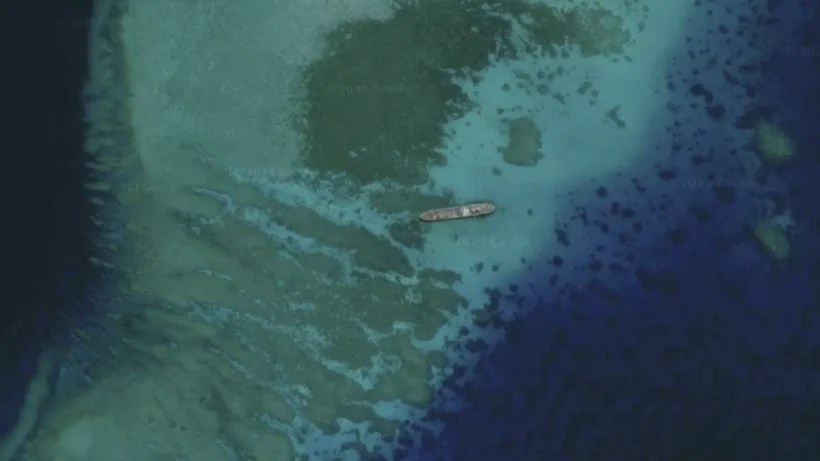
China and the Philippines have reached a provisional deal on resupply missions to a grounded Filipino ship in the South China Sea, amid efforts to ease maritime tensions.
The Philippines Department of Foreign Affairs (DFA) said on Sunday that Manila “reached an understanding” with Beijing on the resupply missions to the Sierra Madre.
The DFA did not elaborate on the “provisional arrangement” but said it followed “frank and constructive discussions” between the two countries earlier this month.
The Philippines deliberately grounded the ship, the Sierra Madre, on the reef of Ren’ai Jiao (aka Second Thomas Shoal) in 1999 to reinforce its claims over disputed waters surrounding it. Since then, it has maintained a small contingent of sailors aboard the vessel.
China and the Philippines have also agreed to jointly manage maritime differences and de-escalate the situation in the South China Sea.
“Both sides continue to recognize the need to de-escalate the situation in the South China Sea and manage differences through dialogue and consultation and agree that the agreement will not prejudice each other’s positions in the South China Sea,” the DFA said.
A Chinese foreign ministry spokesperson on Monday confirmed the “temporary arrangement”, but stated, “We continue to demand that the Philippines tow away the warship and restore Ren’ai Jiao’s state of hosting no personnel or facilities.”
“If the Philippines needs to provide supplies to the ship’s occupants before the Philippines tows away the beached warship, the Chinese side is willing to allow the Philippine side to carry out the transportation and replenishment on humanitarian grounds,” the spokesperson said, noting that the resupply process will take place after the Philippines informs China in advance and after on-site verification is conducted.
China reaffirmed that it won’t allow the establishment of “fixed facilities or permanent outpost” in the area.
“If the Philippines were to send large amount of construction materials to the warship and attempt to build fixed facilities or permanent outpost, China will absolutely not accept it and will resolutely stop it in accordance with the law and regulations to uphold China’s sovereignty.”
Philippine foreign ministry, however, rejected that the “provisional arrangement” required “prior notification and on-site confirmation.”
China says the Philippines has been violating its sovereignty and the Declaration on the Conduct of Parties in the South China Sea (DOC), especially Article 5 which stipulates that the parties should refrain from action of inhabiting on the uninhabited islands and reefs.
Beijing claims the South China Sea in its entirety. Vietnam, the Philippines, Malaysia, and Brunei have overlapping claims to parts of the waters.
Potential US Tactical Nuke Deployment in Asia-Pacific Could Bring Catastrophic Fallout – Expert
Sputnik – 06.06.2024
The director of the Knowfar Institute for Strategic and Defense Studies, Li Jian, provided insight regarding the potential deployment of US tactical nuclear weapons in the western Pacific Ocean in an interview with Sputnik.
“The question of US nuclear weapon deployment has a long history,” Jian told Sputnik, highlighting advancements in US tactical nuclear capabilities, such as the B61-12 bomb, and the completion of testing for various aircraft models.
“Since the US Department of Defense purchased 400 B61-12 tactical nuclear bombs, there needs to be somewhere to deploy them,” Jian emphasized.
The expert outlined potential deployment sites in the western Pacific, including military bases in South Korea, Japan, Okinawa, the Philippines, and Diego Garcia island.
“If tactical nuclear weapons are deployed directly in South Korea, this would become a direct factor of strategic containment against Russia’s Far East, Northern China, and North Korea,” the expert warned.
Addressing concerns in Northeast Asia, Jian questions the likelihood of deployment in South Korea over Okinawa due to prevalent anti-war and anti-nuclear sentiments among the Japanese, particularly island locals. He cautioned that such actions could disrupt the regional strategic balance, exacerbate arms races, and impede nuclear non-proliferation efforts.
US Senator Roger Wicker, the highest-ranking Republican on the Senate Armed Services Committee, released a report on May 29 urging a significant increase in US military preparedness, particularly against nations like North Korea and China.
Titled “Peace Through Strength,” the report suggests exploring new strategies, including a “nuclear sharing agreement in the Indo-Pacific and re-deployment of US tactical nuclear weapons in the Korean Peninsula.” This call comes in the wake of the US Army’s deployment of the Mid-Range Capability, also known as the Typhon Weapon System, to Northern Luzon, Philippines, for the Salaknib 24 exercises in April.
Southeast Asia on Course to Ukraine-Style Crisis Amid US Militarization of Philippines
By Ilya Tsukanov – Sputnik – 22.04.2024
US and Philippine troops kicked off the largest iteration of their annual Balikatan exercises in decades this week, with this year’s drills involving some 11,000 US and 5,000 Filipino military personnel, plus forces from Australia and France. Geopolitical analyst and former US Marine Brian Berletic explains why the drills are so dangerous.
Chinese diplomatic and military officials slammed Washington and Manila over the Balikatan drills on Monday, accusing participants of attempting to “flex” their “gunboat muscles,” stoking confrontation in the South China Sea and undermining regional security.
“Reality has shown that those who make deliberate provocations, stoke tensions, or support one side against another for selfish gains will ultimately only hurt themselves,” Chinese Central Military Commission Zhang Youxia said, warning that US-led attempts at “maritime containment, encirclement and island blockades will only plunge the world into a vortex of division and turbulence.”
The Chinese military plans to increase its naval and air patrols in the South China Sea amid the US-Philippines exercises, which will run until May 10, and include everything from maritime security and air defense operations to cyber and information warfare, and simulate the seizure of islands in the vicinity of Taiwan and the South China Sea.
Crucially, drilling will include naval exercises outside the Philippines’ internationally recognized territorial waters near the disputed South China Sea – parts of which are claimed by both Manila and Beijing.
Former Philippines president Rodrigo Duterte warned current President Bongbong Marcos Jr last week about the risks of cozying up with the US at the expense of balanced relations with China, accusing Washington of trying to provoke a war between the Philippines and China, and emphasizing that he doesn’t believe “America will die for us” if tensions grow into direct clashes.
“I would remove the bases. And I would tell the Americans, you have so many ships, so you do not need my island as a launching pad or a launching deck for you,” Duterte said.
Assuming office in 2022, the Marcos Jr. government moved to expand the Philippines’ Enhanced Defense Cooperation Agreement with the United States, nearly doubling the number of military bases in the country that the US gets access to from five to nine in 2023. Two of the facilities, the Antonio Bautista Air Base and the Balabac Island Air Base in the Palawan archipelago, border directly on contested waters in the South China Sea.
Echoes of Ukrainian Escalation
Filipinos are right to be concerned about US attempts to militarize their country, says former US Marine-turned author, journalist and independent geopolitical analyst Brian Berletic.
“The Philippines were previously a US colony gaining independence only in 1945. Since then, the US has attempted to reassert political control over the country as well as maintain a large US military presence on its shores. The goal is to militarize the country and use it as part of a wider united front against China,” Berletic told Sputnik.
“Exercises like Balikatan give the US an opportunity to shape the Philippines’ armed forces into a suitable proxy for a potential conflict with China,” the observer warned.
The creeping militarization of the island nation is not unlike processes witnessed in the aftermath of the Euromaidan coup d’état in Ukraine in 2014, which were followed by joint military exercises involving US and Ukrainian troops, Berletic recalled.
These processes ultimately culminated in the 2022 escalation of the Donbass crisis into a full-blown NATO-Russia proxy war.
“Washington’s primary objective in the Asia-Pacific region is to encircle and contain China. To do this, the US is attempting to compromise the governments of nations along China’s periphery including the Philippines, establish a US military presence within their borders, and militarize these countries against China,” the observer explained.
In addition to allowing the US to move its military assets “dangerously close to Chinese territory,” including in the disputed waters of the South China Sea and off the shores of the breakaway Chinese island province of Taiwan, US activities in the Philippines are designed to take advantage of and artificially inflame outstanding regional maritime disputes.
This enables Washington to “both justify a larger US military presence in the region, and turn nations in the region against China,” Berletic said.
“This will result in a similar crisis as seen in Europe where the US not only used Ukraine in a highly destructive proxy war against Russia, but also decimated Europe’s economy, socio-political stability, and placed the entire region on the precipice of a US-driven war,” Berletic fears.
South China Sea Dispute
The dispute between China, the Philippines and other nations over the strategic, energy and fishing resource-rich waters of the South China Sea dates back to the immediate post-WWII period, with Beijing staking claims on the basis of imperial dynasties’ near total control over waters in the area prior to the arrival of the Europeans and Americans in the region.
China has been exploring a regional dispute mechanism with its South China Sea neighbors since 2002, and has called on Washington – which has no claims to the region, to butt out. The US has gradually ramped up its military presence in the region since the early 2010s, when Obama Secretary of State Hillary Clinton called the South China Sea a matter of US “national interest.” In addition to shoring up a network of alliances and undermining Chinese negotiating efforts, the US has deployed Navy and Coast Guard ships into the South China Sea on so-called ‘freedom of navigation’ missions to challenge Chinese sovereignty claims. These missions have resulted in a series of close calls between Chinese, US and US-allied warships and military aircraft.
America’s “national interest” in the South China Sea is also inexorably tied in part to a strategy of containing China through the so-called ‘Island Chain Strategy’, which envisions a broad network of US bases and bilateral pacts with regional powers to prevent the Chinese Navy from being able to mount operations beyond its home waters.
Philippines Plans South China Sea Escalation With US Support
By Chimauchem Nwosu – Sputnik – 15.01.2024
Washington’s increased military activities in the South China Sea could potentially destabilize regional peace and stability, as Manila is influenced and urged by the US to follow the path of confrontation.
The Philippines’ top brass has stated its intentions to advance its bases in the South China Sea and increase its naval fleet and radars, despite thawing relations with its Chinese neighbor.
Romeo Brawner Jr., Chief of Staff of the Armed Forces of the Philippines, told the press that his country wants to make its outposts in the area more habitable — a move bound to fuel tensions over disputed maritime borders.
Filipino President Ferdinand Marcos Jr. has told the armed forces to seek the support of foreign militaries as it shifts focus from internal security to maritime defense.
The Philippines is a key US ally in the region and hosts its military bases, used during US wars in Vietnam and Korea.
But in recent times, Washington has shifted towards “great power competition” with China, co-opting Manila as a tool in its quest to “contain” Beijing.
Tensions between the Asian nations have intensified since October 4, 2023, with reports of Flippino ships defying Chinese Coast Guard warnings to pass through the Second Thomas Shoal in the Spratly Islands of the South China Sea on a resupply mission.
Early December last year, the Philippines established a monitoring base for its coast guard on Thitu Island in the disputed South China Sea. It also announced its intentions to increase joint patrols with the US and Australia in the area to curtail what it perceives as “pure bullying” by China, a Filipino official told media.
In response, Beijing has stated that such patrols potentially exacerbate a larger conflict that could plunge the region into chaos and criticized Manila’s plan as a provocation.
Chinese authorities have also accused the US of escalating tensions in the Asia-Pacific, especially in the South China Sea, and condemned Washington’s attempts to thwart China-Taiwan relations.
Washington insists that its ships will sail wherever they want in what it defines as international waters. The US has reiterated its resolve to defend the Philippines in the event of an attack, including in the South China Sea.
But China’s Foreign Ministry said heightened US military activities in the South China Sea further worsens the situation and subverts international law and its sovereignty.
“The US instigated and emboldened the Philippine side to infringe upon China’s sovereignty, which escalated maritime tensions. The Chinese side firmly opposes that,” Senior Colonel Wu Qian, spokesperson for China’s Ministry of National Defense, said during a news conference.
Despite the deteriorating tensions, Marcos has stated that the Philippines will continuously assert its rights in the South China Sea. “We shall continue to assert our rights in accordance with the Philippine Constitution and international law,” Marcos remarked. This follows Chinese Foreign Minister Wang Yi’s caution that ties between Beijing and Manila are “facing serious difficulties” and warned against colluding with “malicious external forces.”
Featured Video

America Racing to Strategic Defeat in Iran
or go to
Aletho News Archives – Video-Images
From the Archives
Should Europeans ‘Thank’ the Americans for Destroying Nord Stream?
By Robert Bridge | Strategic Culture Foundation | September 29, 2022
With an investigation continuing into the destruction of the Nord Stream gas pipeline that provided energy supplies to Europe from Russia, there appears to be just one prime suspect, and that should surprise nobody.
Following the sabotage of the Nord Stream 1 and 2 gas pipelines, former Polish Foreign Minister Radoslaw Sikorski already seemed to know the identity of the perpetrator when he tweeted out: “Thank you, USA.”
At first glance, it seemed that Sikorski was speaking sarcastically, berating Washington for carrying out an attack that will have severe repercussions for the people of Europe. After all, how could anyone see any good coming from the termination of Europe’s primary source of gas reserves with winter just around the corner? It was Sikorski’s homeland of Poland, after all, that urged its citizens to collect firewood in the face of dwindling gas reserves.
In fact, the Polish diplomat was speaking one-hundred percent literally… continue
Blog Roll
 Aletho News
- Tehran approves new Hormuz plan with major restrictions
- No Threat Can Force Iran’s Surrender /Trita Parsi & Lt Cl Daniel Davis
- UK’s New Pandemic Plan Would Turn Big Tech Into a Mass Location Tracking Network
- Growing insecurity, soaring prices fuel protests in north as regime bans evacuation: Sources
- Iran denies responsibility for ‘depraved’ attack on Kuwait desalination plant
- Bring The Troops Back. End This War Now!
- Can we please stop calling Israel the ‘only democracy in the Middle East’ now?
- US should start removing its troops from Germany, proposes AfD co-leader Chrupalla
- Iran Red Crescent: 600 educational centers attacked in US-Israeli ‘war crimes’
- Russian Oil Tanker Arrives in Cuba Amid U.S. Blockade
- If Americans Knew
- As Iran targets US military bases, will they be relocated to Israel? Not a ceasefire Day 171
- Will Trump Go Kamikaze?
- Is the University of Florida Shutting Down College Republicans over Israel Criticism?
- Jewish extremist arrested over alleged plot to firebomb Palestinian activist Nerdeen Kiswani’s home
- More than half of Palestinian child detainees have no charges
- The More Murderous Israel Gets, The More We Hear About “Antisemitism”
- Land Day and the Palestinian struggle after 30 months of genocide
- The Iran War Is About Palestine
- Israeli soldiers echo settler ideology, talk of revenge after targeting Palestinians and detaining CNN crew in the West Bank
- Israeli Policies Threaten Future of Christian Schools in Jerusalem
- No Tricks Zone
- New Study Finds Warming Saves Lives…Cold Temperatures 12 Times More Deadly Than Excess Heat
- German Science Blog Accuses PIK Climate Institute Of Hallucinating Climate Tipping Points
- Devastating Assessment Of Comirnaty Vaccine By Former Senior Pfizer Europe Toxicologist
- New Study: CO2 Is ‘Effectively Negligible’ As An Explanatory Climate Change Factor Since 2000
- Former Pfizer Toxicologist Dr. Helmut Sterz Tells Bundestag Hearing Pfizer Vaccine Should Have Never Been Approved
- Energy Expert: Germany’s Nuclear Phaseout Was A “500 Billion Euro Mistake”
- New Research: South Australia’s Mid-Holocene Sea Surface Temperatures Were 4°C Warmer Than Today
- Storing Green Energy To Last Germany 10 Days Would Require A 60-Million Tonne Battery
- New Studies: UK Sea Levels Were 4 Meters Higher Than Today During The Mid-Holocene
- Destructive Green New Deal: German Energy And Metal Group Warns Of Drastic Crisis
 Aletho News