Bob Kerrey and Fulbright University – What were they thinking?
By Mark Ashwill | University World News | July 8, 2016
“One simply cannot engage in barbarous action without becoming a barbarian… one cannot defend human values by calculated and unprovoked violence without doing mortal damage to the values one is trying to defend.” – J William Fulbright, The Arrogance of Power.
Imagine, for a moment, what would happen if a foreign university in the United States appointed an individual who had killed US civilians – or anyone, for that matter – to serve as chair of its board of trustees?
Or this post-World War II European example from David Marr, a US American historian of modern Viet Nam and Australian National University professor emeritus: “If the post-war West German government had selected a former German army officer who had killed (or ordered the killing of) unarmed French civilians to head the Goethe Institute in Paris, do you think the French government would have accepted this? Going back one step, would Bonn ever have selected such a person in the first place?”
Would the reaction be ‘forgive and forget’, or outrage that the university or government and its supporters could be so blind, so insensitive, so short-sighted as to select someone with such a dark past to assume such a key position?
What about a former Navy SEAL who admitted to being involved in the cold-blooded murder of a score of Vietnamese civilians in early 1969 in the Mekong Delta?
During President Barack Obama’s visit to Viet Nam in May, Secretary of State John Kerry announced Bob Kerrey’s appointment as chair of the Fulbright University Vietnam, or FUV, board of trustees, igniting an international media firestorm.
There were headlines such as “Ex-US senator’s role in Vietnam university opens wartime wounds” in the Financial Times on 31 May 2016; “Bob Kerrey’s war record fuels debate in Vietnam on his role at new university” in The New York Times on 2 June; “War record of Vietnam university’s US chairman angers some” by Associated Press on 14 June; and “Vietnam’s Kerrey dilemma: Fulbright U appointment is lightning rod for US ties” in Asia Times on 21 June.
Mutual respect
Fulbright University Vietnam has been billed by the Trust for University Innovation in Vietnam, a non-profit organisation based in Massachusetts, as “the first private, non-profit Vietnamese university founded on the principles of accountability, meritocracy, transparency, self-governance, mutual respect and open inquiry”. The trust plays a leadership role in the development of the university.
One of the most outspoken opponents of Bob Kerrey’s appointment has been Ton Nu Thi Ninh, Viet Nam’s former ambassador to the European Union, who has called for his resignation.
Referring to his appointment as an act that “shows insensitivity to the feelings of the Vietnamese and, may I say, disregard for our opinions, our sense of self-respect and our dignity,” Ninh wrote in a statement that has been widely distributed in both Vietnamese and English that:
“If the US side insists on holding to its decision, then, in my view, FUV can no longer be considered a joint education project as averred by the founding team.
“A happy marriage is one where both parties listen to each other, have consideration for one another’s opinions and respect each other’s emotions. Otherwise, Fulbright University will be an American university project in Viet Nam conceived and decided upon by Americans, in which the opinions and contributions of the Vietnamese are secondary.”
What Bob Kerrey and his unit did to those civilians with automatic weapons and knives, resulting in the deaths of 21 men, women and children, is between him and his Maker. He has had to live with the psychological and emotional fallout of that long ago night in Thanh Phong, saying he once flirted with the idea of suicide.
This is how Kerrey recalled that tragedy in his memoir, When I Was a Young Man (Harcourt Books 2002):
“I saw women and children in front of us being hit and cut to pieces. I heard their cries and other voices in the darkness as we made our retreat to the canal.
“… The young, innocent man who went to Vietnam died that night. After that night, I no longer had illusions or objectivity about the war. I had become someone I did not recognise.”
What most accounts do not mention is that Kerrey and his men were not just on a routine ‘takeout mission’ to assassinate ‘Viet Cong’ leaders in what was classified as a free-fire zone, but were reportedly on a CIA mission under the auspices of the Phoenix Program, which routinely included the murder of civilians.
The objective of Contre Coup – counter terror – as the strategy was known, was to seek out and terrorise not only individual Viet Cong but also their families, friends and neighbours, according to Douglas Valentine, author of The Phoenix Program, the only comprehensive account of the CIA’s torture and assassination operation in Viet Nam.
Shamefully, Kerrey was awarded and accepted a Bronze Star for ‘heroic achievement’ in that raid. The citation, reflecting body count as a metric of success, reads as follows: “The net result of his patrol was 21 Viet Cong killed, two hooches destroyed and two enemy weapons captured.”
The record is crystal clear. When Bob Kerrey was confronted in 2001 with declassified documents about his role in the Thanh Phong massacre, he admitted his culpability. That makes him a war criminal, albeit one who has never been charged and tried in a court of law.
According to Section 18 of the US Code 2441, a war crime is “any conduct defined as a grave breach in any of the international conventions signed in Geneva on 12 August 1949, or any protocol to such convention to which the United States is a party”.
The consequences of a guilty conviction, according to US law, are as follows: “Whoever, whether inside or outside the United States, commits a war crime, in any of the circumstances described in subsection (b), shall be fined under this title or imprisoned for life or any term of years, or both, and if death results to the victim, shall also be subject to the penalty of death.”
Thus, if Bob Kerrey were convicted in a US court of law, he could very well receive the same sentence as his victims with the state as executioner.
Instead, he’s been a free man who has enjoyed success as a businessman, a political leader and a university president while his victims – from the baby, one of his unit’s last victims, to a 65-year-old grandfather whom he reportedly held down as a knife was slid across his throat – have mouldered in their graves for the last 47 years.
Has he apologised directly to the victims’ relatives and the survivors? Has he taken any concrete steps to make amends?
Indeed, one could argue that Kerrey has parlayed his status as a ‘war hero’ into success in the worlds of business and politics.
A glowing 2008 profile on the US government-funded Voice of America, entitled “Bob Kerrey, war hero, politician, educator”, referred to Kerrey’s induction into “the elite Navy SEALs special forces unit” and glossed over his role in the Thanh Phong killings by stating that he “earned the Bronze Star for combat action that would later prove controversial because it involved civilian casualties”.
The Harvard connection
While I understand Kerrey’s motivation to do penance and while I recognise his contributions to US-Viet Nam relations, there are surely better qualified individuals without his deadweight baggage.
So why was he selected? In a phrase, ‘the Harvard connection’. What were they thinking?
One of the driving forces behind the establishment of the Fulbright University Vietnam is Harvard’s Ash Center for Democratic Governance and Innovation and, in particular, Tommy Vallely, its senior advisor for Mainland Southeast Asia.
Vallely founded the Harvard Vietnam Program in 1989, which led to the establishment of the Fulbright Economics Teaching Program in 1994 in Ho Chi Minh City – a partnership between the University of Economics, HCMC, and the Harvard Kennedy School.
Himself a veteran of the American War in Viet Nam, Vallely also happens to be a close friend and confidant of John Kerry, who in turn is a friend of his long-time US Senate colleague, Bob Kerrey.
Perhaps Kerrey’s appointment was in part the result of this perfect storm of friendship and loyalty, in addition to his desire to give back. The distressing fact is that he was viewed as a viable choice for chair of the FUV board of trustees, bloodstained past notwithstanding.
Mark Bowyer, a long-time expat with extensive Viet Nam experience, wrote a spot-on piece about the Kerrey affair in which he expressed doubt that “reminding the world of previously unpunished US atrocities in Viet Nam is a judicious use of the political capital accumulated during Barack Obama’s recent successful visit”.
While the focus should be on the FUV and the challenges ahead, including fundraising, the spotlight is squarely on the controversial selection of Kerrey and that tragic night in Thanh Phong.
That’s really the heart of the matter. Bob Kerrey, a self-confessed war criminal, as chair of the board of trustees of a US university in Viet Nam named after Senator J William Fulbright?
What parallel universe do his supporters inhabit? They either do not comprehend the implications of selecting such a polarising figure for such an important position, or do not care. Could it be that sense of superiority and exceptionalism that distinguishes nationalists from patriots, what Fulbright wrote about so eloquently and passionately in The Arrogance of Power?
For his part, Kerrey should have had the good sense to gracefully decline the offer. There are other less visible roles for him to play and still have a positive impact.
Instead of acknowledging the misjudgement of his Harvard friends and following an honourable course of action by resigning, however, Kerrey has chosen to dig in his heels. A case of pride goes before a fall, or ego over prudence with a measure of wartime guilt thrown into the mix?
To say that the reaction to Kerrey’s appointment has been mixed is an understatement. Many in the pro-Kerrey camp have a lack of knowledge about his background and the status of the Fulbright University Vietnam as a private initiative with bi-national support.
I even received a Facebook message from a Vietnamese mid-career professional urging me to support Bob Kerrey, after reading some of my critical comments in the media.
He later posted this simple yet sincere statement on my Facebook page: “I am with Bob”. I countered with this heartfelt reply: “I’m with the victims of Bob’s (Thanh Phong) slaughter and for someone who will not taint the reputation of this fledgling university.”
Dr Mark Ashwill is managing director of Capstone Vietnam, a full-service educational consulting company with offices in Hanoi and Ho Chi Minh City in Vietnam. Ashwill blogs at An International Educator in Vietnam.
July 12, 2016 Posted by aletho | Timeless or most popular, War Crimes | Bob Kerrey, Central Intelligence Agency, CIA, Fulbright University, Phoenix Program | Leave a comment
The CIA, the Press and Black Propaganda
By Douglas Valentine | September 16, 2013
As soon as Kevin Drum at Mother Jones absolved the CIA of spewing poison gas as a provocation, many on the Liberal Left cautiously threw their weight behind Obama and the thrill of waging a punitive war on Syria.
“Perhaps regime change is a good idea,” Tom Hayden speculated in The Nation.
Left paterfamilias Noam Chomsky, who generally shows an appreciation for the subtleties of covert action, claimed that America is not supplying its Al Qaeda mercenary army with arms – even though Eric Schmidt at The New York Times reported over a year ago that CIA officers in Turkey were “helping allies decide which Syrian opposition fighters across the border will receive arm.”
As if Hayden fomenting war and Chomsky covering for the CIA isn’t irony enough, Drum cleared the CIA in response to allegations of a provocation made by Rush Limbaugh. Which raises the question, what are the facts about the CIA’s penchant for “provoked responses” like the one in the Tonkin Gulf that started the Vietnam War?
Simply stated, black propaganda is one of many criminal but legally deniable things the CIA does. It often involves committing a heinous crime and blaming it on an enemy by planting false evidence, and then getting a foreign newspaper to print the CIA’s scripted version of events, which sympathetic journalists in America broadcast to the gullible public.
In the case of Syria, the CIA is using cooked Israeli “intelligence” as a catalyst – which is why, as Johnstone and Bricmont explain, the “intelligence” is so “dubious.”
Black propaganda has other “intelligence” applications as well, and is often used to recruit informants, and create deserters and defectors.
In his autobiography Soldier, Anthony Herbert told how he reported for duty in 1965 in Saigon at the joint CIA-military Specials Operations Group. The spooks asked him to join a secret psywar program. “What they wanted me to do was to take charge of execution teams that wiped out entire families and tried to make it look as though the VC themselves had done the killing. The rationale was that other Vietnamese would see that the VC had killed another VC and would be frightened away from becoming VC themselves. Of course, the villagers would then be inclined to some sort of allegiance to our side.”
As counter-terror guru David Galula explained, “Pseudo insurgents are a way to get intelligence and sow suspicion at the same time between the real guerrillas and the population.”
In a similar case in 1964, a famous CIA propaganda officer organized three armed “survey teams” which operated in neighboring hamlets simultaneously. When Vietcong propaganda teams departed from a hamlet, his cut-throat cadre would move in and speak to one person from each household, so the VC “would have to punish everyone after we left.”
In other words the CIA’s mercenaries (like some the CIA’s mercenaries in Syria) were provocateurs, setting people up for recriminations, for intelligence and publicity purposes.
Here’s another example: in 1964, CIA officer Nelson Brickham worked in the Sino-Soviet Relations Branch, where he managed black propaganda operations designed to cause friction between the USSR and China. At the heart of these black ops were false flag recruitments, in which CIA case officers posed as Soviet intelligence officers and, using actual Soviet cipher systems and methodology, recruited Chinese diplomats, who believed they were working for the Russians. The CIA case officers used the Chinese dupes to create all manner of mischief.
Brickham in 1967 created the Phoenix program in South Vietnam. The Phoenix program’s operations chief in 1970, Colonel Thomas McGrevey, had a “penetration agent” inside COSVN – the Central Office of South Vietnam. COSVN’s deputy finance director was the penetration agent. The deputy alerted McGrevey when the finance director was going on vacation, enabling McGrevey to mount a black propaganda campaign which framed the finance director for running off with embezzled funds.
A circular about the Phoenix program issued by the revolutionary Security Service in 1970, described how the nationalists viewed the CIA. As stated in the circular, “the most wicked maneuvers” of the CIA “have been to seek out every means by which to terrorize revolutionary families and force the people to disclose the location of our agents and join the People’s Self-Defense Force. They also spread false rumors. Their main purpose is to jeopardize the prestige of the revolutionary families, create dissension between them and the people, and destroy the people’s confidence in the revolution. In addition, they also try to bribe poor and miserable revolutionary families into working for them.”
Forged letters are a CIA specialty. Former CIA officer Philip Agee told how he mounted a successful operation using forged letters against Ecuadoran Antonio Flores Benitez, a key member of the Communist revolutionary movement. “By bugging Flores’ phone, we found out a lot of what he was doing. His wife was a blabbermouth. He made a secret trip to Havana and we decided to do a job on him when he landed back in Ecuador. With another officer, I worked all one weekend to compose a “report” from Flores to the Cubans. It was a masterpiece. The report implied that Flores’ group had already received funds from Cuba and was now asking for more money in order to launch guerrilla operations in Ecuador. My Quito station chief loved it so much he just had to get into the act. So he dropped the report on the floor and walked on it awhile to make it look pocket-worn. Then he folded it and stuffed it into a toothpaste tube-from which he had spent three hours carefully squeezing out all the toothpaste. He was like a kid with a new toy. So then I took the tube out to the minister of the treasury, who gave it to his customs inspector. When Flores came through customs, the inspector pretended to go rummaging through one of his suitcases. What he really did, of course, was slip the toothpaste tube into the bag and then pretend to find it there. When he opened the tube, he of course “discovered” the report. Flores was arrested and there was a tremendous scandal. This was one of a series of sensational events that we had a hand in during the first six months of 1963. By late July of that year, the climate of anti-Communist fear was so great that the military seized a pretext and took over the government, jailed all the Communists it could find and outlawed the Communist Party.”
Likewise the catalyst for the 1973 coup in Chile was a forged document-detailing a leftist plot to start a reign of terror – which was discovered by the enemies of President Salvador Allende Gossens. The result was a violent military coup, which the CIA officers (who had set it in motion through disinformation in the Chilean press) sat back and watched from their hammocks in the shade.
And on and on it goes.
General Ed Lansdale formalized CIA black propaganda practices in the early 1950s in the Philippines. To vilify the Communists and win support of Americans, one of his Filipino commando units would dress as rebels and commit atrocities on civilians, and then another unit would magically arrive with cameras to record the staged scenes and chase the “terrorists” away. Cameras were the key.
The CIA also concocted lurid tales of Vietminh soldiers’ disemboweling pregnant Catholic women, castrating priests, and sticking bamboo slivers in the ears of children so they could not hear the Word of God. Lansdale’s henchman, CIA agent-cum-journalist Joseph Alsop, gleefully reported this black propaganda.
The American “press” is the vital, arrogant, fatal, dominant X in black propaganda. When it comes to the CIA and the American press, one black hand washes the other. To gain access to CIA officials, reporters suppress or distort stories. They sell their black souls for scoops. In return, CIA officials leak stories to them. At its most incestuous, reporters and CIA officers are blood relatives. At one point, The New York Times correspondent in Vietnam, James Lemoyne, just happened to be the brother of the CIA’s counter-terror team chief in the Delta, Navy Commander Charles Lemoyne.
In a democratic society the media ought to investigate and report objectively on the government, which is under no obligation to inform the public of its activities and which, when it does, puts a “spin” on the news. As part of the Faustian Pact, when government activities are conducted in secret, illegally, reporters look away rather than jeopardize profitable relationships. The intended result is that the unwitting public is robbed of its freedom of speech – for how can you speak freely if you don’t know what’s going on?
If Lansdale hadn’t had Alsop to print his black propaganda, there probably would have been no Vietnam War. Likewise, Judith Miller, disgraced facilitator of the war on Iraq and rehabilitated Fox KKK-TV correspondent, brought you the Iraq War through false documents provided by CIA analysts.
We rarely know who the Alsops and Millers are in our midst, until after the fact. The CIA has a strict policy of keeping its atrocities to itself. And it is aided, in its eternal quest to deceive the American public, by the fact that black propaganda validates the beliefs of the Kevin Dumbs among us, as it assures their imagined security and sense of being exceptional.
In fact, black propaganda operations, and the CIA itself, are antithetical to democratic institutions.
A big part of the CIA’s current success is its ability to deliver its message through Left publications, and the Left’s unstated policy of self-censorship in regard to CIA operations. Most insidious, perhaps, are the former CIA officers who claim to be anti-war, and seek a veil of immunity by claiming to have been “analysts.” This is akin to saying “I was a bookkeeper for the Mafia. I never killed anyone.”
Of course it’s the bookkeepers who tell the bosses the names and addresses of the delinquents who haven’t paid their extortion money this week. The Phoenix Directorate in Saigon had analysts performing the same assassination, kidnapping and torture function on an industrial scale.
Despite the popular portrayal of the CIA as patriotic guys and girls risking everything to do a dirty job, the typical CIA officer is a sociopath without the guts to go it alone in the underworld. They gravitate to the CIA because they are protected there by the all-powerful Cult of Death that rules America.
The most dangerous facet of having former CIA officers slithering around is their uniform message that the CIA is necessary. These are not Phil Agees, revealing the ugly truth and calling for the CIA’s abolition. Like all the CIA’s political and psychological warfare experts, they are at the forefront of the war on terror, using psywar to achieve the goals of the Cult of Death that rules America. The result is a theatre of the absurd, a world of illusion.
Now we are told that the CIA Syrian mercenaries may launch a chemical attack on Israel from government-controlled territories as a “major provocation.” What you can be sure of is that some provocation will be launched and that the press, including most of the Left, will cover it up.
Doug Valentine is the author of five books, including The Phoenix Program. See www.douglasvalentine.com or write to him at dougvalentine77@gmail.com
Related article
September 16, 2013 Posted by aletho | Deception, Mainstream Media, Warmongering, Timeless or most popular, War Crimes | Central Intelligence Agency, CIA, New York Times, Noam Chomsky, Phoenix Program, Syria, Vietnam War | Leave a comment
CIA: An Idea Whose Time Has Gone
By David Swanson | War is a Crime | May 20, 2013
There’s a contradiction built into every campaign promise about transparent government beyond the failure to keep the promises. Our government is, in significant portion, made up of secret operations, operations that include war-making, kidnapping, torture, assassination, and infiltrating and overthrowing governments. A growing movement is ready to see that end.
The Central Intelligence Agency is central to our foreign policy, but there is nothing intelligent about it, and there is no good news to be found regarding it. Its drone wars are humanitarian and strategic disasters. The piles of cash it keeps delivering to Hamid Karzai fuel corruption, not democracy. Whose idea was it that secret piles of cash could create democracy? (Nobody’s, of course, democracy being the furthest thing from U.S. goals.) Lavishing money on potential Russian spies and getting caught helps no one, and not getting caught would have helped no one. Even scandals that avoid mentioning the CIA, like Benghazigate, are CIA blowback and worse than we’re being told.
We’ve moved from the war on Iraq, about which the CIA lied, and its accompanying atrocities serving as the primary recruiting tool for anti-U.S. terrorists, to the drone wars filling that role. We’ve moved from kidnapping and torture to kidnapping and torture under a president who, we like to fantasize, doesn’t really mean it. But the slave-owners who founded this country knew very well what virtually anyone would do if you gave them power, and framed the Constitution so as not to give presidents powers like these.
There are shelves full in your local bookstore of books pointing out the CIA’s outrageous incompetence. The brilliant idea to give Iran plans for a nuclear bomb in order to prevent Iran from ever developing a nuclear bomb is one of my favorites.
But books that examine the illegality, immorality, and anti-democratic nature of even what the CIA so ham-handedly intends to do are rarer. A new book called Dirty Wars, also coming out as a film in June, does a superb job. I wrote a review a while back. Another book, decades old now, might be re-titled “Dirty Wars The Prequel.” I’m thinking of Douglas Valentine’s The Phoenix Program.
It you read The Phoenix Program about our (the CIA’s and “special” forces’) secret crimes in Eastern Asia and Dirty Wars about our secret crimes in Western Asia, and remember that similar efforts were focused on making life hell for millions of people in Latin America in between these twin catastrophes, and that some of those running Phoenix were brought away from similar sadistic pursuits in the Philippines, it becomes hard to play along with the continual pretense that each uncovered outrage is an aberration, that the ongoing focus of our government’s foreign policy “isn’t who we are.”
Targeted murders with knives in Vietnam were justified with the same rhetoric that now justifies drone murders. The similarities include the failure of primary goals, the counterproductive blowback results, the breeding of corruption abroad and at home, the moral and political degradation, the erosion of democratic ways of thinking, and — of course — the racist arrogance and cultural ignorance that shape the programs and blind their participants to what they are engaged in. The primary difference between Phoenix and drone kills is that the drones don’t suffer PTSD. The same, however, cannot be said for the drone pilots.
“The problem,” wrote Valentine, “was one of using means which were antithetical to the desired end, of denying due process in order to create a democracy, of using terror and repression to foster freedom. When put into practice by soldiers taught to think in conventional military and moral terms, Contre Coup engendered transgressions on a massive scale. However, for those pressing the attack on VCI, the bloodbath was constructive, for indiscriminate air raids and artillery barrages obscured the shadow war being fought in urban back alleys and anonymous rural hamlets. The military shield allowed a CIA officer to sit behind a steel door in a room in the U.S. Embassy, insulated from human concern, skimming the Phoenix blacklist, selecting targets for assassination, distilling power from tragedy.”
At some point, enough of us will recognize that government conducted behind a steel door can lead only to ever greater tragedy.
In an email that Valentine wrote for RootsAction.org on Monday, he wrote: “Through its bottomless black bag of unaccounted-for money, much of it generated by off-the-books proprietary companies and illegal activities like drug smuggling, the CIA spreads corruption around the world. This corruption undermines our own government and public officials. And the drone killings of innocent men, women, and children generate fierce resentment.. . .Tell your representative and senators right now that the CIA is the antithesis of democracy and needs to be abolished.”
Related articles
- A Timeline of CIA Atrocities (alethonews.wordpress.com)
- US drone strikes illegal – Pakistani court (alethonews.wordpress.com)
May 20, 2013 Posted by aletho | Progressive Hypocrite, Solidarity and Activism, Subjugation - Torture, Timeless or most popular, War Crimes | Central Intelligence Agency, CIA, Hamid Karzai, Human rights, Latin America, Phoenix Program, Vietnam, Vietnam War | Leave a comment
Assassination Nation
Fifty Years of US Targeted ‘Kill Lists’: From the Phoenix Program to Predator Drones
By DOUG NOBLE | July 19, 2012
“A broad-gauged program of targeted assassination has now displaced counterinsurgency as the prevailing expression of the American way of war.” – Andrew Bacevich [1]
This spring the US drone killing program has come out of the closet. Attorney General Eric Holder publicly defended the drone killing of an American citizen [2], while Obama’s counter terrorism czar John Brennan publicly explained and justified the target killing program [3]. And a New York Times article by Jo Becker and Scott Shane chronicled Obama’s personal role in vetting a secret “Kill List.” [4]
This striking new transparency, the official acknowledgment for the first time of a broad-based US assassination and targeted killing program, has resulted from the unprecedented and controversial visibility of drone warfare. Drones now make news every day, and those of us who have been protesting their use for years have heightened their visibility in the public eye, forcing official acknowledgment and fostering worldwide scrutiny. This new scrutiny focuses not only on drone use but also, and perhaps more importantly, on the targeted killing itself – and the “kill lists” that make them possible.
This new exposure has set off a firestorm of reaction around the globe. Chris Woods of the Bureau of Investigative Journalism told Democracy Now! “The kill list got really heavy coverage … newspapers have all expressed significant concern about the existence of the kill list, the idea of this level of executive power.” [5] A Washington Post editorial noted that “No president has ever relied so extensively on the secret killing of individuals to advance the nation’s security goals.” [6] Becker and Shane of the Times pronounced Obama’s role “without precedent in presidential history, of personally overseeing the shadow war …” [7] And former president Jimmy Carter insisted, in a recent editorial in The New York Times, “We don’t know how many hundreds of innocent civilians have been killed in these [drone] attacks, each one approved by the highest authorities in Washington. This would have been unthinkable in previous times.” [8]
Really?
In fact, US assassination and targeted killing, with presidential approval, has been going on covertly for at least half a century. Ironically, all this drone killing now offers us a new opportunity: to pry open the Pandora’s box hiding long-held secrets of covert US assassination and targeted killing, and to expose them to the light of day. What we would find is that the only things new in the latest, more publicized revelations about kill lists and assassinations are the use of drones, the president’s hands-on approach in vetting targets, and the global scope of the drone killing.
Those of us in the Upstate Coalition to Ground the Drones, Code Pink and other groups protesting US drones for years have correctly focused on the use of drones as illegal, immoral and strategically counterproductive. We have abhorred the schizophrenic ease of remote killing, the uniquely frightening horror of a drone strike, and the unavoidable (even intentional) killing of countless civilian “terrorist suspects” in “signature strikes.” We have also warned of the proliferation of drones in countries around the globe and of their procurement by US police forces and border patrols, for surveillance and “non-lethal” targeting.
But drones are not the only, or even the most important, concern. It’s the targeted killing itself, past and present. In this article I start to unravel what the latest demands for transparency should lead us to investigate fully: the fifty year history of US assassination and targeted killing that has resulted, quite directly, in the present moment. Those who are mortified by the latest revelations of Obama’s kill list have much to learn from a more comprehensive, historical perspective on US killing around the globe. Who knows: Perhaps someone in Congress might even be prodded to do what Senators Fulbright and Church did in years past: hold hearings on this continuing execration taking place in our name. Until then, what follows is an introduction to this ongoing horror story.
Section 1 of this article briefly reviews the lethal history of the US Phoenix Program in Vietnam, the original source of subsequent US counter terrorist tactics and strategies. Section 2 revisits briefly the well-worn history of US kill lists and assassinations in Latin American countries, followed by the somewhat less-well-known history of US kill lists and assassinations in countries on other continents. Section 3 traces the direct legacy of Phoenix, even its explicit resurrection by the key architects of the US targeted killing programs in Iraq and Afghanistan, and in a growing number of “countries we are not at war with.”
One point of clarification and definition. It is well known that in recent history the US has orchestrated assassination attempts, both successful and unsuccessful, on major world leaders. Examples include: Lumumba under Eisenhower, Castro and Diem under Kennedy, Gaddhafi under Reagan, Saddam Hussein under Bush, and Allende under Nixon. [9] The term “assassination” is typically restricted to such killings of political leaders, and President Ford’s executive order banning assassination applies only to the assassination of foreign heads of state. [10] The focus of this article is different. Here we discuss the US-generated kill lists used over the last half century, under direct presidential authority, for the targeted killing of thousands of civilians suspected of being or harboring terrorists/ insurgents, from Vietnam to Guatemala, from Indonesia to Iraq, right up to the present day.
The Phoenix Program
The US Phoenix Program was a secret, large scale counter terrorist effort in Vietnam. Developed in 1967 by the CIA, the Phoenix Program, called Phung Hoang by the Vietnamese, aimed a concerted effort to “neutralize” the Vietcong Infrastructure (VCI) consisting of South Vietnamese civilians suspected of supporting North Vietnamese or Viet Cong soldiers. The euphemism “neutralize” meant to kill or detain indefinitely. Then CIA Director William Colby, while insisting in 1971 Congressional hearings that “the Phoenix program is not a program of assassination,” nonetheless conceded that Phoenix operations killed over 20,000 people between 1967 and 1972. [11]
Phoenix targeted civilians, not soldiers. Operations were carried out by “hunter-killer teams” consisting both of US Green Berets and Navy Seals and by South Vietnamese Provincial Reconnaissance Units (PRUs), units of mercenaries set up for assassination and “counter terror.” A Newsweek article in January 1970 described Phoenix as “a highly secret and unconventional operation that counters VC terror with terror of its own.” [12] Robert Kaiser of the Washington Post reported Phoenix being called “an instrument of mass political murder…sort of Vietnamese Murder Inc.,” designed to terrorize the civilian population into submission.” [13]
Until 1970 the computerized VCI blacklist was a unilateral American operation. After the devastating 1968 Tet offensive, South Vietnamese President Thieu declared: “The VCI must be eliminated…and will be defeated by the Phoenix program.” [14] Phoenix became a ruthless “bounty hunting” program to eliminate the opposition. [15] The US and South Vietnamese created a list of tens of thousands of suspects for assassination. These names were centralized and distributed to Phoenix coordinators. From 1965-68 U.S. and Saigon intelligence services maintained an active list of Viet Cong cadre marked for assassination. The program for 1969 called for “neutralizing” 1800 a month.
The VCI blacklist became corrupted by officers inserting their personal enemies’ names to get even. Due process was nonexistent. Names supplied by anonymous informers showed up on blacklists. [16] CIA Director Colby admitted in 1971 that the blacklists had been “inaccurate.” [17] Few senior VCI leaders were caught in the Phoenix net. Instead its victims were typically innocent civilians. A Pentagon-contract study found that, between 1970 and 1971, ninety-seven per cent of the Vietcong targeted by the Phoenix Program were of negligible importance. [18] By 1973, Phoenix generated 300,000 political prisoners in South Vietnam. Military operations such as My Lai used Phoenix intelligence; in fact, the My Lai massacre, hardly an isolated incident, was itself a Phoenix operation. [19]
Apologists have offered rationales for Phoenix that sound eerily similar to those used to defend current drone attacks. Phoenix was typically referred to as a “scalpel” replacing the “bludgeon” of search and destroy, aerial bombardment or artillery barrages. Alternatively, it was called a precision “rifle shot rather than a shotgun approach to target key political leaders … and activists in VCI.” [20] Military historian Dale Andrade explains, “Both SEALS and PRUs killed many VCI guerrillas – that was war. They also inevitably killed innocent civilians – that was regrettable….but [Phoenix] operations were much more discerning than the massive affairs launched by conventional …forces. That fact was often lost in the rhetoric of assassination and murder …”[21]
Phoenix was created, organized, and funded by the CIA. Quotas were set by Americans. Informers were paid with US funds. The national system of identifying suspects, the elaboration of numerical goals and their use as measures of merit, was designed and funded by Americans. One former US Phoenix soldier conceded, “It was “heinous,” far worse than the things attributed to it.” [22]
Kill Lists from Phoenix to Latin America
The US intelligence community formalized the lessons of the Phoenix Program in Vietnam by commissioning Project X, the Army’s top-secret program for transmitting Vietnam’s lessons to South America. [23] By the mid-1970s, the Project X materials were going to armies all over the world. These were textbooks for global counterinsurgency and terror warfare. These included a murder manual, “Psychological Operations in Guerrilla Warfare,” which openly instructed in the assassination of public officials, and was distributed to the Nicaraguan Contras. Another manual, “Human Resource Exploitation Training Manual,” was used widely in Honduran counterrorism efforts.
Use of the Project X material was temporarily suspended by Congress and the Carter administration for probable human rights violations, but the program was restored by the Reagan administration in 1982. By the mid-1980s, according to one detailed history, “counterguerrilla operations in Colombia and Central America would thus bear an eerie but explicable resemblance to South Vietnam.” [24]
What follows is a brief sketch of the widespread application of US-promulgated Phoenix-derived reigns of terror, kill lists, and death squads throughout Latin America and beyond. Much of this is familiar territory to many activists and scholars, and is merely the tip of the iceberg, but it merits review as a backdrop for the current context of kill lists and targeted assassination. [25]
US KILL LISTS AND ASSASSINATION IN LATIN AMERICA
The U.S. Army’s School of Americas (SOA), started in 1946, trained mass murderers and orchestrated coups in Peru, Panama, Argentina, Ecuador, Bolivia, Guatemala, El Salvador, and Mexico. The SOA trained more than 61,000 Latin American officers implicated in widespread slaughter of civilian populations across Latin America. From 1966-1976 the SOA trained hundreds of Latin American officers in Phoenix-derived methods. Between 1989-1991 the SOA issued almost 700 copies of Project X handbooks to at least ten Latin American countries, including Bolivia, Colombia, Peru, Venezuela, Guatemala, and Honduras. In 2001, SOA was renamed Western Hemisphere Institute for Security Cooperation (WHISC), but peace activists know it as School of Assassins. [26]
The CIA trained assassination groups such as Halcones in Mexico, the Mano Blanca in Guatemala, and the Escuadron de la Muerte in Brazil. In South America, in 1970-79, Operation Condor, the code-name for collection, exchange and storage of intelligence, was established among intelligence services in South America to eradicate Marxist activities. Operation Condor promoted joint operations including assassination against targets in member countries. In Central America, the CIA-supported death toll under the Reagan presidency alone exceeded 150,000. The CIA set up Ansesal and other networks of terror in El Salvador, Guatemala (Ansegat) and pre-Sandinista Nicaragua (Ansenic).
Honduran death squads were active through the 1980s, the most infamous of which was Battalion 3–16, which assassinated hundreds of people, including teachers, politicians, and union leaders. Battalion 316 received substantial CIA support and training, and at least 19 members graduated from the School of the Americas.
In Colombia, about 20,000 people were killed since 1986 and much of U.S. aid for counternarcotics was diverted to what Amnesty International labeled “one of the worst killing fields.” The US State Department also supported the Colombian army in creating a database of subversives, terrorists and drug dealers.
In Bolivia, Amnesty International reported that from 1966-68 between 3,000 and 8,000 people were killed by death squads. The CIA supplied names of U.S. and other foreign missionaries and progressive priests.
In Ecuador, the CIA maintained what was called the lynx list, aka the subversive control watch list of the most important left-wing activists to arrest. In Uruguay. Every CIA station maintained a subversive control watch list of most important left wing activists. From 1970-72 the CIA helped set up the Department of Information and Intelligence (DII), which served as a cover for death squads, and also co-ordinated meetings between Brazilian and Uruguayan death squads.
In Nicaragua, the US provided illegal funds to the Contras, and Marine intelligence helped maintain a list of civilians marked for assassination when Contra forces entered the country.
In Chile, 1970-73, CIA-created unions organized CIA-financed strikes leading to Allende’s overthrow and subsequent suicide. By late 1971 the CIA was involved in the preparation of lists of nearly 20,000 middle-level leaders of people’s organizations, scheduled to be assassinated after the Pinochet coup.
In Haiti, U.S. officials with CIA backgrounds in Phoenix-like program activities coordinated with the Ton-Ton Macoute, “Baby Doc” Duvalier’s private death squad, responsible for killing at least 3,000 people.
For over thirty years the US military and the CIA helped organize, train, and fund death squad activity in El Salvador. From 1980-93, at least 63,000 Salvadoran civilians were killed, mostly by the government directly supported by the U.S. The CIA routinely supplied ANSESAL, the security forces, and the general staff with electronic, photographic, and personal surveillance of suspected dissidents and Salvadorans abroad who were later assassinated by death squads. US militray involvement in El Salvador allowed “the lessons learned in Vietnam to be put into practice … assisting an allied country in counterinsurgency operations.” [27]
In Guatemala, as early as 1954, the U.S. Ambassador, after the CIA-orchestrated overthrow of the Arbenz government, gave to the new Armas government lists of radical opponents to be assassinated. Years later, throughout Guatemala’s 36-year civil war, Washington continuously to supported the Guatemalan military’s excesses against civilians, which killed 200,000 people.
US Assassination Programs Exported to Other Countries
In Indonesia, 1965-66, the US embassy and the CIA provided the Indonesian military with lists of the names of PKI militants, which were used by Suharto to crush the PKI regime. This resulted in “one of the worst episodes of mass murder of the twentieth century,” with estimates as high as one million deaths. [28]
In Thailand, in 1976, the new junta used CIA-trained forces to crush student demonstrators during coup; two right-wing terrorist squads suspected for assassinations tied directly to CIA operations.
In Iran, the CIA launched a coup installing the shah in power and helped establish the lethal secret police unit SAVAK. [29] The CIA and SAVAK then exchanged intelligence, including information and arrest lists on the communist Tudeh party. Years later, in 1983, the CIA gave the Khomeni government a list of USSR KGB agents and collaborators operating in Iran, which the Khomeni regime used to execute 200 suspects and close down the communist Tudeh party.
In the Philippines, in 1986, Reagan increased CIA involvement in Philippine counterinsurgency operations, carried out by more than 50 death squads. In 2001, before 9/11, the Bush administration sent a unit of SOF to the Philippines “to help train Philippine counter terrorist forces fighting against Muslim separatists” within groups like Abu Sayyaf. After 9/11 US-Filipino cooperation was stepped up and the ongoing separatist conflict was cast, to the benefit of both sides, as “the second front in the war on terror.”[30] In Feb, 2012, a US drone strike targeting leaders of Abu Sayyaf and other separatist groups killed 15 people, the first use of killer drones in Southeast Asia. [31]
A “global Phoenix Program”: drone targets worldwide
“A global Phoenix program … would provide a useful start point” for “a new strategic approach to the Global War on Terrorism.”
–David Kilcullen [32]
IRAQ
Despite the US-perpetrated counter terrorist slaughter in Latin America and elsewhere in the 1970s-1990s, the US Special Forces debacle in Mogadishu in 1993, popularized in the film Black Hawk Down, severely impacted US willingness to use Special Forces in counter terrorist missions for the next decade. But then, after 9/11, things changed drastically. On September 17, 2001, President Bush signed a secret Presidential finding authorizing the C.I.A. to create paramilitary teams to hunt, capture, detain, or kill designated terrorists almost anywhere in the world. The pressure from the White House, in particular from Vice-President Dick Cheney, was intense, and in the scramble, a search of the C.I.A.’s archives turned up – the Phoenix Program. [33]
In July , 2002, Defense Secretary Donald Rumsfeld sent an order for a plan to make sure that special forces could be authorized to use lethal force ‘in minutes and hours, not days and weeks.’” [34] Rumsfeld prompted Bush to authorize the military to “find and finish” terrorist targets. Here he was referring to “the F3EA targeting cycle” used in anti-infrastructure operations by Special Operations Forces. F3EA, an abbreviation of find, fix, finish, exploit, analyze, utilizes comprehensive intelligence to “find a target amidst civilian clutter and fix his exact location . . . . enabling surgical finish operations … to catch a fleeting target.” [35]
Lt General William (Jerry) Boykin, Delta commander in Mogadishu, deputy undersecretary for Defense for Intelligence and a key planner of the Special Forces offensive in Iraq, announced, “We’re going after these people. Killing or capturing them … doing what the Phoenix program was designed to do, without all the secrecy.” [36]
Back in 1963, the CIA had supplied lists of communists to the Baath party coup so that communists could be rounded up and eliminated. [37] Now, forty years later, it was the Baathists’ turn to be rounded up by Special Forces and CIA and executed. After the 2003 invasion of Iraq, the U.S. military notoriously developed a set of playing cards to help troops identify the most-wanted members of Saddam Hussein‘s government, mostly high-ranking Baath Party members. Less well-known was the secret targeted killing of thousands of Baathist civilians by US Special Forces.
Seymour Hersh wrote in 2003 that “The Bush Administration authorized a major escalation of the Special Forces covert war in Iraq. … Its highest priority [being] the neutralization of the Baathist insurgents, by capture or assassination. [38] A former C.I.A. station chief described the strategy: “The only way we can win is to go unconventional. We’re going to have to play their game. Guerrilla versus guerrilla. Terrorism versus terrorism. We’ve got to scare the Iraqis into submission.” [39] The US even hired thousands of contract killers previously responsible for US-sponsored extra-judicial killings and death squad activity in Latin America. The operation—called “preëmptive manhunting” by one Pentagon adviser—had, according to Hersh, “the potential to turn into another Phoenix Program.” [40]
Global Phoenix
In 2009, the Office of the Secretary of Defense sponsored a paper by the National Defense Research Institute entitled “The Phoenix Program and Contemporary Counterinsurgency.” The paper notes, “The persistent insurgencies in Iraq and Afghanistan have generated fresh interest among military officers, policymakers, and civilian analysts in the history of counterinsurgency. The Phoenix Program in Vietnam—the U.S. effort to improve intelligence coordination and operations aimed at identifying and dismantling the communist underground—is the subject of much renewed attention.” [41]
The paper continues, “As the United States and its allies shift their focus to Afghanistan and weigh counterinsurgency alternatives for that country, decisionmakers would be wise to consider how Phoenix-style approaches might serve to pry open Taliban and Al-Qaeda black boxes.” [42]
Two key architects of the current Phoenix-style global counterinsurgency efforts by the US are David Kilcullen and Michael Vickers. David Kilcullen has been counterinsurgency advisor to two former Middle East commanders, General Stanley McChrystal (formerly head of Special Operations) and General David Petraeus, now CIA Director. Michael G. Vickers, made famous in the book and film Charlie Wilson’s War about the CIA’s anti-Soviet Afghan campaign of the 1980s, is currently Under Secretary of Defense for Intelligence, wielding such vast authority over the US war on terror that, according to a Washington Post profile, Pentagon colleagues refer to as his “take-over-the-world-plan.” [43]
Kilcullen wrote in a much-quoted 2004 paper entitled “Countering Global Insurgency” that “Counterinsurgency campaigns in Afghanistan and Iraq have reawakened official and analytical interest in the Phoenix Program.” He proposed that “a global Phoenix program … would provide a useful start point” for “a new strategic approach to the Global War on Terrorism,” one which would focus on “interdicting links … between jihad theatres, denying sanctuary areas, … isolating Islamists from local populations and … disrupting inputs” from others. [44]
Vickers issued a Phoenix-style directive in December 2008 to “develop capabilities for extending U.S. reach into denied areas and uncertain environments by operating with and through indigenous foreign forces or by conducting low visibility operations.” “It’s not just the Middle East. It’s not just the developing world. It’s not just non-democratic countries – it’s a global problem. Threats can emanate from Denmark, the United Kingdom, you name it.” [45] According to a Washington Post profile, “the most critical aspect of Vicker’s plan targeting al-Qaeda-affiliated networks around the world involves US Special Forces working through foreign partners to uproot and fight terrorism.” [46] US military and Special Operations forces would “pay indigenous fighters and paramilitaries who work with them in gathering intelligence, hunting terrorists, fomenting guerrilla warfare or putting down an insurgency.” [47]
Pentagon colleagues have said of Vickers, “he tends to think like a gangster.” [48] Pentagon press secretary Geoff Morrell revealed that getting Bin Laden in Pakistan was Vicker’s “baby,” and “more than anyone else in the department, he drove the issue.” [49] 2011 New York Times Vickers summarizes his strategy this: “You make a deal with the devil to defeat another devil.”[50] “I just want to kill those guys.” [51] A 2011 Such is the megalomaniacal mission underlying the US global war on terror, its kill lists and worldwide program of targeted assassination.
Killer Drones Revisited
“Engaging in any assassination blurs the line between the good guys and the bad.” It is also “a proclamation of weakness and an admission of failure.”
–John Jacob Nutter, The CIA’s Black Ops [52]
The purpose of this article is to reframe the current attention on killer drones and Obama’s “kill list” within an historical perspective. The goal here is not to discourage the escalating protest against killer drones or against Obama’s targeted assassination program around the globe. As stated at the outset, the unprecedented visibility of these nefarious activities and of the outraged public response to them is precisely what is needed at this time. This heightened awareness also affords a perfect opportunity to revisit the extraordinary history of US assassination and targeted killing that has led directly and explicitly to these activities.
Focus on the drones alone will not be sufficient. For even the major counter terrorist mastermind David Kilcullen himself, an avid proponent of the global targeted killing program, has argued against the use of drones. In a 2009 New York Times editorial he argues that “The goal should be to isolate extremists from their communities; [they] must be defeated by indigenous forces…Drone strikes make this harder, not easier.” He adds, “The use of drones displays every characteristic of a tactic – or, more accurately, a piece of technology – substituting for a strategy, [with minimal understanding] of the tribal dynamics of the local population. This creates public outrage and a desire for revenge.” [53]
Scholar Maria Ryan, in a 2011 article entitled “War in Countries We Are Not at War With,” writes: “In 2006 the Pentagon announced that it had sent small teams of Special Operations troops to US embassies to gather intelligence on terrorism in Africa, South East Asia and South America…There is, then, a covert side to the Global War on Terrorism that is not visible and not currently knowable in the absence of whistleblowers, leaks, or things gone wrong.” [54]
The heightened public attention paid to drone killing might very well, in time, lead to some welcome success in curtailing their use. But too narrow a focus on the US deployment of Predator and Reaper drones might also distract us from other forms of Phoenix-derived targeted killing still being perpetrated globally – and covertly – by our Assassination Nation.
Doug Noble is an activist with Occupy Rochester NY and Rochester Against War.
NOTES
1 Andrew Bacevich, “Uncle Sam, Global Gangster” Feb 19, 2012 www.tomdispatch.com/dialogs/print/?id=175505
2 Eric Holder, speech at Northwestern University March 1, 2012
3 John Brennan, speech at Woodrow Wilson Center for Scholars, May 1, 2012
4 Jo Becker and Scott Shane New York Times 5/29/12 “Secret ‘Kill List’ Proves a Test of Obama’s Principles and Will”
5 Chris Woods, interview with Democracy Now! June 5, 2012 democracynow.org
6 Michael Gerson, “America’s Remote-controlled War on Terror,” The Washington Post May 3, 2012
7 Becker and Shane, Secret Kill List”
8 Jimmy Carter “A Cruel and Unusual Record,”The New York Times, June 25, 2012
9 John Jacob Nutter,The CIA’s Black Ops, Prometheus Books 2000, p152
10 Nutter,The CIA’s Black Ops, p.145
11 John Prados, Lost Crusader: The Secret Wars of CIA Director William Colby, Oxford University Press, 2003, p235ff
12 Douglas Valentine, The Phoenix Program. William Morrow & Co., 1990, p313
13 Valentine, p 315
14 Prados, p 224
15 Valentine, p309
16 Valentine, p13
17 Prados, p 235
18 Jane Mayer, The Black Sites: A Rare look inside the CIA’s Secret Interrogation Program,” The New Yorker August 13, 2007
19 Valentine, p13ff
20 Valentine, p346
21 Dale Andrade, Ashes to Ashes: The Phoenix Program and the Vietnam War. Lexington Books, 1990, p.175
22 Valentine, p 310
23 Alfred W. McCoy, A Question of Torture Metropolitan Books, 2006, p 86
24 McCoy, p 71
25 Unless otherwise noted, the following information comes from the comprehensive “CIA Death Squad Timeline” by Ralph McGehee, http://www.totse.com/en/politics/central_intelligence_agency/166983.html
26 Mary Turck, “School of Assassins,” Common Dreams Nov 18, 2003
27 Michael Smith, Killer Elite, St Martin’s Press, 2006, p 49
28 Prados, p 155-157
29 McCoy 74
30 Maria Ryan, “’War in Countries We Are Not at War With’: The War on Terror on the Periphery from Bush to Obama” International Politics, v.48 (2011)
31 Deadly Drone Strike on Muslims in the Southern Philippines March 5, 2012 www.brookings.edu/research/opinions/2012/03/05-drones-philippines-ahmed
32 David Kilcullen, “Countering Global Insurgency” Journal of Strategic Studies, 2004
33 Mayer, “Black Sites”
34 Smith, p230-232
35 William Rosenau & Austin Long, “The Phoenix Program and Contemporary Counterinsurgency,” National Defense Research Institute, RAND Corp, 2009
36 Smith, p 273
37 McGehee, “CIA Death Squad Timeline”
38 Seymour Hersh, “Moving Targets: Will the counter-insurgency plan in Iraq repeat the mistakes of Vietnam?” The New Yorker Dec. 15, 2003
39 Hersh, “Moving Targets”
40 Hersh, “Moving Targets”
41 Rosenau and Long
42 Rosenau and Long
43 Profile of Michael G. Vickers, Washington Post www.washingtonpost.com/politics/michael-g-vickers/gIQAm3DRAP_topic.html
44 Kilcullen, 2004
45 Ann Scott Tyson, “Sorry Charlie, This is Michael Vickers’s War,” Washington Post
Dec 28, 2007
46 Profile of Michael G. Vickers
47 Tyson, 2007
48 Elisabeth Bumiller, “Soldier, Thinker, Hunter, Spy: Drawing a Bead on Al Qaeda” New York Times, Sept 4, 2011
49 Bumiller
50 Bumiller
51 Bumiller
52 Nutter, p 149
53 David Kilcullen and Andrew McDonald Exum “Death from Above, Outrage Down Below.” New York Times May 17, 2009
54 Ryan, 2011
Related articles
- Obama’s Killer Drones (alethonews.wordpress.com)
- Families of U.S. Victims of Drone Attacks Sue Top Officials (ipsnews.net)
- “Interrogation Has Been Replaced by Assassination” (reason.com)
July 19, 2012 Posted by aletho | Civil Liberties, Subjugation - Torture, Timeless or most popular, War Crimes | Bureau of Investigative Journalism, Kill List, Obama, Phoenix Program, United States | Leave a comment
Featured Video
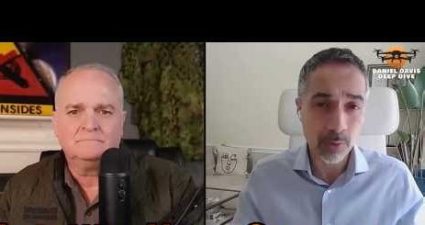
No Threat Can Force Iran’s Surrender /Trita Parsi & Lt Cl Daniel Davis
or go to
Aletho News Archives – Video-Images
From the Archives
An Expert Military Analysis of War with China
Actually, None is Necessary
By Fred Reed • Unz Review • December 13, 2020
The Correlation of Armed Forces: U.S. goods and services trade with China totaled an estimated $634.8 billion in 2019. Exports were $163.0 billion; imports were $471.8 billion. The U.S. goods and services trade deficit with China was $308.8 billion in 2019. Trade in services with China (exports and imports) totaled an estimated $76.7 billion in 2019. Services exports were $56.5 billion; services imports were $20.1 billion. The U.S. services trade surplus with China was $36.4 billion in 2019.
There is talk within the Washingtoniat of a possible war with China. Steve Bannon, who apparently was dropped on his head as a child, actually favors such a war. We hear the usual shoo-the-boobs alarm about how the Chinese are doing something terrible and we must gird our loins and American values and show them what for, bow wow, woof. The danger is that the current game of who-blinks-first in Asian waters might actually provoke a shooting war. You know the kind of thing: One warship refuses to get out of the way of another, a collision ensues, some retard lieutenant who signed up on waivers opens fire, and we’re off and running. It is not a good idea to let children play with matches.
The said war is discussed either in emotional terms by idiots or in purely naval terms by those familiar with such things, so we hear of the First Island Chain and the Second Island Chain and whose missiles against the other’s missiles and so on. This would be appropriate if we were fighting World War Two again. Which we aren’t. Let’s take a quick-and-dirty look at how such a war might go.
To begin the war, America would overestimate itself and underestimate China. This is doctrine in the Pentagon. … continue
Blog Roll
-
Join 2,445 other subscribers
Visits Since December 2009
- 7,431,929 hits
Looking for something?
Archives
Calendar
April 2026 M T W T F S S 1 2 3 4 5 6 7 8 9 10 11 12 13 14 15 16 17 18 19 20 21 22 23 24 25 26 27 28 29 30 Categories
Aletho News Civil Liberties Corruption Deception Economics Environmentalism Ethnic Cleansing, Racism, Zionism Fake News False Flag Terrorism Full Spectrum Dominance Illegal Occupation Mainstream Media, Warmongering Malthusian Ideology, Phony Scarcity Militarism Progressive Hypocrite Russophobia Science and Pseudo-Science Solidarity and Activism Subjugation - Torture Supremacism, Social Darwinism Timeless or most popular Video War Crimes Wars for IsraelTags
9/11 Afghanistan Africa al-Qaeda Australia BBC Benjamin Netanyahu Brazil Canada CDC Central Intelligence Agency China CIA CNN Covid-19 COVID-19 Vaccine Donald Trump Egypt European Union Facebook FBI FDA France Gaza Germany Google Hamas Hebron Hezbollah Hillary Clinton Human rights Hungary India Iran Iraq ISIS Israel Israeli settlement Japan Jerusalem Joe Biden Korea Latin America Lebanon Libya Middle East National Security Agency NATO New York Times North Korea NSA Obama Pakistan Palestine Poland Qatar Russia Sanctions against Iran Saudi Arabia Syria The Guardian Turkey Twitter UAE UK Ukraine United Nations United States USA Venezuela Washington Post West Bank WHO Yemen Zionism
 Aletho News
- Theodore Postol: Iran’s Missiles & Drones Were Underestimated
- Iran To Target Military Industrial-Tech Complex That Facilitated Gaza Genocide
- Collapsing Empire: The Resistance Disarms ‘Israel’
- Suicide Should Not Be a Government Service
- Rethinking America’s greatest threat: Iran vs. Israel-Firsters
- Iran accuses adversaries of false flags to strain Turkey ties
- Poland rules out sending Patriot missiles to US/Israel amid war on Iran
- Tehran approves new Hormuz plan with major restrictions
- No Threat Can Force Iran’s Surrender /Trita Parsi & Lt Cl Daniel Davis
- UK’s New Pandemic Plan Would Turn Big Tech Into a Mass Location Tracking Network
- If Americans Knew
- Ann Coulter Rips Into Fox News for Iran War Coverage, Compares to False Rigged 2020 Election Reporting
- Joe Kent Urges Americans To Call White House and Congress To Object To Sending Troops Into Iran
- DNC Resolution to Reject AIPAC Funding Puts Democratic Leaders in the Hot Seat
- Swedish foundation to build 400 schools as over 650,000 Gaza children remain without education for 2 years
- Israeli army admits photshopping image of slain Lebanese journalist
- This is how Israel is systematically killing health workers under the cover of war in Lebanon
- Carrying life under fire: Israeli invasion of Lebanon leaves pregnant women facing deadly risks
- Champagne all around for the new death penalty (for Palestinians) law – Not a ceasefire Day 172
- Why are Palestinian books struggling to be seen on Amazon?
- The Line Between Affinity and Conspiracy
- No Tricks Zone
- New Study Finds Warming Saves Lives…Cold Temperatures 12 Times More Deadly Than Excess Heat
- German Science Blog Accuses PIK Climate Institute Of Hallucinating Climate Tipping Points
- Devastating Assessment Of Comirnaty Vaccine By Former Senior Pfizer Europe Toxicologist
- New Study: CO2 Is ‘Effectively Negligible’ As An Explanatory Climate Change Factor Since 2000
- Former Pfizer Toxicologist Dr. Helmut Sterz Tells Bundestag Hearing Pfizer Vaccine Should Have Never Been Approved
- Energy Expert: Germany’s Nuclear Phaseout Was A “500 Billion Euro Mistake”
- New Research: South Australia’s Mid-Holocene Sea Surface Temperatures Were 4°C Warmer Than Today
- Storing Green Energy To Last Germany 10 Days Would Require A 60-Million Tonne Battery
- New Studies: UK Sea Levels Were 4 Meters Higher Than Today During The Mid-Holocene
- Destructive Green New Deal: German Energy And Metal Group Warns Of Drastic Crisis
Contact:
atheonews (at) gmail.com
Disclaimer
This site is provided as a research and reference tool. Although we make every reasonable effort to ensure that the information and data provided at this site are useful, accurate, and current, we cannot guarantee that the information and data provided here will be error-free. By using this site, you assume all responsibility for and risk arising from your use of and reliance upon the contents of this site.
This site and the information available through it do not, and are not intended to constitute legal advice. Should you require legal advice, you should consult your own attorney.
Nothing within this site or linked to by this site constitutes investment advice or medical advice.
Materials accessible from or added to this site by third parties, such as comments posted, are strictly the responsibility of the third party who added such materials or made them accessible and we neither endorse nor undertake to control, monitor, edit or assume responsibility for any such third-party material.
The posting of stories, commentaries, reports, documents and links (embedded or otherwise) on this site does not in any way, shape or form, implied or otherwise, necessarily express or suggest endorsement or support of any of such posted material or parts therein.
The word “alleged” is deemed to occur before the word “fraud.” Since the rule of law still applies. To peasants, at least.
Fair Use
This site contains copyrighted material the use of which has not always been specifically authorized by the copyright owner. We are making such material available in our efforts to advance understanding of environmental, political, human rights, economic, democracy, scientific, and social justice issues, etc. We believe this constitutes a ‘fair use’ of any such copyrighted material as provided for in section 107 of the US Copyright Law. In accordance with Title 17 U.S.C. Section 107, the material on this site is distributed without profit to those who have expressed a prior interest in receiving the included information for research and educational purposes. For more info go to: http://www.law.cornell.edu/uscode/17/107.shtml. If you wish to use copyrighted material from this site for purposes of your own that go beyond ‘fair use’, you must obtain permission from the copyright owner.
DMCA Contact
This is information for anyone that wishes to challenge our “fair use” of copyrighted material.
If you are a legal copyright holder or a designated agent for such and you believe that content residing on or accessible through our website infringes a copyright and falls outside the boundaries of “Fair Use”, please send a notice of infringement by contacting atheonews@gmail.com.
We will respond and take necessary action immediately.
If notice is given of an alleged copyright violation we will act expeditiously to remove or disable access to the material(s) in question.
All 3rd party material posted on this website is copyright the respective owners / authors. Aletho News makes no claim of copyright on such material.
 Aletho News