Russia blasts efforts to drag it into conflict with NATO
RT | November 17, 2022
The reactions of Poland and Ukraine to a deadly blast on the border between the two states can only be seen as an attempt to trigger a direct clash between Russia and NATO, Russia’s permanent representative to the United Nations, Vassily Nebenzia, said on Wednesday.
Speaking at a session of the UN Security Council, the Russian envoy blasted what he called “irresponsible statements made by the leaders” of Poland and Ukraine over the missile strike.
He noted that it did not take long for Ukrainian President Vladimir Zelensky to blame the explosion in a Polish village on Moscow and to call for NATO to retaliate.
“I underscore that such claims are made by the person who cannot but be well aware that it had been Ukrainian air defense missiles that hit the territory of Poland,” Nebenzia stated. According to the diplomat, this was a “conscious attempt to drag NATO, which is waging ‘a war by proxy’ on Russia in Ukraine, into a direct confrontation with our country.”
He added that the response of the Polish government to the incident was not much better, as they “stated unapologetically from the very start that they had suffered an attack by Russia.”
Had it not been for evidence in the form of photos from the scene of the blast, “all facts would have been concealed from the public, and Russia would have been proclaimed the guilty side,” the diplomat said.
On Tuesday, two civilians were killed in a blast in the Polish village of Przewodow near the Ukrainian border. The Polish Foreign Ministry initially claimed that a “Russian-made missile” was behind the incident. Later, however, Polish President Andrzej Duda indicated that the projectile was probably a Ukrainian air defense missile.
The Russian Defense Ministry denied any involvement, saying its military experts had analyzed the photos from the scene and identified parts of the projectile “as elements of a missile from the S-300 air defense system used by the Air Force of Ukraine.”
While Western officials admitted that the missile was Ukraine’s, they claimed that ultimate responsibility rests with Russia, as the incident only took place due to Moscow’s military operation in Ukraine.
NATO Reaction to Explosion in Poland Shows Member States Can Act With Impunity – Expert
Samizdat – 16.11.2022
WASHINGTON – NATO’s reaction to the explosion on Polish territory near the border with Ukraine shows that member states can act with impunity, Washington-based Eurasia Center Executive Vice President Earl Rasmussen told Sputnik.
On Tuesday evening, Polish media reported that two missiles had fallen on the country’s territory, in the Lublin Voivodeship on the border with Ukraine. As a result of the incident, two people were reportedly killed. However, the Polish Foreign Ministry said that only one missile, allegedly Russian-made, had fallen on Poland’s territory.
At the time, Polish President Andrzej Duda said that Warsaw had no accurate information about the origin of the missile, but the next day he stated it most likely belonged to Ukraine.
The Russian Defense Ministry also said Russian forces had launched no strikes on targets near the Ukrainian-Polish border on Tuesday, and that the released photos of the missile’s debris indicated it was not Russian. According to Moscow, media reports of the alleged Russian origin of the missiles are a deliberate provocation aimed at escalating the situation around Ukraine.
“It does show that certain member states have specific privileges than others and can act with impunity. Hence, the reaction or non-action to the internal terrorist attack on the pipelines and most likely with any actions following this missile strike by Ukraine in Poland,” said Rasmussen, a retired Lieutenant Colonel with over 20 years in the US Army.
Rasmussen expressed his personal opinion, that despite accusations against Russia in this incident, the West knew about the origin of the missile.
“NATO, as a result of tracking systems, most likely knew immediately that the strike inside of Poland was not a Russian missile and most likely Ukrainian. This includes officials from Poland and the Baltic States who immediately blindly started screaming for Article 4 or Article 5 actions against Russia,” he said.
He also emphasized that the West, particularly mainstream media, and Ukraine will blame Russia in any case, saying that Kiev fired its defense missile because of Moscow’s attack.
“The explanation is entirely unjustified and merely shows the Russo-phobic nature of current western political leadership,” Rasmussen noted, adding that Russia clearly has no intent on attacking any NATO country.
On Wednesday morning, US President Joe Biden called an emergency meeting of the G7 and NATO leaders participating in the G20 summit in Bali. Based on preliminary information, the meeting concluded that the missile that fell in Poland was not fired from Russia.
The Pentagon announced its intention to rely on facts, not speculation, in examining the missile incident. Moreover, until the necessary information is received, Washington will not support invoking Article 5 of the NATO Charter, according to which an armed attack on one NATO member state is considered an attack on all, Pentagon spokesman Patrick Ryder said.
Missile incident was Ukrainian ‘provocation’ – Polish politician

Lublin, Poland © Getty Images / Aleksander Glowacki / EyeEm
RT | November 16, 2022
Poland should rethink its position towards the conflict in Ukraine after a “provocation” on the part of Kiev that cost two villagers their lives, a former city councilman in Lublin said on Wednesday. Jaroslaw Pakula, whose term ended four days before the incident, said the missile that struck Przewodow was obviously Ukrainian and that the government in Warsaw needed to send a message to Kiev instead of telling “fairy tales” to its citizens.
“Of course, this is a Ukrainian rocket. Of course, this is a provocation on the part of the Ukrainian authorities,” Pakula posted on his Facebook page. “The rocket could not be fired 100km in the opposite direction by mistake.”
The purpose of the provocation was to scare the EU and get civil society support for sending even more weapons to Ukraine, Pakula added. Instead of telling “fairy tales” about the missile, the Polish president should tell Ukraine’s Vladimir Zelensky that Warsaw “will no longer put up with this behavior” by Kiev.
“I urge you to rethink Poland’s position [regarding] this war in the event that the red line is crossed again!” Pakula concluded.
Pakula’s Facebook page still has a Ukrainian flag over his portrait photo, and lists him as chairman of the city council of Lublin, the seat of the region where Przewodow is located. The official city website, however, notes that he was no longer in office as of November 11.
Zelensky was quick to accuse Russia of attacking Poland and the entire NATO after a missile exploded in Przewodow on Tuesday afternoon, killing two people. The government in Kiev said the incident showed the need for NATO to “close the sky” over Ukraine, as they have demanded since February.
While Zelensky continues to insist the missile was Russian, Warsaw and Moscow have both identified it as a S-300 air defense missile, with Poland calling it “Russian-made” and Russia pointing out it was in Ukrainian service. The US and NATO have also described the missile as an air defense rocket that strayed, seeking to minimize the incident while also arguing that Russia was the ultimate culprit for bombing Ukraine in the first place.
The Russian military has pointed out that Tuesday’s missile strikes on Ukrainian military and energy infrastructure targets came nowhere close to the Polish border.
Missile strike on Poland
By Gilbert Doctorow | November 16, 2022
Yesterday’s incident of missile strikes on the Polish side of the border with Ukraine which killed two has been denounced by the Russians as a ‘provocation.’ The logic of such an incident would be for Poland and its NATO allies to denounce Russia as the culprit, as the violator of the sanctity of NATO territory, and to threaten Russia with the invocation of Article Five of the Alliance, a declaration of war in all but name. Indeed, that is precisely what we heard from President Zelensky in his first statements about the incident, and he was seconded by leaders of the war-mongering jackal states in the Baltics.
In fact, so far the Polish reaction appears to be restrained. Their president, Duda, has called upon his compatriots to remain calm while an investigation is underway. Polish authorities would say only that fragments of the missiles recovered at the site show that they were “Russian made,” which by itself means very little since both sides to the conflict use “Russian made” military hardware. Meanwhile, in far off Bali, Joe Biden responded to journalists’ queries, saying that examination of the trajectory of the missiles which struck farmland on the Polish side of the border with Ukraine made it ‘unlikely’ that they were launched from Russia. Of course, journalists did not ask the necessary follow-up question: so what does this known trajectory tell us about where in fact these missiles were fired from? And who is likely then to have fired them?
This morning’s Financial Times article on the subject adds speculation that possibly the missiles were part of the Ukrainian air defense system and were fired to bring down Russian cruise missiles attacking their energy infrastructure but “went astray.” In this same reporting, they do not bother to ask whether the fragments truly indicate ‘air defense’ projectiles or ground to ground missiles, which presumably would be manifestly evident from the large fragments seen in photographs from the site.
All of this prevarication and hesitancy on the part of the U.S. and Polish authorities in pointing fingers at the culprit for the attack in Poland is in direct contradiction with the longstanding pattern of U.S. and Western behavior in what we know were false flag incidents directed from Washington or London. In such cases, accusations against the Russia over the downing of Flight MH17, or against the regime of Bashar Assad in Syria over alleged chemical attacks on his own civilian population followed within minutes of the given incidents.
So I ask again, what happened yesterday in Poland and who is to blame? To find a plausible answer, I suggest applying the time proven Roman guiding principle of investigation and ask cui bono, whose interests are served by what has happened? This is a simple, reasonable approach which regrettably has gone out of style in our days of Information Wars.
Cui bono points to the Kiev regime as responsible for the missile attacks on Poland, for the sake of finally bringing NATO openly into the fight on their side against Russia. Poland is not yet ready for war against Russia, and will be ready only many months from now when it receives major arms deliveries from the United States. The USA does not want an unplanned escalation from proxy war to war of the principals that could easily lead to a Russian nuclear attack on the homeland. It is only Mr. Zelensky’s regime that can hope for total chaos in order to survive the destruction of his country’s core infrastructure that is now well on the way, at last.
Of course, in Washington, in Brussels these considerations must be well understood by key personnel. The coming consultations over activating Article 4 of the Alliance treaty, officially recognizing a threat to their territorial integrity, revolve around formulating a determination of responsibility for the incident that avoids blaming the present darling of our solicitude, Ukraine, for attacking a NATO country.
©Gilbert Doctorow, 2022
Postscript:
16 November afternoon. The latest statements from Poland and the U.S. in the past hour or so are saying the missiles which landed in Poland were Ukrainian air defense missiles, not downed Russian cruise missiles. It is of course possible they were Ukrainian ground to air missiles (S300), but it is also possible they were ground to ground missiles (Tochka) fired by Ukrainian units for the reasons I mention in this article; both missile systems are “Russian,” that is to say they come from the common Soviet past of the two countries. Since the US has recorded the trajectory of the missiles by one of its spy planes on location near the border, they know from where the missiles were launched and whether air defense units were there. They also have the missile fragments from the crash site and can identify exactly what type they were if they so wish. No one from NATO is going to look into these matters, or announce their findings if they do; you can be sure of that.
For their part, the Poles are indicating that they will not activate Article 4 provisions of the Alliance after all. We may assume that knowing what they do, they would prefer to remove this whole incident from public discussion as quickly as possible.
The Russians say their attack on infrastructure came nowhere near the Ukrainian border with Poland, and that is completely believable: they want to avoid precisely what happened yesterday.
Russia denies striking Poland
RT | November 15, 2022
Russia has not carried out any strikes against targets near the Polish-Ukrainian border, the defense ministry in Moscow said on Tuesday, following reports of a missile striking the village of Przewodow and killing two civilians.
Some Western media outlets and politicians have claimed that Russia is responsible for the incident. However, no evidence has been provided to support such assertions.
Missile fragments, photos of which were published by Polish media outlets on the scene, “have nothing to do with Russian weapons,” the Russian Defense Ministry said.
Statements by the Polish media and officials about the alleged ‘Russian’ missiles falling in the area of the village of Przewodow are “a deliberate provocation in order to escalate the situation,” the Russian military added.
Poland convened an emergency meeting of its national security council on Tuesday evening, after reports that at least two civilians were killed when one or more missiles struck the village in the Lublin region, just across the border with Ukraine.
While the AP reported that Russian missiles had crossed into Poland, citing an unnamed “senior US intelligence official,” the Pentagon declined to corroborate the claim.
“I can tell you that we don’t have any information at this time to corroborate those reports and are looking into this further,” Air Force Brigadier General Patrick Ryder told reporters, when asked about the Przewodow incident.
Polish government spokesman Piotr Mueller called on the media and the public “not to publish unconfirmed information.”
Officials from the Baltic states blamed Russia and claimed that Poland should invoke NATO’s Article 5 in retaliation. Meanwhile, Ukrainian President Vladimir Zelensky accused Russia of “terrorism” and said NATO needed to “act” against this “attack on collective security.”
Biden administration sponsors yet another campaign against Orbán
Free West Media | November 3, 2022
The US government has opened a new chapter in the propaganda and disinformation war against Hungary. It now supports an allegedly “independent” media portal, whose sponsors, however, make it quite easy to see the goals which are being pursued against the country.
According to its own statements, the Internews platform focuses “on promoting a strong independent media sector” in Hungary. There will be further activities in Armenia, Georgia, Poland, Romania and the Ukraine. The aim is to “resist powerful interests trying to manipulate, isolate or control the press”.
The US embassy recently even produced a video listing Hungarian politicians and journalists who have allegedly made “anti-American” statements by name. Essentially these voices either criticized globalist policies to foment the Ukraine war or spoke out against the futility of sanctions.
The list of sponsors for the news portal is revealing. On it one will find, among other things, the well-known Open Society Foundations (OSF) by George Soros, the Rockefeller Foundation and Freedom House, which is financed by the US government. US-based global tech giants like Facebook and Google are also among the backers.
Those in the know recall that Internews is not the US government’s first attempt to reshape the Hungarian media scene. As early as 2017, the US State Department launched a support program right before the elections for “independent Hungarian media in the countryside”. At the time, the government in Budapest accused the US State Department of interfering in Hungarian domestic politics. The programme was later de facto scrapped, presumably because ex-President Donald Trump valued good relations with Hungary.
Under the Biden administration, however, “democracy” exports are back in fashion. Just a few months ago, the Hungarian opposition’s prime ministerial candidate caused a scandal when he admitted that he had received a substantial sum of money for his election campaign from a US foundation.
Roger Waters says he’s on Ukrainian ‘kill list’

Samizdat – October 4, 2022
British rock star Roger Waters, a co-founder of Pink Floyd, has allegedly been placed on a Ukrainian “kill list” after speaking out against Western military meddling and calling on Kiev to make peace with Russia.
In an interview with Rolling Stone published on Tuesday, the 79-year-old pushed back against accusations that he’s been repeating Russian talking points about the conflict in Ukraine. “Don’t forget, I’m on a kill list that is supported by the Ukrainian government. I’m on the fu**ing list, and they’ve killed people recently… When they kill you, they write ‘liquidated’ across your picture. Well, I’m one of those fu**ing pictures.”
Waters gave the example of Darya Dugina, the Russian journalist murdered in August after appearing on the Ukrainian Mirotvorets list. As the musician noted, her entry on the list was marked “liquidated” after she was killed in a car-bombing. Others who have questioned or criticized the Kiev regime, such as photojournalists Andrea Rocchelli of Italy and Andrei Stenin of Russia, have also been killed after appearing on the Mirotvorets list. The site lists personal information on its blacklist targets, which also include politicians and NGO activists.
Mirotvorets, or “Peacemaker,” is an independent database of individuals whom anonymous moderators consider to be threats to Ukrainian national security. The site denies being a kill list; rather, it claims to be a source of information for law-enforcement agencies and “special services” about pro-Russian terrorists, separatists and war criminals, among others. It allegedly has links to Ukraine’s Interior Ministry.
Waters stirred backlash earlier this year, when he suggested that US President Joe Biden was a “war criminal” for fueling the Ukraine crisis and sent an open letter to the wife of Ukrainian President Vladimir Zelensky, urging her to help “stop the slaughter” by pushing for a negotiated peace deal with Russia. He later sent an open letter to Russian President Vladimir Putin, asking for guarantees that Russia wouldn’t expand beyond Crimea and the Donbass region.
Pressed by Rolling Stone on why he isn’t supportive of Ukraine’s resistance against Russian forces, Waters said, “Because it’s an unnecessary war, and those people should not be dying. And Russia should not have been encouraged to invade Ukraine.” He also dismissed reports of Russian war crimes in Ukraine as Western propaganda.
Two concerts that Waters had scheduled for next April in Krakow, Poland, may be canceled because of his push for a negotiated peace in Ukraine, the musician said late last month. “Draconian censoring of my work will deny them the opportunity to make up their own minds,” he said of his Polish audiences.
The wide-ranging Mirotvorets kill list also includes Faina Savenkova, a 13-year-old girl in the Lugansk People’s Republic who called for the United Nations to end the fighting that has dragged on in her region since 2014.
Western withdrawal of citizens from Russia may be a provocation
This act looks like a threat of attack and could generate responses.
By Lucas Leiroz | September 29, 2022
The US and some other Western countries announced the evacuation of their citizens from the Russian territory. In a context of tensions between Moscow and NATO, this type of attitude sounds like a threat, further worsening the scenario of global security crisis.
The US State Department has asked Russia-based American citizens to leave the country immediately. The appeal was posted on the website of the US Embassy in Russia. The justification for the advice was that Moscow could mobilize citizens who have dual nationality, which is why foreigners based in Russia should flee as quickly as possible, before they are mobilized for combat on Ukrainian soil. The statement also highlights that there are currently a limited number of flights from Russia to other countries, and tickets for the next dates may not be available, so US citizens residing in Russia should hurry to leave.
It is interesting to analyze the communiqué issued by the Embassy when the reality of the mobilization promoted by Russia is not only partial but also absolutely moderate. The call-up of combatants has been promoted in a balanced way, with no urgency for foreign citizens to flee in a hurry to avoid being mobilized. Moscow has shown no interest in forcing foreign nationals with Russian passports to serve in the special military operation, which makes the American narrative weak and unsubstantiated.
However, some other countries also took measures similar to the one of the US. Poland and Bulgaria, for example, called on their citizens to leave Russia immediately. Commenting on the matter, spokespersons for the Polish Foreign Ministry released a note stating: “In case of a drastic deterioration of the security situation, the closure of borders or other unforeseen circumstances, evacuation may prove significantly impeded or even impossible (…) We recommend that the citizens of the Republic of Poland who remain on the territory of the Russian Federation leave its territory using the available commercial and private means”.
Also, Poland’s foreign minister Zbigniew Rau was more explicit in his words and stated that if Russia uses nuclear weapons against Ukraine, NATO’s response will be “devastating”, which is why Polish citizens should leave Russian territory as soon as possible. In fact, his words were just an endorsement of what had already been previously announced by the US National Security Advisor Jake Sullivan, who threatened Moscow by stating that “if Russia crosses this line (the use of nuclear weapons], there will be catastrophic consequences for Russia”, adding that “the United States will respond decisively”.
In fact, evacuating citizens is an elementary measure usually taken by states that are planning some kind of attack or invasion. It is the most direct and simplest way to prevent putting the lives of innocent citizens on enemy soil at risk when a war is breaking out. In this sense, any attempt at a massive withdrawal of Western citizens from Russia sounds like a threat to the Eurasian country at this point, as the Western military alliance has constantly warned of “consequences” against Moscow in the event of an escalation in Ukraine.
The problem is that the situation in Ukraine only tends to escalate because of the attitudes of the western countries themselves, which continue with their provocative military programs against Russia, supporting the neo-Nazi regime in Kiev with lethal weapons and large amounts of money. Moscow has already issued communiqués warning of what it considers a “red line” in the Ukrainian conflict, which is Russia’s sovereign territory. Russian forces are unwilling to tolerate attacks on the Federation’s territory and make it clear that they will respond harshly if such attacks occur.
With the positive result for the integration of the liberated territories into Russia, the new oblasts will become part of the Federation and thus will be under direct protection of Moscow, not being tolerable Ukrainian attacks in these regions. The West, however, insists on not recognizing the referendums and encourages Kiev to attack these regions. This is precisely where an eventual nuclear escalation could happen. Russian military doctrine establishes that nuclear weapons should only be used as a last resort in the event of an existential threat to the Russian state. Moscow may consider Western-funded attacks an existential threat if the targets are within the Federation – including the new territories – which is why there is currently a nuclear danger.
So, it is the West itself that fosters the conditions for a nuclear escalation. And it is also the West that threatens to react to such an escalation by directly attacking Russia and starting a third world war. By evacuating its citizens, the US and its allies are once again provoking and threatening Russia, sending “red alerts” that something is “about to happen”. The objective is to act preemptively and justify a Western response.
In fact, the West seems to be acting in an anti-strategic manner. There no longer seems to be any military realism in the thinking of NATO leaders, who are willing to escalate tensions more and more, even though there are no winners in a possible scenario of world war.
Lucas Leiroz is a researcher in Social Sciences at the Rural Federal University of Rio de Janeiro; geopolitical consultant.
And It Finally Hit The Fan…
By Stephen Karganovic | Strategic Culture Foundation | September 21, 2022
Veteran observers of the way Western democracies function are familiar with the routine. When it is not distorted, information is hermetically sealed and deliberately kept inaccessible in order to mislead the public or simply keep it in the dark. This process may take one of two forms. Facts vital to arriving at an informed opinion may literally be locked away in a safe for several decades or longer, with harsh punishments provided should it occur to anyone to violate the secrecy regime.
The second method only appears to be more liberal, but in practice it tends to the same effect. The media monopoly ignores evidence that contradicts the official narrative and denigrates anyone who questions it. Technically, in most democracies there is no “secrecy act” (which actually does exist in Great Britain and is used as a legal tool to punish violators) but to suggest publicly anything that diverges from the official version is viewed as a grave breach of political correctness, with attendant harsh consequences. The result in both scenarios is therefore nearly the same. Evidence to the contrary is suppressed and discordant voices are effectively silenced. The public are deprived of information lacking which reasonable assessments are impossible and rational political decisions cannot be made. In an environment shaped by a deliberately orchestrated disinformation endeavour, it is safe to let “democracy” flourish. Allowing a deceived and benighted populace to form an “opinion,” and even to vote, obviously presents little danger to the system which is manipulating and keeping it in the dark.
On rare occasions when in spite of the suppression regime accurate information about an event does eventually surface, that usually occurs with such delay that the newly disclosed facts no longer matter. They are nonchalantly dismissed as “water under the bridge,” which is not an entirely inaccurate description of what they are. Facts which had they been honestly disclosed at the appropriate time might have made a political difference no longer have any impact whatsoever.
Copious examples can be cited of this sleight of hand played by the cynical rulers on their unsophisticated and trusting subjects. The Kennedy assassination comes readily to mind. A huge amount of evidence that if properly examined might have answered key questions, challenged the immediately established narrative, or could have generated uncomfortable implications, was immediately secreted away and has been kept under lock and key for over 50 years. Long ago, the Presidential assassination was supplanted by numerous other concerns. The opening of the remaining files, if and when it should occur, will cause few waves, except in the ranks of a handful of academics.
Evidence pertaining to what happened in Srebrenica in July of 1995 similarly has been locked away for decades. The official pretext in this as in other cases – “national security” – is of course shamelessly bogus. With very few exceptions, in a democracy national security is best served by keeping the public thoroughly informed and by vigorously debating all important issues. Armed with facts, instead of disoriented by the elite’s self-serving fabrications, the people would be empowered to make intelligent political decisions, as we are told in theory that it is their sovereign right to do. Perish the thought that such a thing should ever come to pass.
Were their minds not poisoned by ignoble sentiments against their Russian neighbours, Poles should be up in arms right now at how their leaders and their foreign masters ruthlessly deceived and manipulated them following the 2010 plane crash near Smolensk that killed President Lech Kaczynski and 95 other prominent Polish government officials aboard as their aeroplane was attempting to land in dense fog. Polish public opinion was encouraged from the start to believe that the crash was not an accident but an act of sabotage for which the Russian side was to be blamed. The already existing rift between two neighbouring Slavic nations was aggravated by this perception.
It appears nevertheless that facts about the crash that occurred in 2010 may have been misrepresented or swept under the rug but are finally beginning to emerge. As reported by the Indian news platform Republicworld.com an expose by the Polish television broadcaster Fakty TVN24 on September 12, 2022, has called into question the conclusions of the Polish government commission which studied the crash and which dutifully confirmed the official narrative of a Russian assassination plot.
Republicworld.com reports that, contrary to the official Polish version, “a professional commission for investigating aviation accidents found the April 10, 2010 crash of the Tu-154 aircraft near the rudimentary airport was an accident caused by human errors in adverse weather and technical conditions.”
The Indian source alleges that “in its report aired late Monday, private broadcaster TVN24 said the Polish government team intentionally ignored or manipulated facts presented by outside experts that negated its findings that intentional explosions aboard the plane caused the crash.”
The principal motive behind evidence manipulation may well have been political because “the head of the [government investigative] team, former Defense Minister Antoni Macierewicz, is an associate of ruling party leader Jaroslaw Kaczynski. The assassination theory helps to consolidate the right-wing Law and Justice’s nationalist base and is supported by Kaczynski.”
The Polish government and political establishment have turned out to be quick learners and eager acolytes of their Western democratic paragons. After transitioning to the simulacrum of democracy, they did not miss a beat when an opportunity presented itself to mislead their own citizens by deliberately massaging facts about the tragic plane crash. The aim of these fledgling democrats apparently was to exacerbate enmity toward Russia and consolidate support for their nationalist agenda, by whipping up xenophobic fervour with deliberately falsified evidence.
With a twelve-year delay, the proverbial organic matter has finally hit the fan, as they say in America. It is doubtful that these disclosures will significantly alter the perceptions of the passionately anti-Russian Polish audience. But in view of the position that Poland has taken vis-à-vis the turbulence which currently surrounds it, these disclosures are illuminating and deliciously timely.
Poland receives US nuclear offer
Samizdat | September 13, 2022
The US has sent Poland a proposal to help build six nuclear reactors in the country in a bid to reduce carbon emissions and gradually phase out coal, the Polish Climate ministry announced on Monday.
Delivered to Poland’s Minister of Climate and Environment Anna Moskwa by US ambassador Mark Brzezinski, the proposal suggested that Washington and Warsaw create a detailed bilateral roadmap for the construction project, which is set to be finished by 2040.
“It’s more than a commercial offer, it reflects 18 months of work and millions of dollars spent on analysis and evaluations,” said a spokesperson for the Westinghouse Electric Company, a US firm bidding to take on the project.
US Secretary of Energy Jennifer M. Granholm called the report “a major step towards Poland’s development of a robust civil nuclear industry that is zero-carbon emitting and will result in another European source of energy that is free from Russian influence.”
“This project has the potential to ensure that the Polish people can receive the safest, most advanced, and reliable nuclear technology available,” the politician added.
The Polish government expects the partner in its nuclear programme to take a 49% stake in the company and assist in managing and financing the plants, after providing the technology for them.
The government in Warsaw will now consider the US proposal, and make a decision before annual talks on technology issues this autumn.
Washington’s offer comes shortly after Poland claimed that it had become the “locomotive of development” for the whole of Europe, while questioning Germany’s supposedly misguided energy policies, which have been left in “ruins”.
“Germany’s policies have inflicted tremendous damage on Europe,” said Polish Prime Minister Mateusz Morawiecki, describing the phase-out of coal and nuclear power as “premature”. The leader also criticized Berlin’s decision to allow the construction of the Nord Stream 1 and 2 gas pipelines, and grilled Berlin for becoming energy dependent on Russia.
The Specter of Germany Is Rising
By Diana Johnstone | Consortium News | September 12, 2022
The European Union is girding for a long war against Russia that appears clearly contrary to European economic interests and social stability. A war that is apparently irrational – as many are – has deep emotional roots and claims ideological justification. Such wars are hard to end because they extend outside the range of rationality.
For decades after the Soviet Union entered Berlin and decisively defeated the Third Reich, Soviet leaders worried about the threat of “German revanchism.” Since World War II could be seen as German revenge for being deprived of victory in World War I, couldn’t aggressive German Drang nach Osten be revived, especially if it enjoyed Anglo-American support? There had always been a minority in U.S. and U.K. power circles that would have liked to complete Hitler’s war against the Soviet Union.
It was not the desire to spread communism, but the need for a buffer zone to stand in the way of such dangers that was the primary motivation for the ongoing Soviet political and military clampdown on the tier of countries from Poland to Bulgaria that the Red Army had wrested from Nazi occupation.
This concern waned considerably in the early 1980s as a young German generation took to the streets in peace demonstrations against the stationing of nuclear “Euromissiles” which could increase the risk of nuclear war on German soil. The movement created the image of a new peaceful Germany. I believe that Mikhail Gorbachev took this transformation seriously.
On June 15, 1989, Gorbachev came to Bonn, which was then the modest capital of a deceptively modest West Germany. Apparently delighted with the warm and friendly welcome, Gorbachev stopped to shake hands with people along the way in that peaceful university town that had been the scene of large peace demonstrations.
I was there and experienced his unusually warm, firm handshake and eager smile. I have no doubt that Gorbachev sincerely believed in a “common European home” where East and West Europe could live happily side by side united by some sort of democratic socialism.
Gorbachev died at age 91 two weeks ago, on Aug. 30. His dream of Russia and Germany living happily in their “common European home” had soon been fatally undermined by the Clinton administration’s go-ahead to eastward expansion of NATO. But the day before Gorbachev’s death, leading German politicians in Prague wiped out any hope of such a happy end by proclaiming their leadership of a Europe dedicated to combating the Russian enemy.
These were politicians from the very parties – the SPD (Social Democratic Party) and the Greens – that took the lead in the 1980s peace movement.
German Europe Must Expand Eastward
German Chancellor Olaf Scholz is a colorless SPD politician, but his Aug. 29 speech in Prague was inflammatory in its implications. Scholz called for an expanded, militarized European Union under German leadership. He claimed that the Russian operation in Ukraine raised the question of “where the dividing line will be in the future between this free Europe and a neo-imperial autocracy.” We cannot simply watch, he said, “as free countries are wiped off the map and disappear behind walls or iron curtains.”
(Note: the conflict in Ukraine is clearly the unfinished business of the collapse of the Soviet Union, aggravated by malicious outside provocation. As in the Cold War, Moscow’s defensive reactions are interpreted as harbingers of Russian invasion of Europe, and thus a pretext for arms buildups.)
To meet this imaginary threat, Germany will lead an expanded, militarized EU. First, Scholz told his European audience in the Czech capital, “I am committed to the enlargement of the European Union to include the states of the Western Balkans, Ukraine, Moldova and, in the long term, Georgia”. Worrying about Russia moving the dividing line West is a bit odd while planning to incorporate three former Soviet States, one of which (Georgia) is geographically and culturally very remote from Europe but on Russia’s doorstep.
2022 Fall Fund Drive
In the “Western Balkans”, Albania and four extremely weak statelets left from former Yugoslavia (North Macedonia, Montenegro, Bosnia-Herzegovina and widely unrecognized Kosovo) mainly produce emigrants and are far from EU economic and social standards. Kosovo and Bosnia are militarily occupied de facto NATO protectorates. Serbia, more solid than the others, shows no signs of renouncing its beneficial relations with Russia and China, and popular enthusiasm for “Europe” among Serbs has faded.
Adding these member states will achieve “a stronger, more sovereign, geopolitical European Union,” said Scholz. A “more geopolitical Germany” is more like it. As the EU grows eastward, Germany is “in the center” and will do everything to bring them all together. So, in addition to enlargement, Scholz calls for “a gradual shift to majority decisions in common foreign policy” to replace the unanimity required today.
What this means should be obvious to the French. Historically, the French have defended the consensus rule so as not to be dragged into a foreign policy they don’t want. French leaders have exalted the mythical “Franco-German couple” as guarantor of European harmony, mainly to keep German ambitions under control.
But Scholz says he doesn’t want “an EU of exclusive states or directorates,” which implies the final divorce of that “couple.” With an EU of 30 or 36 states, he notes, “fast and pragmatic action is needed.” And he can be sure that German influence on most of these poor, indebted and often corrupt new Member States will produce the needed majority.
France has always hoped for an EU security force separate from NATO in which the French military would play a leading role. But Germany has other ideas. “NATO remains the guarantor of our security,” said Scholz, rejoicing that President Biden is “a convinced trans-atlanticist.”
“Every improvement, every unification of European defense structures within the EU framework strengthens NATO,” Scholz said. “Together with other EU partners, Germany will therefore ensure that the EU’s planned rapid reaction force is operational in 2025 and will then also provide its core.
This requires a clear command structure. Germany will face up to this responsibility “when we lead the rapid reaction force in 2025,” Scholz said. It has already been decided that Germany will support Lithuania with a rapidly deployable brigade and NATO with further forces in a high state of readiness.
Serving to Lead … Where?
In short, Germany’s military buildup will give substance to Robert Habeck’s notorious statement in Washington last March that: “The stronger Germany serves, the greater its role.” The Green’s Habeck is Germany’s economics minister and the second most powerful figure in Germany’s current government.
The remark was well understood in Washington: by serving the U.S.-led Western empire, Germany is strengthening its role as European leader. Just as the U.S. arms, trains and occupies Germany, Germany will provide the same services for smaller EU states, notably to its east.
Since the start of the Russian operation in Ukraine, German politician Ursula von der Leyen has used her position as head of the EU Commission to impose ever more drastic sanctions on Russia, leading to the threat of a serious European energy crisis this winter. Her hostility to Russia seems boundless. In Kiev last April she called for rapid EU membership for Ukraine, notoriously the most corrupt country in Europe and far from meeting EU standards. She proclaimed that “Russia will descend into economic, financial and technological decay, while Ukraine is marching towards a European future.” For von der Leyen, Ukraine is “fighting our war.” All of this goes far beyond her authority to speak for the EU’s 27 Members, but nobody stops her.
Germany’s Green Party foreign minister Annalena Baerbock is every bit as intent on “ruining Russia.” Proponent of a “feminist foreign policy”, Baerbock expresses policy in personal terms. “If I give the promise to people in Ukraine, we stand with you as long as you need us,” she told the U.S. National Endowment for Democracy (NED)-sponsored Forum 2000 in Prague on Aug. 31, speaking in English. “Then I want to deliver no matter what my German voters think, but I want to deliver to the people of Ukraine.”
“People will go on the street and say, we cannot pay our energy prices, and I will say, ‘Yes I know so we will help you with social measures. […] We will stand with Ukraine and this means the sanctions will stay also til winter time even if it gets really tough for politicians.’”
Certainly, support for Ukraine is strong in Germany, but perhaps because of the looming energy shortage, a recent Forsa poll indicates that some 77 percent of Germans would favor diplomatic efforts to end the war – which should be the business of the foreign minister. But Baerbock shows no interest in diplomacy, only in “strategic failure” for Russia – however long it takes.
In the 1980s peace movement, a generation of Germans was distancing itself from that of their parents and vowed to overcome “enemy images” inherited from past wars. Curiously, Baerbock, born in 1980, has referred to her grandfather who fought in the Wehrmacht as somehow having contributed to European unity. Is this the generational pendulum?
The Little Revanchists
There is reason to surmise that current German Russophobia draws much of its legitimization from the Russophobia of former Nazi allies in smaller European countries.
While German anti-Russian revanchism may have taken a couple of generations to assert itself, there were a number of smaller, more obscure revanchisms that flourished at the end of the European war that were incorporated into United States Cold War operations. Those little revanchisms were not subjected to the denazification gestures or Holocaust guilt imposed on Germany. Rather, they were welcomed by the C.I.A., Radio Free Europe and Congressional committees for their fervent anticommunism. They were strengthened politically in the United States by anticommunist diasporas from Eastern Europe.
Of these, the Ukrainian diaspora was surely the largest, the most intensely political and the most influential, in both Canada and the American Middle West. Ukrainian fascists who had previously collaborated with Nazi invaders were the most numerous and active, leading the Bloc of Anti-Bolshevik Nations with links to German, British and U.S. Intelligence.
Eastern European Galicia, not to be confused with Spanish Galicia, has been back and forth part of Russia and Poland for centuries. After World War II it was divided between Poland and Ukraine. Ukrainian Galicia is the center of a virulent brand of Ukrainian nationalism, whose principal World War II hero was Stepan Bandera. This nationalism can properly be called “fascist” not simply because of superficial signs – its symbols, salutes or tatoos – but because it has always been fundamentally racist and violent.
Incited by Western powers, Poland, Lithuania and the Habsburg Empire, the key to Ukrainian nationalism was that it was Western, and thus superior. Since Ukrainians and Russians stem from the same population, pro-Western Ukrainian ultra-nationalism was built on imaginary myths of racial differences: Ukrainians were the true Western whatever-it-was, whereas Russians were mixed with “Mongols” and thus an inferior race. Banderist Ukrainian nationalists have openly called for elimination of Russians as such, as inferior beings.
So long as the Soviet Union existed, Ukrainian racial hatred of Russians had anticommunism as its cover, and Western intelligence agencies could support them on the “pure” ideological grounds of the fight against Bolshevism and Communism. But now that Russia is no longer ruled by communists, the mask has fallen, and the racist nature of Ukrainian ultra-nationalism is visible – for all who want to see it.
However, Western leaders and media are determined not to notice.
Ukraine is not just like any Western country. It is deeply and dramatically divided between Donbass in the East, Russian territories given to Ukraine by the Soviet Union, and the anti-Russian West, where Galicia is located. Russia’s defense of Donbass, wise or unwise, by no means indicates a Russian intention to invade other countries. This false alarm is the pretext for the remilitarization of Germany in alliance with the Anglo-Saxon powers against Russia.
The Yugoslav Prelude
This process began in the 1990s, with the breakup of Yugoslavia.
Yugoslavia was not a member of the Soviet bloc. Precisely for that reason, the country got loans from the West which in the 1970s led to a debt crisis in which the leaders of each of the six federated republics wanted to shove the debt onto others. This favored separatist tendencies in the relatively rich Slovenian and Croatian republics, tendencies enforced by ethnic chauvinism and encouragement from outside powers, especially Germany.
During World War II, German occupation had split the country apart. Serbia, allied to France and Britain in World War I, was subject to a punishing occupation. Idyllic Slovenia was absorbed into the Third Reich, while Germany supported an independent Croatia, ruled by the fascist Ustasha party, which included most of Bosnia, scene of the bloodiest internal fighting. When the war ended, many Croatian Ustasha emigrated to Germany, the United States and Canada, never giving up the hope of reviving secessionist Croatian nationalism.
In Washington in the 1990s, members of Congress got their impressions of Yugoslavia from a single expert: 35-year-old Croatian-American Mira Baratta, assistant to Sen. Bob Dole (Republican presidential candidate in 1996). Baratta’s grandfather had been an important Ustasha officer in Bosnia and her father was active in the Croatian diaspora in California. Baratta won over not only Dole but virtually the whole Congress to the Croatian version of Yugoslav conflicts blaming everything on the Serbs.
In Europe, Germans and Austrians, most notably Otto von Habsburg, heir to the defunct Austro-Hungarian Empire and member of the European Parliament from Bavaria, succeeded in portraying Serbs as the villains, thus achieving an effective revenge against their historic World War I enemy, Serbia. In the West, it became usual to identify Serbia as “Russia’s historic ally”, forgetting that in recent history Serbia’s closest allies were Britain and especially France.
In September 1991, a leading German Christian Democratic politician and constitutional lawyer explained why Germany should promote the breakup of Yugoslavia by recognizing the Slovenian and Croat secessionist Yugoslav republics. (Former CDU Minister of Defense Rupert Scholz at the 6th Fürstenfeldbrucker Symposium for the Leadership of the German Military and Business, held September 23 – 24, 1991.)
By ending the division of Germany, Rupert Scholz said, “We have, so to speak, overcome and mastered the most important consequences of the Second World War … but in other areas we are still dealing with the consequences of the First World War” – which, he noted “started in Serbia.”
“Yugoslavia, as a consequence of the First World War, is a very artificial construction, never compatible with the idea of self-determination,” Rupert Scholz said. He concluded: “In my opinion, Slovenia and Croatia must be immediately recognized internationally. (…) When this recognition has taken place, the Yugoslavian conflict will no longer be a domestic Yugoslav problem, where no international intervention can be permitted.”
And indeed, recognition was followed by massive Western intervention which continues to this day. By taking sides, Germany, the United States and NATO ultimately produced a disastrous result, a half dozen statelets, with many unsettled issues and heavily dependent on Western powers. Bosnia-Herzegovina is under military occupation as well as the dictates of a “High Representative” who happens to be German. It has lost about half its population to emigration.
Only Serbia shows signs of independence, refusing to join in Western sanctions on Russia, despite heavy pressure. For Washington strategists the breakup of Yugoslavia was an exercise in using ethnic divisions to break up larger entities, the USSR and then Russia.
Humanitarian Bombing
Western politicians and media persuaded the public that the 1999 NATO bombing of Serbia was a “humanitarian” war, generously waged to “protect the Kosovars” (after multiple assassinations by armed secessionists provoked Serbian authorities into the inevitable repression used as pretext for the bombing).
But the real point of the Kosovo war was that it transformed NATO from a defensive into an aggressive alliance, ready to wage war anywhere, without U.N. mandate, on whatever pretext it chose.
This lesson was clear to the Russians. After the Kosovo war, NATO could no longer credibly claim that it was a purely “defensive” alliance.
As soon as Serbian President Milosevic, to save his country’s infrastructure from NATO destruction, agreed to allow NATO troops to enter Kosovo, the U.S. unceremoniously grabbed a huge swath territory to build the its first big U.S. military base in the Balkans. NATO troops are still there.
Just as the United States rushed to build that base in Kosovo, it was clear what to expect of the U.S. after it succeeded in 2014 to install a government in Kiev eager to join NATO. This would be the opportunity for the U.S. to take over the Russian naval base in Crimea. Since it was known that the majority of the population in Crimea wanted to return to Russia (as it had from 1783 to 1954), Putin was able to forestall this threat by holding a popular referendum confirming its return.
East European Revanchism Captures the EU
The call by German Chancellor Scholz to enlarge the European Union by up to nine new members recalls the enlargements of 2004 and 2007 that brought in twelve new members, nine of them from the former Soviet bloc, including the three Baltic States once part of the Soviet Union.
That enlargement already shifted the balance eastward and enhanced German influence. In particular, the political elites of Poland and especially the three Baltic States, were heavily under the influence of the United States and Britain, where many had lived in exile during Soviet rule. They brought into EU institutions a new wave of fanatic anticommunism, not always distinguishable from Russophobia.
The European Parliament, obsessed with virtue signaling in regard to human rights, was particularly receptive to the zealous anti-totalitarianism of its new Eastern European members.
Revanchism and the Memory Weapon
As an aspect of anti-communist lustration, or purges, Eastern European States sponsored “Memory Institutes” devoted to denouncing the crimes of communism. Of course, such campaigns were used by far-right politicians to cast suspicion on the left in general. As explained by European scholar Zoltan Dujisin, “anticommunist memory entrepreneurs” at the head of these institutes succeeded in lifting their public information activities from the national, to the European Union level, using Western bans on Holocaust denial to complain, that while Nazi crimes had been condemned and punished at Nuremberg, communist crimes had not.
The tactic of the anti-communist entrepreneurs was to demand that references to the Holocaust be accompanied by denunciations of the Gulag. This campaign had to deal with a delicate contradiction since it tended to challenge the uniqueness of the Holocaust, a dogma essential to gaining financial and political support from West European memory institutes.
In 2008, the EP adopted a resolution establishing August 23 as “European Day of Remembrance for the victims of Stalinism and Nazism” – for the first time adopting what had been a fairly isolated far right equation. A 2009 EP resolution on “European Conscience and Totalitarianism” called for support of national institutes specializing in totalitarian history.
Dujisin explains, “Europe is now haunted by the specter of a new memory. The Holocaust’s singular standing as a negative founding formula of European integration, the culmination of long-standing efforts from prominent Western leaders … is increasingly challenged by a memory of communism, which disputes its uniqueness.”
East European memory institutes together formed the “Platform of European Memory and Conscience,” which between 2012 and 2016 organized a series of exhibits on “Totalitarianism in Europe: Fascism—Nazism—Communism,” traveling to museums, memorials, foundations, city halls, parliaments, cultural centers, and universities in 15 European countries, supposedly to “improve public awareness and education about the gravest crimes committed by the totalitarian dictatorships.”
Under this influence, the European Parliament on Sept. 19, 2019 adopted a resolution “on the importance of European Remembrance for the Future of Europe” that went far beyond equating political crimes by proclaiming a distinctly Polish interpretation of history as European Union policy. It goes so far as to proclaim that the Molotov-Ribbentrop pact is responsible for World War II – and thus Soviet Russia is as guilty of the war as Nazi Germany.
The resolution,
“Stresses that the Second World War, the most devastating war in Europe’s history, was started as an immediate result of the notorious Nazi-Soviet Treaty on Non-Aggression of 23 August 1939, also known as the Molotov-Ribbentrop Pact, and its secret protocols, whereby two totalitarian regimes that shared the goal of world conquest divided Europe into two zones of influence;”
It further:
“Recalls that the Nazi and communist regimes carried out mass murders, genocide and deportations and caused a loss of life and freedom in the 20th century on a scale unseen in human history, and recalls the horrific crime of the Holocaust perpetrated by the Nazi regime; condemns in the strongest terms the acts of aggression, crimes against humanity and mass human rights violations perpetrated by the Nazi, communist and other totalitarian regimes;”
This of course not only directly contradicts the Russian celebration of the “Great Patriotic War” to defeat the Nazi invasion, it also took issue with the recent efforts of Russian President Vladimir Putin to put the Molotov-Ribbentrop agreement in the context of prior refusals of Eastern European states, notably Poland, to ally with Moscow against Hitler.
But the EP resolution:
“Is deeply concerned about the efforts of the current Russian leadership to distort historical facts and whitewash crimes committed by the Soviet totalitarian regime and considers them a dangerous component of the information war waged against democratic Europe that aims to divide Europe, and therefore calls on the Commission to decisively counteract these efforts;”
Thus the importance of Memory for the future, turns out to be an ideological declaration of war against Russia based on interpretations of World War II, especially since the memory entrepreneurs implicitly suggest that the past crimes of communism deserve punishment – like the crimes of Nazism. It is not impossible that this line of thought arouses some tacit satisfaction among certain individuals in Germany.
When Western leaders speak of “economic war against Russia,” or “ruining Russia” by arming and supporting Ukraine, one wonders whether they are consciously preparing World War III, or trying to provide a new ending to World War II. Or will the two merge?
As it shapes up, with NATO openly trying to “overextend” and thus defeat Russia with a war of attrition in Ukraine, it is somewhat as if Britain and the United States, some 80 years later, switched sides and joined German-dominated Europe to wage war against Russia, alongside the heirs to Eastern European anticommunism, some of whom were allied to Nazi Germany.
History may help understand events, but the cult of memory easily becomes the cult of revenge. Revenge is a circle with no end. It uses the past to kill the future. Europe needs clear heads looking to the future, able to understand the present.
Diana Johnstone was press secretary of the Green Group in the European Parliament from 1989 to 1996. In her latest book, Circle in the Darkness: Memoirs of a World Watcher (Clarity Press, 2020), she recounts key episodes in the transformation of the German Green Party from a peace to a war party. Her other books include Fools’ Crusade: Yugoslavia, NATO and Western Delusions (Pluto/Monthly Review) and in co-authorship with her father, Paul H. Johnstone, From MAD to Madness: Inside Pentagon Nuclear War Planning (Clarity Press). She can be reached at diana.johnstone@wanadoo.fr
Poland destroys economy to strengthen NATO’s eastern border with Russia
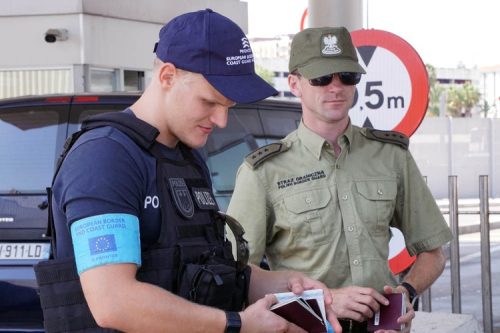
Warsaw escalates tensions with Moscow by banning entry of Russian citizens
By Ahmed Adel | September 9, 2022
The statement by Poland that it needs to rearm its troops in preparation for a “war with Russia” in the next few years is intended to attract additional aid and weapons from NATO to strengthen its eastern borders and to modernise its arsenal after it supplied obsolete weapons to Ukraine. However, this comes at the price of destroying the economy and the quality of life of the average citizen.
Poland’s Deputy Defence Minister Marcin Ociepa said that Warsaw sees “the danger of war with Russia” in the next three to ten years and needs to use this time to rearm, “no matter the cost”.
With war waging in Ukraine, Poland wants to show that it is on the front lines in the fight against a supposedly “aggressive Russia” and position itself as a major player in Europe and NATO. Poland in this light is stressing that the EU and NATO need to strengthen its eastern borders.
The Poles freed up their stockpile of obsolete weapons by sending them to Ukraine and now expect new weapons and preferential treatment from Western countries, primarily the United States. The Poles are wanting air defence systems, missile defence systems, potentially new ground forces, and heavy equipment, such as tanks and self-propelled artillery.
This also comes as Poland and the three Baltic states said on September 8 that they would temporarily restrict access for Russian citizens holding EU visas from entering by September 19. Supposedly, this is to address “public policy and security threats.”
The prime ministers of Estonia, Latvia, Lithuania and Poland said in a statement they were concerned “about the substantial and growing influx of Russian citizens” into the EU, adding: “We believe that this is becoming a serious threat to our public security and to the overall shared Schengen area.”
The statement said they “agreed on a common regional approach and hereby express their political will and firm intention to introduce national temporary measures for Russian citizens holding visas”, with exceptions only made for “dissidents,” “humanitarian cases,” and family members and holders of residence permits in EU countries.
It is recalled that EU foreign ministers met in Prague last month and agreed to suspend a 2007 visa facilitation deal with Russia, stopping short of a wider visa ban. However, EU foreign policy chief Josep Borrell said that countries bordering Russia could “take measures at a national level to restrict entry into the European Union.”
Effectively, in a cowardly way, Borrell allowed the Baltic states and Poland to put roadblocks on Russians from entering the EU. He emphasised that any measures would have to conform with rules for the EU’s Schengen common travel zone and members of Russian civil society should be able to travel to the EU. But clearly this is not the case.
With Poland closing its borders to Russian citizens and demanding the strengthening of its military, it is evident that Warsaw is preparing for an escalation in its relations with Moscow, something that will be enthusiastically backed by the US.
Poland is not an exception to the energy crisis gripping Europe, which is bringing great fears of recession once the winter arrives. US-led sanctions were imposed following the Russian military operation in Ukraine, forcing Moscow to insist that all purchases of energy must be made in the rouble, a demand that Warsaw has rejected. With Moscow’s decision to slash oil and natural gas exports, energy prices in Europe have gone through the roof and sent the cost-of-living soaring.
To deal with this, Poland has turned to Nigeria, already one of its gas suppliers, to increase its LNG shipments. This prompted Poland’s President Andrzej Duda to become the first leader from the Eastern European country to ever visit Nigeria since diplomatic relations were established 60 years ago. However, many remain sceptical that Nigeria, whose economy is badly battered, can meet the European and Polish demand, especially as unprecedented crude oil thefts by militants in the Niger Delta are affecting exports.
More importantly, Poland’s economy is slowing down. A GDP drop to 2.7% is expected in Q3 2022, the Polish Economic Institute (PIE) reported on August 31. This followed from a drop of 8.5 to 5.3% in Q2. The state-owned think tank believes that inflation by the end of Q4 will be at 14.5% but could rise to 15.6% in February 2023 due to rising energy prices.
In this way, Poland is prioritising US interests in pressuring Moscow in the false belief that Russia is preparing to invade the country. This not only highlights that Poland still does not fully understand the reasons for Russia’s military operation in Ukraine, but that it is also willing to destroy the economy and quality of life of the average citizen for the sake of having new weapons and strengthening its military.
Ahmed Adel is a Cairo-based geopolitics and political economy researcher.

or go to
Aletho News Archives – Video-Images
From the Archives
Israel Would Have No Qualms About USS Liberty-Style FALSE FLAG If Iran Campaign Falters – Analysts
By Ilya Tsukanov – Sputnik – 18.06.2025
Donald Trump is mulling whether or not to join Israel’s aggression against Iran as Tel Aviv faces problems sustaining its defenses against growing counterstrikes, and apparently lacks a realistic game plan for an end to hostilities after failing to achieve its goals. Analysts told Sputnik how the US could be ‘nudged’ into the conflict.
“The US is already assisting Israel with supplies, intel, refueling support, etc. One of the many US posts in the region could be attacked for a casus belli,” former Pentagon analyst Karen Kwiatkowski explained.
“If Trump doesn’t comply with Israel’s demand” and join its aggression voluntarily, “a false flag may be needed” to drag the US in, Kwiatkowski, retired US Air Force Lt. Col.-turned Iraq War whistleblower, fears.
Netanyahu has a diverse array of options at his disposal, according to the observer, including:
- a false flag against US assets abroad blamed on Iran or one of its Axis of Resistance allies, like the Houthis
- a US domestic attack or assassination blamed on Iran
- Iranian air defenses ‘accidentally’ hitting a civilian jetliner carrying Americans
- use of a dirty bomb or nuclear contamination somewhere in the region blamed on Iran
- even blackmailing by threatening to use nukes against Iran if the US doesn’t join the fight
Kwiatkowski estimates that Israel probably has “enough blackmail power” against President Trump and Congress to avoid the necessity of a false flag operation, but a “USS Liberty-style” attack, targeting the soon-to-be-retired USS Nimitz supercarrier that’s heading to the Middle East, for example, nevertheless cannot be ruled out entirely, she says. … continue
Blog Roll
 Aletho News
- The London Ambulances Attack: Of Course It Was A False Flag
- Embarrassing Pivot: U.S. considers dropping Iran oil sanctions amid war
- US has 2 months of rare earths left to replenish weapons amid Iran war: Report
- Strait Of Hormuz closure brings Empire to brink
- Iran controls Strait of Hormuz, dictates terms of war and peace as US excursion backfires
- Outlasting the Superpower: The Reasons Why Iran is Beating uhe US and Israel
- Top PMU commander, over a dozen fighters killed in new US strikes on Iraq
- Is Netanyahu’s war gamble threatening the future of ‘Israel’?: FT
- Smotrich calls for annexation of South Lebanon to Litani River
- Echos of Gallipoli? Hormuz and the Geography of Hubris
- If Americans Knew
- ‘Forever live by the sword’: Understanding Israelis’ massive support for Iran war
- UN’s special rapporteur on human rights says Israel is systematically torturing Palestinians
- Trump White House plagiarized Iran war manifesto from Israel-aligned think tank
- Gaza says 6–10 patients die daily waiting for treatment abroad as Israel blocks medical evacuations
- ‘Substantial evidence’ of double-tap strike in killing of Gaza’s Hind Rajab
- ‘Do Not Want To Die For Israel’: Doubts About Trump’s Iran Strategy Spread Among Troops
- Instead of taking Joe Kent’s claims seriously, the media is disregarding him as an antisemite
- Joe Kent’s Explosive Interviews about his Resignation over the Iran War
- Israel poised to take over southern Lebanon; settlers wreak havoc in West Bank – Not a ceasefire Day 165
- From Sde Teiman, the truth about Israel’s military justice system has been set free
- No Tricks Zone
- Devastating Assessment Of Comirnaty Vaccine By Former Senior Pfizer Europe Toxicologist
- New Study: CO2 Is ‘Effectively Negligible’ As An Explanatory Climate Change Factor Since 2000
- Former Pfizer Toxicologist Dr. Helmut Sterz Tells Bundestag Hearing Pfizer Vaccine Should Have Never Been Approved
- Energy Expert: Germany’s Nuclear Phaseout Was A “500 Billion Euro Mistake”
- New Research: South Australia’s Mid-Holocene Sea Surface Temperatures Were 4°C Warmer Than Today
- Storing Green Energy To Last Germany 10 Days Would Require A 60-Million Tonne Battery
- New Studies: UK Sea Levels Were 4 Meters Higher Than Today During The Mid-Holocene
- Destructive Green New Deal: German Energy And Metal Group Warns Of Drastic Crisis
- New Study Documents A 20-Year Pause In Arctic Sea Ice Decline – Driven By Internal Variability
- Wake-up Call: Survey Shows Majority Of Germans Now Favor Postponing Climate Targets!
 Aletho News
