Poles told to forage for wood to heat homes
Samizdat | June 6, 2022
Authorities in Warsaw have allowed citizens to forage for firewood in forests to keep their homes heated amid spiralling energy costs. Poland is in the midst of a coal shortage after banning Russian imports.
“It is always possible, with the consent of foresters, to collect branches for fuel,” Deputy Minister of Climate and Energy Edward Siarka was quoted by Next Gazeta as saying on Monday.
Those wishing to gather wood must first undergo training and obtain permission from the local forestry unit. The report went on to clarify that people can only take branches already lying on the ground, and cannot cut down trees.
“Only branches can be gathered. At the same time, the collected branches cannot be thicker than seven centimeters,” said Katowice Directorate of State Forestry official Marek Mroz.
He explained that branches should be taken to the local forester, who will issue an invoice. Collectors will have to pay between seven and 30 zlotys ($7.02) for approximately 0.25 cubic meters of firewood.
Polish Prime Minister Mateusz Morawiecki’s government has blamed the war in Ukraine for skyrocketing energy costs. Critics, however, say the conflict is only partially to blame, arguing that costs have risen for the past seven years. Inflation in Poland has climbed to 14% in recent weeks, with fuel prices hitting 8 zlotys ($1.87) per liter.
Demand for raw materials in Poland has far exceeded domestic output since a ban on Russian coal was imposed. Throughout the military conflict in Ukraine, Warsaw has been calling for a complete embargo on Russian energy. In March, the EU nation said it would end all Russian energy imports, including oil, gas, and coal by the end of 2022.
According to media reports, Poland’s wood imports from Russia and Belarus stopped completely at the outbreak of the conflict, and those from Ukraine have fallen by around 75%.
Poland Suddenly Realized That It Can’t Indefinitely Fund Ukraine & Its Refugees

By Andrew Korbyko | One World Press | June 2, 2022
The nostalgic neo-imperial rush of reconstituting the long-lost Commonwealth through Poland’s recent merger with Ukraine into a de facto confederation proved to be short-lived after Warsaw suddenly realized that it can’t indefinitely fund Kiev and its refugees. Everything seemed picture-perfect at first after President Duda and his Ukrainian counterpart Zelensky lavished praise on one another’s countries in late May while speaking before the Rada. They wistfully spoke about returning to the halcyon days when there were no borders between them and pledged to create a customs union to that end, among other comprehensive connectivity initiatives. This de facto confederation sounded good on paper but Poland quickly realized that its budget simply can’t afford this ambitious geopolitical project.
The first signs of trouble came just a few days later after Prime Minister Morawiecki demanded that nearby Norway immediately give all of the extra profit it’s made from energy sales thus far this year to Warsaw and Kiev. Oslo of course refused, which was then followed by Poland complaining that Germany didn’t replace the 200 older tanks that Warsaw gave to Kiev with newer ones like it claimed its neighbor had promised. Berlin denied that any such deal was ever clinched, which ultimately left Poland in the doldrums after it finally dawned on its decision makers that they just got played by Germany into transferring half of their country’s tanks to that former Soviet Republic in exchange for literally nothing at all.
Upon panicking, Poland then demanded that the UN’s headquarters for Ukrainian reconstruction be based in its country instead of the one that the international community will purportedly try to rebuild, most likely through the scheme that Zelensky shared during the World Economic Summit in Davos whereby his partners can literally take control over “a particular region of Ukraine, city, community or industry.” Warsaw obviously wants to get the lion’s share of this or at the very least skim some of the funds off the top for supposedly facilitating this process, which can in turn help it make up for the untold billions of dollars that it’s already spent on Ukraine, ergo why it wants to host that headquarters.
That demand, like practically everything else that Poland has asked for thus far such as Duda’s earlier idea during his last visit to Kiev that the US-led West reinvest Russia’s stolen foreign assets into rebuilding Ukraine (which would serve to subsidize Poland’s de facto confederation with it), wasn’t enthusiastically embraced by its allies like Warsaw expected. It might still come to pass, even if only in part, but Poland now knows that it can’t continue indefinitely funding its geopolitical project with Ukraine to the same extent as it had expected. That’s why it’s suddenly slashing its generous aid to Ukrainian refugees, cutting off free fuel deliveries, and positioning itself as Kiev’s “economic hub”.
The ruling “Law & Justice” (PiS per its Polish abbreviation) party’s Ukrainization of Polish society was intended to weaponize these “new arrivals” as “agents of influence” in the other half of the de facto reconstituted Commonwealth. They expected this to be financed by Brussels via its promised refugee aid tranche of around €150 million, which hadn’t yet been disbursed as of last weekend. In any case, Poland is demanding billions more in aid, after which Politico reported in their latest article about the surging costs of that country’s refugee program that “Brussels also said Poland could tap €1.2 billion in unused funds from REACT EU… to support Ukrainian refugees.”
The EU also approved approximately €35 billion in grants and loans to Poland as part of a COVID recovery program yet is withholding this assistance until it complies with Brussels’ demands to reform its judiciary. In other words, Poland was played by everyone– especially Germany – into taking on the bloc’s leading role in comprehensively supporting Kiev and its millions of refugees, only to be left in the lurch without any substantial assistance until it unilaterally concedes on a significant issue of national interest connected to its strategic autonomy. The irony is that while Poland sought to colonize Ukraine, it was Poland itself that was just further colonized by the EU.
The lesson to be learned is that some countries’ leaderships can be easily manipulated by appealing to their imperial nostalgia just like PiS was by its so-called “allies”. By pushing them to take the lead in “temporarily” shouldering the costs of what’s portrayed as a “multilateral effort”, external forces can get them to go so far that they can’t reverse their policies without incurring some serious cost to themselves, even if only reputational or connected to electoral politics. The manipulated leadership is therefore pressured to stay the course no matter what with the expectation that “just a little bit more” is all that’s needed to finally unlock the promised funds that might never come.
In an ideal world, everything would have gone according to PiS’ plan. The US-led West would have given Warsaw its billions of dollars’ worth of seized Russian assets to rebuild Ukraine in accordance with its desires. Norway would have been guilted to chip in and Germany would have also already replenished the whopping one-half of Poland’s tank arsenal that PiS dispatched to Ukraine, while the UN would have unreservedly established its Ukrainian reconstruction headquarters in Warsaw. Brussels, meanwhile, wouldn’t have attached any political strings to its promised refugee aid to Poland. None of that has yet to happen, though, and instead Poland is now forced to slash funding to Kiev and its refugees.
The Neo-Commonwealth project therefore isn’t off to a good start, having already been hated by genuine Polish conservative-nationalists from the get-go and now even possibly triggering the wrath of those liberal-globalists in society who demand that everyone chip in to continue funding Kiev and its refugees to the same extent as before. Poland simply can’t afford that though which is why it’s had to walk back its initially ambitious plans, though only after having already committed to merging with Ukraine into a de facto confederation, a game-changing development that it’s already too invested in to reverse. All the while, the West is laughing at the “village idiot” that it easily got to do its bidding.
Poland Wants Billions From Brussels to Support Ukrainian Refugees
Samizdat – 28.05.2022
Over 3.6 million Ukrainians, equivalent to nearly 10 percent of Ukraine’s population, have fled to Poland in recent months, with millions more making their way to Russia, Romania, Germany, Hungary, Moldova, the Czech Republic, and other nations to escape the crisis in their home country.
Poland will need billions of additional euros from the European Union to help support the millions of Ukrainian refugees in the country, Deputy Minister of the Interior Pawel Szefernaker has indicated.
“From the very start we said that the aid we provide costs in the billions, not millions of euros. The European Union’s aid for countries which help refugees should also be counted in the billions – just as it was in the case of Turkey or Greece between 2015-2016”, Szefernaker said, speaking to the Polish Press Agency (PAP) on Saturday.
The official, who is tasked with coordinating Poland’s response to the refugee crisis, complained that the European Commission has yet to transfer any funds to assist the Polish government via its Recovery Assistance for Cohesion and the Territories of Europe (REACT-EU) programme. The fund was topped up with 3.4 billion euros to help members absorb Ukrainian refugees in April by the European Parliament, and is expected to be allocated to EU countries bordering Ukraine, as well as those whose refugee intake is greater than one percent of their total population.
PAP says Warsaw is expected to receive a 144.6 million euro payout from a 400 million euro tranche of funding allocated to five countries, including Poland, Romania, Hungary, Slovakia, and the Czech Republic for refugee assistance. However, even that money has not yet been delivered, with an EC spokesperson saying the European Commission will discuss subsidy agreements with Warsaw “in the coming weeks.”
Szefernaker suggested a separate, new fund needs to be established by the EU to deal with the financial burden. “The measures referred to by the European Commission are not additional measures. These are resources shifted from various other funds that were already in the European Union’s budget”, he said.
The official noted that 95 percent of the remaining funds given to Poland by Brussels were committed to various other investments, and could not be redirected to help refugees.
Over 42 billion euros were earmarked for Poland from the bloc’s REACT cash pile last year, but was frozen over the Polish government’s intransigence on “LGBT-free” zones – municipalities where LGBT “propaganda” marches and other events are banned.
Poland has long been a net beneficiary when it comes to contributions to the EU budget, getting billions more euros than it pays into the bloc, which is funded mainly by Germany, France, Italy, and, until 2020, Britain.
Poland spent years battling Brussels in the mid-late 2010s over EU demands that the country take in refugees from Syria, Libya, Afghanistan, and other countries turned into failed states by US and NATO interventions, with the European Commission finally dropping its “refugee quotas” initiative in 2020 amid Polish, Hungarian, and Czech intransigence.
When the Ukraine crisis exploded in February, Warsaw rushed to accept millions of Ukrainians with open arms, on top of millions more already working and living in the country. Since the 2014 Euromaidan coup, over two million Ukrainians have taken up roles in sectors of the Polish economy, ranging from construction and agriculture to logistics and housework, with Polish businessmen valuing them as a source of cheap but skilled labour.
Norway responds to Polish demand for shared energy revenues
Samizdat | May 23, 2022
Norway has made it clear that it’s not going to give in to Poland’s demand for it to share its growing profits from the oil and gas trade with either Warsaw or Kiev.
On Sunday, Polish Prime Minister Mateusz Morawiecki claimed that Norway would earn an extra €100 billion ($106.9 billion) from energy sales this year due to a spike in oil and gas prices caused by the conflict in Ukraine and international sanctions on Russia.
“They should share these excess profits. It’s not normal, it’s unjust. This is an indirect preying on the war started by [Russian President Vladimir] Putin,” the PM insisted, adding that Oslo shouldn’t necessarily send its money to Poland, but to Ukraine.
Morawiecki also urged young Poles to shame their Norwegian “friends” over the massive gas profits online to push the country into sharing the wealth.
However, Norwegian Deputy Foreign Minister Eivind Vad Petersson questioned Morawiecki’s calculations on Monday.
He explained that excess oil and gas revenues go into the country’s pension fund, also known as the Oil Fund, which was established in 1990 to make sure that this wealth serves the current and future generations of Norwegians.
“Although petroleum revenues have increased as a result of the war in Ukraine, the value of the fund has fallen,” Vad Petersson pointed out.
Since the start of the year, the pension fund has lost 550 billion Norwegian krone (around $56 billion) due to turbulence on the stock market, the diplomat said.
“The Norwegian economy and Norwegian consumers are also being hit by higher prices for electricity and petrol,” he added.
Also on Monday, the Polish government, which is a strong backer of Kiev in its conflict with Moscow, announced the termination of its natural gas supply contract with Russia without waiting for its expiry at the end of 2022.
“After 30 years, it can be stated that relations in the gas industry between Poland and Russia have ceased,” Piotr Naimsky, Polish commissioner for strategic energy infrastructure, said about the move.
Russian gas giant Gazprom had already stopped supplying gas to Poland in April after Warsaw refused to switch to ruble payments for deliveries. The new rules for so-called “unfriendly countries” were introduced by Moscow in response to sanctions and the freezing of Russian foreign assets.
Russia stops gas transit through Poland
Moscow’s counter-sanctions ban the use of the Polish section of the Yamal-Europe pipeline
Samizdat | May 12, 2022
Russian energy major Gazprom said on Thursday it will not be able to use the Polish section of the Yamal-Europe pipeline for gas transit to Europe due to Moscow’s retaliatory sanctions.
Company spokesman Sergey Kupriyanov specified that the site belongs to EuRoPol GAZ, which is a joint venture between Gazprom and Polish gas major PGNiG. The latter is the operator of the Polish part of the Yamal-Europe gas pipeline.
On Wednesday, Moscow approved a list of companies in respect of which it will apply special economic measures. The list consists of 31 firms, including Polish EuRoPol GAZ, as well as the former German unit of Gazprom. The Russian-owned subsidiary was seized by the German authorities last month and could potentially be nationalized.
“For Gazprom, this means a ban on the use of a gas pipeline owned by EuRoPol GAZ to transport Russian gas through Poland,” the company said on its official Telegram channel.
Russian President Vladimir Putin decreed on May 3 that no Russian entity will be allowed to make deals with those on the sanctions list, or even fulfil its obligations under existing deals.
The decree forbids the export of products and raw materials to people and entities on the sanctions list.
Putin said the decree was in response to the illegal actions of the US and its allies meant to deprive Russia and its citizens and legal entities of property rights or to restrict their property rights.
The Yamal-Europe gas pipeline passes through Russia, Belarus, Poland, and Germany. Russia supplies nearly 40% of Europe’s overall gas demand, and this route accounts for nearly 15% of the country’s westbound deliveries. The pipeline has been operating in reverse mode recently, sending gas from Germany to Poland after Warsaw refused to accept Moscow’s demand to pay in rubles.
Poland hosts major NATO wargames
Samizdat | May 1, 2022
Poland is participating in two large-scale multinational drills and is the host nation for one of them, the country’s Defense Ministry revealed on Sunday amid Russia’s allegations that Warsaw is preparing to occupy the western part of Ukraine.
The Defender Europe 2022 (DE22) and Swift Response 2022 (SR22) will be conducted in nine countries including Poland between May 1-27, the Polish ministry said.
“There will be approximately 18,000 participants from over 20 countries training together in both exercises. The portion of the exercises on Polish soil will see some 7,000 troops and 3,000 pieces of equipment,” the statement reads.
Defender Europe is a regularly conducted American-led multinational exercise that aims poised to “build preparedness and interoperability between Allies and partners” of NATO and America. DE22 training will be conducted at several sites in Poland, with Polish soldiers to be joined by personnel from the US, France, Sweden, Germany, Denmark, and UK.
The Swift Response exercise will entail approximately 550 Polish soldiers being deployed to Lithuania and Latvia along with troops from the Czech Republic and a German-Dutch force.
“Joint combined exercises such as these enhance the security of the NATO Eastern Flank through a training in accordance with NATO standards and procedures,” the Defense Ministry emphasized.
It added that the drills also contribute to the allies’ preparedness “to meet new and emerging challenges at the contemporary battlefield in order to deter a potential aggressor.”
The military specifically pointed out that DE22 and SR 22 “are not aimed against any country and are not related to the current geopolitical situation in the region,” in a veiled reference to the ongoing Russian military offensive in Ukraine.
These assurances come as Russian Foreign Intelligence Service (SVR) Director Sergey Naryshkin accused Warsaw of preparing to occupy the western part of Ukraine, which Poland considers as “historically belonging” to it. The potential “reunification” of Poland with western Ukraine will come under the guise of deploying a “peacekeeping” mission into the country under the pretext of protecting Kiev from “Russian aggression,” the official alleged. Warsaw denied the claims.
For years, Russia has expressed concern over NATO’s expansion eastwards, which it considers a direct threat to its own security. This factor along with the possibility of Ukraine eventually joining the alliance were named by Moscow as the key reasons for launch of its military offensive.
The spectre that haunts Biden as he wings his way to the borderlands of Ukraine
The Russian special operation may after all be inching toward successful conclusion
BY M. K. BHADRAKUMAR | INDIAN PUNCHLINE | MARCH 24, 2022
By a queer coincidence, former US Secretary of State Madeline Albright passed away while President Joe Biden was travelling in Air Force 1 en route to Europe on what is probably the most crucial diplomatic mission of his presidency.
The general expectation is that 80-year old Biden is personally undertaking a mission to persuade the US’ European allies that the North Atlantic Treaty Organisation (NATO) should intervene in the Ukraine crisis in some way. And, ironically, Albright was the choreographer of the idea that in the post-cold war era, the NATO should reinvent itself and transform as a global security organisation.
Albright, like most American diplomats of East European descent, was passionately devoted to the NATO. She supported the alliance’s brutal military intervention in Yugoslavia in 1999 and would have supported an intervention in Ukraine.
The White House spin is that Biden will discuss additional sanctions against Russia. But the possibility of new restrictions has waned following the EU foreign and defence ministers’ meeting on Monday where a decision was taken to put off further sanctions.
The EU meeting instead assessed that the ongoing Ukraine-Russian talks should proceed further and even if upbeat predictions may not be entirely correct, since the talks are challenging, the good part is that neither party has complained of any deadlock in the negotiations so far.
Conceivably, Biden is travelling to Europe not to discuss tougher sanctions (something which he could as well have handled in a videoconference) but to explore NATO’s potential engagement in the Russian-Ukrainian conflict for which his participation becomes absolutely essential.
As things stand, there is every possibility of a prolonged conflict in Ukraine and Russia eventually prevailing. Such a scenario is extremely damaging for Biden politically in the US. Biden is facing domestic criticism both for his failure to prevent the conflict as well as for being ineffectual in blocking the Russian advance.
While the US rhetoric pillories Russia for “war crimes” and the humanitarian crisis in Ukraine, et al, the world capitals view this as a geopolitical confrontation between America and Russia. Outside of the western camp, the world community refuses to impose sanctions against Russia or even to demonise that country.
The world community steers clear of taking sides between the US and Russia. The Islamabad Declaration issued on Wednesday after the 45th meeting of the foreign ministers of the fifty-seven member Organisation of Islamic Conference refused to endorse sanctions against Russia and instead counselled cessation of hostilities in Ukraine, avoidance of loss of lives, enhancement of humanitarian assistance and a “surge in diplomacy” — almost ditto China and India’s stance.
Not a single country in the African continent and West Asian, Central Asia, South and Southeast Asian region has imposed sanctions against Russia. Following a visit to Hanoi, Malaysian PM Ismail Sabri Yaakob said, “We discussed the Russian-Ukrainian conflict and agreed that Malaysia and Vietnam will remain neutral on this issue. As for sanctions against Russia, we do not support them. The sides do not support unilateral sanctions; we recognise only restrictions that could be imposed by the UN Security Council.” This is the consensus within ASEAN too.
Interestingly, Chinese Councillor and Foreign Minister Wang Yi was the chief guest at the OIC meeting in Islamabad. In his remarks, Wang Yi said, “China supports Russia and Ukraine in continuing their peace talks, and hopes that the talks will lead to ceasefire, end the fighting, and bring about peace. Humanitarian disasters should be avoided, and spillover of the Ukrainian crisis should be prevented so as not to affect and harm the legitimate rights and interests of other regions and countries.”
The Chinese foreign ministry press release on Wang Yi’s meeting with the Saudi Arabian Foreign Minister Faisal bin Farhan Al Saud said, “As to the Ukraine issue, the two sides agreed that all countries’ sovereignty and territorial integrity should be respected and their reasonable security concerns should be taken seriously. It is imperative to prevent any humanitarian crisis, maintain the peace talk process and resolve conflicts through dialogue and negotiation. Both sides emphasised that all countries have the right to make independent judgements, withstand external pressure, and disagree with the simple logic of “black or white” and “friend or foe”.
Again, the Chinese press release on Wang Yi’s meeting with his Egyptian counterpart Sameh Shoukry said, inter alia, “The two sides exchanged views on the Ukraine issue, and agreed to respect the sovereignty and territorial integrity of all countries and stay committed to a comprehensive solution to the current crisis. Shoukry said, Egypt opposes some countries exerting pressure on China and stands for strengthening cooperation rather than escalating confrontation.”
Curiously, four foreign ministers from West Asia travelled to Moscow last week to discuss the bilateral cooperation — from Qatar, Iran, Turkey and the UAE.
Nonetheless, the outcome of Biden’s visit to Europe will have significant bearing on the conflict in Ukraine. If Biden succeeds in getting European backing for his proposal for a NATO intervention in Ukraine, the conflict may escalate dramatically into a world war involving nuclear weapons.
Will Biden push the envelope? It seems he’s unwilling to risk. Biden seems to have a Plan B as well. He has scheduled a separate visit to Warsaw. Poland indeed has its fair share of Russophbes and has been straining at the leash for some form of involvement in Ukraine.
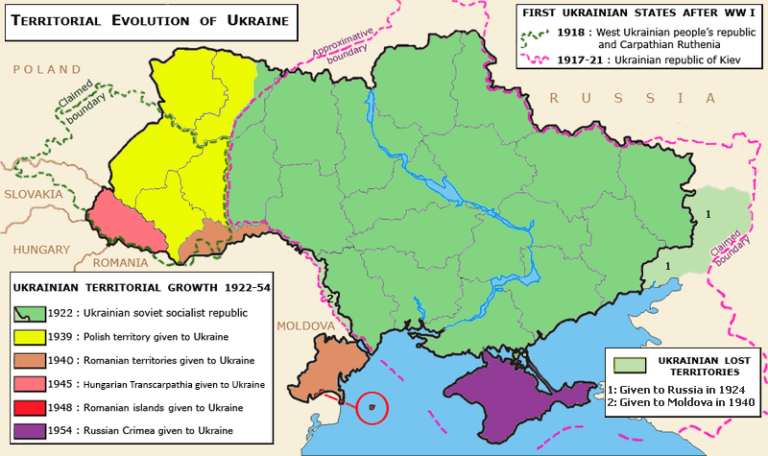
The heart of the matter is that Poland also has an axe to grind. Parts of Poland comprise today’s ethnically mixed western borderlands of Ukraine — oblasts of Zhytomyr, Khmelnytskyi and Lviv. If Ukraine fragments or collapses in defeat, Poland will most certainly seize the opportunity to reclaim its lost territories. Poland’s hyper-activism over Ukraine is self-evident.
Incidentally, in recent days, former Polish Foreign Minister Radoslaw Sikorski and Ukrainian Deputy Prime Minister Iryna Vereshchuk have both accused Budapest of trying to lay its hands on Ukraine’s largely Hungarian-populated Transcarpathian region. On Tuesday, Sikorski alleged in a tweet that Hungarian PM Viktor Orbán and President Vladimir Putin reached a secret agreement on the partition of Ukraine!
On the same day, Iryna Vereshchuk complained in a Facebook post: “The way the Hungarian leadership has been treating Ukraine lately is even worse than some of the Russian satellite states of the former Soviet Union. Hungary does not support the sanctions. They don’t provide weapons. They don’t allow transit of weapon supplies from other countries. They say ‘no’ to virtually everything.”
Biden cannot but be exploring with the Polish leadership possibilities that fall short of an outright NATO intervention in Ukraine. The spectre that haunts the Biden administration, despite the swagger of its media bluster, is that the Russian special operation may after all be inching toward successful conclusion, creating a large buffer of regions on the eastern side of the Dnieper river, and gaining control of Black Sea coastline that denies access to NATO ships.
Poland becomes a key stakeholder in such an outcome and Washington surely regards Warsaw as its number one interlocutor in the developing situation, as the fate of Ukraine hangs in the balance.
Much wants more and loses all
GEFIRA | March 11, 2022
 The collective post-West has been running amok for the last two weeks. The powers that be make believe that they did not expect that events would unfold the way they are unfolding now (though they did their best to make things happen as they are happening) and they make a show imposing sanctions on the aggressor and assuring the populace that the aggressor sooner or later will cave in. There is yet a third aspect to the phenomenon: the same powers that be want the people to forget that merely twenty years back they themselves assaulted Yugoslavia/Serbia, used missiles with depleted uranium, bombed cities and shot at civilians. Of course, that earlier event was a humanitarian action while the current one is a brutal act of aggression, but we digress.
Now there is a big misconception on the part of the post-West about Russia. If the Western media claim the Russian people are against the war or that the Russian people are about to rebel and overthrow President Putin, then they are either delusional or lying through their teeth. Reality is something that refuses to obey our wishes. The Russian people have rallied around their president and their authorities; the Russian people – unlike citizens of the post-Western countries – are patriotic and ready to sacrifice themselves in defence of their fatherland. Western sanctions? The post-West may withdraw businesses and impose sanctions on Russian oligarchs, which is music to the ears of the Russian people. They resented Western dominance anyway and they will be more than happy to see the oligarchs mopped up from their society. Russians view the hostilities as a repeat of the Great Patriotic War of 1941-1945. Contrary to what has been done to the Western collective mentality, the Russian authorities under Vladimir Putin took great efforts to raise Russia’s citizens in patriotic values. Russians are going to win because they do not care about money so much as the West does. That’s one big misconception that Western people have about their opponents from the East.
It is the West that cannot imagine a life without money and the resultant luxuries. Sanctions or no sanctions, Western companies will sooner or later (I bet: sooner) resume business with Russia because – as everybody in the West knows – “money makes the world go round”. No less a person than Comrade Lenin famously said: capitalists will sell us the rope with which we will make a noose to hang them. And so they will, make no bones about it.
Yes, the West is ready to go to war with Russia so long as it has… Ukrainian, Polish, Romanian, Lithuanian, Latvian or Estonian soldiers at its disposal. The moment the West runs out of those soldiers, its leaders will go back to the negotiating table with the Kremlin. Do you want any evidence? Here you are.
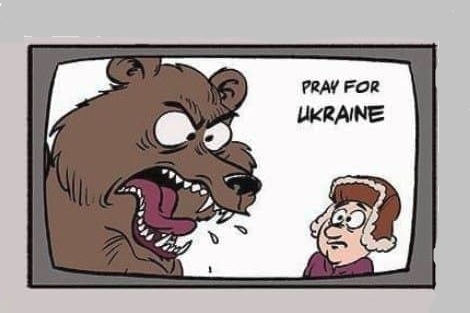
A few days ago Americans tried to set Poland against Russia in that they suggested to Warsaw that it send Soviet-made MiG aircraft to Ukraine. Though the Polish authorities usually oblige the West’s wishes, this time they had second thoughts about the proposal and replied that they were ready to send the said aircraft to the American air base in Rammstein so that Americans could pass them over to Kiev. And you know what? Washington was beside itself with annoyance! You see? The dog was expected to bite the bear, with the dog’s owner watching from the sidelines and biding his time.
Just picture it to yourself. Warsaw sends the MiG aircraft to Ukraine, Moscow regards it (and rightly so!) as a hostile act and fires a couple of missiles against selected targets in Polish territory. What do you think the West would do? Yes, you guessed it right. The West would express its great indignation and impose a set of new sanctions… for a time.
Talking about President Putin, who – according to the Western analysts is about to be toppled either by the people closest to him or by the nation – his Christian name is Vladimir, and Vladimir was the name of the grand prince of Rus’ who united the many Slavic tribes and christened them. He went down in history as Vladimir the Great. The chances are – whether you like it or not – that Putin is going to be another Vladimir the Great.
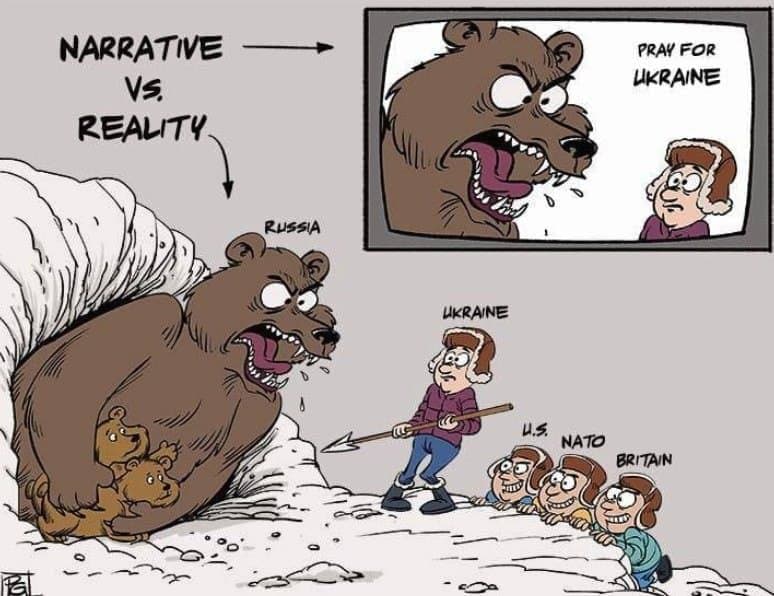
The current war means the end of the world that we have been accustomed to. We are entering a new cold war period and a new division of the globe with the United States, Great Britain, and the European Union on the one side, and Russia and China on the other. This new world throws a monkey wrench into the plans forged by globalists of the Klaus Schwab ilk. Or, globalism will be reduced to the Western world. The international rules that all the countries have up to now tried to abide by are no more valid for Russia, and consequently sooner or later for others because of the domino effect. Being beleaguered by the West, Moscow will have no intention to play by the rules created in this West. Why should it?
Sanctions work both ways. Russia has a lot to offer, be it crude oil, natural gas, rare metals or what not. Look back into the past! The Bolsheviks that took reins of power after 1917 were hated by the West. Lo and behold, it did not take many years for the capitalists to resume business with the hated communists; similarly, after the Second World War the Soviet Union was regarded as a hostile empire and yet, and despite that, business between the West and the Soviets went as usual. How about China? It was Taiwan that was first supported by the West, yet slowly but surely Washington reversed course, left Taiwan to its own devices and resumed contacts with Beijing. Since – as said above – money makes the world go round, the greedy capitalists helped China develop in that they outsourced almost all production to the Middle Kingdom. Do you think it is going to be different now with regard to Russia?
When Ukraine is eventually conquered by Russia, what will the elites in such small countries like Lithuania, Latvia and Estonia – all bordering on Russia – think about their security and the ability of the collective West to help them? I want to see that man or that woman who really thinks that NATO will go to war with Russia over Estonia or Latvia.
Ukraine has been exploited by Western companies for thirty long years. All those contacts with democracies and capitalism did not benefit the country at all. It only benefited a handful of people, who fled Ukraine before the hostilities, leaving the rank and file behind. Rumour has it that President Zelensky is kept in the American embassy in Warsaw though we are all made to believe that he remains in Kiev. How much would you bet on President Zelensky residing in Kiev, a city that is about to be soon encircled?
The West could have further exploited Ukraine and teased Russia but it simply overplayed its hand. Precisely as it is described in this fable by Aesop where a goose laying golden eggs is killed by the greedy owners. The moral? Much wants more and loses all. Now that Moscow is taking retaliatory steps like shutting down media outlets that propagated Western ideas and Western lifestyle the West has lost its ideological bridgehead inside Russia that it has held for thirty years. The West really thought it was ready to make a killing. A big killing. Western elites really thought Russia would be withdrawing from its positions further and further; they really believed the Navalny kind of Russian dissenters that the Russian people were all against the authorities. Worse, the West still thinks that Russians will force their president to surrender because otherwise common people will be stripped of the opportunity to eat hamburgers and cheeseburgers in McDonald’s restaurants in Moscow and Petersburg! Sure, there are some such people who are ready to trade their country for ham- and cheeseburgers, but then it is a splinter from the large whole. The majority accustomed to Russia’s greatness are not willing to sell this greatness off. Plus, they are not attracted by the Western values of married homosexuals or the many sexes that are invented by the month. That’s also something that the post-West is not aware of. Remember also that millions of Russians have bitter recollections of the Yeltsin era during which western-style capitalism promised them well-being and brought poverty, unrest and humiliation instead. That’s one big reason why President Putin is appreciated by the vast majority of the population: he put an end to chaos and brought in stability. If you think Russians dream about homosexual parades in their cities or pregnant soldiers in their army or the many gender pronouns, you cannot be more delusional.
There is one more explanation to all what is occurring. The West went to great lengths to have Russia and Ukraine clash for the sheer purpose of weakening both countries. This is one sure way of preserving world preponderance, is it not? Lead nations to war the moment you see they have developed too much and too fast. The United States achieved its global dominance because the Second World War wreaked havoc with the economies of Germany, Great Britain, France, Russia, Italy and Japan – the world’s powerhouses. After the cessation of the hostilities all those countries needed American aid and American dollars and were compelled to accept almost all the dictates from Washington.
Look at the present political map of the world. Iraq, Syria, Libya, Afghanistan, Ukraine, the countries of former Yugoslavia, the states that went through an array of all those colour revolutions: they are reeling under the blows of all manner of war, civil war, social upheaval and the attendant economic collapse. Which country emerges victorious? Yes, sure, the one that has not been directly engaged in the conflict. A classic case of two dogs fighting for a bone with a third running away with it.
Russia and Ukraine will lose a number of people (killed, wounded, displaced); Ukraine will have its economy ruined; Poland is already accommodating a million (and rising!) Ukrainians who somehow do not want to defend their country and prove their rights to it (If you say that women and children do not or should not take part in hostilities, then think again); Warsaw will have a lot of trouble with them. Who emerges victorious? You know who. Vice-President Kamala Harris visited Poland to reassuringly pat the Polish nation on the shoulder in recognition of Poland’s hospitality towards Ukrainians. She knows that such gestures work with Poles. The supranational elites hating ethnically monolithic countries are rubbing their hands in glee. At last Poland, this ethnically and religiously monolithic nation, is changing to a mix of Poles and Ukrainians, of Catholic and Orthodox Christians, to be later skilfully set off against each other like Croats and Serbs if Warsaw should fail to toe the Western party line.
GEFIRA – Global Analysis from the European Perspective. Preparing for the world of tomorrow.
Poland ready to deploy all their MIG-29 jets to the Rammstein Air Base
Statement of the Minister of Foreign Affairs of the Republic of Poland regarding the statement by the US Secretary of State on providing airplanes to Ukraine – 08.03.2022
The authorities of the Republic of Poland, after consultations between the President and the Government, are ready to deploy – immediately and free of charge – all their MIG-29 jets to the Ramstein Air Base and place them at the disposal of the Government of the United States of America.
At the same time, Poland requests the United States to provide us with used aircraft with corresponding operational capabilities. Poland is ready to immediately establish the conditions of purchase of the planes.
The Polish Government also requests other NATO Allies – owners of MIG-29 jets – to act in the same vein.
International nuclear watchdog passes resolution on Ukraine
RT March 3, 2022
In a resolution passed on Thursday by its board of directors, the International Atomic Energy Agency (IAEA) reportedly “deplored” Moscow’s invasion of Ukraine. Russia has denounced the document, calling it politicized and factually incorrect.
The resolution, which is yet to be published, apparently calls on Russia to allow the Ukrainian authorities to resume control of its nuclear sites. Moscow says the assertion that they are not already in control is incorrect.
There were claims that Russian troops had occupied the site of the destroyed Chernobyl nuclear power plant as they moved from Belarus towards Kiev. The Russian Defense Ministry has denied them, stating that Ukrainian guards remained in control of the facility.
On March 1, Reuters gave a preview of the draft of the damning resolution, which was penned by Poland and Canada on behalf of Ukraine.
The news of the resolution’s passage, with just two votes having been cast against it at the session of the 35-member board, was welcomed by Ukraine. Foreign Minister Dmytro Kuleba claimed in a tweet that it showed the world was “united against Russia’s actions, which threaten Ukraine and all of Europe.”
Russia’s representative at the IAEA, Mikhail Ulyanov, blasted the document, claiming it contained “intentional politically motivated lies and mistakes.” In particular, the assertion that the Ukrainian authorities were not in control of the nation’s nuclear sites was wrong, the official said in a series of tweets.
Moscow was satisfied that “countries whose populations taken together exceed a half of the mankind refused to support the resolution,” Ulyanov added.
China has confirmed that it voted against the resolution. Its representative, Wang Qun, said the document “obviously” overstepped the agency’s mandate to monitor nuclear security, and that by adopting the resolution, it had undermined the IAEA’s position as a professional, non-political organization.
The diplomat complained that some nations had “forcibly pushed” the draft and rejected suggestions submitted by other board members about how to improve the document.
Earlier on Thursday, IAEA Director General Rafael Mariano Grossi confirmed to journalists that all safety precautions the agency had taken in Ukraine remained intact.
Featured Video

Col Doug Macgregor: America’s Back to ENDLESS WARS
or go to
Aletho News Archives – Video-Images
Book Excerpt
Leslie Wexner’s Inner Demon
BY WHITNEY WEBB |
UNLIMITED HANGOUT| JUNE 10, 2022
This short excerpt from Whitney Webb’s upcoming book “One Nation Under Blackmail” examines an obscure media profile of Leslie Wexner, Jeffrey Epstein’s mentor, from the 1980s that contains disconcerting revelations about Wexner’s personality and his inner world. … continue
Blog Roll
Recent Comments
Coronistan on Why can’t western leaders acce… John Edward Kendrick on German government ‘embezzling’… loongtip on Von der Leyen to have new secu… papasha408 on First Gaza, then the world: Th… papasha408 on Is Nixing Aid to Israel a Pois… papasha408 on Japan to Sign Up For NATO’s Uk… Redracam on Iran Willing to Dilute Enriche… loongtip on When Threats Replace Evid… loongtip on Zelensky tried to kill the cha… eddieb on I might get killed for posting… Bill Francis on I might get killed for posting… loongtip on Beijing cancels Panama deals a…


 Aletho News
- Col Doug Macgregor: America’s Back to ENDLESS WARS
- Villains of Judea: Haim Saban
- Germany demands UN Rapporteur Albanese resign, joining France
- Hamas official says Netanyahu joining ‘peace council’ is a farce
- Israel Demanding that Iran Limit the Range of Missiles to 300 Kilometers
- Why can’t western leaders accept that they have failed in Ukraine?
- German government ‘embezzling’ taxpayer money to fund Ukraine – veteran politician
- Russian Soldiers Tortured in Secret Ukrainian Prisons
- Tensions between Hungary and Ukraine could lead to a new regional conflict
- Russia preparing oil lifeline to Cuba – embassy
- If Americans Knew
- AZAPAC, the new PAC opposing Israeli domination of U.S policies
- Haim Saban: Billionaire for Israel
- Rafah e-wallet plan highlights Israel’s deepening financial occupation
- Viral post claims Netanyahu sought legal approval, igniting speculation about Israel’s organ harvesting
- AIPAC Has a New Opponent: PAL PAC
- Right-Wing Catholic Off Trump Religion Panel After Israel-Gaza Remarks at Antisemitism Event
- Jewish terrorism, apartheid rule the West Bank – Not a ceasefire Day 125
- Why Israel persecutes children like my son Shadi
- In Gaza, One Man Is Searching for the Remains of His Family With a Flour Sifter
- Horrific situation in Gaza, West Bank – Not a ceasefire Day 124
- No Tricks Zone
- German Gas Crisis…Chancellor Merz Allegedly Bans Gas Debate Ahead of Elections!
- Pollen Reconstructions Show The Last Glacial’s Warming Events Were Global, 10x Greater Than Modern
- Germany’s Natural Gas Storage Level Dwindles To Just 28%… Increasingly Critical
- New Study Rebuts The Assumption That Anthropogenic CO2 Molecules Have ‘Special’ Properties
- Climate Scientist Who Predicted End Of “Heavy Frost And Snow” Now Refuses Media Inquiries
- Polar Bear Numbers Rising And Health Improving In Areas With The Most Rapid Sea Ice Decline
- One Reason Only For Germany’s Heating Gas Crisis: Its Hardcore-Dumbass Energy Policy
- 130 Years Later: The CO2 Greenhouse Effect Is Still Only An Imaginary-World Thought Experiment
- New Study Affirms Rising CO2’s Greening Impact Across India – A Region With No Net Warming In 75 Years
- Germany’s Natural Gas Crisis Escalates … One Storage Site Near Empty …Government Silent
 Aletho News