It’s Beginning to Smell a Lot Like Totalitarianism, and I Don’t Mean Russia
By F. William Engdahl – New Eastern Outlook – 13.12.2016
If we smell precisely the stench of the totality of steps taken in NATO countries in recent months, especially in the United States and the European Union, we can smell the stench of totalitarian rule or some would call it, fascism, being quietly imposed on our basic human freedoms. Some recent examples give pause for reflection as to where we are allowing our world to drift.
Let’s begin with a most ominous, bizarre, Jesuitical interview that the Roman Catholic Pope Francis gave to a Belgian paper December 7, comparing what he calls defamatory news to what he called the “sickness of coprophagia.” He stated:
QUESTION – A final question, Holy Father, regarding the media: a consideration regarding the means of communication…
POPE – The communications media have a very great responsibility…It is obvious that, given that we are all sinners, also the media can…become harmful… They can be tempted by calumny, and therefore used to slander, to sully people, especially in the world of politics. They can be used as a means of defamation: every person has the right to a good reputation, but perhaps in their previous life, or ten years ago, they had a problem with justice, or a problem in their family life, and bringing this to light is serious and harmful… This is a sin and it is harmful. A thing that can do great damage to the information media is disinformation: that is, faced with any situation, saying only a part of the truth, and not the rest. This is disinformation… Disinformation is probably the greatest damage that the media can do, as opinion is guided in one direction, neglecting the other part of the truth. I believe that the media should… not fall prey – without offence, please – to the sickness of coprophilia, which is always wanting to communicate scandal… And since people have a tendency towards the sickness of coprophagia, it can do great harm.
Coprophilia is defined in the Merriam-Webster dictionary as “marked interest in excrement, especially the use of feces or filth for sexual excitement.” And coprophagia is eating feces by humans, literally, eating shit.
What people precisely, Holy Father, have a “tendency to towards the sickness of coprophagia”? Is this the dominant sickness of the human race? And if not, why do you make such a disgusting likeness between eating shit and citizens who read about politicians and their misdeeds or media that report on same? And who is to judge if factually true dissemination of facts about political figures from their past is relevant or not to help voters judge their character? I would say the comments are a perfect example of what he pretends to condemn.
Were it only a single, off-the-cuff remark by a religious figure, we could dismiss it along with claims such as the papal infallibility declaration proclaimed by the Vatican I on 18 July 1870. However, precisely because of such dogma and of the influence of the Roman Catholic Church and its Pope, notably in the countries of Western Europe, the United States and Latin America, such vague and dangerous remarks ought to be taken seriously as a signal of what lies ahead for the public freedom of speech.
“Fake News”
The papal comments on coprophagia and journalism come amid an explosion of charges in the USA and EU that Russia is planting “fake news” as it is now being called, about Hillary Clinton in the US media by way of certain alternative media. Robby Mook, Hillary Clinton’s former campaign manager, said “fake news” was a “huge problem” the campaign faced in the recent US election: “I still think we have to investigate what happened with Russia here. We cannot have foreign, and I would say foreign aggressors here, intervening in our elections. The Russian were propagating fake news through Facebook and other outlets, but look, we also had… Breitbart News, which was notorious for peddling stories like this.”
Online stories that claimed a Washington D.C. pizza restaurant, Comet Ping Pong, was used by candidate Hillary Clinton and her campaign manager John Podesta for child sex, the so-called “Pizzagate” Scandal, is now being used to drum up popular opinion for censorship of the Internet as well as Facebook and other social media.
Senior New York Times reporter David Sanger wrote a vague, anonymous “according to senior Administration sources,” article on December 9 under the headline, “Russia Hacked Republican Committee but Kept Data, US Concludes.” What we are seeing is precisely the kind of fake news that Hillary Clinton and the Pope talk about. But it is mainstream establishment media doing the fakery.
The fakery is being orchestrated by the highest levels of the mainstream media in collusion with NATO circles and intelligence agencies such as the CIA, which has saturated the ranks of mainstream media with their disinformation agents according to former CIA head William Colby, who once allegedly said, “The CIA owns everyone of any significance in the major media.”
The campaign will continue, likely with some horrendous stories about some psychopath taking a gun and bursting into Comet Ping Pong pizza place shooting innocent customers, because it was said he read in alternative media fake news about the pedophile ring. That already took place, but the man fired no shots. The population is being manipulated to accept extreme censorship of internet and other alternative media, something unimaginable just months ago.
Like clockwork, the “fake news” campaign has spread to the European Union. After announcing she will run again in 2017 for Chancellor, Angela Merkel spoke ominous words suggesting government censorship of independent “populist” (sic) media might be necessary: “Today we have fake sites, bots, trolls — things that regenerate themselves, reinforcing opinions with certain algorithms and we have to learn to deal with them.” She declared, “we must confront this phenomenon and if necessary, regulate it… Populism and political extremes are growing in Western democracies..” Her remarks came after Google and Facebook cut off ad revenue to what they declared to be “fake” news sites.
In the EU, especially Germany, populist has an implicit negative or even fascist connotation as in “right-wing populist” parties who oppose Merkel’s open door to war refugees policies, or who these days oppose almost anything her heavy-handed government puts forward.
War on Cash
Now if we begin to see stealth propaganda preparing us to accept severe clampdowns on the one remaining free media, the Internet and related social media, we can also see an equally ominous, indeed, totalitarian move to create acceptance for the idea we give up the right to hold paper money, giving private, often corrupt, banks total control over our money, and in turn giving government agencies total control over where we spend for what.
This is the so-called cashless society. Arguments put forward are that elimination of cash will be more convenient to consumers or that it will eliminate or greatly reduce organized crime and shadow economy that evades taxation. In the EU, Sweden has already virtually eliminated cash. Sweden cash purchases today are down to just three per cent of the national economy compared to nine per cent in the Eurozone and seven per cent in the US. Public buses don’t accept cash. Three of Sweden’s four largest banks are phasing out the manual handling of cash in bank branches. Norway is following the same path.
In France today, it’s now illegal to do cash transactions over €1,000 without documenting it properly. France’s finance minister Michel Sapin, in the wake of the Charlie Hebdo attacks, blamed the attacks on the ability of the attackers to “buy dangerous things with cash.” Shortly after the Hebdo attacks he announced capital controls that included the €1,000 cap on cash payments, down from €3,000, to “fight against the use of cash and anonymity in the French economy.” In high-inflation Eurozone €1,000 is not a huge sum.
Even in conservative Germany, a leading member of the Merkel coalition proposed to eliminate the €500 note and capping all cash transactions at €5,000. Some weeks later the European Central Bank, where negative interest rates are the order of the day, announced it would end issue of €500 notes by December 2018 arguing it made it too easy for criminals and terrorists to act.
And in the United States, as the campaign to sell skeptical citizens on cashless digital bank payments increases, JP Morgan Chase, the largest and one of the most criminal banks in the US, has a policy restricting the use of cash in selected markets. The bank bans cash payments for credit cards, mortgages, and auto loans; and it prohibits storage of “any cash or coins” in safe deposit boxes. So if you have a rare cold coin collection, you better stuff it in the mattress…
Negative Rates and Cashless Citizens
As long as cash–bills and coins of a national currency–are the basis of the economy, the central banks of the USA and EU as well as Japan, are unable to impose a severe negative interest rate policy much beyond the flirtation today by the ECB and Bank of Japan. If central bank rates were to go very negative, banks would be charging customers the absurd charge to make them pay to keep their cash on deposit or in savings at those banks. Naturally, people would revolt and withdraw in cash to invest in gold or other hard, tangible valuables.
Harvard economist and member of the Economic Advisory Panel of the Federal Reserve, Kenneth Rogoff, an advocate of the “war on cash,” noted that the existence of cash “creates the artifact of the zero bound on the nominal interest rate.” In his 2016 book, The Curse of Cash, Rogoff urged the Federal Reserve to phase out the 100-dollar bill, then the 50-dollar bill, then the 20-dollar bill, leaving only smaller denominations in circulation, much like what the mad Modi has just done in India.
Any serious observer of the world economy, especially of NATO nations in Europe and North America since the financial crisis of September 2008, would have to realize the current status quo of zero or negative central bank interest rates to prop up banks and financial markets is not sustainable. Unless cash is eliminated that is.
On April 5, 1933 President Franklin D. Roosevelt signed Executive Order 6102, “forbidding the Hoarding of gold coin, gold bullion, and gold certificates within the continental United States.” That was rightly denounced by many as outright theft, confiscation of privately held gold, by the Government.
Radical solutions such as done by President Roosevelt in 1933, yet in a monetary order where gold no longer dominates, is clearly becoming more attractive to the major bankers of Wall Street and the City of London. Rather than confiscate citizens’ gold, today the Gods of Money would have to find a way to steal the cash of citizens. Moving to their “cashless” banking, limiting how much cash can be withdrawn and then eliminating cash entirely as Swedish banks are doing would enable tax authorities to have perfect totalitarian control on every citizen’s use of money. Moreover, governments could decree, as did FDR, that cash above certain levels must be taxed under some or another national declaration of emergency.
As such bold, radical moves advance, they would of course be vociferously attacked not on CNN or The New York Times or Financial Times or other mainstream media tied to those criminal financial institutions, but in alternative media. Keep in mind it was the uncritical New York Times and Washington Post that uncritically retailed the fake news that led to declaration of war on Iraq in 2003, namely that Saddam Hussein had weapons of mass destruction aimed at Washington. That war has spread death and destruction of a scale unimaginable. No one complained at the time about that fake news.
The protest over moves to confiscate citizens’ bank holdings would come through alternate, independent media such as Zero Hedge or countless others. Recently, US media uncritically republished a purported list of “fake news” blogs and websites prepared by Assistant Professor of Communications at Merrimack College, Melissa Zimdars. Zero Hedge was on it.
This is not about endorsing or not endorsing any alternative blog or website. It is about the essential freedom of us all to be able to read and decide any and all opinions or analyses and not to have government decide what I am or am not allowed to read. It’s about the freedom to keep privacy about what I choose to buy and not leave a digital trail that my bank could release to the tax authorities or to Homeland Security or the FBI, or sell to profiling consumer operations. Controlling public communication and controlling private money would go a long way to creation of the perfect totalitarian state. Not a good idea, I would say.
F. William Engdahl is strategic risk consultant and lecturer, he holds a degree in politics from Princeton University.
Pope’s unbalanced neutrality in Holy Land
By Nicola Nasser | Middle East Eye | June 4, 2014
Pope Francis’ “pilgrimage” to the Holy Land last week proved to be an unbalanced impossible mission. The pontiff failed to strike a balance of neutrality between contradictory and irreconcilable binaries like divinity and earth, religion and politics, justice and injustice and military occupation and peace.
Such neutrality is viewed by the laity of Christian believers, let alone Muslim ones, in the Holy Land as religiously, morally and politically unacceptable.
The 77-year old head of the world’s 1.2 billion Catholics “is stepping into a religious and political minefield,” Naim Ateek, the Anglican priest who founded the Palestinian liberation theology movement and runs the Sabeel Ecumenical Center in Jerusalem and Nazareth, was quoted as saying by Time on last May 24, the first day of the pope’s “pilgrimage.”
Ironically, the symbolic moral and spiritual power of the Holy See was down to earth in Pope Francis’ subservient adaptation to the current realpolitik of the Holy Land in what the Catholic Online on May 26 described as “faith diplomacy.”
The pontiff’s message to the Palestinian people during his three-day “pilgrimage” to the Holy Land boils down to an endorsement of the Israeli and U.S. message to them, i.e.: “The only route to peace” is to negotiate with the Israeli occupying power, refrain from unilateral actions and “violent” resistance and recognize Israel as a fait accompli.
The UK-based Jordanian-Palestinian journalist Lamis Andoni, a Christian herself, wrote on May 27: “We don’t need the Vatican blessing of negotiations … Whoever sees occupation and remains neutral has no justice in his vision.”
The Vatican and the pope himself had insisted that his visit to the birthplace of the three monotheistic “Abrahamic faiths” of Islam, Christianity and Judaism was “purely spiritual,” “strictly religious,” a “pilgrimage for prayer” and “absolutely not political.”
But the Vatican expert John Allen, writing in the Boston Globe a week ahead of the pope’s visit, had expected it to be a “political high-wire act,” and that’s what it truly was, because “religion and politics cannot be separated in the Holy Land,” according to Yolande Knell on BBC online on May 25.
Pope Francis would have performed much better had he adhered “strictly,” “purely” and “absolutely” to making his trip a “pilgrimage for prayer” and one that is committed to Christian unity and to helping indigenous Christians survive the highly volatile and violent regional environment.
Instead he had drowned his spiritual role in a minefield of symbolic political semantics and semiotics.
The pope finished his “pilgrimage,” which was announced as a religious one but turned instead into a political pilgrimage, with a call for peace.
However, the grand mufti of Jerusalem, Muhammad Hussein, while welcoming the pontiff inside Islam’s third holiest site of Al-Aqsa Mosque on May 26, said: “Peace in this land will not happen until the end of the [Israeli military] occupation.”
Palestinian-American Daoud Kuttab on May 25 wrote in a controversial column that the pope “exceeded expectations for Palestinians.”
He flew directly from Jordan to Bethlehem in Palestine without passing through any Israeli entry procedures, implicitly and symbolically recognizing Palestinian sovereignty.
He addressed the Palestinian President Mahmoud Abbas as the head of the “State of Palestine,” announced that there must be “recognition of the right of the Palestinian people to a sovereign homeland and their right to live with dignity and with freedom of movement” and met with Palestinian children whose parents were refugees whom Israelis displaced from their homes in 1948.
And in an undeniable expression of solidarity with the Palestinians, he made an unplanned stop to pray at Israel’s apartheid wall of segregation in Bethlehem, because, as he said, “the time has come to put an end to this situation which has become increasingly unacceptable.”
However, the word “occupation” was missing in more than thirteen of his speeches during his “pilgrimage” as was any reference to the world’s “largest open-air prison” in Gaza Strip or to Dahiyat a-Salam (literally: Neighborhood of Peace) and five other neighbourhoods in eastern Jerusalem, including the Shu’fat Refugee Camp, where some eighty thousand Palestinians have been cut off from the city services, including water, since March 2014 and isolated from Jerusalem by Israel’s segregation wall. His itinerary did not include the Galilee and Nazareth where most Palestinian Christians are located.
Eight papal messages
However, within less than twenty four hours the pontiff was to offset his positive overtures to Palestinians and his call for a “just solution” and a “stable peace based on justice” for the Palestinian-Israeli conflict with eight messages to them.
The pontiff’s arrival in the Palestinian Holy Land came three days before Israel’s celebration of its 47th anniversary of its military occupation and annexation of the Christian and Muslim holy sites in the Arab east Jerusalem and ten days after the Palestinian commemoration of the 66th anniversary of their Nakba on the creation of Israel in 1948 on the ruins of more than 500 towns and villages from which the Zionist paratroops ethnically cleansed forcefully more than 800,000 Arab Muslim and Christian native Palestinians.
The pope had nothing to say or do on both occasions to alleviate the ensuing plight of the Palestinians except prayers, because “the concrete measures for peace must come from negotiations … It is the only route to peace,” according to the pope aboard his flight back to Rome.
That was exactly the same futile message the Israeli occupying power and its U.S. strategic ally have been sending to Palestinians for sixty six years, but especially since 1967: Palestinians should be held hostages to exclusively bilateral negotiations with their occupying power. This was the pope’s first message to Palestinians.
For this purpose, the pope invited Palestinian and Israeli presidents, Abbas and Shimon Peres, to pray for peace at “my home in the Vatican as a place for this encounter of prayer” on June 8. The pope’s spokesman, Federico Lombardi, told the BBC it was “a papal peace initiative.” This was his second message.
His third message to Palestinians was to “refrain from initiatives and actions which contradict the stated desire to reach a true agreement” with Israel, i.e. to refrain from unilateral actions, which is again another Israeli and U.S. precondition which both allies do not deem as deserving Israeli reciprocity.
By laying a wreath at the grave of Theodor Herzl, the atheist founder of Zionism who nonetheless believed in God’s promise of the land to His Jewish “chosen people,” the pope legitimized Herzl’s colonial settlement project in Palestine. This was his fourth message: Israel is a fait accompli recognized by the Vatican and blessed by the papacy and Palestinians have to adapt accordingly. The Washington Post on May 23 went further. “Some are interpreting” the pope’s act “as the pontiff’s tacit recognition of the country’s Jewish character.”
The pope sent his fifth message to Palestinians when he addressed young Palestinian refugees from the Dehiyshe Refugee Camp in Bethlehem: “Don’t ever allow the past to determine your life, always look forward.” He was repeating the Israeli and U.S. call on Palestinian refugees to forget their Nakba and look forward from their refugee camps for an unknown future in exile and diaspora.
On the same occasion he sent his sixth message: “Violence cannot be defeated by violence; violence can only be defeated with peace,” the pope advised the young Palestinian refugees. This is again the Israeli and U.S. message to them, which after more than two decades of Palestinian commitment produced neither peace nor justice for them.
The pope prayed at the Holocaust memorial, the western al-Buraq Wall of Al-Aqsa Mosque, which Israelis call “The Wailing Wall,” the memorial of the Israeli victims of Palestinian resistance, laid a wreath at Herzel’s grave, visited Israeli president at his residence where he “vowed to pray for the institutions of the State of Israel,” which are responsible for the Palestinian Nakba, and received Israeli Prime Minister Benjamin Netanyahu at the Notre Dame complex. The pontiff was in fact blessing and granting the Vatican legitimacy to all the Israeli symbolic casus belli claims to the land, which justify the Palestinian Nakba. This was his seventh message.
All those events took place in Jerusalem, which Israel annexed as the “eternal” capital of the Hebrew state and the “Jewish people.” Reuven Berko, writing in Yisrael Hayom, said that the Pope’s meetings with Peres and Netanyahu were “de facto expressions of the Vatican’s recognition of Jerusalem as capital of Israel.”
The pope’s eighth message to Palestinians was on the future of Jerusalem: “From the negotiations perhaps it will emerge that it will be the capital of one State or another … I do not consider myself competent to say that we should do one thing or another.”
Normalization with Israel
The “greatest importance” of Pope Francis’ visit “may lie in the fact that it reflects the normalization of relations between the Vatican and the State of Israel,” head of the Anti-Defamation League, Abraham Foxman, wrote on May 23.
The Second Vatican Council early in the sixties of the last century rejected the collective Jewish guilt for Jesus Christ’s death. Since then the Vatican’s “normalization” of relations with the Jews and Israel has been accumulating.
Rabbi David Rosen, director of inter-religious affairs at the American Jewish Committee, was quoted as saying by the USA Today on May 26: There “has been a revolution in the Christian world.”
At Ben-Gurion airport on May 25, Pope Francis reiterated his predecessor Benedict’s call for “the right of existence for the [still borderless] State of Israel to be recognized universally,” but was wise enough not to reiterate his “thanks to God” because “the Jews returned to the lands of their ancestors.”
To emphasise interfaith coexistence he broke the precedent of including a Jewish rabbi and a Muslim sheikh in his official delegation. “It’s highly symbolic,” said Rev. Thomas Rosica, a consultant to the Vatican press office.
By laying a wreath of white and yellow flowers, the colours of the Vatican, on the Herzl’s grave, the pope broke another historic precedent. It was an unbalanced act, 110 years after Pope Pius X met Herzl and rejected the idea of a Jewish state.
The pontiff’s “pilgrimage” could not dispel the historical fact that lies deep in the regional Arab memory that papacy is “still linked to the Crusades of the 11th through 13th centuries” when the successive popes’ only link to the Holy Land was a military one, according to the international editor of NPR.org, Greg Myre, on this May 24.
Of course this does not apply to Christianity. The indigenous oriental churches’ link to the land has never been interrupted while the Catholic Church was cut off from the region since the end of the Crusades until it came back with the European colonial domination since the nineteenth century.
No pope ever travelled to Jerusalem until Paul VI spent one day in the city, on January 4, 1964, when the holy sites were under the rule of the Arab Jordanians. John Paul visited thirty six years later and established a new papal tradition that has been followed by Pope Benedict, who visited in 2009, and now Pope Francis.
It doesn’t bode well with the Arabs and the Palestinians in particular that the new papal tradition is building on the background of recognizing Israel, which is an occupying power and still without constitutional demarcated borders, as a fait accompli that the Palestinian people should recognize as well.
~
Nicola Nasser is a veteran Arab journalist based in Birzeit, West Bank of the Israeli-occupied Palestinian territories. An edited version of this article was first published by the Middle East Eye. nassernicola@ymail.com
Brazilians protest costly visit by Pope
Press TV – July 27, 2013
Brazilians have taken to the streets of the two megacities of Rio de Janeiro and Sao Paulo to protest the costly week-long visit of Pope Francis to the country.
On Friday, hundreds of demonstrators faced off with 1.5 million Catholic pilgrims in Rio’s Copacabana beach, where visiting Pope was wrapping up a massive ceremony marking World Youth Day.
Protestors were closely monitored by security personnel in scores of vehicles, including an armored vehicle equipped with a water cannon.
Meanwhile, in Sao Paolo, over 300 protesters ransacked five banks and set fire to garbage bins and blocked traffic late on Friday as a show of solidarity with demonstrators in Rio de Janeiro.
On Monday, a similar demonstration was held near the Rio state governor’s palace following a meeting there between the Pope and Brazil’s President Dilma Rousseff.
The demonstrations come just weeks after the country experienced a series of massive protests against government corruption, lagging public services, and the cost of the 2014 World Cup and 2016 Olympics.
The protesters argued that the government should spend public funds on health, education, and other public services rather than on costly international events.
Featured Video
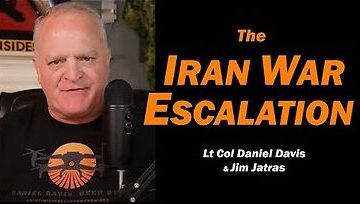
Bombing Iran Back Into the Stone Age /Lt Col Daniel Davis & Jim Jatras
or go to
Aletho News Archives – Video-Images
From the Archives
The Occupied Mentality Syndrome
Saudi Arabia on the American chessboard – Part 2
By B. J. Sabri | American Herald Tribune | April 19, 2016
Since the Korean War, but particularly since the Iranian Revolution of 1979 until today, the United States has been steadily escalating its military presence in the Persian Gulf. Taking advantage of many colossal events of the past 36 years, [1] the hyper-empire has institutionalized its massive presence on land and sea, and expanded its objectives to include the unambiguous physical control of the area, as well as the clear understanding that local Arab governments should abide by them. The pretext is always the same: in “defense” of the national interests and security of the United States. From observing how the United States has been interacting with the governments of the region, and by judging from the size of its expeditionary force, we could reach a basic conclusion. The United States is occupying, de facto, the entire Arabian Peninsula. (Yemen, devastated by Saudi and American jets is yet to be conquered. Oman? Britain returned not as colonial ruler but as a soft occupying power.)
Under this articulation, Saudi Arabia, Qatar, Kuwait, and the United Arab Emirates are virtually occupied countries. If we compare this type of occupation to the mandate and protectorate regimes of the past, the results might be identical—the nations affected by it lose sovereignty. When Arab governments comply with the objectives of a foreign power that station military forces on their national milieu, then that power controls them in multiple ways including how they react to policy deliberations and what decisions they intend to take on specific issues. A good method to verify the concept of effective occupation is this: take notice of what the United States says and wants, and then compare it to what the gulf rulers do in response. (I shall discuss this detail at some point in the upcoming parts.)
If the presence of US forces or other means of political pressure are a factor in Saudi Arabia’s interventionist Arab wars, then we need to debate this issue. However, from the history of resistance to colonialism, we learnt: if a powerful state imposes its order on a nation by military means or other forms of coercion, and if this nation does not resist that imposition, then a mental subordination to the powerful state will ensue. This is especially true in the case of Saudi Arabia. One single event, 9/11, has transformed it from a US “ally” into an instant political hostage of the American Empire. … continue
Blog Roll
 Aletho News
- BREAKING: US JET SHOT DOWN OVER IRAN /Lt Col Daniel Davis & Nima Alkhorshid
- Now everyone is dumping US government bonds
- Brazilian Congressman seeks to bar Israeli military personnel from entering Brazil
- Official reveals evidence of Arab states’ involvement in US-Israeli war on Iran
- His Majesty’s head-chopper: Syria’s MI6-backed president bows to King Charles
- Forced to backtrack: ‘Israel’ drops Hezbollah disarmament goal
- Britain’s Lebanon surveillance network: A digital map for war
- Bahrain faces scrutiny for opposition crackdown after detainee killed
- Hegseth’s Pentagon Purge Designed to Prevent a Mutiny: Karen Kwiatkowski
- Greek shipping firms secretly transporting oil, weapons to Israel
- If Americans Knew
- Israel Is Blocking Palestinians from Easter at Church Where Jesus Resurrected
- Plot to assassinate Palestinian activist follows harassment campaign promoted by Zionist groups and elected officials
- Prominent New York synagogue hosts presentation on why U.S. Jews should support the ethnic cleansing of Gaza
- Tapper vs. Piker: Is the CNN Anchor Auditioning for David Ellison?
- Shouldn’t Democrats Be Able to Condemn Genocide?
- Israel-US kill negotiators, destroy civilian structures, but Iran’s military capabilities still largely intact – Daily Update
- ‘War crime’: Global condemnation as Israeli ministers celebrate death penalty law targeting Palestinian prisoners
- 7 Ways Israel Is Turning Lebanon Into Gaza
- World’s Leading Football Bodies Under Fire Over Israel Policies
- Experts warn of possible use of nukes against Iran
- No Tricks Zone
- Low Intensity Tornado Wrecks Major Solar Farm, Creating A Potential Toxic Dump
- New Study Finds Warming Saves Lives…Cold Temperatures 12 Times More Deadly Than Excess Heat
- German Science Blog Accuses PIK Climate Institute Of Hallucinating Climate Tipping Points
- Devastating Assessment Of Comirnaty Vaccine By Former Senior Pfizer Europe Toxicologist
- New Study: CO2 Is ‘Effectively Negligible’ As An Explanatory Climate Change Factor Since 2000
- Former Pfizer Toxicologist Dr. Helmut Sterz Tells Bundestag Hearing Pfizer Vaccine Should Have Never Been Approved
- Energy Expert: Germany’s Nuclear Phaseout Was A “500 Billion Euro Mistake”
- New Research: South Australia’s Mid-Holocene Sea Surface Temperatures Were 4°C Warmer Than Today
- Storing Green Energy To Last Germany 10 Days Would Require A 60-Million Tonne Battery
- New Studies: UK Sea Levels Were 4 Meters Higher Than Today During The Mid-Holocene
 Aletho News