How RCEP affects food and farmers
GRAIN | June 19, 2017
The Regional Comprehensive Economic Partnership (RCEP) is a mega-regional trade deal being negotiated among 16 countries across Asia-Pacific. If adopted, RCEP will cover half the world’s population, including 420 million small family farms that produce 80% of the region’s food. RCEP is expected to create powerful new rights and lucrative business opportunities for food and agriculture corporations under the guise of boosting trade and investment. Several RCEP countries are also part of the Trans-Pacific Partnership (TPP), another mega-regional agreement setting some of the most pro-big business terms seen in trade and investment deals so far. While the fate of the TPP is uncertain, these two agreements may have to co-exist and there is pressure to align them on numerous points. What will this mean for food and farmers in the region?
1. Land will be grabbed
Most RCEP countries do not allow foreigners to buy farmland. Instead, foreign investors can get leases, permits or concessions with varying types of restrictions. The stakes behind this issue are high because companies and investment funds have been aggressively buying up farmland as a new source of revenue in the last years. In the RCEP countries alone, 9.6 million hectares of farmland have been acquired by foreign companies since 2008. Ownership provides corporations far more control than use rights, but it also drives up land prices and speculation, pushing small farmers out.
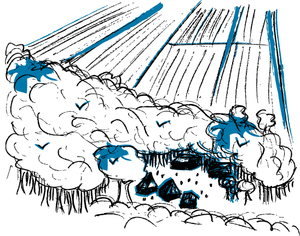
Two chapters of RCEP could have a decisive impact on access to land. According to leaked drafts, the investment chapter proposes a rule that each government must give investors from other RCEP states the same treatment as domestic investors (‘national treatment’). That means they should have the same rights to purchase farmland as domestic investors, unless the government carves out a special exception for this. The draft chapter also contains proposed ‘standstill’ and ‘ratchet’ clauses which, if adopted, would mean that governments have to lock in their current levels of liberalisation, and if they liberalise more than they commit to in RCEP they cannot go back down to the level set by RCEP. The services chapter draft also proposes that foreign service suppliers not be treated less favourably than domestic companies (‘national treatment’). This includes the ability to own farmland for a service-related purpose. Again, countries may be able to squeeze in an exception for agricultural land, but any such exception would be subject to negotiation and have to be agreed to by all parties.
If governments do not make reservations on these provisions for farmland, RCEP could seriously aggravate land grabbing in the region and sabotage agrarian reform processes that are currently under way in some countries. Currently, farmers asserting their rights to land are being subjected to human rights abuses, criminalisation, incarceration and even assassination. For this reason, there are deep fears that if RCEP is adopted, it will intensify militarisation in rural communities.
2. Seeds will be privatised, GMOs may proliferate
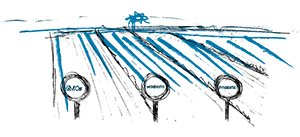
Farmers regularly save seed from one harvest to plant a new crop. Big seed and agrochemical companies like Monsanto and Bayer want to end this practice and force farmers to buy seed each season, so they can boost sales. They do this by lobbying governments to extend intellectual property laws to cover plants and animals. The global seed industry is highly concentrated today with three companies representing more than 60% of global commercial sales. ChemChina is currently in the process of buying Syngenta, one of the world’s top three seed firms. This means that China has a new vested interest in seeing seed laws strengthened under RCEP.
Leaked drafts of RCEP’s intellectual property chapter show countries like Japan and South Korea pushing for all RCEP states to adopt “UPOV 1991”, a kind of patent system for seeds. Under UPOV 1991, farmers are generally not allowed to save seeds of protected varieties. Where limited exceptions are permitted, farmers must pay the seed companies royalties on farm-saved seed. Depending on the country and the crop, royalties can represent a markup of 10-40% over the price of regular commercial seeds, which are already more expensive than farmers’ seed. Civil society groups estimate that UPOV 1991 would raise the local price of seed by 200-600% in Thailand and by 400% in the Philippines.
It could get worse if RCEP moves closer to what was negotiated in the TPP, something which four RCEP states have already agreed to. TPP requires states to allow patents on inventions “derived from plants”, which means genetically modified organisms (GMOs). Right now, GMOs are illegal in all RCEP member countries except for Australia, India, Myanmar and Philippines, plus several provinces of China and Vietnam. And while it’s likely that RCEP will have a chapter aiming to harmonise food safety standards, we have not seen any drafts and do not know how it will regulate GMOs. All of these moves would lead not only to higher seed prices but a loss of biodiversity, greater corporate control and a possible lowering of standards for high risk products such as GMOs.
3. Small dairy and other farmers will go out of business
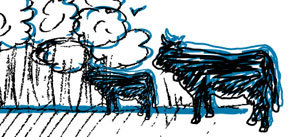
India is home to 100 million small farmers, most of whom keep livestock. Up until now they have been the backbone of India’s dairy sector, but that situation is now changing. Costs of production are going up while prices paid to farmers are going down, driving many small farmers into dire straits.
RCEP will make things much worse. Frustrated with New Zealand’s failure to conclude a bilateral trade deal with India, NZ dairy giant Fonterra — the world’s biggest dairy exporter — is now looking to RCEP as a way in to India’s massive dairy market. It has openly stated that RCEP would give the company important leverage to open up key markets that are currently protected such as India’s, where it would go head to head with India’s dairy cooperative Amul. As a result, many people fear that Indian dairy farmers will either have to work for Fonterra or go out of business. They will not be able to compete. Similar concerns face dairy farmers in Vietnam, where Fonterra has been investing heavily to increase its presence.
At the same time, some RCEP members like Japan and Australia not only subsidise their farmers tremendously, they also have food safety standards that are incompatible with the small-scale food production and processing systems that dominate in other RCEP countries. This may lead to the growth of mega food-park investments that target exports to such high value markets, as is already happening in India. These projects involve high tech farm-to-fork supply chains that exclude and may even displace small producers and household food processing businesses, which are the mainstay of rural and peri-urban communities across Asia.
4. Fertiliser and pesticide use will go up
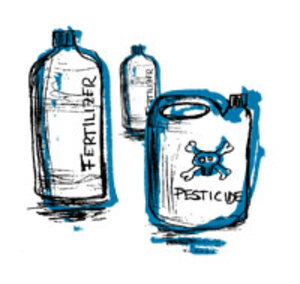
Fertiliser and pesticide sales are expected to rise sharply in Asia-Pacific in the next few years, from $100 billion to $120 billion per year by 2021. Agrochemical use is heaviest in China and growing rapidly in India, while imports by the Mekong sub-region are also on the rise. China’s acquisition of Syngenta, the world’s top agrochemical company with more than 20% of the global pesticide market, puts the country in a particularly sensitive position within RCEP.
Beijing will want high levels of ‘market access’, being negotiated under the trade in goods chapter of RCEP, to capitalise on its new position. In January 2017, China already announced that it will scrap export tariffs on nitrogen and phosphorus fertiliser in order to boost its market share abroad. RCEP trade ministers have promised to deliver a deal that immediately cuts tariffs to zero on 65% of trade in goods, followed by a second phase to cut the rest. Farm chemicals are bound to be part of this, resulting in increased residues in food and water, more greenhouse gas emissions and further depletion of soil fertility.
Furthermore, if leaked intellectual property drafts are adopted, RCEP may increase the patenting of other inputs like veterinary medicines, farm machinery, microorganism-based products and agricultural chemicals, and extend their patent terms, making them more expensive.
5. Big retail will wipe out local markets
Over the past five years, Asia-Pacific accounted for more than half of the world’s new food retail sales. Japan is leading this trend, with 7-Eleven and Aeon at the top of food retail sales in the region. Aeon Agri Create, the agriculture production arm of Aeon, has been establishing farms in Japan and Southeast Asian countries like Vietnam. Aeon even aims to push ‘ICT farming’: the use of computers and communication technologies to manage farm operations. In India, the opening up of food retail, including e-commerce, to foreign direct investment (FDI) is almost complete, although many states are yet to adopt FDI in multibrand retail. RCEP would strengthen these trends further.
According to leaked drafts, RCEP’s services chapter may make it impossible for governments to limit the operation of supermarket chains that hail from other RCEP states (‘market access’). Furthermore, the trade agreement may make it illegal for a member government to require a service supplier like Alibaba or Aeon to have a ‘local presence’ in its country or to source food from local producers.
If precedents set by TPP are followed, ICT farming may be boosted under RCEP measures aimed at promoting regional supply chains and e-commerce. China’s Alibaba has just invested $1.25 billion in an online food delivery service, which will rely on more and more high tech facilities that are disconnected from seasons and from local markets. All of these developments pose a real threat to small traders and retailers in Asia.
What to do?
RCEP will usher in a wave of corporate concentration and take over of Asia’s food and agriculture sector. Corporate concentration, as experience in the other regions shows, brings less real choice and higher prices for consumers. In the food sector, it also brings important health and environmental costs from pesticides, excessive processing and chemicals, as well as downward pressure on wages and prices paid to farmers.
The answer is not to reform RCEP but to reject it because it relies on and pushes a corporate model of agriculture that no amount of tweaking will change. Instead, we need to implement policies and initiatives that enable people-led food and agricultural systems to flourish. Only then can trade policies be drawn up to serve these systems – not the other way around.
ACT NOW!
- Get more informed and organise discussions and debates about RCEP in your communities. One resource to check out is the collective open-publishing site http://bilaterals.org/rcep.
- Support the people’s call to stop RCEP and fight for a pro-people trading system that responds to people’s needs not to corporate elites. Contact groups in your country that also signed the call and join forces.
- Go to the RCEP meetings. Demand the public release of negotiating texts to better analyse and build awareness of how the agreement affects the livelihood of people in RCEP member countries. Voice your concerns, as groups have done over several rounds the past months in Perth, Jakarta, Kobe and Manila. The next rounds will be held in Hyderabad (July 2017) and Seoul (later this year).
- Join the region-wide people campaign on RCEP and trade justice, and participate in collective mobilisations like regional days of action
- Keep an eye on http://rceplegal.wordpress.com/, http://keionline.org/ and http://www.bilaterals.org/rcep-leaks for leaked texts and analysis of RCEP chapters.
GRAIN is a small international non-profit organisation that works to support small farmers and social movements in their struggles for community-controlled and biodiversity-based food systems.
Meet RCEP, a Trade Agreement in Asia That’s Even Worse Than TPP or ACTA
By Jeremy Malcolm | EFF | June 4, 2015
It’s been a big few weeks for leaked trade agreements. Just when we thought we had seen all the leaked text of the Trade in Services Agreement (TISA), Wikileaks went ahead and published some more yesterday. And on the same day, a leaked draft of the intellectual property chapter of yet another trade agreement, the Regional Comprehensive Economic Partnership (RCEP) was leaked by Knowledge Ecology International (KEI).
If we described TISA as a treaty you’ve never heard of, RCEP has been even more obscure. RCEP can be compared with the Trans-Pacific Partnership (TPP), except that rather than being driven by the United States, it is being driven by the ten-member Association of South East Asian Nations (ASEAN), with the addition of their trading partners from the broader Asia-Pacific region including most notably India and China, who are absent from the TPP pact.
We might then, expect that RCEP could be the “anti-TPP”; a vehicle for countries to push back against the neo-colonial ambitions of the United States, by proposing alternative, home-grown standards on the TPP’s thorniest issues such as copyright, patents, and investor protection. Some members of RCEP have indeed spoken out against the TPP because of its unbalanced promotion of strict copyright and patent laws, and some commentators have characterized RCEP and the TPP as competitors.
But based on yesterday’s leaks, the promise of RCEP pushing back against the TPP is being squandered. Instead, its IP chapter is turning out as a carbon copy. The text for the chapter that South Korea proposes, which KEI rightly and succinctly describes as “terrible”, calls for many of the same provisions and more, including:
- Copyright terms of life plus 70 years.
- Prohibiting temporary copies of works in electronic form (a thoroughly misguided and anti-innovation provision that has even been erased from the TPP).
- Confining copyright limitations and exceptions to those which comply with the three-step test, which ignores exceptions, such as the quotation right, that are exempted from that test under international law.
- Remuneration rights to performers for radio airplay, which goes beyond U.S. law.
- A prohibition on the Internet retransmission of broadcasts, mirroring proposals for a Broadcast Treaty that would inhibit the free use of public domain material.
- A prohibition on trafficking in devices used to circumvent DRM, even if the circumvention is for fair use purposes.
- Inflated awards for copyright or patent infringement, by calculating damages payable for the infringing works on the assumption that they were sold at full retail market value.
- Granting ex officio authority to customs authorities that allows them to seize goods suspected of being infringing at the border, without even the need for a complaint by the claimed rightsholder.
- Criminal penalties for “commercial scale” copyright and trademark infringement, even where the infringer has not sought or made any profit from the activity.
- Criminal penalties against those who record any part of an audiovisual work in a cinema, regardless of whether the clips recorded would amount to fair use, for example because they are to be used in criticism or review.
- Suspension of the Internet accounts of repeat infringers, and censorship of bulletin boards that are “considered to seriously damage the sound use of copyrighted works” (whatever that means).
- Authorizing a fast-track process for rightsholders to obtain personal information of alleged infringers from their ISP, without a judicial order.
This draft is much worse than a previous leaked Japanese proposal that was earlier published by KEI. It’s far worse than ACTA, and is even worse than the most recent leaked draft of the TPP. Far from setting up a positive alternative to the TPP, South Korea is channeling the USTR at its worst here—what on earth are they thinking? The answer may be that, having been pushed into accepting unfavorably strict copyright, patent, and trademark rules in the process of negotiating its 2012 free trade agreement with the United States, Korea considers that it would be at a disadvantage if other countries were not subject to the same restrictions.
There are other examples of this kind of vicious cycle; for example, when negotiating its FTA with the United States, Australia resisted increasing its copyright term to life plus 70 years (knowing that it would derive no benefit from doing so), before eventually capitulating. Now Australia (along with Chile and Singapore, both of which were also forced into increasing their copyright terms in similar circumstances), are amongst those pushing extended copyright terms to other countries in the TPP. (We know this from the first leaked text of the TPP IP chapter, which reveals them as proponents of a life plus 70 year term.)
Since RCEP is shaping up as even more extreme than the TPP, one might well ask with resignation whether concluding a trade agreement with balanced IP rules is actually impossible. Surprisingly, it isn’t. Consider the Trans-Pacific Strategic Economic Partnership [PDF] (TPSEP), yet another trade agreement in the so-called “noodle bowl” of bilateral and multilateral Asian FTAs. If the TPSEP sounds like a relative of the TPP, that’s because it is. In fact, it’s the predecessor of that broader agreement, that was concluded in 2006 between Chile, New Zealand, Brunei, and Singapore, and remains in force between those countries.
For those of us used to FTAs that ratchet up standards of copyright, patent and trademark protection, the TPSEP is somewhat remarkable. It explicitly acknowledges “the need to achieve a balance between the rights of right holders and the legitimate interests of users and the community with regard to protected subject matter,” but goes further than this to give some specific examples of user-friendly policies that countries should be permitted to adopt, including:
- Respecting the first sale doctrine, even for works sold across borders.
- Prohibiting companies from removing your fair use rights through small print in license agreements.
- Allowing users to bypass DRM for fair use purposes.
These are the kind of pro-user rules that could have differentiated RCEP from the TPP, if its members were bold enough to think outside the box. And since RCEP is still at an earlier stage of discussion, they still can: Korea’s proposed rules are an opening gambit, not an agreed text.
Unfortunately, the process of negotiation of the RCEP is just as closed as that of the TPP, which makes it the wrong place for IP rules altogether. But now that the text has been leaked and it has been revealed to be so atrocious, we can begin to build pressure for the negotiating countries to open up the process. If, heaven forbid, the TPP eventually passes—and perhaps even more so if it doesn’t—the Asia-Pacific region needs to ensure that its trade regime doesn’t lock in restrictive and punitive copyright, patent, and trademark rules.
Featured Video

The Source of America’s Wars – Kristol Clear
or go to
Aletho News Archives – Video-Images
From the Archives
Is Israel to blame for the Iraq War?
American Goy | March 10, 2008
I am so tired of this old canard that “Israel had nothing to do with USA’s war with Iraq – in fact, it officially advised America against it”.
Bullshit. … continue
Blog Roll
 Aletho News
- Ceasefire for all or for none: Iran shuts Hormuz over Lebanon attacks
- Strait of Hormuz is Iran’s ‘nuclear weapon’ that forced US retreat: Medvedev
- Energy crisis will last for months – Kremlin envoy
- Europe’s quiet role in the war on Iran
- Forty days that shook the Empire: How Iran turned the tables on US and prevailed
- Netanyahu unilaterally declares Lebanon outside of ceasefire deal
- Israeli leaders: ‘Not a single goal’ achieved in war with Iran
- What on earth just happened? Trump, Iran, and the unlikely ceasefire
- Alberta Bill Would Fine Political Deepfakes $10,000 Without Satire Exemptions
- Iran declares ‘historic victory’ over US, says enemy forced to accept its proposal
- If Americans Knew
- NY Times reports how Netanyahu took the US into Iran War
- A sigh of relief over Iran, but Gaza and Lebanon in dire straits – Daily Update
- Thousands dead and neighborhoods razed to the ground: Aid agencies fear southern Lebanon is becoming the new Gaza
- The war the US is fighting for Israel could cost trillions
- ‘Cigarette Burns, Nail Wounds’: Toddler Tortured in Gaza to Coerce Father
- Trump Says US Sent ‘a Lot of Guns’ to Protesters in Iran
- Israeli forces destroy 17 UN peacekeeper cameras in south Lebanon
- US-Israeli strikes ‘completely destroy’ synagogue in Tehran
- Archbishop for US Military Says Iran War Is Unjust Under Catholic Teaching
- Iranian leaders’ Open Letters to the American People
- No Tricks Zone
- An Inconvenient Tree: Uncovered In Alps… Europe Much Warmer Than Today 6000 Years Ago
- New Study Reports A 60% Slowdown In Greenland’s Ice Loss Rate In The Last Decade
- Low Intensity Tornado Wrecks Major Solar Farm, Creating A Potential Toxic Dump
- New Study Finds Warming Saves Lives…Cold Temperatures 12 Times More Deadly Than Excess Heat
- German Science Blog Accuses PIK Climate Institute Of Hallucinating Climate Tipping Points
- Devastating Assessment Of Comirnaty Vaccine By Former Senior Pfizer Europe Toxicologist
- New Study: CO2 Is ‘Effectively Negligible’ As An Explanatory Climate Change Factor Since 2000
- Former Pfizer Toxicologist Dr. Helmut Sterz Tells Bundestag Hearing Pfizer Vaccine Should Have Never Been Approved
- Energy Expert: Germany’s Nuclear Phaseout Was A “500 Billion Euro Mistake”
- New Research: South Australia’s Mid-Holocene Sea Surface Temperatures Were 4°C Warmer Than Today
 Aletho News