Iran finalizes purchase of Russian military aircraft
The Cradle | November 28, 2023
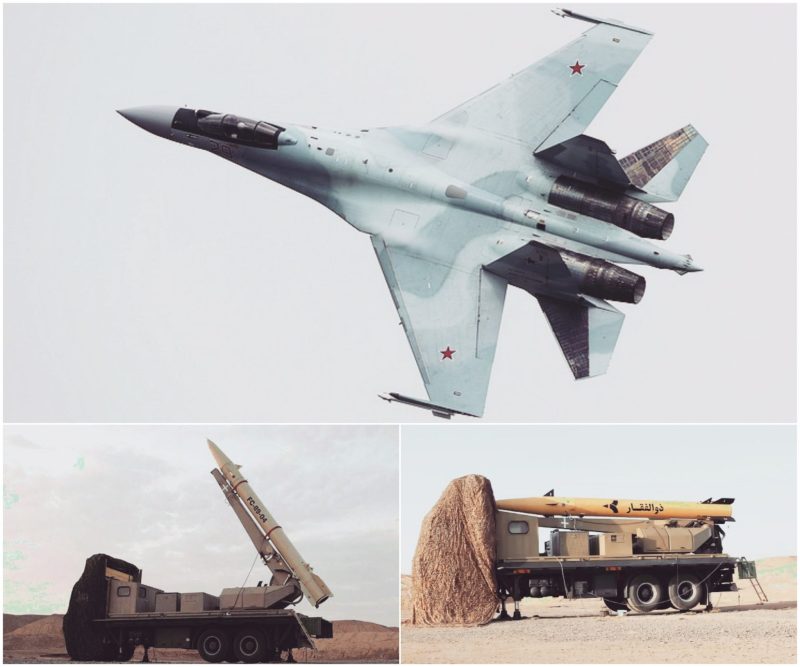
Iran has finalized arrangements to purchase Russian-made fighter jets and attack helicopters, Deputy Defense Minister Brigadier General Mahdi Farahi revealed to Tasnim News Agency on 28 November.
Farahi says the plans for the purchase and process of arrival of Sukhoi Su-35 fighter jets, Mil Mi-28 attack helicopters, and Yak-130 jet trainers to join the combat units of the Iranian Armed Forces have been signed and finalized.
“In some areas, we are among the top countries; in others, we are on the path to maturity. In this way, in addition to the development of endogenous capabilities, we must also use shortcuts to complete the defense capability, and one of these areas is the field of air technology,” Farahi said in the interview with Tasnim.
“We have good capabilities in the field of helicopters; that’s why we are the best in quantity in the region, but the qualitative improvement of helicopters is on the agenda,” Farahi added.
Talks for acquiring Sukhoi Su-35 fighter jets have been ongoing since late last year as part of joint military cooperation efforts between Tehran and the Kremlin.
Despite decades-long sanctions against Iran, the nation is still a major military power in West Asia and has over half a million active personnel.
Defense, trade, and banking ties between Iran and Russia have been growing over recent years despite western sanctions imposed on the two nations.
The central banks of both nations signed an interbank transfer deal earlier this year, allowing 52 Iranian banks to connect and transfer with 106 Russian banks.
Iran is also expected to join BRICS at the start of 2024, a group in which Russia is a key organizer.
Iranian President Ibrahim Raisi said at the 15th annual BRICS summit that the bloc expansion is “a new step towards establishing justice, ethics, and sustainable peace in the world.”
Iran has not made any significant purchases to its fighter aircraft arsenal in recent years besides purchasing a few Russian MiG-29 Fulcrum fighters in the 1990s.
West ‘screwed over’ Ukraine – ex-Zelensky aide
RT | November 27, 2023
The West has essentially thrown Ukraine under the bus in its conflict with Russia by failing to provide Kiev with the necessary amount of military aid, Aleksey Arestovich, a former aide to President Vladimir Zelensky, has claimed.
Writing on Telegram on Sunday, Arestovich weighed in on the differing views of Ukrainian officials as to why Kiev’s conflict with Moscow is still in full swing despite several major attempts at peace.
According to the former presidential aide, the West bears most of the blame for the situation.
“The real responsibility lies with those who promised Ukraine real support for waging a real, big war and did not provide it. In other words, they screwed us over.”
Arestovich claimed that Ukraine “had won its war” by managing to survive in the first few months of the conflict. “This war of ours could have well ended with the Istanbul Agreements,” he suggested, referring to the talks in the Turkish city in the spring of 2022, which initially made some progress but stalled after then-British Prime Minister Boris Johnson’s visit to Kiev. The negotiations collapsed but Russia maintains it is open to diplomatic engagement with Kiev.
After the Istanbul talks, the conflict entered another phase in which Ukraine had no chance of winning without securing massive Western arms supplies, including warplanes and long-range missiles, the former official continued. “But nothing came. We paid a huge price for that.”
Arestovich suggested that the West would now try to force Ukraine to accept the loss of several regions, which overwhelmingly voted to join Russia in a series of public referenda last autumn.
He also suggested that, while Kiev found itself in a tough spot mostly due to the West’s inaction, the Ukrainian leadership’s “stupidity and corruption has given them many formal and informal reasons to screw us over.”
Arestovich’s remarks came amid Ukraine’s faltering counteroffensive, which has been underway since early summer but has failed to gain any significant ground. Last month, Moscow said Kiev had lost more than 90,000 troops since the start of the push, with Defense Minister Sergey Shoigu claiming that Ukrainian casualties had reached more than 13,000 soldiers in November alone.
Earlier this month, Valery Zaluzhny, Ukraine’s top general, admitted that hostilities had reached a stalemate, an assessment rejected by Zelensky. Meanwhile, on Sunday, Mariana Bezuglaya, a senior Ukrainian MP, blasted Zaluzhny over the lack of a strategic plan for 2024 and called on the military leadership to step down.
Three hundred thousand Israelis have fled abroad since 7 October
By Gilbert Doctorow | November 27, 2023
The opening discussion on yesterday’s edition of Sunday Evening with Vladimir Solovyov centered on the number of Israelis who have fled abroad since the start of the Israel-Hamas war. The host quoted the figure 300,000 and put it into a context that is very closely watched in Russia: how many of their own compatriots fled abroad in the first year of the Special Military Operation in Ukraine, most of them in the days immediately following the announcement of a partial mobilization in September of that year.
The flight of several hundred thousand Russians abroad was trumpeted by mainstream Western media, which even sent journalists to remote places in Kazakhstan and Georgia to interview the draft-dodgers. We were told that the young Russians who fled were highly concentrated in IT and that their loss would do irreparable harm to Russian industry and to the war effort. These young men at the start of their professional careers tended to move to the Near Abroad, where they hoped to find employment easily given the universal demand for their technical skills and where they could receive remittances from their parents and friends via the existing banking system, whereas in the West they would be cut off from such sources of funds.
Both at the very start of the Ukraine war and in smaller numbers straight up to this past summer, there were also high visibility Russians in the business world, in the creative arts and especially in the entertainment industry who moved out of Russia to express their disapproval of the Putin ‘regime’ and its armed aggression. Some were quiet about their motives, but others spoke out openly, saying they could no longer live in a country that invaded its neighbors and violated international law. This group was older, wealthier than the IT nerds and chose to move out into the greater world where they might continue to enjoy the creature comforts to which their money made them accustomed. Since London and Paris were longer welcoming to Russians of any and all stripes, a good many chose to settle in Israel, both Jews and non-Jews alike. Russia has a visa free regime with Israel and many direct daily flights to Tel Aviv. Other well-to-do Russians moved to Dubai.
As for the first group of Russian ‘war exiles,’ most were disappointed by the professional opportunities they found in the former Soviet republics. Pay was low, the cost of housing was high and rising with each additional refugee arrival looking to rent. Meanwhile, back in Russia it became clear that there were exemptions available for really talented programmers and the likelihood of any further conscription was minimal now that more than 400,000 Russian men were volunteering for military service out of both rising patriotism and very attractive monetary rewards for service in the combat zone. As a result, a great many of the draft dodging young men slowly and quietly packed up and moved back to Russia.
For the second group of Russians, the stars and wealthy, the onset of the Israel-Hamas war put them in a most awkward situation. The Financial Times was quick to alert us that on 8 October Alfa Bank founder Mikhail Fridman, who had left his London mansion and a good part of his frozen-assets fortune behind to resettle in Israel earlier this year, had taken the first available flight out of Israel and flew back to Moscow, for a ‘temporary’ respite. Abrupt departure from Israel was also the path taken by the aging star Alla Pugacheva, another rather recent ‘settler’ in Israel, ostensibly there for medical treatment at the spas. Pugacheva flew out to Cyprus. We may assume that high-living Russians constituted a significant minority share of the 300,000 folks who fled Israel for safer climes at the start of the war. Hence the particular interest in the subject among Moscow’s chattering classes.
This entire issue of what Russia media today amusingly call the релоканты, ‘relocators’ in English, touches a deep chord among the opinion leaders who appear on the Russian talk shows. We may assume that the topic also figures large when ordinary Russians in Moscow and elsewhere break bread together.
Should these people upon their return be shipped out to Magadan, where the Russian Far East meets the Pacific ocean, best known as a transit hub in the Stalinist gulags? None other than Chairman of the Russian State Duma Vyacheslav Volodin publicly proposed this fate for them. But Volodin had in mind only those who used their time outside Russia to defame the country, not those who quietly sipped their champagne in restaurants by the sea in Tel Aviv.
No doubt kitchen talk in Russia runs close to what Solovyov says on air: that Russian cultural leaders who moved abroad in protest at the bestial nature of their homeland, like the celebrated authors Lyudmila Ulitskaya or Vladimir Sorokin, must be eating their words as they witness the utter brutality of the Israeli Defense Forces pursuing their atrocities in Gaza.
Coming back to the figure of 300,000 Israelis who have fled the country since the start of the war, Solovyov noted, with justice, that if you project the ratio of these turncoats to the general Israeli population of 9 million onto Russia, with its 145 million plus inhabitants, then the number of Russians who fled after 22 February 2022 would have been 4.5 million, while the actual numbers of Russians were between 10 and 15 times less. His inescapable conclusion is that Russians are far more patriotic than Israelis are.
The rest of the Sunday night program was largely devoted to fleshing out the argument that Russians have been far too self-deprecating, far too unappreciative of their own strength and their own achievements since the start of the war in Ukraine. The ability of the country within the scope of two years to institute a war economy that has increased many fold the output and delivery to the front lines of latest technology tanks, artillery, kamikaze and surveillance drones, fighter jets is very impressive, especially when set out in detail by a military expert, a retired Lieutenant General who was a panelist on the show. The ability of Prime Minister Mikhail Mishustin and his cabinet to manage the domestic civilian economy was also hailed. Russia is now feeding itself from a vastly strengthened agribusiness sector and is steadily expanding the array of consumer products produced at home, while importing from China and elsewhere in the East other products, including more than half of all new cars sold in Russia, that are often of higher quality and carry price tags way below what had been imported from Europe before the war.
For reasons that will not surprise attentive readers, none of these achievements gets much attention in Western media. However, the Chinese are watching closely. A delegation of Russian parliamentarians who went to Beijing this past week in an annual visit was exceptionally received by Chinese President Xi, who according to protocol, does not meet with foreign legislators. Russian output in Q3 of this year reached 5% growth. That matches the relatively low pace of the Chinese economy this year. But for Russia it is a new high in this millennium. The open question on the Solovyov show was how to emulate the Chinese model of relations between the central bank and the government in order to sustain financing of the economy needed to continue at this pace and not have a relapse to 1.5% annual growth, which is the scenario being prepared by the bank director Nabiullina. This is an issue in Russian political discourse that will not go away.
©Gilbert Doctorow, 2023
A hard truth about the Russia-Ukraine conflict is finally dawning on the West
By Tarik Cyril Amar | RT | November 24, 2023
On November 16, the Wall Street Journal, one of the most prestigious and influential American media outlets, published an essay under the title “It’s Time to End Magical Thinking About Russia’s Defeat.”
The authors, Eugene Rumer and Andrew S. Weiss, are influential representatives of America’s national security and international relations establishment. After a career in government service, Rumer now directs the Russia and Eurasia program at the Carnegie Endowment for International Peace; Weiss is Carnegie’s vice president for studies. This is an important text, and both its message and the timing of its publication matter.
The message is simple: “Putin” (by which they mean Russia) has “withstood the West’s best efforts” to roll back the military operation against Ukraine; Moscow’s political system has proven resilient and even become stronger; and “America and its allies” must now switch to a strategy of “containment.”
The timing is more complex. Clearly, the current Israeli war on Gaza – referred to as “tumult in the Middle East” – is one of three key factors. The other two are the approaching presidential elections in the US, and, of course, the failure of Ukraine’s summer counteroffensive, by now acknowledged even in gung-ho outlets such as the British Daily Telegraph.
In addition, America’s hold over the non-Western majority of humanity is continuing to decline. China, in particular, is successfully resisting Washington’s pressure. Domestically, President Joe Biden’s government faces tough headwinds from both the official Republican opposition and a growing movement in the American street, where widespread and deep dissatisfaction with politics and the economy is now combining with an unprecedented groundswell of protest against US complicity in Israel’s genocidal war on the Palestinians.
American polls are unambiguous. In September, even before the Middle East crisis, the Pew Research Center found that “Americans’ views of politics and elected officials” are now unusually and “unrelentingly negative, with little hope of improvement on the horizon.” By now, a majority of Americans also contradict the Biden administration – and the rest of almost the whole bipartisan political establishment – by wanting a cease fire in Gaza, while the number of those supporting Israel is decreasing quickly and significantly.
Against this background, this Wall Street Journal article clearly serves as an authoritative call for retrenchment. The object of this signal to retreat is the proxy war in Ukraine, that is, the single most aggressive, most risky, and most defeated US foreign policy strategy in the past two years (if we count from the moment Washington recklessly decided to stonewall Moscow’s clear warning as well as its urgent offer to find a grand bargain-style off-ramp in late 2021).
So far, so telling. But not surprising. For two reasons: the turn away from Ukraine is already fairly old non-news. Even mainstream media spotted the onset of a severe, probably terminal, bout of Ukraine fatigue well before the eruption of the fresh war in the Middle East. Secondly, the skeptical insights now given prominence in the Wall Street Journal as reasons to wrap up its proxy war investment in Ukraine are very old hat indeed. As a matter of fact, the most interesting question the essay – inadvertently – raises is what took you so long?
It would be tedious to address every point raised now in the Wall Street Journal. But since they all have in common that they have been predicted or were utterly predictable, a few highlights will do.
We learn, for instance, that the West’s attempts to isolate Russia have failed. Yet how hard was it to foresee that the Global South has no reason to follow the West except fear, and that fear is abating? And was it impossible to know in advance that China would answer “No, thank you very much,” when the US and the EU did two things at the same time: urge it to abandon Russia, which would have meant giving up Beijing’s single most important partnership, and signal that China would be next to be cut down to size? China, in essence, initially gestured a little in the direction of distancing itself from Russia, but the strategic fundamentals of the situation determined its real behavior and have become explicit by now. This outcome was predicted, not by every expert but by enough of them to matter.
We are also reminded that this is a war of attrition, i.e. one favoring Russia by its very nature. Even on CNN, we heard that much as early as April 2022, and the militantly Atlanticist Economist magazine admitted it in a backhanded way (using the euphemism “war of endurance”) in September.
Every war is a matter of competitive military performance. But in a war of attrition, three fundamental things matter the most: the size, productive and technological capacity, and resilience of the economy; the stability of the political system, including its real-life popularity and the elites’ legitimacy; and, of course, demography. The Wall Street Journal observes that Russia’s economy has “been buffeted but is not in tatters” (really understating its success, but let’s not quibble) and that its political system draws on “solid” popular support and elites that have neither rebelled nor deserted.
In the West at least, this was harder to predict. Not because of Russia being so difficult to decipher, but due to Western bias and groupthink, or, bluntly put, wishful thinking. Even before the post-February 2022 Ukraine war, Western politics, media, think tanks, and even academia have rewarded unrealistically pessimistic assessments of both Russia’s economy and political stability. Consider, as a pars pro toto, Western reactions to the Wagner rebellion in June. Quite a few of them predicted the imminent collapse of Russia into anarchy and civil war or, at least, a great and lasting domestic and international weakening of Russia. Yet none of this has come to pass.
The importance of this comprehensive, almost total failure of analysis and prediction lies in how typical it was, reflecting a dominant culture of politicized sloppiness vitiating Western thinking about Russia. A sloppiness that is all the more astonishing as precisely Moscow’s opponents cannot afford it without serious self-harm.
For self-harm is the main result. It is true that Russia has to bear some of the cost of Western shortsightedness. Obviously, Moscow as well would be better off if it could work with reasonable, if competitive, partners instead of irrationally hostile opponents who constantly underestimate Russia and overestimate themselves. Yet the West is suffering even more from its pattern of repetitive mistakes.
The costs of the proxy war in Ukraine demonstrate this fact, and not only in terms of arms and money, but of political prestige as well. Regarding the quantifiable costs, the US Congress, for instance, has approved $113 billion worth of aid for Ukraine since February 2022. Currently, a request for even more is turning into a major domestic headache for the Biden administration, and most likely, a defeat. The EU has shelled out almost €85 billion.
Of course, not all of these funds have really been appropriated, and much of them have really been fueling corruption in Ukraine or served the donors and especially their arms industries, as US politicians have repeatedly pointed out with proud cynicism. Yet the overall picture remains one of severe fiscal overstretch spent on a losing gamble. Add the self-inflicted losses that the EU’s economies in particular have incurred from their misconceived sanctions policy and the picture is grim. Add, moreover, how much the West will have to spend if it really wishes to finance the rebuilding of Ukraine, and the prospect turns catastrophic. Good luck, EU, with those membership plans.
In addition, intangibles matter as well. Clearly, “losing” Ukraine (which the West should not have tried to “own” in the first place) will reveal the bloc’s weakness more sharply than the failures in, for instance, Iraq, Libya, Syria, or Afghanistan. For two reasons. First, unlike these countries, Russia is a great power; that means it is in a position to exploit the Western setback. Moscow, put differently, is big enough to geopolitically counterattack.
Whether or when exactly it will do so, and what shape such a new “snapping back” of Russian President Vladimir Putin’s metaphorical “rubber band” will take this time, remains to be seen. What is clear is that such payback is a realistic possibility. Secondly, the West is committed as never before, substantially and rhetorically, when trying to use Ukraine to reduce Russia. Hence, failing to do so exposes Western limits as never before. Rumer and Weiss are not naïve. They cannot say it – and maybe they can’t even quite think it – but in their heart of hearts they know that packaging this defeat as a mere change of strategy to “containment” will not fool anyone who does not want to be fooled.
It is good to finally see some hard facts appear prominently in mainstream Western debates. But it is not enough. For one thing, the West has to ask itself painful questions why it has stayed so obsessively one-sided for so long. Otherwise, the same pattern will be repeated in starting and waging the next war, for instance, against China or Iran. Secondly, a shift to “containment” will not repair the damage but merely stretch it out. What the West really needs is a complete rethinking of not merely its methods but its aims.
Tarik Cyril Amar is a historian from Germany working at Koç University, Istanbul, on Russia, Ukraine, and Eastern Europe, the history of World War II, the cultural Cold War, and the politics of memory.
Russian journalist dies after Ukrainian drone attack – media

RT | November 23, 2023
Boris Maksudov, a Russian journalist from Russia 24 TV who was injured on Wednesday in a Ukrainian drone attack, has died in hospital, several news outlets reported on Thursday morning.
Maksudov was injured during a working trip to Zaporozhye Region, through which the front line of the Ukraine conflict passes. He was among a group of reporters who were targeted by a swarm of Ukrainian drones.
The Defense Ministry said at the time that the fragmentation injury he sustained was not deemed life-threatening. He had been evacuated to a military hospital, the statement added.
Russia 24 reported the crew was hit by two quadcopters, which targeted them with grenades. In a grim foreshadowing earlier in the day, Maksudov recorded a video in which he remarked that drones pose a threat in the area despite the poor weather conditions offering some degree of safety.
Dmitry Kiselyov, the head of the Rossiya Segodnya media group, suggested that Ukrainian forces deliberately attack journalists. Reacting to Maksudov’s reported death on Thursday, he told RIA Novosti : “Unfortunately, the journalistic profession today is increasingly colored in khaki, and too often covered with blood on top.”
Arguably, the first notable incident in which Ukrainian forces were accused of targeting media professionals occurred in 2014, when a volunteer fighter, Nadezhda Savchenko, directed artillery fire at a group of reporters. Two of them, Igor Kornelyuk and Anton Voloshin, were killed.
Savchenko was taken into Russian custody and tried, while Kiev turned her into an international celebrity, claiming to be a victim of persecution. She was sentenced to 22 years in jail in 2016, but was pardoned by President Vladimir Putin and returned to Ukraine, where she was later elected to parliament.
The conflict has claimed the lives of many Russian media professionals. In July, RIA Novosti war correspondent Rostislav Zhuravlev was killed by shelling in Zaporozhye Region.
RT holds an annual international photography competition in honor of Andrey Stenin, a Russian photojournalist who was killed by Ukrainian small arms fire in Donetsk Region in 2014.
Putin names Russia’s ‘sacred duty’ in Gaza
RT | November 22, 2023
Moscow has a moral obligation to deliver humanitarian aid to the civilian population in Gaza, Russian President Vladimir Putin argued on Wednesday. The day before, he told other BRICS leaders that he had been moved by videos depicting Palestinian children being operated on without anesthesia.
Earlier this month, the World Health Organization (WHO) accused Israel of routinely targeting medical facilities. The international watchdog also said that child deaths were an everyday occurrence in the besieged Palestinian enclave.
Addressing the Russian cabinet via video link, President Putin said: “This is a very important, humanitarian, noble mission. We need to help people suffering as a result of the ongoing events.”
The Russian leader went on to describe the provision of aid to Palestinian civilians in Gaza as “our sacred duty.”
Attending an extraordinary BRICS online summit a day prior, the president noted that the “death of thousands of people, the mass displacement of the civilian population and the humanitarian catastrophe that has erupted” are cause for the “deepest concern.”
“When you watch how children are being operated on with no anesthesia – this of course arouses very special feelings,” Putin added.
While securing humanitarian truces is a key task in the short term, Moscow would like to see a lasting peace in the region, he noted. This can only be achieved on the basis of previous UN resolutions that call for the creation of two states – Israel and Palestine, the president said.
According to Putin, other BRICS member states share Russia’s stance in many respects, as demonstrated by the way they have voted at the UN General Assembly.
The group, he argued, could “play a key role” in resolving the decades-old conflict.
Earlier this month, WHO chief Tedros Adhanom Ghebreyesus told the UN Security Council that “on average, a child is killed every ten minutes in Gaza.” The official also said that Israel had attacked medical facilities, ambulances and patients in Gaza and the West Bank on at least 250 occasions since October 7, bringing the medical system in Gaza to “its knees.”
Israel unleashed its military operation following a deadly raid by Hamas militants that claimed the lives of 1,200 Israelis, mostly civilians, last month. Since then, the death toll in Gaza has reached 13,000, according to Palestinian health authorities.
On Wednesday, the Israeli government approved a deal with Hamas under which the militant group is to release 50 hostages in exchange for 150 Palestinian female and child inmates held in Israeli custody, accompanied by a four-day truce.
Russia: Lavrov hosts ministers from Arab, Muslim countries to discuss war on Gaza
MEMO | November 21, 2023
Russian Foreign Minister Sergey Lavrov is holding talks today in Moscow with his counterparts from Arab and Muslim-majority countries to discuss Israel’s genocidal war on the Gaza Strip.
Yesterday, spokesperson for the Russian Foreign Ministry, Maria Zakharova, announced that “A meeting of Russian Foreign Minister Lavrov with delegations from foreign ministries of a number of Arab League and OIC countries is scheduled to be held tomorrow in Moscow.”
“They will arrive in the Russian capital city in line with the decision made at the Riyadh summit to discuss the situation around the Gaza Strip,” she said.
The meeting of members of the Ministerial Committee formed out of the Arab-Islamic Summit consists of Jordan’s Deputy Prime Minister and Minister of Foreign Affairs and Expatriates Ayman Safadi, the foreign ministers of Egypt, Palestine and Indonesia and Secretary-General of the Organisation of Islamic Cooperation Hussein Ibrahim Taha.
Al Arabiya reports that Russia which has previously maintained close ties with the occupation state, has assumed “a cautiously pro-Palestinian position since the outbreak of war around Gaza, rebuking Israel for civilian casualties, and restating its long-standing support for a Palestinian state.”
Yesterday the delegation along with Saudi Foreign Minister Prince Faisal Bin Farhan held similar meetings in Beijing with China’s top diplomat Wang Yi where they called for an urgent ceasefire.
“The international community must act urgently, taking effective measures to prevent this tragedy from spreading. China firmly stands with justice and fairness in this conflict,” Wang told the visiting ministers in opening remarks ahead of talks.
Saudi’s Prince Faisal said:
The message is clear: the war must stop immediately, we must move to a ceasefire immediately, and relief materials and aid must enter immediately.
As of this month, China assumed the rotating presidency of the UN Security Council. In addition to meetings in Beijing and Moscow, the joint Arab-OIC delegation is looking to meet with officials representing the other three permanent members of the UN Security Council. It is hoped that they can exert pressure on Western states to reject Israel’s justification of “self-defence” for its genocidal actions against Palestinians.
There Could Have Been Peace: How the U.S. Ensured a Long War in Ukraine
By Ted Snider | The Libertarian Institute | November 20, 2023
On February 27, just the third day of their war, Russia and Ukraine announced direct negotiations in Belarus. Having already said that he was prepared to abandon Ukraine’s pursuit of NATO membership, Ukrainian President Volodymyr Zelensky went into the negotiations “without preconditions.” That round of talks, having identified priority topics, led to a second round, again in Belarus.
But, though Ukraine was willing to discuss neutrality and “the end of this invasion,” the United States was not. On February 25, the same day Zelensky said he was “not afraid to talk to Russia” and that he was “not afraid to talk about neutral status,” State Department spokesman Ned Price was asked at a press conference, “What’s the U.S.—what’s your thinking about the efficacy of such a—of such talks?” Price responded, “Now we see Moscow suggesting that diplomacy take place at the barrel of a gun or as Moscow’s rockets, mortars, artillery target the Ukrainian people. This is not real diplomacy. Those are not the conditions for real diplomacy.” The United States said no, and the promising direct talks were not to be.
However, a few days later, Ukraine would attempt indirect, mediated talks. Zelensky would turn to then-Israeli Prime Minister Naftali Bennet to mediate. In a February 2, 2023 interview, Bennet revealed that “Zelensky initiated the request to contact Putin.” Bennett said, “Zelensky called me and asked me to contact Putin.”
Bennet accepted the request and a flurry of shuttle diplomacy began, first with a series of back-and-forth phone calls between Bennett and Putin and Bennett and Zelensky. On March 5, 2022, Bennet flew to Moscow at Putin’s invitation. The next day, Bennet flew to Berlin for meetings with German chancellor Olaf Scholz. On the following day, March 7, the United States, United Kingdom, Germany, and France held a videoconference that, according to some reports, discussed the talks. On March 10, Russian foreign minister Sergei Lavrov met Ukraine’s foreign minister, Dmytro Kuleba, in Turkey. Turkish foreign minister Mevlut Cavusoglu, who was present at the meeting, described their meeting as “civil.”
Bennet says that “everything [he] did was fully coordinated with Biden, Macron, Johnson, with Scholz and, obviously, Zelensky.” According to Bennet, Putin told him that “we can reach a ceasefire.” In order to make that happen, Bennet says that Putin and Zelensky both made “huge concessions.” When Bennett asked Putin if he was going to kill Zelensky, Putin answered, “I won’t kill Zelensky.” Putin also “renounced” Russia’s demanded “disarmament of Ukraine.” He also reportedly promised that there would be no regime change in Kiev and that Ukraine would remain sovereign. Putin then passed the message to Zelensky through Bennet that if you “Tell me you’re not joining NATO, I won’t invade.” Bennett says that “Zelensky relinquished joining NATO.”
It is key that in both the direct and mediated negotiations in the first weeks of the war, Ukraine was willing to give up NATO membership for a negotiated settlement with Russia.
In return for abandoning their NATO ambitions, Putin and Zelensky agreed that Ukraine would receive a strong, independent military capable of defending itself analogous to “the Israeli model.”
Bennett reports that “there was a good chance of reaching a ceasefire.” Sources “privy to details about the meeting” said that Zelensky deemed the proposal “difficult” but not “impossible” and that “the gaps between the sides are not great.” But, once again, it was not to be. Former UN Assistant Secretary-General in UN peace missions Michael von der Schulenburg says that “NATO had already decided at a special summit on March 24, 2022, not to support these peace negotiations.” Bennett agrees that the West made the decision “to keep striking Putin.” When Bennet’s interviewer asks him if he means that the West blocked the diplomatic settlement, Bennet simply replies, “They blocked it.”
In March and early April of 2022, there would be one final attempt at negotiations before the negotiating table would be abandoned for the battlefield. This time it was to be Turkey that would play the lead role as mediator. A supporting role was to be played by former German chancellor Gerhard Schröder who, like Bennet before him, was asked by Kiev to play a role in the mediation.
This final round of talks was the most promising. Putin has confirmed, as had already been reported, that Russia and Ukraine had “reached an agreement in Istanbul.” But Putin also revealed for the first time that the tentative agreement had been initialed by both sides. “I don’t remember his name and may be mistaken, but I think Mr. Arakhamia headed Ukraine’s negotiating team in Istanbul. He even initialed this document.” Russia, too, signed the document: “during the talks in Istanbul, we initialed this document. We argued for a long time, butted heads there and so on, but the document was very thick and it was initialed by Medinsky on our side and by the head of their negotiating team.”
Putin’s account is backed by Lavrov who said at a press conference that “we did hold talks in March and April 2022. We agreed on certain things; everything was already initialled.”
Putin went further than announcing the initialed document, on June 17, 2023, he dramatically held it up before a delegation of African leaders, showing it to the world for the first time. “We did not discuss with the Ukrainian side that this treaty would be classified, but we have never presented it, nor commented on it. This draft agreement was initialed by the head of the Kiev negotiation team. He put his signature there. Here it is.”
The draft agreement was the end product of a position paper presented by the Ukrainian delegation. The Istanbul Communiqué, dated March 29, 2022, agreed that Russia would withdraw to its prewar boundaries and Ukraine would promise not to seek NATO membership. Instead, Ukraine would receive security guarantees from a number of countries, possibly including Russia, China, the U.S., UK, France, Turkey, Germany, Canada, Italy, Poland and Israel. The final proposal of the communiqué proposes a possible meeting between Putin and Zelensky to sign the treaty.
On March 28, Putin reportedly went so far as to express a willingness to withdraw Russian troops from around Kiev. On March 29, the day the communiqué was initialled, the leaders of the U.S., UK, Germany, France and Italy spoke on the phone.
But, again, it was not to be. On April 5, The Washington Post reported that the West would “respect Kyiv’s decisions in any settlement to end the war with Russia, but with larger issues of global security at stake, there are limits to how many compromises some in NATO will support to win the peace.” The Post then spelled it out: “Even a Ukrainian vow not to join NATO—a concession that Zelensky has floated publicly—could be a concern to some neighbors. That leads to an awkward reality: For some in NATO, it’s better for the Ukrainians to keep fighting, and dying, than to achieve a peace that comes too early or at too high a cost to Kyiv and the rest of Europe.”
On April 9, then-UK Prime Minister Boris Johnson rushed to Kiev to rein in Zelensky, insisting that Russian President Vladimir Putin “should be pressured, not negotiated with” and that, even if Ukraine was ready to sign some agreements with Russia, “the West was not.”
And that is just what happened. “We actually did this,” Putin told war correspondents at the Kremlin, “but they simply threw it away later and that’s it.” Talking to the African delegation, Putin said, “After we pulled our troops away from Kiev—as we had promised to do—the Kiev authorities… tossed [their commitments] into the dustbin of history. They abandoned everything.” But Putin did not primarily blame Ukraine. He implicitly blamed the United States, saying that when Ukraine’s interests “are not in sync” with U.S. interests, “ultimately it is about the United States’s interests. We know that they hold the key to solving issues.”
Lavrov says the same. In a September 28, 2023 interview, Lavrov said that “in April 2022… Ukraine proposed ceasing hostilities and settling the crisis based on providing reciprocal, reliable security guarantees.” He then clearly said, “But this proposal was recalled at the insistence of Washington and London.”
But it is not just Russia who says this: two well placed Turkish sources say the same. Turkish Foreign Minister Mevlut Cavusoglu says that, because of the talks, “Turkey did not think that the Russia-Ukraine war would continue much longer.” But, he said, “There are countries within NATO who want the war to continue.” “Following the NATO foreign ministers’ meeting,” he explained, “it was the impression that… there are those within the NATO member states that want the war to continue, let the war continue and Russia get weaker.”
And Numan Kurtulmus, the deputy chairman of Erdogan’s ruling party, told CNN TURK, “We know that our President is talking to the leaders of both countries. In certain matters, progress was made, reaching the final point, then suddenly we see that the war is accelerating…Someone is trying not to end the war. The United States sees the prolongation of the war as its interest… There are those who want this war to continue… Putin-Zelensky was going to sign, but someone didn’t want to.”
Schröder agrees. Describing the negotiations, he says that Ukraine “does not want NATO membership,” would accept “compromise” security guarantees, said that they would “reintroduce Russian in Donbass,” and “were ready to talk about Crimea.”
“But in the end nothing happened,” Schröder said. “My impression: Nothing could happen because everything else was decided in Washington.” Like the Russian and the Turkish sources, Schröder reports that “the Ukrainians did not agree to peace because they were not allowed to. They first had to ask the Americans about everything they discussed.”
Schröder adds one more significant detail. It is often reported that the massacre in Bucha played a pivotal souring role in the negotiations, contributing to their termination. Schröder challenges that account: “Nothing was known about Butscha during the talks with Umjerov on March 7th and 13th. I think the Americans didn’t want the compromise between Ukraine and Russia. The Americans believe they can keep the Russians down.”
In all three sets of negotiations, Ukraine renounced their aspirations to join NATO, and in all three, peace was possible but for the U.S. blocking it. Both the Bennet talks and the Istanbul talks were Ukrainian initiatives that put forward Ukrainian solutions. The United States was not supporting Ukraine at the negotiating table: they were overturning the table in order to use Ukrainian bodies to pursue American goals.
Featured Video
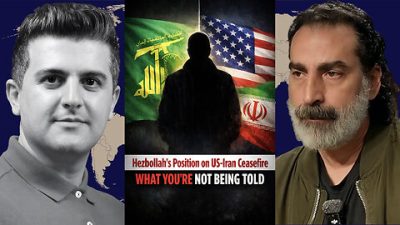
Laith Marouf: Hezbollah’s position on US-Iran ceasefire
or go to
Aletho News Archives – Video-Images
From the Archives
The Dirty Little Secret behind the “Global Terrorism Index”
The Omission of Israeli Terrorism in the Occupied Palestinian Territories
By Karin Brothers | Global Research | December 6, 2014
… The Israeli settlements — all of which are illegal – have been identified as a major impediment to peace. The refusal of a major “global” terrorism report to name the Israeli settlers as one of the groups most responsible for terrorism not only misrepresents a major source of regional violence but exposes the Global Terrorism Index as a propaganda tool that supports a U.S. agenda.
In recent years, governments have been attempting to thwart terrorism by blocking supportive fund-raising. When it comes to Israeli settlements, however, the US and Canada actually encourage fund-raising by giving organizations (such as Christian Friends of Israeli Communities (CFOIC) and the Jewish National Fund) financial support in the form of donor tax-deductions.
Charities which provide funds for the Israeli settlements should be regarded as terror-financing organizations. They should not only lose their tax-deductible status, but they should be banned because they support the violation of international humanitarian law. The terror-financing laws that are being strictly enforced for Muslim charities should be applied to Christian and Jewish charities as well. … Read full article
Blog Roll
 Aletho News
- How UK Regulator Ofcom Quietly Bypassed International Law to Police American Speech
- The Black Cube Files: How Former Mossad Operatives Flipped a Nation
- Laith Marouf: Hezbollah’s position on US-Iran ceasefire: What you’re not being told
- Israel’s priority lies in destroying chances of peace between Iran, US: Ex-UN nuclear chief
- Ceasefire for all or for none: Iran shuts Hormuz over Lebanon attacks
- Strait of Hormuz is Iran’s ‘nuclear weapon’ that forced US retreat: Medvedev
- Energy crisis will last for months – Kremlin envoy
- Europe’s quiet role in the war on Iran
- Forty days that shook the Empire: How Iran turned the tables on US and prevailed
- Netanyahu unilaterally declares Lebanon outside of ceasefire deal
- If Americans Knew
- Tucker Carlson on Israel: This Is the Behavior of an Ally? Really?
- Gazans face a triple crisis: severe shortages of water and bread, healthcare in tatters
- NY Times reports how Netanyahu took the US into Iran War
- A sigh of relief over Iran, but Gaza and Lebanon in dire straits – Daily Update
- Thousands dead and neighborhoods razed to the ground: Aid agencies fear southern Lebanon is becoming the new Gaza
- The war the US is fighting for Israel could cost trillions
- ‘Cigarette Burns, Nail Wounds’: Toddler Tortured in Gaza to Coerce Father
- Trump Says US Sent ‘a Lot of Guns’ to Protesters in Iran
- Israeli forces destroy 17 UN peacekeeper cameras in south Lebanon
- US-Israeli strikes ‘completely destroy’ synagogue in Tehran
- No Tricks Zone
- An Inconvenient Tree: Uncovered In Alps… Europe Much Warmer Than Today 6000 Years Ago
- New Study Reports A 60% Slowdown In Greenland’s Ice Loss Rate In The Last Decade
- Low Intensity Tornado Wrecks Major Solar Farm, Creating A Potential Toxic Dump
- New Study Finds Warming Saves Lives…Cold Temperatures 12 Times More Deadly Than Excess Heat
- German Science Blog Accuses PIK Climate Institute Of Hallucinating Climate Tipping Points
- Devastating Assessment Of Comirnaty Vaccine By Former Senior Pfizer Europe Toxicologist
- New Study: CO2 Is ‘Effectively Negligible’ As An Explanatory Climate Change Factor Since 2000
- Former Pfizer Toxicologist Dr. Helmut Sterz Tells Bundestag Hearing Pfizer Vaccine Should Have Never Been Approved
- Energy Expert: Germany’s Nuclear Phaseout Was A “500 Billion Euro Mistake”
- New Research: South Australia’s Mid-Holocene Sea Surface Temperatures Were 4°C Warmer Than Today
 Aletho News