Three Arab-language media interview Russia’s President Putin
RT | October 13, 2019
Excerpts:
Moscow is supporting Damascus to ensure that extremists never reach Russia’s borders
Damascus has to take responsibility for the country’s political and social problems, but these internal issues would not be resolved by allowing Syria to be overrun by extremists, Putin told RT Arabic, explaining Russia’s rationale for entering the conflict there in September 2015.
“We came to Syria to support the legitimate government… It does not mean that they do not have internal problems… It does not mean that the current leadership is not responsible for what is going on there. They are, but it does not mean that we were to allow terrorist organisations to capture Syria and to establish a terrorist pseudo-state there.”
“We still remember what happened in Russia’s North Caucasus region not that long ago,” Putin said, referring to the bloody conflicts in Chechnya and making the case for protecting Russian borders from terrorism spill-over.
“We could not allow militants to move to former Soviet republics. We do not have hard borders or a visa regime with them. We could not allow militants to infiltrate Russia from there.”
Supporting “rebels” in the Middle East and North Africa, like Washington and its Gulf and European allies has routinely done, has had disastrous effects for global security, Putin pointed out. The invasion of Iraq led to an insurgency that later created Islamic State (IS, formerly ISIL/ISIS), he said, and NATO’s “humanitarian intervention” in Libya created a “chaos and confusion” that is still seen today.
‘Syria must be free of foreign military presence’
Russia will be least affected if US exit from INF treaty brings back arms race, Putin says
A renewed arms race between the US and Russia would be bad for the world but Moscow won’t be dragged into excessive military spending, as it has already developed next gen weapons of “unmatched” capabilities, Vladimir Putin said.
The Russian president discussed Washington’s unilateral withdrawal from the Intermediate-Range Nuclear Forces (INF) Treaty at a joint interview with RT Arabic, UAE-based Sky News Arabia and Saudi Arabia’s Al-Arabiya broadcasters.
“I do understand the US concerns. While other countries are free to enhance their defenses, Russia and the US have tied their own hands with this treaty.”
However, Putin pointed out that “it was not worth ruining the deal,” which helped the US and Russia by precluding the fielding in Europe of ground-based missiles with a range of between 500km and 5,500km, and which remained the cornerstone of security on that continent since 1987. “I believe there were other ways out of the situation,” he added.
Also on rt.com Russia offers NATO a moratorium on missile deployment, but won’t sacrifice its own security to prove its goodwill
The New START Treaty, which came into effect in 1994 and limits the number of strategic nuclear missile launchers possessed by the two countries, is the final element that could “prevent us from falling back into a full-scale arms race,” Putin warned.
That deal expires in 2021 and, “to make sure it is extended, we need to be working on it right now,” he said.
But if an arms race couldn’t ultimately be avoided, the President assured interviewers that “Russia will be the least affected party because… we already have the next generation of weapons, and these are unprecedented, with unmatched capabilities. We have done our homework. We do not need to rush now and can calmly think of what can be done next.”
An arms race is a bad thing, and it will not be good for the world. However, we will not be dragged into exorbitant budget-spending games.
The reason for Russia obtaining those state-of-the-art weapons, despite being only sixth globally in terms of military spending – behind the US, China, Saudi Arabia, UK, France and Japan, is “focused research on priority areas,” he explained.
On the Geo-Politics of Turkish Incursion into Syria
By Salman Rafi Sheikh – New Eastern Outlook – 10.10.2019
Despite the fact that Turkey has been defying the US as of recently with regard to its purchase of Russian S-400 missile system, the US president has finally conceded to its NATO partner’s long-standing demand of invading northern Syria and wipe out the Kurdish militias. This is a critical decision since Kurdish militias were the main US ground allies in the war against the Islamic State in Syria. With the US now abandoning its only ground ally in Syria, a policy shift is in the air, a change that might ultimately go to Syria’s benefit. While we shall come to this point later, what is pertinent here to discuss is the factor that led the US to change its erstwhile position vis-à-vis Kurds.
There is hardly any gainsaying that the world is increasingly becoming multipolar, and Turkey being a ‘Middle Kingdom’ between two poles has been making the best use of its geo-strategic position in the emerging world order. As Erdogan said in his recent UNO speech, “the world is bigger than five.” He was referring to the five permanent members of the Security Council: Britain, France, Russia, China, and America. Perhaps he wants his country to be included as a sixth, or that the world has already changed too much for these countries to manage on their own without showing sensitivity to other powers’ interests.
As many reports in the mainstream western media have indicated, Turkey, despite its very explicit strategic ties with Russia, remains important for the US. The fact that the US, despite being so deeply accustomed to running the world unilaterally, has had to change its position reflects the necessary foreign policy and strategic adjustments that even the US is having to make in this increasingly multipolar world where a country, relatively much smaller than the US and lying on the intersection of Asia and Europe, can force a much bigger and powerful country to prioritise a smaller country’s interests.
Two things, as such, stand out. First, Turkey is no longer a pliant and a willing US partner and/or a strong adherent to the dead cold war agenda of ‘containment’ of the Soviet Union, or Russia and China in the contemporary era, although it still continues to provide İncirlik Air Base, a military airport in southeastern Turkey, which hosts fifty tactical nuclear weapons aimed at primarily reinforcing what NATO experts call ‘extended deterrence guarantee’ of their organisation against a Russian invasion of Europe. Secondly, the US, due to deep presence of Russia in the region, is no longer an external hegemon entrenched in the region, practically no longer in a position to force its policies on its partners. This means that Turkey is in a far better position to pursue its interests a lot more independently than was the case few years ago. This is perhaps the reason why Russia, despite knowing that Turkish territory can be used against Russia in any future conflict with the NATO, is still developing its relations in a way never known before to both countries.
This is something that the US cannot control. All it can do is to adjust its position to secure its long-term interests. Its decision to stand aside in the up-coming Turkish On the Geo-Politics of Turkish incursion reflects that adjustment.
On the other hand, Russia and Syria are also very much in the equation. While Syria and Russia may object to a large scale military presence of Turkey in Syria—and both will reiterate that this presence is uninvited and has no legal basis—this objection will not turn into a practical opposition; for, a Turkish incursion and the US silence that followed together with its abandoning of Kurds might bring the Kurds closer to Syria and Russia.
Russian officials, as of recently, have been speaking of the “maximalist positions” the Kurds have adopted in their dealings with the Syrian government. Therefore, when cornered by the Turks and abandoned by the US, they might turn to the Syrian government for a settlement. This will, of course, provide Syria and Russia with an opportunity to reunify the whole of Syria, an ultimate objective that even Turkey has shown sensitivity to. A recent statement from the Turkish foreign minister, Mevlüt Çavuşoğlu, said that Ankara had “supported the territorial integrity of Syria since the beginning of the crisis and will continue to do so” and that by eliminating all ‘terrorist forces’ from that region, Turkey will only “contribute to bringing safety, peace and stability to Syria.”
Also, given that Russia has been eyeing an expansion of cooperation with Turkey beyond Syria, Moscow will not object to Turkish incursion and let Ankara slip out its hands. At the same time, Moscow would want to make sure that no large-scale fighting takes place, allowing rouge groups like ISIS and al-Qaeda to resurface and reverse the gains Russia and Syria have made in last two years or so.
Moscow will, therefore, make its own adjustment and prefer to play a mediatory role between the Kurds and the Turks, and Kurds and Damascus in order to solidify Syrian control on all of its territories.
Given this, it is possible that a settlement might emerge out of the storm that Turkey is going to start. Moscow’s mediation might be acceptable to all the parties. Ankara, of course, would want a guarantee from Damascus and Moscow about Kurds being confined to their traditional areas and not engaging in any militant and activities against Ankara, or inciting separatism among the Kurds living in Turkey.
Salman Rafi Sheikh is a research-analyst of International Relations and Pakistan’s foreign and domestic affairs.
Russian Foreign Ministry Voices Strong Protest Over FBI Questioning Of Russian Lawmaker
Sputnik -October 6, 2019
MOSCOW – Earlier today, the Russian Embassy sent a note of protest to the US State Department over FBI questioning of Russian parliament member Inga Yumasheva upon her arrival to the United States, where she planned to participate in the Fort Ross Dialogue forum.
The Russian Foreign Ministry has strongly condemned the FBI interrogation of Russian parliament member Inga Yumasheva.
In a statement, the government agency said the incident represents another hostile action by the United States against Russia, aimed at further souring the relations between Moscow and Washington.
“The decision-makers in Washington need to think where this systematic fomenting of tensions in US-Russian relations could lead. These policies are shortsighted and dangerous. At the same time, the genuine interest of the US public in the Fort Ross Dialogue forum strongly indicates that American citizens support bilateral interaction, rather than confrontation between our two nations,” the statement said.
Earlier, Vyacheslav Volodin, the speaker of the Russian parliament’s lower house, called on Saturday the behaviour of US intelligence services toward Russian parliamentarian Inga Yumasheva a “cynical provocation.”
“The US actions are yet another example of a violation of their international obligations. State Duma member Inga Yumasheva received an invitation to participate in the international forum, the US embassy issued her a visa. Inga Yumasheva coordinates communications with US Congress in the State Duma, interacts with colleagues, takes part in a difficult dialogue. And the behaviour of US intelligence services in this regard can only be assessed as a cynical provocation,” Volodin said.
According to the speaker, there are forces in the United States who want to further aggravate relations between Moscow and Washington.
“Actions that create a negative atmosphere in the relations between our countries are unacceptable and deserve condemnation,” Volodin stressed.
Earlier in the day, Russian Ambassador to the United States Anatoly Antonov said that Yumasheva, who was heading to the Fort Ross Dialogue forum, had been detained upon arrival at the airport in New York, and an FBI officer asked her “obscure and unacceptable questions” for an hour, and then offered to continue communication in a cafe in an informal setting. The Russian Embassy in the US sent a note of protest to the US State Department, demanding to explain the incident.
Putin expects Russia to boost LNG output five-fold by 2035
RT | October 2, 2019
Russia’s annual production of liquefied natural gas (LNG) is expected to grow in the next 15 years, largely thanks to the Yamal LNG project, said President Vladimir Putin at the Russian Energy Week.
“We expect… by 2035 to reach the LNG production level of 120-140 million tons per year,” he said, noting that the low cost of production and attractive logistics make Russian LNG projects some of the most competitive in the world. The country’s current annual LNG output stands at 30 million tons.
Russia’s share on the global LNG market has more than doubled thanks to the Yamal project and now accounts for about nine percent, Putin said. “This is still modest for Russia, but it is a noticeable progress.”
The implementation of the Arctic LNG-2 project with foreign partners will produce another 20 million tons of gas per year, he added.
Leonid Mikhelson, the head of the Russian energy giant Novatek, who was also speaking at the event, said he expects Russia to reach one-fifth of global LNG production.
“Russia is the world’s second largest LNG producer with an output of 670 billion cubic meters… I believe the share of the Russian LNG on the global market should increase to 20 percent,” he said.
Also on rt.com LNG investments hit record in 2019 & the biggest growth is coming from China
According to Putin, since the beginning of the 21st century, the number of countries consuming LNG has grown five-fold, while demand has almost doubled. In five to 10 years, LNG will account for half of the global gas trade, said the Russian president.
Restored transport links between Ukraine and Crimea would be good, both agree, as Kiev signals new policy
RT | September 29, 2019
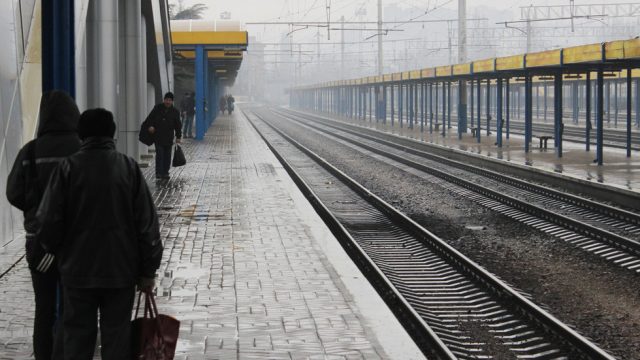
Authorities in Ukraine intend to resume regular passenger transportation with Russia’s Crimea, according to the country’s Ministry of Infrastructure. Crimean authorities have welcomed the plans.
In an interview with Ukraine’s Radio Svoboda the country’s Minister of Infrastructure Vladislav Krikliy said that official passenger traffic between Ukraine and Crimea is “undoubtedly” envisaged. Competitions for carrier selection will be held in the nearest future.
“We are constructing entry-exit checkpoints. I think that everything will be finished on time, as ordered by the president [of Ukraine Volodymyr Zelensky],” Krikliy said. His words follow President Zelensky’s order in July to complete setting up checkpoints at the border with Crimea by December 20 of this year.
Crimean authorities called Kiev’s plans “rational,” as restoration of passenger traffic would benefit Ukrainians and the citizens of the Crimean peninsula equally.
“Rational statements are coming from the power structures of Ukraine, who realize the stupidity of the previous government’s actions in shutting off transport links,” Yefim Fiks, First Deputy Chairman of the State Council of Crimea, said on Sunday. “The ball is in Ukraine’s court” as to whether the Kiev authorities will follow through with the plan, he added.
Fiks pointed out the infrastructure woes that still exist on the Ukrainian side, – like the fact that, after Crimea resumed being part of Russia in 2014, a part of the railway leading to the peninsula was dismantled.
Currently, both Crimeans and Ukrainians who cross the border daily to visit relatives on the other side “are forced to walk some three kilometers with suitcases” Fiks said. He also stated that about one million Ukrainians came to Crimea on vacation this past summer.
“The [restoration of transportation] is beneficial to both peoples, to both states,” he concluded.
Air traffic between the airports of Ukraine and Crimea’s Simferopol was blocked immediately after the referendum in Crimea in March 2014, which saw the peninsula break ties with Kiev and reunite with Russia with a majority of votes. In December of that year, the National Security Council of Ukraine imposed a ban on all regular passenger traffic with Crimea by both air and rail.
US refusal to issue visas to Russian UN General Assembly delegates is ‘political move’ – senator
RT | September 24, 2019
The chairman of the Russian Federation Council’s international affairs committee, Konstantin Kosachyov, has described the US’ refusal to issue entry visas to a number of Russian delegates to the UN General Assembly session as a political decision.
“The US deliberately took a move to delay the issuance of visas. This is obviously a political, not a technical decision,” he was quoted as saying. The Russian delegation had asked for visas 55 days ago, the senator noted. “Such actions by the American side require a ‘painful’ response from Russia,” Kosachyov told reporters.
Kremlin spokesman Dmitry Peskov said earlier that the US has broken international rules by failing to issue visas to Russian senators, adding that a tough response from both Moscow and the United Nations is needed.
‘We don’t need aircraft carriers, we need weapons to sink them with’ – Russian defense minister
RT | September 22, 2019
The US may have a military budget that far exceeds that of Russia, but it doesn’t matter since the Russian military is there to defend the country, not attack other nations, the Russian defense minister said.
Russia’s military budget received a hike a few years ago for a massive rearmament program, but has been rolled back in recent years. The Stockholm International Peace Research Institute estimated Russia to be the world’s sixth biggest defense spender in 2018, behind the US, China, Saudi Arabia, India, and France. Meanwhile, the Pentagon has been showered with money under the Trump administration, dwarfing other nations’ military budgets.
But the man in charge of the Russian Defense Ministry says his fellow Russians have no reasons to worry, because their taxpayer rubles are well spent.
“The US spends huge amounts of money on private military contractors, on aircraft carriers. Well, does Russia really need five to ten aircraft carrier strike groups, considering that we do not intend to attack anyone?” Defense Minister Sergey Shoigu told a Russian newspaper.
“We need the means we could use against the enemy’s carrier strike groups should our country come under attack. They are far less costly and more efficient.”
The minister also criticized Washington for its habit of justifying its military interventions throughout the world by the interests of the people living in the nations it targets.
“In which of the nations they went ‘to bring democracy’ did democracy flourish? Was that Iraq, Afghanistan or Syria?” Shoigu said. “And one certainly can forget about sovereignty and independence after American involvement.”
He added that the US doesn’t seem to be losing its appetite for ruining other nations, be it through military intervention or other means.
“Our Western colleagues love to accuse Russia of waging ‘hybrid wars’ or whatever. Well, I say [the] West is the one conducting actual hybrid warfare. The US now is about to leave Afghanistan in half-ruins and at the same time they work hard to stir things in Venezuela – all for the ‘triumph of democracy’ of course.”
The US tried this year to topple the Venezuelan government by supporting Juan Guaido, who declared himself interim president of the Latin American country. His pretendership, however, has not been that successful. His two attempts at triggering a large-scale public uprising and ousting President Nicolas Maduro fizzled despite Washington’s promise that it would lift crippling economic sanctions against Venezuela once their man takes control.
Will the US use Greece to block Russia in the Black Sea?
By Paul Antonopoulos | September 18, 2019
The Trump administration last week made its first major step to create a Greek-centric NATO corridor following United States Ambassador to Greece, Geoffrey R. Pyatt, announcement that his country intends to acquire the strategic port of Alexandroupoli. If Athens is to accept such a proposal, the country would be contributing to a geopolitical escalation. The US is attempting to push Greece, a traditional rival to Turkey, closer to them at a time when Ankara continues to defy NATO by strengthening its relations with Russia.
The port of Alexandroupoli is of particular importance to US policy in not only the Balkans, but especially to Russia. It is also an important energy route as the Interconnector Greece-Bulgaria (IGB) pipeline and the Trans-Adriatic Pipeline (TAP) is in the region. The port is also important for transportation as it is strategically located close to the Turkish-controlled Dardanelles that connects the Aegean/Mediterranean Seas with the Black Sea, and therefore Russia.
With the acquisition of this port, NATO and US forces may be in the Balkans in only a few hours and can easily stop Russian trade with the world via the Black Sea by blockading the Dardanelles. With Turkey increasingly defying NATO – in which Greece is also a member state of – by improving relations with Russia and buying the S-400, the US can make Greece more aligned with it under the guise of ensuring Greece’s security.
Turkey violates Greece’s maritime and air space on a daily basis, Erdogan makes continued threats to invade the rest of Cyprus. Only weeks ago he made a speech in front of a map that shows Greece’s eastern Mediterranean islands occupied by Turkey, and days ago Turkey removed the inhabited Greek island of Kastellorizo from online maps to claim sovereignty over oil and gas reserves, while continuing threats to flood Greece again with illegal immigrants, among others. Greece undoubtably has an extremely aggressive neighbour.
With Turkey illegally occupying large areas of northern Syria and Cyprus, and illegally intervening in Iraq, Greece must deal with an extremely provocative and expansionist-driven neighbour. With Russia traditionally remaining silent on Turkish provocations towards Greece, it is unlikely that Moscow will stop doing so now that relations are flourishing between the two Black Sea neighbours.
The US are trying to capitalize on Erdogan’s aggression towards Greece by attempting to pivot Athens towards them. If the Greek leadership decide to accept the US offer, it will be a powerful blow towards Turkish expansionism in the Aegean and will create a major security threat for Russia. As Greece is a rival of Turkey, the fact it prioritized creating a powerful navy and air force that could block the Dardanelles if needed, might embolden Greece to take direct actions against Turkey’s continued aggressions and threats.
Despite Greece being an economically ruined country today with a demographic crisis, it still maintains high military standards. This is reflected with Greece having the best pilots in NATO, in which Turkey is also a member of. In maritime matters, Greece has a far superior navy and experience in the Aegean. The Greek Navy has a long tradition and has never been defeated in combat. For this reason, Greece’s navy is one of the most important world naval powers today, at a military and commercial level. Although Turkey’s army makes it one of the largest in the world, it is rendered useless in any war with Greece. Although Greece has a significant maritime border with Turkey, the land border is only 200km long, making it easy to fortify.
With security against Turkey’s continued aggression being a major priority for Greece, the US ambassador is trying to woo the country into allowing the privatization of the port of Alexandroupoli. He stated: “Alexandroupoli is a crucial link to European energy security, regional stability, and economic growth, so it makes sense that the United States and Greece have chosen here to work together to advance our shared security and economic interests.”
With his emphasis on security, it will likely spark huge debates in Athens as it needs security assurances but will also not want to provoke Russia, a country that Greeks see with fraternity when remembering their shared Christian Orthodox faith and Russia’s military and diplomatic role in securing Greece’s independence from the Ottoman Empire. Although Russia is unlikely to back one side or another, a US-controlled port in Alexandroupoli can significantly weaken Russia’s Black Sea capabilities.
If comments by the National Defense Minister, Nikos Panagiotopoulos, of the newly elected neoliberal government is anything to go by, it can be expected that Athens will allow Alexandroupoli to become a US-controlled port. He said that the “use of the port by the US Armed Forces” will be allowed “when there is [certainly] a need” for it, especially as Greece’s current “strategic defense relationship with the US and cooperation” are strengthened, “thereby contributing to regional stability and security.” In direct reference to Turkey, he also said “Greece is ready at any time and moment to defend and safeguard in full its sovereign rights.”
In order to avoid a US naval base on the other side of the Dardanelles, Russia should take a position it has proven to be capable of, and something the US lacks experience in- peacebuilding. If Russia can act as a mediator between Greek and Turkey, it might be enough to avoid Athens pivoting towards the US so that it can ensure its security. Russia has proven in Syria, Afghanistan and elsewhere that it is willing to serve as a mediator in international affairs. With Moscow currently having amicable relations with Ankara, Russia being viewed positively by the majority of Greeks, being a regional country to both Greece and Turkey, and having its owned vested interests in the region, Russia is in a unique position to be able to mediate mutually to find a lasting peace between Greece and Turkey, and to prevent the US acquiring the port of Alexandroupoli.
Paul Antonopoulos is the director of the Multipolarity research centre.
Rapprochement with Russia?
By Gilbert Doctorow | September 16, 2019
Starting in July and running to the present day, there have been repeated calls from mainstream media, from leading statesmen and from diplomats, in the United States and in Europe, for some kind of rapprochement with Russia to be put in place. This is remarkable given the continually escalating informational, economic, military confrontation between Russia and the US-led West over the past five years. That confrontation has emerged in two waves of anti-Russian hysteria: the first, after the daring (or brazen) Russian reunification with (or annexation of) Crimea in March 2014, and the second, with still greater momentum towards war, following the November 2016 election of Donald Trump to the presidency, which was accompanied by allegations of Russian collusion with candidate Trump and other meddling in the U.S. election processes.
Since the United States initiated the New Cold War, it is only fitting that the first steps towards its resolution are coming from there. And it is not in the least surprising that these steps were taken in the aftermath of the April 2019 release of the Mueller Report, which showed that the allegations of Russiagate were without merit or not actionable. Trump’s political enemies were compelled to move on to other issues of contention that would serve better in the next presidential campaign, which is quickly approaching.
That is the context in which I place the fairly amazing editorial of The New York Times dated 21 July 2019 entitled “What’s America’s Winning Hand if Russia Plays the China Card?” The NYT, which along with The Washington Post, had been among the most fervent disseminators of Russiagate theories and of poisonous characterizations of the “Putin regime” now was calling for… re-establishing civilized relations with Russia in order to draw the country back from its growing alliance with China.
While the editorial opens by citing a recent Defense Department report on the serious security threat to the U.S. from any Sino-Russian alliance, the fact of such alliance in formation has been obvious to anyone following the growing cooperation between these two countries in energy, aviation, military exercises, common positions taken in the UN Security Council and much more. It was also obvious for years that a major factor encouraging the Russian-Chinese embrace was the political, military and economic pressure each was receiving from the United States going back to the administration of George W. Bush and running through the Obama and Trump administrations. What is new is only the Times’ using this impending geopolitical tectonic shift to justify an extensive reversal of U.S. policy towards Russia. Now we read that “… President Trump is correct to try to establish a sounder relationship with Russia and peel it away from China.”
This is not to say that the NYT raised the white flag and abandoned its identification of Russia as a malevolent rival: “America can’t seek warmer relations with a rival power at the price of ignoring its interference in American democracy.” Nor did it abandon its identification of Russia as a “declining power” which it very inaccurately ranks as “not even in the top 10” economies, when in fact Russia is close to taking the fifth largest economy slot when purchasing power parity is applied.
Specifically, The Times called for cherry-picking topics for cooperation with Russia such as space travel, managing the Arctic and arms control “especially by extending the New Start Treaty.”
I have taken time with this editorial because the reasoning did not come from nowhere. Moreover, the same logic underlies most, though not all of the calls for rapprochement with Russia that have punctuated the past two months on both sides of the Atlantic.
As for where it came from, I would put forward the name of Henry Kissinger, who exerted considerable influence on candidate Trump in 2016 and continued to have his ear in the early days of the new administration. There can be little doubt that Kissinger urged Trump to reach out to Putin precisely to halt the dangerous drift of Moscow towards Beijing under pressure from successive US administrations. After all Kissinger was Nixon’s man who drew China into an informal alliance with the United States, implementing the policy whereby Washington was closer to both Moscow and Beijing than either was to the other. He did not need to wait for Pentagon white papers in 2019 to know what was afoot and what had to be done to avert the worst, which spelled the destruction of his single greatest achievement during his time in power.
At the same time, Kissinger would have been advising only selective cooperation with Moscow, not full-blown détente. This is precisely the position that he and other ‘wise men’ from the Reagan and George H.W. Bush administrations urged upon both candidate Barack Obama and candidate John McCain during the electoral campaign of 2008, when relations between Russia and the United States were fraught with danger relating to the August 2008 war in Georgia. Their recommendations eventually became the “re-set” policy approved by Obama and implemented by Vice President Joe Biden and Secretary of State Hilary Clinton early in 2009.
“Re-set” achieved progress on the various select issues for cooperation chosen by the Americans, in particular on arms control, resulting in the New START that today faces expiration. However, the ‘’re-set,’’ like what the New York Times editors now call for, did not begin to address the overriding issue driving the Russian foreign and military policy which the U.S. finds so unacceptable: Russia’s exclusion from the security arrangements that the Europeans have put in place together with the U.S., an architecture that is in fact directed against them. That very issue was the subject of the single most important diplomatic initiative of Russia’s President in 2008, Dmitry Medvedev: his call for negotiations to establish new security arrangements for Europe, outside of NATO, where Russia could be an equal member. That initiative met with no response whatsoever from either the United States or its European allies, and so the days of ‘’re-set’’ were numbered.
* * * *
In the period just before, during and after the G7 meeting in Biarritz on 24—26 August 2019 there have been several widely noted remarks from senior Euro-Atlantic statesmen on the need to improve relations with Russia.
A week before the summit, French President Emanuel Macron received Vladimir Putin for talks at his summer residence on the Côte d’Azur. Macron “played up efforts ‘to tie Russia and Europe back together’ and underscored his belief that ‘Europe stretches from Lisbon to Vladivostok.’…. In his Facebook post [after the meeting] Macron said …. ’I’m convinced that, in this multilateral restructuring, we must develop a security and trust architecture between the European Union and Russia…” (The Moscow Times, 20 August 2019).
Before and during the G7, Donald Trump told reporters that Russia should be there with them. At the summit’s conclusion, he indicated he was thinking of inviting Russia to the meeting when he hosts the group in Florida next year. Implicitly this means reviving full lines of communications with Russia which were cut at the insistence of Obama to punish Moscow for its misbehavior in Ukraine.
On 27 August, the day after the G7 closed, in the course of a speech to the assembled ambassadors of France in the Elysée palace, President Macron spoke at some length about the need to ‘reconsider’ ties with Russia within the context of facing up to the major challenges of a world in which the West had lost its hegemony. He called the exclusion of Russia from the New Europe following the fall of the Berlin wall a ‘’profound mistake.” He insisted that “if we do not know how to do something useful with Russia, then we will remain with a profoundly sterile tension, we will continue to have frozen conflicts everywhere in Europe, to have a Europe which is the theater of a strategic struggle between the United States and Russia, thus to have the consequences of the Cold War on our soil.” (http://www.liberation.fr ).
Several days later, on 4 September, in an interview with the Financial Times, Finnish Foreign Minister, Pekka Haavisto used his country’s current position as rotating president of the EU to make a similar point, saying “It’s very difficult to imagine a solution [to global crises] without Russia – or a solution that Russia is not somehow an active partner on.”
The FT deemed it worthwhile to quote him extensively:
“Mr Haavisto also said that the uncertainties created by Brexit and statements by US president
Donald Trump’s administration ‘distancing themselves from European affairs” meant EU states
needed to do more themselves to maintain stability in Europe. ‘It creates a space where
European countries need to think … ’how can we guarantee security here and what can we
do… together?’ he said.”
It went on to note: “Finland’s thinking is significant both because of its EU presidency and its unique relationship with Russia.”
Finally, in this listing of statements by public figures advocating better relations with Russia, I call attention to another article in the Financial Times, dated 15 September setting out the contents of an internal diplomatic note written by EU ambassador to Russia Dr. Markus Ederer. Dated 3 September, the addressees of the report were Ederer’s senior colleagues, the managing director for Asia Pacific at the EU’s External Action Service, and the acting managing director for Europe and Central Asia. The paper sets out arguments and options for engaging with Russia ‘taking into account the political environment, but also Russia’s natural relevance for EU-Asia connectivity.” It was drafted in preparation for the forthcoming 27 September meetings in Brussels on EU-Asia links to which Japanese Prime Minister Shinzo Abe has been invited and in which European Commission president Jean-Claude Juncker is expected to take part.
Among the choice quotations from the report which the FT shares with its readers we find:
“[The EU] would have everything to lose by ignoring the tectonic strategic shifts in Eurasia.”
“Engaging not only with China but with Russia, selectively, is a necessary condition to be part of the game and play our cards where we have comparative advantage.”
The FT article calls attention to five areas for prospective cooperation with Russia: the Arctic, digital, the Eurasian Economic Union, regional infrastructure and the ‘Northern Dimension’ joint policy between the EU, Russia, Norway and Iceland. In these areas, the EU could ‘’engage effectively, on concrete, technical matters’’ with Russia. The paper concludes that ‘’[t]he aim would be to set up a ‘framework of exchanges with Russia on longstanding issues in the EU interest’ involving European business and commission officials.”
* * * *
Considering where we stand today in relations with Russia, at a low point more dangerous than any time since the Cuban Missile Crisis of 1962, all of the aforementioned calls for improving relations made by very prominent and influential heads of state, public officials and media deserve a round of applause. The wise saying “jaw–jaw is always better than war–war” attributed to Winston Churchill applies with equal relevance today.
Looking at all the calls for better relations cited above, I believe the leitmotiv of them all is geopolitical considerations rather than fear of war, particularly nuclear war between the major world powers. Arms control is cited as only one of several objectives for cooperation. Concerns about the future alignment of those powers around the global board of governors are predominant. If humankind is said to be driven by the contradictory emotions of fear and greed, it would seem that our global leaders are presently acting in the spirit of greed rather than fear.
In his 27 August speech to the French diplomatic corps, President Macron called for an “audacious” foreign policy, effectively one that would move outside the box of conventional thinking. Correspondingly, thus far he is the only advocate of improved relations with Russia from among world leaders who had broached the subject of a comprehensive détente with Russia rather than cooperation in selective areas of greatest convenience to us. He is the only leader to have raised the question of revising the architecture of security in Europe to accommodate the fellow Europeans to the East.
Those who follow closely the political démarches of President Macron will object that his thinking about Russia has been all over the place since taking office. And I am among the first to consider him a shallow opportunist rather than the tower of intellect that he styles himself. The summit meetings he called with both Presidents Putin and Trump soon after moving into the Elysée palace had only one objective: to position himself as a prospective power broker in resolving the New Cold War in formation; they had no material content.
In the two years that have passed since he assumed power in France, Macron has been unlucky in domestic politics when his ill-considered fuel tax sparked the Gilets Jaunes movement. But he has been very lucky in foreign policy, because the dominant personality in European politics for the past decade or more, German Chancellor Angela Merkel, entered into the twilight period of her reign and the path opened for Macron to take the lead of EU politics with what he now calls an audacious roadmap.
The specific concept that emerges from Macron’s recent statements is an entente between Russia and the European Union based on shared values and creating a third force in global affairs alongside the United States and China. The alternative, which is looming absent any initiative such as Macron is proposing, will be for the EU to remain a junior partner to the USA and for Russia to be a junior partner to China while their two principals square off. Let us hope that in the days and months ahead Macron can muster the consistency of purpose and powers of successful execution to see through to conclusion what he has begun.
Gilbert Doctorow is an independent political analyst based in Brussels. His latest book, “Does the United States Have a Future?” was published on 12 October 2017.
©Gilbert Doctorow, 2019
Russia prevented Israeli airstrikes in Syria, Putin warned Netanyahu: Report
Press TV – September 14, 2019
Moscow has reportedly moved to prevent Israeli airstrikes in Syria, with Russian President Vladimir Putin warning Israeli Prime Minister Benjamin Netanyahu against the strikes.
Putin told Netanyahu that allowing Israeli strikes on Syrian military assets would undermine Moscow’s relations with Damascus, the Arabic edition of the UK-based Independent newspaper reported on Friday.
The report comes after Netanyahu met with Putin in the resort city of Sochi on Thursday to discuss “security coordination” in Syria.
According to an unnamed Russian source cited in the report, Moscow has also threatened to use its “fighter jets or the S-400 air defense system” in order to counter any Israeli aircraft striking Syria.
In August, Moscow stopped an airstrike on the strategic Qasioun region near Damascus, where a Syrian S-300 missile battery is said to be placed, according to the report.
Moscow allegedly prevented another airstrike later on a Syrian outpost in the southwestern province of Quneitra and a third in the western coastal province of Latakia.
The report comes as Syria has intercepted several Israeli missile attacks in the past month, casting doubt on the extent of Russian commitment to counter Israeli ambitions.
The Israeli regime has acknowledged repeatedly launching attacks against Syria in recent years, some of which have been carried out from Lebanese airspace.
Such aggressive moves have been viewed by observers as attempts to weaken the Damascus government as it increasingly gains the upper hand fighting terrorist groups which have plagued the country since 2011.
‘A failed meeting’
The Independent report also cited unnamed Israeli sources who described Netanyahu’s meeting with Putin as “a failure”, falling short of reducing any Syria policy disagreements with Moscow.
Israeli sources added that Israel airstrikes on Syria had “embarrassed” the Russians from failing to protect its allies.
During the “failed” meeting, Netanyahu had also called for Tel Aviv to be given “freedom of action” against Iran by Russia.
The Israeli prime minister had even sought to use the meeting to “present positive message of the cooperation between the two countries” for his election campaign but failed, the report wrote.
According to the Russian source, Putin’s disagreements with Netanyahu also went as far as Putin condemning Tel Aviv’s recent actions in Lebanon, with the Russian president saying that he “rejects the aggression towards Lebanon’s sovereignty.”
Israel launched a number of drone attacks into Lebanon last month.
Following the drone raids, Sayyed Hassan Nasrallah, Hezbollah’s secretary general, vowed in a televised speech that fighters of the movement would counter any further violation of the Lebanese airspace by Israeli drones, warning the Tel Aviv regime to immediately halt such breaches.
Last week, Hezbollah fired two anti-tank guided missiles at a moving Israeli armored vehicle at the Avivim base north of the occupied territories, killing and wounding its occupants.
Featured Video

Dan Dicks with James Corbett on Solutions Watch
or go to
Aletho News Archives – Video-Images
From the Archives
Secret document reveals plans for civil war in Lebanon, Israeli false flags, and invasion
By Randi Nord | Geopolitics Alert | April 5, 2019
Beirut – During his visit with US Secretary of State, Mike Pompeo, Lebanese President Michael Aoun reportedly received a US-Israeli document detailing plans for creating a civil war in Lebanon with covert false flag operations and possible Israeli invasion.
Although the source of the document is Israeli and created in partnership with Washington, no one knows who presented it to Aoun. The Lebanese TV station, Al-Jadeed, initially reported the document on Lebanese TV and a video on its website. Geopolitics Alert translated the report for this article. … continue
Blog Roll
 Aletho News
- Sheikh al-Asadi warns of Iraqi government compliance with US demands
- How to MAKE THE CONSPIRATORS PAY for their crimes! Dan Dicks with James Corbett on Solutions Watch
- There’s a drought in academia: A drought in honest research on the subject of drought and other weather extremes
- Department of War Awards $20.7 Billion Contract to Raytheon for Air-to-Air Missiles
- ‘Distance yourselves from Israel’: IRGC urges US population to question govt policies
- America’s Greenland deal has a radioactive backstory
- The RAF Fairford ‘terror plot’: Unpacking escalation in the UK echo-chamber
- EU Council Advances Chat Control 2.0 Scanning Proposal
- Ex-Greek MEP files complaint against Israeli spyware firm over alleged Pegasus surveillance
- Troubling ideas throughout the Torah, Talmud, Mishneh Torah and Tanya
- If Americans Knew
- New Report: “Scholasticide and Genocide in Gaza: Assessment, Testimonies and Legal Analysis”
- Ex-Biden officials are desperate for a Gaza scapegoat
- Israeli “settlers” Invade Al-Aqsa; Pour Boiling Water on 75-Year-Old
- Israel Has Kidnapped Another American Teenager
- US arms sales to Israel worth $21.6 billion in 20 months
- Three Palestinians Killed in Israeli Attacks on Gaza
- Revealed: German “Anti-Semitism Expert” Driving Crackdown on Palestine Solidarity is Former Israeli Spy
- Egypt’s Warning to Israel Before Oct 7
- Israel’s siege signals another cruel winter for 1.8 million Gazans – Daily Update
- Netanyahu Asked UAE Leader to Deny Report on Oct. 7 Warning in Secret Visit, Sources Say
- No Tricks Zone
- Two More Paleo Reconstructions Affirm Meters-Higher Sea Levels Across Ireland, Brazil 7000-6000 Years Ago
- New Study: Earth And Venus Surface Warmth Largely Explained By Convection And Lapse Rate, Not CO2 Or Radiation
- 2025 Nature Paper Claiming Worsening Global Drought Gets RETRACTED …Heavily Flawed
- New Study: ‘Global Drought Shows No Detectable Recent Acceleration Under Climate Warming’
- Economic Masterminds: German Socialists Suggest Taxing Productivity Gains Stemming From Using AI
- The South China Sea Has Not Been Cooperating With The Climate Change Narrative
- Energy Crisis: Germany Enters Heating Season With Historically Low Gas Reserve Fill Levels
- New Study: The Antarctic Ice Sheet Gained Mass From 2020-2024 Due To Staggering Snow And Ice Accumulation
- Study: Ocean Heating Rates From Thousands Of Years Ago ‘Dwarf’ Modern Ocean Heating Rates
- Climate Extremists Target, Attack Large-Scale Power Grid Infrastructure In Germany!

