Trump’s phone diplomacy with Putin shatters the Euro-Atlantic Cold War mental bloc
Strategic Culture Foundation | May 23, 2025
As the old saying goes, “it’s good to talk.” Good, that is, for most reasonable people who understand that dialogue is a process that opens positive possibilities, especially when the dialogue is conducted respectfully and sincerely.
This week, US President Donald Trump held his third phone conversation with Russian leader Vladimir Putin since he was inaugurated in the White House in January. The latest one on Monday was even more substantive than the previous calls, lasting about two hours, and, according to both sides, it was conducted in a friendly and productive manner.
Of course, the main topic of conversation was finding a peaceful end to the more than three-year war in Ukraine. Trump deserves credit for at least trying to bring peace to the table, instead of more and more weapons, as his predecessor, the mentally decrepit Joe Biden, did, and assorted European leaders would like to continue doing.
There was also discussion between Trump and Putin, using first names in their verbal exchanges, about repairing US-Russia relations for trade and strategic cooperation.
That portends a transformation in Washington’s erstwhile agenda of hostility towards Russia.
Tellingly, however, the talking was deemed “not good” by others, as could be gleaned from the vexed reactions to Trump’s call with Putin from European leaders and American advocates of the Euro-Atlantic alliance.
European politicians were reportedly “stunned” and “shocked” by Trump’s diplomatic outreach to Putin.
Following his conversation with the Russian president, Trump briefed five European leaders jointly. They included Germany’s Merz, France’s Macron, Italy’s Meloni, Finland’s Stubb, and the European Commission’s chief Von der Leyen. Ukraine’s Vladimir Zelensky was also part of the conference call. The non-entity British prime minister was not included. Sometimes, talking with toxic people is not good!
The Europeans tried to put a positive spin on the briefing from Trump, with Von der Leyen describing it as “good”. But that was the Europeans trying to save face from what is a stunning blow to the Euro-Atlantic alliance.
In a press conference at the White House on Monday, after his calls with Putin and the Europeans, Trump made it clear from his statements that the vaunted alliance is shattered. He is no longer listening to them, and his agenda towards Russia is transformational, if it is permitted to develop.
Trump rejected the European demands for an immediate 30-day ceasefire in Ukraine and more economic sanctions on Russia. He said that imposing more sanctions did not help resolve the conflict. Trump also indicated that he concurred with Russia’s logical position that negotiations must be focused on establishing a lasting peace, one that deals with addressing the root causes of conflict.
The European and Ukrainian demands for a 30-day truce as a precondition are not workable or logical. Indeed, such insistence impedes negotiations. From a cynical point of view, that is why the European backers of the Kiev regime are making such a song and dance about sanctions and the 30-day truce, because those demands are aimed at preventing diplomacy succeeding with Russia.
Britain’s Financial Times headlined its report on the Trump-Putin call: “Why Europe fears the worst after Trump’s ‘excellent’ chat with Putin”.
The BBC inadvertently shed light with its headline: “Trump’s call with Putin exposes shifting ground on Ukraine peace talks”. The BBC-speak about “shifting ground on peace talks” is an Orwellian translation. What the BBC should have said in plain language was that Trump is shafting the European warmongers.
Meanwhile, across the Atlantic, the supporters of the NATO proxy war against Russia tried their best to undermine Trump’s diplomacy.
The New York Times – the CIA’s main choice for gaslighting the American population – called the phone call a “diplomatic win for Russia” and snidely said, “Trump backs off ceasefire call”. The latter implied that Trump is against peace when, in fact, he is the only Western adult in the room calling for peace.
The Washington Post also did its best to smear Trump, reporting: “After call, Trump gives Russia more time for Ukraine war”. An op-ed piece also mockingly claimed: “Trump wasted two hours with Vladimir Putin”.
CNN, another outlet that has loyally and absurdly pushed the NATO proxy war as a noble endeavor, accused Trump for “siding with his friend in the Kremlin” and claimed that “peace in Ukraine looks further away after Trump’s call with Putin”, adding that “Putin got exactly what he wanted… stringing Trump along.”
The riot of negative and vitriolic reactions on both sides of the Atlantic shows that the US-European alliance under Trump has shattered. That alliance embodied by the NATO military bloc has been the linchpin of the “Collective West” for eight decades. It has now cracked wide open.
Unlike his predecessors in the White House, Donald Trump does not want to pursue a destructive and futile policy of inflicting a strategic defeat on Russia. That policy is what engendered the war in Ukraine, from the CIA-backed coup in Kiev in 2014, to the provocative weaponization of Ukrainian NeoNazis, until Russia’s intervention in February 2022 to defend its rights.
Trump appears to genuinely want to end the proxy war and to normalize relations with Russia for the sake of world peace, and, why not, good business.
For the Euro-Atlanticists, with their incurable, imperialist, and Russophobic mindsets, such a policy is anathema.
However, the good news is that the gaping cracks in the so-called Collective West now provide a path to peace.
Trump and Putin can end the war in Ukraine and negotiate an important peace deal that addresses Russia’s historic security grievances that stem from the decades of NATO aggression, which past American presidents and their European surrogates have facilitated.
For Trump to do that, he needs to listen carefully to the Russian leadership and reciprocate. If a new detente can be achieved, then the world will be a better, more secure, and peaceful place.
The other thing that Trump needs to do is to dismiss European lackeys with their warmongering servility to the status quo ante. They are has-beens and have nothing constructive to offer.
Trump’s phone call with Putin this week has had a major impact, and one that has significant potential for peace. The cracks in the Cold War mental bloc, so to speak, are a way forward.
Russian military strikes drone-making plant in Kiev – MOD
RT | May 24, 2025
The Russian military has carried out a successful strike against a drone and missile production plant in the Ukrainian capital, Kiev, the Defense Ministry in Moscow has said.
The statement, issued by the ministry on Saturday, confirms earlier reports of a large-scale Russian drone and missile strike on Kiev overnight. Witnesses said they heard multiple blasts, with photos uploaded on social media capturing a huge explosion in the city.
“The Russian military performed a group strike with high-precision ground-based weapons and unmanned aerial vehicles against a Ukrainian military-industrial complex enterprise that produces missile weapons and unmanned aerial attack vehicles,” the statement read.
The other targets of the attack were a radar surveillance center and a US-made Patriot air defense system, it added.
“All of the goals of the strike were achieved. All designated targets were hit,” the ministry said.
According to media reports, the Russian strike targeted the Antonov aircraft manufacturing plant in the western part of the capital.
The Russian bombardment came after an intensification of Ukrainian drone attacks on Moscow and other Russian regions this week.
According to the Defense Ministry, 788 drones and 12 missiles were intercepted inside Russia between Tuesday and Friday. Another 104 UAVs were intercepted overnight, the ministry said on Saturday morning.
The Russian Foreign Ministry said on Friday that one person had been killed and 20 others injured, including four children, in Ukrainian drone strikes throughout the week. Four more civilians, including two kids, were wounded after the city of Lgov in Kursk Region was hit by a US-supplied HIMARS multiple rocket launcher, according to the ministry.
The Russian military said it would respond appropriately to the intensified drone raids by Kiev, but “unlike the Ukrainian side, our targets will be strictly limited to military facilities and defense industry plants,” it said.
Russian Ambassador Slams UK-German Missile Scheme As Militarization of Europe
Sputnik – 23.05.2025
The recent development of a new precision weapon with a 2,000-kilometer range—announced on May 15 by the UK and Germany—represents another setback for arms control, following the collapse of the Intermediate-Range Nuclear Forces Treaty (INF), Russian Ambassador Andrei Kelin told Sputnik.
“This is part of a new wave of militarization in Europe under the pretext of a threat from Russia. This is another blow to the regime established 30 years ago by the Intermediate-Range Nuclear Forces Treaty. This treaty was destroyed by the Americans,” Kelin said.
The high-precision weapon development plan, it was noted, seeks “to strengthen NATO’s deterrent capabilities.”
“When these missiles were banned, Europe’s security as a whole was at a much higher level. Now, unfortunately, another blow will be struck by the Europeans,” the ambassador emphasized.
In July 2024, the British press reported that London was considering a joint missile development project with Berlin, featuring a range of up to 3,200 kilometers. It is believed that these missiles could eventually replace American cruise missiles stationed in Germany.
In early 2019, the United States announced its unilateral withdrawal from the INF Treaty, accusing Russia of violations, a claim Moscow rejected. In July 2019, the Russian president signed a law suspending the treaty, and by August of that year, the pact officially ceased to be in effect. Russia has consistently maintained that it fully complied with the INF’s terms.
Meanwhile, Moscow emphasized that Russia has serious concerns regarding Washington’s implementation of the treaty and pointed out that the allegations of Russian violations are baseless.
Sic Transit Gloria Mundi
By William Schryver – imetatronink – May 22, 2025
The inexorable decline of the American Empire has arrived at an Imperial Paradox. It must either fight a war and die, or not fight a war and die.
Here are the options:
China
Neither South Korea nor Japan want anything to do with a war against China, leaving only the Philippines dumb enough to play along.
The US apparently pulled another brigade out of South Korea. They’ll pull out more in the future. They know damn well the North Koreans could easily conquer the entire peninsula if they chose to do so.
China and its local seas are a vast ocean away from America, and its capacity to defend its local seas is enormous and growing.
The Pentagon must understand it cannot sustain logistics in a war against China in the western Pacific. It simply cannot be done. Anyone who thinks otherwise must upgrade their proficiency in basic arithmetic.
Iran
In the context of a war against Iran, all the geography is against the US.
Iran is an exceedingly mountainous country that has, over the course of millennia, learned to use those mountains to defend itself against would-be conquerors.
They can field a satisfactorily well-equipped million-man army.
They have learned in the 21st century to burrow deep heavily fortified tunnels into their mountains.
Iran is also much more technologically advanced than most people understand. They have become impressively capable in terms of both offensive and defensive missiles. They pose a far greater challenge than the Yemeni have been over the past year and a half.
Indeed, they pose a “near-peer” challenge against US overseas power projection.
The US Navy could only operate at extreme risk in the southern Red Sea, the Gulf of Aden, the Gulf of Oman, the Strait of Hormuz, and the Persian Gulf.
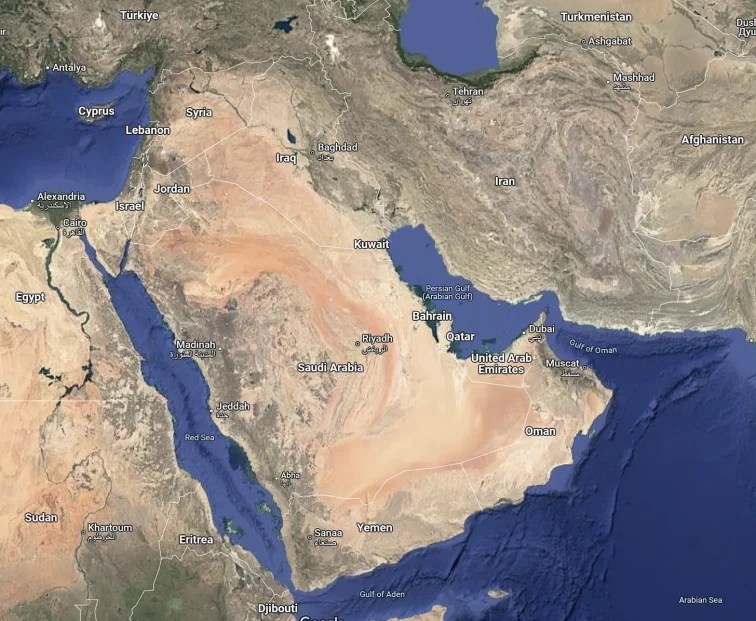
Iran’s sphere of influence
Every US base in the region is well within range of Iranian missile strikes.
The US Navy very demonstrably cannot secure seaborne logistics into the Persian Gulf. They lack both the sealift ships, and the ability to protect them.
They cannot even open the Bab-el-Mandeb!
Russia
From a geographic and logistical standpoint, the only remotely conceivable war is one in Ukraine against Russia.
The US at least has bases and forces already in place in the UK, Germany, Poland, Romania, Finland, and in Baltic chihuahua fantasy-land — and what has served until now as a reasonably secure logistics pathway into all those places.
Of course, whether or not such a condition persists long in a war scenario is another question altogether.
Because, you see, the Russians are now unquestionably the most formidable and battle-hardened military on the planet — at least in the context of a war fought on their doorstep.
So if you’re an empire that thinks it needs a war to reaffirm at least its short-term relevance and fading glory … well, these are your choices.
Russia bans Amnesty International
RT | May 19, 2025
The Office of the Russian Prosecutor General has banned Amnesty International, the London-based non-governmental organization (NGO), accusing it of Russophobia and support for the Ukrainian military.
An official statement on Monday said that while the “organization positions itself as an active champion of human rights throughout the world,” its headquarters in the British capital have turned into a “center for preparing global Russophobic projects, paid for by accomplices of the Kiev regime.”
“Members of the organization support extremist organizations and finance foreign agents’ activities,” the Prosecutor General’s Office claimed.
Amnesty has been actively working toward “increasing military confrontation” since the escalation of the Ukraine conflict in February 2022. Russian prosecutors have accused the NGO of whitewashing Ukrainian war crimes, calling for more financial support for Kiev and the economic isolation of Moscow.
Last month, Moscow banned US-based NGO Hope Harbor Society for providing financial support for the Ukrainian military as well as the coordination of anti-Russian protests in the US and other countries.
In early April, the Elton John AIDS Foundation was designated as ‘undesirable’ in Russia after being accused of promoting pro-LGBTQ agenda in the country.
Organizations with such a designation are banned from operating in Russia, and residents or companies may face legal penalties for providing financial or other forms of support to them.
The Russian Justice Ministry currently lists more than 200 such entities, including major Western influence groups such as George Soros’ Open Society Foundations, the US-based German Marshall Fund, and the pro-NATO Atlantic Council.
Trump should not threaten new sanctions when he talks to President Putin
By Ian Proud | Strategic Culture Foundation | May 19, 2025
The U.S. side has made various signals that it might impose massive new sanctions on Russia unless the war ends soon. This would be a huge mistake that would lock in the fighting for the rest of the year and leave Europe on the hook for a massive bill and political disruption that it cannot afford. Trump should not threaten Putin with sanctions when they talk on Monday 19 May.
In the run up to the Russia-Ukraine bilateral peace talks which finally took place in Istanbul last week, both the EU and the UK imposed new sanctions on Russia. On 9 May, as Russian commemorated victory Day, Britain imposed sanctions on Russia’s shadow fleet and the EU followed suit with its 17th package of Russia sanctions on 14 May, the day before the Istanbul talks were due to start. Both the UK and EU have threatened further sanctions should Russia not agree a full and unconditional ceasefire in Ukraine and, with Zelensky, have actively urged the U.S. to follow suit, which it has not done, so far. However, the Americans have spoken increasingly about the possibility of massive new sanctions against Russia: this would be a huge mistake.
Sanctioning a country before peace talks have already started, or while they are still going on, is already a bad look. Very clearly, the Ukrainians, Europeans and British hope that new sanctions will apply such pressure on Russia that it agrees to terms that are more favourable to the Ukrainian side. I.e. that Ukraine does not have to go back to the Istanbul 1 commitment to adopt permanently neutral status. The western mainstream press has been carpet bombing their intellectually degraded readers with the latest press line that Ukraine should not have to go back to the Istanbul 1 text as a starting point for talks.
But there’s a problem. For this strategy to be effective, the sanctions have to work.
As I’ve pointed out before, sanctions against Russian energy have had limited impact, not just since 2022, but since 2014. Nothing about the glidepath of sanctions since February 2014 suggests that new sanctions will work now.
This latest round of UK and EU sanctions aimed to apply more pressure on enforcement of the G7 oil price cap of $60 which was first imposed in December 2022. Since the war started, that policy has failed.
Between 2021 and 2024, total volumes of Russian oil exported fell by just 0.2 million barrels per day, or 2.6%. After a bumper year for tax receipts in 2022 caused by Russian tumbling rouble and skyrocketing energy prices, Russia pulled in current account surpluses of $49.4bn and $62.3bn in 2023 and 2024. This was on the back of still strong goods exports of $425bn and $433bn respectively.
There are several reasons why the oil price cap didn’t work, the biggest being that Russia diverted 3 million barrels per day, around 39.5% of total oil exports to India (1.9 mbd), Türkiye (0.6 mbd) and China (0.5 mbd). Türkiye and India boosted exports of refined fuels to Europe providing a backdoor route for Russian oil to Europe. The second reason the oil price cap didn’t work is the near ten month time lag between war starting and the limit being imposed, which gave Russia space to readjust before punitive measure had been imposed. During this period, oil prices also dropped sharply from the high of $120 in the summer of 2022, to around $80 when the measure was imposed: the G7 missed the boat to impose maximum damage; this reinforces the point I make all the time that coalitions cannot act with speed and decisiveness.
Today, the Russian Urals oil price is below the $60 G7 cap meaning that any registered shipping company can transport it without penalty, which renders the British and European sanctions as pointless in any case.
Let’s be clear, western nations imposing sanctions against Russia that don’t work is not a new phenomena. As I have pointed out many times before, the vast majority (92%) of people that the UK has imposed assets freezes and travel bans upon have never held assets in the UK nor travelled here. For companies, the figure is just 23. The same, I am sure, is true of EU and U.S. sanctions, which cover largely the same cast list of characters and companies, as we all share and compare the same lists of possible designations. Financial sector sanctions prompted a massive readjustment of Russia’s financial sector. Energy and dual use sanctions drove self-sufficiency in technology production, through Rosnet, Gazprom and RosTec: i.e. these companies invested more in R&D on component production while sourcing components from alternative markets, in particular China.
At well over 20,000 sanctions imposed so far, Russia’s economy has proved remarkably robust and its key export sectors still find ways to deliver similar volumes across the world. At some point, I hope policy makers in London, Brussels and Washington will start to ask whether this policy is working. We long ago passed the point of diminishing marginal returns. I fear, however, they have their heads in the sand or, possibly another, darker, place.
So, coming back to Trump’s phone call with Putin on Monday 19 May you might ask yourself, ‘so what if he imposes a few more sanctions if they won’t work anyway?’
Putin would see the imposition of new U.S. sanctions as a complete 180, destroying any emerging trust he had in Trump or any belief in America’s stated intentions to end the war in Ukraine.
It is clear to me that further U.S. sanctions on Russia would kill stone dead any chance of a ceasefire in Ukraine at a time when Russia still has the upper hand. Russia has increased the pace of its advance since the Victory Day ceasefire and seems to be adding new blocks of red to the battle map each day. At the current rate of advance, even without a catastrophic Ukrainian collapse, it seems realistic to expect that Russia would paint out the remaining territory in Donetsk and Luhansk during the remainder of this year. In the process they would need to overcome the heavily fortified towns of Pokrovsk, Kramatorsk and Sloviansk, in what would likely be brutal and attritional battles killing many thousands more on both sides.
Moreover, dragging out the war for longer would simply add to Europe’s liability to fund Ukraine’s war effort at a time when it is only ever going to lose. Ukraine is spending over 26% of GDP on defence in 2025 and 67.5% of its budget expenditure is on defence and security, leaving a budget black hole of $42bn that has to be filled. America under Trump isn’t going to fill this hole. And, as Ukraine is cut off from international lending markets, that black hole is being filled by Europe.
There is no money for this.
Europe has neither the political capital nor the funds to maintain a losing war in Ukraine at enormous expense without massive domestic political blowback in their own countries.
Notwithstanding the possibly understandable fear among European leaders of failing and being seen to fail in Ukraine, keeping the war going is at best, a gesture in cynical self-preservation, pushing their eventual political demise further down the track.
Unfortunately, we have been here so many times before. Right back to the Minsk II agreement, Ukraine has been pushing for ever more sanctions against Russia that only ever served to ramp up resentment and exacerbate the conflict. European leaders have invested too much in Zelensky and his self-serving demands aimed primarily at staying in power. He is quickly becoming the gun that shoots European elites in the head.
If Trump really wants to be seen as a peacemaker, he should avoid doing what every other western leader before him including Sleepy Joe did and resist the temptation to impose more sanctions. Instead, he should continue to press President Putin to continue to engage with bilateral peace talks that finally recommenced in Istanbul last week. He must also tell the Eurocrats and Zelensky that they must make compromises rather than plugging the same old failed prescriptions.
Putin outlines results Moscow seeks in Ukraine
RT | May 18, 2025
Russia is seeking to achieve “lasting and sustainable peace” by eliminating the root causes of the Ukraine conflict, President Vladimir Putin has said, in an extract of an interview released by Russia 1 TV on Sunday.
In a clip posted by journalist Pavel Zarubin on Telegram, Putin stated that Russia has “enough strength and resources to bring what was started in 2022 to its logical conclusion” while accomplishing Moscow’s key goals.
Russia wants to “eliminate the causes that caused this crisis, create conditions for long-term sustainable peace and ensure the security of the Russian state and the interests of our people in those territories that we always talk about,” he added.
The president was apparently referring to Crimea, the Donetsk and Lugansk People’s Republics, and the regions of Kherson and Zaporozhye, which overwhelmingly voted in favor of joining Russia in referendums in 2014 and 2022.
People in these former Ukrainian territories “consider Russian to be their native language” and see Russia as their homeland, he said.
Commenting on the ongoing diplomatic engagement with the US to settle the conflict, Putin acknowledged that “the American people, including their president [Donald Trump] have their own national interests.”
“We respect that, and expect to be treated the same way,” he added.
Putin’s remarks come on the heels of the first direct Russia-Ukraine talks since 2022. As a result of Turkish-mediated negotiations in Istanbul, both sides agreed to exchange lists of conditions for a potential ceasefire, conduct a major prisoner swap, and discuss a follow-up meeting. The Kremlin has not ruled out direct talks between Putin and Ukraine’s Vladimir Zelensky if the ongoing peace efforts result in progress and firm agreements.
Following the talks, US President Donald Trump announced he would hold a phone call with his Russian counterpart on Monday, which would focus on trade and resolving the Russia-Ukraine conflict. Meanwhile, Russian Foreign Minister Sergey Lavrov discussed the Istanbul negotiations with US Secretary of State Marco Rubio, who welcomed the results of the talks.
Russia outlines ceasefire conditions in Istanbul talks with Ukraine
Al Mayadeen | May 17, 2025
The Russian Ministry of Defense has revealed the conditions presented by Moscow during the Istanbul negotiations with Kiev, as shared by the Clash Report platform on social media.
The outlined terms reflect Russia’s position on a potential settlement in Ukraine, with an immediate ceasefire as the primary demand.
Russia’s ceasefire conditions
Neutrality modeled on Austria
The first condition proposed by Moscow is that Ukraine adopt a neutral status, similar to Austria’s model. This would prohibit the presence of foreign troops or non-Ukrainian military bases on Ukrainian territory, effectively excluding NATO or other military alliances from operating within the country.
No foreign troops or bases in Ukraine
Moscow emphasized that neutrality must be comprehensive, with Kiev legally committing to reject the stationing of foreign forces and equipment.
Territorial demands and border recognition
Among the key demands, Russia requires Ukraine to formally recognize its constitutional claims over five regions: Donetsk, Lugansk, Kherson, Zaporizhzhia, and the Crimean Peninsula.
The Russian Defense Ministry stressed that the immediate ceasefire is contingent upon the complete withdrawal of Ukrainian forces from all five regions claimed by Russia.
Renunciation of war compensation claims
Moscow is also seeking a mutual legal renunciation of any compensation claims related to war losses, including economic damage and human casualties.
Protection of Russian-speaking citizens
Russia demands that Ukraine commit to European standards on minority rights, specifically to safeguard the rights of Russian-speaking citizens. In addition, Moscow calls for an end to what it terms “nationalist propaganda” within Ukrainian society.
Russia, Ukraine agreed to exchange ceasefire conditions
Later on Saturday, Kremlin spokesman Dmitry Peskov said Russia and Ukraine have agreed to exchange the lists of ceasefire conditions, noting that the Russian side is working on the matter.
The Russian side has prepared such a list and will hand it over, with exchange with the Ukrainian side,” he told reporters.
At the same time, the work on the resolution of the conflict in Ukraine has just started and it will be continued, he added.
Change in Russian delegation to negotiations not being discussed
Peskov pointed out that a change in the composition of the Russian delegation to the negotiations with Ukraine is not being discussed, emphasizing the importance of implementing the agreements reached during the recent Russia-Ukraine talks in Istanbul.
The Kremlin spokesperson also asserted that the ongoing negotiations “are and should be held in a closed format.”
Putin-Zelensky meeting possible if certain agreements reached
The Russian diplomat highlighted that a meeting between Russian President Vladimir Putin and his Ukrainian counterpart Volodymyr Zelensky is possible if delegations of both countries reach certain agreements.
“Such a meeting as a result of the work of the delegations of the two sides is possible when certain agreements of these delegations are reached,” he said.
Elsewhere, Peskov also said that Moscow considers the candidacy of Kiev’s signatory as the main and fundamental thing when signing documents between the Russian and Ukrainian delegations during the negotiations.
First direct talks since 2022
Russia and Ukraine held their first direct peace talks in over three years on Friday in Istanbul, reaching a key agreement on a large-scale prisoner exchange but making little headway on a ceasefire or broader political settlement.
The 90-minute meeting marked the first direct diplomatic engagement between Moscow and Kiev since 2022 and came amid continued hostilities and mounting international calls for a de-escalation of the conflict.
Both sides emerged from the session expressing cautious openness to further dialogue, though no immediate breakthrough was achieved on halting the war, now in its third year.
Ukraine entered the talks seeking an unconditional ceasefire, hoping to bring relief to areas devastated by the conflict and to ease the humanitarian crisis affecting millions.
Russia, however, dismissed the demand, and both sides instead agreed to present their respective “visions” for a potential ceasefire at a later stage, according to Russian lead negotiator Vladimir Medinsky.
Prisoner exchange agreement reached
The only concrete outcome of the talks was an agreement to exchange 1,000 prisoners from each side. Both delegations hailed the deal as a positive humanitarian step.
Ukrainian Defense Minister and chief negotiator Rustem Umerov described the agreement as a “great result”, noting that it set the stage for further negotiations.
Ukraine pushes for Putin-Zelensky summit
Kiev pushed for a direct meeting between Ukrainian President Volodymyr Zelensky and Russian President Vladimir Putin. Ukraine’s Foreign Ministry spokesperson Georgiy Tykhy stressed that progress would require “a meeting of leaders.”
Russia acknowledged Ukraine’s request for a summit but did not commit. Putin declined to attend the talks in Turkey, instead dispatching a lower-level delegation. Zelensky accused Putin of being “afraid” to engage directly and said Moscow was not approaching the talks “seriously”.
Rubio urges ‘peaceful end to the war’
Ahead of the negotiations, Ukrainian representatives met with US Secretary of State Marco Rubio, Trump’s special envoy Keith Kellogg, and national security advisors from Britain, France, and Germany.
State Department spokesperson Tammy Bruce said Rubio had urged “a peaceful end to the war” and emphasized that “the killing needs to stop.”
Speaking at a European summit in Albania, Zelensky called on the international community to impose further sanctions on Russia if the talks failed to yield results, warning of global consequences should diplomatic efforts collapse.
Preliminary talks in Istanbul are a start… the real show to come is Trump and Putin
Strategic Culture Foundation | May 16, 2025
The talks in Istanbul this week provide a prospect for peace. It bears emphasizing that the three-year proxy war could have been avoided if diplomacy had been permitted by Washington in early 2022 instead of being sabotaged.
Three years on, we have a new president in the White House, and there appears to be a more enlightened policy. Or maybe it’s an implicit admission that the U.S. proxy war agenda is a failure and can’t go on.
In any case, Trump and his envoys are unequivocally saying that they want to stop the bloodshed in Ukraine. That’s a big change from his predecessor, Joe Biden, who vowed to back Ukraine for as long as it takes in a fantastical, reckless pursuit to strategically defeat Russia.
It was the Biden administration, along with the British government, that intervened to scupper nascent peace talks in March 2022 between Russia and Ukraine for a peace deal. Washington and London coaxed the Kiev regime to fight on with promises of more weapons.
The result: three more years of intense conflict, which have caused millions of casualties, mainly on the Ukrainian side. The proxy war has come perilously close to provoking an all-out world war between nuclear powers.
Trump appears to want peace. If he is genuine in that intention, then the American president will have to address the root causes of the conflict. Russia has consistently explained the deeper causes of NATO aggression and the militarization of Ukraine as a hostile bridgehead on its borders since the CIA-orchestrated coup in Kiev in 2014.
The American president has shown petulance at times, urging Ukraine and Russia to get down to a peace deal. He has even threatened Russia with more (futile) economic sanctions. What the Trump administration needs to understand is that resolving deep causes of conflict requires commensurate negotiations and a realistic commitment to lasting geopolitical security arrangements.
The talks in Istanbul this week to explore a peaceful resolution were initiated by Russian President Vladimir Putin in an announcement last week.
Russia’s delegation was led by Putin’s senior aide, Vladimir Medinsky. That speaks of consistency and commitment. Medinsky led the peace talks three years ago in Istanbul, which were then sabotaged in April 2022 by the American and British intervention.
This week, the Russian side held preliminary bilateral talks with the Americans led by Secretary of State Marco Rubio. Subsequently, the Russian and Ukrainian delegates engaged in a meeting convened by Turkish diplomats. It was the first direct encounter between Russian and Ukrainian officials since the March 2022 negotiations.
It is not clear if follow-up meetings will take place. But at least one might say that talks took place.
The key to any prospect of ending the conflict depends on Washington demonstrating the requisite commitment. Trump said this week again that he would like to hold a summit with Putin as “soon as possible.” The Kremlin has also said that a formal presidential meeting is desirable.
Kremlin spokesman Dmitry Peskov cautioned that there must first be adequate preparation for meaningful discussions. That implies that any top-level meeting must be cognizant of Russia’s demands for a resolution, one that deals with the historic, systematic causes of the proxy war.
Western politicians and media denying Russia’s perspective are delusional or duplicitous. To claim that the conflict is all about “unprovoked Russian aggression” against “democratic Ukraine” and “Russian expansionism” towards Europe is a travesty. It’s a bogus narrative that precludes peaceful resolution. Trump seems to be aware of that. But he needs to go beyond a superficial “peace broker” charade.
If Trump wants a gimmicky big summit with Putin for PR ratings, as his tour of the Middle East this week illustrates his egotistical wont, he can forget it.
The meetings this week in Turkey can be seen as preliminary technical discussions.
However, President Trump needs to take the lead. Appropriately, a peaceful resolution will only happen at the senior level of the U.S. and Russian governments. That’s because the United States is the primary protagonist in the proxy war against Russia.
It is clear from the antics and theatrics of the Kiev regime this week that there is no prospect of a meaningful, lasting peace if negotiations are confined to that level. Ukrainian President Vladimir Zelensky does not even have constitutional legitimacy after cancelling elections last year. His erratic behavior of grandstanding and mudslinging at the Russian diplomatic efforts proves that he is not capable of substantive negotiations.
The European leaders are also an impediment to achieving an authentic peace settlement. Even before delegations met this week in Istanbul, various non-entity European politicians were disparaging Russia’s diplomatic initiative. Macron, Starmer, Merz, Von der Leyen and Kallas were desperately trying to insult the Russian president, indulging Zelensky’s PR stunt demanding a face-to-face meeting with Putin in Istanbul.
The European Union also timed an announcement this week to double its supply of heavy-calibre munitions to Ukraine. Another provocation.
France’s Macron sought to impose a precondition for the talks by demanding a 30-day ceasefire. That was a flagrant attempt to sabotage the negotiations before they even started.
These people are not honest about ending the worst war in Europe since the end of World War Two. Disgracefully, they want the bloodshed to continue for their political survival and gratifying their obsessive Russophobic fantasies.
If Trump wants to end NATO’s proxy war against Russia, he will have to sideline the European naysayers and the Kiev puppet regime. Their involvement is counterproductive. One suspects that Trump already knows that.
An American and Russian agreement at the highest level is the only way to bring the war to an end. It is no use for the American side pretending that they are mere peace brokers. They are the main protagonist, not the European lapdogs nor the Kiev regime.
Preliminary talks are all very well. But they are just that. Preliminary. If the talks have any chance of succeeding, the American side must take responsibility for the war it started and fueled.
Russia, Ukraine prepare for peace by getting ready for war
By M. K. BHADRAKUMAR | Indian Punchline | May 17, 2025
May 16 will stand out as a turning point, for good or bad, in the Ukraine conflict. The main thing is, Russia-Ukraine ‘peace talks’ have resumed in Istanbul and will hopefully carry forward the threads of the draft agreement negotiated in March 2022. But caveats must be added. The fact that it took Turkish President Recep Erdogan three hours to persuade Ukrainian president Volodymyr Zelensky to green light the negotiations speaks for itself.
On the other hand, Zelensky showed remarkable flexibility by violating his own presidential decree banning any such negotiations on the part of Ukrainian officials other than himself with Russian officials. Turkey showed again that it remains a significant influencer in the Ukraine conflict.
The result was an extraordinary spectacle. Reports mention that the Russian delegation had not one but three meetings, in fact — with a Turkish-American team followed by a Turkish-American-Ukrainian team and culminating in an exclusive huddle with the Ukrainian team.
The ‘bilateral’ Russian-Ukrainian negotiations reportedly touched on the topics of ceasefire options in the Ukraine conflict; a major prisoner exchange; a potential meeting between Zelensky and Russian president Vladimir Putin; an agreement in principle to hold a follow-up meeting and so on.
The Ukrainian media reported that the Russian side repeated their demands for Kiev’s forces to vacate the remaining parts of the four eastern and southern regions that Moscow has annexed. Ukraine of course rejected the demand. Indeed, these talking points at the Istanbul meeting would have been a plateful for a meeting that lasted only for an hour and forty minutes.
Turkiye has joined as a stakeholder, as the pacemaking in Ukraine provides an opportunity for it to work closely with the US, which could have positive fallouts for the two main discords that put strains on it in the recent years — Syria and the Kurdish problem. The Kurdistan Workers’ Party (PKK) has taken a historic decision on May 12 to give up armed struggle and dissolve itself, which opens the possibility to end decades of political violence in Turkiye. The ‘peacemaker president’ in the White House can help Ankara to mediate a Kurdish settlement.
Turkiye has promoted the US’ normalisation with the Islamist government in Damascus. Trump’s meeting with Syrian President Ahmed al-Sharaa in Riyadh on Wednesday alongside the lifting of Washington’s sanctions against Syria, which shake up the geopolitics of the Middle East, will bring Turkiye and the US on the same page.
Notably, all this is happening against the backdrop of a ‘westernist’ tilt in the Turkish foreign policies during the past year following Erdogan’s re-election as president. Traditionally, the equations between Trump and Erdogan remained cordial and friendly. Suffice to say, Trump can expect Erdogan’s cooperation in the peacemaking in Ukraine talks, where the Turkish leader’s excellent equations with Zelensky are an added factor, which was on display in Ankara yesterday.
Erdogan held Zelensky’s hand through thick and thin. The high-tech Turkish drones supplied to Ukraine, which are to be manufactured locally, will significantly boost Kiev’s military capability. Turkiye, as the inheritor of the Ottoman legacy, is home away from home for an influential Tatar community. Tatar language is an Oghuz language descended from Ottoman Turkish. In fact, Turkey has refused to recognise Crimea as part of Russia. Ukrainian Defence Minister, a close associate of Zelensky, is an ethnic Tatar.
Moscow understands all this. Putin hastened to put behind the friction in Russo-Turkish relations in the downstream of the regime change in Syria last December to reach out to Erdogan on May 11 to discuss the direct talks between Russia and Ukraine in Istanbul. The Kremlin readout said Erdogan “expressed his full support for Russia’s proposal and emphasised his willingness to provide a venue for the talks in Istanbul. The Turkish side will offer all possible assistance in organising and holding talks aimed at achieving sustainable peace… The leaders have also expressed mutual interest in further expanding the bilateral ties in trade and investment and, in particular, implementing joint strategic projects in energy.”
Erdogan is a difficult interlocutor to handle but Putin has been largely successful in keeping the relationship stable and (mostly) predictable. The Turkish factor can be a game changer if at some point Zelensky ceases to be the captive of the CoW4 (the four European musketeers of the so-called ‘coalition of the willing’ — Britain, France, Germany and Poland.) Trust Erdogan to shift gears to an activist role.
On the whole, Russia has scored a diplomatic victory insofar as its initiative on ‘Ukraine direct talks without preconditions’ has found acceptability with Trump. The format of yesterday’s talks implied a resumption of the Russian-Ukrainian talks in Istanbul in 2022. Putin manoeuvred brilliantly to scatter the game plan of the CoW4 which strove to pull aside Trump incrementally and become party to continuing the war in Ukraine.
The CoW4 felt encouraged lately by a certain perception that Trump may impose draconian sanctions if Russia lacked sincerity of purpose. But so far, Trump has remained engaged with Putin. Last week, Trump stated that a breakthrough in the Ukraine conflict will be possible only out of a summit between him and Putin. Suffice to say, the dramatic happenings in Turkey yesterday signify a setback to the CoW4.
The leader of the Russian delegation and presidential aide Vladimir Medinsky (who also headed the Russian team at the talks in Istanbul in 2022) has told the media that Moscow is “satisfied” with the results of the talks and is ready to “resume contacts” with Kiev.
That said, Moscow will not let down its guard either. Putin held a briefing session on May 15 with the permanent members of the Security Council, Russia’s highest policymaking body, to deliberate on the upcoming Istanbul talks, which was attended by the members of the Russian negotiating group. The Kremlin readout stated that Putin “set tasks and charted the negotiating position” of the Russian delegation in Istanbul.
On the other hand, the Kremlin also asserted simultaneously that no matter the talks in Istanbul, Russia’s military operations in Ukraine shall continue. With immaculate timing, Putin chose May 15 to also make the stunning announcement of the appointment of Colonel-General Andrey Mordvichev (nicknamed “General Breakthrough”) as the Commander of the Russian Ground Forces.
Gen. Mordvichev has a tough reputation as the commander of the 8th Guards Combined Arms Army of Russia’s Southern Military District, which was heavily involved in the devastating 2022 siege of Mariupol, and in the Battle of Avdiivka in 2023-2024, a turning point in the conflict in Ukraine. Gen. Mordvichev’s appointment comes amidst reports claiming that Russia is preparing to launch a major new offensive in Ukraine. Ukraine claims that over 600,000 Russian troops are presently deployed in Ukraine.
But then, Zelensky is also moving on a dual track. Ukraine’s Finance Minister Sergeii Marchenko, 43, told a high-level panel at the European Bank for Reconstruction and Development annual meeting on March 14 in London, “To prepare for peace, you have to get ready for war. We have to plan. You may call me a cynic, but actually I’m just a Finance Minister.”
France leading West’s ‘party of war’ – Russia
RT | May 16, 2025
France has emerged as one of the leaders of the “hybrid war” against Moscow, Russian Foreign Ministry spokeswoman Maria Zakharova has said. She made her remarks after the EU agreed to its 17th package of sanctions.
France, together with the United Kingdom, proposed the ‘Coalition of the Willing’ to take a more proactive role supporting Ukraine in its fight with Russia in February 2025 after the new administration of US President Donald Trump moved to adopt a more conciliatory stance towards resolving the conflict.
“It is common knowledge that since 2022, Paris has been one of the most uncompromising participants in the West’s hybrid war against our country,” Zakharova said during a press call on Thursday.
“Over the past few months, the French have effectively become the leaders of the West’s ‘party of war,’” she added, citing France’s military aid to Ukraine and its push for additional sanctions on Russia.
“France has played a major role in devising illegitimate sanctions packages in the past. Now, it is attempting to blackmail us with new, supposedly broader sanctions,” Zakharova said.
She argued that the restrictions are part of a “trade war” aimed at “hindering Russia’s economic, technological, and humanitarian development, and at undermining its industrial potential.” Russia, she added, will have a “measured response” to any new restrictions.
French President Emmanuel Macron has said the EU would impose new sanctions “in the coming days” if Moscow does not accept Ukraine’s demand for an unconditional 30-day ceasefire. Earlier this year, Paris delivered a first batch of Mirage 2000 fighter jets to Kiev.
Russia has warned that military aid to Ukraine would only lead to further escalation. President Vladimir Putin has insisted that, for a lasting ceasefire, Ukraine must halt its mobilization campaign, stop receiving weapons from abroad, and withdraw its troops from all territory claimed by Russia.
Russia-Ukraine talks conclude – media
RT | May 16, 2025
Direct talks between Russia and Ukraine in Istanbul have ended, with the two delegations departing from the venue and press statements being prepared, a TASS source has said.
The head of the Ukrainian delegation, Defense Minister Rustem Umerov, stated that Friday’s talks at Dolmabahce Palace had focused on a prisoner exchange and versions of a potential ceasefire, according to RBK-Ukraine.
A potential meeting between Ukrainian leader Vladimir Zelensky and Russian President Vladimir Putin was also reportedly raised, and Umerov added that an update on possible new negotiations would be shared soon.
He also stated that both delegations had agreed to an exchange involving 1,000 prisoners from each side. Russia’s chief negotiator, Vladimir Medinsky, also confirmed that an exchange is being prepared.
Medinsky added that Kiev had requested a meeting between Putin and Zelensky, and that Moscow has taken note of the proposal. He stated that overall, the Russian delegation was satisfied with the outcome of the talks and is ready to continue contacts.
According to Medinsky, Russia and Ukraine will each present their detailed vision of a possible ceasefire, after which the negotiations will continue.
The talks had been expected to begin on Thursday, after Putin suggested resuming the negotiations which had been broken off in Istanbul three years ago.
The Russian team waited for the Ukrainian delegation to arrive for an entire day, although Zelensky only named his delegation on Thursday evening.
Moscow and Ukraine last held direct talks in April 2022. Following initial reports that an agreement had been reached, Kiev unilaterally withdrew from the talks. Putin later blamed Western interference and, in particular, then-UK Prime Minister Boris Johnson, who had reportedly urged Kiev to “just continue fighting,” for derailing the peace process.
Russia, which had withdrawn its forces from the outskirts of Kiev as a goodwill gesture, later accused Ukraine of backtracking, saying it had lost trust in kiev’s negotiators.
Featured Video
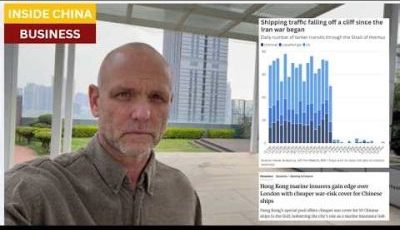
More Iran War fallout: Maritime insurance industry shifts from London to China
or go to
Aletho News Archives – Video-Images
From the Archives
Allies Don’t Need Lobbies
By Jay Knott | Dissident Voice | September 24, 2013
In a recent article on Counterpunch, Rob Urie defended the traditional Marxist analysis of US policy in the Middle East. He argues that support for Israel is driven primarily by economic interest, not the Jewish lobby.
He starts by paying tribute to the idea that Western societies are uniquely racist. He says that the “Western narrative” claims there is an “Arab character”, and that this is “antique racist blather”. He gives no definition of these terms. Further, he establishes his credentials as part of the dominant current in the American left by claiming that “over a million people in Iraq died so ‘we’ in the West can drive SUVs.”1
When he tries to criticize bourgeois economics, he makes it clear he doesn’t understand the developments it has made since Marx’s day, using the mathematical discipline known as “game theory”. He dismisses the basic abstraction of economic theory, the idea of the rational individual, on the grounds that it is “devoid of history, culture and political context”. But abstractions are always devoid of something.
He defends a more concrete economic theory, mostly Marxist, with some input from another theorist of capitalist crisis, Hyman Minsky. This concrete theory leads him to the view that US activity in the Middle East is primarily driven by rational capitalist motives, the need to secure a supply of oil.
“Taking the totality of circumstance — former oil company executives launching war on an oil rich nation on a pretext they publicly proclaimed they didn’t believe shortly before taking office — and that upon launching their war proved to be non-existent, requires a willingness to overlook the obvious — that the war on Iraq was for oil, that is difficult to support.”1
Perhaps I’ve misunderstood him, but based on what he says in the rest of the article, this convoluted sentence seems to argue that, because president Bush and vice-president Cheney attacked Iraq on false premises, and they also said it was all about oil, and they are former oil executives, and Iraq has a lot of oil, it’s difficult to deny US attacks on Iraq are all about oil.
In fact, it’s not hard at all. As Urie points out, at times Bush and co. said that attacking Iraq was “protecting the world’s supply of oil.”1 But, as he also points out, they are congenital liars. Why should we believe them when they say they are trying to “protect” the oil supply? Protect it against what? When politicians “admit” attacks on Middle Eastern countries are wars for oil, they are parroting the neo-con party line, feeding the public, both left and right, with a plausible-sounding pretext. For right-wingers, “it’s a war for oil” is a reason to support war, and for leftists, it’s a way to feel better by complaining impotently about corporate greed. Both approaches help the war drive. … continue
Blog Roll
 Aletho News
- More Iran War fallout: Maritime insurance industry shifts from London to China
- US-Israeli aggression on Iran triggers review of GCC countries’ investment pledges to Washington
- Russia slams UK plan to seize tankers suspected of carrying its oil
- Pakistan ramps up food exports to Persian Gulf nations as war deepens food insecurity
- Iran submits response to US plan, sets terms for war’s end: Tasnim
- US vs Iran: Kharg Island Talk — Bluff or Escalation? Ex-Military Officer Weighs In
- Zelensky unnecessarily involves Ukraine in the Middle East crisis
- Turkish tanker blacklisted by Ukraine hit in drone attack – media
- Canada, the U.S., and NATO: the inescapable trap
- Villains of Judea: Leonid Radvinsky
- If Americans Knew
- ‘No Innocent Children’: Far-right Israeli Lawmaker Defends Killing of Palestinian Family
- Mossad’s promises helped Netanyahu convince Trump that Iran could be toppled
- US Arms Control Official Refuses To Comment When Asked If Israel Has Nuclear Weapons
- Veterans warn US landing could be ‘more Gallipoli than Vietnam’
- Israel may be committing war crimes in Lebanon – Not a ceasefire Day 167
- In the West Bank, life is a constant battle – 3 articles
- Jacob Reses, one of the most powerful pro-Israel operatives in Trump’s Washington
- Israeli-US assaults kill or injure 87 children a day – Not a ceasefire Day 166
- ‘Forever live by the sword’: Understanding Israelis’ massive support for Iran war
- UN’s special rapporteur on human rights says Israel is systematically torturing Palestinians
- No Tricks Zone
- Devastating Assessment Of Comirnaty Vaccine By Former Senior Pfizer Europe Toxicologist
- New Study: CO2 Is ‘Effectively Negligible’ As An Explanatory Climate Change Factor Since 2000
- Former Pfizer Toxicologist Dr. Helmut Sterz Tells Bundestag Hearing Pfizer Vaccine Should Have Never Been Approved
- Energy Expert: Germany’s Nuclear Phaseout Was A “500 Billion Euro Mistake”
- New Research: South Australia’s Mid-Holocene Sea Surface Temperatures Were 4°C Warmer Than Today
- Storing Green Energy To Last Germany 10 Days Would Require A 60-Million Tonne Battery
- New Studies: UK Sea Levels Were 4 Meters Higher Than Today During The Mid-Holocene
- Destructive Green New Deal: German Energy And Metal Group Warns Of Drastic Crisis
- New Study Documents A 20-Year Pause In Arctic Sea Ice Decline – Driven By Internal Variability
- Wake-up Call: Survey Shows Majority Of Germans Now Favor Postponing Climate Targets!
 Aletho News