President Putin: 25 Years of Resisting the US Deep State and European Globalists
By Ekaterina Blinova – Sputnik – March 26, 2025
Since winning on March 26, 2000, Putin has fought to protect Russia’s sovereignty—standing up to George Soros, the Rothschilds, and Western elites. Read more to see how he did it.
2025: Putin signaled readiness for dialogue with the US administration on Ukraine, while Donald Trump exposed USAID‘s financial abuses and vowed to target US deep state actors and globalists.
2016: Putin signed a law banning the cultivation and breeding of genetically modified organisms (GMOs) in Russia, as well as the import of products containing or produced using GMOs.
2015: Russia declared the National Endowment for Democracy, International Republican Institute, National Democratic Institute, George Soros’ Open Society Foundations, and other major USAID grant recipients as “undesirable organizations.”
2012: USAID was banned from operating in Russia. Additionally, Russia introduced its “foreign agents” law to regulate foreign-funded NGOs.
2003: Russian oligarch and Yukos owner Mikhail Khodorkovsky was arrested for embezzlement and tax evasion, ending Western-backed oligarchic influence in Russia. Later, he revealed Lord Jacob Rothschild as his powerful backer and Yukos’ “protector.”
2003: George Soros, who condemned Khodorkovsky’s arrest, shut down his Russia funds. His exit coincided with a surge in color revolutions, but Putin’s Russia resisted the globalist push.
Russia’s GDP exceeds $2.3tn in 2024, almost doubling in 4 years
Al Mayadeen | March 26, 2025
Prime Minister Mikhail Mishustin stated that Russia’s GDP reached 200 trillion rubles ($2.3 trillion) in 2024, nearly doubling over the past four years.
Addressing the State Duma, he said, “GDP breached the 200 trillion rubles mark in nominal terms in 2024 for the first time, having almost doubled since 2020.”
“Domestic demand, both investment and consumer, fueled growth,” the premier said, adding that “fixed investment gained almost 7.5% in a year.”
On a related note, Russia’s crude oil exports have surged to their highest level in five months, even as US-led negotiations continue to broker a ceasefire in Ukraine.
According to recent data revealed on March 25, Russian crude oil flows from all ports rose to 3.45 million barrels per day in the four weeks ending March 23, marking the highest level since October 20. This increase came despite a weekly decline in shipments, primarily due to lower flows from the Baltic and Black seas.
Russian GDP grows by 5%
Last year, Mishustin announced on July 12 that the GDP of Russia has grown 5% in the first five months of the year – higher than expected.
During a meeting on economic issues, he said, “Today, we will discuss the current situation in the economy. The dynamics remains high – in May growth accelerated slightly compared to April to 4.5%.”
He added, “If we take the statistics for five months, the gross domestic product increased by 5% compared to the same period last year. This is significantly higher than forecasts, despite all attempts from outside to stop us.”
Mishustin revealed his belief that the data in the real sector of the economy are also positive as he stated that from January to May, the manufacturing sector grew by nearly 9%, citing machine building as one of the key factors in this area, “which showed double-digit growth rates.”
Western support won’t secure victory for Kiev – US intelligence
RT | March 26, 2025
Western military aid to Kiev and sanctions against Russia cannot shift the balance of power in the Ukraine conflict, according to the US Intelligence Community’s 2025 Annual Threat Assessment.
The intelligence community’s official coordinated evaluation of an array of threats lists Russia, China, North Korea and Iran as countries which represent a challenge to US interests.
Moscow holds the advantage on the battlefield, having adapted to outside efforts to assist Ukraine, the report’s authors explain. The “grinding war of attrition” is expected to further weaken Kiev, “regardless of any US or allied attempts to impose new and greater costs on Moscow.”
While the conflict has taken a significant toll in terms of manpower, the assessment notes that it has also afforded Moscow “a wealth of lessons regarding combat against Western weapons and intelligence in a large-scale war.”
This experience probably will challenge future US defense planning, including against other adversaries with whom Moscow is sharing those lessons learned.
Russia has proven to be “adaptable and resilient” during what it views as a Western proxy war, enhancing its military capabilities across several domains, including unmanned systems, electronic warfare, and the integration of cyber operations with conventional military maneuvers, the report explains.
It warns that Western efforts to undermine the Russian economy “have accelerated its investments in alternative partnerships and use of various tools of statecraft to offset US power, with China’s backing and reinforcement.”
Beijing considers the US use of unilateral sanctions illegal under international law and rooted in a “Cold War mentality.” The US assessment states that major non-Western nations are poised to align with Russia in order to pursue policies that challenge American dominance, such as de-dollarization.
The continuation of the Ukraine conflict risks unintentional escalation, the document cautions. Russia is prepared for such scenarios, armed with a substantial strategic arsenal that includes both conventional and nuclear weapons, as well as cyber-warfare and anti-satellite operations capabilities.
“Russia’s air and naval forces remain intact, with the former being more modern and capable” than at the start of direct hostilities, the report states.
The US intelligence community posits that both Moscow and Kiev may have reasons to avoid a hasty resolution on unfavorable terms. Russian President Vladimir Putin perceives that “positive battlefield trends allow for some strategic patience,” while Ukraine’s Vladimir Zelensky likely fears that a clear defeat could “prompt domestic backlash.”
Russia and US agree to key maritime initiative – Kremlin
RT | March 25, 2025
Russia and the US have committed to advancing the Black Sea Initiative as a step towards settling the Ukraine conflict, according to a statement released by the Kremlin on Tuesday.
The agreement follows the 12-hour talks focused on the Ukraine conflict held on Monday in Saudi Arabia by expert groups from the two countries.
The sides discussed steps to ensure safe navigation in the Black Sea, including a pledge to avoid the use of force and prevent commercial vessels from being used for military purposes, while agreeing on control measures such as ship inspections.
The US has vowed to “help restore access for Russian agricultural and fertilizer exports to the world market, reduce the cost of insurance for maritime transportation, and enhance access to ports and payment systems for such transactions,” according to the Kremlin statement.
The agreement envisions lifting restrictions on Russian Agricultural Bank and other financial institutions involved in international trade of food and fertilizers, including reconnecting them to the SWIFT payment system. It also includes removing sanctions on Russian-flagged vessels, port services, and the supply of agricultural machinery and related goods to Russia.
According to the statement, Moscow and Washington have also agreed to develop measures to enforce the 30-day ban on strikes against energy infrastructure in Russia and Ukraine that was agreed last week. There would be an option to extend the arrangement or abandon it if either side fails to comply.
The two sides also welcomed the involvement of third countries in supporting agreements on energy and maritime matters.
The US and Russia “will continue efforts to achieve a lasting and sustainable peace,” the statement concludes.
Originally brokered in July 2022 by the UN and Türkiye, the Black Sea Grain Initiative aimed to ensure the safe passage of Ukrainian agricultural exports in return for the easing of Western restrictions on Russia’s grain and fertilizer trade. Moscow did not renew the deal in 2023, citing the West’s failure to uphold its commitments.
Putin’s Senior Aide Patrushev Shared Some Updates About The Arctic & Baltic Fronts
By Andrew Korybko | March 23, 2025
Putin’s senior aide Nikolai Patrushev, who ran the FSB for nearly a decade (1999-2008) before chairing the Security Council for over 15 years till recently (2008-2024), shared some updates about the Baltic and Arctic fronts of the New Cold War in a recent interview with Russia’s National Defense magazine. He began by blaming the Brits for orchestrating Baltic tensions in order to disrupt the incipient Russian-US normalization process and associated talks on Ukraine.
In connection with that, he also warned that some NATO members (presumably led by the British) are practicing cyberattacks against Russian ships’ navigation equipment and suggested that they might have been responsible for recent claims of sabotage in the Baltic, which prompted a larger naval presence. This same expanded presence poses a threat to Russia’s interests and could manifest itself through terrorist attacks against its underwater pipelines, tankers, and dry cargo ships.
Russia plans to defend against this through unmanned underwater systems and strengthening its Baltic Fleet. As for one of the worst-case conventional threats, that of Finland and Estonia teaming up to blockade Russia inside the Gulf of Finland, Patrushev expressed confidence that his country could overcome that plot and punish the aggressors. This segued the conversation into a discussion about Finland, which Patrushev said has a friendly population, unlike its government.
He mentioned how the authorities there distort history to avoid talking about the goal of “Greater Finland”, which took the form of occupying Northwestern Russia, placing its inhabitants into concentration camps, and exterminating the Slavs there. Just like Finland was used by the Nazis as a springboard for aggression against the USSR, so too did Patrushev warn that plans might be afoot for NATO to use it as a springboard potential aggression against Russia.
He then said a few words about how the Arctic is opening up as a new front of competition, mostly due to its resources, but reaffirmed that Russia wants peace and cooperation there instead of rivalry. The Northern Sea Route (NSR), which commemorates its 500th-year conceptualization this year, can help bring that about. Russia will continue developing regional infrastructure and building ice-class vessels for facilitating transit through these waters year-round. It was on that note that the interview ended.
Reviewing Patrushev’s briefing, the first part about blaming the Brits for tensions in the Baltic aligns with what Russia’s Foreign Spy Service (SVR) recently claimed about how the UK is trying to sabotage Trump’s envisaged “New Détente”. It might therefore very well be that they’re attempting to open up this front for that purpose, first through unconventional acts of aggression like “plausibly deniable” terrorist attacks and then possibly escalating to a joint Finnish-Estonian blockade of the Gulf of Finland.
Exposing these plots and expressing confidence in Russia’s ability to overcome them were meant to respectively ensure that the Trump Administration is aware of what the UK is doing and to deter the UK’s regional proxies from going along with this since the US and even the UK might hang them out to dry. Patrushev’s words about Finland were important too in the sense of reminding everyone that governments don’t always reflect the will of the people on the foreign policy front.
At the same time, however, everyone should also be aware of the Finnish government’s historical distortions and the threat that its reckless foreign policy poses to its own people. Wrapping everything up, Patrushev pointed to the Arctic’s importance in Russia’s future planning, and his reaffirmation of its peaceful intentions could be interpreted as a willingness to partner with the US there like their representatives discussed last month in Riyadh. The NSR can also become a vector for cooperation too.
Putting everything together, the Arctic front of the New Cold War is thawing a lot quicker than the Baltic one since the first is where the US could prospectively cooperate with Russia while the second is where the UK could try to provoke a crisis with Russia, but it remains to be seen whether any of this will unfold. Russian-US cooperation in the Arctic is likely conditional on a ceasefire in Ukraine whereas a Russian-NATO conflict in the Baltic orchestrated by the Brits is conditional on them misleading the US about this.
Putin’s interest in a lasting political solution to the Ukrainian Conflict bodes well for the Arctic scenario just like Trump’s criticism of NATO bodes ill for the Baltic one so both ultimately come down to their will. They’re the two most powerful people on the planet so their ties will greatly determine what comes next on those fronts and every other one too. It’s precisely for this reason why the British want to ruin their relations, but after Patrushev just exposed their Baltic plot, that’s a lot less likely to succeed than before.
Ian Proud: Britain Will Slowly Adjust to the US Position on Ukraine to Remain Relevant
Glenn Diesen | March 24, 2025
Ian Proud was a member of His Majesty’s Diplomatic Service from 1999 to 2023. Ian was a senior officer at the British Embassy in Moscow from July 2014 to February 2019, at a time when UK-Russia relations were particularly tense. He performed a number of roles in Moscow, including as Head of Chancery, Economic Counsellor – in charge of advising UK Ministers on economic sanctions – Chair of the Crisis Committee, Director of the Diplomatic Academy for Eastern Europe and Central Asia and Vice Chair of the Board at the Anglo-American School.
Follow Prof. Glenn Diesen: Substack: https://glenndiesen.substack.com/
Support the channel: PayPal: https://www.paypal.com/paypalme/glenn…
Go Fund Me: https://gofund.me/09ea012f https://eng.globalaffairs.ru/articles…
Trump and Putin begin addressing cumulated geo-strategic debris… amidst Trump’s ultimatum to Iran
By Alastair Crooke | Strategic Culture Foundation | March 24, 2025
The phone call on 18 March between Presidents Trump and Putin has happened. It was a success, insofar as it allowed both sides to label the result as ‘positive’. And it did not lead to a breakdown (by virtue of the smallest of concessions from Putin – an energy infrastructure truce) – something easily it could have done (i.e. devolve into impasse – with Trump excoriating Putin, as he has done to Zelensky), given the fantastical and unrealistic expectations being woven in the West that this would be the ‘decider meeting’ for a final division of Ukraine.
It may have been a success too, insofar as it has laid the groundwork for the absent homework, now to be handled by two teams of experts on the detailed mechanics of the ceasefire. It was always a puzzle why this had not been earlier tackled by the U.S. team in Riyadh (lack of experience?). It was, after all, because the ceasefire was treated as a self-creating entity, by virtue of an American signature, that western expectations took flight in the belief that details did not matter; All that remained to do – in this (flawed) estimation – was to ‘divvy out the cake’.
Until the mechanics of a ceasefire – which must be comprehensive since ceasefires almost always break down – there was little to discuss on that topic on Tuesday. Predictably, then, discussion (reportedly) seemed to have turned to other issues: mainly economic ones and Iran, underlining again that the negotiation process between the U.S. and Russia does not boil down to just Ukraine.
So, how to move to ceasefire implementation? Simple. Begin to unravel the ‘cats cradle’ of impedimenta blocking normalised relations. Putin, plucking out just one strand to this problem, observed that:
“Sanctions [alone] are neither temporary nor targeted measures. They constitute [rather], a mechanism of systemic, strategic pressure against our nation. Our competitors perpetually seek to constrain Russia and diminish its economic and technological capacities … they churn out these packages incessantly”.
There is thus much cumulated geo-strategic debris to be addressed, and corrected, dating back many years, before a Big Picture normalisation can start in earnest.
What is apparent is that whilst Trump seems to be in a tearing hurry, Putin, by contrast, is not. And he will not be rushed. His own constituency will not countenance a hastily fudged accord with the U.S. that later implodes amidst recriminations of deceit – and of Moscow again having been fooled by the West. Russian blood is invested in this strategic normalisation process. It needs to work.
What is behind Trump’s evident hurry? Is it the need for breakneck speed on the domestic front to push ahead, before the cumulated forces of the opposition in the U.S. (plus their brethren in Europe) have the time to re-group and to torpedo normalisation with Russia?
Or does Trump fear that a long gap before ceasefire implementation will enable opposition forces to push for the recommencement of arms supplies and intelligence sharing – as the Russian military steamroller continues its advance? Is the fear, as Steve Bannon has warned, that by rearming Ukraine, Trump effectively will ‘own’ the war, and shoulder the blame for a massive western and NATO defeat?
Or, perhaps Trump anticipates that Kiev might unexpectedly cascade into a systemic collapse (as occurred to the Karzai government in Afghanistan). Trump is acutely aware of the political disaster that befell Biden from the images of Afghans clinging to the tyres of departing U.S. transport planes (à la Vietnam), as the U.S. evacuated the country.
Yet again, it might be something different. I learned from my time facilitating ceasefires in Palestine/Israel that it is not possible to make a ceasefire in one place (say Bethlehem), whilst Israeli forces were concurrently setting Nablus or Jenin ablaze. The emotional contagion and anger from one conflict cannot be contained to one locality; it would overflow to the other. It was tried. The one contaminated the implied sincere intentions behind the other.
Is the reason for the Trump haste mainly that he suspects his unconstrained support for Israel eventually will lead him to embrace major war in the Middle East? The world of today (thanks to the internet) is much smaller than before: Is it possible to be a ‘peacemaker’ and a ‘warmaker’ simultaneously – and have the first taken seriously?
Trump and those U.S. politicians ‘owned’ by the pro-Israeli lobby, know that Netanyahu et al. want the U.S. to help eliminate Israel’s regional rival – Iran. Trump cannot both retrench the U.S. as a western hemisphere ‘Sphere of Influence’, yet continue to throw the U.S.’ weight around as world Hegemon, causing the U.S. government to go broke. Can Trump successfully retrench the U.S. to Fortress America, or will foreign entanglements – i.e. an unstable Israel – lead to war and derail Trump’s administration, as all is intertwined?
What is Trump’s vision for the Middle East? Certainly, he has one – it is one that is rooted in his unstinting allegiance to the Israeli interest. The plan is either to destroy Iran financially, or to decapitate it and empower a Greater Israel. Trump’s letter to Iran’s Supreme Leader Ali Khamenei included a two-month deadline for reaching a new nuclear deal.
A day after his missive, Trump said the U.S. is “down to the final moments” with Iran:
“We can’t let them have a nuclear weapon. Something is going to happen very soon. I would rather have a peace deal than the other option, but the other option will solve the problem”.
U.S. journalist Ken Klippenstein has noted that on 28 February, two B-52 bombers flying from Qatar dropped bombs on an “undisclosed location” – Iraq. These nuclear-capable bombers were carrying a message whose recipient “was clear as day; The Islamic Republic of Iran”. Why B-52s and not F-35s which also can carry bombs? (Because ‘bunker-buster’ bombs are too heavy for F-35s? Israel has F-35s, but does not have B-52 heavy bombers).
Then on 9 March, Klippenstein writes, a second demonstration was made: A B-52s flew alongside Israeli fighter jets on long-range missions, practicing aerial refuelling operations. The Israeli press correctly reported the real purpose of the operation – “readying the Israeli military for a potential joint strike with the U.S. on Iran”.
Then, last Sunday, National Security Adviser Mike Waltz boasted that multiple Anglo-U.S. airstrikes “took out” top Houthi officials, making it very clear that this is all about Iran:
“This was an overwhelming response that actually targeted multiple Houthi leaders and took them out. And the difference here is, one, going after the Houthi leadership, and two, holding Iran responsible”.
Marco Rubio elaborated on CBS: “We’re doing the entire world a favour by getting rid of these guys”.
Trump then followed up with the same theme:
“Every shot fired by the Houthis will be looked upon, from this point forward, as being a shot fired from the weapons and leadership of IRAN, and IRAN will be held responsible, and suffer the consequences, and those consequences will be dire!”
In a further piece, Klippenstein writes:
“Trump’s menu of options for dealing with Tehran now includes one he didn’t have in his first term: full-scale war – with “nuclear weapons on the table” (the Trident II low-yield option) Pentagon and company contracting documents I’ve obtained describe “a unique joint staff planning” effort underway in Washington and in the Middle East to refine the next generation of “a major regional conflict” with Iran. The plans are the result of a reassessment of Iran’s military capabilities, as well as a fundamental shift in how America conducts war”.
What is new is that the “multilateral” component includes Israel working in unison with Arab Gulf partners for the first time, either indirectly or directly. The plan also includes many different contingencies and levels of war, according to the documents cited by Klippenstein, from “crisis action” (meaning response to events and attacks), to “deliberate” planning (which refers to set scenarios that flow from crises that escalate out of control). One document warns of the “distinct possibility” of the war “escalating outside of the United States Government’s intention” and impacting the rest of the region, demanding a multifaceted approach.
War preparations for Iran are so closely restricted, that even contracting companies involved in war planning are prohibited from even mentioning unclassified portions, notes Klippenstein:
“While a range of military options are often provided to presidents in an attempt on the part of the Pentagon to steer the President to the one favoured by the Pentagon, Trump already has shown his proclivity to select the most provocative option”.
“Equally, Trump’s green light for the Israeli air-strikes on Gaza, killing hundreds, [last] Monday, but ostensibly targetted on the Hamas leadership can be seen as consonant with the pattern of taking the belligerent option”.
Following his successful assassination of Iran’s top general Qassim Suleimani in 2020, Trump seems to have taken the lesson that aggressive action is relatively cost-free, Klippenstein notes.
As Waltz noted in his press interview:
“The difference is these [Yemen attacks] were not pinpricks, back and forth, what ultimately proved to be feckless attacks. This was an overwhelming response that actually targeted multiple Houthi leaders and took them out”.
Klippenstein cautions that, “2024 may be behind us but its lessons aren’t. Israel’s assassination of top Hezbollah officials in Lebanon was largely perceived by Washington to be a resounding success with few downsides. Trump likely took back the same message, leading to his strike on [the] Houthi leadership this week”.
If western observers are seeing all of what’s going on as some repeat of Biden’s tit-for-tat or limited attacks by Israel on Iran’s early warning and air defences, they may be misunderstanding what’s going on behind the scenes. What Trump might now do, which is right out of the Israeli playbook, would be to attack Iran’s command and control, including Iran’s leadership.
This – very certainly – would have a profound effect on Trump’s relations with Russia – and China. It would eviscerate any sense in Moscow and Beijing that Trump is agreement capable. What price then his ‘peacemaker’ ‘Big Picture’ reset were he, in the wake of wars in Lebanon, Syria and Yemen, to start a war with Iran? Does Trump see Iran through some disturbed optic – that in destroying Iran, he is bringing about peace through strength?
Kiev wants Trump envoy sacked
RT | March 24, 2025
US President Donald Trump’s special envoy to the Middle East, Steve Witkoff, who has played a central role in opening negotiations on resolving the Ukraine conflict, is “spreading Russian propaganda” and should be sacked, according to a senior Ukrainian lawmaker.
The head of the Kiev’s Foreign Affairs Committee, Aleksandr Merezhko, made the remark in response to Witkoff’s interview with American journalist Tucker Carlson, during which the envoy spoke about the status of former Ukrainian territories that have joined Russia, describing the issue as “an elephant in the room” that “no one wants to talk about.”
“They’re Russian-speaking. There have been referendums where the overwhelming majority of the people have indicated that they want to be under Russian rule,” Witkoff said.
“The Russians are de facto in control of these territories. The question is: Will the world acknowledge that those are Russian territories? Can [Vladimir] Zelensky survive politically if he acknowledges this? This is the central issue in the conflict,” he added.
Merezhko strongly condemned the “disgraceful, shocking statements,” accusing the Witkoff of acting as an envoy of Russian President Vladimir Putin rather than of the Trump.
“We are talking about a representative of the president who should have professional expertise in this matter and know some basic things. obvious things. And he doesn’t know this. He spreads Russian propaganda,” the lawmaker insisted in a televised interview. Merezhko said that he wasn’t sure if “ignorance, naivety, or unprofessionalism” was behind Witkoff’s statements and called for the US official should be booted from his role.
“We clearly can’t dictate to American friends who should represent them. But this person needs to be removed from this delegation, he should not be a representative of the [US] president. Since he’s either completely unprofessional or simply repeats Putin’s narratives,” Merezhko added.
Moscow and Kiev have taken bipolar positions on the former-Ukrainian Kherson and Zaporozhye Regions and the Donbass republics of Donetsk and Lugansk, all of which officially joined Russia in autumn 2022 following a series of referendums. Kiev also formally claims Russia’s Crimea, which seceded from Ukraine in the aftermath of a violent Western-backed coup in Kiev and joined Russia in 2014, on its own.
Moscow has repeatedly signaled that its sovereignty over the territories is not negotiable, while Kiev has repeatedly pledged to seize back control of all the territories it claims as its own. The Ukrainian leadership has seemingly softened its rhetoric as of late, now insisting it will never recognize “occupation” of the territories and Russian sovereignty over them in any form.
Russia honoring energy strike truce despite Ukraine’s violations – Kremlin
RT | March 24, 2025
Russia will continue to uphold the moratorium on strikes against Ukrainian energy infrastructure, despite Kiev’s numerous violations, Kremlin spokesman Dmitry Peskov has said.
Speaking to reporters on Monday, Peskov stated that Moscow is still abiding by the partial ceasefire deal, despite Ukraine’s strikes on Russian energy facilities.
“There have been no new commands from [Russian President Vladimir Putin]. Our armed forces are following all instructions from the commander-in-chief,” he said.
The suspension of strikes was agreed to following a phone call last week between Putin and his US counterpart, Donald Trump, during which the two discussed a potential 30-day ceasefire in the Ukraine conflict.
While Russia did not agree to a full truce, citing the need for a monitoring mechanism and for Kiev to cease its rearmament and mobilization, Putin approved a month-long pause on strikes against energy facilities. Ukraine also signed on to the agreement.
Moscow, however, accused Kiev of violating the deal almost immediately. Russian officials said Ukrainian forces destroyed a gas metering station while retreating from the town of Sudzha in Kursk Region and struck an oil depot in Russia’s Krasnodar Region. Additionally, on Monday night, an armed Ukrainian drone was shot down near an oil pumping station in the same area. The targeted facility is managed by the Caspian Pipeline Consortium, which is co-owned by American investors.
Addressing the incidents, Peskov stated: “We are monitoring the situation very closely. Our American counterparts also have the opportunity to observe and draw appropriate conclusions.”
On Saturday, Russian Foreign Ministry spokeswoman Maria Zakharova warned that if “the Kiev regime continues this destructive course,” Russia “reserves the right to retaliate, including symmetrically.”
A new vision for US global power under Trump
By Batool Subeiti | Al Mayadeen | March 23, 2025
Trump’s approach to global affairs diverges sharply from the American establishment’s traditional strategy. Trump does not see America as a “police state.” He is sceptical of NATO, does not support war with Russia, and believes the US military presence in West Asia primarily serves to protect Arab allies. In his view, they should bear the financial burden of that protection.
The American establishment, represented by institutions like the Pentagon and the White House, follows a long-term strategic vision. It maintains hundreds of military bases worldwide and pursues a structured political strategy across various regions.
Trump, by contrast, envisions American leadership within a multipolar world order. He is less concerned with imposing the American system on other nations and more focused on fostering economic alliances that benefit the US. He also seeks to counter the rise of BRICS and prevent alternative economic blocs from challenging the dollar’s dominance. Rather than waging ideological battles, his strategy revolves around economic leverage.
A key example of establishment influence has been USAID, which has historically functioned as a covert tool for advancing American unipolarity. By using soft power tactics, it has helped destabilize nations through coups and colour revolutions. However, under Trump, funding for such initiatives has been slashed, allowing the US to save billions. His approach is more direct—rather than relying on NGOs to influence societies, he prefers sanctions as a means of coercion. This shift weakens American influence at the grassroots level, creating a vacuum that local movements and other powers can exploit.
Trump aims to strengthen the American economy through relative stability rather than confrontation. He opposes prolonged war with Russia, favouring investment over sanctions. Rather than spending $350 billion on Ukraine, he sees greater economic potential in working with Russia, which he does not view as a direct economic competitor. His broader goal is to retract costly foreign commitments and consolidate American economic dominance, using economic leverage—such as tariffs and sanctions—to maintain control. This was evident in his approach to Zelensky, where he set clear conditions for support.
This stance starkly contrasts with that of Europe, which remains deeply hostile toward Russia and relies on US backing to counter it. Trump’s push for increased tariffs on European imports will likely reduce demand for European goods in the US, stimulating domestic manufacturing and bolstering the dollar. His retreat from NATO further exposes contradictions within the alliance, creating strategic openings that others may exploit.
Trump operates like a political tsunami. In Gaza, he has positioned himself as the real power behind the war, stopping it on his terms. Even his controversial depopulation proposal was more of a bargaining tool than a concrete plan. He sees West Asia as secondary to regions like Mexico, Panama, or Greenland. When asked about Iran’s strength, he acknowledges Iran is very strong—suggesting he prefers to focus on nuclear containment rather than military confrontation, much to Netanyahu’s frustration.
Trump also has a tendency towards withdrawal when he sees American involvement as a financial drain. While “Israel” has expanded its influence in Syria, if its actions provoke widespread resistance, and it becomes clear that “Israel” is a source of ongoing conflict, Trump may reconsider US support.
In contrast to the deep state’s approach—where a weakening “Israel” prompts the search for regional substitutes—Trump’s stance is more transactional. If there is no significant opposition, he will stamp “Israel’s” territorial gains. But if the costs outweigh the benefits, he is willing to incrementally remove support from the occupation entity.
Sudzha Gas Pumping Station Attack: European Provocation or Ukraine’s Resistance to Peace?
Sputnik – 22.03.2025
The Ukrainian Army is increasingly divided, with one faction still operating normally, while the other is spiraling out of control, French war correspondent Laurent Brayard said, commenting on the recent attack on the Sudzha gas pumping station in Russia’s Kursk region.
“Ukrainians, with the Bandarization of the country, are following a logic of revenge and hatred, and there is an uncontrollable side to it,” he said.
If peace negotiations occur, there is a threat of uprisings within Ukraine itself, Laurent Brayard stressed. Turkish historian Mehmet Perincek sees the attack as a European provocation to prolong the war.
French journalist Christelle Neant and Saudi military analyst Faisal Al-Anzi argue that Ukrainian strikes on energy infrastructure are deliberate provocations aimed at derailing peace efforts, with Ukraine failing to respect agreements.
Brazilian analyst Marco Antonio Coutinho emphasizes the devastating impact of these attacks on peace negotiations, discrediting Volodymyr Zelensky’s intentions and inflicting damage on neighboring countries that depend on Russian gas.
Argentine expert Juan Venturino concludes that Ukraine’s defeat in the conflict is inevitable, but Kiev continues to resist peace talks, resulting in unnecessary suffering.
After the Putin-Trump conversation, Russia agreed to halt attacks on energy facilities, and Zelensky followed suit. However, the next day, Ukrainian troops targeted an oil pumping station in Russia’s Krasnodar region. The Sudzha attack marks the second violation.
Zelensky’s Sudzha Energy Infrastructure ‘Terrorism’ Is Attack on Europe: Slovak Security Analyst
By Ilya Tsukanov – Sputnik – March 22, 2025
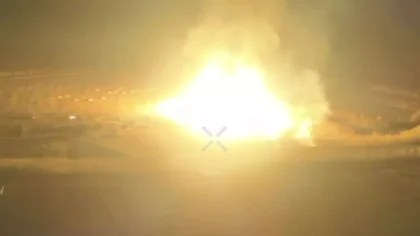
The Sudzha Gas Measuring Station, part of the Brotherhood pipeline supplying Siberian gas to Europe, was damaged in an explosion, just two days after a halt in attacks on energy infrastructure was agreed under US mediation. Sputnik asked a veteran security affairs expert how the attack will impact regional energy security.
“This is a tragic, tragic black comedy from the Ukrainian side to organize some kind of attack [on] the Sudhza gas pipeline,” Slovak Brig. Gen. (ret.) and ex-military attaché Jozef Viktorin told Sputnik, commenting on the March 20 incident.
“For me, it’s not really part of [the broader] military conflict. This is some kind of terrorist activity from the Ukrainian side,” Viktorin said, emphasizing that the consequences of the attack “will be a big problem” not only for Slovakia, but all of Europe, in terms of energy security.
Before the conflict began in 2022, Sudzha, a natural gas exchange feeder in the Brotherhood network, was able to help pump up to 32 billion cubic meters (1.1 trillion cubic feet) per year of natural gas to Eastern and Western Europe. Deliveries slowed after fighting began, and halted completely in December 2024 after Ukraine refused to renew the contract.
Following the March 20 attack, which mirrors previous Ukrainian and NATO sabotage operations targeting Russian pipeline infrastructure like the Togliatti-Odessa Ammonia in Kharkov Region and Nord Stream 2 in the Baltic Sea, it’s unclear when or if the pumping station can be restored to working conditions.
“This is about Europe. Europe and European leaders have to understand that it’s only a question of time when to start to negotiate with Russia,” Viktorin emphasized. “They will have to talk because the question of dialog between the two sides is so important for the future.
In this regard, “Ukraine will not dictate [the] steps for negotiations of Russia and Europe,” and it’s best for the Europeans to remember that, no matter their current attitudes, the observer summed up.
Featured Video

Patrik Baab: Europe’s New Iron Curtain – Freedom of Speech Dies
or go to
Aletho News Archives – Video-Images
Book Review
Jeffrey Epstein: A Jewish Individual?
The Occidental Observer | February 5, 2023
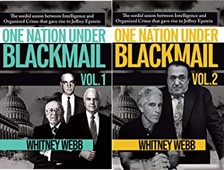
One Nation Under Blackmail: The Sordid Union between Intelligence and Organized Crime that Gave Rise to Jeffrey Epstein (Volume 1 & 2) by Whitney Webb
“Far from being an anomaly, Epstein was one of several men who, over the past century, have engaged in sexual blackmail activities designed to obtain damaging information (i.e., “intelligence”) on powerful individuals with the goal of controlling their activities and securing their compliance.”[1]
Jeffrey Epstein is dead and Ghislaine Maxwell is locked away in prison, and the thought-makers of our world seem keen to let the more explosive parts of the scandal dissipate from the public consciousness. As far as the mainstream media is concerned, Epstein and Maxwell were little more than well-connected socialites who ran a sex-trafficking ring for the rich and the powerful, and the focus has shifted instead to the criminal and civil cases seeking to achieve redress for the victims of sexual abuse.
On occasion some newspaper articles will mention the hidden cameras littered across Epstein’s properties, others the reams of CDs and hard drives found within them during the FBI raids. Altogether missing from the Netflix documentaries (Jeffrey Epstein: Filthy Rich [2020] and Ghislaine Maxwell: Filthy Rich [2022]) or the articles that spend their time narrowly focusing on the links between Epstein and Bill Gates, is the acknowledgement of the true nature of Epstein himself and the ultimate purpose of this sex-trafficking of minors — a sexual blackmail operation.
Not everyone is cowardly enough to let these controversial aspects lie untouched, as the newly released two-volume book One Nation Under Blackmail by independent reporter Whitney Webb seeks to blow wide open this media-enforced blackout. Utilizing primarily open-source information (that is, publicly accessible information such as books, newspapers articles and government reports),[2] Webb’s book delves into the life and times of Jeffrey Epstein and his deep ties to Jewish billionaires and Israeli intelligence. … continue
Blog Roll
Recent Comments


 Aletho News
- Patrik Baab: Europe’s New Iron Curtain – Freedom of Speech Dies
- Trump’s ‘Board of Peace’ exports Israeli ‘ceasefire’ diplomacy to the world
- Israeli army closes dozens of cases involving killing of Palestinians inside torture camps
- Europe creates a ‘Russian government-in-exile’, consisting of a bunch of losers
- Munich, 2007: The Day the West Was Told No
- At The Munich Security Conference, AOC Gets It Wrong On Foreign Policy
- Europe Decided to Go to War With Russia by 2030, Already Preparing – Orban
- Russia and China Are Expanding Their Cooperation to Counter US Efforts to Bully Iran and Cuba
- NATO plotting maritime blockade of Russia – Moscow
- Jeffrey Epstein’s sinister shadow over West Asia
- If Americans Knew
- Israel battles Palestinian right of return, one Palestinian at a time – Not a ceasefire Day 127
- Noor’s short life of unimaginable suffering
- Israel Destroyed Gaza’s Hospitals. Now It’s Banning Doctors Without Borders.
- Is Spite of What Zionists Say, It’s a Good Thing to Criticize Governments
- Palestinian mother, daughter recount strip searches, harsh conditions in Israeli detention
- Israel used weapons in Gaza that made thousands of Palestinians evaporate
- ADL’s Stats Twist Israel’s Critics Into Antisemites
- Why Is the World Silent When the Gaza Genocide Is Not Over?
- In Gaza: 8,000 bodies under rubble, 3,000 missing – Not a ceasefire Day 126
- AZAPAC, the new PAC opposing Israeli domination of U.S policies
- No Tricks Zone
- Unfudging The Data: Dutch Meteorological Institute Reinstates Early 20th Centruy Heat Waves It Had Erased Earlier
- German Gas Crisis…Chancellor Merz Allegedly Bans Gas Debate Ahead of Elections!
- Pollen Reconstructions Show The Last Glacial’s Warming Events Were Global, 10x Greater Than Modern
- Germany’s Natural Gas Storage Level Dwindles To Just 28%… Increasingly Critical
- New Study Rebuts The Assumption That Anthropogenic CO2 Molecules Have ‘Special’ Properties
- Climate Scientist Who Predicted End Of “Heavy Frost And Snow” Now Refuses Media Inquiries
- Polar Bear Numbers Rising And Health Improving In Areas With The Most Rapid Sea Ice Decline
- One Reason Only For Germany’s Heating Gas Crisis: Its Hardcore-Dumbass Energy Policy
- 130 Years Later: The CO2 Greenhouse Effect Is Still Only An Imaginary-World Thought Experiment
- New Study Affirms Rising CO2’s Greening Impact Across India – A Region With No Net Warming In 75 Years
 Aletho News