Why both sides want the Putin-Trump Alaska summit to succeed
By Dmitry Suslov | RT | August 13, 2025
On Friday, Vladimir Putin and Donald Trump will meet in Alaska. This will be the first full-scale Russia-US summit since June 2021 in Geneva, and the first official visit by a Russian president to American soil since Dmitry Medvedev’s trip in 2010 at the height of the “reset.”
It will also be the first time the leaders of Russia and the US have met in Alaska, the closest US state to Russia, separated only by the narrow Bering Strait, and once part of the Russian Empire. The symbolism is obvious: as far as possible from Ukraine and Western Europe, but as close as possible to Russia. And neither Zelensky nor the EU’s top brass will be in the room.
The message could not be clearer – Moscow and Washington will make the key decisions on Ukraine, then inform others later. As Trump has said, “they hold all the cards.”
From Geneva to Alaska: A shift in tone
The Alaska summit marks a sharp departure from the Biden years, when even the idea of such a meeting was unthinkable and Washington’s priority was isolating Russia. Now, not only will Putin travel to Alaska, but Trump is already planning a return visit to Russia.
Moderate optimism surrounds the meeting. Summits of this type are rarely held “just to talk”; they usually cap a long process of behind-the-scenes negotiations. The idea for this one emerged after three hours of talks in Moscow on August 6 between Putin and Trump’s special envoy, Steve Witkoff. Russian presidential aide Yuri Ushakov described Washington’s offer as “very acceptable.” That suggests Putin and Trump will arrive in Alaska with a preliminary deal – or at least a framework for a truce – already in place.
Why Trump needs this
Trump has good reason to want the summit to succeed. His effort to squeeze Moscow by pushing China and India to stop buying Russian oil has backfired badly. Far from isolating Russia, it triggered the worst US-India crisis in 25 years and drove New Delhi even closer to Moscow. It also encouraged a thaw between India and China, with Prime Minister Narendra Modi now set to attend the SCO summit in Tianjin.
BRICS, which Trump has openly vowed to weaken, has only grown more cohesive. The Alaska summit is Trump’s chance to escape the trap he built for himself – trying to pressure Moscow through Beijing and New Delhi – and to show results on Ukraine that he can sell as a diplomatic victory.
Why Russia does too
For Moscow, a successful summit would be a powerful demonstration that talk of “isolation” is obsolete – even in the West. It would cement Russia’s standing with the “global majority” and highlight Western Europe’s diminished influence. The transatlantic split would widen, weakening Brussels’ claim to be Russia’s toughest opponent.
Most importantly, Washington today has little real leverage over Russia, especially on Ukraine. If the summit yields a joint Russian–American vision for a truce or settlement, it will inevitably reflect Moscow’s position more than Kiev’s or Brussels’. And if the Western Europeans try to derail it, the US could pull the plug on all aid to Ukraine – including intelligence support – accelerating Kiev’s defeat.
Resistance at home and abroad
Not everyone in Russia is cheering. Many prominent “Z”-aligned war correspondents see the war as unfinished and oppose any truce. But they have been asked to stick to the official line. If the Alaska meeting produces a deal, they will be expected to back it – or at least use “cooling” language for their audiences. The Kremlin is betting it can manage this dissent.
Western Europe, for its part, will be watching from the sidelines. Its leaders are “scrambling” for scraps of information via secondary channels. The optics will underline a humiliating reality: for the first time in almost a century, decisions about Europe’s security will be made without the likes of Italy, France and Germany in the room.
Beyond Ukraine
The location hints at other agenda items. Arctic economic cooperation, largely frozen since 2014, could be revived. Both sides stand to gain from joint development in the far north, and a deal here would be politically symbolic – proof that the two countries can work together despite the baggage of the last decade.
Arms control will also be on the table. Moscow’s recent decision to end its unilateral moratorium on deploying intermediate-range missiles was almost certainly timed to influence the talks. Strategic stability after the New START Treaty expires in February 2026 will be a central concern.
The stakes
If Alaska delivers, it could reshape the conflict in Ukraine and the broader Russia-US relationship. A joint settlement plan would marginalize Kiev and Brussels, shift the diplomatic center of gravity back to Moscow and Washington, and reopen channels for cooperation on global issues – from the Arctic to arms control.
If it fails – if Trump bends to last-minute EU pressure – Moscow will continue fighting, confident that US involvement will fade. Either way, Russia’s position is stronger than it was two years ago.
What’s different now is that the two powers with “all the cards” are finally back at the same table – and Western Europe is on the outside looking in.
Dmitry Suslov, member of the Russian Council on Foreign and Defense Policy, deputy director of World Economy and International Politics at Moscow’s Higher School of Economics, and Valdai Club expert.
NATO membership, $1tn in reparations: Zelensky maps out ‘red lines’ ahead of Putin–Trump summit
The Cradle | August 13, 2025
Ukrainian President Volodymyr Zelensky arrived in Berlin on 13 August for virtual meetings with European leaders and US President Donald Trump, ahead of talks between the president and Vladimir Putin in a summit in Alaska later this week.
Hosted by German Chancellor Friedrich Merz, Zelensky held an online meeting with officials from Finland, France, Britain, Italy, Poland, the EU, and NATO.
A source told Reuters that Trump and US Vice President JD Vance joined the call afterwards.
According to POLITICO, Ukraine planned to use the Wednesday meeting to “map out red lines” aimed at deterring Russia from using the meeting with Trump to achieve its goals.
Recent comments by Ukrainian officials indicate skepticism from Kiev over the Trump–Putin summit.
“I don’t expect any breakthrough from this summit. Putin did not abandon his ultimate goal to destroy Ukraine. He can only agree to a ceasefire that will create the conditions for our destruction,” said Oleksandr Merezhko, head of the foreign relations committee in the Ukrainian parliament.
Earlier this week, Zelensky said, “We understand the Russians’ intention to try to deceive America – we will not allow this.”
“We support what President Trump wanted – a ceasefire, and then sit down at the negotiating table and talk about everything else,” he told reporters on Tuesday, vowing not to give up any territory and retreat from the frontlines. “We will not leave Donbas. We cannot do this. Donbas for the Russians is a springboard for a future new offensive. If we leave Donbas of our own free will or if we are pressured, we will open a third war.”
“[Putin] doesn’t want the occupation of our state from the point of view of territory. He doesn’t want a sovereign Ukraine to exist. And that’s the whole endgame,” Zelensky added.
An informed source told POLITICO on 12 August that “If Kiev does ultimately have to make some compromise as part of a final deal based on the realities on the battlefield, it will then only talk about the territorial matters after Russia agrees to and sticks to a ceasefire.”
According to the outlet, Ukraine is doubling down on demands for an unconditional ceasefire before moving ahead with any negotiations, retaining all territory it has captured, $1 trillion in reparations from Russia, NATO membership, and unconditional release of all prisoners.
“Additional pressure through economic sanctions on Putin is necessary to reach a ceasefire agreement. We will not give up any territory in Donbas, and there will be no discussion on Ukraine’s territorial integrity,” Zelensky said on Wednesday.
As the Berlin meetings were going on, the Russian Defense Ministry announced the capture of two communities in the Donetsk People’s Republic (DPR).
“Battlegroup Center units liberated the settlements of Suvorovo and Nikanorovka in the Donetsk People’s Republic through active and decisive operations,” the ministry said.
Hundreds of thousands of Ukrainian soldiers have been killed or wounded since the start of this year, Russian media reported on 1 August, citing weekly Defense Ministry reports.
A third round of Turkish-hosted ceasefire talks between Moscow and Kiev last month failed to yield significant progress.
The US and Russia had held talks in Saudi Arabia in March this year, agreeing to establish a path to ending the Ukraine conflict.
However, Trump recently announced that Washington will be sending “massive” supplies of weapons to Ukraine, in what was described as a significant policy shift.
He also issued a 50-day deadline for a deal to be made, after which he would impose 100 percent tariffs on Russia. Late last month, Trump announced plans to shorten this deadline.
Russia ‘has won the war’ – Orban
RT | August 13, 2025
Russia has already won the Ukraine conflict and it is now up to the West to acknowledge this, Hungarian Prime Minister Viktor Orban has said.
Orban made the remarks on Tuesday, shortly after he snubbed the latest joint EU statement in support of Ukraine issued ahead of the meeting between US President Donald Trump and his Russian counterpart, Vladimir Putin, scheduled for Friday in Alaska. Speaking to the ‘Patriot’ YouTube channel, the Hungarian leader said he partly opposed the statement as it only made the EU look “ridiculous and pathetic.”
“When two leaders sit down to negotiate with each other, the Americans and the Russians … and you’re not invited there, you don’t rush for the phone, you don’t run around, you don’t shout in from the outside,” Orban stated. “If you are not at the negotiating table, you are on the menu.”
Moscow has already won the conflict against Ukraine, the Hungarian leader added, claiming that Kiev’s backers were in denial.
“We are talking now as if this were an open-ended war situation, but it is not. The Ukrainians have lost the war. Russia has won this war,” he stressed. “The only question is when and under what circumstances will the West, who are behind the Ukrainians, admit that this has happened, and what will result from all this.”
A member of both the EU and NATO, Hungary has consistently opposed Brussels’ policies on the Ukraine conflict since its escalation in February 2022, including weapons supplies to Kiev and sanctions against Russia. Budapest has also opposed the idea of Kiev joining either of the blocs.
Relations between Budapest and Kiev have been further soured by tensions around the Hungarian ethnic minority in Western Ukraine. Last week, Hungarian Foreign Minister Peter Szijjarto said Kiev has no place in the EU and “doesn’t even belong among civilized nations,” citing the recent death of an ethnic Hungarian allegedly at the hands of Ukrainian draft officers.
Damascus requests Russian patrols in south Syria to ‘limit’ Israeli incursions: Report
The Cradle | August 12, 2025
The Syrian government has requested that the Russian military resume patrols in Syria’s southern governorates, according to a source cited by Kommersant.
The Russian outlet said Damascus believes these patrols could help reduce Israeli incursions.
According to the source, who attended a meeting between Syrian Foreign Minister Asaad al-Shaibani and members of the Syrian diaspora in Moscow, during the minister’s official visit to Russia, told the Russian newspaper that Damascus has asked Moscow to resume military police patrols in the border areas with Israel, as it did before the fall of former Syrian president Bashar al-Assad’s government.
“Russia’s return to its previous positions could prevent Israel’s interference in Syrian affairs,” the source said.
Since the fall of Assad’s government last year, Israeli forces have established a widespread occupation across southern Syria.
Occupation forces continue to expand their presence in the country’s south, launching regular raids and incursions. Israel says it wishes to demilitarize the entire south and protect the Druze minority from persecution.
Last month, Israel bombed Syria’s Defense Ministry and Presidential Palace in Damascus amid clashes between government forces and Druze militants. According to reports, Syrian-Israeli negotiations, which had been ongoing since the start of the year, resumed quickly after the attacks following a brief pause.
Damascus has repeatedly signaled that it does not intend to pose a threat to Israel.
The Syrian government has also held talks with Russia over several issues, including its continued military presence in Syria. Earlier this year, it was reported that Syria was receiving currency shipments from Moscow.
Russia was a major backer of the former Syrian government, and carried out strikes targeting many of the groups which are now a part of the new Syrian army and security apparatus, including Hayat Tahrir al-Sham (HTS), the former Al-Qaeda affiliate which toppled Assad’s government in December last year.
Despite past enmity, ties between Moscow and the new Syrian state have been cordial, and the Russian military has kept bases in the country.
Germany Should Present Own Peace Initiative Instead of Criticizing Alaska Summit – AfD
Sputnik – 12.08.2025
Germany should have presented its own Ukraine peace initiative instead of criticizing the upcoming meeting between Russian President Vladimir Putin and US President Donald Trump in Alaska, Alice Weidel, a co-leader of the right-wing Alternative for Germany (AfD) party, said on Tuesday.
Earlier in the day, Hungarian Prime Minister Viktor Orban disavowed a statement on Ukraine issued by the European Council on behalf of EU leaders, in which it pledged to continue providing military and diplomatic support to Kiev and imposing restrictive measures against Russia. Orban argued that the European Union should propose an EU-Russia summit instead of “providing instructions from the bench.”
“Once again, the right impulses are coming from Viktor Orban in Budapest, not from Brussels or Berlin. Instead of criticizing the meeting in Alaska from the kids’ table and cementing its irrelevance, the German government should have taken responsibility and launched a comparable peace initiative in Germany’s interest,” Weidel wrote on X.
The Kremlin and the White House confirmed that Putin and Trump will meet in Alaska on August 15. Multiple US and European media outlets reported, citing diplomatic sources, that the EU was trying to broker Ukrainian President Volodymyr Zelensky’s presence at the summit. Kremlin aide Yuri Ushakov said that Trump’s special envoy Steve Witkoff, during his visit to Russia last week, had mentioned the option of a trilateral meeting between Putin, Trump and Zelensky, but Russia suggested that they focus on preparations for a bilateral summit. Zelensky preemptively ruled out making any territorial concessions.
The West ‘used’ Ukraine – EU state’s PM
RT | August 11, 2025
The West used Ukraine in a failed attempt to weaken Russia, Slovak Prime Minister Robert Fico has said.
A staunch advocate for peace talks rather than the EU’s military backing for Kiev, Fico made the comments in a video address posted on Facebook over the weekend, saying the Ukrainian leadership also bears responsibility, having backed the Western plan to harm Moscow by supporting the war effort.
“Ukraine was used by the West in an attempt to weaken Russia, which did not succeed – and for which, it seems, Ukraine will have to pay dearly,” Fico said.
He added: “Everyone already knows that the [Ukraine] conflict has serious roots in recent history, has no military solution, … and that Ukraine’s membership in NATO is impossible.”
Moscow has framed the Ukraine conflict as a NATO proxy war and has long denounced Western military aid to Kiev, saying the US-led military bloc’s eastward expansion and Ukraine’s ambitions to join are key drivers of the hostilities.
Fico, who survived an assassination attempt by a pro-Ukraine activist over his opposition to arming Kiev, has repeatedly criticized the West’s approach, warning that it threatens global security. His latest remarks come as the Russian and US leaders prepare to meet on August 15 to discuss a possible settlement.
The Kremlin has said securing a permanent and stable peace will be the focus of the upcoming talks in Alaska on Friday. Russian officials insist any deal must address the root causes of the conflict and reflect the realities on the ground, including the status of Crimea, as well as the Donetsk and Lugansk people’s republics, and Zaporozhye and Kherson regions, which joined Russia after 2022 referendums.
Ukraine’s Vladimir Zelensky, who was not invited to the Putin-Trump talks, has already rejected any truce involving territorial concessions, despite the US president’s insistence that swaps would be part of the proposed agreement.
The geopolitics of India-US ‘trade war’
By Salman Rafi Sheikh – New Eastern Outlook – August 10, 2025
By slapping tariffs on India and linking them to its ties with Russia, the Trump administration exposed its willingness to strong-arm New Delhi into submission.
Unless India pulls off a dramatic reset with China—and thus reduce its dependence on the US for military support—it will remain caught between appeasing Washington and defending its strategic autonomy.
When the US President announced sweeping 25% tariffs on Indian goods in late July, his tone marked a jarring departure from the warmth once displayed toward New Delhi. Only months earlier, he had welcomed Prime Minister Narendra Modi to the Oval Office, hailing him as a “great friend” and celebrating the US-India relationship as a partnership destined for global leadership. Now, with the stroke of a Truth Social post, India is recast not as an ally, but as an economic adversary.
This abrupt reversal speaks volumes. The President’s social media declarations—accusing India of being a “dead economy”—ignored not only diplomatic decorum but economic reality. India is the world’s most populous nation and the fifth-largest economy, a critical player in global markets and geopolitics alike. To dismiss it so flippantly is to misunderstand the arc of global power.
But beyond the bluster lies a deeper provocation. Washington’s veiled threat—imposing additional, unspecified penalties on India over its continued oil trade with Russia—underscores a troubling shift in US foreign policy: coercion in place of collaboration. The implicit bargain offered to New Delhi is clear—cut ties with Moscow, and the US may relent on tariffs and even entertain a trade deal. Refuse and face economic punishment.
Why Trump Wants India to Submit
When Donald Trump referenced oil in the context of US-India relations, it wasn’t his only focus. A quieter, yet strategically significant, concern involved India’s long-standing defense ties with Russia. For decades, New Delhi has been one of Moscow’s most reliable customers in the global arms market. While India’s reliance on Russian military hardware has declined—from 55% of total imports in 2016 to an estimated 36% in 2025—Russia remains India’s top defense supplier.
To the Trump administration, however, this decline is an opening that must be exploited for American gains. A shrinking Russian share in India’s defense market presents the perfect opportunity to push more US-made military systems as replacements. In doing so, Washington hopes to edge out Moscow and deepen strategic ties with New Delhi in the process.
Signs suggest India may already be leaning toward such a transition. According to Indian defense media reports, the Indian Air Force (IAF) recently advised the government to prioritize acquiring US-made F-35 fighter jets instead of the fifth-generation aircraft offered by Russia earlier this year. Until now, India had remained undecided, caught between its historical ties with Russia and its evolving strategic calculus. However, should New Delhi proceed with the F-35 acquisition, it would mark a significant shift—not just symbolically, but financially and strategically. The Indian government reportedly plans to induct over 100 F-35s by 2035, an investment expected to run into billions of dollars, directly boosting the US defense sector. More importantly, such an investment will lock India as a firm US ally. As far as the Trump administration is concerned, this would also lend substance to Trump’s “Make America Great Again” agenda by channeling substantial foreign capital into the American economy.
As far as New Delhi is concerned, inducting F-35s could help bolster its regional standing vis-à-vis China and the latter’s continuous injection of its state-of-the-art defence technology into Pakistan, including its air-force. Indian defence analysts claim that this induction will allow India to avoid any more loses in aerial battles like the ones it suffered in its war with Pakistan in May.
What India Can Do
Yet, New Delhi’s strategic choices are far more complex than they might initially appear. Even if India opts to procure the F-35 fighter jets, it is far from certain that the US would permit their use in an offensive capacity against Pakistan—especially considering Washington’s increasingly cooperative ties with Islamabad. For context, Pakistan itself is restricted from employing its US-supplied F-16s for offensive operations against India. This raises a critical question for Indian policymakers: will a deepening defense relationship with the US genuinely enhance India’s air power posture vis-à-vis Pakistan, its principal adversary in South Asia?
The timing of New Delhi’s public disclosure of the Indian Air Force’s interest in F-35s—just days before a crucial deadline—was no accident. It seemed designed to sway the Trump administration’s position on trade tariffs. But the gambit failed to yield any concrete concessions. The episode underscores a deeper and more troubling question: should India continue to allow the US to exert disproportionate influence over its defense procurement and broader foreign policy?
This incident should prompt serious introspection among Indian policymakers. Rather than leaving its strategic vulnerabilities open to manipulation, India could take steps to insulate its foreign policy from external pressure. One pragmatic approach would be to normalize and even strengthen ties with regional competitors like China—an idea already gaining quiet traction. New Delhi has recently revived visa services with Beijing, and bilateral trade talks are beginning to show signs of momentum.
Interestingly, President Donald Trump’s remarks about “not doing much business with India” were widely interpreted as a thinly veiled reference to India’s growing economic engagement with China. In essence, Washington seeks to mold India’s foreign policy—particularly its relationships with China and Russia—to align more closely with American strategic interests. Should India capitulate to that pressure, it risks downgrading its role from an emerging regional power to a junior partner dependent on Washington for strategic direction.
India’s foreign policy establishment is now at a pivotal juncture. The choices made in the coming years will not just determine the shape of the country’s defense acquisitions or trade policies—they will define India’s role on the world stage for decades to come. If New Delhi is to maintain its claim to strategic autonomy, it must resist the temptation to shape its policies in reaction to US expectations.
Salman Rafi Sheikh, research analyst of International Relations and Pakistan’s foreign and domestic affairs
Russia Possesses Advanced Weapons Other Than Oreshnik Systems – Ryabkov
Sputnik – 10.08.2025
MOSCOW – In addition to the Oreshnik missile systems, Russia possesses other advanced weaponry, Russian Deputy Foreign Minister Sergey Ryabkov said on Sunday.
“There is Oreshnik. But there is more, and we have been wasting no time. I cannot name what I am not authorized to name. But it exists,” Ryabkov said on the Rossiya 1 channel.
Russia has many options in advanced weaponry at its disposal, the deputy foreign minister said, adding that “we never rule anything out for ourselves in advance.”
Ryabkov also made statements on lifting the moratorium on INF Treaty (Intermediate-Range Nuclear Forces):
- Russia must use such methods to cool down the heated heads in NATO countries.
- In today’s realities, it is inappropriate to use the term “détente” in relations between Russia and the US.
- What we need now is not détente, but political will to begin lowering the temperature in international relations.
- Everything Moscow does in terms of weapons deployment is a reaction to the steps taken by the Americans and their allies.
- Apart from the Oreshnik systems, Russia also has other advanced weapons.
- The first signs of common sense are appearing in Russia-US relations, which were absent for several years before.
- The risk of nuclear conflict in the world is not decreasing.
- Russia sees the risk that after the expiration of the New START Treaty, nuclear arms control will be completely absent.
Scott Ritter: Russia Ends Limits on Intermediate-Range Missiles & Changes the Balance of Power
Glenn Diesen | August 8, 2025
Scott Ritter is a former Major, Intelligence Officer, and UN Weapons Inspector. Ritter argues that the balance of power in Europe will shift as Russia announces it will no longer abide by the self-imposed restrictions on the deployment of nuclear-capable intermediate-range missiles.
Kaliningrad Gambit: NATO’s Last Desperate Bluff /Spark for World War III?
By Jeffrey Silverman – New Eastern Outlook – August 8, 2025
With Ukraine’s defences collapsing and Russia gaining the upper hand, NATO’s provocative focus on Kaliningrad risks triggering a nuclear escalation that could end any remaining prospects for diplomacy.
As many foresaw, the situation for Ukraine’s Western-backed proxy regime is unraveling fast. Russian forces are pushing forward with increasing momentum—Chasov Yar has reportedly fallen, and Pokrovsk and Kostiantynivka facing operational encirclement. The Eastern Front may soon collapse entirely.
Kiev appears outgunned and undermanned, the result of Russia’s grinding attritional strategy—high firepower, low casualties—not the reckless assault tactics portrayed in Western media.
In response, Washington is shifting gears—talking nuclear subs and floating threats against Kaliningrad, Russia’s fortified Baltic enclave, a move that may only harden Moscow’s resolve—and shift the conflict into a far more dangerous phase.
Russian military production has far outstripped that of the entire combined West by a factor of roughly four to one. Getting beyond lame Western rhetoric, the Russian Federation is producing weapons that actually work, unlike their NATO rivals, at a price far less than the West is capable of matching. Needless to say, the West claims plans are in progress to “close the gap in 2025” but they have been saying that since 2022, with no result in sight.
They say tactics win battles, but logistics wins wars. The Russians took that to heart—favoring firepower and endurance over flashy maneuvers. The West, still chasing its blitzkrieg fantasies, missed the memo.
With Ukraine’s proxy army buckling, NATO faces a sobering question: what now?
Sanctions fizzled. The so-called “global consensus” crumbled as China, India, and Brazil shrugged off Washington’s threats and kept buying Russian energy. Trump’s bluster over secondary sanctions rings hollow—especially after Beijing humbled him in the last rare earth standoff.
Meanwhile, the West’s wunderwaffen parade—HIMARS, Javelins, Patriots, Leopards, F-16s—may have dazzled in brochures, but has done little to shift the battlefield calculus. Ukraine bleeds, Russia raises battle flags over liberated towns and cities, and NATO grows increasingly desperate.
And now, with few cards left to play, NATO’s gaze turns ominously to Kaliningrad—the heavily armed Russian exclave boxed in by Poland and the Baltics. A target? A bargaining chip? Or the next red line in a war spiraling out of control?
NATO Doctrine
General Christopher Donahue, commander of U.S. Army Europe and Africa, unveiled the new NATO doctrine for Eastern Flank Defence at the inaugural LandEuro conference on Wednesday 30th July, by talking about NATO plans to attack Kaliningrad in the event of open conflict with Russia.
Speaking specifically about Kaliningrad, Donahue said modern allied capabilities could “take that down from the ground” faster than ever before.
“We’ve already planned that and we’ve already developed it,” he said.”
“The mass and momentum problem that Russia poses to us… we’ve developed the capability to make sure that we can stop that mass and momentum problem.”
Sounds a bit too optimistic to me!
Apparently, NATO planners have learned little from the ongoing conflict in Ukraine, even less from the debacle in Afghanistan and Iraq, where offensives into built up areas require long preparation in terms of artillery and missile strikes. Modern satellite and drone observation makes it practically impossible to build up sufficient forces unobserved for “coup-de-main” surprise attacks of the type the western military still dream of, and the sheer level of destruction that modern weapons systems can unleash, such as the TOS-1, and FAB-3000 glide bombs, various cruise and Kinzhal hypersonic missiles, and conventionally armed Oreshnik IRBMs can unleash makes concentration of troops an extremely risky business.
Quite how NATO intends to square this circle is anyone’s guess, as the statements by Donahue are, to put it mildly, light on details.
It seems that NATO might be banking on the supposed reduction of the Kaliningrad garrison, as claimed by the Polish foreign minister Radoslaw Sikorski at the NATO summit in the Hague on 24th June 2025, where he said “from what I know, a large part of the troops have been withdrawn from Kaliningrad Oblast.”
Various estimates are that the 20,000 man garrison may have been reduced to 8,000, and there is speculation that most of these are “poorly trained conscripts”, however, it should be noted that the Ukrainian attack on Kursk, made by western trained “elite” units of the UAF was slowed, then stopped, by “poorly trained” Russian conscripts, who managed to hold the line well enough against the Ukrainian incursion until professional forces could be transferred from other fronts.
Again, NATO seems to be completely misreading the nature of modern warfare.
Cutting Edge “military genius”
Perhaps it would be wise to look a little closer at the “military genius” General Christopher Donahue, and his military record. Donahue was heavily involved in the “Great War on Terror” serving in both Iraq and Afghanistan, and was the commander of the 82nd Airborne Division of the US Army during the disastrous retreat from Kabul. Much was made at the time of him being the last US soldier to leave, but subsequently his promotion to 4-star general was delayed by questions about his role in the shambolic evacuation.
Needless to say, his political connections got him off the hook.
He has also been closely involved in the war in Ukraine. As commander of the XVIII Airborne Corps, he was directly responsible for the supply of weapons, intelligence, and training to the UAF, and his statements on Kaliningrad show how deeply emotionally invested he is in supporting Ukraine. Now, as US commander of Europe & Africa, he is the main military officer responsible for military support of the Kiev regime from the US side.
I would venture to say that he has been promoted well above his abilities, if the disaster of Kabul is anything to go by. There are just too many layers, especially in the desperate times faced by the US political establishment, and the need for a convenient and timely distraction from domestic issues.
Then there is the small matter of how Russia would react to any such attack on Kaliningrad, for which it would be wise to look at the Russian nuclear doctrine so recently updated in the light of the war in Ukraine.
Leonid Slutsky, head of the Russian parliament’s Foreign Affairs Committee, warned NATO, “An attack on the Kaliningrad region is tantamount to an attack on Russia,” and the Russian nuclear doctrine clearly states that a conventional attack by a nuclear power on Russia will allow the use of nuclear weapons in response by the Russian state.
Unfortunately, the West has interpreted Russian patience in the face of numerous escalations to be weakness, but Russian patience has its limits, and an attack on Kaliningrad will almost certainly be the straw that breaks the camel’s back.
Add to this the ravings of the Baltic Republics, Poland, Sweden, and Finland. On one hand they claim Russia is “losing in Ukraine,” and on the other that Russia will attack NATO, the latter something the Russians have repeatedly denied they have any intention of doing. In the case of Finland, initial elation at joining NATO has been replaced by panic at the expansion of Russian forces on their long shared border.
This would amount to half of the land border between NATO and Russia. One can’t really understand why the Finns, who previously had a fairly demilitarized border with Russia, can’t make the link between joining an anti-Russian alliance and a Russian defensive build up on the border, its hardly rocket science. Then again, cause and effect do not seem to be well understood in the West these days.
The Baltic republics continue to yap away and continue instituting more and more racist laws against the ethnic Russian portion of their populations, making people stateless, segregated, and forcibly removing their language rights, as well as monuments to heroes of the USSR, as well as destroying other cultural and historical monuments.
Method in Madness
What Western planners often ignore—or conveniently forget—is that Ukraine’s internal policies toward its Russian-speaking population were a major trigger for the conflict. Now, with the battlefield turning in Russia’s favor, NATO appears to be scrambling for leverage.
Enter Kaliningrad—a high-risk gamble to claw back something, anything, to trade for lost Ukrainian territory. But it’s a gamble with nuclear implications and the lives of millions hanging in the balance.
Behind the scenes, familiar names resurface. Alexander Vershbow, the former NATO Deputy Secretary-General and U.S. Ambassador to Russia, is once again in the mix—this time linked to renewed missile shield discussions. His talk of Ukraine hosting early-warning radars echoes old Cold War tensions, and not without consequence. Lavrov has already called such plans hostile.
Veterans of this geopolitical game may recall how Obama shelved the original missile shield to ease tensions, leading Moscow to hold back on deploying Iskanders in Kaliningrad. Now that agreement is unraveling. Vershbow’s quiet reappearance in Georgia—a country key to both the Iran corridor and NATO’s eastern flank—should raise eyebrows.
Hillary Clinton once made vague promises about not placing missile systems in Georgia. In hindsight, that vagueness looks more like strategy than diplomacy.
When patterns repeat and the same architects return, the outlines of a long game become visible. For those with institutional memory, the pieces are all too familiar—and that’s exactly why some would rather we forget. Using Kaliningrad to poke the bear is just the spark that could set into motion the end of times, whether it is a military incursion, blockade, or a full-fledged attack, and this would be the end of diplomacy and humanity as we knew it.
The US and its NATO partners should never underestimate Russian resolve, as the portrayal of Russia as a defeated, overextended, or crumbling power is a story of another time and reality. Times have changed, and the world has changed, with new realities between East and West.
Jeffrey K. Silverman is a freelance journalist and international development specialist, BSc, MSc, based for 30 years in Georgia and the former Soviet Union.
New Delhi between sanctions and sovereignty
By Lucas Leiroz | Strategic Culture Foundation | August 8, 2025
In a world where the international order is increasingly shaped by the struggle between a declining unipolarity and an emerging multipolarity, sanctions have become the main weapon of a superpower that can no longer dictate the course of global affairs by consensus. What was once an exception — economic punishment against states clearly involved in illegal activities or blatant violations of international norms — has become a systemic, arbitrary, and politically motivated practice. And India is now the latest target of this coercive apparatus that defines the foreign policy of the United States.
The repeated use of sanctions by Washington reveals, above all, the exhaustion of its diplomatic capacity. Instead of building bridges with strategic partners, the U.S. chooses to punish, isolate, and sabotage any country that dares to follow an autonomous path.
Sanctions policy as a mechanism of domination
U.S. unilateral sanctions — almost always imposed outside the UN Security Council and in defiance of international law — have become a systematic policy of intimidation. Iran, Cuba, Syria, North Korea, Venezuela, Russia, and China have been the most well-known targets. But the list keeps growing. And India, previously seen as a potential Western ally in the Indo-Pacific, is now beginning to feel the weight of this punitive system.
The logic is simple: the U.S. identifies an “unacceptable” behavior — such as India’s refusal to join the sanctions against Russia — and from there constructs a narrative to justify pressure measures. It could be the defense of “human rights,” the “fight against terrorism,” or, as is now being done with India, the “war on drugs.” The content of the narrative is secondary; what matters is the effect: to break the sovereignty of the targeted country and force it to align with Washington’s foreign policy.
India: the new frontier of coercion
In recent days, Donald Trump has announced sanction packages of up to 50% against India, citing the “need” to punish trade partners of the Russian Federation. These coercive measures came after months of open threats toward India — some directly referencing the Indo-Russian partnership, others hiding behind the mask of the “fight against fentanyl.”
Although the recently announced sanctions are explicitly directed at Indo-Russian energy trade, there’s no guarantee that the U.S. will abandon the fentanyl rhetoric altogether. The “drug control” excuse may easily be revived at any moment to impose further sanctions on New Delhi, especially considering that this was Washington’s initial justification before Trump finally admitted the real motive: punishing India for its ties with Russia.
It must be emphasized that what brought India into Washington’s sanction crosshairs was not any real connection to fentanyl trafficking, but rather its strategic resilience in the face of Western efforts to isolate Russia. Since 2022, India has maintained firm energy and military cooperation with Moscow, refusing to take part in the U.S. and EU-led anti-Russian crusade. This pragmatic position — based on Indian national interests rather than ideological dogma — deeply irritated the Washington establishment.
In response, the U.S. began floating the idea that chemical exports from India could be diverted for fentanyl production — a claim made without solid evidence, but politically convenient. In a classic move, they attempt to turn a country with no proven role in fentanyl trafficking into part of the “drug problem,” paving the way for tariffs and trade restrictions.
This is Washington’s new modus operandi: transform internal crises — in this case, the collapse of the U.S. healthcare system and the opioid epidemic — into diplomatic weapons to force other nations to serve its strategic interests.
Rapprochement with Russia and China: India’s geopolitical response
In the face of this escalation, India appears to have understood the game — and is beginning to react astutely. Not only has it maintained and expanded its agreements with Russia, but it has also signaled a renewed openness to dialogue with China, having Prime Minister Modi announced a visit to Beijing.
This is a geopolitically significant move. India and China have long had a tense relationship, especially concerning the Himalayan border. But in the face of a common enemy — the global regime of unilateral sanctions that threatens the sovereignty of both — realism is starting to prevail. India already plays an active role in forums such as BRICS, the Shanghai Cooperation Organization (SCO), and the G20, but now signals a willingness to deepen its coordination with both Beijing and Moscow.
This marks the emergence of a “new” strategic triangle in the Global South — not based on ideological affinity, but on a shared need to resist the economic coercion promoted by the West. India is not becoming an automatic ally of China, but rather a situational partner in building a multipolar order, where the right to chart one’s own path is no longer subject to Washington’s approval.
Fragmentation of the global system and alternatives to the dollar
This strategic reconfiguration is happening in parallel with the fragmentation of the global financial system. As more countries begin operating outside the SWIFT system, pursue bilateral trade agreements in local currencies, and strengthen alternative development banks, the power of unilateral sanctions is beginning to erode. India has already signed agreements with Russia, Iran, and the UAE to trade in rupees, bypassing the U.S. dollar. BRICS+, with the potential creation of a common currency, is moving in the same direction.
By abusing sanctions as a tool, Washington is accelerating this process. In its attempt to maintain control, it ends up stimulating the formation of new centers of economic and diplomatic power — exactly the opposite of its intended outcome.
The end of the American consensus
The attempt to punish India over a crisis that is, above all, the result of domestic failure in the U.S., is not only an act of hypocrisy but also a major strategic miscalculation. Instead of isolating India, the U.S. is driving it deeper into multilateral frameworks that challenge Western hegemony.
New Delhi has made it clear it will not be turned into a geopolitical vassal. India is a civilizational power with its own interests and will not hesitate to forge partnerships — even with historical rivals — if it means securing strategic autonomy.
Sanctions, once presented as instruments of international justice, have become the primary mechanism for imposing a failed global order — one that seeks to preserve historical privileges at the expense of national sovereignty. The economic attacks on India over its strategic ties with Russia are just one example of this broader reality.
But a new world is taking shape. A world where countries like India, Russia, and China are building bridges over ruins — converging not out of ideological alignment, but from the urgent need to resist the systemic coercion of a declining empire. National sovereignty, more and more, will be asserted not through submission, but through coordinated resistance to the language of sanctions.
India understands this. And by responding with dignity and pragmatism, it shows that the path to strategic independence necessarily involves rejecting the arbitrary use of sanctions as a weapon of economic warfare. The multipolar world is under construction — and there is no room in it for domination disguised as moralism.
US has made ‘acceptable offer’ – Kremlin aide
RT | August 7, 2025
Russia has received an “acceptable” offer from the US on settling the Ukraine conflict, Kremlin aide Yury Ushakov has said, following a visit by US special envoy Steve Witkoff to Moscow.
Speaking to reporters on Thursday, Ushakov commented on the talks between Witkoff and Russian President Vladimir Putin, noting that Moscow had received a “proposal from the Americans” which it is ready to consider, without providing further details.
Ushakov also noted that Russia and the US have topics to discuss, while agreeing with the view of US Secretary of State Marco Rubio, who earlier described the talks as “a good day.” Rubio had added that “we still have a ways to go, but we’re certainly closer [to peace] today than we were yesterday – when we weren’t close at all.”
The Kremlin aide earlier called the Putin-Witkoff meeting “business-like and constructive,” adding that “Russian-American ties could develop according to a completely different, mutually beneficial scenario,” as compared to the long-running tensions over Ukraine.
He also revealed that Putin could meet Trump as soon as next week. The Russian president later suggested that the United Arab Emirates could potentially host the summit.
Featured Video
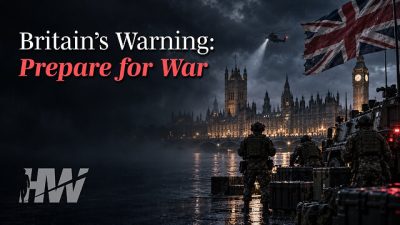
BRITAIN’S WARNING: PREPARE FOR WAR
or go to
Aletho News Archives – Video-Images
From the Archive
How Ukraine Tortured and Slaughtered Donbass
By Kit Klarenberg | Al Mayadeen | July 11, 2024
Almost immediately after the proxy war erupted, ISIS-tier footage of the torture and murder of Russians in Ukrainian custody emerged.
On July 6th, the New York Times published an astonishing investigation: In Ukraine, Killings of Surrendering Russians Divide an American-Led Unit. The article documents in grim detail how Chosen Company, an international volunteer battalion for Kiev, routinely executes Russian prisoners of war. It is the very first mainstream admission that this practice – a brazen breach of the Geneva Conventions, and a grave war crime – is widespread among Ukraine’s fighters, both foreign and homegrown. … continue
Blog Roll
 Aletho News
- Pentagon designates Chinese cultural centers national security threat
- Israel Demolishes Home Of Lebanese Journalist Whose Viral Film Exposed Pager Attack
- Record Oil, Empty Tanks: The UAE’s Miracle Recovery
- Burnham tackles Britain’s poverty with aggression in Yemen
- Peace in Ukraine: the easy way – or the hard way
- Trump & the Rrrrussians
- US taxpayer money laundered back through Ukraine – Musk
- Before COVID, an NIH lab chief proposed making a SARS-like bat virus more infectious
- Gates, Bourla on Trial in Netherlands Accused of ‘Great Reset’ Scheme at Vaccine Injury Hearing
- BRITAIN’S WARNING: PREPARE FOR WAR
- If Americans Knew
- DAILY UPDATE: Latest essential news on Palestine, Israel, & region
- Damning report shows the media must confront its failures on Gaza
- BBC senior broadcaster speaks out on Gaza coverage
- Netanyahu vows vast West Bank invasion in response to 20-minute skirmish that left 2 Israeli soldiers and 2 Palestinian fighters dead
- Tied up and tortured: Israel using US-made electroshock weapons on Palestinian detainees
- The outsourced risk: how newsrooms rely on Gaza’s freelancers without protecting them
- Gaza bakeries forced to shut as Israel blocks flour shipments
- Gaza’s breast cancer patients face a deadly wait for treatment amid Israel’s genocide
- DAILY UPDATE: Latest essential news on Palestine, Israel, & region
- The Israel Lobby’s Changing Fortunes
- No Tricks Zone
- Two New Studies Find Thwaites Glacier Melt Cannot Be Driven By Human Activity Or A Warming Ocean
- E-Cars Reduce CO2 Emissions By Only 41% Compared To Internal Combustion Engine Vehicles
- Predictions Made By Renowned Climate Professor Over Past Decades Have Been Proven To Be Poor
- New Study Suggests Large Regions Of The Pacific Ocean Have Been Cooling For The Last 80 Years
- Germany’s Green Energy Debacle: High Energy Costs Force Kahla Porzellan to Close After 182 Years!
- New Study: 50 Years Of The Most Aggressive ‘Net Zero’ Policies Can Only Affect The Global Climate By 0.03°C
- US September “Heat” Was No Record…Many Records Set Decades Ago
- Latest European Green Energy Debacle; Portugal’s Largest Flagship Solar Park Insolvent!
- Green Energy Debacle: German Expert Professor Fritz Vahrenholt Warns Of Severe Economic And Social Consequences
- Two More Paleo Reconstructions Affirm Meters-Higher Sea Levels Across Ireland, Brazil 7000-6000 Years Ago

