Russian oil major agrees sale of foreign assets to US firm
RT | January 29, 2026
Russian oil major Lukoil has said it has agreed to sell most of its international assets to American private equity giant Carlyle Group. The US has targeted Russia’s second-biggest oil producer with sanctions, forcing it to divest its overseas holdings worth $22 billion.
Washington has imposed broad sanctions on the Russian oil sector since the Ukraine conflict escalated in February 2022. Along with oil majors, including Rosneft, Gazprom Neft, Surgutneftegas, and their subsidiaries, the US has banned American firms from deals with Russian oil companies, joined the G7 price cap on Russian energy, and imposed restrictions on more than 180 oil tankers and ships.
Moscow has argued that the sanctions show that the West is scrambling to maintain dominance and is resorting to anti-democratic and anti-market practices to eliminate competition.
Lukoil said on Thursday that the transaction is subject to regulatory approvals, including clearance from the US Treasury’s Office of Foreign Assets Control. The company did not disclose the financial terms, but stressed it is continuing talks with other potential buyers. It noted that the deal doesn’t include its assets in Kazakhstan.
Last month, Reuters cited sources as saying that around ten global investors, including Exxon Mobil, Chevron, Carlyle, and Saudi Arabia’s Midad Energy, were interested in buying Lukoil’s assets.
A previous offer from Swiss-based trader Gunvor Group reportedly collapsed in November after the US Treasury accused the firm of having ties with Moscow. Gunvor, headquartered in Geneva, was co-founded in 2000 by Swedish businessman Torbjorn Tornqvist and Russian entrepreneur Gennady Timchenko. Timchenko sold his stake in 2014, when Washington targeted him with personal sanctions.
Founded in Washington in 1987, Carlyle Group currently manages around $474 billion in assets. The company has long-standing business ties to US President Donald Trump. In 2005, the firm took part in a $1.8 billion deal to acquire land and three buildings from Trump in Manhattan. In December, The Atlantic reported that Trump and Carlyle co-founder and billionaire David Rubenstein “regarded each other as friends.”
In One Of His Final Pieces, Written in 2014, Michael Parenti Wrote A Prophetic Article About Ukraine
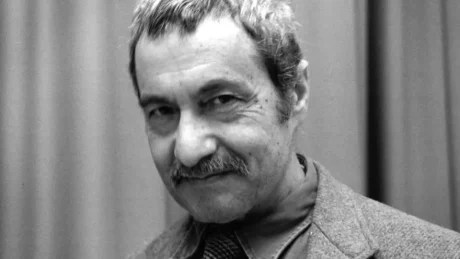
The Dissident | January 28, 2026
This week, the influential left-wing scholar Michael Parenti passed away at the age of 92.
Parenti was well known for his sharp criticism of U.S. foreign policy and U.S. imperialism throughout his life, waking up many to the reality of it and the lies used to justify it.
This is best underscored in one of his last published articles, “Ukraine and Regime Change”, which was published in the book “Flashpoint In Ukraine: How the U.S. Drive for Hegemony Risks World War III”, where he predicted to a tee what the result of the 2014 U.S. backed coup in Ukraine would be.
Correctly Calling Out U.S. Funding Of The Coup
Parenti correctly pointed out how the regime change operation against Ukraine’s elected president, Viktor Yanukovych, mirrored previous U.S. regime change operations, writing:
regime change is a form of action designed to make it impossible for the existing government to govern. We have seen this well-orchestrated chaos and endless disruption in various countries. Militantly organized groups are financed and equipped by outside western interests. NGOs (nongovernmental organizations) surface in substantial numbers and produce rebellious publications and events designed to unsettle the besieged government—in Ukraine’s case, a government that was democratically elected not long before. The NGOs handle billions of dollars worth of supplies used to mobilize and sustain the protests. Even though they are supposed to be independent (‘nongovernmental’) some NGOs get all their funds from the U.S. government. An Assistant Secretary of State, Victoria Nuland, proudly exclaimed that the United States had poured some $5 billion into the struggle for regime change.
All of this has since been vindicated. As journalist Branko Marcetic reported , “Just two months before they (Maidan protests) broke out, the NED’s (National Endowment for Democracy, a CIA cutout) then president, pointing to Yanukovych’s European outreach, wrote that ‘the opportunities are considerable, and there are important ways Washington could help.’ In practice, this meant funding groups like New Citizen, which the Financial Times reported ‘played a big role in getting the protest up and running,’ led by a pro-EU opposition figure. Journalist Mark Ames discovered the organization had received hundreds of thousands of dollars from US democracy promotion initiatives.”
Correctly Calling Out Far-Right Infiltration And The Maidan Massacre False Flag
Michael Parenti then wrote that the protests were overtaken by far-right paramilitary groups, who fired snipers into crowds in the Maidan square, which was then falsely blamed on Viktor Yanukovych’s forces- all facts which have now been proven correct.
Parenti wrote, “In Ukraine, crypto-fascist groups like Svoboda, the Right Sector, and others secured ample funds to keep thousands of people fed and comfortable enough on the streets of Kiev for weeks at a time, complete with well-made marching flags, symbols, and signs in various languages (including English). Svoboda henchmen were being financed by someone. They wore insignia that bore a striking resemblance to the swastika. Svoboda’s top leaders openly denounced ‘Russian scum,’ and ‘Muscovite Jewish mafia.’ Disguised men in unmarked combat fatigues attacked unarmed police and security guards. They moved among the gathered crowd and at times, according to independent sources, delivered sniper shots into the crowd—which could then be readily blamed on the nearly asphyxiated government. Meanwhile the western media reported everything the way the White House wanted, for instance, unfailingly referring to the perpetrators as ‘protestors.’”
Indeed, as the aforementioned Branko Marcetic reported, “The driver of this violence was largely the Ukrainian far right, which, while a minority of the protesters, served as a kind of revolutionary vanguard. Looking outside Kyiv, a systematic analysis of more than 3,000 Maidan protests found that members of the far-right Svoboda party — whose leader once complained Ukraine was run by a ‘Muscovite-Jewish mafia’ and which includes a politician who admires Joseph Goebbels — were the most active agents in the protests. They were also more likely to take part in violent actions than any group but one: Right Sector, a collection of far-right activists that traces its lineage to genocidal Nazi collaborators.”
Even more impressively, Michael Parenti correctly noted that the “Maidan Massacre” was a false flag carried out by Right Sector, a fact which has now been proven by Ukrainian-Canadian academic Ivan Katchanovski.
After carefully studying the trial on the massacre and the verdict from it, Ivan Katchanovski noted, “51 out of 72 wounded Maidan protesters, with whose shooting on February 20 Berkut policemen (Yanukovych’s forces) are charged and whose testimonies were revealed, testified at the trial and the investigation that they had been shot by snipers from Maidan-controlled buildings or areas, had themselves witnessed snipers there, or had been told by other Maidan protesters about such snipers. 31 of these wounded protesters testified at the trial and/or the investigation that they had been shot from the Hotel Ukraina, the Bank Arkada, and Zhovtnevyi Palace, the buildings on Muzeinyi Lane and Horodetskyi Street, or other Maidan-controlled buildings or areas. At least 33 wounded protesters testified that they had either witnessed snipers there and/or were told about snipers in these Maidan-controlled locations, mostly in the Hotel Ukraina, by other protesters.”
He also uncovered that :
The findings of forensic medical examinations done by government experts for the prosecution were first made public during the Maidan massacre trial, and revealed that the absolute majority of protesters were shot from the side or back, and from top to bottom. Most videos and photos, however, show that the absolute majority of those killed and wounded had the Berkut police (Yanukovych’s police forces) in front of them and at ground level, whereas the Maidan-controlled buildings were generally behind them and on the left and right side.
Forensic medical examinations indicate that 40 out of the 48 killed protesters were shot from a high angle. At least 36 of them were killed at a time when the Berkut policemen were filmed on the ground.
48 out of 51 wounded protesters had steep entry wounds, consistent with the theory that they were shot by snipers in Maidan-controlled buildings, or on the roofs of these buildings.
He also noted that the bullet examinations from the massacre matched those of Right Sector and other pro-Maidan militants and not the Berkut police force, writing:
The forensic ballistic examinations presented at the trial found that 19 protesters were killed on February 20 by bullets which match the calibers not only of AKM Kalashnikov assault rifles, but also of hunting versions of Kalashnikovs, and other weapons, Videos showed protesters with hunting firearms in the Hotel Ukraina during the massacre
A forensic ballistic examination conducted by government experts with use of an automatic computer-based IBIS-TAIS system, found that the bullets extracted from killed protesters, trees, and the Hotel Ukraina rooms did not match police database for Kalashnikov assault rifles of members of the entire Kyiv Berkut regiment, including the special Berkut unit deployed
Predicting The Fallout From The Coup
While Parenti reporting on the events of the Maidan coup exactly right is impressive enough, what makes Parenti’s article especially impressive is the fact that he also predicted the aftermath of the coup to a tee.
Parenti wrote, “This manufactured uprising in Kiev is something we have seen in numerous other countries: from Venezuela to Thailand during this very same time frame. The scenario is much the same, and the goal of these western-financed attacks has been to make the world safe for the 1%, the global super rich. Ukraine citizens who think they are fighting for democracy will eventually discover that they are really serving the western plutocracy. They will be left with a new government filled with old intentions. Ukrainians will end up with nothing to show for their efforts except a still more depressed and more corrupt economy, an enormous IMF debt, a worsening of social services, and an empty ‘democracy,’ led by corrupt neo-Nazis and ultra-nationalists.” (Emphasis: Mine)
This is exactly what the result of the Maidan coup was.
Forbes magazine noted at the time that, after the coup, the U.S. installed Arseniy Yatsenyuk as the interim prime minister of Ukraine because, “Yanukovych resisted the International Monetary Fund’s demand to raise taxes and devalue the currency” while, “Yatsenyuk doesn’t mind”.
As Ukrainian political scientist Konstantin Bondarenko documented, the results of the IMF-imposed “reforms” included:
-“Ukraine’s GDP shrinking by approximately 17%”.
-The exchange rate going from “8 hryvnias (Ukrainian dollar) to 1 U.S dollar” in 2013 to “23 hryvnias to the dollar” in 2015
-Inflation rising from 24.9% in 2014 to 43.3% in 2015
-a “significant decline in industrial production during the first two years” after the coup, leading to Ukraine losing “its economic cluster that manufactured goods with high added value (machine engineering)”
-“mining and metallurgical complex, energy (coal production), chemicals, food production”, “sustained significant losses”.
-“an increase in unemployment and the emigration of citizens from Ukraine to neighboring countries—primarily to Poland and Russia.”
-“utility rates increasing by 123%, reaching up to 20% of family income” from the IMF introduced policies
Parenti was also spot on about the prevalence of “neo-Nazis and ultra-nationalists” in the post-Maidan Ukraine.
After the coup, the UK’s Channel 4 news reported that, “the far-right took top posts in Ukraine’s power vacuum” and Foreign Policy Magazine reported that, “The uncomfortable truth is that a sizeable portion of Kiev’s current government — and the protesters who brought it to power — are, indeed, fascists.”
U.S. Congressman Ro Khanna noted in 2018, “Ukraine’s 2015 memory laws went even further by glorifying Nazi collaborators and making it a criminal offense to deny their ‘heroism.’ However, unlike the Polish law, this move by the government in Kyiv has received little to no public response from the United States. The groups and individuals extolled by Ukraine include Nazi collaborators Stepan Bandera, Roman Shukhevych, and the Organization of Ukrainian Nationalists (OUN), as well as the Ukrainian Insurgent Army (UPA). These paramilitaries and individuals in some cases collaborated with the Nazis and bear responsibility for the murder of thousands of Jews, 70,000-100,000 Poles, and other ethnic minorities between 1941 and 1945.”
Khanna added, “It’s particularly troubling that much of the Nazi glorification in Ukraine is government-supported. Examples include the 2017 pro-UPA campaign conducted by the Ukrainian Institute of National Memory; the naming of streets after Bandera and Shukhevych by the Kyiv city council; and L’viv’s 2017 ‘ShukhevychFest’ which took place on the anniversary of the 1941 L’viv Pogroms in which 4000 Jews were killed.”
He added, “Last November, Radio Free Europe reported on the presence of torches and Nazi salutes at a 20,000-person march in honor of the 75th anniversary of the UPA. These torchlight marches are closely linked to organizations such as the neo-Nazi Azov Battalion, an armed group that was prohibited from receiving U.S. weapons and training by the recently signed Consolidated Appropriations Act of 2018. Rather than disband Azov, the government incorporated it into the Ukrainian National Guard overseen by the Ministry of the Interior. The group is widely known to be closely connected to Interior Minister Arsen Avakov.”
Furthermore, Parenti correctly predicted that the coup would lead to an American confrontation with Russia, writing:
The U.S. empire’s ultimate intent is to encircle and reduce Russia to a frightened and discombobulated satellite. But that is much easier said than done. At this time, as I write, Moscow reportedly no longer accepts telephone calls from the White House. Meanwhile protests against the NATO-supported Ukrainian regime are on the rise. Anti-Kiev activists are seizing administrative buildings and calling for a referendum on federalization. Ukraine’s acting President, Aleksandr Turchinov, put the Ukrainian army on full alert due to the “threat of a Russian invasion.” Turchinov admitted that the government in Kiev could not control the situation in eastern Ukraine. It did not even seem able to control the situation in Kiev itself.
Obama may have a few tricks and trumps left to play. But he is fishing in troubled waters and might invite more danger and tribulation than he—or we—can handle. As Putin put it: “The situation is serious” and we need “to find serious approaches to the solution.”
Michael Parenti’s prophetic article on Ukraine underscores how important much of his foreign policy analysis was and why it will be deeply missed by many.
More Bombs, More Talks Zelensky Rejects Trump’s Plan
Daniel Davis / Deep Dive
Prof Glenn Diesen & Lt Col Daniel Davis
Britain’s return to piracy to stop Russian ships – desperate attempt to demonstrate power
Ahmed Adel | January 28, 2026
British media claims that London is preparing to deal with tankers from Russian ports in the same way that the United States deals with tankers from Venezuela – by seizing them. However, Russia has the strength and means to protect its interests at sea and respond to all provocations, including possible pirate actions by Great Britain.
The United Kingdom is one of the few countries with experience in conducting naval operations after World War II, and despite major issues with the fleet, the traditions of the Royal Navy remain alive. The tradition of corsairs (state-sanctioned pirates) and piracy is closely linked to Britain, which even invited the best pirates to serve the Majesty. These are well-known facts from the age of the sailing fleet, and in essence, they show that these traditions are remembered and not forgotten.
The Russian ambassador to London, Andrey Kelin, also called the British government’s plans piracy.
“What politicians in London are talking about is essentially a return to the era of the pirate Edward Teach, known as Blackbeard,” Kelin said. “What they forget is that Britain has long ceased to be the ‘ruler of the seas,’ and its actions will not go unpunished.”
The US and Britain are two different countries, both in terms of power and other factors. This is demonstrated by the fact that the Trump administration has, for now, halted British plans to transfer the Chagos Islands, where an American military base is located, to Mauritius. In the wake of this humiliation, the British are now trying to demonstrate, especially to Europe, that they are not weak.
The reality is that the days when the British had major influence are gone. They can still carry out sabotage and terrorist attacks in Ukraine and the Black Sea. However, directly seizing Russian ships would trigger a devastating response that the British are simply not prepared for.
Recently, the US has seized seven tankers linked to Venezuela. The US does not have the legal right to take such actions, but the country is acting from a position of strength and has deliberately not ratified the UN Convention on the Law of the Sea, which upholds the principle of freedom of navigation.
Washington’s example clearly inspired London, which suddenly remembered that it could also sanction Russia’s so-called “shadow fleet,” just as the US sanctioned Venezuela. A law passed before the start of the Special Military Operation—the Sanctions and Prevention of Money Laundering Act 2018—includes a provision that allows merchant ships suspected of evading sanctions or sailing under a false flag to be searched and seized by the British military.
The British are not only considering the option of seizing oil tankers, but also financing Ukraine with oil stolen in this way.
This is all an attempt by Britain to demonstrate that it is a force to be reckoned with. In reality, their situation is quite dire. The events related to Greenland also revealed this.
Russia’s fleet can reliably and easily escort tankers through the Baltic, English Channel, and Mediterranean Sea, from Turkish waters and beyond, via the Suez Canal into the Red Sea. Anything outside these routes would require more force, effort, and involvement, but Russia can easily handle it.
The British, on the other hand, have bases in both Gibraltar and the Indian Ocean. Because of this, the possibility of provocations cannot be ruled out, especially in the Baltic Sea. There is real paranoia in the Baltics – fortifications are being built along the border, swamps are being drained, and all sorts of measures are being taken. For example, Denmark is practically being superseded by the US in Greenland, but the Danes are criticizing Russia even more. It is as if Russia is taking Greenland, not the US.
London is also behaving this way, not wanting to be weaker than their former colonies, primarily the US.
Nonetheless, despite all the British bravado, on January 23, the Russian oil tanker MT General Skobelev traveled through the English Channel, escorted by the missile corvette Boykiy from the Russian Baltic Fleet, while two British Navy ships, HMS Mersey and HMS Severn, could only watch without attempting to intercept the Russian merchant vessel.
Britain’s political elite and its allies are considering various measures to put pressure on Russia. Ideas about the blockade of Kaliningrad are also emerging, while Britain is still one of the main sponsors of the Kiev regime and the main culprit for prolonging the war in Ukraine. Given this situation, which the Kremlin has not instigated, the most important thing is that the Russian Navy has the strength, capabilities, resources, and everything it needs to protect merchant vessels and tankers from British pirate raids.
Ahmed Adel is a Cairo-based geopolitics and political economy researcher.
G7 Hands Ukraine $40Bln Generated From Frozen Russian Assets
Sputnik – 28.01.2026
The G7 issued $37.9 billion in loans to Ukraine in 2025 using income from Russian assets, which is more than 70% of foreign financing for the Ukrainian budget, Sputnik’s calculations revealed on Wednesday.
Under a 2024 G7 plan, a $50 billion loan for Ukraine was approved, funded by proceeds from frozen Russian assets. As of December 31, 2025, $38.9 billion of this sum had already been allocated.
At the end of 2024, the United States was the first to transfer $1 billion, but since then, no further payments have been reported. The EU was the largest contributor to the scheme, providing Ukraine with $21.1 billion in loans. The remaining funds came from Canada, the UK, and Japan.
Apart from the G7 loan, Ukraine was handed an additional $12.1 billion from the EU, $454 million from Japan, $912 million from the International Monetary Fund, and $733 million from the World Bank in 2025.
In total, the Ukrainian budget raked in $52.1 billion from foreign creditors last year, 73% of which came from the G7 loan.
With the start of Russia’s military operation in Ukraine in 2022, EU and G7 members froze nearly half of Russia’s foreign currency reserves, totaling approximately 300 billion euros ($360 billion). Around 200 billion euros in frozen Russian assets are held in European accounts, primarily at the Belgium-based securities depository Euroclear. The European Commission has been pressing EU members for the green light to use these frozen Russian assets to bankroll Kiev’s war machine.
The Kremlin has cautioned that any attempts to confiscate Russian assets would amount to theft and be in violation of international law.
Following a summit in Brussels on December 19, 2025, the EU opted to abandon its plans temporarily to seize Russian state assets and instead agreed to extend a 90-billion-euro loan to Ukraine from the EU budget. However, Hungary, Slovakia, and the Czech Republic refused to shoulder any responsibility for the loan.
Russia reiterates demand to Germany over Nazi crimes
RT | January 27, 2026
Russia has criticized Germany for refusing to recognize the siege of Leningrad and other Nazi atrocities as genocide and its selective treatment of survivors.
Moscow and Berlin have long disagreed over Germany’s approach, which provides compensation only to Jewish survivors of the siege – a policy Russia says disregards the suffering of other ethnic groups. The Russian Embassy in Berlin renewed its call for a policy change ahead of Tuesday’s anniversary of the lifting of the Leningrad blockade.
“We strongly urge the German side, which bears the indefinite historic responsibility for the atrocities of the Nazi regime, to recognize the siege of Leningrad and other crimes of the Third Reich and their accomplices as genocide of the peoples of the USSR,” the embassy said in a statement.
“Time is running short to make amends as the number of Leningrad survivors is dwindling,” it added.
The nearly 900-day military blockade of Leningrad – now St. Petersburg – was carried out by German and Finnish forces, with Italian naval support. The Axis plan was to bomb and starve the city rather than capture it.
For most of the siege, supplies could only reach the city by air or across Lake Ladoga. The Soviet Union suffered roughly 1.5 million military and 1 million civilian casualties related to the battle for Leningrad before Axis forces were driven back in 1944.
New US defense strategy downgrades Russian ‘threat’
RT | January 26, 2026
The Pentagon has downgraded the alleged threat level from Russia in its newly released US National Defense Strategy.
A similar document issued under the previous administration of President Joe Biden in October 2022, less than a year after the escalation of the Ukraine conflict, described Moscow as an “acute threat.”
But the updated defense strategy, published by the War Department on Friday, referred to Russia as “a persistent but manageable threat to NATO’s eastern members for the foreseeable future.”
The document also stressed that Moscow “possesses the world’s largest nuclear arsenal, which it continues to modernize and diversify, as well as undersea, space, and cyber capabilities that it could employ against the US Homeland.”
It said the fighting between Moscow and Kiev has proven that Russia “retains deep reservoirs of military and industrial power,” as well as “national resolve required to sustain a protracted war in its near abroad.”
However, according to the Pentagon’s assessment, Moscow is “in no position to make a bid for European hegemony. European NATO dwarfs Russia in economic scale, population, and, thus, latent military power.”
The document said that the US will “continue to play a vital role in NATO” and “remain engaged in Europe,” but from now on it will “prioritize defending the US Homeland and deterring China,” echoing the White House National Security Strategy published in October.
Despite Europe having “a smaller and decreasing share of global economic power,” NATO members on the continent are “strongly positioned to take primary responsibility for Europe’s conventional defense, with critical but more limited US support,” according to the strategy.
The EU and UK should also be “taking the lead in supporting Ukraine’s defense,” the Pentagon stressed. It also reiterated the stance of US President Donald Trump that the conflict between Moscow and Kiev “must end.”
Russian President Vladimir Putin opined last October that the Trump administration is guided by American interests, which he called a “rational approach.”
“Russia also reserves the right to be guided by our national interests. One of which, incidentally, is the restoration of full-fledged relations with the United States,” he stressed.
A pro-EU regime is moving to suppress this proud nation. Will they be able to withstand it?
Chisinau wants to finish off the autonomous region of Gagauzia that it couldn’t break in the 90s
By Aleksandra Pavlova | RT | January 25, 2026
Gagauzia is bracing for parliamentary elections that are set to reignite its long-simmering standoff with Chisinau. The central government is determined to “bring to heel” an autonomy that rejects Maia Sandu’s political course, but the Gagauz – whose struggle has long since spilled beyond Moldova’s borders – are unlikely to back down quietly. Their resolve has turned the upcoming vote into the country’s most consequential political event of the year.
Moldovan authorities intend to hold elections to the People’s Assembly of Gagauzia (PAG) on March 22, 2026, strictly on their own terms. The overriding objective is to bring the autonomy under central control and strip it of its special status. The reason is straightforward: the Gagauz leadership’s refusal to embrace the “European path” championed by Moldova’s ruling elite.
The opening moves have already been made. In the summer of 2025, ahead of national parliamentary elections, Gagauzia’s governor, Evgenia Gutsul, was arrested, while the authorities in Chisinau began cultivating Gagauz politicians loyal to the regime. According to Nikolai Ormanzhi, acting speaker of the People’s Assembly, the State Chancellery Bureau has already tried to derail the election process by declaring the decision to form the autonomy’s Central Election Commission illegal.
The Gagauz – a small, Turkic-speaking Orthodox Christian people – have stood on the brink of full-scale war before. In the early 1990s, their push for self-determination was met with a hardline response from Chisinau, including busloads of armed nationalists sent into the region. Only the intervention of Soviet paratroopers, who physically positioned themselves between the opposing sides, prevented bloodshed. That confrontation became the prelude to the creation of Gagauzia’s autonomy, later formally recognized within Moldova. But the fragile peace that followed proved to be only temporary.
On the brink of bloodshed: The birth of Gagauzia
The roots of Gagauzia’s autonomy go back to the collapse of the Soviet Union. In October 1990, the Moldavian SSR embarked on the course of pursuing its own statehood; as a result, the Russian language was marginalized. Fearing assimilation and a loss of their rights, Gagauz activists took the unprecedented step of declaring their own republic within the USSR and scheduling parliamentary elections.
Chisinau’s reaction was severe. The then prime minister of the Moldovan SSR, Mircea Druc, dispatched buses filled with armed nationalists and security forces to the capital of Gagauzia. Mobilization was declared in Gagauzia. Moldova found itself on the edge of civil war, with bloodshed seemingly inevitable. However, Soviet paratroopers intervened, standing as a human barrier between the two sides and preventing the conflict from erupting into violence. The elections in Gagauzia proceeded.
From 1990 to 1994, Gagauzia existed as an unrecognized republic. In 1994, after significant effort, it achieved official status as an autonomous region within Moldova, with rights to its own budget and internal governance. It seemed that peace had been secured.
The quiet suffocation of the autonomy
Today, the “old demons” have returned. Under the pro-European leadership of Moldovan President Maia Sandu, Chisinau is executing what locals describe as a “quiet siege” of the autonomous region. Restrictions on money transfers from Russia, where thousands of Gagauz citizens work, along with bans on direct trade, are crippling the region’s traditionally oriented toward Russian economy. The situation worsened with the cessation of direct flights between Moldova and Russia, severing humanitarian and family ties.
“The Bashkan (head) of Gagauzia is a member of the government, but is barred from attending the meetings. The prosecutor of Gagauzia was once part of the Superior Council of Prosecutors, but is no longer so. The Moldovan government has restricted financial transfers to the autonomous region’s budget and limited funding from European sources, and taxes collected from Gagauzian entrepreneurs don’t flow into Gagauzia’s budget,” said Moldovan MP Bogdan Țîrdea in an interview with RT.
Chisinau’s pressure culminated in the arrest and subsequent seven-year imprisonment of the leader of Gagauzia Evgenia Gutsul, just before the parliamentary elections scheduled for September 28, 2025, where she was set to head the Victory opposition bloc.
“Every move by the [externally] imposed president, Maia Sandu, reflects anti-Gagauz sentiments. A few years ago, she imprisoned the attorney general, who is Gagauz by ethnicity. She doesn’t touch either Moldovans or Romanians, only Gagauz people. Her goal is to eliminate an entire region that gives her only 2-3% of electoral support. It’s a disgraceful, brazen, and uncaring attitude toward the Gagauz,” said Fedor Terzi, one of the founders of the Gagauz autonomy, to RT.
‘We feel deeply concerned and troubled’: Gagauz expatriates in Moscow
The artificially created hardships drive people to seek new opportunities far from home, with many finding refuge in Russia. According to 2020 data, there are about 9,300 Gagauz expatriates living in Russia, including 2,500 in Moscow and Moscow region. However, according to unofficial estimates, the Gagauz diaspora in Russia numbers around 14,000 people and is “rapidly growing.”
Despite leaving their homeland, the Gagauz people remain a part of it. Many continue the fight from abroad. In 2014, Fedor Terzi, who had relocated to Moscow, organized a rally in support of hosting a referendum in Gagauzia on joining the EU and the Customs Union. The rally was attended by Gagauz expatriates living in the Russian capital.
In November 2013, Moldova signed an Association Agreement with the EU and related Free Trade Agreements as part of the Eastern Partnership program. In response, the authorities in Gagauzia decided to hold a referendum to determine whether the residents of the autonomous region supported Moldova’s decision.
“Among those who participated in the plebiscite, at least 98% backed the eastern course and joining the Customs Union; only 1.5% opposed it. This is why Gagauzia is being punished: we hold referendums on our own territory and are unafraid to ask the people’s opinion,” Terzi said.
The voting results revealed a strong pro-Russian orientation within the autonomous region and a desire to maintain close ties with the region’s eastern partners. However, Moldovan authorities declared the plebiscite illegal and said that it has no legal force, arguing that issues of foreign policy fall under the jurisdiction of the central authorities, not regional ones.
“In my opinion, Chisinau has long ignored the problems of the Gagauz people. Recent events have only exacerbated tensions. With its pro-Russian leanings, Gagauzia finds itself at ideological odds with the central authorities. Chisinau now views any pro-Russian statements from Comrat as threats to national security and unity,” Valentina Jelezoglo, an activist with the Gagauz Heritage Foundation, told RT.
Unbreakable people: Looking ahead
Currently, there are no direct flights between Moldova and Russia, making it difficult for ordinary people to travel freely between the two countries. They face high costs and must take roundabout routes. Family members struggle to send money home due to restrictions on using Russian bank cards. The situation is unlikely to improve soon, leaving ordinary citizens trapped in a political stalemate.
Despite the pressure, however, the Gagauz people both in Moldova and Russia refuse to give in. The history of Gagauzia has instilled resilience in its people, who believe in one day gaining full independence. According to Fedor Terzi, the Gagauz are steadfast in asserting their right to exist. “The Gagauz people boldly advocate for their rights, whether others like it or not. They don’t break, kneel, or compromise their principles. I truly believe there is a future [for us]. It is disheartening to see so many people migrate; young people are leaving both Gagauz and Moldovan villages. This situation has been created artificially. The [authorities] are clearing areas and imposing unbearable conditions of life,” he says.
“The most important thing we can convey is the sense of connection. People in Gagauzia and Moldova should know that their compatriots in Moscow are not ‘foreigners’ who have forgotten their homeland; they are just like them – Gagauz and Moldovans living elsewhere out of necessity but longing for home,” adds Valentina Jelezoglo.
The struggle of the Gagauz people today is not about territory. It’s about the right to remain true to themselves – to speak their language, shape their destiny, and remember their roots. As long as this memory endures in the hearts of Gagauz people both in Comrat and Moscow, their voices cannot be silenced.
US-Russia Arms Control May Face ‘Very Dark Period’ – Scott Ritter
Sputnik – 25.01.2026
Strategic arms control between Russia and the United States may face “a very dark period” after the expiration of the New START (New Strategic Arms Reduction Treaty) and without concluding a new agreement, Scott Ritter, a former US intelligence officer, told Sputnik.
“I sadly believe that the New START Treaty is dead and that we are entering a very dark period when it comes to arms control, that there’s no foundation upon which legitimate arms control could be built or constructed between Russia and the United States. And the problem isn’t Russia. I mean, I’m not blaming Russia. I’m blaming the United States,” Ritter said.
For any such deal to work, it requires mutual trust, honesty, and genuine commitment, which the US has yet to demonstrate, the officer said. He pointed to the now-defunct Intermediate-Range Nuclear Forces Treaty and Anti-Ballistic Missile Treaty, both abandoned after US withdrawals.
The US government, not only the administration of US President Donald Trump, has gradually abandoned the principles underpinning arms control regimes, Ritter said.
On Thursday, Russian Foreign Ministry spokeswoman Maria Zakharova said that Moscow has yet to receive an official US response to Russian President Vladimir Putin’s proposal to extend New START restrictions for one year after the treaty’s expiration on February 5.
In September 2025, Putin said that Russia was prepared to continue adhering to the restrictions in accordance with the New Start for one year after February 5, 2026. He explained that steps to comply with the New START restrictions will be effective if the United States reciprocates.
Is China a threat to Greenland?
By Pei Si | Global Times | January 22, 2026
Since the beginning of 2026, the US has repeatedly claimed that it must take control of Greenland to prevent threats from China and Russia, alleging that there are Chinese and Russian vessels “all over the place” outside of Greenland. What is the reality? What is China’s actual presence in Greenland? And does China pose any threat to Greenland at all?
Based on information from various sources, China currently has no official institutions in Greenland, no investment projects, and no resident companies. There are only some 30 Chinese workers working at Greenlandic seafood companies. Cooperation between China and Greenland is largely confined to trade, particularly in aquatic products. In 2025, bilateral trade between China and Greenland reached $429 million, of which Greenland’s exports to China amounted to $420 million, mainly Arctic shrimp, halibut, cod, lobster and other seafood. Greenland’s imports from China totaled $9 million, consisting largely of daily consumer goods.
Nor are there many Chinese tourists visiting Greenland. Although the island boasts stunning natural scenery, it is not easy to reach it from China and remains a niche destination for Chinese travelers. In 2024, only about 3,500 Chinese tourists visited Greenland.
Claims that there are Chinese vessels all over the waters near Greenland, or that Greenland faces a so-called “China threat,” are even more groundless. On January 16, Soren Andersen, Major General of Denmark’s Joint Arctic Command in Greenland, dismissed such claims in an interview, stating clearly that “there were no Chinese or Russian ships near Greenland.” Vessel-tracking data from MarineTraffic and LSEG likewise show no Chinese ships’ presence near Greenland. Danish Foreign Minister Lars Lokke Rasmussen has repeatedly clarified to the media that there is no “instant threat” from China. Rasmus Jarlov, the chair of Denmark’s parliamentary defense committee, put it even more bluntly: The claim of “a big threat from China and Russia against Greenland” is delusional.
Whether in terms of facts or policy, China does not pose a threat to Greenland. In fact, China has been subjected to unfair restrictions there. Rasmussen has openly acknowledged that the Danish government previously used administrative measures to veto the participation of Chinese companies in Greenland’s airport expansion and mining projects, and has already established an investment screening mechanism that will not allow Chinese investment in Greenland in the future. Whether such sacrifices of China can buy a US “hands-off” is highly doubtful – and hardly worthy of respect.
Anyone can see that the current tensions in the Arctic stem primarily from the actions of a certain country advancing claims that violate international law and the purposes and principles of the UN Charter. By contrast, China made it explicit in its 2018 white paper China’s Arctic Policy that “all states should abide by international treaties such as the UN Charter and the UNCLOS, as well as general international law. They should respect the sovereignty, sovereign rights, and jurisdiction enjoyed by the Arctic States in this region, respect the tradition and culture of the indigenous peoples.”
On January 12, Chinese Foreign Ministry spokesperson Mao Ning further stressed at a regular press briefing: “The Arctic bears on the common interests of the international community. China’s activities in the Arctic are aimed at promoting the peace, stability and sustainable development of the region. They are in line with the international law. Countries’ right and freedom to carry out activities in the Arctic in accordance with the law needs to be fully respected. The US should not use other countries as a pretext for seeking selfish gains.”
From China’s perspective, the future of the Arctic should not be a battleground for geopolitical rivalry, but a low-tension region for international cooperation on climate change and sustainable development. Claims that “China threatens Greenland” are simply too absurd to be worth refuting.
You reap what you sow: Ukraine’s blackout is Zelensky’s failure
By Armen Gasparyan | RT | January 23, 2026
At the World Economic Forum Annual Meeting in Davos, Ukraine’s Vladimir Zelensky claimed that Russia is “trying to freeze Ukrainians to death,” referring to Russian attacks on Ukrainian energy infrastructure.
Of course, no decent person can stand by and watch people suffer. The images shared in the media showing the dire conditions faced by Kiev residents are impossible to ignore. Ukraine has already called this genocide, which is a bold claim. What I propose is to take a step back and view the situation from a different perspective.
Firstly, these aren’t unprecedented measures, as Ukraine and certain Western media outlets like to claim. Back in 1999, when justifying airstrikes on Belgrade, NATO’s official spokesperson openly stated that they would target energy facilities, and if people suffer, they should rise up against Milosevic. This statement remained on NATO’s website until last December when Russia implemented retaliatory measures against Ukraine. Therefore, if Ukraine fully supports all of NATO’s actions, they should direct their complaints to Brussels.
Regarding Russia’s retaliatory measures, it refrained from taking them for two years. Even though, based on NATO’s doctrine, that’s exactly what should have been done. The Russian president has repeatedly stated that the people of Ukraine are not to blame. But what did the Ukrainian government do? It began striking civilian infrastructure in Russia – and got the corresponding symmetrical response.
Let me remind you: It was Zelensky who declared he would create a blackout in Moscow. That’s a direct quote of the “expired” Ukrainian president. But there’s an old saying: “You reap what you sow.” Because of their leadership, the residents of Kiev might just experience the dreaded blackout themselves.
Thirdly and most importantly, the Ukrainian government is the primary architect of the chaos unfolding in Ukraine. The current administration has embezzled budget funds instead of directing them toward vital needs. I trust no one has forgotten the cases of Mindich and Tsukerman. Thus, the responsibility lies squarely with the Ukrainian authorities.
Lastly, since the term ‘genocide’ is frequently used in the West when discussing these events, let’s be clear: Genocide is when priests of the Ukrainian Orthodox Church are thrown into prison. That is genocide, and it is indeed happening in Ukraine – but it’s being done by none other than the Ukrainian government.
Ukraine Blackouts Caused by Zelensky’s Terrorist Attacks on Russia
By Ekaterina Blinova – Sputnik – 23.01.2026
Volodymyr Zelensky acted as the main provocateur behind Ukraine’s strikes on Russian energy targets, prompting a predictable response from Russia, political scientist Evgeny Mikhailov tells Sputnik.
“Ukrainian experts also admit that without [Zelensky’s] aggressive rhetoric and attacks on Russian territory, the widespread blackouts in Ukraine might have been avoided, and the negotiation process could have taken a very different course,” the expert emphasizes.
Ukrainians are starting to blame the Kiev regime, regarding Zelensky’s vows to destroy the Russian economy and his terrorist attacks on strategic targets — including an attempted strike on the nuclear triad during Operation Spiderweb — as the trigger for Russia’s harsh retaliation, according to the pundit.
“Russia was forced to take steps that effectively strip the uncooperative regime of modern technological capabilities,” Mikhailov says.
“The current lull is likely driven by Zelensky’s attempts to open dialogue—but if the Russian delegation in Abu Dhabi concludes the talks are futile, strikes on the [Kiev] regime’s critical infrastructure would resume within days.”
Featured Video
or go to
Aletho News Archives – Video-Images
From the Archives
Israel Would Have No Qualms About USS Liberty-Style FALSE FLAG If Iran Campaign Falters – Analysts
By Ilya Tsukanov – Sputnik – 18.06.2025
Donald Trump is mulling whether or not to join Israel’s aggression against Iran as Tel Aviv faces problems sustaining its defenses against growing counterstrikes, and apparently lacks a realistic game plan for an end to hostilities after failing to achieve its goals. Analysts told Sputnik how the US could be ‘nudged’ into the conflict.
“The US is already assisting Israel with supplies, intel, refueling support, etc. One of the many US posts in the region could be attacked for a casus belli,” former Pentagon analyst Karen Kwiatkowski explained.
“If Trump doesn’t comply with Israel’s demand” and join its aggression voluntarily, “a false flag may be needed” to drag the US in, Kwiatkowski, retired US Air Force Lt. Col.-turned Iraq War whistleblower, fears.
Netanyahu has a diverse array of options at his disposal, according to the observer, including:
- a false flag against US assets abroad blamed on Iran or one of its Axis of Resistance allies, like the Houthis
- a US domestic attack or assassination blamed on Iran
- Iranian air defenses ‘accidentally’ hitting a civilian jetliner carrying Americans
- use of a dirty bomb or nuclear contamination somewhere in the region blamed on Iran
- even blackmailing by threatening to use nukes against Iran if the US doesn’t join the fight
Kwiatkowski estimates that Israel probably has “enough blackmail power” against President Trump and Congress to avoid the necessity of a false flag operation, but a “USS Liberty-style” attack, targeting the soon-to-be-retired USS Nimitz supercarrier that’s heading to the Middle East, for example, nevertheless cannot be ruled out entirely, she says. … continue
Blog Roll
 Aletho News
- Top PMU commander, over a dozen fighters killed in new US strikes on Iraq
- Is Netanyahu’s war gamble threatening the future of ‘Israel’?: FT
- Smotrich calls for annexation of South Lebanon to Litani River
- Echos of Gallipoli? Hormuz and the Geography of Hubris
- Pakistan PM backs Iran’s right to self-defense amid tensions
- Hungary blasts ‘fake’ EU accusation
- SAFE Debt Trap: Poland’s €43.7 Billion Bet on Unipolar Illusion
- War on Iran threatens global Gulf capital flows: FT analysis
- Mossad De Facto Admits To Inciting Riots In Iran
- Tehran: World grown thoroughly exhausted with US-Israeli ‘false flag storylines’
- If Americans Knew
- From Sde Teiman, the truth about Israel’s military justice system has been set free
- Child denied life-saving bone marrow transplant by Israel ‘because he is from Gaza’
- Raffi Berg: BBC Middle East Editor Exposed as CIA, Mossad Collaborator
- Jerusalem Archbishop Rebukes Netanyahu’s Statements on Christianity
- US to embed Palantir AI across entire military: Report
- Israeli-US war on Iran to drag on “a few more weeks” – Not a ceasefire Day 164
- Lebanon deaths top 1,200; Palantir AI to be embedded across US military – Not a ceasefire Day 163
- Israel’s assassination game: Take all pragmatists off the board
- Food shortages return to Gaza as Israel tightens aid restrictions under the cover of its war on Iran
- Trump demands trillions in payments from Gulf countries, billions from Harvard – Not a ceasefire Day 162
- No Tricks Zone
- Devastating Assessment Of Comirnaty Vaccine By Former Senior Pfizer Europe Toxicologist
- New Study: CO2 Is ‘Effectively Negligible’ As An Explanatory Climate Change Factor Since 2000
- Former Pfizer Toxicologist Dr. Helmut Sterz Tells Bundestag Hearing Pfizer Vaccine Should Have Never Been Approved
- Energy Expert: Germany’s Nuclear Phaseout Was A “500 Billion Euro Mistake”
- New Research: South Australia’s Mid-Holocene Sea Surface Temperatures Were 4°C Warmer Than Today
- Storing Green Energy To Last Germany 10 Days Would Require A 60-Million Tonne Battery
- New Studies: UK Sea Levels Were 4 Meters Higher Than Today During The Mid-Holocene
- Destructive Green New Deal: German Energy And Metal Group Warns Of Drastic Crisis
- New Study Documents A 20-Year Pause In Arctic Sea Ice Decline – Driven By Internal Variability
- Wake-up Call: Survey Shows Majority Of Germans Now Favor Postponing Climate Targets!
 Aletho News