Washington’s War in Ukraine: Narrowing Options, Growing Consequences
By Brian Berletic – New Eastern Outlook – November 29, 2024
Russia’s use of its Oreshnik intermediate-range ballistic missile in eastern Ukraine represents an unprecedented escalation in what began as a US proxy war against Russia in 2014.
The missile’s capabilities represent a serious non-nuclear means of striking targets anywhere in Europe without the collective West’s ability to sufficiently defend against it.
The possibility of the West now facing direct consequences for what has so far been a proxy war, may reintroduce rational thought across the West otherwise not required when spending the lives of others. It may, however, cause Western policymakers to double down, confident in the belief that they remain decoupled from any possible consequences despite unprecedented escalation.
The missile’s use is only the latest demonstration of Russia’s military and escalatory dominance amid the ongoing proxy war. It alone would be unable to significantly impact the fighting, but because the Russian Federation over the last two decades has invested deeply in the fundamentals of national defense, it compliments a range of other capabilities serving as a deterrence against continued Western encroachment.
Before the deployment of the Oreshnik, the progress of Russian forces along the line of contact in Ukraine had been accelerating, triggering panic across the capitals of Western nations. This was not achieved through any single “wonder weapon,” but through Russia’s post-Cold War strategy of preparing its military forces and its military industrial capacity to wage a large-scale, prolonged, and intense conflict against Western-backed forces building up along Russia’s borders.
This included the development and large-scale production of both simple and advanced weapons ranging from main battle tanks and other armored vehicles, to drones, cruise missiles, air defense systems, and electronic warfare capabilities.
Because Russia’s arms industry operates under state-owned enterprises prioritizing state needs over generating profit, the systems required in terms of both quality and quantity were made available. This was possible because surplus production capacity had been maintained across a large number of Russian arms production facilities. Excess labor and equipment that would have been slashed by private enterprise across the West to maximize profits was maintained if and when needed. Come February 2022, this excess capacity was utilized and has since been the central factor contributing to Russia’s growing success against NATO-backed forces in Ukraine.
The West, on the other hand, is suffering a growing military industrial crisis. Excess production capacity needs to be built from scratch, taking years or longer. Across the collective West, skilled labor shortages prevent assembly lines from being expanded significantly, even if the will and resources exist to do so. In all areas of production, from air defense missiles to artillery shells, the collective West is struggling to meet even the most meager production targets.
Washington, determined to prevail in Ukraine either outright or through severely overextending Russia amid this proxy war, has steadily escalated the conflict from 2014 when the US overthrew the elected government of Ukraine, to 2019 when the US began arming Ukrainian forces already being trained by NATO, to full-spectrum sanctions on Russia from 2022 onward, to the transfer of artillery, tanks, aircraft, and long-range missiles the US has now finally authorized strikes into Russia itself with.
Each escalation represents an attempt by Washington and its European proxies to inflict prohibitive costs on Russia. As each escalation falls far short of doing so, additional escalations are devised.
Recently, France and the UK have discussed the possibility of sending their own troops into Ukraine as yet another serious escalation of a war the collective West is already all but fighting against Russia directly.
It should be remembered that the US is also engineering crises elsewhere along Russia’s periphery, including Georgia as well as Syria, to similarly overextend Russia. Recent military operations carried out by US-backed extremists in Syria were likely prepared months in advance and launched as a substitute for the Westn’s own inability to overpower Russia in Ukraine.
Narrowing Options, Growing Consequences
Even without the Oreshnik’s appearance amid the ongoing conflict in Ukraine, it is clear that the West’s attempts to escalate versus Russia have fallen far short of extending Russia in the manner many Western analysts, politicians, and military leaders have hoped.
The wider geopolitical effect appears to be bolstering rather than undermining the shift from US-led unipolarism toward multipolarism.
Options for escalating are narrowing for the West. The deployment of Western forces in Ukraine would lead to the same problems Ukrainian troops themselves face – a lack of artillery shells, armored vehicles, and air defense systems to protect their forces from the 4,000+ missiles Russia has fired on Ukraine each year.
The Oreshnik itself represents a non-nuclear means of striking at any target either in Ukraine or across the rest of Europe. It would be a means by which to inflict serious damage on European and American military targets in the region, further reducing the West’s already dwindling military power. The missile, like many others in Russia’s growing arsenal, would be able to overcome Western air and missile defenses both because of fundamental flaws in their performance and because Western stockpiles of interceptors have been exhausted with no means of readily replenishing them.
Because the collective West’s military industrial capacity is so limited versus its overreaching pursuit of global primacy, the use of its military aviation, cruise missiles, and other existing capabilities can only be committed in one of at least three primary regions of focus – Europe, the Middle East, or the Asia-Pacific.
Were the US and Europe to commit significant forces to a direct conflict with Russia in Ukraine, even if it fell short of nuclear war, it would exhaust military power the West sought to preserve for potential war with either Iran and/or China. While there would be no guarantee that these capabilities would tilt the conflict in Ukraine back in their favor, it would guarantee that US-European ambitions in the Middle East and the Asia-Pacific would be forfeited indefinitely.
It could be that the US seeks to extend its proxy war against Russia in Ukraine across the rest of Europe, with the US itself preserving its military capabilities for its continued involvement in the Middle East and the Asia-Pacific. But the conflict in Ukraine has exposed fundamental flaws in the collective West’s system overall. A system incapable of collectively overpowering Russia, having exhausted itself in the process of trying, will have less fortune still overpowering a much larger and more capable China.
While the US may believe it improves its chances by shifting the burden of intervention in Ukraine to its European proxies, the US still suffers from a fundamental inability itself to produce the number of arms and ammunition required to fight a similar conflict in the Asia-Pacific.
The introduction of the Oreshnik, a capability China will also almost certainly be capable of producing if it does not already possess it – represents a further means of deterring the US and its proxies – a promise of non-nuclear consequences in a missile exchange the US and Europe would enter at a disadvantage. This, on top of a large and growing disparity in terms of military industrial capacity, confines US and European options to resorting to nuclear weapons or reformulating a more realistic and constructive foreign policy in the first place.
Because Russia and China possess their own large and growing stockpiles of nuclear weapons – the West’s use of such weapons really isn’t an option. But because the current circles of power in the West lack the military strength, intelligence, and moral fortitude to reformulate their foreign policy, from their point of view, they may believe in the possibility of a limited nuclear war they could emerge from with an advantage, believing this may be their only option. Thus, the notion of mutually assured destruction must be fully impressed upon the West now as it was during the Cold War, reintroducing the fear of personal consequences for policymakers so rational thought unnecessary when spending the lives of others can be reintroduced into the equation.
Brian Berletic is a Bangkok-based geopolitical researcher and writer.
A ‘position of strength’ for the West and Ukraine doesn’t exist anymore
As long as Kiev’s backers keep deluding themselves that Russia can be defeated or forced to accept unfavorable terms, the war will not end
By Tarik Cyril Amar | RT | November 28, 2024
“To negotiate from a position of strength” is a favorite cliché of the West. And understandably so, as that short phrase is quite handy: It serves to cover up the opposite of a genuine negotiation, namely vulgar blackmail and crude imposition of fait-accompli terms, backed up by force and threats of force.
The expansion of NATO after the end of the Cold War, for instance, was handled in that manner: “Oh, but we are willing to talk,” the West kept saying to Russia, “and, meanwhile, we will do exactly as we please, and your objections, interests, and security be damned.”
This approach seemed to “work” – very much for want of a better term – as long as Russia was weakened by the unusually deep political, economic, social, military, and, indeed, spiritual crisis that accompanied the end of the Soviet Union and outlasted it for roughly a decade.
When, finally, Moscow tried to put the West on notice that Russia had recovered sufficiently to demand a healthier style of interaction, Western media informed their publics only in a biased and superficial manner. And Western elites reacted with irritation, while also failing to at least take seriously what irritated them. That is what happened, for instance, after Russian President Vladimir Putin’s now famous speech at the Munich Security Conference in 2007. Yes, that long ago already.
In other words, Western elites obstinately kept insisting on believing in their own rhetoric, even while it was quickly losing whatever tenuous link to reality it had, for a short moment that was historically anomalous. While Russia’s (and not only Russia’s) “strength” was clearly increasing and that of the West decreasing, non-”negotiating” by force and fait accompli remained a Western addiction. That, obviously, is a large part of the very sad story of how Ukraine was turned into rubble.
Which brings us to the present. At this point, it takes clinical-grade delusion not to notice that “strength” is on Moscow’s side in the war in and over Ukraine. Russian troops are “advancing at the fastest rate” since early 2022, the gung-ho, pro-NATO British Telegraph admits. Ukraine’s forces remain over-aged, over-matched, over-burdened, and stretched thin. Units designed to hold a 5-kilometer line are frequently assigned to 10 or 15 kilometers. Russia has clear, even crushing superiority in artillery and sheer manpower as well: ordinary soldiers, NCOs, and officers – all are scarce on the Ukrainian side. Ukraine’s predictably wasteful August incursion into the Kursk Region of Russia, meanwhile, faces an intense Russian counterattack that, as the Wall Street Journal admits coyly, “appears to be working.” Russia’s pressure in an air war waged with various missiles and drones is relentless.
Unsurprisingly, the mood of Ukraine’s population is reflecting these difficulties. The Economist – only slightly more refined than the Telegraph in its stoutly Russophobic bellicosity – reports Gallup polls showing that a majority of Ukrainians want negotiations to end the war. Within a year, their share has risen from 27% to 52%, while those claiming that they would prefer to go on to the bitter end (misnaming that option as “victory” ) has declined from 63% to 38%. If those false “friends of Ukraine,” who apparently believe friendship consists in burning up your buddies in a proxy war, were serious about their once so fashionable rhetoric about Ukrainians’ “agency,” they would now be helping the Ukrainians to make peace by concessions.
All the more as Ukrainian pollsters confirm the Gallup data, according to Ukrainian semi-dissident news site Strana.ua. They found that almost two thirds of Ukrainians (64%) are ready for “freezing” the war along the current front lines, that is by giving up on all territories under de facto Russian control. Well over half (56%) think that “victory” should not be defined as retaking all territories within Ukraine’s 1991 borders. Meaning they, too, explicitly disagree with the long-held, if now perhaps quietly eroding, official position of the Zelensky regime and are prepared to concede territory for peace. And while reading such poll figures, always keep in mind that Ukraine is now a de facto authoritarian, media-streamlined, and oppressive country where voicing doubt takes special courage – or despair.
And then, there is Trump. Despite his campaign promises to rapidly shut down the proxy war, it remains impossible to predict what exactly president-elect Donald Trump will do once he is inaugurated in January. It would be imprudent to simply assume that he will force the Zelensky regime into a peace Moscow can agree to. Trump has chosen retired General Keith Kellogg as his special envoy for Ukraine. Kellogg, at this stage, represents the ambiguity of the Trumpist approach: He is the co-author of a think-tank paper published before the elections under the title “America First, Russia, & Ukraine.” While its policy proposals provide more reasons to worry for Kiev than Moscow, the paper also displays unrealistic assumptions, such as that Russia can still be coerced by threats of further escalation or will settle for a mere postponing – instead of complete elimination – of Ukraine’s NATO perspective.
Russian Foreign Minister Sergey Lavrov, for one, has just articulated a certain skepticism, declaring that a settlement is still far off, in essence, because the West is not yet ready to face reality. This, again, is all the more likely as Moscow insists not only on territorial changes but also real neutrality for Ukraine, taking NATO membership – whether official or by stealth – off the table forever.
And yet, there can be no doubt that from Kiev’s perspective, Trump and at least part of his team look and very well could be dangerous. Not, really, for Ukraine and ordinary Ukrainians, who need this initially avoidable war to end, but for the Zelensky regime and the often corrupt, war-profiteering elites tied to it. In addition, reports are emerging that Trump’s team is also considering opening direct contact with North Korea’s leader Kim Jong-un. That as well could be a sign that Trump’s inauguration may really be followed by a political turn against continuing the proxy war, insofar as claims that North Korean combat troops have entered the war on Russia’s side have served to justify the Western escalation of helping Ukraine fire Western missiles into Russia.
In short, the West and Ukraine’s Zelensky regime are on the back foot, militarily, geopolitically, and in terms of popular support inside Ukraine as well. And what is their reaction? This is where there’s another perverse twist as only Western elites can come up with: With its proxy war project of using Ukraine to inflict a strategic defeat on Russia in tatters, instead of signaling a willingness to change course, the West – whether sincerely or as a bluff – is outdoing itself in militant rhetoric and some serious escalatory action, too.
In Washington, the outgoing Biden administration’s decision not simply to permit but to assist in the launching of Western missiles into Russia is only the tip of the iceberg. Crushingly defeated in the elections and clearly without a real mandate, the Democrats are doing everything they can to heap up more combustible material between the West and Russia: Moscow is facing yet more sanctions affecting its banking and energy sector, the delivery of US land mines to Ukraine, and Washington’s official lifting of restrictions on US mercenaries getting active in Ukraine (not that that makes much of a real-life difference; they are, of course, already there). US secretary of state Antony Blinken has been explicit that the aim is to release a maximum amount of aid before Trump comes into office with the intention – unrealistic yet destructive – of making Ukraine fit to fight next year.
In Europe, the UK has already rapidly followed the US lead – as is its wont – and also helped Ukraine fire missiles into Russia. With France, things seem a little murkier in that regard, but that may only be due to Paris preferring to do things a little more quietly. In any case, London and Paris have come together, if in a haphazard way, in once again publicly toying with the harebrained notion of bringing Western ground forces – including officially, not black-ops/mercenary style as of now – into the war. The ideas reported are vague and contradictory, it is true: the spectrum of potential deployment seems to reach from sending NATO-Europeans – for instance, French, British, or Polish troops – to die on the frontlines in a direct clash with a battle-hardened, well-equipped, and highly motivated Russian army to much more modest schemes, involving stationing them in what will be left of Ukraine after the fighting ends.
It is also unclear whether the reports of such plans – if that is the word – first surfacing in the French newspaper Le Monde are to be taken seriously at all. We may be looking at another hapless attempt to produce “strategic ambiguity,” i.e. to try to impress Moscow with things Moscow knows the West cannot really do. If so, the West can’t even keep up a poker face: British Foreign Secretary David Lammy has already come out to reassure the British public that his country will not send ground troops. Even tiny Estonia felt a need to chime in: Its defense minister Hanno Pevkur has publicly argued against sending ground troops, too. Instead, he suggested, the West should ramp up its financial and military-industrial support for Ukraine.
And that, it seems, may be where things are really going. Or, at least, where the West’s most stubborn bellicists want to take them. In the case of the UK and France as well, not all discussions have focused on troops. Instead, the military enterprises DCI (in France) and Babcock (in Britain) are a key part of the debates. In addition, there are, of course, ongoing training efforts. The UK has by now pre-processed over 40,000 Ukrainian troops for the proxy war meat grinder. France is setting up a whole brigade.
It is a wide-open question if European NATO members, economically squeezed and soon to be at least semi-abandoned by the US, will be able to afford such a strategy. Most likely, not. And yet, what matters for now are elite illusions that it could. Trying alone will be extremely destructive, for the people of Europe as well as of Ukraine.
If I were Ukrainian, I would look at all of this with dread, because if that is the NATO-European approach to keeping the war going – boosting equipment and training – then it, of course, means that even more Ukrainians will have to be mobilized and sacrificed. Indeed, the Biden desperados have just put fresh pressure on Kiev to lower the conscription age to 18 and sacrifice even more Ukrainians in a lost war. Their prospects are grim, and by now, they are openly told so, by no one less than Ukraine’s former commander-in-chief. Speaking to Ukrainian troops training in Britain, Valery Zaluzhny has just stressed that dying is their most likely fate. The West and its Ukrainian servants have reached the “Banzai!” charge stage of the war. But then, Zaluzhny also believes that World War Three has already started. So, nothing to lose, it seems.
Yet here is the final irony of this bleak picture: In the US, Joe Biden is the lamest of ducks, discredited in every way conceivable, including his de facto participation in Israel’s Gaza genocide. Emmanuel Macron in France must be the least popular president since the Fifth Republic started in the late 1950s, kept in office by constitutional mis-design and manipulation; Britain’s Keir Starmer has alienated his people to such an extent that an unprecedented de facto plebiscite is on its way to get rid of him. It won’t be able to actually push him out, but it certainly signals the depth of the public’s contempt. And Valery Zaluzhny, from Ukraine, but currently a misfit of an ambassador in London? He may actually have quite a future in Ukrainian politics, which is precisely why he was exiled to Britain. But for now, he, too, is a marginalized, sometimes slightly comical figure.
Acting “from a position of strength”? It is striking: Not only is the West in general no longer in that position. The most belligerent figures in the West now often are the ones with the weakest popular mandates at home. Compensatory behavior? A desperate attempt to distract from or to overcome that weakness? Sheer arrogance reaching delusional loss-of-reality level? Who knows? What is certain is that as long as the West is under this kind of management, Lavrov will be right and peace will remain remote.
Tarik Cyril Amar is a historian from Germany working at Koç University, Istanbul, on Russia, Ukraine, and Eastern Europe, the history of World War II, the cultural Cold War, and the politics of memory.
Oreshnik Missile: Putin Unveils New Details of Its Destructive Power
Sputnik – 28.11.2024
Serial production of the Oreshnik system has begun, the Russian president announced.
Last week, the Russian leader revealed the successful testing of the new Oreshnik hypersonic missile system. Today, at the request of colleagues, he shared further details.
“Serial production of the Oreshnik has started, but ultimately, we will choose the means of destruction depending on the nature of the selected targets and the threats posed to the Russian Federation,” Putin said at a session of the Collective Security Treaty Organization (CSTO) Security Council.
He also revealed new specs from the missile:
- The missile’s warhead reaches a temperature of 4,000 degrees Celsius, making it highly destructive.
- Anything in the blast zone is broken down into elementary particles, essentially turning it into dust.
- The Oreshnik can target even well-protected, deeply buried structures, making it effective against fortified sites.
- While not a weapon of mass destruction, its power is still capable of causing massive destruction without a nuclear charge.
- The missile is designed for extremely precise strikes, ensuring high-value targets are hit with deadly accuracy.
Putin explained to CSTO members that Russia was forced to conduct tests of the Oreshnik missile in response to long-range missile strikes on the Bryansk and Kursk regions.
“Of course, in response to the ongoing long-range missile strikes on Russian territory, as has already been stated, we will respond, including by possibly continuing the Oreshnik tests in combat conditions,” Putin said at the session of the Collective Security Treaty Organization (CSTO) Security Council.
He added that Russia now has several ready-to-use Oreshnik missiles.
In the case of a mass launch of Oreshnik missiles in a single strike, their power would be comparable to that of nuclear weapons, he added.
“According to military and technical specialists, in the case of a mass group launch of these missiles, that is, several Oreshniks launched in a cluster in one strike, the power of that strike would be comparable to the use of nuclear weapons,” Putin said, adding: “Everything in the epicenter of the explosion is broken down into fractions, elementary particles, and essentially turns into dust.”
However, Putin clarified that the Oreshnik is not a weapon of mass destruction, but a highly precise weapon that does not carry a nuclear payload.
The Russian General Staff Prepares Retaliation Friday Night-Saturday Morning
Gorilla Radio Reviews the Coming Russian Message for the Trump Warfighters
By John Helmer | Dances With Bears | November 27, 2024
On Tuesday afternoon, November 26, the Russian Defense Ministry issued an unusual bulletin revealing that since the Oreshnik strike on November 21, the US had launched two ATACMS attacks across the Ukrainian border on Russian military targets in the Kursk region. The first of these on an S-400 air defence unit on November 23 had not been disclosed before. Both the November 23 and November 25 ATACMS strikes, totalling 13 missiles in all, had been partially intercepted. Russian casualties were suffered, including several fatalities.
The Defense Ministry also telegraphed its punch. “Retaliatory actions are being prepared,” the bulletin concluded.
Earlier that same morning, November 26, the airspace around the Oreshnik launch site at Kapustin Yar — east of Volgograd in the north of Astrakhan region — was identified for closure to civilian flights by an international notice to airmen (NOTAM). The notice said the no-flight zone would start at 04:00 on Thursday, November 27, and continue until 20:00 on Saturday, November 30. Kapustin Yar was the launch pad for the first Oreshnik strike on the Yuzhmash plant at Dniepropetrovsk on November 21.
The flight distance for that Russian missile from launch to target was 800 kilometers. If a second Oreshnik strike is being prepared at Kapustin Yar, the range to US and Ukrainian military bunkers at Kiev is within 1,100 kms; to the comparable military targets in Lvov, 1,600 kms; to the US-Ukrainian base at Rzeszów, on the Polish side of the border, 1,750 kms. The Oreshnik can strike targets at up to 5,000 kms, making it an “intermediate range”, not an “intercontinental range” missile.
On the afternoon of Wednesday, November 27, President Vladimir Putin arrived in Astana, Kazakhastan, for two days of talks. He is due to return from Kazakhstan on the evening of Thursday, November 28.
Once the president is in Moscow, he will be in position to order, direct, and follow a retaliation strike by the General Staff against US and Ukrainian targets. If the strike flies at Oreshnik speed of Mach 10 to Mach 12, the operation will run from 5 to 9 minutes. If a 30-minute advance warning is sent to the US, and if a civilian evacuation warning is also issued, as Putin has foreshadowed, then one hour on Friday or Saturday will be what Putin has called the “danger zone”.
“In case of an escalation of aggressive actions,” Putin has said, “we will respond decisively and in mirror-like manner… It goes without saying that when choosing, if necessary and as a retaliatory measure, targets to be hit by systems such as Oreshnik on Ukrainian territory, we will in advance suggest that civilians and citizens of friendly countries residing in those areas leave danger zones. We will do so for humanitarian reasons, openly and publicly, without fear of counter-moves coming from the enemy, who will also be receiving this information.”
The Defense Ministry has now confirmed the escalation by the US on November 23 and 25. Putin will decide his retaliation before Saturday evening.
***
Led by Chris Cook on Gorilla Radio, listen to the discussion of what is about to happen, and of the Trump officials to whom the Kremlin and the General Staff are sending their message.
Click to play: https://gradio.substack.com/
The discussion begins at Minute 32.
The warning issued by Russia’s Deputy UN Representative Dmitry Polyansky, quoted partially in the broadcast, was this: “We believe it is our right to use our weapons against military facilities in those countries which allow their weapons to be used against our facilities. We’ve warned you about this, but you’ve made your choice.” Note that Polyansky’s warning identifies the target of retaliatory action to be “military facilities”.
Atlanticists mobilise to salvage NATO as Russia toughens its stance
By M. K. BHADRAKUMAR | Indian Punchline | November 28, 2024
The American film maker and philanthropist who created the Star Wars and Indiana Jones franchises, George Lucas, once said, “Fear is the path to the Dark Side. Fear leads to anger, anger leads to hate, hate leads to suffering.” Within a week of Russia “testing” the Oreshnik hypersonic missile in Dnipropetrovsk, Ukraine, against which the NATO has no defence, the Western alliance is already transiting through the Dark Side from fear to hatred and hurtling toward unspeakable suffering.
The Russian Defence Ministry has disclosed that since the Oreshnik’s appearance in the war zone, Ukraine carried out two more attacks on Russian territory with ATACMS missiles. In the first attack on November 23, five ATACMS missiles were fired at an S-400 anti-aircraft missile division near the village of Lotarevka in Kursk Region. The Pantsir missile defense system, which provided cover for this division, destroyed three of them while two missiles reached the target damaging the radar. There are casualties among the personnel.
In the second attack by 8 ATACMS missiles at the Kursk-Vostochny airfield on Monday, seven were shot down while one missile reached the target. The falling debris slightly damaged the infrastructure facilities and two servicemen suffered minor injuries. The Russian MOD stated that “retaliatory actions are being prepared.”
The Russian military experts estimate that the attacks were planned for some time and the Americans handled the targeting. On November 25, the White House acknowledged for the first time the shift in policy allowing the use of ATACMS to attack Russian territory. Admiral John Kirby, coordinator for strategic communications at the White House National Security Council, revealed during a press gaggle on Monday, inter alia, saying that “well, obviously we did change the guidance and gave them [Kiev] guidance that they could use them, you know, to strike these particular types of targets.”
Following the attack on Monday, Ukraine sought an emergency meeting of the NATO–Ukraine Council in Brussels at the level of permanent representatives. Oreshnik was the main topic, and the need to strengthen the air defence system. The NATO Secretary-General Mark Rutte said later, “Our support for Ukraine helps it fight, but we need to go further to change the trajectory of this conflict.”
No doubt, NATO is very concerned about the emergent situation but still won’t accept a Russian victory. Hotheads in the West are once again talking about the deployment of troops by NATO countries to Ukraine for combat operations, which was originally mooted by French President Emmanuel Macron in February.
But plainly put, unless the US is willing to put boots on the ground, the rest of NATO will simply run around like a headless chicken. The UK with an 80,000-strong army has very few combat units; the 175,000-strong German army has forgotten how to fight; and France is in deep political and economic crisis. As for the US, public opinion opposes wars and president-elect Donald Trump cannot ignore it.
However, petrified that Trump may turn his back on the war, there is a school of thought in Europe that they could offer something interesting to incentivise him other than the carrot of Ukraine’s vast stores of critical minerals that Americans lack — eg., more trading incentives for America; greater spending on NATO; more pressure on Iran; “peacekeeping boots on the ground” inside Ukraine; help in Trump’s upcoming economic skirmishes with China and so on. Meanwhile, much brainstorming is going on in the US too as to how to save NATO from Trump’s scalpel.
A Guardian columnist wrote, “If the EU and UK seize the $300bn of Russian state assets sitting in Euroclear, money Putin has long written off, we can bring serious funding to the table. Trump does not need to spend any more money on Ukraine – we can buy the weapons. America can even make a profit while securing peace in Europe. Trump would be able to show how he got those parasitic Europeans to cough up, prove his detractors wrong by rebooting America’s most traditional alliances – all while putting “America first”.”
All this testifies to the angst in the European mind that Oreshnik has forced a paradigm shift in the Ukraine war. The triumphalist betting that Russia would be bluffing on nuclear deterrence has given way to fear, since Russia now may not need nuclear weapons to retaliate against attacks on its territory. Oreshnik is a non-nuclear weapon, it is by no means a weapon of mass destruction but is a high-precision weapon of immense destructive power that annihilates its targets — and Europeans have no means to defend against it.
Succinctly put, if Biden’s plan to “Trump-proof” the Ukraine war has put Europe and Ukraine in a royal fix making them a punch bag for Russia. Make no mistake, Oreshnik will soon make sure that there won’t even be a proxy regime in Ukraine for the West to “support”. It is humiliating to watch the proxy’s nose being rubbed in the dust.
A punishing Russian retaliation is imminent for the two latest ATACMS attacks. The sharp deterioration in Russia’s ties with the UK suggests a high probability that Britain could be in Moscow’s crosshairs. The station chief of the British intelligence in the embassy in Moscow has been expelled; western reports cite significant supplies of Storm Shadow missiles (numbering 150) to Ukraine lately after the election of Prime Minister Keir Starmer.
The top Russian military expert Alexei Leonkov told Izvestia newspaper, “Here is the fact of the US targeting, here are the fragments of the ATACMS missile, by which it can be clearly identified. We have the right to strike back. Where and how will be decided by the Ministry of Defence and the Supreme Commander—in-Chief. He [Putin] said that they would be warned about the impact. Our enemies must prepare for an answer.
The big question is at what point Russia may strike the NATO military hubs in Romania and Poland. The former Russian President and Security Council Deputy Chairman Dmitry Medvedev said yesterday that all bets are off. “If the conflict develops by the escalation scenario, it is impossible to rule out anything, because the NATO member states have effectively got fully involved in this conflict,” he said in an interview with Al Arabiya.
Medvedev added in chilling words, “The Western states must realise that they fight on Ukraine’s side… Meanwhile, they fight not only by shipping weapons and providing money. They fight directly, because they provide targets on Russian territory and control American and European missiles. They fight with the Russian Federation. And if this is the case, nothing could be ruled out… even the most difficult and sad scenario is possible.
“We would not want such scenario, we have all said that repeatedly. We want peace, but this peace must take Russia’s interest into consideration in full.”
Indeed, the only logical explanation for Biden’s brinkmanship in collusion with the Atlanticists in Europe in the lame duck phase of his presidency is that Oreshnik has upstaged his best-laid plans. Saner voices in Europe are speaking up. In a hugely symbolic act of defiance, Slovak Prime Minister Robert Fico disclosed on Wednesday that he has accepted an official invitation from Putin to the events in Moscow in May commemorating the 80th anniversary of Victory in World War II. Slovakia is a member country of both EU and NATO.
Austrian Chancellor Karl Nehammer in a telephone conversation with Trump, reaffirmed Austria’s readiness to serve as a platform for international peace talks on Ukraine. During the conversation, Trump reportedly evinced interest in Nehammer’s previous exchanges with Putin on Ukraine.
American mines sent to Ukraine will kill and maim civilians. That’s exactly what the West wants
By Eva Bartlett | RT | November 27, 2024
A former British army general, now the CEO of the largest Western NGO focused on demining efforts, has decided it is a good idea for the United States to send deadly anti-personnel mines to Ukraine (which will almost certainly use them against Russian civilians). This is absolutely insane logic.
The US government recently confirmed rumors that it intends to send such land mines to Ukraine. So-called “non-persistent” mines. More on these later.
On November 21, James Cowan, CEO of landmine clearance charity the HALO Trust, published an article in the London Standard titled ‘Don’t blame the US decision to supply anti-personnel mines to Ukraine’, in which he wrote that “the deployment of landmines is a grim necessity.”
Just one day prior, HALO issued a press release regarding an upcoming “critical international landmine ban meeting that will see some 164 states gather in Cambodia.” In the press release, Cowan said: “It is appalling that so many children in conflict and post-conflict zones around the world continue to be maimed or killed by indiscriminate weapons that lay waiting in the ground, often for decades.”
“This report must surely be a reminder of the need for states to hold firm on achieving the aims of the Landmine Ban Treaty.”
Are we seriously meant to believe Cowan thinks Ukraine will not use the mines against civilians, including children? Because there are already countless cases of Ukraine using a variety of mines in Donbass, including dropping them onto civilian areas in Donbass cities.
On November 2, TASS reported that “Ukrainian troops mined everything they could while fleeing Selidovo in the Donetsk People’s Republic (DPR), including private homes and apartment buildings,” noting that demining the city may take several months.
In March 2022, I went to Volnovakha (about halfway between Donetsk and Mariupol). The chief physician of the main hospital there said definitively that the Ukrainian army had occupied the hospital and before leaving they mined the entrance to the intensive care unit.
In June 2022, in Mariupol I saw Russian sappers demonstrate how they cleared buildings of mines left as booby traps by Ukrainian forces to maim or kill whoever first entered, be they military or civilian. This was a tactic that terrorists in Syria also used, as I heard in the town of Madaya after it was liberated in 2017, as well as when visiting the old city of Homs shortly after it was liberated in 2014.
The Ukrainian army has already used a variety of mines to deliberately kill or maim civilians. So to imagine that the next batch of mines shipped to Ukraine won’t be used against civilians is either hypocritical, delusional, or just plain stupid.
War correspondent Andrey Rudenko on November 20 wrote of how in addition to Ukraine’s bombing of Donbass civilians for the eight years before Russia began its special military operation, they were constantly in danger from mines: “Mined roadsides, fields, forests, cemetery areas. For the entire eight years, citizens were asked not to visit such areas, and sappers regularly demined agricultural lands, buildings and residential areas.”
He noted that “the use of anti-personnel mines on the combat line is out of the question, because the Ukrainian Armed Forces would then expose themselves to attack” since on the front line, many areas “often change hands during fighting.”
The US knows this, yet it is sending more landmines to Ukraine.
Petal mines continue to maim civilians
As one of the more insidious uses of mines, Ukraine has fired rockets containing hundreds of “petal” (PFM-1) mines onto heavily populated areas of Donbass cities. In 2022 they were fired onto central Donetsk. I saw them the next morning, scattered in the streets and parks of Donetsk, and later in nearby Makeevka.
I’ve written extensively about these internationally prohibited mines. They are tiny, but powerful, and extremely difficult to see if not actively looking for them. Children and the elderly suffer the most, generally not recognizing them as a severe danger, but ordinary citizens thinking their region is clear of the mines have fallen victim as well.
As I wrote in 2022, according to Konstantin Zhukov, chief medical officer of Donetsk Ambulance Service, a weight of just 2 kg is enough to activate one of the mines. Sometimes, however, they explode spontaneously. An unspoken tragedy on top of the already tragic targeting of civilians is that dogs, cats, birds and other animals are also victims of these dirty mines.
As of now, 169 civilians have been wounded by the nasty little mines, three of whom died of their injuries. Those who don’t die usually have a foot or hand blasted off, as was the case of (then) 14-year-old Nikita, who I met in late 2022. The teen, who formerly did breakdancing and Mixed Martial Arts, lost his foot after stepping on a petal mine in a playground in Western Donetsk.
A point that bears repeating: Ukraine is party to and in violation of the Anti-Personnel Mine Ban Convention (or Ottawa Treaty), which it signed in 1999.
Defending the indefensible
In his explanation on why he supports sending landmines to Ukraine (to be used against Russian civilians), Cowan waffles on about principles of the laws of war, including:
1) “Distinction” between combatants and civilians: In other words, trying to convince readers that Ukraine would not use these against civilians. Recall we heard this dishonest argument last year when the US sent cluster munitions to Ukraine, after which, to nobody’s surprise, there were new reports of Ukraine firing cluster munitions onto Donbass civilians.
The disingenuous last part to his first point is that the mines the US would send are “non-persistent” that “can be deactivated” to mitigate harm to civilians. That doesn’t help civilians who come across them before they are “deactivated,” does it?
2) “Proportionality,” minimal collateral damage, “placement away from populated areas.” Well, given the evidence outlined above, it is clear that it was never a question of “collateral damage” but Ukraine directly inflicting death and injuries on the civilian population of Donbass. Ukrainian forces have already laid and drone-dropped so many mines in populated areas that the notion that they would suddenly stop doing so is nonsensical.
3) “Humanity,” respecting fundamental rights of all people… no comment, see above.
4) “Military Necessity.” I’m no military expert, but I highly doubt Cowan and the US think sending Kiev more landmines will be the game changer enabling Ukraine to triumph over Russia. The reality is they know these dirty mines will not help Ukraine “win” but will certainly kill and maim more Russian civilians. And they’re not only fine with that, they want that.
The Mines Advisory Group released a condemnation of the decision to send Ukraine anti-personnel mines, noting:
“While the types of AP mines which would be used in Ukraine are described as non-persistent, that does not mean they are harmless. All landmines are indiscriminate and have the potential to cause civilian harm.”
Decision-makers in the West should be made to see first-hand the bloody consequences of their actions. This is yet another example of the US and its allies prolonging civilian suffering while pretending to try to “save Ukraine” from a conflict created by NATO in the first place.
Eva Bartlett is a Canadian independent journalist. She has spent years on the ground covering conflict zones in the Middle East, especially in Syria and Palestine (where she lived for nearly four years).
New Russian Missile Delivers Six Warheads and Three Messages
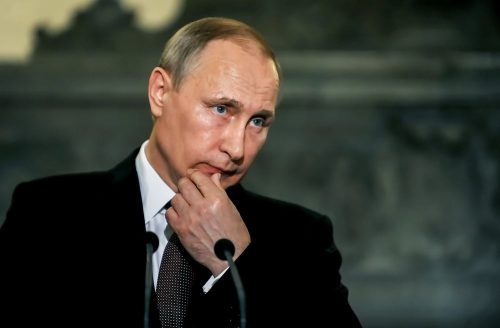
By Ted Snider | The Libertarian Institute | November 27, 2024
On November 21, just two days after Ukraine acted for the first time on American permission to fire Western supplied long-range missiles deeper into Russia, Russia launched a missile attack on a military base in the Ukrainian city of Dnipro. That base houses the missile and space company Pivdenmash, which produces missiles, rockets, satellites and engines.
The attack included six cruise missiles and a Kinzhal hypersonic missile. There is nothing new or unusual about hitting that military target or about using those missiles. But there was something very unusual about the 9M729 Oreshnik missile that was also included in the attack.
The Oreshnik is a new intermediate range ballistic missile that has never been seen or used before. Ted Postol, professor emeritus of Science, Technology, and National Security Policy at the Massachusetts Institute of Technology, calls it an “absolutely new weapon.” Russian President Vladimir Putin called the Orseshnik “experimental” and said that the strike was a test fire.
Though intermediate range ballistic missiles like Oreshnik are typically designed to carry nuclear warheads, the missile used in this attack was armed with conventional warheads.
What is remarkable about the demonstration of the Oreshnik is that it flew at around Mach 10 or 11, making it a hypersonic missile. Unlike ordinary ballistic missiles, this one seemed to increase its range by gliding parallel to the earth during part of its flight path instead of maintaining the expected inverted U-shape ballistic trajectory.
Hypersonic missiles are very hard to hit with air defense systems. This missile may be even harder to hit because it carries six warheads, each of which carries six submunitions, which means that the missile releases thirty-six warheads, probably with the addition of several decoys. Analysts say that each of those thirty-six submunitions may take a different trajectory before hitting the same target. That, and the ability of the thirty-six warheads to overwhelm a missile defense system, make it very hard to intercept all the warheads.
In his televised address, Putin said, “There are no means of countering such weapons today.” Certainly, there are no air defense systems in Ukraine that can defend against them. Putin says that the missile defense systems deployed by the United States in Europe are powerless against them. Analysts suggest that most American air defense systems are not up to the challenge of the Oreshnik missile and that, those that might be, could be overwhelmed by the multiple payload, especially if the first missile was followed by a second.
Russia’s Defense Ministry says that all of the missile’s warheads hit their target, and Putin says that after the successful operational test the Oreshnik missile will go into serial production.
The mainstream media has reported that video evidence suggests that the missile may actually have been carrying only dummy warheads. Ukrainian authorities are investigating that possibility. Postol told me that this interpretation is not quite correct. The missiles were not dummies, but they were not armed with explosives possibly because they did not need to be. At the speed these submunitions are flying at, they liquify when they hit the ground and then expand rapidly. Like a meteor impact, this creates a massive explosion without the need to arm the missiles with explosives.
As the missile delivers multiple warheads, so the warheads delivered multiple messages.
The first is a response to the United States calling Putin’s bluff on declaring Ukraine’s firing of Western long-range missiles deeper into Russian territory with American guidance a red line. The Oreshnik missile ups the ante and shows that Russia was not bluffing.
“Putin made clear,” The New York Times tells the West, “that the Russian missile test was a response to those strikes.” Kremlin spokesman Dmitry Peskov said, “The main message is that the reckless decisions and actions of Western countries that produce missiles, supply them to Ukraine, and subsequently participate in strikes on Russian territory cannot remain without a reaction from the Russian side.”
Most pointedly, Putin said, “We believe that we have the right to use our weapons against the military facilities of those countries that allow their weapons to be used against our facilities.”
The second reason is a response to the American withdrawal from the Intermediate-Range Nuclear Forces (INF) Treaty. That treaty, signed by Mikhail Gorbachev and Ronald Reagan in 1987 and negated by Donald Trump in 2019, would have rendered missiles like the Oreshnik obsolete.
When discussing the first use of the Oreshnik intermediate range ballistic missile, Putin said, “It was not Russia but the United States that destroyed the system of international security,” referring to the American withdrawal from the treaty. He said that by clinging onto “hegemony,” the United States is “pushing the whole world toward a global conflict.”
In a televised address, Putin said, “It is a mistake on the part of the United States to destroy the system that was established by the [INF] missile treaty in 2019. We see that the United States and their allies are now considering, and have successfully tested, their capabilities to deploy advanced missile systems in different parts of the world, and their exercises routinely include the use of such systems…The use of the novel [Oreshnik] system, which was essentially an operational test, was carried out in response to the decisions made by the United States and their allies.”
And that leads into the third reason. Firing the Oreshnik missile was a response to the official U.S. opening of an air defense base in Redzikowo in northern Poland. The Aegis Ashore missile system is capable of intercepting short and intermediate range ballistic missiles. But it is also capable of firing nuclear tipped Tomahawk missiles that would take only minutes to arrive in Russia. Russia also sees it as a provocative move to weaken Russia’s nuclear deterrent potential.
The United States has long claimed that the missiles are not a threat to Russia and that their purpose is to intercept missiles fired from Iran. Russia has never believed that claim. Russia’s suspicion was confirmed when, at the opening ceremony, Polish President Andrzej Duda announced, “The whole world will see clearly that this is not Russia’s sphere of interest anymore.”
Russia has now added the Polish military base to its list of “priority targets for potential destruction.” Russia’s Foreign Ministry spokeswoman, Maria Zakharova, called the opening of the base another step in the “decades-long destructive policy of bringing NATO military infrastructure closer to Russia’s borders.”
Peskov said that Russia would respond to the base by “adopting appropriate measures to ensure parity,” while Zakharova said that military bases like the one in Poland could be destroyed by “a wide range of the latest weapons,” a possible reference to the Oreshnik missile.
Putin seemed to specifically include the Polish base as a motivation for demonstrating the abilities of the Oreshnik missile when he said that “[m]issiles like Oreshnik are our answer to NATO’s plans to deploy medium- and shorter-range missiles in Europe and the Asia-Pacific.”
Though the United States and its Western partners continue to make escalatory decisions on the bet that Vladimir Putin is bluffing with his talk of red lines, the powerful demonstration of the Oreshnik intermediate range, hypersonic ballistic missile is a caution, once again, that the confidence behind that bet might be unfounded.
Moscow to retaliate against Kiev’s ATACMS strikes – Lavrov
RT | November 26, 2024
Moscow will retaliate against continuing Ukrainian strikes on Russian soil with Western-supplied long-range missiles, Russian Foreign Minister Sergey Lavrov said on Wednesday.
His statement came after Kiev fired US-made ATACMS missiles at Russia’s internationally recognized territory, despite an earlier warning from the Kremlin.
“Missile strikes deep inside Russian territory are an escalatory step,” Lavrov told Rossiyskaya Gazeta newspaper. “All of our warnings that these unacceptable actions will be met with an appropriate response have been ignored.”
Those behind attacks on Russian citizens and infrastructure will face “well-deserved punishment,” the minister warned. He added that “no escalation coming from the enemy would force us to abandon our goals” in Ukraine.
Lavrov reiterated that Moscow remains committed to neutralizing “threats to Russia’s security,” including Ukraine’s aspirations to join the US-led NATO alliance.
In a video address last week, Russian President Vladimir Putin said that Moscow “reserves the right” to strike countries that allow Ukraine to use Western-supplied arms against Russia.
The Russian Defense Ministry said on Tuesday that it was preparing an unspecified response to Ukrainian strikes targeting an air defense battery and an airfield in Kursk Region. According to the MOD, Kiev used American-made ATACMS missiles during the attacks on November 23 and November 25.
On November 21, Russia struck a weapons factory in Dnepr with its brand-new Oreshnik ballistic missile. According to Putin, the strike was a response to “aggressive actions of NATO member” who support Ukraine.
The White House confirmed on Monday that it had lifted restrictions on the use of ATACMS by Ukrainian troops. The US previously barred Ukraine from using long-range weapons deep inside Russian territory due to concerns of possible escalation.
The Games of the ICC
By Christopher Black – New Eastern Outlook – November 26, 2024
On November 21, the prosecutor of the ICC announced that a three-judge panel has finally made a decision on his May 2024 application for an arrest warrant for Israeli Prime Minister Netanyahu.
A warrant for his arrest and that of his former Defence Minister, Gallant, has been issued. If an indictment has been drawn up, which should precede an arrest warrant, we are not told and none appears on the ICC website.
Many are celebrating the arrest warrant against Netanyahu and Gallant. But, while there is no doubt that they deserve to be held to account by the Palestinians and the world for the crimes they have and continue to commit in Palestine, Lebanon, Syria and Iran, they are not charged with the crime of genocide, even though they are charged with inflicting mass starvation on the people of Gaza, nor the supreme war crimes of aggression for their continued illegal occupation of Palestinian lands and the brutal suppression of the Palestinian resistance to that occupation. Nor are they charged for their aggression against the sovereign nations of Lebanon, Syria and Iran, which crimes they openly brag about and which are recognised by the entire world, but not, it seems, by the prosecutor or judges of the ICC.
Further, as people calm down in their cheering, they must realise that the ICC has also issued arrest warrants for a leader of Hamas, Mohammed Diab Ibrahim Al-Masri whose alleged war crimes are nothing more than echoes of Israeli propaganda about the Palestinian armed resistance to the brutal occupation of Palestinian lands and the brutal oppression by the occupation forces of the Palestinian people.
Where is the charge of Genocide?
Netanyahu and Gallant are charged with war crimes and crimes against humanity for mass starvation and targeting the civilian population with aerial attacks, and mass attacks by Israeli armoured and other forces.
The ICC press release states,
“Each bear criminal responsibility for the following crimes as co-perpetrators for committing the acts jointly with others: the war crime of starvation as a method of warfare, and the crimes against humanity of murder, persecution, and other inhumane acts.”
“The Chamber also found reasonable grounds to believe that Mr Netanyahu and Mr Gallant each bear criminal responsibility as civilian superiors for the war crime of intentionally directing an attack against the civilian population.”
But these charges also amount to acts of genocide, so why are they not charged with genocide? And why has no indictment been issued? Only the prosecutor and the judges can explain, and they do not.
But aside from pointing out the obvious compromise made by the ICC, to placate its critics about its inaction over Israeli crimes by laying charges yet not laying the most serious charge, the one that should be laid, we have this phrase underlined above which needs to be considered, the phrase, “jointly with others.”
Israel’s Partners in Crime Untouched
Who are the “others”? The ICC coyly refuses to say, hoping no one will ask the question. But the answer is clear: the USA, the EU, UK, France, Canada and the rest, who all give military aid and support to Israeli to carry out these crimes and have made themselves co-belligerents in this murderous war against the peoples of the Middle East, and are its partners in crime. The leaders of those nations must also be charged and warrants issued for their arrest. They are equally culpable under international law. But they are not charged. So that, in his defence, Netanyahu, if he is ever brought before this tribunal, can argue the defence of selective prosecution, that is, he can ask, “why am I charged but not the co-conspirators, the co-actors who supported and encouraged my crimes. It is not just to charge me if they are not going to be charged.”
He would be right to use that defence, and perhaps the prosecutor has arranged it so that Netanyahu and Gallant now have that defence available to them.
Political Purpose of the Warrants
But we know that Netanyahu will never be arrested and face a trial at this so-called world court. The Americans immediately came to his defence and denounced the action of the ICC. They have to because if Netanyahu is ever before the judges of the ICC, they fear the facts about their role in the crimes against the Palestinians and the others will be revealed in all their detail and depravity. The British, the French, and the Canadians will have their dirty crimes exposed as well. None of the allies of Israel want Netanyahu arrested and tried. So he will not be. The ICC knows this.
So why was the warrant finally issued after so long a delay, after so much political interference was exerted by Britain, the US, the French and others to prevent the ICC from issuing charges?
We can only speculate, as we are not privy to the phone calls between Mr. Khan and the various governments involved in these crimes, and how it was all arranged, but it was a political decision of a political prosecutor of a political tribunal.
One reason can be to improve the image of the ICC, to make it look like it is doing something, while, in effect, nothing is done to change the situation for the Palestinians, the Lebanese, the Iranians, and the Syrians. It will placate some who support the Palestinians, who think the ICC is a real court, and perhaps it is hoped that this will reduce the street protests across Europe and elsewhere. No need now the ICC will say, we have acted, and you can go home now.
The ICC attempts to justify its charges against Russia
But there is another reason, and that is to trick people into thinking the ICC is some real arbiter of international justice and therefore the arrest warrants the ICC issued against President Putin and others are valid and should be acted upon.
The ICC has issued warrants of arrest of a series of Russian officials over the past few months; we suppose to keep the pot boiling, each as absurd as the one before it.
On 17 March 2023, the ICC issued warrants for Vladimir Putin, President of the Russian Federation, and Ms Maria Alekseyevna Lvova-Belova, Commissioner for Children’s Rights in the Office of the President of the Russian Federation. Based on the Prosecution’s applications of 22 February 2023, Pre-Trial Chamber II considered that there are reasonable grounds to believe that each suspect bears responsibility for the war crime of unlawful deportation of population (children) and that of unlawful transfer of population (children) from occupied areas of Ukraine to the Russian Federation, in prejudice of Ukrainian children.
The absurdity of these charges and warrants, based solely on Kiev propaganda about Russia’s attempts to save the lives of children, is manifest. It is also clear that they did not charge President Putin with aggression because there has been none, and so they decided to use the most emotive charge possible to inflame public opinion against Russia. In other words, the ICC became an active tool of NATO in its war against Russia.
On 5 March 2024, the ICC issued warrants of arrest for Sergei Ivanovich Kobylash, a Lieutenant General in the Russian Armed Forces who at the relevant time was the Commander of the Long-Range Aviation of the Aerospace Force, and Viktor Nikolayevich Sokolov, an Admiral in the Russian Navy, who at the relevant time was the Commander of the Black Sea Fleet for the war crime of directing attacks at civilian objects, the war crime of causing excessive incidental harm to civilians or damage to civilian objects, and the crime against humanity of inhumane acts. None of these allegations are based on any facts or any investigation and meant to be propaganda.
On 24 June 2024, the ICC issued warrants of arrest Sergei Shoigu and Valery Gerasimov, in the context of the situation in Ukraine for alleged international crimes committed from at least 10 October 2022 until at least 9 March 2023 for the same reasons, war propaganda, to justify the continuance of the war against Russia.
Ukraine leadership given immunity from prosecution for its crimes
The ICC has not charged anyone in the illegitimate government of Ukraine for any of its crimes against the civilian population of Ukraine in the Donbass oblasts from 2014 to today, nor for its gratuitous attacks on the civilian population of Russia. It has been given immunity from prosecution.
The only legitimate prosecutors are the Palestinians, Lebanese, Iranians and Syrians for Israeli crimes committed against them.
So, all those celebrating and cheering the warrants issued against Netanyahu and Gallant should think carefully about what they are doing. Yes, those two are war criminals. Yes, they should be held accountable, but to the Palestinians and the Lebanese, the Syrians and Iranians. They are the ones who should be issuing warrants for their arrest, who should make them stand trial before the tribunals of those nations, as well as the leaders of the USA and the other nations who are parties to the Israeli crimes not this political farce called the ICC which is not a world court, which is not an independent judicial body capable of rendering justice, but a political tool of the West, used by the West for its own political and strategic reasons and objectives. The world is tired of the games of the ICC. The people of the world want real justice.
Christopher Black is an international criminal lawyer based in Toronto. He is known for a number of high-profile war crimes cases and recently published his novel Beneath the Clouds. He writes essays on international law, politics and world events.
Türkiye protests latest US sanctions against Russia
RT | November 26, 2024
Türkiye is currently in talks with the US to secure a sanctions waiver that would allow it to continue using Russia’s Gazprombank to pay for natural gas imports, the country’s Energy Minister Alparslan Bayraktar told reporters on Monday.
Last week, the US Treasury Department imposed restrictions on more than 50 Russian financial institutions, including Gazprombank, which is linked to the eponymous Russian gas giant, and six of its international subsidiaries. The sanctions have effectively cut off Russia’s primary bank for energy-related transactions from the SWIFT interbank messaging system, meaning it can no longer be used for dollar-based transactions.
According to Bayraktar, unless a special exemption is made, Türkiye, which imports nearly all of its gas, won’t be able to pay Moscow for natural resources. Russia currently accounts for more than 50% of the country’s pipeline imports, according to Reuters.
In his comments, Bayraktar pointed to a previous waiver granted to Ankara when Washington had sanctioned Iran in 2012. At the time, the sanctions against Tehran included a clause that allowed the US President to issue a special exemption if an oil-importing country faced “exceptional circumstances” that made it impossible to reduce Iranian oil imports. Bayraktar has argued that Türkiye now needs a similar waiver for Gazprombank in order to secure its supply of natural gas.
“These sanctions will affect Turkey. We cannot pay. If we cannot pay, we cannot buy the goods. The foreign ministry is in talks,” Bayraktar said.
The latest US sanctions have also sparked disdain among several other European buyers of Russian gas. Last week, Hungarian Foreign Minister Peter Szijjarto accused Washington of trying to undermine energy security in the Central European region by imposing restrictions on Gazprombank.
In a post on Facebook, the diplomat stated that any attempts to jeopardize energy supplies to Hungary are “considered as an offence against our sovereignty” and stressed that Budapest denounces all such attacks and has vowed to “resist the pressure and pursue our national interests.”
He added that Hungary is currently in talks with other countries, such as Bulgaria, Serbia, Azerbaijan and Slovakia in hopes of finding a solution for securing energy supplies.
Meanwhile, despite the EU announcing plans to eliminate its dependence on Russian energy, it has remained one of the world’s major importers of Russian fossil fuels while its members have purchased record volumes of liquified natural gas (LNG) from Moscow.
Featured Video

Yemen joins the war – Red Sea could be blocked next – Saudi regime at risk
or go to
Aletho News Archives – Video-Images
From the Archives
A superpower and “the world’s sickest warrior state”
By Paul J. Balles | March 8, 2010
Living through five or six major wars has hardened me to what I thought were the extremes of inhuman cruelty and brutality.
Two things made those extremes almost bearable: the brutality always revealed – at least according to the media coverage – the viciousness of the enemy. It was therefore quite understandable when our “brave men and women” pulverized the enemy.
Films of Japanese torturing captive Americans somehow justified holding Japanese Americans in internment camps during World War II; and only a small percentage of Americans found the bombing of Hiroshima and Nagasaki unreasonably vengeful at best, at worst, depraved.
The media giants in America portrayed the North Koreans as barbaric beasts with their captives, quite unlike their southern counterpoints – our allies during the Korean War. No one ever felt the need to explain how the South Koreans were a civilized breed while the North Koreans were absolute savages, at least according to the official line.
In Vietnam, our warriors justifiably (or so the media made us believe) dropped napalm on the North Vietnamese who had the gall to hide in villages and tunnels to ravage our invaders. At least it was accepted practice until some rogue photojournalist filmed a young girl screaming down a Vietnamese road in flames. … continue
Blog Roll
 Aletho News
- America Racing to Strategic Defeat in Iran: Lt Col Daniel Davis
- FTC Warns Visa, Mastercard, PayPal, Stripe Over Political Debanking
- Russian tanker approaches Cuba despite US oil blockade
- Marandi: Yemen joins the war – Red Sea could be blocked next – Saudi regime at risk
- Pro-Palestinian French member of European Parliament denied entry to Canada
- Pakistan to Host US-Iran Talks
- How Indonesia’s tilt toward the US left it stranded in the Strait of Hormuz
- US has no choice but to retreat from Iranian borders: Top commander
- Iran Retaliation Strikes Chemical Plant Near Dimona
- AWACS’ Destruction is a Major Loss for US Military – Ex-DoW Analyst
- If Americans Knew
- Israeli police block Catholic cardinal from entering Church of the Holy Sepulchre on Palm Sunday
- Israel is assassinating journalists again, more than any other nation, anywhere, ever – Not a ceasefire Day 170
- Over 300 US service members wounded, majority have brain injuries – Not a ceasefire Day 169
- Researchers at Human Rights Watch Resign Over Blocked Report on Palestinian Refugee Return
- Jewish Groups Are Backing a War Americans Don’t Want
- Eric Fingerhut Thinks He’s the President of the Jews
- Top Jewish Philanthropists, Rabbis Urge Israeli President to Take Action Against ‘Jewish Extremists’
- Don’t Be Fooled. Zionist Leaders Have Always Wanted to Control Southern Lebanon
- Israel’s widespread use of torture is a core element of its genocide against the Palestinian people
- In Israel’s War on Iran, Many Middle East US Bases Rendered “All But Uninhabitable”
- No Tricks Zone
- New Study Finds Warming Saves Lives…Cold Temperatures 12 Times More Deadly Than Excess Heat
- German Science Blog Accuses PIK Climate Institute Of Hallucinating Climate Tipping Points
- Devastating Assessment Of Comirnaty Vaccine By Former Senior Pfizer Europe Toxicologist
- New Study: CO2 Is ‘Effectively Negligible’ As An Explanatory Climate Change Factor Since 2000
- Former Pfizer Toxicologist Dr. Helmut Sterz Tells Bundestag Hearing Pfizer Vaccine Should Have Never Been Approved
- Energy Expert: Germany’s Nuclear Phaseout Was A “500 Billion Euro Mistake”
- New Research: South Australia’s Mid-Holocene Sea Surface Temperatures Were 4°C Warmer Than Today
- Storing Green Energy To Last Germany 10 Days Would Require A 60-Million Tonne Battery
- New Studies: UK Sea Levels Were 4 Meters Higher Than Today During The Mid-Holocene
- Destructive Green New Deal: German Energy And Metal Group Warns Of Drastic Crisis
 Aletho News