Erdogan, Assad to hold historic meeting in Moscow
Al Mayadeen | July 22, 2024
The first official meeting between Turkish President Recep Tayyip Erdogan and Syrian President Bashar al-Assad is set to take place in Moscow, the Daily Sabah reported citing sources familiar with the discussions.
The meeting, which is expected to occur as early as August, will be mediated by Russian President Vladimir Putin.
Iraqi Prime Minister Mohammed Shia al-Sudani may also be invited, though it is anticipated that Iran will not participate in the talks.
Following the outbreak of the war on Syria in 2011, relations between the two countries deteriorated due to Turkey’s military presence in Syria and the ongoing conflict with the PKK.
Rapprochement efforts last year faltered over Syria’s demand for the withdrawal of Turkish troops, which Ankara resisted due to security concerns.
Recent developments, including Damascus’ return to the international stage and Syia’s readmission to the Arab League, alongside shifting dynamics such as the upcoming US elections and increasing domestic discontent in Turkey regarding Syrian refugees, have paved the way for renewed dialogue.
Could Trump’s election end NATO’s proxy war in Ukraine against Russia?
Strategic Culture Foundation | July 19, 2024
The presidential nomination of Donald Trump and Senator JD Vance as his running mate raises the prospect of a peaceful settlement to the conflict in Ukraine. Both have been vociferous critics of the NATO proxy war and the arming of the Kiev regime. Vance has even proposed a peace settlement that is close to Moscow’s demands.
Hungarian Prime Minister Viktor Orban, who is recently pushing peace diplomacy, has voiced optimism that the omens are good for a settlement later this year to the worst war in Europe since the Second World War – if Trump and Vance are elected.
Only days after Donald Trump narrowly survived an assassination attempt, he was officially nominated as the Republican presidential candidate amid ecstatic scenes at the Republican National Convention in Milwaukee.
After the tumult and drama over the last week – a long time in politics, as the saying goes – the Trump election campaign is in the driving seat. His vice presidential running mate is 39 years of age and gives the Republican Party a youthful zest. Both men are very much singing from the same hymn sheet regarding their “Make America Great Again” vision.
Trump has united the GOP under his leadership. All former party rivals lined up this week in Milwaukee to endorse the former real estate magnate in his bid to seek re-election to the White House in November. That helps to solidify his manifesto, which bodes well for diplomacy in Ukraine.
By contrast, the election campaign of Democrat incumbent President Joe Biden has run into a ditch. This week he was self-isolating in Delaware having reportedly incurred a third-time Covid infection. Biden increasingly looks toast. His apparent mental decline – the latest gaffe this week was not remembering the name of his Secretary of Defense Lloyd Austin, referring to him haltingly as “a black man” – has provoked a crisis in the Democratic Party and the largely favorable U.S. corporate news media. Senior figures including former President Barack Obama and House Speaker Nancy Pelosi, are reportedly urging Biden to stand down and pass the torch to a younger candidate. Panic is in the air.
There are reports that Biden may throw in the towel within the next few days as the Democrats head into their National Convention to officially nominate their presidential candidate. The trouble for the Democrats is they do not have a viable alternative candidate at this late stage in the campaign – with less than four months to election day on November 7.
That means there is now a serious chance that Trump could return to the White House after he lost the election in 2020, which MAGA loyalists hotly disputed as “stolen”.
That election outcome turns attention to one issue in particular: the war in Ukraine. The conflict erupted in February 2022 and has cost the lives of over 500,000 Ukrainian soldiers. Under the Biden administration and aligned European NATO members, there is no sign of the war coming to an end. Biden and European allies have pledged to keep sending weapons to Ukraine and tens of billions of dollars to prop up a hopelessly corrupt NeoNazi regime in Kiev.
Trump and Vance have pitched a diametrically opposite policy on the U.S.-led NATO proxy war in Ukraine.
That stance is causing the Deep State and its military-industrial complex acute anxiety. The Ukraine war racket has been a bonanza that vested interests in the U.S. ruling class do not want to end. That tension provides a plausible explanation for the attempted assassination of Trump during an open-air rally at Butler, Pennsylvania, on July 13. Salient questions remain about how the shooter, Thomas Matthew Crooks, a 20-year-old student, gained access to such a high-security position to fire his rifle at Trump.
The Republican candidates have warned that the Ukraine conflict is in danger of spiraling into a nuclear world war. Trump has said that he would end the war immediately by cutting off the military aid spigot and forcing the Kiev regime to begin negotiations with Russia.
Tantalizingly, JD Vance (R-Ohio) has been even more explicit in proposing that the warring parties should accept the territorial gains made by Russia – including Crimea, Donbass, Zaporozhye and Kherson provinces – and that Ukraine must accept Moscow’s demand that it remain neutral and outside of the NATO alliance.
Such a position is a breath of fresh air for its rationality. Many respected American scholars and diplomats have also recommended this historically coherent position as a solution, including Professors John Mearsheimer and Jeffrey Sachs. At least Trump and Vance seem to be cognizant of this reality, unlike the Biden administration and the rest of the Democrat Party, along with the Western media establishment and European minions who insanely push a fraudulent war to the last Ukrainian.
Moreover, polls show that the majority of American citizens (and Europeans) would prefer to see a diplomatic solution to the worst war in Europe since 1945.
Hungary’s Orban has admirably advocated peaceful diplomacy and for his troubles, his government has been sanctioned by the European Union establishment. Slovakia’s Robert Fico has also called for an end to the war in Ukraine, which many believe led to an assassination attempt on his life in May.
The conflict in Ukraine is a senseless, bloody slaughter that should never have escalated if Russia’s peace proposals in December 2021 had been accepted instead of dismissed out of hand by the Biden administration and its NATO lackeys in Europe. Also, a peace deal was possible in April 2022 but again was scuppered by malicious U.S. and British intervention.
If an American presidential candidate is proposing a diplomatic end to the conflict then that should be welcomed. It seems that common sense is prevailing.
Having said that, however, there are caveats. The Trump-Vance rhetoric could be empty pre-election canvassing for votes.
Trump’s record is one of hyping expectations and not delivering. When he ran for the presidency in 2016, he promised to normalize relations with Russia – and did not deliver.
He also boasted about solving the conflict in the Middle East with a “deal of the century” – only to embolden Israeli aggression towards Palestinians and Iran.
A reality check is strongly advised on what Trump and Vance can achieve.
While both men express skepticism about “endless wars” and NATO, it should be borne in mind that the conflicts the U.S. empire is fueling have a systematic cause. The United States is desperately fighting to maintain its failing hegemony against the rise of a multipolar and more democratic global order.
Washington and its European vassals are unleashing wars as a matter of necessity for preserving their erstwhile global dominance. History teaches that wars are always the refuge of the Western imperialist ruling classes.
It is notable that while Trump and Vance talk about ending conflict in Ukraine, they are at the same time talking belligerently about confronting China and Iran.
Trump and the MAGA Republicans are deprecated by the U.S. establishment as being “isolationists” in their vision of pursuing “America First”.
But the notion of “isolationalism” is an oxymoron when one considers the objective reality of U.S. imperialism. Foreign wars are an insatiable appetite for Western dominance.
American relations with the rest of the world are all about power projection, dominance and ultimately using violence to assert its “might is right” presumed national privileges. That applies whether the incumbent in the White House is a Democrat or Republican.
Trump may sound more reasonable on the issue of conflict in Ukraine with Russia. That alone makes him a more plausible candidate compared with the reckless warmongering of Biden and the Democrat-Deep State nexus.
The war in Ukraine must be stopped as soon as possible and a more reasonable security arrangement for Europe must be negotiated as Russia has long been consistently advocating.
Any diplomatic opening towards achieving peace and ending the killing must be welcomed.
Trump and Vance might just deliver on ending the hostilities in Ukraine which in itself would be a huge step forward away from the abyss of all-out war with Russia. On that score alone, their election might bring about an improvement.
But alas there is a contradiction. Don’t expect world peace to break out in other parts of the globe, because U.S. imperialism is cranking up its war machine. Trump and Vance are hawkish in their policy towards China and Iran.
A comprehensive solution to ending U.S. aggression and militarism is not a change of personnel at the White House. A profound, systematic change in American politics and economics is required.
Is partial peace sufficient? Maybe it is for now.
US Missiles in Germany Again: Why Is Berlin Betraying Its National Interests?
By Dmitry Babich – Sputnik – 19.07.2024
The decision of Washington to start in 2026 the deployment in Germany of US missiles aimed at Russia was not even discussed in Berlin. The public was forced to face a fait accompli. This is a clear degradation of Germany’s standing vis-a-vis the US, compared to the ’80s. Then, a similar deployment was met with protests of West Germany’s citizens.
The governments of both the US and Germany confirmed that in 2026, the American side will begin deploying long-range missiles in Germany. This dangerous move, reminiscent of the worst years of the Cold War, is officially explained by the need to contain “resurgent Russia.”
Gunnar Beck, an expert on European law and former vice president of Identity and Democracy group in the European Parliament, notes that there was no public discussion of this dangerous development in Germany, specifically no discussion in the Bundestag. No details of the deal have been revealed.
“It’s a fait accompli,” Beck told Sputnik. “The German and the US governments have announced they were considering this… But all of the talk of an imminent Russian threat to Europe, in my view, is just a pretext for justifying further military and financial assistance to Ukraine. And, of course, it is a pretext for intimidating the European population and forcing them to accept even larger amounts of military spending.”
Beck notes the few dissenting voices still audible in Germany belong to the parties, which the European Union and especially the European Commission’s chairwoman Ursula von der Leyen try to marginalize:
“There are people on the right and on the far-left which have been criticizing [the deployment]. The German public, by and large, is not war loving. But, of course, there is a lot of propaganda emphasizing that any attack against Ukraine is an attack against Europe as a whole – it is the position of the EU and German government,” Beck told Sputnik.
The situation is reminiscent of the early 1980s, when the US deployed Pershing missiles in West Germany – presumably countering a possible aggression by the Soviet Union. The only difference is that this time Americans promise not to put nuclear warheads on SM-6 missiles, Tomahawks and even some “hypersonic weapons.” These missiles will be carrying conventional warheads that will still make Germany a target for a Russian retaliation starting from 2026.
Beck indicated that American and West German propaganda of that epoch used the same arguments as now. It was said the ability of NATO allies to protect themselves was the best guarantee for peace, etc., but in both cases it was misleading propaganda based on fears and not facts:
“Up to 1987 the propaganda in West Germany evoked the specter of millions of Soviet soldiers stationed in East Germany … that they would all flood into West Germany and occupy the country within three days,” Beck told Sputnik. “The kind of propaganda we are exposed to now is very reminiscent of this. We know today, and we have known for some time already that everything we were told in the 1980s was a great deal of nonsense. There was no evidence whatsoever of a consistently aggressive strategy by the Soviet Union.”
Indeed, Moscow acquiesced to the reunification of Germany in 1990 and withdrew its troops from East Germany in 1994 without a single shot fired. Unfortunately, it is often forgotten now that these concessions were part of the “Two plus four” agreement, whose terms Germany and three other signatories are breaching now.
It was signed on September 12, 1990, by the two (East Germany and West Germany) plus four (the Soviet Union, USA, the UK and France, former members of the anti-Hitler coalition).
Moscow then obliged itself not to prevent the reunification of Germany and to withdraw its troops by 1994 from the territory of the late German Democratic Republic. Both obligations were fulfilled. Now, here is how the obligations of Western powers were breached, in the words of Beck:
“No foreign weapons could be deployed in East Germany… And both German states then agreed that the united Germany would only deploy weapons on its territory if it is done in accordance with Germany’s constitution and the Charter of the United Nations. So, unless there is a UN Security Council resolution, it is a very debatable issue whether Germany can allow the deployment of new weapons that increase the risk of war.”
It should be noted that the German constitution prohibits the supplies of German weapons to the zones of armed conflict. However, Berlin is officially “pumping up” Volodymyr Zelensky’s regime with weapons worth tens of billions of euros.
Beck states the subsequent events showed the deceitful nature of the Western propaganda of the 1980s: Moscow indeed had no intention of invading Europe and withdrew from Germany at the first opportunity. Unfortunately, its goodwill was abused by Western allies.
Now, many Germans suspect a “remake” of the that deceitful intimidation: a poll conducted by Forsa Institute revealed 47% of Germans think the planned deployment of US weapons will only increase the possibility of a Russia-NATO conflict.
However, Beck notes this substantial part of German public opinion is not organized and its will has no chance of influencing the European Commission – or even the government of Germany.
Russia Ready for Ukraine Peace Talks With Focus on Clear Security Agreements
Sputnik – 17.07.2024
Russia is ready for negotiations on Ukraine and European security issues and will incorporate safeguards against dual interpretations in any future European security treaty said Russian Foreign Minister Sergey Lavrov.
“We are ready for negotiations, but considering the sad experience of talks and consultations with the West and Ukrainians… I hope a treaty will be reached at some stage on European security, and in this context the Ukraine crisis will be resolved,” Lavrov stated during a press conference following a UN Security Council meeting.
“We will, of course, be very careful with the wording and will incorporate safeguards into this document against repeated unscrupulous, unreliable interpretations,” the foreign minister added.
Lavrov emphasized that, unlike China, the West does not address the root causes of the conflict in its initiatives on Ukraine.
“This already concerns the content of the dialogue; China has very clearly indicated in its first initiative the need to start with addressing the root causes of the current crisis in Europe and to work on agreements to eliminate these causes,” he said.
He noted that “no one at the Copenhagen or Burgenstock meetings even mentioned the root causes.”
Thus, the West is trying to push through Volodymyr Zelensky’s plan by all possible means.
“A course has been set to push through at any cost the so-called Zelensky plan, which has a clearly defined form of an ultimatum,” Lavrov emphasized.
Lavrov’s comments were in response to a question about Russia’s possible participation in the second summit on the Ukraine conflict and the outcomes of the recent conference in Switzerland.
On Russia-US Unofficial Contacts Regarding Ukraine
Russia and the United States have held unofficial and so-called “second level” expert level contacts to discuss issues related to the conflict in Ukraine, Minister Lavrov added.
“I will tell you in confidence — we have had unofficial contacts with the Americans involving political experts, political experts who know each other and understand the policies of their governments,” Lavrov told the press conference, adding that Ukraine was on the agenda of such contacts.
Despite the fact that the two countries are holding phone conversations from time to time, there is nothing significant in these talks, he noted.
On Russia’s Readiness to Work With a New US President
Russia will be ready to work with any elected president of the United States, the foreign minister claimed.
“Once again I want to say: we will work, we will be ready to work with any American leader that the American people elect and who … will be ready for an equal, mutually respectful dialogue,” Lavrov said at the press event.
On Israel Seeking to Involve the US in Regional Escalation
It appears that Israel’s goal is to involve the United States in the escalation of tensions with Iran, the minister observed.
“The sense is that they want to provoke them into full-scale involvement with Hezbollah. The purpose of such a provocation, analysts suggest, is to draw the United States directly into the involvement of its armed forces in this [regional] conflict,” Lavrov emphasized.
Russia hopes the West will do everything to ensure that such ideas, “if they exist in the Israeli leadership,” will remain only ideas.
Moscow is doing everything to “calm down the situation,” Lavrov added.
On the Nord Stream Explosions
Russia will continue seeking the truth regarding the explosions of the Nord Stream gas pipelines, Lavrov said.
“We will pursue the truth – since I’ve mentioned the Nord Streams, we’re going to seek the truth,” he highlighted.
Kremlin Saw Nothing ‘Particularly Good’ for Russia in Trump Presidency, But Dialogue Existed
Sputnik – 17.07.2024
MOSCOW – During the presidency of Donald Trump in the United States, nothing particularly good was done for Russia, new restrictions were introduced, but there was a dialogue between the two countries, Kremlin spokesman Dmitry Peskov said on Wednesday.
“Under Trump, nothing particularly good was done for Russia; on the contrary, more and more restrictions were introduced under Trump. But, nevertheless, there was a dialogue,” Peskov told reporters.
The topics of Russia and personally Russian President Vladimir Putin became an integral part of the US election campaign, Kremlin spokesman said.
“Traditionally, during the election campaign of the United States, especially in recent years, Russia and President Putin personally are an integral part of this election campaign. The topic of Putin and the topic of Russia is always on the agenda in election debates,” Peskov told reporters.
The Kremlin does not share the forecasts of Polish President Andrzej Duda that Russia’s victory in Ukraine could lead to a war against the West, Peskov said.
“No, we do not share such forecasts,” he told reporters.
US claims Russia threatened by ‘democracy’

RT | July 16, 2024
State Department spokesman Matthew Miller has rejected Russian Foreign Minister Sergey Lavrov’s call for resolving the “root causes” of the Ukraine conflict, arguing that Moscow illegitimately fears a “functioning democracy” in Kiev.
Lavrov spoke at the UN Security Council in New York on Tuesday, describing Russia’s military action in Ukraine as the consequence of a security threat by the US and its allies.
“The problem with the formulation from the foreign minister is that there’s no one in Europe that is threatening Russia,” Miller said at a State Department press briefing. He insisted that there is no military threat to Russia by NATO and that no one has threatened to take Russian territory.
“What Russia seems to see as a threat is a democracy functioning on its borders. And that’s just not a legitimate view,” Miller added. “We reject that view.”
Miller did not specify which country he considered a functioning democracy. Multiple US officials and foreign policy pundits have described Ukraine that way in the past, especially following the 2014 US-backed coup in Kiev.
The new Ukrainian authorities, “midwifed” into place by US envoy Victoria Nuland, sicced nationalist militias to kill and intimidate dissidents in Odessa and Kharkov, while triggering a civil war by sending tanks to pacify Donetsk and Lugansk.
Since Russia intervened in February 2022, Vladimir Zelensky’s government has suspended all elections and banned most opposition parties, while taking control of all TV stations. Zelensky’s own term expired in May.
Last month, at the so-called “Peace for Ukraine” conference in Switzerland convened by Zelensky, Polish President Andrzej Duda called for dismembering Russia, describing the federation as a “prison of nations.”
“Russia remains the largest colonial empire in the world,” Duda argued, advocating for his neighbor to be “decolonized” among some 200 ethnic groups living there.
In late 2021, Moscow sent the US and NATO a comprehensive security proposal in line with existing international treaties. In February 2022, Washington and Brussels rejected it, ignoring what Russia described as its “red lines,” at which point Moscow said it would have no choice but to resort to “military and technical measures.”
Russia also considers Ukraine to be unlawfully occupying parts of the Donetsk People’s Republic, Kherson and Zaporozhye regions, all of which voted last September to join Russia. President Vladimir Putin has conditioned any ceasefire talks on Kiev’s withdrawal from the administrative borders of these regions and a legal commitment to never join NATO.
Germany secretly sent ‘huge arms package’ to Ukraine – media
RT | July 15, 2024
The German government secretly delivered a new aid package to Ukraine between late June and early July, the Bavarian daily Munchner Merkur reported on Monday. The paper called the shipment “huge,” adding that it was done in a clandestine manner and went “largely unnoticed.”
The package included 39 pieces of various heavy armor from the stocks of Germany’s military and of its defense enterprises, Merkur reported, after analyzing government data. Kiev received ten more Leopard 1A5 main battle tanks and 20 more Marder infantry fighting vehicles (IFVs), among other extra donations, the outlet said.
According to open data published by Chancellor Olaf Scholz’s cabinet, the total number of Leopard 1A5 tanks and Marder IFVs delivered to Ukraine has grown to 50 and 120 respectively.
Other heavy equipment included in the latest delivery involved various engineering and mine-clearing vehicles, according to the report. The package also included 55,000 155mm artillery rounds, according to the government data.
It also showed that Berlin plans to send, by an unspecified date, 85 more Leopard 1A5 tanks to Ukraine, as part of a joint project with Denmark. The future deliveries are also to include 20 additional Marder IFVs. Merkur reported that Berlin had planned to provide Ukraine with up to 80 Leopards by the end of 2023 but fell behind schedule as the nation’s defense industry struggled to find spare parts for the armor pieces.
According to Merkur, Kiev is still hoping to get enough German tanks to form a specialized brigade for offensive operations and has been “holding back” its remaining western tanks for months.
The Russian military has previously published numerous videos showing German tanks being destroyed with kamikaze drones or even captured by Russian soldiers after being abandoned by their crews.
The latest batch of weapons also included two ground-based IRIS-T air defense systems and three US-made HIMARS multiple rocket launchers. In May, German Defense Minister Boris Pistorius vowed Berlin would pay for the delivery of the US-made systems to Ukraine.
Germany has emerged as the second largest single military donor to Ukraine throughout the conflict, spending some €10.2 billion ($11.14 billion) on providing arms to Kiev between January 2022 and April 2024, according to the Kiel Institute for the World Economy. Berlin has said some €28 billion ($30.5 billion) has been made available to support Kiev now and in the coming years.
In June, Chancellor Scholz admitted that many Germans were unhappy with the nation’s military support of Ukraine, but he maintained that there was no alternative to arming Kiev. In July, Ukraine’s Vladimir Zelensky stated that his country would “never” have enough weapons.
NATO chief explains why Poland won’t intercept Russian missiles
RT | July 15, 2024
NATO Secretary General Jens Stoltenberg has ruled out the possibility of Poland intercepting Russian missiles over Ukrainian territory, insisting that the bloc does not want to become directly involved in the conflict with Moscow.
Kiev has urged NATO member Warsaw to use its air defense capabilities to protect western Ukraine without moving the systems away from Polish soil. The idea was floated in the context of a recent Polish-Ukrainian bilateral security agreement, and was reportedly discussed at last week’s NATO summit in Washington.
In an interview given on the sidelines of the event for Ukrainian state television, Stoltenberg said NATO’s position had not changed, and that the best that Kiev can expect is help in targeting Russian warplanes with weapon systems operated by Ukrainian forces.
The idea of NATO intercepting Russian missiles over Ukraine was previously rejected by member states, including Poland. Defense Minister Wladyslaw Kosiniak-Kamysz has said that Warsaw won’t engage Russian missiles without the backing of other members.
“If NATO does not make such a decision, Poland will not make it individually,” the minister stressed.
US national security adviser Jake Sullivan claimed that providing air defenses to Kiev is “by far and away the best method of stopping the Russian aerial attacks,” when asked about Poland’s stance last week.
Moscow has described the Ukraine conflict as part of a US-led proxy war, in which NATO nations are involved in every way except by directly fighting Russian forces on the battlefield. Being de facto parties to the hostilities means Western nations share responsibility for Ukrainian war crimes, Russian officials have argued.
Orban delivers Ukraine peace proposals to EU – adviser
RT | July 15, 2024
Hungarian Prime Minister Viktor Orban has sent proposals to EU leaders on ways to resolve the Ukrainian conflict, newspaper Magyar Nemzet reported on Monday, citing the PM’s political adviser Balazs Orban. The proposals are said to be based on the results of the premier’s controversial peace mission earlier this month, during which he visited Ukraine, Russia, and China.
Orban provided EU leaders with a detailed account of his visits, and delivered Budapest’s action plan to their desks, Balazs Orban (no relation) told the newspaper.
The adviser described Budapest’s proposals as being “based on a realistic assessment of the situation” and on setting “realistic goals,” without elaborating further.
Balazs Orban claimed that there are “pro-war” political forces in the EU, and that the bloc is following the lead of the current US administration, which, he said, wants the conflict to continue.
”If Europe wants peace and wants to have a decisive say in the settlement of the war [in Ukraine] and the end of the bloodshed, then the change of course must be worked out and implemented now,” the adviser said.
Hungary is one of the few member states to criticize the bloc’s stance on the conflict. Budapest has refused to go along with Brussels and send weapons to Kiev. It has also stalled financial aid to Ukraine. Viktor Orban’s recent visit to Moscow was condemned by senior EU figures, with Brussels seeking to distance itself from Orban’s efforts.
According to the prime minister’s adviser, external mediators, such as China and Türkiye, could be vital to helping negotiate peace.
Hungary plans to use the six months of its rotating presidency of the, which began in July, to create conditions for peace talks. “If the union does not act now, it may not be able to act later,” Balazs Orban warned.
During his visit to Kiev, the Hungarian leader called on Ukraine’s Vladimir Zelensky to agree to a ceasefire with Russia, a proposal the latter rejected.
President Putin has repeatedly insisted that the hostilities can only end if Ukraine fulfills several of Russia’s demands – including legally binding guarantees that Kiev will not seek NATO membership, and the withdrawal of troops from the whole of Donbass, as well as the Zaporozhye and Kherson regions.
Kiev, along with its Western backers, have rejected the proposal, calling it an unacceptable ultimatum.
Russia could challenge NATO’s historical air dominance – media
By Ahmed Adel | July 15, 2024
Business Insider reported that NATO had never faced an adversary of Russia’s calibre after World War II, and it would have been difficult for the alliance to establish air superiority over Russian forces. The warning comes as experts have explained the sombre reality that the F-16 fighter jets, a key aircraft in many NATO air force fleets, provided to Kiev will not be a “magic bullet” that Ukrainian President Volodymyr Zelensky and his Western allies expect them to be.
“Russia could challenge NATO’s historical air dominance,” reported the media on July 13 after explaining that this is a change from the scenario that emerged after the Cold War when the West had a clear advantage. “Russia would be a very different opponent. It has the territory and industry to build and field massive and sophisticated air defenses that an opponent may struggle to destroy.”
“The US and its allies, even with fleets of fifth-generation stealth fighter jets, likely would find it difficult to establish the same level of air dominance they’ve largely had since the end of World War II,” the New York-based outlet said.
According to experts cited by the portal, Western aviation has never had the experience of combating air defence systems at a level similar to that of Russia’s. During the conflict in Ukraine, the Russian military proved that it could establish extremely difficult air defence areas for the enemy with powerful radars, electronic warfare systems and missiles.
“The Russians could attempt a surprising and impactful opening attack,” the article warned. “For example, the Russians could target vulnerabilities like satellites to try to disrupt the space-based communications and navigation NATO airpower depends upon.”
The worry that Russia could establish air superiority over NATO, particularly over the bloc’s 30 European members, became a more serious consideration after Russian forces methodically obliterated Ukraine’s air force. Russia so impressively dismantled the Ukrainian air force that the Kiev regime is desperately seeking F-16 fighter jets from Western allies to replenish its fleet, even though experts are saying that the aircraft is now obsolete and unlikely to survive the conflict.
“As soon as the Ukrainians encountered Russian-controlled air space, the F-16’s value would diminish markedly, as would its likelihood of survival,” Harrison Kass wrote for the National Interest. “In a conflict with a great power, China for example, the F-16 would remain on the backbench.”
This is a telling revelation considering the US still uses over 900 F-16s, NATO members, including Turkey, Greece, Poland, and Romania, use hundreds more, as well as US non-NATO allies Israel, Taiwan and South Korea. In effect, the F-16 would be rendered almost useless against Russia given that the Eastern European country’s military is ranked second, one above China, according to the 2024 PowerIndex.
Kass warns Kiev that the good performance of the F-16 fighter jets in Iraq and Afghanistan does not say anything about their capabilities against Russian air defences.
After stressing that “the F-16 fighting falcon era is coming to a rapid end,” Kass concludes that the US-made fighter jet “will not offer a magic bullet for Zelensky” and will merely “buy a little more time.”
Russian President Vladimir Putin has warned that the F-16s supplied to Kiev will be destroyed just like other Western military equipment. Russian Foreign Minister Sergey Lavrov also warned that their appearance in Ukraine will not change anything on the front and that they will be destroyed in the same way as other types of weapons.
Nonetheless, in 2023, several NATO states agreed to supply the Ukrainian armed forces with the fighter jets and launched training programs for Ukrainian pilots. On July 10, US Secretary of State Antony Blinken said that the US and its allies are “underway” in sending the promised F-16 fighter jets to Ukraine.
As Europe and the US are not interested in a viable, pragmatic, and lasting peace agreement in Ukraine which recognises Russian interests in the region and establishes a lasting solution, they are actively prolonging the fighting despite not only the humanitarian consequences but even the weakening of their own military. Whilst NATO members are distracted with training Ukrainian pilots to use fighter jets that are effectively obsolete in any combat with a great power, Russia, as Business Insider has acknowledged, has successfully challenged the air dominance NATO largely enjoyed since the start of the Cold War despite the introduction of fifth-generation fighter jets.
Ahmed Adel is a Cairo-based geopolitics and political economy researcher.
Ukrainian children still speaking Russian – regulator
RT | July 12, 2024
Ukrainian children don’t know their official state language well enough because they’re still using Russian in their daily lives, Kiev’s Commissioner for the Protection of the State Language Taras Kremin has complained, urging citizens to report violations of language restrictions.
The commissioner said there are also many violations being recorded in the sphere of education, as well as on the internet and in the service industry. He cited a recent study that suggested one-third of children in some Ukrainian regions prefer to speak Russian.
“A child outside of school uses services, visits shopping and catering establishments, sees external advertising and signboards in non-state language, hears non-state at home,” Kremin wrote on Facebook on Thursday.
He suggested that many schoolchildren were therefore prone to bilingualism and do not have sufficient knowledge of the Ukrainian language.
Kremin said Kiev should strengthen control over compliance with the law on state language, which defines Ukrainian as the only language approved for education, and called on citizens to be more involved in recording and reporting violations of the law.
Since gaining its independence in 1991, Ukraine has largely been a bilingual nation, with most citizens able to speak or understand both Russian and Ukrainian, particularly in the eastern half of the country. After the 2014 US-backed coup in Kiev, however, Ukraine’s new authorities abolished Russian as an official regional language and have adopted policies aimed at suppressing and outlawing it, arguing that it represents a threat to national unity and security.
In 2019, the Ukrainian parliament passed a law requiring Ukrainian to be used exclusively in nearly all aspects of public life, including education, entertainment, politics, business and the service industry, obliging all Ukrainian citizens to know the language. It also requires that 90% of TV and film content produced in the country be made in Ukrainian. From July 17, the use of the Russian language in Ukrainian media will be virtually outlawed, Kremen has said.
This forced Ukrainization was one of the reasons why Russian-speaking residents living in the east of the country rejected the post-coup authorities in Kiev in 2014. Many of these regions, namely the Donetsk and Lugansk People’s Republics, as well as Kherson and Zaporozhye regions, have since joined Russia after overwhelmingly voting to do so in public referendums in 2022.
Kremin, however, has denied that the term ‘Russian-speaking’ could be applied to any Ukrainian citizens, stating in an interview last year that the word is a “marker introduced by Russian ideology,” and declaring that “everyone in the country must have command of the Ukrainian language.”
Possible consequences and prospects of Vladimir Putin’s visit to DPRK
By Konstantin Asmolov – New Eastern Outlook – 12.07.2024
The consequences of the visit of the Russian leader to North Korea and the documents signed there are so significant that they can propel the trend of global turbulence. How have Seoul, Beijing and Washington reacted to such a rapprochement between Moscow and Pyongyang and what will be Moscow’s response to the steps taken by Seoul and its allies?
Seoul’s response
Until a certain point, Seoul was ‘the friendliest of the unfriendly countries’ – the Russian president recently noted in a positive way. As Vladimir Putin said on June 5, 2024, within the framework of the International Economic Forum in St Petersburg, “Russia highly appreciates the refusal of ROK to directly supply lethal weapons to Ukraine”.
However, such a demonstrative rapprochement between Pyongyang and Moscow cannot be ignored by Seoul, especially since the content of the Treaty (which contains a military component along the lines of the Soviet-North Korean treaty of 1961) has turned out to match the worst expectations of South Korean analysts.
Even before the visit, South Korean diplomats hinted to the author that Seoul would definitely respond to such a level of cooperation between Moscow and Pyongyang, at least for domestic political and reputation reasons. This response would most likely entail boosting Seoul-NATO cooperation to a similar level. The United States, along with its allies and systemic right-wing politicians, are putting pressure on President Yoon Suk Yeol to take a more anti-Russian stance, especially on the Ukrainian track; Seoul is constantly being convinced that since Pyongyang has been ‘proven’ to be aiding Russia, South Korea has the right to provide similar support to Ukraine, despite all possible risks of retaliatory measures and a significant cooling of relations with Moscow.
In a statement on June 20, 2024, former Ambassador to Russia and current National Security Adviser to the President Chang Ho-jin noted: “Four ships, five organisations and eight individuals from third countries, as well as Russian and North Korean organisations involved in the supply of weapons and oil transshipment between Russia and North Korea, are on the list of independent sanctions… We have also included 243 new items to the list of sanctioned goods exported to Russia, bringing the total number to 1,402 items…We plan on reconsidering the issue of military support for Ukraine, as the government has so far maintained the position that it will not supply lethal weapons to this country”.
Chang’s statement, on the other hand, could not but evoke a threatening reply from Moscow. Vladimir Putin almost immediately declared that the supply of lethal weapons to Ukraine would be a “very big mistake” and that Moscow would in this case make “the appropriate decisions, which the current leadership of South Korea will most likely not appreciate”. However, the Russian president expressed hope that such a thing would not happen.
There was also a natural exchange of reprimands. On June 21, 2024, First Vice Minister of Foreign Affairs of ROK Kim Hong Kyung summoned Russian Ambassador Georgy Zinoviev to convey Seoul’s official position on the Comprehensive Strategic Partnership Agreement between Russia and DPRK from June 19. The vice minister called on Russia to “immediately cease military cooperation with North Korea and comply with UN Security Council resolutions”. He made it clear that ROK, along with the international community, will “resolutely resist any actions that threaten its security”.
Zinoviev said that cooperation between Russia and DPRK is not directed against third countries, complies with the principles and norms of international law and is aimed at strengthening peace and stability on the Korean peninsula. Russia is ready to continue to make political and diplomatic efforts to form an architecture of long-term peace and stability based on the principle of indivisible security”, the ambassador stressed.
Meanwhile Seoul slowly began to backtrack. On June 23, 2024, in a speech on the KBS channels, Chang Ho-jin made it clear that the question of whether South Korea will supply lethal weapons to Ukraine will depend on Russia; if it starts sending high-precision modern weapons to North Korea, then nothing will stop South Korea from helping Ukraine. Among the options under consideration are 155 mm artillery shells and air defence systems.
In essence, the parties formally voiced to each other the long-known, informal red lines: South Korea is not to be engaged in direct supplies of weapons and military equipment to Ukraine and Russia is not to be engaged in the development of the North Korean military potential. It is important for Seoul to prevent the supply of dangerous modern weapons and technologies to the North, and North Korean shells (which are allegedly provided to the Special Military Operation) are a nuisance, but not yet a disaster.
It is worth remembering that, despite his high position, Chang still does not have the right to speak on behalf of the state unlike the president, the prime minister and the foreign minister. If such statements were to come from them as well, then it would indeed be a cause for concern. For now, though, one should wait and see, considering how, on the eve of his visit to the United States, Yoon Suk Yeol stated that the Republic of Korea could start supplying weapons to Ukraine if the Russian Armed Forces were to commit an atrocity.
Thus, the point of no return in relations between Moscow and Seoul has not yet been passed, but we are close. The author hopes for the best, as Moscow and Seoul understand that when crossing the ‘red’ line, Russia will also have to take action in response and South Korea may lose its status as ‘the friendliest of the unfriendly’.
China’s position
The reaction to the visit by the Chinese media and government agencies was between neutral and positive; they did [not] provide any statements of judgement and simply noted that this was an important and serious event. The Chinese Foreign Ministry called the DPRK’s desire to develop relations with Russia normal, and the Global Times noted that this cooperation could perhaps even make the United States afraid.
Western media actively wrote that China was not happy with the rapprochement between Russia and the DPRK that Putin’s visit to North Korea and Vietnam was actually anti-Chinese in nature and that having a parallel 2+2 dialogue shows China’s desire to be friends with Seoul, showing its tough stance to Pyongyang.
This is not exactly true. Firstly, coordination between Moscow and Beijing on the Korean issue has always been and is very close. A look at the joint statements on the Korean issue made during Putin’s visit to China is enough to prove this. This means that the essence of Moscow and Pyongyang’s agreements with Beijing was probably discussed in advance.
Secondly, on June 18 negotiations did indeed take place in Seoul. They were attended by senior officials from the foreign and defence ministries of ROK and China in a 2+2 format.
Before the start of the talks, the official representative of the Ministry of Foreign Affairs of the Republic of Korea, Lim Soo-suk, believed that “issues of cooperation between Russia and North Korea will be discussed, since dialogue is taking place simultaneously with the scheduled visit of the Russian president to North Korea”. Professor of the Hankuk University of Foreign Affairs Kang Jung-young said that “having this dialogue is in itself is a clear signal to North Korea that China will not support Pyongyang’s attempts to create a trilateral bloc with Beijing and Moscow”.
The Korean approach to the 2+2 format is as follows: representatives of Seoul expressed deep concern to their Chinese colleagues about the visit of the Russian president to DPRK and the deepening of ties between Moscow and Pyongyang amid rising tensions on the Korean peninsula. They stressed that the Russian leader’s visit to North Korea should not undermine peace and stability in the region or lead to the strengthening of military cooperation between the two countries. Additionally, ROK called on China to play a constructive role in ensuring peace, stability and security on the Korean peninsula, emphasising that the deepening of Russian-North Korean military cooperation and its consequences run in contradiction to Beijing’s interests. In turn, China confirmed its unchanged position on the Korean peninsula, expressing its readiness to take an active part in solving the problems of the region.
A ‘bloc’ as a limiting factor
Almost immediately after the signing of the comprehensive strategic partnership agreement between the Russian Federation and North Korea, the Russian president noted that there were no fundamentally new points in it and that the document was similar to the 1961 treaty, including Article 4 on ‘automatic military intervention’. According to Putin, the provisions of the new Agreement stipulate that military assistance is provided only in case of aggression, and therefore ROK has nothing to worry about, since there are no known plans of the South to attack the North. The Russian president also expressed the opinion that the Agreement would to some extent limit the threat of the crisis on the Korean peninsula entering a ‘hot phase’.
The author supposes that the cooperation between Moscow and Pyongyang within the framework of a possible military bloc reduces the likelihood of conflict on the Korean peninsula rather than increases it. The fact that the opposing sides are two serious military blocs reduces the likelihood of an escalation of the conflict, as it could too easily escalate to become nuclear, and neither Moscow nor Pyongyang are suicidal.
One more detail: on the one hand, article 4 of the Agreement is harsher than article 5 of the NATO treaty. On the other, it clearly indicates that a state of war is required for comprehensive assistance, and if we recall the 1961 treaty, then it is worth paying attention to the events of 1968 when Moscow clarified to Pyongyang in which situations military assistance would be cancelled.
We should likely expect a confrontation similar to the Cold War. There will be an arms race, muscles will be flexed, loud statements and minor incidents will take place, but the parties are well aware of the red lines and do not intend to cross them. Being prepared for war, including the development of preemptive strike plans as a way of self-defence in a critical situation, is not the same as the desire to initiate a conflict.
The fate of UNSC sanctions
The demonstrative liquidation of UN Security Council sanctions, which was expected in the West, has still not taken place. Both Putin’s article and the additional decree emphasise cooperation in the fields of education, healthcare and science and maintain that the unjust sanctions should be lifted.
For now, though, Moscow says it will comply with the sanctions it previously voted for.
It is likely that the lifting of sanctions may occur following the next round of escalation because regardless of whether there were actually arms deals or not, the West will still blame Moscow and Pyongyang for colluding and take retaliatory measures.
The appearance of a North Korean labour force in Russia is a sign that a de jure or de facto decision to ignore a part of the sanctions has been made. Price, quality, safety and keeping a low profile are the strengths of North Korean builders, and talks of their employment have been going on for a long time.
Summa summarum, there is a lot of uncertainty in the future and the situation is similar to that described in the book ‘The Guns of August’ by Barbara Tuchman: nobody wanted war, so war was inevitable. However, it cannot be said that the visit of the President of the Russian Federation to the DPRK has significantly aggravated the situation.
Konstantin Asmolov, PhD in History, Leading Research Fellow at the Korean Studies Center of the Institute of China and Contemporary Asia of the Russian Academy of Sciences.
Featured Video
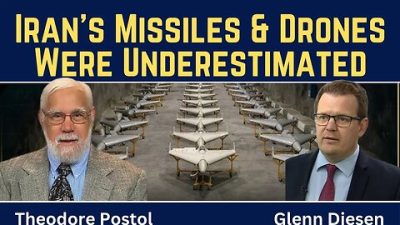
Theodore Postol: Iran’s Missiles & Drones Were Underestimated
or go to
Aletho News Archives – Video-Images
From the Archives
What is the Israeli Lobby in Australia Doing in Interfaith Dialogue?
By Ali Kazak | Dissident Voice | October 11, 2015
For years Israel and its lobby around the world have been trying to normalise their relations with Arabs and Muslims without solving the Palestine Question.
One of the methods they resorted to in the last few years is using human rights and community organizations such as interfaith dialogue and Multiculturalism to achieve this objective and to: isolate the Palestinians, marginalise the Palestine question, end Israel’s isolation, and prevent criticism of Israel, knowing that these organisations will be the first to stand against Israel’s violations, racial and religious discrimination.
The group responsible for this task in Australia is The Australia/Israel & Jewish Affairs Council (AIJAC); its Director of International & Community Affairs, Jeremy Jones is in charge of lobbying religious community organizations, specifically Muslims and Christians. Consequently he convened the Faith Communities for Reconciliation, founding participant in the Australian Partnership of Religious Organisations and the Australian National Dialogue of Christians, Muslims & Jews.
AIJAC is a private political propaganda group. It is recognised as the main Israeli lobby in Australia. It coordinates its activities and works intimately with the Israeli embassy in Canberra and different institutions in Israel. It is privately funded by some Jewish businessmen. It monitors closely Australian politicians, the media, ethnic and religious groups, (especially Arabs and Muslims), unions and academics on their stands towards Israel and the Palestine question. … continue
Blog Roll
 Aletho News
- The war of liberation of the Arab and Islamic peoples expands across the Gulf
- Envoy warns UN on Trump’s threat to ‘obliterate’ Iran’s civilian infrastructure
- The Larak Corridor: Iran’s Rial Gate With No US, No Israel, and No Way Around
- ‘Economic terrorism’: Steel facilities hit again in US-Israeli strike
- ‘War Crime’: Iran condemns attacks on Arak, Ardakan nuclear sites
- Two-thirds of Americans want quick end to Iran war even if goals unmet
- Trump to Give “Important Update on Iran” Wednesday in Prime-Time Speech
- Theodore Postol: Iran’s Missiles & Drones Were Underestimated
- Iran To Target Military Industrial-Tech Complex That Facilitated Gaza Genocide
- Collapsing Empire: The Resistance Disarms ‘Israel’
- If Americans Knew
- Israel wants US to bomb more of Iran’s civilian structures (113,000 is not enough) – Not a ceasefire Day 173
- Ann Coulter Rips Into Fox News for Iran War Coverage
- Joe Kent Urges Americans To Call White House and Congress To Object To Sending Troops Into Iran
- DNC Resolution to Reject AIPAC Funding Puts Democratic Leaders in the Hot Seat
- Swedish foundation to build 400 schools as over 650,000 Gaza children remain without education for 2 years
- Israeli army admits photshopping image of slain Lebanese journalist
- This is how Israel is systematically killing health workers under the cover of war in Lebanon
- Carrying life under fire: Israeli invasion of Lebanon leaves pregnant women facing deadly risks
- Champagne all around for the new death penalty (for Palestinians) law – Not a ceasefire Day 172
- Why are Palestinian books struggling to be seen on Amazon?
- No Tricks Zone
- New Study Finds Warming Saves Lives…Cold Temperatures 12 Times More Deadly Than Excess Heat
- German Science Blog Accuses PIK Climate Institute Of Hallucinating Climate Tipping Points
- Devastating Assessment Of Comirnaty Vaccine By Former Senior Pfizer Europe Toxicologist
- New Study: CO2 Is ‘Effectively Negligible’ As An Explanatory Climate Change Factor Since 2000
- Former Pfizer Toxicologist Dr. Helmut Sterz Tells Bundestag Hearing Pfizer Vaccine Should Have Never Been Approved
- Energy Expert: Germany’s Nuclear Phaseout Was A “500 Billion Euro Mistake”
- New Research: South Australia’s Mid-Holocene Sea Surface Temperatures Were 4°C Warmer Than Today
- Storing Green Energy To Last Germany 10 Days Would Require A 60-Million Tonne Battery
- New Studies: UK Sea Levels Were 4 Meters Higher Than Today During The Mid-Holocene
- Destructive Green New Deal: German Energy And Metal Group Warns Of Drastic Crisis
 Aletho News