Mr. Trudeau, tell us how you decide which invasions count
By Yves Engler | June 19, 2022
In a world of vast injustice, one cannot expect a government’s foreign policy to be principled or consistent. But there should at least be some limit to hypocrisy.
On June 16 Justin Trudeau spoke with Rwandan president Paul Kagame about this week’s Commonwealth Summit in Kigali. Half the government’s readout about the discussion was devoted to opposing a foreign invasion. It read, “the two leaders exchanged views on Russia’s invasion of Ukraine and noted that the invasion was contrary to foundational principles of the Commonwealth. Prime Minister Trudeau reiterated that the invasion was an affront to the fundamental principles of sovereignty, territorial integrity, self-determination, and international law, and expressed that it is important for the Commonwealth summit to provide an opportunity for member countries to stand up for democracy and denounce Russia’s invasion of Ukraine.”
Recently, Rwandan-backed rebels instigated fighting that has caused over 170,000 Congolese to flee their homes since November. Reportedly, Rwanda has deployed 500 troops to assist the M23 rebels. According to the UN, M23 is planning an attack on the major eastern city of Goma in the coming days. On Friday Rwandan forces killed a Congolese soldier on the border between the two countries and Congo has closed the border.
Highlighting the hypocrisy of Trudeau discussing foreign invasion with Kagame, former Congolese presidential candidate and long-time UN worker, Angèle Makombo, tweeted, “No kidding Prime Minister Justin Trudeau, you spoke with Paul Kagame about ‘Russia’s illegal invasion of Ukraine’? Did you also care about raising the issue of Rwanda’s aggression of Congo and its dire impacts on the Congolese people and Africa Great Lakes subregion?”
The M23 is a “Rwandan sponsored” force, reported the Globe and Mail previously. A 2012 UN report concluded that officials in Kigali organized, armed and “coordinated” M23’s military activities in the mineral rich eastern Congo. The M23 is the successor to the Rwanda-backed rebel force lead by Laurent Nkunda, who grew to prominence after Rwanda invaded.
In 1996 Rwandan forces marched 1,500 km to topple the regime in Kinshasa. Two years later they re-invaded after the Congolese government it installed expelled Rwandan troops. This led to an eight-country war between 1998 and 2003, which left millions dead. A January 2008 study by the International Rescue Committee blamed the conflict and its destabilizing impact for 5.4 million Congolese deaths over a decade. In October 2010, the UN Office of the High Commissioner for Human Rights released a report on the Congo spanning 1993 to 2003 that charged Rwandan troops with engaging in mass killings “that might be classified as crimes of genocide.”
Aside from the mayhem he’s unleashed in the Congo, Kagame oversees a brutal dictatorship. Opposition media is entirely suppressed and opponents rot in jail. Top officials and other dissidents that flee have repeatedly been assassinated across east and southern Africa. A year and a half ago, the regime kidnapped its most famous opponent Paul Rusesabagina, who is the namesake for the Hollywood film Hotel Rwanda. A Belgian citizen and US Green card holder, Rusesabagina was snatched from Dubai and flown to Rwanda where he languishes in jail.
Trudeau’s dalliance with Kagame isn’t new. In 2018 Toronto-based Rwandan dissident David Himbara wrote, “the romance between the two and among their respective ministers has blossomed beyond belief.” In February 2020 the PM’s press people released a photo of him laughing with the Rwandan president. On at least five occasions since 2018 Trudeau has been photographed with Kagame during one-on-one meetings on the sidelines of different international summits. At one of those meetings the PM “affirmed the importance of strong and growing bilateral relations” between Canada and Rwanda. Ottawa provided $39 million in assistance to Rwanda last year.
While the media, opposition and government have spent much of the past week complaining/apologizing about a low-level Canadian diplomat attending an irrelevant social function put on by the Russian Embassy, the prime minister deepens Canada’s ties to Africa’s most bloodstained ruler.
For Trudeau it appears as if only invasions of European countries matter.
As Kagame renews his brutal war on the Congo, Trudeau wants us to believe his aim is to uphold international law and oppose foreign invasion.
The hypocrisy is staggering.
Phoney ‘Tribunals’ Perpetuate Historical Fictions
By Stephen Karganovic | Strategic Culture Foundation | November 18, 2021
When I initially read “The Politics of Genocide” [2010] by Edward S. Herman and David Peterson I was easily able to assimilate their critique of the brazen misapplication of the term “genocide” to events in Bosnia (Srebrenica) and Kosovo, since I was familiar with those issues and had worked at the Hague Tribunal, the place where the propaganda was ultimately reformatted to resemble authoritative, quasi-judicial court verdicts. But like most members of the general public, I thought that those authors’ deconstruction of the Rwandan conflict was exaggerated and tendentious because I knew practically nothing about it, aside from the steady stream of horror stories that were fed to news consumers in the 1990s (the authors fittingly called it “enduring lies” in a related volume). To paraphrase Neville Chamberlain, Rwanda was literally a “quarrel in a far-away country, between people of whom we know nothing,” and that made it quite easy to fool all of us. In retrospect, the Rwandan pattern should have raised red flags for adhering too closely to the Bosnian script. But viewed in a factual vacuum and without any particular local expertise, the torrent of Rwandan genocidal allegations appeared largely credible and indisputable. Exactly as the “Srebrenica genocide” narrative must appear to most superficially informed members of the public.
It is only with the publication of Herman and Peterson’s meticulously researched and persuasively argued book that critical questions about Rwanda began to arise. The authors argued that the label “genocide,” far from being merely descriptive or following the legal criteria set by the UN convention, was in fact highly politicised and generally used by governments, journalists, and academics to brand as evil those nations and political movements that in one way or another interfered with the imperial designs of the global West. Two sets of rules govern the application of the term “genocide.” It is seldom used when the perpetrators are U.S. allies (or even the United States itself), while it is applied almost indiscriminately when murders are committed or are alleged to have been committed by enemies of the global West and its business or political interests. After removing media blinkers to study more closely the factual background of the Rwandan affair and applying Herman and Peterson’s analytical framework, events there came into focus and the received narrative about Rwanda was no longer making sense.
A recent reminiscence by Phil Taylor and John Philpot on Global Research about the judicial lynching of Rwandan Colonel Théoneste Bagasora, who recently passed away in prison after enduring many years of incarceration for his alleged role in genocidal killings, recalled not just the sordid impact of propaganda in misshaping public perceptions of important contemporary political issues. More importantly, it highlighted the squalid part played by “gekaufte Justiz,” as Udo Ulfkotte would undoubtedly have called it if he were alive to write a book on this subject today, in seemingly confirming and reinforcing propaganda’s toxic lies.
Taylor and Philpot demonstrate that Bagasora was railroaded by the ICTR, the International Criminal Tribunal for Rwanda, which sits in Arusha, Tanzania, where he and scores of other Rwandan officials were tried. ICTR is the somewhat lesser-known but equally pernicious mirror image of the more infamous ICTY, or the International Criminal Tribunal for the Former Yugoslavia.
Attorney Christopher Black, with hands-on experience in both the Hague and Arusha, is unequivocal: “Bagasora was framed up. Not guilty of anything, but this is true of every one of the accused at the Rwanda Tribunal. They were all framed up.”
Black describes the technology of judicial lynching: “The prosecution targeted selected people to try to paint a picture of a government, so a few officers, politicians, party people, administrators, any Hutu intellectuals, etc. were indicted. They concocted stories and charges, all in the name of propaganda to justify the war the West conducted against Rwanda to overthrow its government.
“In 2007 thirty-seven of the [Rwanda] accused sent a letter to the UN declaring that they were political prisoners of the UN. Just think of that, the UN holding political prisoners. And it is a fact that they were.”
Black continues: “At the time I tried to get some of the accused at the ICTY [the Hague Tribunal] to join this action, but received no replies from anyone. The lawyers at the ICTY were sweetheart lawyers for the most part, except in the case of Milosevic.”
Referring to the structure of the pseudo-judicial twins, ICTR and ICTY, Black says that they are “identical in the way they chose people to target, the way they concocted evidence and arranged witnesses, in the way they tried to ensure that only weak lawyers were allowed to defend the accused (a constant battle at the ICTR), and in their control by NATO personnel at every level and in every department. They had the same prosecutor in charge of both [Carla Del Ponte], judges that went back and forth between the two, the same appeal chamber, etc. etc. Hans Köchler’s book about the two tribunals, “Global Justice or Global Revenge”, describes it best. He showed how the judges were all finally approved by the U.S.” Hence, one supposes, the indicative note in the blurb to Köchler’s book, that “the author’s main intention is to reflect upon the legal and philosophical foundations of international criminal law in the context of politics.”
“The two ad hoc tribunals were (and still are in the “Mechanism”) entirely show tribunals created to run show trials to frame up scapegoats for the crimes of the NATO countries involved,” Black concludes with understandable bitterness in his private communication with this author.
Going back to the Herman and Peterson analysis, both “tribunals” have been essential tools in perpetuating crude propaganda fabrications, that otherwise would probably have remained ephemeral, about the Bosnia and Rwanda conflicts by repackaging them in deceptive judicial wrapping. These sorry excuses for “international courts” are not merely a disservice to jurisprudence, to which they have inflicted incalculable damage, whose full scope will become apparent only with the passage of time. Inexcusably, they are guilty also of an appalling distortion of the historical record, arguably an even more grievous offence that may take much longer to rectify.
Susan Rice has blood on her hands: Journalist
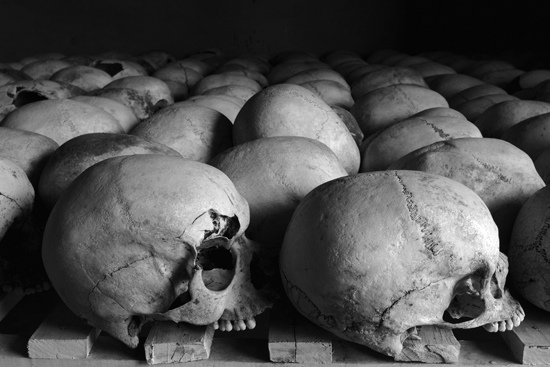
By Don DeBar | Press TV | November 15, 2020
Susan Rice is another one of the recycled Clinton people, and in fact the Democratic Party had her going back even before that.
Her mother has been around. She helped design Pell Grants. She had been with Brookings since ‘92 which is about when Susan graduated into the Clinton administration (in 1993) and went directly to the National Security Council.
She was with Bill Clinton for his administration. Obama had her – first at the UN, and then as his National Security Adviser (I think). She’s about as inside as it gets. She has blood on her hands in Africa, Rwanda.
The people’s understanding of the Rwandan genocide in the United States is exactly upside down. There was a genocide there, but it was the side that the US-backed, not surprisingly, and that was Susan Rice’s project. She was a member of the National Security Council to do international affairs and that was one big act of the Clinton administration – that move to pivot to Africa, around Rwanda.
It was also the enabling of their so-called humanitarian interventions, and in any way that’s her child.
At the United Nations, she helped bring us the destruction of Libya, enabled the situation in Syria to the extent that she could, and tried to sell authority for the US to bomb the hell out of Syria as well.
It’s going to be more war, really.
Let me remind people when Trump took office in January of 2017 the foreign policy that Susan Rice and Barack Obama and the Clintons, and John Kerry had set in motion had us where we were having war games at Russia and China’s borders from the Baltics to the Korean peninsula, on a constant basis, with a number of international incidents – including NATO members shooting down Russian pilots over Syria – any of which could have escalated, and really turning on a dime into a global thermonuclear war.
Trump for all the things he has done does not leave us – if he’s leaving – in that situation. But what they’re doing is installing the very people who created that condition to start from day one to bring us right back to the brink with Russia and China.
I think it’s very scary that Susan Rice is being considered for this. I don’t think it’s a surprise at all. Anyone who knows who Joe Biden is not surprised.
Don DeBar is an American journalist and political commentator based in New York.
Trudeau is buddies with murderous African dictator
By Yves Engler · February 12, 2020
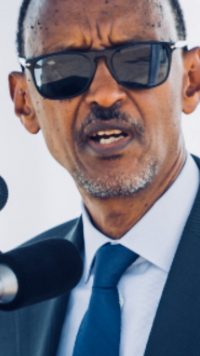 Justin Trudeau wants us to know he’s buddies with Africa’s most ruthless dictator.
At the recent African Union Summit in Ethiopia Trudeau met Paul Kagame. The Prime Minister’s press people released a photo of him laughing with the Rwandan President and announced that the two discussed the upcoming Commonwealth summit Trudeau is set to attend in Kigali.
On at least five occasions since 2018 Trudeau has been photographed with Kagame during one-on-one meetings on the sidelines of different international summits. At one of those meetings the PM “affirmed the importance of strong and growing bilateral relations” between Canada and Rwanda.
Canadian-based Rwandan dissident David Himbara has criticized the PM’s embrace of Kagame. In April 2018 he wrote, “the romance between Canada’s Prime Minister Justin Trudeau and Rwanda’s strongman Paul Kagame is difficult to fathom. For the past several months, the romance between the two and among their respective ministers has blossomed beyond belief.”
After amending the constitution to be able to run indefinitely Paul Kagame won 98.63 per cent of votes in Rwanda’s August 2017 presidential election. In response, Canada’s High Commissioner Sara Hradecky tweeted, “congratulations to Rwandans for voting in peaceful presidential election” and “Canada congratulates Paul Kagame on his inauguration today as President of Rwanda.” The latter tweet was picked up by the state propaganda organ New Times in a story titled “Heads of State, diplomats laud Kagame’s ‘visionary leadership’.”
If garnering 99 per cent of the vote wasn’t a clue that Kagame is a dictator, the High Commissioner could have taken a look at Canada’s ‘paper of record,’ whose Africa bureau chief had recently shined a critical light on Rwanda. At the start of 2016 the Globe and Mail reported on two new books describing the totalitarian nature of the regime.
“Village informers,” wrote South Africa-based Geoffrey York. “Re-education camps. Networks of spies on the streets. Routine surveillance of the entire population. The crushing of the independent media and all political opposition. A ruler who changes the constitution to extend his power after ruling for two decades. It sounds like North Korea, or the totalitarian days of China under Mao. But this is the African nation of Rwanda — a long-time favourite of Western governments and a major beneficiary of millions of dollars in Canadian government support.”
In 2014 York wrote an investigation headlined “Inside the plots to kill Rwanda’s dissidents,” which provided compelling evidence that the regime had extended its assassination program outside of east Africa, killing (or attempting to) a number of its former top officials who were living in South Africa. After the initial investigation York reported on Rwandan dissidents who had to flee Belgium for their safety while the Toronto Star revealed five individuals in Canada who were fearful of the regime’s killers.
On top of international assassinations and domestic repression, Kagame unleashed mayhem in the Congo. In 1996 Rwandan forces marched 1,500 km to topple the regime in Kinshasa and then re-invaded after the Congolese government it installed expelled Rwandan troops. This led to an eight-country war between 1998 and 2003, which left millions dead. Rwandan proxies repeatedly re-invaded the mineral rich eastern Congo. In 2012 the Globe and Mail described how “Rwandan sponsored” M23 rebels “hold power by terror and violence” there.
Despite the regime’s violence, Governor General Julie Payette traveled to Kigali to meet Kagame in August. She lauded “the long-standing partnership between Canada and Rwanda.”
In November 2017 Rwanda’s Environment Minister visited Ottawa to meet her Canadian counterpart, Catherine McKenna, who lauded “our close friendship.” Later that year defence minister Harjit Sajjan hosted his Rwandan counterpart General James Kabarebe.
In 2015 Kabarebe was arrested in London under a Spanish indictment for war crimes committed between 1990 and 2002 in Rwanda, including the murder of two Quebec priests. Previously, Kabarebe had been the subject of an arrest warrant by a French judge for his role in shooting down President Juvénal Habyarimana’s plane, which unleashed the genocidal violence in Spring 1994. A 2012 UN report claimed Kabarebe organized and armed deadly M23 rebels in eastern Congo, labeling Kabarebe “a central player in recruiting on behalf of M23” and noted that “he has often been in direct contact with M23 members on the ground to coordinate military activities.” After former Rwandan spy chief, turned Kagame critic Patrick Karegeya, was strangled to death in a South African hotel in January 2014 Kabarebe said, “when you choose to be a dog, you die like a dog, and the cleaners will wipe away the trash.”
The Rwandan government’s domestic repression, international assassinations and violence in the Congo are well documented. Yet I couldn’t find any criticism of Kagame by the Trudeau government. Instead, Ottawa provides about $25 million annually in assistance to Rwanda.
Roméo Dallaire and the Toronto Star’s distortion of Rwanda’s tragedy
By Yves Engler · April 11, 2019
 The Toronto Star should get its facts straight and stop distorting Rwanda’s tragedy.
A day after the 25th anniversary of when two Hutu presidents were blown out of the sky, the Star’s editorial board published “There’s no excuse for ignoring lessons of Rwanda’s genocide”. It claims, “on Jan. 11, 1994, Canadian Maj.-Gen. Roméo Dallaire, at the time force commander with the United Nations Assistance Mission for Rwanda, sent a chilling and urgent cable to UN Headquarters in New York. He had been informed of the details of a plan for the ‘extermination’ of ethnic Tutsis by Hutus.” After stringing together a few hundred more humane-sounding, though meaningless, words Star editorialists returned to their core liberal interventionist Canadian hero theme: “In his cable of January 1994 he urged UN leaders to act by telling them the obvious: Where there’s a will to prevent mass killing, there is a way.”
The Star should check Dallaire’s fax more closely. Revealingly, the much-celebrated “genocide fax” the editorialists reference is not titled “‘genocide’ or ‘killing’ but an innocuous ‘Request for Protection of Informant’”, reports International Criminal Tribunal for Rwanda (ICTR) lawyer Christopher Black in a 2005 story titled “View from Rwanda: The Dallaire Genocide Fax: A Fabrication”. The two-page “genocide fax”, as New Yorker reporter Philip Gourevitch dubbed it in 1998, was probably doctored a year after the mass killings in Rwanda ended. In a chapter devoted to the fax in Enduring Lies: The Rwandan Genocide in the Propaganda System, 20 Years Later Edward S. Herman and David Peterson argue two paragraphs were added to a cable Dallaire sent to Canadian General Maurice Baril at the UN Department of Peacekeeping Operations in New York about a weapons cache and protecting an informant (Dallaire never personally met the informant). The added paragraphs said the informant was asked to compile a list of Tutsi for possible extermination in Kigali and mentioned a plan to assassinate select political leaders and Belgian peacekeepers.
At the ICTR former Cameroon foreign minister and overall head of the UN mission in Rwanda, Jacques-Roger Booh-Booh, denied seeing this information and there’s no evidence Dallaire warned the Belgians of a plan to attack them, which later transpired. Finally, a response to the cable from UN headquarters the next day ignores the (probably) added paragraphs. Herman and Peterson make a compelling case that a doctored version of the initial cable was placed in the UN file on November 27, 1995, by British Colonel Richard M. Connaughton as part of a Kigali-London-Washington effort to prove the existence of a plan by the Hutu government to exterminate Tutsi.
Even if the final two paragraphs were in the original version, the credibility of the information would be suspect. Informant “Jean-Pierre” was not a highly placed official in the defeated Hutu government, reports Robin Philpott in Rwanda and the New Scramble for Africa: From Tragedy to Useful Imperial Fiction. Instead, “Jean-Pierre” was a driver for the MRDN political party who later died fighting with the Rwandan Patriotic Front.
Incredibly, the “genocide fax” is the primary source of any documentary record demonstrating UN foreknowledge of a Hutu “conspiracy” to exterminate Tutsi, a charge even the victor’s justice at the ICTR failed to convict anyone of. According to Herman and Peterson, “when finding all four defendants not guilty of the ‘conspiracy to commit genocide’ charge, the [ICTR] trial chamber also dismissed the evidence provided by ‘informant Jean-Pierre’ due to ‘lingering questions concerning [his] reliability.’”
Tellingly, Dallaire didn’t even initially adhere to the “conspiracy to commit genocide” version of the Rwandan tragedy. Just after leaving his post as UNAMIR force commander Dallaire replied to a September 14, 1994, Radio Canada Le Point question by saying, “the plan was more political. The aim was to eliminate the coalition of moderates. … I think that the excesses that we saw were beyond people’s ability to plan and organize. There was a process to destroy the political elements in the moderate camp. There was a breakdown and hysteria absolutely. … But nobody could have foreseen or planned the magnitude of the destruction we saw.”
Doctoring a fax to make it appear the UN had foreknowledge of a plot to exterminate Tutsi may sound outlandish, but it’s more believable than many other elements of the dominant narrative of the Rwandan genocide. The day after their editorial, for instance, the Star published a story titled “25 years after genocide, Rwanda rebuilds” which included a photo of President Paul Kagame leading a walk to commemorate the mass killings. But, Kagame is the individual most responsible for unleashing the hundred days of genocidal violence by downing a plane carrying two Hutu presidents and much of the Rwandan military high command.
Even the Star has reported as much. A year ago they published a story titled “Did Rwanda’s Paul Kagame trigger the genocide of his own people?” For its part, the Globe and Mail has published a series of front-page reports in recent years confirming Kagame’s responsibility for blowing up the plane carrying Rwandan President Juvénal Habyarimana, which triggered mass killings in April 1994. In an October story titled “New information supports claims Kagame forces were involved in assassination that sparked Rwandan genocide” the Globe all but confirmed that the surface-to-air missiles used to assassinate the Rwandan and Burundian Hutu presidents on April 6, 1994, came from Uganda, which backed the RPF’s bid to conquer its smaller neighbour. (A few thousand exiled Tutsi Ugandan troops, including the deputy minister of defence, “deserted” to invade Rwanda in 1990.) These revelations strengthen the case of those who argue that responsibility for the mass killings in spring 1994 largely rests with the Ugandan/RPF aggressors and their US/British/Canadian backers.
By presenting the individual most culpable for the mass killings at the head of a commemoration for said violence the Star is flipping the facts on their head. The same might be said for their depiction of the Canadian general. At the end of their chapter tracing the history of the “genocide fax” Herman and Peterson write, “if all of this is true,” then “we would suggest that Dallaire should be regarded as a war criminal for positively facilitating the actual mass killings of April-July, rather than taken as a hero for giving allegedly disregarded warnings that might have stopped them.”
Israel opens first ever embassy in Rwanda
MEMO | February 22, 2019
Israel’s government on Friday opened its first ever embassy in Rwanda, a step seen as promoting its presence on the continent of Africa, Israel’s Broadcasting Authority reported.
The new Israeli Ambassador to Kigali, Ronny Adam, presented his credentials to the Rwandan foreign ministry, Anadolu Agency reports.
Following a meeting with Rwandan President Paul Kagame, Adam signalled the intention of Kigali and Tel Aviv to boost cooperation in different fields, Israel’s Broadcasting Authority reported.
Israeli Prime Minister Benjamin Netanyahu visited Chad on Jan, 20, where he announced the official resumption of ties with N’Djamena following a meeting with Chadian President Idriss Deby.
In recent years, Israel has sought to improve relations with African states.
Israel currently maintains embassies in 10 of 54 African countries, namely, Senegal, Egypt, Angola, Ghana, Ivory Coast, Ethiopia, Nigeria, South Africa, Kenya and Cameroon.
Why do Raptors associate with blood-stained dictator?
By Yves Engler · December 23, 2018
It is time to call a technical foul on Toronto Raptors General Manager Masai Ujiri for his ties to one of the world’s most ruthless dictators. Through his Giants of Africa charity Ujiri has bestowed legitimacy on Paul Kagame even as local newspapers document the Rwandan president’s violence.
Before their December 5 game against the Philadelphia 76ers the Raptors celebrated Nelson Mandela as the Giant of Africa. A report produced for the two-day charity fundraiser noted, “since Giants of Africa’s first Mandela Tribute event held in 2014, we are grateful to have had many influential guests participate in our initiative.” Kagame and Barack Obama were the only two politicians listed.
At an NBA meeting in New York in September Kagame thanked Ujiri and Raptors governor Larry Tanenbaum, lauding the Giants of Africa initiative as “another step for Africa in our development.” In August Kagame opened a training camp in Kigali with Ujiri and NBA Commissioner Adam Silver while two months earlier the Raptors GM met the Rwandan leader at the G7 Summit in Quebec City.
Last year Ujiri travelled to Kigali to unveil a new basketball court with Kagame. In 2015 the president’s son, Ian Kagame, attended the inaugural Giants of Africa camp in the Rwandan capital. During that visit the president hosted the Raptors GM for dinner. According to a Globe and Mail story, the one-time head of Ugandan military intelligence told “Ujiri that he’d woken in the middle of the night to watch Raptors’ playoff games.”
As this mutual love affair developed there were questions about the team’s association with a ruthless dictator. During the NBA All-Star weekend in February 2016 the Toronto Star contacted Ujiri about Kagame speaking at numerous events, including a documentary screening about Giants of Africa camps at the TIFF Bell Lightbox. The Raptors GM told the paper “there is no controversy.”
A month before Kagame’s visit to the NBA All-Star weekend the Globe and Mail reported: “Village informers. Re-education camps. Networks of spies on the streets. Routine surveillance of the entire population. The crushing of the independent media and all political opposition. A ruler who changes the constitution to extend his power after ruling for two decades. It sounds like North Korea, or the totalitarian days of China under Mao. But this is the African nation of Rwanda — a long-time favourite of Western governments and a major beneficiary of millions of dollars in Canadian government support.”
Previously Toronto Star Board Chair John Honderich published a commentary in his paper headlined “No freedom for press in Rwanda.” The 2007 story noted that the government “ordered the summary firing of the Sunday editor of the country’s only daily for publishing an unflattering photo of the president … the president’s office only wants their man shown in command and in the middle of the photo … All this happened days after a fledgling new newspaper, called The Weekly Post, was shut down by the government after its first issue.”
Ujiri’s public “friendship” with Kagame has been taking place amidst growing recognition of Kagame’s violence. A 2015 National Post headline noted: “Rwandan intelligence agents harassing opponents in Canada, border service says” while the Star published stories that year titled: “Toronto lawyer claims he’s target of death threat from Rwandan government” and “Four other Canadians believe they’re being targeted by Rwanda.” Since 2014 the Globe and Mail has published at least eight front-page reports about Kagame’s international assassination program and responsibility for blowing up the plane carrying Rwandan President Juvénal Habyarimana, which triggered mass killings in April 1994. Two months ago the Globe added important details to the abundance of evidence suggesting Kagame is the individual most responsible for unleashing the hundred days of genocidal violence by downing a plane carrying two presidents and much of the Rwandan military high command.
For that incident alone Kagame has as much African blood on his hands as any other individual alive. But, the undisputed “military genius” also played an important role in toppling governments in Kampala in 1986 and Kinshasa in 1997. After the latter effort Rwandan forces reinvaded the Congo, which sparked an eight-country war that left millions dead between 1998 and 2003. In October 2010, the UN Office of the High Commissioner for Human Rights released a report on the Congo spanning 1993 to 2003 that charged Rwandan troops with engaging in mass killings “that might be classified as crimes of genocide.”
Since then Rwandan proxies have repeatedly re-invaded the mineral rich eastern Congo. In 2012 The Globe and Mail described how “Rwandan sponsored” M23 rebels “hold power by terror and violence” there.
Kagame is not a Giant of Africa. He’s a ruthless dictator with the blood of millions on his hands. The Raptors disgrace themselves and the memory of Nelson Mandela by associating with him.
Trudeau’s pal in Rwanda a ruthless dictator
By Yves Engler · August 25, 2017
Why is the Trudeau government supporting Africa’s most ruthless dictator?
After amending the constitution to be able to run indefinitely Paul Kagame recently won 98.63 per cent of votes in Rwanda’s presidential election. In response, Canada’s High Commissioner Sara Hradecky tweeted “Congratulations to Rwandans for voting in peaceful presidential election” and “Canada congratulates Paul Kagame on his inauguration today as President of Rwanda.” The latter tweet was picked up by the state propaganda organ New Times in a story titled “Heads of State, diplomats laud Kagame’s ‘visionary leadership’.”
If garnering 99 per cent of the vote wasn’t a clue that Kagame is a dictator, the High Commissioner could’ve taken a look at Canada’s ‘paper of record,’ whose Africa bureau chief has shined a critical light on Rwanda in recent years. At the start of 2016 The Globe and Mail reported on two new books describing the totalitarian nature of the regime.
“Village informers,” wrote South Africa-based Geoffrey York. “Re-education camps. Networks of spies on the streets. Routine surveillance of the entire population. The crushing of the independent media and all political opposition. A ruler who changes the constitution to extend his power after ruling for two decades. It sounds like North Korea, or the totalitarian days of China under Mao. But this is the African nation of Rwanda — a long-time favourite of Western governments and a major beneficiary of millions of dollars in Canadian government support.”
In 2014 York wrote an investigation headlined “Inside the plots to kill Rwanda’s dissidents,” which provided compelling evidence that the regime had extended its assassination program outside of east Africa, killing (or attempting to) a number of its former top officials who were living in South Africa. Since the initial investigation York has also reported on Rwandan dissidents who’ve had to flee Belgium for their safety while the Toronto Star revealed five individuals in Canada fearful of the regime’s killers.
On top of international assassinations and domestic repression, Kagame has unleashed mayhem in the Congo. In 1996 Rwandan forces marched 1,500 km to topple the regime in Kinshasa and then re-invaded after the Congolese government it installed expelled Rwandan troops. This led to an eight-country war between 1998 and 2003, which left millions dead. Rwandan proxies have repeatedly re-invaded the mineral rich eastern Congo. In 2012 The Globe and Mail described how “Rwandan sponsored” M23 rebels “hold power by terror and violence” there.
The Rwandan government’s domestic repression and violence in the Congo is well documented. Yet I couldn’t find a single tweet or comment by Hradecky critical of Kagame since she became High Commissioner in January. Yet she found time to retweet Kagame’s International Women’s Day message that “Realizing women’s full aspirations is inextricably linked to achieving whole nation’s potential.”
Re-tweeting a tyrant’s message or applauding spurious elections are clear forms of support for the “butcher of Africa’s Great Lakes.” But, Hradecky has offered less obvious backing to the regime.
On July 4 Hradecky tweeted “From the Canadian High Commission, we wish Rwandans a Happy Liberation Day!,” which was picked up by the New Times in a story titled “Messages of solidarity as Rwanda marks Liberation Day.”
The Ugandan-sponsored Rwandan Patriotic Front officially captured Kigali on July 4, 1994. Trained at a US military base in Kansas, Kagame’s forces apparently waited to take the capital so their Liberation Day could coincide with their US backers’ Independence Day, a public relations move that continues to pay dividends as demonstrated by a July NPR story titled “In Rwanda, July 4 Isn’t Independence Day — It’s Liberation Day.”
Four years after 3,000 Ugandan troops “deserted” to invade their smaller neighbour the force of mostly exiled Tutsi took Kigali. Today, Rwanda continues to be ruled by largely English-speaking individuals who often are descended from those who had authority in a monarchy overthrown during the 1959–61 struggle against Belgian rule. The Guardian recently pointed to “the Tutsi elite who dominate politics and business” and the Economist detailed “The Rwandan Patriotic Front’s business empire” in the country.
Underpinning the “liberation” story is a highly simplistic, if not counterfactual, account of the 1994 genocide. Widely hailed as the person who ended the killings, Kagame is probably the individual most responsible for the mass slaughter. His RPF invaded Rwanda from Uganda, engaged in a great deal of killing and blew up the presidential plane, an event that unleashed the genocidal violence.
As Hradecky should know, last year the Globe and Mail described two secret reports documenting Kagame’s “direct involvement in the 1994 missile attack that killed former president Juvénal Habyarimana, leading to the genocide in which an estimated 800,000 people died.”
Echoing Kigali’s narrative, Hradecky published a half dozen tweets (or retweets) in April commemorating the Genocide. “Canada stands with Rwanda to commemorate the victims of Genocide,” read one. Hradecky also retweeted a Government of Rwanda statement: “Today marks the beginning of the 23rd Commemoration of the 1994 Genocide against the Tutsi.”
Promoting simplistic commentary on the subject effectively strengthens a regime that derives much of its legitimacy from purportedly stopping the genocide.
From commemorating Liberation Day to applauding questionable elections, Canada’s High Commissioner has provided various forms of ideological support to Africa’s most ruthless dictator. That should embarrass everyone who wants this country to be a force for good in the world.
Rwanda’s tragedy used to fool people, slander others
By Yves Engler · June 2, 2017
Rwanda’s tragedy has been exploited for many purposes. Add slandering a pro-Palestinian activist to the list.
Since I wrote this article about the Jewish Defense League last month, Toronto’s Alex Hundert has repeatedly labeled me anti-Semitic. The self-declared “anti-fascist” tweeted at Pacific Free Press, Rabble, the NDP and others to “cut ties” with me.
In response to this article the former Upper Canada College student harangued at least one prominent woman for posting it on her Facebook page. Hundert told her — wait for it — I’m anti-Semitic. Lacking in evidence or maybe sensing diminishing returns with that smear he added that I’m a Rwandan genocide denier.
If he means a researcher and writer on foreign affairs who always questions official government narratives/propaganda then I guess a “no contest” plea would be appropriate. The common portrayal of the Rwandan Genocide in Canada omits important context and is factually incorrect in substantial ways. It is also logically hollow, only believable because of widespread racism and anti-Africanism. (According to the most outlandish aspect of the official story, Hutu extremists murdered the Hutu presidents of Rwanda and Burundi and much of the Hutu-led Rwandan military command, which brought the Hutu to their weakest point in three decades, and then decided to begin a long planned systematic extermination of Tutsi.)
Do I believe hundreds of thousands of Rwandan Tutsi were slaughtered in mid-1994? Yes, definitely.
Was there a long planned high-level effort to wipe out all Tutsi? Probably not.
Were tens, possibly hundreds, of thousands of Hutu also slaughtered in mid-1994? It’s likely.
Was Paul Kagame, the person widely hailed for ending the killing, instead the individual most responsible for the mass slaughter? Probably, since his forces invaded Rwanda from Uganda, engaged in a great deal of killing and blew up the presidential plane that unleashed the genocidal violence.
It’s telling Hundert would seek to smear me as a Rwanda genocide denier, rather than criticize my other controversial views such as that the private automobile should be eliminated, or that former Prime Minister Lester Pearson was a war criminal or that Canadian peacekeeping is often a form of imperialism. Maybe it’s because the label “genocide denier” hints at some type of hatred rather than a political disagreement. Or maybe Hundert hopes to associate me with Nazi Holocaust denial, which we’ll see more about below.
Fundamentally Hundert chose the issue because most Canadians know little about Rwanda and, to the extent they know anything about the country, they’ve heard an extremely one-sided media account of the complex tragedy that engulfed Rwanda and Burundi in the mid-1990s. News consumers are generally familiar with a Rwanda fairy tale focused on a white Canadian saviour. According to serial Kagame-Rwanda propaganda spreader Gerald Caplan, “the personal relationship so many Canadians feel with Rwanda can be explained in two words: Roméo Dallaire.” In a forthcoming book about left Canadian foreign policy I detail how, in their haste to laud a Canadian military “hero”, progressives have echoed a highly simplistic version of Rwanda’s tragedy, which has legitimated Africa’s most blood-stained dictator, Paul Kagame.
Beyond aligning with liberal Canadian foreign policy mythology, Hundert is tapping into the US Empire’s narrative. Washington and London’s support for the Uganda backed Rwandan Patriotic Front (RPF), as well as Kagame’s more than two-decade long rule in Kigali, explains the dominance of the Rwandan Genocide story. According to Edward Herman and David Peterson in Enduring Lies: The Rwandan Genocide in the Propaganda System, 20 Year Later, “[US and British] support, combined with the public’s and the media’s distance from and unfamiliarity with central African affairs, made the construction and dissemination of false propaganda on Rwanda very easy.”
After the Cold War, Washington viewed Kagame’s RPF as an imperial proxy force in a French-dominated region. A trio of authors explain in The Congo: Plunder and Resistance: “The plan expressed clearly by the White House at the time was to use the Rwandan army as an instrument of American interests. One American analyst explained how Rwanda could be as important to the USA in Africa as Israel has been in the Middle East.” Over the past two decades Kagame has repeatedly invaded the Congo, which has as much as $24 trillion in mineral riches.
Alongside his role as a US client, Kagame has drawn close to Israel. Trained at the US Army Command and General Staff College in Fort Leavenworth, Kansas, Kagame visited Israel for the first time in 1996 and Africa’s most bloodstained dictator has been back repeatedly. In March Kagame was the only international head of state and first-ever African leader to speak at the American Israel Public Affairs Committee’s (AIPAC) annual conference. On May 21 Kagame received the Dr. Miriam and Sheldon G. Adelson Prize for Outstanding Friendship with the Jewish People at a New York event with Israeli ambassador Ron Dermer and Alan Dershowitz. In 2013 the “butcher ofAfrica’s Great Lakes” shared a New York stage with staunch Zionists Elie Wiesel, Rabbi Shmuley Boteach and Republican mega-donor Sheldon Adelson.
“He is the only living man to stop a genocide,” said Boteach to the Jewish Forward in 2014. “You need to look at the criticism on Rwanda through the same lens you look at criticism against Israel.” (After National Security Adviser Susan Rice criticized Israeli Prime Minister Benjamin Netanyahu for speaking to Congress about the Iran nuclear agreement without President Obama’s approval, Boteach placed an ad in the New York Times which read “Susan Rice has a blind spot: Genocide … both the Jewish people’s and Rwanda’s”.)
Pro-Israel Jewish groups have bequeathed Kagame the genocide moniker. Author of Rwanda and the New Scramble for Africa: From Tragedy to Useful Imperial Fiction, Robin Philpot explains that long-time director of the Simon Wiesenthal Center in Israel, Efraim Zuro, and former US Holocaust Memorial Museum project director, Michael Berenbaum, were invited to a conference in Kigali a year after the mass slaughter in Rwanda. Philpot notes, “Efraim Zuro then became an advisor to the Rwandan government in its hunt for génocidaires, and from then on Zionists throughout the world were willing to share the use of the term ‘genocide’ with Rwandan Tutsis. Israel has very jealously guarded the use of that term; they have, for example, never agreed to share it with Armenians, largely because of Israel’s strategic alliance with Turkey.”
But, those who draw an analogy between the 6 million killed in the Shoah and the hundreds of thousands slaughtered in Rwanda are partaking in something akin to Nazi Holocaust denial (or extreme minimization). European Jews were targeted because of their religion/ethnicity, the violence was state organized and it mostly flowed from an ideology promoted from above.
The context in Rwanda was different. Speaking the same language, sharing the same culture and practising the same religion, the Tutsi/Hutu divide is historically a caste-type distinction the Belgians racialized. “Prior to colonization,” explains Ann Garrison, “the Tutsi were a cattle owning, feudal ruling class, the Hutu a subservient peasant class. Belgian colonists reified this divide by issuing ID cards that labeled Rwandans and Burundians as Hutu, Tutsi, or Twa [1% of the population].”
The genocidal killings were not a long planned attempt to exterminate all Tutsi, which even the victors’ justice dispensed by the International Criminal Tribunal for Rwanda (ICTR) effectively concluded. Instead, it was the outgrowth of a serious breakdown in social order that saw hundreds of thousands slaughtered by relatively disorganized local commands fearful of a foreign invasion that eventually conquered Rwanda and drove a quarter of the population out of the country. Probably an equal — and possibly a greater — number of Hutu were killed.
Jews didn’t end up in power in European countries after World War II, nor did the Herero in Namibia, Armenians in Turkey, indigenous people in North America, Maya in Guatemala, etc. Rwanda is a peculiar case where the minority — 10% of population — targeted for extermination ended up ruling after the bulk of the violence subsided.
Of course, Hundert doesn’t care about what happened in Rwanda. He’s labeling me a genocide denier because I’ve challenged Canada’s contribution to Palestinian dispossession. Hundert seems particularly bothered by my linking pro-Israel Jewish organizations to fascistic, anti-Muslim groups, which pits his “anti-fascism” against his liberal-Zionism.
The Rwandan tragedy is often invoked in Canada for ulterior purposes. The Romeo Dallaire fairy tale is part of developing a “do-gooder” foreign policy mythology designed to lull Canadians into backing interventionist policies. More generally, a highly simplistic account of the Rwanda Genocide has repeatedly been invoked to justify liberal imperialism, particularly the Responsibility to Protect doctrine.
Maybe I should be honoured that Rwanda is now cited as a reason to suppress my writing.
Featured Video
No Threat Can Force Iran’s Surrender /Trita Parsi & Lt Cl Daniel Davis
or go to
Aletho News Archives – Video-Images
From the Archives
An Expert Military Analysis of War with China
Actually, None is Necessary
By Fred Reed • Unz Review • December 13, 2020
The Correlation of Armed Forces: U.S. goods and services trade with China totaled an estimated $634.8 billion in 2019. Exports were $163.0 billion; imports were $471.8 billion. The U.S. goods and services trade deficit with China was $308.8 billion in 2019. Trade in services with China (exports and imports) totaled an estimated $76.7 billion in 2019. Services exports were $56.5 billion; services imports were $20.1 billion. The U.S. services trade surplus with China was $36.4 billion in 2019.
There is talk within the Washingtoniat of a possible war with China. Steve Bannon, who apparently was dropped on his head as a child, actually favors such a war. We hear the usual shoo-the-boobs alarm about how the Chinese are doing something terrible and we must gird our loins and American values and show them what for, bow wow, woof. The danger is that the current game of who-blinks-first in Asian waters might actually provoke a shooting war. You know the kind of thing: One warship refuses to get out of the way of another, a collision ensues, some retard lieutenant who signed up on waivers opens fire, and we’re off and running. It is not a good idea to let children play with matches.
The said war is discussed either in emotional terms by idiots or in purely naval terms by those familiar with such things, so we hear of the First Island Chain and the Second Island Chain and whose missiles against the other’s missiles and so on. This would be appropriate if we were fighting World War Two again. Which we aren’t. Let’s take a quick-and-dirty look at how such a war might go.
To begin the war, America would overestimate itself and underestimate China. This is doctrine in the Pentagon. … continue
Blog Roll
 Aletho News
- Iran To Target Military Industrial-Tech Complex That Facilitated Gaza Genocide
- Collapsing Empire: The Resistance Disarms ‘Israel’
- Suicide Should Not Be a Government Service
- Rethinking America’s greatest threat: Iran vs. Israel-Firsters
- Iran accuses adversaries of false flags to strain Turkey ties
- Poland rules out sending Patriot missiles to US/Israel amid war on Iran
- Tehran approves new Hormuz plan with major restrictions
- No Threat Can Force Iran’s Surrender /Trita Parsi & Lt Cl Daniel Davis
- UK’s New Pandemic Plan Would Turn Big Tech Into a Mass Location Tracking Network
- Growing insecurity, soaring prices fuel protests in north as regime bans evacuation: Sources
- If Americans Knew
- Joe Kent Urges Americans To Call White House and Congress To Object To Sending Troops Into Iran
- DNC Resolution to Reject AIPAC Funding Puts Democratic Leaders in the Hot Seat
- Swedish foundation to build 400 schools as over 650,000 Gaza children remain without education for 2 years
- Israeli army admits photshopping image of slain Lebanese journalist
- This is how Israel is systematically killing health workers under the cover of war in Lebanon
- Carrying life under fire: Israeli invasion of Lebanon leaves pregnant women facing deadly risks
- Champagne all around for the new death penalty (for Palestinians) law – Not a ceasefire Day 172
- Why are Palestinian books struggling to be seen on Amazon?
- The Line Between Affinity and Conspiracy
- As Iran targets US military bases, will they be relocated to Israel? Not a ceasefire Day 171
- No Tricks Zone
- New Study Finds Warming Saves Lives…Cold Temperatures 12 Times More Deadly Than Excess Heat
- German Science Blog Accuses PIK Climate Institute Of Hallucinating Climate Tipping Points
- Devastating Assessment Of Comirnaty Vaccine By Former Senior Pfizer Europe Toxicologist
- New Study: CO2 Is ‘Effectively Negligible’ As An Explanatory Climate Change Factor Since 2000
- Former Pfizer Toxicologist Dr. Helmut Sterz Tells Bundestag Hearing Pfizer Vaccine Should Have Never Been Approved
- Energy Expert: Germany’s Nuclear Phaseout Was A “500 Billion Euro Mistake”
- New Research: South Australia’s Mid-Holocene Sea Surface Temperatures Were 4°C Warmer Than Today
- Storing Green Energy To Last Germany 10 Days Would Require A 60-Million Tonne Battery
- New Studies: UK Sea Levels Were 4 Meters Higher Than Today During The Mid-Holocene
- Destructive Green New Deal: German Energy And Metal Group Warns Of Drastic Crisis
 Aletho News