Washington unable to sell stolen Iranian oil: Report
The Cradle | July 19, 2023
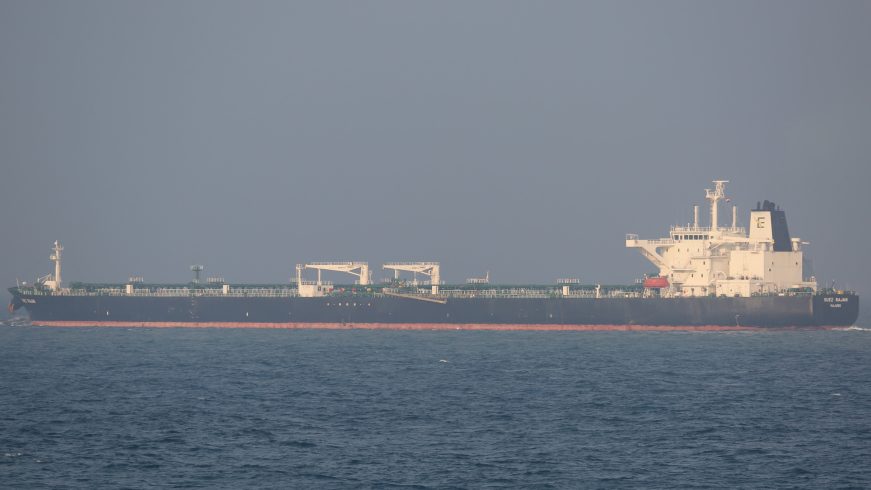
Oil firms in the US are “reluctant” to unload a shipment of stolen Iranian oil sitting in a Greek tanker off the coast of Texas, saying they are “too worried about Iranian reprisal” to touch the cargo, sources familiar with the matter told the Wall Street Journal (WSJ).
“Companies with any exposure whatsoever in the Persian Gulf are literally afraid to do it,” a Houston-based energy executive told the US outlet, adding that companies fear “the Iranians would take retribution against them.”
“I don’t know if anybody’s going to touch it,” another executive at a shipping company told the WSJ.
Washington illegally seized the Marshall Islands-flagged Suez Rajan supertanker in April of this year in what was described by the Pentagon as “a sanctions-enforcement operation.” Washington also charged the ship’s owner with “sanctions evasion” and directed the stolen cargo to the waters 65 miles off Galveston’s coast in the US.
According to the WSJ, the Suez Rajan came under Washington’s radar after an anti-Iran organization – the New York-based United Against Nuclear Iran (UANI) – provided information about the ship’s cargo to government officials. Furthermore, lawyers representing the families of victims of the 11 September attacks, “whom US courts have given the right to claim compensation from [Tehran],” filed a lawsuit against one of the ship’s former owners.
But while the US coast guard has given the all-clear to unload the shipment, companies that manage those transfers do not want any involvement in what Tehran has described as “maritime piracy.”
“That vessel’s emblematic of a much bigger drama that’s playing out about how we deal with Iranian threats,” a former US official told the WSJ.
The “drama” playing out between Washington and Tehran has seen the former eagerly try to restart talks with the Islamic Republic to “deescalate tensions” and possibly reach a new nuclear deal. But despite these diplomatic overtures from the White House, in recent weeks, the Pentagon has significantly bolstered its military presence in the Persian Gulf to confront “Iranian threats.”
Washington accuses Tehran of attempting to “hijack” foreign-flagged vessels traveling through the Strait of Hormuz and the Gulf of Oman. At the same time, Iran says the US navy protects “fuel smugglers” and ships involved in hit-and-run incidents.
“We categorically reject [Washington’s] baseless allegations of hijacking foreign oil tankers by Iran,” a representative for Iran’s mission to the UN told the WSJ. “Iran insists on the security and stability of the Persian Gulf and Strait of Hormuz. However, if oil tankers violate harmless passage, pollute the environment, or smuggle Iranian fuel, Iran does not hesitate to address those irregularities and infringements based on its laws as well as relevant international obligations.”
Israel backs down on threats to bomb Iranian nuclear sites
The Cradle | July 1, 2023
Israel is not planning to attack Iran’s nuclear sites, Prime Minister Benjamin Netanyahu’s national security adviser said on 30 June, as indirect talks between Tehran and Washington regarding the nuclear issue have continued in recent weeks.
Asked whether an Israeli decision on a preemptive strike against Iran was any closer, Tzachi Hanegbi said:
“We are not getting closer because the Iranians have stopped, for a while now, they are not enriching uranium to the level that, in our view, is the red line.”
Hanegbi added: “But it can happen. So we are preparing for the moment.”
For several decades, Israel and the US have accused Iran of being “weeks away” from building a nuclear weapon. However, Iran says its nuclear industry is for peaceful purposes, including energy, and has stressed that Islam forbids pursuing weapons of mass destruction.
Hanegbi said it was still unclear what would come of the US-Iran talks. Still, he insisted that if an agreement is signed between Israel’s primary sponsor and main enemy during the indirect talks that began in Oman, this will not obligate Israel to abide by it.
Last week, Netanyahu said at a cabinet meeting that Israel opposes any interim agreement between the US and Iran regarding the latter’s nuclear program.
Israel opposed the 2015 Joint Comprehensive Plan of Action (JCPOA), and celebrated when Donald Trump withdrew from the deal in 2018.
The deal limited Iranian uranium enrichment to 3.67 percent. After the US withdrew from the agreement, Iran began enriching to 60 percent, which is still far from the 90 percent needed for use in a nuclear weapon.
“We also tell [the US] that even… ‘mini agreements,’ in our opinion, do not serve our goals, and we oppose those as well,” Netanyahu recently stated.
At the same time, US National Security Adviser Jake Sullivan reportedly accused Israeli officials of leaking information about the indirect US-Iran talks while complaining that the leaked information was inaccurate.
This included claims that the Biden administration seeks to reach an informal deal with Iran limiting its nuclear enrichment to bypass getting approval from Congress.
According to the New York Times, the US seeks an agreement that would include a pledge by Tehran not to enrich uranium beyond 60 percent purity, to better cooperate with UN nuclear inspectors, to stop attacks on US forces in Iraq and Syria, to avoid providing Russia with ballistic missiles, and to release three American-Iranians held in the Islamic Republic.
In exchange, the US would release billions in seized Iranian funds, commit not to impose additional sanctions, and not take action against Iran in international forums such as the UN and IAEA.
EU’s New Anti-Russian Asset Grabbing Scheme is ‘Theft’, ‘Act of War’
By Ilya Tsukanov – Sputnik – 30.06.2023
Hundreds of billions of dollars in Russian assets were trapped abroad in 2022 after the Ukrainian crisis escalated into a full-blown NATO-Russia proxy war. Earlier this year, reports in US business media indicated that the US and its allies were having trouble locating a substantial chunk of these funds.
Belgium plans to collect 3 billion euros a year in windfall profits from Russian assets frozen in the country’s coffers to give to Ukraine for “reconstruction” purposes, Prime Minister Alexander De Croo announced Friday.
“We are working on a windfall tax on profits,” De Croo told reporters after meeting with other EU leaders at the bloc’s summit in Brussels.
A day earlier, De Croo explained that Belgium was “very involved” in the issue because upwards of 90 percent of the Russian assets frozen in the EU’s jurisdiction are trapped in Belgian banks.
“The use of these funds for the military needs of Ukraine and its reconstruction makes sense from an economic point of view and from a moral point of view,” the Belgian leader assured.
The European Commission estimated in May that the bloc has frozen over 200 billion euros in assets belonging to Russia’s Central Bank, plus 24.1 billion owned by Russian companies, tycoons and other individuals.
US business media first reported on the possibility of collecting interest from Russian assets trapped abroad to fund Ukraine earlier this year, after concluding that there was no “reliable legal path” to allow for the funds to seized outright without undermining rule of law and international trust in European financial institutions.
‘Robbery’ in Broad Daylight
Asked to comment on Brussels’ plans, Christopher C Black, an international criminal and human rights lawyer with over 20 years’ experience under his belt, said that if realized, they would constitute “theft twice over” – first by seizing the money in the first place, and then preventing Russia from collecting its due interest.
“The crime of theft becomes compounded with insult by giving the money to Kiev to finance the war against Russia, and if the money is so transferred by EU government order, it will be [an] act of war – since a nation supplying financial support to another nation to carry on a war can be considered under international law as a party to the war,” Black explained.
Very Painful… for EU
Such theft would constitute a blatant violation of the United Nations Charter and the laws of war, and would undermine the rule of law in Europe, according to the legal expert, “because if they can do this to Russia they can do it to any citizens’ assets.”
The scheme would show that in effect, “no one is protected,” and that contracts between clients and banks in the EU’s jurisdiction effectively “mean nothing” because they can be broken at will and for any reason, Black said. This, in turn, threatens to undermine the credibility of EU banks among foreign depositors, he added.
The observer isn’t surprised by Belgium’s plans, pointing out that the EU and other Western countries have already systematically violated their own laws and international law, by seizing Venezuela’s gold and oil company assets, for example, or keeping Iranian assets frozen in Western banks for decades on end.
Russian Retaliation
Black expects Russia to “retaliate in kind if possible, that is if assets of the EU are located in Russia.”
Otherwise, Russia may also “have to think of other measures to force the return” of its assets, “either through diplomacy and the help of friendly nations (for example by getting them to agree to withdraw their deposits from EU banks unless the Russian assets are released)… or further reducing energy supplies to the EU,” the legal expert suggested.
“The BRICS process can help in the future as the BRICS Development Bank is further established, and a single currency can also help break Western financial domination of other countries,” Black added.
“But so long as nations continue to deposit their assets, gold or money, bonds, etc. in EU or other Western banks, they will face the real threat of having those assets seized whenever the West decides it is in their interests to do so,” the observer summed up.
Over $300 billion in Russian assets were reported frozen in Western banks’ coffers in 2022, most of them belonging to the Russian Central Bank. In late 2022, a senior financial expert with the Atlantic Council* estimated the actual amount of money seized was closer to $80-$100 billion, and that the US and the EU have had trouble finding the frozen funds. In February, US business media reported that only about $36.5 billion of the frozen assets had been found so far.
Last year, Russian President Vladimir Putin characterized the West’s asset seizure an “unseemly business,” and said “stealing other people’s assets has never brought anyone good.”
Before the escalation of the Ukrainian crisis, Putin repeatedly warned Russian businessmen to keep their money in Russia.
EU to renew Iran sanctions under defunct nuclear deal: Report
The Cradle | June 29, 2023
European officials recently informed Iran that they plan to renew EU ballistic missile sanctions set to expire in October, according to sources in the know that spoke with Reuters.
The renewal will be conducted under the parameters of the defunct Joint Comprehensive Plan of Action (JCPOA), which officials say Iran “violated” by moving forward with developing its nuclear energy program after the US unilaterally exited the deal in 2018 and reimposed crushing sanctions.
Other reasons the EU is giving for renewing the sanctions are Russia’s use of Iranian drones in Ukraine and “the possibility of Iran transferring ballistic missiles to Moscow.”
“The Iranians have been told quite clearly [of plans to keep the sanctions], and now the question is what, if any, retaliatory steps the Iranians might take and [how] to anticipate that,” a western diplomat told Reuters on condition of anonymity.
The decision to uphold the sanctions would be the first significant instance of the E3 group of nations — France, Germany, and the UK — not abiding by the terms of the nuclear deal.
EU mediator Enrique Mora, who co-ordinates talks to restore the 2015 deal, raised the issue of keeping the sanctions when he met Iranian nuclear negotiator Ali Bagheri Kani in Doha on 21 June, but the latter reportedly refused to discuss the matter, according to an unnamed Iranian official who spoke with Reuters.
“Maintaining sanctions, in any capacity and form, will not hinder Iran’s ongoing advancements,” the Iranian official is quoted as saying. “It serves as a reminder that the west cannot be relied upon and trusted.”
Since 2017, the Islamic Republic has significantly advanced with its ballistic missile and satellite launch programs. The country last month made waves by revealing a hypersonic missile with a potential 2,000-km range.
This progress, on top of Tehran’s enrichment of uranium at 60 percent purity and a China-brokered détente with Saudi Arabia, set off alarms in the west and pushed Washington to begin ‘de-escalation talks‘ with Iran.
The US can’t stop the rise of Iran, but it can make a truce
By Timur Fomenko | RT | June 25, 2023
In 2018, the Donald Trump administration ripped up the Joint Comprehensive Plan of Action (JCPOA), known as the “Iran nuclear deal,” which had been signed by his predecessor Barack Obama.
The decision to scrap the deal was thoroughly influenced by neoconservative members of his cabinet, including National Security Advisor John Bolton and Secretary of State Mike Pompeo, who not only saw the opportunity to take a swipe at Trump’s predecessor, but argued that placing crippling unilateral sanctions on Tehran would bring the country to the negotiating table, and if not, bring the regime down altogether.
Thus began a five-year campaign of brutal pressure against Iran, which sought to destroy its economy and attempted to coerce third-party countries away from doing business with it. But the initiative didn’t go according to plan. Rather, the world changed. The flagrant disregard of international law by Washington was a catalyst in the emergence of de-dollarization. The global shake-ups that came next, including the Covid-19 pandemic, US competition with China, and the war in Ukraine, gave Tehran strategic space and leverage it had previously lacked.
Now, Iran has substantially increased its uranium enrichment, has continued to build its drone and missile capabilities, has an enhanced military relationship with Russia, and thanks to Beijing, has been able to normalize its relationship with its regional arch-rival Saudi Arabia. In the process of doing so, it has reduced the regional influence of the US and its partner, Israel. US foreign policy on Iran has revolved around exploiting regional tensions in order to justify its own security footprint, but Iran has seemingly been able to begin to supersede a campaign of US containment against it while not being overtly belligerent.
This has set alarm bells off in Washington. The US has been desperate to try and reinforce its relationship with Saudi Arabia, but has reportedly been engaging in secret negotiations with Tehran not to revive the JCPOA, but to keep it away from further uranium enrichment and off the nuclear path, a move which of course will have to come with sanctions relief. While the US, presumably with the support of Israel, has threatened unspecified military action if Tehran goes further, it seems clear that Iran now has all of the cards and that a temporary “truce” must therefore come at the expense of the US containment campaign.
Because of the regional dynamic shifting in its favor, Tehran is highly unlikely to actually go down the path to developing a full-fledged nuclear bomb, given the opportunities it would provide to Washington. Unlike a country like North Korea, Iran doesn’t truly need nukes in order to establish a doctrine of deterrence for its own regime’s survival. It is a large country with a population of over 80 million. While the United States could hypothetically conduct air or missile strikes on key Iranian facilities to try and impede its nuclear program, what the US could not do, especially in this environment, is a full-scale invasion and occupation of the country. It would cost trillions of dollars, and there would be no support for it.
Rather, Iran’s deterrence ability is premised on its drone and missile programs, which have grown in their capabilities over the years despite US sanctions. The country recently claimed to have developed hypersonic missiles, which while some skepticism is warranted, is not completely fictional. Tehran has, after all, in response to the assassination of Revolutionary Guards Corps commander Qasem Soleimani, shown its ability to destroy US military bases within its range, and therefore demonstrate what it could do to Israel if things turned nasty. In doing so, it is demonstrating that regardless of US sanctions, it is a significant regional player, and will continue to be.
US foreign policy towards adversaries has repeatedly attempted to seek maximum strategic gain, eschewing the idea of compromise, be it China or Russia. But when it comes to Iran, Washington is stumped on what to do without taking the risk of provoking a wider conflict. This is why the Biden administration is leaning towards giving in, knowing that the regional dynamic of the Middle East is shifting away from its favor, and taking punitive action which may provoke war is unwelcome. In other words, Iran is winning. The only question which remains is whether or not the US wants a truce or to keep pressuring Tehran until it snaps? Even if the outcome ends in a sheer stalemate, with no nuclear lines crossed, it’s still a lose-lose situation for Washington in the end as Iran re-establishes itself diplomatically.
Fact check: Blinken’s claim that US strived to revive JCPOA holds no water
By Syed Zafar Mehdi | Press TV | June 10, 2023
US Secretary of State Antony Blinken made a low-key visit to Saudi Arabia earlier this week, which coincided with the reopening of Iranian diplomatic missions in the Arab kingdom after seven years.
The whirlwind visit primarily focused on rebuilding ties between Washington and Riyadh but also involved other issues including the Joe Biden administration’s aggressive but unsuccessful push to mediate Riyadh-Tel Aviv normalization.
During the visit, the top American diplomat sat down for an interview with Arabic-language Asharq News, fielding questions on a range of subjects from Iran’s nuclear program to the Ukraine war.
Blinken’s responses were riddled with glaring inconsistencies and false assertions, in particular regarding efforts to revive the Joint Comprehensive Plan of Action (JCPOA), commonly known as the Iran nuclear deal.
On being asked whether the US was “trying to revive the negotiations” over the 2015 nuclear accord, the US Secretary of State said “from day one” the US “made a significant effort in that direction”.
“So we, from day one, sought to determine whether a return to mutual compliance with the JCPOA was possible, and we made a significant effort in that direction, as did the European partners, and, for that matter, Russia and China,” Blinken said in the interview.
“But Iran either couldn’t or wouldn’t do what was necessary to get back into compliance with the JCPOA. So the JCPOA is not our focus,” he hastened to add.
A simple fact-check is in order to set the record straight.
It was the US government, under the megalomaniac former President Donald Trump, which unilaterally abandoned the landmark nuclear agreement in May 2018, and reinstated an array of sanctions on Iran.
The move was in complete breach of the agreement and Washington’s legal obligations under Resolution 2231, the United Nations Charter and international law.
Iran adopted strategic patience for one year, waiting for European signatories to salvage the deal, and only then announced retaliatory measures, which included gradually scaling up uranium enrichment in line with a law passed by the Iranian parliament.
Trump’s successor, Joe Biden, pledged to reverse the so-called “maximum pressure campaign” against Iran that violated the multilateral deal and laid bare the infamous American hypocrisy.
However, more than two years into office, Biden has not only failed to reverse his predecessor’s hard-nosed measures but has doubled down and escalated the situation.
Since April 2021, Iran and the remaining parties to the 2015 nuclear deal have been engaged in marathon negotiations in Vienna to revive the accord and lift sanctions, facilitated by the European Union.
Despite a degree of progress, the consensus has been eluding mainly due to the policy of procrastination adopted by the Biden administration, with Blinken and his Iran pointsman Rob Malley playing a key role in letting the process drag on.
Blinken’s remarks about the US mulling “a return to mutual compliance” with the deal and making “a significant effort in that direction” hold no water when we examine the ground realities and actions taken by the US over the past two years.
Iran continues to be a key party to the deal, unlike the US which unilaterally and irresponsibly walked out of it. Iran has maintained that measures it has taken since May 2019 to scale up its uranium enrichment are reversible if the US returns to the deal in good faith and lifts all illegal sanctions.
Blinken’s statement that Iran “either couldn’t or wouldn’t do what was necessary to get back into compliance with the JCPOA” also fails the fact-check test.
United States left the deal. United States reneged on its commitments under the deal. United States stopped compliance with the deal. United States imposed and reimposed sanctions on Iran. United States launched the so-called “maximum pressure campaign” against the Islamic Republic.
In the last two years, it is the United States that has failed to provide guarantees to Iran that it won’t violate the terms of the agreement again. It is the United States that has weaponized sanctions against the people of Iran while harping about human rights.
The United States has also refused to compensate Iran for the losses caused by sanctions while exerting pressure on the UN nuclear agency to politicize its purely technical work.
The culprit here is the United States. Iran is well within its rights as the signatory of the Nuclear Nonproliferation Treaty (NPT) to pursue its nuclear energy program for peaceful, scientific purposes.
The peaceful nature of Iran’s nuclear program has been attested by the International Atomic Energy Agency which regularly conducts inspections at various nuclear facilities in the country and has to date failed to notice or report any activity that points to divergence or deviation in the program.
The ball is in the Biden administration’s court. It has to save the deal through action, not rhetoric.
G7 leaders scaremonger over Iran’s nuclear programme, but WMDs aren’t their real concern
By Robert Inlakesh | RT | June 1, 2023
The G7’s concern over Iran’s nuclear programme parrots a decades-old WMD conspiracy theory, aimed at drumming up public support for anti-Iranian action that is really aimed at curtailing Tehran’s conventional weapons programme, regional alliances and the development of stronger ties with Moscow.
After the meeting between the Group of Seven (G7) leaders in May, a number of announcements were made on the trajectory of the alliance. Germany, France, the UK, the US, Japan, Canada, and the European Commission all agreed to take measures to reduce trade reliance on China. They also agreed to advance their commitment to Ukraine’s war budget, while pledging to combat Iran’s influence in the Middle East. The agenda platform, set out from the Japanese city of Hiroshima, seeks to further exacerbate the schisms between major world and regional actors in the emerging multipolar order.
Tehran has long been the target of Western ire and sanctions, and until recently was locked in a rivalry with its Persian Gulf neighbor Saudi Arabia. However, as the US and its allies focus their efforts on combating Russia and China, this has presented opportunities for the less powerful Iran to survive under sanctions.
On May 17, Russian President Vladimir Putin and his Iranian counterpart Ebrahim Raisi signed a deal to finance the construction of an Iranian rail route that aims to supplement the international North-South Transport Corridor. It also emerged this month that 28 Russian energy companies plan to visit Iran, seeking to increase cooperation with and potentially help in advancing Iran’s oil and gas industry. These two developments add to the growing cooperation between the world’s two most sanctioned nations, both of which have proven themselves capable of finding alternatives to the West and circumventing the intended effects of its sanctions.
It is in this context that the conspiracy theories about Iran’s alleged pursuit of a nuclear weapon have emerged again in Western discourse. The G7’s draft communique on the issue expressed the nations’ concerns “about Iran’s unabated escalation of its nuclear programme,” while reiterating the “clear determination that Iran must never develop a nuclear weapon.” However, the assertions about Iran’s nuclear programme were also accompanied by the following sentence:
“We express our grave concern regarding Iran’s continued destabilising activities, including the transfer of missiles, unmanned aerial vehicles (UAVS) and related technologies to state and non-state actors.”
Western officials have a long track record of wrongly predicting Iran’s development of an atomic bomb, offering false speculation about when Iran will have one whenever a separate major issue pops up. Now that Russia-Iran ties are developing, Tehran-Riyadh rapprochement has been brokered by Beijing, and the sanctions have failed to bring about regime change, it seems there is a build-up to another push to condemn the Iranian government on an issue which the Western world can unite over.
Earlier in May, UK foreign secretary James Cleverly told Fox News that “preventing Iran from developing a nuclear weapon remains an absolute priority in UK foreign policy,” going on to say that Britain continues to work “very, very closely” with Germany, France and the US to impose sanctions on Iran. And no talk of Iranian nuclear weapons would be complete without an Israeli official chiming in. Israel’s Defense Minister Yoav Gallant claimed that Tehran now has enough uranium for five nuclear weapons.
Since 1992, Israeli officials have been constantly making false claims and predictions on how long it will take for Iran to build a nuclear bomb, with former Israeli President Shimon Peres first warning the international community “that Iran would be armed with a nuclear bomb by 1999.” Back in January of 2021, former IDF chief Aviv Kochavi even made the claim that the nukes could be developed in “months, maybe even weeks.”
In reality, there is no proof that Iran has a secret nuclear weapons program, nor is there any evidence to suggest Tehran is seeking to develop the bomb, let alone use it. At this point, after the deadlines set by the countless predictions have passed, the current talk amounts to little more than a fact-free conspiracy theory. Thinking rationally about it, it would make no sense for Iran to use a nuclear weapon either, in the event that it actually is seeking one, especially not against Israel, as this could end up destroying the third-holiest site in the Islamic faith.
There are, however, a number of ways that Iran presents a clear and present threat to the West’s agenda in the Middle East. The first and most immediate threat comes through its defense industry. Iran now produces sophisticated drones and missiles that are capable of doing significant damage to NATO and Israeli forces in the Middle East, if need be. Additionally, Tehran has allies like Hezbollah in Lebanon, Hamas in Palestine, Ansarallah (the Houthis) in Yemen, Kataeb Hezbollah in Iraq, and many others, who remain powerful in their own given arenas.
Lastly, it is clear that Iran is now on track for a brighter future economically. It has managed to end its hostility with Saudi Arabia, and this has meant that their competition inside a range of Middle East nations has eased. These strides toward regional stability have been coupled with developing relations between Tehran and Moscow. Iran also agreed on a potential $400 billion deal with China, announced back in 2021, which at the very least opened the door for further cooperation and investment.
At a time when the US and its European allies are focusing heavily on combating both China and Russia, it is a great frustration to witness Iran, their top Middle East foe, come together with their enemies. This is why the issue of nuclear weapons has come up again. Not that Western nations, armed to the teeth with nuclear weapons themselves, are in any position to tell others what to do – but it is clear that the question of an imminent Iranian WMD is not a serious one.
Robert Inlakesh is a political analyst, journalist and documentary filmmaker currently based in London, UK. He has reported from and lived in the Palestinian territories and currently works with Quds News. Director of ‘Steal of the Century: Trump’s Palestine-Israel Catastrophe’.
Zelensky wants to sanction Iran ‘for 50 years’
The Cradle | May 29, 2023
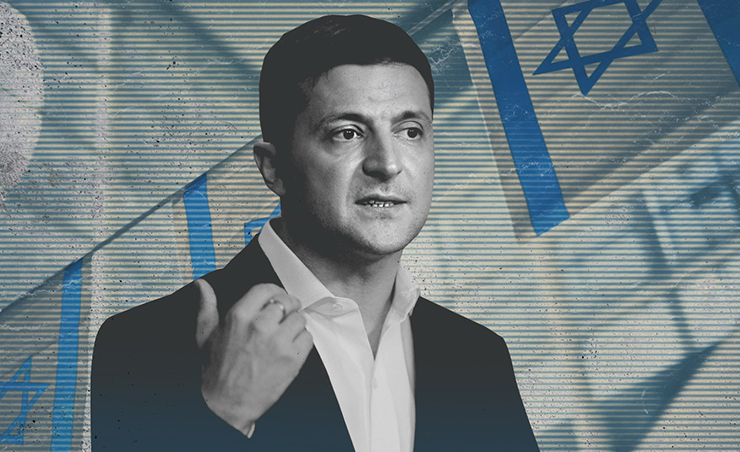
President Volodymyr Zelensky drafted and submitted a law to Ukraine’s parliament calling for the imposition of sanctions against Iran for a period of 50 years, Ukrainian state-media reported on 28 May.
“The document has already been submitted for consideration by the parliament’s leadership and the Committee on National Security, Defense and Intelligence,” state-media outlet Ukrinform said on Monday.
The draft was initially put forward on Saturday, 27 May.
“To approve the decision of the National Security and Defense Council of Ukraine dated May 27, 2023 ‘On the application of sectoral special economic and other restrictive measures (sanctions) to the Islamic Republic of Iran,’ put into effect by Presidential Decree No. 308/2023 dated May 27, 2023,” Ukrinform cites the draft as reading.
“The sanctions are to be imposed for 50 years,” it adds.
According to Kiev, the early hours of Sunday saw a massive Russian attack against Ukrainian forces, which involved the use of over 50 Iranian Shahed drones.
The Ukrainians claimed to have shot most of them down.
“This was the largest-ever drone attack on the capital since the beginning of the full-scale invasion, particularly using Shahed loitering munitions,” Ukrainian media cited a military official as saying.
Ukraine has consistently condemned Iran for its alliance with Russia, accusing Tehran of supplying military assistance, namely its Shahed 136 drones, to Russian forces fighting the Ukrainian army.
The Islamic Republic has denied supplying any drones to Russia during the conflict, admitting only to deliveries made before the war in Ukraine.
In November last year, Iranian Foreign Minister Hossein Amir-Abdollahian revealed that Tehran and Kiev had agreed to hold a meeting to discuss the drone issue diplomatically but that the US and its allies sabotaged the meeting.
The US pressured Ukraine to cancel the talks because of its wish to take advantage of the Iranian drone issue and use it as part of its policy against the Islamic Republic, Abdollahian claimed at the time.
Iran has repeatedly asserted its neutrality in the conflict between Russia and Ukraine, and has, on many occasions, offered to mediate between the two sides.
Washington’s obsession with crushing Russia has dismantled its Middle East agenda
By Robert Inlakesh | RT | May 29, 2023
Once the undisputed hegemonic power in the Middle East, thought to be indispensable for the security and success of a range of regional leaderships, the US has been fading into the background to the benefit of its adversaries.
As armed conflict erupted between NATO-backed Ukraine and Russia in February of 2022, the Joe Biden administration in Washington decided to throw its weight behind Kiev and focus on a project to bog down Moscow, while unleashing wave after wave of sanctions. Despite spending at least $75 billion dollars on assistance to Ukraine and making Russia the most sanctioned nation on earth, the US has failed to bring Moscow to its knees. In fact, one could say that it is the US that has been cut down to size in the global arena, especially in the Middle East, an area it once considered its own backyard.
As the months pass, blow after blow has been inflicted on US power in the Middle East. In direct opposition to Washington’s agenda, the Syrian Arab Republic was readmitted to the Arab League following a 12-year hiatus, paving the way to end the crisis in Syria, which the US seeks to prolong. China has also entered Middle East politics in a dramatic way, brokering an Iranian-Saudi rapprochement back in March, and this then spurred a wider normalization wave. Although the US attempted to play off the Saudi Arabia-Iran agreement as an acceptable and welcomed move, this has now clearly worked to collapse Washington’s long-term effort towards regional supremacy, which was based on feeding a proxy conflict between the two powers.
The failure of US sanctions
Western leaders publicly predicted that Russia’s economy would collapse under sanctions, a result which clearly has not materialized, with the IMF predicting the Russian economy will grow. Similarly, the US “maximum pressure” sanctions that were first introduced against Iran under the Trump administration, were expected to severely hinder the Islamic Republic’s ability to continue its developments in the defense field, but have failed to achieve those goals.
Russia is now exporting more oil than it did in 2021, as its relations with China, the primary global competitor to the US, have advanced. Gulf States have also repeatedly let the US down and refrained from yielding to pressure to cut oil production. There is also the example of Algeria, which has become Italy’s largest gas supplier and raked in over $50 billion dollars in oil and gas revenues during 2022 alone, even as it retains close relations with Moscow. And when it comes to the West’s ban on Russian gold bullion, the UAE, Türkiye and China have reportedly stepped in to fill the gap.
However, perhaps the worst blowback against Russia sanctions has been the nullification of previous limits to Moscow-Tehran economic relations. The two nations are already the most sanctioned on earth, so they need not worry about the potential consequences from their trade, which has encouraged further cooperation between them. Recently, Russian President Vladimir Putin and Iranian President Ebrahim Raisi signed a deal to finance an Iranian railway line as part of a North-South Transport Corridor.
Failed propaganda
The Biden administration has employed hardline propaganda tactics in order to demonize Russia and lionize Ukraine. Although for some Western audiences the arguments set forth may have proven effective, in the global community and especially the Middle East, such rhetoric is tiresome and clearly hypocritical.
After having illegally invaded Iraq, inflicting around a million deaths, over a concoction of factually-challenged conspiracy theories about weapons of mass destruction, it comes off as laughable that the US is now claiming to oppose illegal invasions. Former Bush administration officials, such as Condolezza Rice, have even appeared on national television shows in the US to condemn illegal invasions of foreign countries. Even former US President George W. Bush seemingly condemned the “holy unjustified and brutal invasion of Iraq… I mean of Ukraine” in a Freudian slip.
The US has positioned itself now as being opposed to the illegal occupation of foreign territory, in addition to claiming it stands in principle against annexation. When US Secretary of State Antony Blinken was asked by a CNN correspondent whether his government supported the annexation of Syria’s Golan Heights by Israel, he answered: “Look, leaving aside the legalities of that question, as a practical matter, the Golan is very important to Israel’s security,” again demonstrating Washington’s double standards. Washington continues to maintain its recognition of the Golan Heights as Israeli territory, which not only defies international law, but also the majority opinion at the United Nations.
The faltering image of the US
From the perspective of Middle Eastern nations, the US is overcommitted to the conflict in Ukraine, even as they have refrained from taking a clear side and instead remained neutral for the most part. Neither the people nor the governments of these countries buy the platitudes espoused by US officials when it comes to Ukraine. The stark difference between the way Palestinians and Ukrainians are portrayed for the exact same actions are enough to make eyes roll.
Now that China is presenting opportunities for countless Middle East nations, especially in the economic sphere, the US has a real competitor. However, the US continues to operate as if the world has not undergone a dramatic shift and refuses to rein in its allies. Ukraine in some respects is getting the special treatment that Israel has enjoyed for years: unlimited aid with few or no questions asked. In the case of Israel, as its government proceeds with introducing controversial legal reforms, takes steps to change the status quo at the al-Aqsa Mosque and pursues hardline far-right policies against the Palestinian people, all coming at a cost to Washington itself, the Biden administration refuses to put it in its place. What Israel is currently doing is embarrassing its own Arab allies that recently normalized ties, even threatening to put a wedge in relations with the likes of neighboring Jordan.
It is this refusal to recalibrate that is not only costing the US its influence, but also evaporating the prize of bringing Israel and Saudi Arabia together, which has clearly been a foreign policy achievement goal dear to the Biden administration. Now that Riyadh and Tehran have restored relations, the excuse of combating Iran’s regional influence is gone for negotiating a Saudi-Israeli rapprochement. The refusal to punish Israel for its constant provocations also makes it more difficult for Saudi Arabia to normalize with an unrestrained Israeli government that continues to insult the Muslim world and invites popular Arab support for the Palestinian cause. If there is no change to the arrogant and out of touch approach of the US, which rules with an iron fist and a “my way or the highway” approach, it will be the US itself that is going to be taking a hike from the Middle East.
Robert Inlakesh is a political analyst, journalist and documentary filmmaker currently based in London, UK. He has reported from and lived in the Palestinian territories and currently works with Quds News. Director of ‘Steal of the Century: Trump’s Palestine-Israel Catastrophe’.
Iran-made power plant parts replacing US models in SE Asia
Press TV – May 3, 2023
Spare parts manufactured by Iranian companies that are used in power plant maintenance services are replacing rival models from the US in electricity stations in Malaysia and Indonesia, according to an official in the Iranian Energy Ministry.
Abdolrasul Pishahang, who serves as CEO of Iran’s Thermal Power Plants Holding Company (TPPH), said on Wednesday that domestic firms had manufactured some 100,000 parts needed in servicing operations in Iran’s power plants in recent years.
Pishahang said Iranian-made parts are being supplied to power plants in the region and in Southeast Asia where countries previously relied on parts supplied by US companies.
“While responding to the domestic demand, these parts are exported to regional countries and are replacing US-made power plant parts in countries like Malaysia and Indonesia,” he was quoted as saying by ILNA news agency.
Iran has a relatively large electricity industry where dozens of thermal and gas power plants account for a bulk of the power generated in the country.
Total Iranian electricity generation capacity exceeded 90 gigawatts (GW) in October 2022 although Energy Ministry figures suggest production reached a record of nearly 66 GW in the peak demand time last summer.
Sanctions imposed by the US on Iran’s energy sector in 2018 caused the country to introduce measures to cut reliance on foreign suppliers for parts and equipment needed in its power plants.
TPPH’s Pishahang said some 34 new power plant units had been connected to Iran’s national power grid since August 2021.
Iran seizes another oil tanker
RT | May 3, 2023
Iran’s Islamic Revolutionary Guard Corps (IRGC) Navy used fast-attack boats to seize an oil tanker in the Strait of Hormuz on Wednesday, according to the US Navy, which released a video of the incident. Tehran confirmed the seizure, the second such retaliatory incident since the US reportedly blocked a consignment of Iranian crude oil last week.
The Niovi, a Panama-flagged tanker managed by Greece-based Smart Tankers, was swarmed by a dozen IRGC attack boats as it transited the strait, the US Navy said in a statement. Video footage released by the Navy showed the boats escorting the tanker, apparently after ordering it to redirect.
The ship had left Dubai at midday on Tuesday and was due to arrive at the Emirati port of Fujairah by Wednesday afternoon, but was turned around and diverted to Iranian waters.
Officials in Tehran told the Iranian judiciary’s Mizan news agency that the Niovi was impounded following an unspecified legal complaint by a plaintiff.
The incident came after the Advantage Sweet was stormed by Iranian commandos in the Gulf of Oman last Thursday. The Marshall Islands-flagged vessel is owned by a Chinese firm, but had been chartered to transport a cargo of oil to the US for American petroleum giant Chevron.
Dramatic video footage released by Tehran showed the commandos rappelling from helicopters onto the ship’s deck, before moving toward its bridge.
The US navy described both seizures as “contrary to international law and disruptive to regional security and stability.” However, American officials did not mention the fact that immediately prior to Thursday’s seizure, US authorities impounded a shipment of Iranian oil bound for China. Quoting anonymous officials, the Financial Times reported that the ship was redirected toward the US in an apparent sanctions enforcement operation.
The US and its allies often block the transport of Iranian oil at sea, and Tehran usually responds in kind. Iranian forces seized two Greek-flagged vessels in the Strait of Hormuz last year after Greece allowed the US to drain an Iranian tanker of oil in Greek waters. Back in 2019, Iran impounded two British-flagged tankers after the UK seized an Iranian tanker in Gibraltar.
US senators demand Biden seize more Iranian oil tankers
The Cradle | April 28, 2023
A bipartisan group of US lawmakers has urged President Joe Biden to enable the Department of Homeland Security’s Homeland Security Investigations (HIS) to seize more Iranian oil and gas shipments.
“It is unacceptable that a US government program, which makes the United States and its allies safer, provides funds to remediate the victims of terrorism, and generates income for the United States in a cost-effective manner has been allowed to languish,” a letter drafted by Senators Joni Ernst and Richard Blumenthal reads.
The letter then highlights that the HIS has not been allowed to conduct what amounts to maritime piracy for more than a year before lamenting the success of the Islamic Republic in bypassing US sanctions to boost its oil and gas exports.
“As Iranian oil sales continue to rise, and the IRGC continues to target US citizens and servicemembers, including inside the US, it is imperative that we use all available government assets to limit the activities of the Iranian regime.”
Other senators that signed the letter included Ted Cruz, Steve Daines, Lindsey Graham, Maggie Hassan, Mark Kelly, Joe Manchin, Jerry Moran, Marco Rubio, Kyrsten Sinema, and Ron Wyden.
“The failure to support HSI’s Iranian oil seizure and disruption operations in FY22, despite available funds, is a policy choice that must be reversed,” the senators stressed.
HIS was formed in 2019 during the government of former president Donald Trump. According to the lawmakers, the agency is responsible for pillaging nearly $230 million in Iranian crude and fuel oil.
Its operations have reportedly been curtailed by “policy limitations” from the Department of Treasury’s Executive Office for Asset Forfeiture.
Despite an ever-intensifying “‘maximum pressure” sanctions campaign from the west, Iranian oil exports have reached their highest level since 2015.
According to Iranian Oil Minister Javad Owji, Iran exported 83 million more oil barrels in the past 12-month period compared to the 12 months before. At the same time, gas exports increased by 15 percent over the past 12 months.
Iranian crude exports fell to as little as 100,000 bpd in 2020 from over 2.5 million bpd in 2018.
Tehran has been able to evade the US-imposed sanctions, partly through oil sales to China, Iran’s biggest customer, and increase its exports. To avoid sanctions, most of Iran’s crude exports to China are rebranded as crude from other countries. This is done by forging documents to hide the origin of Iranian oil cargo.
See also: Quiet US Seizure Of Iranian Crude Prompted Iran’s Capture Of Houston-Destined Tanker
or go to
Aletho News Archives – Video-Images
From the Archives
Israel Would Have No Qualms About USS Liberty-Style FALSE FLAG If Iran Campaign Falters – Analysts
By Ilya Tsukanov – Sputnik – 18.06.2025
Donald Trump is mulling whether or not to join Israel’s aggression against Iran as Tel Aviv faces problems sustaining its defenses against growing counterstrikes, and apparently lacks a realistic game plan for an end to hostilities after failing to achieve its goals. Analysts told Sputnik how the US could be ‘nudged’ into the conflict.
“The US is already assisting Israel with supplies, intel, refueling support, etc. One of the many US posts in the region could be attacked for a casus belli,” former Pentagon analyst Karen Kwiatkowski explained.
“If Trump doesn’t comply with Israel’s demand” and join its aggression voluntarily, “a false flag may be needed” to drag the US in, Kwiatkowski, retired US Air Force Lt. Col.-turned Iraq War whistleblower, fears.
Netanyahu has a diverse array of options at his disposal, according to the observer, including:
- a false flag against US assets abroad blamed on Iran or one of its Axis of Resistance allies, like the Houthis
- a US domestic attack or assassination blamed on Iran
- Iranian air defenses ‘accidentally’ hitting a civilian jetliner carrying Americans
- use of a dirty bomb or nuclear contamination somewhere in the region blamed on Iran
- even blackmailing by threatening to use nukes against Iran if the US doesn’t join the fight
Kwiatkowski estimates that Israel probably has “enough blackmail power” against President Trump and Congress to avoid the necessity of a false flag operation, but a “USS Liberty-style” attack, targeting the soon-to-be-retired USS Nimitz supercarrier that’s heading to the Middle East, for example, nevertheless cannot be ruled out entirely, she says. … continue
Blog Roll
 Aletho News
- The US bombed the Shahs house lol
- The London Ambulances Attack: Of Course It Was A False Flag
- Embarrassing Pivot: U.S. considers dropping Iran oil sanctions amid war
- US has 2 months of rare earths left to replenish weapons amid Iran war: Report
- Strait Of Hormuz closure brings Empire to brink
- Iran controls Strait of Hormuz, dictates terms of war and peace as US excursion backfires
- Outlasting the Superpower: The Reasons Why Iran is Beating uhe US and Israel
- Top PMU commander, over a dozen fighters killed in new US strikes on Iraq
- Is Netanyahu’s war gamble threatening the future of ‘Israel’?: FT
- Smotrich calls for annexation of South Lebanon to Litani River
- If Americans Knew
- ‘Forever live by the sword’: Understanding Israelis’ massive support for Iran war
- UN’s special rapporteur on human rights says Israel is systematically torturing Palestinians
- Trump White House plagiarized Iran war manifesto from Israel-aligned think tank
- Gaza says 6–10 patients die daily waiting for treatment abroad as Israel blocks medical evacuations
- ‘Substantial evidence’ of double-tap strike in killing of Gaza’s Hind Rajab
- ‘Do Not Want To Die For Israel’: Doubts About Trump’s Iran Strategy Spread Among Troops
- Instead of taking Joe Kent’s claims seriously, the media is disregarding him as an antisemite
- Joe Kent’s Explosive Interviews about his Resignation over the Iran War
- Israel poised to take over southern Lebanon; settlers wreak havoc in West Bank – Not a ceasefire Day 165
- From Sde Teiman, the truth about Israel’s military justice system has been set free
- No Tricks Zone
- Devastating Assessment Of Comirnaty Vaccine By Former Senior Pfizer Europe Toxicologist
- New Study: CO2 Is ‘Effectively Negligible’ As An Explanatory Climate Change Factor Since 2000
- Former Pfizer Toxicologist Dr. Helmut Sterz Tells Bundestag Hearing Pfizer Vaccine Should Have Never Been Approved
- Energy Expert: Germany’s Nuclear Phaseout Was A “500 Billion Euro Mistake”
- New Research: South Australia’s Mid-Holocene Sea Surface Temperatures Were 4°C Warmer Than Today
- Storing Green Energy To Last Germany 10 Days Would Require A 60-Million Tonne Battery
- New Studies: UK Sea Levels Were 4 Meters Higher Than Today During The Mid-Holocene
- Destructive Green New Deal: German Energy And Metal Group Warns Of Drastic Crisis
- New Study Documents A 20-Year Pause In Arctic Sea Ice Decline – Driven By Internal Variability
- Wake-up Call: Survey Shows Majority Of Germans Now Favor Postponing Climate Targets!
 Aletho News