Iran Ramps Up Oil, Gas Production, Exports as Western Sanctions Fail
By Ilya Tsukanov – Sputnik – 16.08.2023
Washington’s years-long effort to bring Iran’s oil exports down “to zero” has failed to bear fruit, with fresh restrictions put in place by the Biden administration last fall to “severely restrict” the Islamic Republic’s crude sales culminating in the nation’s exports to its biggest customer hitting a decade-long high.
Iran has announced plans to further ramp up the creation and implementation of new oil and gas projects as the Middle Eastern nation projects its biggest bump in sales to energy-hungry China since 2013.
Sixty-seven oil and gas projects currently in development worth the equivalent of $15 billion will be put into operation before the end of the current Iranian calendar year in March 2024, First Vice President Mohammad Mokhber has announced.
Sixteen additional projects, worth an additional $21 billion, continue to be developed, according to Mokhber’s figures.
On Monday, Iranian Oil Minister Javad Owji indicated that Iran had completed energy projects worth over $12 billion over the past year, and that “not a single cent” of the nation’s oil revenues have been blocked by sanctions since the Raisi administration took power in 2021.
Owji said Iran’s oil production has reached 3.19 million barrels per day (bpd), with plans to increase output to 3.3 million bpd before the end of the month, with the production of gas condensates reaching the equivalent of between 700,000 and 800,000 barrels per day.
In a related development, Iranian government spokesman Ali Bahadori Jahromi said Tuesday that Phase 11 of the massive South Pars gas field owned jointly by Iran and Qatar would become operational in the near future in a ceremony to be attended by President Raisi and Oil Minister Owji. The gigantic Persian Gulf field is estimated to have up to 1,800 trillion cubic feet (51 trillion cubic meters) of gas, plus 50 billion barrels of natural gas condensate, with the energy wealth split between the two countries.
KPLR, a Houston-based commodities analytics firm, calculated this week that Chinese imports of Iranian crude have soared to their highest levels since 2013 in 2023, with the Islamic Republic estimated to export up to 1.5 million barrels per day to the Asian economic giant throughout August – up from an average of 917,000 bpd in exports reported between January and July.
Also this week, Iran’s Plan and Budget Organization chief Davoud Manzour told lawmakers that Iran’s oil revenues have increased by 42 percent since March.
Iran’s National Oil Company expects crude production to reach 3.5 million bpd per day by September – up from a low of just below 2 million bpd in late 2020, at the height of Washington’s attempts to sanction Tehran into submission and bring the country’s energy exports down “to zero.”
The Biden administration’s stated goal of reactivating the Iran nuclear deal has not stopped the White House from ramping up restrictions against the oil-rich nation, with the US Treasury moving to “severely restrict” Iranian energy exports last fall, including by targeting alleged “front companies” set up in China, India and the UAE.
But the sanctions have reportedly failed to work as planned, with energy-hungry nations around the world turning to Iran, Russia and other exporters shunned by Washington and its allies, which slapped restrictions on Russian energy in 2022, resulting in a dramatic spike in global demand and soaring prices.
The US has accompanied efforts to restrict Iranian oil sales with the deployment of additional air power, warships and 3,000 additional Marines to the Gulf in recent weeks, ostensibly in a bid to crack down on Iranian seizures of commercial vessels in neutral waters. Tehran says its crackdown has been aimed at stopping smuggling, and has called on regional nations to ensure Gulf security independently, without the interference of “outsiders” like the United States.
Pakistan’s Reported Suspension Of Russian Crude Oil Imports Was The Regime’s “Parting Gift”
BY ANDREW KORYBKO | AUGUST 15, 2023
The News International cited unnamed sources on Sunday to report that Pakistan suspended its import of Russian crude oil on the pretext that it’s not affordable to refine despite its lower price due to the lesser amount of petroleum that’s produced when compared to competitors’ crude. The problem with this explanation is that these refining differences were known ahead of time but the whole point in importing Russian crude was to get it at a lower price and reduce dependence on the Gulf Kingdoms.
Former Petroleum Minister Musadik Malik, who the abovementioned report claimed had insisted in vain on his country’s companies importing more Russian crude, earlier envisaged Moscow providing over one-third of his country’s needs. Nevertheless, it also deserves mentioning that he was reported to have told the National Assembly last week that Pakistan planned to officially pull out of its decade-old gas pipeline deal with Iran under pressure from US sanctions in spite of this project’s promising potential.
The precedent is therefore established for suspecting that US sanctions might also have played a role in Pakistan’s reported decision shortly thereafter to suspend its Russian crude oil imports too. Taken together, the impression is that the fascist post-modern coup regime that was installed after former Prime Minister Imran Khan’s (IK) scandalous ouster in April 2022 decided to destroy any hopes of energy security and the sovereignty it entails as their “parting gift” around the time of parliament’s dissolution.
This development is supposed to precede the next elections by 90 days, but there might be a delay since the latest census results require redrawing constituencies, which might not be completed within the next three months. In any case, the point is that IK’s replacements left a legacy of energy insecurity and lost sovereignty, not to mention economic collapse and the de facto imposition of martial law. The first two consequences are the most relevant to this analysis and will therefore be elaborated further.
The Intercept published a leaked copy of the Pakistani cable from March 2022 sent by its former Ambassador to the US warning about American pressure over Russia. His interlocutor, Assistant Secretary of State for South and Central Asia Donald Lu, made no secret of the fact that the US considered IK’s energy-driven ties with Russia to be a threat to its national security. For that reason, Washington signaled that it wanted him gone otherwise there’d be severe consequences for Pakistan.
IK’s subsequent removal a little over one month later predictably led to his replacements dillydallying on the strategic energy deal that he sought to advance during his trip to Moscow in late February 2022. Although they eventually imported a test shipment of Russian oil earlier this summer, the over year-long delay between his meeting with President Putin and their purchase was suspicious. It now appears in hindsight that the only purpose of going through with this was to push a domestic political agenda.
The regime probably never intended to implement Musadik’s ambitious plans but instead sought American permission for the previously mentioned purchase solely to claim that it supposedly proves that they weren’t installed by the US as punishment for IK’s Russia policy. Following this first-ever import and the superficial fulfilment of their soft power objective, they then spent the rest of the summer sending false signals to Russia that they were on the brink of finally reaching that strategic energy deal.
It can only be speculated whether the former Petroleum Minister was in on this plot or if he sincerely came along to realizing the wisdom of IK’s plans in this respect and truly wanted them to succeed, but that doesn’t change the ultimate outcome either way. At the end of the day, Pakistan strung Russian experts and negotiators along for over a year despite nothing coming of the latter’s efforts, which they continued in good faith with the intent of strengthening their partner’s energy security and sovereignty.
Pakistan’s reported suspension of Russian crude oil imports probably also dooms their plans for the Pakistan Stream gas pipeline, which was supposed to become the flagship Russian project in Pakistan and an anchor for more future investments. The Kremlin might not want to waste any more time negotiating with Islamabad after feeling like it was just fooled for over a full year, and the bad blood between them over these two failed deals could prevent their ties from ever becoming strategic.
Private businessmen will still try to scale real-sector trade between their countries, and ties will remain cordial at the official level, including at multilateral fora on Afghanistan and other issues of shared interests. What’s expected to change, however, is that Russia will no longer continue to treat Pakistan like a potential strategic partner after this debacle. In practice, it won’t consider that country worth the opportunity cost of investing its time in at the expense of expanding ties with more serious partners.
Its finite human resources are better invested in Africa nowadays, whose countries are sincere in their desire for strategic relations with Russia, unlike Pakistan which just wasted over a year dillydallying on a strategic energy deal only to ignominiously abandon it on a misleading pretext. The fascist post-modern coup regime’s “parting gift” to the Pakistani people around the time of parliament’s dissolution ahead of likely rigged elections was that they killed the chance for strategic relations with Russia once and for all.
How Americans released in swap deal engaged in espionage activities in Iran
By Khosro Mokhtari | Press TV | August 12, 2023
Iran’s foreign ministry on Thursday issued a statement confirming reports of a prisoner swap deal between Tehran and Washington, which includes the unfreezing of Iranian funds abroad.
“Iran has received the necessary guarantee for the US commitment to its obligations in this regard,” the statement noted, adding that the transfer of funds has always been a priority for the ministry.
Prior to the ministry statement, IRNA cited official sources as saying that five American prisoners will be released from Evin Prison “within the framework of an agreement mediated by a third party.”
The report further said that more than 10 billion dollars of Iran’s frozen assets in South Korea and Iraq will be unblocked under the agreement that was reached following extensive two-year negotiations.
Five prisoners each from Iran and the US will be exchanged under the deal. The exchange, however, will happen only once the money is deposited into Iranian accounts.
Five Iranians who would be freed as part of the swap agreement were jailed for trying to circumvent US sanctions, according to Washington’s claims, while five Americans in Iran were booked for espionage.
Late on Thursday, Iran’s deputy foreign minister and nuclear negotiator Ali Bagheri Kani took to X, formerly known as Twitter, to announce that the process of releasing billions of dollars of Iranian assets had commenced.
“Tehran has received the guarantee of Washington’s commitments. The release of several Iranians who were illegally detained in America is in this context,” he wrote.
Foreign minister Hossein Amirabdollahian, in a tweet on Saturday, said since the beginning of President Ebrahim Raeisi’s government, dynamic diplomacy was put into action to “obtain the maximum national interests and the rights of the great nation of Iran.”
“In addition to continuing the process of neutralizing illegal sanctions, the path of negotiation and diplomacy was never abandoned. Efforts continue to obtain final results and full realization of Iran’s rights,” the top diplomat wrote, in reference to the unblocking of Iranian assets abroad.
Among three American prisoners who will be freed as part of the swap agreement include Emad Shargi, Murad Tahbaz, and Siamak Namazi. The other two have not been publicly identified.
Emad Shargi
Emad Edward Sharqi, who was born in Iran and holds American citizenship, was sentenced to 10 years in prison in January 2021 on charges of espionage and gathering military information.
He entered Iran in 2016 in the guise of a businessman, but the economic activity was actually a cover for his espionage in the military field, especially in the field of transportation and helicopter warfare.
With the help of his accomplices, Sharqi collected information about Iran’s helicopter industry. The documents recovered from his possession show his activities were in the field of military espionage, not business or trade as was reported in sections of Western media.
The purpose of these actions was to help the US policymakers implement the sanctions regime against Iran to hit the international supply chain for helicopter spare parts intended for the country.
Sharqi was arrested for the first time in April 2018 and remained in prison until December of that year before he was released on bail. But before the appeals court was held, he planned to escape from Iran.
While staying in a private home, unaware of Iranian intelligence monitoring, he contacted the American spy network and asked them to arrange for him to be secretly transferred abroad.
On the day of the planned escape, he met with a spy aide, removed the SIM card and turned off his cell phone to prevent tracking. After that, they headed to western Tehran’s bus terminal where, using a false identity, he bought a ticket to travel to Iran’s western border.
Iranian intelligence services deliberately allowed the escape to proceed almost to its planned point, with the aim of discovering and arresting his accomplices.
Sharqi and several others were eventually arrested and convicted under Iranian law.
Murad Tahbaz
Murad Tahbaz, who was born in the United Kingdom and also holds an American passport, was sentenced to 10 years in prison in November 2019 for being the ringleader of a spy network that operated under the guise of environmentalism.
Tahbaz co-founded the Persian Wildlife Heritage Foundation, formally a conservation organization whose primary concern was the endangered Asiatic cheetah which lives mainly in the northern Dasht-e Kavir desert of Iran.
The same geographical area is also home to two of Iran’s largest rocket sites, which are under strict surveillance, and long-term observation of the activities of these self-proclaimed environmentalists revealed that they were more interested in those facilities.
Furthermore, monitoring of Tahbaz’s contacts revealed that he was in close contact and communicating on a regular basis with American, British and Israeli spy agencies.
The investigation showed that certain individuals involved were misled about the true intent of the project, which was falsely presented in Western media as alleged evidence of collective innocence.
Siamak Namazi
Siamak Namazi was born in Iran and moved to the United States with his wealthy family in the early years of the Islamic Revolution.
In October 2016, Namazi was sentenced to 10 years in prison for espionage and cooperation with the US government and foreign intelligence networks.
At the end of the 1990s, he tried to become an intermediary in making deals between American and Iranian companies, founding the consulting company “Atieh Bahar Consulting” in Tehran.
Namazi’s company concluded a gas agreement with the UAE-based company “Crescent Petroleum” on the export of gas to Sharjah, but the project resulted in costs only for the Iranian side and an Emirati lawsuit of $32 billion.
Evidently, it was a well-planned fraud aimed at harming Iranian interests, for which Namazi was rewarded with the position of head of strategic planning at Crescent Petroleum.
Over time, it was revealed that “MIC” was actually a covert network filled with US government employees who later held numerous other anti-Iranian positions.
These include the position of editor-in-chief of the VOA Persian propaganda channel, jobs at the US government’s Institute for National Strategic Studies (INSS) at the Pentagon’s National Defense University, the Office of Iranian Affairs at the US State Department, etc.
Namazi himself participated in gathering information about the Iranian pharmaceutical network, whose extensive study he presented at the US government’s Wilson Center (WWICS).
This activity under the guise of humanitarian work had the purpose of making it easier for American hawks to increase sanctions on Iran, that is, to show them how and where to hit the Iranian pharmaceutical industry.
Namazi was eventually arrested in October 2015.
His father, Iranian-American businessman Baqer Namazi, who had been convicted in Iran on spying charges, was released and allowed to leave the country in October last year on humanitarian grounds.
Namazi, 85, was arrested on February 22, 2016, when he came to Iran on the pretext of visiting his jailed son. He was sentenced to 10 years in prison for “collusion with an enemy state.”
US politicization of cases
The cases pertaining to these American spies were subjected to politicization by the US government, whose official narrative was followed by all Western media organizations, without a single exception.
The legal basis of cases filed against them by the Iranian judiciary was ignored, according to observers, and the same clichéd stories about groundless arrests, show trials and harsh prison conditions were repeated by the US officials and the mainstream media.
According to legal researcher Alireza Sadeghian, Westerners jailed in Iran for spying are often described as “political hostages, businessmen, environmentalists, humanitarians, activists, human rights fighters to generate sympathy for them.”
“This American self-righteousness is not questioned in the West, as if the US is an authoritative legal model, not the country with the largest number of prisoners, a far higher incarceration rate and prison violence rate compared to Iran,” he said on the Press TV website, referring to blatant US duplicity and hypocrisy.
To influence public opinion in the West, US media would publish emotional statements from family and lawyers, describing them as “innocents” who were “wrongly framed” by the Iranian authorities.
After the senior Namazi was released last October, Jared Genser, an attorney and pro-bono counsel for the Namazi family, was quoted as saying by PBS that he was “wrongfully held in Iran for more than six-and-a-half years,” disregarding legal merits of the case.
In May 2022, an AFP report stated that Americans and Europeans have been held in Iran “as part of a deliberate policy of hostage-taking to extract concessions from foreign governments.”
‘Hostages & ransom’ narratives
Western pundits and so-called rights groups fail to mention Iranians languishing in US prisons, arguing that the Americans are being exchanged for “ransom,” which is the illegally frozen Iranian money.
Such rhetoric, according to experts, is reminiscent of the 1979-1981 American manipulations, when the staff of the US embassy in Tehran was detained, according to the Western narrative, due to Washington’s refusal to return billions of dollars stored in American banks.
Even at that time, Washington denied its widespread espionage activities in Iran, despite undeniable evidence in the form of discovered equipment and classified documents in the seized embassy.
The American audience was deprived of the true motives of the embassy seizure. The captives were called hostages, and the demand for the return of frozen assets was misrepresented as a ransom, alluding that billions of dollars in frozen funds were US property.
“The claims of Iran randomly arresting American citizens for financial and other benefits is simply false and empirically unproven, as evidenced by the cases of temporary detention of 10 American sailors, three mountaineers, and numerous other examples,” said Mahmoud Mortazavi, a political analyst.
“On the other hand, the released Iranians in the United States were not arrested for espionage but for trying to circumvent US sanctions, i.e. trade for mutual benefit.”
He hastened to add that, unlike American spies in Iran, they did not plan industrial espionage, plant sabotage, assassination of American commanders, or other destructive activities.
Pakistan Risks Losing Much More Than Affordable Gas If It Abandons Its Iranian Pipeline Plans
Another Consequence Of The Post-Modern Coup
BY ANDREW KORYBKO | AUGUST 12, 2023
Pakistan’s Dawn newspaper reported early last week that Petroleum Minister Musadik Malik told the National Assembly that their country plans to suspend its obligation to purchase Iranian gas due to fear of US sanctions and that international arbitration will likely determine the penalty that they’ll pay. After the news broke, he then tried explaining away this scandal by insisting that his side is actively exploring “creative solutions” to avoid scrapping this decade-old pipeline, but the damage was already done.
No serious observer thought that Pakistan had the political will to defy the US on this issue after the post-modern coup that took place in April 2022. Former Prime Minister Imran Khan (IK) was ousted via superficially “democratic” means that were supported by the US as punishment for his multipolar policies. In particular, top regional diplomat Donald Lu expressed concern to the former Pakistani Ambassador the month prior about his country’s economic ties with Russia.
The First Post-Coup Attack Against Pakistan’s Energy Security
This was confirmed by the cable that the Ambassador sent to Islamabad after their meeting, which was just leaked last week by The Intercept and analyzed here. Its relevance to the lede is that this document removes any doubt that the US is opposed to Pakistan obtaining energy security. Lu was reported by the Ambassador to have complained about the former premier’s trip to Moscow precisely because it “was for bilateral economic reasons” driven by IK’s desire to clinch a major energy deal with President Putin.
Seeing as how Pakistan’s pursuit of energy security via the aforementioned major deal with Russia that IK wanted to clinch in Moscow was one of the reasons why the US prioritized the post-modern coup against him, it therefore follows that it wouldn’t support Pakistan pursuing the same via Iran either. While it’s true that Pakistan recently imported Russian oil for the first time, this was with US approval out of desperation to see whether its proxy’s collapsing economy could be saved through these means.
Rethinking The Reasons Behind The Regime’s Import Of Russian Oil
There are several reasons, however, why it’s unlikely that IK’s envisaged energy deal will come to pass. First, Pakistan requires US approval to continue buying Russian resources, which can’t be taken for granted. Second, reliable Pakistani media recently reported about technical obstacles to these plans. Third, the latest release of IMF funds might have come with the unofficial condition of buying oil from elsewhere. And fourth, the initial purchase could have been political to deflect from IK’s accusations.
To elaborate, his replacements ran with the narrative shortly after receiving their first-ever import of Russian oil to claim that it allegedly puts to rest any speculation about them coming to power with US support as part of the latter’s plot to sabotage relations with Moscow. Their subsequent delay in setting up a “Special Purpose Vehicle” for taking their plans to the next level reinforces suspicion that this purchase was largely for domestic political purposes, ergo another reason why the US approved it.
Rethinking The Reasons Behind Pakistan’s Pipeline Deal With Iran
Political motivations could also have been at play when Pakistan agreed to build a gas pipeline with Iran in 2013, which came amidst deteriorating ties with the US brought about by the Abbottabad raid in 2012 and NATO’s cross-border attack from Afghanistan the year prior in 2011. In this case, the purpose would have been to signal its displeasure with the US in the hopes of prompting it to initiate a meaningful rapprochement, not advancing a partisan agenda at home like its import of Russian oil did.
Nevertheless, the point is that the recent problems in finalizing an oil deal with Russia are eye-opening enough to inspire a rethinking of Pakistan’s calculations in agreeing to its gas pipeline deal with Iran a decade ago now that the latter is also on the rocks. The failure of either plan, let alone both, will harm the country’s energy security by depriving it of the opportunity to reliably receive low-cost oil and gas respectively.
Qatar’s Place In The US’ Post-Coup Strategy Towards Pakistan
Comparatively more expensive resources from the Gulf would then be the only realistic solution for meeting Pakistan’s needs, which seems to be exactly the outcome that the US wants since it prefers for Pakistan to receive them from those countries than from Russia and Iran. The best-case scenario from the US’ perspective is for Pakistan to become dependent on Qatari LNG since Washington nowadays regards Doha as more geostrategically reliable in the New Cold War than Saudi Arabia or the UAE.
Towards A US-Led Qatari-Pakistani-Ukrainian Quadrilateral
Despite their sharp differences during the Trump Administration, they’ve since patched up their problems so well under the Biden one that the US Ambassador to Qatar bragged earlier in the month that “Our diplomatic ties are stronger than they have ever been.” This followed the Qatari Prime Minister’s visit to Kiev in late July that came shortly after the Ukrainian Foreign Minister’s first-ever one to Islamabad just a week before, where he was suspected to have clinched another secret arms deal.
India’s Economic Times then reported last week that “Pakistan seeks Gulf state help for shipping weapons to Ukraine”. Although no country was named, the abovementioned sequence of events strongly suggests the formation of a US-led quadrilateral involving Qatar, Pakistan, and Ukraine, the first two of whom are already close energy partners. Bearing all this in mind, there’s reason to believe that Qatar might be the unnamed Gulf state in that Indian media report.
Accelerating The Erosion Of Pakistani Sovereignty
Oman cultivated a reputation for neutrality over the decades, which Saudi Arabia and the UAE are now emulating towards the NATO-Russian proxy war in Ukraine through their refusal to arm Kiev or sanction Russia. Bahrain and Kuwait, meanwhile, have always been comparatively smaller players in international affairs. By contrast, Qatar is known for the leading role that it played in the “Arab Spring”, and its attendant reputation for boldness and rapprochement with the US cast suspicion on it in this context.
All of this pertains to the lede since Pakistan would be forced to become more dependent on Qatari LNG if it officially scraps the gas pipeline deal with Iran, thus leading to higher financial costs and less sovereignty in the long run. The first consequence stands on its own but also segues into the second since it could lead to Pakistan needing endless IMF bailouts with all that entails for its sovereignty, not to mention the very high likelihood that Doha will exploit its energy role over Islamabad to other ends.
Concluding Thoughts
To wrap it all up, the post-modern coup that the US supported against IK in April 2022 was intended to deal a deathblow to Pakistan’s sovereignty, and it arguably succeeded. That country’s energy security will now no longer be ensured by diversifying its portfolio with low-cost Russian and Iranian oil and gas imports respectively. This will force it to pay higher costs from other suppliers, which will keep it in a perpetual cycle of financial dependence on the IMF with all the associated political strings.
Moreover, considering the trend of many countries replacing oil with gas, Pakistan’s capitulation to US sanctions pressure and resultant decision to pull out of its pipeline deal with Iran will make its energy security much more dependent on its already close Qatari industry partner. The emerging triangle between those two and the US could therefore lead to Pakistan entering into dual-vassalhood status vis-a-vis its “senior” partners, which would make it very difficult to ever regain its lost sovereignty.
Pakistan suspends pipeline project with Iran under threat of US sanctions
The Cradle | August 8, 2023
Pakistan has suspended its participation in building a major gas pipeline with Iran due to the threat of US economic sanctions, Minister of State for Petroleum, Dr. Musadik Malik, said in written testimony to the National Assembly on 7 August.
“Pakistan has issued a Force Majeure and Excusing Event notice to Iran under the Gas Sales and Purchase Agreement (GSPA), which resultantly suspends Pakistan’s obligations under the GSPA,” Malik wrote, noting that Iran disputes the validity of the notice.
“The matter will be finally settled through arbitration, should Iran take this matter to arbitration,” the minister added. “The exact amount of penalty, if any, is subject to the outcome of the arbitration to be determined by the arbitrators.”
In May, Pakistani officials warned that Islamabad faces paying an $18 billion fine if it fails to complete the Iran-Pakistan Gas Pipeline project by March 2024.
In his Monday statement, Malik added that the government is “engaged” in talks with US officials to plea for an exemption from sanctions for the project.
“All necessary actions are being taken to construct the gas pipeline at the earliest,” he stressed.
He also confirmed that the pipeline – which can supply 750 million cubic feet of gas per day to Pakistan – “is stalled due to international sanctions on Iran” and will only resume once the sanctions are lifted and no longer threaten Pakistan.
“No date and deadline can be given for the completion of the Iran-Pakistan Gas Pipeline Project,” the official said.
According to the terms of the GSPA, each country was obligated to construct a portion of the pipeline on its territory, and the first flow of Iranian gas to Pakistan was to start on 1 January 2015. Iran completed its portion of the pipeline in 2011.
As part of Pakistan’s dire economic crisis, the nation faces regular blackouts lasting 12 hours per day, if not longer.
To face this crisis, the Pakistani finance ministry revealed plans on 8 August to purchase more electricity from Iran. The decision was reportedly taken during a session of the Economic Coordination Committee chaired by Finance Minister Ishaq Dar.
Islamabad’s moves come less than a week after Iranian Foreign Minister Hossein Amir-Abdollahian visited the South Asian nation, where he signed a five-year commercial trade agreement.
The two countries also recently agreed to bolster defense cooperation to ensure border security.
Furthermore, in June, Islamabad announced a barter trade agreement with Russia, Iran, and Afghanistan to ease the mounting pressure on its depleted foreign reserves.
Iran responds to US military moves with more firepower
RT | August 6, 2023
Iran has beefed up the weaponry of its naval forces, arming them with such tools as additional drones and precision missiles with ranges up to 1,000 kilometers (620 miles), amid rising tensions with the US over shipping traffic through the world oil market’s most crucial bottleneck.
The Iran Revolutionary Guard Corps (IRGC) Navy officially took possession of the new gear at a ceremony on Saturday, state-run media outlets reported. The systems include reconnaissance and combat drones, as well as electronic warfare equipment, truck-mounted missile launchers, and hundreds of cruise and ballistic missiles.
The announcement came after reports earlier this week that US military officials had drawn up unprecedented plans to place armed troops on commercial trips in the Strait of Hormuz. Just last month, the Pentagon announced deployments of additional fighter jets and naval assets to the Persian Gulf region in response to “alarming events,” such as Iranian seizures of commercial vessels.
Brigadier General Abolfazi Shekarchi, a spokesman for the Iranian military, denounced Washington’s proposed deployment of troops on private ships. “What do the Persian Gulf, the Gulf of Oman and the Indian Ocean have to do with America?” he told Iran’s Tasnim news agency. “What is your business here?”
About 20% of the world’s oil supplies, or one-third of all seaborne crude shipments, go through the Strait of Hormuz, the narrow passage that connects the Persian Gulf to the Gulf of Oman and the Arabian Sea. Tehran typically accuses the operators of detained ships of shipping violations, such as oil smuggling. Some of the vessels have only been released after other countries free detained Iranian tankers.
The new missiles give the IRGC Navy better accuracy and longer range than it previously had available, commander Alireza Tangsiri said. “The cruise missiles can attack several targets simultaneously, and the commands can be altered after takeoff,” he added.
US-Iran tensions have risen since Washington pulled out of the Iran nuclear deal in 2018. Efforts to revive the agreement, known officially as the Joint Comprehensive Plan of Action (JCPOA), have failed, despite the change in US leadership when Joe Biden succeeded Donald Trump as president in January 2021.
Washington sanctions 14 Iraqi banks in new anti-Iran ‘crackdown’
The Cradle | July 20, 2023
The US Treasury Department and the Federal Reserve Bank of New York have barred 14 Iraqi banks from conducting transactions in US dollars as part of a “sweeping crackdown” to stop Iran and other sanctioned nations from acquiring the greenback, the Wall Street Journal (WSJ) reported on 19 July.
US officials say the new sanctions were issued after discovering “information” showing the banks “engaged in money laundering and fraudulent transactions, some of which may have involved sanctioned individuals and raised concerns that Iran could benefit.”
“We have strong reason to suspect that at least some of these laundered funds could end up going to benefit either designated individuals or individuals who could be designated,” a senior US official told the WSJ.
The banks targeted by the punitive measures are small institutions reportedly “heavily involved” in US dollar transactions.
According to Iraq’s Shafaq News, the targeted banks include the Islamic Advisor for Investment and Finance, the Islamic Qartas for Investment and Finance, Al Mustashar Islamic Bank, Elaf Bank, Erbil Bank, the International Islamic Bank, Trans-Iraq Bank, Mosul Bank, Al-Rajeh Bank, Sumer Commercial Bank, Trust International Islamic Bank, the World Islamic Bank, and Zain Iraq Islamic Bank.
The sanctions came only one day after the US State Department issued a new 120-day sanctions waiver to allow Baghdad to deposit payments for Iranian natural gas into non-Iraqi banks in response to criticism that the White House is responsible for recent power cuts at the height of Iraq’s blistering hot summer.
Since 2003, all Iraqi oil revenues have been paid into an account with the US Federal Reserve. Although Iraqis formed a sovereign government after the US invasion and occupation of their state, Iraq is still restricted from opening accounts for its oil earnings outside the US.
Given its dominance of the global financial system, Washington can control all funds of Iraq’s Central Bank through threats or sanctions, even though these funds are not deposited exclusively in US banks. Furthermore, Iraq’s oil funds, which in 2022 amounted to more than $90 billion, remain in one single account in New York Fed – the institution that two years ago unilaterally blocked Afghanistan from accessing its foreign reserves, plunging the nation into an unparalleled crisis.
Last November, the US Treasury cut off four Iraqi banks from access to dollars and imposed tight controls on wire transfers, sending the economy reeling.
To negate the effect of these unilateral measures, Baghdad has been looking to move trade away from the greenback and, in May, banned the use of the US dollar for both personal and business transactions.
Earlier this month, the commercial advisor to the Iranian embassy in Iraq, Abd al-Amir Rabihawi, revealed that Baghdad proposed that the two nations switch trade payments to the Iraqi dinar to combat US economic coercion.
Washington unable to sell stolen Iranian oil: Report
The Cradle | July 19, 2023
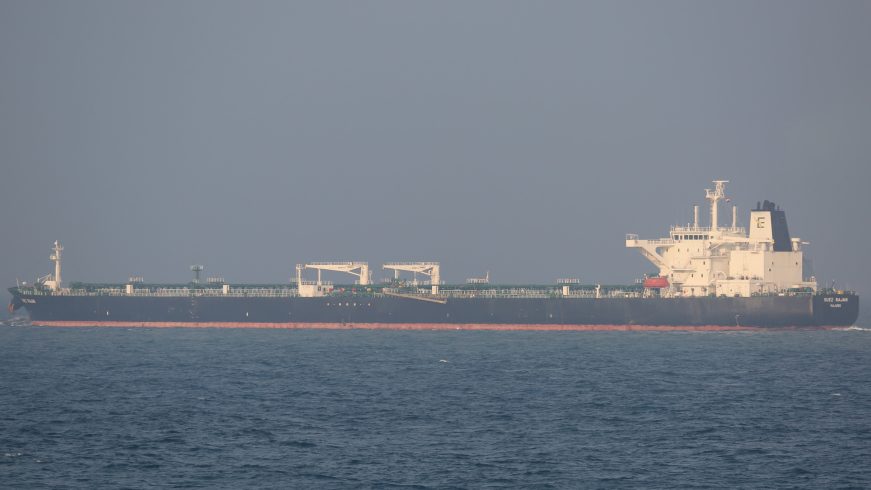
Oil firms in the US are “reluctant” to unload a shipment of stolen Iranian oil sitting in a Greek tanker off the coast of Texas, saying they are “too worried about Iranian reprisal” to touch the cargo, sources familiar with the matter told the Wall Street Journal (WSJ).
“Companies with any exposure whatsoever in the Persian Gulf are literally afraid to do it,” a Houston-based energy executive told the US outlet, adding that companies fear “the Iranians would take retribution against them.”
“I don’t know if anybody’s going to touch it,” another executive at a shipping company told the WSJ.
Washington illegally seized the Marshall Islands-flagged Suez Rajan supertanker in April of this year in what was described by the Pentagon as “a sanctions-enforcement operation.” Washington also charged the ship’s owner with “sanctions evasion” and directed the stolen cargo to the waters 65 miles off Galveston’s coast in the US.
According to the WSJ, the Suez Rajan came under Washington’s radar after an anti-Iran organization – the New York-based United Against Nuclear Iran (UANI) – provided information about the ship’s cargo to government officials. Furthermore, lawyers representing the families of victims of the 11 September attacks, “whom US courts have given the right to claim compensation from [Tehran],” filed a lawsuit against one of the ship’s former owners.
But while the US coast guard has given the all-clear to unload the shipment, companies that manage those transfers do not want any involvement in what Tehran has described as “maritime piracy.”
“That vessel’s emblematic of a much bigger drama that’s playing out about how we deal with Iranian threats,” a former US official told the WSJ.
The “drama” playing out between Washington and Tehran has seen the former eagerly try to restart talks with the Islamic Republic to “deescalate tensions” and possibly reach a new nuclear deal. But despite these diplomatic overtures from the White House, in recent weeks, the Pentagon has significantly bolstered its military presence in the Persian Gulf to confront “Iranian threats.”
Washington accuses Tehran of attempting to “hijack” foreign-flagged vessels traveling through the Strait of Hormuz and the Gulf of Oman. At the same time, Iran says the US navy protects “fuel smugglers” and ships involved in hit-and-run incidents.
“We categorically reject [Washington’s] baseless allegations of hijacking foreign oil tankers by Iran,” a representative for Iran’s mission to the UN told the WSJ. “Iran insists on the security and stability of the Persian Gulf and Strait of Hormuz. However, if oil tankers violate harmless passage, pollute the environment, or smuggle Iranian fuel, Iran does not hesitate to address those irregularities and infringements based on its laws as well as relevant international obligations.”
Israel backs down on threats to bomb Iranian nuclear sites
The Cradle | July 1, 2023
Israel is not planning to attack Iran’s nuclear sites, Prime Minister Benjamin Netanyahu’s national security adviser said on 30 June, as indirect talks between Tehran and Washington regarding the nuclear issue have continued in recent weeks.
Asked whether an Israeli decision on a preemptive strike against Iran was any closer, Tzachi Hanegbi said:
“We are not getting closer because the Iranians have stopped, for a while now, they are not enriching uranium to the level that, in our view, is the red line.”
Hanegbi added: “But it can happen. So we are preparing for the moment.”
For several decades, Israel and the US have accused Iran of being “weeks away” from building a nuclear weapon. However, Iran says its nuclear industry is for peaceful purposes, including energy, and has stressed that Islam forbids pursuing weapons of mass destruction.
Hanegbi said it was still unclear what would come of the US-Iran talks. Still, he insisted that if an agreement is signed between Israel’s primary sponsor and main enemy during the indirect talks that began in Oman, this will not obligate Israel to abide by it.
Last week, Netanyahu said at a cabinet meeting that Israel opposes any interim agreement between the US and Iran regarding the latter’s nuclear program.
Israel opposed the 2015 Joint Comprehensive Plan of Action (JCPOA), and celebrated when Donald Trump withdrew from the deal in 2018.
The deal limited Iranian uranium enrichment to 3.67 percent. After the US withdrew from the agreement, Iran began enriching to 60 percent, which is still far from the 90 percent needed for use in a nuclear weapon.
“We also tell [the US] that even… ‘mini agreements,’ in our opinion, do not serve our goals, and we oppose those as well,” Netanyahu recently stated.
At the same time, US National Security Adviser Jake Sullivan reportedly accused Israeli officials of leaking information about the indirect US-Iran talks while complaining that the leaked information was inaccurate.
This included claims that the Biden administration seeks to reach an informal deal with Iran limiting its nuclear enrichment to bypass getting approval from Congress.
According to the New York Times, the US seeks an agreement that would include a pledge by Tehran not to enrich uranium beyond 60 percent purity, to better cooperate with UN nuclear inspectors, to stop attacks on US forces in Iraq and Syria, to avoid providing Russia with ballistic missiles, and to release three American-Iranians held in the Islamic Republic.
In exchange, the US would release billions in seized Iranian funds, commit not to impose additional sanctions, and not take action against Iran in international forums such as the UN and IAEA.
EU’s New Anti-Russian Asset Grabbing Scheme is ‘Theft’, ‘Act of War’
By Ilya Tsukanov – Sputnik – 30.06.2023
Hundreds of billions of dollars in Russian assets were trapped abroad in 2022 after the Ukrainian crisis escalated into a full-blown NATO-Russia proxy war. Earlier this year, reports in US business media indicated that the US and its allies were having trouble locating a substantial chunk of these funds.
Belgium plans to collect 3 billion euros a year in windfall profits from Russian assets frozen in the country’s coffers to give to Ukraine for “reconstruction” purposes, Prime Minister Alexander De Croo announced Friday.
“We are working on a windfall tax on profits,” De Croo told reporters after meeting with other EU leaders at the bloc’s summit in Brussels.
A day earlier, De Croo explained that Belgium was “very involved” in the issue because upwards of 90 percent of the Russian assets frozen in the EU’s jurisdiction are trapped in Belgian banks.
“The use of these funds for the military needs of Ukraine and its reconstruction makes sense from an economic point of view and from a moral point of view,” the Belgian leader assured.
The European Commission estimated in May that the bloc has frozen over 200 billion euros in assets belonging to Russia’s Central Bank, plus 24.1 billion owned by Russian companies, tycoons and other individuals.
US business media first reported on the possibility of collecting interest from Russian assets trapped abroad to fund Ukraine earlier this year, after concluding that there was no “reliable legal path” to allow for the funds to seized outright without undermining rule of law and international trust in European financial institutions.
‘Robbery’ in Broad Daylight
Asked to comment on Brussels’ plans, Christopher C Black, an international criminal and human rights lawyer with over 20 years’ experience under his belt, said that if realized, they would constitute “theft twice over” – first by seizing the money in the first place, and then preventing Russia from collecting its due interest.
“The crime of theft becomes compounded with insult by giving the money to Kiev to finance the war against Russia, and if the money is so transferred by EU government order, it will be [an] act of war – since a nation supplying financial support to another nation to carry on a war can be considered under international law as a party to the war,” Black explained.
Very Painful… for EU
Such theft would constitute a blatant violation of the United Nations Charter and the laws of war, and would undermine the rule of law in Europe, according to the legal expert, “because if they can do this to Russia they can do it to any citizens’ assets.”
The scheme would show that in effect, “no one is protected,” and that contracts between clients and banks in the EU’s jurisdiction effectively “mean nothing” because they can be broken at will and for any reason, Black said. This, in turn, threatens to undermine the credibility of EU banks among foreign depositors, he added.
The observer isn’t surprised by Belgium’s plans, pointing out that the EU and other Western countries have already systematically violated their own laws and international law, by seizing Venezuela’s gold and oil company assets, for example, or keeping Iranian assets frozen in Western banks for decades on end.
Russian Retaliation
Black expects Russia to “retaliate in kind if possible, that is if assets of the EU are located in Russia.”
Otherwise, Russia may also “have to think of other measures to force the return” of its assets, “either through diplomacy and the help of friendly nations (for example by getting them to agree to withdraw their deposits from EU banks unless the Russian assets are released)… or further reducing energy supplies to the EU,” the legal expert suggested.
“The BRICS process can help in the future as the BRICS Development Bank is further established, and a single currency can also help break Western financial domination of other countries,” Black added.
“But so long as nations continue to deposit their assets, gold or money, bonds, etc. in EU or other Western banks, they will face the real threat of having those assets seized whenever the West decides it is in their interests to do so,” the observer summed up.
Over $300 billion in Russian assets were reported frozen in Western banks’ coffers in 2022, most of them belonging to the Russian Central Bank. In late 2022, a senior financial expert with the Atlantic Council* estimated the actual amount of money seized was closer to $80-$100 billion, and that the US and the EU have had trouble finding the frozen funds. In February, US business media reported that only about $36.5 billion of the frozen assets had been found so far.
Last year, Russian President Vladimir Putin characterized the West’s asset seizure an “unseemly business,” and said “stealing other people’s assets has never brought anyone good.”
Before the escalation of the Ukrainian crisis, Putin repeatedly warned Russian businessmen to keep their money in Russia.
EU to renew Iran sanctions under defunct nuclear deal: Report
The Cradle | June 29, 2023
European officials recently informed Iran that they plan to renew EU ballistic missile sanctions set to expire in October, according to sources in the know that spoke with Reuters.
The renewal will be conducted under the parameters of the defunct Joint Comprehensive Plan of Action (JCPOA), which officials say Iran “violated” by moving forward with developing its nuclear energy program after the US unilaterally exited the deal in 2018 and reimposed crushing sanctions.
Other reasons the EU is giving for renewing the sanctions are Russia’s use of Iranian drones in Ukraine and “the possibility of Iran transferring ballistic missiles to Moscow.”
“The Iranians have been told quite clearly [of plans to keep the sanctions], and now the question is what, if any, retaliatory steps the Iranians might take and [how] to anticipate that,” a western diplomat told Reuters on condition of anonymity.
The decision to uphold the sanctions would be the first significant instance of the E3 group of nations — France, Germany, and the UK — not abiding by the terms of the nuclear deal.
EU mediator Enrique Mora, who co-ordinates talks to restore the 2015 deal, raised the issue of keeping the sanctions when he met Iranian nuclear negotiator Ali Bagheri Kani in Doha on 21 June, but the latter reportedly refused to discuss the matter, according to an unnamed Iranian official who spoke with Reuters.
“Maintaining sanctions, in any capacity and form, will not hinder Iran’s ongoing advancements,” the Iranian official is quoted as saying. “It serves as a reminder that the west cannot be relied upon and trusted.”
Since 2017, the Islamic Republic has significantly advanced with its ballistic missile and satellite launch programs. The country last month made waves by revealing a hypersonic missile with a potential 2,000-km range.
This progress, on top of Tehran’s enrichment of uranium at 60 percent purity and a China-brokered détente with Saudi Arabia, set off alarms in the west and pushed Washington to begin ‘de-escalation talks‘ with Iran.
The US can’t stop the rise of Iran, but it can make a truce
By Timur Fomenko | RT | June 25, 2023
In 2018, the Donald Trump administration ripped up the Joint Comprehensive Plan of Action (JCPOA), known as the “Iran nuclear deal,” which had been signed by his predecessor Barack Obama.
The decision to scrap the deal was thoroughly influenced by neoconservative members of his cabinet, including National Security Advisor John Bolton and Secretary of State Mike Pompeo, who not only saw the opportunity to take a swipe at Trump’s predecessor, but argued that placing crippling unilateral sanctions on Tehran would bring the country to the negotiating table, and if not, bring the regime down altogether.
Thus began a five-year campaign of brutal pressure against Iran, which sought to destroy its economy and attempted to coerce third-party countries away from doing business with it. But the initiative didn’t go according to plan. Rather, the world changed. The flagrant disregard of international law by Washington was a catalyst in the emergence of de-dollarization. The global shake-ups that came next, including the Covid-19 pandemic, US competition with China, and the war in Ukraine, gave Tehran strategic space and leverage it had previously lacked.
Now, Iran has substantially increased its uranium enrichment, has continued to build its drone and missile capabilities, has an enhanced military relationship with Russia, and thanks to Beijing, has been able to normalize its relationship with its regional arch-rival Saudi Arabia. In the process of doing so, it has reduced the regional influence of the US and its partner, Israel. US foreign policy on Iran has revolved around exploiting regional tensions in order to justify its own security footprint, but Iran has seemingly been able to begin to supersede a campaign of US containment against it while not being overtly belligerent.
This has set alarm bells off in Washington. The US has been desperate to try and reinforce its relationship with Saudi Arabia, but has reportedly been engaging in secret negotiations with Tehran not to revive the JCPOA, but to keep it away from further uranium enrichment and off the nuclear path, a move which of course will have to come with sanctions relief. While the US, presumably with the support of Israel, has threatened unspecified military action if Tehran goes further, it seems clear that Iran now has all of the cards and that a temporary “truce” must therefore come at the expense of the US containment campaign.
Because of the regional dynamic shifting in its favor, Tehran is highly unlikely to actually go down the path to developing a full-fledged nuclear bomb, given the opportunities it would provide to Washington. Unlike a country like North Korea, Iran doesn’t truly need nukes in order to establish a doctrine of deterrence for its own regime’s survival. It is a large country with a population of over 80 million. While the United States could hypothetically conduct air or missile strikes on key Iranian facilities to try and impede its nuclear program, what the US could not do, especially in this environment, is a full-scale invasion and occupation of the country. It would cost trillions of dollars, and there would be no support for it.
Rather, Iran’s deterrence ability is premised on its drone and missile programs, which have grown in their capabilities over the years despite US sanctions. The country recently claimed to have developed hypersonic missiles, which while some skepticism is warranted, is not completely fictional. Tehran has, after all, in response to the assassination of Revolutionary Guards Corps commander Qasem Soleimani, shown its ability to destroy US military bases within its range, and therefore demonstrate what it could do to Israel if things turned nasty. In doing so, it is demonstrating that regardless of US sanctions, it is a significant regional player, and will continue to be.
US foreign policy towards adversaries has repeatedly attempted to seek maximum strategic gain, eschewing the idea of compromise, be it China or Russia. But when it comes to Iran, Washington is stumped on what to do without taking the risk of provoking a wider conflict. This is why the Biden administration is leaning towards giving in, knowing that the regional dynamic of the Middle East is shifting away from its favor, and taking punitive action which may provoke war is unwelcome. In other words, Iran is winning. The only question which remains is whether or not the US wants a truce or to keep pressuring Tehran until it snaps? Even if the outcome ends in a sheer stalemate, with no nuclear lines crossed, it’s still a lose-lose situation for Washington in the end as Iran re-establishes itself diplomatically.
Featured Video

Racist Seinfeld Dances for Joy as Bibi Unveils His New Map
or go to
Aletho News Archives – Video-Images
TV Drama Review
Japanese drama projects Japan’s wartime atrocities onto Chinese characters

Global Times | October 25, 2026
By portraying Chinese characters as perpetrators of ruthless violence while casting Japanese Self-Defense Forces (SDF) intelligence operatives as defenders, the season 2 of the Japanese drama Vivant has recently drawn criticism from Chinese netizens, who argue that its depiction turns historical reality on its head while ignoring Japan’s wartime atrocities.
The TBS drama series – a spy suspense story in which an alleged unofficial intelligence unit of the SDF operates across the globe — has attracted a passionate fanbase. Its currently airing season 2 opened with a household rating of 18.8 percent, the highest for a TV drama this year, according toa commentary article by Japanese media Toyo Keizai.
What draws attention is the portrayal of the enemies in the series, the article noted. Scenes in which the Chinese organization subjects kidnapped members of the SDF unit to brutal torture are repeated with unrelenting intensity.
It is rare for Japanese TV dramas to explicitly portray a real-life country as the enemy, the article noted.
Japanese Prime Minister Sanae Takaichi also made a reference to the drama, saying that she has been recording Vivant and hopes to binge-watch it over the year-end and New Year holidays, according to Japanese media outlets.
China’s CCTV News report on Sunday revealed that the drama features scenes in which Chinese personnel cut off the fingers of and stab Japanese intelligence operatives in the abdomen. Such acts bear striking similarities to the torture inflicted on Chinese nationals by invading Japanese troops during the World War II.
The drama distorts the truth by attributing these atrocities to modern Chinese characters. Beneath the surface, it subtly glorifies Japan’s cross-border overseas operations, blurs the functional boundaries of the SDF and implicitly promotes an expansionist narrative, per CCTV News. … continue
Blog Roll
 Aletho News
- EU facing trillion-euro debt hole while seeking more cash for Kiev
- How US, Europe, Persian Gulf states exhausted missile stockpiles, splurged billions to defend Israel
- Up in arms… Koreans reject U.S. empire’s plan to make South Korea the next Ukraine
- Iran, Turkey, Pakistan, Saudi Arabia could advance region-led security framework in Tehran: FM spox
- Netizens condemn Japanese drama for projecting Japan’s wartime atrocities onto Chinese characters
- Racist Seinfeld Dances for Joy as Bibi Unveils His New Map
- A West Bank War for Netanyahu’s Election Campaign, Could It Backfire?
- Yemen denounces European Parliament’s ‘hypocritical’ push to blacklist Ansarullah
- Qalibaf: UAE’s UN bid aims to ‘clear the runway’ for ‘Greater Israel’, whitewash genocide
- Pakistan reopens Iran border after boosting security: Report
- If Americans Knew
- An error has occurred; the feed is probably down. Try again later.
- No Tricks Zone
- Sudden Stratospheric Warming, Powerful El Niño Combination May Lead To Extreme Europe Cold, Energy Crisis!
- Two New Studies Find Thwaites Glacier Melt Cannot Be Driven By Human Activity Or A Warming Ocean
- E-Cars Reduce CO2 Emissions By Only 41% Compared To Internal Combustion Engine Vehicles
- Predictions Made By Renowned Climate Professor Over Past Decades Have Been Proven To Be Poor
- New Study Suggests Large Regions Of The Pacific Ocean Have Been Cooling For The Last 80 Years
- Germany’s Green Energy Debacle: High Energy Costs Force Kahla Porzellan to Close After 182 Years!
- New Study: 50 Years Of The Most Aggressive ‘Net Zero’ Policies Can Only Affect The Global Climate By 0.03°C
- US September “Heat” Was No Record…Many Records Set Decades Ago
- Latest European Green Energy Debacle; Portugal’s Largest Flagship Solar Park Insolvent!
- Green Energy Debacle: German Expert Professor Fritz Vahrenholt Warns Of Severe Economic And Social Consequences

