The media being focused on an upcoming election, coronavirus, fires on the West Coast and burgeoning BLM and Antifa unrest, it is perhaps no surprise that some stories are not exactly making it through to the evening news. Last week an important vote in the United Nations General Assembly went heavily against the United States. It was regarding a non-binding resolution that sought to suspend all economic sanctions worldwide while the coronavirus cases continue to increase. It called for “intensified international cooperation and solidarity to contain, mitigate and overcome the pandemic and its consequences.” It was a humanitarian gesture to help overwhelmed governments and health care systems cope with the pandemic by having a free hand to import food and medicines.
The final tally was 169 to 2, with only Israel and the United States voting against. Both governments apparently viewed the U.N. resolution as problematical because they fully support the unilateral economic warfare that they have been waging to bring about regime change in countries like Iran, Syria and Venezuela. Sanctions imposed on those countries are designed to punish the people more than the governments in the expectation that there will be an uprising to bring about regime change. This, of course, has never actually happened as a consequence of sanctions and all that is really delivered is suffering. When they cast their ballots, some delegates at the U.N. might even have been recalling former Secretary of State Madeleine Albright’s claim that the death of 500,000 Iraqi children due to U.S. imposed sanctions had been “worth it.”
Clearly, a huge majority of the world’s governments, to include the closest U.S. allies, no longer buy the American big lie when it claims to be the leader of the free world, a promoter of liberal democracy and a force for good. The vote prompted one observer, John Whitbeck, a former international lawyer based in Paris, to comment how “On almost every significant issue facing mankind and the planet, it is Israel and the United States against mankind and the planet.”
The United Nations was not the only venue where the U.S. was able to demonstrate what kind of nation it has become. Estimates of how many civilians have been killed directly or indirectly as a consequence of the so-called Global War on Terror initiated by George W. Bush are in the millions, with roughly 4 million being frequently cited. Nearly all of the dead have been Muslims. Now there is a new estimate of the number of civilians that have fled their homes as a result of the worldwide conflict initiated by Washington and its dwindling number of allies since 2001. The estimate comes from Brown University’s “Costs of War Project,” which has issued a report Creating Refugees: Displacement Caused by the United States Post-9/11 Wars that seeks to quantify those who have “fled their homes in the eight most violent wars the U.S. military has launched or participated in since 2001.”
The project tracks the number of refugees, asylum seekers applying for refugee status, and internally displaced people or persons (IDPs) in the countries that America and its allies have most targeted since 9/11: Afghanistan, Iraq, Pakistan, Yemen, Somalia, the Philippines, Libya and Syria. All are predominantly Muslim countries with the sole exception of the Philippines, which has a large Muslim minority.
The estimate suggests that between 37 and 59 million civilians have become displaced, with an extremely sharp increase occurring in the past year when the total was calculated to be 21 million. The largest number of those displaced were from Iraq, where fighting against Islamic State has been intermittent, estimated at 9.2 million. Syria, which has seen fighting between the government and various foreign supported insurgencies, had the second-highest number of displacements at 7.1 million. Afghanistan, which has seen a resurgent Taliban, was third having an estimated 5.3 million people displaced.
The authors of the report observe that even the lower figure of 37 million is “almost as large as the population of Canada” and “more than those displaced by any other war or disaster since at least the start of the 20th century with the sole exception of World War II.” And it is also important to note what is not included in the study. The report has excluded sub-Saharan Africa as well as several Arab nations generally considered to be U.S. allies. These constitute “the millions more who have been displaced by other post-9/11 conflicts where U.S. forces have been involved in ‘counterterror’ activities in more limited yet significant ways, including in: Burkina Faso, Cameroon, Central African Republic, Chad, Democratic Republic of the Congo, Mali, Niger, Saudi Arabia, and Tunisia.”
Yemen should be added to that list given U.S. military materiel assistance that has enabled the Saudi Arabian bombing attacks on that country, also producing a wave of refugees. There are also reports that the White House is becoming concerned over the situation in Yemen as pressure is growing to initiate an international investigation of the Saudi war crimes in that civilian infrastructure targets to include hospitals and schools are being deliberately targeted.
And even the United States Congress has begun to notice that something bad is taking place as there is growing concern that both the Saudi and U.S. governments might be charged with war crimes over the civilian deaths. Reports are now suggesting that as early as 2016, when Barack Obama was still president, the State Department’s legal office concluded that “top American officials could be charged with war crimes for approving bomb sales to the Saudis and their partners” that have killed more than 125,000 including at least 13,400 targeted civilians.
That conclusion preceded the steps undertaken by the Donald Trump White House to make arms sales to the Saudis and their allies in the United Arab Emirates central to his foreign policy, a program that has become an integral part of the promotion of the “Deal of the Century” Israeli-Palestinian peace plan. Given that, current senior State Department officials have repressed the assessment made in 2016 and have also “gone to great lengths” to conceal the legal office finding. A State Department inspector general investigation earlier this year considered the Department’s failure to address the legal risks of selling offensive weapons to the Saudis, but the details were hidden by placing them in a classified part of the public report released in August, heavily redacted so that even Congressmen with high level access could not see them.
Democrats in Congress, which had previously blocked some arms sales in the conflict, are looking into the Saudi connection because it can do damage to Trump, but it would be far better if they were to look at what the United States and Israel have been up to more generally speaking. The U.S. benefits from the fact that even though international judges and tribunals are increasingly embracing the concept of holding Americans accountable for war crimes since the start of the GWOT, U.S. refusal to cooperate has been daunting. Last March, when the International Criminal Court (ICC) in The Hague authorized its chief prosecutor to open an investigation into U.S. crimes in Afghanistan the White House reacted by imposing sanctions on the chief prosecutor and his staff lawyer. And Washington has also warned that any tribunal going after Israel will face the wrath of the United States.
Nevertheless, when you are on the losing side on a vote in a respected international body by 169 to 2 someone in Washington should at least be smart enough to discern that something is very, very wrong. But I wouldn’t count on anyone named Trump or Biden to work that out.
September 24, 2020
Posted by aletho |
War Crimes, Wars for Israel | Israel, Middle East, Sanctions against Iran, United States, Zionism |
Leave a comment
MOSCOW – The United States’ claim that the UN sanctions on Iran were restored is misleading as the UN Security Council (UNSC) took no steps leading to the restoration of restrictions, the Russian Foreign Ministry said in a statement on Sunday.
“The US continues to mislead the international community by speculating that the UN Security Council conducted some sort of procedures to restore the effect of UNSC resolutions on Iran sanctions, which were cancelled after the signing of the 2015 Joint Comprehensive Plan of Action (JCPOA)”, the official statement from Russia read.
“The facts are that the UN Security Council did not take any action that would lead to the restoration of old sanctions against Iran. All that Washington does is nothing more than a theatrical performance staged in order to subordinate the Security Council to its policy of ‘maximum pressure’ on Iran and turn this authoritative body into its handy tool,” the statement continued.
Moscow further urged Washington to “have enough courage to face the truth and stop speaking on behalf of the UN Security Council”.
Earlier in the day, US Secretary of State Mike Pompeo welcomed “the return of virtually all previously terminated UN sanctions on the Islamic Republic of Iran” under the snapback mechanism of UN Security Council Resolution 2231.
As stressed in the statement, Resolution 2231 has remained intact and all of its provisions, therefore, must be implemented “in the initially agreed mode and volume on the basis of reciprocity among all states”.
September 20, 2020
Posted by aletho |
Economics, Wars for Israel | Iran, Russia, Sanctions against Iran, United Nations, United States |
Leave a comment
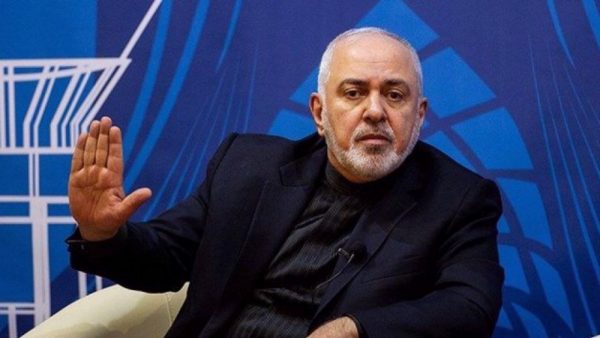
Iranian Foreign Minister Mohammad Javad Zarif
Iran’s foreign minister says the country will meet its strategic needs by purchasing weapons from Russia and China, and has no need for European weapons once the UN embargo is lifted in October.
Mohammad Javad Zarif made the remarks in a televised interview on Saturday night in reaction to a possible initiative by France, Germany, and the UK to restrict the sale of weapons to Iran following the October expiration of the UN arms embargo against the Islamic Republic.
“We haven’t been a customer of European weapons, and they haven’t sold us weapons after the 1979 revolution. … They even ran a campaign during the 1980s imposed war [between Iran and Iraq] to prevent the delivery of arms to Iran,” Zarif said.
“We won’t force them to sell us weapons now, as we don’t need their weapons,” he noted.
Zarif said one-fourth of the arms purchases end up in the Persian Gulf region, while Iran is not part of this trade.
“However, Iran can meet its strategic needs through the countries it interacts with, like Russia and China; though it is self-sufficient in many cases, and is an exporter [of arms] itself,” Zarif said.
Thanks to God’s grace and the efforts of the country’s Armed Forces, “Iran has become self-sufficient in many cases, but in cases of need, other countries will have the right to trade with Iran once the UN embargo is lifted,” the Iranian top diplomat added.
Following a humiliating failure at the UN Security Council to secure an extension of the arms embargo against Iran, the United States recently threatened to use its “secondary” sanctions to block any arms trades with Tehran after the expiry of the UN ban next month.
US Special Representative for Venezuela and Iran Elliott Abrams claimed on Wednesday that Washington could deny access to the US market to anyone who trades in weapons with Tehran.
Sanctions “will have a very significant impact” on arms manufacturers and traders that seek to do business with Tehran, he told reporters.
The US initiative is expected to prevent European companies from selling weapons and military equipment to Iran.
‘Europe trying to save face after failure against US’
Zarif further pointed to the recent statement by France, Germany, and the UK in which they claimed they have “gone beyond their own commitments” towards Iran by launching the Instrument in Support of Trade Exchanges (INSTEX), a European mechanism which was supposed to facilitate trade with Iran amid the US sanctions.
“They are joking. The three self-proclaimed world powers failed to stand up to the US bullying. They failed, even though they may not have made so much efforts,” he said.
“Europeans had 11 commitments to fulfil, and the INSTEX was not even one of them, but a prerequisite for them. They failed to fulfil them and said Americans didn’t let them. If we accept their own words, they admitted Americans have kept them [from doing their part].”
“This is below Europe’s dignity. The economy of the European Union is bigger than America’s. Then why did you fail to resist the US’ bullying, which is now impacting you?” Zarif said, adding that the European statement is just meant to save their face.
His comments came in reaction to a statement by France, Germany and the UK delivered to the IAEA Board of Governors at the September 2020 meeting.
They said in the statement, “The E3 has worked hard to preserve the [2015 nuclear] agreement. We have gone beyond our own commitments to facilitate legitimate trade with Iran, including by introducing the INSTEX mechanism.”
‘Iran not to interfere in US elections’
In his Saturday interview, Zarif also denied the claim that the Islamic Republic is going to interfere in the upcoming US presidential elections.
“Despite Donald Trump’s claim that Iran is waiting for another person, these remarks only serve electoral purposes,” Zarif said.
“Iran is an independent country and does not meddle in US internal affairs,” he added.
Zarif said the US should first try to avoid coup plotting and violating people’s choices in other countries before accusing Iran of interfering in its elections.
He made the remarks in an apparent allusion to the CIA-orchestrated 1953 coup in Iran, which toppled the democratically-elected government of Prime Minister Mohammad Mosaddegh.
‘Israel would defend itself had it possessed enough power’
Zarif further referred to the recent deals signed by the United Arab Emirates and Bahrain to normalize their relations with the Israeli regime in the hope that Tel Aviv could bring them peace and security.
“Our neighbors unfortunately think the regime can defend them. If Israel had such a power, it would have defended itself against the Palestinian Islamic Jihad and Hamas,” Zarif said.
He expressed regret that a regional country is forced to sign a deal with Israel so that Trump can use it for his presidential campaign.
“This happens when a country depends on the US for its defense,” Zarif said.
Bahrain and the UAE signed US-brokered normalization agreements with Israel during a ceremony in Washington on Tuesday.
The controversial event was slammed by many Arab and Muslim figures as a blatant betrayal of the Palestinian cause.
September 19, 2020
Posted by aletho |
Aletho News | European Union, Iran, Israel, Middle East, Sanctions against Iran, United States, Zionism |
Leave a comment
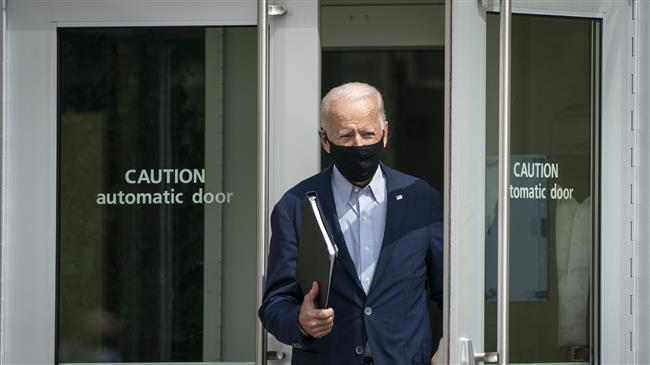
A former American Senate foreign policy analyst has expressed skepticism that a Joe Biden administration would re-enter into the nuclear agreement with Iran.
Democratic presidential candidate Joe Biden has said that if elected he will return the United States to the Iran nuclear deal as a starting point for follow-on negotiations.
Biden said in a recent article for CNN’s website that the US will rejoin the 2015 deal if Iran returns to what he called “strict compliance” with the nuclear accord, known as the Joint Comprehensive Plan of Action (JCPOA).
James Jatras, a former Senate foreign policy adviser in Washington, told Press TV on Tuesday that “It’s hard to know how much we can make of Joe Biden’s claim that he would return to the JCPOA, if he is elected president.”
“I noticed that he caveats that with ‘Iran must return to full compliance.’ And of course, we know that Iran has taken certain steps that she feels to be necessary given the US pullout from the agreement and the fact that the Europeans have failed to follow through with their obligations under the agreement,” he added.
“So I don’t know what Biden or more importantly his advisors, like Nick Burns or Evelyn Farkas, have in mind of what would constitute full Iranian compliance such that Biden could say: ‘OK, fine now, we’ll enter into this plan,’” he noticed.
“He also talks about follow on negotiations, which raises the specter that additional demands would be placed on Tehran before even a Biden administration would be comfortable re-entering the agreement. So I am somewhat skeptical that he would actually do that,” he observed.
Biden’s Republican rival, President Donald Trump, withdrew the US from the Iran deal over two years ago. Trump said it was a bad deal that needs to be re-negotiated.
Iran has time and again said it will not renegotiate the existing accord or make a new one with the US as long as sanctions remain in place.
Since scrapping the JCPOA in May 2018, the Trump administration has unleashed its “toughest ever” sanctions to bring Iran’s economy to its knees, but it keeps humming and is getting back on its feet.
September 15, 2020
Posted by aletho |
Wars for Israel | Joe Biden, Sanctions against Iran, United States, Zionism |
Leave a comment
The owners of four cargoes carrying Iranian fuel that was looted in high seas by the United States last month have mounted a legal challenge to reclaim them, a report says.
The US government has said it seized 1.116 million barrels of fuel because it was bound for Venezuela which is under American sanctions as part of Washington’s bid to topple President Nicolas Maduro, but the owners have disputed it.
According to a filing with the US District Court for the District of Columbia Tuesday, “at the time they were seized, the Defendant Properties were destined for Trinidad for sale to customers in Peru and Colombia.”
When the news of the loot was first broken last month, Iran put down its foot to assert that neither the ships were Iranian nor their owners or their cargo had any connection to the Islamic Republic.
US reports had also claimed that the ships were owned by Greece, but the court filing on Tuesday showed otherwise.
United Arab Emirates-based Mobin International Limited said it was the owner of the cargo aboard the Bella and Bering tankers, UK-registered Oman Fuel said it owned the cargo aboard the Pandi and Luna tankers, and Oman-registered Sohar Fuel said it part-owned the cargo aboard the Luna.
The companies said they had sold the cargoes onwards to UAE-based Citi Energy FZC, but payment was due upon delivery, which was disrupted by the seizure, Reuters reported.
“Therefore, Claimants Mobin, Oman Fuel, and Sohar Fuel retain a financial stake in those agreements and have immediate right to title, possession, and control of the Defendant Properties,” they wrote in the filing.
US claim of victory dealt a blow
The legal challenge puts yet another damper on the US government’s victory lap which came with the much-hyped claim that Washington had finally found a way to block Iran and Venezuela from evading American economic sanctions.
Over the past two years, the Trump administration has repeatedly placed sanctions on Iran’s oil and other lucrative industries with the express aim of shutting Tehran out of global markets and causing an economic collapse.
But far from collapsing as American leaders had predicted, Iran’s economy keeps humming and is getting back on its feet.
Meanwhile, Iran sent five oil tankers 1.5 million barrels of gasoline and diesel fuel to Venezuela in May and June despite American threats to stop them.
“We showcased our might, and our biggest display of power was the imposition of our will and the sailing through high seas from the Persian Gulf to Venezuela,” Major General Hussein Salami said last month.
An Iranian news agency said Iran’s naval forces were preparing to target US commercial vessels in the Persian Gulf in case US forces interfered with Venezuela-bound Iranian oil tankers.
When the New York Times first reported the seizure of the four cargoes last month, the newspaper headlined it as a “diplomatic doubleheader” which blocked Iran and Venezuela from evading American economic sanctions.
Iranian officials brushed aside the claim, with Iran’s Ambassador to Venezuela Hojjat Soltani saying the report was an “act of psychological warfare perpetrated by the US propaganda machine” trying to compensate for the Trump administration’s “humiliation and defeat by Iran using false propaganda.”
“The United States is seeking to contrive a victory for itself. Neither did the ships nor the cargo belong to Iran,” Minister of Petroleum Bijan Zangeneh told reporters in Tehran.
Aiming to cut Iran’s sales to zero, Washington in May 2019 ended sanctions waivers for importers of Iranian oil. Tehran reacted with typical defiance, saying it would find ways to sell its oil.
Last month, NBC News cited data from online service TankerTrackers.com showing that Iran was exporting a lot more crude oil than US figures suggest.
According to the data, Iran is exporting as much as 600,000 barrels per day (bpd) of crude oil – thrice more than an estimate of 227,000 bpd made in a US congressional report.
Iran, NBC News said, is coming up with more innovative techniques in wiggling its way around the draconian American sanctions.
Iranian officials have said the country is in an economic war with the United States which has forced international payment networks to cut off the Islamic Republic, making trade all but impossible.
$10 billion of oil, petrochemical investment in 5 months
On Tuesday, Iran’s Ministry of Petroleum said oil and petrochemical investment in the country has reached $10 billion since the beginning of the Iranian calendar year in March.
The government plans to officially launch 17 petrochemical projects, which are expected to produce 100 million tonnes annually and generate $25 billion per year in revenues by the end of the year, it said.
Iran also plans to launch by the end of its current calendar year in March 2021 an oil terminal designed to bypass the Strait of Hormuz for Iranian oil exports.
The country has already started building an onshore oil pipeline worth $1.8 billion to Jask which sits just east of the Strait of Hormuz. As much as $700 million of the investment will go to develop the port terminal.
The 1,100-kilometer pipeline will be capable of carrying 1 million bpd of crude oil from the Goureh oil terminal in the northwest to Jask on the Sea of Oman, without the need to have tankers travel through the Strait of Hormuz.
Last month, Iran said it had signed a total of 13 oil contracts with 14 domestic firms, which will raise the Islamic Republic’s oil production capacity by 185,000 barrels per day.
September 2, 2020
Posted by aletho |
Economics | Sanctions against Iran, United States |
Leave a comment
As the United States sinks deeper into a multi-faceted global crisis that no politician seems able or even willing to address, one hears more and more often demands for radical change in who runs the country and to what end. Of course, Donald J. Trump offered such a dramatic shift in priorities four years ago, but he has been unable to deliver due to his own inability to execute and the ill-conceived machinations of those whom he has chosen as advisers. The Democrats for their part are offering little beyond a repeat of their 2016 pander to grievance groups in an effort to cobble together an unassailable majority based on buying off the party’s various constituencies.
But there is one area where change could come dramatically if either party were actually motivated to do something that would truly benefit the American people, and that is in the area of foreign and national security policy where the president has considerable power to set priorities and redirect both the State and Defense Departments. Unfortunately, foreign and national security policy is almost never discussed during the presidential campaigns and this time would already appear to be no exception. That means that the one thing that is a constant amidst all the smoke and mirrors is the continued bellicosity of both parties on the world stage.
The Republicans are apparently eager to “democratize” Latin America while the Democrats in particular are wedded to the “foreign interference” angle to explain their loss in 2016, with Hillary Clinton predictably advising in her Democratic National Convention speech that the public should “Vote to make sure we — not a foreign adversary — choose our president.” Indeed, the tendency to create and then demonize “foreign conspiracies” is generally supported by the establishment and its parasitical media, since it enables the billionaire oligarchs who really run the country to grow fatter while also avoiding any blame for the declining fortunes of most of the American people.
The Democrats are currently taking pains to recall the so-called “Russian interference” in 2016, and are expecting or possibly even hoping for more of the same this year. Tying Trump to Russian President Vladimir Putin is obviously perceived as a game winner, even though the just-completed investigations into the events of 2016 are at best ambiguous. Early prognostications by journalist-pundits in the foreign interference sweepstakes indicate that both China and Iran will be supporting Joe Biden while Russia wants to continue with Trump. No one bothers to explain how those countries will express their preferences or what kind of impact they could possibly have.
One thing that is certain is that both parties will continue their deference to Israel which in turn means hostility towards Iran and its few friends worldwide. The U.S. media has not reported the almost daily bombings of Syria and Gaza by Israel and even largely failed to cover how two weeks ago the United States Navy seized four Greek flagged oil tankers transporting more than a million gallons of fuel to economic basket case Venezuela, a country which is in its sad condition due to sanctions and other “maximum pressure” at the hands of Washington. The fuel was seized based on unilaterally imposed U.S. sanctions on Iranian sale or export of its own petroleum products, a move intended to strangle the Iranian economy and bring about an uprising of the Iranian people. Such a move used to be called piracy.
To be sure, the Democrats have indicated that they will rejoin the Joint Comprehensive Plan of Action (JCPOA), which Trump withdrew from under orders from top donor Sheldon Adelson in 2017, one of his first acts in office. The JCPOA is intended to monitor and restrain any possible efforts by Iran to enrich uranium to develop a nuclear weapon, which one might assume is in the U.S. interest, but one should make no mistake in thinking that re-entering the agreement signifies any softening towards Iran. Joe Biden and Kamala Harris are owned lock, stock and barrel by the Israel Lobby, which is pretty much true of most politicians from both major parties in Washington. Iran is Israel’s target and even lacking any threat to the U.S. so it will remain the American enemy of choice.
America’s efforts to demonize and punish Iran, ineptly stage managed by Secretary of State Mike Pompeo, frequently lead into the Twilight Zone. On August 17th, the United States suffered what has to be described as a humiliating defeat in the United Nations Security Council. As the Washington Post reported it, “The United States asked the council to approve an extension of the 13-year-old embargo on arms trade with Iran — something that matters greatly to Israel and U.S. Arab allies, and which most of the democratic world favors. Yet only one member of the 15-member council, the Dominican Republic, sided with Washington. Russia and China opposed the motion, while 11 countries — including Britain, France and Germany — abstained. The vote could open the way for Iran to obtain Chinese and Russian arms — for example, missiles it could employ against Israel, the UAE or U.S. ships in the Persian Gulf.”
Note particularly the reliably Zionist Post’s “newspeak” version in describing both the issue and the vote. It states that “most of the democratic world favors” an embargo on selling arms to Iran but then describes how “11 countries – including Britain, France and Germany – abstained.” And, of course, the potential threat to Israel is front and center as the reason for the embargo, an apartheid state that has nuclear weapons developed in secret after stealing both the uranium and triggers from the United States. One might also note that Iran is a signatory to the Nuclear Non-Proliferation Treaty (NPT), which Israel is not, and its nuclear related research facilities are fully open to inspection by the International Atomic Energy Agency (IAEA).
After the rebuff, Trump subsequently moved on to phase two in its attack on Iran by invoking a so-called “snap-back” provision of the JCPOA that empowers any of the signatories to the agreement to unilaterally call for renewal of the international sanctions that isolated Iran prior to 2015, when the plan of action was signed by the U.S., Britain, China, France, Germany and Russia, along with the European Union. The U.S. claimed that Iran has been cheating on its enrichment program and also that the accord’s authority is rooted in an accompanying Security Council resolution, which means that Washington can at will address the issue before that body.
Bear in mind that the U.S., though an original signatory, withdrew from the agreement, and any attempt to restore U.N. sanctions through an admittedly sleazy maneuver would be resisted by nearly all the other members of the Security Council, which is precisely what did take place last Thursday, with the Europeans producing a joint letter emphasizing that Washington has no standing on the issue as it is no longer party to the arrangement. Pompeo responded by saying that the Europeans “chose to side with the ayatollahs.”
Secretary of State Mike Pompeo, presumably supported by the president, has been angered by the Security Council’s failure to support him on either extending the arms embargo or re-imposing general sanctions, though he is probably eternally grateful for the fortitude demonstrated by the plucky little Dominican Republic. On both meetings with the Security Council Pompeo complained, using his standard line, saying that “We can’t allow the world’s biggest state sponsor of terrorism to buy and sell weapons. I mean, that’s just nuts.”
The next step by the White House was a unilateral proposal submitted in writing by the U.S. to reimpose a full range of economic sanctions on Iran in thirty days. That can only be blocked by a Security Council resolution which Washington can veto, meaning that America will again be going it alone in its not-so-secret war against Iran, further isolating the U.S. in world fora and again demonstrating that the Trump Administration has few friends anywhere in this fight but Israel and its newfound Arab associates in the Gulf. It also means that the re-imposed sanctions are unlikely to be actively enforced by anyone that matters, further suggesting that the U.S. might resort to secondary sanctions, as it has done in the past, on those who do not comply, a formula for chaos.
Well, it should seem obvious that we Americans can’t afford a foreign and national security policy that pits the United States against the rest of the world in situations where the U.S. is not actually directly threatened and does not even have a vital interest. Over the next two months, perhaps we will see some serious discussion of America’s place in the world or perhaps not. If 2016 is anything to go by, we are more likely to see a number of bromides tossed out without any real meaning behind them. We are still waiting for troops reductions and the ending of useless wars promised by Trump. We are still waiting for Hillary to concede that Russia didn’t defeat her. She did it all by herself.
August 27, 2020
Posted by aletho |
Militarism, Russophobia | Israel, Sanctions against Iran, United States, Zionism |
Leave a comment
By Lucas Leiroz | August 24, 2020
The alliance between Venezuela and Iran seems to be taking new directions. The ties between the two countries began to strengthen in an economic sphere when, in the first half of 2020, Tehran started sending oil ships to Venezuela, circumventing the international trade rules imposed by Washington with the aim of blocking Caracas economically. Earlier this year, Tehran sent several cargoes of gasoline to Venezuela to help the South American country overcome fuel shortages, as well as equipment to help state oil company PDVSA overcome production and export difficulties during the crisis.
The presence of Iranian ships on the Venezuelan coast has been a real affront to the United States, which has always played a role of naval hegemony in the Caribbean. Recently, the United States claimed to have seized four ships carrying Iranian gasoline en route to Venezuela, prompting Washington to tighten sanctions on both countries. But the US was unable to contain the Iranian advance and now the alliance between Caracas and Tehran has advanced into a military step.
Recently, Venezuelan President Nicolás Maduro thanked Iran for helping the South American country overcome US sanctions on its oil industry. At the time, he said that Iran is helping to maintain all Venezuelan national governance but did not elaborate on how this cooperation was taking place. He said it was important to maintain secrecy on the topic because of the economic boycott imposed by the US – which he called a “brutal war”. However, Colombian President Iván Duque said last week that Maduro was interested in buying missiles from Iran, which Venezuelan officials denied, but later Maduro responded that Duke’s statement was a “good idea” and that he had not yet considered it .
Shortly thereafter, Maduro confirmed his interest in buying Iranian weapons. According to the Venezuelan president, Iran, possessing advanced military technology, can be a great partner of the South American country in case of possible attacks by the US. According to Maduro, buying Iranian missiles was not in his plans until the moment that Iván Duque gave him this idea by accusing him in a condemning tone of being acquiring such equipment.
“With Iran having tremendous military technology, buying short, medium and long-range rockets and missiles from Iran to defend against imperialist threats seemed like a good idea, [so] I gave the order to Defense Minister Vladimir Padrino to evaluate all potentialities and possibilities, and if it is possible and convenient, we will buy these missiles at the right time”, said Maduro in an interview with the state television channel” Venezolana de Televisión”. According to the Venezuelan president, the Duke’s pronouncement was intended to attack Venezuela to take international attention away from Colombia’s national problems, such as the massacres and murders perpetrated by drug trafficking militias and the great social crisis generated by the new coronavirus, however, it ended up arousing the Venezuelan government’s interest in buying such Iranian missiles.
Now, it seems that the possibility of buying Iranian missiles is being evaluated by Vladimir Padrino, leader of the Venezuelan Defense, and there is a great likelihood for the negotiations to be concluded, considering that there is a willingness on both sides for international cooperation since they have a common enemy. Looking at the case from a realistic point of view, it is very unlikely that negotiations between Iran and Venezuela started due to Iván Duque’s pronouncement. Both countries were probably already discreetly maintaining this dialogue and the accusatory and condemnatory pronouncement served only as an opportunity to make the news public. In fact, it seems that Duque’s words were a flawed blow: Venezuela was expected to deny the accusations and thus create a scenario of tensions and uncertainties, but, contrary to what was predicted by the Colombia-US coalition, Venezuela has made public its intention to acquire the missiles and now the alliance is almost official.
If the missiles are bought by Caracas, this will be a major blow to the American presence in South America and, at the same time, a major milestone for Iranian international projections. The most important thing to note is that this agreement has a much deeper dimension than mere military trade: everything indicates that it will only be the first step in a major military alliance. Venezuela will have its defense system strengthened and will guarantee greater security against possible attacks by both Americans and Colombians. Likewise, in a possible war against Washington, Iran will have the definitive support of Venezuela – a strategically well located ally, with its coastline pointing to the Caribbean Sea, an important area of American influence.
Lucas Leiroz is a research fellow in international law at the Federal University of Rio de Janeiro.
August 24, 2020
Posted by aletho |
Economics | Iran, Sanctions against Iran, United States, Venezuela |
Leave a comment
More than two years ago, in May 2018, the Trump administration unilaterally walked away from the international nuclear accord with Iran signed by the five permanent members of the UN Security Council plus Germany. President Trump derided the deal as the “worst ever” and proceeded to re-impose crippling U.S. sanctions on Iran.
This week the United States announced it intends broadening sanctions to those previously imposed by the United Nations. Those UN sanctions were lifted after the nuclear deal was signed in July 2015 and subsequently endorsed by the UN Security Council under Resolution 2231. Washington wants to reimpose the UN sanctions by claiming that Iran is in “non-compliance” of the nuclear accord, formally known as the Joint Comprehensive Plan of Action (JCPOA). Washington’s claims of Iran’s “non-compliance” are baseless.
The U.S. is asserting that it is entitled to trigger the reimposition of UN sanctions by invoking a “snapback” mechanism incorporated into the JCPOA, which permits signatories to lodge a complaint if they register credible, non-compliance by another party.
Washington’s double-think is astounding. It unilaterally repudiated an international accord, and by doing so was in breach of a UNSC resolution, yet Washington now wants to use this same accord to enforce multilateral sanctions against Iran. The American position is preposterous, yet it is proposing to proceed in absurd mental gymnastics with an apparently straight face. The seeming lack of awareness of its own glaring illogicality is an illustration of the consummate conceit that defines Washington’s policy.
To accuse Iran of “non-compliance” in a treaty that Washington has trashed is the height of hubris. Furthermore, the wielding of extra-territorial sanctions against any nation that defies U.S. sanctions against Iran is tantamount to aggression. Nations that are trying to uphold the JCPOA are threatened with American sanctions under the diktat from Washington to abandon an international treaty.
The Trump administration’s policy of “maximum pressure” against Iran is really a policy of “maximum aggression”. The callousness of Washington’s criminality is testified by its refusal to shelve its sanctions against Iran at a time of global pandemic. Appeals from the UN chief Antonio Guterres have been coldly rebuffed.
Washington’s conduct is that of a rogue state which has no shame nor legal semblance. And yet as its maximum aggression policy fails in its objectives to destroy the JCPOA and incite regime change in Iran, Washington is now turning to the multilateral forum of the UN in order to pursue its felonious aims. That’s a measure of the moral torpor that characterizes the regime in Washington.
Nevertheless, one consolation is that the U.S. is finding itself more and more isolated from its irrational and insatiable tyranny.
Last week, a U.S. draft resolution to extend an arms embargo on Iran was dealt a humiliating defeat at the UN Security Council. That embargo is due to expire as a result of the JCPOA which Iran has been in full compliance with, as verified by multiple UN inspections of its nuclear program for solely civilian purposes. Infuriated by the embarrassing snub to its presumed global power, the Trump administration doubled down this week by demanding the re-imposition of UN sanctions as part of a snapback mechanism, a mechanism that the Americans forfeited when their president crashed out of the deal in 2018.
U.S. Secretary of State Mike Pompeo – whose brain size seems to have an inverse relationship to his expanding waist measurement – this week served notice of 30 days on the international community for the reimposition of UN sanctions on Iran. It is unfathomable how the U.S. intends to proceed with such a process given its void of legal competence from no longer being a participant in the JCPOA. In double-think wonderland fashion, the U.S. somehow maintains that it still is a participant.
In any case, the American posturing this week was roundly rejected by all signatories to the JCPOA, including significantly Washington’s allies among the so-called E3 of Britain, France and Germany.
Russia and China denounced the U.S. proposal as “illegitimate”. Moscow lambasted Washington’s “reckless actions” and noted that the U.S. side has been “blatantly violating UNSC Resolution 2231 since May 2018” with “its policy course aimed at destroying the JCPOA.”
Unabashed, the intemperate and pugnacious Pompeo lashed out at European allies for “siding with the ayatollahs” and warned Russia and China of more sanctions, accusing them of “disinformation”.
The fiasco over the nuclear deal and Washington’s arrant delinquency is but one facet of a much bigger picture. Namely, the flagrant disregard for international laws and norms by the United States which views itself as “exceptional” and above the law, unlike all other nations. There has always been a distinctive element of double-think and hypocrisy in the historic conduct of the United States, especially when it comes to its presumed right to wage genocidal wars and subversions against other nations with impunity.
However, what the fiasco over U.S. demands for sanctions on Iran shows is the extreme culmination of its arrogance and increasingly the isolation that inevitably goes with such deviancy. Washington’s rampant and deranged arrogance is now rightly seen as a global danger to peace and security.
August 22, 2020
Posted by aletho |
Wars for Israel | Sanctions against Iran, United Nations, United States |
Leave a comment
In a world where American exceptionalism and unilateralism has become common currency, the brazenness of Secretary of State Pompeo’s bid to impose “snap back” inspections of Iran takes the cake. Moreover, it’s doomed to fail.
When it comes to Iran and the Iran nuclear deal (formally known as the Joint Comprehensive Plan of Action, or JCPOA), President Trump has been singularly focused on one outcome–to bring the Islamic Republic back to the negotiation table for the purpose of producing a “better deal” than the one done by his predecessor, Barack Obama, in July 2015. For the former New York realtor and reality television star-turned Chief Executive, it does not get any simpler than that–he is, after all, the consummate (if self-proclaimed) “deal maker.” How the deal is made, and even what constitutes the deal, is less important than the deal itself. This goal dominated his thinking about Iran as a candidate and continues to do so as President.
The precipitous decision to withdraw from the JCPOA in May 2018 was driven more by the perceived need to begin shaping the diplomatic battlefield in support of a new negotiation than any legitimate national security concerns. Trump’s goal all along has been to compel Iran, through the implementation of economic sanctions combined with political isolation, to scrap the Obama-era JCPOA and sit down with the new American “deal maker” to craft a “big deal” that would make everyone happy.
America versus the world
The problem from the start, however, was that the United States was alone with its displeasure over how the deal was being implemented. Among the other parties to the JCPOA (France, Great Britain, Germany, the EU, Russia, China and Iran), the agreement was proving its viability by preventing Iran from engaging in any “breakout” actions that could result in Iran obtaining enough fissile material from its centrifuge-based uranium enrichment program to build a nuclear device. Trump, however, had latched on to the so-called “sunset clauses” of the JCPOA, which lifted restrictions on Iran’s use of centrifuges after a period of several years, allowing Iran to blow-past the hypothetical calculations regarding nuclear “breakout,” and thereby mooting the fundamental purpose of the JCPOA to begin with.
The US decision to unilaterally withdraw from the JCPOA has proven to be an unmitigated policy disaster, one that has empowered Iran, Russia and China as the “aggrieved parties,” and driven a wedge between the US and its European allies. Rather than admit defeat and help restore the status quo by re-entering the JCPOA, the Trump administration has instead opted to double down, threatening to reimpose UN sanctions which had been suspended upon Iran’s entry into the JCPOA via procedural mechanisms contained in the body of that agreement calling for the “snap back” of sanctions if any party is dissatisfied with the compliance of another. The real purpose of the US gambit to reimpose “snap back” inspections wasn’t any malfeasance on the part of Iran’s nuclear program, but rather a desire to prevent the automatic lifting of an arms embargo that had been spelled out in the body of the JCPOA. This embargo was scheduled to automatically terminate come October 2020.
The US sought to pressure the Security Council into passing a resolution which would permanently extend this embargo. Both Russia and China had promised to veto, so the resolution’s defeat was inevitable. The goal in pushing for it, however, was to persuade at least nine other members of the 15-member body to vote in favor, thereby providing the US with the moral high ground when approaching the Security Council about re-imposing “snap back” sanctions. Most of the other members of the Security Council, recognizing that if they intervened to reverse a clause mandated by the JCPOA, they would put Iran’s continued participation in the agreement at risk, instead abstained from voting on the resolution. Only the Dominican Republic sided with the US; Russia and China, as expected, cast their vetoes.
Trump’s deal or no deal
Having failed to secure the moral high ground, the US could have admitted defeat and regrouped, trying to find another, less controversial way forward. But the US policy of “maximum pressure” brooks no such weakness, especially when Donald Trump has bragged that he will secure a new deal with Iran within four weeks of his being re-elected. To even have a shot at this, the US would need to not only maintain the existing unilateral sanctions regime it is enforcing on Iran, but also increase the pressure, something that could only be done by re-imposing UN sanctions via the “snap back” mechanism of the JCPOA.
If the US were to succeed in “snapping back” UN sanctions, the JCPOA would be dead in the water, as there would be no way Iran would continue to comply with an agreement which no longer delivers on its promises. The other parties to the JCPOA understand this and indicated their unwillingness to go along with the US scheme. Moreover, these nations believe that by having withdrawn from the JCPOA, the US was no longer a “participant” to that agreement, and as such, had no jurisdictional or legal authority to initiate the “snap back” provisions.
On August 20, Secretary of State Mike Pompeo, ignoring the warnings from the other JCPOA parties, met with the President of the Security Council for the purpose of delivering a letter announcing that the US was activating the “snap back” procedures, and that in 30 days it would be calling for a vote on the matter by the Security Council. Almost immediately the US actions were condemned by the other parties of the JCPOA, with France, Great Britain and Germany calling the US move “incompatible with our current efforts to support the JCPOA”, and both Russia and China terming the effort “illegal.”
Tearing down UNSC is an acceptable outcome for the US
The Trump administration, faced with this united opposition, has shown no indication it is willing to back down. The UN Security Council is navigating uncharted waters, having never been confronted with a challenge of this nature in its entire 75-year history. There is every reason to believe that the US will submit a resolution for consideration following the expiration of the 30-day notification period, and then veto it itself, thereby triggering the automatic “snap back” of UN sanctions. There is also every reason to believe that the Security Council will seek to block the US through various procedural formalities designed not to formally recognize the US demands, and thereby preventing the submission of any resolution.
A likely outcome will be that the Security Council fails to recognize the US submission of a resolution, followed by the US refusing to recognize the Security Council’s ability to prevent such a resolution from being submitted. The US will seek to submit the resolution, then immediately veto it, and claim that the “snap back” has been accomplished. The rest of the Security Council will reject this action, and deem the JCPOA to be in play, free of UN sanctions. The US will then sanction any party which fails to comply with the UN sanctions.
If this were in fact to occur, it would mean the functional death of the UN Security Council, an outcome many in the Trump administration appear willing to live with. Faced with the inevitability of this outcome, some members–especially the French, Germans and Brits–may be compelled to reexamine their position on the lifting of the arms embargo, seeking a compromise solution that salvages the JCPOA while denying Iran access to Russian and Chinese armaments. This may be the goal of the US all along. If so, it is an extremely dangerous one that is based on a false predicate, namely that there is a combination of economic and diplomatic pressure that can be placed on Iran to compel it to renegotiate the JCPOA. Simply put, there is not, and for the Trump administration to proceed as if there is only endangers regional and international peace and security.
Scott Ritter is a former US Marine Corps intelligence officer and author of ‘SCORPION KING: America’s Suicidal Embrace of Nuclear Weapons from FDR to Trump.’ He served in the Soviet Union as an inspector implementing the INF Treaty, in General Schwarzkopf’s staff during the Gulf War, and from 1991-1998 as a UN weapons inspector. Follow him on Twitter @RealScottRitter
August 22, 2020
Posted by aletho |
Wars for Israel | Sanctions against Iran, United Nations, United States |
Leave a comment
As expected, the Trump Administration delivered letters on Thursday to both the UN Secretary-General Antonio Guterres and to the president of the Security Council Dian Triansyah Djani notifying them that the United States is initiating the restoration of virtually all UN sanctions on Iran lifted under UN Security Council Resolution 2231.
This process, if successful, could lead to those sanctions coming back into effect 30 days from August 20. Explaining the move, US Secretary of State Mike Pompeo stated at the UN Headquarters in New York at a press conference that the US “will never allow (Iran) to freely buy and sell planes, tanks, missiles, and other kinds of conventional weapons. These UN sanctions will continue the arms embargo… also reimpose accountability for other forms of Iranian malign activity…
“Iran will be again prohibited from ballistic missile testing. Iran will be back under sanctions for ongoing nuclear activities – such as the enrichment of nuclear material – that could be applied to a nuclear weapons program,” Pompeo added.
In essence, the US has triggered the “snapback” process notifying the security council that Iran is breaching the JCPOA (2015 Iran nuclear deal), whereupon, the council’s members or its president must introduce a resolution to continue the suspension of the UN embargoes under 2231.
The battle lines are drawn. An overwhelming majority of UN SC members are opposed to the US move. A US resolution last week seeking extension of the UN arms embargo on Iran met with crushing defeat with only the Dominican Republic supporting it. In a scathing criticism, New York Times wrote that the US has “largely isolated itself from the world order.”
On Thursday, UK, France and Germany issued a joint statement questioning the US’ credentials to make such a move, saying, inter alia, “The U.S. ceased to be a participant to the JCPOA following their withdrawal from the deal on 8 May, 2018… We cannot therefore support this action which is incompatible with our current efforts to support the JCPOA.”
Politico in a dispatch from Berlin wrote that the US move has left European allies in “an awkward position … For now, the European strategy is to play for time. If Pompeo triggers the snapback, they’re likely to look for ways to delay a final decision until after the November 3 presidential election in the hope Joe Biden would reverse Trump’s course.” Russia and China have explicitly rejected the US move, too. On Thursday, Russia sought an “open debate” at the Security Council, but the US promptly shot it down.
Of course, the UN SC’s rotating presidency — held by Indonesia through August — could simply ignore the US notification of Iran’s noncompliance with the JCPOA. (But Pompeo said he’s “confident” the notification won’t be ignored.) If the US pushes ahead and imposes its will, Russia and China may proceed to defy the “snapback” sanctions.
Tehran has warned that it will strongly react to “snapback” sanctions. A range of options remain open to Iran, including exit from Nuclear Non-Proliferation Treaty. Tehran remains defiant: on Thursday, it unveiled a new ballistic missile (named after Gen. Qassem Soleimani) and another cruise missile.
Indeed, a confrontation that irreparably damages the standing of the UN SC is in no one’s interest. President Trump himself did some kite-flying recently that he could get a deal with Iran within four weeks if re-elected. On Tuesday, Trump’s son-in-law and senior advisor Jared Kushner appealed through Voice of America to Iranian President Hassan Rouhani to engage with Washington. “For President Rouhani, I would say it’s time for the region to move forward. Let’s stop being stuck in conflicts of the past. It’s time for people to get together and to make peace.”
Trump seems open to shifting course after November. Despite the failure of his “maximum pressure” approach, Trump wants a deal with Iran that outdoes Obama. Which means that after the election, freed from Jewish donors and conservative Evangelicals, a shift could be more likely on his part than a continuation of the status quo.
This is where President Vladimir Putin’s proposal of August 14 on the holding of an online summit of the five permanent members of the UN Security Council, Germany and Iran soon to focus on the JCPOA implementation issues — to “set out steps to avoid confrontation and tensions in the UN Security Council” — comes into play.
Trump has rejected Putin’s proposal “for the time being” with a hint he may revisit it after November. On Wednesday, Kremlin spokesman Dmitry Peskov also hinted that all is not lost. Peskov said: “Indeed, the US rejection does not allow us to gather in this format as it was proposed from the start.
“However, it does not mean that the dialogue with the other states is halted on the Iranian issue. This dialogue for the sake of viability of the JCPOA and for the sake of settlement will definitely be continued.”
Indeed, much is happening elsewhere on the template of Russian-American relations. The NBC News disclosed on August 16 quoting “four people familiar with the subject” that Trump has told aides he’d like to hold an in-person meeting with Putin before the November election.
The Administration officials have since “explored various times and locations” for a summit, including potentially next month in New York.
The report added, “The goal of a summit would be for the two leaders to announce progress towards a new nuclear arms control agreement … One option under consideration is for the two leaders to sign a blueprint for a way forward in negotiations on extending New START.” This was almost exactly what I had predicted. (See US snapback sanctions on Iran not easily done, Asia Times)
A Russian-American confrontation over Iran — with all its ramifications for international security — is not on Trump or Putin’s calculus. Trump lost a great deal of time through his first term to improve relations with Russia but being a consummate deal maker, he hasn’t given up hope.
Nor has Putin. An agreement to renew START is one offer from Trump that Putin cannot afford to spurn, something he’s been keenly seeking, as it could open pathway for a resumption of arms control talks that would not only strengthen strategic balance and make US-Russia relations more predictable but enhance Russia’s global standing.
Furthermore, Trump at this point in time also hopes to win over Russia and isolate China. Putin, being a realist, would know the contradictions in US domestic politics that might stymie Trump’s belated effects to cap and rollback the slide in US-Russian relations. Equally, Putin believes in the raison d’être of Sino-Russian entente, which is a strategic choice and necessity for Moscow — as unfolding events in Minsk only underscore.
Suffice to say, Putin will stick to his pragmatic foreign-policy trajectory that prioritises Russia’s national interests. He’ll accept Trump’s invitation to a summit.
In such a complex backdrop of shifting moods in big-power politics, it is neither in American nor Russian interest to get entangled just now in acrimonious confrontation at the horseshoe table in the UN Hqs in New York while preparations have begun for a likely Trump-Putin summit.
The moment is at hand for Putin to step in as mediator to navigate the US-Iran standoff to calmer waters — perhaps, even bring the two implacable adversaries to the negotiating table. In the current US election cycle, this can only work to Trump’s advantage.
August 21, 2020
Posted by aletho |
Wars for Israel | Iran, Sanctions against Iran, United Nations, United States, Zionism |
Leave a comment
The US exited the Iran nuclear deal and therefore has no right to demand a ‘snapback’ of UN sanctions on Tehran, the foreign ministers of three European powers involved in the JCPOA said in response to Washington’s latest push.
“France, Germany and the United Kingdom, the so-called E3, note that the United States has not been a member of the JCPOA since their withdrawal from the agreement on May 8, 2018,” their respective foreign ministers Jean-Yves Le Drian,Heiko Maas and Dominic Raab said in a statement on Thursday.
Therefore, the E3 “cannot support” the US demand for UN sanctions against Iran to be reimposed, as it is “inconsistent” with their current efforts to implement the deal, the trio added.
JCPOA stands for the Joint Comprehensive Plan of Action, the name given to the 2015 nuclear agreement negotiated by the Obama administration, endorsed by all five permanent members of the UN Security Council and Germany.
Citing UNSC Resolution 2231, which codified the deal, US envoy to the UN Kelly Craft officially requested the “snapback” of sanctions on Thursday, accusing Iran of “significant non-compliance” with the deal. However, China has previously pointed out that the US is not eligible to make that request, having exited the treaty unilaterally. The E3 statement indicates the Europeans share Beijing’s stance on the issue.
The E3 statement came during the press conference US Secretary of State Mike Pompeo was giving at the UN, declaring confidently that the rules of the Security Council are “straightforward” and will lead to the sanctions being restored.
August 20, 2020
Posted by aletho |
Economics | European Union, Sanctions against Iran, UK, United States |
Leave a comment
MOSCOW – The proposal by Russian President Vladimir Putin to hold an online conference of leaders of the UNSC states, Germany, and Iran to discuss the Persian Gulf and Iran remains on the table after US President Donald Trump’s refusal to support it, Russian Deputy Foreign Minister Sergey Ryabkov affirmed on Sunday.
“Of course, yes”, Ryabkov said when asked whether the initiative is still on the table after Trump’s statement.
Trump said on Saturday that he would unlikely support Putin’s initiative to hold the online summit on Iran adding that he would wait until [after] the election.
On Friday, Putin suggested holding a remote videoconference around tensions in the Persian Gulf with the participation of the leaders of the UN Security Council members, Germany and Iran.
He urged Washington to assess the advantages of the implementation of this initiative in order to avoid further escalation of the situation in the Persian Gulf.
August 16, 2020
Posted by aletho |
Wars for Israel | Russia, Sanctions against Iran, United States |
Leave a comment

 Aletho News