Bernie’s DSA blacklists Iran media: No change with Biden win?
By Ramin Mazaheri – Press TV – November 1, 2020
PressTV’s motto is to give “voice to the voiceless” and so we have given priority to non-mainstream political groups during our coverage of the US presidential election. We have spoken with socialists, Greens, Libertarians and more, but the Democratic Socialists of America – perhaps best exemplified by failed presidential candidate Bernie Sanders – has openly blacklisted Iranian media.
After repeated requests, the Chicago chapter of DSA wrote to Press TV that, “The officers of our organization have decided that it would not serve our interests to do an interview.”
This caused PressTV management to contact DSA’s headquarters in New York City to confirm if this allegedly-leftist political group was really enforcing a blacklist on the entire media of an internationally-recognized nation. As expected, no response was given, so – crucially – no denial either.
It is a disheartening policy for a group which openly promises that – if elected in greater numbers – their members will push the Democratic Party and thus the entire nation to an unprecedentedly progressive left.
Take, for example, their most prominent member, Representative Alexandria Ocasio-Cortez. She said as recently as September, “I think, overall, we can likely push Vice-President Biden in a more progressive direction across policy issues. I think foreign policy is an enormous area where we can improve; immigration is another one.”
That begs obvious questions: How can DSA officials from the national down to the local level make US foreign policy more progressive if they refuse to talk to foreigners and their representatives? Should DSA members get elected or be appointed to public office, their members are willfully ignorant of foreign viewpoints.
Just as worrying regarding the quality of the public service they will provide, DSA cadres are being trained to use a unilateral approach when dealing with non-Americans. Lastly, how authentic and patriotic is DSA if they are not reflecting the values which the average American seems to champion, such as the freedom of the press?
While Americans are days away from voting in their election, Iran’s next presidential election is in June.
It appears critical for Iranian voters to consider that if DSA – the allegedly-leftist wing of the Democratic Party – refuses to engage in normal cooperation with friendly Iranian media, then what is the likelihood that such people are going to truly push Washington’s Iran policy in a more open and progressive direction?
So even if Democrats win next week, DSA’s blacklist raises the question: How could a Joe Biden presidency drastically alleviate the US-led sanction war on Iran?
The Democratic Socialists of America should immediately reform their wrongly-guided decision to blacklist Iranian media. Refusal to do so would be an extremely belligerent policy which only helps to lay the groundwork for ignorance, murderous sanctions, war and anti-internationalism, and by a group which claims to be “Democratic” and “Socialist.”
Beijing Calls US Threats to Impose Sanctions Over Arms Supply to Iran Senseless
BEIJING – The US threats to impose sanctions on anyone supplying weapons to Iran are senseless, as such restrictions would be illegitimate, Chinese Foreign Ministry Spokesman Zhao Lijian said at a briefing on Monday.
The Iranian Foreign Ministry stated on Sunday, referring to the UN Security Council resolution 2231 (2015), that all restrictions on the transfer of arms to the country were terminated. US Secretary of State Mike Pompeo responded by saying that the US was ready to sanction any individual or entity that supplied conventional arms to Iran.
“The US actions are absolutely senseless. The US has even stated that China is going to supply arms to Iran. Chinese arms export policy has demonstrated our responsibility, while the US peddles arms and ammunition everywhere, uses military trade to serve geopolitical interests, and even openly interferes in the internal affairs of other countries,” Zhao told reporters.
He added that “the US has withdrawn from the Arms Trade Treaty and does not have any right to make irresponsible statements concerning China.”
The Chinese official stressed that the UN Security Council had already lifted the arms embargo from Iran.
On 14 July 2015, Iran, Russia, China, the US, Great Britain, Germany and France signed settlement agreements for the Iranian nuclear program. The Joint Comprehensive Plan of Action came into force on 18 October 2015, and, according to its provisions, sanctions were imposed on Iran, one of which banned conventional weapon sales to Iran for five years.
The US proposed prolonging the arms sale embargo in the UN Security Council on 14 August 2020, but the proposition was declined. Consequently, Iran is now able to procure any arms without restrictions.
Russia weighs military cooperation with Iran after arms embargo expiration: Foreign Ministry
Press TV – October 16, 2020
The Russian Foreign Ministry spokeswoman says Moscow will consider military technical cooperation with Iran in line with mutual interests after the expiration of a United Nations arms embargo on Tehran.
“We are convinced that all possibilities stemming from the expiration of the provisions of United Nations Security Council Resolution 2231 that are linked with military technical cooperation with Iran will be duly taken into account and used on the basis of mutual benefit and in the interests of the peoples of our two states,” Maria Zakharova said on Thursday.
She was referring to the resolution that endorsed a multilateral 2015 nuclear deal between Iran and major world powers, including Russia.
All the parties to the talks about Iran’s nuclear program were aware from the very beginning that there is no link between restrictions on weapons supplies to Tehran and the settlement of issues pertaining to its nuclear program, added Zakharova.
She emphasized that the United Nations Security Council did not impose a weapons embargo on Iran in 2015, but the country “voluntarily undertook a number of restrictions.”
“It was done in the interests of the soonest successful outcome of the talks on the Joint Comprehensive Plan of Action (JCPOA) to settle the situation around the Iranian nuclear program,” the Russian diplomat said.
She noted that the term of the corresponding provisions has expired.
Zakharova stressed that Iran was a “reliable partner” for Russia in many areas of cooperation.
On August 14, the UN Security Council almost unanimously refused to support a US-sponsored draft resolution on extending the arms embargo against Iran, which is due to expire on October 18 under the JCPOA.
During the 15-member Security Council vote, the US received support only from the Dominican Republic for its anti-Iran resolution, leaving it far short of the minimum nine ‘yes’ votes required for adoption.
The following month, Washington suffered another embarrassing loss as it failed to trigger the so-called snapback provision in the JCPOA aimed at re-imposing all UN sanctions against Iran.
The UN Security Council member states challenged the US’s rationale that it was still a participant state to the nuclear accord, citing its unilateral withdrawal in May 2018.
Speaking during a cabinet meeting on Wednesday, Iranian President Hassan Rouhani said the country will be free to trade weapons as of Sunday after the United States failed in its attempts to secure an extension of the embargo.
Moscow had earlier said “new opportunities” will emerge in cooperation with Iran the UN embargo expires, and that any agreements with Tehran will have “nothing to do with the unlawful and illegal actions of the US administration, which is trying to intimidate the entire world.”
Russia’s Foreign Minister Sergei Lavrov said late last month that Moscow and Tehran roundly reject efforts by the US to permanently extend an arms embargo against the Islamic Republic.
Speaking at a joint press conference that followed a meeting with his visiting Iranian counterpart Mohammad Javad Zarif in Moscow, Lavrov added, “We stressed that Moscow and Tehran, like the entire international community, categorically reject US ambitions to impose some kind of indefinite arms embargo.”
Press TV’s website can also be accessed at the following alternate addresses:
Iran to use funds in Iraq for basic goods imports: CBI governor
Press TV – October 12, 2020
Iraq has agreed to release Iranian funds blocked in the Arab country because of American sanctions for Iran’s purchase of staples and basic goods, the Central Bank of Iran (CBI) governor Abdolnasser Hemmati said after meetings with senior Iraqi officials in Baghdad on Monday.
Hemmati said in a post on his Instagram page that some “good agreements” had been reached on the issue in a trilateral meeting involving him and his Iraqi counterpart as well as the CEO of Trade Bank of Iraq (TBI) where the Iranian funds are blocked.
Iran has billions of dollars in a TBI account which processes Iraq’s payments for imports of natural gas and electricity from Iran.
However, the funds have been blocked because of US sanctions on Iran which restricts the use of dollar for transactions involving Tehran.
Hemmati said Iraqi Prime Minister Mustafa Al-Kadhimi had welcomed the agreement to use the funds to reimburse Iran’s basic goods imports.
“In the meeting with the Iraqi premier … he issued the required orders to the Iraqi central bank and the TBI to speed up the implementation of the agreement,” said Hemmati, adding that Kadhimi had vowed to personally follow up the case on a weekly basis.
Hemmati made a first visit to Baghdad in June to pursue the case of blocked funds in Iraq. The CBI governor had expressed optimistic remarks about the release of funds in Iraq on that occasion but a final decision on the issue has been waiting reportedly because of growing American pressure on Baghdad.
A high-ranking trade and banking delegation accompanied Hemmati in his Monday trip to Iraq. The top banker said the visit would bolster the already growing trade relations between the two countries.
Iraq is only second to China in purchase of goods and services from Iran with recent figures showing Iranian exports to the Arab country reached $565 million in value terms in the Persian calendar month to September 21.
Iran Does Not Care about US Election Result: Spokesman
Al-Manar | October 5, 2020
It does not matter for Iran who will win the upcoming presidential election in the US, Iran’s Foreign Ministry spokesperson said, noting that there is a clear path for Washington to reverse its hostile policies against Tehran.
“It is not important at all what is said inside the election campaigns in the US. Our criterion is the (UNSC) Resolution (2231) and the JCPOA,” Saeed Khatibzadeh told Tasnim at a press conference on Monday, when asked about the reports that the election campaign of US Democratic candidate Joe Biden has cited a change in the timing of the JCPOA articles after the US’ withdrawal from the deal.
Trump has pulled the US out of the JCPOA and has brazenly displayed his signature on the withdrawal order, the spokesman deplored. “It does not make much difference which party takes the power (in the US). If the US intends to return to the correct path, the road is clear.”
Washington must admit to making a mistake, stop the economic war and terrorism against Iran, return to its JCPOA commitments, and make up for the damages caused by its withdrawal from the 2015 nuclear deal, the Iranian spokesman added.
In remarks in September, Iran’s permanent representative and ambassador to the United Nations Majid Takht-Ravanchi said it does not matter to the Islamic Republic who wins the US presidential election as long as Washington has not shifted its unlawful policy of sanctions.
In July, Iranian Foreign Minister Mohammad Javad Zarif said no matter who wins the 2020 presidential election in the US, the next American administration must compensate the Islamic Republic for the losses that its predecessor has inflicted on the Iranian people.
“It is not important for us who will win the upcoming election in the US, but it is important for us to see Washington rectify its approach towards Tehran,” Zarif said.
Russian Envoy Says Moscow Has No Problem Selling Iran S-400
Al-Manar | October 4, 2020
Russia’s ambassador to Iran said Moscow is open to the delivery of S-400 air defense missile system to Tehran.
In an interview with Resalat daily, Levan Jagarian said Russia has no problem in delivering S-400 missile system to Iran.
The envoy emphasized that the US’ threats would “by no means affect” Russia’s arms cooperation with Iran, according to Tasnim news agency.
“As already announced by the Russian deputy foreign minister, Moscow is not afraid of Washington’s threats, honors its commitments, and is prepared to carefully consider Iran’s proposals for arms purchases after October 18,” Jagarian stated.
He was referring to the date when the UN arms embargo on Iran is going to terminate under the 2015 nuclear agreement and the UNSC Resolution 2231.
Earlier in August, the United Nations Security Council rejected a proposal to indefinitely extend the arms embargo on Iran.
The embargo on conventional arms is due to expire on October 18 under the terms of the Iran nuclear deal, signed in July 2015 and officially known as the Joint Comprehensive Plan of Action (JCPOA).
Iran Significantly Boosts Oil Exports Despite Sanctions
By Tsvetana Paraskova | Oilprice.com | September 25, 2020
Iran is estimated to have exported nearly 1.5 million barrels per day (bpd) of crude oil and condensate so far in September, TankerTrackers told Reuters, in what would be the highest level of Iranian exports in a year and a half and double the observed exports in August.
Two other tanker-tracking firms have also seen an increase in Iranian oil exports so far in September, although not as much as TankerTrackers.com has found, according to Reuters.
Since the U.S. imposed sanctions on Iran’s oil industry and exports in May 2018, the Islamic Republic has been using various tactics to ship crude abroad without being detected, including by tankers switching off transponders or documents stating the oil does not originate from Iran.
Iran’s Oil Minister Bijan Zanganeh said earlier this week that “America has waged a war against Iran with no blood,” referring to the sanctions on Iran’s oil.
Iran continues to export oil in defiance of the U.S. sanctions, and it seems to have recently increased its oil exports despite the fact that official figures still put the shipments at very low levels.
China, for example, the world’s largest oil importer, is likely receiving much more oil from Iran than the official figures report, according to various reports, media investigations, and tanker-tracking firms.
In August, Iran was exporting a lot more crude oil than U.S. figures suggest, data from TankerTrackers.com has revealed, as reported by NBC News.
According to the data, Iran was exporting as much as 600,000 bpd, using ship-to-ship transfers with transponders turned off to avoid detection, skirting U.S. sanctions. The daily average number compares with an estimate of 227,000 bpd made in a U.S. Congressional report, NBC’s Raf Sanchez wrote on Twitter.
Last year, a U.S. State Department official told the media that the department was tracking ship-to-ship transfers and was working with other governments to ensure that they, too, were tracking such moves that became one of few ways for Iran to still get its crude to foreign markets.
Are You Feeling Safer? ‘War of the Worlds’ Pits U.S. and Israel Against Everyone Else
By Philip Giraldi – Strategic Culture Foundation – September 24, 2020
The media being focused on an upcoming election, coronavirus, fires on the West Coast and burgeoning BLM and Antifa unrest, it is perhaps no surprise that some stories are not exactly making it through to the evening news. Last week an important vote in the United Nations General Assembly went heavily against the United States. It was regarding a non-binding resolution that sought to suspend all economic sanctions worldwide while the coronavirus cases continue to increase. It called for “intensified international cooperation and solidarity to contain, mitigate and overcome the pandemic and its consequences.” It was a humanitarian gesture to help overwhelmed governments and health care systems cope with the pandemic by having a free hand to import food and medicines.
The final tally was 169 to 2, with only Israel and the United States voting against. Both governments apparently viewed the U.N. resolution as problematical because they fully support the unilateral economic warfare that they have been waging to bring about regime change in countries like Iran, Syria and Venezuela. Sanctions imposed on those countries are designed to punish the people more than the governments in the expectation that there will be an uprising to bring about regime change. This, of course, has never actually happened as a consequence of sanctions and all that is really delivered is suffering. When they cast their ballots, some delegates at the U.N. might even have been recalling former Secretary of State Madeleine Albright’s claim that the death of 500,000 Iraqi children due to U.S. imposed sanctions had been “worth it.”
Clearly, a huge majority of the world’s governments, to include the closest U.S. allies, no longer buy the American big lie when it claims to be the leader of the free world, a promoter of liberal democracy and a force for good. The vote prompted one observer, John Whitbeck, a former international lawyer based in Paris, to comment how “On almost every significant issue facing mankind and the planet, it is Israel and the United States against mankind and the planet.”
The United Nations was not the only venue where the U.S. was able to demonstrate what kind of nation it has become. Estimates of how many civilians have been killed directly or indirectly as a consequence of the so-called Global War on Terror initiated by George W. Bush are in the millions, with roughly 4 million being frequently cited. Nearly all of the dead have been Muslims. Now there is a new estimate of the number of civilians that have fled their homes as a result of the worldwide conflict initiated by Washington and its dwindling number of allies since 2001. The estimate comes from Brown University’s “Costs of War Project,” which has issued a report Creating Refugees: Displacement Caused by the United States Post-9/11 Wars that seeks to quantify those who have “fled their homes in the eight most violent wars the U.S. military has launched or participated in since 2001.”
The project tracks the number of refugees, asylum seekers applying for refugee status, and internally displaced people or persons (IDPs) in the countries that America and its allies have most targeted since 9/11: Afghanistan, Iraq, Pakistan, Yemen, Somalia, the Philippines, Libya and Syria. All are predominantly Muslim countries with the sole exception of the Philippines, which has a large Muslim minority.
The estimate suggests that between 37 and 59 million civilians have become displaced, with an extremely sharp increase occurring in the past year when the total was calculated to be 21 million. The largest number of those displaced were from Iraq, where fighting against Islamic State has been intermittent, estimated at 9.2 million. Syria, which has seen fighting between the government and various foreign supported insurgencies, had the second-highest number of displacements at 7.1 million. Afghanistan, which has seen a resurgent Taliban, was third having an estimated 5.3 million people displaced.
The authors of the report observe that even the lower figure of 37 million is “almost as large as the population of Canada” and “more than those displaced by any other war or disaster since at least the start of the 20th century with the sole exception of World War II.” And it is also important to note what is not included in the study. The report has excluded sub-Saharan Africa as well as several Arab nations generally considered to be U.S. allies. These constitute “the millions more who have been displaced by other post-9/11 conflicts where U.S. forces have been involved in ‘counterterror’ activities in more limited yet significant ways, including in: Burkina Faso, Cameroon, Central African Republic, Chad, Democratic Republic of the Congo, Mali, Niger, Saudi Arabia, and Tunisia.”
Yemen should be added to that list given U.S. military materiel assistance that has enabled the Saudi Arabian bombing attacks on that country, also producing a wave of refugees. There are also reports that the White House is becoming concerned over the situation in Yemen as pressure is growing to initiate an international investigation of the Saudi war crimes in that civilian infrastructure targets to include hospitals and schools are being deliberately targeted.
And even the United States Congress has begun to notice that something bad is taking place as there is growing concern that both the Saudi and U.S. governments might be charged with war crimes over the civilian deaths. Reports are now suggesting that as early as 2016, when Barack Obama was still president, the State Department’s legal office concluded that “top American officials could be charged with war crimes for approving bomb sales to the Saudis and their partners” that have killed more than 125,000 including at least 13,400 targeted civilians.
That conclusion preceded the steps undertaken by the Donald Trump White House to make arms sales to the Saudis and their allies in the United Arab Emirates central to his foreign policy, a program that has become an integral part of the promotion of the “Deal of the Century” Israeli-Palestinian peace plan. Given that, current senior State Department officials have repressed the assessment made in 2016 and have also “gone to great lengths” to conceal the legal office finding. A State Department inspector general investigation earlier this year considered the Department’s failure to address the legal risks of selling offensive weapons to the Saudis, but the details were hidden by placing them in a classified part of the public report released in August, heavily redacted so that even Congressmen with high level access could not see them.
Democrats in Congress, which had previously blocked some arms sales in the conflict, are looking into the Saudi connection because it can do damage to Trump, but it would be far better if they were to look at what the United States and Israel have been up to more generally speaking. The U.S. benefits from the fact that even though international judges and tribunals are increasingly embracing the concept of holding Americans accountable for war crimes since the start of the GWOT, U.S. refusal to cooperate has been daunting. Last March, when the International Criminal Court (ICC) in The Hague authorized its chief prosecutor to open an investigation into U.S. crimes in Afghanistan the White House reacted by imposing sanctions on the chief prosecutor and his staff lawyer. And Washington has also warned that any tribunal going after Israel will face the wrath of the United States.
Nevertheless, when you are on the losing side on a vote in a respected international body by 169 to 2 someone in Washington should at least be smart enough to discern that something is very, very wrong. But I wouldn’t count on anyone named Trump or Biden to work that out.
Moscow Slams US’ Statement on Restoration of Iran Sanctions as ‘Theatrical Performance’
Sputnik – 20.09.2020
MOSCOW – The United States’ claim that the UN sanctions on Iran were restored is misleading as the UN Security Council (UNSC) took no steps leading to the restoration of restrictions, the Russian Foreign Ministry said in a statement on Sunday.
“The US continues to mislead the international community by speculating that the UN Security Council conducted some sort of procedures to restore the effect of UNSC resolutions on Iran sanctions, which were cancelled after the signing of the 2015 Joint Comprehensive Plan of Action (JCPOA)”, the official statement from Russia read.
“The facts are that the UN Security Council did not take any action that would lead to the restoration of old sanctions against Iran. All that Washington does is nothing more than a theatrical performance staged in order to subordinate the Security Council to its policy of ‘maximum pressure’ on Iran and turn this authoritative body into its handy tool,” the statement continued.
Moscow further urged Washington to “have enough courage to face the truth and stop speaking on behalf of the UN Security Council”.
Earlier in the day, US Secretary of State Mike Pompeo welcomed “the return of virtually all previously terminated UN sanctions on the Islamic Republic of Iran” under the snapback mechanism of UN Security Council Resolution 2231.
As stressed in the statement, Resolution 2231 has remained intact and all of its provisions, therefore, must be implemented “in the initially agreed mode and volume on the basis of reciprocity among all states”.
Iran says no need for European arms, will buy weapons from Russia, China
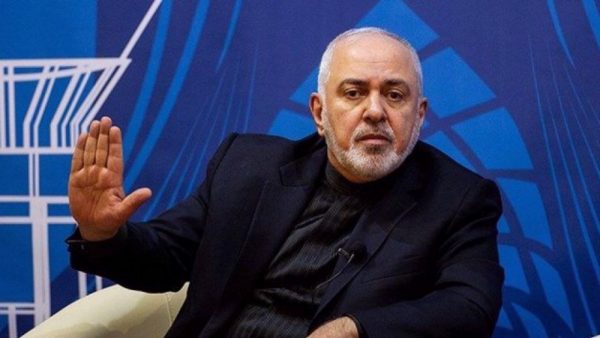
Iranian Foreign Minister Mohammad Javad Zarif
Press TV – September 20, 2020
Iran’s foreign minister says the country will meet its strategic needs by purchasing weapons from Russia and China, and has no need for European weapons once the UN embargo is lifted in October.
Mohammad Javad Zarif made the remarks in a televised interview on Saturday night in reaction to a possible initiative by France, Germany, and the UK to restrict the sale of weapons to Iran following the October expiration of the UN arms embargo against the Islamic Republic.
“We haven’t been a customer of European weapons, and they haven’t sold us weapons after the 1979 revolution. … They even ran a campaign during the 1980s imposed war [between Iran and Iraq] to prevent the delivery of arms to Iran,” Zarif said.
“We won’t force them to sell us weapons now, as we don’t need their weapons,” he noted.
Zarif said one-fourth of the arms purchases end up in the Persian Gulf region, while Iran is not part of this trade.
“However, Iran can meet its strategic needs through the countries it interacts with, like Russia and China; though it is self-sufficient in many cases, and is an exporter [of arms] itself,” Zarif said.
Thanks to God’s grace and the efforts of the country’s Armed Forces, “Iran has become self-sufficient in many cases, but in cases of need, other countries will have the right to trade with Iran once the UN embargo is lifted,” the Iranian top diplomat added.
Following a humiliating failure at the UN Security Council to secure an extension of the arms embargo against Iran, the United States recently threatened to use its “secondary” sanctions to block any arms trades with Tehran after the expiry of the UN ban next month.
US Special Representative for Venezuela and Iran Elliott Abrams claimed on Wednesday that Washington could deny access to the US market to anyone who trades in weapons with Tehran.
Sanctions “will have a very significant impact” on arms manufacturers and traders that seek to do business with Tehran, he told reporters.
The US initiative is expected to prevent European companies from selling weapons and military equipment to Iran.
‘Europe trying to save face after failure against US’
Zarif further pointed to the recent statement by France, Germany, and the UK in which they claimed they have “gone beyond their own commitments” towards Iran by launching the Instrument in Support of Trade Exchanges (INSTEX), a European mechanism which was supposed to facilitate trade with Iran amid the US sanctions.
“They are joking. The three self-proclaimed world powers failed to stand up to the US bullying. They failed, even though they may not have made so much efforts,” he said.
“Europeans had 11 commitments to fulfil, and the INSTEX was not even one of them, but a prerequisite for them. They failed to fulfil them and said Americans didn’t let them. If we accept their own words, they admitted Americans have kept them [from doing their part].”
“This is below Europe’s dignity. The economy of the European Union is bigger than America’s. Then why did you fail to resist the US’ bullying, which is now impacting you?” Zarif said, adding that the European statement is just meant to save their face.
His comments came in reaction to a statement by France, Germany and the UK delivered to the IAEA Board of Governors at the September 2020 meeting.
They said in the statement, “The E3 has worked hard to preserve the [2015 nuclear] agreement. We have gone beyond our own commitments to facilitate legitimate trade with Iran, including by introducing the INSTEX mechanism.”
‘Iran not to interfere in US elections’
In his Saturday interview, Zarif also denied the claim that the Islamic Republic is going to interfere in the upcoming US presidential elections.
“Despite Donald Trump’s claim that Iran is waiting for another person, these remarks only serve electoral purposes,” Zarif said.
“Iran is an independent country and does not meddle in US internal affairs,” he added.
Zarif said the US should first try to avoid coup plotting and violating people’s choices in other countries before accusing Iran of interfering in its elections.
He made the remarks in an apparent allusion to the CIA-orchestrated 1953 coup in Iran, which toppled the democratically-elected government of Prime Minister Mohammad Mosaddegh.
‘Israel would defend itself had it possessed enough power’
Zarif further referred to the recent deals signed by the United Arab Emirates and Bahrain to normalize their relations with the Israeli regime in the hope that Tel Aviv could bring them peace and security.
“Our neighbors unfortunately think the regime can defend them. If Israel had such a power, it would have defended itself against the Palestinian Islamic Jihad and Hamas,” Zarif said.
He expressed regret that a regional country is forced to sign a deal with Israel so that Trump can use it for his presidential campaign.
“This happens when a country depends on the US for its defense,” Zarif said.
Bahrain and the UAE signed US-brokered normalization agreements with Israel during a ceremony in Washington on Tuesday.
The controversial event was slammed by many Arab and Muslim figures as a blatant betrayal of the Palestinian cause.
Expert skeptical US would return to Iran nuclear deal under Biden
Press TV – September 15, 2020
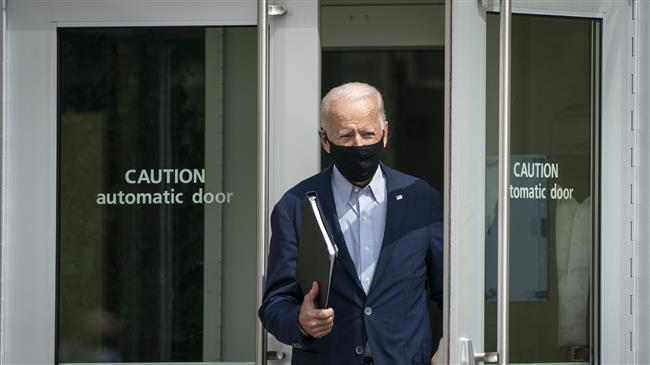
A former American Senate foreign policy analyst has expressed skepticism that a Joe Biden administration would re-enter into the nuclear agreement with Iran.
Democratic presidential candidate Joe Biden has said that if elected he will return the United States to the Iran nuclear deal as a starting point for follow-on negotiations.
Biden said in a recent article for CNN’s website that the US will rejoin the 2015 deal if Iran returns to what he called “strict compliance” with the nuclear accord, known as the Joint Comprehensive Plan of Action (JCPOA).
James Jatras, a former Senate foreign policy adviser in Washington, told Press TV on Tuesday that “It’s hard to know how much we can make of Joe Biden’s claim that he would return to the JCPOA, if he is elected president.”
“I noticed that he caveats that with ‘Iran must return to full compliance.’ And of course, we know that Iran has taken certain steps that she feels to be necessary given the US pullout from the agreement and the fact that the Europeans have failed to follow through with their obligations under the agreement,” he added.
“So I don’t know what Biden or more importantly his advisors, like Nick Burns or Evelyn Farkas, have in mind of what would constitute full Iranian compliance such that Biden could say: ‘OK, fine now, we’ll enter into this plan,’” he noticed.
“He also talks about follow on negotiations, which raises the specter that additional demands would be placed on Tehran before even a Biden administration would be comfortable re-entering the agreement. So I am somewhat skeptical that he would actually do that,” he observed.
Biden’s Republican rival, President Donald Trump, withdrew the US from the Iran deal over two years ago. Trump said it was a bad deal that needs to be re-negotiated.
Iran has time and again said it will not renegotiate the existing accord or make a new one with the US as long as sanctions remain in place.
Since scrapping the JCPOA in May 2018, the Trump administration has unleashed its “toughest ever” sanctions to bring Iran’s economy to its knees, but it keeps humming and is getting back on its feet.
Owners of cargoes carrying Iranian fuel challenge US loot in court
Press TV – September 2, 2020
The owners of four cargoes carrying Iranian fuel that was looted in high seas by the United States last month have mounted a legal challenge to reclaim them, a report says.
The US government has said it seized 1.116 million barrels of fuel because it was bound for Venezuela which is under American sanctions as part of Washington’s bid to topple President Nicolas Maduro, but the owners have disputed it.
According to a filing with the US District Court for the District of Columbia Tuesday, “at the time they were seized, the Defendant Properties were destined for Trinidad for sale to customers in Peru and Colombia.”
When the news of the loot was first broken last month, Iran put down its foot to assert that neither the ships were Iranian nor their owners or their cargo had any connection to the Islamic Republic.
US reports had also claimed that the ships were owned by Greece, but the court filing on Tuesday showed otherwise.
United Arab Emirates-based Mobin International Limited said it was the owner of the cargo aboard the Bella and Bering tankers, UK-registered Oman Fuel said it owned the cargo aboard the Pandi and Luna tankers, and Oman-registered Sohar Fuel said it part-owned the cargo aboard the Luna.
The companies said they had sold the cargoes onwards to UAE-based Citi Energy FZC, but payment was due upon delivery, which was disrupted by the seizure, Reuters reported.
“Therefore, Claimants Mobin, Oman Fuel, and Sohar Fuel retain a financial stake in those agreements and have immediate right to title, possession, and control of the Defendant Properties,” they wrote in the filing.
US claim of victory dealt a blow
The legal challenge puts yet another damper on the US government’s victory lap which came with the much-hyped claim that Washington had finally found a way to block Iran and Venezuela from evading American economic sanctions.
Over the past two years, the Trump administration has repeatedly placed sanctions on Iran’s oil and other lucrative industries with the express aim of shutting Tehran out of global markets and causing an economic collapse.
But far from collapsing as American leaders had predicted, Iran’s economy keeps humming and is getting back on its feet.
Meanwhile, Iran sent five oil tankers 1.5 million barrels of gasoline and diesel fuel to Venezuela in May and June despite American threats to stop them.
“We showcased our might, and our biggest display of power was the imposition of our will and the sailing through high seas from the Persian Gulf to Venezuela,” Major General Hussein Salami said last month.
An Iranian news agency said Iran’s naval forces were preparing to target US commercial vessels in the Persian Gulf in case US forces interfered with Venezuela-bound Iranian oil tankers.
When the New York Times first reported the seizure of the four cargoes last month, the newspaper headlined it as a “diplomatic doubleheader” which blocked Iran and Venezuela from evading American economic sanctions.
Iranian officials brushed aside the claim, with Iran’s Ambassador to Venezuela Hojjat Soltani saying the report was an “act of psychological warfare perpetrated by the US propaganda machine” trying to compensate for the Trump administration’s “humiliation and defeat by Iran using false propaganda.”
“The United States is seeking to contrive a victory for itself. Neither did the ships nor the cargo belong to Iran,” Minister of Petroleum Bijan Zangeneh told reporters in Tehran.
Aiming to cut Iran’s sales to zero, Washington in May 2019 ended sanctions waivers for importers of Iranian oil. Tehran reacted with typical defiance, saying it would find ways to sell its oil.
Last month, NBC News cited data from online service TankerTrackers.com showing that Iran was exporting a lot more crude oil than US figures suggest.
According to the data, Iran is exporting as much as 600,000 barrels per day (bpd) of crude oil – thrice more than an estimate of 227,000 bpd made in a US congressional report.
Iran, NBC News said, is coming up with more innovative techniques in wiggling its way around the draconian American sanctions.
Iranian officials have said the country is in an economic war with the United States which has forced international payment networks to cut off the Islamic Republic, making trade all but impossible.
$10 billion of oil, petrochemical investment in 5 months
On Tuesday, Iran’s Ministry of Petroleum said oil and petrochemical investment in the country has reached $10 billion since the beginning of the Iranian calendar year in March.
The government plans to officially launch 17 petrochemical projects, which are expected to produce 100 million tonnes annually and generate $25 billion per year in revenues by the end of the year, it said.
Iran also plans to launch by the end of its current calendar year in March 2021 an oil terminal designed to bypass the Strait of Hormuz for Iranian oil exports.
The country has already started building an onshore oil pipeline worth $1.8 billion to Jask which sits just east of the Strait of Hormuz. As much as $700 million of the investment will go to develop the port terminal.
The 1,100-kilometer pipeline will be capable of carrying 1 million bpd of crude oil from the Goureh oil terminal in the northwest to Jask on the Sea of Oman, without the need to have tankers travel through the Strait of Hormuz.
Last month, Iran said it had signed a total of 13 oil contracts with 14 domestic firms, which will raise the Islamic Republic’s oil production capacity by 185,000 barrels per day.
Featured Video

Iran FM Araghchi: “Hormuz Will No Longer Be the Same”
or go to
Aletho News Archives – Video-Images
From the Archives
Sam Husseini: The entire US establishment helped lie their way into the Iraq war
By Slava Zilber | American Herald Tribune | October 14, 2019
Sam Husseini is a senior analyst with the Institute for Public Accuracy, independent journalist and contributor to The Nation and FAIR.
Slava Zilber: Sam, three years ago, you appeared on Talk Nation Radio with David Swanson and spoke about the case of the GCHQ whistleblower Katharine Gun. You pointed out that the people involved in the spying on the UN and the people authorizing the Iraq War were not held accountable:
“Virtually everybody who went along with the war, whether it is Kerry or Clinton, of course, the Bush administration themselves has falsified their own records in terms of why, what they did, when they did, why they did it, to the extent that they’ve been scrutinised at all.”
You also address it in a recent article. And recently, Joe Biden has been lying about his position on the Iraq War. How can such an important issue escape meaningful scrutiny? … continue
Blog Roll
 Aletho News
- Iran FM Araghchi: “Hormuz Will No Longer Be the Same”
- EU facing trillion-euro debt hole while seeking more cash for Kiev
- How US, Europe, Persian Gulf states exhausted missile stockpiles, splurged billions to defend Israel
- Up in arms… Koreans reject U.S. empire’s plan to make South Korea the next Ukraine
- Iran, Turkey, Pakistan, Saudi Arabia could advance region-led security framework in Tehran: FM spox
- Netizens condemn Japanese drama for projecting Japan’s wartime atrocities onto Chinese characters
- Racist Seinfeld Dances for Joy as Bibi Unveils His New Map
- A West Bank War for Netanyahu’s Election Campaign, Could It Backfire?
- Yemen denounces European Parliament’s ‘hypocritical’ push to blacklist Ansarullah
- Qalibaf: UAE’s UN bid aims to ‘clear the runway’ for ‘Greater Israel’, whitewash genocide
- If Americans Knew
- An error has occurred; the feed is probably down. Try again later.
- No Tricks Zone
- Sudden Stratospheric Warming, Powerful El Niño Combination May Lead To Extreme Europe Cold, Energy Crisis!
- Two New Studies Find Thwaites Glacier Melt Cannot Be Driven By Human Activity Or A Warming Ocean
- E-Cars Reduce CO2 Emissions By Only 41% Compared To Internal Combustion Engine Vehicles
- Predictions Made By Renowned Climate Professor Over Past Decades Have Been Proven To Be Poor
- New Study Suggests Large Regions Of The Pacific Ocean Have Been Cooling For The Last 80 Years
- Germany’s Green Energy Debacle: High Energy Costs Force Kahla Porzellan to Close After 182 Years!
- New Study: 50 Years Of The Most Aggressive ‘Net Zero’ Policies Can Only Affect The Global Climate By 0.03°C
- US September “Heat” Was No Record…Many Records Set Decades Ago
- Latest European Green Energy Debacle; Portugal’s Largest Flagship Solar Park Insolvent!
- Green Energy Debacle: German Expert Professor Fritz Vahrenholt Warns Of Severe Economic And Social Consequences

