Despite US Sanctions, Iran’s Revolutionary Public Health System Curbing COVID-19 Outbreak
Sputnik – April 3, 2020
Iran has managed to contain its coronavirus outbreak even under crippling US trade sanctions that have limited the country’s access to medical equipment and other resources, Sayyed Mohammad Marandi, an American studies and postcolonial literature professor who teaches at the University of Tehran, told Sputnik’s Loud & Clear Thursday.
Marandi told Sputnik the situation in Iran is “significantly better than in the US,” despite Washington’s adamant refusal to lower economic sanctions frustrating trade with Iran, which have made buying medicine and equipment for hospitals difficult.
“It has been managed, and that’s largely because – despite all the sanctions in the last four decades – after the [1979] revolution, Iran established a primary health care network across the country,” Marandi told host Brian Becker.
“It exists in villages, in towns, in cities, it’s a huge network. This is the foundation upon which the resistance or the fight against the coronavirus was based,” Marandi said, noting that “Iran had much less time” to prepare for the outbreak than did European countries or the US, being one of the first hit after the virus broke out of China’s Hubei Province.
“But since Iran had less time, Iran was obviously less prepared. And because of the sanctions, because the US government was trying to prevent Iran from being able to fight the virus by preventing Iran from purchasing [test] kits, by preventing Iran from purchasing masks, ventilators – the US government was doing everything it could, basically through the sanctions, to turn the coronavirus into a biological weapon to use against Iran. And they still do,” Marandi said.
“But despite all of that, and despite the hardship that the Iranians went through initially, not being able to purchase their needs, because of this very powerful and very extensive primary health care network that exists in the country, they were able to contain the virus. And now the situation in Iran, despite being hit very hard and being the first to be hit without knowing clearly what it was and how to deal with it – the situation in Iran is remarkably better than what we are seeing sadly in Europe and unfortunately in the US,” Marandi told Sputnik.
The latest data reveals that there are more than 50,000 cases of the virus in Iran, and more than 3,000 people have died as a result. The US has become the epicenter of the pandemic, with more than 242,000 cases and almost 6,000 deaths from the disease.
In a recent statement, Iranian Foreign Minister Javad Zarif referred to the US sanctions against Iran as “economic terrorism.”
“We had always said the sanctions are unjust, but coronavirus revealed this injustice to the world,” Zarif added.
In a Saturday tweet, US Secretary of State Mike Pompeo claimed that Iran’s “concerted effort to lift US sanctions isn’t about fighting the pandemic” but is rather about Iran’s leaders “trying to avoid responsibility for their grossly incompetent and deadly governance.”
Even though the US claims that its sanctions don’t prevent the sale of medicine and medical devices, the secondary sanctions on financial institutions and businesses have prevented Iran from buying necessary items like ventilators that could save the lives of coronavirus patients, the New York Times reported.
Renewed Tensions With Iran in Iraq
In the midst of the pandemic, US President Donald Trump on Wednesday took to Twitter to warn Iran against attempting to attack US troops or assets in Iraq after claiming that Iran or its proxies “are planning a sneak attack on US troops and/or assets in Iraq.”
One day later, Zarif tweeted: “Don’t be misled by usual warmongers,” adding that the US “surreptitiously lies, cheats & assassinates,” while Iran “only acts in self-defense.”
“Iran starts no wars, but teaches lessons to those who do,” the minister added.
According to Marandi, Trump may be threatening Iran in an attempt to distract American citizens from the catastrophic mismanagement of the coronavirus within US borders.
“Iran is an extremely powerful country. If the US carries out an attack on the country, it will have devastating consequences for the Americans, and I think the Americans know that. The Americans had to leave Iraq about a decade ago when the small resistance with light weapons put up a fight against an American force with all its allies that were well over 150,000 troops. Now, the Americans in Iraq have 5-6,000 troops. They’re all alone, almost. Almost all of their allies have left, and the Popular Mobilization Forces of the Iraqi Armed Forces is itself well over 100,000. So, I can’t see a situation where Trump can win in Iraq, win in Iran,” Marandi added.
Sick and Sadistic: World Fights COVID-19 Amid U.S. Sanctions
By Finian Cunningham | Strategic Culture Foundation | April 1, 2020
Dozens of U.S. government-chartered flights have begun to airlift vital medical equipment and supplies from China to the U.S. as the latter becomes the world’s biggest case load of infections from the novel coronavirus. There are grim forecasts for the number of deaths in the U.S. as the pandemic is weeks from peaking there.
China is cooperating with the U.S. in organizing the massive medical transfer, naturally of course, given the humanitarian crisis. You would think therefore that a little reciprocation would be in order from Washington. After all, China is one of those foreign countries that the U.S. has imposed sanctions on over alleged human rights violations. Would it not behoove the U.S. to show a bit of solidarity and gratitude by dropping its sanctions regime against China?
And not just China. There are are some 30 countries and territories that currently sit on a U.S. sanctions list, mostly due to Washington’s accusations of human rights violations. Some of the targeted nations have been under sanctions for decades, such as Cuba, North Korea and Iran. Others have joined the dubious club more recently, such as Russia, Yemen and Venezuela.
Surely at this unprecedented time of a global pandemic threatening millions of human beings regardless of nationality, it is time to show genuine solidarity and compassion for others. The very idea of imposing sanctions on other countries is not only anachronistic. It is utterly barbaric.
In any case, U.S. sanctions imposed unilaterally without the mandate of the UN Security Council are arguably illegal. Even before the coronavirus outbreak and its accompanying disease, Covid-19, the American deployment of embargoes to disrupt commerce and trade of other countries could be seen as reprehensible. Such measures are rightly judged to be collective punishment of civilians which violates international law and the UN Charter.
But now as countries battle against an existential threat posed by the virus, the existing U.S. sanctions can be seen as an abomination.
Iran is a particularly poignant case. It has one of the highest infection rates in the world with thousands of deaths in a matter of weeks. Yet the Trump administration sees fit to not only maintain harsh sanctions on Tehran, it has actually added three more rounds of sanctions against Iran since the epidemic occurred. The deaths in Iran are being multiplied by American policy.
The Trump administration cynically claims that U.S. sanctions do not impede humanitarian aid to Iran. The claim is beneath contempt. The crippling sanctions imposed by Trump’s “maximum pressure” policy virtually precludes Iran from making international financial transactions, including for medicines. Moreover, the effect of “secondary sanctions” means that many countries are intimidated from doing business with Iran out of fear of U.S. reprisals.
Washington has blood on its hands where any country is finding the fight against Covid-19 in any way more difficult. It already had blood on its hands from its illegal sanctions. But what we have now is the grotesque picture of a ghoulish, sadistic American government shamelessly showing its ugly face at a time of global suffering.
At the G20 summit last week – held by teleconference to avoid spreading coronavirus infection – Russian President Vladimir Putin called on the world to drop sanctions at this critical juncture. He said it was imperative for all nations to have access to medicines and equipment without financial restrictions. “It is a question of whether people live or die,” he added.
Putin’s call for discarding sanctions was backed by UN secretary-general Antonio Guterres and other world leaders, including Chinese President Xi Jinping.
In the end, however, the G20 final joint statement omitted any unanimous mention of sanctions. One suspects that the U.S. – the world’s number-one serial abuser of sanctions – pulled strings behind the scenes to pre-empt any move to banish such measures of financial coercion. Not surprisingly, because financial coercion (less politely, “terrorism”) is an instrumental weapon for U.S. foreign policy, as much as its military intimidation of other nations is.
Instead, what came out of the G20 conference was a joint statement of vapid, disingenuous rhetoric.
It opined: “Global action, solidarity and international cooperation are more than ever necessary to address this pandemic. We are confident that, working closely together, we will overcome this. We will protect
human life, restore global economic stability, and lay out solid foundations for strong, sustainable, balanced and inclusive growth.”
Just how does “global solidarity” and “working closer together to protect human life” translate into practical remedial action when Washington continues to wield a veto over some of the poorest and weakest nations gaining life-saving supplies?
If there were any compassion or morality in Washington, it would immediately rescind all its sanctions against other nations in recognition of common humanity. But the hard-heartedness of Washington is unrelenting even at a time of crisis and death. It is based on a self-righteousness that is frightening in the scale of its hubris and hypocrisy.
A certain natural “correction” is due for this endemic criminal mentality of America’s ruling class. And one senses that the correction for its systematic evildoing against fellow human beings is not going to pass lightly.
Europe sends medical supplies to Iran in first INSTEX transaction: Germany
Press TV – March 31, 2020
Germany says the three European signatories to the 2015 Iran deal have registered the first transaction under a trade system set up last year to protect companies doing business with Iran from US sanctions, delivering medical supplies to the Islamic Republic amid the coronavirus pandemic.
On Tuesday, Berlin’s Foreign Ministry said Germany, France and Britain “confirm that INSTEX (trade system) has successfully concluded its first transaction, facilitating the export of medical goods from Europe to Iran.”
“These goods are now in Iran,” it said in a statement, giving no further details.
The German Foreign Ministry added that Berlin hopes to enhance the mechanism and carry out more transactions with Tehran.
“Now the first transaction is complete, INSTEX and its Iranian counterpart STFI (Special Trade and Finance Instrument) will work on more transactions and enhancing the mechanism,” the German Foreign Ministry said.
Iranian authorities have not commented on the news so far.
The transaction comes over a year after the European trio announced the creation of INSTEX — a non-dollar direct payment channel officially called the Instrument in Support of Trade Exchanges — in an effort to keep Iran’s nuclear deal with world powers alive.
The apparatus was designed to circumvent the sanctions that the United States re-imposed against Iran after leaving a nuclear deal with the Islamic Republic, the trio, plus Russia and China.
However, the Europeans have not been able to operationalize the non-dollar trade mechanism under pressure from the US.
The system was launched after Iran complained about the European countries failing to maintain trade with the country as mandated under the nuclear deal, and bowing instead to Washington’s pressure.
In May, Iran initiated a set of countermeasures against Washington’s withdrawal from the nuclear agreement, officially known as the Joint Comprehensive Plan of Action (JCPOA), and following the European partners’ failure to guarantee Tehran’s business interests under the agreement.
Iran had accepted the nuclear limits voluntarily as part of the deal, despite not being obligated by the UN nuclear agency to commit to any such restrictions.
Tehran has vowed to reverse all its nuclear activities as soon as the other JCPOA signatories begin fully implementing their obligations.
Sanctions on Iran, Others Facing Coronavirus Must Be Urgently Re-evaluated: UN
Al-Manar | March 25, 2020
The United Nations rights chief says any sanctions imposed on Iran, among other countries grappling with the coronavirus pandemic, should be “urgently re-evaluated” to support lives of millions of people worldwide.
“At this crucial time, both for global public health reasons, and to support the rights and lives of millions of people in these countries, sectoral sanctions should be eased or suspended,” Michelle Bachelet said in a statement on Tuesday.
She warned, “In a context of global pandemic, impeding medical efforts in one country heightens the risk for all of us.”
She stressed the importance of giving broad and practical effect to humanitarian exemptions from sanctions measures “with prompt, flexible authorization for essential medical equipment and supplies.”
Bachelet pointed in particular to the case of Iran, one of the hardest-hit countries by the pandemic, and said the COVID-19 outbreak was also spreading to neighboring Afghanistan and Pakistan.
She said even before the pandemic, human rights reports had repeatedly emphasized the impact of sectorial sanctions on Iran’s access to essential medicines and medical equipment, including respirators and protective gear for healthcare workers.
Nearly 500,000 people worldwide have been infected and over 17,000 have died of the viral disease, according to the latest tallies.
Iranian Health Ministry spokesman Kianoush Jahanpour said on Tuesday that the number of coronavirus deaths had risen to 1,934 and the total infections to 24,811 during the past 24 hours.
“There have been 122 new deaths and 1,762 new infections since Sunday,” he said. Jahanpour further put the number of patients who have recovered from the viral disease at 8,913.
US President Donald Trump reinstated Washington’s sanctions on Iran in May 2018 after he unilaterally left the 2015 nuclear deal, known as the Joint Comprehensive Plan of Action (JCPOA), signed between Iran and major world powers.
The International Court of Justice (ICJ) — known as the World Court — has ordered the White House to lift the sanctions it has illegally re-imposed on humanitarian supplies to Iran.
The US claims the bans do not get in the way of food and medicine exports to Iran, but the Islamic Republic says Washington has been working to make problems for a Swiss humanitarian channel launched to enable the transfer of commodities to Iran.
In a phone conversation with Tunisian President Kais Saied on Monday, Iran’s President Hassan Rouhani said the United States’ move to prevent the dispatch of medical and humanitarian aid and the facilitation of banking interactions to meet the Iranian people’s needs suffering from the deadly new coronavirus contravenes human and the United Nations regulations.
Rouhani said the US administration has intensified its cruel measures and sanctions against the Iranian people even under the current difficult conditions caused by the virus outbreak.
Collective punishment has always been the stated goal of Iran sanctions hawks
By Eli Clifton | Responsible Statecraft | March 23, 2020
The coronavirus pandemic’s impact in Iran, which already claimed over 1,800 lives and infected more than 23,000 people, is one of the world’s more troubling examples of widespread infection, with insufficient medical resources to treat the victims and a staggering anticipated death toll.
While public health experts and human rights advocates all point to the Trump administration’s “maximum pressure” sanctions regime against Iran as contributing to the public health crisis, sanctions advocates in the Trump administration and at two ultra hawkish think tanks claim that the “humanitarian trade” sanctions exemption is sufficient to address Iran’s medical needs.
But the reality is that advocates of an expansive sanctions campaign have been working to deny Iranians the staples of daily life in pursuit of bringing the regime to its knees or fomenting regime collapse. And it’s likely why to this day, the Trump administration, and its pro-Iran war/regime change allies are reluctant to relent to massive domestic and international pressure to relieve sanctions on Iran.
Indeed, remarks and actions from sanctions hawks in the State Department, the Foundation for Defense of Democracies (FDD), and United Against Nuclear Iran (UANI) illustrate their desire to inflict collective punishment on Iran as a means of generating political instability and state collapse.
Amid the crisis, on March 17, Secretary of State Mike Pompeo announced new sanctions against Iran, telling reporters, “We have an open humanitarian channel to facilitate legitimate transactions even while ensuring our maximum pressure campaign denies terrorists money.”
But that assessment of the humanitarian channel isn’t widely shared and, despite Pompeo’s repeated assertions that the Trump administration offered Iran help to deal with the coronavirus crisis, he hasn’t provided details of what those offers entail.
“Our research showed that in practice, humanitarian exemptions in the U.S. comprehensive sanctions regime have been ineffective in offsetting the strong reluctance of companies and banks to conduct trade with Iran, including the humanitarian trade that is presumably legal,” Human Rights Watch Iran researcher Tara Sepheri Far told Responsible Statecraft. “The Iranian healthcare system, both in terms of access to specialized medicine and also with regards to access to medical equipment, has taken a toll as a result of sanctions,” she added.
Even Pompeo acknowledged that collective punishment and threat of a humanitarian crisis were very much part of the sanctions strategy he was pursuing.
“The leadership has to make a decision that they want their people to eat,” said Pompeo in 2018. “They have to make a decision that they want to use their wealth to import medicine and not use their wealth to fund [Iran’s Quds Force commander] Qassem Soleimani’s travels around the Middle East, with causing death and destruction.”
Two of the most prominent groups advocating for “maximum pressure” against Iran, even in the face of the coronavirus epidemic, have repeatedly called for collective punishment against Iranians.
Mark Dubowitz, the CEO of FDD, a think tank that has regularly called for harsh sanctions and preventive military action against Iran, has repeatedly called for punitive measures against Iran’s entire population.
In a Wall Street Journal op-ed last April, Dubowitz urged lawmakers to “build a sanctions wall” with the goal of “crippl[ing] key sectors of the [Iranian] economy and lead to larger protests.” He added, “[T]he resulting economic and political instability could be leverage for a better, comprehensive deal.”
In a September Fox News appearance, Dubowitz again argued that widespread collective punishment of Iranians was a desirable strategy in bringing pressure on Iran’s leadership to negotiate with the Trump administration about their nuclear program.
“I think the Iranians are in a situation where they are running out of foreign exchange reserves, they’re not going to have the money to pay for imports that they need to run their factories, with factories closing they’re going to have massive unemployment, and so their situation is getting worse every day,” said Dubowitz. “And I think the administration, with a few moves, could actually bring about that kind of economic collapse which will then put the regime in a position where they’ll have to choose between negotiations and the survival of its regime.”
This mentality isn’t a recent phenomenon. Squeezing the Iranian people has been a goal for some time. FDD “freedom scholar” Michael Ledeen made this argument even more bluntly back in 2012 when he openly celebrated ordinary Iranians being unable to afford chickens, claimed this was largely the effect of sanctions, and applauded the fact that Iranians were blaming their leadership for hardships that were largely out of the government’s control.
“[T]here are a lot of very angry Iranians, who not surprisingly are blaming their government for this foul state of affairs,” wrote Ledeen. “In part, the government is blameless, since the cost of imports and the cost of feed grain have been driven up by the sanctions. But then again, the behavior of the government provoked the sanctions in the first place, and the singularly incompetent economic policies of the regime probably constitute the most important cause of the crisis.”
A U.S. senator at the time was even more explicit in promoting the strategy of denying Iranians basic foodstuffs. “It’s okay to take the food out of the mouths of the citizens from a government that’s plotting an attack directly on American soil,” said then-Sen. Mark Kirk (R-Ill.) in reference to sanctions that might impose food shortages on Iranians.
Kirk now serves on the advisory board of UANI, a group that has engaged in a lengthy campaign to pressure all companies, including those engaged in U.S. government licensed humanitarian trade with Iran, to halt their business with the Islamic Republic. (Kirk’s former foreign policy adviser, Richard Goldberg, later went to work at FDD where he promoted military options against Iran. And in an unusual arrangement, he later went to work in Trump’s National Security Council while FDD continued to pay his salary and travel expenses. There Goldberg advocated for an expansive sanctions regime against Iran.)
UANI applauded the Trump administration’s “maximum pressure” strategy for “wreaking maximum havoc on Iran’s economy” Its CEO Mark Wallace, endorsed “economic isolation … to the point of being unbearable.”
Indeed, both UANI and FDD’s fondness for imposing collective punishment on Iranian civilians in order to pressure Iran’s leadership to make concessions on its nuclear program is also reflected in statements from some of their biggest donors.
GOP and Trump megadonor Sheldon Adelson contributed at least $1.5 million to FDD by 2011 (FDD claims he is no longer a funder) and contributed nearly one-third of UANI’s 2013 budget, sending $500,000 to the group.
Adelson told an audience at Yeshiva University in October 2013 that Obama should launch a preventive nuclear attack on a swath of uninhabited Iranian desert and threaten that Iran will be “wiped out” if the country’s leadership doesn’t dismantle their nuclear program.
UANI’s top funder, billionaire Thomas Kaplan, is an investor whose companies have looked to profit from “political unrest” in the Middle East. At UANI’s 2018 conference, Kaplan was presented with a framed Iranian rial by Wallace to recognize his support of UANI and their shared efforts to devalue Iran’s currency.
The calls for economic collapse, military strikes, cheering food shortages, and demanding more “maximum pressure” come at a severe humanitarian cost. But for many in the Trump administration and their allies, that’s precisely the point, which explains why, up until now at least, that President Trump has refused to suspend U.S. sanctions on Iran.
“During last year’s nearly-nationwide flood relief, problems with licenses required for transferring funds to Iran slowed down the relief efforts,” said Far. “The COVID-19 outbreak is more of a serious threat by order of magnitude. There’s a collective responsibility to ensure Iran’s access to resources they need to protect the health of millions of Iranians.”
‘Utter contempt for human life’: Iranian FM Zarif slams US for hitting Tehran with new sanctions amid Covid-19 crisis
RT | March 20, 2020
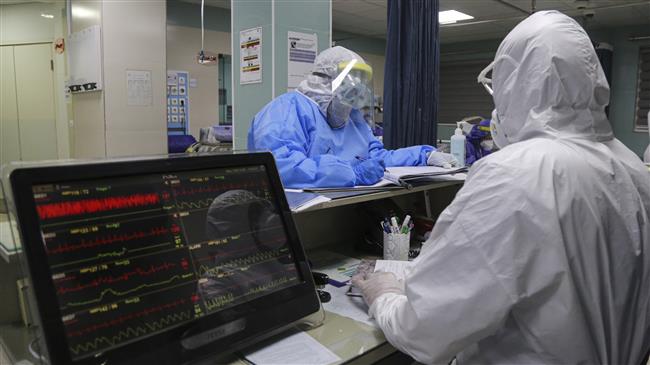
Iranian foreign minister Javad Zarif accused the US of taking its policy of “maximum pressure” on Tehran to a “new level of inhumanity” by imposing new sanctions on Iran as it struggles to cope with a huge surge of Covid-19 cases.
Zarif tweeted on Friday that The Trump administration was “gleefully” taking pride in “killing Iranian citizens” on Nowruz, the Persian New Year, celebrated on March 20 this year. He said US policy betrayed an “utter contempt for human life.”
His rebuke comes shortly after the US blacklisted five companies based in the United Arab Emirates for trading in Iranian petrochemicals. Three companies in China, three in Hong Kong and one in South Africa were also added to the list this week, as Washington attempts to choke off Tehran’s oil revenues.
“Washington’s increased pressure against Iran is a crime against humanity… all the world should help each other to overcome this disease,” Reuters quoted an Iranian official as saying on Friday.
“Our policy of maximum pressure on the regime continues,” US special representative for Iran Brian Hook told reporters, even though Iran is the worst-hit country in the Middle East by the Covid-19 coronavirus outbreak and may face economic catastrophe as a result.
Secretary of State Mike Pompeo said on Friday that the US has imposed “no sanctions” on medication or humanitarian assistance going into Iran. However, US financial sanctions have in effect prevented Tehran from buying the necessary supplies, while shipping sanctions have interfered with humanitarian deliveries.
China has called on the US to offer sanctions relief to Iran, with the Ministry for Foreign Affairs in Beijing tweeting on Wednesday that the policy was “against humanitarianism and hampers Iran’s epidemic response,” as well as deliveries of aid by the UN and other organizations.
Iran has seen at least 1,400 deaths from Covid-19 so far, with more than 19,000 confirmed cases. A health ministry spokesperson said on Wednesday that one person in Iran was now dying “every 10 minutes” from the virus, with 50 new infections every hour.
China Wants Iran Sanctions Lifted to Avoid Damage to ‘Economy and People’s Lives’ Amid Pandemic
Sputnik – March 16, 2020
Beijing calls for lifting Iran sanctions as the Islamic republic fiercely struggles to combat the coronavirus disease (COVID-19) outbreak, the Chinese Foreign Ministry said on Monday.
“China urges countries involved to immediately lift the relevant sanctions against Iran to avoid further damage to the Iranian economy and people’s lives,” the ministry’s spokesman Geng Shuang said.
Keeping sanctions in force at a time when the fight against the virus in Iran “has entered a crucial stage” would be antihuman, he added.
The diplomat warned that the restrictions would get in the way of the United Nations and other organisations providing assistance to virus-hit Iran.
“Beijing will continue providing assistance to Tehran based on the needs of the Iranian side and its own capabilities, and we also call on the international community to cooperate with Iran to ensure public health security at a regional and global level,” he stressed, noting that China had already sent humanitarian medical supplies and experts to help Iran.
According to the Iranian health ministry, 1,053 new cases of Covid-19 infection have been reported in the country in the past 24 hours.
In a letter to world leaders on Saturday, Iranian President Hassan Rouhani said that crippling US sanctions had cost the national economy some $200 billion in less than two years and curbed the effective fight against the pandemic. He urged the global community to show unity in the face of the deadly viral disease and abandon any policy that hinders global efforts to combat it.
Iran is suffering from the biggest coronavirus outbreak after China and Italy, with nearly 14,000 confirmed cases and over 720 deaths.
US, Israel pressuring IAEA to act outside its purview, warns Iran
Press TV – March 4, 2020
Iran says the US and Israel are seeking to undermine the “constructive cooperation” between the country and the UN nuclear agency by forcing the latter to act outside its purview.
“Unfortunately once again, the US and the Israeli regime are trying to sabotage the dynamic and constructive relations and cooperation between the International Atomic Energy Agency and Iran by exerting pressure on the agency to act beyond its functions enshrined in the [IAEA] Statute,” Kazem Gharib-Abadi, Iran’s permanent representative to Vienna-based international organizations, told reporters on Wednesday in reaction to a recent report on Tehran’s nuclear program.
He said that Iran is trying to prevent bids by certain sides to set “an illegal and dangerous precedent” in the IAEA that would recognize fabricated claims by some intelligence services.
He added that such fabricated information will create no obligation for Iran to grant the IAEA access to certain sites inside the country.
“Making any request for further clarification or complementary access to [certain sites] by the IAEA based on fabricated information provided by espionage services, including that of the Zionist regime, is not only against the IAEA founding documents and its verification regime, but it does not also create any obligation for Iran to meet such demands,” the diplomat noted.
The envoy warned that countries will see their national sovereignty violated if they fail to take fundamental measures to foil such plots.
The remarks came a day after the IAEA issued two reports — one regular report on Iran’s current nuclear program and the other detailing what it claims to be Tehran’s denial of access to locations the agency says could be connected to the country’s nuclear program.
In one of its reports, the IAEA claimed that Iran had not answered questions about possible undeclared nuclear material and nuclear-related activities at three locations.
The IAEA has not specified the origin of the allegation, but since April 2018, the US and Israel have been busy making a fuss about unsubstantiated Israeli-sourced allegations about undeclared nuclear activity by Tehran.
The IAEA is tasked with monitoring the technical implementation of a 2015 nuclear deal signed between Iran and six major world powers — the United States, Britain, France, China, Russia and Germany.
The future of the historic deal has been in limbo since the US’ unilateral withdrawal from the accord in 2018 and Washington’s re-imposition of sanctions against Tehran.
Iran gradually reduced its commitments to the accord in retaliation for the US move, but stressed that the measures were reversible upon effective implementation of reciprocal obligations by the other parties.
European sanctions-busting payment channel for Iran registers ZERO transactions – Iranian ambassador
RT | March 3, 2020
Over a year since its launch, the EU’s INSTEX financial mechanism – designed to facilitate trade with sanctions-hit Iran – has not carried out any operations, Iran’s ambassador to Russia Kazem Jalali has revealed.
“The Europeans have developed the INSTEX mechanism, but to date, as I’m talking to you, no transactions have been made,” Jalali said during a meeting with Konstantin Kosachev, chair of the Foreign Affairs Committee in the Russian senate.
The special purpose vehicle INSTEX was established by France, Germany and the United Kingdom in January 2019 in an attempt to rescue the 2015 nuclear agreement with Iran. The move came after the US, which used to be one of the parties of the landmark deal, unilaterally abandoned the accord and restored tough sanctions on the Islamic Republic. After the trade channel became operational, six more EU states – Belgium, Denmark, Finland, the Netherlands, Norway and Sweden – decided to join it.
While the mechanism is still far from being implemented, having such a financial instrument could be more vital than ever for Iran, as it has been hit hardest among Middle Eastern countries by the coronavirus outbreak. The pneumonia-causing disease that originated from China has already killed 66 people in the country and infected more than 1,500.
Although the European initiatives to save the nuclear deal, also known as the Joint Comprehensive Plan of Action (JCPOA), look good on paper, Iran has repeatedly slammed the partners for their lack of action. Since the US’ withdrawal from the deal, Tehran has been gradually scaling back its nuclear commitments. One of the latest steps was made in January, when it announced that it would determine the enrichment level and the amount of enriched material it produced only in accordance with its own needs.
Supreme leader’s advisory council member dies of coronavirus – Iranian media

RT | March 2, 2020
Seyyed Mohammad Mirmohammadi, a long-standing member of the Islamic Republic of Iran’s Expediency Discernment Council, has reportedly died from a novel coronavirus infection.
He was being treated at the Masih Daneshvari Hospital in Tehran when he succumbed to the Covid-19 infection at the age of 71. Mirmohammadi’s mother, sister of senior cleric Ayatollah Shobeiri Zanjani, also died from a coronavirus infection on Monday.
Mirmohammadi was a member of the sixth and seventh Iranian parliaments and was appointed by Iran’s Supreme Leader Ayatollah Khamenei as a member of the Expediency Discernment Council in August 2017.
Iran’s former ambassador to the Vatican, Hadi Khosroshahi, died of Covid-19 last week, while the country’s Deputy Health Minister Iraj Harirchi placed himself in isolation after appearing to sweat profusely and seeming ill while giving a press conference to assuage fears over the outbreak. He later confirmed that he had been infected with the virus.
Iran is battling shortages of medical supplies – exacerbated by US sanctions – but authorities have allocated a number of military hospitals to treat the general public and help stem the tide of infection. Meanwhile, schools, universities and sports centers have been closed and the parliament has been shut down.
Iran has the world’s second highest death toll outside of China. The country has officially announced 978 cases and 54 deaths. At 5.5 percent, the country’s death rate is more than twice the global average of two percent.
Several of Iran’s neighbours have closed their borders as the virus spreads across the region. These countries include Kuwait and Bahrain, each with 50 confirmed cases, the UAE with 21, and Iraq with at least 19 cases.
Deconstructing the election to Iran’s Majlis
By M. K. BHADRAKUMAR | Indian Punchline | February 24, 2020
Iran’s parliamentary election on Friday took place in extraordinary circumstances. The pandemic fear over coronavirus significantly impacted the voter turnout, which is estimated to be around 42% (as compared to 62% in the 2016 election to the Majlis). A dozen people have died so far in Iran and a few dozen diagnosed with the virus outbreak. There are conflicting reports. Turkey, Pakistan, Afghanistan, Iraq and Armenia have closed their border with Iran.
The election presages a robust comeback by the conservative faction known as the Principalists. In the 2016 election, the reformists, conservatives and independents won 41%, 29% and 28% of the vote respectively. But this time around, the reformists have been marginalised and the Principalists will dominate the 290-member Majlis with a commanding majority. The Principalists won all 30 seats from Tehran, which is traditionally a key battleground.
There are many underlying factors behind the popular discontent that the election results reflect — in particular, the anger at the 2015 nuclear deal’s failure to bring jobs and social improvements (as promised by President Hassan Rouhani), corruption, mounting social inequality, inflation and poverty rates, water shortages, spiralling cost of living and high unemployment. Strikes and protests among teachers and the working class became frequent in the recent years.
The US sanctions have devastated social conditions, driving up inflation and poverty rates. A report last year by the Iranian parliament’s research office acknowledged that some 57 million of Iran’s 80 million population would live in poverty.
Having established control over the Majlis, the Principalists will most certainly make a determined bid to capture the presidency in the August 2021 election when Rouhani completes the second term in office and must step down as stipulated by the constitution. A politically surcharged climate will prevail in the coming 18-month period.
Rouhani’s capacity to manoeuvre will be severely restricted and as a weakened president, he will have to depend on cooperation of the Principalists, which may not be forthcoming.
One peculiarity of the struggle is that it is also a reflection of differences over foreign policies, especially the standoff with the US. Broadly, the Principalists are hardliners in regard of Iran’s relations with the West, while the reformists have keenly (but vainly) sought Iran’s integration into the world economy by improving the country’s relations with the West.
Thus, the “big picture” is that the Trump administration’s maximum pressure approach has pushed Iran to the right. The assassination of the iconic IRGC general Qasem Soleimani in a US drone attack in January set in motion long-term shifts in Iran’s domestic politics.
Soleimani’s killing prompted the regime to resort to extreme measures to disqualify a broad swathe of moderate and centrist candidates from running in the parliamentary elections.
If Trump’s unilateral withdrawal from the 2015 nuclear deal dealt a mortal blow to Rouhani’s prestige and created a mass perception that the US is an undependable interlocutor with whom constructive engagement is simply not feasible, the killing of Soleimani has totally discredited Rouhani’s approach towards the US, which eschewed confrontation and placed the accent on diplomacy.
Put differently, the regime is circling the wagons, as it were, sensing an existential threat to the Velayat-e faqih — or guardianship of the Islamic jurist — which is the Shia Islamist system of governance since the country’s 1979 Islamic Revolution, built on the rule of the clergy over the state.
Several western analysts had warned that the Trump administration’s policies would inevitably discredit the reformists and shift Iran’s political calculus toward the right, with negative consequences for regional security. But such warnings fell on deaf ears.
It almost seems now as if the hardliners in the Trump administration preferred to have the Principalists at the helm of affairs in Tehran. Indeed, no sooner than the conservative surge in the Majlis election appeared, the US Secretary of State Mike Pompeo has floated an inflammatory idea, during a visit to Saudi Arabia this week, that in the coming months, he and Trump will make a major decision about whether to petition the UN to invoke what is known as “snapback” on a set of international sanctions on Iran that were lifted as part of the 2015 nuclear accord.
Such a move has been rumoured for some time but this is the first acknowledgement by the Trump administration. The idea is to “to deal a deathblow to the nuclear deal” and to provoke Tehran to react.
Tehran has already warned that any move to reimpose blanket UN sanctions on Iran will compel it to expel the IAEA inspectors and resume its pre-2015 nuclear programme. Iran may even quit the NPT (as North Korea did.)
In sum, as two well-known American experts Julia Masterson and Samuel M. Hickey wrote recently in an essay in the Bulletin of the Atomic Scientists titled The US has a backup plan to kill the Iran nuclear deal. It could spark a crisis at the UN :
“A snapping back of UN sanctions on Iran could also lead Iran to kick out international nuclear inspectors, resume additional nuclear activities, and threaten a regional war involving great powers, historic adversaries, and non-state actors across the Middle East. In short, it would manufacture a crisis that the world can ill afford.”
A reconciliation with the West seems all but out of the question for the foreseeable future. The ascendance of the conservatives will likely see Iran’s withdrawal from previous commitment to the 2015 nuclear deal. Free of international control, Tehran can redefine its stance as it wishes.
A concerted effort by Tehran to broaden and deepen relations with China and Russia can be expected. Iran will rely on China and Russia for investment and technology transfers in line with the pivot to “resistance economy”, dispensing with imported goods.
US oil sanctions on Iran force India to look to Russia
By Shishir Upadhyaya | RT | February 9, 2020
Escalating US pressure on Iran, including sanctions targeting Iranian oil exports, may have had an unexpected consequence – pushing India to diversify its energy supplies by shifting from Tehran to Moscow as a major oil supplier.
State-owned oil refiner Indian Oil Corporation (IOC) has just signed a contract with Russia’s Rosneft for the supply of up to 2 million tons of oil by the end of 2020. The meeting took place on the sidelines of India’s largest weapons fair, DefExpo, currently going on in Lucknow.
“This is just the beginning,” Indian Oil Minister Dharmendra Pradhan told reporters after meeting with Rosneft chairman Igor Sechin in New Delhi on Wednesday.
The contract could be a precursor to an emerging energy security partnership between India and Russia, with more deals to come. India is the world’s third-biggest oil consumer and importer, shipping in more than 80 percent of its crude needs.
Security turmoil in the Middle East impacts energy trade
Iran was the third largest exporter of oil to India in 2018, right behind Iraq and Saudi Arabia. Between sanctions and spillover violence, the escalating tensions between Washington and Tehran have endangered all three of those sources.
US sanctions against Iran are intended to cripple Tehran’s economy and force it to give up any nuclear ambitions, ballistic missile development, and support for militants in Syria, Yemen, Lebanon, and elsewhere.
The conflict has spilled over to neighboring countries, however. The largest Saudi oil complex was hit by a drone strike in September. Yemen’s Houthis claimed responsibility, while the US blamed Iran. Meanwhile, Iraq has been dealing with shipping interruptions due to ongoing protests over economic conditions, which only got worse following the January 3 US drone strike in Baghdad that killed Iranian General Qassem Soleimani. Iranian retaliation by launching missiles against two US bases in Iraq appears to have driven India to take its oil business elsewhere.
Seeking diversification
India has already been seeking other sources for its energy needs away from the Middle East, in a bid to hedge geopolitical risks. Oil imports from the region shrank from 65 percent of India’s total in 2018 to 60 percent in 2019.
Another driver of this policy is the Indian government’s commitment to increase the use of cleaner fuels such as liquefied natural gas (LNG) from six percent to 15 percent by 2030. As a result of security developments in the Gulf since January, India’s energy cooperation with Russia has now acquired a sense of urgency never seen before.
IOC’s historical reliance on Middle Eastern sources has been partly due to their proximity and the resulting difference in shipping costs. Most ports in the Persian Gulf lie within 2,500 kilometers of India, while Russian ports are located over 7,500 kilometers away. For that reason, Indian state refiners have previously preferred to buy Russian oil via the spot market rather than under contract.
Pivot to Russia
The IOC-Rosneft contract is just the latest development in what appears to be India’s energy pivot to Russia. Following Prime Minister Narendra Modi’s visit to Vladivostok in September 2019, Indian companies signed several long-term energy deals with Russian partners. India’s GAIL gas company inked a 20-year LNG contract with Gazprom, while Coal India made arrangements to buy coal from Russia’s FEMC mining company.
“We have had a major breakthrough in the energy sector,” Foreign Secretary Vijay Gokhale said at the time. “This is a sector where we are looking to diversify our sources of supplies and we are increasingly finding it attractive to buy oil and gas from the Russian Federation.”
India’s strategic relationship with Russia can be traced back to the Soviet era, but the relationship between Moscow and New Delhi has evolved in recent years to encompass energy, defense, nuclear cooperation, and space. Russia and India are also committed to expanding bilateral trade, hoping to reach the mark of $30 billion in annual exchange by 2025, up from the current $11 billion.
On the whole, the actions of the Trump government in Iran and their wider impact on the Persian Gulf have elevated the Indo-Russia relationship, something that Washington may not have had in mind.
Shishir Upadhyaya is an internationally acknowledged defence and strategic affairs expert, former Indian naval intelligence officer and author of “India’s Maritime Strategy: Balancing Regional Ambitions and China.” Follow him on Twitter @Shishir6
Featured Video
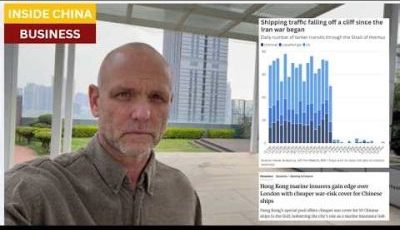
More Iran War fallout: Maritime insurance industry shifts from London to China
or go to
Aletho News Archives – Video-Images
From the Archives
The Biggest Threat to Peace in Middle East
By Dr. Elias Akleh* | Sabbah Report | May 24, 2010
A build up of heightened tension in the Middle East is escalating in the last few weeks. American and Israeli postures towards Lebanon, Syria, and Iran have become more threatening. Listening to speeches of political leaders one hears talks only about war not peace. Iranians and Israelis are continuously training hard for a possible showdown. Both sides are conducting extensive war games every month. This led Syrians to claim that Israel is preparing for a soon-to-come another war. The Jordanians also are warning that current stalemate of the peace process is an indication of a war breaking out this summer. The Russian President and his army chief hinted, a few months ago, that the US and Israel were planning for an attack on Iran.
Indeed Iran is, as it has been for last few years, the target of most of the threats and accusations of supporting terrorism. Escalating incitement against Iran the American Defense Department sent last month (April) to Congress a report on Iran’s military claiming Iran could develop intercontinental ballistic missiles capable of reaching the US by 2015.
Ignoring the fact that N. Korea, India, Pakistan, and Israel are proven to have nuclear weapons while Iran does not, the US Secretary of State Hillary Clinton chose in her speech, to the nuclear Non-Proliferation Treaty review conference at the UN, to focus on Iran’s alleged nuclear ambitions putting the whole world at risk as she put it. According to Clinton Iran’s acquisition of nuclear weapons, rather than Israel’s more than 200 nuclear bombs, is destabilizing the Middle East. She called on the world’s nations to rally around US efforts to hold Iran, not other nuclear countries, to account.
The accusation that Usama Bin Laden is living comfortably in Iran had received a boost after the broadcast of a documentary called “Feathered Cocaine”. This echoed the June 2003 claims of the Italian newspaper Corre de la Sierra that Bin Laden was in Iran according to some intelligence report, and according to Richard Miniter’s book “Shadow War”. … continue
Blog Roll
 Aletho News
- Why could Gaza enter the regional war?
- Hamas official rejects Mladenov Plan linking disarmament to Gaza reconstruction
- Two Primary Elections for the Soul of ‘America First’
- Japan Clings to US Vassalage Despite Energy Crunch Caused By Iran War
- US Seeks Control Over Global Energy Infrastructure – Kremlin
- US senators target Orban government for standing up to Zelensky
- The deep-rooted culture of corruption in Ukraine
- Iran mobilizing one million soldiers to ‘create hell’ for any US ground assault: Report
- The coming military and psychological unravelling?
- Iran has the last laugh
- If Americans Knew
- Researchers at Human Rights Watch Resign Over Blocked Report on Palestinian Refugee Return
- Jewish Groups Are Backing a War Americans Don’t Want
- Eric Fingerhut Thinks He’s the President of the Jews
- Top Jewish Philanthropists, Rabbis Urge Israeli President to Take Action Against ‘Jewish Extremists’
- Don’t Be Fooled. Zionist Leaders Have Always Wanted to Control Southern Lebanon
- Israel’s widespread use of torture is a core element of its genocide against the Palestinian people
- In Israel’s War on Iran, Many Middle East US Bases Rendered “All But Uninhabitable”
- ‘Burn the lawn’: Israel pursues ‘Rafah model’ in southern Lebanon
- A genocide here, an amputation there
- Reports: Iran mobilizing 1M fighters, Israel-US run low on ammo, Israeli army faces shortage – Not a ceasefire Day 168
- No Tricks Zone
- Devastating Assessment Of Comirnaty Vaccine By Former Senior Pfizer Europe Toxicologist
- New Study: CO2 Is ‘Effectively Negligible’ As An Explanatory Climate Change Factor Since 2000
- Former Pfizer Toxicologist Dr. Helmut Sterz Tells Bundestag Hearing Pfizer Vaccine Should Have Never Been Approved
- Energy Expert: Germany’s Nuclear Phaseout Was A “500 Billion Euro Mistake”
- New Research: South Australia’s Mid-Holocene Sea Surface Temperatures Were 4°C Warmer Than Today
- Storing Green Energy To Last Germany 10 Days Would Require A 60-Million Tonne Battery
- New Studies: UK Sea Levels Were 4 Meters Higher Than Today During The Mid-Holocene
- Destructive Green New Deal: German Energy And Metal Group Warns Of Drastic Crisis
- New Study Documents A 20-Year Pause In Arctic Sea Ice Decline – Driven By Internal Variability
- Wake-up Call: Survey Shows Majority Of Germans Now Favor Postponing Climate Targets!
 Aletho News