Hafte Tir Bombing: A Blast which Shocked the Iranian People
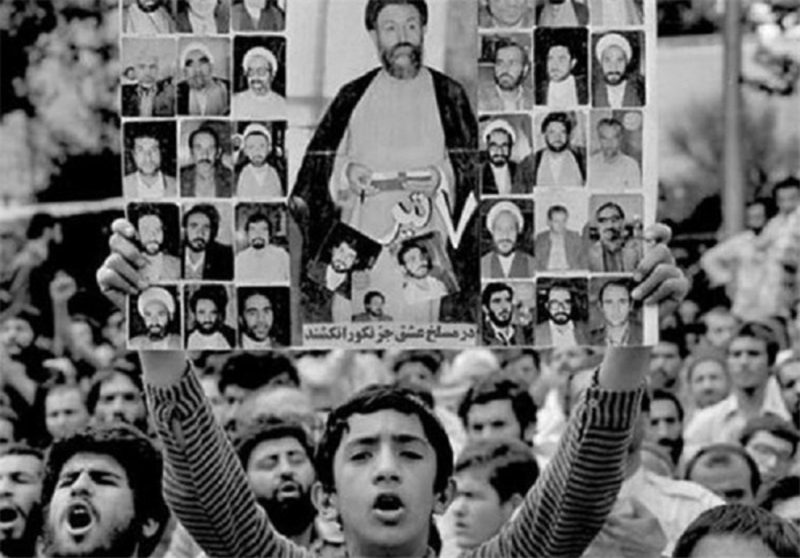
By Robert Fantina | American Herald Tribune | June 26, 2020
In 1979, the people of Iran successfully and mainly peacefully overthrew the United States-supported government, led by the brutal autocrat, the Shah of Iran. In ridding themselves of this repressive dictator and freeing themselves from the shackles of U.S. imperialism, they established the Islamic Republic of Iran.
While the revolution had widespread popular support, as does the government to this day, it was not without opposition groups. The MEK (Mujahedin-e Khalq, or the People’s Muhajedin Organization of Iran), is one such opposition organization. It is a violent terrorist group that is currently supported by the U.S. government. Members of the MEK have never accepted the revolution, and on June 28, 1981, three years after the revolution, they bombed the Islamic Republic Party headquarters in Tehran. This horrendous crime was committed during a meeting of party leaders, and killed seventy-three people, including the Chief Justice, Ayatollah Mohammad Beheshti, who had been a leader in the revolution.
Thirty-nine years have passed, but the memory of these martyrs has not dimmed.
Hujjat al-Islam Seyyed Mehdi Qureshi, Islamic Revolution Leader Representative in Iran’s West Azarbaijan Province, commented that “Iran’s stable position has been achieved thanks to the bravery of the martyrs.” Those martyrs’ names, many in addition to those who died on June 28, 1981, are etched upon the hearts of the Iranian people, and include General Qassem Soleimani, murdered by the U.S. in January of this year.
Any government has people who oppose it: citizens of the nation who disagree with one or more policies, and law-abiding people work within the system to achieve changes they seek. Generally, when a majority of the population wants certain changes, those changes are implemented.
Yet within Iran and outside it, a small terrorist group seeks the violent overthrow of the government, despite having so little support to do so. Why, one could ask, would the mighty United States support such a group, when it decries any terrorist activity?
The hypocrisy of U.S. government officials has been discussed and documented by this writer often. The U.S. is only interested in self-determination when the people of any nation choose a form of government that will follow all U.S. dictates. The leaders of the Islamic Republic of Iran will not do so. They form alliances with nations that the United States holds in contempt, and they come to the aid of those nations when required to do so, such as in fighting U.S.-financed terrorists in Syria.
Iran has not invaded another nation in over 200 years, and its leaders have a ‘no first strike’ doctrine. In the U.S.’s 244-year history, it has invaded at least 84 of the 193 countries that are recognized by the United Nations. And its continued hostility towards Iran has only increased with the administration of the unstable president, Donald Trump.
In the United States, lobby groups finance election campaigns, thus making the elected officials beholden to those groups, not their constituents. Prominent among these groups are pro-Israel lobbies, which consider Iran to be their rival for hegemony in the Middle East. Among the global community, only Israel and Saudi Arabia opposed the Joint Comprehensive Plan of Action (JCPOA), the agreement signed with Iran and several other countries that regulated Iran’s nuclear development program, in exchange for the lifting of sanctions. Only Israel and Saudi Arabia praised the U.S. violation of it.
After sanctions were re-imposed following this U.S. violation of international law, this writer contacted a friend in Tehran. He was told that, while the sanctions were unfortunate, the Iranian people are accustomed to living with them, and would continue to do so as long as necessary. There was no talk of defeat; he didn’t suggest that the government should or would accede to U.S. demands. He was not resigned: he simply indicated that the Iranian people would continue to live their lives and make whatever adjustments were necessary due to the sanctions.
This is the attitude that makes Iran great, and that inspires Iranians to sacrifice their lives for their country. When one powerful country is besieged by another, more powerful one, but refuses to surrender, its people’s pride in their nation only increases. And this year, on the anniversary of the Hafte Tir bombing, the memory of those who were working for the people and gave their lives in that mission will again be remembered. Also remembered will be other Iranian martyrs, those who died in the August 30, 1981 bombing of the Prime Minister’s office, General Soleimani and so many others, whose names may not be as well known, but who are remembered and beloved by their countrymen.
The anniversary of the Hafte Tir bombing should be commemorated around the world as a symbol of the destruction and death caused by terrorism, and as a memorial to those innocent servant-leaders who died in it. It should also serve as a reminder to some governments, such as that of the United States, that their unjust plans for world hegemony will not be achieved, and that support for terrorists is an affront to the basic human dignity of mankind. It should remind nations across the globe that the U.S., the most violent nation on the planet, continues its economic and medical terror against a free and peaceful nation.
It has been thirty-nine years since those seventy-three Iranian officials lost their lives in the service of their country. Their sacrifice will not be forgotten in Iran, or by people of decency and compassion around the world.
Iran ready for coop with IAEA as long as it retains independence: Rouhani
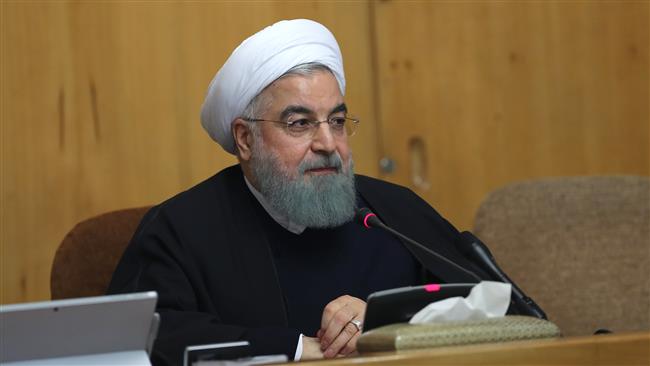
Iran’s President Hassan Rouhani
Press TV – June 24, 2020
President Hassan Rouhani says Iran is prepared, as before, to continue its cooperation with the International Atomic Energy Agency (IAEA) as long as the UN nuclear watchdog does not deviate from the legal frameworks and does not fall under Israeli and American influence.
“Iran is prepared to take the agency’s legal inspections and engage in close cooperation with it within the framework of the [standing] regulations,” Rouhani said, addressing a cabinet session in Tehran on Wednesday.
“For us, cooperation with the agency has always formed the basis,” he said, adding, “We will maintain this [principle] today too.”
He said the Islamic Republic has invariably enjoyed a “friendly” relationship with the watchdog, whose inspectors have examined the country’s nuclear facilities regularly and confirmed its non-diversion from a 2015 nuclear agreement between Tehran and world countries in more than a dozen reports.
The president, however, cautioned that “the agency too should pay attention not to deviate from its legal path.”
On Friday, the IAEA’s Board of Governors adopted a resolution — drawn up by the UK, France, and Germany — that called on Iran to allow access to two sites that Israeli intelligence services claim are related to Tehran’s nuclear program. Tehran has condemned the resolution, rebuffed the allegations, and reminded the agency that it cannot request inspections based on accusations made up by intelligence agencies.
“I fear these charlatans may tarnish the agency,” Rouhani said, referring to the Israeli regime and the United States that changelessly backs the regime’s stances and allegations. “They dupe the agency and push it away from its course.”
“The agency’s task consists of reporting on the manner of application of nuclear materials. That is what the agency is supposed to do,” the president said.
He, accordingly, urged the IAEA to act justly in its assessments and retain its independence.
Rouhani, meanwhile, berated the European trio for their falling under Tel Aviv and Washington’s pressure in devising of the anti-Iranian resolution, while praising Russia and China for their decisive stance against the resolution.
On US offer of talks
Separately, the chief executive referred to the United States’ new offer of talks with Iran.
The Islamic Republic is always prepared for negotiations as soon as the US renews commitment to the international regulations, he said, adding that it was Washington that left the negotiation table in the first place by reneging on its commitments.
Washington left the nuclear deal in 2018, although the accord has been endorsed by the UN Security Council as a resolution.
“They were the ones, who created trouble, broke the negotiation table, and tyrannized the Iranian nation,” Rouhani said.
He also urged that the US apologize to the Iranian people for the economic damage that it has tried to afflict on them through the sanctions that it reinstated after leaving the deal, and compensate the nation.
Iran has ‘no problem’ talking to US if it apologizes & offers refund over nuclear deal – President Rouhani
RT – June 24, 2020
Nothing is preventing Tehran from engaging in talks with Washington, provided that it comes up with apologies – and reimbursement – for losses in the 2015 nuclear pact America walked out on, President Hassan Rouhani has said.
“We have no problem with talking to the US,” Rouhani declared, in a nationally-broadcast speech on Wednesday. The only condition is that “Washington meets its obligations under the nuclear deal, apologizes and compensates Tehran for its withdrawal from the 2015 pact,” the president said, as quoted by Reuters.
Rouhani made it clear, however, that “these calls for talks with Tehran are just words and lies.” US President Donald Trump has previously offered to negotiate with Iran without any preconditions and to meet with Rouhani in person.
Washington repeated the offer of “serious talks” this January – but the timing of this couldn’t have been more questionable, as it came on the heels of the death of Qassem Soleimani, a renowned Iranian military leader, in an American missile strike.
Tehran, for its part, has consistently ruled out dealing with Washington under pressure, or trading vital national interests.
Last year, however, Foreign Minister Javad Zarif announced that he pitched a suggestion to the US, under which Iran would permanently accept international inspections of its nuclear program, in return for the lifting of US sanctions.
Following his pattern of being suspicious towards Iran, Trump green-lighted the pullout from the hard-earned nuclear pact in 2018. Shortly after the US formally ceased to be a member, it slapped Iran’s oil trade, finances, investment activities, and other crucial sectors with sweeping penalties under the so-called “maximum policy pressure.”
This week, Washington will try to secure a UN backing for an indefinite extension of an embargo that bans countries from selling or transferring arms to Iran unless approved by the Security Council. In order to pass, their draft resolution requires nine votes in favor and no vetoes from China, Russia, Britain or France – a quartet of countries still adhering to the 2015 nuclear deal.
Bolton claims Iran had yellowcake uranium, echoing bogus claims that led to Iraq war
RT | June 22, 2020
Former US National Security Advisor John Bolton has claimed Israeli agents found “yellowcake uranium” in Iran in 2018, channeling the discredited intelligence used by the George W. Bush administration to justify invading Iraq.
Israel’s Mossad retrieved “human-processed uranium” that was “perhaps yellowcake (uranium oxide in solid form)” during a “daring raid on Iran’s nuclear archives” in 2018, the mustachioed warmonger declared in his controversial Trump administration memoir, ‘The Room Where It Happened’. The discovery, Bolton alleged, was substantiated when the International Atomic Energy Agency subsequently conducted an inspection of Iran’s Turquzabad site. Israeli media trumpeted the vague, unverified claim over the weekend, publishing selected quotes from the book.
Bolton insisted the discovery “could well be evidence that Iran kept alive its ‘Amad plan’ for nuclear weapons after it was supposedly ended in 2004.” However, despite the wild claims leveled against Tehran by Israeli PM Benjamin Netanyahu in his theatrical speech following the raid, the IAEA denied Tel Aviv had uncovered any evidence that would change the international understanding of Iran’s nuclear activities. Iranian foreign minister Javad Zarif, meanwhile, accused Netanyahu of deliberately tailoring his speech to give the Trump administration a rationale for withdrawing from the JCPOA nuclear deal – which it did, much to Bolton’s delight.
While the Trump administration has thus far stopped short of bombing Iran, hope springs eternal – Bolton has pushed for war with the Islamic Republic for years. So has Netanyahu, who has claimed since 1992 that Iran’s nuclear bomb was right around the corner and has been trying to convince the US to share his view ever since.
The former Trump official’s yellowcake claims – tellingly couched in qualifying words like “perhaps” and “could be” – carry disturbing echoes of the phony intelligence used by Bush’s administration to justify the disastrous invasion of Iraq in 2003. Bolton himself had pushed to have unsubstantiated allegations that Iraqi leader Saddam Hussein was trying to purchase yellowcake uranium from Niger as part of a top-secret nuclear weapons program included in a ‘fact sheet’ on Iraq’s “weapons of mass destruction” drafted by the administration in 2002. Even after US diplomat Joseph Wilson traveled to the African nation and found no factual basis for the yellowcake claims – a conclusion backed by French intelligence, the CIA, and the US Embassy in Niger – the neoconservative core of the Bush administration, including Bolton, clung to the yellowcake story. No WMDs were found after the US invaded Iraq the following year – not that Bolton ever apologized.
The Iraqi yellowcake story is widely agreed to have been the result of a skilled forgery pushed by regime-change enthusiasts who wanted Iraq’s government toppled and didn’t care how much they had to mangle the truth to get it. Neocon hawks like Bolton and fellow Bush administration heavyweights Donald Rumsfeld, Paul Wolfowitz, and Richard Perle had been championing war with Iraq for over a decade, repeatedly and unsuccessfully pushing then-president Bill Clinton to invade before they finally got their wish with Bush in 2003.
As CIA analysts at the time explained, refining yellowcake into the material used in nuclear bombs requires extensive processing and sophisticated technology Iraq did not have – never mind the logistical difficulties inherent in moving the 500 tons Hussein was supposedly purchasing out of Niger. Additionally, Iraq was already sitting on over 550 tons of uranium oxide. So why, they wondered, would Baghdad risk arousing international suspicions by buying more if it was embarking on a clandestine nuclear program? But Bolton and his cohort were known for their persistence; “Stick that baby in there 47 times, and on the 47th time it will stay” was how the Pentagon’s Larry Wilkerson described their modus operandi to Vanity Fair. Even after the IAEA itself declared the Niger documents to be forgeries, the Bush administration plunged ahead with the war that has turned the Middle East into a chaotic quagmire of political instability, terrorism, and human suffering.
Iran’s compliance with the JCPOA deal has been repeatedly certified, even as Bolton and his fellow hawks attempted to discredit the inspection process. With the ink on the deal scarcely dry in 2015, Bolton was already claiming Iran was operating “secret nuclear facilities” and calling for the Obama administration to bomb the country. He then spent much of his time as Trump’s national security advisor advocating for a military response to any perceived slight – especially after the US exited the JCPOA. At the same time, Israel continues to push “bombshell” reports alleging violations of the deal, with the most recent coming earlier this month and based on data Tehran claims was supplied by Mossad.
Bolton has been industriously milking his 15 minutes of fame, heralded by the media as a #Resistance hero ever since his book skewering the Trump administration was copiously leaked to mainstream outlets, over the president’s protestations. The tome contains a number of questionable revelations, including that Trump thought Venezuela was “really part of the US” and invading it would be “cool” until Russian President Vladimir Putin bent his ear, discouraging the idea. Trump slammed the book as the fictional musings of a “sick puppy.”
China does not approve of further tension over Iran nuclear program: Foreign Ministry

Chinese Foreign Ministry spokesperson Zhao Lijian
Press TV – June 22, 2020
Chinese Foreign Ministry spokesperson Zhao Lijian says his country opposes any measure leading to exacerbation of tensions over the Iranian nuclear program in the wake of the recent adoption of an anti-Iran resolution by the Board of Governors of the International Atomic Energy Agency (IAEA).
“China supports the IAEA in playing its role in an objective, professional and neutral manner in verifying Iran’s compliance with its safeguards obligations. We are against politicizing its work,” Zhao said at a regular press conference on Monday.
He pointed to an explicit announcement by the IAEA that the “safeguards issue is neither urgent nor poses a proliferation risk” and welcomed Iran’s readiness to resolve issues through dialogue and said, “Under such circumstances, China does not approve of actions that artificially exacerbate tensions and escalate the situation.”
He expressed hope that all relevant parties to the international 2015 nuclear agreement, officially known as the Joint Comprehensive Plan of Action (JCPOA), will remain calm, exercise restraint, and support the settlement of issues between Iran and the UN nuclear agency through dialogue and cooperation.
“On the Iranian nuclear issue, China’s unwavering aim is to uphold the JCPOA, multilateralism, peace and stability in the Middle East, and the international order based on international law,” the Chinese diplomat said.
He expressed Beijing’s readiness to work closely with the sides in order to find a “political and diplomatic” way to solve issues pertaining to Iran’s nuclear program.
The Board of Governors at the UN’s nuclear agency on Friday passed the anti-Iran resolution, put forward by Britain, France and Germany – the three European signatories to the JCPOA.
The resolution, the first of its kind since 2012, urges Iran to provide the IAEA inspectors with access to two sites that the trio claims may have been used for undeclared nuclear activities in the early 2000s.
The Islamic Republic rejects any allegations of non-cooperation with the IAEA, insisting that it is prepared to resolve potentially outstanding differences with the IAEA.
Russia and China, two other permanent members of the UN Security Council and signatories to the JCPOA, voted against the resolution.
The Chinese diplomatic mission to the IAEA also warned on Twitter that the resolution could have “huge implications” for the future of the JCPOA.
Iran’s reduction of JCPOA compliance result of US maximum pressure
In response to a question about the E3 foreign ministers’ last week statement on the JCPOA, the Chinese Foreign Ministry spokesman once again stressed the importance of upholding and implementing the nuclear deal as the “only right way” to resolve the Iranian nuclear issue.
Zhao added that Chinese State Councilor and Foreign Minister Wang Yi had recently sent letters to the UN secretary general and the rotating president of the Security Council to emphasize that the JCPOA, endorsed by Security Council Resolution 2231, is an “important outcome of multilateral diplomacy and a key element in international nuclear non-proliferation system.”
“Iran’s reduction of compliance is a result of the US maximum pressure. We urge the US to abandon unilateral sanctions and ‘long-arm jurisdiction’, and return to the right track of observing the JCPOA and the Security Council resolution,” the Chinese diplomat said.
He highlighted the significance of earnestly implementing all provisions in Resolution 2231 and said, “In the meantime, all parties to the JCPOA should take concrete measures to restore the balance of rights and obligations under the agreement.”
Pointing to the withdrawal of the US from the JCPOA, he said Washington “has no right to ask the Security Council to launch the snapback mechanism that allows the re-imposition of sanctions.”
He reminded the trio’s foreign ministers that they have reaffirmed their commitment to keeping the JCPOA in place and implementing Resolution 2231.
“They believe that the strategy of maximum pressure will not effectively address shared concerns about Iran’s nuclear program. As any unilateral attempt to trigger UN sanctions snapback would have serious adverse consequences in the UNSC, they would not support such a decision which would be incompatible with current efforts to preserve the JCPOA,” Zhao pointed out.
He vowed that Beijing would work with the three European parties to the JCPOA and the larger international community to stick to the nuclear agreement and Resolution 2231, uphold multilateralism, and work for the political and diplomatic settlement of the Iranian nuclear issue.
“In the meantime, we will resolutely safeguard our own legitimate rights and interests,” he added.
Russia: UN chief report blaming Iran for attacks on Saudi oil facilities not based on convincing evidence
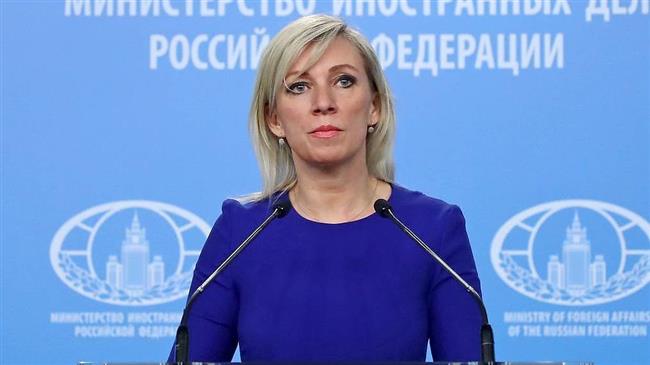
Russian Foreign Ministry spokeswoman Maria Zakharova
Press TV | June 17, 2020
The Russian Foreign Ministry says the UN chief’s report on Iran’s involvement in the last year attacks on Saudi oil facilities is biased and not substantiated by facts.
“What we surely won’t argue with is, unfortunately, that the report can hardly be called balanced and calibrated,” the ministry spokesperson Maria Zakharova said during a press briefing on Wednesday.
She added Russia will present a “detailed analysis” of the UN report during the relevant discussion at the Security Council later on June 30.
“We can also speak about a lack of impartiality and the absence of strong facts to support the accusations leveled at Iran,” she noted, stressing “Nobody has ever presented any convincing evidence of Iran’s violations to the Security Council members.”
The Russian official said that the report was not valid, arguing the “self-appointed inspectors” had claimed based on their “personal observations” that what they saw was “roughly reminiscent of what Iran had once demonstrated at arms exhibitions.”
Last week, UN Secretary General Antonio Guterres said in a report to the Security Council that cruise missiles used in attacks on oil facilities and an airport in Saudi Arabia last year were of “Iranian origin.”
He also said the “items may have been transferred in a manner inconsistent” with UN Security Council Resolution 2231, which endorses the international nuclear deal – officially known as the Joint Comprehensive Plan of Action (JCPOA) – signed between Iran and major world powers in 2015. The allegations were roundly rejected by Iran’s Foreign Ministry.
The ministry said in a statement that the claims appear to have been made under political pressure from the US and Saudi regimes.
“Preparing reports with political motivation will not change the facts and it is clear to all that the current circumstances in the region have directly resulted from the wrong policies of the United States and the child-killing Saudi regime,” the statement said.
The ministry highly recommended that the UN Secretariat not play into the hands of the US in its “pre-planned scenario to annul the cancellation of Iran’s arms embargo.” It also warned the UN against contributing to such a dangerous trend by preparing illegal reports.
Separately, Iran’s UN Mission also responded to the report on Friday, saying, “Iran categorically rejects the observations contained in the report concerning the Iranian connection to the export of weapons or their components that are used in attacks on Saudi Arabia and the Iranian origin of alleged US seizures of armaments.”
US President Donald Trump withdrew Washington from the JCPOA in 2018 and reinstated Washington’s unilateral sanctions against Tehran. His administration has also been piling up pressure on the United Nations to extend and strengthen the embargo on Iran, which is set to expire in October under the nuclear deal.
Washington seeks to restore all Security Council sanctions lifted against Iran if the 15-member body fails to preserve the UN ban on selling conventional arms to Iran.
Iran: E3 unconstructive draft resolution at IAEA meeting mockery of international rules
Press TV – June 16, 2020
Iran has condemned as “unconstructive” a resolution reportedly drafted by the three European signatories to a 2015 nuclear deal for a vote at the International Atomic Energy Agency (IAEA)’s governing board meeting, saying such a resolution makes a mockery of international rules.
Speaking to reporters on Tuesday, Kazem Gharibabadi, Iran’s permanent representative to Vienna-based international organizations, urged France, Germany and the UK — also known as E3 — not to complicate the situation surrounding the Iran deal if they cannot fulfill their end of the bargain and help salvage the accord.
The comments came as IAEA Board of Governors started a four-day meeting on Monday, with Iran on the agenda.
According to a Bloomberg report, the resolution prepared by the European trio urges Tehran to “fully cooperate” with the IAEA investigation of its nuclear facilities. It came after the nuclear watchdog’s inspectors claimed they had not been given access to two locations that may have hosted atomic activities two decades ago.
The resolution will have to be presented during the meeting and is expected to win Washington’s backing.
During the Monday session, the IAEA Director General Rafael Mariano Grossi claimed that for over four months, “Iran has denied us access to two locations and that, for almost a year, it has not engaged in substantive discussions to clarify our questions related to possible undeclared nuclear material and nuclear-related activities.”
Gharibabadi dismissed the claims in the reported resolution and said, “While Iran is cooperating extensively and constructively with the agency, submitting a resolution with the purpose of asking Iran to cooperate and fulfill the two demands of the IAEA is regrettable and a totally unconstructive move.”
He criticized the European trio’s double standards on Tehran’s nuclear program and said such a resolution is being put forth by the countries that “either possess nuclear weapons or play host to such destructive and deadly weapons.”
Such a move, Gharibabadi said is “a mockery of international norms and rules governing disarmament and non-proliferation regimes.”
Gharibabadi also called on all members of the IAEA Board of Governors to exercise vigilance and avoid taking any “political and hasty” measures in order for Iran to continue cooperation with the Vienna-based agency.
“Naturally if such a resolution, which clearly serves American goals, is approved, the Islamic Republic of Iran will have to take the necessary measures accordingly,” he noted.
The Iranian envoy further stressed that the new IAEA request is founded on the claims raised by the Israeli regime, which is an enemy of Iran.
Tehran’s transparent cooperation with the agency “does not mean that we should agree to every request from the IAEA on the basis of delusional claims of our enemies,” he emphasized.
Iran signed the Joint Comprehensive Plan of Action (JCPOA) with six world states — namely the US, Germany, France, Britain, Russia and China — in 2015.
However, Washington’s unilateral withdrawal in May 2018 and the subsequent re-imposition of sanctions against Tehran left the future of the historic agreement in limbo.
Iran remained fully compliant with the JCPOA for an entire year, waiting for the co-signatories to honor their commitments.
As the European parties failed to do so, the Islamic Republic moved in May 2019 to suspend its JCPOA commitments under Articles 26 and 36 of the deal covering Tehran’s legal rights.
Iran warns IAEA against taking Israeli intelligence report about Tehran violating nuke deal at face value
RT | June 15, 2020
Tehran called on the international nuclear watchdog to maintain neutrality and refrain from “unconstructive” decisions based on a biased Israeli intelligence report that claims Iran may be violating its international nuclear deal.
The International Atomic Energy Agency (IAEA) met on Monday to discuss a report alleging that Tehran is violating the Joint Comprehensive Plan of Action by continuing to enrich uranium beyond the agreed level. Iran claims that the data was supplied by Mossad.
Should the IAEA Board of Governors be taken in by “Israeli fabrications” underlying a recent report that claimed Iran was violating the terms of the 2015 nuclear deal, it would “complicate Iran’s cooperation with the agency,” Foreign Ministry spokesman Abbas Mousavi said during a press briefing on Monday as reported by Tasnim, hinting at a “proportionate reaction.”
“They can probably guess what Iran’s reaction will be.”
Mousavi called on the IAEA to maintain neutrality instead of acting on “allegations made by the Zionist regime,” citing Israel’s long history of producing unsubstantiated claims about Iran’s nuclear activities and warning the agency against issuing any resolution against Iran in reaction to the report.
The report claimed Iran has “for months blocked inspections at two sites where nuclear activity may have occurred in the past,” continued to build up its uranium stockpile, and upped enrichment levels past the limits set out by the JCPOA nuclear deal. Israel demanded “paralyzing sanctions” be levied on the country in response.
However, Iran only began exceeding the terms of the JCPOA a year after the US unilaterally pulled out and reimposed crippling sanctions in 2018 despite what was at the time full compliance from Iran, and the other signatories have refused to cross the US in order to hold up their ends of the deal.
Iran has rejected all allegations of non-compliance with the IAEA, and Mousavi on Monday called on the agency to base its actions on legal facts rather than the claims of obviously-biased international actors.
Also on rt.com Iran slams Washington’s ‘unlawful’ nuclear moves in letter to IAEA officials
Mousavi pointed out that caving in to US and Israeli “pressure” and punishing Iran based on the report’s claims amounts to reopening a probe into “possible military dimensions” of Iran’s nuclear program that was resolved in the country’s favor in 2015. The IAEA at the time concluded Iran had never diverted its peaceful nuclear activities, despite spurious allegations to the contrary.
The spokesman also slammed US threats to extend an arms embargo due to expire in October, pointing out that Washington was no longer a signatory to the JCPOA nuclear deal and thus has no legal standing to extend the prohibition. An extension of the embargo would be a “red line,” he warned.
Iran to react if US prevents lifting arms embargo as per nuclear deal: President Rouhani
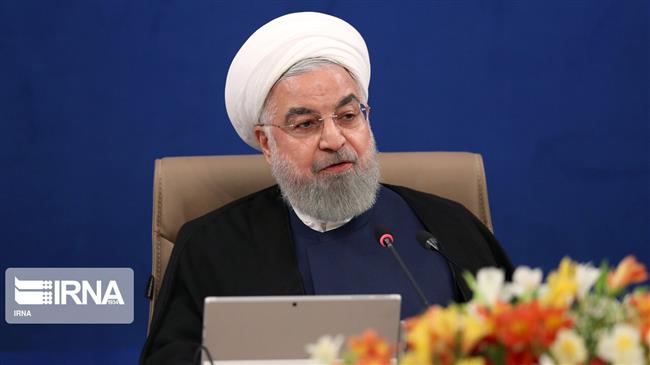
Iran’s President Hassan Rouhani addresses a cabinet session in Tehran on June 14, 2020. (Photo by IRNA )
Press TV | June 14, 2020
Iran’s President Hassan Rouhani says the country will not remain indifferent and will show suitable reaction if the US tries to prevent lifting of arms embargo against the Islamic Republic, which will end this year in accordance with the landmark nuclear deal that Tehran clinched with six world powers back in 2015.
During past months, Washington has stepped up calls for the extension of a UN arms embargo on Iran, which will expire in October under UN Security Council Resolution 2231, which endorses Iran nuclear deal, officially known as the Joint Comprehensive Plan of Action (JCPOA).
The administration of US President Donald Trump has threatened that it may seek to trigger a snapback of all sanctions on Iran if its attempts to extend the arms embargo fail.
The landmark nuclear deal was reached between Iran and the P5+1 group of countries — the US, Britain, France, Russia and China plus Germany — in 2015. However, in May 2018, US President Trump unilaterally pulled his country out of the JCPOA and re-imposed the sanctions that had been lifted against Tehran and began unleashing the “toughest ever” fresh sanctions.
While the US is no longer a party to the JCPOA, it has launched a campaign to renew the Iran arms ban — in place since 2006/2007 — through a resolution at the Security Council, but Russia and China are most likely to veto it.
Addressing a cabinet session on Sunday, Rouhani said, “The termination of the arms ban [on Iran] … is one of the important achievements of the JCPOA and if Americans want to question this achievement, other big countries know what our reaction will be.”
The Iranian president also expressed hope that “all countries who are members of the United Nations Security Council and the Board of Governors” of the International Atomic Energy Agency (IAEA), would be aware of “the US planning with regard to these plots.”
“We, for our part, will be successful in this regard and will weather these plans that the United States has made for Iran,” he noted.
Posting a tweet in early June, Iran’s UN ambassador said the US’ call for an extension of the UN Security Council’s arms embargo on Tehran lacked legal standing in international law.
Majid Takht-e Ravanchi said the US ambassador to the UN “wrongly” believes the US retains the right to initiate snapback of sanctions under the UN Security Council Resolution 2231.
“WRONG: US cannot be a JCPOA ‘Participant’, since Donald Trump ceased US participation,” the Iranian ambassador noted, referring to Trump’s 2018 decision to withdraw his country from the Iran nuclear deal in violation of the Resolution 2231.
In the middle of May, China and Russia also rejected US plans to extend a UN arms embargo on Iran along with a probable push to trigger a return of all sanctions on Tehran at the UN Security Council.
The “US has no right to extend an arms embargo on Iran, let alone to trigger snapback,” China’s UN mission wrote in a tweet.
“Maintaining the Joint Comprehensive Plan of Action is the only right way moving forward,” he added.
Russian Deputy Foreign Minister Sergei Ryabkov vehemently rejected the plan as a “cynical” measure plunging the UN Security Council into crisis.
“The conclusion is that the next crisis in the UN Security Council and the UN as a whole is imminent, taking into account this US stubbornness,” he said, adding, “Washington will not have an easy road here in any case.”
European Union foreign policy chief Josep Borrell said on Tuesday that the US has already pulled out of the international nuclear agreement and cannot currently use its former membership of the deal to seek a permanent arms embargo on Tehran.
“The United States has withdrawn from the JCPOA, and now they cannot claim that they are still part of the JCPOA in order to deal with this issue from the JCPOA agreement. They withdraw. It’s clear. They withdraw,” Borrell said.
The EU believes that the JCPOA plays a key role in maintaining regional and international security and has made efforts to keep the pact alive despite US pressure.
Borrell is tasked with supervising the circumstances surrounding the implementation of the nuclear deal so he can help resolve disputes between its signatories.
Iran dismisses UN report on missiles ‘of Iranian origin,’ says body under US, Saudi pressure
Press TV – June 12, 2020
Iran has dismissed a recent claim by the United Nations that missiles used to attack Saudi Arabia have been “of Iranian origin,” saying the organization has spoken out under political pressure from the US and the Saudi regime.
In a statement on Friday, the Iranian Ministry of Foreign Affairs said it was deeply concerned about the use of the UN Secretariat as a means to achieve political objectives.
“Preparing reports with political motivation will not change the facts and it is clear to all that the current circumstances in the region have directly resulted from the wrong policies of the United States and the child-killing Saudi regime,” the statement said.
UN Secretary General Antonio Guterres told the Security Council in a report seen by Reuters on Thursday that cruise missiles used in several attacks on oil facilities and an international airport in Saudi Arabia in November 2019 and February 2020 had been of “Iranian origin.”
He also said the “items may have been transferred in a manner inconsistent” with Security Council Resolution 2231, which enshrines the international nuclear deal – officially known as the Joint Comprehensive Plan of Action (JCPOA) – signed between Iran and world powers in 2015.
Guterres pointed out in his report that the United Nations had examined the debris of weapons used in the attacks on an oil facility in Afif in May, the Abha international airport in June and August, and the Aramco oil facilities in Khurais and Abqaiq in September.
Referring to the “examination of the weapons debris,” the Iranian Foreign Ministry censured the inattention to the sales of lethal weapons to Saudi Arabia that are used against the defenseless people of Yemen while “Saudi garbage is being checked for proof.”
“Undoubtedly, such reports will not only fail to help [promote] peace and security in the region and implement [UN] Security Council resolutions, but also completely destroy the validity and reputation of the United Nations,” the ministry warned.
It said the UN report came at a time that the United States is drafting a “dangerous” resolution to “illegally” extend an arms embargo against Iran, adding this would strengthen the likelihood of it being prepared on Washington’s order to be used at the Security Council against Iran.
The Iranian Foreign Ministry highly recommended that the UN Secretariat not play into the hands of the US in its “pre-planned scenario to annul the cancellation of Iran’s arms embargo.” It also warned the UN against contributing to such a dangerous trend by preparing illegal reports.
In May 2018, President Donald Trump unilaterally pulled the United States out of the JCPOA and later re-imposed the sanctions that had been lifted against Tehran and began unleashing the “toughest ever” bans.
Although the US is not a party to the JCPOA any longer, it recently launched a campaign to renew the Iran arms ban — in place since 2006/2007 – through a resolution at the Security Council. Russia and China are against the push, and most likely to veto it.
To circumvent the veto, the US says it will argue that it legally remains a “participant state” in the nuclear pact only to trigger the snapback that would restore the UN sanctions, which had been in place against Iran prior to the JCPOA inking.
Tehran says Washington, through its unilateral withdrawal from the deal, has forfeited all rights to have a say in the agreement.
European Union foreign policy chief Josep Borrell said on Tuesday that the US has already pulled out of the JCPOA and cannot currently use its former membership of the deal to seek a permanent arms embargo on Tehran.
“The United States has withdrawn from the JCPOA, and now they cannot claim that they are still part of the JCPOA in order to deal with this issue from the JCPOA agreement. They withdraw. It’s clear. They withdraw,” Borrell said.
Netanyahu Calls on World to Impose ‘Paralyzing’ Sanctions on Iran Over Nuclear Deal ‘Violations’
Sputnik – 07.06.2020
On Friday, a confidential International Atomic Energy Agency report indicated that Iran is continuing to build up enriched uranium stockpiles beyond limits set out in the 2015 nuclear deal. Tehran has vowed to continue reducing commitments to the treaty until other signatories find a way to bypass crippling US sanctions.
Israeli Prime Minister has called on the international community to join the US in applying “paralyzing” sanctions on Iran over the alleged violation of its obligations under the Joint Comprehensive Plan of Action (JCPOA) nuclear deal.
“Over the weekend, the IAEA determined that Iran had refused to allow IAEA inspectors access to clandestine sites at which Iran had carried out secret military nuclear activity. Iran has systematically violated its commitments by hiding sites and enriching fissionable material, and has committed other violations,” Netanyahu said, speaking at a cabinet meeting on Sunday.
“I believe that the time has come, and I think that the time has passed, but reality certainly requires it in the light of these revelations, for the international community to join the US and reimpose paralyzing sanctions on Iran,” the prime minister said.
Netanyahu stressed that Israel “will not allow” Tehran to achieve nuclear weapons capability, and would “continue to act methodically against Iran’s attempts to militarily entrench on our borders.”
Netanyahu’s comments follow the release of a confidential report Friday indicating that Iran has continued to grow its stockpile of enriched uranium, registering 1,571.6 kg of the nuclear fuel as of May 20, up from 1,020.9 kg on February 19. According to the report, Tehran has also refused to allow inspectors to access two shuttered nuclear facilities. Enrichment levels, meanwhile, are said to have increased to 4.5 percent, up from the 3.67 percent limit outlined in the JCPOA.
Iran maintains that it has no intention to produce nuclear weapons, or weapons of mass destruction of any kind, and that its atomic program is aimed strictly at producing nuclear energy.
For the moment, the country’s uranium enrichment levels as reported by the IAEA remain far below the purity levels required to build a nuclear bomb. The nuclear bomb the US dropped on Hiroshima in August 1945, for instance, had an enrichment level of about 80 percent.
Iran’s uranium stockpiles are also far below the estimated 7,000 kg that the country had in 2013, before the signing of the JCPOA. At that time, enrichment levels reached up to 20 percent purity.
Tehran began reducing its commitments under the nuclear deal in May 2019, a year after the US unilaterally withdrew from the agreement and slapped the country with tough energy and banking sanctions. The nation’s leaders promised to continue to abandon certain of the deal’s components until the JCPOA’s European signatories found a way to bypass the crushing economic impact of Washington’s sanctions, which include secondary sanctions against foreign companies doing business with the Islamic Republic.
Officials in Tel Aviv and Tehran have been engaged in a years-long debate on one another’s nuclear intentions, with Israeli officials accusing Iran of seeking to build a nuclear weapon to target Israel, while Iranian officials have pointed out that Israel is the only nation in the Middle East with an actual nuclear arsenal.
Featured Video

Iran FM Araghchi: “Hormuz Will No Longer Be the Same”
or go to
Aletho News Archives – Video-Images
From the Archives
Sam Husseini: The entire US establishment helped lie their way into the Iraq war
By Slava Zilber | American Herald Tribune | October 14, 2019
Sam Husseini is a senior analyst with the Institute for Public Accuracy, independent journalist and contributor to The Nation and FAIR.
Slava Zilber: Sam, three years ago, you appeared on Talk Nation Radio with David Swanson and spoke about the case of the GCHQ whistleblower Katharine Gun. You pointed out that the people involved in the spying on the UN and the people authorizing the Iraq War were not held accountable:
“Virtually everybody who went along with the war, whether it is Kerry or Clinton, of course, the Bush administration themselves has falsified their own records in terms of why, what they did, when they did, why they did it, to the extent that they’ve been scrutinised at all.”
You also address it in a recent article. And recently, Joe Biden has been lying about his position on the Iraq War. How can such an important issue escape meaningful scrutiny? … continue
Blog Roll
 Aletho News
- Trump peddles fresh falsehoods, claims Iran ‘started the war’ as US aggression drags on
- Ukraine quagmire? Yes, but it’s for NATO, not Russia
- US intelligence hypes Chinese, Russian space threats while accelerating its own military buildup in orbit
- Iran FM Araghchi: “Hormuz Will No Longer Be the Same”
- EU facing trillion-euro debt hole while seeking more cash for Kiev
- How US, Europe, Persian Gulf states exhausted missile stockpiles, splurged billions to defend Israel
- Up in arms… Koreans reject U.S. empire’s plan to make South Korea the next Ukraine
- Iran, Turkey, Pakistan, Saudi Arabia could advance region-led security framework in Tehran: FM spox
- Netizens condemn Japanese drama for projecting Japan’s wartime atrocities onto Chinese characters
- Racist Seinfeld Dances for Joy as Bibi Unveils His New Map
- If Americans Knew
- An error has occurred; the feed is probably down. Try again later.
- No Tricks Zone
- Sudden Stratospheric Warming, Powerful El Niño Combination May Lead To Extreme Europe Cold, Energy Crisis!
- Two New Studies Find Thwaites Glacier Melt Cannot Be Driven By Human Activity Or A Warming Ocean
- E-Cars Reduce CO2 Emissions By Only 41% Compared To Internal Combustion Engine Vehicles
- Predictions Made By Renowned Climate Professor Over Past Decades Have Been Proven To Be Poor
- New Study Suggests Large Regions Of The Pacific Ocean Have Been Cooling For The Last 80 Years
- Germany’s Green Energy Debacle: High Energy Costs Force Kahla Porzellan to Close After 182 Years!
- New Study: 50 Years Of The Most Aggressive ‘Net Zero’ Policies Can Only Affect The Global Climate By 0.03°C
- US September “Heat” Was No Record…Many Records Set Decades Ago
- Latest European Green Energy Debacle; Portugal’s Largest Flagship Solar Park Insolvent!
- Green Energy Debacle: German Expert Professor Fritz Vahrenholt Warns Of Severe Economic And Social Consequences

