Modi-Rouhani meeting is a morality play
By M. K. BHADRAKUMAR | Indian Punchline | September 27, 2019
Prime Minister Narendra Modi began his 6-day long visit to the US with a bang — a stunning stage appearance with President Trump at the Howdy Modi in Houston last Sunday.
But on Thursday, he ended up with a hastily arranged meeting with Iran’s President Hassan Rouhani in New York just before the latter’s departure for Tehran. The symbolism is at once obvious.
Only 4 days earlier, in a famous remark at the Howdy Modi, Trump thrilled the Sangh Parivar audience with a stirring call that the US and India should jointly fight “radical Islamic terrorism.” Modi and the audience cheered in the mistaken belief that Trump was condemning Pakistan, but only to be told the next day by POTUS himself that he was only referring to Iran.
However, if photo journalism is any indicator, Modi looked subdued at the meeting with Rouhani. It must have been a difficult meeting. The Iranian report was rather taciturn. The primary purpose seems to have been to break the ice.
The India-Iran relations have been on a roller-coaster under Modi’s watch. He gave high hopes to Rouhani when they met for the first time on the sidelines of the historic Ufa summit of the Shanghai Cooperation Organization in June 2015 by proposing multi-billion dollar investment plans in Iran’s economy spanning the industrial and infrastructural fields.
Rouhani took the idea seriously and fast-tracked the contract for India to develop and operate one of the container terminals in the strategic Chabahar Port in the Sistan-Baluchistan province, ignoring Pakistan’s disquiet over such an Indian presence hardly 80 kms from its restive border regions.
Rouhani upset the Pakistanis further by accepting the Indian offer to build a railway line connecting Chabahar with Zahedan on the Iran-Afghan border further north.
Indians were jubilant that in geopolitical terms, India’s cooperation in regional connectivity with Iran matched China’s Belt and Road Initiative.
All that is history, of course. Iran’s ambassador to India Ali Chegeni regretted recently that India not only buckled under American pressure to stop its oil imports from Iran but also slowed down its project work at Chabahar. The tensions are showing. Iran has taken a critical position on the situation in J&K.
Yet, it was Iran which in 1994 had helped India to prevent an OIC resolution on the human rights situation in J&K from being tabled at the UN forum, breaking the IOC consensus and demanding that Kashmir is a bilateral issue between India and Pakistan.
Yes, Iran played a helpful role in ensuring that the Shia-dominated Kargil region of J&K stayed out of the Pakistan-sponsored insurgency in the early nineties. The Narasimha Rao government allowed the then Iranian Ambassador to India Sheikh Attar to visit Kargil when the region was closed to the international community and foreign media.
Yes, it was the same Iran with which India also had cooperation at the level of intelligence agencies in the early nineties.
What explains the present crisis? Succinctly put, India’s policies in the Persian Gulf have come under the influence of the Israel-Saudi-UAE axis. Indian diplomacy is quite adept at balancing the relations with Iran on one side and the Israel-Saudi-UAE troika on the other. But the present ruling elite abandoned that policy and began identifying with the troika.
Conceivably, the US encouraged this shift. But the main factor has been the bonhomie that has come to exist at the leadership with Israeli PM Benjamin Netanyahu and the Crown Princes of Saudi Arabia and the UAE. If a marker is to be put on the downhill slide of India-Iran relations, it must be Modi’s extended 5-day visit to Israel in July 2017.
India-Iran relations suffered as a result of Delhi’s gravitation toward the the orbit of what Iran calls the “B Team” of the US. Iran never stood in the way of India keeping diversified relationships in West Asia, including with its adversaries such as the US, Israel or Saudi Arabia, but the plain truth is Delhi simply cooled down on the relationship with Iran.
How the B Team worked on the Indian leadership remains a mystery, but the Israelis, Saudis and Emiratis played their cards well, knowing exactly which strings to be pulled among the movers and shakers of the present ruling dispensation in Delhi.
Suffice to say, Modi’s meeting with Rouhani on Thursday was an act of atonement. India is in a chastened mood today. Delhi dumped Iran as a major supplier of oil (on concessional terms) and instead opted to buy from the US and Saudi Arabia and the UAE (at market price), but there has been no quid pro quo.
Trump is deepening the US-Pakistan relations and has waded into the Kashmir issue. As for the Sheikhs, they probably had no intentions to make big investments in India. Meanwhile, Netanyahu, one of Modi’s closest friends in the world circuit, lost the election and if he fails to form the next government, may lose his immunity from prosecution and end up in jail.
Without doubt, Modi has done the right thing by calling on Rouhani. India does not have many friends today. The Modi government’s image is very poor in the Muslim world. India’s march toward Hindu Rashtra and the lock down in J&K have generated negative opinion internationally.
Even “time-tested friends” like Russia are getting disillusioned with our “Chanakyan” diplomacy. How long can India remain ambivalent? Our credibility as a dependable partner is plunging.
It may seem an uphill task to repair the damage to India’s relationship with Iran. But on the contrary, it is easily undertaken if only there is political will. Tehran attaches high importance to India and Delhi needs to reciprocate that goodwill. The prospects are simply seamless to build a relationship of mutual benefit.
EU Assures US Brussels Will Not Act Toward Iran Without Washington’s Consent – Treasury
Sputnik – September 25, 2019
US Treasury Secretary Steve Mnuchin said Wednesday that the European Union has assured the United States that Brussels would not do anything – with regard to sanctions against Iran – without Washington’s consent.
The situation in the Persian Gulf region worsened after the United States walked out of the Joint Comprehensive Plan of Action (JCPOA), also known as the Iran nuclear deal, in May 2018 and reinstated harsh sanctions on Iran.
Exactly one year after the US withdrawal, Tehran announced that it would be gradually reducing its nuclear obligations every 60 days until EU signatories to the accord ensured Iran’s interests amid US sanctions. Earlier in September, Tehran embarked on the third stage of its rollback plan.
Iranian President Hassan Rouhani said during a speech at the UN General Assembly on Wednesday that the only way Tehran would enter negotiations with Washington is if it returns to the JCPOA and stops imposing sanctions against the country.
US Special Representative for Iran Brian Hook said earlier that Washington would like to see Brussels impose sanctions on those who support what he described as Iran’s missile and drone programs, adding that there must be an international effort to counter Iran’s activities in the Middle East.
The EU, meanwhile, has established the INSTEX (the Instrument in Support of Trade Exchanges) trade mechanism to ease non-dollar trade with Tehran in the wake of the US sanctions and in an effort to save the JCPOA.
Earlier this month, Brussels agreed to contribute $15 billion to the INSTEX fund. In September, Iranian Deputy Foreign Minister Abbas Araghchi said that the country would resume compliance with the Iran nuclear deal if it received the $15 billion tranche before the end of the year.
On 14 July 2015, Iran and six international mediators — China, France, Germany, Russia, the United Kingdom, and the United States — ratified the historic JCPOA, more commonly known as the Iran nuclear deal, aimed at preventing Iran from designing and manufacturing nuclear weapons.
The deal provides for the gradual lifting of economic and financial sanctions imposed on Iran by the United Nations Security Council, the United States, and the European Union in exchange for Tehran’s guarantees that the country’s nuclear program would remain peaceful.
US President Donald Trump announced on 8 May 2018 that the United States would withdraw from the JCPOA and restore its sanctions on Iran, lifted by Washington as part of the nuclear deal. The restrictions target not only Iran but also other countries that continue to do business with Iran.
The remaining JCPOA signatories slammed the United States’ move and reaffirmed their commitment to respect their obligation under the deal.
Here is How China-US Trade War Impacts Iran
By Salman Rafi Sheikh – New Eastern Outlook – 18.09.2019
In the last week of August, China added crude oil imports from the US to its tariff list for the first time in a retaliatory decision against the US decision to impose fresh tariffs on Chinese products. China imports about 6 per cent of its crude oil from the US. For an economy that increasingly relies on crude oil imports, this decision carries a lot of significance. While China is also preparing to impose high tariffs on import of US cars and the trade-war is likely to continue in the days to come, the all-important question is: why would China impose tariffs on import of oil, the life-line of its economy? According to some latest figures, China’s reliance on imported crude oil has already jumped to 70 per cent and gas moving towards 50 per cent. Most certainly, China would never have taken such a decision unless its leadership had first secured an alternative source of supply of oil. Here is where Iran and cheap/tariff free Iranian oil comes into play and the larger geo-political chessboard becomes active, allowing China to counter the US on three levels.
First, in terms of trade war, Chinese tariffs on oil imports from the US will undermine the US position as the world’s ‘new champion oil producer.’ Second, in terms of regional geo-politics, import of oil from Iran will boost Iran’s economy in the face of US sanctions and help the Iranian economy keep afloat. Needless to say, Iran is a key territorial link for China’s Belt and Road Initiative to expand beyond Asia. Third, if the US and China fail to reach a compromise on trade disputes and their bi-lateral economic and political relations remain cold, China’s continuous reliance on US oil would become a big disadvantage. Therefore, by ridding itself of the US oil, China is preparing for a long-term war with the US, or at least doesn’t see the current dispute resolving any time soon; hence, the move towards diversification through defiance.
Although China has recently decided to increase its domestic production of gas in Sichuan province, increasing from roughly 20 per cent at present to about 33 per cent of the country’s needs, this isn’t going to be enough for a huge economy that China is; hence, China’s increasing investment in Iran’s huge and sanctioned energy sector.
According to reports, China is set to invest about 280 billion dollars in Iran’s oil, gas and petrochemical sectors. This investment will in turn allow China to buy energy products from Iran at discounted prices, certainly a lot cheaper than the US oil. Although there will be a risk of the US sanctioning Chinese companies involved in buying Iranian oil, China is ready to tackle this. Entering the deal with Iran, China announced that it is not intimidated by the `secondary sanctions` the US has threatened to impose on companies and countries which continue to have economic ties with Iran.
China’s decision has massive geo-political ramifications. China can expand the use of Turkmenistan-China gas pipeline to import oil and gas from Iran and can even build new pipelines, allowing it to not only conveniently meet its energy needs but also massively reduce its reliance on a number of US-friendly oil and gas suppliers from the Middle East i.e., UAE and Saudi Arabia.
China, accordingly, is also investing about 120 billion dollars in Iran’s transport and manufacturing infrastructure. Significantly enough, this Chinese-built infrastructure in Iran, which includes high-speed rail on several routes, will provide China with additional avenues for its overland trade through Iran and Turkey to and from Europe and maritime trade through Iranian ports to the Middle East, Africa and beyond. Interestingly enough, one of the ports that China is eyeing is the Indian built port of Chabahar. Due to India’s full compliance with the US directive to bring oil imports from Iran to zero, Iran’s relations with India have gone down massively, allowing China to move in and grab the space.
China’s investment also comes with Chinese troops on the ground in Iran. Sending a clear message to the US, about 5,000 Chinese security personnel will be placed in Iran to protect Chinese projects from possible sabotage attempts by rival countries through their sponsored non-state actors, or even directly. Importantly enough, this security presence in Iran will be as big as the US has in today’s Iraq or what the Pentagon aims to leave in Afghanistan in 2020. Also, it intends to deter any US adventurism (visible in Iraq and Afghanistan), inasmuch as any major US military strike on or action against Iran would risk hitting Chinese army personnel and spiking tensions with a nuclear power that has the ability to hit the US both militarily and economically; hence, the increasing emphasis on materialising a true strategic partnership between Iran and China. A binding force will, of course, be US sanctions on Iran and its trade war with China.
Emphasising the same point, Iran’s foreign minister wrote in an Op-Ed for Global Times and said, “China has become an indispensable economic partner of Iran and the two countries are strategic partners on many fronts…’” and that both China and Iran “ favor multilateralism in global affairs but that has come under attack now more than ever.” Hitting the US directly, Zarif noted, “China and Iran support fair and balanced commercial ties around the world and we both face overseas [US] hostility by populist unilateralist bigotry.”
A deep Chinese presence in Iran and a willingness to defy the US is a big boost to the countries, including Russia, Turkey, Syria, and Pakistan, which are trying to build an ‘Asian order’ around Chinese Belt and Road Initiative and other regional connectivity programs i.e., Eurasian Economic Union and even the SCO. As the saying goes, for a new order to emerge, the old must dismantle. Chinese defiance signifies a major step towards the new order.
Salman Rafi Sheikh is a research-analyst of International Relations and Pakistan’s foreign and domestic affairs.
India pressing US for resumed oil imports from Iran: Report
Press TV – September 18, 2019
Indian authorities have renewed their efforts to persuade the United States to lift sanctions on imports of oil from Iran amid disruptions caused to supplies from Saudi Arabia following attacks last week that hit oil installations east of the kingdom.
A Tuesday report on the website of The Mint, an Indian financial newspaper, showed that India had held fresh talks with the government of US President Donald Trump on renewed energy imports from Iran.
India stopped crude imports from Iran on May 2 after the White House toughened its sanctions on Iran and removed waivers granted to India and several other countries.
New Delhi used to be Iran’s second top buyer of oil before American sanctions were imposed in November with imports exceeding 20 million tons a year.
India’s External Affairs Minister Subrahmanyam Jaishankar said on Tuesday that resuming oil imports from Iran had never turned into a “static” issue and authorities were trying to find a solution to the problem.
“We are in dialogue with all suppliers including Iran,” said Jaishankar, adding that India wanted to ensure that supplies of energy into the country would remain predictable and affordable.
The remarks come after attacks on Saturday on key oil installations in Saudi Arabia’s Abqaiq cut the kingdom’s production in half.
The attacks, claimed by Yemen’s ruling Ansarullah movement, sent shockwaves across the global markets and caused a historic surge in prices while sparking serious concerns in energy-thirsty countries like India about the future of oil supplies.
While trying to revive imports from Iran, India has said it would seek a contract with Russia to secure a long-term supply of oil from the country.
Iran, Pakistan sign new agreement on major gas project: Report
Press TV – September 17, 2019
A major deal for exports of gas from Iran to Pakistan has been revised after several years of uncertainty surrounding the project, shows a report in the Pakistani media.
The Express Tribune said in a Monday report that national gas companies from Iran and Pakistan had inked an agreement to revise the terms of an old deal meant for exports of gas from Iran which had been supposed to be implemented by 2015.
The deal had stalled mainly because Pakistan was unable to construct a pipeline through its territory to transfer the Iranian gas to the port of Karachi. Islamabad was also unwilling to pay compensation for its delay, saying it had been caused by sanctions imposed on Iran.
The report said the Inter State Gas Systems (ISGS) of Pakistan and the National Iranian Gas Company (NIGC) had agreed to allow Pakistan to finish construction of the pipeline in its territory until 2024.
It cited sources as saying that Iran would not sue Pakistan for a fresh delay beyond 2024 unlike the previous contract under which Iran had threatened Islamabad with legal action. There was no comment on the report from the Iranian officials.
It said the two companies would seek to devise solutions for completion of the project which would enable Pakistan to import 750 million cubic feet of gas per day from Iran.
Based on the terms of the previous deal, Pakistan had been supposed to complete its section of the gas pipeline within 22 months after construction activities for the project kicked off in March 2013.
However, Pakistan later backtracked from the commitment and officials said that sanctions imposed on Iran had made it impossible for the country to build the 1,600-kilometer pipeline.
Iran has almost completed its sides of the pipeline which starts from installations of the South Pars gas field located on the Persian Gulf port of Asaluyeh and runs 1,172 kilometers through two provinces to reach the Pakistani border.
Attacks on Saudi oil make waivers on Iran necessary: Experts
Press TV – September 14, 2019
Experts say critical oil supplies lost due to Yemeni attacks on Saudi Arabia’s production plants can only be compensated if the United States eases its sanctions on sale of crude by Iran.
Sandy Fielden, an analyst at Morningstar, a global financial services firm based in the US, said on Saturday that the current oil stocks in Saudi Arabia, the biggest oil exporter in the world, would not suffice to compensate for a loss of around 5 million barrels per day (bpd) that could be caused by attacks earlier in the day targeting the kingdom’s vital oil facilities located east of the country.
Fielden said the disruptions could cause a real jump in the global oil prices, adding that the US, a main player in the oil market and an ally of the Saudis, would have no option but to allow Iran to resume its crude exports after months of a halt that has been caused by Washington’s unilateral bans.
“By all accounts the Iranians have tankers full of storage ready to go,” he said, adding, “The obvious short-term fix would be waivers on Iran sanctions.”
Yemen’s ruling Houthi Ansarullah movement said on Saturday that its drones had successfully attacked two oil plants in Abqaiq, the heart of Saudi Arabia’s oil industry, in the kingdom’s Eastern Province.
The Houthis said the attacks were a firm response to Saudi Arabia’s relentless bombardment of Yemen, where tens of thousands of civilians have been killed since Riyadh launched its illegal military campaign four years ago.
James Krane, Middle East energy specialist at Rice University’s Baker Institute, suggested that supplies from a country like Iran would be the best option to replace the lost Saudi production as most of the Kingdom’s exports normally go to countries in Asia that are closer to Iran than any other major oil producer.
“For the United States, the main threat is in the price of oil,” said Krane, adding, “Asian countries are more at immediate risk because they are the big importers from Saudi Arabia, with 80% of Saudi exports going to East Asia.”
Analysts said Yemeni attacks on Saudi oil installations showed that Riyadh, which pumps just below 10 million bpd of oil into the global market, is effectively defenseless in the face of strikes from its impoverished neighbor.
Fielden said Washington would also find it impossible to try to solve the crisis on its own by sending tankers full of oil to Saudi customers in East Asia.
“It takes 19-20 days to ship Ras Tanura (Saudi) to Singapore, but 54 days from Houston to Singapore. So US ‘relief’ will take time,” he said.
However, US officials said right after the attack that they would try to ensure a smooth supply of oil to the global markets despite the attacks in Abqaiq.
White House spokesman Judd Deere said in a statement that Washington was committed to well-supplied oil markets while adding that US President Donald Trump had held a phone conversation with Saudi Crown Prince Mohammed bin Salman following the Saturday attacks.
The International Energy Agency (IEA) also said that in the short term was there were no real concerns about supplies to the markets.
“For now, markets are well supplied with ample commercial stocks,” it said, adding, “The IEA is monitoring the situation in Saudi Arabia closely. We are in contact with Saudi authorities as well as major producer and consumer nations.”
The United Arab Emirates, a close ally of Saudi Arabia and a major oil producer, said it would support measures adopted by the kingdom to safeguard its security following Saturday attacks.
EU’s $15bn Credit Line Has Nothing to Do with Sanctions Relief: Oil Minister
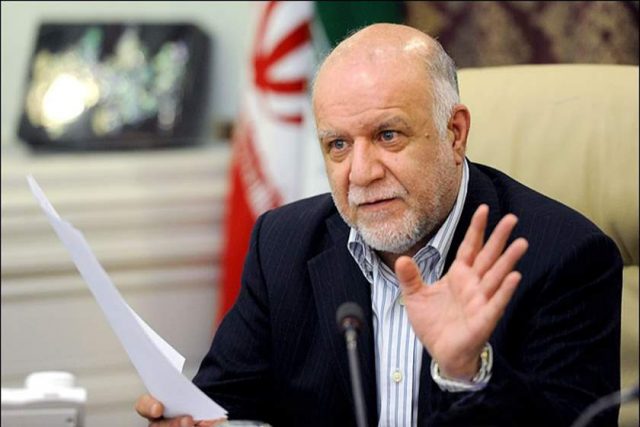
Iran’s oil minister, Bijan Namdar Zanganeh
Al-Manar | September 14, 2019
Iranian oil minister Bijan Zanganeh said Saturday that the France-proposed $15 billion credit line for Iran has nothing to do with easing of US sanctions on the country.
“In the eye of the country’s oil industry, sanctions relief means selling oil,” Oil Minister Bijan Zanganeh told reporters on Saturday.
He was speaking on the sidelines of a signing ceremony for a deal between Pars Oil and Gas Company (POGC) and Petropars Company for developing Belal Gas Field in the Persian Gulf.
“The point was for the oil sanctions to be lifted so that we could freely sell our oil. This credit line will put Iran in debt in the future,” he added, according to Mehr news agency.
The $15 billion credit line has been proposed by the French side in a bid to salvage the 2015 Iran nuclear deal in the wake of US’ unilateral withdrawal and Iran’s countermeasures in reducing commitments to the agreement.
The package is meant as an incentive to keep Iran in the nuclear agreement in the face of US’ efforts to drive the country’s oil exports to zero.
The sum is said to account for about half the revenue Iran normally would expect to earn from oil exports in a year.
Elsewhere, Zanganeh maintained that the development of the phase 11 of South Pars has not yet been exempted from US sanctions.
He then refused to confirm data of Iran’s oil reserves or answer any questions regarding Iran’s measures to bypass US sanctions.
He noted, however, that Iran is in talks with China to peacefully resolve the issue of the East Asian country’s decision to leave the SP11 development project.
Top Iran cultural body slams US protracted detention of stem-cell scientist
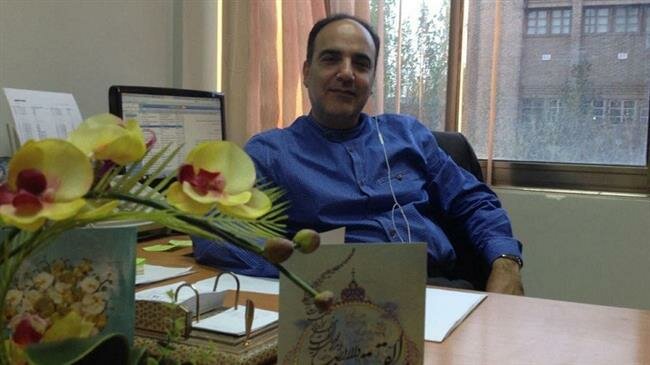
Masoud Soleimani, senior Iranian stem-cell researcher in US custody
Press TV – Sep 11, 2019
A leading Iranian cultural organization has slammed the United States for its protracted detainment of an Iranian stem-cell scientist on “hollow” grounds, calling on advocates of human rights worldwide to help end the “arbitrary detention.”
“The US government constantly delays Dr. Soleimani’s trial in violation of academic and research protocols, and has so far failed to produce any official report on the reason behind his arrest,” said Iran’s Supreme Council of the Cultural Revolution in a statement published on its website on Wednesday.
Masoud Soleimani was arrested upon his arrival in Chicago in October last year on charges that he had violated trade sanctions against Iran. He has been held in detention south of Atlanta since then.
Soleimani and two of his students, who are free on bond, are accused of conspiring to export biological materials from the US to Iran without a license from the Treasury Department’s Office of Foreign Assets Control.
Attorneys in the case say he seized on the plans of a former student to travel from the US to Iran in September 2016 as a chance to get recombinant proteins used in his research at a lower price than what he would pay at home.
Lawyers for the scientists argue that the trio did nothing wrong, stressing that no specific license was required as the proteins are medical materials and that transporting them to Iran for noncommercial purposes does not amount to exporting goods.
The Council further said Soleimani ranked among the world’s top 100 scientists in terms of scientific citation, who had traveled to the US at the invitation of the Minnesota-based Mayo Clinic — a ranking nonprofit academic medical center — on a valid visa.
He was arrested right upon arrival without charge or trial, and was currently jailed alongside criminals, drug traffickers, and hooligans, it added.
“Dr. Soleimani’s detention is a clear example of arbitrary arrest,” prohibited under all international norms, added the statement.
The case serves to prove the US’s adversarial and inhumane attitude given that Soleimani’s research and academic background has nothing to do with Washington’s sanctions targeting Iran, it stated.
“The American government, which has failed to block Iran’s monumental scientific progress,…has now resorted to such inhumane behavior,” the document noted.
It asserted that Soleimani was an “apolitical academic figure.” The detention prevented him from seeing his mother, who went into a coma after learning about his arrest, and passed away recently.
The Council also noted that Soleimani’s prolonged detention has severely affected his eyesight and caused him to lose much weight.
Soleimani’s family is paying all the medical and legal costs, it noted. The US government is preventing his access to decent medical treatment, despite the fact that he suffers from irritable bowel syndrome (IBS).
The body called on the world’s justice-seeking people and organizations to help pursue the scientist’s release.
‘The New Normal’: Trump’s ‘China Bind’ Can Be Iran’s Opportunity
By Alastair Crooke | Strategic Culture Foundation | September 9, 2019
There is consensus among the Washington foreign policy élite that all factions in Iran understand that – ultimately – a deal with Washington on the nuclear issue must ensue. It somehow is inevitable. They view Iran simply as ‘playing out the clock’, until the advent of a new Administration makes a ‘deal’ possible again. And then Iran surely will be back at the table, they affirm.
Maybe. But maybe that is entirely wrong. Maybe the Iranian leadership no longer believes in ‘deals’ with Washington. Maybe they simply have had enough of western regime change antics (from the 1953 coup to the Iraq war waged on Iran at the western behest, to the present attempt at Iran’s economic strangulation). They are quitting that failed paradigm for something new, something different.
The pages to that chapter have been shut. This does not imply some rabid anti-Americanism, but simply the experience that that path is pointless. If there is a ‘clock being played out’, it is that of the tic-toc of western political and economic hegemony in the Middle East is running down, and not the ‘clock’ of US domestic politics. The old adage that the ‘sea is always the sea’ holds true for US foreign policy. And Iran repeating the same old routines, whilst expecting different outcomes is, of course, one definition of madness. A new US Administration will inherit the same genes as the last.
And in any case, the US is institutionally incapable of making a substantive deal with Iran. A US President – any President – cannot lift Congressional sanctions on Iran. The American multitudinous sanctions on Iran have become a decades’ long knot of interpenetrating legislation: a vast rhizome of tangled, root-legislation that not even Alexander the Great might disentangle: that is why the JCPOA was constructed around a core of US Presidential ‘waivers’ needing to be renewed each six months. Whatever might be agreed in the future, the sanctions – ‘waived’ or not – are, as it were, ‘forever’.
If recent history has taught the Iranians anything, it is that such flimsy ‘process’ in the hands of a mercurial US President can simply be blown away like old dead leaves. Yes, the US has a systemic problem: US sanctions are a one-way valve: so easy to flow out, but once poured forth, there is no return inlet (beyond uncertain waivers issued at the pleasure of an incumbent President).
But more than just a long chapter reaching its inevitable end, Iran is seeing another path opening out. Trump is in a ‘China bind’: a trade deal with China now looks “tough to improbable”, according to White House officials, in the context of the fast deteriorating environment of security tensions between Washington and Beijing. Defense One spells it out:
“It came without a breaking news alert or presidential tweet, but the technological competition with China entered a new phase last month. Several developments quietly heralded this shift: Cross-border investments between the United States and China plunged to their lowest levels since 2014, with the tech sector suffering the most precipitous drop. US chip giants Intel and AMD abruptly ended or declined to extend important partnerships with Chinese entities. The Department of Commerce halved the number of licenses that let US companies assign Chinese nationals to sensitive technology and engineering projects.
“[So] decoupling is already in motion. Like the shift of tectonic plates, the move towards a new tech alignment with China increases the potential for sudden, destabilizing convulsions in the global economy and supply chains. To defend America’s technology leadership, policymakers must upgrade their toolkit to ensure that US technology leadership can withstand the aftershocks.
“The key driver of this shift has not been the President’s tariffs, but a changing consensus among rank-and-file policymakers about what constitutes national security. This expansive new conception of national security is sensitive to a broad array of potential threats, including to the economic livelihood of the United States, the integrity of its citizens personal data, and the country’s technological advantage”.
Trump’s China ‘bind’ is this: A trade deal with China has long been viewed by the White House as a major tool for ‘goosing’ the US stock market upwards, during the crucial pre-election period. But as that is now said to be “tough to improbable” – and as US national security consensus metamorphoses, the consequent de-coupling, combined with tariffs, is beginning to bite. The effects are eating away at President Trump’s prime political asset: the public confidence in his handling of the economy: A Quinnipiac University survey last week found for the first time in Trump’s presidency, more voters now say the economy is getting worse rather than better, by a 37-31 percent margin – and by 41-37 percent, voters say the president’s policies are hurting the economy.
This is hugely significant. If Trump is experiencing a crisis of public confidence in respect to his assertive policies towards China, the last thing that he needs in the run-up to an election is an oil crisis, on top of a tariff/tech war crisis with China. A wrong move with Iran, and global oil supplies easily can go awry. Markets would not be happy. (So Trump’s China ‘bind’ can also be Iran’s opportunity …).
No wonder Pompeo acted with such alacrity to put a tourniquet on the brewing ‘war’ in the Middle East, sparked by Israel’s simultaneous air attacks last month in Iraq, inside Beirut, and in Syria (killing two Hizbullah soldiers). It is pretty clear that Washington did not want this ‘war’, at least not now. America, as Defense One noted, is becoming acutely sensitive to any risks to the global financial system from “sudden, destabilizing convulsions in the global economy”.
The recent Israeli military operations coincided with Iranian FM Zarif’s sudden summons to Biarritz (during the G7), exacerbating fears within the Israeli Security Cabinet that Trump might meet with President Rouhani in NY at the UN General Assembly – thus threatening Netanyahu’s anti-Iran, political ‘identity’. The fear was that Trump could begin a ‘bromance’ with the Iranian President (on the Kim Jong Un lines). And hence the Israeli provocations intended to stir some Iranian (over)-reaction (which never came). Subsequently it became clear to Israel that Iran’s leadership had absolutely no intention to meet with Trump – and the whole episode subsided.
Trump’s Iran ‘bind’ therefore is somehow similar to his China ‘bind’: With China, he initially wanted an easy trade achievement, but it has proved to be ‘anything but’. With Iran, Trump wanted a razzmatazz meeting with Rohani – even if that did not lead to a new ‘deal’ (much as the Trump – Kim Jung Un TV spectaculars that caught the American imagination so vividly, he may have hoped for a similar response to a Rohani handshake, or he may have even aspired to an Oval Office spectacular).
Trump simply cannot understand why the Iranians won’t do this, and he is peeved by the snub. Iran is unfathomable to Team Trump.
Well, maybe the Iranians just don’t want to do it. Firstly, they don’t need to: the Iranian Rial has been recovering steadily over the last four months and manufacturing output has steadied. China’s General Administration of Customs (GAC) detailing the country’s oil imports data shows that China has not cut its Iranian supply after the US waiver program ended on 2 May, but rather, it has steadily increased Iranian crude imports since the official end of the waiver extension, up from May and June levels. The new GAC data shows China imported over 900,000 barrels per day (bpd) of crude oil from Iran in July, which is up 4.7% from the month before.
And a new path is opening in front of Iran. After Biarritz, Zarif flew directly to Beijing where he discussed a huge, multi-hundred billion (according to one report), twenty-five-year oil and gas investment, (and a separate) ‘Road and Belt’ transport plan. Though the details are not disclosed, it is plain that China – unlike America – sees Iran as a key future strategic partner, and China seems perfectly able to fathom out the Iranians, too.
But here is the really substantive US shift taking place. It is that which is termed “a new normal” now taking a hold in Washington:
“To defend America’s technology leadership, policymakers [are] upgrading their toolkit to ensure that US technology leadership can withstand the aftershocks … Unlike the President’s trade war, support for this new, expansive definition of national security and technology is largely bipartisan, and likely here to stay.
… with many of the president’s top advisers viewing China first and foremost as a national security threat, rather than as an economic partner – it’s poised to affect huge parts of American life, from the cost of many consumer goods … to the nature of this country’s relationship with the government of Taiwan.
“Trump himself still views China primarily through an economic prism. But the angrier he gets with Beijing, the more receptive he is to his advisers’ hawkish stances toward China that go well beyond trade.”
“The angrier he gets with Beijing” … Well, here is the key point: Washington seems to have lost the ability to summon the resources to try to fathom either China, or the Iranian ‘closed book’, let alone a ‘Byzantine’ Russia. It is a colossal attenuation of consciousness in Washington; a loss of conscious ‘vitality’ to the grip of some ‘irrefutable logic’ that allows no empathy, no outreach, to ‘otherness’. Washington (and some European élites) have retreated into their ‘niche’ consciousness, their mental enclave, gated and protected, from having to understand – or engage – with wider human experience.
To compensate for these lacunae, Washington looks rather, to an engineering and technological solution: If we cannot summon empathy, or understand Xi or the Iranian Supreme Leader, we can muster artificial intelligence to substitute – a ‘toolkit’ in which the US intends to be global leader.
This type of solution – from the US perspective – maybe works for China, but not so much for Iran; and Trump is not keen on a full war with Iran in the lead up to elections. Is this why Trump seems to be losing interest in the Middle East? He doesn’t understand it; he hasn’t the interest or the means to fathom it; and he doesn’t want to bomb it. And the China ‘bind’ is going to be all absorbing for him, for the meantime.
Foreign Minister Zarif says Iran’s commitments reduction allowed under JCPOA
Press TV – September 8, 2019
Iran’s Foreign Minister Mohammad Javad Zarif says the three steps taken by the Islamic Republic to reduce its commitments under a nuclear deal it clinched with world powers in 2015 are legitimate and allowed under the agreement.
Zarif made the remarks in a meeting with the visiting acting head of the International Atomic Energy Agency (IAEA) Cornel Feruta in Tehran on Sunday.
Iran’s top diplomat said all measures taken “by the Islamic Republic of Iran to reduce its commitments in response to the European sides’ failure to fulfill theirs” conformed to Article 36 of the deal, which is officially known as the Joint Comprehensive Plan of Action (JCPOA).
The Atomic Energy Organization of Iran (AEOI) said on Saturday that the country has started up advanced centrifuges to boost its stockpile of enriched uranium, warning the signatories to the nuclear deal that the clock was ticking for them to salvage the landmark agreement in the face of pressure by the United States.
As a third step in Iran’s reduction of commitments under the deal, the AEOI said it has activated 20 IR-4 and 20 IR-6 centrifuges for research and development purposes.
The third step comes after the Europeans failed to work within a 60-day deadline to meet Iran’s demands and fulfill their commitments under the multilateral deal. Iran had already rowed back on its nuclear commitments twice in compliance with Articles 26 and 36 of the JCPOA.
Iran says its retaliatory measures will be reversible as soon as Europe finds practical ways to shield the mutual trade from the US sanctions, which were re-imposed last year when President Donald Trump withdrew from the JCPOA.
Iran has given another two months to the European signatories to take meaningful action to save the JCPOA as a France-led diplomatic process is underway between the two sides.
On the same day that Iran took the third step, the IAEA said it had inspectors on the ground in Iran who would be able to look into Tehran’s move to turn on advanced centrifuges to increase the country’s uranium stockpiles.
The Vienna-based agency added that its “inspectors are on the ground in Iran and they will report any relevant activities to IAEA headquarters.”
Elsewhere in his remarks, Zarif pointed to the close cooperation between Iran and the IAEA after the signing of the landmark nuclear accord, which led the IAEA to confirm Iran’s compliance with its JCPOA commitments in over a dozen reports.
Iran’s top diplomat also called on the IAEA to observe the principles of professionalism, confidentiality, and impartiality in fulfilling its duties regarding Iran.
The acting IAEA acting chief, for his part, said the agency has been working to build more trust and would carry out its verification activities in a professional and impartial manner.
Feruta arrived in the Iranian capital on Sunday morning to hold talks with high-level Iranian officials. The IAEA said the visit was part of its “ongoing interactions” with Tehran, including “verification and monitoring in Iran under the JCPOA.”
Earlier on Sunday, the Romanian diplomat held talks with the AEOI Head Ali Akbar Salehi.
During the meeting, Iran’s nuclear chief criticized the European signatories to the 2015 nuclear agreement for failing to honor their legal commitments to Tehran, adding that the multinational accord is “no one-way street.”
IAEA will continue impartial, professional approach: Feruta
Speaking at a joint press conference with Iran’s nuclear chief, Feruta said the UN nuclear agency would continue with its independence, impartial and professional approach and would not be affected by pressure.
He added that the IAEA is tasked with verifying the JCPOA implementation and is involved in dynamic interaction with Iran on the implementation of the Additional Protocol and its Safeguard Agreement.
He expressed the IAEA enthusiasm to continue cooperation with Iran.
IAEA underlines ‘impartiality’ in conducting safeguards activities
Later on Sunday, the IAEA issued a statement on Feruta’s Tehran visit, quoting him as saying that the agency’s “safeguards activities are conducted in an impartial, independent and objective manner.”
Acting Director General Cornel Feruta visited Iran on 8 September 2019, and met with Vice-President and President of the Atomic Energy Organization of Iran Ali Akbar Salehi, Foreign Minister Mohammad Javad Zarif and other Iranian senior officials, the statement said.
The IAEA noted that Feruta’s discussions with the Iranian officials “covered IAEA activities in Iran, with an emphasis on the ongoing interactions between the IAEA and Iran related to the implementation of the Safeguards Agreement and Additional Protocol.”
US Special Rep for Iran, Brian Hook makes Captain Hook look like a good guy
Washington is intensifying its “maximum pressure” campaign against Iran with the addition of unorthodox tactics including piracy, bribery, and extortion
By Sarah Abed | September 6, 2019
Over the past few months, US Special Representative for Iran, Brian Hook the head of the Iran Action Group, has been personally writing emails and texts to over a dozen ship captains around the world, to make them an offer they can’t refuse.
According to The Financial Times, a letter which included a bribe and threat was received by Indian national, Akhilesh Kumar, the captain of the beleaguered Iranian oil tanker Adrian Darya 1. Kumar was offered millions of dollars to sail the ship to a country which would impound the vessel on Washington’s behalf. The letter warned that there would be dire consequences if he didn’t accept the offer. Kumar ignored the email and just two days later they imposed sanctions on him and added him to the Treasury Departments Specially Designated Nationals list banning him from entering the US. The Adrian Darya 1 was blacklisted too.
This is just the latest attempt by the US to seize the Adrian Darya 1, an Iranian tanker which the US alleged was transporting oil to Syria breaching EU and U.S. sanctions. Previously this tanker has been sieved by British commandos off Gibraltar and was held there for a few weeks but then released after Iranians guaranteed that it wouldn’t breach EU sanctions. The US has also accused the ship of money laundering and terror financing and has warned its allies that giving aid to this ship will put them at risk. To Washington’s dismay, Gibraltar would not hand over the ship. Currently, it is somewhere in the eastern Mediterranean, with it’s signaling devices turned off.
Five months ago, the US unilaterally declared Iran’s Revolutionary Guard Corps (IRGC) a terror organization at the request of Israel, other nations however did not adopt the designation. A US State Department spokeswoman recently stated, “We have conducted extensive outreach to several ship captains as well as shipping companies warning them of the consequences of providing support to a foreign terrorist organization.”
At a press conference earlier this week Hook announced, “Today, the United States government is intensifying our maximum pressure campaign against the Islamic Republic of Iran.” Hook added, “We are announcing a reward of up to $15 million for any person who helps us disrupt the financial operations of Iran’s Revolutionary Guard Corps [IRGC] and Qods [Jerusalem] Force.”
What Hook is referring to is the Rewards for Justice program which was established over thirty years ago to pay ordinary people large sums of cash to provide information to disrupt “terror networks”. On their website it states, “The U.S. Department of State’s Reward for Justice Program is offering a reward of up to $15 million for information leading to the disruption of the financial mechanisms of Iran’s Islamic Revolutionary Guard Corps (IRGC) and its branches, including the IRGC-Qods Force (IRGC-QF). The IRGC has financed numerous terrorist attacks and activities globally. The IRGC-QF leads Iran’s terrorist operations outside Iran via its proxies, such as Hizballah and Hamas.”
Iranian Foreign Minister Javad Zarif tweeted “Having failed at piracy, the US resorts to outright blackmail- deliver us Iran’s oil and receive several million dollars or be sanctioned yourself. Sounds very similar to the Oval Office invitation I received a few weeks back. It is becoming a pattern”. Adding the hashtag BTeamGangsters and attaching screenshots of an article titled “US Offers Cash to tanker captains in bid to seize Iranian ships”. He also described the US Treasury as “nothing more than a jail warden” in another tweet.
In addition to the Rewards for Justice (bounty) program, Washington is issuing sanctions against an alleged “oil for terror” network, which it alleges is run by the IRGC. This latest sanction package targets sixteen companies, nine individuals, and six oil tankers which they allege are supplying Iranian oil to Syria.
“Regime change” although explicitly denied by Trump, remains the ultimate goal in Iran for the State Department and Hooks comments on Wednesday are a clear indication, “Today’s announcement is historic. It’s the first time that the United States has offered a reward for information that disrupts a government entity’s financial operations,” Hook explained. “We’ve taken this step because the IRGC operates more like a terrorist organization than it does a government.”
Washington set this downward spiral in motion when President Donald Trump unilaterally withdrew from the 2015 JCPOA nuclear deal last year. Iran was in compliance with agreement terms and obligations during that time and just recently starting scaling back on its commitments after urging EU nations for an entire year to try and save the agreement or at the bare minimum secure sanction’s relief.
On Wednesday, Iranian President Hassan Rouhani gave Europe a two-month deadline before continuing to gradually reduce commitments under the JCPOA. “Europe has another two-month deadline for negotiations, agreement, and a return to its commitments,” Rouhani stated at a cabinet meeting.
France recently suggested that it would provide Tehran with a $15 billion credit line if the US granted sanction waivers, and in return Iran would comply with JCPOA, but clearly Washington is not interested in providing any waivers or relief.
Iran refers to Washington’s sanctions as “economic terrorism”, illegal and unjustified under international law. Tehran has also warned European countries that if they allow this to continue it will not end with Iran, other nations will be bullied by the United States unless something is done to end this cycle of abuse.
On Friday, Javad Zarif Iran’s Foreign minister tweeted in support and solidarity with Cuba and stated that US Economic terrorism against Cuba, China, Russia, Syria, Iran deliberately targets civilians while trying to achieve illegitimate political objectives through intimidation of innocent people. Zarif noted that the US’s rouge behavior now includes piracy, bribery and blackmail.
Sarah Abed is an independent journalist and analyst.
Featured Video

Bombing Hitler’s Hometown
or go to
Aletho News Archives – Video-Images
From the Archives
The Biggest Threat to Peace in Middle East
By Dr. Elias Akleh* | Sabbah Report | May 24, 2010
A build up of heightened tension in the Middle East is escalating in the last few weeks. American and Israeli postures towards Lebanon, Syria, and Iran have become more threatening. Listening to speeches of political leaders one hears talks only about war not peace. Iranians and Israelis are continuously training hard for a possible showdown. Both sides are conducting extensive war games every month. This led Syrians to claim that Israel is preparing for a soon-to-come another war. The Jordanians also are warning that current stalemate of the peace process is an indication of a war breaking out this summer. The Russian President and his army chief hinted, a few months ago, that the US and Israel were planning for an attack on Iran.
Indeed Iran is, as it has been for last few years, the target of most of the threats and accusations of supporting terrorism. Escalating incitement against Iran the American Defense Department sent last month (April) to Congress a report on Iran’s military claiming Iran could develop intercontinental ballistic missiles capable of reaching the US by 2015.
Ignoring the fact that N. Korea, India, Pakistan, and Israel are proven to have nuclear weapons while Iran does not, the US Secretary of State Hillary Clinton chose in her speech, to the nuclear Non-Proliferation Treaty review conference at the UN, to focus on Iran’s alleged nuclear ambitions putting the whole world at risk as she put it. According to Clinton Iran’s acquisition of nuclear weapons, rather than Israel’s more than 200 nuclear bombs, is destabilizing the Middle East. She called on the world’s nations to rally around US efforts to hold Iran, not other nuclear countries, to account.
The accusation that Usama Bin Laden is living comfortably in Iran had received a boost after the broadcast of a documentary called “Feathered Cocaine”. This echoed the June 2003 claims of the Italian newspaper Corre de la Sierra that Bin Laden was in Iran according to some intelligence report, and according to Richard Miniter’s book “Shadow War”. … continue
Blog Roll
 Aletho News
- Bombing Hitler’s Hometown
- German journalist threatened with homelessness as German court upholds EU sanctions in landmark free speech case
- US Tells Allies That Ukraine-Bound Arms Could be Sent to Middle East
- Organized terrorism: Iran condemns killing of its diplomats in Lebanon
- Why could Gaza enter the regional war?
- Hamas official rejects Mladenov Plan linking disarmament to Gaza reconstruction
- Two Primary Elections for the Soul of ‘America First’
- Japan Clings to US Vassalage Despite Energy Crunch Caused By Iran War
- US Seeks Control Over Global Energy Infrastructure – Kremlin
- US senators target Orban government for standing up to Zelensky
- If Americans Knew
- Researchers at Human Rights Watch Resign Over Blocked Report on Palestinian Refugee Return
- Jewish Groups Are Backing a War Americans Don’t Want
- Eric Fingerhut Thinks He’s the President of the Jews
- Top Jewish Philanthropists, Rabbis Urge Israeli President to Take Action Against ‘Jewish Extremists’
- Don’t Be Fooled. Zionist Leaders Have Always Wanted to Control Southern Lebanon
- Israel’s widespread use of torture is a core element of its genocide against the Palestinian people
- In Israel’s War on Iran, Many Middle East US Bases Rendered “All But Uninhabitable”
- ‘Burn the lawn’: Israel pursues ‘Rafah model’ in southern Lebanon
- A genocide here, an amputation there
- Reports: Iran mobilizing 1M fighters, Israel-US run low on ammo, Israeli army faces shortage – Not a ceasefire Day 168
- No Tricks Zone
- Devastating Assessment Of Comirnaty Vaccine By Former Senior Pfizer Europe Toxicologist
- New Study: CO2 Is ‘Effectively Negligible’ As An Explanatory Climate Change Factor Since 2000
- Former Pfizer Toxicologist Dr. Helmut Sterz Tells Bundestag Hearing Pfizer Vaccine Should Have Never Been Approved
- Energy Expert: Germany’s Nuclear Phaseout Was A “500 Billion Euro Mistake”
- New Research: South Australia’s Mid-Holocene Sea Surface Temperatures Were 4°C Warmer Than Today
- Storing Green Energy To Last Germany 10 Days Would Require A 60-Million Tonne Battery
- New Studies: UK Sea Levels Were 4 Meters Higher Than Today During The Mid-Holocene
- Destructive Green New Deal: German Energy And Metal Group Warns Of Drastic Crisis
- New Study Documents A 20-Year Pause In Arctic Sea Ice Decline – Driven By Internal Variability
- Wake-up Call: Survey Shows Majority Of Germans Now Favor Postponing Climate Targets!
 Aletho News