What the Aggravation of the US-Iranian Relations Means for South Korea
By Konstantin Asmolov – New Eastern Outlook – 06.09.2019
Continuing to monitor the confrontation between Washington and Tehran, the author of this article can see how it affects the South Korean interests. The sanctions badly hit South Korea’s economy and, since the summer of 2019, there have been attempts to involve Seoul in a possible military coalition.
Let us remind the reader that the Joint Comprehensive Action Plan was signed by Iran, Russia, the United States, Germany, France, the United Kingdom and China in 2015, limiting Iran’s nuclear program in return for lifting the sanctions imposed by the European Union and the United Nations.
The removal of most of the international sanctions from Iran stimulated a great interest in its economy, as the country has huge gas and oil reserves, and Seoul took advantage of the opportunity to enter the Iranian market. After all, the South Korean exports to Iran exceeded $6 billion in 2012, however, after the imposition of sanctions by the Obama Administration, it fell to $4.5 billion. In 2016, it fell even more and, only in 2017 did export volume begin to recover.
On August 24, 2017 the South Korean Export-Import Bank and the Central Bank of Iran signed an agreement on a $9,380 million loan to the Iranian Government. In addition, South Korean companies were given the opportunity to participate in construction and resource projects in Iran, as the loan was aimed at providing financial support to those who would receive orders from the Iranian Government.
It should be noted that the arrangement to start negotiations on the loan agreement was made during the visit of the former South Korean President Park Geun-hye to Iran, but the final decision was delayed since the parties could not agree on the terms of repaying the loan in case of the resumption of sanctions should Iran fail to fulfil its obligations in the nuclear technology area.
But after Donald Trump came to power, the White House began to criticize the terms of the nuclear deal and later withdrew from it; in May 2018, the US resumed its sanctions against individuals and legal entities that carry out export transactions in gold, precious metals, graphite, coal, automotive and other industries with Iran. However, for some countries, there was a delay of 90 and 180 days depending on the type of sanctions.
The South Korean government wasted no time and convened an ad-hoc expert working group assigned to reduce the damage to the domestic companies caused by the US sanctions against Iran. The complications came from the fact that more than 80% of South Korean enterprises working with Iran were small and medium-sized businesses. However, with the reinstatement of sanctions, exports from South Korea to Iran decreased yet again. From January to June 2019, they fell by 15.4%, and by 19.4% in July.
The South Korean government also negotiated with the US calling on it to exempt crude oil from the sanctions, as it accounts for most of the imports from Iran. Under the Barack Obama Administration, South Korea received the status of an exception country entitled to buy Iranian crude oil under the sanctions with reducing its purchases by 20%. The importance of Iranian oil imports to South Korea lies in the fact that it has a direct impact on the exports to Iran. Settlements with Iran are made using the Korean won bank account from which goods exported to Iran are also paid for. Therefore, a reduction in the Iranian oil imports will inevitably lead to a reduction in the exports.
Moreover, Seoul remains one of the largest importers of Iranian oil and gas condensate in Asia. As noted by Reuters, the supply of Iranian resources is critical to the South Korean petrochemical industry. South Korea greatly relies on the supply of condensate from Iran, which has a high content of naphtha being the basic raw material for the manufacturing of petroleum products. Besides, the Iranian prices are the lowest. The difference can reach six dollars per barrel, so 50% of the condensate imported into South Korea comes from Iran.
According to an opinion, South Korea is the third largest buyer of Iranian oil. On the other hand, Iran accounts for 8.6% of the oil imported into South Korea and it is the fifth largest oil supplier to South Korea after Saudi Arabia, Kuwait, the United States and Iraq.
On October 29, 2018 US Secretary of State Mike Pompeo and South Korean Foreign Minister Kang Kyung-wha exchanged their views of the issue of US sanctions against Iran during a telephone conversation. Kang Kyung-wha called on the American party to show flexibility in granting South Korea the status of an exception nation in the implementation of sanctions against Iran in order to minimize the damage to South Korean companies. She mentioned the repeated negotiations between the parties on this topic. Pompeo said the US was heeding the position of South Korea and would continue the dialogue.
On November 5, 2018 the second stage of sanctions aimed at stopping foreign currency inflows to Iran thanks to oil exports entered into force. This affects the interests of South Korea, Turkey and India, which actively cooperate with Iran in the oil sector.
While the May sanctions were mainly aimed at a secondary boycott, the second stage included direct sanctions on transactions related to oil, natural gas, petrochemical products, ports, energy facilities and shipbuilding. The sanctions apply to approximately 700 individuals and legal entities, aircraft, ships and other facilities.
However, for eight countries (South Korea, China, India, Italy, Greece, Japan, Taiwan and Turkey) the US made a temporary exemption of 180 days, as each of them had demonstrated a significant reduction in Iranian oil purchases over the previous six months. The US sanctions are aimed at reducing the profit that Iran receives from trade, so permits to carry out trade are issued in exchange for the promise to reduce the purchase of Iranian raw materials. Thus, it will be possible to avoid an increase in oil prices. However, the US Special Representative for Iran Brian H. Hook confirmed that the 180-day exemption would not be extended.
As a result of this decision, South Korea managed to avoid the worst possible scenario, but experts immediately noted that the impact on the economy would not be averted altogether. As a result, the authorities recommended that businesses pay attention to the exports of pharmaceutical products, household appliances and other goods that were not subject to sanctions.
Immediately after the introduction of sanctions, representatives of the South Korean government visited Iran to discuss mutual trade issues. It is pointed out that the parties touched upon the situation with the resumption of the US sanctions and the withdrawal of a number of countries from the ban on the import of Iranian oil. The Iranian party thanked South Korea for consulting it on the current situation.
On April 29, before the end of the exemption period, Deputy Prime Minister for Economy and Minister of Planning and Finance Hong Nam-ki said that the South Korean government would make every effort to stabilize the domestic prices of petroleum products, which may increase due to the ban on the purchase of Iranian oil imposed by the US.
The exemption period for the eight countries expired on May 2, 2019. Now, all of them had to look for other suppliers, given the threat of US sanctions, but the Turkish government reported that it was impossible to stop Iranian oil imports immediately and Beijing said it would not support the unilateral US sanctions considering the significant losses associated with the need to change the suppliers. The South Korean government, through various channels, tried to bring South Korea out of the Iranian sanctions regime, but it failed. Iraq, which was importing natural gas from Iran, asked the US to provide more time to find another supplier, but the request was denied. This situation, among other things, destabilized world oil prices.
On June 20, 2019 the South Korean delegation held talks with the US party on the trade with Iran. The South Koreans called on the US to assist in eliminating possible difficulties in the oil issue and to resolve the problems of South Korean companies working with Iran in humanitarian areas using the Korean currency accounts only. However, the request was de facto ignored.
On the other hand, as from the summer of 2019, South Korea has been increasingly involved in the US-led security coalition in the Strait of Hormuz, which is the only waterway connecting the Persian Gulf and the Indian Ocean between the Arabian Peninsula and Iran and serves as the key transport corridor for large oil-producing countries.
Washington has called on Seoul to participate in this coalition citing the importance of the Strait for South Korea as the main oil transportation corridor. On the other hand, South Korea closely cooperates with Iran in the economic sphere. In this regard, Iranian response measures cannot be ruled out.
On July 24, 2019 during his meeting with the national security advisor to the President of South Korea, Chung Eui-yong, John Bolton demanded not only an increase in the share of South Korea in maintenance costs of US troops, but also the deployment of South Korean naval forces in the Strait of Hormuz.
On July 28, a representative of the South Korean Ministry of Defense noted that the country was considering various options for joining the coalition to ensure security in the Strait of Hormuz, but, at the moment, no specific decisions on this topic had been taken and no official proposals from the US had been received either. However, given the issue of the security of South Korean vessels passing through the Strait of Hormuz, various options for sending a military contingent to the region are being considered, including the possibility of sending the Cheongye unit currently patrolling the Gulf of Aden.
On August 9, Seoul hosted a meeting of the heads of the defense ministries of South Korea and the United States, Jeong Kyeong-doo and Mark T. Esper. Korea Times notes that Mark Esper officially asked Korea to participate in the coalition, but, almost immediately after that, Iranian Foreign Ministry spokesman Seyyed Abbas Mousavi called on South Korea to remain neutral. Mousavi noted that Seoul was an economic partner and asked it to take into account the sensitivity of the issue. “Korea’s possible joining the coalition is not a very good signal for us, and it will complicate things.”
South Korean experts, however, immediately wrote that the government should take the US side. As Meiji University Professor of Political Science Sing Yeoul said, “Diplomacy is not about being praised by all countries. You often have to choose one country over another, even if it means that you have broken ties with the latter.”
On August 13, the 30th outfit of the Cheongye special unit of the South Korean Navy left the South Korean port of Busan for the Gulf of Aden for a 6-month patrolling. It was headed by the destroyer Gang Gam-chan. The 300-strong army unit consists of a special force, including a submarine bomber team, a Navy Seal team, Marines and Navy pilots, who will protect South Korean vessels off the coast of Somalia and support ships of other countries in the nearby waters.
The experts began to discuss the possibility of this detachment joining the security coalition in the Strait of Hormuz, but agreed that the approval of the National Assembly was required for the redeployment of Cheongye to the Strait of Hormuz. It is said that this topic also emerged at the meeting of the defense ministers, and Jeong told Esper that South Korea was well aware of the importance of water area defense and was considering various options to protect its nationals and oil tankers in the region.
However, the destroyer should continue the unit’s mission in the Gulf of Aden and its possible role in the Strait of Hormuz was not considered during its preparation. However, the Gulf of Aden is four-day sail away from the Strait of Hormuz.
On August 21, the US Special Representative for Iran Brian H. Hook told KBS that joining the coalition would not necessarily mean sending troops and that dispatching naval and aviation equipment with the necessary personnel could be a solution. Furthermore, countries joining the coalition will be able to obtain information from the US on certain threats to merchant ship security.
The problem got another dimension in the context of the Japan-South Korean trade war. Mark Esper invited not only South Korea to join the US-led coalition, but also Japan, and it is a good question how the servicemen of the two countries are going to work together.
Thus, there is a possibility that, if a war with Iran is indeed going to happen, then, same as in Vietnam or Iraq, the South Korean military will also be involved. After all, it was not some conservative and pro-American puppet who sent troops to Iraq, but the democratic Roh Moo-hyun.
Konstantin Asmolov, PhD in History, Leading Research Fellow at the Centre for Korean Studies of the Institute of Far Eastern Studies of the Russian Academy of Sciences.
US Tried To Bribe And Threaten Iranian Ship’s Captain
teleSUR | September 5, 2019
Emails obtained by The Financial Times (FT) have revealed that U.S. government officials were contacting the captain of an Iranian tanker, offering millions of dollars if the captain steered the ship towards an allied country that would impound on behalf of the United States, but threatening sanctions if the captain refused. It was the same ship that was seized by the U.K. in Gibraltar, and subsequently released after it was clear there were no legal grounds for the seizure.
The email was published by the FT, intended for Iranian ship captain Akhilesh Kumar and a number of other captains. It offered personal payments if the captain sabotaged the ships course, but threatened sanctions on those who don’t. It reads, “This is Brian Hook… I work for Secretary of State Mike Pompeo and serve as the U.S. representative for Iran…… I am writing with good news.”
“With this money you can have any life you wish and be well-off in old age … “If you choose not to take this easy path, life will be much harder for you.”
The official’s State Department phone number was included on the email so as to reassure the captain of its authenticity.
Iran’s Foreign Minister responded saying, “Having failed at piracy, the U.S. resorts to outright blackmail—deliver us Iran’s oil and receive several million dollars or be sanctioned yourself. Sounds very similar to the Oval Office invitation I received a few weeks back. It is becoming a pattern. #BTeamGangsters”
The U.S. has attempted to isolate Iran through sanctions, as a means of punishing the country for its nuclear programme, and opposition to U.S. foreign policy in the region. However, Iran has managed to resist to some degree, it was recently announced that China has stepped up investments and oil imports from Iran, in defiance of U.S. unilateral measures.
JCPOA Negotiations are a test of the EU’s geo-political credibility
By Padraig McGrath | September 5, 2019
On September 4th, Iranian President Hassan Rouhani said that Iran would give the EU a further 60 days to come back into compliance with its economic commitments under the JCPOA before Iran would initiate a third phase of withdrawal from its own obligations under the deal. On September 29th, the International Atomic Energy Agency confirmed that Iran has been enriching uranium to a purity of 4.35%, which marginally exceeds the limit of 3.67% stipulated under the terms of the JCPOA.
Furthermore, Iran has at this point exceeded the stockpile of 300 kilograms of nuclear fuel which was agreed upon in 2015. These measures are quickly reversible, but likewise, Iran also has the technical capacity to very quickly implement any decision to further suspend its commitments. The Iranian government has said that it has the technical capacity to resume production of 20% enriched uranium within 48 hours, were it to take such a decision.
The stumbling-block in the negotiations is that, with the United States having withdrawn from the JCPOA and re-imposed sanctions on Iran following Donald Trump’s assuming office as US president in 2017, the EU finds compliance with its own JCPOA-obligations extremely difficult, as European banks fear being hit by sanctions themselves if they un-freeze Iranian assets or facilitate transactions relating to Iranian oil-exports. US federal law states that, ultimately, all dollar-denominated banking-transactions worldwide ultimately have to pass through the US banking-system. Therefore, the strategic advantage conferred on the US by dollar-hegemony is not simply that it artificially inflates the value of the dollar, but also that it brings all dollar-denominated transactions worldwide under US legal jurisdiction.
In an attempt to find a workaround, French president Emanuel Macron has proposed that the EU should extend a $15 billion letter of credit to Iran, which would be guaranteed by Iranian oil-exports, thereby compensating Iran for losses of revenue owing to US sanctions. The Iranians have already rejected the first version of this offer, wherein this $15 billion package was classified as a loan rather than as a letter of credit. The distinction is crucial, as classifying the $15 billion package as a letter of credit would prevent the western powers from trapping Iran in a vice-grip composed simultaneously of an oil-embargo in addition to the obligation to service debt. Iran’s Deputy Foreign Minister Abbas Araqchi has explained that such a letter of credit would in effect be a pre-sale of oil.
However, the crucial weakness in this solution is that it will still require a waiver from the US government, which seems improbable considering Trump’s intransigence and US National Security Advisor John Bolton’s opposition to the plan.
Although, in the interests of fairness, we should extend some credit to President Macron for his diplomatic initiatives in an effort to find a way out of the impasse, the situation which exists still amounts to a very serious test of the EU’s credibility as a distinct negotiating-entity. The principal EU negotiator in the talks which led to the 2015 JCPOA-deal, EU High Representative for Foreign Affairs and Security Policy Federica Mogherini, has shown extreme weakness and passivity since the American withdrawal in 2017. Having worked hard to hammer out the terms of a deal, she has subsequently done absolutely nothing to defend it.
The net result is that the EU is currently in violation of its JCPOA-obligations because it has folded in the face of US economic bullying. What exactly is the point of bothering to negotiate with the EU if it is incapable of maintaining an independent policy on foreign relations, finance or security?
Another question thrown up by this diplomatic shambles is, considering that the number of countries worldwide being targeted by unilateral US economic sanctions is ever-increasing, when do we hit a tipping-point wherein this increasingly trigger-happy US policy, hitting the sanctions-button on reflex, has an accelerating effect in de-dollarization as a global process?
Banking-systems are dependent on a certain minimal level of systemic trust. How can the US hope to maintain its financial role in the world economy if everybody else is continuously reminded that their dollar-denominated assets worldwide can arbitrarily be frozen or seized at any time?
Already, the four largest banks in the world are Chinese. The only factor which has so far delayed China’s assumption of the role of the world’s banker is that the Chinese government has not yet decided to make the Yuan a more easily tradable currency. Further preparation is still required before the Chinese decide to flick that switch. Once they eventually do, it’s game over for the Dollar.
It is understandable that the Chinese have not yet decided to make the Yuan as tradable as other reserve-currencies, but their principal concern is not fears of vulnerability to speculators and raids. The capitalization of China’s state-owned financial institutions is such that, together, they could easily mobilize enough volume to defend the Yuan’s value against raids, or for that matter to suppress its value, any time they needed to.
I believe that the preparation which the Chinese government most centrally has in mind prior to any decision to make the Yuan fully tradable is the completion of the fibre-optic component of the Belt and Road Initiative. The strategic importance of these fibre-optic pipelines is the most under-emphasized aspect of Belt and Road. Once this physical infrastructure is in place, it will be possible to entirely circumvent American efforts toward virtual piracy in the form of unilateral sanctions. That will have a transformative effect on the world economy. The erosion of dollar-hegemony has been very gradual over the past 15 years, but if we are to see a sudden acceleration, a tipping-point, then that will be it.
It is quite probable that, in anticipation of this, odes to the Petro-Yuan are already being written in Farsi.
Padraig McGrath is a political analyst with InfoBRICS
US imposes sanctions on Iran’s shipping network
Press TV – September 4, 2019
The United States has imposed sanctions on an Iranian shipping network – several tankers, companies and insurance firms — accusing it of supplying millions of barrels of oil to Syria.
The US Treasury Department announced the illegal sanctions on Wednesday on 16 entities, 10 people, including a former Iranian oil minister, and 11 vessels, as Washington continued its campaign of “maximum pressure” against Tehran and, seeking rise in tensions in the Middle East region.
The sanctions also targeted an Indian firm with an interest in the Adrian Darya 1, the Iranian tanker that has been cruising the Mediterranean since its release from detention by authorities in Gibraltar in July.
The Treasury Department’s Office of Foreign Assets Control action froze any assets in the United States of the designated entities and prohibited American citizens and companies from doing business with them.
Meanwhile, Brian Hook, the US special representative for Iran, said on Wednesday the United States would not provide any sanctions waivers to accommodate a French proposal to extend a $15 billion credit line to Iran.
“We did sanctions today. There will be more sanctions coming. We can’t make it any more clear that we are committed to this campaign of maximum pressure and we are not looking to grant any exceptions or waivers,” Hook told reporters.
On Tuesday, the United States imposed sanctions on Iran’s space program. Iran’s space program and two of its research institutes have been sanctioned, according to US Secretary of State Mike Pompeo.
“The United States will not allow Iran to use its space launch program as cover to advance its ballistic missile programs. Iran’s August 29 attempt to launch a space launch vehicle underscores the urgency of the threat,” claimed the former CIA chief.
Washington claims that the measure is aimed at preventing Iran from nuclear weapons. Tehran has maintained that its nuclear and space programs are merely peaceful.
On Friday, the United States blacklisted Adrian Darya 1 and sanctioned its captain. The US earlier threatened those potentially assisting the return of the tanker that had been released by Gibraltar after more than a month of detention there by Britain.
Last week, Washington expanded its anti-Iran sanctions by targeting several companies and individuals over alleged links to the Iranian government and military organizations.
The Treasury Department blacklisted two networks on August 28, accusing them of having ties with the Iranian government and the Islamic Revolution Guards Corps (IRGC).
In May last year, President Donald Trump unilaterally pulled the US out of a 2015 nuclear deal with Iran and five other countries and has re-imposed sanctions on the country, including penalties on Iran’s Foreign Minister Mohammad Javad Zarif. The move has drawn a firestorm of rebukes for Trump and his administration.
In July, the Treasury Department imposed sanctions on seven companies along with three individuals it claims helped procure materials for Iran’s nuclear program.
“Treasury is taking action to shut down an Iranian nuclear procurement network that leverages Chinese- and Belgium-based front companies to acquire critical nuclear,” Treasury Secretary Steven Mnuchin said.
In June, Trump announced sanctions against Iran, targeting the Leadership of the Islamic Revolution Ayatollah Ali Khamenei and top IRGC commanders.
Iran responded denouncing the US sanctions against Iran as a sign of weakness.
In May, Iran informed the five remaining signatories to the 2015 nuclear deal – the UK, Germany, Russia, China and France – of its decision to suspend the implementation of some of its commitments under the agreement, exactly one year after the United States unilaterally abandoned it.
Iran warned that in 60 days it would resume refining uranium to a higher fissile degree if Europe failed to shield its trade from US sanctions.
US posts $15mn bounty for help with ‘disrupting’ finances of Iran’s Revolutionary Guard Corps
RT | September 4, 2019
The US government has offered a reward of up to $15 million for information that helps “disrupt” the financial operations of Iran’s Revolutionary Guard Corps (IRGC), while slapping a new round of sanctions on Tehran.
The lavish bounty was announced on Wednesday as part of the Rewards for Justice program, run by the State Department, which offers financial incentives for information on alleged “terrorist activities” that target the US. The IRGC, an elite branch of Tehran’s military, was designated by Washington as a terrorist organization in April.
The US State Department is seeking information on any companies and individuals who allegedly help the IRGC with “evading US and international sanctions” as well as those who merely “do business” with the military unit.
Apart from issuing the bounty notice, Washington has issued a new sanctions package against an “oil-for-terror” network – as they put it – allegedly run by the IRGC. The sanctions broadside targeted 16 companies and nine individuals, allegedly involved in supplying Iranian oil to Syria in breach of US sanctions. Six oil tankers linked to such activities were also placed on the list.
The new round of sanctions and the bounty offer were lauded by top US officials, who gave themselves a pat on the back for taking action against the alleged network.
Washington will continue to impose new sanctions on the country to maintain “maximum pressure,” US special representative for Iran Brian Hook said, adding that “we are not looking to grant any exceptions or waivers.”
Such an approach effectively buries France’s idea to provide Tehran with a $15 billion credit line, suggested earlier by Foreign Minister Jean-Yves le Drian, who explicitly said that such a deal would require sanction waivers from the US. The proposed credit arrangement would be guaranteed by Iranian oil revenues and require Tehran to comply with the 2015 nuclear deal, known as the JCPOA, as well as to enter negotiations on regional security.
Tehran has repeatedly urged the EU countries to actually do something to save the 2015 agreement and secure sanctions relief from the US. Earlier on Wednesday, Iranian President Hassan Rouhani gave Europe two months to do so, promising to further rollback on its commitments under the JCPOA if this doesn’t happen.
Iran’s Rouhani Rules Out Any Bilateral Talks with US
Al-Manar | September 3, 2019
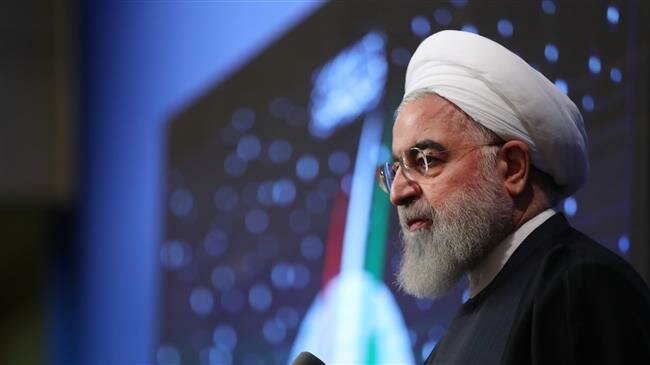
Iranian President Hassan Rouhani said Tuesday that holding bilateral talks with the United States is not on the table.
“We’ve said it before time and again, and we say it again: We have no intention to hold bilateral talks with the United States. We never did and never will. It has been the case in the past year and a half, and even in previous years. There have been calls for talks, but we never responded to them,” the Iranian President Hassan Rouhani said in a Parliament session on Tuesday.
Rouhani was attending the session to defend his two candidates for the ministry of education and the ministry of tourism and cultural heritage.
Stressing that holding bilateral talks with the US is not on the table, Rouhani added “we said that the US, as part of the 5+1, held talks with us and we took part in the talks. If the US lifts all of its sanctions against Iran, whether it returns to the JCPOA or not, it does not matter to us, but if it lifts all sanctions, it is still possible for the US to be part of the 5+1; granted that it first removes all sanctions.”
“When we talk about negotiations, we only mean it under the situation where all sanctions have been lifted; that is, the situation we previously had under the JCPOA. Our stance is clear,” Rouhani stressed.
Tensions started to build up between the US and Iran after President Trump withdrew Washington from the 2015 nuclear deal, officially known as the Joint Comprehensive Plan of Action (JCPOA) in May 2018, and imposed sanctions against Tehran in a bid to restrict the country’s trade transactions with the world. The Trump administration has been making empty calls for talks, but the Islamic Republic stresses that as long as sanctions are in place and the US refuses to return to the JCPOA, negotiations will be meaningless.
“Our progress is a testament to the fact that resisting [against pressure] works. On the other hand, an active diplomacy can pave the way for us. We have never closed the doors of diplomacy and never will do so…we don’t believe that only one of these two tools should be used,” said Rouhani.
About Iran’s measures to scale down commitments to the JCPOA, Rouhani said “If the remaining signatories to the nuclear deal can live up to a part of their commitments, we may reconsider reducing our commitments. But if they fail to take any solid step, we will definitely take the third step in a few days.”
As a first step, Iran increased its enriched uranium stockpile to beyond the 300 kilograms set by the JCPOA. Next, it announced that it had begun enriching uranium to purity rates beyond the JCPOA-limit of 3.76 percent.
Rouhani went on to add, “the further we move along this path, it may make solving the issue more difficult, but since our steps are designed in a way that we can return to the starting point at any given time we desire, it will not take any time, and we will continue our talks even after taking the third step.”
“The basis of our talks with the European side is that we want them to preorder our oil and the revenues to be in our possession. This will ease the situation for us to decide against making more cuts to our commitments to the JCPOA,” Rouhani added.
“We haven’t reached a final agreement yet, but negotiations are still underway. If we fail to reach a conclusive result by Thursday, we will announce the third stage of our cuts to the JCPOA commitments,” Rouhani concluded.
Some officials have noted that Iran’s measures for the third step may include installing a new generation of centrifuges, increasing the stockpile of enriched uranium, or restoring the Arak heavy water reactor to its previous design.
It’s Necessary to Find Way to Counter US, Otherwise Nuclear Deal Won’t Be Only Loss: Zarif
Sputnik – September 3, 2019
Iranian Foreign Minister Javad Zarif said on Monday that Washington’s actions regarding the Joint Comprehensive Plan of Action are a blow to international law, and if the accord is not preserved, the nuclear deal “will not be the only loss”.
On Sunday, Tehran said it would make a third reduction of commitments agreed to under the deal and that this round would be the harshest yet. A spokesman for the Iranian government, Ali Rabiei, said on Monday that Iran would wait until Thursday for the deal’s signatories to take steps toward implementing the accord and make a decision on whether to further scrap its commitments depending on these actions.
“America’s actions are not only a blow to the JCPOA, but to the whole framework of international law. That is why, if we do not find a way to counteract the United States, the JCPOA will not be the only loss. Therefore, we share the same views with Russia on this issue”, Zarif told the Rossiya 24 broadcaster.
Earlier in the day, Zarif said that Tehran would return to full implementation of the deal, if there was progress in negotiations on the implementation by Europeans of their part of the agreement.
The JCPOA was signed in 2015 by Iran, China, France, Germany, Russia, the United Kingdom, the United States, and the European Union. It required Iran to scale back its nuclear programme and severely downgrade its uranium reserves in exchange for sanctions relief. In 2018, the United States abandoned its conciliatory policy on Iran, withdrawing from the JCPOA and hitting Iranian petroleum industries with sanctions.
Moratorium on US oil sanctions to open talks with Iran
By M. K. BHADRAKUMAR | Indian Punchline | September 2, 2019
The diplomatic manoeuvrings over the situation around Iran are entering a crucial phase with an Iranian delegation led by Deputy Foreign Minister Abbas Araqchi leaving from Tehran for Paris today to pick up the threads of the 3-way discussions involving France, Iran and the United States at Biarritz a week ago on the sidelines of the G7 summit.
Araqchi is Iran’s chief negotiator with the E3 — France, UK and Germany — on the nuclear issue. Interestingly, Araqchi openly acknowledged on Saturday that the US has “shown some flexibility on the licensing of Iranian oil sales.”
The formula that was tossed around in Biarritz that the US will not oppose income being generated for Iran through oil sales is being finessed and linked to the working of the European Union’s trade mechanism for legitimate trade with Iran known as INSTEX. In essence, the formula is based on the French proposal of “freeze for freeze” — US freezing oil sanctions against Iran while Iran will freeze its steady pullback from the JCPOA commitments.
Araqchi said Iran and its European partners in the nuclear deal faced “difficult and complex” talks towards salvaging the pact. But a note of cautious optimism is apparent in Foreign Minister Javad Zarif’s remark in Tehran following a meeting of the National Security and Foreign Policy Committee at the Iranian parliament on Sunday afternoon that Iran may review the decision to further reduce JCPOA commitments if the European countries take action on INSTEX to live up to their own obligations. Tehran expects the Europeans to take a final decision by Thursday.
In the above backdrop, Iranian President Hassan Rouhani telephoned French President Emmanuel Macron on Saturday to convey Tehran’s interest in resuming the discussions under the latter’s mediation. Macron welcomed the move. Rouhani also assured Macron that Iran is supportive of a political settlement in Yemen and is willing to guarantee the security of the shipping lanes in the Persian Gulf and the Strait of Hormuz.
Perhaps, in an indirect alert to the US President Trump, Rouhani conveyed to Macron Iran’s misgivings that Israel is pulling all stops to derail the current negotiations which are at a delicate stage. Rouhani specifically referred to the Israeli attempt to provoke a flare-up involving Iran somehow, as evident in its recent air attacks on Lebanon, Syria and Iraq successively. The Hezbollah retaliated on Sunday by attacking Israel’s military vehicles, leaving a number of Israeli forces reportedly dead or injured.
In a sure sign that a broad settlement of the situation around Iran is under discussion, Zarif has travelled to Moscow with a high-level delegation aimed at coordinating the Iranian and Russian positions. Iran’s special envoys for Afghanistan, Yemen, and Syria are accompanying him. (Interestingly, Zarif referred to “serious developments” in Afghanistan, hinting at imminent US-Taliban deal this week.) Indeed, Iran is across the board addressing the western disquiet over Iran’s role in the conflicts in Yemen, Syria and Afghanistan. Tehran’s diplomatic priority will be to underscore that it can be a factor of regional security and stability.
From all appearance, Macron is steering the negotiations along three parallel tracks: a) forestall any precipitate crisis in the implementation of the 2015 nuclear deal by enabling Tehran to generate income out of oil sales that helps alleviate the hardships in the Iranian economy; b) persuade the Trump administration to concede Iran’s prerogative to resume trade relations with Europe and generate income through oil sales; and, c) defuse and de-escalate the various ‘hotspots’ in the Middle East where Iran’s role is regarded as critical — principally, Yemen, Syria and Afghanistan.
A convergence of the three tracks can be expected to lead to a new understanding between Tehran and Washington, possibly even a near-future summit involving the US and Iranian presidents. The clock is ticking and there is urgency to generate momentum for Macron’s efforts, as Trump and Rouhani are due to attend the UN General Assembly in September. A meeting is entirely conceivable as things stand.
Indeed, a deeply troubled relationship such as the Iranian-American is bedeviled with a lot of signalling and grandstanding, especially on the part of Tehran where Rouhani has to overcome significant resistance to the very idea of engaging with the US. The Supreme Leader Ali Khamenei has not said a word so far on Zarif’s visit to Biarritz or the 3-way France-Iran-US discussions under way. Tehran keeps repeating the demand on the lifting of the US sanctions as a pre-requisite for a face-to-face meeting between Rouhani and Trump.
However, it is possible to discern that Tehran is open to negotiations without preconditions and to strive for a meaningful breakthrough by optimally resorting to creative and flexible diplomacy. This flexibility factors in the assessment that Washington too is in a chastened mood.
Trump will not brook disruption by “hardliners”. Several Israeli attempts to have a phone conversation between PM Benjamin Netanyahu and Trump at Biarritz failed to materialise. Trump understands that all attempts by the US to create an international coalition against Iran have failed.
The law of diminishing returns is at work. The maximum pressure strategy against Iran is opening the window for an unprecedented expansion of Russian and Chinese influence in Tehran which may damage American regional interests in the long-term. The planned first-ever naval exercises between Iran and Russia in the Persian Gulf has rattled the US.
All in all, we may expect a moratorium on US oil sanctions in exchange for Iran’s compliance with its JCPOA obligations, which would be followed by direct negotiations for a historic thaw in the US-Iran relations.
Offer from Biarritz not good enough for Iran
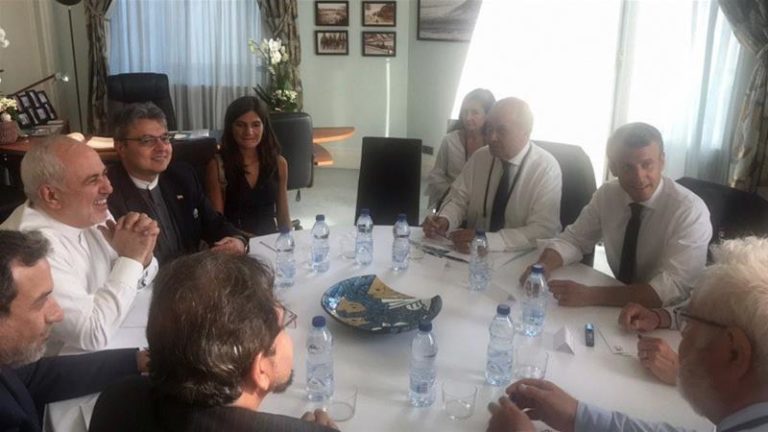
Iran’s Foreign Minister Javad Zarif (L) held talks in Biarritz on Sunday Aug. 25, 2019 with France’s President Macron (R) and Foreign Minister Jean-Yves Le Drian.
By M. K. BHADRAKUMAR | Indian Punchline | August 29, 2019
From all accounts, Tehran is struggling to cope with the startling news in the weekend from the G7 summit at Biarritz that a meeting between the presidents of the US and Iran is to be expected in the “coming weeks”.
The cautiously optimistic tone struck by the French President Emmanuel Macron and the conspicuously positive attitude adopted by President Trump along with the fact that the Iranian Foreign Minister Javad Zarif was actually present at Biarritz (with the prior knowledge and tacit concurrence of POTUS) — all these signalled that France’s back-to-back peace initiatives in the recent weeks with Washington and Tehran have come to a defining moment.
From Biarritz, Zarif took off for Tehran ostensibly to change planes for an onward journey to China as part of a previously scheduled Asian tour. Presumably, he briefed Rouhani on what transpired at Biarritz. Zarif is still on the Asian tour — China, Japan, Malaysia, etc., which are, interestingly, major buyers of Iranian oil.
If the Biarritz formula gains traction, these Asian countries have a key role to play in generating income for Iran out of oil sales, which apparently would incentivise Tehran to get into negotiations with the US.
En route to Beijing, Zarif tweeted, “Iran’s active diplomacy in pursuit of constructive engagement continues. Road ahead is difficult. But worth trying.” China’s foreign minister Wang Yi also spoke to Emmanuel Bonne, diplomatic adviser to French President Emmanuel Macron, by telephone on Monday. Bonne said France wanted to coordinate and cooperate with China to ease tensions over Iran and to maintain the 2015 nuclear deal, according to a report by official Chinese news agency Xinhua.
The initial reaction from Tehran at the level of Rouhani also suggested that he may be open to the idea of meeting Trump. Notably, Rouhani said on Monday, “I believe we should use any tool to protect our country’s national interests. If I think that meeting someone helps solve the people’s problems, I will not hesitate. The principle is our national interests.”
Two days later, however, Rouhani’s Chief of Staff and key aide Mahmoud Vaezi, who is an influential figure in the foreign policy establishment, conspicuously moderated what the president had said. Speaking to reporters in Tehran on Wednesday, Vaezi said any meeting with the US officials will solve no problem and the US must come back to the P5+1 negotiation table and respect its commitments to the Joint Comprehensive Plan of Action.
Vaezi didn’t altogether reject the idea of a Rouhani-Trump meeting, but added a template that the negotiations must also involve other guarantor states — E3, Russia and China. On the other hand, an Iranian economic delegation is proceeding to France next week. It could be that Tehran is strengthening its bargaining chip as well as insulating itself from the risk of engaging an interlocutor such as Trump who is fickle-minded, lacks consistency and has no coherent policies — and, above all, is surrounded by a team that includes notorious anti-Iran hawks, especially the National Security Advisor John Bolton.
Meanwhile, we see a significant hardening of Tehran’s stance in an interview with the state TV given by the Iranian Deputy Foreign Minister for Political Affairs Seyed Abbas Araqchi. Araqchi simply ruled out any negotiations with Washington so long as the sanctions remained in place.
In his words, “We are only talking with the European countries over our specific 11 demands (based on the JCPOA) and we will not negotiate with the US.” Vaezi’s remarks must be taken seriously, as he was one of the key negotiators of the 2015 nuclear deal and is an authoritative voice. Vaezi underlined that that no country would accept to enter negotiations while being under “maximum pressure” because doing so would mean “surrender”.
The offer held out in Biarritz appears to be simply not good enough for Tehran. Why should Tehran “surrender” after successfully countering the US’ regime change agenda and “maximum pressure” strategy and while the US has failed to reach the objectives behind its unilateral move to abandon the 2015 nuclear deal?
On Wednesday, Iran’s top military commander Chief of Staff of the Iranian Armed Forces Major General Mohammad Hossein Baqeri pointedly reminded everyone that it has been the country’s deterrence power that effectively stopped the US from going ahead with its plans to wage a war against Iran.
Quite obviously, a lot of churning has been going on within the top echelons of the Iranian establishment, which involve multiple agencies at an institutional level and even factions that would have congruent political interests or different priorities at any given time. The influential Majlis has not voiced an opinion. The bottom line is that all power centres would be waiting for the Supreme Leader Ayatollah Ali Khamenei to speak publicly.
Iran tourist arrivals neared 8 million in early 2019: Tourism chief
Press TV – August 26, 2019
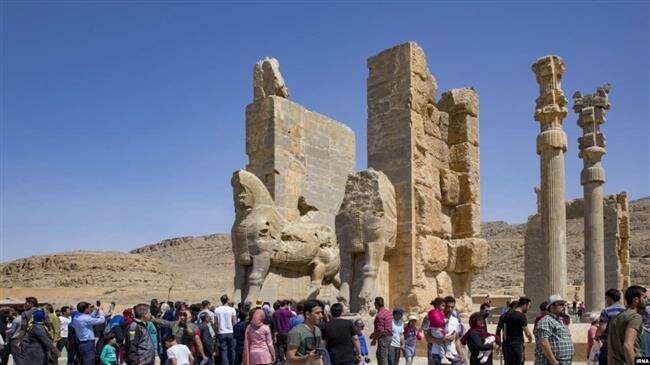
Head of Iran’s government department on tourism says around eight million foreigners visited the country in the last Iranian calendar year ending in March 2019.
“Some 7.8 million foreign tourists arrived in the country last year,” said Ali Asghar Mounessan, adding that the figure shows a 40-percent increase compared to the previous year.
Mounessan, who heads the Cultural Heritage, Handicrafts and Tourism Organization of Iran (ICHTO), said each tourists coming to the country spends an average sum of $1,400 during his stay, adding that almost all the money earned from tourists should be viewed as pure income as investment has been very low compared to the revenues generated in the sector.
He said the boom in tourism arrivals and revenues have come despite sanctions imposed by the United States in the past year, adding that major accommodation places across the country have been booked up for months to come.
Mounessan, a deputy president whose department is planned to be turned into a ministry in the coming months, said the government would double the budget earmarked to the tourism and handicraft management as the sectors keep attracting massive foreign currency into the country.
The official also said that Iran eyes $2 billion worth of exports of handicraft, saying that all provinces across the country had huge potentials that could be used to meet the target.
Mounessan said the decision to turn the ICHTO to a ministry would also allow the government to have a better policy for protection of historic monuments and artifacts existing across the country, saying that would further boost arrivals of the tourists who are mainly interested in visiting Iran’s cultural heritage.
US praises sanctions for killing Iran’s economy, then blames Tehran for people’s suffering
RT | August 20, 2019
The US State Department can’t seem to make up its mind about the cause of Iran’s economic woes, claiming Tehran’s “Marxist economy” is to blame even as it celebrates the devastation US sanctions have wrought on the country.
Speaking to reporters in New York on Tuesday, US special envoy for Iran Brian Hook assailed the Islamic Republic, demanding an end to its “lethal assistance…to terrorist organizations,” and running down a list of economy-ruining American sanctions currently imposed on the country.
“We have effectively zeroed-out Iran’s export of oil,” Hook said. “We have sanctioned Iran’s export of petro-chemicals, industrial metals, precious metals.”
“We have collapsed foreign direct investment. We have seen significant asset flight leaving the country. Iran is in a recession. Inflation is creeping up near 50 percent.”
However, Hook went on, it would be wrong to suggest that Washington is behind Iranian people’s struggles – despite having just argued precisely that. Instead, the fault was with Iran’s “Marxist economy” and ideological fervor, the envoy said. Sanctions? What sanctions?
Secretary of State Mike Pompeo also weighed in on the effects of US sanctions on Tuesday, but was more willing to take credit for their ruinous effects on Iran’s oil-dependent economy. Pompeo bragged to MSNBC that the sanctions continue to remove 2.7 million barrels of Iranian oil from the global market on a daily basis.
Unlike oil, Washington insists its sanctions do not target Iran’s healthcare system. In a propaganda video created by the State Department last month and addressed to the Iranian people, Hook claimed the idea was a “myth” pushed by the government. That is not to say the sanctions are not having a devastating effect, however. A recent report by Abbas Kebriaeezadeh, professor of pharmacology at the Tehran University of Medical Sciences, found that US sanctions “are killing cancer patients in Iran” indirectly, creating dire drug shortages and skyrocketing prices.
Tension between Iran and the United States has soared in recent months, with US sanctions ratcheted back up after US President Donald Trump abrogated Washington’s part of a nuclear pact signed between Iran and world powers in 2015. The US sought to pin on Iran a series of suspicious attacks on commercial shipping in the Persian Gulf earlier this summer, while the shootdown of an American spy drone over Iranian airspace in June nearly triggered a US military response. Washington has since deployed a veritable arsenal to Iran’s doorstep – purely for ‘defensive’ reasons, of course.
Featured Video
Bombing Hitler’s Hometown
or go to
Aletho News Archives – Video-Images
From the Archives
The Biggest Threat to Peace in Middle East
By Dr. Elias Akleh* | Sabbah Report | May 24, 2010
A build up of heightened tension in the Middle East is escalating in the last few weeks. American and Israeli postures towards Lebanon, Syria, and Iran have become more threatening. Listening to speeches of political leaders one hears talks only about war not peace. Iranians and Israelis are continuously training hard for a possible showdown. Both sides are conducting extensive war games every month. This led Syrians to claim that Israel is preparing for a soon-to-come another war. The Jordanians also are warning that current stalemate of the peace process is an indication of a war breaking out this summer. The Russian President and his army chief hinted, a few months ago, that the US and Israel were planning for an attack on Iran.
Indeed Iran is, as it has been for last few years, the target of most of the threats and accusations of supporting terrorism. Escalating incitement against Iran the American Defense Department sent last month (April) to Congress a report on Iran’s military claiming Iran could develop intercontinental ballistic missiles capable of reaching the US by 2015.
Ignoring the fact that N. Korea, India, Pakistan, and Israel are proven to have nuclear weapons while Iran does not, the US Secretary of State Hillary Clinton chose in her speech, to the nuclear Non-Proliferation Treaty review conference at the UN, to focus on Iran’s alleged nuclear ambitions putting the whole world at risk as she put it. According to Clinton Iran’s acquisition of nuclear weapons, rather than Israel’s more than 200 nuclear bombs, is destabilizing the Middle East. She called on the world’s nations to rally around US efforts to hold Iran, not other nuclear countries, to account.
The accusation that Usama Bin Laden is living comfortably in Iran had received a boost after the broadcast of a documentary called “Feathered Cocaine”. This echoed the June 2003 claims of the Italian newspaper Corre de la Sierra that Bin Laden was in Iran according to some intelligence report, and according to Richard Miniter’s book “Shadow War”. … continue
Blog Roll
 Aletho News
- Bombing Hitler’s Hometown
- German journalist threatened with homelessness as German court upholds EU sanctions in landmark free speech case
- US Tells Allies That Ukraine-Bound Arms Could be Sent to Middle East
- Organized terrorism: Iran condemns killing of its diplomats in Lebanon
- Why could Gaza enter the regional war?
- Hamas official rejects Mladenov Plan linking disarmament to Gaza reconstruction
- Two Primary Elections for the Soul of ‘America First’
- Japan Clings to US Vassalage Despite Energy Crunch Caused By Iran War
- US Seeks Control Over Global Energy Infrastructure – Kremlin
- US senators target Orban government for standing up to Zelensky
- If Americans Knew
- Researchers at Human Rights Watch Resign Over Blocked Report on Palestinian Refugee Return
- Jewish Groups Are Backing a War Americans Don’t Want
- Eric Fingerhut Thinks He’s the President of the Jews
- Top Jewish Philanthropists, Rabbis Urge Israeli President to Take Action Against ‘Jewish Extremists’
- Don’t Be Fooled. Zionist Leaders Have Always Wanted to Control Southern Lebanon
- Israel’s widespread use of torture is a core element of its genocide against the Palestinian people
- In Israel’s War on Iran, Many Middle East US Bases Rendered “All But Uninhabitable”
- ‘Burn the lawn’: Israel pursues ‘Rafah model’ in southern Lebanon
- A genocide here, an amputation there
- Reports: Iran mobilizing 1M fighters, Israel-US run low on ammo, Israeli army faces shortage – Not a ceasefire Day 168
- No Tricks Zone
- Devastating Assessment Of Comirnaty Vaccine By Former Senior Pfizer Europe Toxicologist
- New Study: CO2 Is ‘Effectively Negligible’ As An Explanatory Climate Change Factor Since 2000
- Former Pfizer Toxicologist Dr. Helmut Sterz Tells Bundestag Hearing Pfizer Vaccine Should Have Never Been Approved
- Energy Expert: Germany’s Nuclear Phaseout Was A “500 Billion Euro Mistake”
- New Research: South Australia’s Mid-Holocene Sea Surface Temperatures Were 4°C Warmer Than Today
- Storing Green Energy To Last Germany 10 Days Would Require A 60-Million Tonne Battery
- New Studies: UK Sea Levels Were 4 Meters Higher Than Today During The Mid-Holocene
- Destructive Green New Deal: German Energy And Metal Group Warns Of Drastic Crisis
- New Study Documents A 20-Year Pause In Arctic Sea Ice Decline – Driven By Internal Variability
- Wake-up Call: Survey Shows Majority Of Germans Now Favor Postponing Climate Targets!
 Aletho News