Trump threatens Turkey with sanctions. What if he’s serious?
By M K Bhadrakumar | Indian Punchline | July 27, 2018
The frequency with which US President Donald Trump holds out threats to other countries is such that he is no longer being taken seriously. The list of countries threatened by Trump so far includes North Korea, Germany, Canada, China, Venezuela, Pakistan, Syria, Iran and Turkey.
In all fairness, Trump makes no distinction between enemies, adversaries, friends or allies. Turkey, a NATO ally, holds a record of sorts as the country most threatened by the Trump administration. In separate tweets on Thursday, Trump and Vice-President Mike Pence gave an ultimatum to Turkey that unless Andrew Brunson, an American evangelical pastor of a small Protestant church in western Turkey, is released from detention immediately, Ankara should be “prepared to face the consequences” in the form of “significant sanctions.”
For the benefit of the uninitiated, Brunson who has been living in Turkey for 23 years was arrested in the aftermath of the failed 2016 coup attempt to overthrow Erdogan, charged with spying and involvement in the failed coup. The Turkish government had probably hoped for a tradeoff – Brunson in exchange for the Islamist preacher Fetullah Gulen who is living in Pennsylvania whom Ankara regards as having masterminded the 2016 coup attempt to overthrow Erdogan. Ankara has been pressing Gulen’s extradition and Washington has been stonewalling. It’s a complicated case history, since Gulen has had links in the past with the CIA.
Turkey has shrugged off the latest threat from Trump and Pence. However, for Trump, Christian groups form a core constituency politically, and taking a tough stance on the high-profile Brunson case has endeared him to those groups. Dr. Ronnie Floyd, former president of the Southern Baptist Convention, recently made the following remark in praise of the White House effort: “I thank God we have an administration that cherishes the freedom of religion as our founders hoped we would.”
Trump’s latest threat puts Erdogan in a fix because releasing Brunson without a reciprocal move on Gulen’s extradition means a loss of face. Erdogan is acutely conscious of his strongman-image. He must be wondering whether Trump is serious about the ultimatum on Brunson’s release. Brinkmanship comes naturally to Trump. Indeed, with Trump one really doesn’t know what happens next.
But Erdogan can be more than a match for Trump in the ‘art of the deal’. At a meeting today with Russian President Vladimir Putin on the sidelines of the BRICS summit in South Africa, Erdogan added disdainfully that Trump’s real grouse in giving such an ultimatum yesterday could be that Turkey has drawn close to Russia in the recent times. That is a spin, of course. But then, Erdogan is also hoping to extract a big concession from Putin – deferment of the planned military operation to liberate the northwestern Syrian province of Idlib on the Turkish border from Ankara’s proxy groups. Turkey is keen to retain Idlib as its zone of influence.
Does Putin feel impressed that US-Turkish ties are deteriorating? There are no easy answers here. Nonetheless, Erdogan sees no harm in playing Trump against Putin. After all, who knows, Putin may hold back on the assault to liberate Idlib…
Yet, the chances are that this time around, Trump probably intends to carry out his ultimatum to impose sanctions on Turkey. The point is, US patience with Turkey seems to be wearing thin. Turkey is no longer a ‘swing’ state in the US’ Middle East strategies, given the poor state of Turkish-Israeli relations, Erdogan’s ‘pivot to Russia’ and the overall trust deficit in Turkish-American relationship. Erdogan snubbed the US threat of sanctions and upheld his decision to purchase S-400 missile defence system from Russia. Last week, Erdogan bluntly rejected the demarche by Washington that Turkey should cut back its oil imports from Iran.
Iran rejects Israeli claim of stealing nuclear data as ‘laughably absurd’
Press TV – July 19, 2018
Iran has dismissed as “laughably absurd” an Israel-fabricated scenario, in which the agents with the regime’s Mossad spy agency are claimed to have spirited away loads of “secret documents” on the country’s nuclear work from a site in southern Tehran.
Alireza Miryousefi, a spokesman for Iran’s diplomatic mission to the United Nations, was responding to recent reports by The New York Times and other news outlets about the details of Mossad’s purported operation near the Iranian capital in the rather Hollywood-style scenario.
The scenario was initially unveiled by Israeli Prime Minister Benjamin Netanyahu, who is widely known to have a penchant for theatrics. Netanyahu went live on television in late April for yet another dubious show against Iran and put on display what he claimed to be records from a secret warehouse in Tehran.
Netanyahu claimed Israeli agents had managed to break into the warehouse in an overnight raid and bring back “half a ton of the material” consisting of 55,000 pages and another 55,000 files on 183 CDs.
The Israel premier’s vaudeville — which came only days before the US announced its withdrawal from the 2015 multilateral nuclear deal with Iran — was meant to persuade the world that Iran has been lying about its nuclear program, without providing even a single piece of evidence.
The New York Times published an article on July 15, in which it elaborated on the purported Mossad operation, which it claimed lasted for over six hours.
Reacting to the report, Miryousefi once again rejected Israel’s claims in a statement and said, “It’s almost as if they are trying to see what outlandish claims they can get a Western audience to believe.”
“Iran has always been clear that creating indiscriminate weapons of mass destruction is against what we stand for as a country, and the notion that Iran would abandon any kind of sensitive information in some random warehouse in Tehran is laughably absurd,” he added.
Netanyahu’s April 30 show was so cheaply theatrical that it was quickly held up to ridicule inside Iran and abroad, with observers raising serious questions about the purported Mossad raid.
Back then, Iranian Foreign Minister Mohammad Javad Zarif called the Israeli premier “the boy who can’t stop crying wolf is at it again,” recalling a similar anti-Iran rant by Netanyahu at the UN General Assembly in 2012– during which he used a cartoon bomb in an attempt to portray the Islamic Republic as a threat.
Deputy Foreign Minister Abbas Araqchi also said that Netanyahu was playing a baseless childish and naive game against Iran.
The Israeli leader was back then involved in an intense lobbying campaign aimed at dissuading Washington and the other parties to the Iran deal from supporting the landmark agreement, officially dubbed the Joint Comprehensive Plan of Action (JCPOA).
Except in the US, Netanyahu’s claims, however, fell on deaf ears.
Reacting to the show hours later, the EU’s foreign policy chief, Federica Mogherini, said on May 1 that Netanyahu’s presentation failed to question Tehran’s compliance with the 2015 nuclear deal and that any such claims should solely be assessed by the International Atomic Energy Agency (IAEA).
The IAEA — which uses strict mechanisms to monitor the technical aspect of the JCPOA’s implementation — has repeatedly confirmed Iran’s full commitment to its side of the bargain.
The latest New York Times piece comes as Iran and its other parties in the deal — Russia, China, France, Britain plus Germany — are engaged in a diplomatic process aimed at working out ways to keep the JCPOA in place despite Washington’s pullout in May.
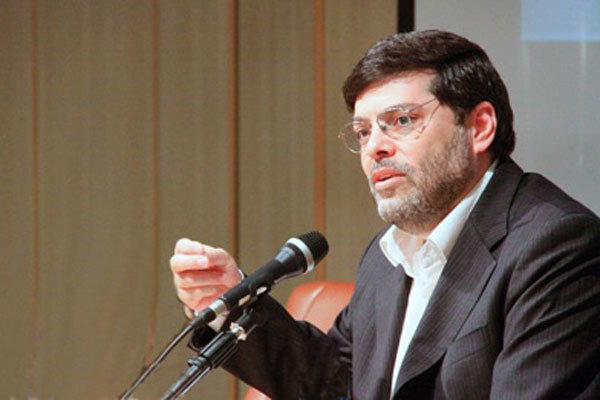
Dr. Mohammad Marandi: Israel, Saudi Arabia and the UAE Have Been Cooperating Closely for Many Decades Now
American Herald Tribune | July 13, 2018
Mohsen Abdelmoumen: What is the immediate impact on the Iranian people of the Trump administration’s exit from the Iran nuclear deal?
Dr. Mohammad Marandi: Obviously, it is going to have a short term negative impact. People are concerned about the effect it will have on the economy and Iranian currency has dropped significantly. However, I believe that in the midterm the economy will stabilize, and as Iran reorientates its economy, trading partners and strategic partnerships things will stabilize. In the long term, I think Iran will probably even benefit because the US will no longer have any leverage that it can use against the country and its people.
Are not the economic sanctions imposed by the Trump administration intended to provoke disturbances within the Iranian population in order to change the power in Iran?
Without a doubt. Actually, just recently in a speech in France to the MEK terrorist organization, a cult group which has killed 17 thousand Iranians through assassinations and bomb attacks and has also fought for Saddam Hussein, Rudy Giuliani, Trump’s lawyer and close friend, admitted that the disturbances in Iran are not spontaneous and that they are carried out by their people. That does not mean there are no ordinary people who protest here and there, but the foreign role is obvious and we can see it through the western, Israeli, and Saudi, funded Persian media outlets like BBC Persian and VOA among others that attempt to create tensions and fear among Iranians.
Do you think there is a special program to assassinate Iranian scientists as was the case with Iraqi scientists where some sources have spoken of the existence of a special CIA unit responsible for assassinating scientists?
I have no idea about that, but we do know that Mohammad bin Salman has said in public that he wants to take the war into Iran and after that we saw the terrorist attacks on Tehran and an increased number of attacks alongside the Pakistani-Iranian border as well as the border between Iran and Iraq Kurdistan.
What is the exact role of the Zionist entity of Israel and its services in the assassination of Iranian scientists?
Israeli intelligence and the MEK terrorist organization worked together in this regard. In addition, Western intelligence agencies have in the past passed on IAEA information on Iranian scientists to the Israelis thus helping them carry out a number of murders.
What do you think of the alliance between the Saudis and the Israelis? In your opinion, is it tactical or strategic?
The alliance between Israel, Saudi Arabia and the UAE among others is not new at all. They have been cooperating closely for many decades now, but these Arab regimes have always been afraid to make this alliance public. However, Trump is putting a lot of pressure on these regimes to come out of the closet, especially because he wants to impose his so called deal of the century on the Palestinian people in order to destroy the Palestinian nation.
In your opinion, can Europe play a role in maintaining the nuclear agreement?
It’s possible. However, I am skeptical about the EU’s intentions and I am even more skeptical about their ability to grow a backbone in face of persistent American violations of their sovereignty and threats against their businesses and citizens.
In your opinion, why is it that Israel that massacres the Palestinian people has never been subjected to sanctions?
I think it is widely known that the Israeli regime is allowed to implement apartheid policies, carry out ethnic cleansing and colonization, the bombing of neighboring countries, the killing of civilians, the arrest children, and the confiscation of land.Western countries will give them blanket support no matter what the regime does.
What is your analysis of the situation in Syria? Can we say that Daesh is defeated definitively or is it moving towards reorganization?
The extremist groups including Daesh that were supported by western intelligence services and regional client regimes have been severely weakened and the Syrian Arab army and government have gained the upper hand. But the war is not over, al-Qaeda and other extremist groups continue to get foreign support and Western countries and media outlets have been trying to give cover to these extremist groups by calling them “moderates” and “rebels”, whereas in reality their ideologies are very similar to ISIS.
What do you think of the position of Morocco that has just cut off its relations with Iran by accusing Hezbollah of having armed the Polisario Front? Don’t you think that this maneuver bears the signature of the Saudis, Israelis and Americans?
I think it is quite clear especially taking into account the timing of the accusations that the Saudis and probably countries like the US and the UAE are behind this. But I do not have any specific information.
Why do you think Westerners are silent, both the media and the political institutions, in the face of the carnage that Saudi Arabia is committing in Yemen?
It is because of Saudi oil wealth, and because the destruction of Yemen is in the interest of the Saudi and Israeli regimes. Therefore, Western governments and western media outlets will not do anything meaningful to prevent the massacres or starvation. This is just one example of many. They did the same thing in Libya, Syria, Iraq, Bahrain, and Afghanistan.
Interview realized by Mohsen Abdelmoumen
Who is Dr. Mohammad Marandi?
Born in 1966 in Richmond, Virginia, Mohammad Marandi is the son of Professor Alireza Marandi, a former Iranian Minister of Health and a former member of the Iranian Parliament. Mohammad Marandi lived until he was 13 in the United States before joining Iran. He is a political analyst and expert on American studies and postcolonial literature. Dr. Marandi is a graduate of the University of Tehran and the University of Birmingham where he received a PhD in English Literature. He teaches English Literature and Orientalism at the University of Tehran where he is head of the graduate program in North American Studies.
The Globalist Elite Fears Peace, Wants War
By Federico PIERACCINI | Strategic Culture Foundation | 13.07.2018
The announced meeting between Trump and Putin has already produced a good result by revealing the hypocrisy of the media and politicians. The meeting has been branded as the greatest danger to humanity, according to the Western globalist elite, because of the danger that “peace could break out between Russia and the United States”.
Sometimes reality is stranger than fiction. The following so stretches credulity that sources will have to be cited and exact quotations given to be believed.
A case in point is the following title: “Fears growing over the prospect of Trump ‘peace deal’ with Putin.” The Times does not here fear a military escalation in Ukraine, an armed clash in Syria, a false-flag poisoning in England, or a new Cold War. The Times does not fear a nuclear apocalypse, the end of humanity, the suffering of hundreds of millions of people. No, one of the most authoritative and respected broadsheets in the world is fearful of the prospect of peace! The Times is afraid that the heads of two nuclear-armed superpowers are able to talk to each other. The Times fears that Putin and Trump will be able to come to some kind of agreement that can help avert the danger of a global catastrophe. These are the times in which we live. And this is the type of media we deal with. The problem with The Times is that it forms public opinion in the worst possible way, confusing, deceiving, and disorienting its readers. It is not by accident the world in which we live is increasingly divorced from logic and rationality.
Even if the outcome of this meeting does not see any substantial progress, the most important thing to be achieved will be the dialogue between the two leaders and the opening of negotiation channels for both sides.
In The Times article, it is assumed that Trump and Putin want to reach an agreement regarding Europe. The insinuation is that Putin is manipulating Trump in order to destabilize Europe. For years now we have been inundated with such fabrications by the media on behalf of their editors and shareholders, all part of the deep state conglomerate. Facts have in fact proven that Putin has always desired a strong and united Europe, looking to integrate Europe into the Eurasian dream. Putin and Xi Jinping would like to see a European Union more resistant to American pressure and able to gain greater independence. The combination of mass migration and sanctions against Russia and Iran, which end up hurting Europeans, opens the way for alternative parties that are not necessarily willing to [obey] Washington’s marching orders.
Trump’s focus for the meeting will be to convince Putin to put even more pressure on Europe and Iran, perhaps in exchange for the recognition of Crimea and the ending of sanctions. For Putin and for Russia it is a strategic issue. While sanctions are bad, the top priority for Moscow remains the alliance with Iran, the need to further strengthen relations with European countries, and to defeat terrorism in Syria. Perhaps only a revision of the ABM treaty and the withdrawal of these weapons from Europe would be an interesting offer for Putin. However, reality shows us that the ABM treaty is a pillar of Washington’s military-industrial complex, and that it is also Eastern European countries that want such offensive and defensive systems in their own countries, seeing them as a deterrents against Russia. Are they victims of their own propaganda, or are billions of dollars pouring into their pockets? Either way, it does not really matter. The most important point for Moscow will be the withdrawal of the Aegis Ashore ABM systems as well as military ships with the same Aegis system. But this is not something that Trump will be able to negotiate with his military leaders. For the military-industrial complex, the ABM system, thanks to maintenance, innovation and direct or indirect commissions, is a gravy train that too many interests intend to keep riding.
From the Kremlin’s point of view, the removal of sanctions remains necessary for the restoration of normal relations with the West. But this would be difficult to achieve, given that Moscow would have little to offer Washington in exchange. The strategists at the Pentagon demand a withdrawal from Syria, an end to support for Donbass, and a cessation of relations with Iran. There is simply too much divergence to reach a common position. Moreover, Europe’s sanctions against Russia benefit Washington, as they hurt the Europeans and thereby undermine what is a major trading competitor to the US. The US withdrawal from the Joint Comprehensive Plan of Action (JCPOA) can be looked at in the same light, blocking US allies from doing business with Iran.
Putin will keep faith with his commitments to Syria and with his allies, unwilling to betray his word even for the recognition of Crimea. On the other hand, as already mentioned, the priority remains the removal of the ABM; and while Crimea is already under the control of the Russian Federation, Syria remains an unstable territory that risks propelling Islamist terrorism to Russia’s soft underbelly in the Caucasus. For Moscow, involvement in Syria has always been a matter of national security, and this certainly remains the same now, even with Donald Trump’s unrealistic offers.
It should be kept in mind that Putin is aiming for a medium- to long-term strategy in the Middle East, where Iran, Syria and the entire Shiite arc serves to counter Saudi and Israeli aggression and hegemony. This strange alliance has emerged as the only way to deter war and dial down the heat in the region, because the crazy actions from Netanyahu or Mohammad bin Salman are deterred by a strong Iranian military. Preventing a confrontation between Iran and Saudis/Israelis also means not making Tehran appear weak or isolated. Such considerations seem beyond the strategists in Washington, let alone in Tel Aviv or Riyadh.
While it is difficult to achieve a positive outcome from the meeting between Trump and Putin, it is important that there is a meeting in the first place, contrary to what The Times thinks. The media and the conglomerate of power that revolves around the US deep state fear diplomacy in particular. The same narrative that was proclaimed weeks before and after the meeting between Trump and Kim Jong-un is being repeated with regard to Trump’s meeting with Putin.
Washington bases its power on force, both economic and military. But this power also rests on the posture assumed and image projected. The United States and its deep state considers negotiating with opponents to be wrong and counterproductive. They consider dialogue to be synonymous with weakness, and any concession is interpreted as surrender. This result of 70 years of American exceptionalism and 30 years of Unipolarity, has allowed the US the ability to decide unilaterally the fate of others.
Today, in a multipolar world, the dynamics are different and therefore more complex. You cannot always employ a zero-sum mentality, as The Times does. The rest of the world recognizes that a dialogue between Putin and Trump is something positive, but we must not forget that, as in Korea, if diplomacy does not bring significant progress, then the hawks surrounding Trump will again be in the ascendant. The tasks for Rouhani, Putin and Kim Jong-un are complex and quite different from each other, but they share in common the belief that dialogue is the only way to avoid a catastrophic war. But apparently, peace is not the best possible result for everyone.
US targets Iran’s tourism; airlines halt service
Press TV – July 10, 2018
The US government says it has sanctioned a Malaysia-based tourism agent for Iranian private airline Mahan Air which is already under American sanctions.
The blockade comes as the US prepares to unleash “the strongest sanctions in history” on Iran after President Donald Trump decided to withdraw Washington from a landmark nuclear deal with the Islamic Republic.
“As a result of today’s action, all property and interests in property of Mahan Travel and Tourism Sdn Bhd that are or come within US jurisdiction are blocked,” the US Treasury Department said in a statement on Monday.
The first group of unilateral US sanctions on Iran’s automotive sector, gold trade, and other industries will “snap back” on August 4. Further sanctions on oil and transactions with the Central Bank of Iran will come into effect November 6.
Trump has given companies 180 days to wind down their businesses in Iran or have their trade severed with the US.
Dutch airline KLM said on Saturday it had decided to suspend its direct flights to Tehran “for commercial reasons.”
“As a result of the negative results and financial outlook for the Tehran operation, the last flight will take off from Amsterdam on 22 September 2018 and land at Schiphol on 23 September,” it said in a short statement on its website.
KLM resumed flights to Tehran in 2016 when the nuclear agreement signed between Iran and world countries came into effect. The Dutch airline had ceased its Iran operations in 2013 after the West intensified sanctions on the Islamic Republic.
Austrian Airlines also announced on Friday that it will stop service to the Iranian cities of Isfahan and Shiraz, starting in September, but will continue its flights to Tehran.
“The underlying reason for these changes in the route network is a realignment of the airline’s portfolio,” a statement said on the official website of Austrian Airlines which is owned by the German airline company Lufthansa.
Austrian Airlines announced its expansion of flights to Shiraz and Isfahan in 2015, 2016 and 2017.
The exodus of European companies is a blow to their governments’ efforts to keep Iran in the nuclear agreement.
Europe has pledged to put together an economic package for Iran so that the country benefits from staying in the deal but France said on Friday the offer was unlikely to come by before November.
Germany’s Foreign Minister Heiko Maas also said the Europeans would not be able to fully compensate for companies leaving Iran due to new US sanctions.
Germany studying request to return €300mn to Iran
Press TV -July 9, 2018
The German government is reportedly studying a request by Iran to withdraw €300 million from bank accounts held in Germany and transfer the cash to the Islamic Republic.
Unnamed officials in Berlin were quoted by Bild newspaper as saying that Tehran was seeking withdraw the funds from the Europaeisch-Iranische Handelsbank AG (eihbank) in order to satisfy part of its foreign currency needs when fresh US sanctions against its financial sector take effect.
The report added that Iran had told the German Financial Supervisory Authority (BaFin) that it needed the cash from the accounts “to pass on to Iranian citizens who require cash while travelling abroad, given their inability to access recognized credit cards”.
BaFin was now reviewing the request, which had been briefed to senior officials in the chancellery, foreign ministry and finance ministry, the newspaper added in its report as quoted by Reuters.
It further highlighted allegations by the US and Israel that Iran would try to use the cash for purposes other than satisfying its domestic needs. However, it cited unnamed German officials as saying that they had no indications of such plans.
In May, US President Donald Trump announced that he would pull America out of a 2015 nuclear agreement with Iran and re-impose the sanctions that the deal had envisaged to be lifted.
He has already emphasized that the sanctions which would be imposed on Iran would be “at the highest level”.
The sanctions would include a universal ban on Iran over buying or acquiring US dollars as well as restrictions over purchases of crude oil from the country and investing in its oil sector projects.
French shipping firm pulls out of Iran due to US sanctions threat
MEMO | July 7, 2018
French shipping group CMA CGM has decided to pull out of Iran following the Trump administration’s decision to renew sanctions on companies operating in the country, its chief executive said on Saturday.
Some other big shipping companies like A.P. Moller-Maersk have already said they would halt business ahead of a reimposition of sanctions following the United States’ decision to pull out of the 2015 Iran nuclear accord.
“Due to the Trump administration, we have decided to end our service for Iran,” CMA CGM chief Rodolphe Saade said during an economic conference in the southern French city of Aix-en-Provence.
“Our Chinese competitors are hesitating a little, so maybe they have a different relationship with Trump, but we apply the rules,” Saade said.
He added that his company’s cooperation agreement with local Iranian partner IRISL had been suspended and that the company did not want to fall foul of the rules given their large presence in the United States.
He also said that the company had so far not seen an impact of trade tensions between China and the United States on shipping volumes, but was making preparations with a close eye on China and southeast Asia in case the situation deteriorated.
In May, the European Union announced measures that would enable it to avoid US sanctions on Iran or possibly block them. The measures are designed to avoid tens of billions of dollars in losses for European companies, which invested in Iran in the wake of the agreement, signed in 2015. However, this hasn’t stopped many large European companies and insitutions from bowing to US pressure, including the EU’s own bank.
Giraldi: US Sanctions on China Over Trade With Iran May Trigger Chaos
Sputnik – 07.07.2018
WASHINGTON – Any move by US President Donald Trump to threaten economic sanctions on China for its trade with Iran could set off global chaos as support for such moves among US allies in Europe evaporates, former CIA officer Phil Giraldi told Sputnik.
“It will be interesting to see what happens when Washington tries to sanction the Central Bank of China over business dealings with Iran — utter chaos on top of the already existing trade war!” Giraldi said on Friday.
The participants in the Joint Comprehensive Plan of Action (JCPOA), also known as the Iran nuclear agreement, confirmed on Friday at the meeting of the JCPOA Joint Commission in Vienna the need to continue the full and effective implementation of the agreement.
The JCPOA participants including the United Kingdom, France and Germany affirmed their support for continued export of Iran’s oil and gas condensate, petroleum products and petrochemicals and for further trade with and investment in Iran, their joint statement said.
However, Giraldi cautioned that British Prime Minister Theresa May, German Chancellor Angela Merkel and French President Emmanuel Macron could face major pressure from Washington to scrap their ties to Iran, and that they might surrender to it.
“I think this is admirable, but it will come up against the hard reality of US sanctions if Trump pushes the issue, which I think he will do based on recent statements by [presidential adviser Rudy] Giuliani and [Secretary of State Mike] Pompeo that nothing short of regime change for Iran is envisioned by the White House,” he said.
Faced with such pressure, May, Merkel and Macron might yield to Washington’s demands, Giraldi advised.
“The Western Europeans will likely crumble because the threat of blocking them out of the US financial system would be too hard a pill to swallow if Trump really wants to make them squirm,” he said.
Giraldi pointed out he was concerned that the current major European leaders slacked the determination to stand up to trump for their nations’ best interests.
“Of course, the US economy will also suffer greatly, which will be a card they can play, but I do not see leaders of the caliber of Merkel, May and Macron fighting very hard on behalf of what they know to be right and correct relating to Iran,” he said.
Trump was listening to extremists on the Iran issue and was unlikely to change direction, Giraldi assessed.
“It comes down to Trump and his God-awful advisers wanting something much more than the Europeans do so they will give in. Russia and China will, of course, do the right thing,” he said.
Philip Giraldi is executive director of the Council for the National Interest, a group that advocates more even-handed US government policies in the Middle East.
Imperial Hubris Redefined
By Philip M. GIRALDI | Strategic Culture Foundation | 05.07.2018
There have been two developments in the past month that illustrate clearly what is wrong with the White House’s perception of America’s place in the world. Going far beyond the oft-repeated nonsense that the United States is somehow the “leader of the free world,” the Trump Administration has taken several positions that sustain the bizarre view that such leadership can only be exercised if the United States is completely dominant in all relevant areas. Beyond that, Washington is now also asserting that those who do not go along with the charade and abide by the rules laid down will be subject to punishment to force compliance.
The first issue has to do with outer space. There is an international treaty agreed to in 1967, the so-called Outer Space Treaty, which has been signed by 107 countries including most Europeans, Russia, China and the United States. Conventional weapons or electronic systems designed to protect orbiting satellites from attack are permitted over where the atmosphere ends 62 miles above the Earth’s surface, but outer space is supposed to be free to all. The treaty also forbids any colonization or appropriation of the moon or planets by any national authority.
President Donald Trump apparently is not familiar with the treaty. Speaking before an audience at the National Space Council on June 18th, he said that he was, on his own presidential authority “… hereby directing the Department of Defense and Pentagon to immediately begin the process necessary to establish a space force as the sixth branch of the armed forces… our destiny, beyond the Earth, is not only a matter of national identity, but a matter of national security. It is not enough to merely have an American presence in space. We must have American dominance in space.”
The idea that the US would seek to have a major presence in space would probably surprise no one, but Trump is saying something quite different. He is creating a military command for space, the moon and the planets and is intent on using that to support an offensive capability that provides dominance in those areas. As no one in his right mind would allow Washington to militarily dominate outer space based on its track record of irresponsible leadership since 9/11, the Trump proposal should be and will be opposed by virtually the entire world.
A fantasy of space dominance is a symptom of a governing class that cannot distinguish between what is important and what is not. It is rooted in a nation that has been constantly fed fear since 9/11 even though it is not threatened. Iran, the second issue surfaced recently, is part of that alleged threat matrix, with the United States and its barking dog Israel repeatedly claiming that the country is both a terrorism supporter and is involved in a secret nuclear weapons program. Both claims are basically false.
Trump has complied with Israel’s demands to withdraw from the Joint Comprehensive Plan of Action (JCPOA) restricting Iran’s nuclear program even though Tehran was in complete compliance. On June 26th, the White House announced Iran’s punishment, declaring that it would sanction anyone buying Iranian oil, starting on November 4th. The “zero tolerance” global Iranian oil ban deliberately seeks to devastate most sectors of the country’s economy to force it to comply with Israeli, Saudi and US demands that it should effectively disarm.
The threat of sanctions is blatant bullying as the United Nations and all other signatories of the JCPOA continue to support the agreement and have no reason to punish Iran, but there is also an appreciation that sanctions would include being blocked from US financial markets, meaning that the warning must be taken seriously. There are reports that a number of European and Asia refiners and their financial backers are already moving to cut purchases and exit the Iran market well before November.
But there also has been some pushback. Turkey is refusing to go along with the American demand and it is unlikely that China, Russia and India will comply, even if threatened with sanctions. If the European Community were to unite and develop a backbone to take a stand against submitting to US pressure it might actually force Washington to save face by issuing waivers to mitigate the impact of its demand.
There is no rational US interest that compels a hubristic American government to establish a space military or to create a global sanction against Iran, but it is clear that the Trump Administration does not care much for genuine interests as it huffs and puffs to show its power and determination. It is time for the rest of the world to wake up to the danger posed by Washington and mobilize to stand up against it.
Japan PM Abe cancels trip to Iran amid US pressure
RT | July 4, 2018
Japanese Prime Minister Shinzo Abe has reportedly abandoned plans to visit Iran later this month, amid increasing pressure from Washington aimed at isolating Tehran politically and economically.
According to Japanese media reports, Tokyo recently informed Tehran that Abe was cancelling talks with President Hassan Rouhani scheduled for mid-July. Abe’s trip would have marked the first time a Japanese leader had visited Tehran in 40 years.
Washington’s growing hostility towards Iran is believed to have played a deciding factor in the sudden change of travel plans. Openly declaring its desire to cut off Tehran’s oil revenues, the Trump administration is now pursuing a policy of economic strangulation, urging Japan and its other allies to stop buying Iranian crude oil entirely by November 4.
Japan has so far refused to comply with Washington’s demands, although Iranian crude currently only accounts for roughly five percent of the country’s total oil imports. It’s likely that Washington’s request to increase political and economic pressure on Tehran will be a major topic of discussion when US Secretary of State Mike Pompeo visits Tokyo for a two-day visit this weekend.
According to government sources who spoke to the Japan Times, Tokyo was still exploring the possibility of Abe visiting Iran, although much would depend on the state of relations between Washington and Tehran.
Still, there’s a chance that Japan will resist Trump’s strong-arming. A spokesman for the Japanese prime minister’s office told Reuters that Abe’s travel plans in the Middle East – where he is scheduled to visit Saudi Arabia and Egypt following stops in Brussels and Paris beginning July 11 – had not been finalized yet.
Trump was condemned by Washington’s allies after unilaterally withdrawing from the Iran nuclear deal in May. Soon after, he announced tough new sanctions targeting the country. The move has jeopardized the future of the landmark 2015 accord –which lifts international sanctions on Tehran in exchange for placing strict controls on the country’s nuclear capabilities. Europe has strenuously objected to the draconian measures, arguing that its firms would lose billions invested in Iran following the removal of sanctions in 2015.
Featured Video
Bombing Hitler’s Hometown
or go to
Aletho News Archives – Video-Images
From the Archives
‘Conspiracy Theory’ Now Fact: Greater Israel Has Arrived
By Kit Klarenberg | Mint Press News | January 28, 2025
Ever since Tel Aviv’s 1948 creation, much has been said and written about ‘Greater Israel’ – the notion Zionism’s ultimate end goal is the forcible annexation and ethnic cleansing of vast swaths of Arab and Muslim lands for Jewish settlement, based on Biblical claims this territory was promised to Jews by God. The mainstream media typically dismisses this concept as antisemitic conspiracy theory, or at most the fringe fantasy of a minuscule handful of extremist Israelis.
In reality … continue
Blog Roll
 Aletho News
- Trump admits Iran hit USS Ford carrier: ‘We ran for our lives’
- Battle for Hungary: EU attacks on Orban are a sign of worse things to come
- Iraqi resistance conducts drone strike on US-run base in Syria
- Failing to Defeat Hezbollah, Israel & US Pressure Syria’s Ahmed al-Sharaa to Join War
- US-Israeli war on Iran drives global fertilizer prices up 40%
- Hezbollah’s Surprise Weapons Redefine Ground Battle with Israel
- Yemen joins fight against US, Israel by firing missiles at occupied territories
- Seizing the Kharg: Washington’s path to defeat in the Persian Gulf
- Iran reports 500 US casualties in strikes on covert US military sites
- Pro-Israel terrorist arrested before assassination of pro-Palestinian activist
- If Americans Knew
- Over 300 US service members wounded, majority have brain injuries – Not a ceasefire Day 169
- Researchers at Human Rights Watch Resign Over Blocked Report on Palestinian Refugee Return
- Jewish Groups Are Backing a War Americans Don’t Want
- Eric Fingerhut Thinks He’s the President of the Jews
- Top Jewish Philanthropists, Rabbis Urge Israeli President to Take Action Against ‘Jewish Extremists’
- Don’t Be Fooled. Zionist Leaders Have Always Wanted to Control Southern Lebanon
- Israel’s widespread use of torture is a core element of its genocide against the Palestinian people
- In Israel’s War on Iran, Many Middle East US Bases Rendered “All But Uninhabitable”
- ‘Burn the lawn’: Israel pursues ‘Rafah model’ in southern Lebanon
- A genocide here, an amputation there
- No Tricks Zone
- Devastating Assessment Of Comirnaty Vaccine By Former Senior Pfizer Europe Toxicologist
- New Study: CO2 Is ‘Effectively Negligible’ As An Explanatory Climate Change Factor Since 2000
- Former Pfizer Toxicologist Dr. Helmut Sterz Tells Bundestag Hearing Pfizer Vaccine Should Have Never Been Approved
- Energy Expert: Germany’s Nuclear Phaseout Was A “500 Billion Euro Mistake”
- New Research: South Australia’s Mid-Holocene Sea Surface Temperatures Were 4°C Warmer Than Today
- Storing Green Energy To Last Germany 10 Days Would Require A 60-Million Tonne Battery
- New Studies: UK Sea Levels Were 4 Meters Higher Than Today During The Mid-Holocene
- Destructive Green New Deal: German Energy And Metal Group Warns Of Drastic Crisis
- New Study Documents A 20-Year Pause In Arctic Sea Ice Decline – Driven By Internal Variability
- Wake-up Call: Survey Shows Majority Of Germans Now Favor Postponing Climate Targets!
 Aletho News