The knife in Iran’s back: Trump opens door to chaos
By Vijay Prashad | Asia Times | August 9, 2018
On Tuesday night, Iranian President Hassan Rouhani went on television to talk about the reinstatement of sanctions by the United States against his country. He prepared the country for more privations as a result of the sanctions. Responding to US President Donald Trump’s offer of a meeting, Rouhani said pointedly, “If you stab someone with a knife and then say you want to talk, the first thing you have to do is to remove the knife.”
It is clear to everyone outside the US government that Iran has honored its side of the 2015 nuclear deal that it made with the governments of the five permanent members of the United Nations Security Council (the US, the UK, France, China and Russia) as well as the European Union. In fact, quite starkly, EU foreign-policy chief Federica Mogherini said, “We are encouraging small and medium enterprises in particular to increase business with and in Iran as part of something that for us is a security priority.”
In other words, Mogherini is asking companies to resist Trump’s policy direction. What she is saying, and what Rouhani said, is that it is the United States that has violated the nuclear deal, and so no one needs to honor the US sanctions that have been reinstated.
Mogherini pointed to “small and medium enterprises” because these would not be the kind of multinational corporations with interests in the United States. But it is more than small and medium-sized enterprises that are going to challenge the US sanctions. China, Russia and Turkey have already indicated that they will not buckle under US pressure.
China
“China’s lawful rights should be protected,” said the Chinese government. China has no incentive to follow the new US position.
First, China imports about US$15 billion worth of oil from Iran each year and expects to increase its purchases next year. State energy companies such as China National Petroleum Corporation (CNPC) and Sinopec have invested billions of dollars in Iran.
CNPC and Sinopec also have shares in Iran’s major oil and gas fields – CNPC has a 30% stake in the South Pars gas field and has investments in the North Azadegan oilfield, while Sinopec has invested $2 billion in the Yadavan oilfield.
China’s Export-Import Bank, meanwhile, has financed many large projects in Iran, including the electrification of the Tehran-Mashhad railway. Other Chinese investment projects include the Tehran metro and the Tehran-Isfahan train. These projects are worth tens of billions of dollars.
Second, China is in the midst of a nasty trade war with the United States. In late August, Trump’s government slapped 25% tariffs on $16 billion worth of Chinese imports into the United States. China responded with its own tariffs, with its Commerce Ministry saying that the US was “once again putting domestic law over international law,” which is a “very unreasonable practice.”
The “once again” is important. China is seized by the unfairness of the reinstatement of sanctions on Iran, not only for its own economic reasons but also because it sees this as a violation of international agreements and a threat to Iranian sovereignty – two principles that China takes very seriously.
Sinopec, knee-deep in Iran’s oil sector, has now said that it would delay buying US oil for September. Iran has now been drawn into the US “trade war” (on which, read more here).
The Chinese have been quite strong in their position. The Global Times, a Chinese government paper, wrote in an editorial, “China is prepared for protracted war. In the future, the US economy will depend more on the Chinese market than the other way around.” This fortitude is going to spill over into China’s defense of Iran’s economy.
Russia
Russia and Iran do not share the kind of economic linkages that Iran has with China. After the 2015 sanctions deal, Iran did not turn to Russian oil and gas companies for investment. It went to France’s Total – which signed a $5 billion deal. Russia and Iran did sign various massive energy deals ($20 billion in 2014), but these did not seem to go anywhere.
Russia’s Gazprom and Lukoil have toyed with entry to Iran. In May, Lukoil directly said that it would be hesitant to enter Iran because of the proposed US reinstatement of sanctions. Lukoil’s hesitancy came alongside that of European companies such as Peugeot, Siemens and even Total, which decided to hold off on expansion or cut ties with Iran. Daimler has now officially halted any work in Iran.
It was a surprise this year when the Iranian Dana Energy company signed a deal with the Russian Zarubezhneft company to develop the Aban and West Paydar oilfields. The contract is for $740 million, which in the oil and gas business is significant but not eye-opening.
In July, senior Iranian politician Ali Akbar Velayati met with Russian President Vladimir Putin in Moscow. He left the meeting saying, “Russia is ready to invest $50 billion Iran’s oil and gas sectors.” Velayati specifically mentioned Rosneft and Gazprom as potential investors – “up to $10 billion,” he said.
When Putin was in Tehran last November, Russian companies signed preliminary deals worth $30 billion. Whether these deals will go forward is not clear. But after Trump’s reinstatement of sanctions, Russia’s Foreign Ministry said it would “take appropriate measures on a national level to protect trade and economic cooperation with Iran.” In other words, it would see that trade ties were not broken.
Turkey
Both Iran and Turkey face great economic challenges. Neither can afford to break ties. Turkish Foreign Minister Mevlut Cavusoglu has said that his government will only honor international agreements, and that the US reinstatement of sanctions is not part of an international framework. Turkey, therefore, will continue to trade with Iran.
Iranian oil and gas are crucial for Turkey, whose refineries are calibrated to Iran’s oil and would not be able to adjust easily and cheaply to imports from Saudi Arabia. Almost half of Turkey’s oil comes from Iran.
Turkish-US relations are at a low. Conflict over the detention of an American pastor, Andrew Brunson, has led to the US sanctioning two Turkish cabinet ministers, Justice Minister Abdulhamit Gul and Minister of Interior Suleyman Soylu. Gul is a leader of the ruling Justice and Development Party (AKP), while Soylu came to the party at the personal invitation of President Recep Tayyip Erdoğan. These are not men to be intimidated by US pressure.
A US mission led by Marshall Billingslea, assistant secretary of the US Treasury, went to Turkey to persuade the government to join the US sanctions. Meanwhile, the US has begun to put pressure on Turkey’s Halkbank, one of whose senior officials was found guilty of violation of the US sanctions on Iran by a court in the United States this year. This kind of pressure is not sitting well with the Turkish government.
Inside Iran
Pressure is mounting inside Iran. Protests have begun across the country, a reflection of the distress felt by the population as the country’s currency, the rial, slides and as fears of inflation mount.
Last week, the Iranian government fired the head of the central bank, Valiollah Seif, and replaced him with Abdolnasser Hemati. It reversed the foreign-exchange rules, including the failed attempt to fix the value of the rial that was put in place in April.
Hemati had been the head of Iran’s state insurance firm and before that of Sina Bank and Bank Melli. He is highly trusted by the government, which had already appointed him as ambassador to China before hastily rescinding that offer and moving him to the central bank. Whether Hemati will be able to balance the stress inside the Iranian economy is yet to be seen. Faith in the currency will need to be strengthened.
As part of that, Iran’s government has cracked down harshly against financial fraud, particularly scandals over foreign exchange. The man who signed the 2015 nuclear deal, Deputy Foreign Minister Abbas Araghchi, had to watch as his nephew Ahmad Araghchi, the central bank’s vice-governor in charge of foreign exchange, was arrested along with five other people as part of an inquiry over fraud. The message: No one, not even the Araghchi family, is immune from the long arm of the law.
Trump’s belligerence, the refusal of key countries to abide by Trump’s sanctions (including the European Union, but mainly Russia and China), as well as the internal pressure in Iran could very likely create the conditions for a military clash in the waters around Iran. This is a very dangerous situation. Sober minds need to push against the reinstatement of these sanctions – which the Iranians see as economic warfare – as well as escalation into military war.
This article was produced by Globetrotter, a project of the Independent Media Institute.
Trump’s Art of the Deal and Iran sanctions
By M K Bhadrakumar | Indian Punchline | August 4, 2018
An amicable formula seems to be emerging between the Trump administration on the one hand and China and India on the other hand as regards the impending US sanctions on Iran’s oil exports. Below-the-radar consultations are going on between Washington and Beijing and New Delhi.
The Trump administration initially threatened collateral damage to countries such as China and India unless they fell in line with the US diktat to stop all oil imports from Iran to zero by November 4. Oil is at the core of Trump’s containment strategy against Iran, since oil exports are a major source for income for Tehran and the American game plan is all about hurting the Iranian economy until its leadership capitulates and begs him for a meeting.
It’s a hackneyed notion to bully Tehran to make it bend. It never worked in these 40 years – not even under Barack Obama who enjoyed vast political capital in the international community. But the good thing about Trump is that behind the fire and fury, he’s a realist. (By the way, Iranians know it, too, as this utterly fascinating tongue-in-cheek commentary yesterday implies.)
So, after some rounds of diplomacy in world capitals (to test the waters, basically) – Beijing, New Delhi, Ankara, in particular, which are big-time buyers of Iranian oil – Washington began signaling that sanctions can also provide for ‘waivers’ – that is, Trump administration will selectively exercise the great privilege of deciding not to punish countries that may still want to buy Iranian oil after the November 4 cutoff date.
Quite obviously, from the feedback received from American diplomats, Washington senses great reluctance to pay heed to the US demarche. In particular, China and India (which account for over half of Iranian oil exports) are heavily dependent on Iranian oil – and, for good reason too. At least in the case of India, Iran offers oil at a discounted price on deferred payment basis with substantial reduction in freight and insurance costs.
Now, the US cannot possibly sanction the oil industry in China or India because Big Oil is also hoping to do business with them. (For shale oil, Asian market is the preferred destination.) Some analysts predict that Russia, which like America is also an energy superpower, will be a net gainer. Russia can cash in on the needs of China and India for oil; Russia can buy Iranian oil and sell it through swap deals and so on (and make some money in the bargain); or, Russia may even move into the Iranian oil industry in a big way and make investments there. At any rate, it is foolhardy for the US to imagine that it can control the world energy market in terms of price elasticity of supply.
In view of the above factors, the Trump administration is finessing an understanding with China and India whereby the US sanctions policy against Iran does not become an acrimonious issue. The interests to be reconciled are: a) China and India have legitimate interests in sourcing Iranian oil and it is unrealistic and counterproductive to coerce them; and, b) the US too has an abiding interest not to sanction the oil companies of China and India, which are prospective buyers of US oil.
The Bloomberg report, here, says that China has point blank refused to cut Iranian oil imports but may agree to keep imports at the existing level as of November 4. Interestingly, the report cites US officials heaving a sigh of relief: “That would ease concerns that China would work to undermine U.S. efforts to isolate the Islamic Republic by purchasing excess oil.” Plainly put, Washington is relieved that Beijing will not take advantage of the US sanctions against Iran.
On the other hand, the Reuters report on India, here, assesses that Indian imports of Iranian crude oil are dramatically increasing in recent months. A 30% increase is reported in July with crude imports from Iran touching record level of 768,000 barrels per day. (This is a whopping 85% jump over the corresponding period in July 2017, which was 415,000 bpd)!
Of course, if the US can allow China to keep its import of Iranian oil at the existing level as of November 4, it cannot deny a similar formula to India. And, therefore, doesn’t it make eminent sense that India keeps ramping up its oil imports from Iran to the maximum level possible by November 4?
Evidently, this is Trump’s Art of the Deal at work. By the way, for Iran too, this would provide some ‘sanctions relief’. Which in turn may even ‘incentivize’ Tehran to talk to Trump. If there is anything like a workable “win-win” in politics, this is it, this is it.
US Congress Passes $716Bln Defense Spending Bill for 2019
Sputnik – 01.08.2018
WASHINGTON – The US Senate on Wednesday passed the $716 billion National Defense Authorization Act for the fiscal year 2019. The measure passed with an 87-10 vote and now heads to US President Donald Trump’s office to be signed into law.
Last week, the House of Representatives passed the measure in a 359-54 vote. The measure also funds the Trump administration’s request for Ukraine, which included $250 million for lethal defensive items.
In addition, the bill adds $150 million to accelerate US efforts to field a conventional prompt strike capability before fiscal year 2022, in response to the critical advances Russia and China have made in developing their prompt strike hypersonic weapons.
The bill also funds the Trump administration’s request for $6.3 billion for the European Deterrence Initiative (EDI) to further increase the number of US troops in Europe and deter what it calls “Russian aggression.” The bill, in addition, prohibits military-to-military cooperation with Russia.
The bill obligates US Defense Secretary James Mattis to submit a plan to Congress to ban Turkey from acquiring the F-35 aircraft to punish it for purchasing Russian S-400 air defense systems and for detaining US Pastor Andrew Brunson.
The bill will also include Countering America’s Adversaries Through Sanctions Act (CAATSA) waivers for India, Vietnam and Indonesia.
The United States and NATO have significantly increased their presence in Eastern Europe since the eruption of the Ukrainian crisis in 2014. Moscow has repeatedly voiced its protest over the military buildup, saying that it will undermine regional stability and result in a new arms race.
Trump Duped by Saudis on Iran Oil Sanctions – Tehran Official
Sputnik – 01.08.2018
President Trump’s offer of “no preconditions” talks with Iran’s comes as a surprise break from months of escalating rhetoric in the wake of his walkout from the landmark Iran nuclear deal.
US President Donald Trump has apparently been hoodwinked by Saudi Arabia into believing that the kingdom will be able to make up for a projected drop in Iranian oil exports after the US sanctions take effect in November, Iran’s Press TV reported citing the head of the country’s OPEC governor.
“It seems President Trump has been taken hostage by Saudi Arabia and a few producers when they claimed they can replace 2.5 million barrels per day of Iranian exports, encouraging him to take action against Iran,” Hossein Kazempour Ardebili said.
US Back and Forth on Iran Oil Trade
The White House said last month that Saudi Arabia’s King Salman had promised Trump to raise oil production and that the kingdom had two million barrels per day of spare capacity to boost output to offset a decline Iranian oil supplies.
Iran insists that President Trump’s hope that certain oil producers can fill the gap created as a result of cutting off Iranian oil supplies is based on a “miscalculation.”
Late last month, a senior US State Department official said that countries buying Iranian oil should bring their Iranian crude imports down to zero by the time Washington re-imposes sanctions against the Islamic Republic’s banking and petroleum sectors.
Washington later backed off a bit with Secretary of State Mike Pompeo saying in July that the United States might grant waivers to countries seeking relief from sanctions the US has threatened to impose.
Trump’s U-Turn on Iran
On Monday, President Trump said he would be willing to meet his Iranian counterpart, Hassan Rouhani without preconditions to discuss how to improve ties, but Tehran flatly turned down Trump’s offer dismissing it as worthless and “a humiliation” after he acted to re-impose sanctions on Tehran following the withdrawal from the 2015 landmark nuclear deal.
“Sanctions and pressures are the exact opposite of dialogue,” Iran’s Foreign Ministry spokesman Bahram Qassemi said on Tuesday.
Trump’s overture towards Iran came a week after he threatened the country with “consequences the likes of which few throughout history have ever suffered before,” in an all caps tweet.
On May 8, President Donald Trump said he was withdrawing the US from the 2015 nuclear agreement with Tehran and promised to impose the “highest level” of sanctions on the country’s energy, petrochemical and financial sectors despite objections from Europe as well as Russia and China — the other parties to the deal, known as the Joint Comprehensive Plan of Action (JCPOA).
An Iran War Would Destroy the United States
By Philip Giraldi | American Herald Tribune | July 30, 2018
The establishment of a military force to go abroad and overthrow governments does not appear anywhere in the Constitution of the United States, nor does calling for destruction of countries that do not themselves threaten America appear anywhere in Article 2, which describes the responsibilities of the President. Indeed, both Presidents George Washington and John Quincy Adams warned against the danger represented by foreign entanglements, with Adams specifically addressing what we now call democracy promotion, warning that the United States “should not go abroad to slay dragons.”
Since the end of the Second World War, the United States has proven to be particularly prone to attacking other countries that have only limited capability to strike back. North Korea was the exception that proved the rule when the Chinese intervened to support its ally in 1950 to drive back and nearly destroy advancing U.S. forces. Otherwise, it has been a succession of Granada, Panama, Afghanistan, Iraq, Somalia, Serbia, and Libya, none of which had the capability to hit back against the United States and the American people.
Iran just might prove to be a harder nut to crack. There has been a considerable escalation in tension between Washington and Tehran since the White House withdrew from the Joint Comprehensive Plan of Action (JCPOA) in May. The JCPOA was intended to monitor Iran’s nuclear program to ensure that it would not be producing a nuclear weapon. Since that time, the U.S. and Israel have been threatening the Iranians and accusing them of both having a secret nuclear program and engaging in widespread regional aggression. In the latest incident, President Donald Trump tweeted in response to comments made on July 21st by Iranian President Hassan Rouhani, who had told a meeting of Iranian diplomats that war between America and Iran would be a misfortune for everyone, saying “Mr. Trump, don’t play with the lion’s tail, this would only lead to regret. America should know that peace with Iran is the mother of all peace, and war with Iran is the mother of all wars.”
Trump responded in anger all in capital letters, “NEVER, EVER THREATEN THE UNITED STATES AGAIN OR YOU WILL SUFFER CONSEQUENCES THE LIKES OF WHICH FEW THROUGHOUT HISTORY HAVE EVER SUFFERED BEFORE. WE ARE NO LONGER A COUNTRY THAT WILL STAND FOR YOUR DEMENTED WORDS OF VIOLENCE & DEATH. BE CAUTIOUS!”
Interventionist U.S. national security adviser John Bolton added fuel to the fire with a statement on the following day that “President Trump told me that if Iran does anything at all to the negative, they will pay a price like few countries have ever paid before.”
President Trump’s warning that he would annihilate Iran missed the point that Rouhani was offering peace and urging that both sides work to avoid war. The Administration has already announced that it will reinstate existing sanctions on Iran and will likely add some new ones as well. After November 4th, Washington will sanction any country that buys oil from Iran, markedly increasing the misery level for the Iranian people and putting pressure on its government.
Iran, while recognizing the overwhelming imbalance in the forces available to the two sides, has not taken the threats from Washington and Tel Aviv lightly. Its Quds Revolutionary Guards Special Forces chief Major Generral Qassem Soleimani has now warned Trump that “We are near you, where you can’t even imagine … Come. We are ready … If you begin the war, we will end the war. You know that this war will destroy all that you possess.”
Iran’s Guards commanders have in the past threatened to target and destroy U.S. military bases across the Middle East, and also target Israel, within minutes of being attacked. Military targets would be defended by both Israeli and U.S. counter-missile batteries but civilian targets would be vulnerable, particularly if Hezbollah, with an estimated 100,000 rockets of various types, joins in the fighting from Lebanon.
Washington argues that its pressure on Iran is intended to force its government to end its nuclear program as well as its support for militant groups in the Middle East, where Iran, so the claim goes, is engaged in proxy wars in both Yemen and Syria. The arguments are, however, largely fabrications as Iran has no nuclear weapons program and its engagement in Syria is by invitation of the legitimate government in Damascus while aid to Yemen’s Houthi’s is very limited. And there is no Iranian threat to the United States or to legitimate American interests.
Given the size of Iran, its large population, and clear intention to resist any U.S. attack, military action against the country, which many in Washington now see as inevitable, would be by missiles and bombs from the air and sea. But it would not be a cakewalk. In the past year, Iran has deployed the effective Russian made SA-20c SAM mobile air defense units as well as the S-300 VM missile system, which together have a range of more than 100 miles that could cover the entire Persian Gulf. Radar has also been upgraded. They are the centerpieces of an air defense system that could prove formidable against attacking U.S. aircraft and incoming missiles while ballistic missiles in large numbers in the Iranian arsenal could cause major damage to U.S. bases, Israel, the Gulf States and Saudi Arabia.
All of which means that Americans will die in a war with Iran, possibly in substantial numbers, and the threat by Iran to close the strategic Strait of Hormuz is no fantasy. It has threatened to do so if its own oil exports are blocked after November 4th, even if there is no war. And if there were war, even if subjected to sustained attack, Iran would be able to threaten ships trying to use the Strait with its numerous batteries of anti-ship missiles hidden along the country’s rough and mountainous coastline, to include the Russian made SS-N-22 Sunburn, which is the fastest and most effective ship killing missile in anyone’s arsenal. Fired in volleys, it would be able to overwhelm the defenses of U.S. warships, to include aircraft carriers, if they get too close. With the Strait closed in either scenario, oil prices would go up dramatically, damaging the economies of all the major industrialized nations, including the United States. A major war would also add trillions to the national debt.
Iran also has other resources to strike back, including cadres ready and able to carry out terror attacks in the United States and Western Europe. American tourists in Europe will be particularly vulnerable. The reality is that the United States has no motive to go to war with Iran based on its own national interests but seems to be prepared to do so anyway under pressure from Israel and Saudi Arabia. If it does do so, Iran will certainly lose, but the damage to the United States at every level might possibly be very high.
Trump threatens Turkey with sanctions. What if he’s serious?
By M K Bhadrakumar | Indian Punchline | July 27, 2018
The frequency with which US President Donald Trump holds out threats to other countries is such that he is no longer being taken seriously. The list of countries threatened by Trump so far includes North Korea, Germany, Canada, China, Venezuela, Pakistan, Syria, Iran and Turkey.
In all fairness, Trump makes no distinction between enemies, adversaries, friends or allies. Turkey, a NATO ally, holds a record of sorts as the country most threatened by the Trump administration. In separate tweets on Thursday, Trump and Vice-President Mike Pence gave an ultimatum to Turkey that unless Andrew Brunson, an American evangelical pastor of a small Protestant church in western Turkey, is released from detention immediately, Ankara should be “prepared to face the consequences” in the form of “significant sanctions.”
For the benefit of the uninitiated, Brunson who has been living in Turkey for 23 years was arrested in the aftermath of the failed 2016 coup attempt to overthrow Erdogan, charged with spying and involvement in the failed coup. The Turkish government had probably hoped for a tradeoff – Brunson in exchange for the Islamist preacher Fetullah Gulen who is living in Pennsylvania whom Ankara regards as having masterminded the 2016 coup attempt to overthrow Erdogan. Ankara has been pressing Gulen’s extradition and Washington has been stonewalling. It’s a complicated case history, since Gulen has had links in the past with the CIA.
Turkey has shrugged off the latest threat from Trump and Pence. However, for Trump, Christian groups form a core constituency politically, and taking a tough stance on the high-profile Brunson case has endeared him to those groups. Dr. Ronnie Floyd, former president of the Southern Baptist Convention, recently made the following remark in praise of the White House effort: “I thank God we have an administration that cherishes the freedom of religion as our founders hoped we would.”
Trump’s latest threat puts Erdogan in a fix because releasing Brunson without a reciprocal move on Gulen’s extradition means a loss of face. Erdogan is acutely conscious of his strongman-image. He must be wondering whether Trump is serious about the ultimatum on Brunson’s release. Brinkmanship comes naturally to Trump. Indeed, with Trump one really doesn’t know what happens next.
But Erdogan can be more than a match for Trump in the ‘art of the deal’. At a meeting today with Russian President Vladimir Putin on the sidelines of the BRICS summit in South Africa, Erdogan added disdainfully that Trump’s real grouse in giving such an ultimatum yesterday could be that Turkey has drawn close to Russia in the recent times. That is a spin, of course. But then, Erdogan is also hoping to extract a big concession from Putin – deferment of the planned military operation to liberate the northwestern Syrian province of Idlib on the Turkish border from Ankara’s proxy groups. Turkey is keen to retain Idlib as its zone of influence.
Does Putin feel impressed that US-Turkish ties are deteriorating? There are no easy answers here. Nonetheless, Erdogan sees no harm in playing Trump against Putin. After all, who knows, Putin may hold back on the assault to liberate Idlib…
Yet, the chances are that this time around, Trump probably intends to carry out his ultimatum to impose sanctions on Turkey. The point is, US patience with Turkey seems to be wearing thin. Turkey is no longer a ‘swing’ state in the US’ Middle East strategies, given the poor state of Turkish-Israeli relations, Erdogan’s ‘pivot to Russia’ and the overall trust deficit in Turkish-American relationship. Erdogan snubbed the US threat of sanctions and upheld his decision to purchase S-400 missile defence system from Russia. Last week, Erdogan bluntly rejected the demarche by Washington that Turkey should cut back its oil imports from Iran.
Iran rejects Israeli claim of stealing nuclear data as ‘laughably absurd’
Press TV – July 19, 2018
Iran has dismissed as “laughably absurd” an Israel-fabricated scenario, in which the agents with the regime’s Mossad spy agency are claimed to have spirited away loads of “secret documents” on the country’s nuclear work from a site in southern Tehran.
Alireza Miryousefi, a spokesman for Iran’s diplomatic mission to the United Nations, was responding to recent reports by The New York Times and other news outlets about the details of Mossad’s purported operation near the Iranian capital in the rather Hollywood-style scenario.
The scenario was initially unveiled by Israeli Prime Minister Benjamin Netanyahu, who is widely known to have a penchant for theatrics. Netanyahu went live on television in late April for yet another dubious show against Iran and put on display what he claimed to be records from a secret warehouse in Tehran.
Netanyahu claimed Israeli agents had managed to break into the warehouse in an overnight raid and bring back “half a ton of the material” consisting of 55,000 pages and another 55,000 files on 183 CDs.
The Israel premier’s vaudeville — which came only days before the US announced its withdrawal from the 2015 multilateral nuclear deal with Iran — was meant to persuade the world that Iran has been lying about its nuclear program, without providing even a single piece of evidence.
The New York Times published an article on July 15, in which it elaborated on the purported Mossad operation, which it claimed lasted for over six hours.
Reacting to the report, Miryousefi once again rejected Israel’s claims in a statement and said, “It’s almost as if they are trying to see what outlandish claims they can get a Western audience to believe.”
“Iran has always been clear that creating indiscriminate weapons of mass destruction is against what we stand for as a country, and the notion that Iran would abandon any kind of sensitive information in some random warehouse in Tehran is laughably absurd,” he added.
Netanyahu’s April 30 show was so cheaply theatrical that it was quickly held up to ridicule inside Iran and abroad, with observers raising serious questions about the purported Mossad raid.
Back then, Iranian Foreign Minister Mohammad Javad Zarif called the Israeli premier “the boy who can’t stop crying wolf is at it again,” recalling a similar anti-Iran rant by Netanyahu at the UN General Assembly in 2012– during which he used a cartoon bomb in an attempt to portray the Islamic Republic as a threat.
Deputy Foreign Minister Abbas Araqchi also said that Netanyahu was playing a baseless childish and naive game against Iran.
The Israeli leader was back then involved in an intense lobbying campaign aimed at dissuading Washington and the other parties to the Iran deal from supporting the landmark agreement, officially dubbed the Joint Comprehensive Plan of Action (JCPOA).
Except in the US, Netanyahu’s claims, however, fell on deaf ears.
Reacting to the show hours later, the EU’s foreign policy chief, Federica Mogherini, said on May 1 that Netanyahu’s presentation failed to question Tehran’s compliance with the 2015 nuclear deal and that any such claims should solely be assessed by the International Atomic Energy Agency (IAEA).
The IAEA — which uses strict mechanisms to monitor the technical aspect of the JCPOA’s implementation — has repeatedly confirmed Iran’s full commitment to its side of the bargain.
The latest New York Times piece comes as Iran and its other parties in the deal — Russia, China, France, Britain plus Germany — are engaged in a diplomatic process aimed at working out ways to keep the JCPOA in place despite Washington’s pullout in May.
Dr. Mohammad Marandi: Israel, Saudi Arabia and the UAE Have Been Cooperating Closely for Many Decades Now
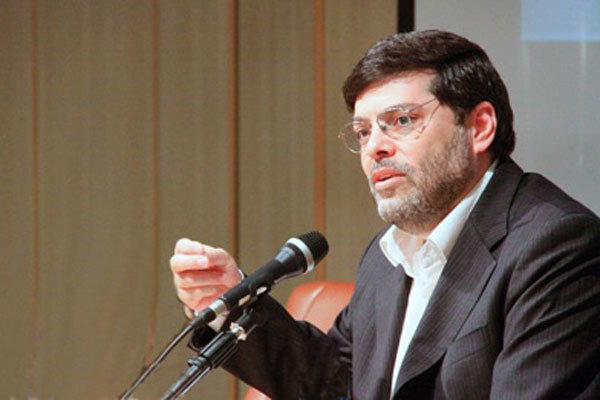
American Herald Tribune | July 13, 2018
Mohsen Abdelmoumen: What is the immediate impact on the Iranian people of the Trump administration’s exit from the Iran nuclear deal?
Dr. Mohammad Marandi: Obviously, it is going to have a short term negative impact. People are concerned about the effect it will have on the economy and Iranian currency has dropped significantly. However, I believe that in the midterm the economy will stabilize, and as Iran reorientates its economy, trading partners and strategic partnerships things will stabilize. In the long term, I think Iran will probably even benefit because the US will no longer have any leverage that it can use against the country and its people.
Are not the economic sanctions imposed by the Trump administration intended to provoke disturbances within the Iranian population in order to change the power in Iran?
Without a doubt. Actually, just recently in a speech in France to the MEK terrorist organization, a cult group which has killed 17 thousand Iranians through assassinations and bomb attacks and has also fought for Saddam Hussein, Rudy Giuliani, Trump’s lawyer and close friend, admitted that the disturbances in Iran are not spontaneous and that they are carried out by their people. That does not mean there are no ordinary people who protest here and there, but the foreign role is obvious and we can see it through the western, Israeli, and Saudi, funded Persian media outlets like BBC Persian and VOA among others that attempt to create tensions and fear among Iranians.
Do you think there is a special program to assassinate Iranian scientists as was the case with Iraqi scientists where some sources have spoken of the existence of a special CIA unit responsible for assassinating scientists?
I have no idea about that, but we do know that Mohammad bin Salman has said in public that he wants to take the war into Iran and after that we saw the terrorist attacks on Tehran and an increased number of attacks alongside the Pakistani-Iranian border as well as the border between Iran and Iraq Kurdistan.
What is the exact role of the Zionist entity of Israel and its services in the assassination of Iranian scientists?
Israeli intelligence and the MEK terrorist organization worked together in this regard. In addition, Western intelligence agencies have in the past passed on IAEA information on Iranian scientists to the Israelis thus helping them carry out a number of murders.
What do you think of the alliance between the Saudis and the Israelis? In your opinion, is it tactical or strategic?
The alliance between Israel, Saudi Arabia and the UAE among others is not new at all. They have been cooperating closely for many decades now, but these Arab regimes have always been afraid to make this alliance public. However, Trump is putting a lot of pressure on these regimes to come out of the closet, especially because he wants to impose his so called deal of the century on the Palestinian people in order to destroy the Palestinian nation.
In your opinion, can Europe play a role in maintaining the nuclear agreement?
It’s possible. However, I am skeptical about the EU’s intentions and I am even more skeptical about their ability to grow a backbone in face of persistent American violations of their sovereignty and threats against their businesses and citizens.
In your opinion, why is it that Israel that massacres the Palestinian people has never been subjected to sanctions?
I think it is widely known that the Israeli regime is allowed to implement apartheid policies, carry out ethnic cleansing and colonization, the bombing of neighboring countries, the killing of civilians, the arrest children, and the confiscation of land.Western countries will give them blanket support no matter what the regime does.
What is your analysis of the situation in Syria? Can we say that Daesh is defeated definitively or is it moving towards reorganization?
The extremist groups including Daesh that were supported by western intelligence services and regional client regimes have been severely weakened and the Syrian Arab army and government have gained the upper hand. But the war is not over, al-Qaeda and other extremist groups continue to get foreign support and Western countries and media outlets have been trying to give cover to these extremist groups by calling them “moderates” and “rebels”, whereas in reality their ideologies are very similar to ISIS.
What do you think of the position of Morocco that has just cut off its relations with Iran by accusing Hezbollah of having armed the Polisario Front? Don’t you think that this maneuver bears the signature of the Saudis, Israelis and Americans?
I think it is quite clear especially taking into account the timing of the accusations that the Saudis and probably countries like the US and the UAE are behind this. But I do not have any specific information.
Why do you think Westerners are silent, both the media and the political institutions, in the face of the carnage that Saudi Arabia is committing in Yemen?
It is because of Saudi oil wealth, and because the destruction of Yemen is in the interest of the Saudi and Israeli regimes. Therefore, Western governments and western media outlets will not do anything meaningful to prevent the massacres or starvation. This is just one example of many. They did the same thing in Libya, Syria, Iraq, Bahrain, and Afghanistan.
Interview realized by Mohsen Abdelmoumen
Who is Dr. Mohammad Marandi?
Born in 1966 in Richmond, Virginia, Mohammad Marandi is the son of Professor Alireza Marandi, a former Iranian Minister of Health and a former member of the Iranian Parliament. Mohammad Marandi lived until he was 13 in the United States before joining Iran. He is a political analyst and expert on American studies and postcolonial literature. Dr. Marandi is a graduate of the University of Tehran and the University of Birmingham where he received a PhD in English Literature. He teaches English Literature and Orientalism at the University of Tehran where he is head of the graduate program in North American Studies.
The Globalist Elite Fears Peace, Wants War
By Federico PIERACCINI | Strategic Culture Foundation | 13.07.2018
The announced meeting between Trump and Putin has already produced a good result by revealing the hypocrisy of the media and politicians. The meeting has been branded as the greatest danger to humanity, according to the Western globalist elite, because of the danger that “peace could break out between Russia and the United States”.
Sometimes reality is stranger than fiction. The following so stretches credulity that sources will have to be cited and exact quotations given to be believed.
A case in point is the following title: “Fears growing over the prospect of Trump ‘peace deal’ with Putin.” The Times does not here fear a military escalation in Ukraine, an armed clash in Syria, a false-flag poisoning in England, or a new Cold War. The Times does not fear a nuclear apocalypse, the end of humanity, the suffering of hundreds of millions of people. No, one of the most authoritative and respected broadsheets in the world is fearful of the prospect of peace! The Times is afraid that the heads of two nuclear-armed superpowers are able to talk to each other. The Times fears that Putin and Trump will be able to come to some kind of agreement that can help avert the danger of a global catastrophe. These are the times in which we live. And this is the type of media we deal with. The problem with The Times is that it forms public opinion in the worst possible way, confusing, deceiving, and disorienting its readers. It is not by accident the world in which we live is increasingly divorced from logic and rationality.
Even if the outcome of this meeting does not see any substantial progress, the most important thing to be achieved will be the dialogue between the two leaders and the opening of negotiation channels for both sides.
In The Times article, it is assumed that Trump and Putin want to reach an agreement regarding Europe. The insinuation is that Putin is manipulating Trump in order to destabilize Europe. For years now we have been inundated with such fabrications by the media on behalf of their editors and shareholders, all part of the deep state conglomerate. Facts have in fact proven that Putin has always desired a strong and united Europe, looking to integrate Europe into the Eurasian dream. Putin and Xi Jinping would like to see a European Union more resistant to American pressure and able to gain greater independence. The combination of mass migration and sanctions against Russia and Iran, which end up hurting Europeans, opens the way for alternative parties that are not necessarily willing to [obey] Washington’s marching orders.
Trump’s focus for the meeting will be to convince Putin to put even more pressure on Europe and Iran, perhaps in exchange for the recognition of Crimea and the ending of sanctions. For Putin and for Russia it is a strategic issue. While sanctions are bad, the top priority for Moscow remains the alliance with Iran, the need to further strengthen relations with European countries, and to defeat terrorism in Syria. Perhaps only a revision of the ABM treaty and the withdrawal of these weapons from Europe would be an interesting offer for Putin. However, reality shows us that the ABM treaty is a pillar of Washington’s military-industrial complex, and that it is also Eastern European countries that want such offensive and defensive systems in their own countries, seeing them as a deterrents against Russia. Are they victims of their own propaganda, or are billions of dollars pouring into their pockets? Either way, it does not really matter. The most important point for Moscow will be the withdrawal of the Aegis Ashore ABM systems as well as military ships with the same Aegis system. But this is not something that Trump will be able to negotiate with his military leaders. For the military-industrial complex, the ABM system, thanks to maintenance, innovation and direct or indirect commissions, is a gravy train that too many interests intend to keep riding.
From the Kremlin’s point of view, the removal of sanctions remains necessary for the restoration of normal relations with the West. But this would be difficult to achieve, given that Moscow would have little to offer Washington in exchange. The strategists at the Pentagon demand a withdrawal from Syria, an end to support for Donbass, and a cessation of relations with Iran. There is simply too much divergence to reach a common position. Moreover, Europe’s sanctions against Russia benefit Washington, as they hurt the Europeans and thereby undermine what is a major trading competitor to the US. The US withdrawal from the Joint Comprehensive Plan of Action (JCPOA) can be looked at in the same light, blocking US allies from doing business with Iran.
Putin will keep faith with his commitments to Syria and with his allies, unwilling to betray his word even for the recognition of Crimea. On the other hand, as already mentioned, the priority remains the removal of the ABM; and while Crimea is already under the control of the Russian Federation, Syria remains an unstable territory that risks propelling Islamist terrorism to Russia’s soft underbelly in the Caucasus. For Moscow, involvement in Syria has always been a matter of national security, and this certainly remains the same now, even with Donald Trump’s unrealistic offers.
It should be kept in mind that Putin is aiming for a medium- to long-term strategy in the Middle East, where Iran, Syria and the entire Shiite arc serves to counter Saudi and Israeli aggression and hegemony. This strange alliance has emerged as the only way to deter war and dial down the heat in the region, because the crazy actions from Netanyahu or Mohammad bin Salman are deterred by a strong Iranian military. Preventing a confrontation between Iran and Saudis/Israelis also means not making Tehran appear weak or isolated. Such considerations seem beyond the strategists in Washington, let alone in Tel Aviv or Riyadh.
While it is difficult to achieve a positive outcome from the meeting between Trump and Putin, it is important that there is a meeting in the first place, contrary to what The Times thinks. The media and the conglomerate of power that revolves around the US deep state fear diplomacy in particular. The same narrative that was proclaimed weeks before and after the meeting between Trump and Kim Jong-un is being repeated with regard to Trump’s meeting with Putin.
Washington bases its power on force, both economic and military. But this power also rests on the posture assumed and image projected. The United States and its deep state considers negotiating with opponents to be wrong and counterproductive. They consider dialogue to be synonymous with weakness, and any concession is interpreted as surrender. This result of 70 years of American exceptionalism and 30 years of Unipolarity, has allowed the US the ability to decide unilaterally the fate of others.
Today, in a multipolar world, the dynamics are different and therefore more complex. You cannot always employ a zero-sum mentality, as The Times does. The rest of the world recognizes that a dialogue between Putin and Trump is something positive, but we must not forget that, as in Korea, if diplomacy does not bring significant progress, then the hawks surrounding Trump will again be in the ascendant. The tasks for Rouhani, Putin and Kim Jong-un are complex and quite different from each other, but they share in common the belief that dialogue is the only way to avoid a catastrophic war. But apparently, peace is not the best possible result for everyone.
US targets Iran’s tourism; airlines halt service
Press TV – July 10, 2018
The US government says it has sanctioned a Malaysia-based tourism agent for Iranian private airline Mahan Air which is already under American sanctions.
The blockade comes as the US prepares to unleash “the strongest sanctions in history” on Iran after President Donald Trump decided to withdraw Washington from a landmark nuclear deal with the Islamic Republic.
“As a result of today’s action, all property and interests in property of Mahan Travel and Tourism Sdn Bhd that are or come within US jurisdiction are blocked,” the US Treasury Department said in a statement on Monday.
The first group of unilateral US sanctions on Iran’s automotive sector, gold trade, and other industries will “snap back” on August 4. Further sanctions on oil and transactions with the Central Bank of Iran will come into effect November 6.
Trump has given companies 180 days to wind down their businesses in Iran or have their trade severed with the US.
Dutch airline KLM said on Saturday it had decided to suspend its direct flights to Tehran “for commercial reasons.”
“As a result of the negative results and financial outlook for the Tehran operation, the last flight will take off from Amsterdam on 22 September 2018 and land at Schiphol on 23 September,” it said in a short statement on its website.
KLM resumed flights to Tehran in 2016 when the nuclear agreement signed between Iran and world countries came into effect. The Dutch airline had ceased its Iran operations in 2013 after the West intensified sanctions on the Islamic Republic.
Austrian Airlines also announced on Friday that it will stop service to the Iranian cities of Isfahan and Shiraz, starting in September, but will continue its flights to Tehran.
“The underlying reason for these changes in the route network is a realignment of the airline’s portfolio,” a statement said on the official website of Austrian Airlines which is owned by the German airline company Lufthansa.
Austrian Airlines announced its expansion of flights to Shiraz and Isfahan in 2015, 2016 and 2017.
The exodus of European companies is a blow to their governments’ efforts to keep Iran in the nuclear agreement.
Europe has pledged to put together an economic package for Iran so that the country benefits from staying in the deal but France said on Friday the offer was unlikely to come by before November.
Germany’s Foreign Minister Heiko Maas also said the Europeans would not be able to fully compensate for companies leaving Iran due to new US sanctions.
Featured Video
Houthis Keep Advancing as the Red Sea Crisis Deepens
or go to
Aletho News Archives – Video-Images
From the Archives
Clash of Civilization, Iran Part II
By Jamal Kanj – Intifada-Palestine.com – January 14, 2011
Israel’s survival kit is: perpetuate conflict, insecurity to rationalize collective hate and finally playing victim.
Devoid of conflict, Israel implodes internally; without hate, Zionism loses its justification; and playing eternal victim to continue blackmailing the West. Absence of this holy trinity, Israel ceases to exist. … continue
Blog Roll
 Aletho News
- ‘We are not like everyone else’ laws that bind other nations do not apply to Israel, says Likud lawmaker
- Report: Saudi Arabia seeks allies’ assistance as missiles deplete amid war on Yemen
- Fuel Crisis Deepens: Pakistan Warns Tanker Attack in Red Sea Would Be an ‘Act of War’
- ‘Bucha massacre’ a false flag orchestrated by UK – Moscow
- China Rejects Outside Pressure on Trade Ties After New US Russia Sanctions Bill
- Houthis Keep Advancing as the Red Sea Crisis Deepens
- Iran spent $1 million to wipe out $30 billion in data center plans, and take down Amazon in the ME
- Zionist billionaire pressure to silence Macklemore sparks exodus from Ed Sheeran tour
- House Votes to End Iran War for Third Time
- North Korea Slams US Plan for ‘AUKUS 2.0’ with South Korea and Japan
- If Americans Knew
- Biden’s Genocide Accomplices Targeted by New Accountability Campaign
- AIPAC’s Network Has Already Spent $67.2 Million to Shape the Midterm Elections
- Jewish Supremacist Manufacturing a Civilizational Threat to License Bigotry
- US bans Palestinian president from speaking at the UN
- Israeli Forces Detain Journalist Alaa al-Rimawi amid Widespread West Bank Raids
- Even a pro-Israel Congress member has put a hold on 40,000 one-ton bombs to Israel
- As Gaza crumbles, Israel preps new ground invasion – Daily Update
- ‘We are not like everyone else’ laws that bind other nations do not apply to Israel, says Likud lawmaker
- Trump’s govt makes ‘treasonous’ claim of weapons shortages
- Palestinian-American Journalist Naqaa Hamed Imprisoned by Israeli Forces After Settlers Targeted Her
- No Tricks Zone
- New Study: ‘Global Drought Shows No Detectable Recent Acceleration Under Climate Warming’
- Economic Masterminds: German Socialists Suggest Taxing Productivity Gains Stemming From Using AI
- The South China Sea Has Not Been Cooperating With The Climate Change Narrative
- Energy Crisis: Germany Enters Heating Season With Historically Low Gas Reserve Fill Levels
- New Study: The Antarctic Ice Sheet Gained Mass From 2020-2024 Due To Staggering Snow And Ice Accumulation
- Study: Ocean Heating Rates From Thousands Of Years Ago ‘Dwarf’ Modern Ocean Heating Rates
- Climate Extremists Target, Attack Large-Scale Power Grid Infrastructure In Germany!
- New Study: Antarctic Ice Melt Has Contributed Less Than 1 Centimeter To Sea Level Rise In The Last 30 Years
- Fear Of Debate: Alarmist German Climate Scientist Calls On Mainstream Media To Discredit Skeptic Voices
- End-Of-August Arctic Sea Ice Extent Hasn’t Fallen In 20 Years, Official Data Show!
 Aletho News