Iran draws red line as Europe threatens nuclear ‘snapback’
As indirect US–Iran nuclear talks inch forward, Europe’s fear of marginalization prompts a risky diplomatic maneuver in Istanbul.
By Vali Kaleji | The Cradle | May 26, 2025
In the backdrop of indirect nuclear negotiations between Tehran and Washington, Iranian Deputy Foreign Ministers Majid Takht-Ravanchi and Kazem Gharibabadi met with their European counterparts from France, Germany, and Britain – the so-called E3 of the Joint Comprehensive Plan of Action (JCPOA) – on 16 May in Istanbul.
The meeting, held at Iran’s Consulate General and hosted by Turkiye, brought together EU Deputy Secretary-General for Political Affairs Enrique Mora and his colleague Olof Skoog, alongside Turkish Deputy Foreign Minister Abdullah Celik. The discussions focused on the future of the 2015 nuclear agreement, the status of indirect Iran–US negotiations, and collective efforts to avert further escalation through diplomacy.
Although three earlier rounds of consultations between Tehran and the E3 occurred on 29 November 2024, 13 January, and 24 February 2025, the Istanbul session marked a pivotal moment: the first engagement since the revival of the Iran–US indirect dialogue.
Europe cut out of nuclear talks
Crucially, the EU, much like in the Ukraine peace process, found itself bypassed by Washington. This diplomatic exclusion has intensified Brussels’s urgency to reclaim relevance within the nuclear negotiations framework, apparently even if this means acting as spoiler.
At the heart of the Istanbul summit lies the snapback mechanism – an instrument embedded in the JCPOA allowing any signatory to reimpose all UN sanctions that existed before the 2015 agreement. The clause, originally intended as a safeguard, now threatens to become a geopolitical cudgel.
With the JCPOA’s expiration looming in October 2025, Tehran fears that the E3 may invoke the mechanism as early as this summer, citing Iran’s alleged enrichment beyond 60 percent and its growing stockpile of enriched uranium.
French Foreign Minister Jean-Noel Barrot minced no words during a 28 April address to the UN Security Council, stating that if European security interests are compromised, France “will not hesitate for a single second to reapply all the sanctions that were lifted 10 years ago.” His statement, which reverberated through diplomatic circles, was widely interpreted in Tehran as a stark ultimatum.
Iran’s permanent representative to the UN responded forcefully, accusing France of hypocrisy and warning that Paris’s own breaches of the agreement render any activation of the snapback legally indefensible.
Iranian Foreign Minister Abbas Araghchi echoed this stance in an op-ed for Le Point, characterizing the Istanbul discussions as “a fragile but promising beginning” while cautioning that “time is running out.” He wrote:
“The decisions we make now will shape Iran–Europe relations in ways that go far beyond this agreement. Iran is prepared to move forward – we hope Europe is, too.”
Following the talks, Gharibabadi wrote on X: “We exchanged views and discussed the latest state of play on nuclear & sanctions lifting indirect negotiations. Iran and the E3 are determined to sustain and make best use of diplomacy. We will meet again, as appropriate, to continue our dialogue.”
British envoy Christian Turner echoed this sentiment, affirming the shared commitment to maintaining open channels of communication.
‘Trigger Plus’
Yet not all assessments of the Istanbul summit were diplomatic. Tehran-based daily Farhikhtegan, aligned with Iran’s conservative establishment, described the session as tense and combative.
According to its report, the E3 tabled severe threats, including a proposal for what they termed “trigger plus” – an augmentation of the original snapback mechanism that would allow preemptive punitive measures without requiring technical justification.
Iranian officials, the newspaper reported, dismissed this demand as not only illegal and baseless but also presented in an “inappropriate” tone. The Iranian side reiterated that while they remain open to EU participation in broader nuclear negotiations, any activation of the snapback mechanism would trigger an immediate Iranian withdrawal from the Nuclear Non-Proliferation Treaty (NPT).
Mohammad Ghaderi, former editor-in-chief of Nour News – a media outlet close to Iran’s Supreme National Security Council – summarized the stance bluntly on social media:
“In the tense talks with Iran on Friday, [the E3] while requesting to participate in Iran–US talks, made non-technical & illegal requests, calling it trigger plus. But Iran’s response: Emphasizing the activation of the Trigger Mechanism will lead to Iran’s withdrawal from the NPT.”
The Iranian Foreign Ministry, in characteristic fashion, neither confirmed nor denied these reports, opting for strategic ambiguity to maintain leverage over multiple negotiation tracks.
The October deadline: Strategic implications
As the October 2025 expiration date draws closer, Iran has accelerated efforts to engage the remaining members of the 4+1 framework – China, Russia, France, Britain, and Germany. Trilateral meetings with Moscow and Beijing have underscored Tehran’s strategy of building a multilateral diplomatic buffer against US-European pressure.
However, the snapback clause remains the most potent lever in the E3’s arsenal. According to Article 36 of the JCPOA, any signatory can escalate a compliance dispute to the UN Security Council. Once initiated, this process does not require a vote or consensus, meaning that Russian and Chinese vetoes are nullified.
Should the snapback be triggered, all seven UN Security Council sanctions previously lifted would automatically be reinstated – a scenario with grave consequences for Iran’s economy and its broader regional strategy.
Analysts suggest the E3 may push for this mechanism’s activation as early as July or August, thereby maximizing diplomatic pressure while allowing time to shape global opinion. If that happens, Tehran’s recourse to NPT withdrawal – a threat repeatedly made since 2019 – would likely materialize.
Deputy Foreign Minister Kazem Gharibabadi reinforced this red line in response to a recent International Atomic Energy Agency (IAEA) resolution: “If Europe implements snapback, our answer is to withdraw from the NPT.” As Araghchi, writing again in Le Point, stated unequivocally:
“Iran has officially warned all JCPOA signatories that abuse of the snapback mechanism will lead to consequences – not only the end of Europe’s role in the agreement but also an escalation of tensions that could become irreversible.”
Europe’s desperation for relevance
Europe’s insistence on asserting itself in the JCPOA talks stems from its declining influence across global affairs. From the Ukraine war to the Persian Gulf, the EU has been reduced to a secondary actor. In the Iran file, this marginalization is especially stark.
While Washington and Tehran inch closer to a bilateral formula, Brussels finds itself largely ignored. Nosratollah Tajik, a former Iranian diplomat, argues:
“Europe’s main concern is that Iran and the United States will reach a bilateral agreement without considering European interests. Many of the Middle East [West Asian] crises spill over into Europe.”
The lack of a coordinated EU Iran policy only compounds this anxiety. Theo Nencini, an Iran expert at Sciences Po Grenoble and Paris Catholic University, concurs:
“The E3 countries have not yet managed to define a coherent and relevant ‘Iran policy.’ From Trump 1.0 to Biden, they have always been accustomed to flatly following American positions.”
Nencini believes that unexpected US–Iran direct talks caught Europeans off guard, prompting them to scramble to get involved in the negotiation process despite the fact that “they have always maintained a very strict attitude towards Iran.”
Diplomacy or detonation?
The Istanbul talks, despite their challenges, represent one of the few remaining diplomatic lifelines between Tehran and the E3.
Should these efforts collapse, the consequences would be profound: Iran could withdraw from the NPT, revise its nuclear doctrine, and prompt potential military escalation involving the US and Israel.
Such a scenario would spell the total disintegration of the JCPOA framework and shatter the fragile architecture of non-proliferation diplomacy built over the past two decades.
With less than five months to avert this trajectory, the onus lies on both parties to preserve what little remains of mutual trust. Yet the margin for error continues to shrink by the day.
Iran, China launch new commercial railway bypassing US sanctions
The Cradle | May 26, 2025
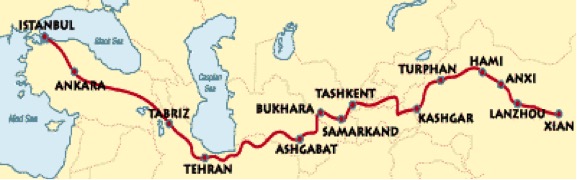
A new commercial rail route connecting China to Iran has officially launched with the arrival of the first cargo train from the eastern Chinese city of Xian at the Aprin dry port near Tehran.
Aprin’s CEO highlighted the port’s strategic role in lowering transport costs and reducing reliance on coastal freight hubs.
Railway infrastructure connecting Iran and China allows freight trains to travel from Shanghai to Tehran in 15 days, compared to 30 days via the maritime route.
On 12 May, railway officials from Iran, China, Kazakhstan, Uzbekistan, Turkmenistan, and Turkiye met in Tehran to advance a transcontinental rail network linking Asia to Europe, Tasnim News Agency reported on 25 May.
The six nations agreed on competitive tariffs and operational standards to streamline regional rail services and boost trade connectivity.
China and Iran have expanded trade and economic relations in recent years, as Tehran seeks to bypass US economic sanctions seeking to strangle its economy and oil exports.
The rail line between the two countries enables Iranian oil exports to China and allows Chinese goods to reach Europe without US naval interference.
In 2018, Iranian Supreme Leader Ali Khamenei stated that Iran should look to the east rather than the west. Since that time, China has become Iran’s largest oil purchaser, while Beijing has been able to supply Tehran with virtually all its needed manufactured goods, including electronics such as computers and cell phones.
The following year, Iran joined China’s “One Belt One Road” (BRI) initiative – President Xi Jinping’s hallmark strategic foreign policy initiative, seeking to recreate the economic ties that existed between ancient China and ancient Persia along the “Silk Road” dating back to the third century BCE.
China and Iran signed a historic 25-year economic cooperation agreement in 2021, reportedly worth $400 billion in trade.
In 2023, China’s growing relations with Iran helped it mediate a Saudi–Iranian rapprochement, which led to the resumption of diplomatic relations that had been cut in 2016.
Europe must bear consequences of forcing return of UN sanctions against Iran: FM
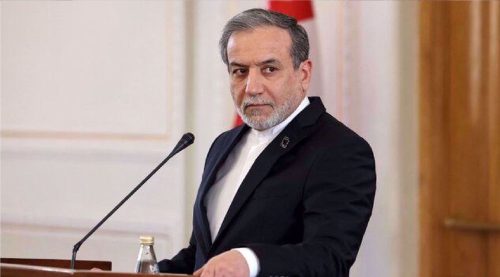
Iran’s Foreign Minister Abbas Araghchi
Press TV – May 21, 2025
Foreign Minister Abbas Araghchi has cautioned the US’s European allies in a 2015 nuclear agreement with Iran against invoking the so-called “snapback mechanism” to re-impose the United Nations sanctions against the Islamic Republic.
Speaking to Saudi Arabia’s Asharq News network on Wednesday, the top diplomat emphasized that such a move would end participation by the European parties — the UK, France, and Germany — in the deal that is officially known as the Joint Comprehensive Plan of Action (JCPOA).
He added that the trio’s potential recourse to the mechanism would lead to significant consequences and potential irreversible escalation of tensions, referring to the likelihood of strong retaliatory steps that the Islamic Republic could take in response.
Araghchi reiterated Iran’s readiness to engage in diplomacy, expressing hope that the European parties too would demonstrate determination to resolve the current impasse.
The deadlock occurred when the United States ditched the JCPOA in 2018, and returned the illegal and unilateral sanctions that the agreement had lifted.
This was followed by the European trio’s failure to return the US to the accord, as they had said would do, as well as their walking in Washington’s footsteps by returning their own sanctions.
In response to the betrayal, Iran began a number of legitimate and gradually escalating nuclear countermeasures.
“The situation we’re in is by no means Iran’s fault. It is the fault of the United States, which withdrew from the JCPOA, and the fault of the European countries that failed to compensate for the US’s withdrawal,” Araghchi added.
‘Uranium enrichment absolutely non-negotiable’
Addressing the topic of Iran’s peaceful uranium enrichment activities, the foreign minister said the activities were a principled and fundamental issue for Iran.
He emphasized that the enrichment program was a major scientific achievement developed by domestic scientists and held immense value for the Iranian people.
The official, meanwhile, paid tribute to the seven-strong Iranian nuclear scientists, who were assassinated amid their invaluable contribution to the Islamic Republic’s peaceful nuclear energy program.
According to Araghchi, the victims’ sacrifices towards advancement of the program had made the nuclear issue “absolutely non-negotiable.”
Fifth round of Iran-US talks to be held on May 23: Oman
Press TV – May 21, 2025
The fifth round of indirect negotiations between Iran and the United States will take place on May 23, according to Oman’s foreign minister.
Badr al-Busaidi made the announcement on Wednesday, adding that the talks will be held in the Italian capital, Rome.
Three of the previous rounds took place in the Omani capital, Muscat, and the second round in Rome.
Iranian and US officials have not commented on the announcement so far.
The talks focus on producing a replacement for the 2015 nuclear deal, which was derailed by American withdrawal in 2018.
Iran had previously declared it would decide whether to take part in the next round of the talks after US officials claimed any deal would not allow Tehran to enrich uranium.
Iran says it will not forgo its right to uranium enrichment, which is guaranteed under the Non-Proliferation Treaty.
MAGA influencers want an Iran deal and for hawks to shut up
Trump is unlikely to pay any political price if he disregards the old guard’s unrealistic demands
By Ben Armbruster | Responsible Statecraft | May 19, 2025
Neocons and their allies in Washington, Israel, and beyond are making unrealistic demands about the outcome of U.S. talks with Iran on limiting its nuclear program. But President Trump has absolutely no reason to listen to them and should not take them seriously.
The anti-Iran deal campaign kicked into overdrive last week when Republicans on Capitol Hill sent a letter to the White House calling on Trump to refuse any agreement that doesn’t include the complete dismantlement of Iran’s nuclear program.
“Every Republican senator except Rand Paul signed a letter to President Trump urging the administration to push for an end to Iran’s enrichment capacity,” Andrew Day, senior editor of the American Conservative, told RS. “They know that this demand is unacceptable to the Iranian regime and are clearly hoping to sabotage Trump’s diplomatic efforts.”
Center for International Policy senior non-resident fellow Sina Toossi called the letter’s demand “a poison pill.”
“Demanding zero enrichment, permanent restrictions, and total dismantlement of Iran’s nuclear infrastructure — after the U.S. already broke the 2015 deal — is not a negotiating position,” he told RS.
Meanwhile, other deal opponents say that Iran can be allowed to keep its program for civilian energy production purposes with the caveat that it cannot enrich its own uranium.
The good news for Trump though — and those who see an opportunity to box in Iran’s nuclear program and avoid war — is that this anti-Iran deal coalition has no constituency outside Washington and Israel, and Trump will pay very little to no political price if he just ignores them.
Take for instance a recent poll conducted by the SSRS Opinion Panel Omnibus in conjunction with the University of Maryland Critical Issues Poll program. That survey found that a large majority of Americans — 69% — favor “a negotiated agreement limiting Iran’s nuclear program to peaceful ends, with stringent monitoring” as opposed to military action. But perhaps more importantly for Trump’s political fortunes, 64% of Republicans surveyed — i.e. his base — agreed.
Opponents of diplomacy with Iran try to obfuscate this reality and muddy the waters. For example, Foundation for the Defense of Democracies CEO Mark Dubowitz — who’s been pushing for regime change in Iran for nearly two decades — promoted a poll last week finding that “76% of Americans say Iran’s nuclear-weapons facilities should be destroyed.”
Of course there is one problem: Iran doesn’t have nuclear weapons or a nuclear weapons program, and thus no nuclear weapons facilities, a fact that the U.S. intelligence community routinely concludes.
But it’s not just the American people or the GOP base that support Trump making a deal with Iran. Some of the more high profile figures in the MAGA-America First world back him too.
“It’s called sanity,” Steve Bannon said last week, referring to the SSRS/UMaryland poll. Bannon, of course, served as a senior adviser to Trump during his first term and remains influential within his orbit and among his supporters.
Rep. Marjorie Taylor Greene (R-Ga.), who also has clout with Trump’s base, has been very vocal recently against going to war with Iran. “There is no wedge between the base and President Trump,” she said earlier this month. “The wedge is between Congress and the establishment Republicans that are undermining the president’s agenda.”
And conservative media star Tucker Carlson, who like Bannon, has close ties to Trump world and is influential with the president’s base, has been similarly calling out neocons and others who are trying to kill Trump’s diplomacy with Iran and push for war.
“Thousands of Americans would die. We’d lose the war that follows. Nothing would be more destructive to our country,” he said last month. “Anyone advocating for conflict with Iran is not an ally of the United States, but an enemy.”
Popular right-wing podcaster Charlie Kirk has piled on as well. “[T]here are people in Washington inside the Pentagon and inside the administration who want to launch military strikes on Iran. Often, they say it’d be easy. Just one strike in and out,” he said recently. “Now pause. How often have they actually been correct about the one in and out thing? Has that ever actually been the case?”
“President Trump has consolidated his power over the Republican Party to a remarkable degree and could certainly sign a good deal with Iran without suffering politically,” Day said. “The base still loves him, and lawmakers and conservative media are afraid of him. The elites would fall in line for fear of MAGA turning on them.”
Ryan Costello, policy director at NIAC, agrees. “Trump wouldn’t have been elected president twice if his foreign policy echoed the discredited views of the Bush-Cheney wing of the Republican party,” he said. “Trump can have a deal with Iran or he can be pushed into war by adopting rigid and inflexible demands — the vast majority of Americans want him to lead with diplomacy.”
Meanwhile, it appears increasingly unlikely that Democrats — most of whom supported President Obama’s Iran nuclear deal back in 2015 — will try to make much political hay with any agreement Trump makes with Tehran.
“This is not a time for politics on Iran,” Rep. Ro Khanna (D-Calif.), a leading Democratic foreign policy voice in the House, said last week. “I support [Trump] trying to get a deal with Iran. I supported the Obama nuclear deal. How about we put the interest of our nation and peace above scoring political points at every moment?”
And what’s perhaps overlooked but maybe equally important: major regional powers like Saudi Arabia, who campaigned hard against Obama’s Iran deal, have changed their tune with Trump.
“Gulf leaders have been broadly supportive of the talks between the Trump administration and Iran because they don’t want to be caught in the crossfire of a regional escalation if they fail,” Ali Vaez of the International Crisis Group told Middle East Eye last week. “That support doesn’t necessarily translate into success at the negotiating table but it’s a shift from the 2015 talks.”
Perhaps most importantly, Trump can get a deal with Iran that places strict limits on its nuclear program with incredibly intrusive verification mechanisms that will satisfy his stated goal of preventing Iran from building a nuclear weapon, all without zero enrichment provisions or requiring Iran to dismantle its entire program.
“Not only will adopting a hardline ‘no enrichment’ position push Iran from the negotiating table entirely, it is not necessary for an effective agreement and would not fully address Iran’s proliferation risk,” the Arms Control Association’s Kelsey Davenport wrote recently, adding that “dismantling the infrastructure does not erase the knowledge Iran has gained about uranium enrichment.”
In short, she concluded, the U.S. “can find the right combination of limits and monitoring to block Iran’s pathways to nuclear weapons while allowing Iran to retain a less risky level of uranium enrichment.”
Ben Armbruster is the Managing Editor of Responsible Statecraft. He has more than a decade of experience working at the intersection of politics, foreign policy, and media. Ben previously held senior editorial and management positions at Media Matters, ThinkProgress, ReThink Media, and Win Without War.
Iran Nuclear Negotiations Bring New, Suprising Developments
By Ted Snider | The Libertarian Institute | May 20, 2025
In the past several days, there have been surprising developments in the negotiations between Washington and Tehran over Iran’s civilian nuclear program.
U.S. President Donald Trump has frequently, but not always, defined the goal of the negotiations as being limited to preventing Iran from getting a nuclear weapon. He repeated that definition as recently as May 25, saying Iran must “permanently and verifiably cease pursuit of nuclear weapons…They cannot have a nuclear weapon.”
But the message from his team has been contradictory. Then-National Security Advisor Mike Waltz said that the United States is demanding “full dismantlement,” and Trump’s special envoy Steve Witkoff said that “a Trump deal” means “Iran must stop and eliminate its nuclear enrichment and weaponization program.” Rubio said that Iran can have a civilian nuclear program, but by importing uranium enriched up to 3.67%, and no longer by enriching their own. On May 9, Witkoff told Breitbart News that “An enrichment program can never exist in the state of Iran ever again. That’s our red line. No enrichment.”
But Iran has drawn the mirror image red line. Iran’s Supreme Leader, Ayatollah Ali Khamenei, has placed a firm limit that Iran will not negotiate “the full dismantling of Iran’s nuclear infrastructure.” Iranian President Masoud Pezeshkian repeated that red line ahead of the talks, insisting that “Iran has never sought, is not seeking, and will never seek nuclear weapons” but that “Iran will not give up its peaceful nuclear rights.”
American insistence on ending Iran’s civilian enrichment program could put a quick end to the talks. Widening the negotiations to Iran’s missile program or to Iran’s relationship with its regional proxy groups could also jeopardize the talks.
But Trump raised that possibility on May 14 when he suggested that breaking off relations with proxy groups in the region must be part of any deal. Iran “must stop sponsoring terror,” he said, and “halt its bloody proxy wars.”
The contradictory statements emanating from the Trump administration appear to have been “because of a lack of decision on key strategic points,” Trita Parsi, Executive Vice President of Quincy Institute for Responsible Statecraft and an expert on Iran, told me. And, indeed, on May 7, Trump said, “We haven’t made that decision yet.”
“As a result,” Parsi said, “the debate on these points is now, rather unhelpfully, taking place out in public.”
That the talks have progressed to a fourth meeting suggests, at this point, that the public crossing of these Iranian red lines may not be being repeated in the private meetings. Iran’s Foreign Minister hinted at that possibility when he identified one of the difficulties in the negotiations as being “contradictions both inside and outside the negotiating room.” Supporting this possibility, when Trump introduced Iran’s support of regional proxies into the discussion, Araghchi called the remark, not unproductive or unhelpful, but “deceitful.”
And Araghchi may know. Barak Ravid of Axios has now reported that, during the fourth round of talks, the United States presented Iran with a written proposal. The report says that, during the third round, Araghchi gave Trump’s special envoy Steve Witkoff a document with Iran’s proposals for a deal. The U.S. studied it and returned it to Iran with “questions and requests for clarifications.” Iran replied, the U.S. prepared a new proposal, and then presented it to Araghchi who has now brought it back to Tehran for consultations with Supreme Leader Ali Khamenei and President Masoud Pezeshkian.
How far down the path to a settlement the proposal is is unknown. Araghchi said future negotiations now become more difficult. But he said that “despite the difficulty and frankness of the talks, very useful discussions were held.” He then said, “We can now say that both sides have a better understanding of each other’s positions.”
This major breakthrough may have been facilitated by another recent development: a subtle change in tone by Trump. Following a flurry of American threats, the fourth round of talks was postponed. Iranian officials said that [d]epending on the U.S. approach, the date of the next round of talks will be announced.”
Recently, that approach subtly changed. Previously, Donald Trump had formulated Iran’s choice as “If they don’t make a deal, there will be bombing. It will be bombing the likes of which they have never seen before.” But in his most recent remarks, which went largely unnoticed, Trump softened the consequence, saying only “If Iran’s leadership rejects this olive branch…we will have no choice but to inflict massive maximum pressure, drive Iranian oil exports to zero.” Notably, bombing was replaced with sanctions.
On May 15, Trump again seemed to reject the risk of war:
“Because things like that get started and they get out of control. I’ve seen it over and over again. They go to war and things get out of control, and we’re not going to let that happen.”
In another surprise development, Iran may have facilitated negotiations with a creative and unexpected proposal.
There are now reports that Iran has suggested for consideration that they could join with Saudi Arabia and the United Arab Emirates in a nuclear enrichment consortium. Iran would continue to enrich uranium but accept a cap at the 3.67% enrichment required by a nuclear energy program. Saudi Arabia and UAE, who would gain access to Iran’s nuclear technology, would be shareholders and funders.
If true, the proposal would be based on a consortium idea first proposed by Princeton physicist Frank von Hippel and former Iranian nuclear negotiator Seyed Hossein Mousavian.
Von Hippel told me that the idea was inspired by the URENCO enrichment consortium of Germany, the Netherlands and Britain and by the ABAAAC consortium of Brazil and Argentina.
The consortiums, he said, allow nuclear experts from each country to “visit each other’s facilities to assure themselves that the activities are peaceful.” He added that “decisions that might have proliferation implications are made by the [partner] governments.” Saudi Arabia’s, the Emirates’ and Iran’s watchful eyes would all help the International Atomic Energy Agency ensure that the program is peaceful.
Aside from the implications for the nuclear negotiations, this level of trust between Iran, Saudi Arabia, and the UAE was unthinkable only a very short time ago and testifies to the changes going on in the region and in the evolving Iran-Saudi Arabia relationship. That Iran would trust Saudi Arabia with access to its nuclear technology indicates that a region changing shift in the relationship is underway.
As Annelle Sheline, research fellow in the Middle East program at the Quincy Institute, told me:
“The Iranians’ willingness to join a consortium with Saudi Arabia and the UAE to develop civilian nuclear energy demonstrates significantly improved relations between these countries. This sends a strong signal that Tehran as well as Riyadh and Abu Dhabi would prefer to prioritize cooperation over conflict.”
She said that all three countries have growing motivation for peace in the region. Crown Prince Mohammed bin Salman needs to avoid violent conflict to encourage the foreign investment and tourism needed to fuel his planned economic diversification. Mohammed bin Zayed needs economic security in the face of competition from Saudi Arabia to be a regional hub. Iran needs to encourage peace in the region because of the recent weakening of its own strategic position in the region. Saudi Arabia and Iran have recently been moving towards enhanced friendship both bilaterally and through multinational organizations.
Sheline expressed the hope to me that “Trump should take advantage of these circumstances to sign a nuclear deal with Iran and avoid unnecessary war.”
All of these developments, from the contradictory American messaging, to the until now unreported existence of a written proposal, to the subtle and little noticed change in Trump’s tone to the Iranian idea of a nuclear consortium with Saudi Arabia and UAE are shocking and new. They may present an opportunity to return to a nuclear agreement with Iran and to usher in a new hope for peace and friendly relations both between the U.S. and Iran and in the region. Hopefully, the two sides will seize this opportunity.
Ball’s in Trump’s Court, But Iran Won’t Bow to US Pressure
By Ekaterina Blinova – Sputnik – 15.05.2025
There is a good possibility of a US-Iranian deal, Mohammad Marandi, a Tehran University professor who was on Iran’s team during the 2015 nuclear talks, tells Sputnik.
Marandi stresses, however, that Tehran won’t accept any agreement that infringes on the nation’s sovereignty.
Reduced, Not Suspended, Enrichment
“The reason why [Iran is] enriching uranium at 60% right now is in order to put pressure on the US to come to the negotiating table, to behave more reasonably and to force it to remove sanctions,” the professor tells Sputnik.
The US shouldn’t expect Iran to halt its uranium enrichment – Tehran will only reduce enrichment levels and expand the IAEA’s role in the country in exchange for US sanctions relief, the academic stresses.
“Iran is a country that’s deeply and profoundly independent in its foreign policy… so the US should not expect Iran to be a subordinate country.”
What’s the Real Cause of the US-Iranian Row?
- The root cause is “Iran’s support for the Palestinian people and… legitimate resistance to ethnic cleansing, to genocide, to apartheid,” says Marandi.
- “The US supports genocide, because they unconditionally support racism… and ethno-supremacism in our region.”
- The nuclear issue is an excuse — just like the “human rights” or “terrorism” accusations the US uses against Iran to appease Israel.
US: An Irresponsible Negotiator?
The US isn’t a trustworthy negotiator; it violates agreements, according to Marandi: Trump is constantly “flip-flopping” — be it Ukraine, trade wars, Yemen, or Gaza genocide.
“This is what makes it very difficult to come to any agreement,” the pundit concludes.
FM: Raising concerns about Iran’s peaceful nuclear work while ignoring Israel’s nukes ‘unacceptable’
Press TV | May 10, 2025
Iran has called attention to the double standards of the international community regarding nuclear weapons, calling it “unacceptable” for Western powers to raise alleged concerns over the country’s peaceful nuclear energy program while overlooking the Israeli regime’s extensive nuclear arsenal.
Foreign Minister Abbas Araghchi made the remarks during an extended address during the Fourth Round of Iranian-Arab Dialogues conference in the Qatari capital Doha on Saturday.
The top diplomat reminded that the Islamic Republic’s nuclear energy activities were a peaceful and legitimate pursuit in contrast to the nuclear weapons possessed by the Israeli regime.
He reaffirmed that Iran did not seek nuclear weapons and that weapons of mass destruction had no place in the country’s security doctrine.
The foreign minister pointed out that the country was one of the initiators of a nuclear-weapon-free zone concept in Asia and called on Western countries to abandon their double standards regarding nuclear proliferation.
“Iran is committed to the international non-proliferation regime,” Araghchi explained, denouncing Western countries’ and their allies’ decades-old way of raising uncalled-for alarm about the nation’s peaceful nuclear energy program while turning a blind eye to the Israeli regime’s nuclear arsenal.
For decades, the United States, its European allies, and Washington’s allied parties elsewhere across the globe have been using allegations of Iran’s pursuing non-conventional arms to either enact or agitate anti-Iranian policies, including sanctions, and anti-Iranian discourse.
This is while Iran’s leadership has categorically ruled out such endeavor in line with moral and religious imperatives.
The Islamic Republic’s refusal to either pursue, develop or stockpiles such weaponry has also been unexceptionally proven during the International Atomic Energy Agency (IAEA)’s inspections, making the country the most-verified member of the United Nations nuclear watchdog.
‘Israel greatest threat to regional peace’
Pointing again to the Israeli regime’s nuclear weapons program and arsenal and instances of its deadly adventurism and expansionism across the West Asia region, the official said, “The existence of the Zionist regime remains the single greatest threat to peace in the region.”
He condemned the United States for supporting the regime unwaveringly and exponentially, calling Washington an accomplice in the regime’s atrocities, including its acts of violence and injustice targeting Palestinians.
The foreign minister described the regime’s ongoing genocidal and other aggressive measures as a direct attempt to erase the Palestinian nation.
Such prospect, he said, would amount to complete colonial erasure of the Palestinian nation through the most horrific forms of violence and forced displacement.
He identified the so-called “two-state solution” as a myth used to delay the realization of Palestinian rights for decades, and reminded that the regime, itself, had ruled out even that prospect.
Iran-US talks: A clarification on nuclear rights
As the fourth round of indirect talks between Iran and the United States was set to begin the following day, Araghchi said, “We will continue our discussions with the United States — and concurrently with Europe, Russia, and China — in good faith.”
However, he made it clear that if the goal of these discussions was to ensure that Iran was not pursuing nuclear weapons, that objective had already been achieved.
The official also firmly stated that if the aim was to deny Iran its legitimate nuclear rights and impose unrealistic demands, the Islamic Republic would not yield. “The Islamic Republic of Iran will never, under any circumstances, surrender any of the legitimate rights of the proud Iranian nation.”
In the same context, he underscored that Iran’s right to peaceful nuclear energy, including enrichment, was non-negotiable.
On regional cooperation, the path forward
Araghchi stressed the importance of regional convergence as the path forward for Western Asian nations.
He called for deeper trust-building and mutual understanding, advocating for cooperative initiatives in areas like cultural exchange, trade, and tourism.
According to Araghchi, prosperity in the region depends not on the rise of dominant nations, but on the success of a strong region as a whole.
Do Trump’s Slick Comments Put Iran Talks in Jeopardy?
By Ted Snider | The Libertarian Institute | May 6, 2025
U.S. President Donald Trump’s unexpected answer on Sunday to an interviewer’s question has thrown his administration’s nuclear negotiations with Iran into confusion.
Trump has consistently said that negotiations with Iran over its nuclear program are limited to preventing Iran from developing a nuclear weapon: “You know, it’s not a complicated formula. Iran cannot have a nuclear weapon.” But in an interview on NBC’s Meet the Press, when the interviewer asked Trump, “Is the goal of these talks limiting Iran’s nuclear program or total dismantlement?” Trump answered, “Total disarmament.”
There has been disagreement in the Trump team over, not just the goal of negotiations with Iran, but, more fundamentally, over negotiating with Iran. National Security Advisor Mike Waltz advocated for a military path, while Director of National Intelligence Tulsi Gabbard, Secretary of Defense Pete Hegseth and Vice President J.D. Vance advocated for caution. Vance urged fully exploring talks before settling for a military solution. Trump sided with the diplomacy camp, believing that “we can make a deal without the attack.”
According to reporting by The Washington Post, Trump fired Waltz as National Security Advisor because he opposed Trump and “wanted to take U.S. policy in a direction Trump wasn’t comfortable with because the U.S. hadn’t attempted a diplomatic solution.” Waltz maintained that “the time was ripe to strike Iran.”
Having agreed on the diplomatic path, there appeared to be confusion over the goal of diplomacy. Waltz said that the U.S. is demanding “full dismantlement,” and Trump’s special envoy Steve Witkoff said that “a Trump deal” means “Iran must stop and eliminate its nuclear enrichment and weaponization program.” But these statements had been at odds with Trump’s more limited stated goal. Until Sunday.
If there was a lack of clarity in America’s goals in negotiating, there was no ambiguity in Iran’s. Iran wanted a deal that the United States couldn’t walk away from, as they walked away from the previous 2015 JCPOA nuclear agreement, and they wanted negotiations to lead to three things.
The first is that negotiations have to lead to a cessation of U.S. threats of a military solution. Iranian President Masoud Pezeshkian had made it clear that “the language of threats and coercion is absolutely unacceptable… It is unacceptable for someone to come along and say, ‘Don’t do this, don’t do that, or else.’ I won’t come to negotiate with you.”
The second is that negotiations have to lead to the complete lifting of sanctions.
The third is that, while Iran’s Supreme Leader, Ayatollah Ali Khamenei, has fully empowered his team to negotiate, he has placed the firm limit that Iran will not negotiate “the full dismantling of Iran’s nuclear infrastructure.”
The American-Iranian talks were showing signs of success. Iran called the first round “constructive” and “respectful.” The U.S. called it “constructive” and “positive.” The first round led to a second, which led to an agreement to begin work on a framework for a potential deal and a third round of talks.
Then a flurry of confusing and contradictory statements made by U.S. officials in the past few days began to derail the talks.
First, Pete Hegseth returned to the language of threats. Referring to Yemen’s Houthi attacking vessels in the Red Sea, Hegseth “warned” Iran, “You know very well what the U.S. Military is capable of… You will pay the CONSEQUENCE at the time and place of our choosing.” From Iran’s perspective, what is the point in negotiating limits on your civilian nuclear program to avoid American bombs if the United States is going to bomb you anyway for another purpose?
Then Trump returned to the threat of sanctions, posting that “Any Country or person who buys ANY AMOUNT of OIL or PETROCHEMICALS from Iran will be subject to, immediately, Secondary Sanctions. They will not be allowed to do business with the United States of America in any way, shape, or form.”
Following those two statements, the fourth round of scheduled talks between the United States and Iran were postponed. They were allegedly postponed “[f]or logistical reasons.” However, a senior Iranian official said that “U.S. sanctions on Iran during the nuclear talks are not helping the sides to resolve the nuclear dispute through diplomacy” and that “[d]epending on the U.S. approach, the date of the next round of talks will be announced.”
Then came the unexpected threat to future talks. Trump told Meet the Press that the talks are not negotiating what the Iranians thought they were negotiating. The United States he said, is not negotiating verifiable limits on Iran’s civilian nuclear program, it is demanding “total dismantlement” of Iran’s nuclear program.
“That’s all you’ll accept?” the interviewer clarified. “Yeah, that’s all I’d accept,” Trump confirmed.
The interviewer then, wrongly, suggested that Trump’s statement was inconsistent with Marco Rubio, his Secretary of State’s, suggestion that the U.S. “would accept… a peaceful, civilian nuclear program.”
Trump’s statement is not inconsistent with Rubio’s, though, because Rubio’s statement that Iran can have a civilian nuclear program by importing uranium enriched up to 3.67% but no longer by enriching their own, is consistent with Trump’s statement that Iran would have to dismantle its enrichment capability.
Though Trump’s statement may not be inconsistent with Rubio’s, it did, at this point, become a little confused with itself. Trump suggested that Iran has no need of a civilian nuclear program “to make electricity” because “they have so much oil, what do they need it for.” Trump then, confusingly repeated his earlier formulation, saying, “The only thing they can’t have is a nuclear weapon.” He said, “I think that I would be open to hearing” about a civilian nuclear program to generate energy before seemingly shutting it down again with the observation that “civilian energy often leads to military wars.”
The recent return by Washington to military threats and sanctions are not helping negotiations that seemed to be on a path to possible success. Trump’s latest remark that Iran has to fully dismantle its civilian nuclear program and stop all enrichment appears to take away any motivation for Iran to negotiate. Since Trump has said that “If they don’t make a deal, there will be bombing,” it is imperative to clarify the confusion and the positions and get the fourth round of talks back on schedule.
Iran says US ‘not serious’ about nuclear talks after Trump imposes new sanctions
The Cradle | May 2, 2025
The Iranian Foreign Ministry affirmed on 2 May that Tehran is committed to continuing the diplomatic process and negotiations regarding its nuclear program but that it “will not accept pressure and threats that violate international law and target the rights of the Iranian people.”
In a statement, the ministry condemned the continued illegal sanctions on Iran and the “pressure on its economic partners,” viewing them as “further evidence that the United States is not serious about adopting a diplomatic approach toward Iran.”
It also stressed that the continuation of these policies “will not change Iran’s firm positions in defending its legitimate rights,” and that “testing failed methods will only lead to a repetition of past failures.”
The Foreign Ministry went on to say that the Iranian negotiating delegation, during the first three rounds, attempted to “reach a fair agreement that guarantees the rights of the Iranian people, within the specified frameworks that allow Tehran to use peaceful nuclear energy.”
Tehran entered indirect negotiations with Washington following US President Donald Trump’s letter to Iran’s Supreme Leader Ali Khamenei, to “resolve a fabricated crisis through diplomacy, based on good faith,” the statement added.
The Ministry’s statement came after Trump announced on Thursday that all purchases of Iranian oil or petrochemical products must stop, warning that any country or individual continuing such trade would face immediate secondary sanctions and be barred from doing business with the US.
“They will not be allowed to do business with the United States of America in any way, shape, or form,” he wrote on Truth Social on Thursday.
Secondary sanctions are a powerful tool for the US because of the size of its economy.
Trump’s comments follow the postponement of the latest US talks with Iran over its nuclear program.
The Iranian Foreign Ministry announced on Thursday that the fourth round of talks, which were due to take place in Rome on Saturday, had been rescheduled at the suggestion of the Sultanate of Oman for “logistical reasons.”
Sources speaking with Al Mayadeen he explained that the postponement came “against the backdrop of the conflicting positions taken by the US administration regarding the talks, and Washington’s efforts to change the general framework for negotiations that had been previously agreed upon.”
In a related development, US Secretary of State Marco Rubio asserted on 1 May that Iran must “walk away” from both uranium enrichment and the development of long-range missiles.
“They have to walk away from sponsoring terrorists, they have to walk away from helping the Houthis (in Yemen), they have to walk away from building long-range missiles that have no purpose to exist other than having nuclear weapons, and they have to walk away from enrichment,” Rubio said in an interview with Fox News.
His comments came as the fourth round of nuclear negotiations between Tehran and Washington, set to take place in Rome on Saturday, were postponed.
An Iranian official cited by Reuters said a new date for the talks would be set “depending on the US approach.”
Tehran has repeatedly affirmed that both its uranium enrichment and its defense capabilities are non-negotiable in the talks with the US.
Iran: French threat to reimpose sanctions is ‘economic blackmail’
Press TV – April 30, 2025
Iran’s ambassador to the UN has lambasted the French foreign minister’s open threat to reimpose sanctions lifted under a 2015 deal on Tehran’s nuclear program.
“Resorting to threats and economic blackmail is entirely unacceptable and represents a clear breach of the principles enshrined in the UN Charter,” Amir Saeid Iravani wrote in letters to UN chief General Antonio Guterres and Security Council head Jérôme Bonnafont.
French Foreign Minister Jean-Noel Barrot said on Monday that his government along with Germany and Britain “will not hesitate for a single second to reapply all the sanctions” lifted a decade ago if European security is threatened by Iran’s nuclear activities.
Iravani said France’s threat to trigger the so-called snapback mechanism despite its own failure to honor its commitments contradicts the fundamental principles of international law that preclude a party from claiming rights under an agreement while simultaneously failing to fulfill its obligations.
“Such an action is legally and procedurally flawed, unacceptable, and invalid, and would undermine the credibility of the Security Council,” he added.
The snapback mechanism is triggered simply by the assertion of significant non-compliance on the part of a participating state, a prerogative the West might abuse based on its accusations.
Iravani further reaffirmed Iran’s commitment to diplomacy and constructive engagement, but “genuine diplomacy cannot be conducted under threats or pressure”.
“If France and its partners are truly interested in a diplomatic resolution, they must abandon coercion and respect the sovereign rights of States under international law.”
Iravani said France’s credibility on non-proliferation is fundamentally undermined by its own record as it continues to modernize and expand its nuclear arsenal, remains silent about, and is complicit in the Israeli regime’s undeclared nuclear weapons program.
France has also yet to fulfill its disarmament obligations under Article VI of the Treaty on the Non-Proliferation of Nuclear Weapons (NPT), he added.
The ambassador rejected the French foreign minister’s accusations that Iran sought to acquire nuclear weapons,
“Allegations that Iran is ‘on the cusp’ of developing nuclear weapons are entirely unfounded and politically irresponsible. The Islamic Republic of Iran has never pursued nuclear weapons, and its defensive doctrine has not been changed,” Iravani said.
“Iran unequivocally rejects all weapons of mass destruction (WMDs), including nuclear arms,” he said. “As a founding member of the Treaty on the Non-Proliferation of Nuclear Weapons (NPT), Iran remains fully committed to its obligations under the treaty.”
The International Atomic Energy Agency (IAEA), he said, “continues to monitor and verify the peaceful nature of Iran’s nuclear program. Its reports have consistently verified that there has been no diversion of nuclear material for non-peaceful purposes.”
Barrot’s allegations about Tehran’s peaceful nuclear program reflect either a fundamental misunderstanding or deliberate distortion of Iran’s legal rights under international law, Iravani said.
The claims also demonstrate a selective interpretation of facts and exemplifies a persistent pattern of double standards by a country that bears specific responsibilities as a permanent member of the Security Council, he added.
Featured Video
or go to
Aletho News Archives – Video-Images
From the Archives
Israel Would Have No Qualms About USS Liberty-Style FALSE FLAG If Iran Campaign Falters – Analysts
By Ilya Tsukanov – Sputnik – 18.06.2025
Donald Trump is mulling whether or not to join Israel’s aggression against Iran as Tel Aviv faces problems sustaining its defenses against growing counterstrikes, and apparently lacks a realistic game plan for an end to hostilities after failing to achieve its goals. Analysts told Sputnik how the US could be ‘nudged’ into the conflict.
“The US is already assisting Israel with supplies, intel, refueling support, etc. One of the many US posts in the region could be attacked for a casus belli,” former Pentagon analyst Karen Kwiatkowski explained.
“If Trump doesn’t comply with Israel’s demand” and join its aggression voluntarily, “a false flag may be needed” to drag the US in, Kwiatkowski, retired US Air Force Lt. Col.-turned Iraq War whistleblower, fears.
Netanyahu has a diverse array of options at his disposal, according to the observer, including:
- a false flag against US assets abroad blamed on Iran or one of its Axis of Resistance allies, like the Houthis
- a US domestic attack or assassination blamed on Iran
- Iranian air defenses ‘accidentally’ hitting a civilian jetliner carrying Americans
- use of a dirty bomb or nuclear contamination somewhere in the region blamed on Iran
- even blackmailing by threatening to use nukes against Iran if the US doesn’t join the fight
Kwiatkowski estimates that Israel probably has “enough blackmail power” against President Trump and Congress to avoid the necessity of a false flag operation, but a “USS Liberty-style” attack, targeting the soon-to-be-retired USS Nimitz supercarrier that’s heading to the Middle East, for example, nevertheless cannot be ruled out entirely, she says. … continue
Blog Roll
 Aletho News
- Top PMU commander, over a dozen fighters killed in new US strikes on Iraq
- Is Netanyahu’s war gamble threatening the future of ‘Israel’?: FT
- Smotrich calls for annexation of South Lebanon to Litani River
- Echos of Gallipoli? Hormuz and the Geography of Hubris
- Pakistan PM backs Iran’s right to self-defense amid tensions
- Hungary blasts ‘fake’ EU accusation
- SAFE Debt Trap: Poland’s €43.7 Billion Bet on Unipolar Illusion
- War on Iran threatens global Gulf capital flows: FT analysis
- Mossad De Facto Admits To Inciting Riots In Iran
- Tehran: World grown thoroughly exhausted with US-Israeli ‘false flag storylines’
- If Americans Knew
- Instead of taking Joe Kent’s claims seriously, the media is disregarding him as an antisemite
- Joe Kent’s Explosive Interviews about his Resignation over the Iran War
- Israel poised to take over southern Lebanon; settlers wreak havoc in West Bank – Not a ceasefire Day 165
- From Sde Teiman, the truth about Israel’s military justice system has been set free
- Child denied life-saving bone marrow transplant by Israel ‘because he is from Gaza’
- Raffi Berg: BBC Middle East Editor Exposed as CIA, Mossad Collaborator
- Jerusalem Archbishop Rebukes Netanyahu’s Statements on Christianity
- US to embed Palantir AI across entire military: Report
- Israeli-US war on Iran to drag on “a few more weeks” – Not a ceasefire Day 164
- Lebanon deaths top 1,200; Palantir AI to be embedded across US military – Not a ceasefire Day 163
- No Tricks Zone
- Devastating Assessment Of Comirnaty Vaccine By Former Senior Pfizer Europe Toxicologist
- New Study: CO2 Is ‘Effectively Negligible’ As An Explanatory Climate Change Factor Since 2000
- Former Pfizer Toxicologist Dr. Helmut Sterz Tells Bundestag Hearing Pfizer Vaccine Should Have Never Been Approved
- Energy Expert: Germany’s Nuclear Phaseout Was A “500 Billion Euro Mistake”
- New Research: South Australia’s Mid-Holocene Sea Surface Temperatures Were 4°C Warmer Than Today
- Storing Green Energy To Last Germany 10 Days Would Require A 60-Million Tonne Battery
- New Studies: UK Sea Levels Were 4 Meters Higher Than Today During The Mid-Holocene
- Destructive Green New Deal: German Energy And Metal Group Warns Of Drastic Crisis
- New Study Documents A 20-Year Pause In Arctic Sea Ice Decline – Driven By Internal Variability
- Wake-up Call: Survey Shows Majority Of Germans Now Favor Postponing Climate Targets!
 Aletho News